You spent weeks planning a hiring event. Candidates registered. Then half of them hit a download screen, a plugin error, or a lobby that felt like a dead end, and they never came back. The recruiters who showed up sat in empty booths refreshing a dashboard.
That is the real problem a virtual career fair platform solves. It is not a video-chat problem. It is a coordination problem: dozens of employers, hundreds or thousands of candidates, live interviews, scheduling, resume capture, and reporting, all happening in one browser window at the same time. Generic webinar tools broadcast. They do not run booths, route candidates to recruiters, or tell you which employer generated real pipeline.
The stakes are rising because the category is. The virtual career fair platforms market grew to roughly $11.1 billion in 2025 and is projected to reach $24.6 billion by 2033, a 10.4% CAGR, according to Cognitive Market Research (2025). More than 60% of candidate traffic to these platforms now arrives via mobile, per EasyVirtualFair (2026). Buyers who evaluate these tools like operators, the way a founder evaluates any repeatable system, care about the same things: browser access, live interaction, analytics, and integrations that plug into what they already run.
If you are also mapping out the wider event stack, our guides to event management software and event planning software cover adjacent territory worth a look.
What's inside
This guide is for universities, employers, government workforce agencies, and recruiting teams comparing software for browser-based hiring events. It is a buyer's guide, not a product page, so each platform is framed around where it fits best.
We selected platforms on five criteria that separate a true virtual career fair software from a repurposed webinar tool:
- Browser-based access with no downloads for candidates
- Live video chat, group sessions, and 1:1 interviews
- Branded lobbies, virtual booths, and exhibitor management
- Analytics, reporting, and exports for recruiters
- ATS integration and connections to the rest of your stack
TL;DR
- Best overall for browser-based hiring with transparent pricing: EasyVirtualFair
- Best for large or complex enterprise event programs: vFairs
- Best for immersive, engagement-first networking: SpatialChat
- Best for recurring recruiting and workforce events: Premier Virtual
- Best for enterprise talent acquisition depth: Radancy
- Best for automating the workflow around the fair: Paradox
- Best for structured video interviews and evaluation: VidCruiter
- Best for a broad event platform with hiring use cases: Airmeet
If you want a fast comparison alongside your broader marketing stack, our event marketing software roundup pairs well with this list.
What is a virtual career fair platform?
A virtual career fair platform is software that hosts online hiring events, giving employers branded booths, live candidate-recruiter interaction, scheduling, and analytics inside a browser. It replaces the physical convention-center fair with a coordinated online recruitment event that scales past a single room.
Core capabilities of a modern virtual hiring event platform:
- Branded lobbies and virtual booths: a themed entry point and per-employer spaces candidates can browse.
- Live video chat and 1:1 interviews: real conversations, not just a broadcast feed.
- Scheduling and queue management: candidates line up, book slots, and get routed to the right recruiter.
- Webinar theater or session stages: keynotes, panels, and employer presentations with Q&A and replays.
- Analytics, exports, and integrations: booth visits, chat volume, interview bookings, and ATS integration for follow-up.
- Browser-based access: no plugins, no installs, works on desktop and mobile.
The distinction that matters most for an online career fair software is the browser-based, no-download requirement. Every point of friction between a candidate and a recruiter is a point where the candidate leaves. A virtual recruitment platform earns its place by removing that friction and making the whole event measurable.
When to use a virtual career fair platform
Run campus recruiting at scale
Universities and campus employers need structured event flows, not a single broadcast link. A career center might run one fair with 80 employers and 3,000 students across a single afternoon. That requires booth segmentation, session control, accessibility for every device, and reporting the career office can share with faculty and employers. A generic webinar tool cannot route a student to the right recruiter or track which employers actually engaged.
Host multi-employer hiring events
The moment more than a handful of employers share one event, you need an exhibitor CMS, booth segmentation, and recruiter coordination. Each employer wants its own branded space, its own chat queue, and its own analytics. Organizers need to onboard exhibitors, manage schedules, and prove the event worked. This is where a purpose-built virtual career fair software separates from a video call with breakout rooms.
Reduce friction for candidates
Candidate engagement lives or dies on the first click. A browser-based virtual career fair with no downloads and simple onboarding converts more registrants into active participants. When 60% of traffic is mobile, a no-download career fair platform is not a nice-to-have; it is the difference between a full booth and an empty one. Simple entry, clear navigation, and mobile parity are conversion levers, not features.
Comparison table
This guide favors browser-based, event-ready platforms that support live interaction and measurable recruiting workflows. The table below sorts by relevance to running an actual hiring event. Pricing reflects publicly listed figures where available; several vendors quote custom pricing tied to event size and program scope.
| # | Product | Intent | Key use case | Pricing | G2 rating |
|---|---|---|---|---|---|
| 1 | EasyVirtualFair | Browser-based career fairs | University, employer, and government hiring events | From $1,500 per event | 4.7/5 |
| 2 | vFairs | Full-service virtual and hybrid events | Large, complex multi-employer programs | Custom | 4.7/5 |
| 3 | SpatialChat | Immersive networking events | Engagement-first fairs and expos | From $5/user/day | 4.8/5 |
| 4 | Premier Virtual | Recurring recruiting events | Workforce agencies and employer job fairs | Custom | 4.7/5 |
| 5 | Radancy | Enterprise talent acquisition | End-to-end recruiting at large employers | Custom | Not listed |
| 6 | Paradox | Conversational recruiting automation | High-volume hiring around events | Custom | 4.6/5 |
| 7 | VidCruiter | Structured interviewing | Video interviews and candidate evaluation | Custom | 4.8/5 |
| 8 | Airmeet | Broad event and webinar platform | Hybrid events with hiring use cases | From $167/month | 4.6/5 |
1. EasyVirtualFair
EasyVirtualFair is virtual fair software built specifically for job fairs, career fairs, expos, and recruiting events. It runs entirely in the browser, so candidates join without downloading anything, and it gives organizers branded lobbies, virtual booths, live video chat, and a webinar theater in one place. The focus is narrow in the right way: it does hiring events, and it does them with a full event flow rather than bolting recruiting onto a generic conferencing tool.
Best for: Universities, employers, and organizers running branded browser-based hiring events who want a full career fair flow without app downloads.
Key strengths
- Browser-based live video and interviews: Candidates and recruiters talk face to face with zero installs, on desktop or mobile.
- Webinar theater: Live chat, Q&A, polls, and replays for keynotes, employer sessions, and panels.
- Branded booths with analytics and integrations: Per-employer spaces plus ATS and CRM connections for clean follow-up.
Why choose EasyVirtualFair: If your priority is a browser-based virtual career fair that candidates can enter on any device with no friction, this is the most direct fit. It is purpose-built for the hiring-event job, publishes a starting price, and covers the university, employer, and government use cases that most general event tools treat as an afterthought.
EasyVirtualFair pricing: Publicly listed starting at $1,500 per event on a first-party page. The site references both single-event and annual arrangements, though full tier detail is handled through sales. There is no free tier listed.
2. vFairs
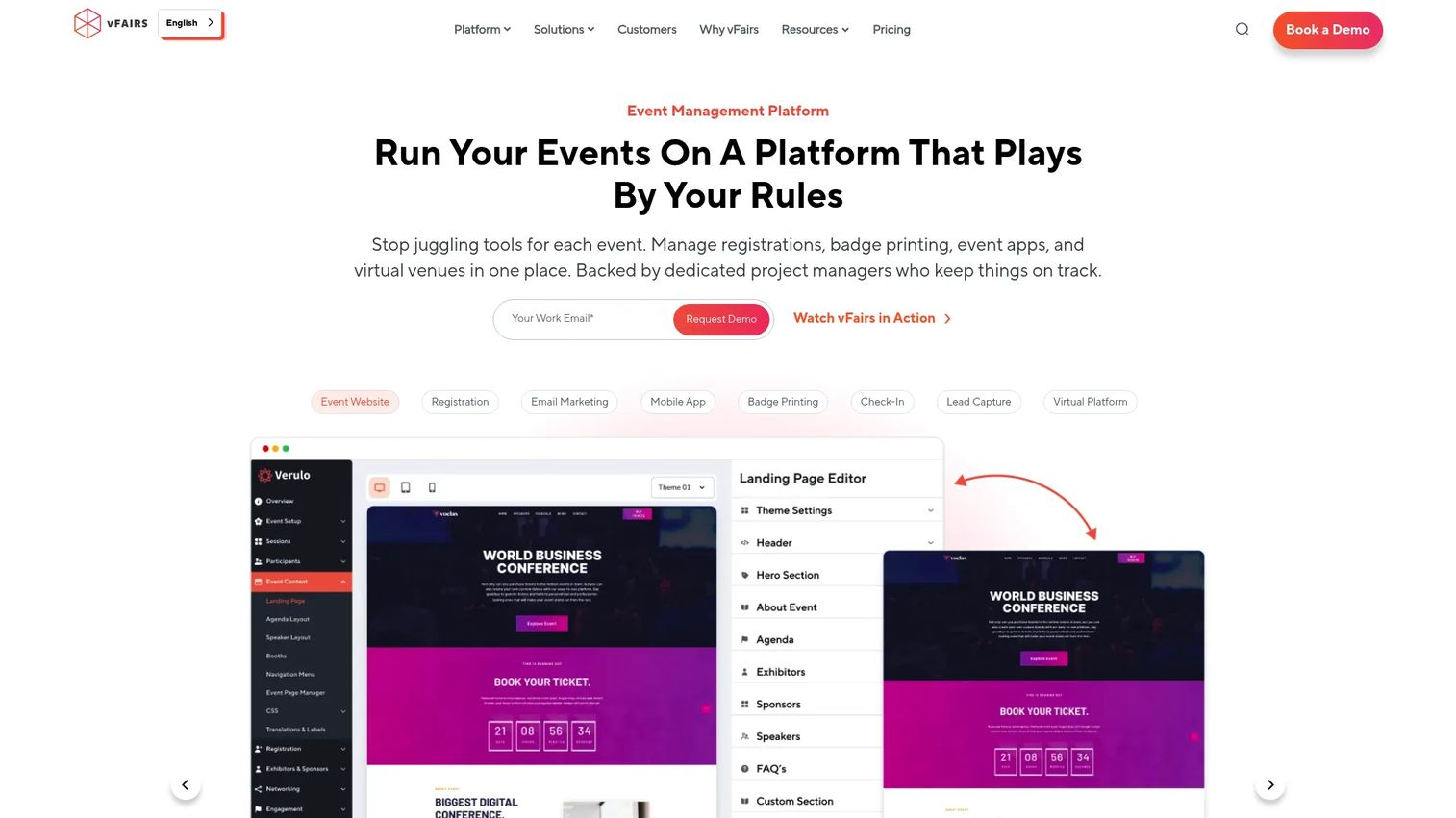
vFairs is an event management platform for in-person, virtual, and hybrid events, with strong support for hiring fairs among conferences and trade shows. It handles registration, ticketing, virtual booths, and networking, which makes it a fit when a career fair is one of several event types your team runs. Because it spans the full event spectrum, it suits organizations that want a single vendor for more than recruiting.
Best for: Organizations running conferences, trade shows, or hybrid hiring fairs that want one platform across many event formats.
Key strengths
- Registration and ticketing: End-to-end attendee management from signup through check-in.
- Virtual events and webinars: Live and on-demand sessions with branded environments.
- Networking and exhibitor tools: Matchmaking and booth management for multi-employer events.
Why choose vFairs: Choose vFairs when your virtual career fair is part of a bigger event program and you need one platform to cover hybrid formats, exhibitor management, and networking at scale. Its breadth is the advantage for teams whose calendar includes more than recruiting.
vFairs pricing: vFairs uses custom pricing. The pricing page states there is no free plan and directs teams to request a quote or demo tied to event size and requirements.
3. SpatialChat
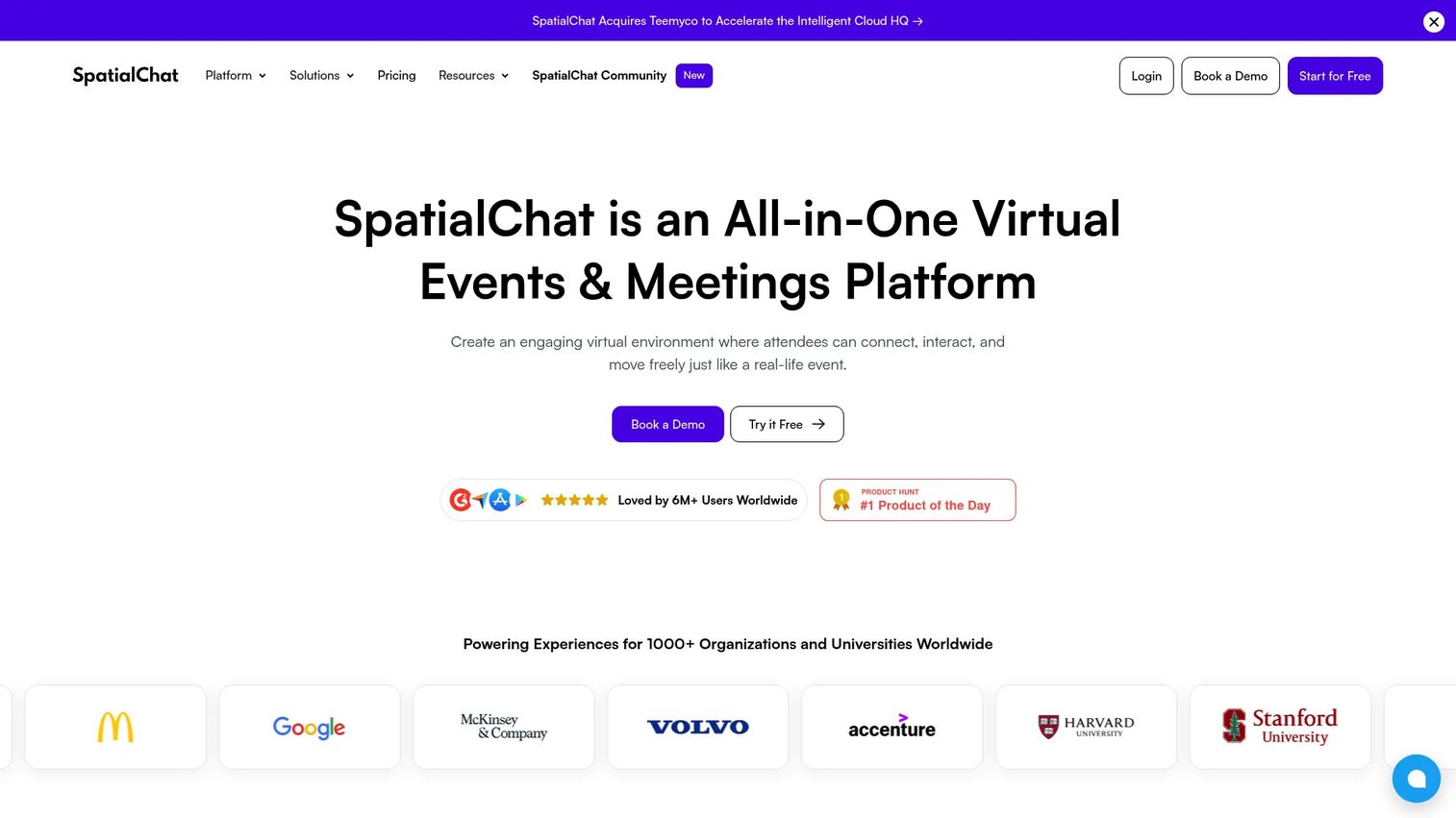
SpatialChat is a virtual events and collaboration platform built around spatially organized online spaces, where attendees move between conversations the way they would in a physical room. For career fairs, that spatial feel raises candidate engagement and makes booth-to-booth networking feel less like clicking through tabs and more like walking a floor. It runs in the browser and covers virtual events, education, and office use cases.
Best for: Event hosts and teams that prioritize engagement and want an immersive, room-like feel for networking and interviews.
Key strengths
- Spatial networking: Attendees move between groups and booths naturally, driving organic conversation.
- Live interaction: Audio, video, and chat for group sessions and 1:1 interviews.
- Flexible event formats: Virtual events, education, and office spaces from one platform.
Why choose SpatialChat: Pick SpatialChat when recruiter engagement and candidate energy matter more than a rigid booth layout. The spatial model keeps people talking, which suits smaller, high-touch fairs and expos where the experience itself is the differentiator.
SpatialChat pricing: Public pricing includes a free tier, a Day Pass at $5 per user per day, a Business plan at $399 per month, and Enterprise plans, with monthly and yearly options shown on the pricing page.
4. Premier Virtual
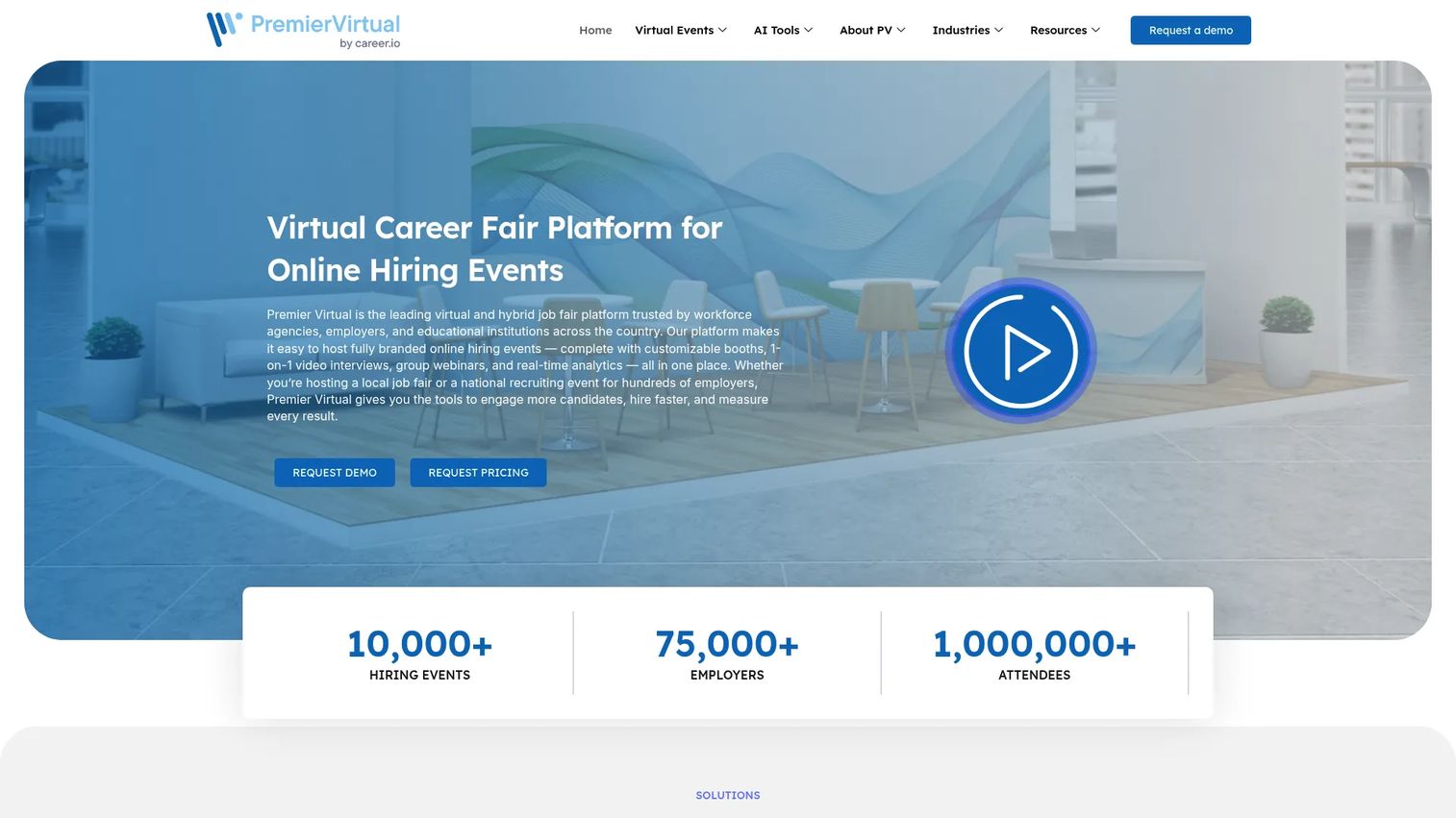
Premier Virtual is a virtual and hybrid job fair platform built for recruiting events, with a base of workforce agencies, employers, and educational institutions. It centers on customizable fairs, 1-on-1 video interviews, group webinars, and real-time reporting, which makes it a fit for organizations running recruiting events on a recurring schedule rather than one-off launches.
Best for: Workforce agencies, employers, and schools running virtual or hybrid hiring events regularly.
Key strengths
- Customizable virtual and hybrid fairs: Branded events that flex between fully virtual and hybrid formats.
- 1-on-1 video interviews and group webinars: Direct recruiter-candidate conversations plus broadcast sessions.
- Real-time analytics and reporting: Live visibility into attendance, engagement, and outcomes.
Why choose Premier Virtual: Choose Premier Virtual when recruiting events are a repeatable part of your calendar and you need branding, interviews, and reporting that hold up across many fairs. Its workforce-agency and employer base signals a fit for public-sector and high-volume employer programs.
Premier Virtual pricing: Pricing is not publicly listed. The site uses request-pricing and demo calls to action, so figures are quoted based on your event needs.
5. Radancy
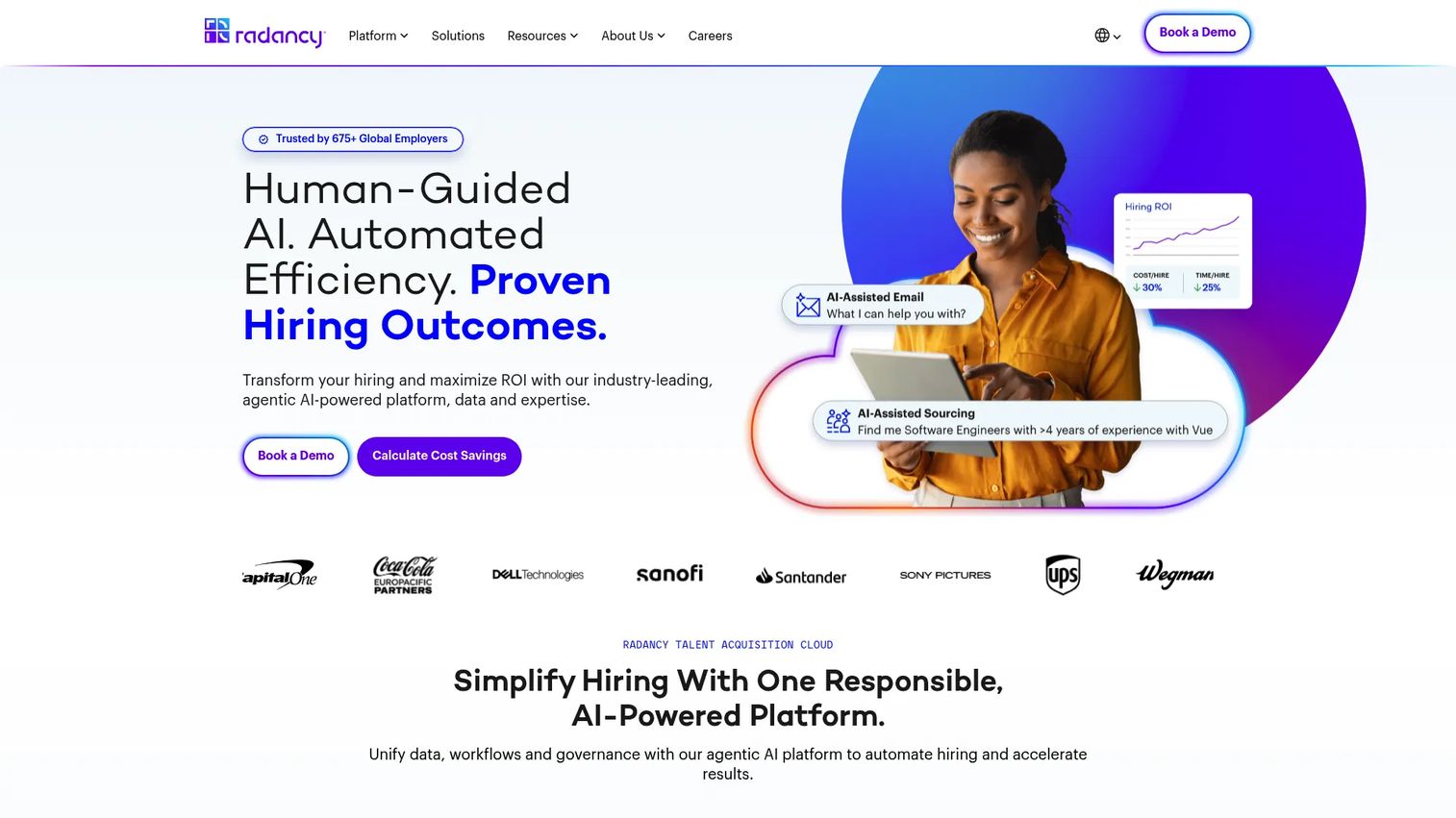
Radancy is an enterprise talent acquisition platform that combines candidate engagement, career-site infrastructure, analytics, and workflow automation, with hiring-event capability sitting inside a broader recruiting cloud. For large employers, the appeal is not a standalone fair tool but a platform where events feed the same CRM, nurture, and analytics layer the rest of talent acquisition runs on.
Best for: Large employers that need an end-to-end talent acquisition platform, not just an event tool.
Key strengths
- AI-powered talent acquisition cloud: A unified platform spanning attraction through hire.
- Candidate engagement and CRM-style nurture: Keep candidates warm before and after events.
- Screening and scheduling automation: Move candidates through the funnel with less manual work.
Why choose Radancy: Choose Radancy when a virtual career fair is one channel inside a large, always-on recruiting operation. Enterprise talent acquisition teams get event capability plus the CRM, career-site, and analytics depth to connect fairs to the wider hiring machine.
Radancy pricing: Radancy does not publish public pricing. The contact and demo pages indicate quote-based enterprise sales tied to program scope.
6. Paradox
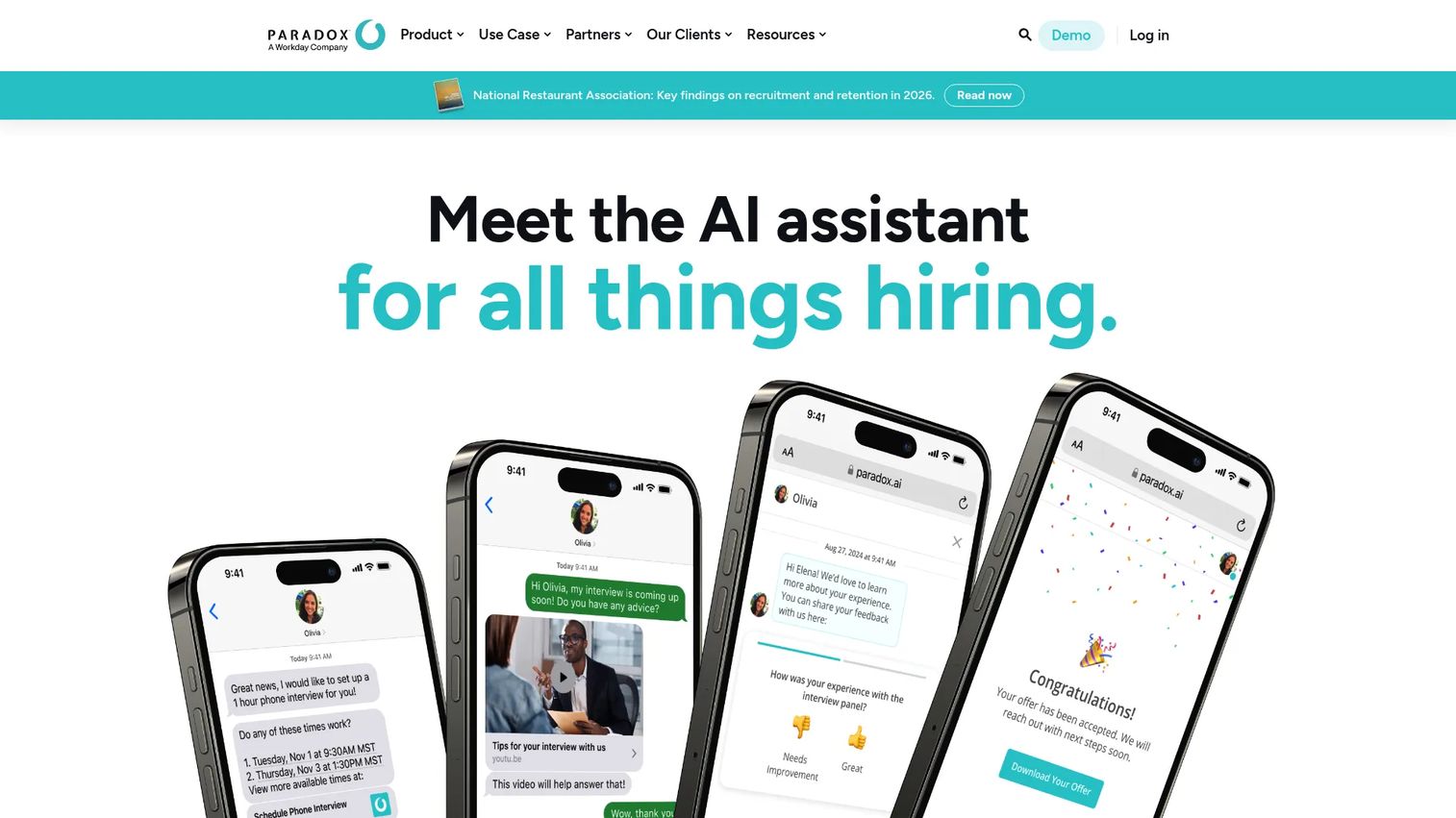
Paradox is AI recruiting software that automates hiring tasks like screening, scheduling, and candidate communication through a conversational interface. It is not a fair platform in the booth-and-lobby sense; it is the automation layer around the workflow. For high-volume hiring, Paradox handles the text-to-apply, screening, and interview scheduling that a busy event generates, so recruiters spend time on conversations instead of coordination.
Best for: High-volume hiring teams that want conversational automation for apply, screening, and scheduling around their events.
Key strengths
- Conversational apply and screening: Text-to-apply flows that qualify candidates fast.
- Interview scheduling automation: Removes the back-and-forth of booking recruiter time.
- Conversational ATS and CRM: Keeps candidate communication moving without manual follow-up.
Why choose Paradox: Choose Paradox when the bottleneck is not the event itself but everything around it. If a fair drives thousands of applicants, conversational automation turns that surge into scheduled interviews without burying recruiters in coordination work.
Paradox pricing: Paradox uses custom pricing. The demo page states pricing is tailored to your hiring needs after a sales conversation, with no public figure shown.
7. VidCruiter
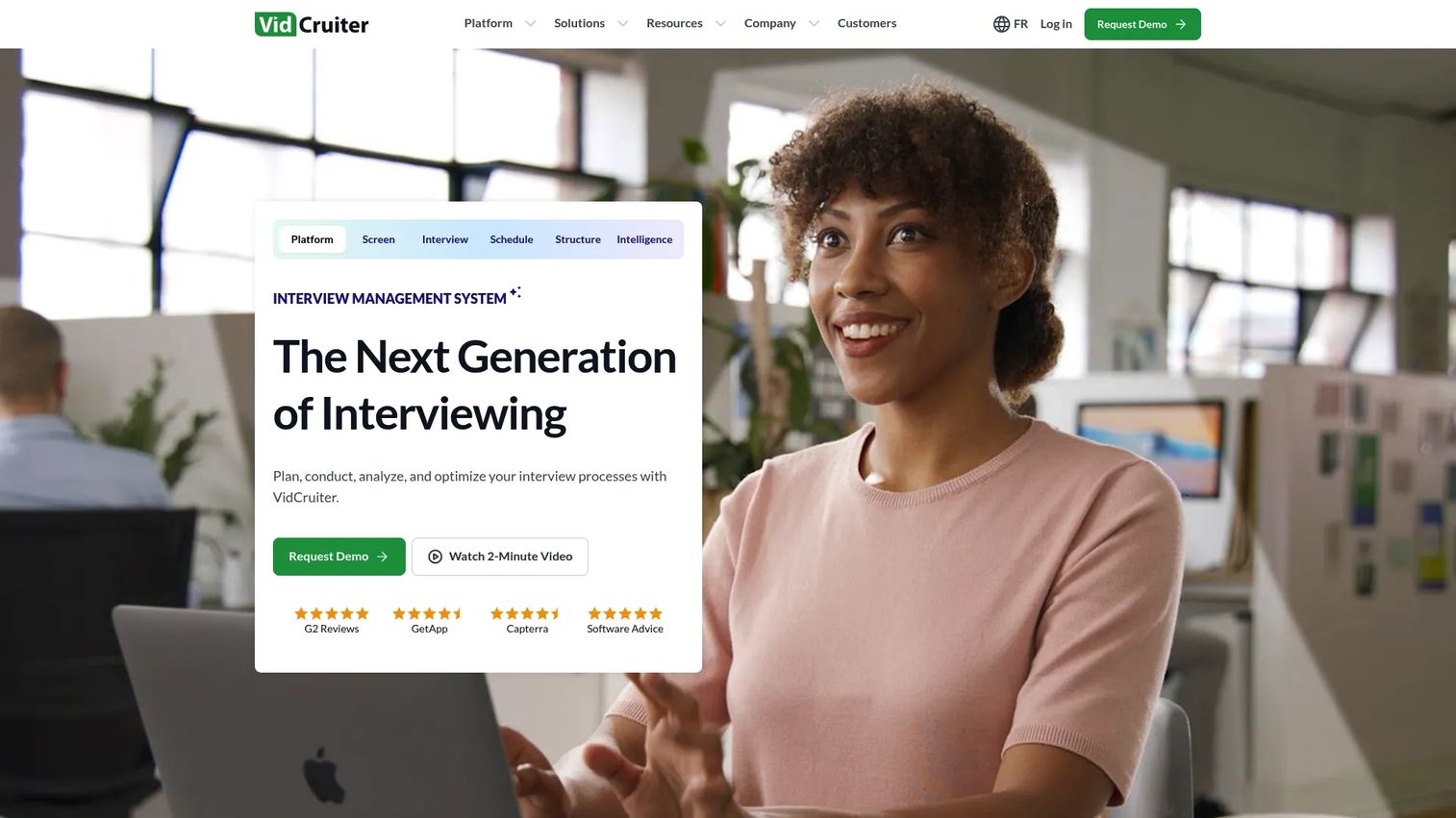
VidCruiter is interviewing and recruiting software focused on structured interviews, scheduling, video interviewing, and ATS workflows. Its strength shows up after the fair, when a flood of candidates needs consistent, fair evaluation. Pre-recorded and live video interviews plus scorecards give recruiters a repeatable way to assess candidates rather than relying on scattered notes.
Best for: Mid-to-large organizations that want strong interview and evaluation functionality tied to their hiring events.
Key strengths
- Pre-recorded and live video interviews: Flexible formats for screening at volume and deep evaluation.
- Interview scheduling automation: Coordinates candidates and interviewers without manual juggling.
- Structured interviews and scorecards: Consistent, comparable evaluation across candidates.
Why choose VidCruiter: Choose VidCruiter when evaluation quality is the priority. Structured interviews and scorecards make hiring decisions defensible and consistent, which matters when an event produces more candidates than any recruiter can assess from memory.
VidCruiter pricing: VidCruiter uses request-only pricing. The site asks teams to submit a form for pricing tied to their specific hiring needs, with no public figure listed.
8. Airmeet
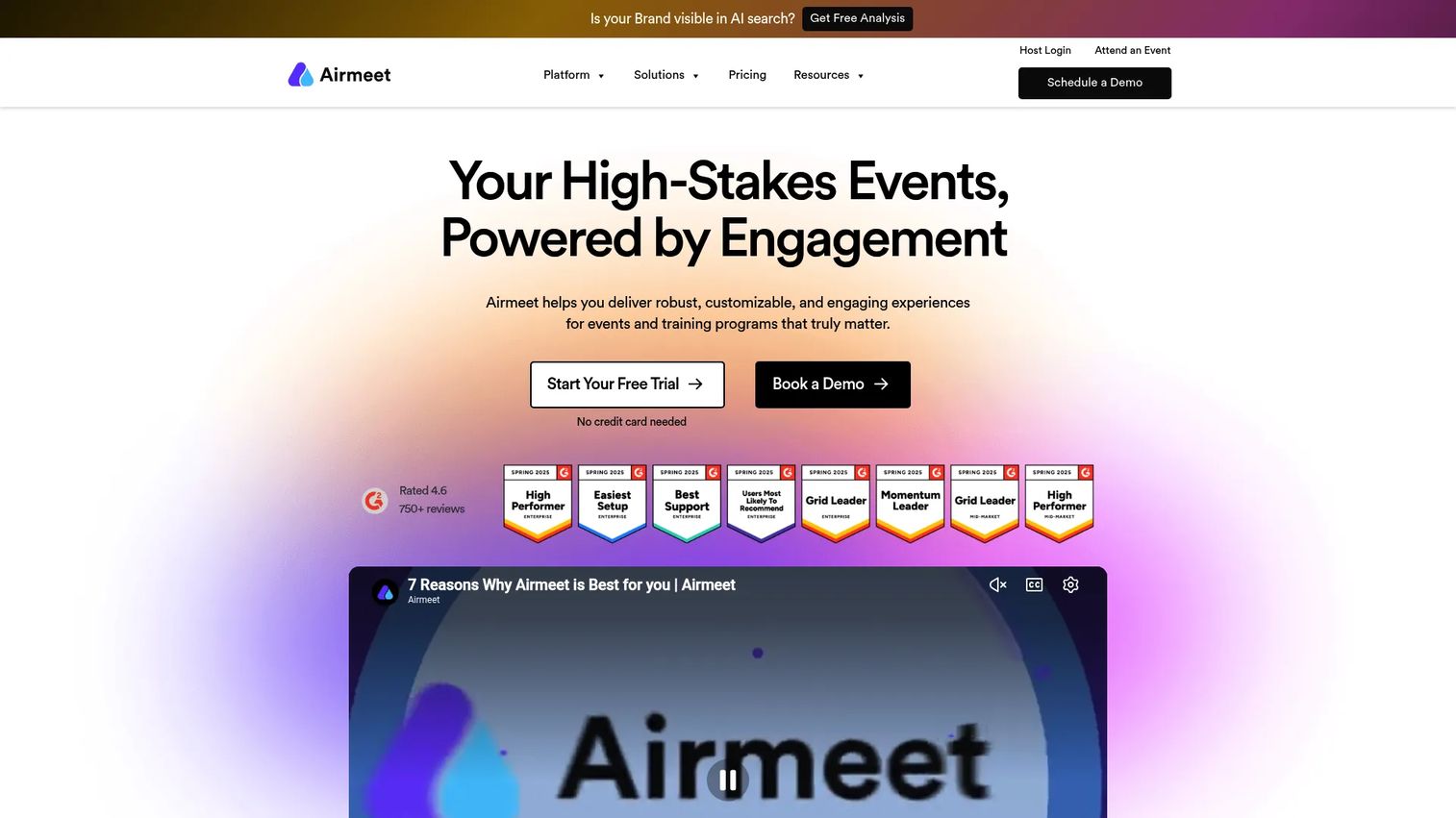
Airmeet is a virtual event and webinar platform with networking, engagement, and event management tools, usable for hiring events among broader event types. It supports live, simulive, and on-demand sessions, multi-track events, and networking, which makes it a fit for teams that want one event platform covering recruiting alongside conferences and webinars.
Best for: Teams hosting webinars, virtual conferences, and hybrid events that also need hiring-event capability with strong engagement.
Key strengths
- Live, simulive, and on-demand webinars: Flexible session formats for keynotes and employer talks.
- Multi-track virtual and hybrid events: Run several parallel sessions across formats.
- Networking and engagement tools: Keep attendees active with interactive features.
Why choose Airmeet: Choose Airmeet when hiring events are one part of a wider event calendar and you want a single platform that handles webinars, conferences, and networking with recruiting mixed in. Its engagement tooling suits teams that value attendee interaction across every event type.
Airmeet pricing: Premium Webinars start at $167 per month billed yearly or $199 per month billed monthly. Events pricing is quote-based, and Managed Events start from $4,999.
Considerations before you buy
Before committing to any online career fair software, run the shortlist through the criteria that actually predict event success.
Browser access and mobile parity
Confirm the platform runs with no downloads on both desktop and mobile. With most candidate traffic arriving on phones, a no-download career fair platform with true mobile parity protects your attendance. Test the candidate entry flow yourself before you buy.
Live interaction and booth structure
A career fair is not a broadcast. Verify the platform supports 1:1 interviews, group sessions, live video chat, branded booths, and queue management. Watch how candidates get routed to the right recruiter and how organizers manage exhibitors.
ATS integration and follow-up
An event that ends without follow-up wastes the pipeline it created. Check for ATS integration and CRM connections so resumes, chats, and interview outcomes flow into your hiring system automatically instead of living in a spreadsheet.
Analytics and recruiter engagement
You cannot improve what you cannot measure. Look for booth visits, chat volume, interview bookings, attendance, and conversion reporting. Strong analytics turn a one-off fair into a repeatable, defensible channel.
Accessibility and compliance
Verify device compatibility, captions, language support, and data-handling practices like GDPR. Accessibility widens your candidate pool and keeps public-sector and university programs compliant.
Conclusion
The right virtual career fair platform depends on what job the event has to do. EasyVirtualFair is the strongest overall fit for browser-based hiring events with transparent, event-based pricing. vFairs and Airmeet suit teams running fairs inside a broader event calendar. SpatialChat wins on immersive, engagement-first networking. Premier Virtual fits recurring workforce and employer events. For enterprise depth, Radancy connects fairs to a full talent acquisition platform, Paradox automates the high-volume workflow around events, and VidCruiter brings structured interview and evaluation rigor.
Next step: pick two or three finalists and test them against your real event format, hiring volume, and integration needs. Run the candidate entry flow on a phone, confirm the ATS integration works with your stack, and check that the analytics answer the questions your team will ask after the event. The platform that survives that test is the one worth buying.
FAQs
A virtual career fair platform is software that hosts online hiring events with branded booths, candidate-recruiter messaging, live video, scheduling, and analytics. It replaces a physical fair with a coordinated browser-based event that scales across many employers and candidates at once.
On the best platforms, no. A browser-based virtual career fair runs entirely in the browser with no plugins or installs, which matters because most candidate traffic now arrives on mobile. Every download screen is a point where candidates drop off, so a no-download career fair platform protects attendance.
A webinar broadcasts one presenter to a passive audience. A virtual career fair platform supports many employer booths, 1:1 interviews, group sessions, resume capture, and candidate-recruiter interaction happening in parallel. The difference is coordination: fairs route people to the right recruiter and track engagement per employer.
Branding, accessibility, booth capacity, session control, and reporting. A campus fair might host dozens of employers and thousands of students in one afternoon, so the platform needs to segment booths, support every device, and produce reports the career office can share with faculty and employers.
Yes, and it should. ATS integration moves resumes, chat transcripts, and interview outcomes from the event into your hiring system automatically. Without it, the pipeline a fair creates gets stuck in exports and spreadsheets, and follow-up slows down or breaks entirely.
Track booth visits, chat volume, interview bookings, session attendance, and conversion into applicants or pipeline. Strong analytics let you compare employers, see which booths drove real conversations, and prove the event worked well enough to run again.
Pricing ranges from per-event fees to annual plans. EasyVirtualFair publishes a starting figure of $1,500 per event, SpatialChat offers tiered plans from $5 per user per day, and Airmeet lists Premium Webinars from $167 per month. Enterprise-focused platforms like vFairs, Radancy, Paradox, Premier Virtual, and VidCruiter quote custom pricing based on event size and program scope.
Prioritize browser access and mobile compatibility so candidates join from any device, add captions and language support for sessions, and confirm the platform meets data-handling standards like GDPR. Accessibility widens your candidate pool and keeps university and public-sector programs compliant.