Your buyer doesn't just need a VPN replacement. They need secure access to SaaS apps, private applications, the internet, and GenAI tools without routing every decision through three separate security products that don't share policy context.
That's the problem security service edge (SSE) was built to solve. The global SSE market reached $7.6 billion in 2025 and is projected to grow to $36.9 billion by 2033, according to Grand View Research (2026). Meanwhile, 79% of organizations plan to implement SSE within 24 months, up from 69% in 2024, per the 2025 SSE Adoption Report.
The challenge for presales and security teams isn't awareness. It's knowing which platform actually fits the buyer's identity stack, traffic flows, data risk profile, and operating model before you schedule the first POC call.
This guide cuts through that. Each section covers capability fit, integration requirements, and what to validate before you commit to a shortlist.
What's inside
This guide compares 15 security service edge platforms for presales, security architects, and IT teams evaluating SSE fit in 2026. Tools were selected based on SSE market visibility, peer-review presence, and relevance across core SSE capabilities.
Selection criteria:
- Coverage across CASB, SWG, ZTNA, FWaaS, and DLP
- Enterprise deployment fit and identity integration depth
- Zero Trust access model support
- Visibility, reporting, and policy management quality
- Implementation complexity and POC readiness
TL;DR
- Best overall enterprise SSE platform: Zscaler Zero Trust Exchange for large organizations standardizing on Zero Trust access
- Best for data-centric cloud security: Netskope One SSE for teams where SaaS visibility and DLP drive the decision
- Best for Palo Alto Networks teams: Palo Alto Networks Prisma Access for environments already running NGFW or Cortex
- Best for Cisco environments: Cisco Secure Access for teams standardizing around Cisco infrastructure
- Best for converged SASE: Cato SASE Cloud Platform for buyers who want networking and security from one vendor
- Best for lean IT teams: NordLayer for SMB and mid-market teams that need secure access without a heavy enterprise rollout
What is security service edge?
Security service edge is a cloud-delivered security architecture that combines secure access, threat protection, and data protection for users connecting to the internet, SaaS applications, and private applications.
SSE sits on the security side of SASE (Secure Access Service Edge). SASE combines SSE with networking services. The simplest way to frame it for a buyer: SD-WAN plus SSE equals SASE.
Core SSE components:
| SSE component | What it controls |
|---|---|
| CASB (cloud access security broker) | Visibility and policy for SaaS usage |
| SWG (secure web gateway) | Protection for internet and web access |
| ZTNA (Zero Trust network access) | Identity-aware access to private applications |
| FWaaS (firewall as a service) | Cloud-delivered firewall inspection |
| DLP (data loss prevention) | Sensitive data detection and enforcement |
| Threat prevention | Malware, phishing, and risky destination controls |
Why SSE matters in 2026:
The access patterns that perimeter firewalls were designed for no longer match how people work. Hybrid workforce security requires policy that follows the user, not the office. SaaS sprawl means hundreds of sanctioned and unsanctioned apps generate data movement your old proxy never saw. GenAI app usage introduces new DLP risk: Prompts containing customer data, source code, or financial records leaving the network through tools your policies haven't caught up to yet.
VPN replacement is still a major driver, but it's rarely the whole picture. Buyers also need compliance controls, data governance, and reporting that holds up when their security team audits the rollout six months later.
When to use security service edge
Replace VPN-heavy access without opening the network
ZTNA gives users access to specific applications, not broad network segments. Zero Trust access control means a compromised endpoint can't move laterally across the network because access was never granted at the network level to begin with. Presales teams should validate identity provider integration, device posture enforcement, and how traffic steering handles split tunneling before recommending any ZTNA-led migration.
Secure SaaS and GenAI usage without blocking the business
CASB and DLP controls let security teams set policy for sanctioned apps, block unsanctioned ones, and inspect traffic to AI tools before it leaves the network. App risk scoring helps distinguish a business-approved Salesforce upload from an employee pasting client data into a free GenAI summarizer. When validating this capability, test discovery depth, classification accuracy, and whether inline enforcement or API-based enforcement fits the buyer's deployment model.
Consolidate web, cloud, and private app security controls
Combining SWG, FWaaS, and cloud access controls under one policy console reduces the operational overhead of managing separate proxies, firewalls, and CASB tools. Consolidation only delivers on its promise, though, if the platform integrates cleanly with the buyer's identity provider, SIEM, and existing network architecture. That integration chain is worth mapping explicitly before a POC starts.
Security service edge platform comparison
Start with capability fit, not brand recognition. The table below maps each platform to its strongest buyer context, with verified pricing and G2 ratings where available.
| # | Product | Best for | Key differentiator | Pricing | G2 rating |
|---|---|---|---|---|---|
| 1 | Zscaler Zero Trust Exchange | Enterprise Zero Trust programs | Mature cloud-native SSE with broad access controls | Custom pricing | 4.3/5 |
| 2 | Netskope One SSE | Data-centric cloud security | Deep SaaS, web, and DLP policy enforcement | From $213.16/user/year | 4.4/5 |
| 3 | Palo Alto Networks Prisma Access | Palo Alto Networks environments | Cloud-delivered access tied to Palo Alto security stack | Custom pricing | 4.3/5 |
| 4 | Cisco Secure Access | Cisco-centered infrastructure | SSE across private apps, SaaS, and internet | Custom pricing | 4.3/5 |
| 5 | FortiSASE | Fortinet security and networking teams | SASE convergence with Fortinet stack alignment | Custom pricing | 4.5/5 |
| 6 | Cloudflare One | Internet-native distributed teams | SSE delivered through Cloudflare's global edge network | Free; from $7/user/month | 4.6/5 |
| 7 | Cato SASE Cloud Platform | Converged networking and security | Single-vendor SASE with built-in SD-WAN | Custom pricing | 4.5/5 |
| 8 | Versa Unified SASE | Network-led SASE projects | Strong SD-WAN and security convergence | Custom pricing | 4.7/5 |
| 9 | Skyhigh Cloud Platform | SaaS and data governance | CASB and DLP heritage for cloud app protection | Custom pricing | N/A |
| 10 | Forcepoint Data Security Cloud | Data-first security programs | Policy built around sensitive data movement | Custom pricing | 4.2/5 |
| 11 | Check Point SASE | Check Point security customers | SASE tied to Check Point security operations | Custom pricing | 4.5/5 |
| 12 | iboss AI-Powered SASE Platform | AI-aware distributed workforce security | Cloud-native platform with AI security controls | Custom pricing | 4.0/5 |
| 13 | Juniper Secure Edge | Juniper networking environments | SSE capabilities connected to Juniper architecture | Custom pricing | N/A |
| 14 | SonicWall Cloud Secure Edge | SonicWall customer base | Cloud-delivered Zero Trust access and web filtering | Custom pricing | 4.1/5 |
| 15 | NordLayer | SMB and mid-market teams | Accessible secure access with transparent pricing | From $8/user/month | 4.3/5 |
Best security service edge platforms for 2026
Each section below covers ideal fit, core capabilities, what to validate before a POC, and pricing. First mention of each brand links to the official vendor site.
1. Zscaler Zero Trust Exchange
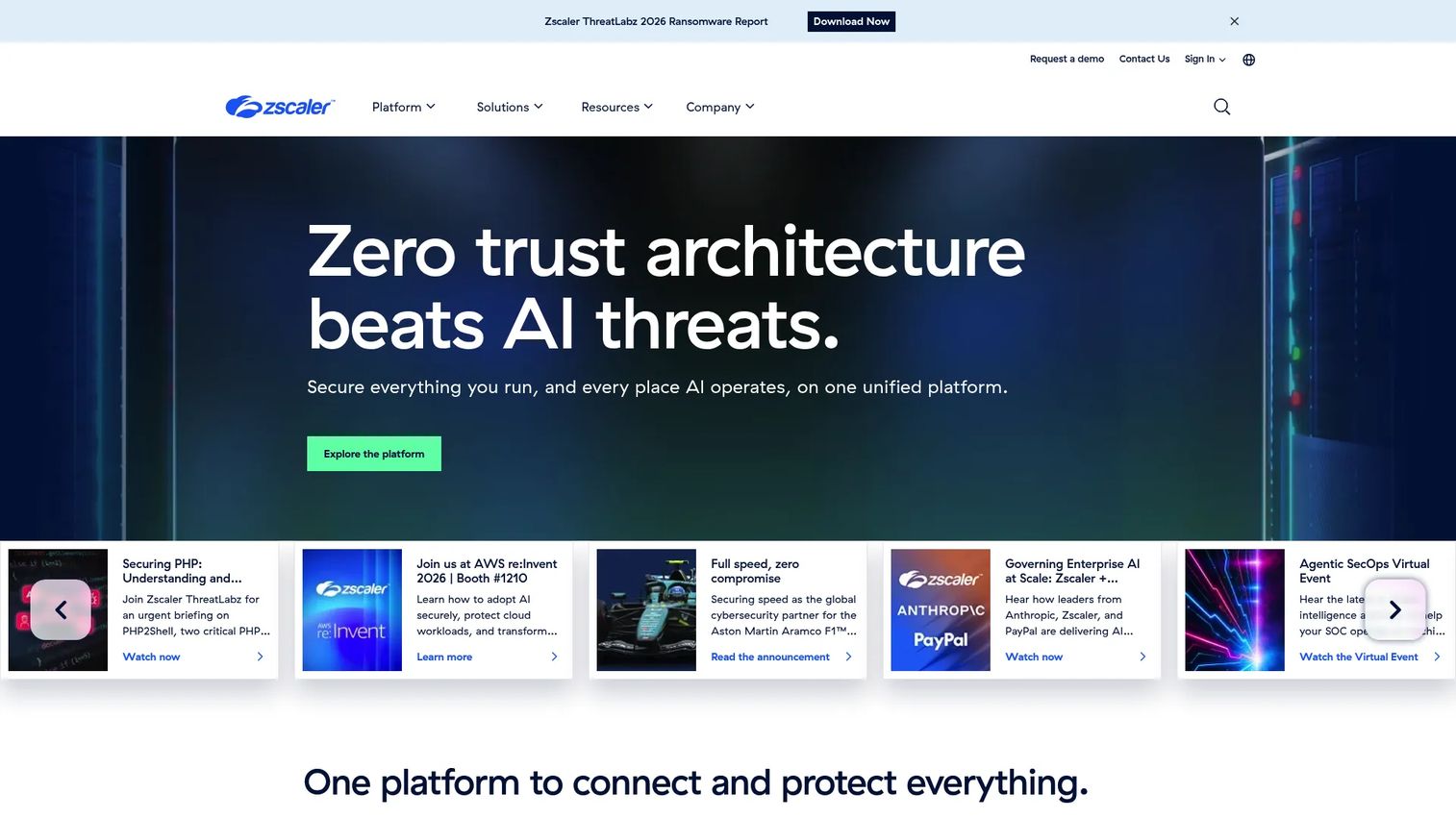
Zscaler Zero Trust Exchange is a cloud-native platform that connects users directly to applications without routing traffic through the corporate network. It enforces least-privileged access based on identity, device context, and policy, covering secure web access, private app access, SaaS control, cloud firewalling, and data protection across a single platform. For enterprise presales teams, Zscaler is frequently on the shortlist in competitive evaluations, which means you need to understand the integration requirements and rollout sequence early.
Best for: Large enterprises replacing perimeter-based firewalls and VPNs with Zero Trust access.
Key features
- Secure web gateway with full TLS/SSL inspection
- Zero Trust network access with least-privileged app connectivity
- Cloud access security broker for SaaS visibility and control
- Data loss prevention across motion, rest, and use
- Attack surface reduction by hiding applications from the internet
Why choose Zscaler Zero Trust Exchange: Zscaler's maturity in enterprise SSE is well established, and its ability to prevent lateral movement through application-level access is a strong fit for security teams retiring traditional perimeter models. Presales teams should validate identity provider integration, traffic steering options, regional performance, and data policy workflows before recommending it for a POC.
Zscaler Zero Trust Exchange pricing: Zscaler prices by quote after a sales assessment; subscription terms are tailored to user count, deployment scale, and selected modules.
G2 rating: 4.3/5
2. Netskope One SSE
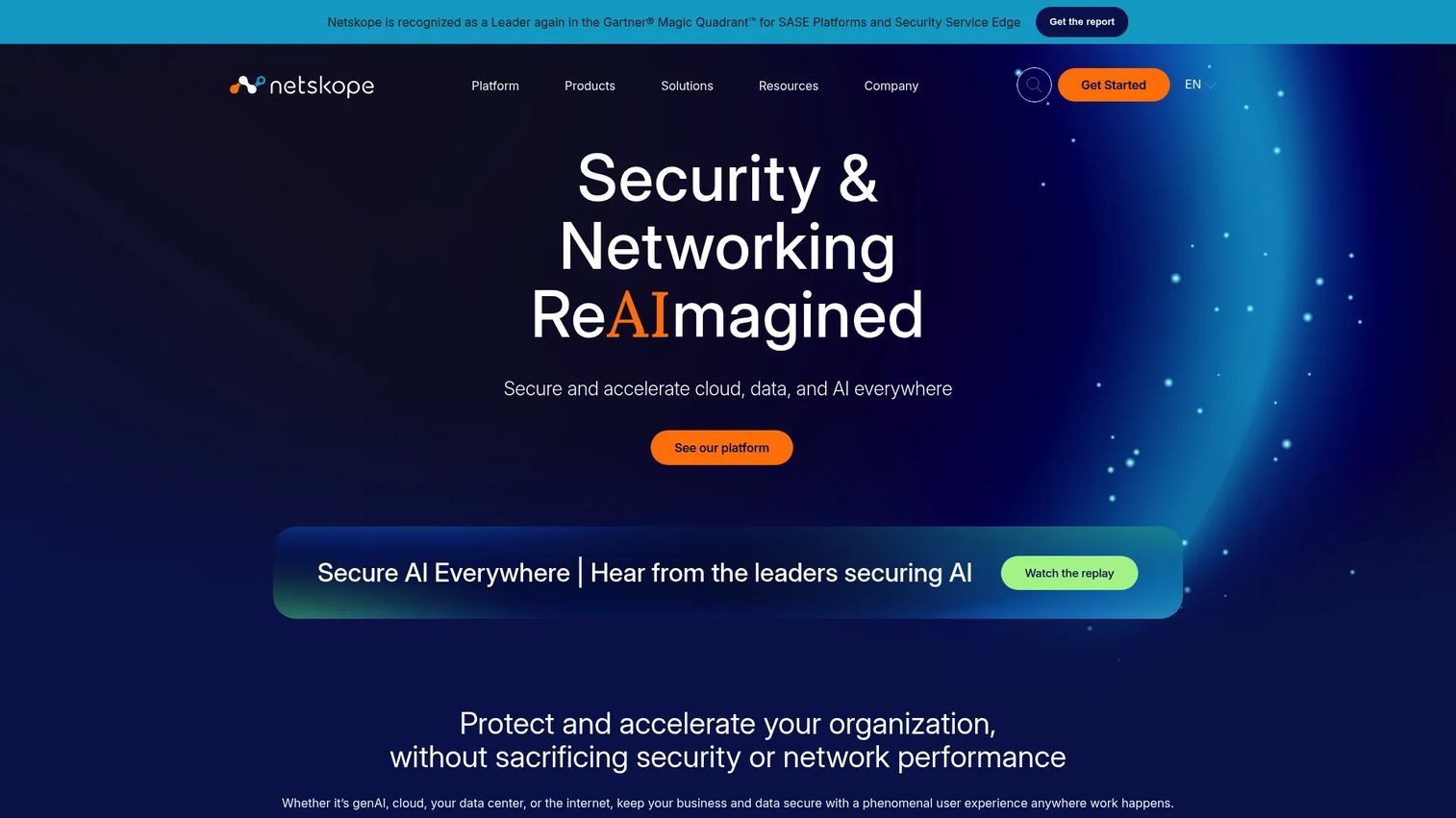
Netskope One SSE is a cloud-delivered platform that unifies web, cloud application, AI, and private application security under a single policy engine. Its data-centric design means DLP and CASB controls aren't bolt-ons. They're core to how the platform enforces policy across sanctioned SaaS, unsanctioned cloud apps, and GenAI tools. For buyers where SaaS risk and data movement drive the SSE decision, Netskope deserves early evaluation.
Best for: Security teams that need detailed cloud, SaaS, web, and data protection controls for hybrid workforces.
Key features
- Cloud access security broker with app discovery and risk scoring
- Next-generation secure web gateway
- Zero Trust network access through Private Access
- Advanced data loss prevention with granular classification
- Firewall as a service and remote browser isolation
Why choose Netskope One SSE: Netskope's policy granularity for SaaS and cloud activity visibility stands out for data-centric security programs. Presales should validate DLP classification depth, app discovery scope, integration with existing identity providers, and SIEM connectivity during evaluation.
Netskope One SSE pricing: Netskope publishes per-user, per-year pricing across four SSE packages. The SSE Professional Package starts at $213.16 per user per year; SSE Enterprise is $257 per user per year. All-Apps tiers (covering additional app categories) start at $403 and $507 per user per year respectively. These figures are from Netskope's official price-list PDF dated August 2024; confirm current rates with Netskope directly.
G2 rating: 4.4/5
3. Palo Alto Networks Prisma Access
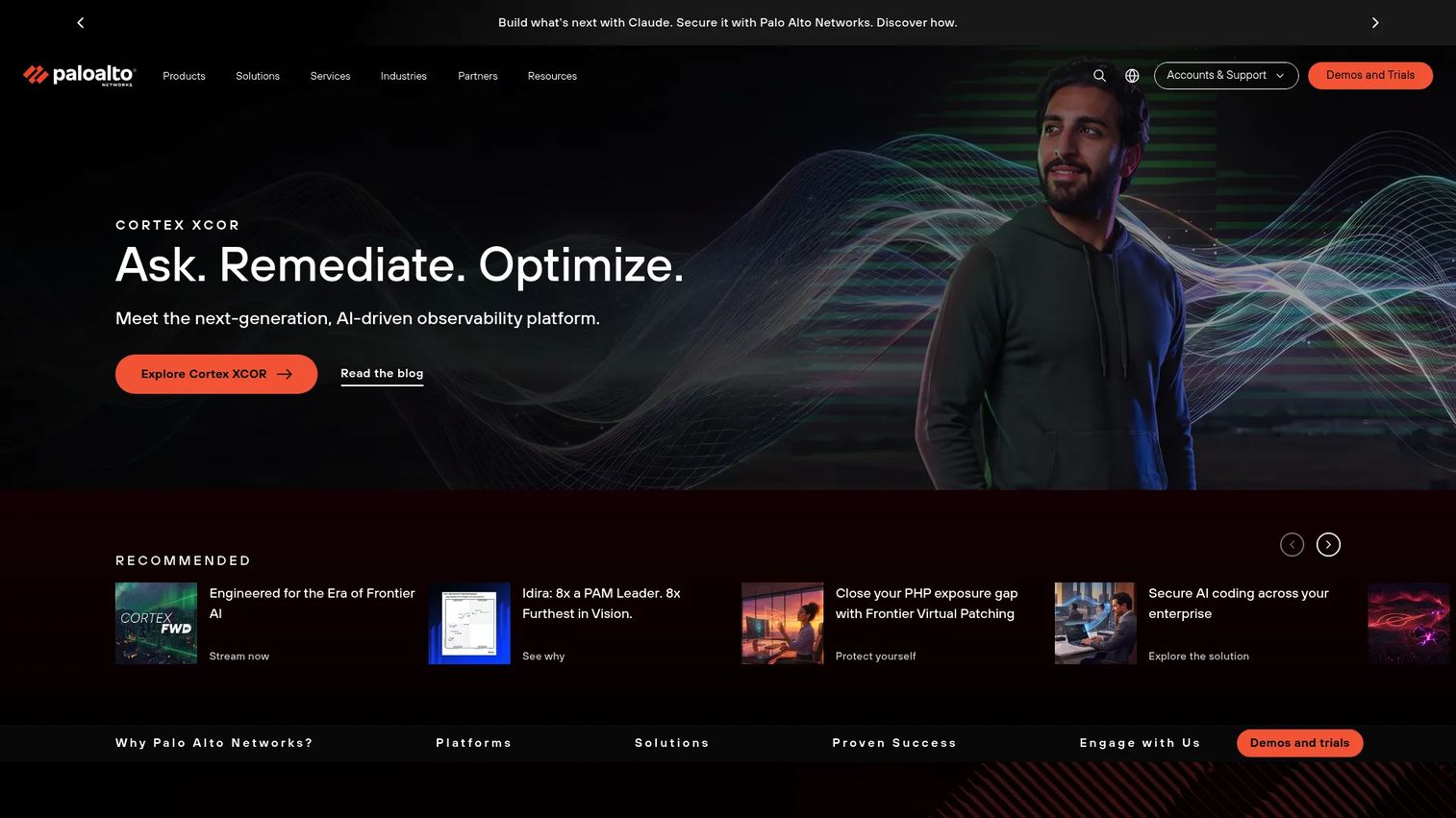
Palo Alto Networks Prisma Access is a cloud-delivered security access platform that extends next-generation firewall capabilities to remote users, branch offices, and private applications. Organizations already running Palo Alto Networks firewalls, Cortex, or cloud security tooling benefit from policy consistency across on-premises and cloud enforcement points. Prisma Access connects GlobalProtect remote user access, ZTNA Connector for private apps, and next-generation security services through a unified platform.
Best for: Enterprises already operating Palo Alto Networks firewalls or security operations tools who want consistent policy in the cloud.
Key features
- Secure mobile user access through GlobalProtect and Explicit Proxy
- Zero Trust network access connector for private application access
- Cloud-based protection for remote networks and branch locations
- Next-gen firewall services including URL filtering, DNS Security, and WildFire
- Identity integrations with SAML, MFA, LDAP, Kerberos, RADIUS, and Cloud Identity Engine
Why choose Palo Alto Networks Prisma Access: Platform continuity matters most here. Enterprises that have invested in Palo Alto Networks security operations see the most return because existing policy frameworks, logging, and identity configurations carry over. Presales teams should validate licensing structure, traffic steering options, onboarding sequences, and how Prisma Access policy maps to existing firewall rules.
Palo Alto Networks Prisma Access pricing: Palo Alto Networks directs buyers to contact sales for Prisma Access pricing. Pricing reflects user count, feature set, and subscription term.
G2 rating: 4.3/5
4. Cisco Secure Access
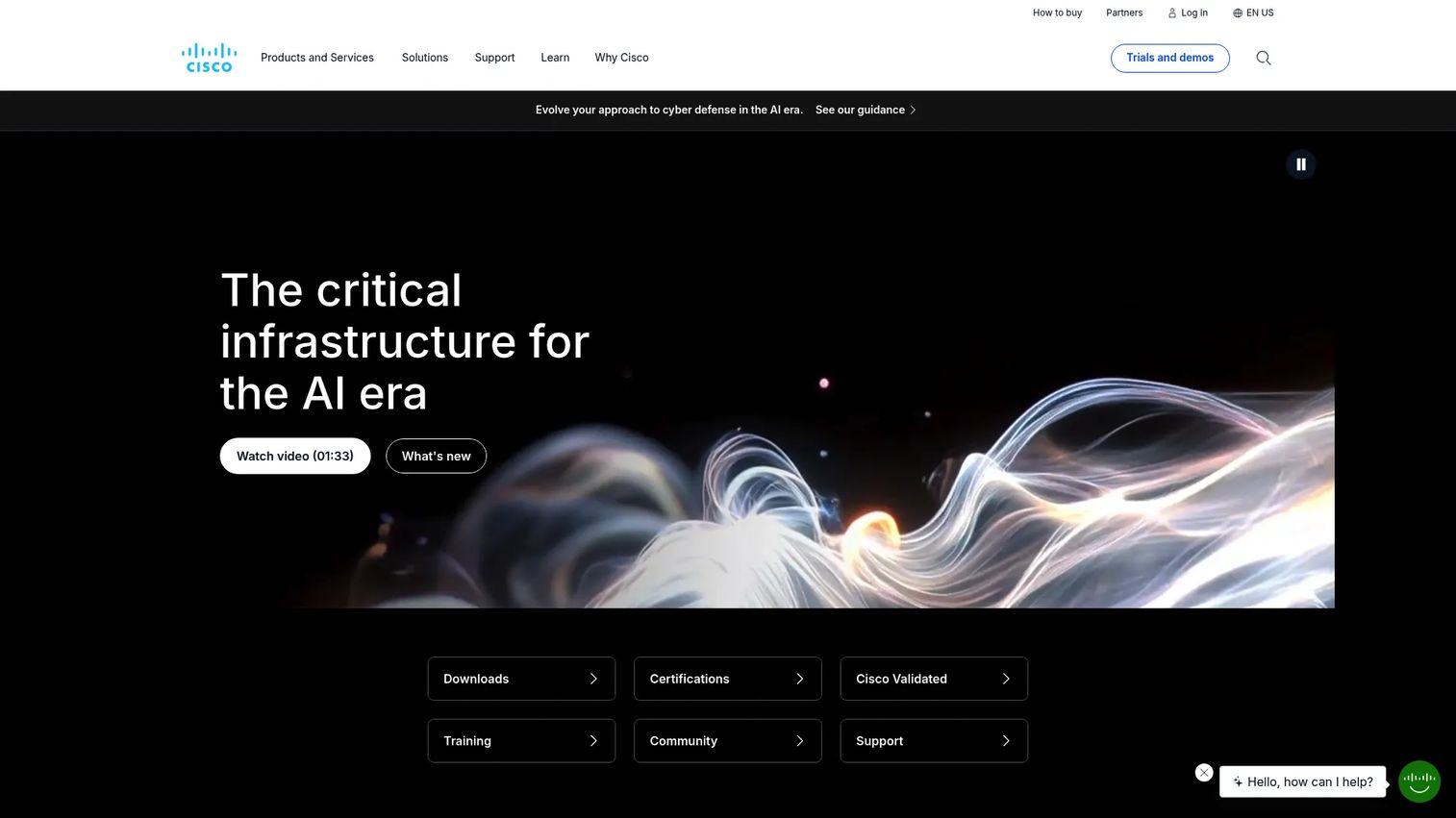
Cisco Secure Access is a cloud-delivered SSE platform covering Zero Trust network access, secure web gateway, CASB, FWaaS, VPN as a service, DLP, and remote browser isolation. For organizations deep in Cisco networking, identity, or endpoint products, Secure Access offers a path to consolidated cloud-delivered security that fits the existing operational model. Cisco has also added AI application and agent visibility controls, addressing a growing requirement in enterprise security programs.
Best for: Security and networking teams standardizing around Cisco infrastructure who need consolidated cloud-delivered access controls.
Key features
- Zero Trust network access for private application access
- Secure web gateway with DNS, web, and application filtering
- Cloud access security broker for SaaS visibility
- Firewall as a service and VPN as a service
- AI application visibility, inspection, and policy guardrails
Why choose Cisco Secure Access: Operational familiarity is the core argument. Teams running Cisco identity, endpoint, or networking products avoid integrating a third-party SSE layer that may conflict with existing tooling. Presales teams should validate compatibility with existing Cisco products, identity provider setup, endpoint requirements, and how policy migrates from legacy Cisco security configurations.
Cisco Secure Access pricing: Cisco prices Secure Access after a sales engagement; pricing is calculated dynamically in Cisco Commerce based on user count, subscription term (12, 36, or 60 months), and selected tier. Three tiers exist: Secure Access Essentials, Secure Access Advantage, and Secure Access DNS Defense.
G2 rating: 4.3/5
5. FortiSASE
FortiSASE is Fortinet's cloud-delivered SASE platform for securing hybrid users' access to internet, private, and SaaS applications. It covers SWG, FWaaS, ZTNA, CASB, DLP, secure browser, and secure SD-WAN from a single agent and policy console, with AI-powered FortiGuard threat protection built in. For organizations already running FortiGate firewalls, FortiClient endpoints, or Fortinet SD-WAN, FortiSASE is the natural path to extending security controls to remote users.
Best for: Fortinet customers extending unified security and networking controls to remote users and cloud access.
Key features
- Secure internet access with AI-powered FortiGuard threat protection
- Zero Trust network access for private application access
- CASB controls and digital experience monitoring
- Secure SD-WAN alignment and agent-based or agentless connectivity
- Unified management with single agent and policy console
Why choose FortiSASE: The appeal is SASE convergence within an existing Fortinet security program. Rather than integrating a separate SSE vendor, teams can extend their current policy, logging, and management workflows to the cloud. Presales should validate how FortiSASE works alongside existing FortiGate deployments, user traffic steering options, and branch use cases before recommending it.
FortiSASE pricing: Fortinet prices FortiSASE after a sales consultation.
G2 rating: 4.5/5
6. Cloudflare One

Cloudflare One is Cloudflare's SASE platform, combining Zero Trust security and network services delivered through Cloudflare's global edge network. It covers ZTNA, SWG, CASB, DLP, browser isolation, email security, and WAN services. What sets Cloudflare One apart in the SSE market is its accessible entry point: A free tier for teams under 50 users or proof-of-concept tests, and a pay-as-you-go option starting at $7 per user per month. That makes it one of the few platforms where technical teams can self-evaluate without a formal sales cycle.
Best for: Teams that want SSE capabilities delivered through a large global edge network, including internet-native and distributed organizations.
Key features
- Zero Trust network access with identity-based application access
- Secure web gateway with DNS, network, and HTTP filtering
- Cloudflare Tunnel for outbound-only private network connectivity
- Cloud access security broker and data loss prevention
- Browser isolation and digital experience monitoring
Why choose Cloudflare One: Cloudflare One's global edge delivery and accessible pricing make it a strong fit for distributed or internet-native teams, as well as presales teams running self-directed technical evaluations. Validate identity provider integration, device posture checks, logging depth, data protection control depth, and migration requirements from existing proxy or VPN tools before committing.
Cloudflare One pricing: Free plan available for teams under 50 users. Pay-as-you-go plan starts at $7 per user per month. Contract plans with full SASE or workspace security features are priced annually per user; contact Cloudflare for contract rates.
G2 rating: 4.6/5
7. Cato SASE Cloud Platform
Cato SASE Cloud Platform is a cloud-native platform that converges networking and security on a global private backbone. It delivers FWaaS, SWG, IPS, CASB, DLP, remote browser isolation, ZTNA, and SD-WAN from a single vendor. The convergence story is the key differentiator: Buyers that want to retire separate networking and security stacks in one motion, using SD-WAN plus SSE equals SASE as the architectural guide, will find Cato's single-console approach operationally cleaner than stitching together separate tools.
Best for: Enterprises looking for a single-vendor SASE model where SD-WAN and cloud-delivered security come from the same platform.
Key features
- Global private backbone with built-in SD-WAN and site connectivity
- Cloud-delivered security: FWaaS, SWG, IPS, CASB, DLP, RBI, ZTNA
- Unified cloud management console and API
- Endpoint protection and detection capabilities
- AI security controls for public and private AI application usage
Why choose Cato SASE Cloud Platform: Cato suits organizations that want to avoid integrating a separate networking vendor with a separate SSE vendor. Single-console management reduces operational overhead for teams running multiple sites and remote users. Presales teams should validate branch connectivity, last-mile requirements, migration complexity from existing SD-WAN or MPLS, and security control depth during discovery.
Cato SASE Cloud Platform pricing: Cato uses user-based and site-bandwidth licensing with modular products.
G2 rating: 4.5/5
8. Versa Unified SASE
Versa Unified SASE combines secure SD-WAN, SSE capabilities, analytics, and centralized management in a single platform. Its single-pass architecture processes networking and security in one flow, reducing latency and policy inconsistency across sites. For buyers where network transformation is as important as security modernization, Versa's SD-WAN heritage and converged SASE approach are worth evaluating alongside pure SSE options.
Best for: Enterprises combining SD-WAN modernization with cloud-delivered security, particularly multi-site and service provider deployments.
Key features
- Secure SD-WAN with application-aware routing and integrated NGFW, IDS/IPS
- SSE covering Zero Trust access, CASB, SWG, FWaaS, DLP, and advanced threat protection
- Unified networking and security management console
- Single-pass architecture with unified data lake
- Globally distributed SASE fabric with full-mesh connectivity
Why choose Versa Unified SASE: Versa's strength is in network-led SASE projects where SD-WAN is a first-class citizen alongside security. Organizations prioritizing branch architecture and multi-site connectivity benefit from its convergence depth. Presales teams should validate deployment modes, branch architecture fit, policy management, and security operations handoff requirements during evaluation.
Versa Unified SASE pricing: Versa directs buyers to contact sales.
G2 rating: 4.7/5
9. Skyhigh Cloud Platform
Skyhigh Cloud Platform is a cloud-native, data-aware security platform unifying protection for web, cloud applications, email, and private applications through a single console. Its CASB and DLP heritage, originally built from the McAfee enterprise security portfolio, gives it strong cloud application governance depth. Organizations with complex SaaS usage, unmanaged device access, and strict data classification requirements will find Skyhigh's unified data policy approach worth evaluating.
Best for: Teams prioritizing cloud application governance and sensitive data protection across managed and unmanaged devices.
Key features
- Pervasive DLP with unified data classification and incident management
- Secure web gateway, CASB, ZTNA private access, and CNAPP capabilities
- Advanced threat protection with UEBA and remote browser isolation
- Gateway anti-malware sandboxing for cloud access
- Three integrated SSE product suites: Essential, Advanced, and Complete
Why choose Skyhigh Cloud Platform: Skyhigh's data-centric design means DLP policy applies consistently across web, cloud, email, and private app channels without maintaining separate rule sets per vector. Presales teams should validate data classification depth, sanctioned SaaS controls, unmanaged device support, and reporting workflows that map to the buyer's compliance requirements.
Skyhigh Cloud Platform pricing: Skyhigh lists Essential, Advanced, and Complete SSE product suites.
10. Forcepoint Data Security Cloud
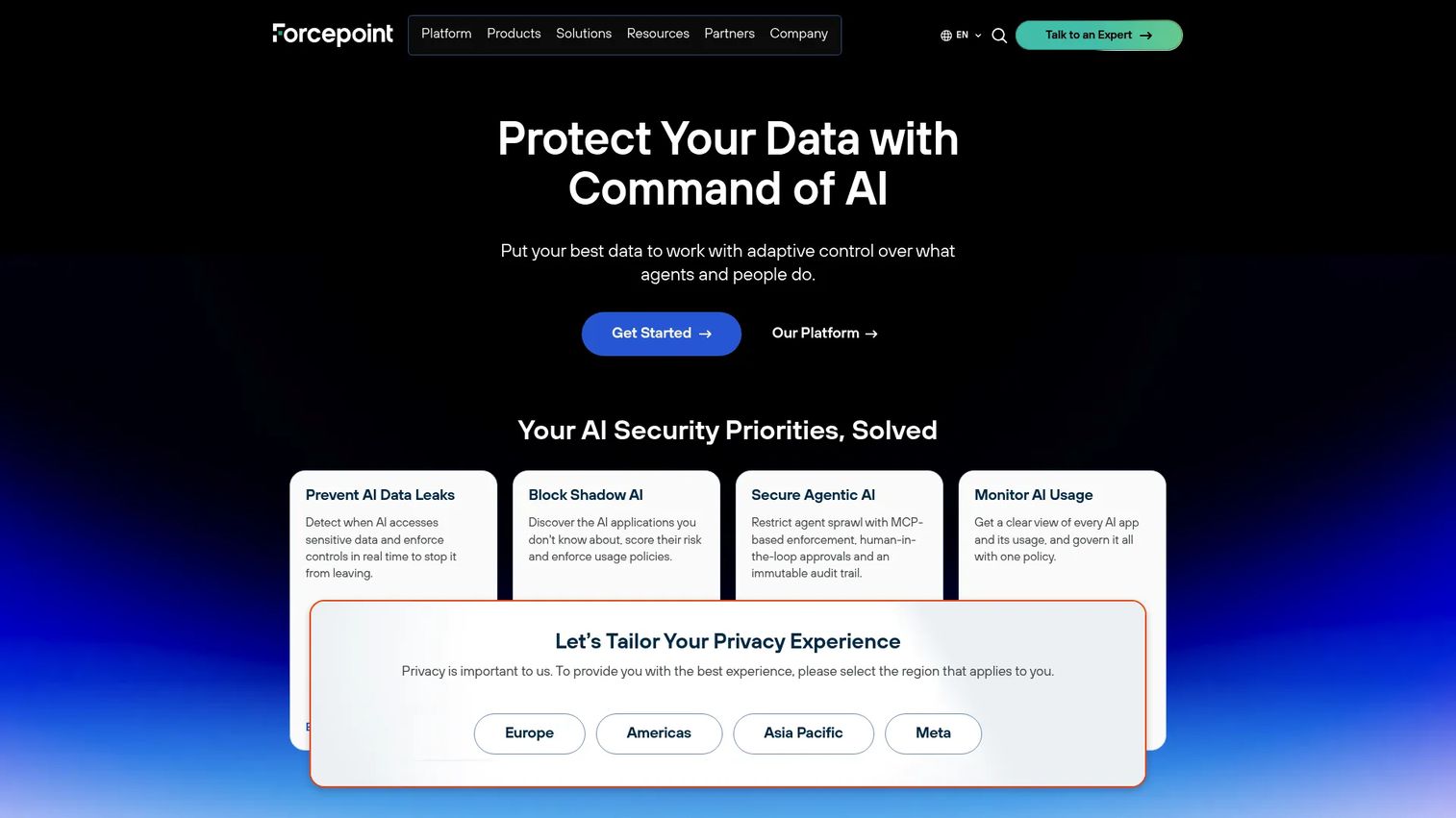
Forcepoint Data Security Cloud is an AI-powered data security platform that unifies discovery, classification, prioritization, remediation, and protection across cloud, web, email, endpoints, and applications. Its risk-adaptive protection model adjusts enforcement based on user behavior context, which matters for buyers that need to protect sensitive data without blanket blocking policies that frustrate productive users. For organizations where DLP is the primary SSE buying trigger, not VPN replacement or SaaS access consolidation, Forcepoint deserves a dedicated evaluation track.
Best for: Enterprise and government organizations where data protection is the primary driver behind the SSE program.
Key features
- Data loss prevention across cloud, web, email, and endpoint channels
- AI-powered data discovery and classification
- Data detection and response with behavioral monitoring
- Unified policy administration and incident management
- Risk-adaptive protection and contextual enforcement
Why choose Forcepoint Data Security Cloud: Forcepoint's focus runs toward data protection depth rather than broad networking convergence. Presales teams running deals where the security buyer leads with "we need to know where our sensitive data goes" should validate structured data handling, unstructured data coverage, endpoint context, cloud application scope, and incident response workflows before recommending it.
Forcepoint Data Security Cloud pricing: Forcepoint prices by quote; contact a Forcepoint expert for current rates.
G2 rating: 4.2/5
11. Check Point SASE
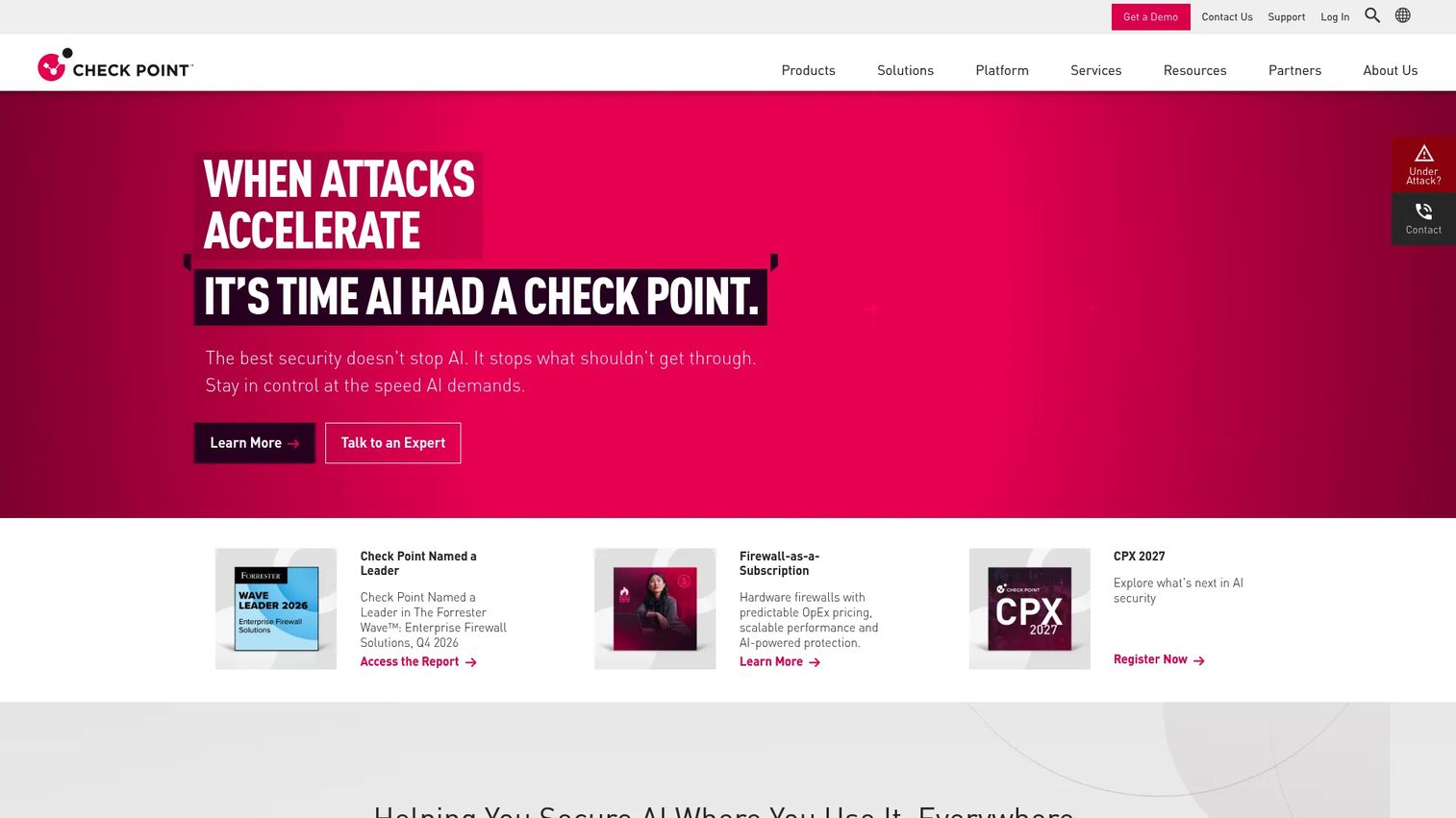
Check Point SASE is a cloud-delivered platform combining secure internet access, Zero Trust private access, SaaS security, SD-WAN, and AI security for distributed users and branches. Check Point's SASE offering connects to its broader security operations portfolio, which makes it a natural fit for organizations already running Check Point firewalls, threat prevention, or security management tools. The workforce AI security component, covering AI app discovery, governance, and contextual DLP, is a 2026 differentiator worth evaluating for buyers with GenAI usage concerns.
Best for: Check Point security customers extending existing operations into cloud-delivered SASE and Zero Trust access.
Key features
- Zero Trust network access with full-mesh private connectivity
- Hybrid secure web gateway with malware, phishing, DNS, and URL protection
- SaaS security with inline and API-based enforcement
- SD-WAN with application path optimization and failover
- Workforce AI security with AI app discovery, governance, and contextual DLP
Why choose Check Point SASE: Security operations continuity is the main argument for existing Check Point environments. Policy, logging, and event management can align with what the security operations team already knows. Presales teams should validate identity integration depth, branch use cases, policy migration from existing Check Point tools, and event visibility into SIEM before shortlisting.
Check Point SASE pricing: Check Point prices after a demo or sales engagemen.
G2 rating: 4.5/5
12. iboss AI-Powered SASE Platform
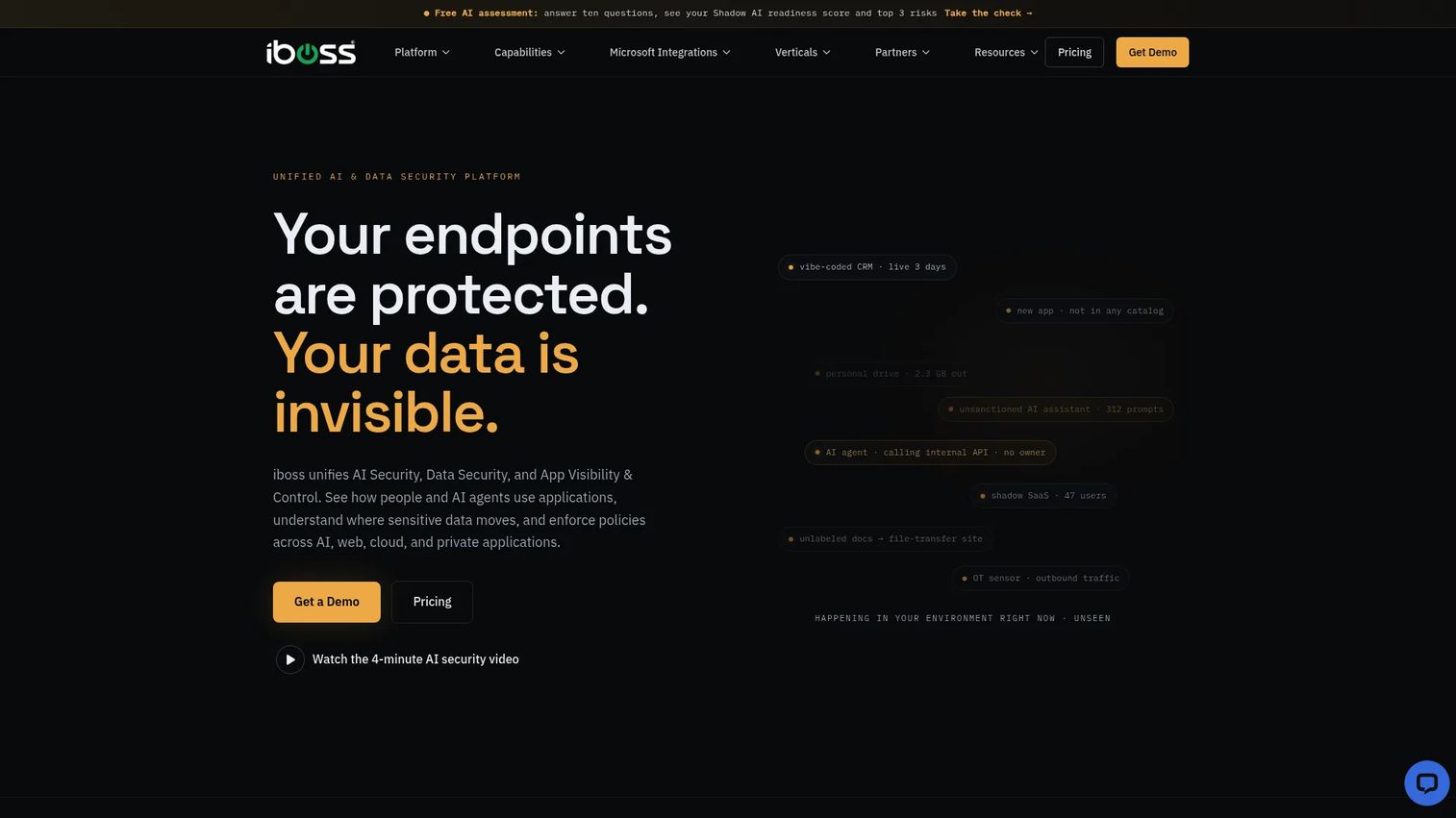
iboss AI-Powered SASE Platform is a cloud-delivered platform combining AI security, data security, ZTNA, SWG, CASB, DLP, browser isolation, and SD-WAN for distributed users and organizations. iboss has invested in AI security controls specifically: Monitoring AI chats and autonomous agents, enforcing policy on AI conversations, retaining AI interaction logs, and applying DLP to AI-generated content. For buyers with significant GenAI usage or AI governance requirements, iboss is worth including in the evaluation.
Best for: Enterprise and government organizations needing cloud-delivered policy enforcement for distributed workforces, particularly where AI governance is a priority.
Key features
- AI security covering AI chats, autonomous agents, and conversation DLP
- Zero Trust network access for private application access and VPN replacement
- Secure web gateway with HTTPS inspection, malware defense, and threat protection
- Cloud access security broker with app discovery, risk scoring, and SaaS controls
- Data loss prevention with OCR, custom patterns, and dynamic policy actions
Why choose iboss AI-Powered SASE Platform: iboss suits organizations that need cloud-native security delivery alongside explicit AI application controls. Three tiers exist: Zero Trust Core, Zero Trust Advanced, and Zero Trust Complete, with add-ons for AI security, browser isolation, and digital experience management. Presales should validate traffic steering, reporting depth, identity integrations, and endpoint agent requirements against the buyer's existing stack.
iboss AI-Powered SASE Platform pricing: iboss prices by quote after a sales or demo engagement. Three plan tiers (Zero Trust Core, Advanced, Complete) are listed on the pricing page with per-user, contact-sales pricing.
G2 rating: 4.0/5
13. Juniper Secure Edge

Juniper Secure Edge is a cloud-delivered SSE solution protecting web, SaaS, and on-premises application access for distributed users. It delivers FWaaS, SWG, CASB with DLP, ZTNA, advanced threat prevention, and IDS/IPS, managed through Juniper's Security Director Cloud. For organizations that have built their network architecture around Juniper and want cloud-delivered security controls without introducing a separate vendor, Juniper Secure Edge provides a path to SSE within the existing operational framework.
Best for: Juniper customers adding cloud-delivered secure access controls to their existing network architecture.
Key features
- Firewall as a service and secure web gateway
- CASB with integrated data loss prevention
- Zero Trust network access for private application access
- Advanced threat prevention and IDS/IPS
- Centralized management through Security Director Cloud
Why choose Juniper Secure Edge: Juniper Secure Edge fits teams already managing Juniper networks who want SSE capabilities under familiar management tooling. Presales teams should validate the SD-WAN relationship, policy administration workflows, identity provider integration, and how security event logging flows into existing security operations infrastructure.
Juniper Secure Edge pricing: Juniper prices Secure Edge as a user-based subscription with 1-year and 3-year term options across Standard and Advanced tiers.
14. SonicWall Cloud Secure Edge
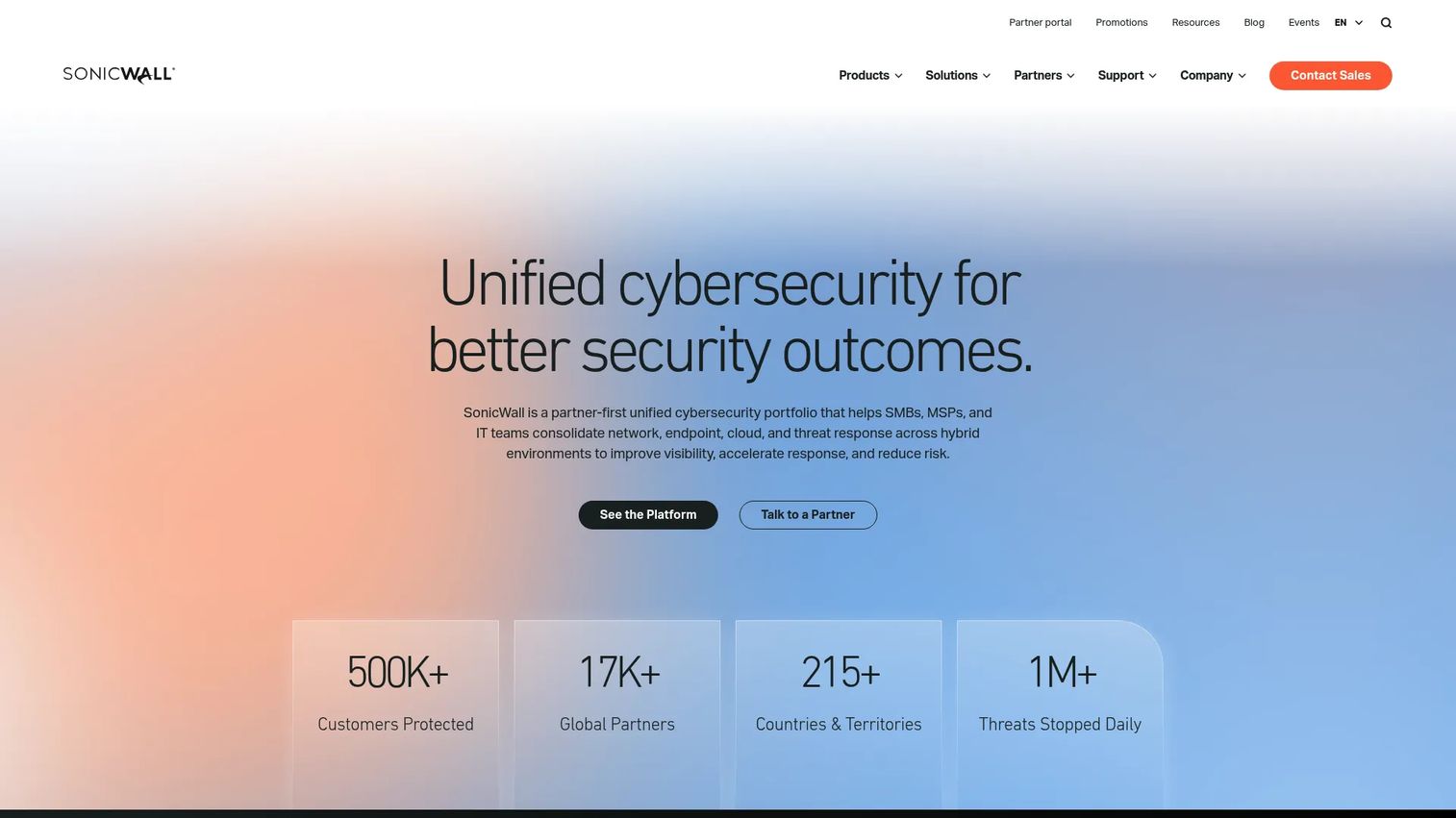
SonicWall Cloud Secure Edge is a cloud-delivered SSE platform providing Zero Trust private-resource access, VPN as a service, secure web gateway protection, and SaaS security for remote and hybrid users. Its architecture divides into Secure Private Access (SPA) for ZTNA and VPN use cases, and Secure Internet Access (SIA) for web and SaaS protection, with Basic and Advanced tiers under each. For organizations already running SonicWall security products, Cloud Secure Edge extends those controls to distributed users without requiring a full platform change.
Best for: SonicWall customers extending secure access to remote and hybrid teams without replacing their existing SonicWall security foundation.
Key features
- Zero Trust network access for private resource access
- VPN as a service using Service Tunnels for legacy app support
- Secure web gateway and internet threat protection
- Cloud access security broker capabilities for SaaS applications
- Device trust scoring and posture checks
Why choose SonicWall Cloud Secure Edge: SonicWall Cloud Secure Edge makes the most sense for teams already in the SonicWall ecosystem. Presales teams should validate scale limits against the buyer's user count, identity provider support, endpoint agent requirements, and the migration path from existing SonicWall remote access configurations.
SonicWall Cloud Secure Edge pricing: SonicWall prices through MySonicWall or via partners. Contact SonicWall or a certified partner for current rates.
G2 rating: 4.1/5
15. NordLayer
NordLayer is a business network-security platform providing secure access, threat protection, network access control, and cloud firewall capabilities for distributed teams. Unlike most platforms on this list, NordLayer publishes transparent per-user pricing, making it one of the few SSE-adjacent options a lean IT team can evaluate and purchase without a formal sales cycle. It's positioned for SMB and mid-market teams that need secure access controls without the deployment complexity or contract overhead of enterprise SSE platforms.
Best for: Lean IT teams at SMB and mid-market organizations that need secure remote access and network protection without a heavy enterprise rollout.
Key features
- Virtual private gateways and dedicated IP servers
- Cloud firewall and IP allowlisting
- Device posture security and always-on VPN
- Web and download protection
- SSO, MFA, and multi-platform support (Windows, macOS, Android, iOS, Linux)
Why choose NordLayer: NordLayer's transparent pricing and fast time-to-deploy make it a practical fit for smaller teams that need secure access controls now. Presales teams validating SSE fit for enterprise buyers should check whether NordLayer's coverage across CASB, full SWG inspection, DLP enforcement, and advanced threat intelligence meets the buyer's requirements, as its SSE depth sits below dedicated enterprise platforms.
NordLayer pricing: Lite plan starts at $8 per user per month. Core is $11 per user per month, and Premium is $14 per user per month. All tiers require a minimum of 5 users. Enterprise pricing starts at $6 per user per month for teams of 200 or more. Annual billing is available with savings; a 14-day money-back guarantee applies.
G2 rating: 4.3/5
Considerations when choosing a security service edge platform
Match SSE components to the buyer's real access patterns
A buyer with heavy SaaS risk and sensitive data movement in cloud apps needs different SSE depth than one primarily replacing VPN access for remote employees. Map the buyer's traffic flows, app categories, and data risk profile before comparing feature checklists. Generic "supports DLP" claims mean nothing without testing them against the buyer's actual data types and app inventory.
Validate identity, endpoint, and traffic steering early
SSE depends on identity provider integration to enforce policy at the user level. Device posture checks, endpoint agent requirements, proxy models versus tunnel-based steering, and how the platform handles unmanaged devices are decisions that surface during POC setup, not after. Get these answers in discovery, or expect the rollout to stall.
Test DLP and SaaS controls with real policy examples
Bring realistic test cases: A sanctioned SaaS upload, an unsanctioned cloud storage transfer, and a GenAI prompt containing a sensitive data pattern. Platforms that perform well in a demo with generic test files often behave differently when the data classification model encounters actual customer data formats or proprietary content. Defining these test scenarios before the POC starts is what separates a productive evaluation from a time sink.
Check latency, region coverage, and data sovereignty
Where inspection happens matters for regulated industries, global deployments, and latency-sensitive applications. Ask about points of presence per region, whether data inspection can be pinned to a specific geography, logging location, and what options exist for organizations with data residency or sovereignty requirements.
Plan the operating model, not just the platform
Who owns policy updates? Who investigates DLP alerts? How do logs flow into the SIEM? Who approves exceptions? An SSE platform is only as good as the operating model behind it. For presales teams supporting POC planning, documenting these operational handoffs and defining success criteria before the evaluation starts is what turns a technical proof into a purchase decision.
Conclusion
The right SSE platform isn't the one with the most marketing presence. It's the one that fits the buyer's identity stack, traffic flows, data protection requirements, and operating capacity.
For mature enterprise Zero Trust programs, Zscaler Zero Trust Exchange and Netskope One SSE are the most capable starting points, with Zscaler leading on Zero Trust access breadth and Netskope on data-centric cloud security. Cato SASE Cloud Platform and Versa Unified SASE suit buyers converging networking and security in one motion. Cisco Secure Access, FortiSASE, and Palo Alto Networks Prisma Access are strong fits for organizations already standardized on those vendor ecosystems. Check Point SASE and iboss extend naturally into teams with existing Check Point security operations or AI governance requirements. NordLayer serves leaner teams that need secure access controls without a full enterprise deployment.
Shortlist three platforms based on the buyer's current network stack, SaaS and data risk profile, identity infrastructure, compliance requirements, and your team's implementation capacity. Then define POC success criteria before the first technical call.
Start your journey with Guideflow today!
FAQs about security service edge
Security service edge is a cloud-delivered security architecture that provides secure access to the internet, SaaS applications, and private applications from anywhere. Core SSE capabilities include CASB (cloud access security broker), SWG (secure web gateway), ZTNA (Zero Trust network access), FWaaS (firewall as a service), and DLP (data loss prevention). SSE shifts security enforcement from on-premises appliances to cloud-delivered services that follow the user regardless of location.
SSE stands for security service edge. You may occasionally see the phrase "secure service edge" in search results, but "security service edge" is the standard term used by Gartner and the broader cybersecurity industry. The concept was defined by Gartner as the security-focused component of SASE architecture.
The core SSE components are CASB, SWG, ZTNA, FWaaS, DLP, and threat prevention controls covering malware, phishing, and risky destination filtering. Most enterprise SSE platforms cover all of these, but depth varies significantly across vendors. A platform strong on ZTNA and SWG may be thinner on CASB policy granularity or DLP classification depth. Evaluating component depth against the buyer's specific risk profile matters more than checking a capability box.
SSE covers cloud-delivered security services. SASE (Secure Access Service Edge) combines SSE with networking services, most commonly SD-WAN. The formula is straightforward: SD-WAN plus SSE equals SASE. Teams that need only security controls without replacing their existing WAN infrastructure can adopt SSE independently. Organizations modernizing both networking and security simultaneously are better served by a full SASE platform.
No. ZTNA (Zero Trust network access) is one component inside SSE. It handles identity-aware, least-privileged access to private applications. SSE also includes controls for web traffic through SWG, cloud application usage through CASB, sensitive data through DLP, cloud-delivered firewall inspection through FWaaS, and broader threat prevention. Treating ZTNA as equivalent to SSE is a common oversimplification that leads buyers to underestimate what a full SSE rollout requires.
SSE can replace many VPN use cases through ZTNA, particularly application-specific access that doesn't require broad network connectivity. Some environments, especially those with legacy applications built around network-level access, may still need elements of VPN connectivity during migration. Before removing VPN from the architecture, map each application's access model, validate that ZTNA can handle the connectivity pattern, and test with a pilot user group before broad rollout.
Start discovery by mapping the buyer's identity provider, primary traffic flows, SaaS app inventory, DLP requirements, endpoint posture enforcement needs, logging architecture, and compliance obligations. Define POC success criteria before the first technical call: What does the platform need to demonstrate across access, inspection, data policy, and reporting to earn a purchase recommendation? Platforms that perform well in a scripted demo often reveal gaps in unscripted tests against real data patterns and edge-case applications. See our best presales software tools guide for tooling that supports the broader validation workflow.
There's no universal answer. Zscaler Zero Trust Exchange suits large enterprises standardizing on Zero Trust access. Netskope One SSE fits buyers where data protection and SaaS visibility drive the decision. Cato SASE Cloud Platform works for organizations converging networking and security under one vendor. Cloudflare One is worth evaluating for internet-native or distributed teams, particularly at smaller scale. NordLayer serves SMB and mid-market teams that need accessible secure access without enterprise deployment complexity. The right answer starts with the buyer's current architecture, not a vendor's market position. For related security tooling context, see our guides on AI security posture management tools and access control software.