A paper permit looks harmless until hazardous work is already live, the approving supervisor is offsite, and nobody on the site can answer which permits are currently active. That gap, between what the form says and what is actually happening on the ground, is where incidents happen and audits fail.
Permit to work software closes that gap. Electronic permit to work software replaces paper forms, email chains, and spreadsheet logs with a governed, trackable system: Who requested the work, who approved it, what hazards apply, what controls are in place, and whether the work has been safely closed. The digital permit to work market was valued at $1.0 billion in 2025 and is forecast to reach $2.87 billion by 2034, according to Dataintelo (2025), which signals how quickly industrial and operations teams are replacing paper-based control-of-work processes.
If you are running a Series B operation and your VP of Operations cannot answer "how many high-risk permits are active right now across all sites" without opening a binder, this guide is for you.
What's inside
This guide compares 11 permit to work software platforms for 2026. It is built for operations leaders, EHS managers, and the founders who sponsor those decisions.
Each tool was evaluated against:
- Permit lifecycle coverage: Request, approval, monitoring, extension, and closure
- Mobile and field usability: Whether field workers and supervisors can actually use it on site
- Risk controls depth: JSA, LOTO, isolation management, and contractor verification
- Reporting and audit trails: Whether leadership gets clean visibility without extra spreadsheet work
Pricing and G2 ratings were verified against vendor pages and G2 listings.
TL;DR
- Best for contractor-heavy sites: INX Sitepass, because it connects site access, contractor compliance, and training verification in a single workflow
- Best for Microsoft-centric EHS teams: Pro-Sapien, because it builds permit and EHS workflows directly inside Microsoft 365
- Best dedicated PTW platform: IAMPermit, because it covers the full permit lifecycle including SIMOPS conflict detection, isolation, and JSA with published tiered pricing
- Best for mobile-first safety teams: SafetyCulture, because it pairs fast deployment with strong mobile field workflows
- Best for enterprise EHS programs: Enablon Platform and CorityOne, because they connect permit-to-work to broader operational risk management
- Founder-level takeaway: Choose the tool your operations lead can deploy without turning permit approvals into another reporting bottleneck
What is permit to work software?
Permit to work software is a digital system for requesting, reviewing, approving, monitoring, and closing permits for hazardous or controlled work.
Also referred to as ePTW software, electronic permit to work software, or work permit management software, it replaces paper forms, shared folders, and email approval chains with a governed workflow. The system records who requested the work, who authorized it, what hazards and controls apply, when the permit is valid, and whether work has been safely completed and closed.
Key capabilities to look for:
- Configurable permit forms and templates by work type and site
- Multi-step approval workflows with role-based routing
- Mobile field access for supervisors and workers
- Risk assessment and job safety analysis (JSA) support
- LOTO and isolation control references or integrations
- Contractor and employee permissions and verification
- Notifications, reminders, and escalation paths
- Digital signatures and audit trails
- Active permit dashboards and status tracking
- Integration with EHS, ERP, CMMS, or identity systems
Common permit types these systems manage:
- Hot work (cutting, welding, grinding)
- Confined space entry
- Working at height
- Electrical work
- Cold work and excavation
- Lifting operations
- Lockout/tagout and energy isolation
The difference between a paper-based approach and a digital permit to work system is not just speed. Paper hides bottlenecks until an incident, shutdown, or external audit exposes them. A digital system gives your operations team real-time visibility into active work, overdue closures, and recurring hazards, without anyone manually compiling a report.
When to use permit to work software
Replace paper permits before they become an audit risk
Paper works until volume grows, sites multiply, or a regulator asks for a permit log from six months ago. A folder cannot show real-time active work, overdue closures, or whether two overlapping high-risk tasks conflict with each other. Digital work permits create an audit-ready record automatically, so the data exists when leadership or an external auditor needs it.
Control hazardous work across multiple sites
Multi-site operations need consistent approval workflows without erasing site-specific requirements. ePTW platforms support site-specific templates, local permit types, and escalation paths while giving central EHS leadership a consolidated view across locations. That is the difference between standardization that creates compliance confidence and standardization that gets ignored in the field.
Give field teams mobile approvals and visibility
Permit workflows fail when workers and supervisors avoid the system because it only works at a desktop in the site office. Mobile permit to work software means a supervisor can review, approve, or extend a permit from the job location. Verify offline access capabilities per vendor before buying, as availability varies.
Permit to work software comparison
The table below is a shortlist to accelerate your evaluation, not a final buying decision. Prices and ratings reflect data verified at time of writing. Confirm current figures on each vendor's pricing page and G2 listing before making a decision.
| # | Product | Best for | Key differentiator | Pricing | G2 rating |
|---|---|---|---|---|---|
| 1 | INX Sitepass | Contractor-heavy sites | Site access, inductions, and compliance in one workflow | Custom pricing | 4.5/5 |
| 2 | Pro-Sapien | Microsoft 365 EHS teams | Fully integrated with Microsoft 365 and Power BI | Custom pricing | 5.0/5 |
| 3 | IAMPermit | Dedicated electronic PTW programs | SIMOPS detection, LOTO, JSA, with published tiered pricing | From $19.5k/year | Not listed |
| 4 | Enablon Platform | Enterprise EHS and risk programs | Broad EHS and control-of-work depth across operations | Custom pricing | 4.1/5 |
| 5 | Quentic | European EHSQ and sustainability teams | Integrated EHSQ, compliance, and sustainability modules | Custom pricing | Not listed |
| 6 | Effivity | ISO-driven compliance teams | QHSE management system with document control and audit tools | From $29/month | 4.5/5 |
| 7 | Mitti | Teams wanting a focused safety app | Mobile-first inspections, checklists, and task tracking | Free; paid from $24/seat/month | 4.6/5 |
| 8 | SafetyCulture | Mobile-first safety teams | Fast deployment with strong mobile inspections and field reporting | Free; paid from $24/user/month | 4.6/5 |
| 9 | CorityOne | Large industrial EHS programs | Converged EHS and sustainability platform with AI agents | Custom pricing | 4.0/5 |
| 10 | CORE-EHS | Industrial operations digitizing PTW | Digital PTW with JSA, LOTO, audit trails, and AI-driven safety tools | Custom pricing | Not listed |
| 11 | Benchmark Gensuite | Global EHS programs | Safety permit workflows inside a wider enterprise EHS suite | Custom pricing | 4.0/5 |
Best 11 permit to work software tools for 2026
1. INX Sitepass
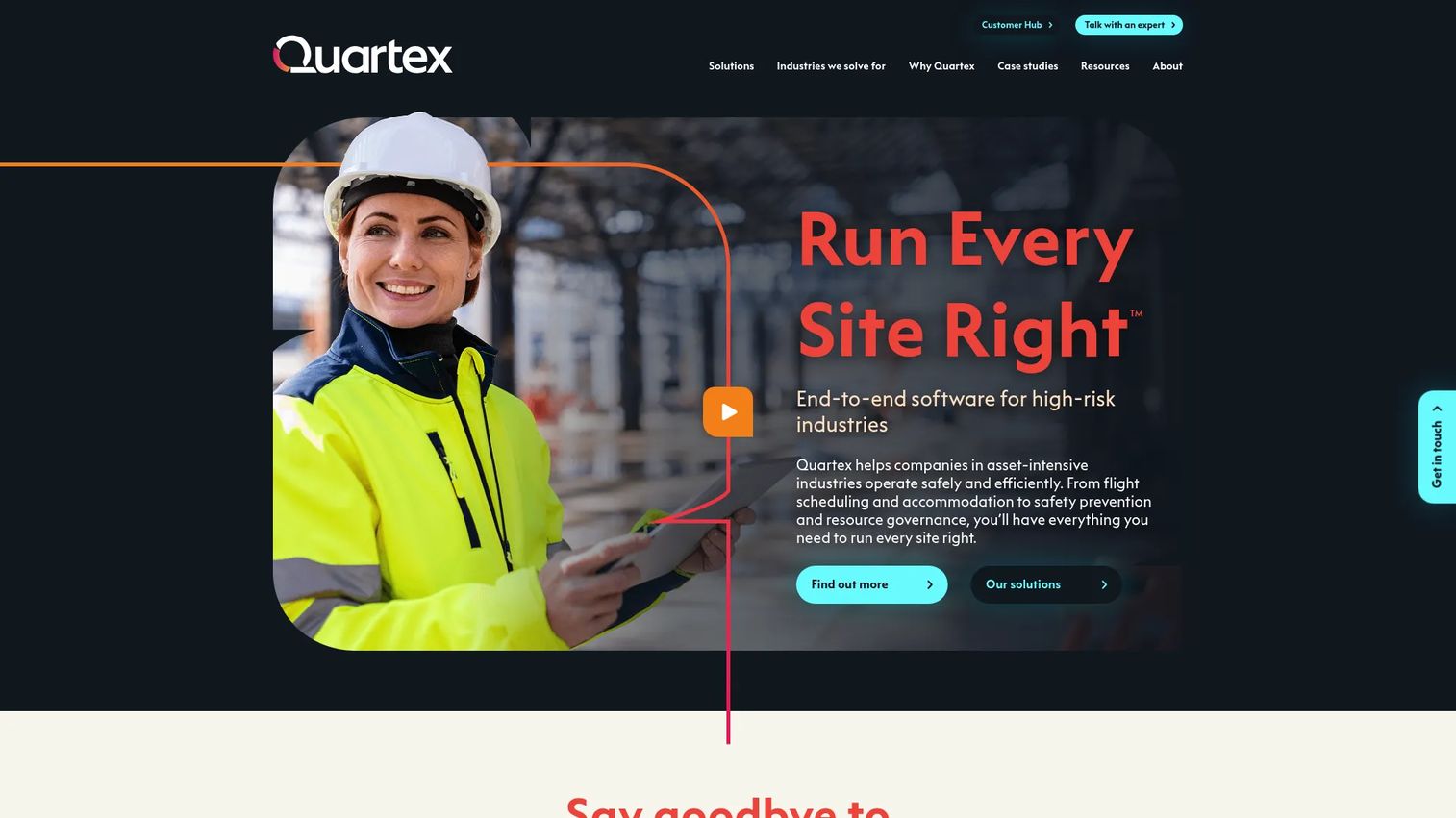
INX Sitepass is a workforce compliance and safety platform for managing contractors, employees, visitors, inductions, training records, and site access. It is built for multi-site organizations where the permit problem starts before the work begins: Figuring out who is authorized to be on site, whether their training is current, and whether they carry the right credentials. The platform includes workflow-based onboarding, QR and mobile sign-in, document verification, and site access management with reporting.
Best for: Organizations managing contractor-heavy worksites where site access and work authorization need to operate as a connected workflow rather than separate systems.
Key features
- Contractor, employee, and visitor management across sites
- Workflow-based onboarding and compliance tracking
- Online induction and SCORM training delivery
- Document verification and evidence capture
- Site access management with QR and mobile sign-in
Why choose INX Sitepass: It is the strongest fit when your permit problem is upstream of the permit itself. Teams dealing with high contractor turnover, multi-site induction requirements, or access control gaps will find the connection between compliance verification and site access more valuable than a standalone form-approval tool.
INX Sitepass pricing: Connection pricing was noted at $1.00 per connection per month in prior documentation, with Enterprise plans on custom pricing. Contact INX directly for current rates, as pricing was not confirmed on an accessible current pricing page.
G2 rating: 4.5/5
2. Pro-Sapien

Pro-Sapien provides configurable EHSQ management software built entirely within the Microsoft 365 environment. For operations teams that already run on SharePoint and want their EHS workflows, permit management, incident tracking, and risk assessments to live in the same infrastructure as the rest of the business, Pro-Sapien removes the need for a separate operational system. It includes a mobile offline Power App, Power BI business intelligence, and configurable EHSQ modules including permit to work, risk assessment, inspections, and action management.
Best for: Mid-sized and large regulated enterprises where EHS workflows need to integrate with existing Microsoft 365 infrastructure rather than sit in a separate platform.
Key features
- Microsoft 365 and SharePoint integration
- Configurable EHSQ modules including permit to work
- Risk assessment and incident management
- Power BI analytics and reporting
- Mobile offline Power App
Why choose Pro-Sapien: Choose it if the main objection to adopting EHS software is "we don't want another system fighting our Microsoft stack." It is not the right fit for teams that do not already operate in a Microsoft environment, or those that need a standalone PTW deployment without broader EHSQ context.
Pro-Sapien pricing: Annual licensing is based on employee count and the modules required. Implementation is charged separately. Contact Pro-Sapien for a quote.
G2 rating: 5.0/5
3. IAMPermit
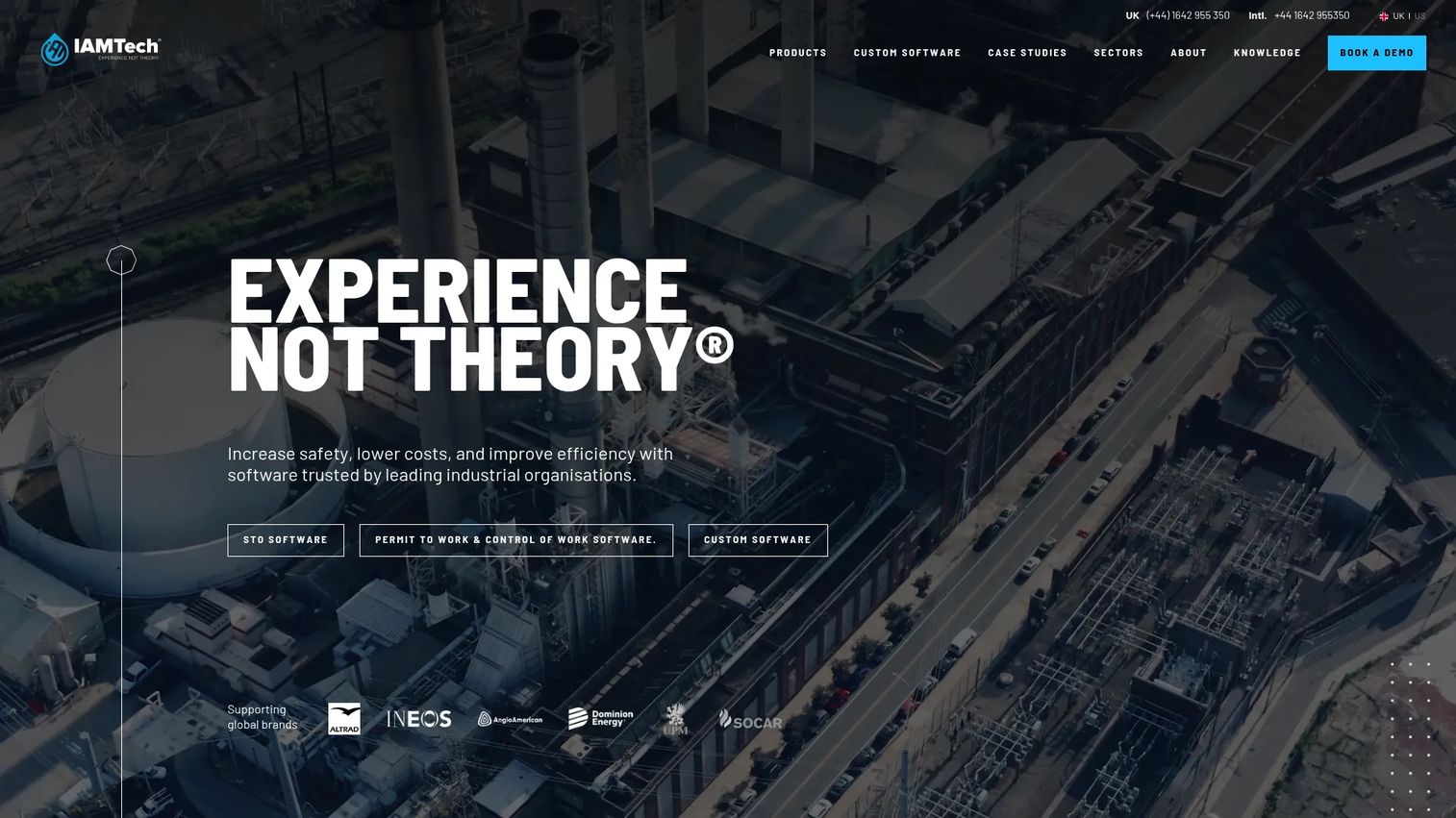
IAMPermit (marketed as iPermit) is an electronic permit-to-work and control-of-work platform built specifically for high-hazard industrial operations. It covers the full permit lifecycle from request to closure, including SIMOPS and anti-clash detection, isolation management (LOTO), JSA and risk assessment, digital signatures, permit handover, and audit management. Offline capability and multi-site dashboards make it one of the more complete dedicated PTW platforms in this list.
Best for: High-hazard industrial organizations, including oil and gas, chemical, and energy operations, that need a governed permit-to-work system with conflict detection, isolation control, and competency verification built in.
Key features
- Full electronic PTW lifecycle with SIMOPS anti-clash detection
- Isolation management and LOTO controls
- Risk assessment (JSA and HIRA) integrated with permits
- Digital signatures, permit handover, and audit trails
- Offline capability and multi-site dashboards
Why choose IAMPermit: It is the most purpose-built PTW platform in this comparison. If your operations involve simultaneous permits, energy isolation, or complex authorization chains that a general EHS platform may not handle cleanly, IAMPermit is worth evaluating first. The published tiered pricing also makes it easier to build an internal business case.
IAMPermit pricing: Plans run from $19,500 per year (Small) to $39,000 (Medium), $65,000 (Large), and $97,500 per year (Enterprise), all billed annually. All plans include unlimited permit types, cloud hosting, the isolations module, and the JSA module. Named user counts and some integrations vary by tier.
4. Enablon Platform
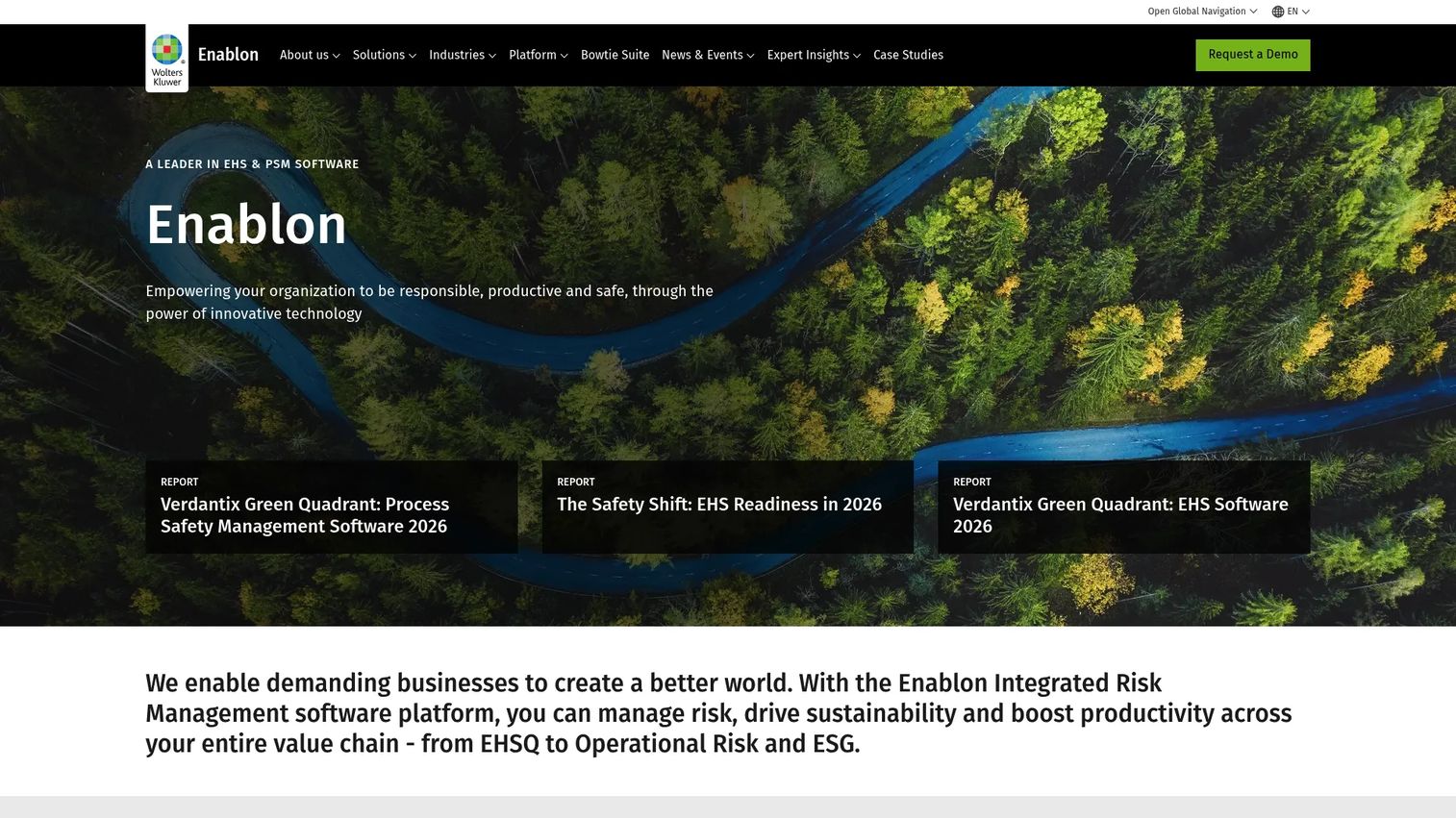
Enablon, a Wolters Kluwer business, is an integrated risk management platform covering EHS, operational risk, sustainability, ESG management, and control of work. It is not a point solution for permit management. It is the platform organizations choose when permit-to-work is one component of a larger operational risk and EHS transformation that also includes process safety, environmental management, and real-time data integration across the enterprise.
Best for: Large enterprises standardizing EHS, operational risk, and control-of-work processes across multiple sites as part of a broader governance and sustainability program.
Key features
- Process safety management and control of work
- Health and safety management modules
- Environmental and ESG data management
- Real-time data integration via Enablon Open Insights
- Audit-ready reporting across the enterprise
Why choose Enablon Platform: It is the right fit when permit-to-work is part of a larger operational risk mandate, not the primary pain. Organizations evaluating Enablon should expect enterprise sales cycles and implementation effort to match the platform's scope.
Enablon Platform pricing: Contact Enablon directly for a commercial discussion.
G2 rating: 4.1/5
5. Quentic
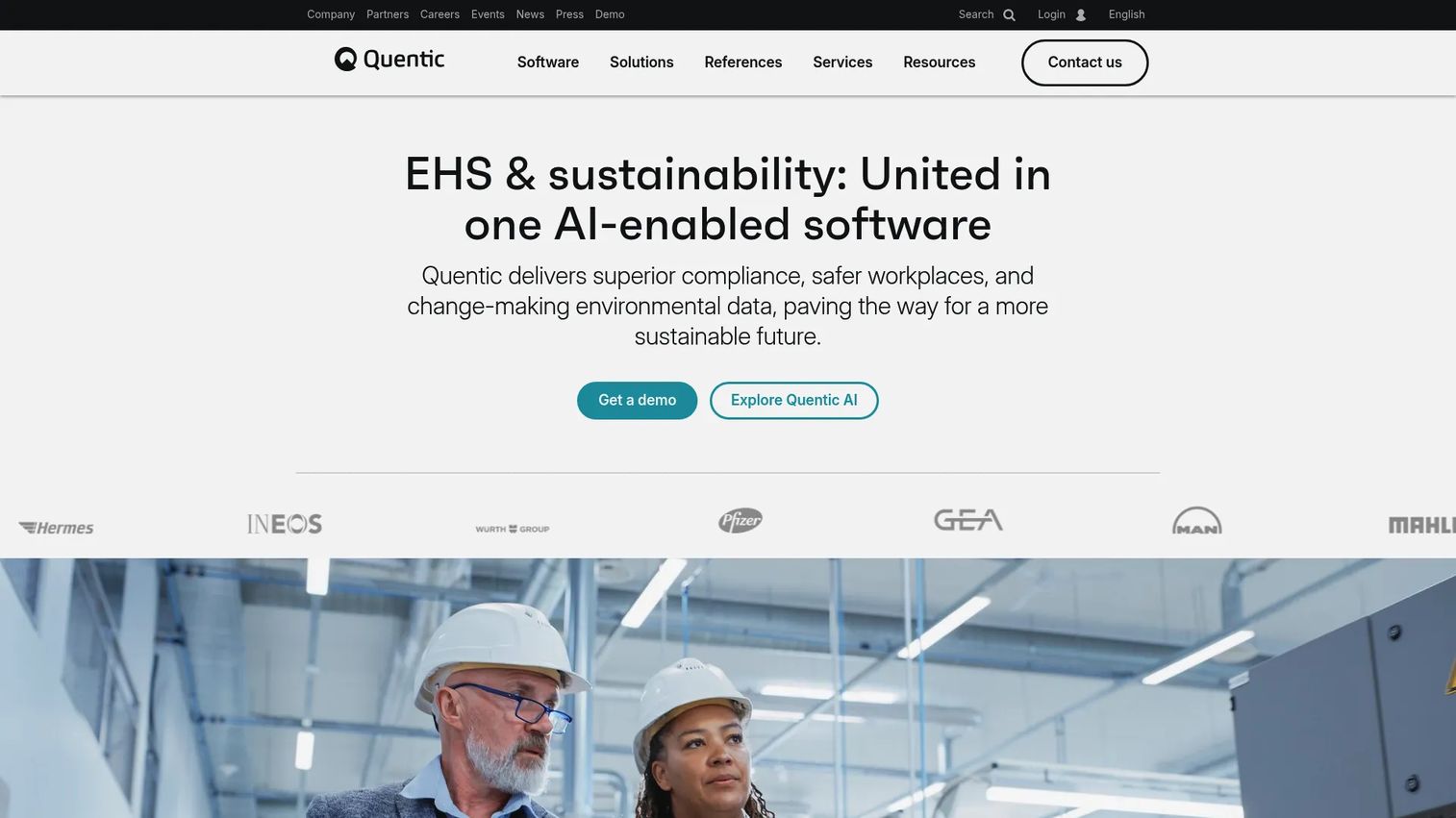
Quentic is a cloud-based, AI-enabled platform for environmental, health and safety, quality, and sustainability management. It covers incidents and observations, risks and audits, legal compliance, hazardous chemicals management, environmental monitoring, and sustainability reporting. Its modular structure and Quentic Connect integration layer make it adaptable to multinational operations. Direct permit-to-work workflow capabilities should be verified with Quentic during a product demo, as the platform's primary positioning is broader EHSQ and sustainability management.
Best for: European or multinational organizations managing EHSQ, compliance, and sustainability across regulated industries, where permit-related workflows sit inside a wider safety management context.
Key features
- Health, safety, and environmental management modules
- Incidents, observations, and risk assessments
- Legal compliance tracking
- Sustainability management and ESG reporting
- System integrations via Quentic Connect
Why choose Quentic: Good fit when safety permit workflows need to live alongside incident management, compliance tracking, and sustainability reporting rather than in a standalone tool. Confirm specific PTW workflow support during your demo.
Quentic pricing: Modular SaaS pricing is customized to selected modules and organizational requirements. Contact Quentic for a quote.
6. Effivity
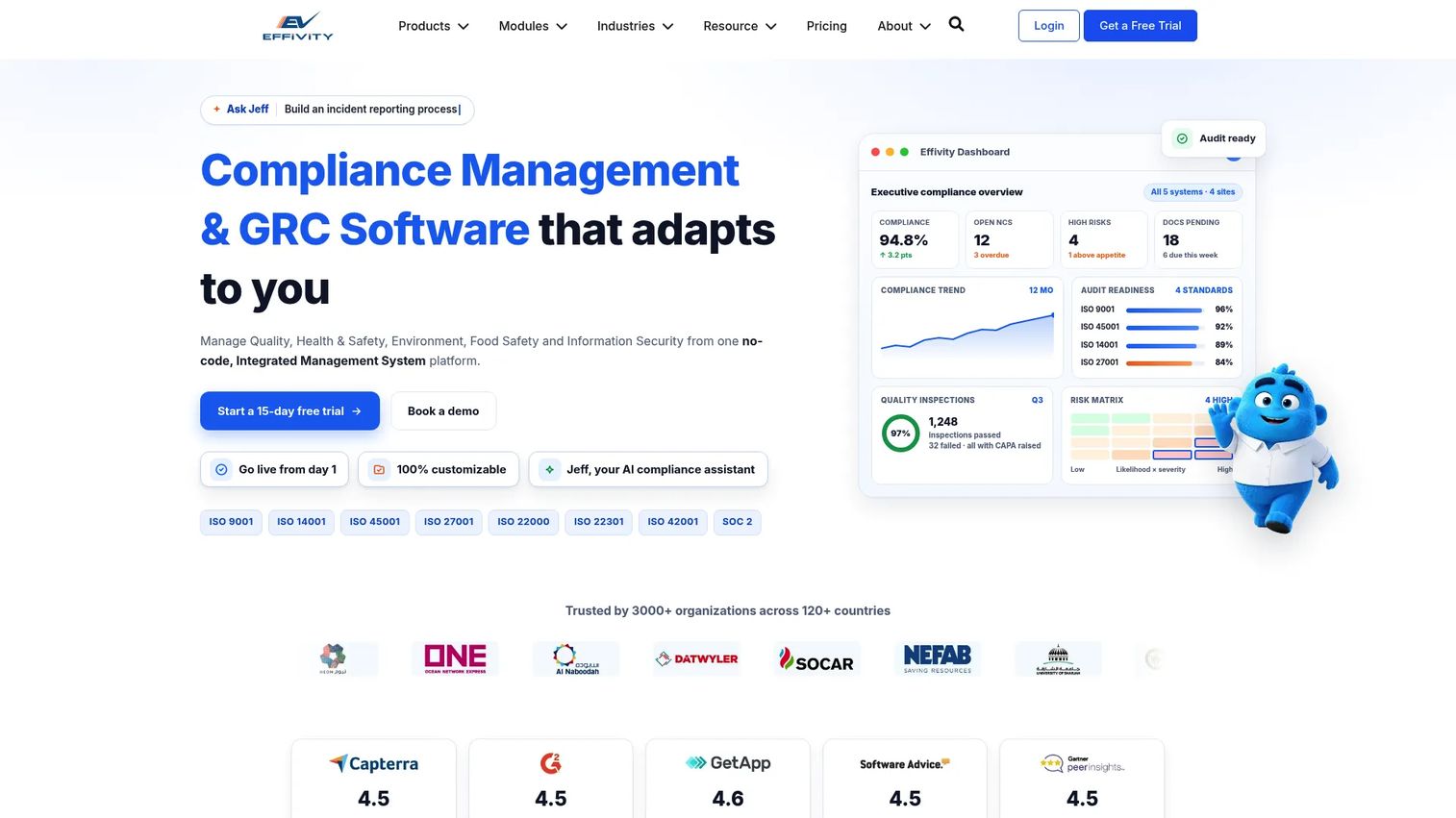
Effivity is a customizable compliance and GRC platform for quality, health and safety, environmental, food safety, and information-security management systems. It offers no-code form and workflow builders, document control with version history and electronic signatures, internal audit management, non-conformity and corrective-action tracking, and mobile apps with offline access. Teams looking for a QHSE management system that can accommodate permit-related workflows within a broader ISO compliance framework will find Effivity a practical option.
Best for: ISO-driven organizations that want permit-to-work workflows embedded in a QHSE management system alongside document control, audits, and corrective actions.
Key features
- No-code form and workflow builders
- Document control with version history and approvals
- Internal audit management and scheduling
- Non-conformity and corrective-action tracking
- Mobile apps with offline access
Why choose Effivity: Choose it when the operational goal is an integrated QHSE management system and permit workflows are one component of that, rather than the primary driver. At a published starting price of $29 per month, it also offers a lower entry point than most EHS platforms in this comparison.
Effivity pricing: Plans start at $29 per month. A 15-day free trial is available. Contact Effivity for tiered plan details.
G2 rating: 4.5/5
7. Mitti
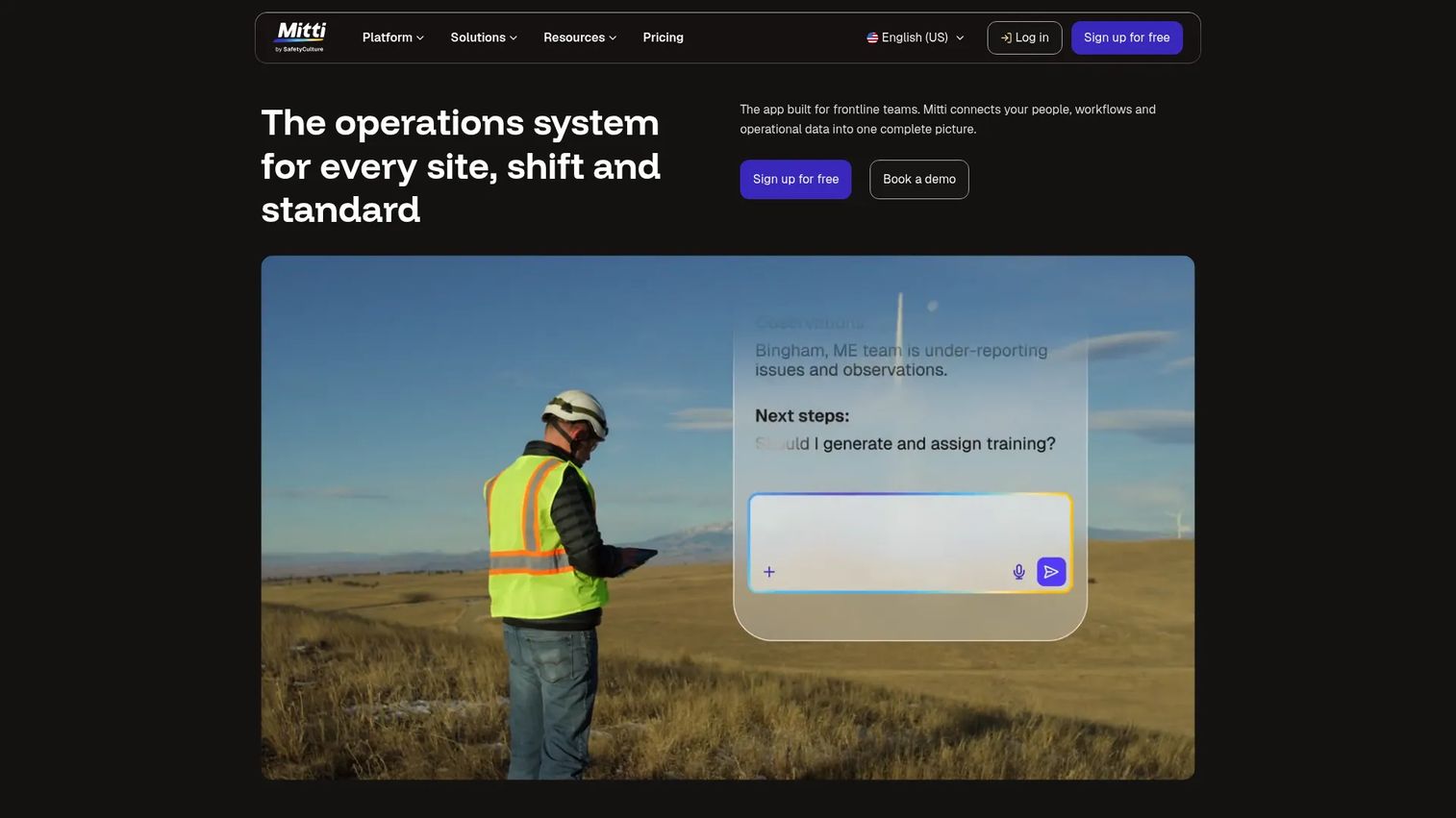
Mitti is a workplace operations platform focused on digital templates, inspections, audits, checklists, recurring schedules, task assignment, issue reporting, and corrective actions. It is designed for frontline teams that need fast deployment and mobile-first workflows. Teams that want a focused permit-to-work app rather than a large EHS suite will find Mitti's approach practical, though buyers should verify specific PTW lifecycle functionality, including permit authorization routing, during evaluation.
Best for: Operations teams moving off paper who need mobile-first inspections, digital checklists, and task tracking without the overhead of a full enterprise EHS platform.
Key features
- Digital templates, inspections, and checklist-based reports
- Recurring schedules and task assignment
- Issue reporting and corrective actions
- Training management and analytics
- AI assistance and asset monitoring
Why choose Mitti: A free plan supporting up to 10 users makes it accessible for teams that want to digitize field safety workflows before committing to a larger investment. Validate that the specific permit authorization and lifecycle features you need are available before purchasing the Premium tier.
Mitti pricing: Free plan available for up to 10 users. Premium is $24 per seat per month (billed annually) or $29 per seat per month on a monthly basis. Enterprise pricing is custom.
G2 rating: 4.6/5
8. SafetyCulture
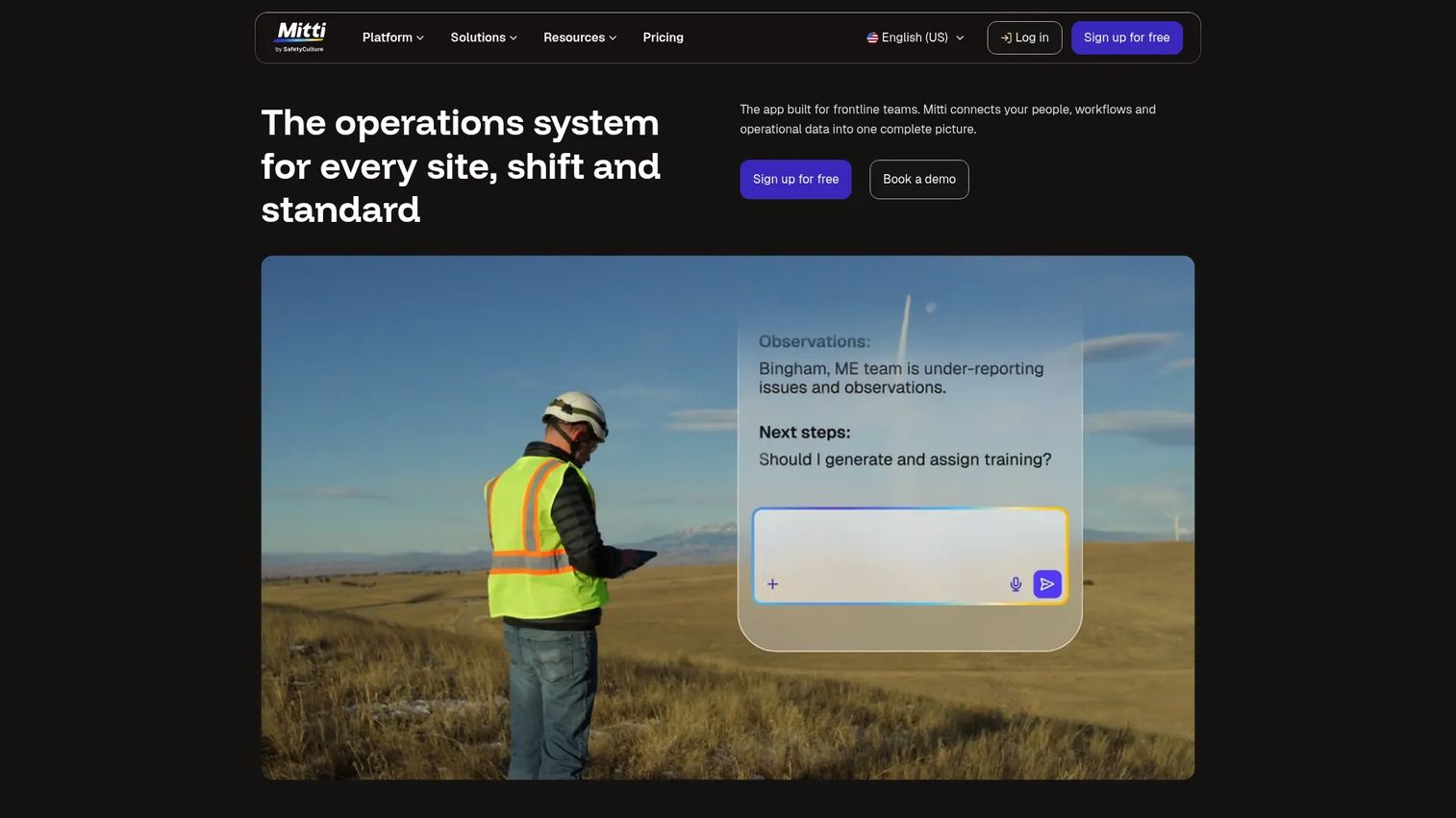
SafetyCulture is a mobile-first operations platform for inspections, digital checklists, issue management, asset management, and frontline team training. It is widely used in construction, manufacturing, facilities, and logistics because field adoption is faster than most EHS platforms. SafetyCulture is not always positioned as a dedicated permit-to-work system, but it can support permit-related checklists and inspection workflows. Buyers who need deep permit authorization, isolation management, or SIMOPS conflict detection should verify those specific workflows before selecting SafetyCulture as their primary PTW solution.
Best for: Mobile-first safety and operations teams that want fast deployment, strong field adoption, and digital inspection workflows across distributed worksites.
Key features
- Mobile inspections and digital checklists
- Issue reporting and resolution tracking
- Asset management
- Frontline training modules
- Analytics and reporting dashboards
Why choose SafetyCulture: Its strong point is field adoption speed and mobile usability. Teams that have struggled with low adoption of previous EHS tools often find SafetyCulture easier to roll out. For operations with complex permit authorization chains, run a demo using one of your actual permit types to confirm fit.
SafetyCulture pricing: A free version is available for teams of up to 10 users. Premium is $24 per user per month, billed annually. Enterprise pricing is by quote.
G2 rating: 4.6/5
9. CorityOne
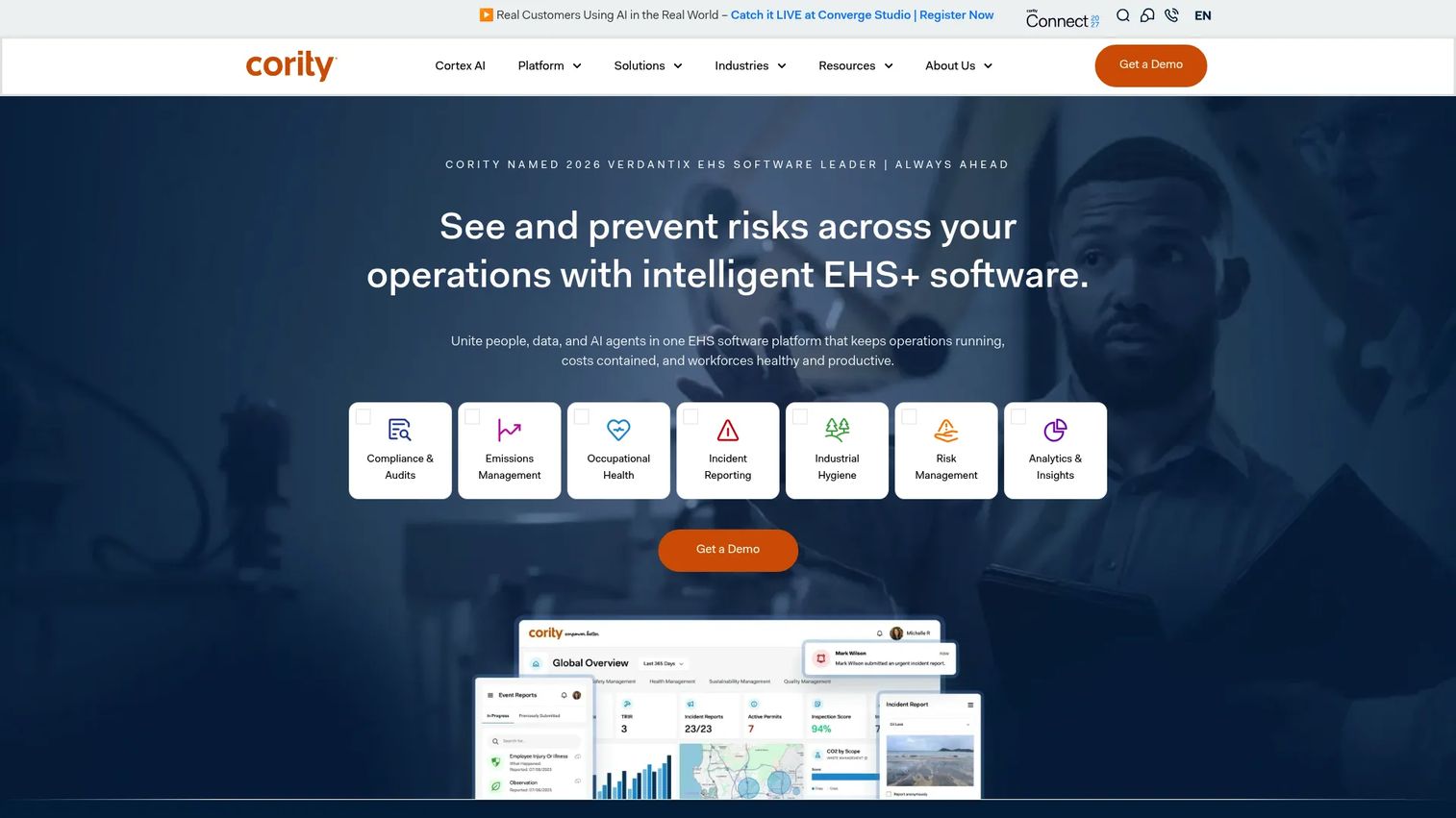
Cority positions CorityOne as a converged EHS+ platform unifying environmental, health, safety, quality, and sustainability workflows. It includes embedded Cortex AI agents, mobile workflows with offline synchronization, permit lifecycle management, contractor verification, risk monitoring, and integration with broader EHS and operational systems. For large industrial teams where permit-to-work data needs to connect with safety, compliance, and operational risk programs at scale, CorityOne provides that integration within a single governed platform.
Best for: Large industrial and enterprise organizations that need permit-to-work inside a broader EHS and sustainability platform with AI-assisted workflows and audit-ready reporting.
Key features
- Permit lifecycle workflows with contractor verification
- Mobile incident, inspection, and audit workflows with offline sync
- Cortex AI embedded intelligence and configurable AI agents
- Environmental, health, safety, and quality management
- Enterprise sustainability and ESG management
Why choose CorityOne: It suits organizations where the EHS function spans safety, environment, quality, and sustainability and where permit data needs to inform risk decisions across those functions. Implementation effort and commercial complexity reflect the platform's enterprise scope.
CorityOne pricing: Pricing is by quote. Contact Cority for a commercial discussion.
G2 rating: 4.0/5
10. CORE-EHS
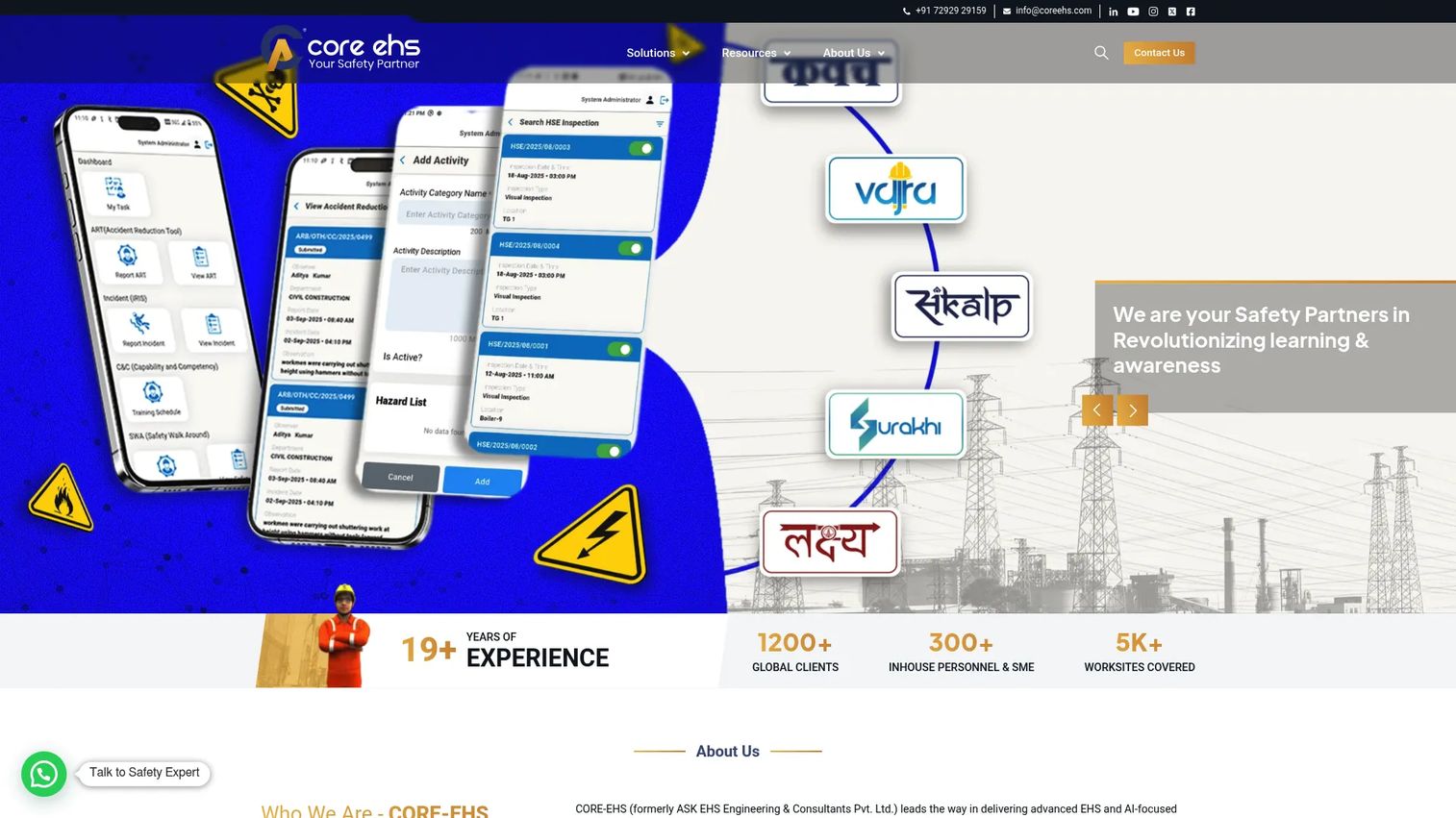
CORE-EHS provides EHS software, consulting, safety training, digital audits, and AI and IoT-enabled safety tools for industrial operations. Its software covers permit workflows alongside incident management, JSA, LOTO, audit and inspection management, corrective actions, training, and document control. The platform describes AI and ML-driven safety tools, predictive risk management, and automated reporting alongside its core EHS workflow capabilities.
Best for: Industrial operations that want to digitize permit-to-work alongside JSA, LOTO, audit trails, and broader EHS compliance workflows within a single platform.
Key features
- Digital PTW lifecycle with request, approval, and closure
- Job safety analysis (JSA) integrated with permits
- LOTO and isolation control references
- Digital signatures and audit trails
- AI and ML-driven safety reporting and predictive risk tools
Why choose CORE-EHS: It is a strong candidate when the goal is replacing paper permits across multiple EHS workflows simultaneously rather than deploying a standalone PTW app. CORE-EHS also offers EHS consulting and staffing alongside the software, which can reduce implementation friction for teams without dedicated EHS program managers.
CORE-EHS pricing: CORE-EHS describes perpetual, subscription, and SaaS licensing models. Contact CORE-EHS directly for a tailored quote.
11. Benchmark Gensuite
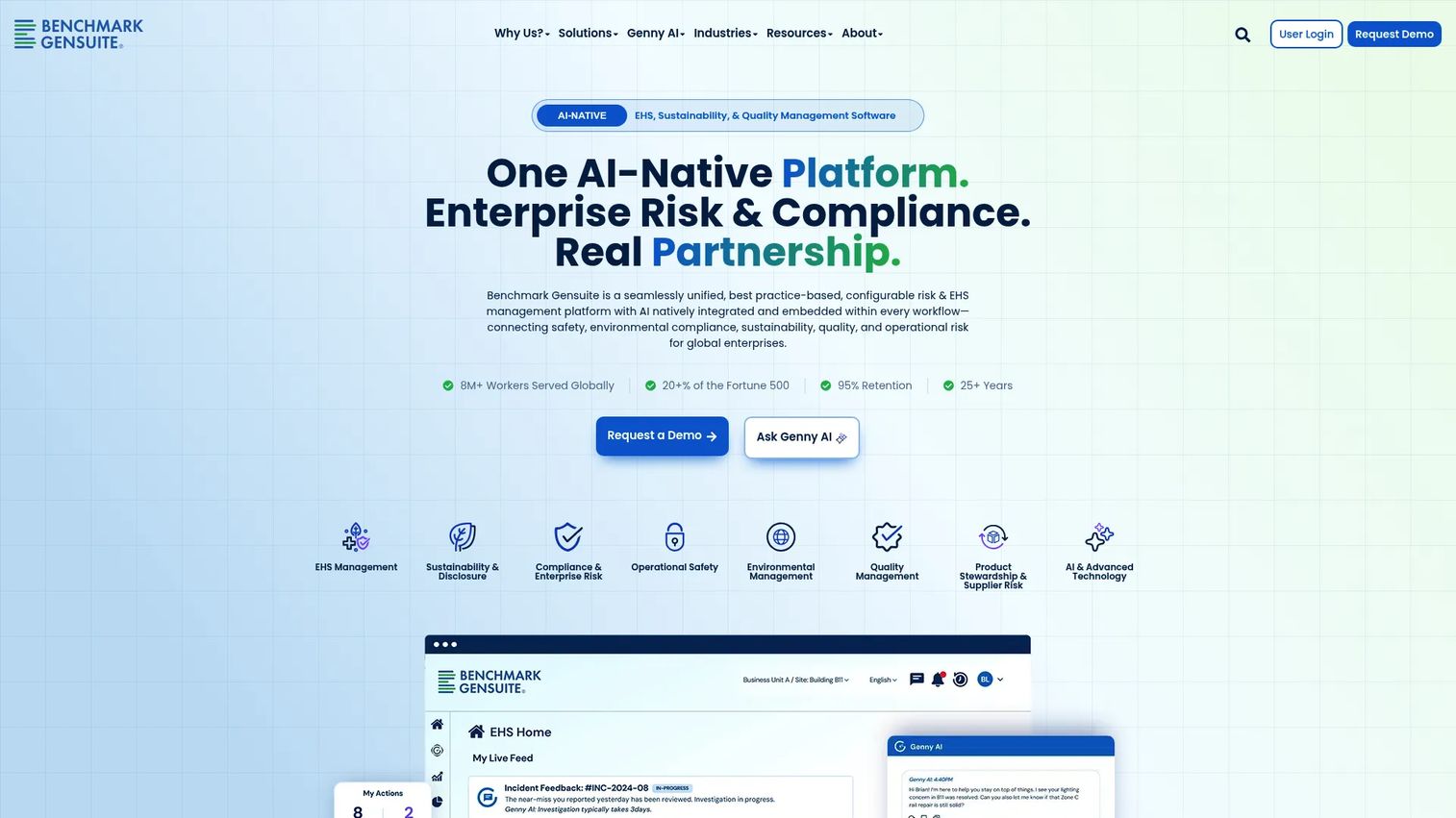
Benchmark Gensuite is an enterprise platform for EHS, sustainability, quality, environmental management, risk, ESG disclosure, and supplier risk. Its safety permit module sits inside this broader platform alongside incident management, inspections, corrective actions, and regulatory obligations tracking. The platform includes Genny AI, analytics dashboards, document management, and mobile capabilities. Organizations that already want an enterprise EHS suite and need permit-to-work as part of a larger safety operating model are the primary fit.
Best for: Global EHS teams that want safety permits connected to incident management, compliance obligations, and ESG reporting inside a single enterprise platform.
Key features
- Standardized permit forms with site-specific documentation
- Approval workflows with email notifications
- Permit tracking and mobile field access
- Genny AI, dashboards, and analytics
- EHS, environmental, and sustainability module integrations
Why choose Benchmark Gensuite: Choose it for organizations where EHS maturity already extends to sustainability reporting and regulatory obligations management, and where permit-to-work is one input into a broader safety operating model. Its three-tier structure (Ready, Quick Start, Enterprise) suggests scalable entry points, though pricing requires a direct conversation.
Benchmark Gensuite pricing: The pricing page lists Ready, Quick Start, and Enterprise plans. No pricing amounts are displayed. Contact Benchmark Gensuite for a quote.
G2 rating: 4.0/5
Considerations when choosing permit to work software
Permit lifecycle coverage
Evaluate whether the tool covers the full operational path: Request, review, approval, active work monitoring, suspension, extension, handover, and closure. Many platforms can digitize a form submission. Fewer handle the operational lifecycle, including permit conflicts, isolation controls, and clean closure with accountability at each step.
Mobile usability for field teams
A permit system that field workers and supervisors avoid is not a system, it is a liability. Evaluate mobile form completion, photo capture, digital signatures, and notification delivery from the field. Ask vendors whether their mobile experience works on the devices your team already carries, and whether offline access is supported on that device type.
Risk assessment, LOTO, and isolation controls
Permit-to-work and approval workflow software share a common failure mode: They digitize the form without connecting it to the underlying hazard controls. Validate in a live demo that your specific permit types, including hot work, confined space, and electrical isolation, connect to the risk assessment and energy isolation steps your EHS program requires.
Reporting and executive visibility
Your VP of Operations should see active permit status, overdue closures, and recurring hazard patterns without compiling a report manually. Evaluate what the standard dashboards show, whether custom reporting requires IT involvement, and whether data can be exported to your analytics stack. For founders approaching a fundraise or audit cycle, clean audit management software integration matters as much as the permit approval flow itself.
Implementation and change management
A PTW rollout changes frontline behavior. The tools that fail do not fail technically. They fail because workers find workarounds faster than the system gets adopted. Ask each vendor for typical time-to-first-permit, training requirements for field users, contractor onboarding support, and what implementation services are included versus separately priced. The total first-year cost includes setup, not just subscription.
Conclusion
The right permit to work software depends on where your operation sits today and where you need visibility fast.
For contractor-heavy sites: INX Sitepass connects access, inductions, and compliance before work begins. For dedicated PTW programs with complex authorization: IAMPermit covers the full lifecycle including SIMOPS and isolation, with published pricing to build your business case. For fast mobile deployment: SafetyCulture gets field teams adopting quickly. For enterprise EHS programs: Enablon Platform, CorityOne, and Benchmark Gensuite connect permits to broader operational risk and sustainability management. For Microsoft-centric teams: Pro-Sapien builds directly into the infrastructure you already run. For ISO-focused compliance teams: Effivity and Quentic sit permit workflows inside a broader QHSE management context.
A practical next step: Shortlist three tools based on your operational model, then run a live demo using one real permit workflow from your site. Ask each vendor to show request, hazard assessment, approval routing, active permit tracking, and closure. Score them on field adoption risk, not just admin features. The tool your team avoids is worse than the paper it replaced.
Start your journey with Guideflow today!
FAQs
Permit to work software (also called ePTW software or electronic permit to work software) is a digital system for managing permits for hazardous or controlled work. It handles the full lifecycle: Request, review, authorization, active work monitoring, and closure. It replaces paper forms, email approvals, and disconnected logs with a governed, audit-ready workflow.
Permit to work software manages work authorization for specific high-risk tasks, covering who can perform the work, under what conditions, and when it is complete. EHS software is broader and may include incident management, audits, training records, compliance tracking, risk assessment, and environmental management. Many EHS platforms include a PTW module; dedicated PTW platforms go deeper on work authorization controls and conflict detection.
Common work types requiring a formal permit include hot work (welding, cutting, grinding), confined space entry, electrical work, working at height, cold work, excavation, lifting operations, and lockout/tagout activities. The specific permit types required vary by company, site, regulatory framework, and industry. High-hazard industries such as oil and gas, chemical, manufacturing, and utilities tend to have the most structured PTW requirements.
Paper permits create bottlenecks that are only visible after an incident or audit. Digital work permits accelerate routing, reduce missed approvals, give supervisors real-time visibility into active work, and produce a clean audit trail without manual compilation. The practical gain is that your operations team stops managing risk through folders and starts managing it through data.
Most modern platforms support mobile access, but the depth varies. Check whether the mobile experience supports form completion, digital signatures, photo capture, offline access, and role-based approval routing. Run the approval workflow on the actual device your supervisors will use in the field during the vendor demo.
Use one real permit workflow from your operation in every vendor demo. Ask the vendor to show the full path: Request, hazard assessment, approval routing, active permit status on a dashboard, extension handling, and closure with signature. Score each tool on how that workflow felt for a field supervisor, not just for an EHS administrator sitting at a desktop.
Some platforms, including IAMPermit, include dedicated isolation management and LOTO controls integrated with the permit workflow. Others reference LOTO in configurable form fields without enforcing the isolation process digitally. Buyers with operations that require formal energy isolation management should specifically verify how each tool handles LOTO, whether it enforces isolation steps or only records them, and whether it integrates with existing lockout procedures.
Pricing varies based on user count, number of sites, modules required, implementation services, and support model. IAMPermit publishes tiered pricing starting at $19,500 per year. Mitti and SafetyCulture offer free tiers for teams of up to 10, with paid plans from $24 per user per month. Most enterprise EHS platforms, including Enablon, CorityOne, Pro-Sapien, and Benchmark Gensuite, price by quote. Compare the total first-year cost, including implementation, not just the annual subscription, before making a decision. For related considerations on managing software approval and procurement workflows, see our guide to approval workflow software.