Healthcare administration costs U.S. providers an estimated $812 billion annually, according to a 2022 JAMA study that attributed roughly 35% of total healthcare spending to administrative burden. Most of that burden lands on the people closest to patients: Case managers chasing referrals, coordinators rebuilding care plans in spreadsheets, and clinical staff filing status reports by hand.
The operating model breaks when documentation, scheduling, billing, and outcome tracking live in separate systems. Follow-up tasks slip after discharge. Case managers lose hours to duplicate entry. Leadership sees last month's data instead of today's. And the clinical team that should be coordinating care is instead coordinating between tools.
Case management software for healthcare is how you fix the operating system before hiring around the problem. This guide covers 18 platforms across patient care coordination, clinical documentation, behavioral health, population health, human services, and medical case management, so you can shortlist the right fit for your care model without starting from scratch.
What's inside
This guide is for healthcare operators, clinical directors, and founders evaluating patient case management software in 2026. Tools were selected from care coordination, practice management, behavioral health, human services, and medical case management categories.
Selection criteria:
- Care coordination and care plan support: Does the tool manage tasks, referrals, and care pathways across a patient's journey?
- Clinical documentation and workflow automation: Can care teams document, route, and track work without manual handoffs?
- Reporting and outcomes visibility: Does leadership get dashboard-level insight into caseloads, readmissions, and program outcomes?
- Integration and security fit: Does the platform connect to EHR, billing, and claims systems with appropriate access controls?
TL;DR
- Best overall for flexible clinical workflows: Carepatron combines scheduling, documentation, billing, and client communication for smaller healthcare teams, with a free tier to start
- Best for medical practices: athenaOne (EHR, revenue cycle, and patient engagement) and Pabau Practice Management (clinic operations and patient retention) fit practices that need scheduling and billing connected
- Best for social care and nonprofits: CharityTracker and Foothold serve community-based coordination and behavioral health case records
- Best for senior care: StoriiCare handles resident care plans, family engagement, and activity documentation
- Best for value-based care and population health: HealtheIntent and CareMOSAIC cover risk stratification, post-acute tracking, and outcomes reporting
- Best for nurse and medical case management: DataCare Medical Case Management Software handles complex workflows, caseload dashboards, and compliance reporting
What is patient case management software?
Patient case management software is a healthcare software category that helps care teams coordinate patient services, document interventions, manage care plans, track outcomes, and monitor tasks across a patient's care journey.
Core capabilities
Most platforms in this category support some combination of the following:
- Patient intake, eligibility screening, and enrollment
- Care plans, treatment plans, and clinical pathways
- Clinical notes, assessments, and documentation workflows
- Scheduling, appointment reminders, and follow-up task tracking
- Patient communication and engagement tools
- Billing, claims submission, and payment processing
- Dashboards, outcome reporting, and caseload visibility
- Role-based access controls, audit trails, and data encryption
- Integrations with EHR, EMR, practice management, and claims systems
Related categories
The category overlaps with adjacent software types. Knowing the distinction helps you avoid buying a tool designed for a different problem:
- Patient case management software: Focuses on individual patient coordination, task ownership, and care plan documentation across the journey
- Care management software: Often broader, covering population health, chronic condition programs, and value-based care analytics
- Medical case management software: Typically specialized for workers' compensation, managed care, disability, or nurse case management workflows
- Practice management software: Centers on scheduling, billing, and front-office operations for clinical practices
- Patient engagement software: Handles communication, reminders, recalls, and patient-facing portals without deep care plan management
- Remote patient monitoring software: Collects biometric or behavioral data between visits, often feeding into care management platforms
If your dominant workflow is care plan documentation and cross-provider coordination, patient case management is the right category. If your primary gap is appointment reminders or EHR charting, look at the adjacent categories first.
When to use patient case management software
Coordinate care across multiple providers
Use care coordination software when patients move across clinicians, facilities, agencies, or payers and no single system tracks the full journey. Shared care plans and documented task ownership prevent the handoff losses that cause readmissions and missed follow-ups. Without a coordinating layer, each provider works from a partial picture.
Track outcomes beyond the appointment
Reach for this category when leadership needs visibility into readmissions, milestones, recovery adherence, or post-discharge engagement. A case manager's activity log is not the same as an outcomes dashboard. If you're reporting to a board, a payer, or a value-based care contract, you need structured outcome data, not exported spreadsheets.
Reduce manual case manager admin
The right platform handles routing, reminders, and workload balancing automatically. Case managers who spend three hours a day on duplicate entry and status reports have three fewer hours for clinical coordination. Workflow automation in medical case management systems addresses that directly, cutting administrative drag while keeping documentation current.
Patient case management software comparison
Pricing and G2 ratings below reflect verified information from each vendor's pricing page and G2 listing. Where vendors do not display figures, ask sales about user count, implementation costs, and module scope before comparing total cost.
| # | Product | Best for | Key differentiator | Pricing | G2 rating |
|---|---|---|---|---|---|
| 1 | Carepatron | Small and mid-sized healthcare teams | All-in-one practice and care workflow coverage | Free; paid from $15.50/mo | 4.5/5 |
| 2 | Pabau Practice Management | Clinics and specialty practices | Practice management with patient relationship workflows | Quote-based by team size | 4.7/5 |
| 3 | CharityTracker | Nonprofits and community care networks | Shared assistance tracking across agencies | From $20/user/mo | 4.6/5 |
| 4 | athenaOne | Medical practices needing EHR and RCM | Integrated EHR, revenue cycle, and patient engagement | Custom pricing | N/A |
| 5 | StoriiCare | Senior care and residential care teams | Life enrichment and care documentation | Quote-based | 4.7/5 |
| 6 | Solutionreach | Patient communication-heavy practices | Patient engagement and recall workflows | Quote-based | 4.3/5 |
| 7 | Foothold | Behavioral health and human services | Case records for community-based programs | Quote-based | 4.8/5 |
| 8 | ExpertBox | Telehealth and appointment-based practices | Scheduling, video visits, and client management | Quote-based | 4.2/5 |
| 9 | Meddbase | Private healthcare and occupational health | Configurable clinical operations platform | Quote-based | 4.4/5 |
| 10 | HealtheIntent | Population health and value-based care | Longitudinal population health analytics | Enterprise quote | 4.0/5 |
| 11 | myAvatar | Behavioral health organizations | Behavioral health EHR and clinical workflows | Quote-based | 3.6/5 |
| 12 | Access Care Planning | Home care and community care providers | Mobile care planning and visit documentation | Quote-based | 5.0/5 |
| 13 | Clarify Atlas | Healthcare analytics teams | Performance insights across patient populations | Quote-based | 4.7/5 |
| 14 | Halo Case Management System | Case-focused healthcare teams | Case workflow tracking and coordination | Quote-based | 4.5/5 |
| 15 | DoctorConnect.net | Medical practices improving patient outreach | Patient reminders and portal communication | Quote-based | N/A |
| 16 | CareMOSAIC | Transitional and episodic care programs | Value-based care and post-acute tracking | Quote-based | N/A |
| 17 | PlanStreet Care Management Software | Medicaid waiver and human services providers | Care operations plus billing and claims workflows | Custom pricing | 4.6/5 |
| 18 | DataCare Medical Case Management Software | Nurse and medical case management teams | Workflow automation for complex medical cases | Quote-based | 4.0/5 |
Best 18 patient case management software tools for 2026
1. Carepatron
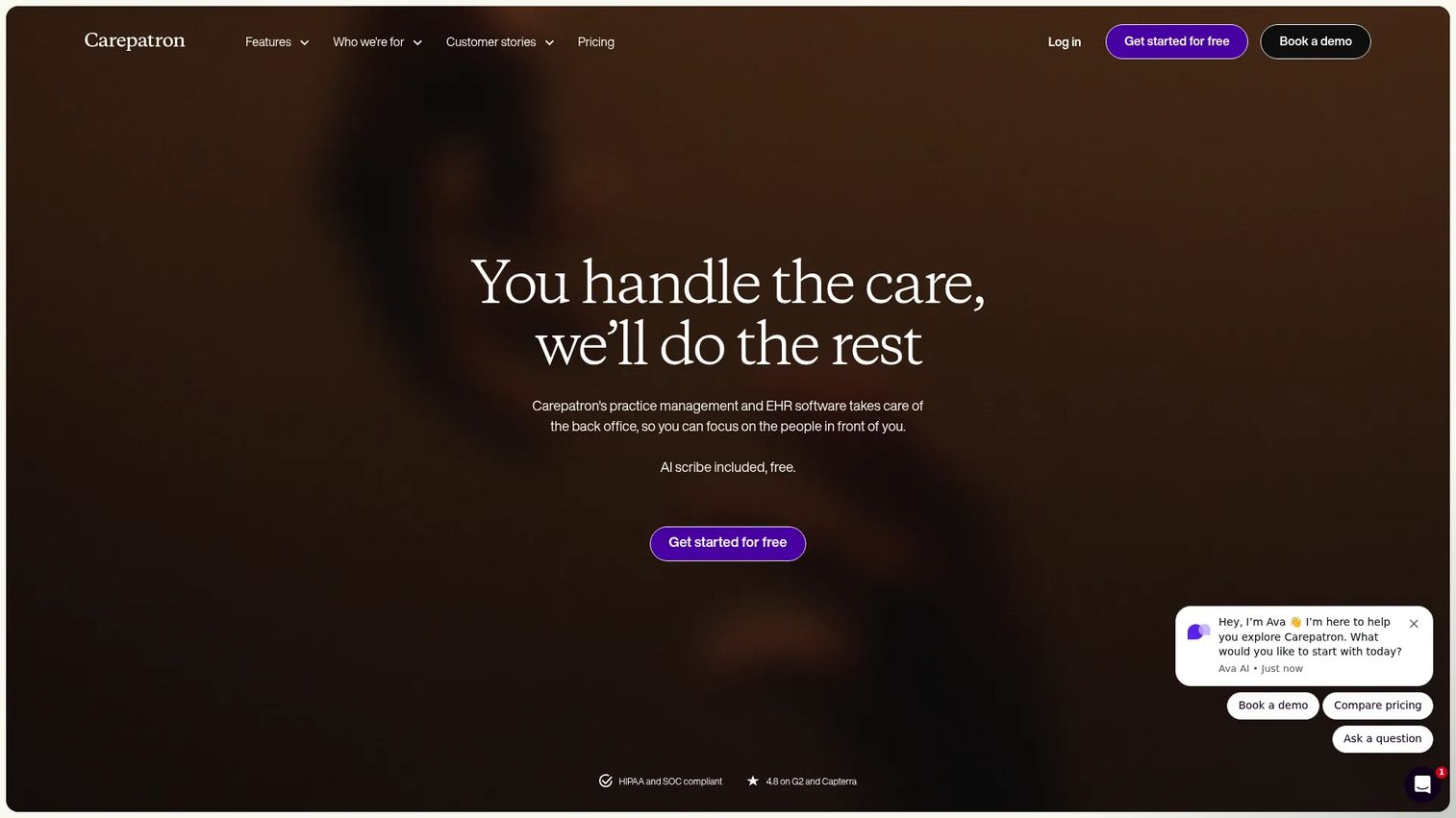
Carepatron is an all-in-one healthcare practice management platform covering scheduling, clinical documentation, telehealth, billing, and client communication. It's built for smaller clinical teams that need operational order without an enterprise implementation project. AI Scribe and smart templates reduce documentation time, while the built-in client portal handles patient communication and intake.
Best for: Small and mid-sized healthcare teams that want scheduling, documentation, billing, and client communication without managing multiple systems.
Key features
- Online booking and automatic appointment reminders
- Telehealth video with in-session notes
- AI Scribe and clinical note templates
- Invoicing, online payments, and insurance claims
- Secure client messaging and patient portal
Why choose Carepatron: It's the strongest entry point for smaller practices or allied health teams moving away from fragmented admin workflows. Setup is fast, and the free tier lets you validate fit before committing to a paid plan.
Carepatron pricing: A free plan is available. Paid plans start at $15.50/user/month (with a reference price of $31 before the advertised discount), and the Advanced plan is $19.50/user/month. Annual billing reduces costs further.
G2 rating: 4.5/5
2. Pabau Practice Management
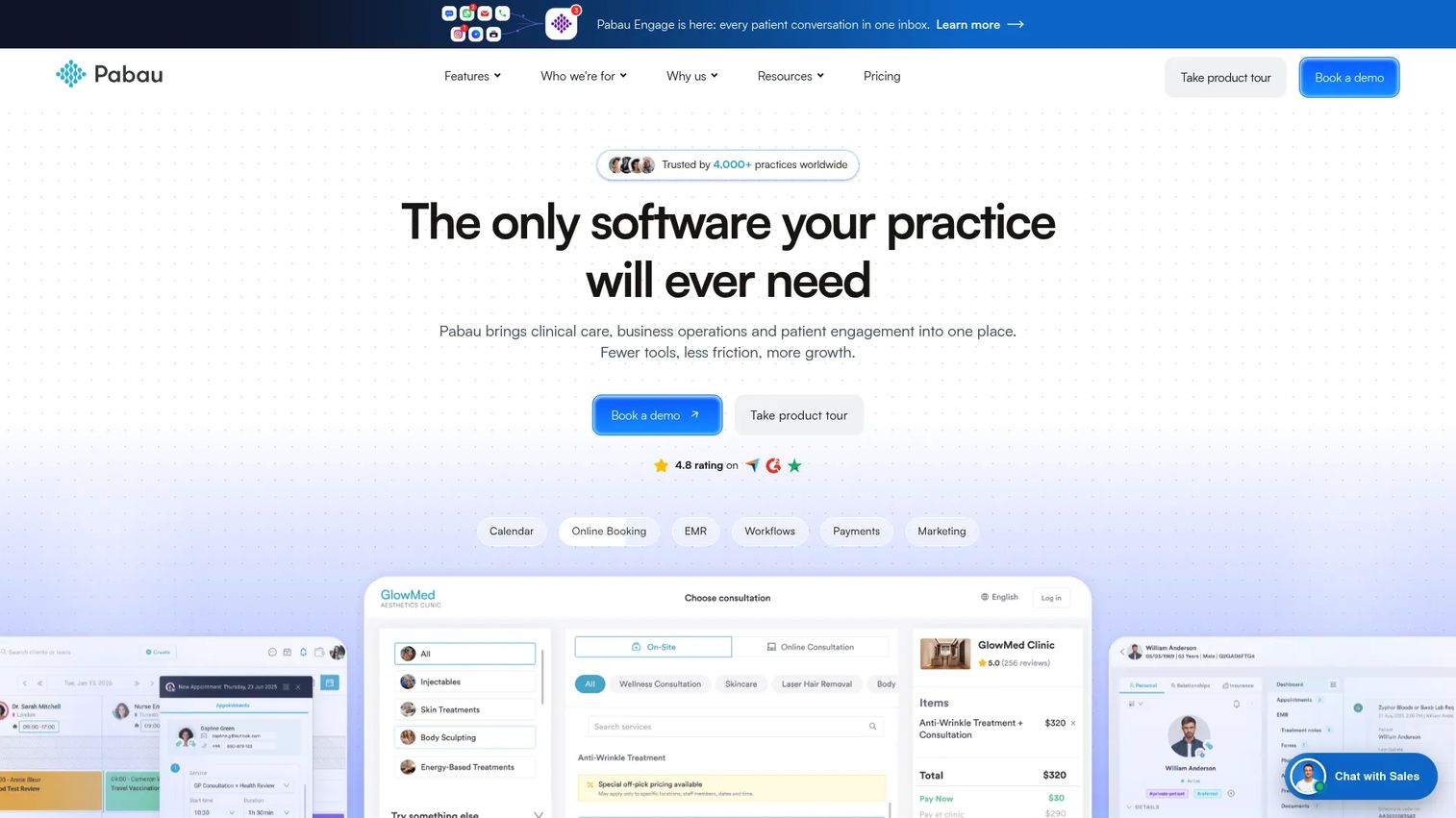
Pabau is a practice management platform for medical clinics, aesthetic practices, and specialty healthcare providers. It covers clinical records, scheduling, invoicing, inventory, marketing automation, and multi-location management from a single system. The mobile app and AI-assisted documentation reduce admin time for busy clinic teams.
Best for: Clinics that manage repeat visits, patient retention, and retail-style payments alongside clinical care, including medspas, aesthetic clinics, and specialty practices.
Key features
- Scheduling, online booking, and deposits
- Digital clinical records and intake forms
- POS, invoicing, and payment management
- Marketing automation and patient recall
- Multi-location management and reporting
Why choose Pabau: It fits practices where the front-office workflow, appointment revenue, and patient relationship management need to work as one system. It's less suited to complex hospital-level case coordination.
Pabau pricing: Plans are sized by team: Solo (1 user), Team (2 to 3), Medium (4 to 5), Group (6 to 15), and Enterprise (16+). All plans include full platform access. Numeric pricing requires a demo request directly with Pabau.
G2 rating: 4.7/5
3. CharityTracker
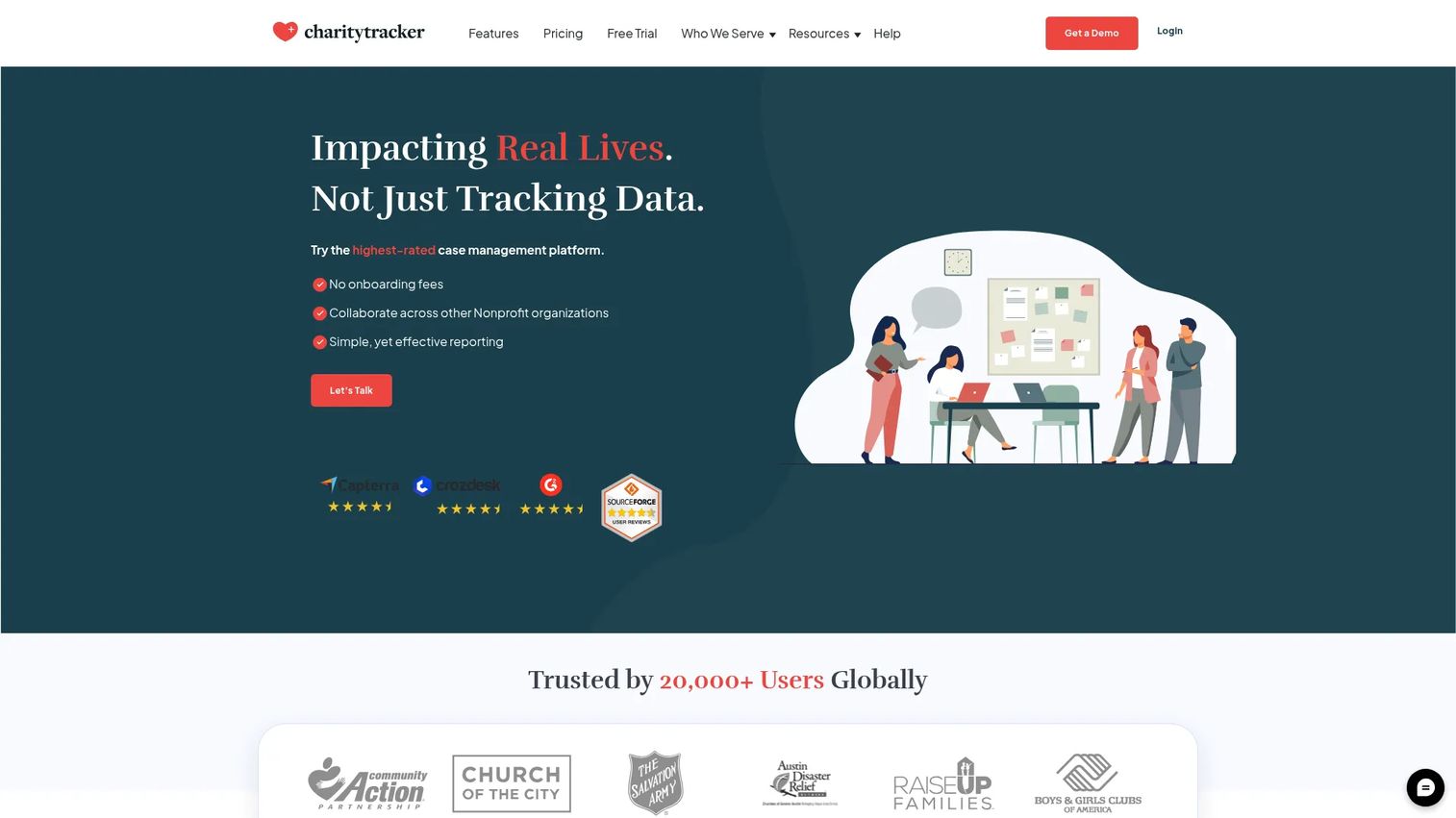
CharityTracker is a cloud-based case management CRM for nonprofits, churches, and community-service agencies. It allows multiple organizations to share client records, track assistance history, and coordinate referrals across an agency network. Outcome reporting tools help teams demonstrate program impact to funders.
Best for: Nonprofits and community networks where multiple agencies coordinate assistance for shared clients and need visibility into duplicate services or missed referrals.
Key features
- Shared client records and assistance history
- Referral tracking and interagency alerts
- Customizable assessments and outcome tracking
- Remote intake and digital assistance requests
- Funder and board reporting
Why choose CharityTracker: It's designed for the non-clinical side of patient-adjacent case management, where community coordination across organizations matters more than clinical charting. If reducing duplicate assistance and closing referral loops is your primary problem, this is purpose-built for it.
CharityTracker pricing: Plans start at $20/user/month (Basic), $40/user/month (Plus), and $60/user/month (Pro), billed monthly. Annual billing brings those to $216, $432, and $648 per user respectively. A 14-day free trial is available.
G2 rating: 4.6/5
4. athenaOne
athenaOne is an AI-native, integrated healthcare platform combining electronic health records, revenue cycle management, and patient engagement. It serves ambulatory medical practices that need clinical documentation and financial workflows connected in one system. Specialty-specific EHR workflows, AI-powered coding, and claim scrubbing reduce the administrative overhead that typically sits between clinical and billing teams.
Best for: Medical practices that need EHR, practice management, revenue cycle, and patient engagement working as a connected system rather than separate tools.
Key features
- Specialty-specific EHR with mobile access
- AI-powered medical billing and claims management
- Patient portal and appointment management
- Telehealth and secure patient communication
- Clinical decision support and documentation tools
Why choose athenaOne: It operates as a broader practice operating system rather than a standalone case tracker. Teams that need documentation and revenue workflows tightly connected, particularly physician groups and multi-location medical practices, get the most value here.
athenaOne pricing: Custom pricing. Reach out to athenahealth directly for personalized pricing based on practice size and module scope.
5. StoriiCare
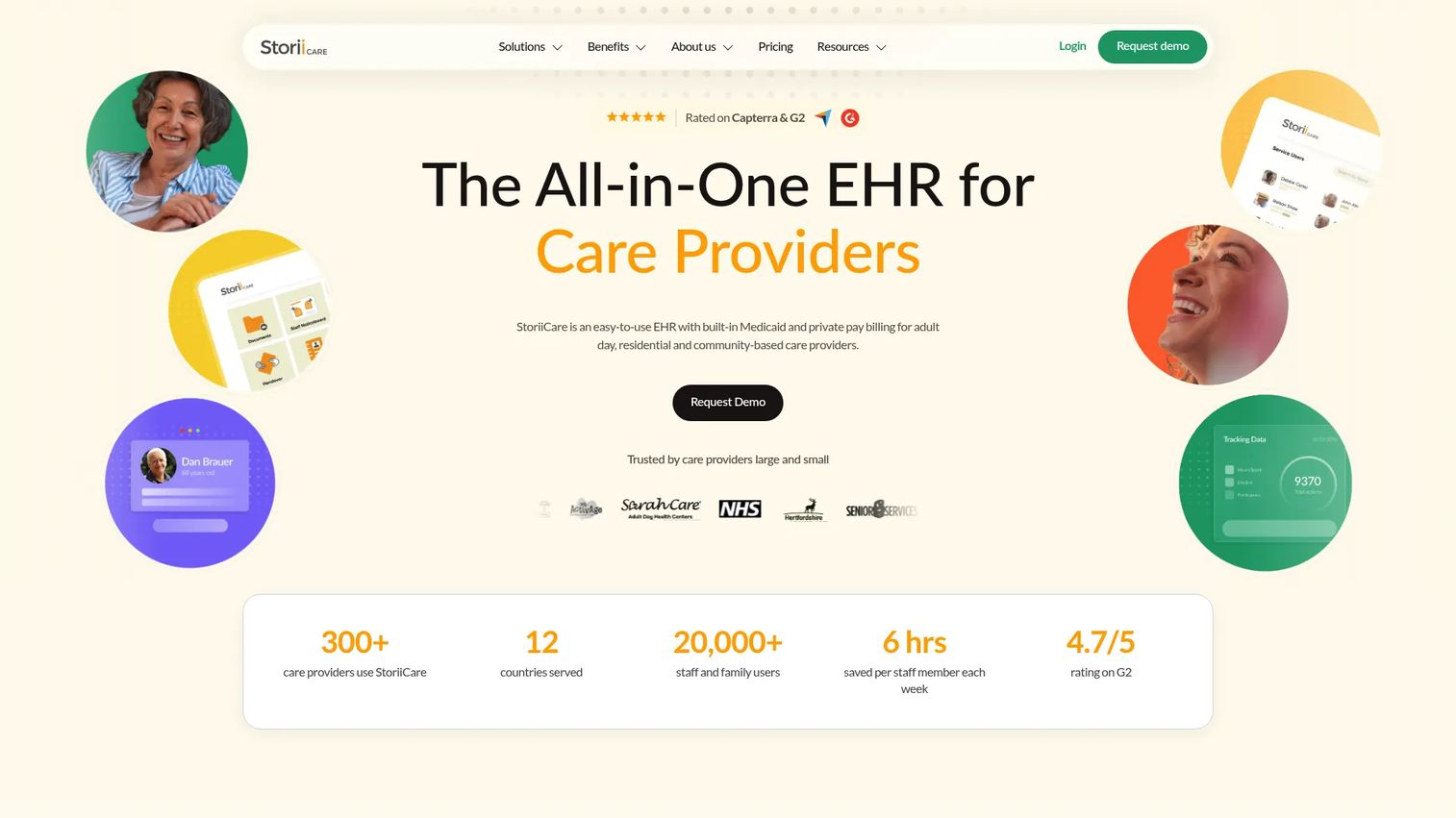
StoriiCare is a cloud-based EHR and care management platform built for adult day, residential, memory care, home care, and other community-based care providers. It handles care plans, eMAR, attendance, family engagement, and Medicaid claims in one system. The family engagement app keeps relatives informed without requiring staff to make individual calls.
Best for: Senior care organizations that manage resident care plans, daily activities, family communication, and billing alongside clinical documentation.
Key features
- Care plans, assessments, eMAR, and incident reporting
- Attendance tracking and EVV
- Medicaid 837I/837P claims and private-pay invoicing
- Family engagement app and activity scheduling
- Analytics and operational dashboards
Why choose StoriiCare: The combination of quality-of-life documentation, clinical care planning, and family communication makes it purpose-built for senior care environments where engagement and care records need to work together.
StoriiCare pricing: Pricing is based on active client count and average daily participants, with unlimited staff users. Request a demo for plan-specific figures; no numeric pricing is shown on the vendor's site.
G2 rating: 4.7/5
6. Solutionreach
Solutionreach is a patient engagement platform focused on communication, scheduling, reminders, recalls, and payment automation. It connects with 400+ practice management and EHR systems, making it an add-on that plugs into an existing clinical stack rather than a replacement for it. Practices use it primarily to reduce no-shows, automate recall messaging, and collect patient feedback.
Best for: Medical practices and multi-location healthcare organizations where missed appointments and weak patient follow-up create revenue leakage and care gaps.
Key features
- Appointment reminders via text, email, and phone
- Two-way patient messaging and batch broadcasts
- Online scheduling and digital check-in
- Patient recall campaigns and surveys
- Text-to-pay and insurance verification
Why choose Solutionreach: It excels as a communication layer for practices whose core case management lives in a different system. Position it alongside an EHR or practice management tool, not as a replacement for either.
Solutionreach pricing: Four packages are available: Patient Connect, Practice Efficiency, Practice Growth, and Enterprise. Pricing requires a quote; yearly contract options are offered. Ask sales about patient volume, provider count, and communication channel scope when comparing.
G2 rating: 4.3/5
7. Foothold
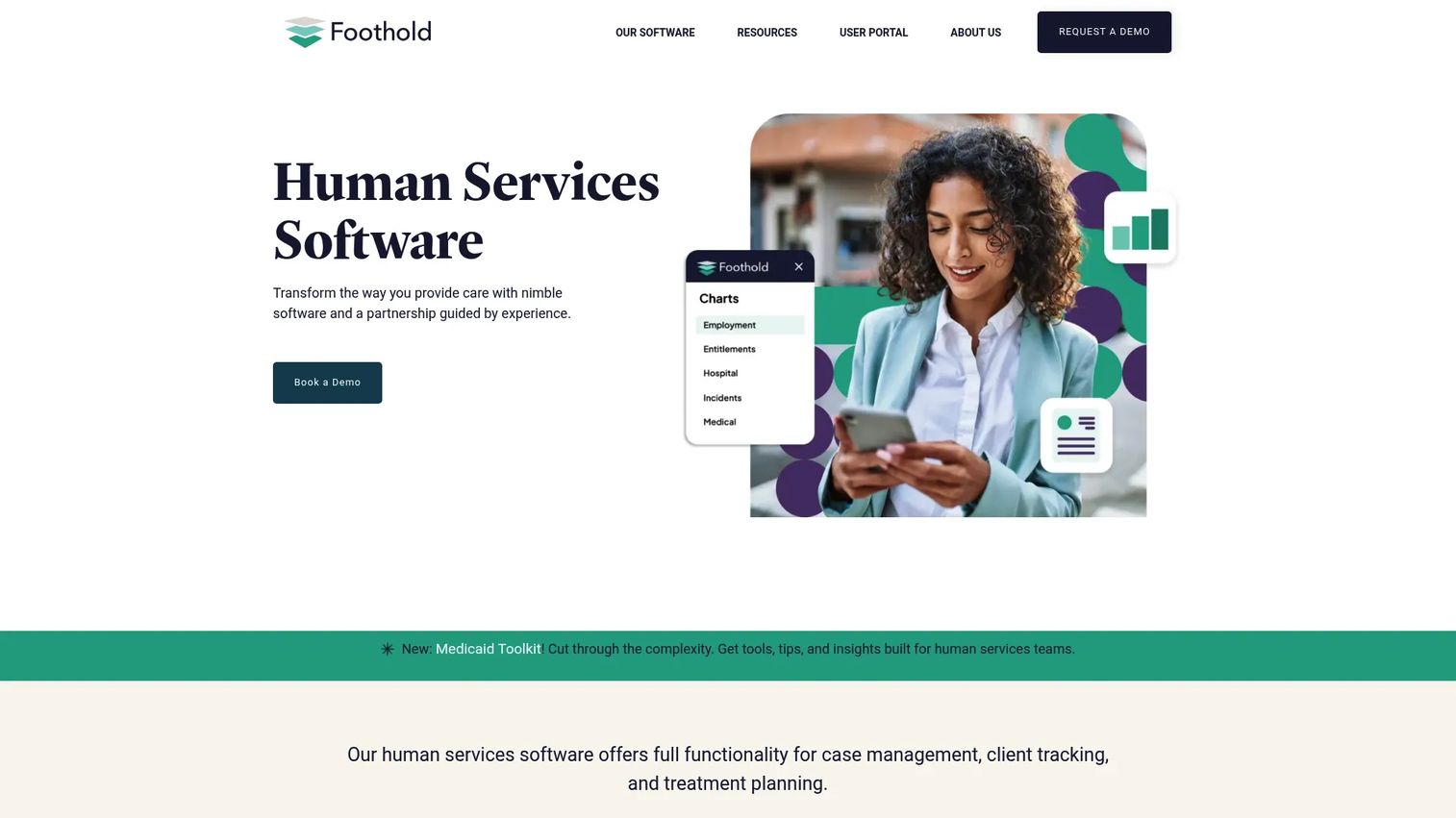
Foothold provides EHR and case management software for human services agencies, including behavioral health providers, developmental disability organizations, housing programs, and community-based care networks. HMIS functionality, configurable service plans, and integrated billing support complex program documentation and compliance reporting.
Best for: Behavioral health and human services agencies that need structured case records, service planning, program documentation, and compliance reporting across regulated programs.
Key features
- EHR and configurable case management
- Service and treatment planning with custom forms
- Integrated billing and claims management
- HMIS functionality and compliance reporting
- E-prescribing, eMAR, and scheduling
Why choose Foothold: It's built for the documentation depth that behavioral health and social care programs require. Teams managing regulated programs with complex billing, service tracking, and funder reporting will find the configurability useful.
Foothold pricing: Pricing is customized per organization. The vendor's site notes a general annual EHR range of $15,000 to $100,000 as industry context, but Foothold-specific figures require a direct quote. Ask about user count, modules, and implementation timeline.
G2 rating: 4.8/5
8. ExpertBox
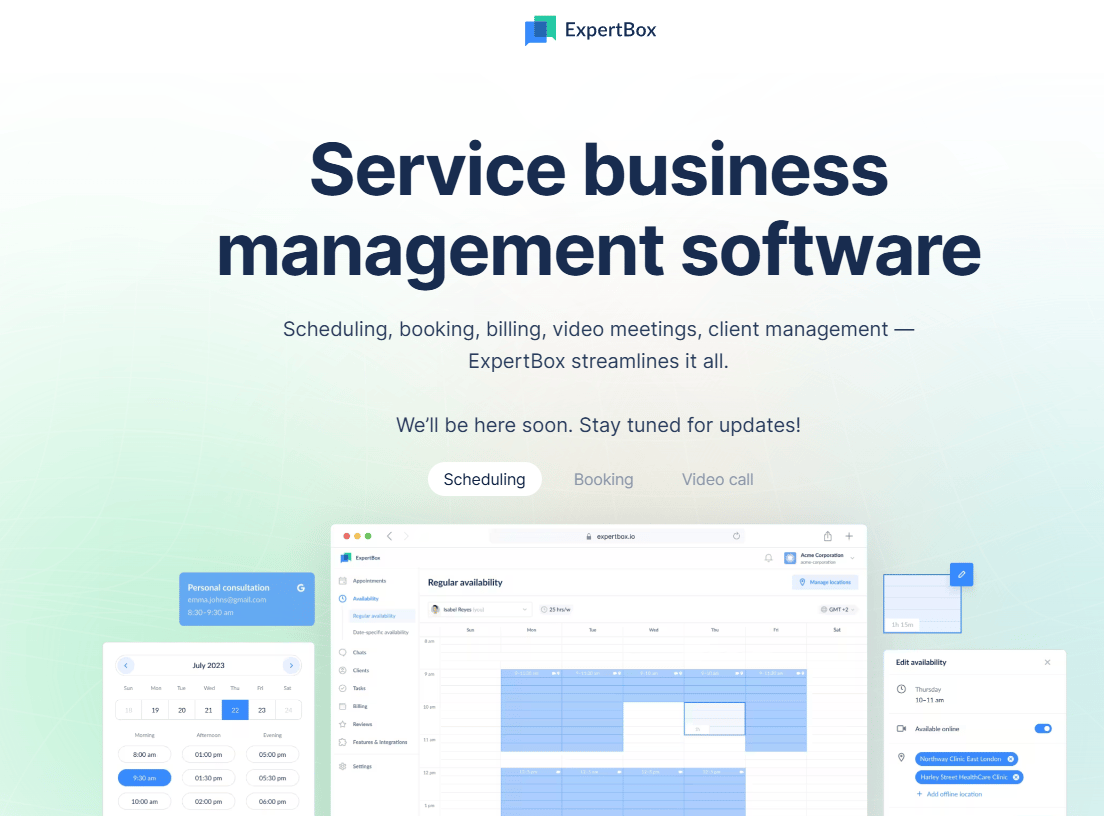
ExpertBox is a HIPAA-compliant telehealth and scheduling platform for appointment-based healthcare, wellness, coaching, and therapy practices. It covers video consultations, client management, intake forms, and payment processing in a focused package.
Best for: Appointment-based care teams whose case management workflow begins with scheduling and remote care delivery rather than complex clinical documentation.
Key features
- Online scheduling and calendar management
- HIPAA-compliant video consultations
- Client records and intake forms
- Payment processing and invoicing
- Automated reminders and notifications
Why choose ExpertBox: It suits lean care operations where the primary need is reliable telehealth and appointment management. For teams that also need deep care plan management, charting, or claims processing, pair it with a clinical documentation tool.
ExpertBox pricing: Pricing was not accessible from the vendor's site during research. Check the ExpertBox website directly or contact sales for current plan details and trial availability.
G2 rating: 4.2/5
9. Meddbase
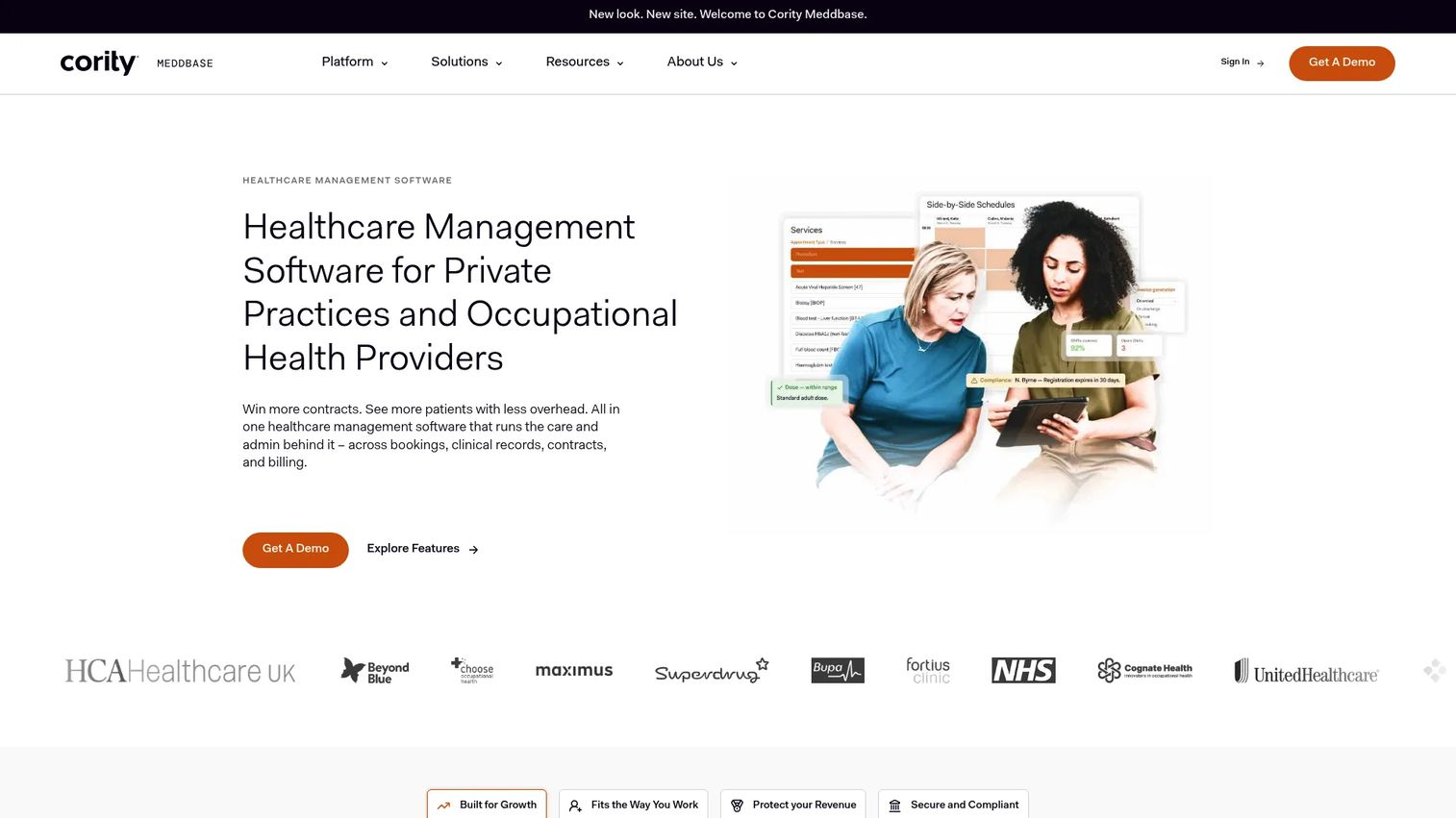
Meddbase is a cloud-based healthcare management platform combining electronic medical records, practice management, scheduling, billing, patient portals, and analytics. It serves private healthcare groups, specialty clinics, and occupational health providers that need configurable clinical and administrative workflows across multiple sites.
Best for: Private healthcare organizations and occupational health teams that need configurable clinical operations, including EHR, billing, and patient portal management, across complex workflows.
Key features
- Electronic medical records and document management
- Appointment scheduling and patient portal
- Electronic prescribing and referrals
- Billing, invoicing, and pathology management
- Reporting dashboards and analytics
Why choose Meddbase: The configurability makes it a strong fit for organizations with non-standard clinical workflows or multi-site operations. It covers both clinical and administrative needs without requiring separate systems for each.
Meddbase pricing: Pricing is customized based on practice size, required features, integrations, and support scope. Contact Meddbase sales for a quote specific to your organization.
G2 rating: 4.4/5
10. HealtheIntent
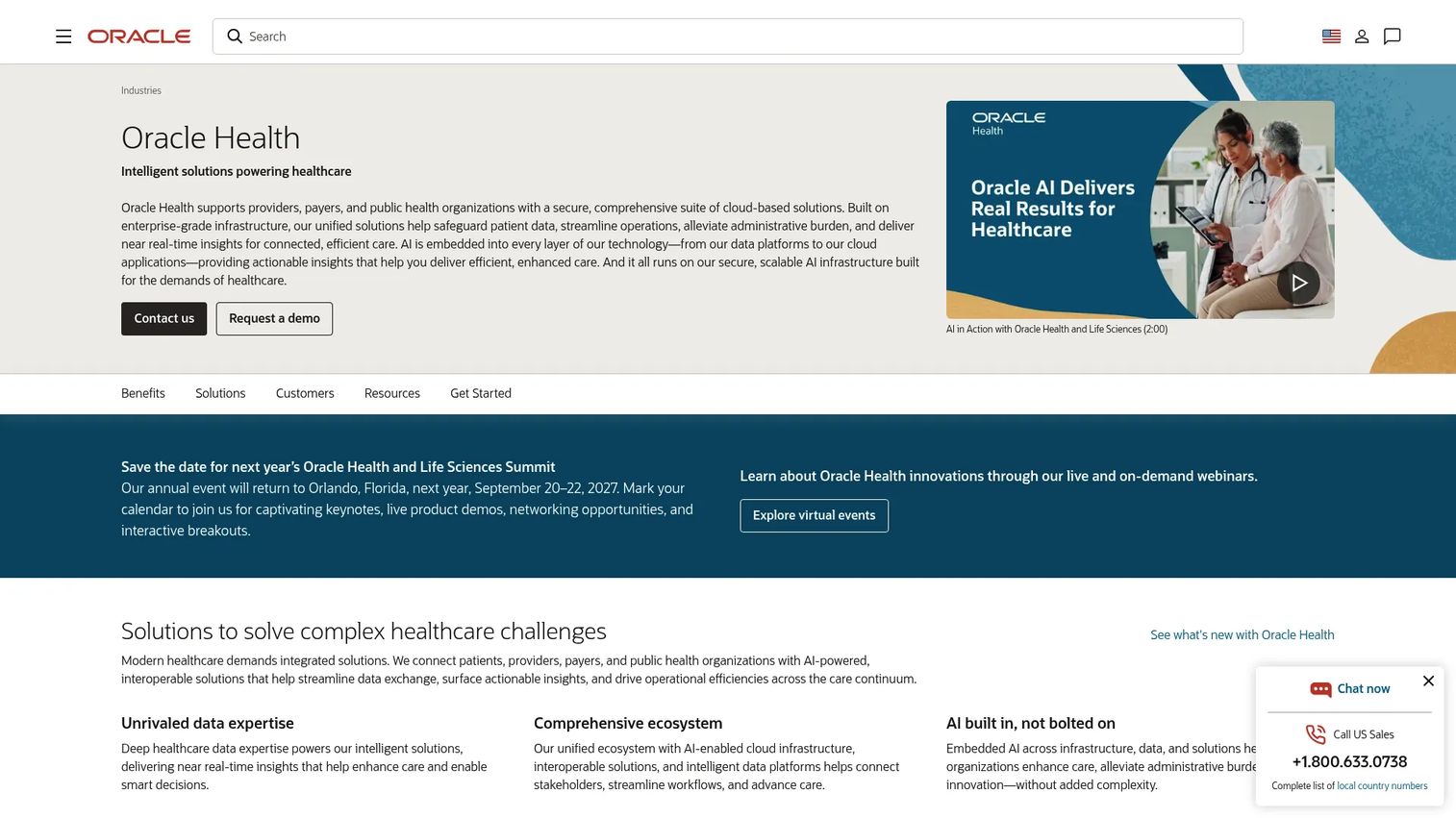
HealtheIntent is Oracle Health's population health platform, which aggregates and normalizes data from multiple sources into longitudinal patient records. It supports population health management, care coordination, readmission prevention, and quality programs across health systems and value-based care organizations.
Best for: Health systems and population health teams managing risk stratification, care gap closure, cohort management, and value-based care program reporting.
Key features
- Longitudinal patient records aggregated across sources
- Population analytics and risk stratification
- Care gap identification and management
- Cohort management and program tracking
- Clinical, financial, and operational reporting
Why choose HealtheIntent: It's a data-heavy platform for organizations managing populations, not a clinic-level case tracker. Teams reporting to payers or boards on outcomes, readmissions, and care gap closure get the most from it.
HealtheIntent pricing: Enterprise quote-based. Contact Oracle Health for pricing based on organization size, data volume, and program scope.
G2 rating: 4.0/5
11. myAvatar
myAvatar is a behavioral health EHR from Netsmart, covering clinical documentation, treatment planning, scheduling, billing, and analytics for community-based, residential, and inpatient behavioral health programs.
Best for: Behavioral health organizations that need EHR-level documentation, treatment planning, and billing support for regulated clinical and administrative workflows.
Key features
- Treatment planning and clinical documentation
- Real-time analytics and clinical decision support
- Scheduling and care coordination tools
- Billing workflows and reporting dashboards
- User-friendly dashboards for clinical teams
Why choose myAvatar: It's a specialized behavioral health platform for organizations with clinical, billing, and reporting complexity that goes beyond what lightweight practice management tools handle. Best for regulated behavioral health operations rather than general clinical case tracking.
myAvatar pricing: Pricing is quote-based. Contact Netsmart sales for plan details specific to your program type, user count, and implementation scope.
G2 rating: 3.6/5
12. Access Care Planning
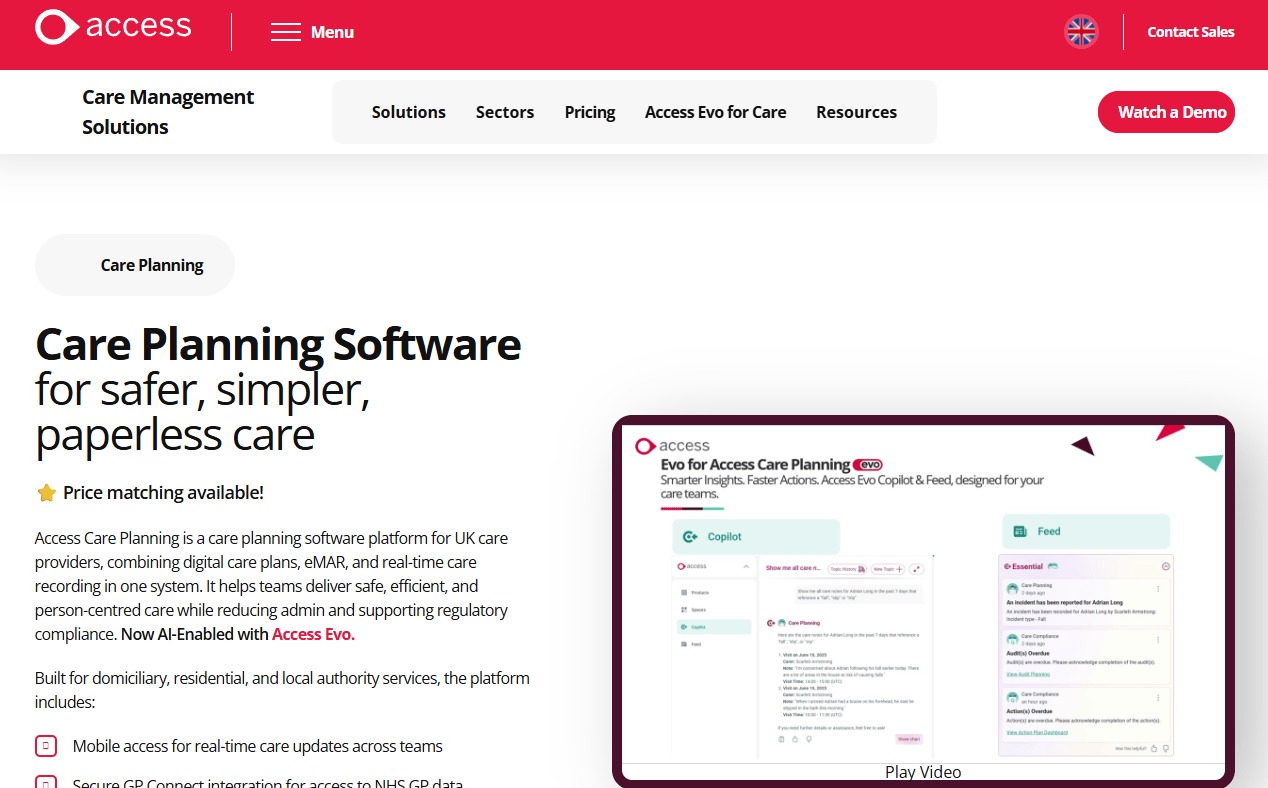
Access Care Planning is a care planning and management platform for domiciliary, residential, and community care providers. It supports digital care plans, visit management, medication tracking, mobile documentation, and operational reporting through iOS and Android apps with offline capability.
Best for: Home care and community care providers coordinating visits, care plans, and staff documentation across distributed field teams.
Key features
- Digital care plans and service-user records
- Visit and activity management with mobile access
- Medication and eMAR activity tracking
- AI-powered Smart Notes voice-to-form documentation
- Compliance reports and live operational views
Why choose Access Care Planning: The mobile-first design and offline capability make it practical for field staff who document care at the point of delivery rather than back at a desk. Care plan consistency across distributed teams is the core strength.
Access Care Planning pricing: Pricing is quote-based. Contact the vendor directly for figures based on client volume and service scope.
G2 rating: 5.0/5
13. Clarify Atlas
Clarify Atlas is a healthcare analytics platform that maps 300 million patient lives and generates over 20 billion AI predictions from claims, prescription, negotiated-rate, quality, and social-determinant data. It gives healthcare organizations actionable insights on provider performance, referral patterns, network efficiency, and population health.
Best for: Healthcare analytics teams and health system leaders who need population-level and provider-level performance insights to guide care strategy.
Key features
- Claims analytics and prescription data integration
- Provider performance and referral analytics
- Population health insights and utilization analysis
- Negotiated-rate and cost benchmarking
- Social determinant data integration
Why choose Clarify Atlas: It belongs when leadership needs better decisions, not when case managers need a daily task board. Think of it as the analytical layer that tells you where care coordination is breaking down, not the tool that fixes it operationally.
Clarify Atlas pricing: Clarify presents Atlas through outcomes-based partnerships. Contact the team for a briefing and pricing based on your organization's data scope and analytics needs.
G2 rating: 4.7/5
14. Halo Case Management System
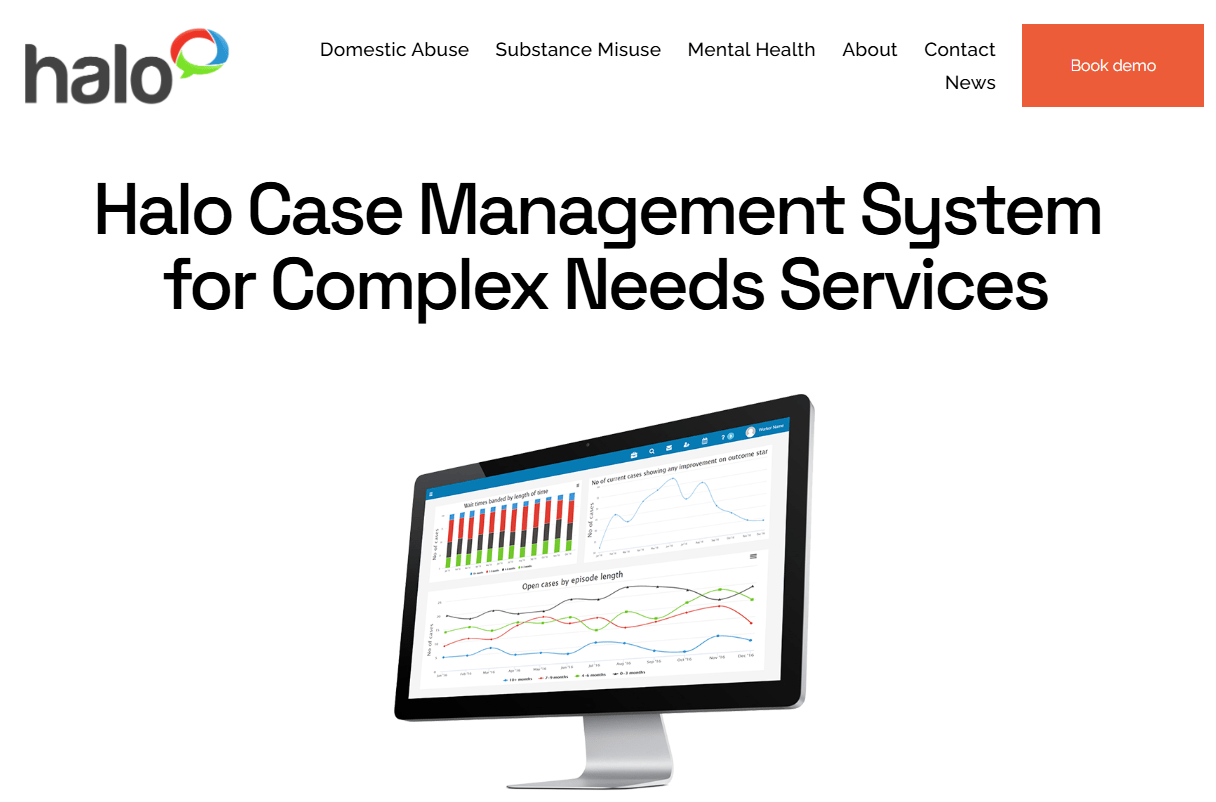
Halo Case Management System is a case management platform for health and social care organizations managing complex client needs across services including domestic abuse, substance misuse, and mental health programs. It provides worker dashboards, multi-agency access controls, goal management, and outcome tracking.
Best for: Health and social care organizations coordinating complex-needs cases across multiple services and agencies, with a need for structured workflow tracking and outcome documentation.
Key features
- Worker dashboards and case tracking
- Multi-agency access controls and audit history
- Calendar and appointment management
- Goal management and outcome tools
- Reporting and data visualizations
Why choose Halo Case Management System: It fits teams where structured case workflow, task visibility, and multi-agency coordination are the primary operational challenges. Verify healthcare-specific clinical features directly with the vendor before assuming clinical documentation depth.
Halo Case Management System pricing: Pricing is quote-based. Contact the vendor for plan details specific to your organization size and service type.
G2 rating: 4.5/5 (based on a limited review count)
15. DoctorConnect.net
DoctorConnect.net is a patient engagement and practice automation platform for healthcare providers. It handles appointment reminders, digital intake forms, patient recalls, waitlists, copay automation, online scheduling, HIPAA-compliant telehealth, and patient surveys.
Best for: Medical practices where missed appointments, weak recall, and slow patient outreach create measurable revenue and care-gap problems.
Key features
- Automated reminders via text, email, or phone
- Patient recall and retention messaging
- Digital intake forms and online scheduling
- Automated waitlists and copay collection
- Patient surveys and feedback tools
Why choose DoctorConnect.net: It's a strong patient communication tool for practices where follow-up is the primary operational gap. Pair it with a clinical documentation or EHR system when care plans and charting are also required.
DoctorConnect.net pricing: Pricing scales with practice size and selected modules. Contact DoctorConnect directly for a quote that reflects your provider count and communication volume.
16. CareMOSAIC
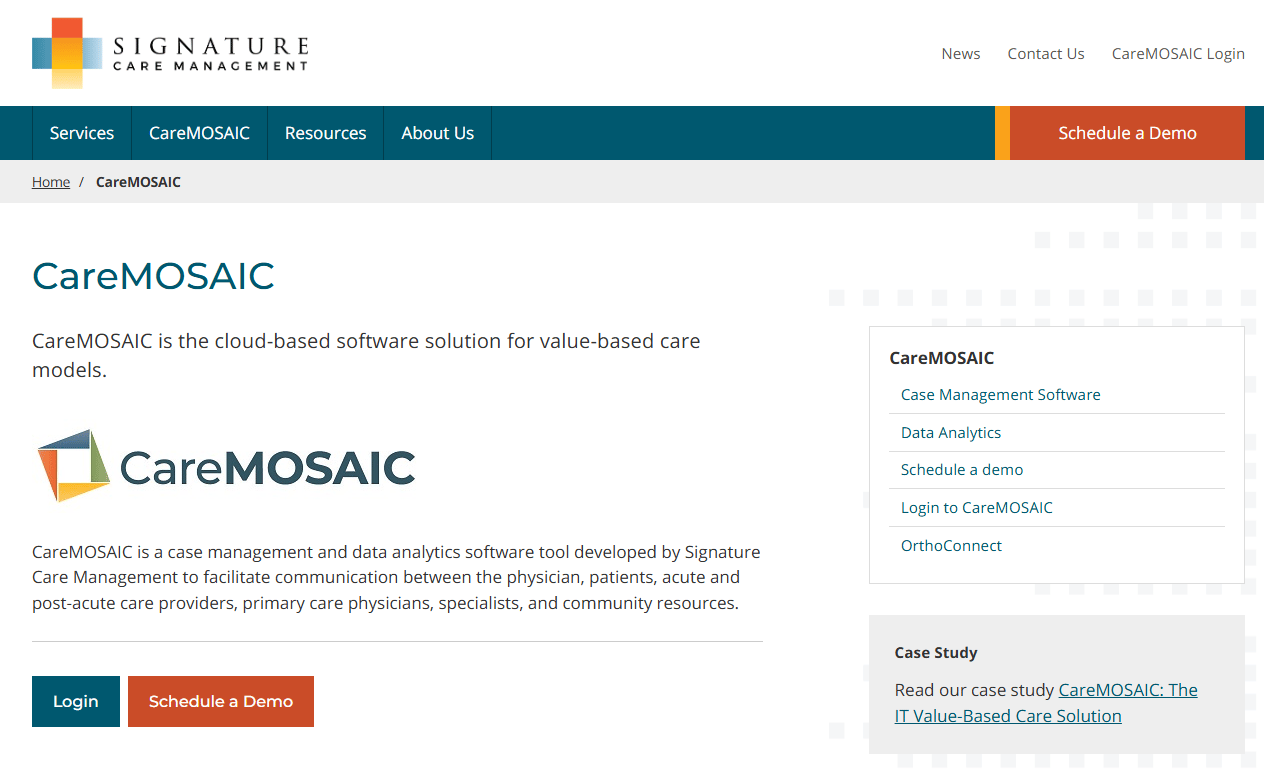
CareMOSAIC is a cloud-based case management and analytics platform for value-based care, transitional care, and episodic case management programs. It provides HIPAA-compliant workflows for episode management, risk dashboards, care pathways, outcome tracking, CAHPS surveys, and physician performance benchmarking.
Best for: Transitional care and value-based care teams managing episodes, readmissions, post-acute utilization, and program-level outcome reporting.
Key features
- Episode management and care pathways
- Risk dashboards and national benchmarking
- 30+ standard reports and ad hoc reporting
- Patient-reported outcomes and CAHPS survey support
- Financial, clinical, and outcomes data integration
Why choose CareMOSAIC: It's purpose-built for organizations paid on outcomes and transitions rather than visit throughput. If reducing readmissions and tracking post-acute utilization are board-level concerns, this is a focused tool for that work.
CareMOSAIC pricing: Quote-based. Contact the vendor for pricing based on program type and volume.
17. PlanStreet Care Management Software
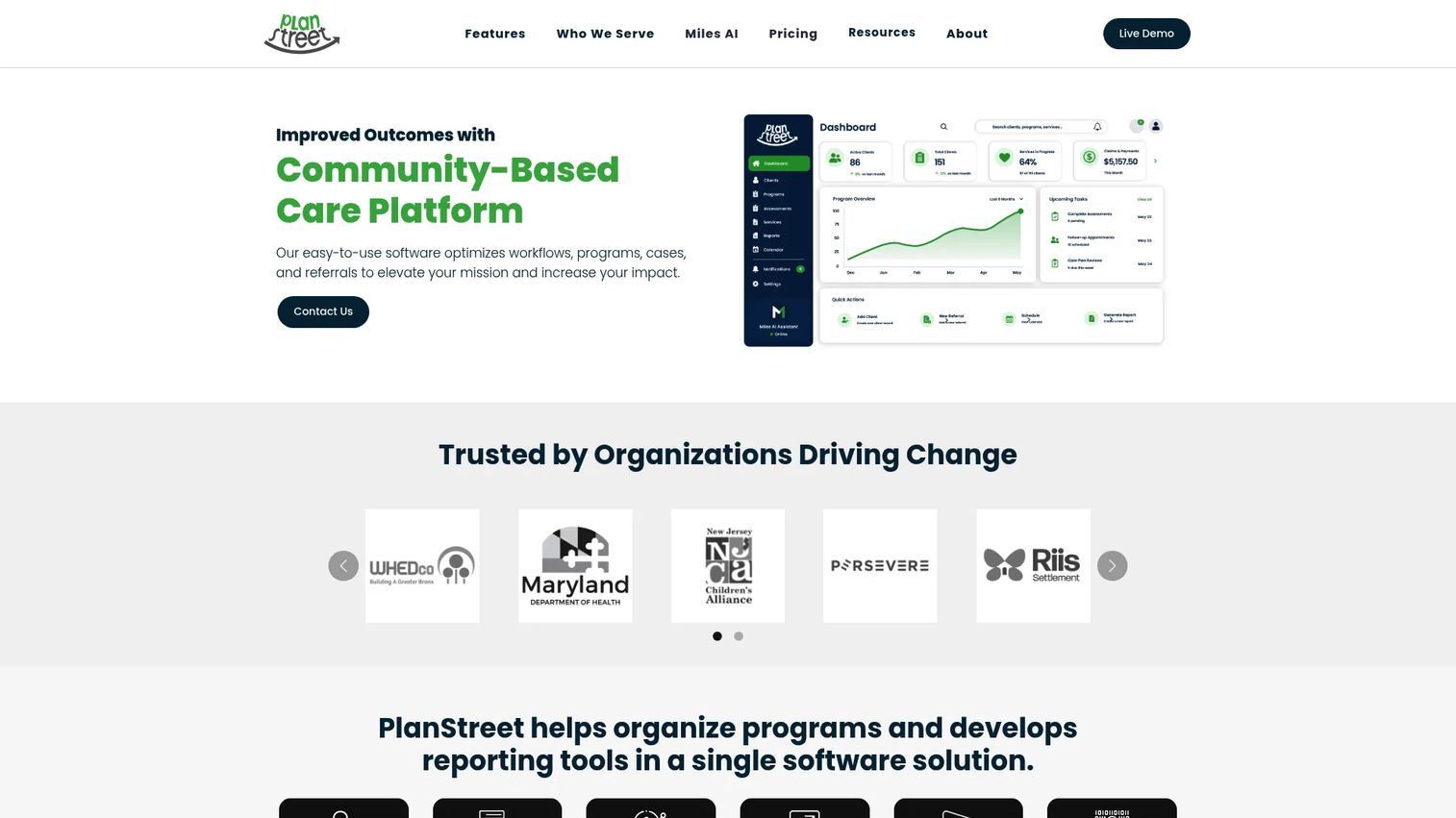
PlanStreet is a care management platform for community-based care organizations, human services providers, and Medicaid waiver programs. It covers intake, care coordination, case notes, billing, claims, scheduling, client portals, and Power BI-powered analytics in one configurable system.
Best for: Medicaid waiver providers and human services organizations that need care plan management, billing workflows, and program reporting connected without running separate systems.
Key features
- Case management and intake automation
- Client referrals and case financials
- Billing, claims, and payment workflows
- Power BI analytics and reporting
- Client and caseworker self-service portals
Why choose PlanStreet Care Management Software: It's a strong consolidation tool for organizations that currently split care operations, payments, and reporting across multiple platforms. The billing and claims depth makes it practical for Medicaid waiver and home care providers.
PlanStreet pricing: Custom pricing tailored to organization size and scope. Contact PlanStreet sales for plan details and implementation timeline.
G2 rating: 4.6/5
18. DataCare Medical Case Management Software
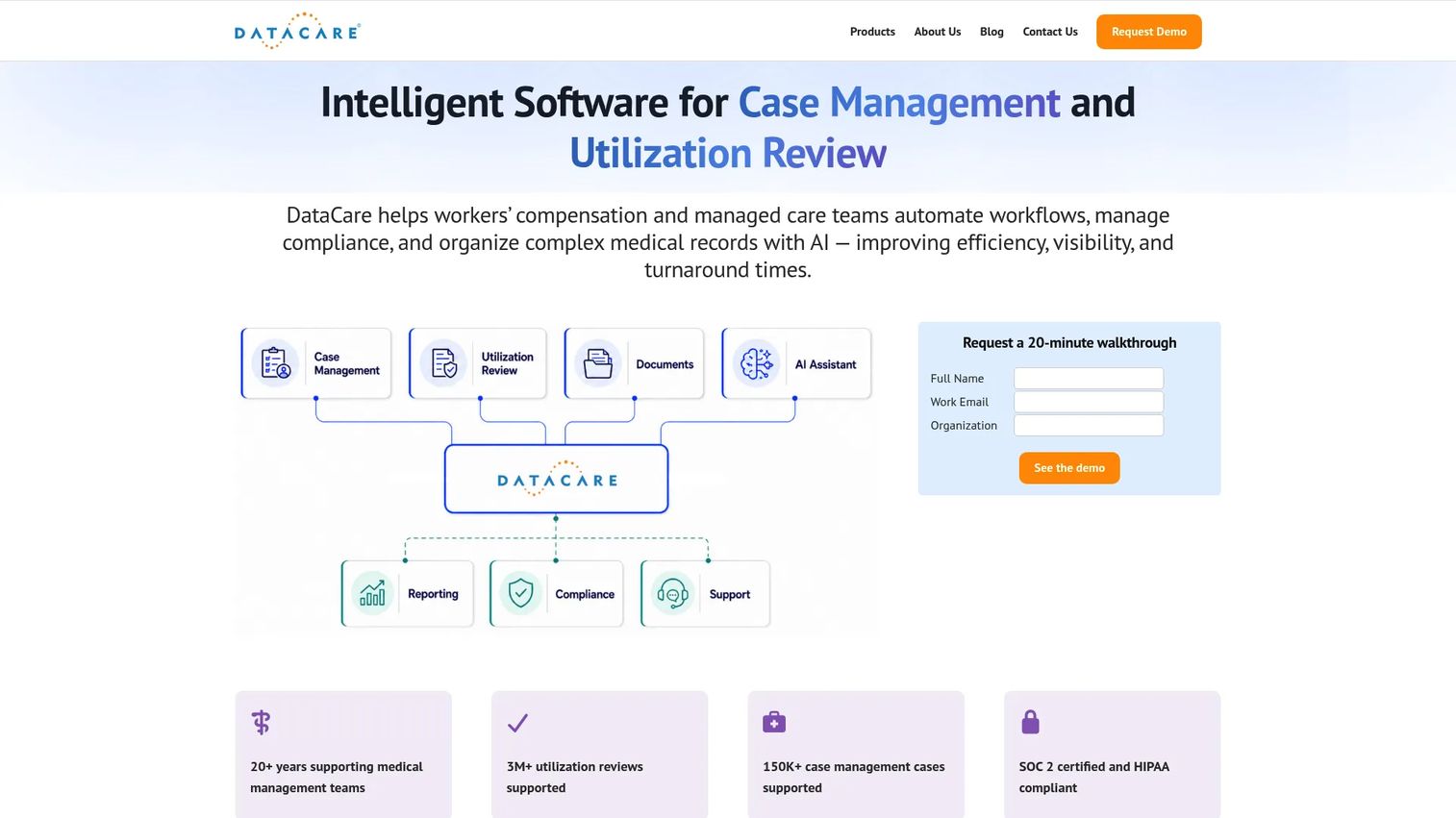
DataCare provides cloud-based case management, utilization review, and AI document automation software for managed care, workers' compensation, disability, hospice, and occupational health workflows. Caseload dashboards, deadline tracking, workflow routing, billing reports, and SOC 2-certified security are core to the platform.
Best for: Nurse case management and medical case management teams handling complex regulatory workflows, caseload balancing, and compliance reporting across workers' compensation and managed care programs.
Key features
- Case and referral management with documentation and billing
- Utilization review tracking with deadlines and audit trails
- AI-assisted document indexing and clinical summarization
- Caseload dashboards and workload balancing
- Role-based access, HIPAA compliance, and SOC 2 certification
Why choose DataCare Medical Case Management Software: It's the right fit when missed deadlines, manual compliance reports, and caseload imbalances create measurable operational risk. The AI document tools reduce the time case managers spend indexing and summarizing records.
DataCare pricing: Quote-based. Ask about user count, modules (utilization review, document AI, billing), integrations, and reporting needs when requesting a price.
G2 rating: 4.0/5
Considerations when choosing patient case management software
Care model fit
A behavioral health program, a senior care organization, and a value-based care ACO have different dominant workflows. Map the tool against the care model your team runs daily, not a generic feature checklist. A tool optimized for episodic case management may not handle ongoing chronic care coordination, and vice versa.
Integration depth
Verify whether integrations with your EHR, billing system, claims clearinghouse, or practice management platform are native, API-based, file-based, or services-led. File-based integrations create manual steps. Native integrations maintain data consistency automatically. Ask vendors for a current integration list and confirm the specific systems you rely on.
Reporting and outcomes visibility
Your VP of Operations or board will ask about readmissions, care gap closure, caseload trends, and program outcomes, not activity counts. Evaluate whether the platform's dashboards surface those metrics directly or require manual exports. Tools like HealtheIntent, CareMOSAIC, and Clarify Atlas are built around that reporting layer; most practice management tools are not.
Security and auditability
Healthcare organizations handling protected health information need vendors with appropriate security controls, role-based access, audit logs, data encryption, and a business associate agreement process. Review the vendor's security documentation, ask about SSO and data retention policies, and confirm BAA availability before contract. No software makes your organization compliant; that determination requires your own legal and security review.
Implementation and change management
A strong tool can still fail if workflows are not mapped before rollout. Ask every vendor for an implementation timeline, data migration approach, admin training scope, and what a successful first quarter looks like for a team your size. The cost of a failed implementation often exceeds the annual subscription.
Conclusion
The right patient case management software is the one that matches your care model and reduces the specific operational failure you're dealing with today.
For smaller healthcare teams moving off spreadsheets, Carepatron offers the fastest path to operational order with a free starting tier. Medical practices that need EHR and revenue cycle connected should evaluate athenaOne. Community and human services organizations coordinating across agencies will find CharityTracker and Foothold purpose-built for their workflows. Senior care teams benefit most from StoriiCare's resident-centered documentation and family engagement tools.
If your primary concern is population health reporting or value-based care contract performance, HealtheIntent and CareMOSAIC handle that analytical layer. For complex nurse or medical case management with compliance and billing requirements, DataCare is the most direct fit.
The practical next step: Shortlist three tools that match your care model, map your current workflows to each platform's strengths, verify integration fit with your existing stack, and ask every vendor for a first-quarter implementation timeline and total first-year cost. Software that earns its place in the stack quickly is worth more than a long feature list that takes six months to deploy.
FAQs
Patient case management software helps care teams coordinate patient services, document interventions, manage care plans, and track outcomes across a patient's journey. It connects intake, scheduling, documentation, task tracking, and reporting for case managers, coordinators, and clinical staff. Healthcare organizations, nonprofits, and human services agencies use it to manage the full patient lifecycle rather than isolated appointments.
Patient case management software typically focuses on individual patient workflows: Care plans, task ownership, referral tracking, and documentation for a specific patient or case. Care management software can be broader, encompassing population health programs, chronic condition management, and value-based care analytics across patient cohorts. The categories overlap significantly, and many vendors use the terms interchangeably. Evaluate the specific workflow you need to fix rather than relying on category labels alone.
Prioritize the workflow that currently breaks most often in your organization. Core features to evaluate include care plan management, patient intake, clinical documentation, scheduling, follow-up task tracking, patient communication, outcome reporting, and integration with your EHR or billing system. If billing or claims are a daily bottleneck, confirm those modules exist before shortlisting. For care coordination software specifically, also check referral tracking and shared care plan visibility across providers.
No. An EHR is the system of record for clinical documentation, including notes, diagnoses, orders, and medication records. Patient case management software focuses on coordination, tasks, care plans, referrals, and outcome tracking across the patient journey. Some EHR platforms include case management features, and some case management platforms include light clinical documentation, but the two categories have different primary purposes. athenaOne and myAvatar sit closer to the EHR end; CharityTracker and Solutionreach sit at the coordination and engagement end.
Pricing varies by vendor, user count, care setting, module selection, implementation complexity, and integration scope. Carepatron offers a free plan with paid tiers starting at $15.50/user/month. CharityTracker starts at $20/user/month. Most enterprise platforms, including athenaOne, StoriiCare, Foothold, and HealtheIntent, price by quote. When comparing, ask for total first-year cost including implementation, data migration, training, and any module add-ons, not only the monthly subscription figure.
Healthcare organizations handling protected health information need vendors with appropriate security controls and a signed business associate agreement where applicable. Review vendor security documentation covering access controls, audit logs, encryption, data retention, and SSO before committing. HIPAA compliance is the organization's responsibility; vendor security features support that compliance posture but do not substitute for your own legal and security review. Always ask vendors for their current BAA process.
Smaller practices typically need scheduling, documentation, billing, reminders, and patient communication without a long implementation timeline. Carepatron, ExpertBox, and Pabau Practice Management are the strongest fits from this list for small clinical teams. Carepatron offers a free tier to start. ExpertBox works well for telehealth-centered practices. Pabau fits clinics that also manage patient retention, payments, and marketing from the same platform. Verify setup effort and integration needs before choosing.
Value-based care teams should prioritize risk stratification, care gap visibility, post-discharge follow-up tracking, outcomes reporting, and integration with clinical and claims data. HealtheIntent, from Oracle Health, handles longitudinal population health analytics and care gap management at scale. CareMOSAIC is purpose-built for transitional care and episodic case management in bundled payment and ACO models. For either platform, surface-level task tracking is insufficient; the real value is in data aggregation and outcomes measurement tied to your payer contracts.