Your dispatcher is copying addresses from a spreadsheet into a mapping tab. A driver just called because two stops got assigned to the wrong route. A customer is on hold asking where their package is, and nobody can answer without pinging the driver directly. That is a normal Tuesday for a courier operation running on manual coordination.
The cost adds up faster than most teams expect. According to Global Growth Insights (2025), more than 68% of businesses report improved operational efficiency after moving to automated dispatch solutions, and cloud deployment adoption now exceeds 65% in delivery management software. Manual dispatching does not just slow you down. It creates late deliveries, misrouted stops, and a support queue that never empties.
The market reflects the pressure. Persistence Market Research (2026) values the global courier software market at USD 12.7 billion in 2026, projected to reach USD 31.7 billion by 2033 at a 14.0% CAGR. Teams are not buying software because it is trendy. They are buying it because manual coordination stops scaling the moment delivery volume climbs.
The hard part is choosing. Every vendor promises routing, tracking, and a driver app. The real question is which platform fits your operational complexity, your delivery model, and the systems you already run. This guide answers that.
What's inside
This guide compares seven courier dispatch software tools built for teams that need routing, real-time tracking, proof of delivery, driver coordination, and customer updates in one system. It is written for operations leaders, dispatch managers, founders, and product-minded evaluators comparing delivery workflow software, not generic software shoppers.
Each tool was assessed against five criteria: automation depth (auto dispatching and route optimization), real-time visibility, dispatch workflow fit, integration breadth, and the quality of the driver and customer experience. Pricing and ratings reflect verified vendor sources at the time of writing. Where a vendor gates pricing, we say so.
TL;DR
- Broadest platform for specialty logistics: CXT Software covers dispatch, tracking, chain of custody, and a three-part app suite for high-accountability courier work.
- Most transparent pricing: OnTime 360 lists four public monthly tiers starting at $49, with a customer portal and route planning built in.
- Best for white-label, end-to-end operations: Onro pairs AI dispatching, route optimization, and a branded customer portal across the full delivery lifecycle.
- Strongest proof of delivery: Track-POD leads on electronic POD with signatures and photos, live tracking, and customer ETA alerts.
- Best for configurable field operations: Tookan handles automated scheduling, order tracking, and driver coordination with a flexible workflow layer.
- Best for local delivery and fast setup: Shipday offers a free tier, SMS tracking, and branded customer updates for restaurants and local businesses.
- Best for technical teams: Fleetbase is an open-source, modular logistics platform with cloud or self-hosted deployment.
What is courier dispatch software?
Courier dispatch software is a cloud-based system that ingests delivery orders, assigns them to drivers, optimizes routes, tracks progress in real time, communicates ETAs to customers, and captures proof of delivery. It replaces the spreadsheets, phone calls, and email chains that break down as delivery volume grows.
Unlike basic courier tracking software that only shows package status, a full dispatch platform manages the entire operational loop from order intake to signed delivery. The core job splits into a handful of connected capabilities:
- Dispatch dashboard: A central view where dispatchers see orders, driver locations, and assignment status. Supports both manual assignment and auto dispatching based on rules like proximity, capacity, and time windows.
- Route optimization and planning: Sequences stops to cut mileage and drive time, factoring in traffic, delivery windows, and vehicle constraints.
- Driver app: A mobile app that gives drivers their route, turn-by-turn navigation, stop details, and tools to capture signatures, photos, and barcode scans.
- Customer portal and tracking: Live tracking links, ETA alerts, and a white-label tracking page that reduces the volume of "where is my delivery" questions.
- Proof of delivery: Signatures, photos, barcode scans, and chain-of-custody records that confirm each handoff and create an audit trail.
- Integrations and API: Connections to e-commerce platforms, ERP and CRM systems, accounting tools, and mapping providers so orders flow in and data flows out.
- Analytics and reporting: Delivery performance metrics, on-time rates, driver productivity, and exception reporting to spot problems before they compound.
The courier management software market sits at USD 3.6 billion in 2025 and is projected to grow at a 10.8% CAGR through 2033, according to Archive Market Research (2025). Growth tracks directly with the shift from manual to automated delivery operations.
When to use courier dispatch software
Not every delivery operation needs a full platform on day one. These three scenarios are the clearest signals that manual coordination has become the bottleneck.
Centralize manual dispatching
When your team assigns work through spreadsheets, group texts, and ad hoc phone calls, errors multiply as volume grows. Two drivers get the same stop. A rush order sits unassigned for an hour. Nobody has a single view of who is doing what. Courier dispatch software gives you one dashboard, consistent assignment rules, and auto dispatching that removes the guesswork. The payoff is faster assignment, fewer misrouted stops, and a dispatch process that survives a busy morning.
Improve tracking and customer communication
If your support line keeps ringing with "where is my order" calls, you have a visibility problem, not a staffing problem. Real-time tracking, automated ETA alerts, and a customer portal let people check status themselves. Proactive notifications at pickup, en route, and delivery cut inbound questions before they start. For product-minded operators, this is a direct lever on support deflection and customer satisfaction, measurable and repeatable.
Standardize proof of delivery and accountability
Some deliveries carry legal, safety, or compliance weight. Lab specimens, pharmacy shipments, and healthcare courier runs need signatures, timestamped photos, barcode scans, and chain-of-custody records. When accountability matters, proof of delivery stops being a nice-to-have and becomes the reason you buy. Standardizing capture across every driver protects you in disputes and satisfies auditors, which is why regulated delivery models weigh POD depth heavily.
Comparison table
The tools below are ranked by breadth and fit for operational buyers, starting with platforms built for complex, high-accountability courier work and moving toward lighter, faster-to-deploy options. Pricing and ratings reflect verified vendor and G2 sources at the time of writing.
| # | Product | Intent | Key use case | Pricing | G2 rating |
|---|---|---|---|---|---|
| 1 | CXT Software | Specialty last-mile logistics | Dispatch, chain of custody, three-part app suite | From $600/month | 3.9/5 |
| 2 | OnTime 360 | Transparent, tiered courier management | Dispatch, tracking, customer portal | From $49/month | 4.8/5 |
| 3 | Onro | White-label end-to-end operations | AI dispatch, route optimization, branded portal | From $129/month | 5.0/5 |
| 4 | Track-POD | Proof of delivery and live tracking | ePOD, route planning, ETA alerts | From $49/driver/month | 4.5/5 |
| 5 | Tookan | Configurable field operations | Scheduling, order tracking, driver app | Free trial; pricing on request | 4.2/5 |
| 6 | Shipday | Local delivery and fast setup | Dispatch, SMS tracking, branded updates | Free plan; from $19/month | Not rated |
| 7 | Fleetbase | Customizable open platform | Modular logistics, cloud or self-hosted | Free (self-hosted); from $25/month | Not rated |
1. CXT Software
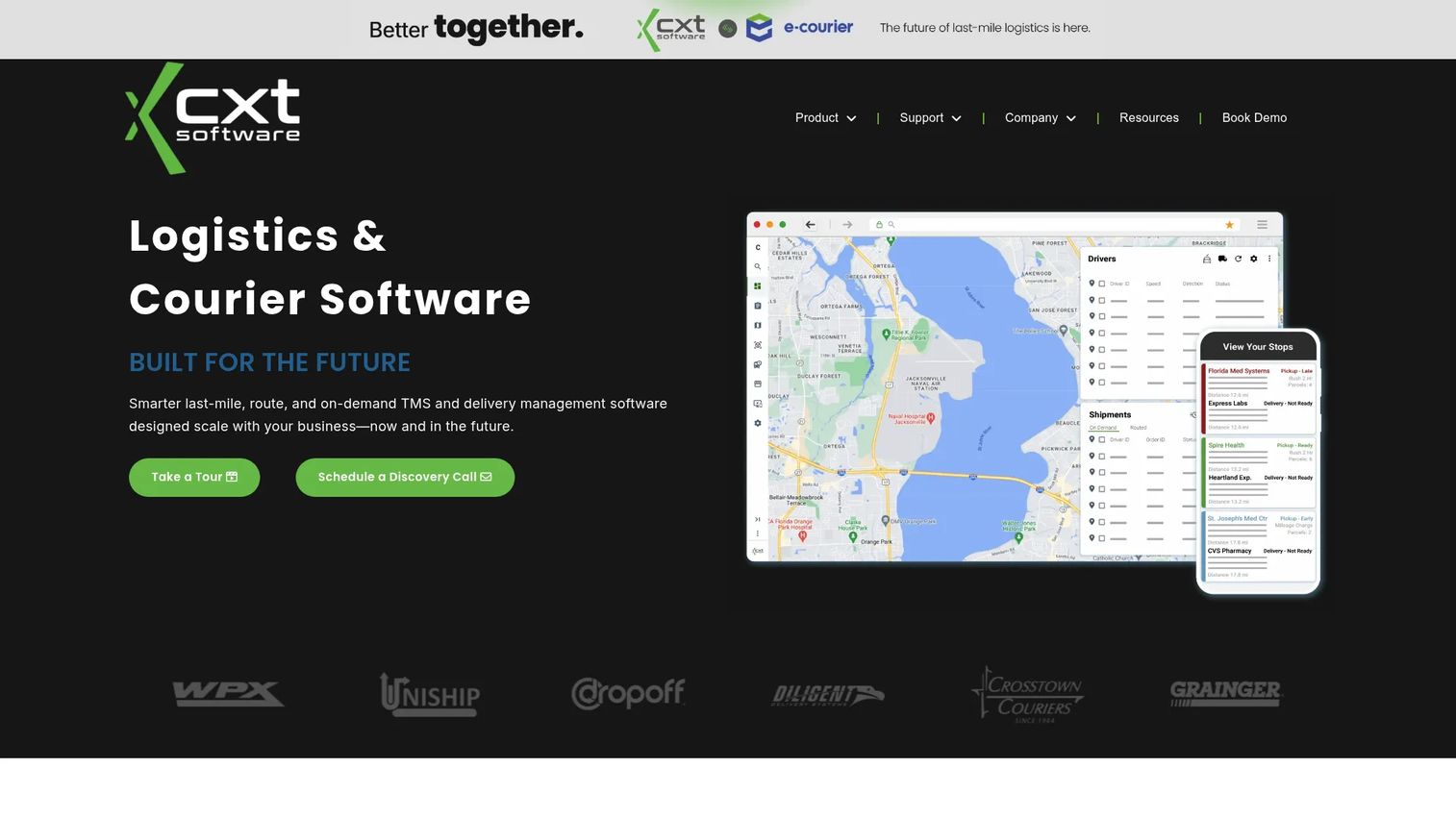
CXT Software is courier and last-mile shipment management software built for logistics operations that run at real scale. It organizes the whole delivery workflow around order entry, dispatch, tracking, and reporting, wrapped in a suite that includes a client portal, an operations app, and a driver app. The platform leans hard into specialty courier work, especially healthcare, lab, and pharmacy routes where accountability is non-negotiable.
Best for: Courier, route, and last-mile delivery businesses that need serious shipment management software across multiple roles and delivery models.
Key strengths
- Three-part app suite: A client-facing order and tracking portal, an operations app for dispatchers, and a driver app that work as one connected system.
- Chain of custody and POD: Barcode scanning, photo and signature proof of delivery, and chain-of-custody tracking built for regulated deliveries.
- Unlimited scale and integrations: Unlimited shipments and integrations, plus API access, white labeling, and status-triggered notifications.
Why choose CXT Software: For a product-minded operator evaluating governance and operational breadth, CXT covers the widest surface area on this list. The modular suite means dispatch, customer visibility, and driver workflows live in one governed system rather than three disconnected tools. It fits teams that need chain of custody and audit-ready proof of delivery as core requirements, not add-ons.
CXT Software pricing: Public pricing starts at $600 per month, billed monthly. That plan includes unlimited shipments, unlimited integrations, an order and tracking portal, white labeling, API access, barcode scanning, photo and signature proof of delivery, chain-of-custody tracking, status-triggered notifications, and driver management. There is no free tier. CXT holds a 3.9 out of 5 rating on G2.
2. OnTime 360
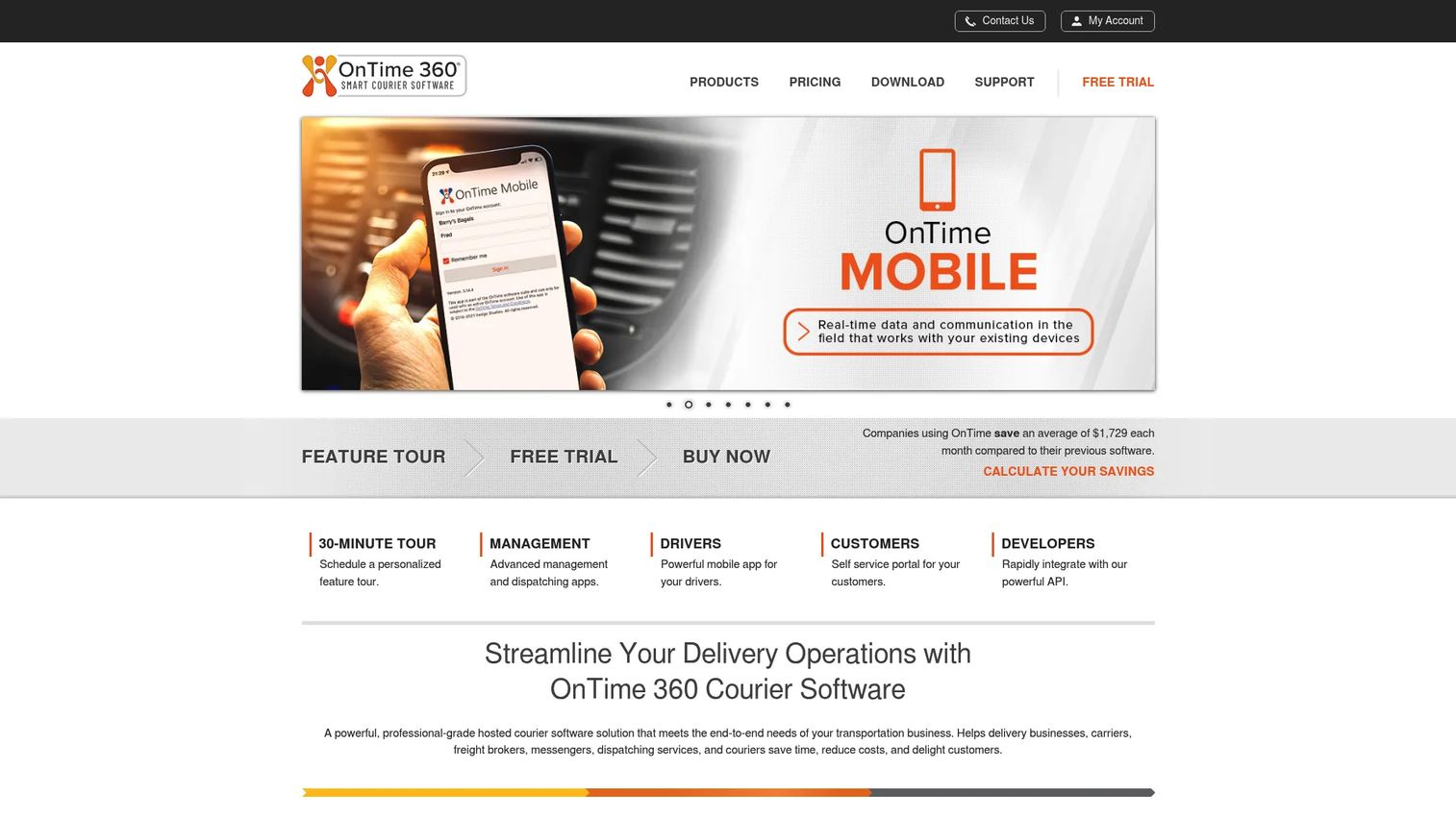
OnTime 360 is courier management software for delivery businesses that want dispatching, tracking, and self-service without a custom quote to get started. Its cloud-based delivery management covers real-time tracking, a customer web portal, and route planning and optimization, packaged into four public monthly tiers. The transparent pricing makes it easy to match a plan to your delivery volume.
Best for: Courier and delivery companies with simple to moderate complexity that want dispatch, tracking, and customer self-service with clear packaging.
Key strengths
- Real-time tracking and tracing: Live delivery status and location data for both dispatchers and customers.
- Customer web portal: A self-service portal where customers place orders and check status, cutting inbound support volume.
- Route planning and optimization: Built-in route sequencing to reduce drive time and manual planning work.
Why choose OnTime 360: Teams that want to skip the sales cycle and see exactly what they are paying will appreciate the four published tiers. The straightforward packaging and built-in value framing suit operators who need dispatch automation and a customer portal without negotiating an enterprise contract. It is a practical fit when your complexity is real but not extreme.
OnTime 360 pricing: Four public monthly tiers: Core at $49, Team at $99, Business at $249, and Enterprise at $499, all billed monthly. Plans carry per-shipment overages and activation fees on top of the base price. There is no free tier. OnTime 360 carries a 4.8 out of 5 rating on G2.
3. Onro
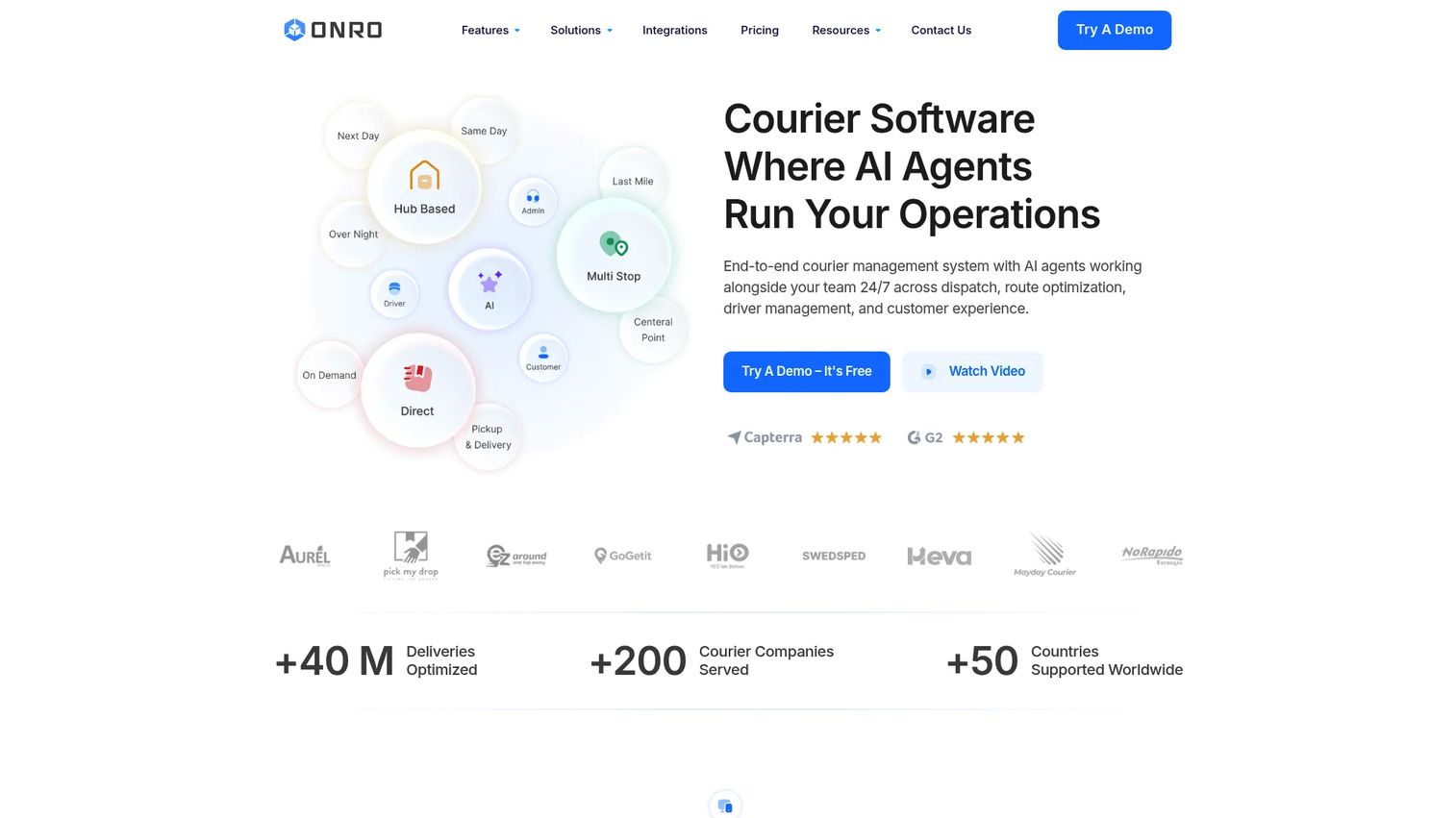
Onro is AI-powered courier software built for end-to-end delivery operations. It runs the full lifecycle through a driver app, a dispatcher panel, an admin dashboard, and a customer API, with auto and manual dispatching, route planning, and route optimization at the core. White-label branding and a customer portal let you put your own brand on the entire delivery experience.
Best for: Courier and last-mile delivery businesses that need white-label operations software covering booking, tracking, and proof of delivery in one place.
Key strengths
- AI dispatching and route optimization: Auto or manual dispatching paired with route planning that adapts to your delivery constraints.
- Full operational stack: Proof of delivery, cash on delivery, barcode scanning, real-time chat, a wallet, and billing and invoicing in one system.
- White-label customer portal: Branded tracking and a customer API so the delivery experience carries your name, not the vendor's.
Why choose Onro: Onro reads as the most comprehensive, enterprise-ready option for teams that want to control the entire delivery journey under their own brand. The breadth spans booking, dispatch, tracking, notifications, proof of delivery, and invoicing, which matters when you are consolidating several point tools into one platform. It handles different delivery models without forcing you into a rigid workflow.
Onro pricing: Transparent tiers with a free demo. Starter is $129 per month and includes 750 deliveries. Business is $239 per month and includes 1,500 deliveries. Enterprise is custom, priced by sales. Additional deliveries are billed separately beyond the plan allowance. Onro holds a 5.0 out of 5 rating on G2.
4. Track-POD
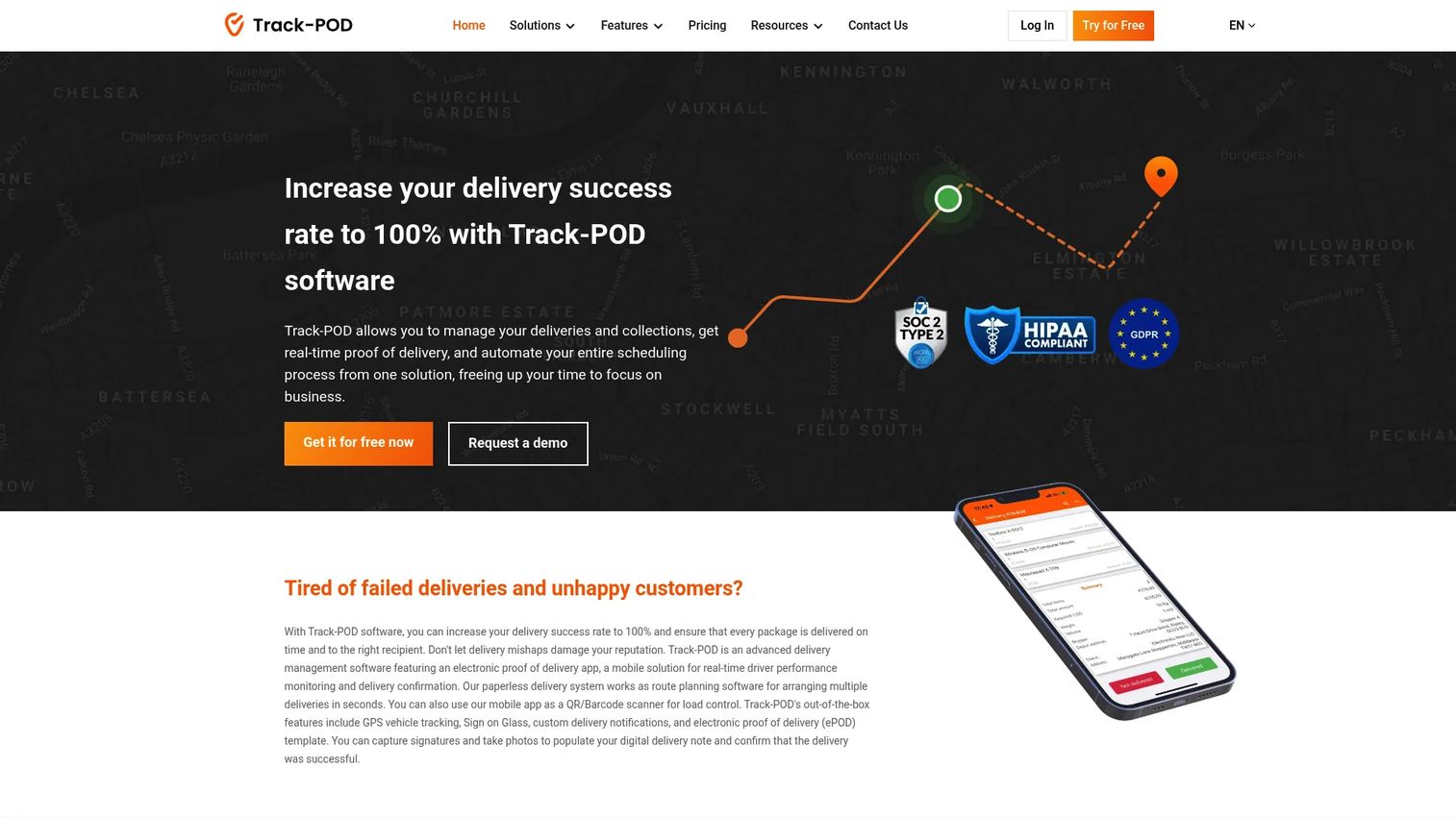
Track-POD is delivery management software centered on route planning, real-time tracking, and electronic proof of delivery. It captures ePOD with signatures and photos, sends customers live tracking links and ETA notifications, and layers in reporting and analytics on delivery performance. Order import and integrations keep the intake side clean.
Best for: Teams that need a balance of operational control and delivery visibility, with proof of delivery as a first-class feature.
Key strengths
- Electronic proof of delivery: ePOD with signatures and photos captured on every stop, ready for disputes and audits.
- Real-time tracking and ETA alerts: Live delivery tracking plus automated customer ETA notifications to cut inbound questions.
- Route planning and optimization: Stop sequencing and route optimization that reduce mileage and manual planning.
Why choose Track-POD: Track-POD is a strong pick when proof of delivery and customer-facing tracking are both priorities and you want them without heavy setup. The mix of route planning, live tracking links, and analytics gives dispatchers control while customers get self-service visibility. Order import and integrations mean it slots into an existing order pipeline rather than replacing it.
Track-POD pricing: Per-driver plans billed annually start at Advanced ($49), then Advanced Plus ($69), Ultimate ($89), and Enterprise (custom). Per-order plans are also available: S at $285 for 1,500 orders, M at $510 for 3,000 orders, L at $900 for 6,000 orders, and XL at $1,440 for 12,000 orders, each per month. A free trial is offered; there is no permanent free tier. Track-POD carries a 4.5 out of 5 rating on G2.
5. Tookan
Tookan is delivery management and on-field workforce tracking software for teams that want a configurable operations layer. It handles automated scheduling and dispatch, real-time order tracking, and driver coordination through a mobile app with live chat. The flexibility makes it a fit for operations that need to shape workflows around their own delivery model rather than accept a fixed template.
Best for: Businesses that need delivery dispatch, tracking, and driver coordination with room to configure the workflow.
Key strengths
- Automated scheduling and dispatch: Rules-based assignment that removes manual dispatch decisions as volume grows.
- Real-time order tracking: Live visibility into order status and driver location across the operation.
- Driver mobile app and live chat: A driver app with built-in chat to keep field teams and dispatch in sync.
Why choose Tookan: Tookan suits operators who value a configurable delivery operations layer over rigid packaging. If your delivery model has quirks, whether that is unusual stop types, custom statuses, or specific field workflows, the flexibility matters. It fits teams that want to automate scheduling and dispatch while keeping room to adapt the platform to how they actually run.
Tookan pricing: Tookan offers a 14-day free trial and describes flexible plans, though a public price figure was not listed on the pages available at the time of writing. Teams evaluating Tookan should request current pricing directly. Tookan carries a 4.2 out of 5 rating on G2.
6. Shipday
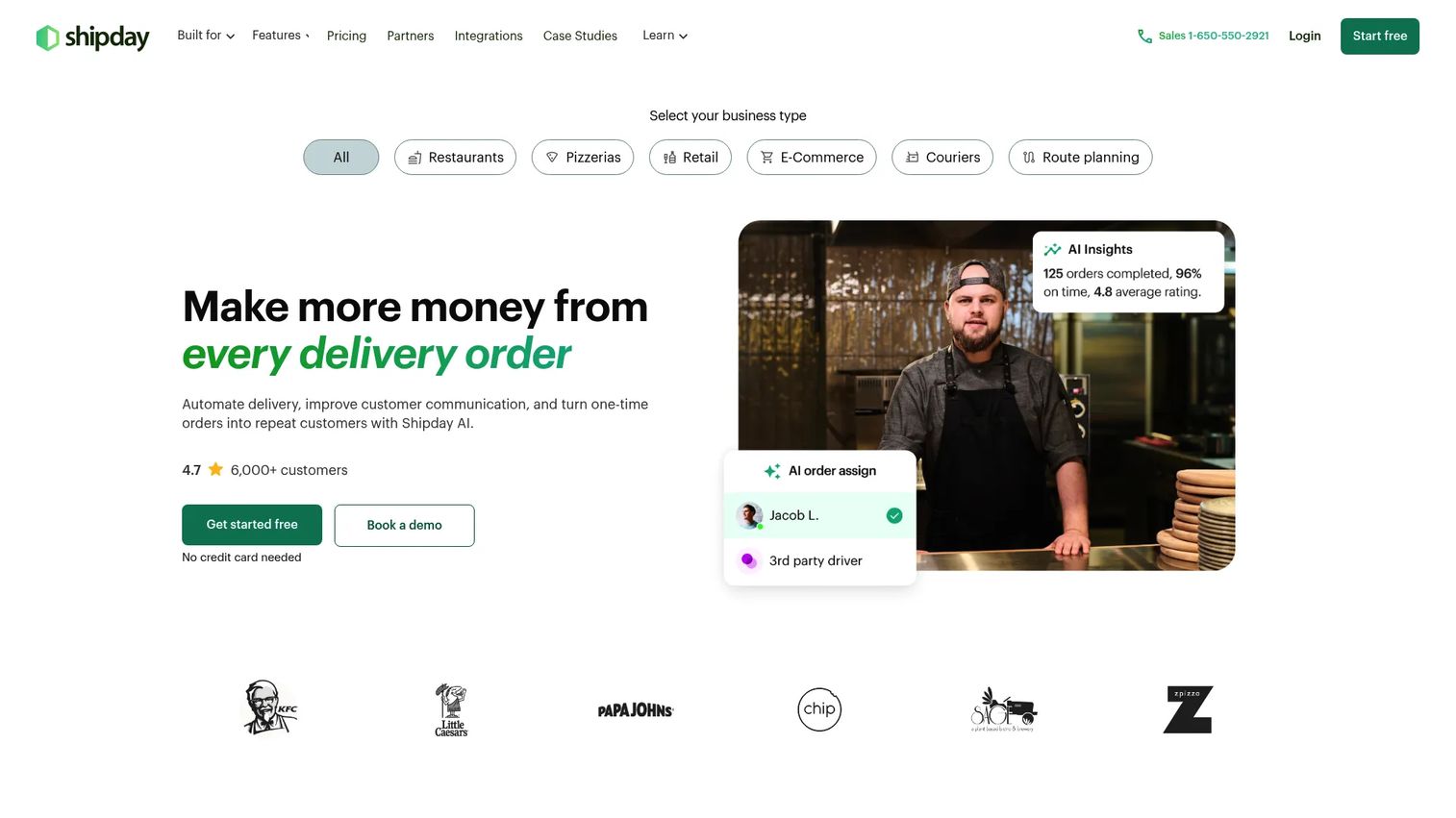
Shipday is delivery management software built for local businesses that need dispatch, tracking, and branded customer updates without a long setup. It handles real-time delivery tracking via SMS, custom branding on the tracking page and driver app, and a set of AI agents for reviews, coaching, calls, and dispatching. Restaurants and fast-moving local operations are the core audience.
Best for: Restaurants and local delivery businesses that need simple dispatch, live tracking, and branded customer notifications with fast setup.
Key strengths
- SMS delivery tracking: Real-time tracking delivered over SMS so customers get updates where they already look.
- Custom branding: Branded tracking page and driver app that carry your business identity.
- AI agents: Built-in AI for dispatching, reviews, coaching, and calls to reduce manual work.
Why choose Shipday: Shipday is the easy on-ramp for small to mid-size teams that want dispatch, route planning, live tracking, and customer notifications without a heavy implementation. The free tier lets you start immediately and grow into paid plans as volume climbs. It is a practical fit for local delivery and fast-moving operations where day-to-day usability beats deep configuration.
Shipday pricing: A free Basic plan at $0 per month, then Professional Lite at $19, Professional at $39, Branded Premium at $79, Elite at $99, and Business AI at $349, all per month. Enterprise pricing for API and flexible infrastructure is available through sales. G2 did not have enough reviews to publish a star rating at the time of writing.
7. Fleetbase
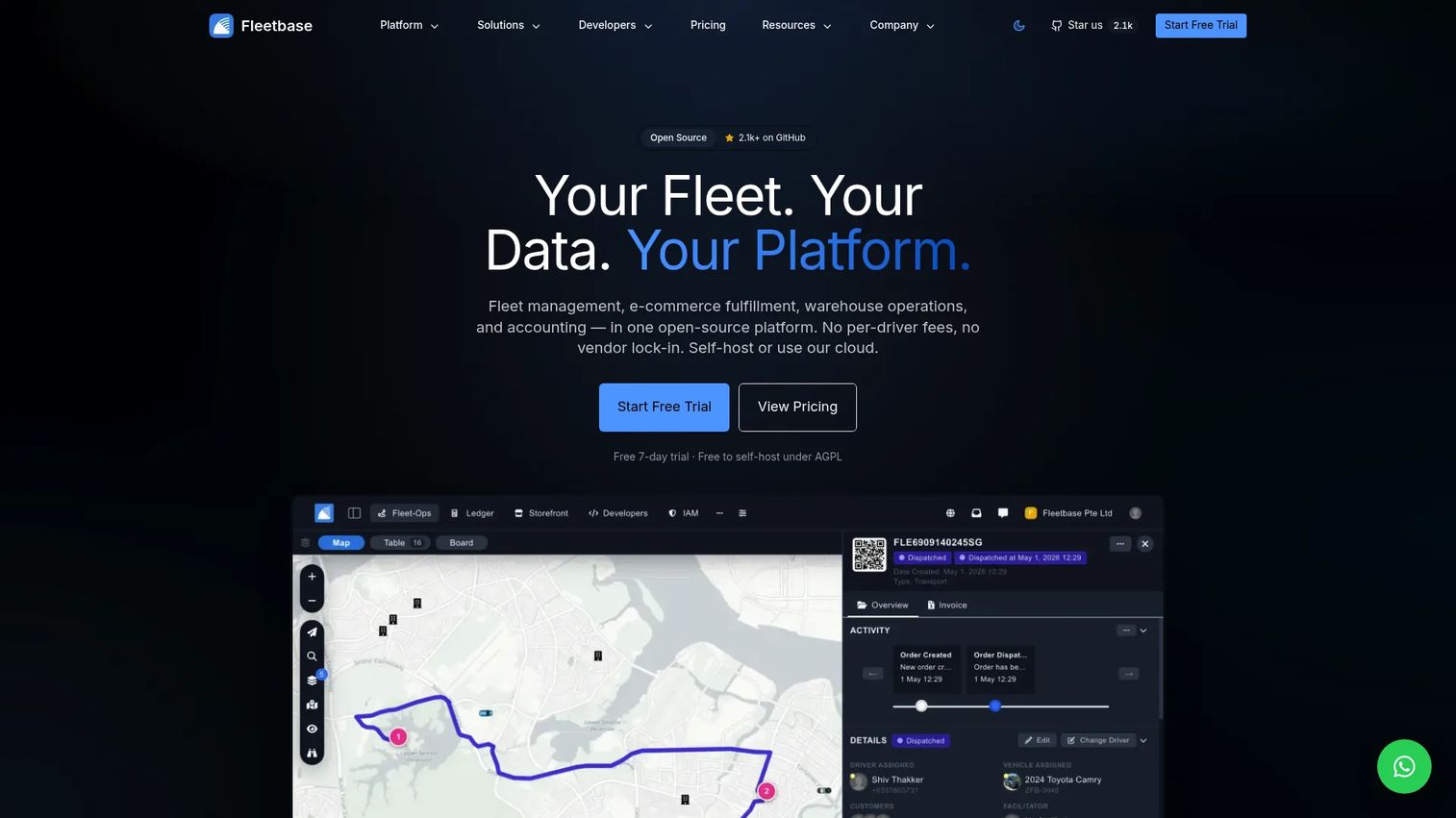
Fleetbase is an open-source logistics and fleet management platform with cloud and self-hosted deployment options. Its modular architecture and API flexibility make it the choice for technical teams that want to customize heavily or build delivery operations around existing systems. You can run it as managed cloud or self-host under AGPL, which appeals to teams with strict data or infrastructure requirements.
Best for: Product and engineering teams that need a customizable logistics and fleet platform with cloud or self-hosted deployment.
Key strengths
- Open-source and modular: A modular platform you can extend and shape around your own operational logic.
- Fleet and logistics operations: Fleet management and delivery operations tooling in one extensible system.
- Deployment flexibility: Cloud-managed or self-hosted, so infrastructure and data control stay in your hands.
Why choose Fleetbase: Fleetbase fits product teams and technical operators who want to build rather than buy a fixed workflow. The open-source model and API-first design mean you can integrate deeply with existing systems and customize the platform to your delivery model. Expect implementation effort proportional to that flexibility; this is a platform for teams with engineering capacity, not a plug-and-play tool.
Fleetbase pricing: Fleetbase Cloud starts at Micro ($25 per month), then Starter ($200 per month) and Scale ($400 per month), plus a 7-day free trial. Self-hosting is free under AGPL. A one-time Self-Hosted Implementation service is available at $2,500, and a free Community option exists. A current G2 rating was not available at the time of writing.
Considerations before you buy
The seven tools above solve the same broad problem in different ways. Before you shortlist, weigh these criteria against how your operation actually runs.
Automation depth
Auto dispatching and route optimization are where the operational savings live. Evaluate whether the platform assigns work by rules you control, such as proximity, capacity, and time windows, and whether route planning adapts to real constraints. For a product-minded buyer, this is the lever on speed-to-assignment and cost per delivery.
Real-time visibility
Look at both sides of tracking. Dispatchers need live driver locations and order status; customers need tracking links and ETA alerts. Strong real-time tracking and a customer portal reduce support load, which is a direct, measurable outcome you can instrument and report on.
Proof of delivery and accountability
If you run healthcare, lab, or pharmacy routes, proof of delivery depth is not optional. Confirm the platform captures signatures, photos, barcode scans, and chain-of-custody records, and that the audit trail holds up under scrutiny. For general delivery, basic ePOD may be enough.
Integrations and maintainability
Check which systems the platform connects to: e-commerce, ERP, CRM, accounting, and mapping. A clean API and order import matter for keeping data flowing without manual re-entry. Maintainability across frequent releases is a real cost, so weigh how much ongoing overhead each tool adds.
Conclusion
The right courier dispatch software depends less on the vendor and more on the pattern you fit. If you run specialty or regulated delivery at scale, CXT Software gives you the broadest, chain-of-custody-ready platform. If pricing transparency matters, OnTime 360 publishes four clear tiers. If you want white-label control over the entire delivery journey, Onro covers booking through invoicing under your brand. If proof of delivery is the priority, Track-POD leads on ePOD and live tracking. For configurable field operations, Tookan gives you room to shape the workflow. For local delivery and fast setup, Shipday gets you running with a free tier. And for technical teams that want to build, Fleetbase offers open-source flexibility.
Shortlist two or three tools that match your operational pattern, then compare them head-to-head on route automation, real-time tracking, driver workflow, and integration fit. Run a trial with real orders before you commit. The platform that survives a busy morning is the one to buy.
Start your journey with Guideflow today!
FAQs
Courier dispatch software is a cloud-based system that ingests delivery orders, assigns them to drivers, optimizes routes, tracks progress in real time, and captures proof of delivery. It differs from basic courier tracking software, which only shows package status, by managing the entire operational loop from order intake to signed delivery. The goal is to replace manual dispatching with automated, repeatable workflows.
The core buying criteria are dispatch automation, route planning, driver management, and customer visibility. Auto dispatching and route optimization drive the operational savings, while a driver app and customer portal handle the two ends of the delivery. Proof of delivery and integrations round out the list, especially for regulated or high-volume operations.
Yes. Smaller teams benefit as soon as manual coordination, through spreadsheets and phone calls, starts causing errors or late deliveries. A lightweight tool with a free or low-cost tier, live tracking, and simple dispatch is often enough for local delivery or a small fleet. You can move to a fuller platform as volume and complexity grow.
Route optimization sequences stops to minimize mileage and drive time, factoring in traffic, delivery windows, and vehicle constraints. It removes the manual work of planning routes by hand and reduces the errors that come with it. The result is more deliveries per driver, lower fuel cost, and more predictable ETAs.
Most platforms integrate through APIs and prebuilt connectors. Common integrations include e-commerce platforms for order import, CRM and ERP systems for customer and operational data, accounting tools for billing, and mapping providers for routing. A clean API matters when you need custom connections or want to build around existing systems.
Proof of delivery is the record confirming a package reached its destination, captured as signatures, photos, barcode scans, or timestamped confirmations. In regulated delivery like healthcare, lab, and pharmacy work, it extends to chain-of-custody tracking that logs every handoff. This creates an audit trail that protects you in disputes and satisfies compliance requirements.
Match the tool to your operational complexity, delivery volume, and integration needs. If you run local delivery with a small fleet and few integrations, a lightweight tool covers it. If you manage high volume, multiple delivery models, regulated routes, or deep system connections, a full platform pays off. Shortlist two or three, trial them with real orders, and pick the one that fits how you actually operate.