Once parcel volume crosses a certain threshold, shipping stops being a back-office workflow. It becomes a margin system. A few bad routing rules, missed surcharges, or carrier handoff failures can turn a strong growth quarter into an operating drag conversation with your board.
The global parcel management and multi carrier shipping software market reached $2.63 billion in 2025, according to Mordor Intelligence (2026). That figure reflects how seriously operators are taking this problem. Single-carrier portals, manual rate lookups, and spreadsheet routing rules cannot hold as order volume scales. The question is not whether you can print labels. It is whether your shipping system can protect margin while volume grows.
This guide is for founders, COOs, and operations leaders who have outgrown basic shipping workflows and need a credible shortlist. Every tool here was selected for carrier routing depth, integration fit, analytics, and practical relevance across ecommerce, enterprise warehouses, and logistics-heavy SaaS operations.
What's inside
This guide compares 15 multicarrier parcel management platforms for 2026, with verified pricing and G2 ratings. Tools were selected based on market visibility and relevance to commercial buyers.
Selection criteria:
- Carrier routing and rate shopping: Automated carrier selection and real-time rate comparison
- Integration fit: Compatibility with ERP, WMS, OMS, TMS, and ecommerce platforms
- Visibility and analytics: Shipment tracking, carrier performance reporting, and parcel spend data
- Returns and compliance: Returns workflows and international shipping documentation support
TL;DR
- Best for enterprise parcel intelligence: Shipium, for delivery promises and cost optimization at scale
- Best for ecommerce carrier automation: ShippyPro, with plans starting at €49/month and a 14-day trial
- Best for high-volume warehouse shipping: ProShip, purpose-built for complex distribution centers
- Best for free tier entry: Sendcloud, with a free plan covering up to 20 parcels per month
- Best for ERP-connected parcel teams: Descartes Pacejet, starting at $700/month with verified public pricing
- Best for SMB and developer teams: Shippo, with a free Starter plan and a RESTful shipping API
What is multicarrier parcel management solutions software?
Multicarrier parcel management solutions software is a shipping execution platform that connects businesses to multiple parcel carriers, compares rates, applies routing rules, generates labels and documentation, tracks shipments, and reports carrier performance from one system.
This category sits between basic label-printing tools and full transportation management systems. It is purpose-built for organizations that have outgrown single-carrier portals but do not need the full scope of freight orchestration or TMS infrastructure.
Core capabilities typically include:
- Carrier and service selection: Match each shipment to the right carrier and service level automatically
- Real-time rate shopping: Compare eligible carrier rates before label generation
- Business rules and automated routing: Configure logic around cost thresholds, delivery windows, and regional preferences
- Label generation and manifesting: Produce carrier-compliant labels and end-of-day manifests at volume
- Shipping documentation: Generate customs forms, commercial invoices, and export paperwork
- Tracking and delivery visibility: Surface shipment status across carriers in a unified view
- Returns workflows: Manage return labels, portal access, and inbound shipment tracking
- Carrier performance analytics: Monitor on-time rates, cost per shipment, and service failures
- Integration connectors: Connect to ERP systems like SAP and NetSuite, WMS platforms, OMS tools, TMS layers, and ecommerce storefronts
- International shipping compliance: Handle customs documentation, duties, and restricted goods rules
The boundary matters for buyers. Multi carrier parcel management differs from a TMS (which covers freight modes and broader logistics planning) and from a simple shipping app (which may only cover label creation without routing logic or analytics).
When to use multicarrier parcel management software
Reduce shipping cost without slowing fulfillment
Rate shopping across carriers in real time means your team selects the lowest-cost service that still meets the delivery promise, automatically. For a Series B founder watching gross margin, that difference compounds. A 5% reduction in average parcel cost across 10,000 weekly shipments is not a rounding error.
Diversify carriers without adding manual work
Single-carrier dependency creates real operational risk. When a carrier has capacity issues during peak season, or when a regional hub goes down, teams without fallback routing lose delivery promises they cannot recover. Multi carrier management software handles volume balancing, service failover, and regional carrier expansion through configurable rules rather than manual exception queues.
Connect shipping decisions to the operating stack
Shipping data isolated in a carrier portal cannot feed your ERP, WMS, or OMS. That means duplicate data entry, slow exception handling, and weak visibility for the weekly operating review. ERP shipping integration keeps cost and tracking data flowing into the systems your finance and operations teams already use, which is the kind of infrastructure that reduces founder-level escalations.
Multicarrier parcel management software comparison
The table below summarizes all 15 platforms by buyer fit, key differentiator, pricing, and G2 rating. Tools are ordered by list position. Pricing and ratings reflect verified data from vendor pricing pages and G2 listings.
| # | Product | Best for | Key differentiator | Pricing | G2 rating |
|---|---|---|---|---|---|
| 1 | Shipium | Enterprise parcel intelligence | Delivery promise optimization and cost modeling | Custom pricing | 4.9/5 |
| 2 | ShippyPro | Ecommerce carrier automation | Multi-channel label, tracking, and returns | From €49/mo | 4.6/5 |
| 3 | ProShip | High-volume warehouse shipping | Enterprise labeling and carrier compliance | Custom pricing | 3.9/5 |
| 4 | Centiro | Global transport orchestration | Carrier network and control tower visibility | Custom pricing | 3.5/5 |
| 5 | Metapack | Retail delivery experience | Checkout delivery options and carrier library | Custom pricing | 3.8/5 |
| 6 | nShift | European multi-carrier delivery | Checkout, tracking, returns, and emissions modules | Custom pricing | 3.8/5 |
| 7 | Pitney Bowes | Shipping and mailing operations | Parcel and mailing technology from one provider | From $24.99/mo | 0.0/5 |
| 8 | Shipsy | Logistics visibility and dispatch | AI-enabled last-mile and transport management | Custom pricing | 4.5/5 |
| 9 | Descartes Pacejet | ERP-connected parcel shipping | Verified public pricing with ERP workflow depth | From $700/mo | 3.5/5 |
| 10 | Enveyo | Parcel analytics and routing | Cloudroute plus audit, modeling, and insights | Custom pricing | 3.3/5 |
| 11 | ShipERP | SAP parcel shipping | SAP-native multi-carrier execution workflows | Custom pricing | N/A |
| 12 | Sendcloud | European ecommerce shipping | Free tier and 170+ carrier connections | From €0/mo | 4.5/5 |
| 13 | Bringg | Last-mile delivery orchestration | Fleet, carrier, and dispatch from one platform | Custom pricing | 4.6/5 |
| 14 | ShipHawk | Warehouse shipping automation | Cartonization and smart packing with rate shopping | Custom pricing | 4.3/5 |
| 15 | Shippo | SMB and developer parcel shipping | Free Starter plan and RESTful shipping API | From $0/mo | 4.2/5 |
Best 15 tools for multicarrier parcel management solutions software
1. Shipium
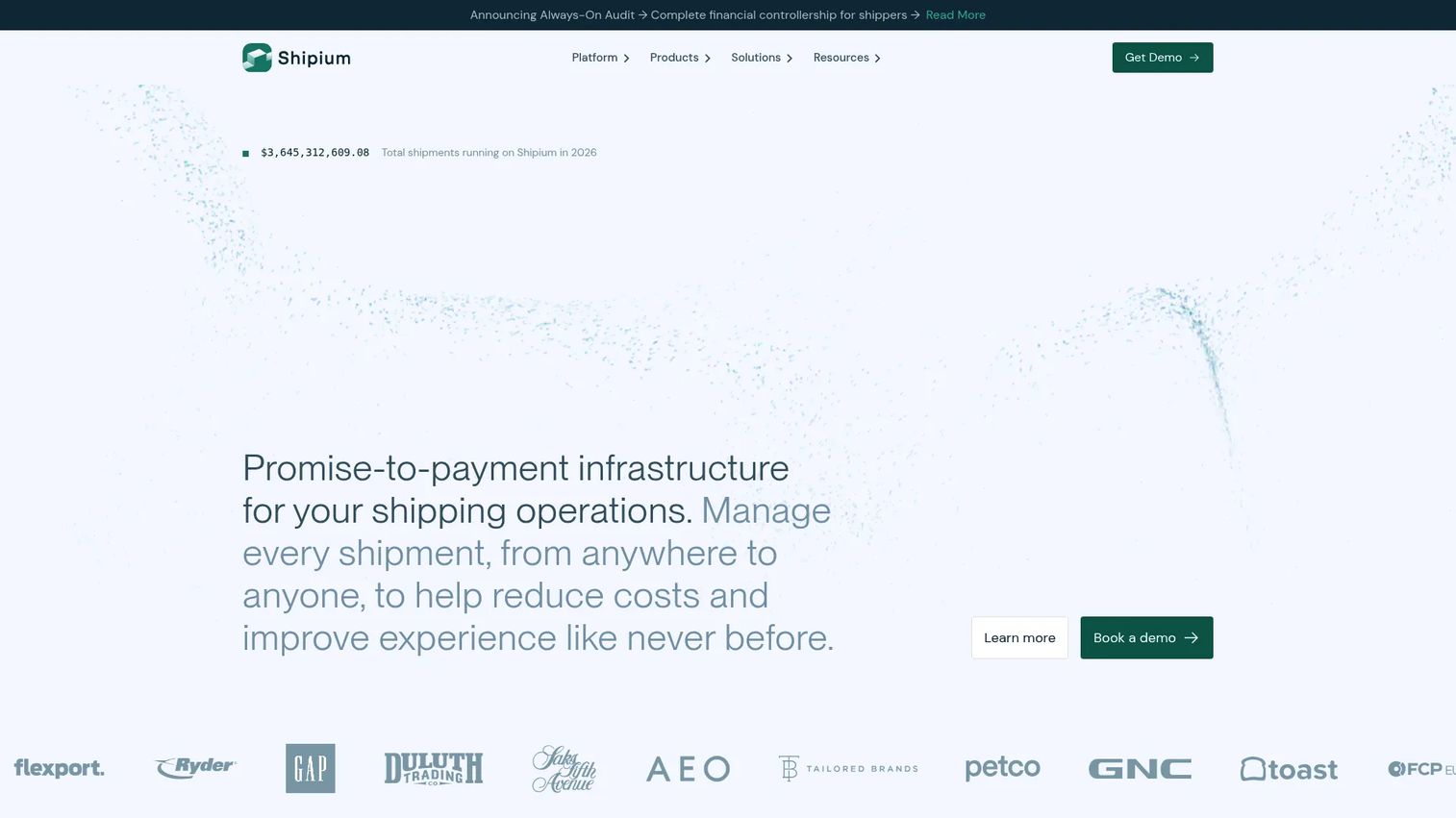
Shipium is a shipping platform built for complex supply chains. It coordinates carrier selection, delivery promises, shipment execution, and billing analytics from a centralized rules engine. The platform is designed for high-volume shippers who need more than label generation.
Best for: Enterprise retailers, manufacturers, and 3PLs that need shipping decision intelligence alongside execution.
Key features
- Delivery promise enhancement and date accuracy
- Carrier rate optimization and cost modeling
- Fulfillment origin selection logic
- Shipment tracking and parcel visibility
- Shipping analytics and billing management
Why choose Shipium: Shipium is the right call when delivery promises and fully loaded shipping cost are board-level metrics, not just operational ones. If your COO is walking into a weekly review without visibility into carrier cost per unit, this platform is built for that conversation.
Shipium pricing: Sales conversations set pricing based on carrier count, shipment volume, and integration requirements.
G2 rating: 4.9/5
2. ShippyPro
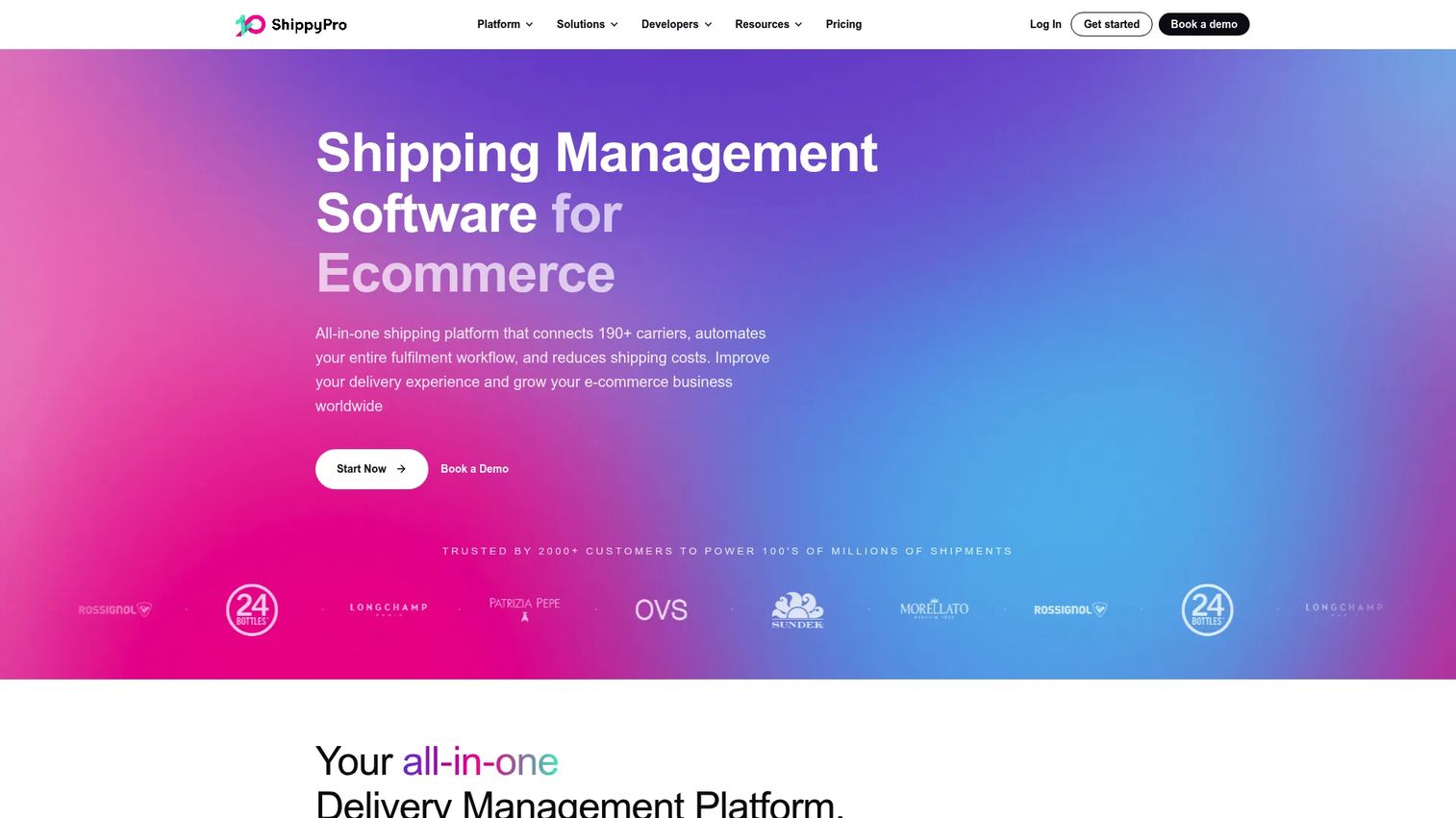
ShippyPro centralizes carrier management for ecommerce teams, covering label creation, real-time tracking, branded tracking pages, returns, and shipping automation across multiple sales channels and carriers. It connects directly to marketplaces and storefronts without requiring custom integration work.
Best for: Ecommerce brands managing multi-channel shipping across multiple carriers and storefronts.
Key features
- Bulk shipping label and document creation
- Carrier rate comparison and address validation
- Real-time tracking with branded tracking pages
- Returns management and branded returns portal
- Marketplace, sales channel, and carrier integrations
Why choose ShippyPro: When the operational problem starts in ecommerce complexity rather than warehouse complexity, ShippyPro lets teams connect storefronts and carriers without building custom plumbing. The 14-day trial gives new teams a low-friction entry point.
ShippyPro pricing: Plans start at €49/month (yearly billing) for the Pro250 tier. The Pro2000 plan carries a promotional rate before reverting to €159.20/month from year two. Enterprise pricing is available on request. A 14-day free trial applies to paid plans.
G2 rating: 4.6/5
3. ProShip
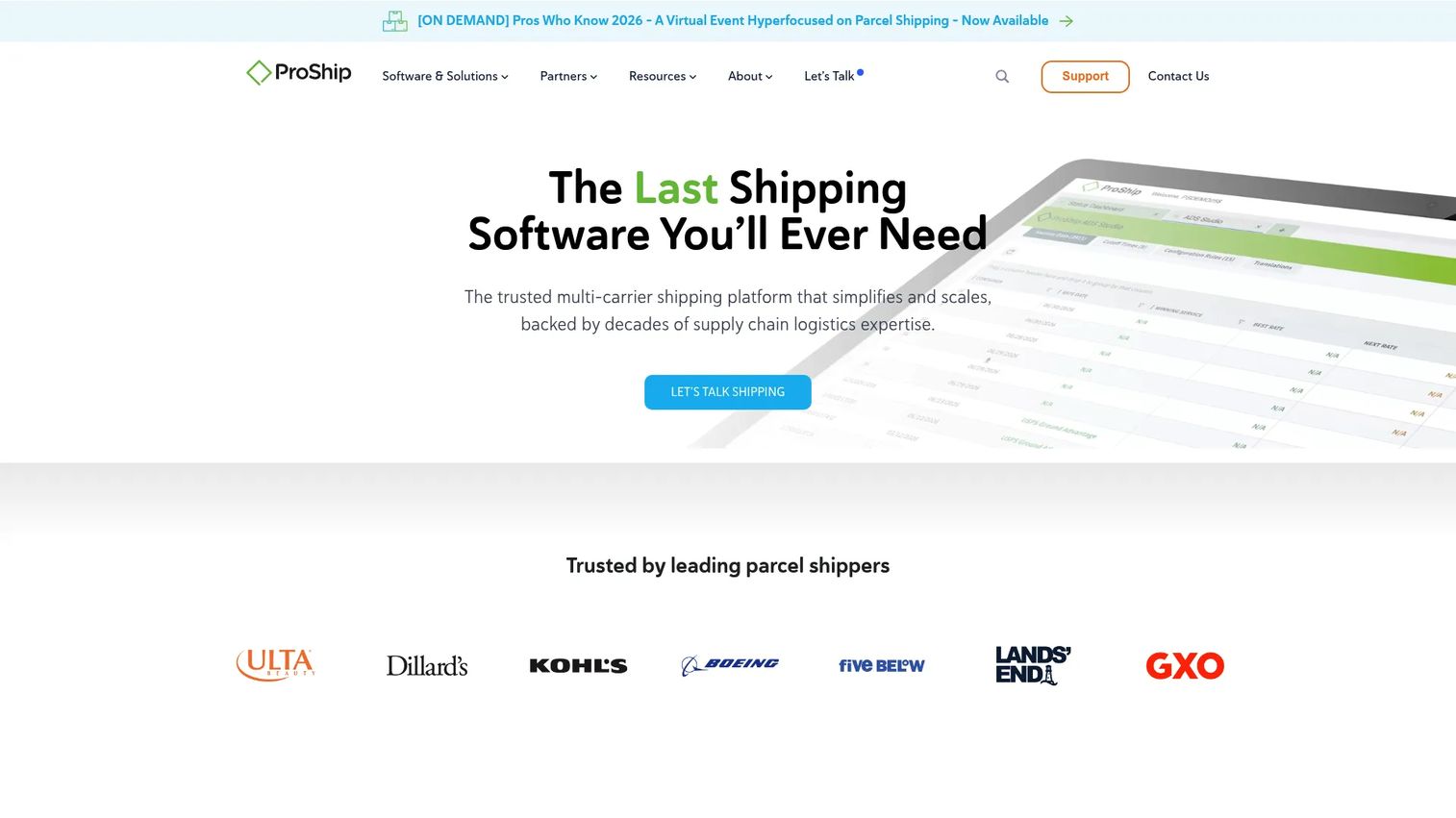
ProShip is enterprise parcel shipping software designed for high-volume distribution centers and regulated shipping workflows. Its architecture prioritizes execution reliability, carrier compliance, and deep integration with warehouse systems. The platform handles everything from carrier selection through label generation to end-of-day manifesting.
Best for: High-volume warehouses, enterprise distribution teams, and organizations shipping regulated or hazardous goods.
Key features
- Multi-carrier rate shopping and carrier optimization
- Enterprise label generation and advanced labeling
- WMS, OMS, and ERP integrations
- Hazmat and international shipping support
- Automated business rules with continuous carrier updates
Why choose ProShip: Choose ProShip when shipping execution cannot fail during peak volume. Teams where downtime, label errors, or carrier noncompliance create expensive fulfillment delays will find the enterprise reliability framing worth evaluating closely.
ProShip pricing: ProShip does not display pricing. Contact the sales team to scope pricing based on carrier count, shipment volume, and system integration requirements. G2 reviewer context suggests enterprise-scale annual contracts.
G2 rating: 3.9/5
4. Centiro
Centiro is a cloud-based global delivery management platform connecting carriers, managing delivery operations, and providing control tower visibility across international logistics networks. It supports carrier selection, flexible checkout delivery options, real-time tracking, and AI-powered delivery analytics.
Best for: Large brands, retailers, and logistics providers standardizing fulfillment across multiple markets and carrier networks.
Key features
- Global carrier network and carrier selection
- Transport orchestration and delivery execution
- Real-time tracking and proactive notifications
- Returns management workflows
- Invoice audit and freight billing management
Why choose Centiro: Centiro fits operations that need delivery management as infrastructure rather than a shipping app. It suits teams standardizing fulfillment across regions, brands, or carrier relationships.
Centiro pricing: Talk to their sales team to get a quote scoped to your carrier count, geographies, and integration environment.
G2 rating: 3.5/5
5. Metapack
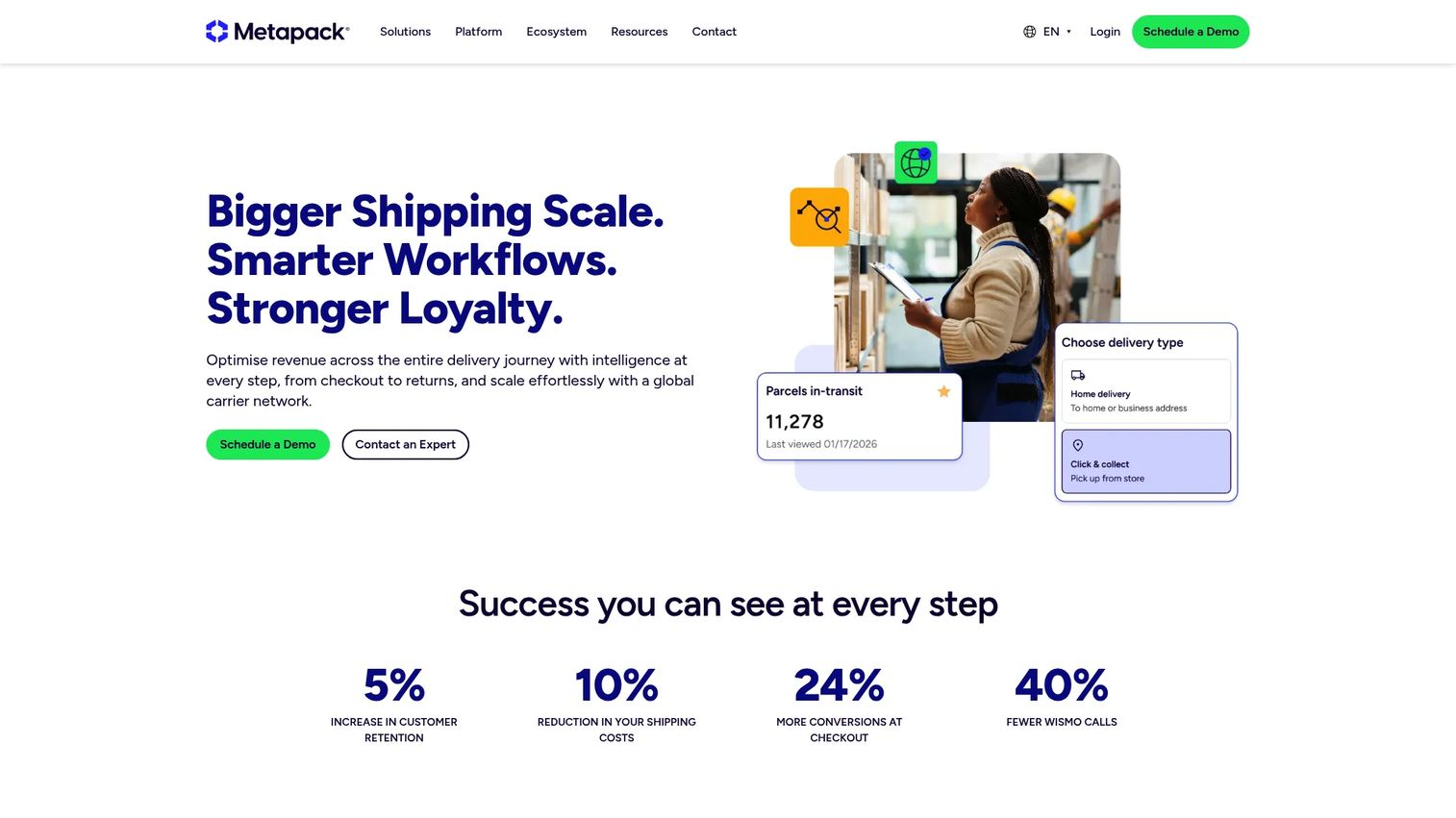
Metapack is an enterprise delivery platform used by retailers to offer delivery options at checkout, connect to a broad carrier library, and manage post-purchase tracking and returns. The platform positions delivery choice as a commercial feature, not just an operational one.
Best for: Enterprise retailers and 3PLs competing on delivery experience and checkout conversion.
Key features
- Real-time delivery options and service levels at checkout
- Multi-carrier delivery management and automated fulfilment
- Branded delivery tracking pages
- Self-service returns and exchanges
- Delivery analytics, predictive insights, and performance dashboards
Why choose Metapack: Choose Metapack when delivery promise and carrier choice are part of the customer experience you compete on. DHL eCommerce research (2025) found that 81% of shoppers abandon carts when their preferred delivery option is unavailable, which is precisely the gap Metapack addresses at checkout.
Metapack pricing: Metapack offers Essentials, Professional, and Enterprise plans. Pricing requires a sales conversation. Contact their team for a quote that reflects your carrier count and shipment volume.
G2 rating: 3.8/5
6. nShift
nShift is a multi-carrier shipping and delivery experience platform covering checkout delivery options, carrier booking, label printing, branded tracking, returns, emissions reporting, and carrier invoice auditing. It connects to more than 1,000 carriers across 190+ countries, with particular strength in European markets.
Best for: Mid-market and enterprise retailers in Europe managing multi-carrier delivery across storefronts and fulfillment locations.
Key features
- 1,000+ carrier connections across 190+ countries
- Automated carrier selection, booking, and label printing
- Branded tracking and returns handling
- Checkout delivery options module
- Emissions reporting and carrier invoice auditing
Why choose nShift: Good fit when the team needs delivery experience management that covers the full arc from checkout through returns. The breadth of European carrier coverage is a practical differentiator for cross-border ecommerce operations.
nShift pricing: nShift Ship offers Essential, Professional, and Premium plans. Contact nShift for a quote.
G2 rating: 3.8/5
7. Pitney Bowes
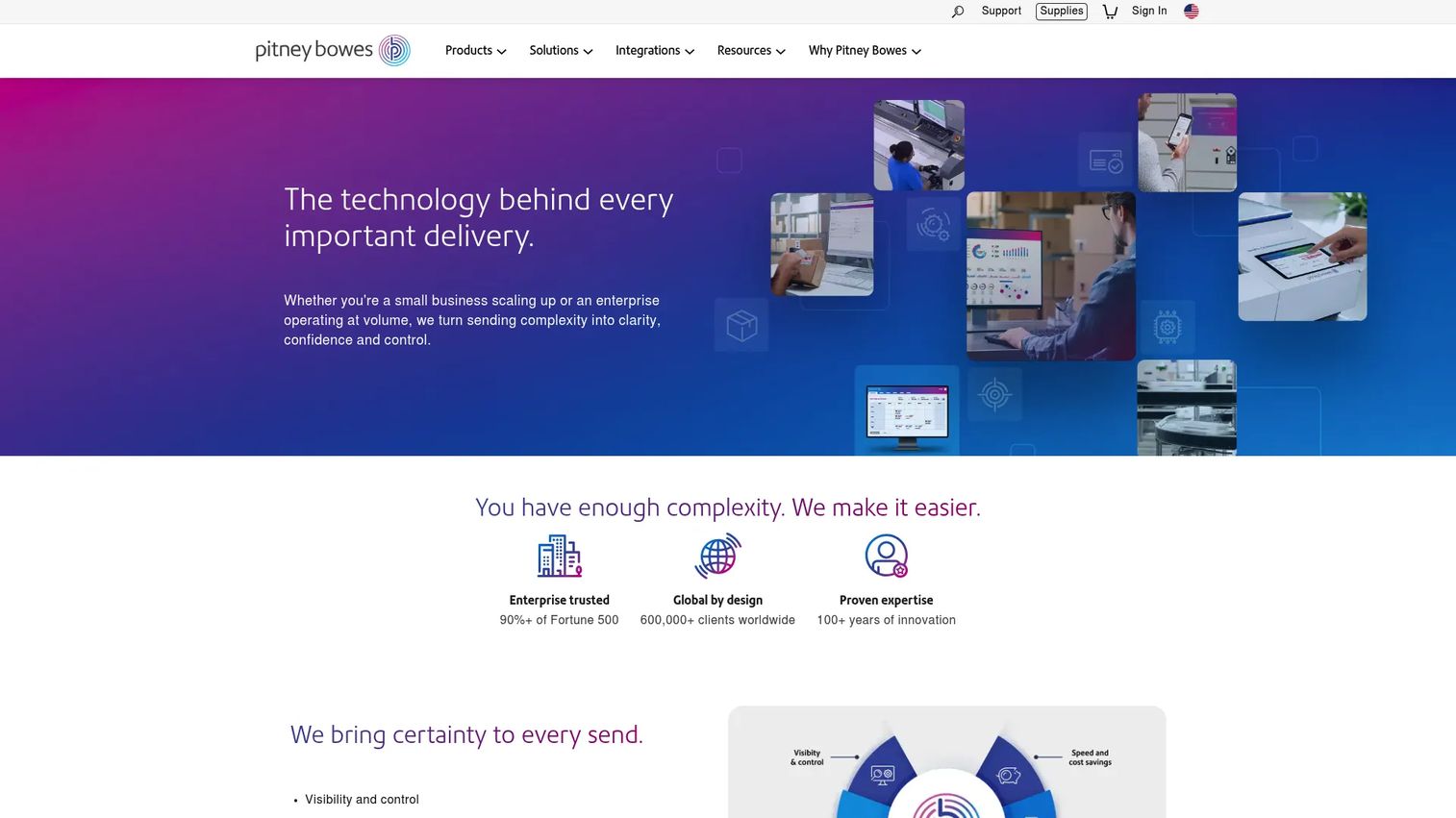
Pitney Bowes provides shipping, mailing, presort, and commerce technology for businesses ranging from small offices to enterprise logistics operations. Their PitneyShip product line covers multicarrier rate comparison, label printing, tracking, and ecommerce marketplace integrations alongside mailing and postage management.
Best for: Businesses that manage both parcel shipping and physical mail operations from one provider.
Key features
- Multicarrier shipping with rate comparison and label printing
- Postage and mailing management for letters and packages
- Shipment tracking and real-time visibility
- Certified Mail with electronic return receipt
- Ecommerce marketplace integrations
Why choose Pitney Bowes: Choose Pitney Bowes when the team handles both physical mail and parcel shipping and wants a single provider relationship. The PitneyShip Cube bundles hardware and software into one monthly subscription, which suits teams that need a physical mailing station alongside carrier access.
Pitney Bowes pricing: PitneyShip Cube starts at $24.99/month on a 12-month commitment, which includes a label printer, built-in scale, multicarrier software, and ecommerce integrations. PitneyShip Pro pricing is available on request.
8. Shipsy
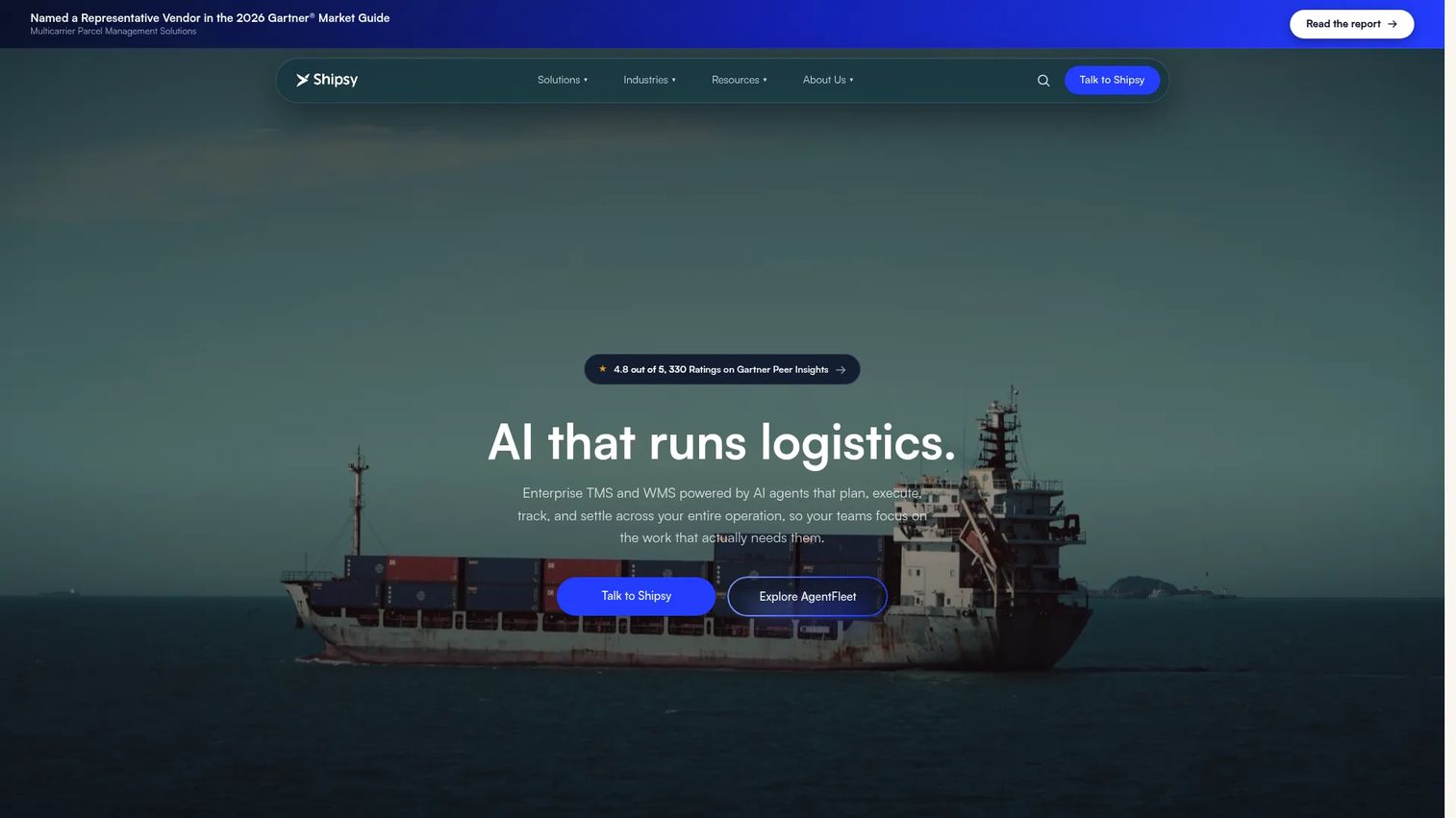
Shipsy provides an AI-enabled logistics and supply chain management platform covering transportation planning, carrier management, last-mile dispatch, route optimization, and customer delivery communications. The platform is built for organizations running high-volume delivery operations across multiple modes and geographies.
Best for: High-volume logistics, retail, and manufacturing organizations managing transportation and last-mile delivery at scale.
Key features
- AI-based route optimization and planning
- Intelligent multi-carrier management with unified tracking
- End-to-end transportation execution and visibility
- Warehouse management and mobile workforce operations
- Customer portals and delivery notification workflows
Why choose Shipsy: Strong fit when last-mile orchestration matters alongside carrier management. For a founder where customer delivery experience is becoming a growth constraint, Shipsy gives visibility into the full logistics layer rather than just parcel execution.
Shipsy pricing: Shipsy prices by quote. Contact their team for pricing based on shipment volume, mode coverage, and integration requirements.
G2 rating: 4.5/5
9. Descartes Pacejet
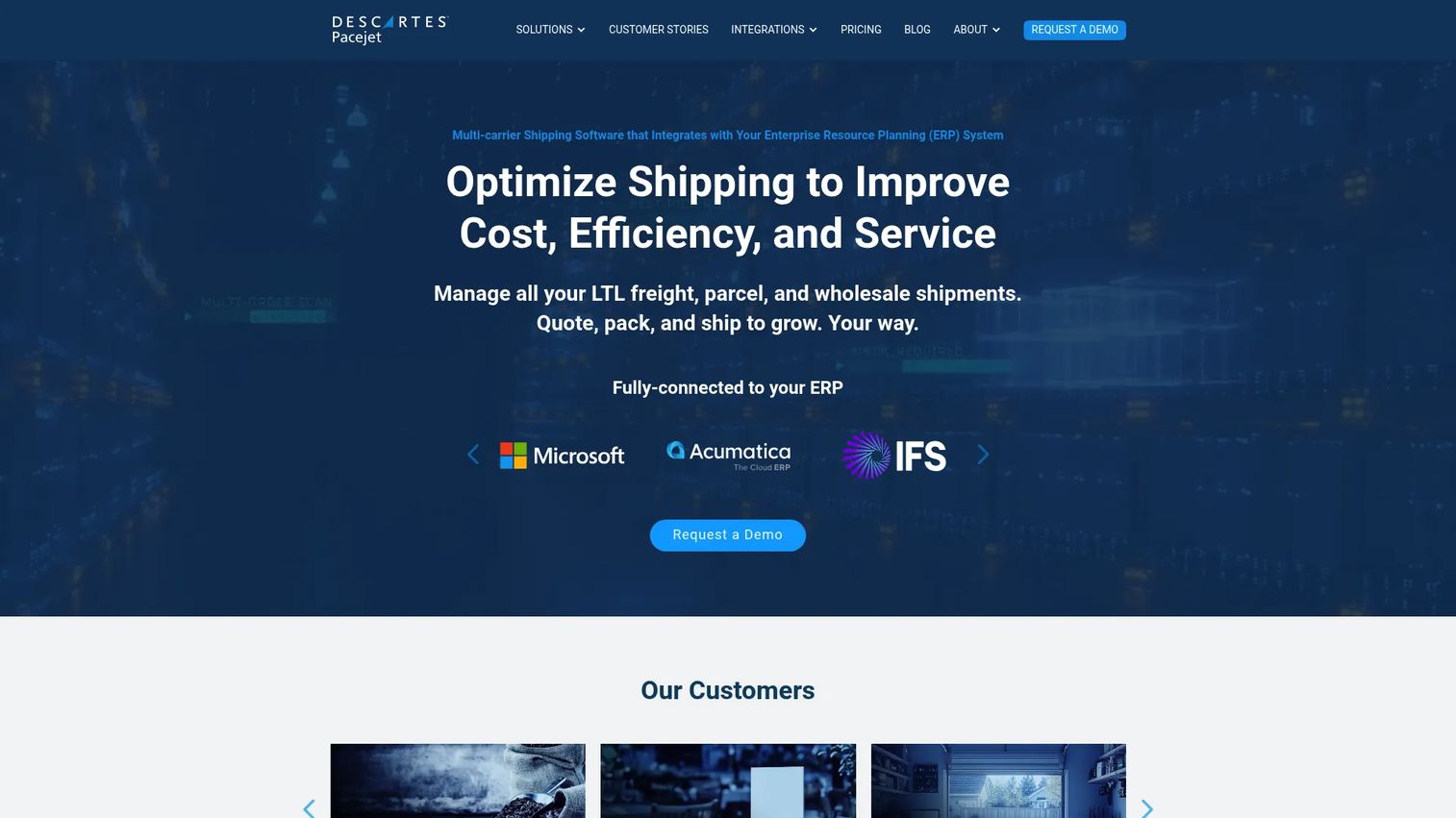
Descartes Pacejet is ERP-integrated multi-carrier shipping software for managing parcel, LTL, and freight shipments inside existing business systems. All plans include unlimited users, unlimited carriers, unlimited facilities, rate shopping, label generation, tracking, and reporting. It is one of the few platforms in this category with fully public, verified pricing.
Best for: Growing and enterprise businesses that need parcel shipping decisions to live inside ERP and warehouse workflows.
Key features
- Quote and rate shopping across carriers and shipping modes
- Predictive packing and cartonization
- Shipping labels, paperwork, and customs documentation
- Rules-based shipping automation
- ERP, WMS, carrier, and API integrations
Why choose Descartes Pacejet: Good fit when parcel decisions must live inside ERP and warehouse workflows rather than a standalone shipping portal. The elimination of swivel-chair work between shipping stations and business systems is the operational payoff that matters for teams running SAP, NetSuite, or similar ERP stacks.
Descartes Pacejet pricing: The Emerging plan starts at $700/month. The Core plan is $1,200/month. Enterprise pricing is available on request. No free tier exists.
G2 rating: 3.5/5
10. Enveyo
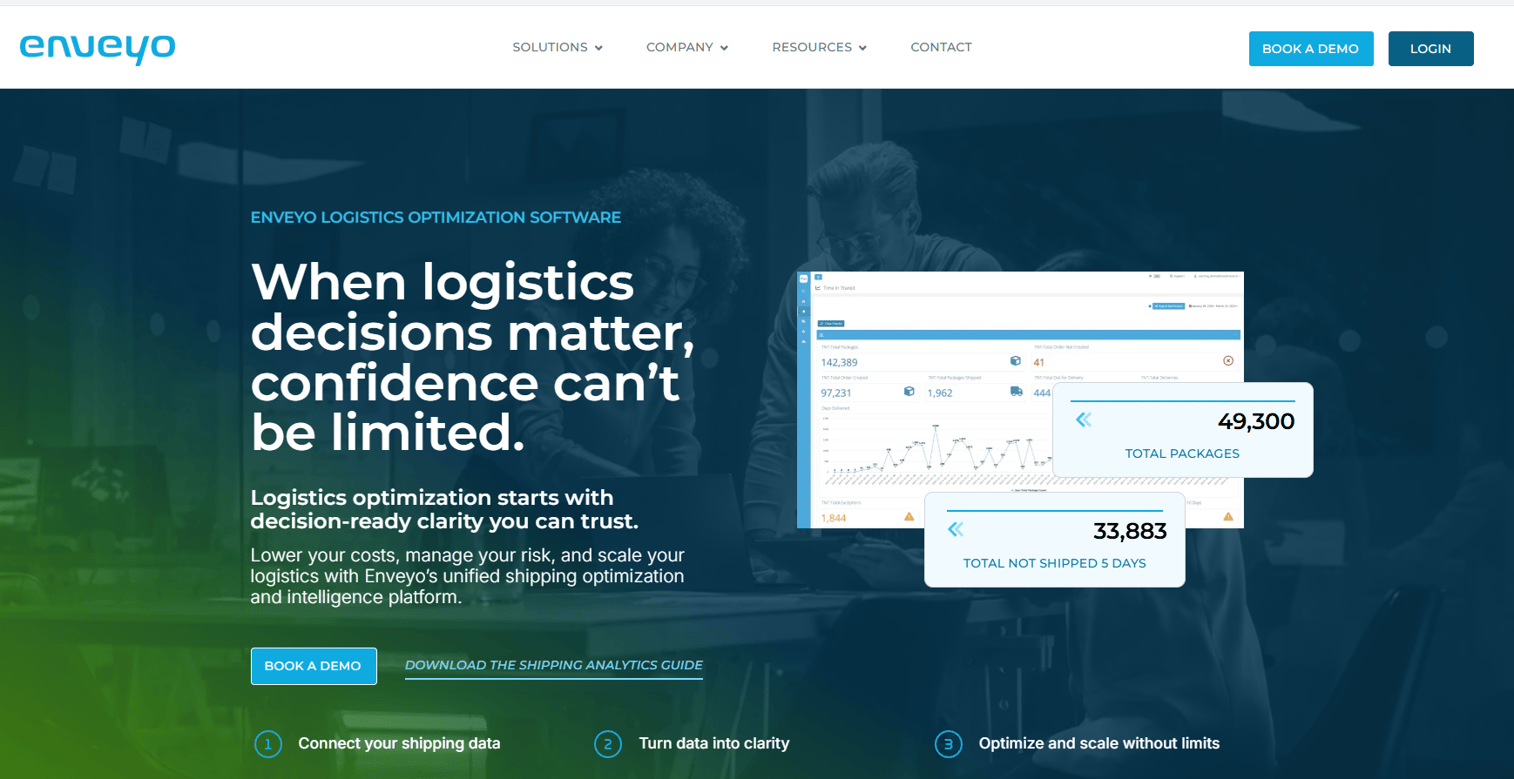
Enveyo provides cloud-based logistics optimization software focused on parcel spend analytics, automated routing, shipment modeling, real-time visibility, and carrier invoice auditing. Its Cloudroute product handles multicarrier routing and selection, while additional products cover insights, predictive modeling, and exception alerts.
Best for: Parcel-heavy teams that need routing automation paired with finance-level visibility into carrier spend and exceptions.
Key features
- Cloudroute carrier routing and automated selection
- Parcel spend analytics and data transparency
- Advanced shipment modeling and predictive analysis
- Real-time visibility and customer delivery notifications
- Carrier invoice auditing and accountability tools
Why choose Enveyo: Choose Enveyo when parcel management is tied directly to finance visibility. The angle is finding savings and catching exceptions before they become recurring cost, which resonates with founders who want weekly operating metrics their CFO can act on.
Enveyo pricing: Pricing requires a sales conversation scoped to shipment volume, carrier count, and product configuration.
G2 rating: 3.3/5
11. ShipERP
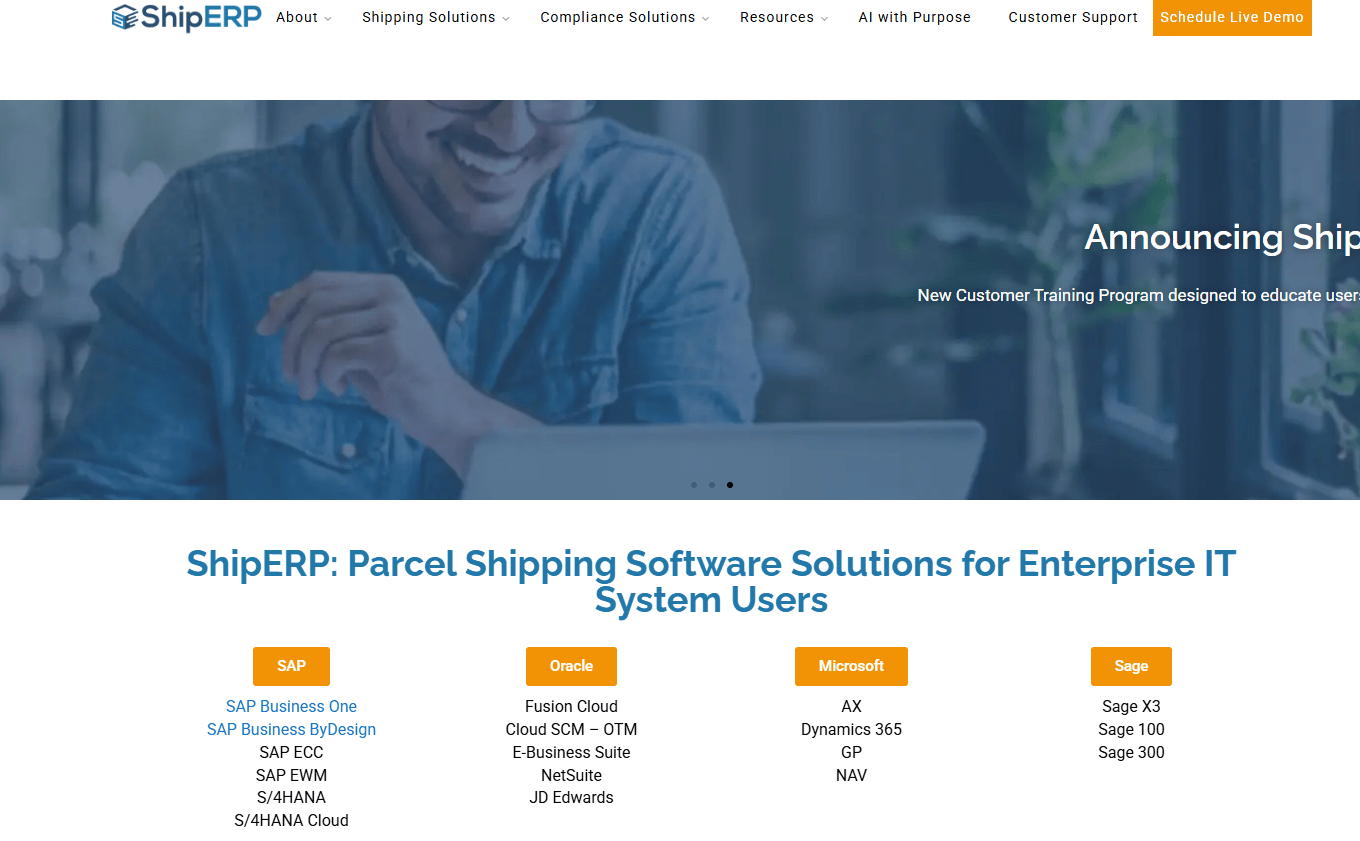
ShipERP provides enterprise multi-carrier shipping and compliance software integrated with ERP systems, with particular depth in SAP environments. It covers rate shopping, shipment processing, label generation, export documentation, carrier coordination, and business rules configuration across more than 250 shipping carriers.
Best for: SAP users who need parcel shipping, compliance, and tracking embedded directly in ERP workflows.
Key features
- Multi-carrier rate shopping across 250+ carriers
- Shipment creation, processing, and proof of delivery
- Shipping label and export document generation
- Configurable business rules and carrier coordination
- SAP and ERP integration workflows
Why choose [ShipERP](https://sh canaleshiperp.com): Strong fit when SAP is the operating backbone and shipping cannot sit in a disconnected tool. Teams standardizing shipping processes across business units on SAP will find the native integration depth harder to replicate with general-purpose shipping software.
ShipERP pricing: ShipERP prices by quote based on operating conditions, applications, industry, and compliance requirements. Contact their sales team for a scoped proposal.
12. Sendcloud
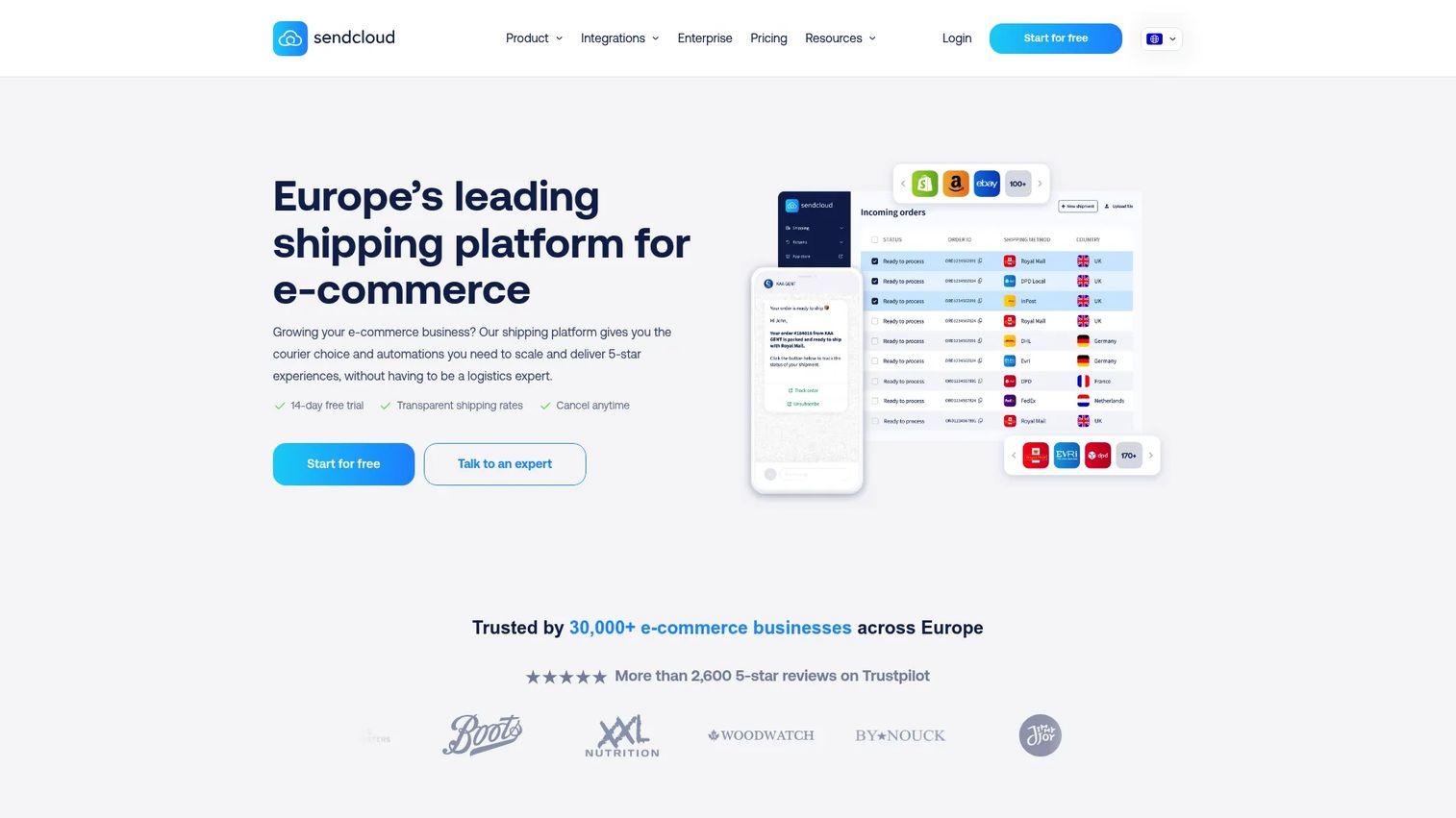
Sendcloud is a shipping platform for ecommerce businesses that connects stores, carriers, and customers. It handles label creation, multi-carrier shipping across 170+ carriers, branded tracking, returns management, checkout delivery options, and AI-powered carrier suggestions. A free tier makes it accessible to smaller operations scaling up.
Best for: Ecommerce teams that want fast carrier setup, branded tracking, and returns without enterprise implementation complexity.
Key features
- Shipping label creation and order processing
- Multi-carrier shipping with 170+ carrier connections
- Branded tracking pages and returns management
- Checkout delivery options and service-point picker
- AI-powered carrier suggestions and shipping analytics
Why choose Sendcloud: Good fit for teams graduating from native ecommerce platform shipping but not ready for a heavy enterprise rollout. The free plan covers up to 20 parcels per month, giving small teams a real on-ramp before committing to a paid tier.
Sendcloud pricing: A free tier covers up to 20 parcels per month. Paid plans start at the Lite tier (€28/month plus €0.10 per label), scaling through Growth (€87/month), Premium (€175/month), and Pro (€639/month). Enterprise pricing is custom.
G2 rating: 4.5/5
13. Bringg

Bringg is a modular last-mile delivery platform for planning, routing, dispatch, driver management, carrier orchestration, and customer delivery experience management. It covers both owned fleet operations and third-party carrier networks from one system, with route optimization, proof of delivery, and branded customer notifications.
Best for: Enterprise retailers and logistics providers managing customer delivery across owned fleets, partner carriers, and third-party networks.
Key features
- Dynamic delivery slots and on-demand delivery options
- Route optimization, planning, and resource management
- Automated dispatch, monitoring, and exception management
- Driver workflows and proof of delivery
- Multi-carrier connectivity with reporting and analytics
Why choose Bringg: Choose Bringg when the parcel question is part of a broader last-mile delivery problem. Teams that need orchestration across fleet, carrier, and dispatch, rather than basic label generation, will find Bringg addresses a wider operational scope.
Bringg pricing: Bringg uses custom enterprise pricing. Contact their team for a proposal based on delivery volume, fleet composition, and market coverage.
G2 rating: 4.6/5
14. ShipHawk
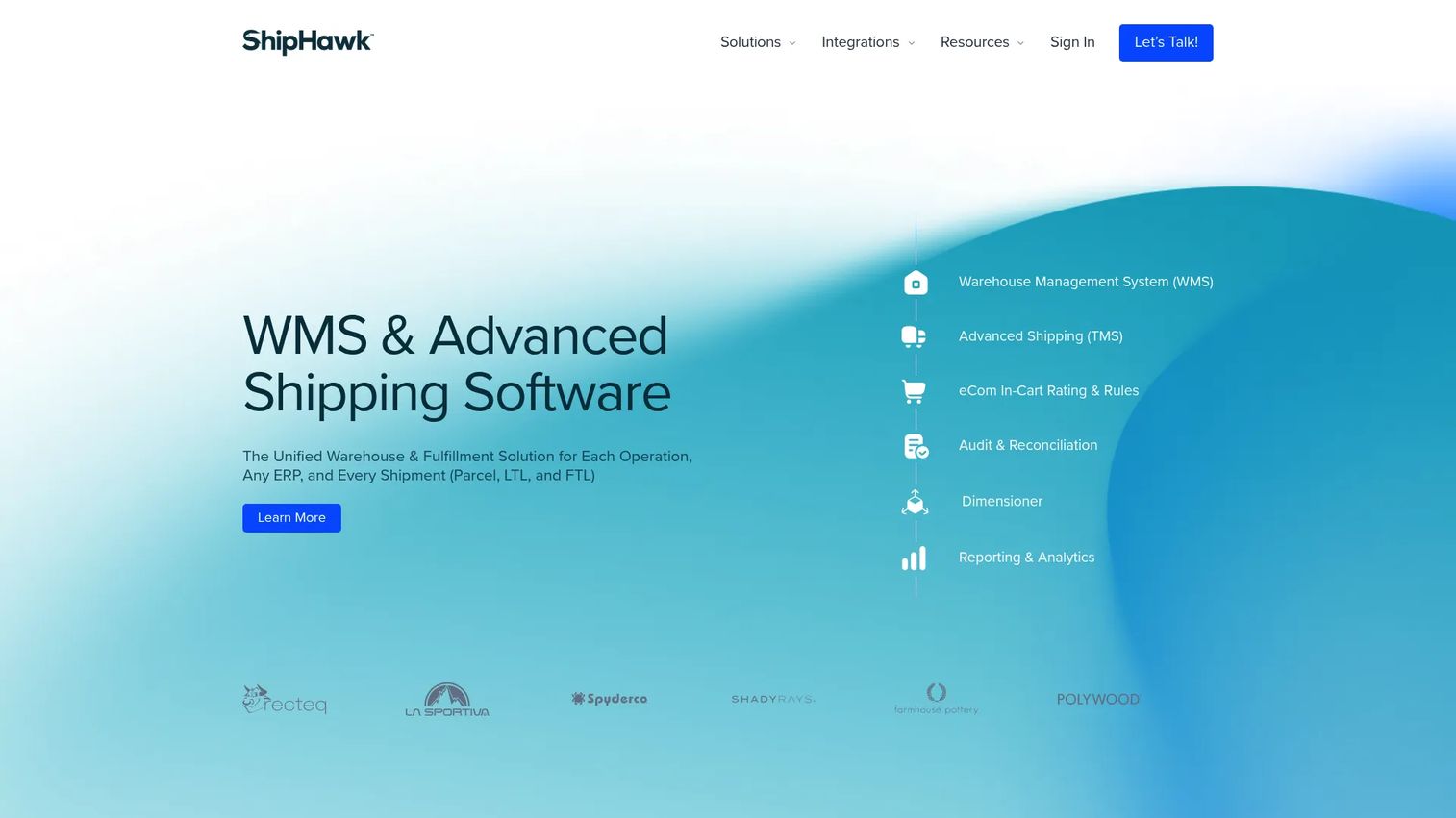
ShipHawk provides warehouse management and advanced shipping software for omnichannel fulfillment operations. Its cartonization and smart packing capabilities pair with real-time rate shopping, automated carrier selection, parcel and freight audit, and reporting. It is designed for teams where the expensive problem is not just which carrier to use but how to pack and route efficiently.
Best for: Omnichannel retailers, manufacturers, and high-volume fulfillment operations that need packing intelligence alongside carrier automation.
Key features
- Real-time rate shopping and automated carrier selection
- Cartonization and smart packing logic
- Warehouse management and fulfillment workflows
- Parcel and freight audit
- Multi-carrier shipping across parcel, LTL, and FTL
Why choose ShipHawk: Strong fit when packing logic and carrier selection need to work together rather than in separate systems. Labor efficiency and margin both improve when cartonization is automated rather than left to individual picker judgment.
ShipHawk pricing: Fees are specified in customer service order forms and may include subscription, connector, and transaction components. Contact their team for a scoped quote.
G2 rating: 4.3/5
15. Shippo
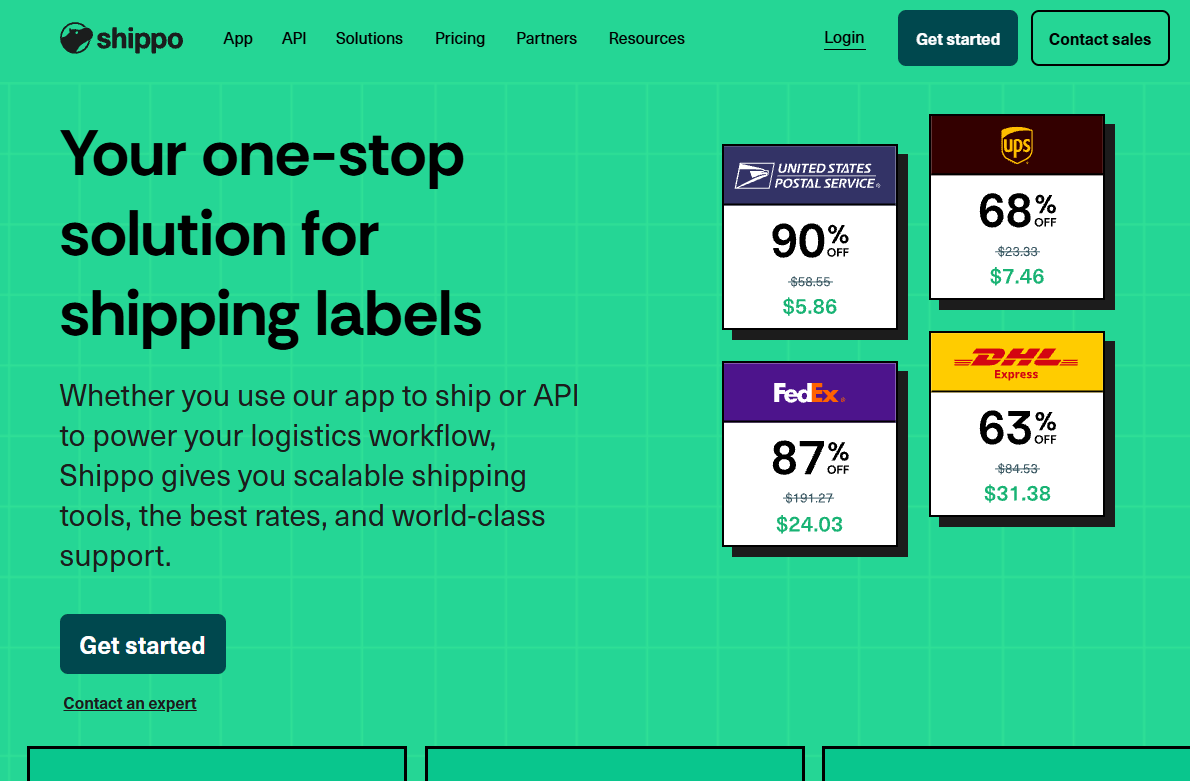
Shippo is ecommerce shipping software and a RESTful multi-carrier shipping API for comparing rates across 40+ carriers, creating and printing labels, tracking shipments, and managing returns. Its accessible pricing and developer-friendly API make it a practical starting point for SMB teams and platforms building shipping into their own products.
Best for: SMB ecommerce merchants, marketplaces, and development teams that need multi-carrier shipping without a heavy implementation cycle.
Key features
- Compare discounted rates across 40+ carriers
- Create and print shipping labels with bulk purchasing
- RESTful multi-carrier shipping API
- Tracking notifications and returns management
- Shipping automations, analytics, and customs forms
Why choose Shippo: Choose Shippo when speed to value, API access, and ease of adoption matter more than deep enterprise orchestration. Teams moving beyond native store shipping tools will find the Starter plan removes the cost barrier for getting started.
Shippo pricing: The Starter plan is free and covers up to 30 labels per month. Pro starts at $17/month when billed annually and scales by label volume up to 200 labels per month. Premier offers unlimited shipments at custom pricing.
G2 rating: 4.2/5
Considerations when choosing multicarrier parcel management software
Carrier coverage and service depth
A long carrier list is not a differentiator on its own. Verify which specific services each carrier supports inside the platform, including regional and last-mile carriers, international lanes, negotiated-rate pass-through, and peak-season backup options. The carriers that matter to your shipping lanes may not all be in the standard carrier library.
Fully loaded cost calculation
Shipping cost is not the base rate. Surcharges for residential delivery, dimensional weight, fuel, delivery area fees, duties, and discount capture all affect the number that shows up on your monthly carrier invoice. Platforms that expose these components in their analytics give finance teams the visibility needed to identify leakage before it recurs.
Integration fit
Shipping data isolated from your ERP, WMS, or OMS creates duplicate entry and slow exception handling. Confirm which specific ERP systems, warehouse platforms, OMS tools, and ecommerce connectors each vendor supports. Ask whether the integration is native or middleware-dependent, since that affects both implementation time and ongoing maintenance.
Rule control and exception handling
Routing rules need to be adjustable by an operator, not just an engineer. Confirm whether business rules, service failover logic, and volume balancing can be changed inside the platform by your operations team without a developer or vendor ticket. That question separates tools built for operators from tools built for IT departments.
Visibility, analytics, and auditability
Weekly operating reviews need carrier performance data, not just shipment counts. Look for platforms that surface delivery miss rates, carrier cost per unit, invoice audit exceptions, and returns volumes in a format your COO or VP Operations can act on. FedEx research (2025) found 68% of consumers prioritize real-time package tracking, which means your internal visibility gap is also a customer experience gap.
Conclusion
For enterprise parcel intelligence and delivery promise optimization, Shipium is the strongest pick. Teams focused on ecommerce carrier automation at scale should evaluate ShippyPro or Sendcloud, depending on whether they need a free tier or higher shipment volume. ProShip suits high-volume warehouse operations where execution reliability is non-negotiable.
If your stack runs on SAP, ShipERP gives you native ERP depth that general-purpose tools cannot match. For ERP-connected teams outside SAP, Descartes Pacejet offers the most transparent pricing in this category. Teams that need parcel spend analytics and finance-level audit visibility should look at Enveyo alongside their shortlist.
Bringg and Shipsy address broader last-mile and logistics orchestration problems that extend beyond parcel carrier management. ShipHawk is worth evaluating when cartonization and packing logic are part of the operational gap.
For SMB or developer teams starting fresh, Shippo provides a free on-ramp with API access that grows with volume.
The practical next step is to shortlist three platforms based on your shipping complexity, integration environment, and parcel volume. Then run a scoped evaluation against your top five operational pain points before entering an RFP or procurement process.
Start your journey with Guideflow today!
FAQs
Multicarrier parcel management software connects businesses to multiple parcel carriers from one system, handling carrier selection, rate comparison, routing rules, label generation, shipment tracking, returns workflows, and carrier performance reporting. It sits between basic label-printing tools and full transportation management systems, covering the operational layer where parcel complexity has outgrown single-carrier portals.
Parcel shipping software often refers to tools that cover label creation and basic rate lookup. Multicarrier parcel management usually adds configurable routing logic, compliance handling, analytics, carrier performance reporting, and deep integrations with ERP, WMS, OMS, and ecommerce systems. The distinction is governance and visibility, not just label output.
The practical triggers are volume growth that makes manual routing unworkable, missed delivery promises that cannot be traced to a cause, rising surcharge exposure that is not visible in current reporting, international expansion requiring customs documentation, regional carrier diversification to reduce peak-season risk, and warehouse complexity that demands tighter ERP integration. Any one of these is a signal. All of them together is a systems problem.
The integrations that drive the most operational value are ERP connections (SAP, NetSuite, and similar), WMS platforms, OMS tools, and the ecommerce storefronts where orders originate. Carrier API connectivity and analytics or BI connectors follow closely. Weak integration creates duplicate data entry and slows exception handling, which means shipping problems surface late and cost more to fix.
The system compares eligible carrier services in real time before generating a label. It evaluates cost, delivery speed, service availability, package dimensions, destination zone, and any negotiated rates or business rules you have configured. The output is the carrier and service level that best matches your routing logic, without a human having to check each option manually.
The evaluation should cover margin impact (how visible will shipping cost components be), integration cost and timeline (how long before the system connects to your ERP or WMS), rule control (can your operations team adjust routing without engineering), analytics depth (can finance act on weekly carrier performance data), and implementation risk (what happens if the rollout takes longer than projected). The tool that earns its place in your stack quickly is worth more than the technically superior one that takes a quarter to stabilize.
Yes, when the platform supports customs documentation, duties and taxes calculation, international carrier services, restricted goods rules, and cross-border tracking. Not all platforms in this category have equal international depth. If your shipping lanes span multiple countries, verify specific documentation support for each relevant destination before shortlisting.
There is no universal answer. The right number is determined by your shipping lanes, order volume, regions served, negotiated contract relationships, service level requirements, and fallback needs during peak periods or carrier disruptions. Carrier count in a vendor's library is a starting point, not a selection criterion on its own. What matters is whether the specific carriers relevant to your operation are supported at the service level your customers expect.