You rolled out a training program last quarter. Completion rates stalled. Half the team never opened the second module, and the ones who did forgot most of it within a week. Now the board wants to know why onboarding takes six weeks and why new hires still ping senior people with questions the docs already answered.
The problem is rarely the content. It is the format. Long-form courses fight the way people actually work, especially on the frontline, in the field, or between meetings. Micro-courses tell a different story: they achieve 80 to 90% completion rates versus roughly 30% for long-form eLearning, according to Engageli's 2026 microlearning report. That gap is why 72% of organizations had folded microlearning into their corporate training mix by 2026, up from 54% in 2023.
For a founder trying to make onboarding, enablement, and compliance repeatable without adding operational drag, the question is not whether microlearning works. It is which platform fits your team, your delivery channels, and your stack without becoming another tool nobody uses. If part of your job is showing people how a product works, an interactive demo often complements a training platform for hands-on walkthroughs, and it pairs well with the kind of active learning tools that keep people engaged. This guide compares seven real options so you can shortlist fast.
What's inside
This guide compares seven microlearning platforms chosen for how they deliver content, how they drive retention, how deep their analytics run, how well they work on mobile, and how quickly a non-specialist can publish. The list mixes microlearning-first apps with broader learning platforms that include strong microlearning functionality, so you can match the tool to whether you need fast distribution or a full LMS underneath. Each entry includes verified pricing where public, a G2 rating where confirmed, and a clear "best for" so you can skip the ones that do not fit.
TL;DR
- Best overall microlearning platform: 7taps, for fast publishing and broad channel distribution.
- Best for frontline training: SC Training, for mobile-first delivery and simple administration.
- Best for reinforcement and knowledge checks: Qstream, for science-backed spaced repetition.
- Best for large frontline operations: Axonify, for adaptive reinforcement tied to task execution.
- Best for LMS buyers who need microlearning: LearnUpon, for microlearning inside a full learning operation.
- Best for lean teams wanting an approachable LMS: TalentLMS, for quick setup at a fair price.
- Best for course creators and external education: Thinkific, for packaged and monetized learning.
Different tools win in different situations. Read the comparison table, then jump to the two that match your delivery model and test content creation time before you commit. If you want ideas on structuring self-serve learning, our roundups of active learning approaches and customer data platforms are useful adjacent reads.
What is a microlearning platform?
A microlearning platform is software that delivers training in short, focused units, often two to five minutes each, designed to fit into the flow of work rather than pull people out of it. Unlike a traditional LMS built around long courses and formal completion tracking, microlearning software prioritizes speed of consumption, mobile access, and repeated exposure over time.
The category exists because attention and retention behave predictably. People forget most of what they learn in a single sitting, so microlearning tools lean on repetition and recall rather than one-and-done modules. The global microlearning market reached USD 3.32 billion in 2026 and is projected to hit USD 5.81 billion by 2031 at an 11.83% CAGR, according to Mordor Intelligence, which reflects how fast buyers are shifting budget toward this format.
Here is what most microlearning platforms share:
- Short, focused learning units. Lessons run bite-sized, usually a few minutes, so people finish them.
- Mobile and anytime access. Content works on a phone, without an install where possible, for frontline and distributed teams.
- Spaced repetition and reinforcement. Material resurfaces on a schedule to fight the forgetting curve.
- Retrieval practice and micro-assessments. Short quizzes and question prompts force recall, which strengthens retention.
- Analytics and engagement tracking. Leaders see completion, participation, and, in stronger tools, behavior change.
- Multi-channel delivery. Content ships via link, QR code, SMS, Slack, Teams, and email, meeting people where they already are.
That last point separates a modern microlearning app from a legacy LMS. Distribution is not an afterthought; it is the product.
When to use a microlearning platform
Microlearning is not the right tool for every training job. It shines in three situations that matter to a scaling company.
Onboard people faster
New hires and new customers both suffer from the same problem: too much information, delivered too fast, forgotten by day three. Microlearning breaks onboarding into digestible steps people complete on their own schedule, which lowers time-to-first-use. Instead of a four-hour orientation nobody remembers, you ship a sequence of short lessons that build on each other. For internal onboarding, that means new reps ramp faster. For customer onboarding, it means fewer support tickets and quicker activation.
Reinforce critical knowledge over time
One training session does not create lasting knowledge. Compliance rules, product details, and safety procedures fade unless they are revisited. Microlearning platforms with spaced repetition resurface key material at intervals, so knowledge sticks instead of evaporating after the quiz. This is the difference between a team that passed a test once and a team that actually remembers the policy when it counts.
Support frontline or distributed teams
Shift workers, field staff, and remote teams rarely sit at a desk with an hour to spare. They have a phone and a few minutes between tasks. Mobile-first microlearning delivery fits that reality, letting people learn in short bursts on the device they already carry. For frontline-heavy organizations, mobile access and lightweight delivery are usually the deciding factors, not feature depth.
Comparison table
The shortlist below is organized by fit, not alphabetically. The first rows lean toward pure microlearning and reinforcement; the later rows are broader LMS and course platforms with strong microlearning functionality. Pricing reflects publicly listed figures at the time of writing, and G2 ratings are shown where a current rating was confirmed.
| # | Product | Intent | Key use case | Pricing | G2 rating |
|---|---|---|---|---|---|
| 1 | 7taps | Microlearning-first delivery | Fast publishing and broad channel distribution | Free; Starter $4,995/yr | Not listed |
| 2 | Axonify | Frontline enablement | Adaptive reinforcement plus task execution | Custom quote | 4.7/5 |
| 3 | SC Training | Mobile-first LMS | Frontline microlearning and onboarding | Free up to 10; Premium $5/learner/mo | 4.7/5 |
| 4 | Qstream | Reinforcement science | Knowledge retention for regulated teams | Custom quote | 4.5/5 |
| 5 | LearnUpon | Full LMS | Employee, customer, and partner training | Custom quote | 4.5/5 |
| 6 | TalentLMS | Approachable LMS | Lean-team training and onboarding | From $119/mo; free plan | Not listed |
| 7 | Thinkific | Course and commerce | External education and monetized learning | From $49/mo | 4.5/5 |
Use the table to narrow to two candidates, then read their full sections below. The right pick depends on whether you need distribution speed, reinforcement science, or a full learning operation.
1. 7taps
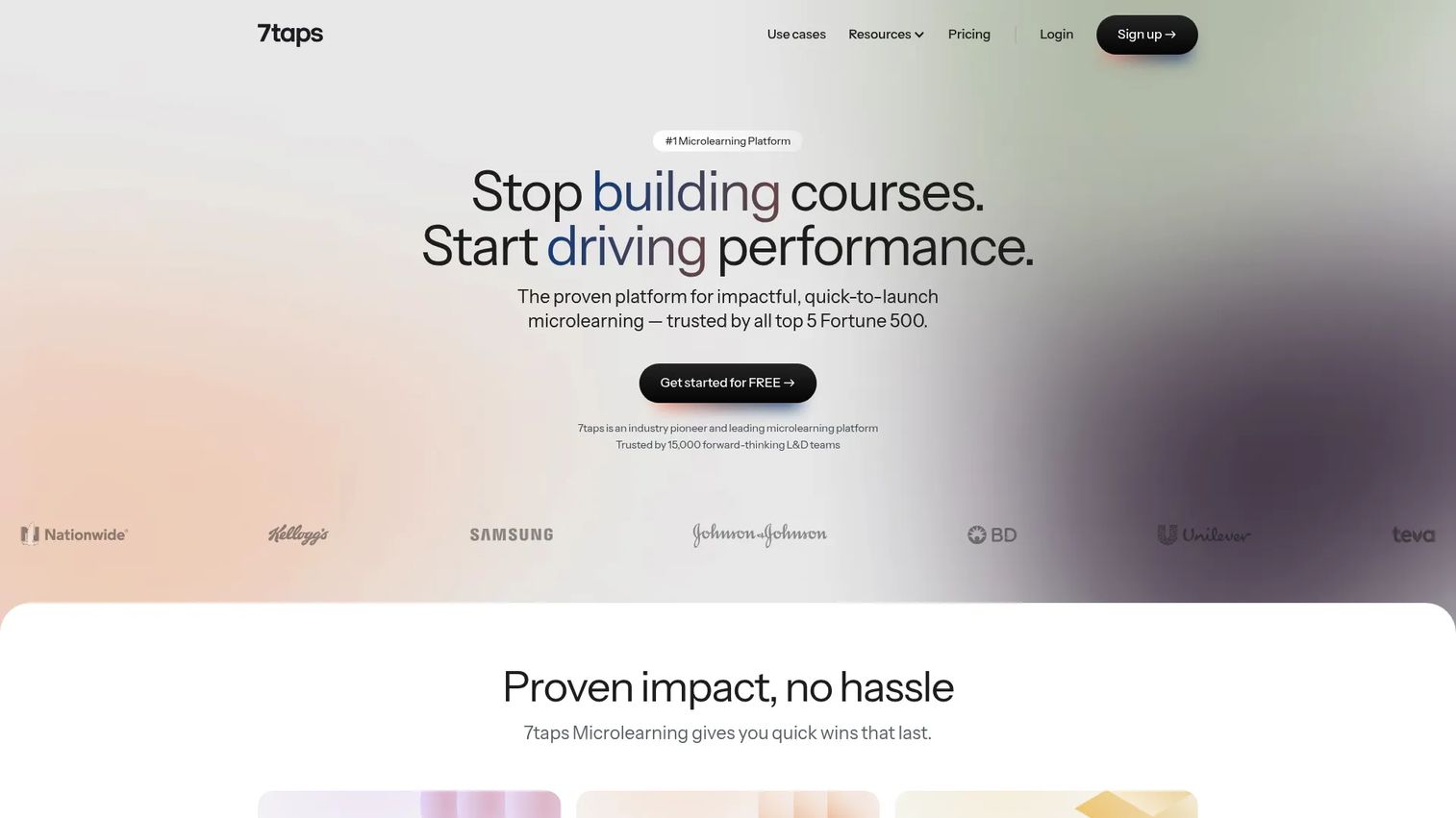
7taps is a microlearning-first platform built for teams that want to create and ship short training content fast, without wrestling with an authoring tool. It leans hard into distribution, letting you push lessons through the channels people already check. For a founder who needs enablement and onboarding to run without a dedicated L&D hire, the appeal is speed: build a lesson, share it, see who engaged.
Best for: Teams that want fast, mobile-first microlearning delivery and reinforcement programs without app downloads.
Key strengths
- Free plan with course sharing: Start publishing and distributing lessons at no cost before committing budget.
- AI-powered training designer: Turn raw content into structured microlearning without instructional design skills.
- Broad channel delivery: Ship via link, QR, email, Slack, Teams, SMS, WhatsApp, kiosk, and LMS, so learning meets people where they are.
Why choose 7taps: It fits teams that value velocity and reach over deep LMS administration. If your goal is to launch a reinforcement or onboarding program this week and track engagement without a rollout project, 7taps removes the friction between "we should teach this" and "it is live." It is a delivery engine, not just a place to store courses.
7taps pricing: The Free plan is $0 forever and includes course sharing. The Starter plan runs $4,995 per year. Enterprise pricing requires a quote. That structure suits a team that wants to validate the format for free, then scale into a predictable annual cost once microlearning proves its value.
2. Axonify
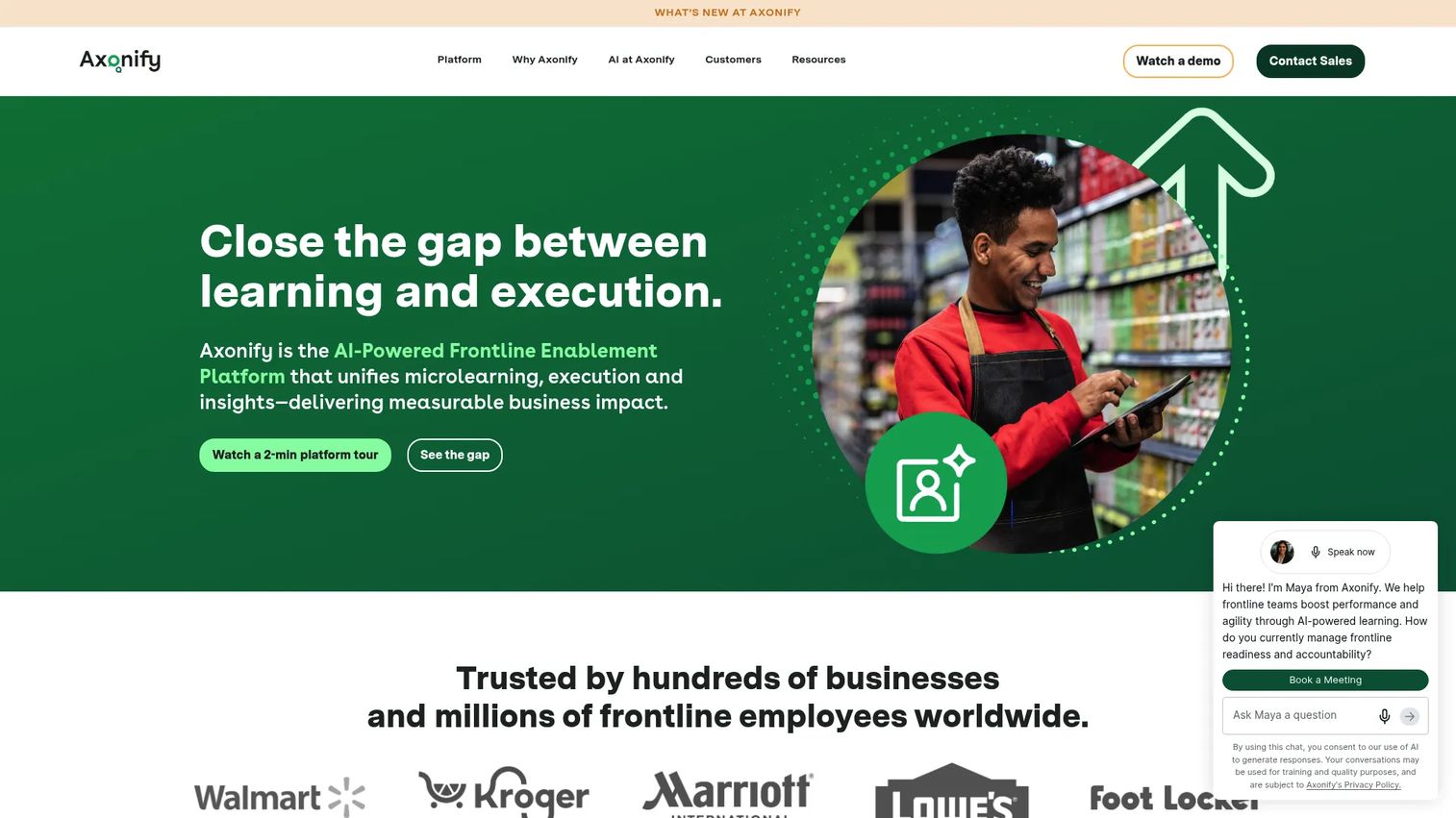
Axonify is a frontline enablement platform that treats microlearning as one part of a broader system spanning training, communication, and task execution. Its model is reinforcement-led: short, adaptive sessions that adjust to each learner's gaps and resurface material until it sticks. This is aimed at organizations where behavior change on the floor matters more than a completion certificate.
Best for: Large frontline organizations needing training, task execution, and operational insights in one platform.
Key strengths
- Immersive microlearning with adaptive reinforcement: Sessions adapt to each learner and repeat weak areas to lock in knowledge.
- Guided execution: Communications, tasks, and automations connect learning to the work people actually do.
- Insights and action: Real-time readiness data and AI recommendations show leaders where teams stand.
Why choose Axonify: It fits operations-heavy companies with large distributed or shift-based workforces where knowledge retention drives safety, service, and revenue. If your priority is measurable behavior change rather than a content library, Axonify's adaptive reinforcement model is built for exactly that. It is a heavier platform than a pure microlearning app, and that weight buys operational depth.
Axonify pricing: Axonify does not publish pricing on its site, so cost is quote-based and scoped to your workforce size and needs. It carries a 4.7/5 rating on G2. Plan for a sales conversation and an enterprise-style evaluation rather than a self-serve signup.
3. SC Training
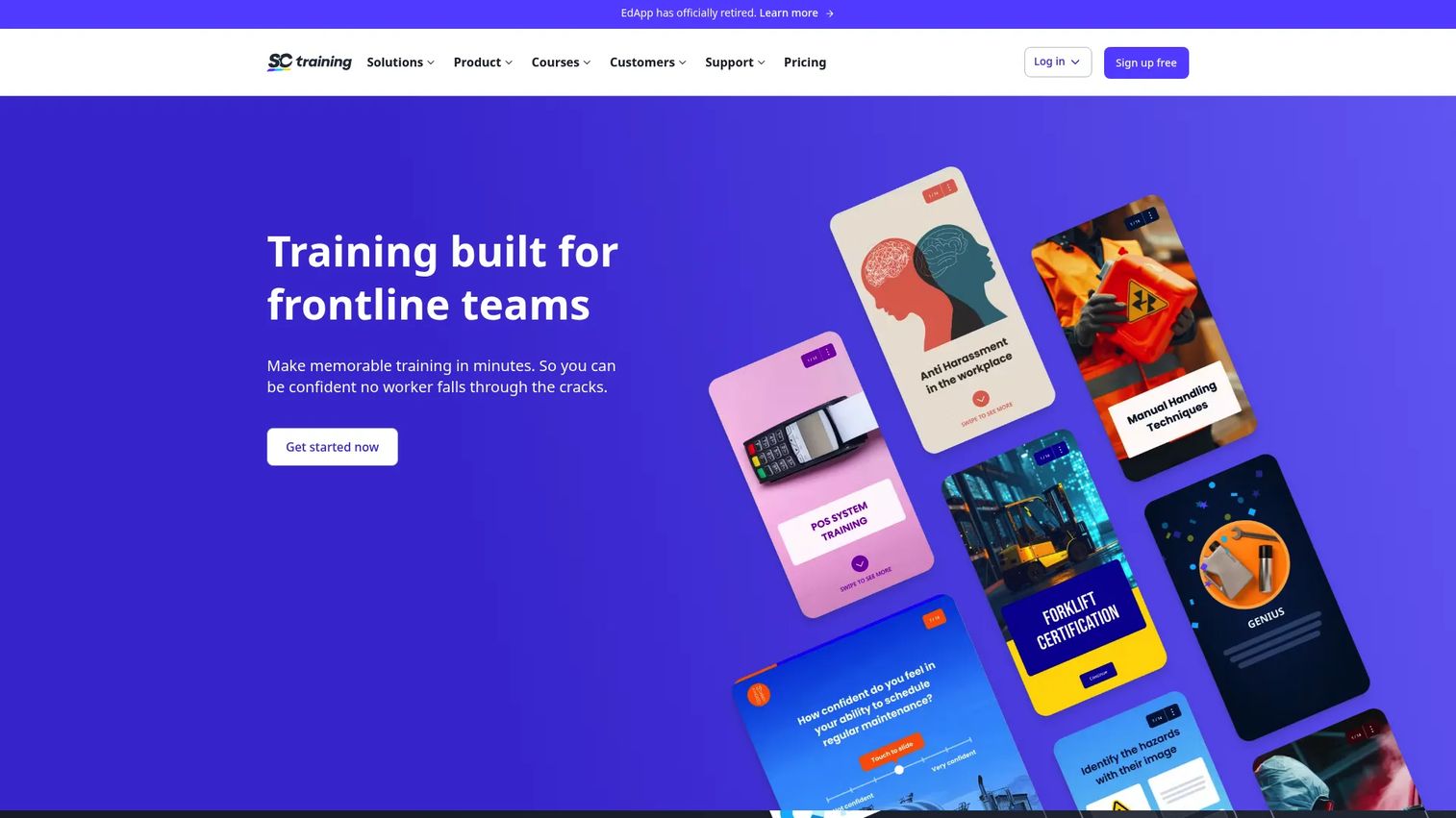
SC Training, formerly EdApp, is a mobile-first workplace learning platform built for frontline teams. It combines quick course creation with a large library of ready-made content, so you can launch training without building every lesson from scratch. The mobile-first design means learners engage on their phones, which is the reality for most deskless workforces.
Best for: Frontline teams needing mobile microlearning and simple LMS administration.
Key strengths
- Free plan for up to 10 learners: Unlimited lessons at no cost make it easy to pilot before scaling.
- AI course creation and a large library: Build lessons with AI or adapt from 1,000+ editable courses across many industries.
- Full delivery toolkit: Mobile learning, gamification, analytics, SSO, groups, and AI translation cover most rollout needs.
Why choose SC Training: It fits teams that need speed and accessibility over LMS complexity. The combination of a free tier, a ready-made content library, and mobile-first delivery makes it practical for onboarding, compliance, and frontline scenarios where you need people learning fast on their own devices. Gamification and analytics keep engagement visible without extra tooling.
SC Training pricing: The Free plan covers up to 10 learners with unlimited lessons. Premium starts at $5 per learner per month billed annually, with a minimum admin seat required. Enterprise pricing requires a demo. It holds a 4.7/5 rating on G2. The free tier makes it one of the lowest-risk ways to test mobile microlearning with a real team.
4. Qstream
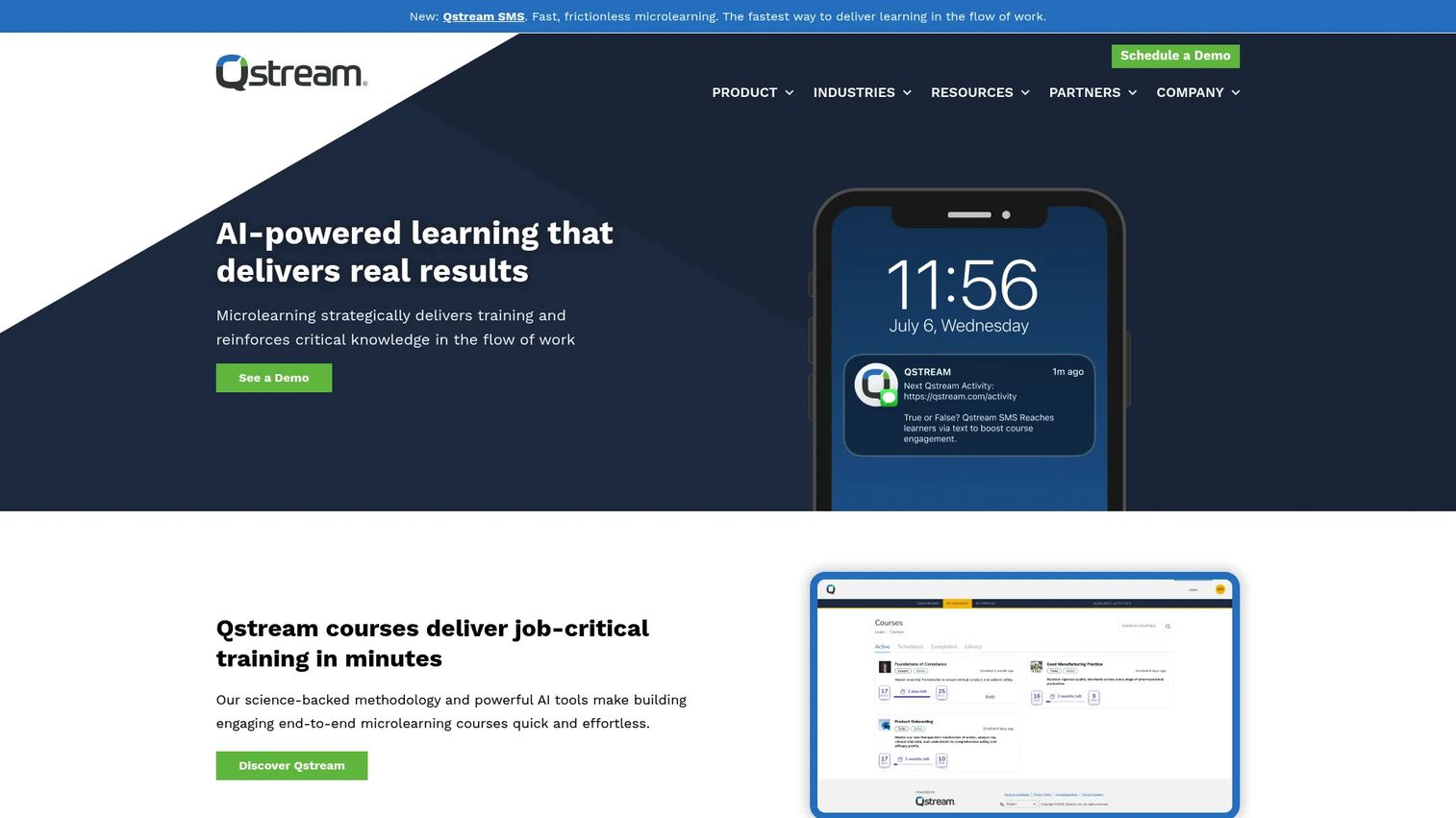
Qstream is an enterprise microlearning and knowledge reinforcement platform built around a specific idea: content libraries alone do not create retention, repeated retrieval does. It uses question-based challenges delivered over time, drawing on spaced repetition and retrieval practice to make critical knowledge stick. This is reinforcement as a program, not a one-time course.
Best for: Enterprises needing science-backed microlearning and knowledge reinforcement.
Key strengths
- AI-powered microlearning course creation: Build reinforcement content quickly without heavy authoring overhead.
- Automated learning journeys: Questions and challenges deliver on a schedule that fights the forgetting curve.
- Real-time analytics and proficiency tracking: See not just who finished, but who actually knows the material.
Why choose Qstream: It fits field sales, healthcare, financial services, and compliance-heavy teams where getting the answer right under pressure matters. If your problem is that people pass training and then forget it, Qstream's reinforcement model directly targets that gap. The proficiency tracking gives leaders a defensible read on readiness, which matters when knowledge carries regulatory or revenue stakes.
Qstream pricing: Qstream does not list public pricing, so plan on a quote scoped to your team and use case. It carries a 4.5/5 rating on G2. Given its enterprise reinforcement focus, expect an evaluation that centers on retention outcomes rather than seat count alone.
5. LearnUpon
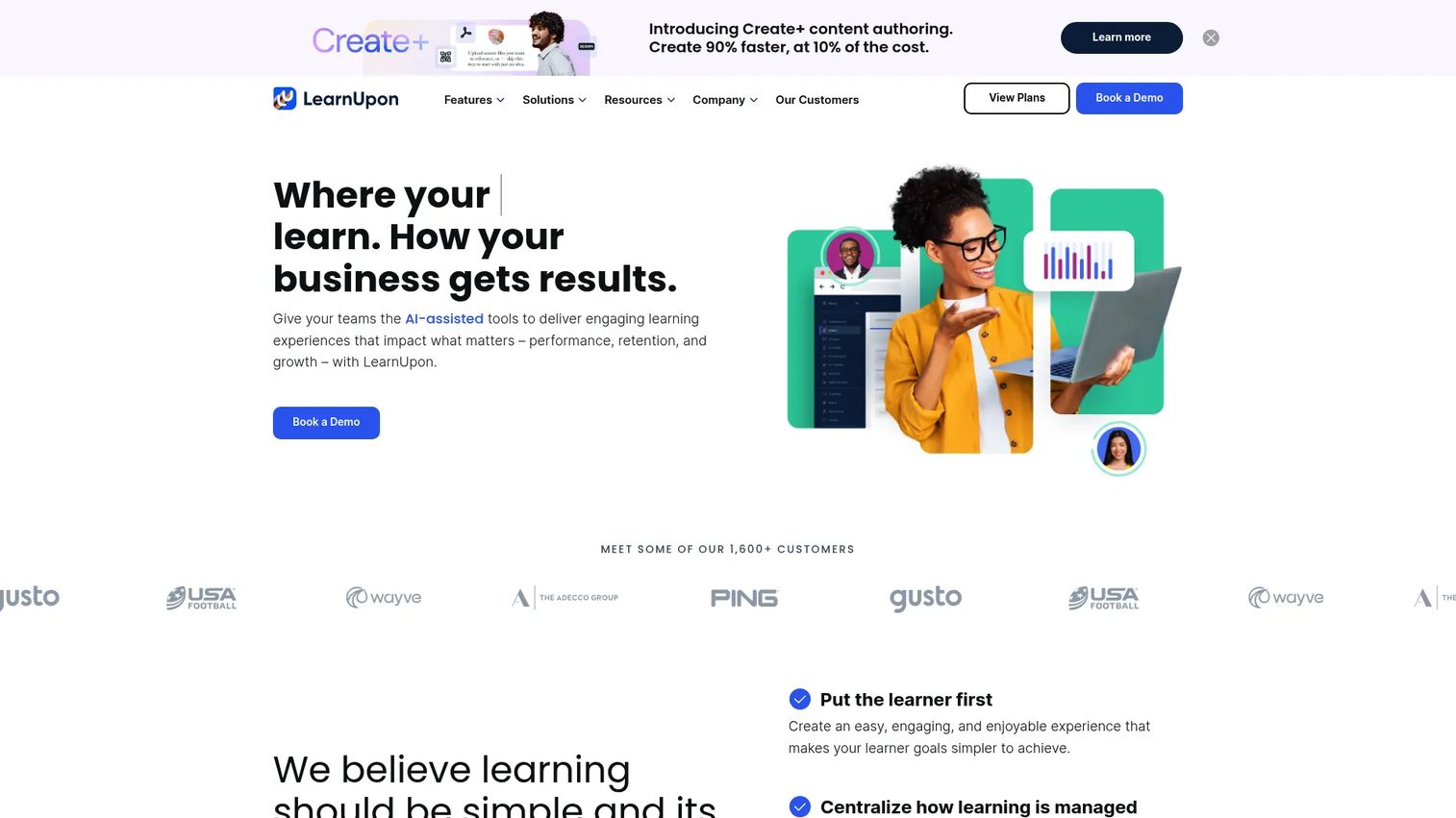
LearnUpon is a cloud learning management system built to train employees, customers, partners, and members from one platform. Microlearning is a use case here rather than the whole product, which suits organizations that already run structured learning operations and want short-form content to live inside that system. Its strength is breadth: portals, reporting, integrations, and formal program management.
Best for: Organizations that need a configurable LMS for employee, customer, partner, or member training.
Key strengths
- Course creation and delivery: Build and distribute formal courses alongside shorter microlearning units.
- Portals, reporting, and integrations: Separate branded portals let you serve distinct audiences from one admin view.
- Learning journeys and certifications: Skills, certifications, live learning, and eCommerce support full program depth.
Why choose LearnUpon: It fits teams that need microlearning inside a broader LMS strategy rather than as a standalone app. If you are running onboarding, customer education, and partner enablement at once and need reporting that holds up to scrutiny, LearnUpon's multi-portal structure earns its place. It is more platform than quick-launch app, and that is the point for structured learning operations.
LearnUpon pricing: LearnUpon does not publish pricing publicly and directs buyers to sales, with plans organized by audience such as employees, customer education, and associations. It carries a 4.5/5 rating on G2. Expect enterprise-oriented packaging and a scoped quote based on user thresholds.
6. TalentLMS
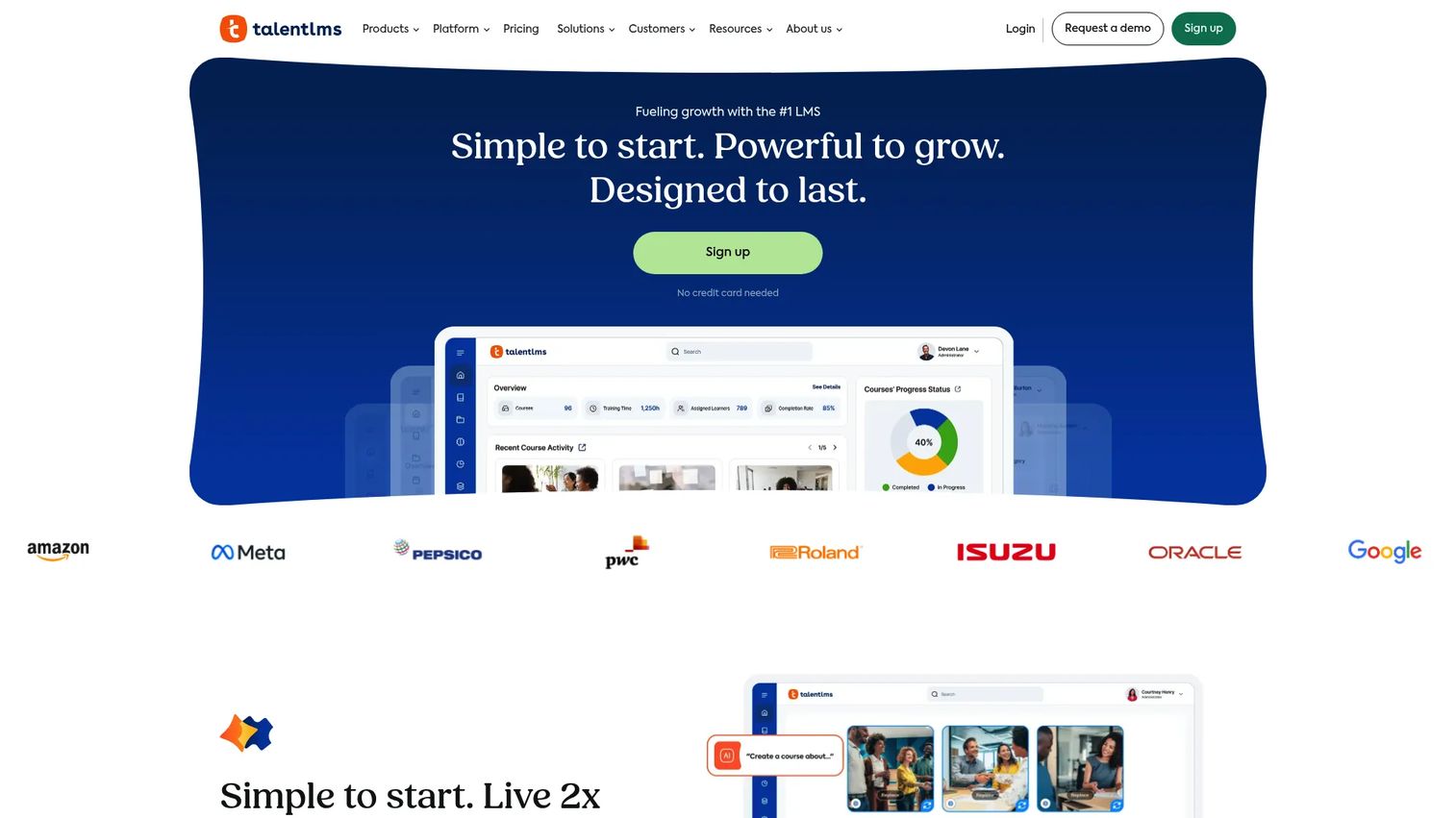
TalentLMS is an approachable cloud LMS built for business training, onboarding, and customer or partner education. It hits a practical middle ground: enough LMS structure to run real programs, but simple enough that a lean team can set it up without a dedicated admin. Microlearning-friendly delivery, quizzes, and a custom mobile app make it flexible for short-form content.
Best for: Teams that want a scalable LMS for employee, partner, or customer training without heavy overhead.
Key strengths
- Unlimited courses: Build as much content as you need without hitting course caps.
- Broad standards support: SCORM 1.2, Tin Can, and cmi5 support keep your existing content portable.
- Custom mobile app: Deliver training on mobile with your own branding for on-the-go learners.
Why choose TalentLMS: It fits lean teams that want a capable LMS fast, without the price or complexity of enterprise platforms. This is the strong "good enough and quick" option: transparent pricing, easy setup, and enough depth to grow into. For a founder who needs onboarding and training running this quarter without a services engagement, it earns its place in the stack quickly.
TalentLMS pricing: Pricing is transparent and billed in USD, with monthly and yearly options (yearly saves 20%). The Core plan starts at $119 per month, Grow at $229, and Pro at $449, with an Enterprise tier starting at 500 users via sales. A free plan is available. Capterra reviewers rate it 4.7/5. The public pricing and free plan make it easy to evaluate without a sales call.
7. Thinkific
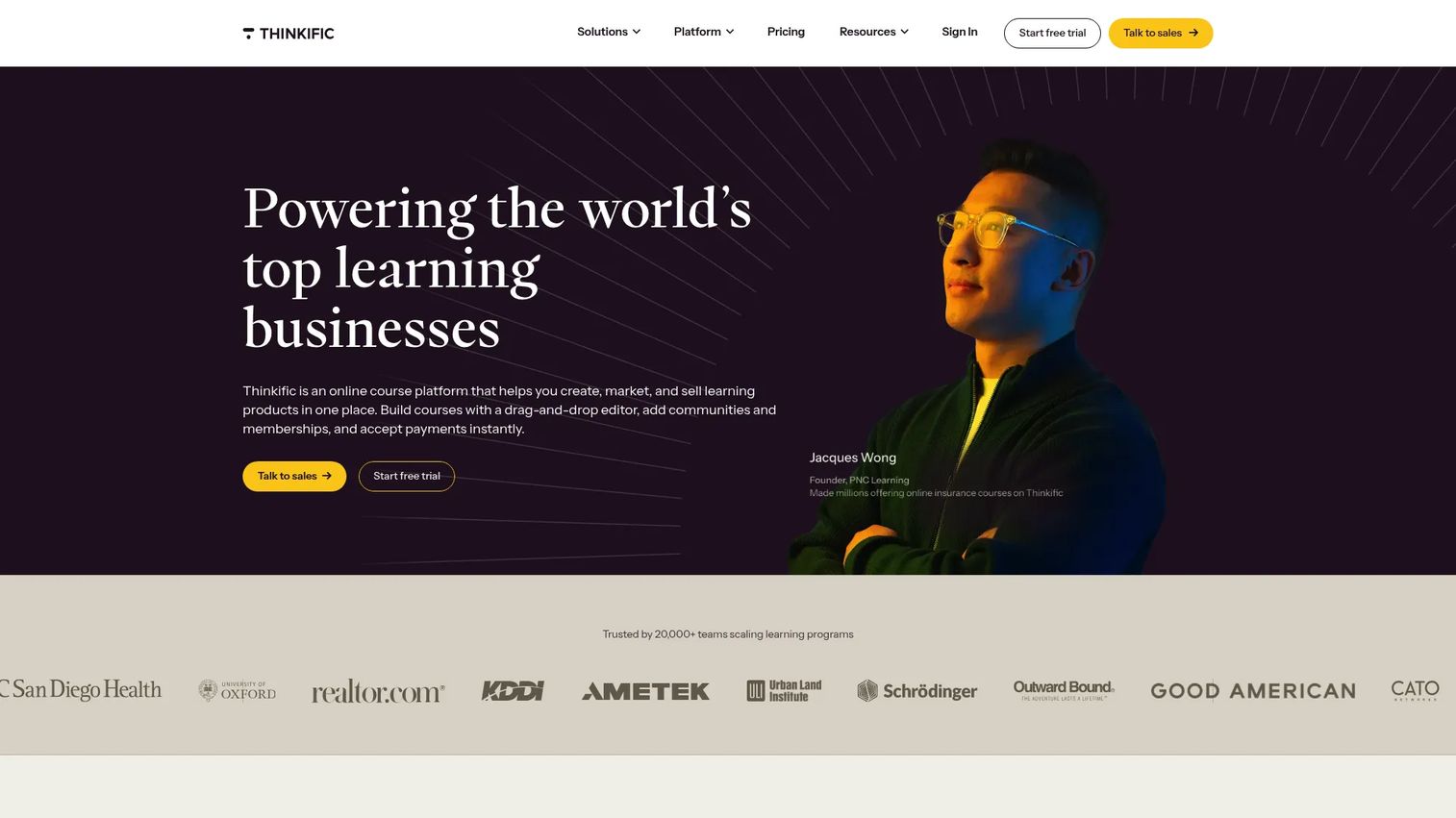
Thinkific is an online course and learning commerce platform for creating, marketing, and selling courses, communities, and digital learning products. It is more course platform than pure microlearning app, but it still supports short lessons and modular content, which makes it relevant when the use case is external education or monetized learning rather than internal enablement.
Best for: Creators and businesses selling online courses and learning products.
Key strengths
- Drag-and-drop course builder: Assemble lessons and modules quickly without technical work.
- Communities and memberships: Build engagement and recurring value around your content.
- Built-in checkout and payment tools: Sell and package learning directly, no separate commerce stack needed.
Why choose Thinkific: It fits companies whose learning is a product, not just an internal process, such as customer academies, certification programs, or paid courses. If you want to package short lessons into branded, monetizable learning with commerce built in, Thinkific covers that end to end. For pure internal microlearning it is less of a fit, but for external education it is a natural choice.
Thinkific pricing: The Basic plan starts at $49 per month, Start at $99, and Grow at $199, with monthly and annual billing shown for those tiers. The Plus plan is custom and requires contacting sales. There is no free plan listed on the pricing page. Thinkific holds a 4.5/5 rating on G2. The entry price makes it accessible for creators testing a learning product.
Considerations before you buy
The right microlearning platform depends less on feature counts and more on how the tool fits your delivery reality and your stack. Use these five criteria to evaluate any shortlist.
Delivery model
Check which channels the tool supports out of the box. Does it push content via mobile, link, QR code, SMS, Slack, Teams, or email? For frontline and distributed teams, mobile-first delivery without an app install is often the single biggest predictor of whether people actually engage. Map the tool's channels against where your people already spend their attention.
Retention mechanics
Ask whether the platform actively fights forgetting. Spaced repetition, retrieval practice, and scheduled reinforcement separate tools that create lasting knowledge from tools that just store content. If your training carries compliance or safety stakes, reinforcement mechanics are not a nice-to-have; they are the reason to buy.
Content creation speed
Test whether a non-instructional designer can publish quickly. The best microlearning tools let someone on your team build and ship a lesson in an afternoon, not a sprint. If content creation depends on a specialist or a long production cycle, the format's speed advantage disappears. Time the first lesson during a trial.
Analytics depth
Look past course views. Can leaders see completion, engagement, and, ideally, behavior change or proficiency? A founder answering to a board needs data clean enough to prove the program works, not just that people logged in. Weaker analytics leave you guessing; stronger ones let you defend the spend.
Stack fit
Confirm the tool connects to what you already run. Clean integrations with your LMS, HRIS, CRM, or comms tools decide whether the platform reduces operational drag or adds it. Before committing, verify the specific integrations you need exist and work, not just that an integrations page exists.
Conclusion
There is no single best microlearning platform, only the best fit for your delivery model and goals. Choose 7taps if speed and broad distribution matter most and you want to launch reinforcement or onboarding programs fast. Choose Axonify or Qstream if reinforcement and behavior change are the priority, with Axonify leaning toward large frontline operations and Qstream toward regulated, knowledge-critical teams. Choose SC Training for mobile-first frontline training with a low-risk free tier.
If microlearning needs to live inside a broader learning operation, LearnUpon or TalentLMS make more sense, with LearnUpon serving multi-audience programs and TalentLMS serving lean teams that want fast, affordable setup. Choose Thinkific when the use case is external education or packaged, monetized learning.
The practical next step: shortlist two tools from this list, compare their delivery models against where your people already work, and time how long it takes to build your first lesson before you roll anything out. That single test tells you more about fit than any feature page.
FAQs
A microlearning platform is software that delivers training in short, focused units designed to fit into the workday. Unlike a traditional LMS built around long courses, microlearning software prioritizes quick consumption, mobile access, and repeated exposure. The goal is completion and retention, not just content storage.
An LMS is the broader system for managing, delivering, and tracking all kinds of training, including long courses, certifications, and compliance records. Microlearning is a format and delivery model focused on short, bite-sized lessons. Many LMS platforms now include microlearning functionality, but microlearning-first tools optimize specifically for short-form delivery and reinforcement.
Prioritize mobile access, delivery channels like link, QR, SMS, and chat apps, and content creation speed for non-specialists. Retention mechanics such as spaced repetition and micro-assessments matter when knowledge needs to stick. Analytics depth rounds it out, so you can see engagement and behavior change, not just course views.
It depends on your audience and content volume. For fast internal or customer onboarding without heavy setup, delivery-first tools like 7taps or SC Training get people learning quickly. If onboarding must sit inside a broader learning operation with formal tracking, an LMS like LearnUpon or TalentLMS fits better.
Yes, and it is often better suited to compliance than long-form courses. Compliance knowledge fades unless it is repeated, tracked, and updated, which is exactly what reinforcement-focused microlearning does well. Tools with spaced repetition and proficiency tracking, such as Qstream, are built for regulated, knowledge-critical scenarios.
Yes, and frontline is one of the strongest use cases. Shift and field workers rarely have a desk or a spare hour, so mobile access and lightweight delivery are usually the deciding factors. Platforms like SC Training and Axonify are built specifically for deskless, distributed workforces.
Costs range widely. Some tools offer free tiers, like 7taps and SC Training, while approachable LMS options such as TalentLMS start around $119 per month and course platforms like Thinkific start around $49 per month. Enterprise and reinforcement-focused platforms like Axonify, Qstream, and LearnUpon use quote-based pricing scoped to your team size and needs.