Your shipping costs moved last quarter. Finance blames fuel surcharges. Ops blames carrier performance. Customer support blames late deliveries. Everyone has a dashboard. Nobody has the same answer.
That gap is exactly where margin leaks, and where logistics intelligence software exists. The global logistics software market sits at an estimated $17.74 billion in 2026, according to Mordor Intelligence, yet most operations teams still reconcile carrier performance across spreadsheets and disconnected carrier portals. The board question is simple: Why did fulfillment cost move? The operational reality is messier. Shipment data lives across TMS systems, carrier invoices, parcel portals, warehouse platforms, and support tools, none of which agree.
Logistics intelligence software sits above all of that. It collects, normalizes, and analyzes that data so your team can answer board-level questions without a 48-hour spreadsheet exercise. This guide covers the 15 tools that do it best in 2026.
What's inside
This guide compares 15 logistics intelligence software tools for 2026, selected to cover the full range of the category.
- Who it's for: VP Operations, Head of Logistics, Supply Chain leaders, finance teams tracking shipping spend, and Series B founders who need clean operating visibility without founder heroics
- How tools were selected: Category relevance, verified logistics intelligence capabilities, use-case fit, and confirmed review presence
- Selection criteria: Shipment visibility and analytics depth, carrier performance benchmarking, cost control and audit features, and integration coverage across TMS, WMS, ERP, and carrier systems
Pricing and G2 ratings below were checked against each vendor's live page at the time of writing.
TL;DR
- Best overall for parcel intelligence: SiftedAI, for parcel-heavy businesses that need spend visibility and carrier benchmarking in one platform
- Best for contract negotiation: Reveel, for teams negotiating multi-carrier parcel contracts and tracking spend at the lane level
- Best for parcel audit and refund recovery: Lojistic (subscription-based) and AuditShipment.com (contingency-based), depending on your volume and billing preference
- Best for post-purchase delivery experience: LateShipment.com and Parcel Perform, for e-commerce brands prioritizing customer-facing delivery communication
- Best for freight market intelligence: SONAR and DAT iQ, for brokers and shippers that need external rate and capacity signals
- Best for enterprise supply chain visibility: Project44, for enterprise shippers needing multimodal transportation visibility at scale
What is logistics intelligence software?
Logistics intelligence software collects, normalizes, analyzes, and interprets logistics data so operations teams can improve shipping cost, delivery performance, carrier selection, route planning, and supply chain reliability.
It is distinct from adjacent systems that execute logistics workflows. A TMS manages transportation execution. A WMS runs warehouse operations. An ERP handles financial and operational records. Carrier portals provide source-level shipment data. Logistics intelligence sits above all of these systems to analyze historical and real-time performance, surface anomalies, and support better decisions.
Core capabilities across the category include:
- Shipment visibility and milestone tracking
- Carrier performance benchmarking by lane, service level, and cost
- Freight and parcel spend analysis
- Invoice audit and refund recovery
- Predictive ETAs and delay detection
- Route, lane, and service-level optimization
- Exception management and alert workflows
- Sustainability and emissions reporting (where supported)
- Integrations with TMS, WMS, ERP, carrier APIs, IoT, GPS, BI tools, and customer support systems
The category also spans several sub-disciplines. Parcel intelligence tools focus on small-package spend and carrier performance. Freight intelligence tools cover market rates and capacity. Supply chain visibility platforms track shipments across modes and geographies. Post-purchase tools manage the customer-facing delivery experience. The right tool depends on the specific operating decision you need to improve, not on the most feature-rich dashboard.
For context, 45% of companies now use AI for supply-chain decision-making, up from 35% the prior year, according to Tive's State of Visibility report (2025). The underlying data infrastructure those AI systems depend on is exactly what logistics intelligence software provides.
When to use logistics intelligence software
Find the margin leak in shipping spend
Use this category when costs are rising but the cause is unclear. Surcharges, service-failure credits, rate card errors, zone reclassifications, and carrier mix shifts can each move the number, but no single system shows all of them together. Logistics intelligence tools pull invoice data, rate agreements, and shipment records into one view. The result: A prioritized list of where margin is actually leaking, not a theory from each department.
Spot delivery problems before customers complain
WISMO (Where Is My Order) contacts are expensive and avoidable. Predictive delivery intelligence tools monitor shipments against carrier milestones, detect exceptions early, and trigger customer communications before the support queue builds. For e-commerce teams, reducing one day of delay notification lag can meaningfully cut support volume and protect customer retention.
Choose carriers and routes with better data
Quarterly business reviews with carriers should not depend on data the carrier provides. Logistics intelligence tools let you benchmark carrier performance by lane, service level, region, and cost using your own shipment history. That data supports procurement decisions, contract renegotiations, and routing changes that reflect actual performance rather than sales pitches.
Logistics intelligence software comparison
The table below is a shortlist organized by use case, not a universal ranking. Different tools solve different slices of logistics intelligence. A parcel audit tool and an enterprise visibility platform serve different decisions.
| # | Product | Best for | Key differentiator | Pricing | G2 rating |
|---|---|---|---|---|---|
| 1 | SiftedAI | Parcel spend and carrier analytics | AI Copilot for shipping data analysis | Custom (volume-based) | 4.6/5 |
| 2 | Reveel | Parcel contract optimization | End-to-end multi-mode carrier management | Custom (contact sales) | 4.6/5 |
| 3 | ShipScience | Claims recovery and parcel audit | Contingency-based claims with free base tools | From 35% of verified refunds | N/A |
| 4 | Sendcloud Shipping Intelligence | E-commerce carrier benchmarking | Built-in analytics across Sendcloud plan tiers | From €0/mo (Free tier) | 4.5/5 |
| 5 | Lojistic | Parcel and freight audit | Subscription plus contingency recovery model | From $99/mo | 4.3/5 |
| 6 | LateShipment.com | Post-purchase delivery experience | Free starter tracking with AI-powered predictions | From $0/mo | 4.9/5 |
| 7 | Parcel Perform | Branded tracking at scale | 88+ delivery notification triggers | Custom (contact sales) | 4.7/5 |
| 8 | AuditShipment.com | Focused parcel refund recovery | Contingency-only audit, no subscription required | From 50% of refunds | N/A |
| 9 | Tracey (Trace) | AI-native freight TMS | Automated quoting, booking, and billing in one TMS | From $999/mo base | N/A |
| 10 | Lox | Shipping intelligence | Platform under verification (see entry) | Not confirmed | N/A |
| 11 | ClickPost | Multi-carrier visibility and NDR | AI-powered carrier allocation and exception handling | Custom (contact sales) | 4.8/5 |
| 12 | Locus | Last-mile route optimization | 250+ real-world constraints in route planning | Custom (contact sales) | 4.6/5 |
| 13 | DAT iQ | Freight rate benchmarking | 13-month rate histories with 95%+ forecast accuracy | Custom (contact DAT) | 4.6/5 |
| 14 | SONAR | Freight market intelligence | Self-serve lane rates from $24.99/mo | From $24.99/mo | 4.6/5 |
| 15 | Project44 | Enterprise supply chain visibility | Multimodal visibility with predictive ETAs and yard management | Custom (contact sales) | 4.7/5 |
Best 15 logistics intelligence software for 2026
1. SiftedAI
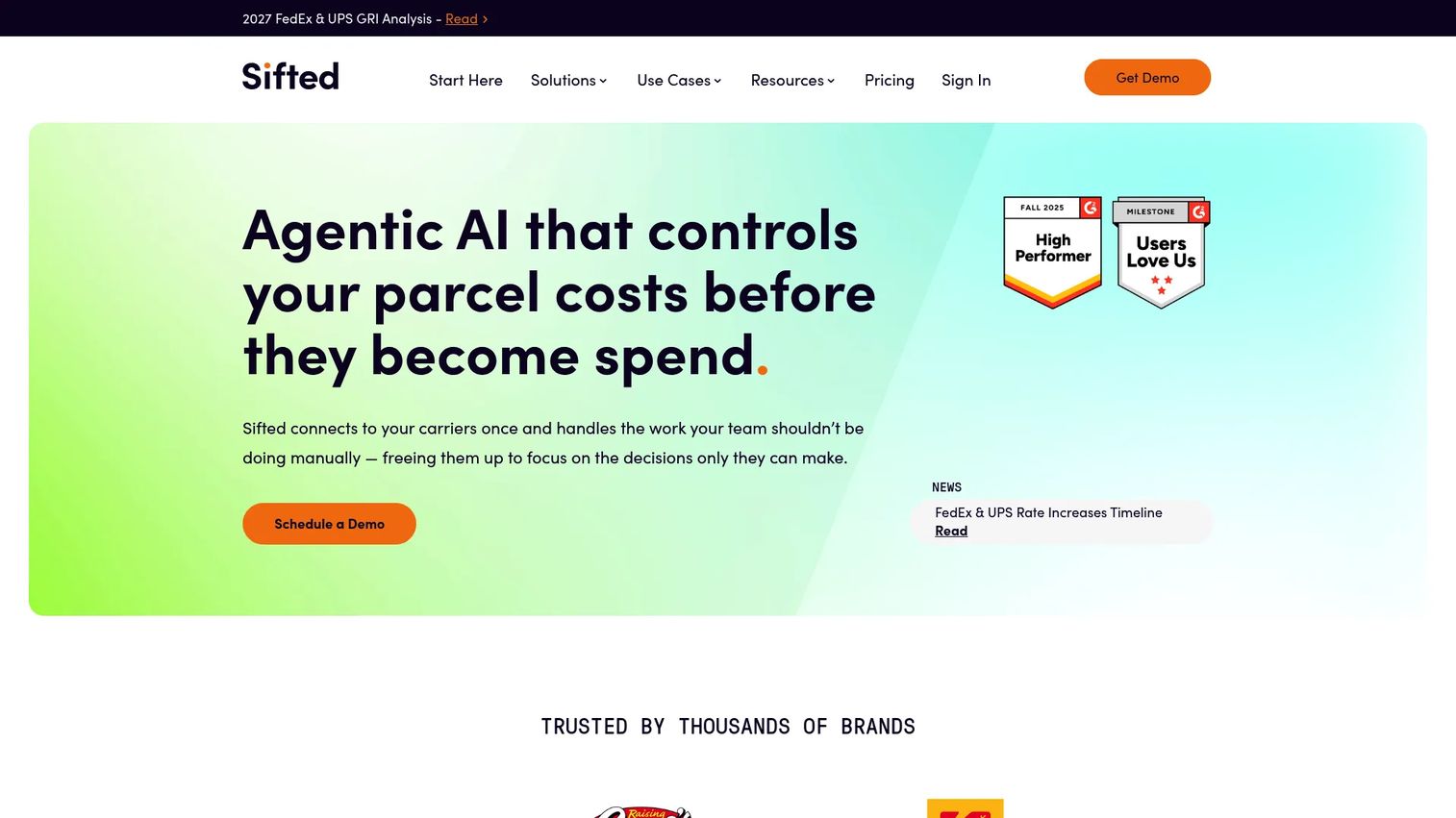
SiftedAI is a logistics intelligence platform built specifically for parcel-heavy businesses that want to analyze and control shipping costs, carrier performance, and parcel operations. The platform combines invoice auditing, scenario modeling, and an AI Copilot that lets operations teams query their own shipping data without building custom reports. It is strongest for teams that ship enough parcel volume to justify a dedicated intelligence layer, with the company citing $200,000 or more in annual parcel spend as a useful entry threshold.
Best for: Parcel shippers that need continuous visibility into carrier performance, invoice accuracy, and shipping cost drivers.
Key features
- AI Copilot for natural-language shipping data queries
- Parcel invoice audit and automated claims recovery
- Carrier contract and performance management tools
- Scenario modeling for shipping strategy changes
- Accounting automation and invoice reconciliation
Why choose SiftedAI: This is the right pick when parcel spend is material enough to justify a dedicated intelligence layer. For founders who have handed operations to a VP but still face board questions on fulfillment margin, SiftedAI provides the data layer that makes those questions answerable without an ad hoc spreadsheet exercise.
SiftedAI pricing: SiftedAI operates on a custom flat platform fee that scales with shipping volume. You get unlimited users with no gain-share or percentage-of-savings charges, so the cost is predictable. Contact SiftedAI for a quote based on your shipment profile.
G2 rating: 4.6/5
2. Reveel
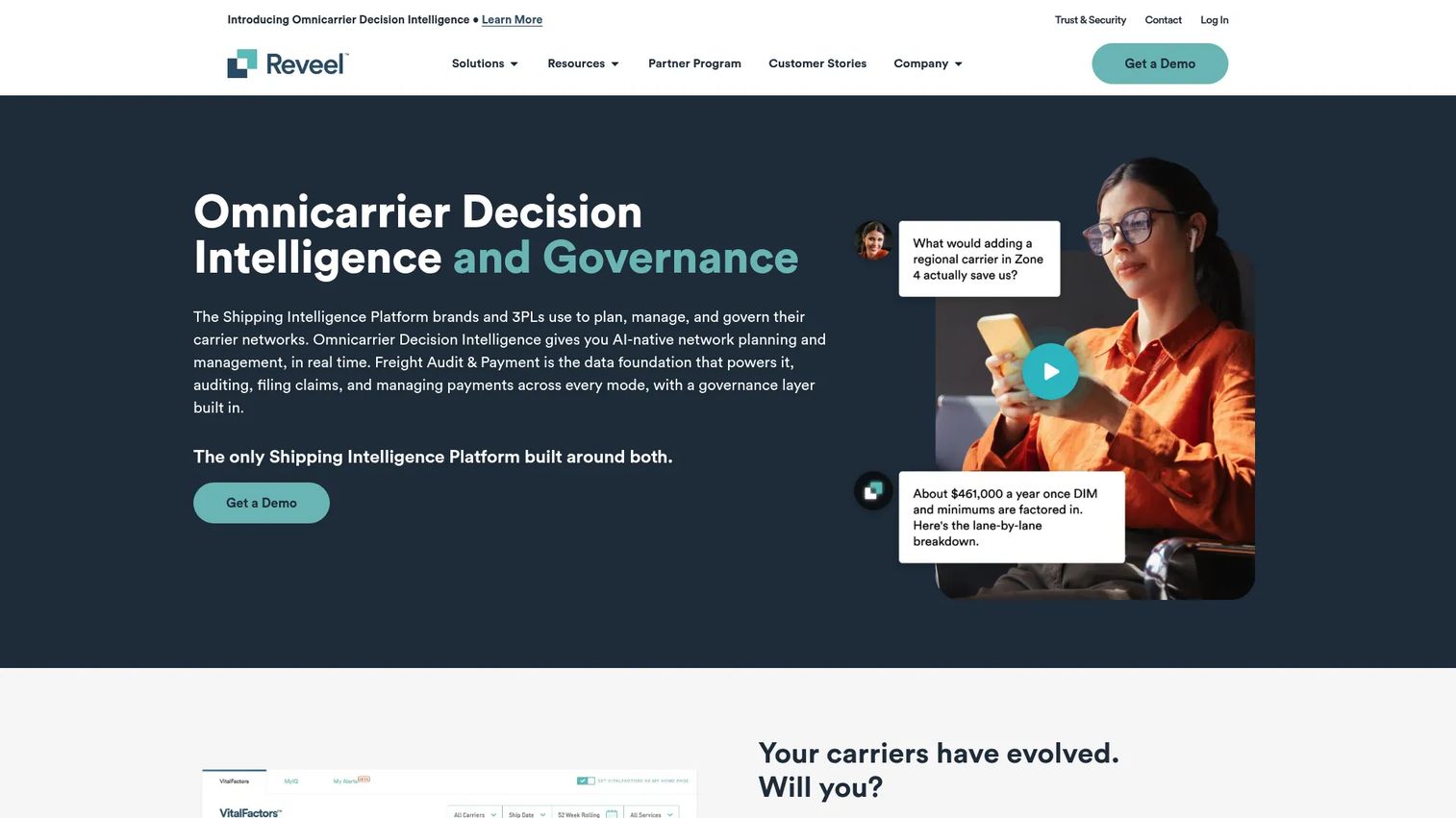
Reveel is a shipping intelligence platform built for mid-market and enterprise shippers that want one place to audit, analyze, and govern carrier spend across transportation modes. Its core positioning sits at the intersection of parcel contract management, spend visibility, and carrier negotiation support. The platform covers end-to-end audit across service failures, billing errors, rate variances, and claims automation.
Best for: Teams negotiating multi-carrier parcel contracts who need spend data, service benchmarking, and carrier diversification modeling in one workflow.
Key features
- End-to-end parcel audit: Service, billing, rate, and claims automation
- Carrier contract and network strategy tools
- Package-level rate modeling and scenario analysis
- Alternative carrier diversification support
- Spend dashboards and executive reporting
Why choose Reveel: The platform is well-suited to operations or finance leaders who want to bring data into carrier negotiations rather than relying on carrier-provided benchmarks. Involve finance and logistics early when evaluating; the strongest value case depends on your shipment volume and carrier mix.
Reveel pricing: Reveel publicly lists Essential, Professional, and Premium plans but requires a demo to get pricing figures. Contact Reveel to understand which tier fits your volume and audit scope.
G2 rating: 4.6/5
3. ShipScience
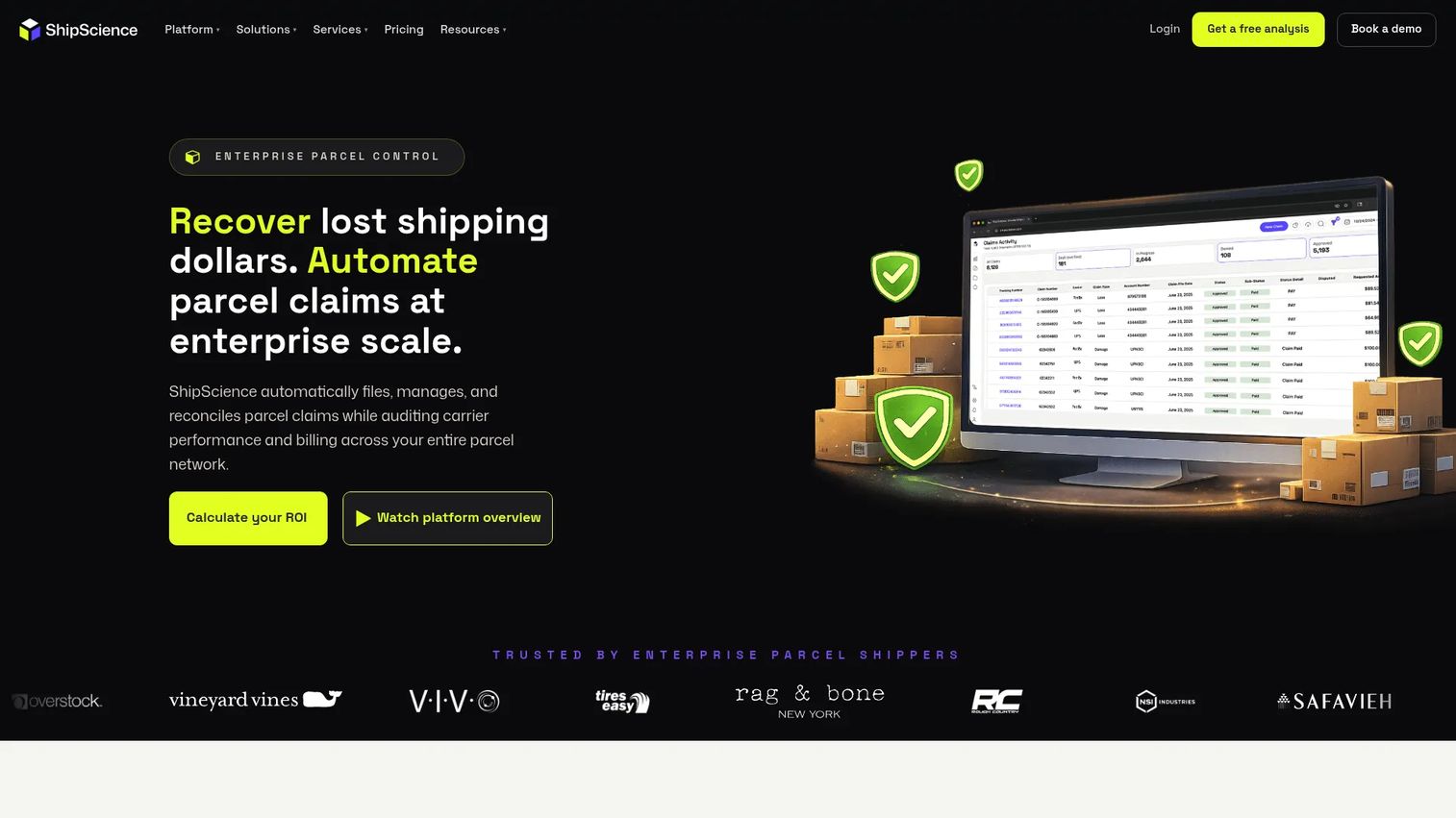
ShipScience is an enterprise parcel shipping control platform focused on claims recovery, shipment auditing, carrier monitoring, and parcel analytics. It offers two core paid products alongside free base tools. SimpleClaims handles lost and damaged shipment claims with automated proof, deadline management, and payout reconciliation. ActiveAudit adds real-time service-failure monitoring, rate validation, anomaly detection, and custom audit rules.
Best for: Enterprise shippers seeking automated claims recovery and parcel audit without an upfront platform commitment.
Key features
- Automated lost and damaged shipment claims workflow
- Real-time shipment monitoring with service-failure refunds
- Rate validation and anomaly detection
- Unified parcel data layer with executive dashboards
- Custom audit rules and proactive alert delivery
Why choose ShipScience: The contingency and per-shipment pricing structure means your cost scales with actual recovery value and audit volume. This suits teams that want to test parcel intelligence before committing to a broader platform subscription. The free base tools, including a carrier comparison module and parcel data layer, give new operations leaders a quick first win.
ShipScience pricing: SimpleClaims runs at 35% of verified claims and refunds, billed monthly only after carrier payment. ActiveAudit is priced at $0.08 per shipment, with volume discounts available. A bundle option carries custom pricing.
4. Sendcloud Shipping Intelligence
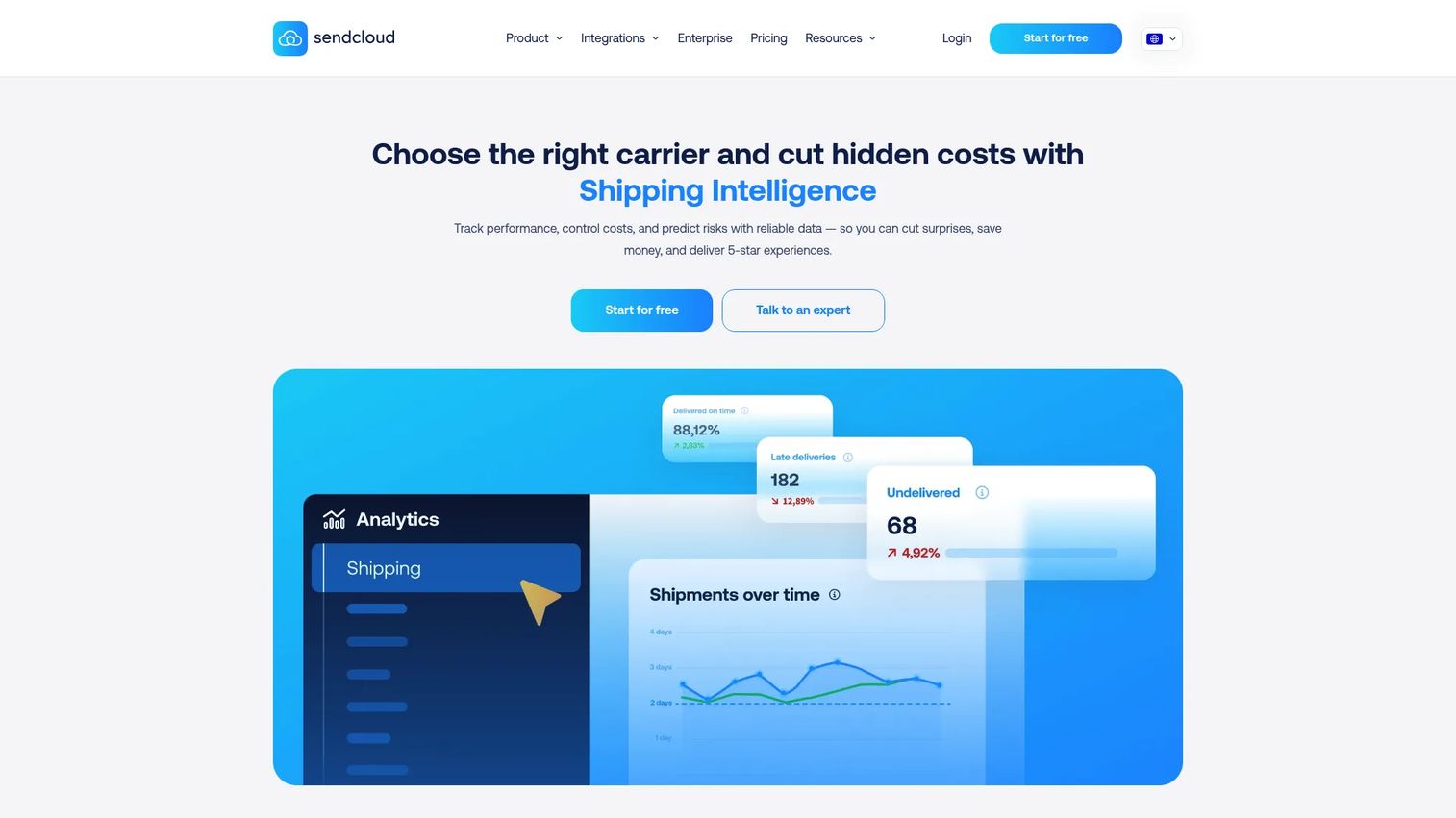
Sendcloud Shipping Intelligence is the analytics and benchmarking layer built into Sendcloud's multi-carrier shipping platform. It covers delivery performance monitoring, carrier benchmarking, cost and surcharge analytics, predictive issue detection, and smart shipping recommendations. Intelligence capabilities increase with the plan tier: Basic analytics appear on Free and Lite plans, while full analytics and advanced benchmarking require Premium, Pro, or Enterprise.
Best for: E-commerce businesses already using or evaluating Sendcloud for multi-carrier shipping that want analytics close to their shipping execution workflow.
Key features
- Shipping performance analytics and trend monitoring
- Carrier comparison and cost benchmarking
- Predictive issue detection and delivery risk alerts
- Invoice insights and surcharge analysis
- Smart recommendations for carrier and service selection
Why choose Sendcloud Shipping Intelligence: The strongest case is for teams running shipping through Sendcloud that want intelligence without adding another vendor. It is not positioned as a standalone freight analytics layer for complex enterprise logistics, so teams running multiple TMS systems or freight modes will likely need a separate tool.
Sendcloud Shipping Intelligence pricing: The Sendcloud platform starts at €0/mo on the Free plan. Lite is €28/mo plus €0.10 per label, Growth is €87/mo plus €0.09 per label, and Premium (which includes full analytics) is €175/mo plus €0.08 per label. Pro is €639/mo plus €0.07 per label. Enterprise pricing is custom.
G2 rating: 4.5/5 (for Sendcloud overall)
5. Lojistic
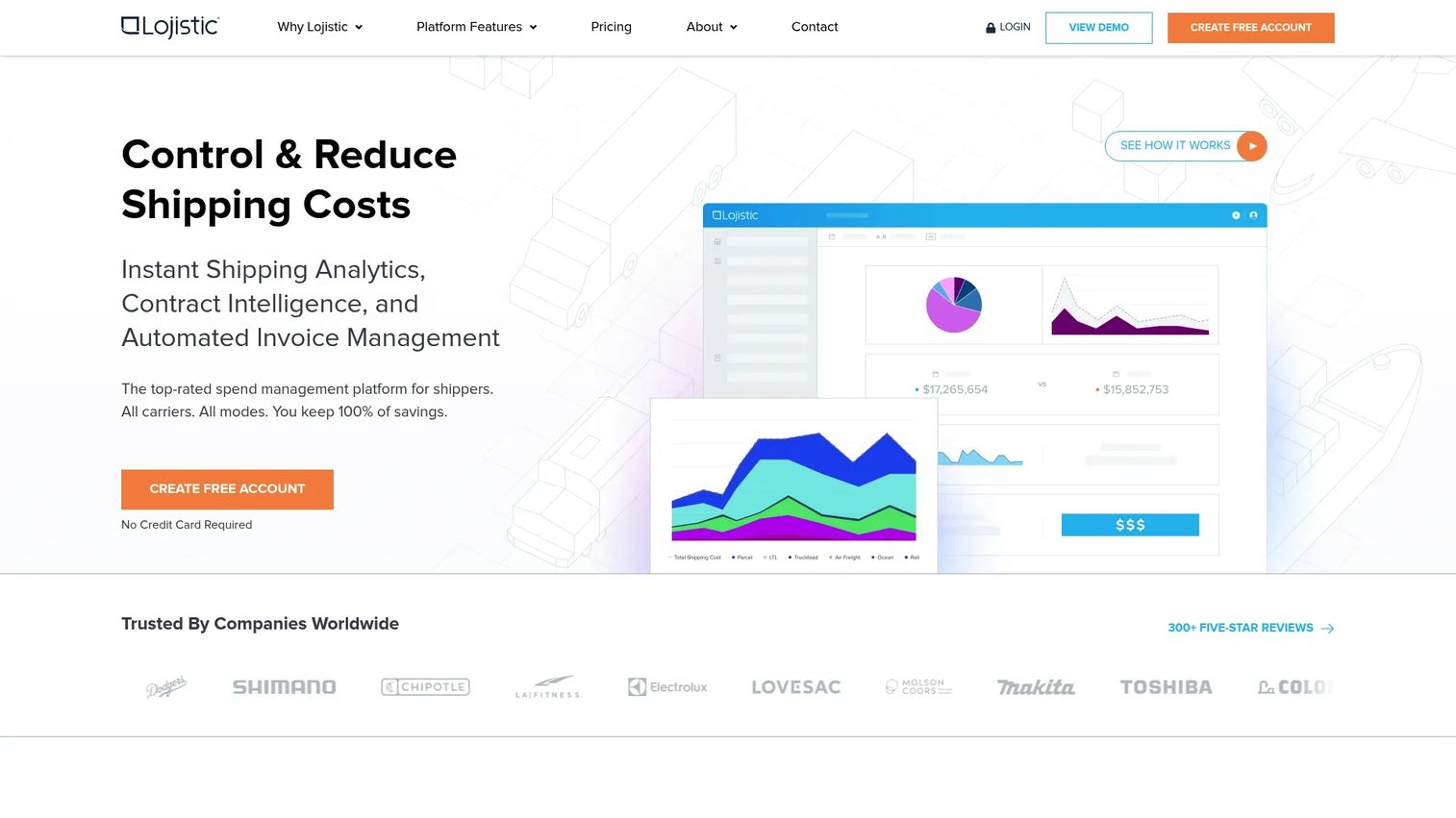
Lojistic is a shipping spend management platform covering parcel audit, freight audit, carrier analytics, and automated invoice management. It is one of the few tools in this category that offers a permanently free invoice audit tier, making it accessible to smaller operations teams that want to understand billing errors before committing to a subscription.
Best for: Finance and operations teams that want audit recovery alongside shipping spend analytics, with the option to start free.
Key features
- Automated carrier invoice audit and refund recovery
- Parcel and freight spend analytics and reporting
- Carrier contract benchmarking and cost-reduction analysis
- Multi-carrier connections across parcel and freight modes
- Extended data history for trend analysis (paid tiers)
Why choose Lojistic: The free tier lets you identify billing errors and get a baseline on carrier performance before paying anything. For founders concerned about hidden margin leakage, starting with the free audit and upgrading based on what you find is a low-risk first step.
Lojistic pricing: The free invoice audit plan has no time limit. The Starter plan runs $99/month plus 19% of recovered refunds. Enterprise is $389/month plus 9% of recovered refunds, and the Unlimited plan is $5,959/month with no recovery fee share.
G2 rating: 4.3/5
6. LateShipment.com

LateShipment.com is an AI-powered post-purchase platform covering shipment tracking, returns, shipping audits, carrier refunds, and fulfillment analytics. Its OneTrack product provides predictive delivery estimates, proactive exception alerts, and branded multi-channel customer notifications across email, SMS, and WhatsApp. A separate returns module handles self-service exchanges and return workflows.
Best for: E-commerce brands that need delivery visibility, customer-facing communication, and refund recovery in one post-purchase workflow.
Key features
- Predictive delivery estimates and proactive exception alerts
- Branded tracking across email, SMS, and WhatsApp
- Self-service returns and exchange-first workflows
- Automated invoice audit and carrier refund claims
- Carrier performance insights and spend analytics
Why choose LateShipment.com: The free starter tier makes it straightforward to test delivery tracking and customer notifications before spending anything. The 4.9/5 G2 rating reflects strong user satisfaction, particularly around support quality and ease of setup. It is best suited to customer-facing logistics intelligence rather than deep freight procurement analysis.
LateShipment.com pricing: The OneTrack Starter plan is free forever. Pay-as-you-go tracking starts at $9.99/month with automatic volume discounts. The OneProtect shipping insurance plan runs $0.65 per $100 of coverage. Fixed monthly plans require contacting sales.
G2 rating: 4.9/5
7. Parcel Perform
Parcel Perform is an AI-driven e-commerce delivery experience platform covering checkout optimization, post-purchase tracking, logistics analytics, returns management, and carrier data normalization. The platform connects to carriers globally, normalizes their tracking data, and delivers it through branded customer-facing experiences with 88 or more delivery notification triggers.
Best for: Enterprise e-commerce brands and marketplaces that want to standardize delivery communication, track carrier performance at scale, and use AI-driven analytics to improve fulfillment decisions.
Key features
- Branded tracking pages with 88+ delivery notification triggers
- Predictive estimated delivery dates and checkout integration
- AI data monitoring, performance alerts, and business intelligence
- Returns management and reverse-logistics automation
- Carrier connectivity, shipment routing, and cost audits
Why choose Parcel Perform: The breadth of carrier connectivity and the depth of post-purchase customer experience tools make this a strong choice when delivery communication is part of your brand strategy, not just an operational function. It fits post-purchase operations more than freight procurement or contract negotiation.
Parcel Perform pricing: Parcel Perform routes all pricing inquiries through its sales team. Contact them directly with your shipment volume and feature requirements to get a quote.
G2 rating: 4.7/5
8. AuditShipment.com
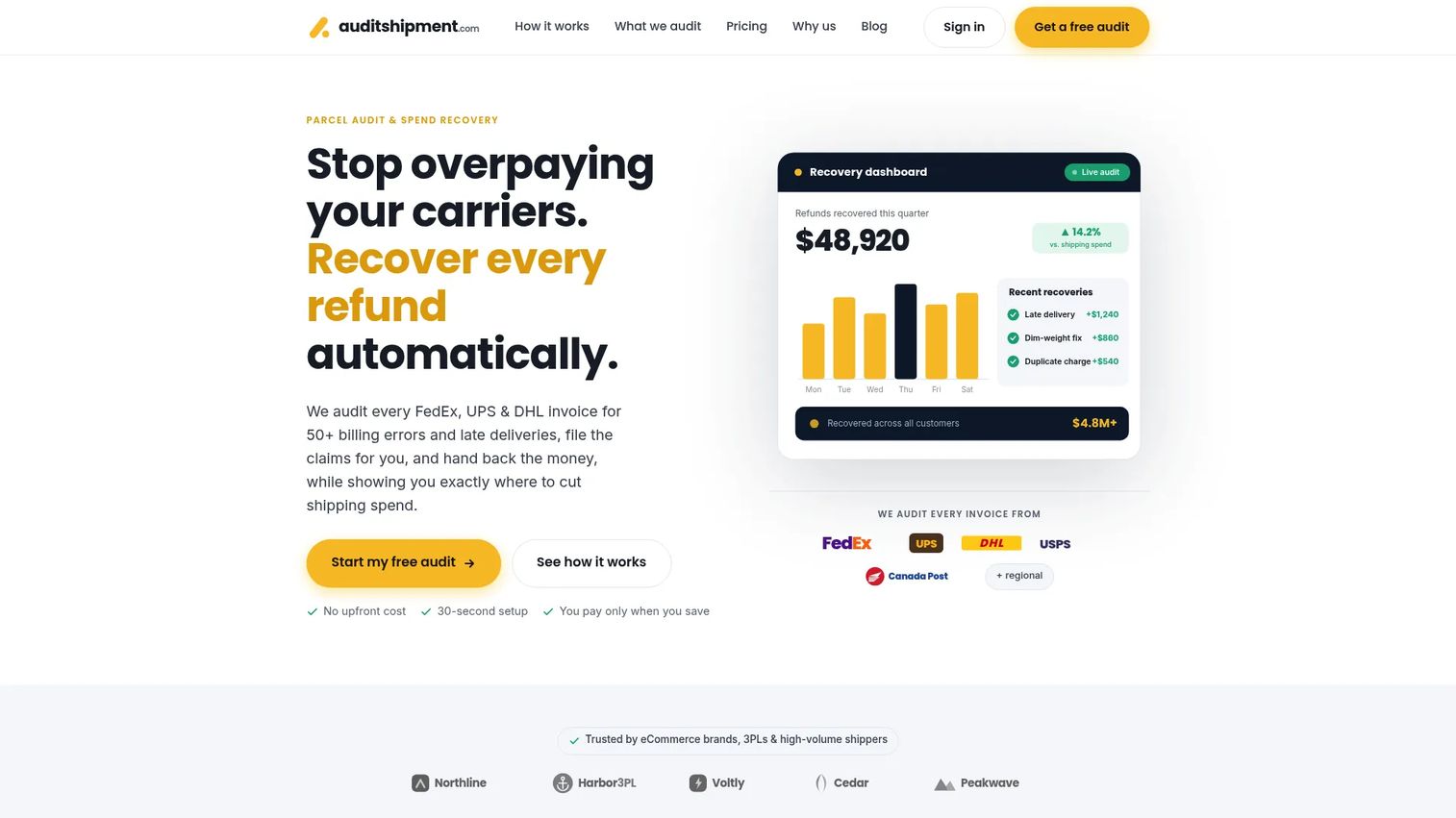
AuditShipment.com is an automated parcel audit and shipping cost recovery service for e-commerce brands, 3PLs, and high-volume shippers. The platform audits FedEx, UPS, and DHL invoices for 50 or more billing errors and service failures, files claims automatically, and provides a live recovery dashboard with exportable reports. Spend analytics cover surcharge trends, carrier benchmarking, and contract and GRI impact modeling.
Best for: Teams that want focused parcel refund recovery with no subscription commitment and no upfront fees.
Key features
- Automated FedEx, UPS, and DHL invoice audit (50+ billing error types)
- Automated claim filing and tracking dashboard
- Shipping spend analytics and surcharge analysis
- Carrier benchmarking and contract impact modeling
- Multi-carrier and multi-account support
Why choose AuditShipment.com: The contingency model means you pay nothing unless money is recovered. This makes it a practical first step for teams that suspect billing errors but cannot justify a platform subscription before validating the savings opportunity. The scope is focused: It is a recovery tool, not a broad logistics command center.
AuditShipment.com pricing: AuditShipment charges a contingency fee on recovered refunds only: 50% for up to $500K annual shipping spend, 40% for $500K to $1M, and 35% for $1M or more. No subscription, setup fee, or minimums.
9. Tracey (Trace)
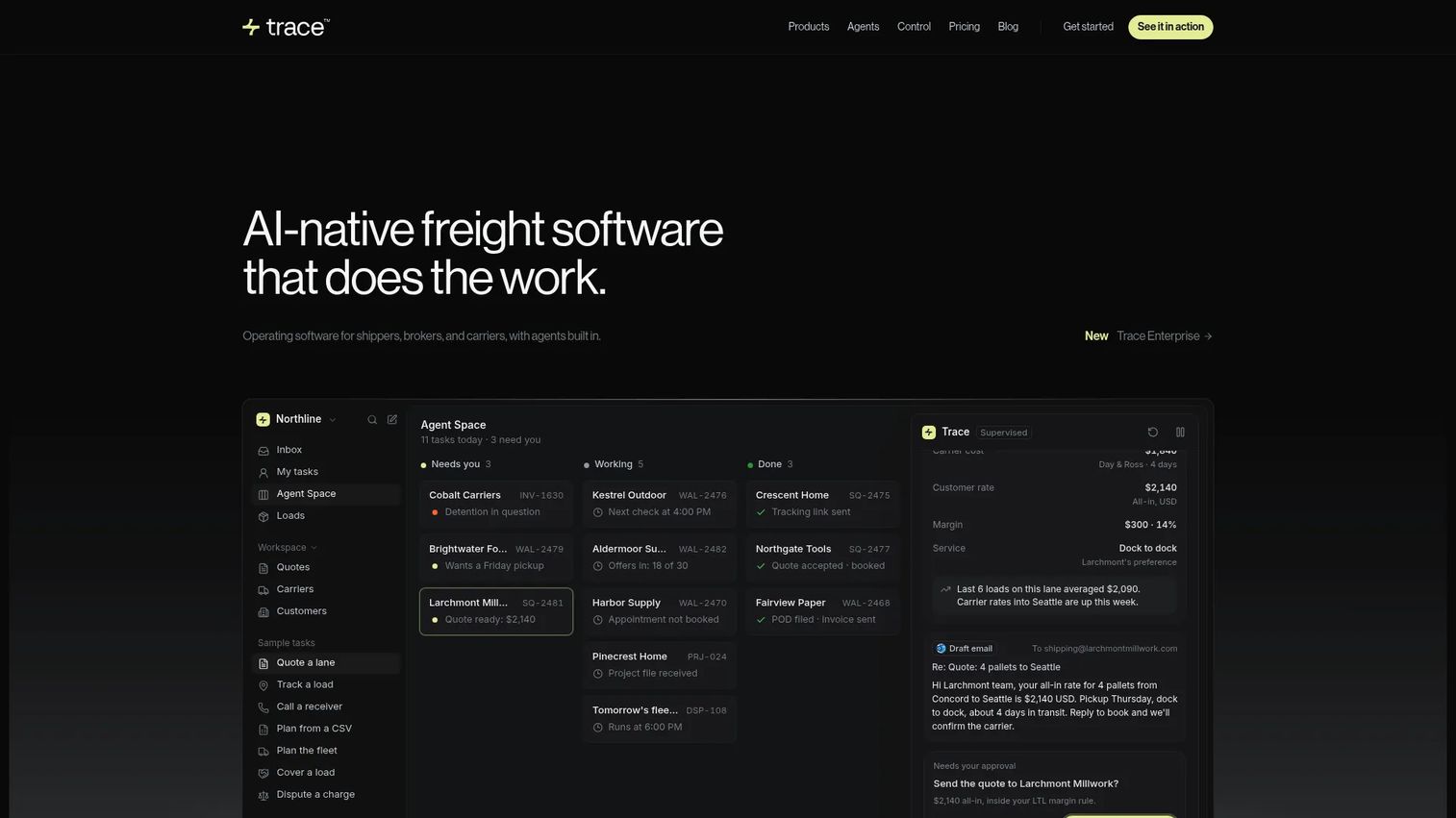
Trace (marketed as Tracey in some contexts) is an AI-native transportation management system for freight brokers, shippers, 3PLs, and asset-based carriers. Rather than providing a reporting layer over an existing TMS, Trace replaces the TMS with an AI-driven platform that automates quoting, carrier rate comparison, booking, tracking, invoice auditing, and billing in a single system. AI agents handle specific logistics workflows, reducing the manual coordination load on operations teams.
Best for: Freight brokers, shippers, and 3PLs that want to replace manual TMS workflows with an AI-native freight operations platform.
Key features
- Freight pricing and carrier rate comparison
- Automated quote negotiation and booking
- Shipment tracking and customer-facing tracking links
- Freight invoice auditing and document management
- AI agents for logistics workflow automation
Why choose Trace: This fits teams that are frustrated by the manual overhead of a traditional TMS and want AI to handle repetitive freight operations tasks. The 14-day trial lets you evaluate before committing. It is not a parcel audit or post-purchase tracking tool; it is built for freight operations.
Trace pricing: A $999/month base applies across all configurations. Estimated all-in costs are $1,332/month for a Quote desk setup, $2,188/month for a Full desk, and $4,529/month for Autopilot. Enterprise pricing requires contacting sales. A 14-day free trial is available.
10. Lox
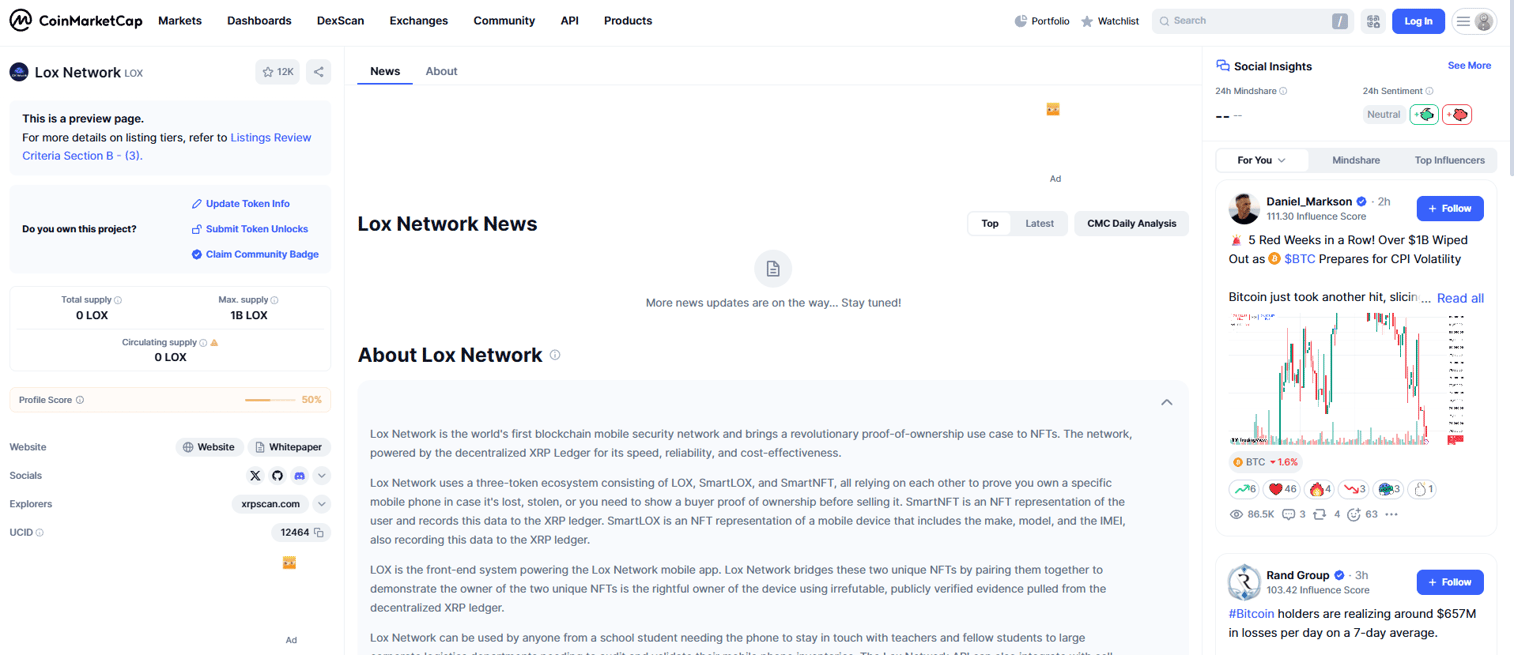
Lox is included in this comparison based on its listing in the category. During research, the official site returned a server error and no current product, pricing, or feature information could be verified from primary sources. The platform may have changed its positioning or availability since this list was compiled.
Best for: Verify current product scope directly with the vendor before evaluating.
Key features
- Shipping analytics (unverified at time of writing)
- Carrier performance insights (unverified)
- Cost monitoring tools (unverified)
Why choose Lox: Confirm current product status and use-case fit directly with the vendor before shortlisting.
11. ClickPost
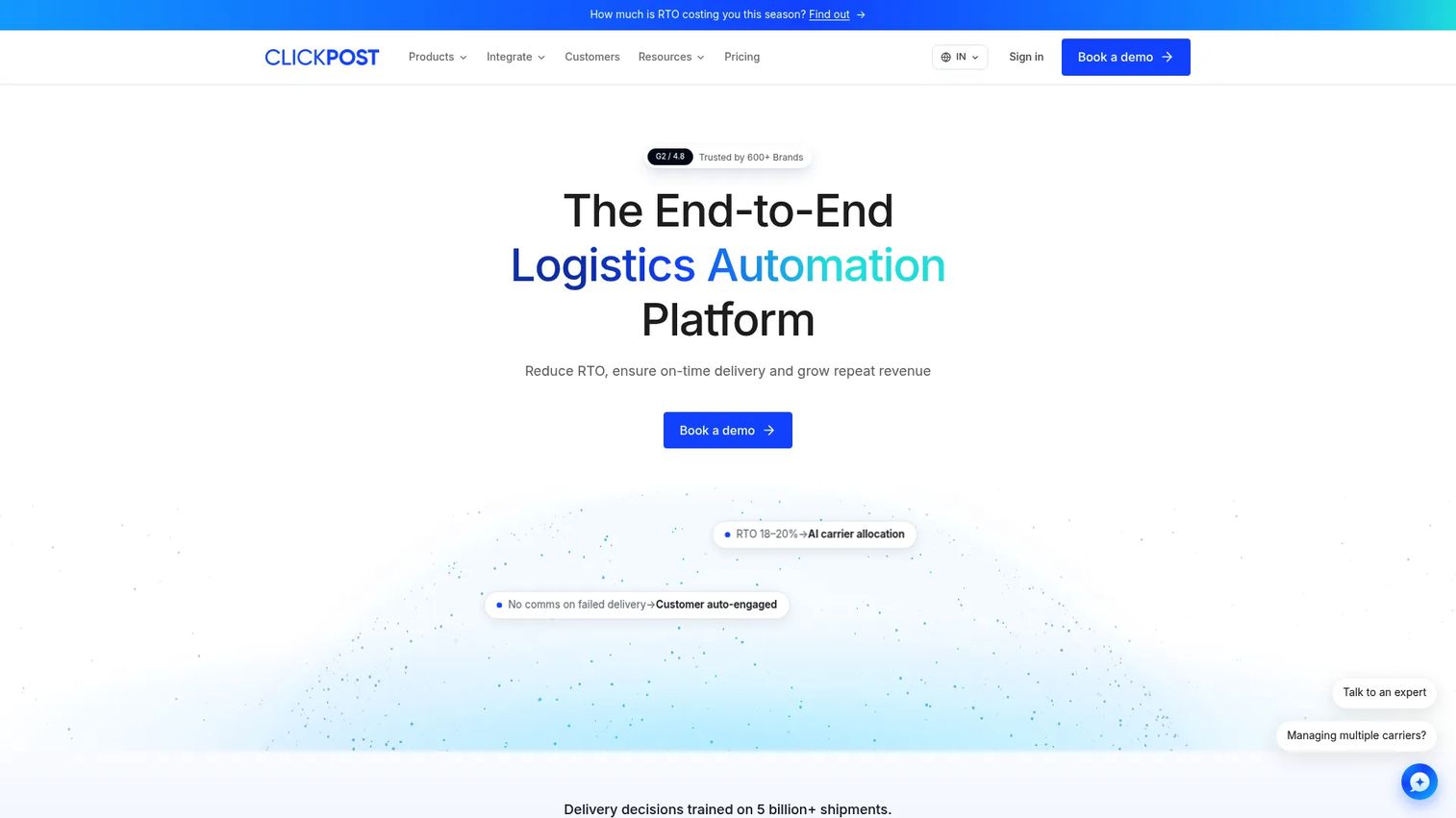
ClickPost is a logistics intelligence and post-purchase experience platform for e-commerce, retail, quick commerce, and B2B shipping. The platform centralizes multi-carrier tracking, automates exception handling, manages non-delivery reports (NDRs), and allocates shipments to carriers using AI-powered rules. Branded tracking pages and proactive customer notifications reduce WISMO contacts. Estimated delivery dates and logistics analytics complete the operational picture.
Best for: E-commerce and omnichannel teams that need multi-carrier visibility, NDR management, and post-purchase communication in one workflow.
Key features
- Multi-carrier shipment tracking and visibility
- Branded tracking pages and proactive notifications
- Returns and exchange management
- NDR and exception handling workflows
- AI-powered carrier allocation and estimated delivery dates
Why choose ClickPost: The platform is best suited to delivery-heavy businesses where exception management and customer communication happen in separate tools today. Consolidating those workflows reduces support ticket volume and improves delivery reliability. The 4.8/5 G2 rating reflects strong user satisfaction for omnichannel use cases.
ClickPost pricing: ClickPost prices by shipment volume, modules selected, and business requirements. Contact the sales team for a quote.
G2 rating: 4.8/5
12. Locus
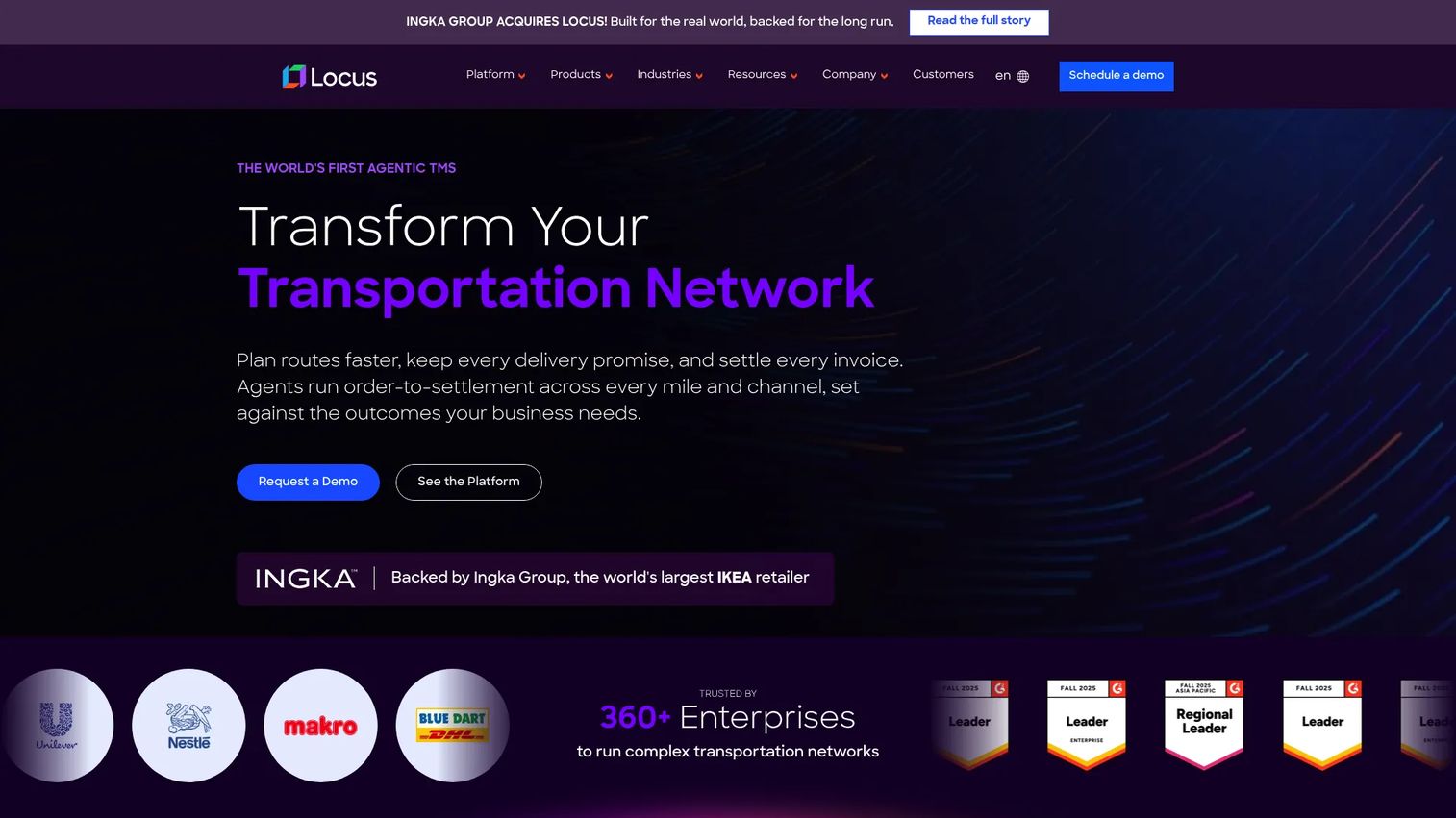
Locus is an agentic transportation management system for planning, executing, tracking, and optimizing enterprise logistics operations, with a particular focus on last-mile delivery and route planning. The platform applies 250 or more real-world constraints to route optimization, including time windows, vehicle capacities, driver skills, and traffic patterns. Automated dispatch assigns orders to vehicles, and mid-route re-routing adjusts plans as conditions change.
Best for: Enterprise retailers, manufacturers, 3PLs, and logistics operators managing dense delivery networks where route quality directly affects gross margin.
Key features
- AI-powered route optimization with 250+ real-world constraints
- Automated dispatch and order-to-vehicle assignment
- Dynamic mid-route re-routing based on live conditions
- Real-time vehicle tracking and predictive ETAs
- Electronic proof of delivery with photos and signatures
Why choose Locus: The platform is the right choice when logistics intelligence must trigger better execution, not just better reporting. If on-time delivery rates and route density are costing you margin, the route optimization and dispatch automation here creates measurable operational impact. Expect enterprise implementation effort and pricing to match.
Locus pricing: Locus uses custom enterprise pricing based on deployment scope, shipment volume, modules, and operational complexity. Contact the sales team for a configuration-based quote.
G2 rating: 4.6/5
13. DAT iQ
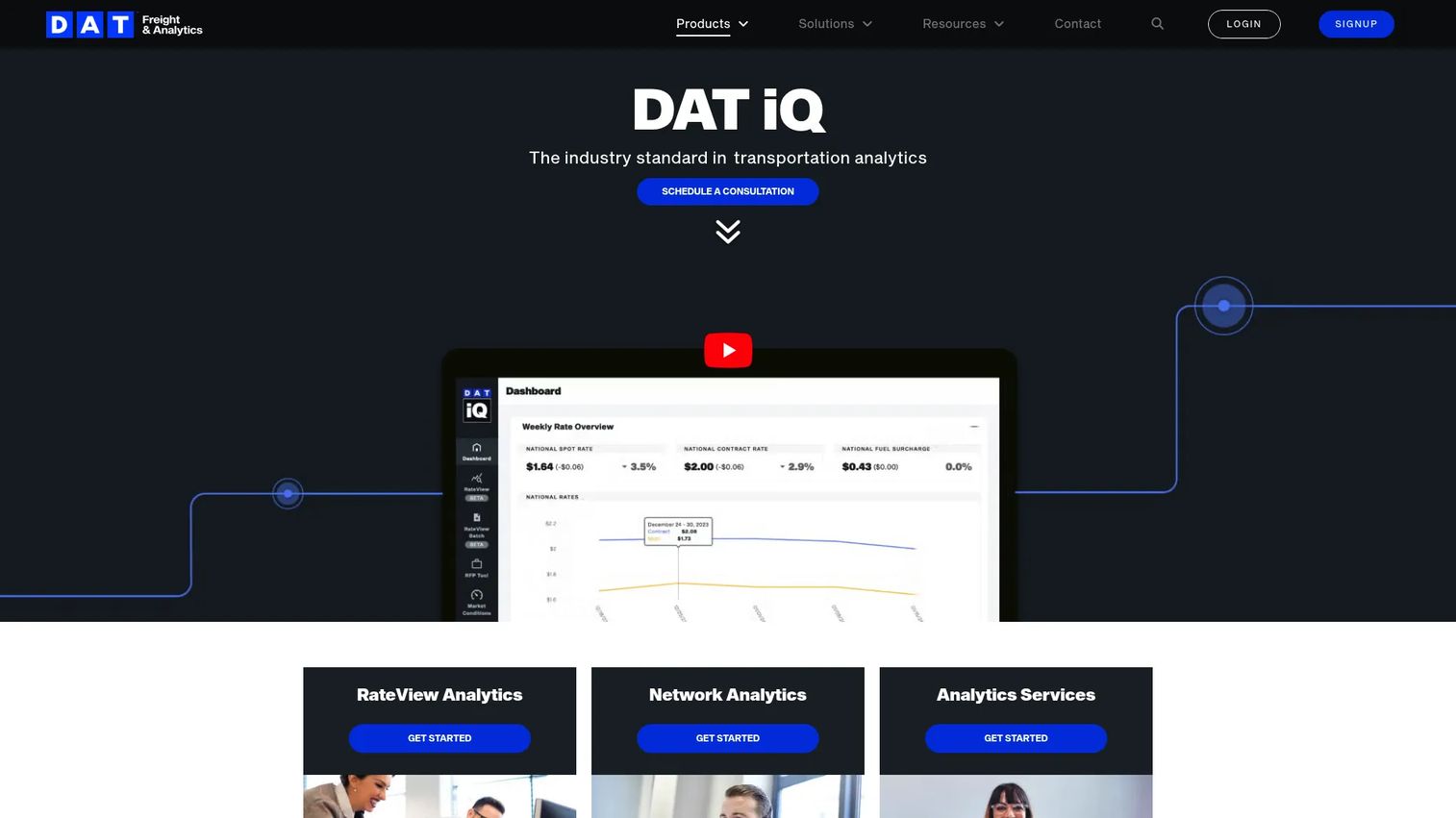
DAT iQ is a transportation analytics platform built around freight rate benchmarking, pricing histories, forecasting, and network analytics. The platform delivers current spot and contract freight rates across lanes, 13-month pricing histories, and freight rate forecasts that the company reports exceed 95% accuracy. It also provides network capacity, supply, and demand analytics, alongside optional analytics services covering data cleansing, integration, and custom reporting.
Best for: Freight brokers, shippers, and transportation teams that need market-rate intelligence, lane benchmarking, and freight pricing forecasts to inform procurement and pricing decisions.
Key features
- Current spot and contract freight rates across lanes
- 13-month pricing histories and trend analysis
- Freight rate forecasts (95%+ reported accuracy)
- Network capacity, supply, and demand analytics
- Analytics services: Data cleansing, integration, and custom reporting
Why choose DAT iQ: This is freight market intelligence, not parcel audit software. It belongs on your shortlist when freight procurement and lane pricing are the primary problem, and when you need external market signals to validate or challenge carrier rate proposals.
DAT iQ pricing: DAT iQ lists three solution categories, RateView Analytics, Network Analytics, and Analytics Services, all with quote-based pricing. Contact DAT directly to discuss your data needs and volume.
G2 rating: 4.6/5
14. SONAR
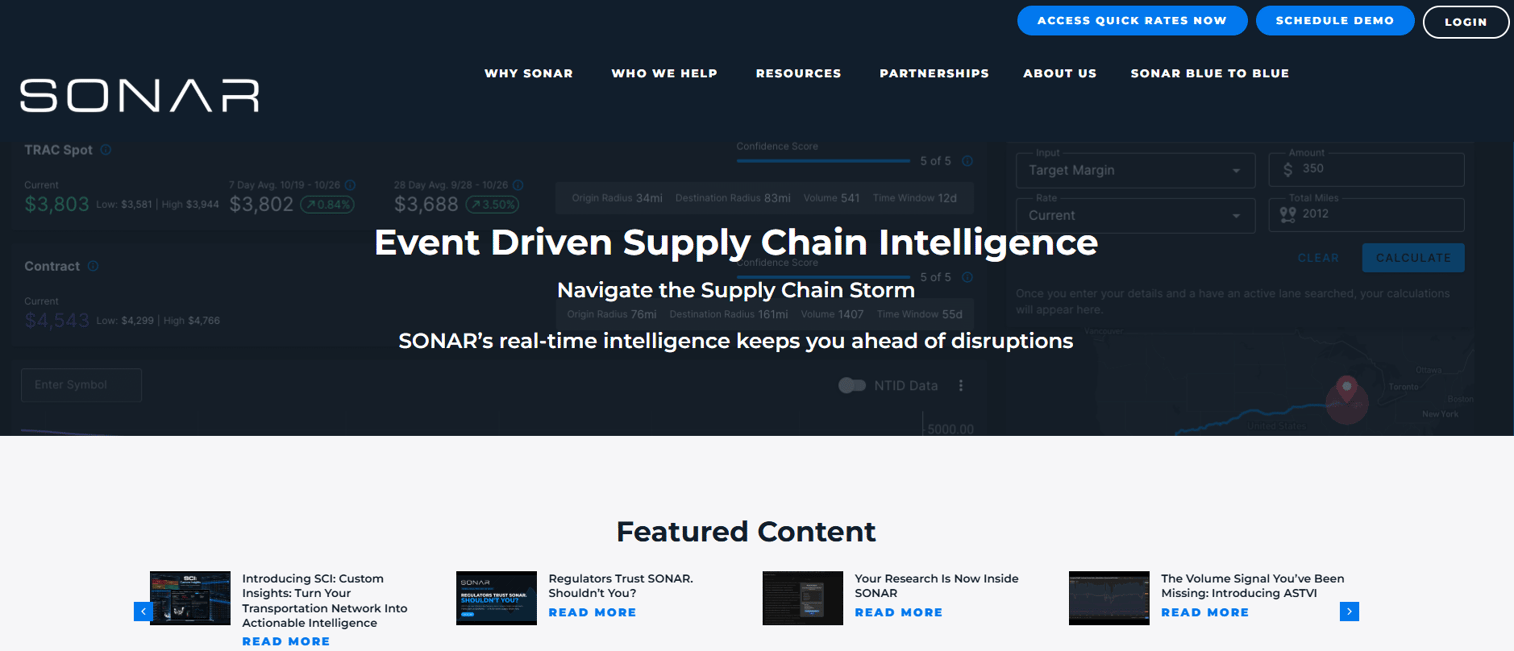
SONAR is a freight market intelligence and analytics platform from FreightWaves that provides real-time visibility into freight rates, capacity trends, volumes, and supply chain conditions. Lane-level TRAC spot rates, capacity conditions, tender-rejection data, and market dashboards make it one of the most comprehensive external freight intelligence feeds available. A self-serve Quick Rates product lets smaller teams access lane-level rate intelligence without a full enterprise subscription.
Best for: Carriers, brokers, shippers, and logistics analysts that need external freight market data to support pricing, procurement, and capacity planning decisions.
Key features
- Lane-level TRAC spot rates and pricing ranges
- Capacity conditions and tender-rejection data
- Margin calculator and broker guidance tools
- Market dashboards, charts, maps, and daily market commentary
- Multimodal data: Truckload, intermodal, rail, ocean, and macro indicators
Why choose SONAR: Choose SONAR when logistics intelligence depends on external market signals, not just your own shipment records. It is the strongest option in this list for freight market data breadth and self-serve accessibility. For parcel-only operations, it is not the right fit.
SONAR pricing: Quick Rates starts at $24.99/month or $249/year for self-serve lane rate intelligence. The FreightWaves Market Monitor is $199/month or $1,999/year. Full SONAR platform access requires requesting a demo for custom pricing.
G2 rating: 4.6/5
15. Project44
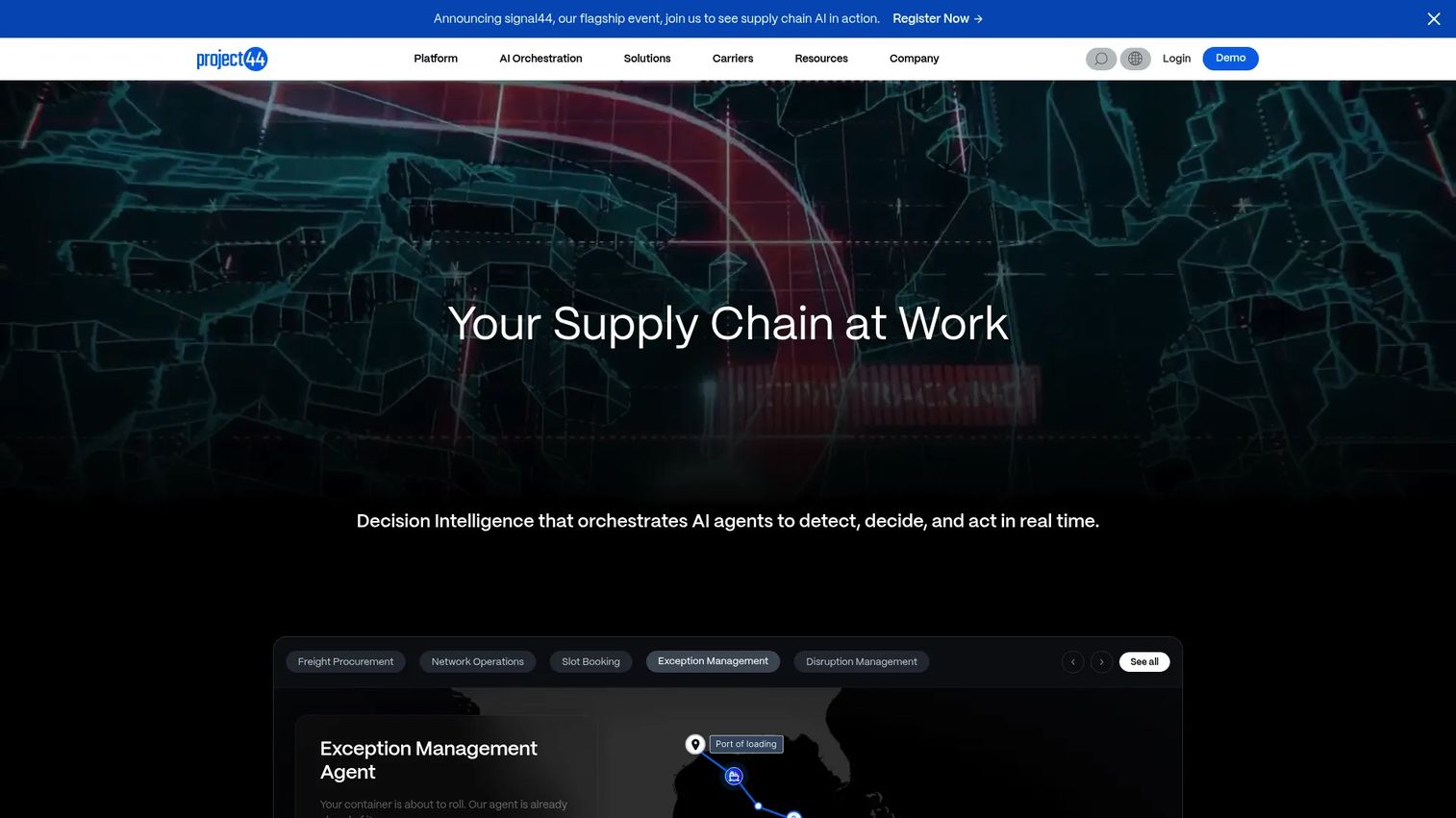
Project44 is a Decision Intelligence Platform for enterprise supply chain operations, covering transportation management, multimodal shipment visibility, predictive ETAs, exception management, yard operations, and logistics automation. The platform connects to carriers across modes and geographies, normalizes tracking events, and surfaces disruption insights and resolution recommendations through AI-driven analytics.
Best for: Enterprise shippers that need end-to-end transportation visibility across modes, regions, and carriers, combined with operational tools for yard management and freight audit.
Key features
- End-to-end shipment visibility with predictive ETAs and disruption insights
- Intelligent transportation management: Rating, booking, planning, freight audit, and settlement
- Yard management, appointment scheduling, and asset check-in and check-out automation
- Exception management with AI-driven resolution recommendations
- Supply chain analytics and reporting
Why choose Project44: The platform suits organizations where visibility across transportation modes matters more than parcel-specific refund recovery. Enterprise buyers should evaluate implementation scope, carrier network coverage for their specific lanes, and integration requirements across their TMS, WMS, and ERP stack before committing. This is a large-footprint platform.
Project44 pricing: Project44 routes all pricing through its sales team. Contact them directly with your network scope, modes, and module requirements.
G2 rating: 4.7/5
Considerations when choosing logistics intelligence software
Start with the operating decision you need to improve
Do not buy by dashboard count. Identify the decision first: Carrier selection, contract negotiation, refund recovery, exception management, delivery communication, route planning, or freight market pricing. A team recovering billing errors needs different software than a team benchmarking lane rates. Getting that category decision right before comparing features saves significant evaluation time.
Check the data sources before the demo
The value of logistics intelligence depends entirely on data ingestion quality. Before evaluating any platform, map your existing systems: TMS, WMS, ERP, carrier APIs, parcel invoice formats, IoT or GPS feeds, BI tools, and customer support platforms. A tool that cannot ingest your primary data sources cleanly will produce unreliable outputs regardless of its analytics depth.
Separate visibility from intelligence
Visibility shows you what happened. Intelligence tells you what to do next. Some tools in this list deliver tracking and milestone data. Others deliver recommendations, predictions, and cost optimization. The best fit depends on whether your team needs historical reporting, real-time exception alerts, predictive routing, audit recovery, or decision support for procurement. Many organizations need more than one of these, which is why category boundaries matter.
Model total cost against shipment volume
Pricing across this category varies significantly. Some tools charge a flat platform fee, others use contingency recovery shares, some price per shipment, and others use module-based enterprise contracts. Ask each vendor to model their pricing against your actual shipment volume and carrier mix. A contingency tool at 35% of recovered refunds may cost more over 12 months than a subscription tool that recovers the same amount.
Define a first-quarter win before you sign
Avoid buying a platform that takes six months to show value. Identify one measurable first-quarter target before committing: Recover a specific dollar amount in refunds, reduce late delivery support tickets by a defined number, improve on-time performance on your highest-volume lane, or surface the top three surcharge drivers. Teams that define this upfront are far more likely to build internal adoption and renew.
Conclusion
Logistics data is not the problem. Most operations teams have more data than they know what to do with. The problem is that it lives in carrier portals, TMS exports, invoice files, and support queues that never talk to each other. Logistics intelligence software closes that gap.
For parcel intelligence, SiftedAI, Reveel, and ShipScience cover different entry points: Platform-level analytics, contract optimization, and contingency-based audit. For audit and refund recovery, Lojistic and AuditShipment.com offer subscription-based and contingency-only options respectively. For post-purchase delivery experience, LateShipment.com, Parcel Perform, and ClickPost each handle customer-facing delivery communication at different scales. Locus addresses last-mile execution intelligence when route density affects margin directly. DAT iQ and SONAR serve freight market intelligence for teams that need external rate and capacity signals. Project44 handles enterprise transportation visibility across modes.
Start with the decision causing the most financial or customer pain. Shortlist two tools in that category, ask each to model their pricing against your actual shipment data, and define the one metric you will measure in the first 90 days. That approach gets your operations team a tool that earns its place, not one that creates another reporting silo.
FAQs
Logistics intelligence software collects, normalizes, and analyzes logistics data from carriers, TMS systems, WMS platforms, ERP records, and parcel invoices to help operations teams improve shipping cost, carrier selection, delivery performance, and supply chain reliability. It sits above execution systems and turns raw logistics data into actionable insights. The category spans parcel analytics, freight market intelligence, shipment visibility, and post-purchase delivery tools.
Logistics management software, such as a TMS or WMS, helps teams execute operations: Book shipments, manage routes, track warehouse inventory. Logistics intelligence software analyzes the performance of those operations and recommends better decisions. The distinction matters when evaluating: A TMS tells you what shipped; logistics intelligence tells you whether that shipment met performance targets and what it actually cost relative to the agreed rate.
The category typically ingests data from TMS and WMS systems, ERP platforms, carrier APIs, parcel invoice files, GPS and IoT sensors, freight market feeds, e-commerce platforms, and customer support systems. The more sources a platform can ingest cleanly, the more complete the operational picture. Data ingestion quality is the most important factor to verify before purchasing, because the analytics are only as reliable as the underlying data.
SiftedAI, Reveel, and ShipScience serve different parcel intelligence needs. SiftedAI covers spend analytics and carrier performance for parcel-heavy businesses. Reveel focuses on contract optimization and multi-carrier spend governance. ShipScience provides contingency-based audit and claims recovery. For post-purchase tracking alongside audit, LateShipment.com and AuditShipment.com both serve e-commerce parcel operations at different price points.
DAT iQ and SONAR are the two strongest options for freight market intelligence. DAT iQ provides lane-level rate benchmarking, 13-month pricing histories, and forecasting. SONAR adds real-time capacity conditions, tender-rejection data, and multimodal market coverage. SONAR's Quick Rates plan lets smaller teams access self-serve lane intelligence starting at $24.99/month, which makes it accessible for teams that need occasional rate validation without a full enterprise data subscription.
Yes, through several specific mechanisms. Invoice audit tools identify billing errors and recover refunds from carriers. Benchmarking tools surface overpriced lanes or underperforming carrier contracts. Surcharge analysis identifies accessorial charges that have grown disproportionately. Route optimization tools reduce per-delivery cost through better planning. The key is validating actual savings against your own shipment data rather than relying on vendor-quoted averages, which reflect other customers' profiles.
Prioritize first-win speed, clean data integration, and a clear payback period. A new VP of Operations should be able to get value within the first quarter without founder involvement in configuration. The tool should fit your existing stack, specifically your TMS, ERP, and carrier connections, without requiring an engineering sprint. Look for a vendor that can model their cost against your shipment volume before you sign, so the financial case is concrete at the board level, not theoretical.
Each solves a different operating problem. Parcel audit recovers money by identifying carrier billing errors and service failures. Shipment visibility improves delivery execution by tracking milestones, detecting exceptions, and communicating with customers. Freight intelligence supports procurement and pricing decisions by providing external market rate and capacity data. Most operations teams eventually need elements of all three, but starting with the problem causing the most immediate financial or customer pain gives you the fastest return and the clearest internal case for broader investment in logistics intelligence.
For teams building out analytics infrastructure more broadly, resources on predictive analytics software and advanced planning and scheduling software can help map adjacent tooling decisions across the supply chain stack.