IT and finance leaders spend hours each month arguing over numbers that should be obvious. Cloud invoices live in one system, labor costs in another, service allocations in a spreadsheet nobody fully trusts. According to Flexera's 2025 State of the Cloud report, 84% of organizations cite managing cloud spend as a top cloud challenge. The number isn't surprising to anyone who has sat through a budget review where IT couldn't explain a $200K variance.
That's the problem IT financial management software exists to solve. ITFM platforms pull cost data from ERP systems, cloud billing APIs, CMDB exports, and vendor invoices, then turn it into something a CIO can defend to a CFO and something a business-unit leader can actually understand. The difference between a good and a poor ITFM tool shows up in those finance review meetings, specifically in whether the numbers hold up under scrutiny.
This guide compares 14 tools across the category, with pricing sourced from each vendor's current page and ratings from live G2 listings.
What's inside
This guide is for IT finance teams, CIOs, TBM offices, and presales engineers supporting complex enterprise software evaluations.
- Tools covered: 14 IT financial management platforms for 2026
- Selection criteria: Cost transparency depth, allocation flexibility, planning and forecasting support, showback/chargeback capability
- Pricing: Sourced from each vendor's official page; noted as custom when no price is posted
- Ratings: Pulled from live G2 listings at time of writing; noted as N/A when no current rating exists
TL;DR
- Best overall ITFM platform: IBM Apptio for mature TBM and enterprise IT finance programs with broad capability across planning, benchmarking, and chargeback
- Best for integrated IT portfolio visibility: Bee360 for organizations that need ITFM connected to strategy, architecture, and portfolio decisions
- Best for allocation and cost modeling: CostPerform when cost-flow rigor and profitability analysis are the primary drivers
- Best for service financial management: Serviceware Financial for IT organizations formalizing service catalogs alongside finance reporting
- Best for dedicated ITFM with ServiceNow: brightfin IT Financial Management for enterprise teams already running ServiceNow
- Best for focused chargeback: BluIQ Chargeback & Cost Recovery for public-sector and shared-services organizations that need governed internal billing
What is IT financial management?
IT financial management (ITFM) is the process of planning, tracking, allocating, and optimizing technology spend so IT, finance, and business teams can connect costs to services, consumption, and business outcomes.
ITFM covers the full financial lifecycle of technology investment. At the basic level, that means budgeting and variance reporting. At a mature level, it means fully burdened service cost models, consumption-based chargeback, executive scorecards, and rolling forecasts that update when cloud spend shifts.
ITFM often supports or feeds Technology Business Management. TBM is the broader operating model that connects technology investment to business capabilities, services, and value. The TBM Taxonomy gives IT, finance, and business teams a shared language for cost conversations.
Core ITFM capabilities
- Budgeting and forecasting
- Cost modeling and allocation
- IT cost transparency dashboards
- Showback and chargeback
- Service costing and rate management
- Cloud and vendor spend tracking
- Executive reporting and benchmarking
- TBM taxonomy alignment
ITFM vs TBM
| ITFM | TBM |
|---|---|
| Cost planning and reporting | Business value management |
| Budget and forecast control | Shared technology taxonomy |
| Allocation and chargeback | Service and capability alignment |
| Spend optimization | Executive decision support |
ITFM manages technology finances. TBM connects that financial picture to business outcomes. Many mature organizations run both, with an ITFM platform generating the numbers and a TBM operating model determining what those numbers mean for investment decisions.
When to use IT financial management tools
Replace spreadsheet-based IT planning
Finance teams outgrow spreadsheets when allocation rules multiply and month-end reconciliation takes days instead of hours. Version control breaks when four people maintain separate copies. Manual allocation formulas break silently when a business unit restructures. ITFM platforms automate these workflows and give you a single auditable cost model. This is usually the first trigger for a formal tool evaluation.
Build showback or chargeback
Showback gives business units a view of what they consume, without an invoice. Chargeback converts that view into internal billing or cost recovery. Chargeback is harder because it affects budgets and behavior: You need approval workflows, dispute handling, and clear service ownership before it lands without friction. Good ITFM platforms support both patterns. The right one depends on your organization's financial maturity and political appetite for internal billing.
Connect technology spend to business outcomes
CIOs increasingly need to show what technology spend funds, not just how much it costs. That requires a TBM-style view: Costs mapped to services, services mapped to business capabilities, capabilities mapped to strategic goals. ITFM tools that support TBM taxonomy and service costing give CIOs the data for executive conversations about investment tradeoffs, not just budget variances.
IT financial management tools comparison
Each vendor's pricing and G2 rating were checked at drafting time. Tools without a current G2 listing are marked N/A. All pricing is custom unless a public figure was confirmed.
| # | Product | Best for | Key differentiator | Pricing | G2 rating |
|---|---|---|---|---|---|
| 1 | IBM Apptio | Enterprise TBM and IT finance | Broadest ITFM and TBM capability set with peer benchmarking | Custom pricing | 4.3/5 |
| 2 | Bee360 | IT finance connected to portfolio and architecture | Single platform for ITFM, enterprise architecture, and portfolio management | Custom pricing | N/A |
| 3 | KP-One | Structured IT finance workflows and chargeback | Service catalog billing with ROI and payback calculation | Custom pricing | N/A |
| 4 | MagicOrange | Cloud cost allocation and AI economics | Cloud-native platform spanning ITFM, FinOps, and AI spend | Custom pricing | N/A |
| 5 | CIO COCKPIT | Executive IT cost visibility | Integrated cloud FinOps and IT budget planning with multi-cloud support | Custom pricing | 4.0/5 |
| 6 | CostPerform | Advanced cost modeling and profitability analysis | Driver-based cost flows with traceable visual allocation paths | Custom pricing | 5.0/5 |
| 7 | CostLens | Hybrid and multi-cloud cost transparency | AI invoice extraction combined with showback/chargeback automation | Custom pricing | N/A |
| 8 | Serviceware Financial | IT service costing and planning | Service-catalog-native cost planning with benchmarking | Custom pricing | N/A |
| 9 | ComSci | IT cost reporting and chargeback | Upland platform for IT cost capture and IT service pricing | Custom pricing | N/A |
| 10 | Nicus ITFM Platform | Dedicated ITFM with ServiceNow option | Defensible cost modeling with native ServiceNow deployment | Custom pricing | 4.8/5 |
| 11 | USU IT Service Management | ITSM-connected financial workflows | Modular ITSM platform with integrated cost and asset management | Custom pricing | N/A |
| 12 | Yarken | Unified ITFM and FinOps | Combines TBM, FinOps, AI economics, and cloud spend in one platform | Custom pricing | N/A |
| 13 | brightfin IT Financial Management | ServiceNow-native ITFM | Automated showback and chargeback built directly on ServiceNow | Custom pricing | 4.4/5 |
| 14 | BluIQ Chargeback & Cost Recovery | Governed internal billing and cost recovery | GAAP/GASB ledger-based chargeback with usage metering | Custom pricing | N/A |
Best 14 tools for IT financial management in 2026
1. IBM Apptio
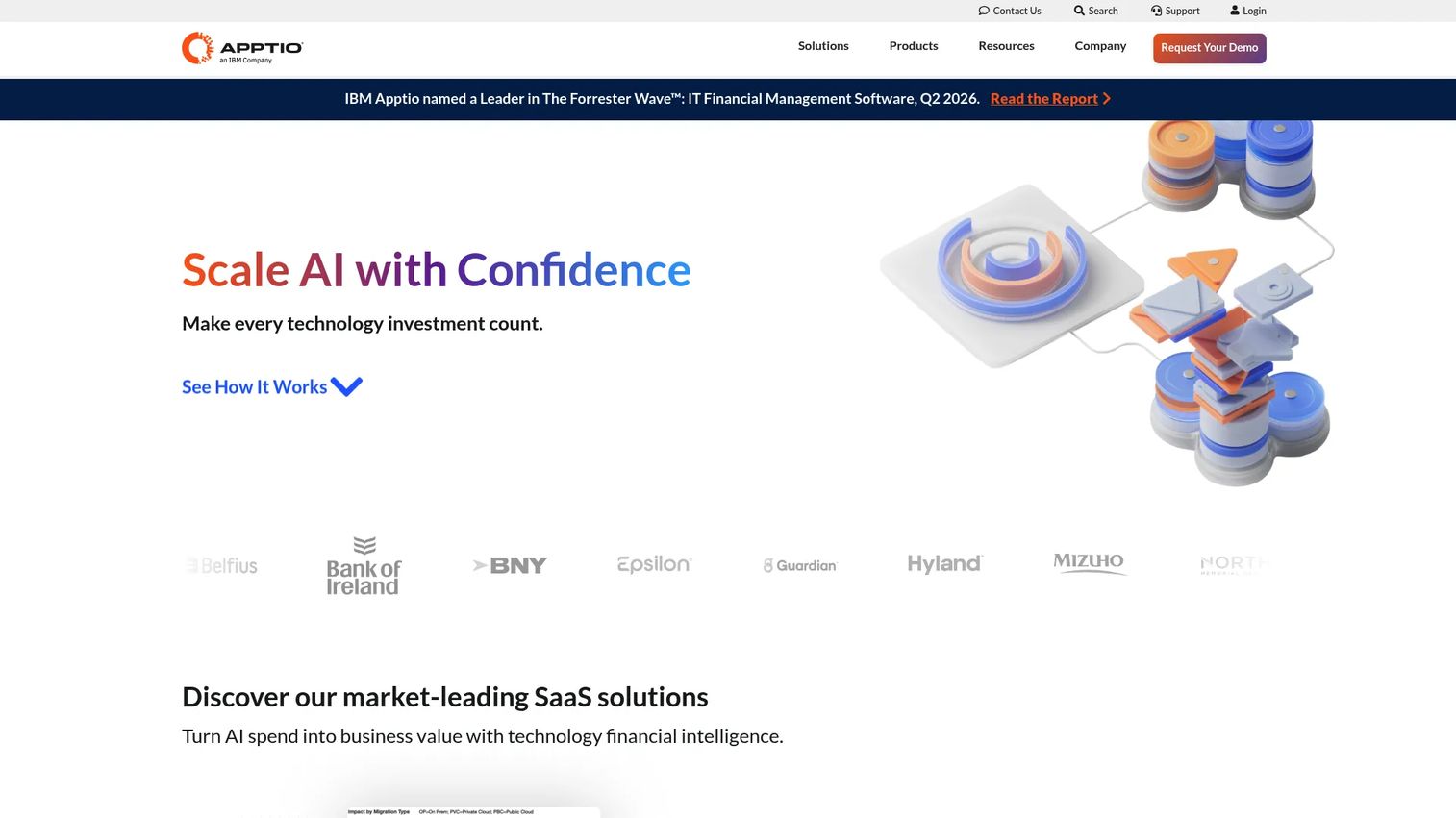
IBM Apptio is the most broadly deployed ITFM and TBM platform for enterprise organizations managing complex technology spend. It covers cost transparency, IT planning, hybrid IT total cost of ownership, showback, chargeback, and TBM-aligned reporting. The platform includes peer benchmarking against a database of technology spending organizations, giving CIOs external context for internal cost conversations.
Best for: Large enterprises with mature IT finance and TBM governance programs that need breadth across planning, allocation, and executive reporting.
Key features
- TBM-aligned cost models and taxonomy support
- IT planning, forecasting, and variance analysis
- Automated showback and chargeback billing
- Hybrid IT TCO analysis across cloud, on-premises, and legacy
- Peer benchmarking of technology spend
Why choose IBM Apptio: Choose IBM Apptio when your organization needs a proven, end-to-end platform that covers ITFM and TBM together. The depth and breadth do mean a heavier implementation than narrower point solutions, so plan for data readiness and change management before you start.
IBM Apptio pricing: IBM Apptio offers Essentials, Standard, and ITFM + SPM tiers, but prices aren't posted online. Contact IBM sales and ask specifically about module scope, user count, implementation services, and data connector costs to get a full picture.
G2 rating: 4.3/5
2. Bee360
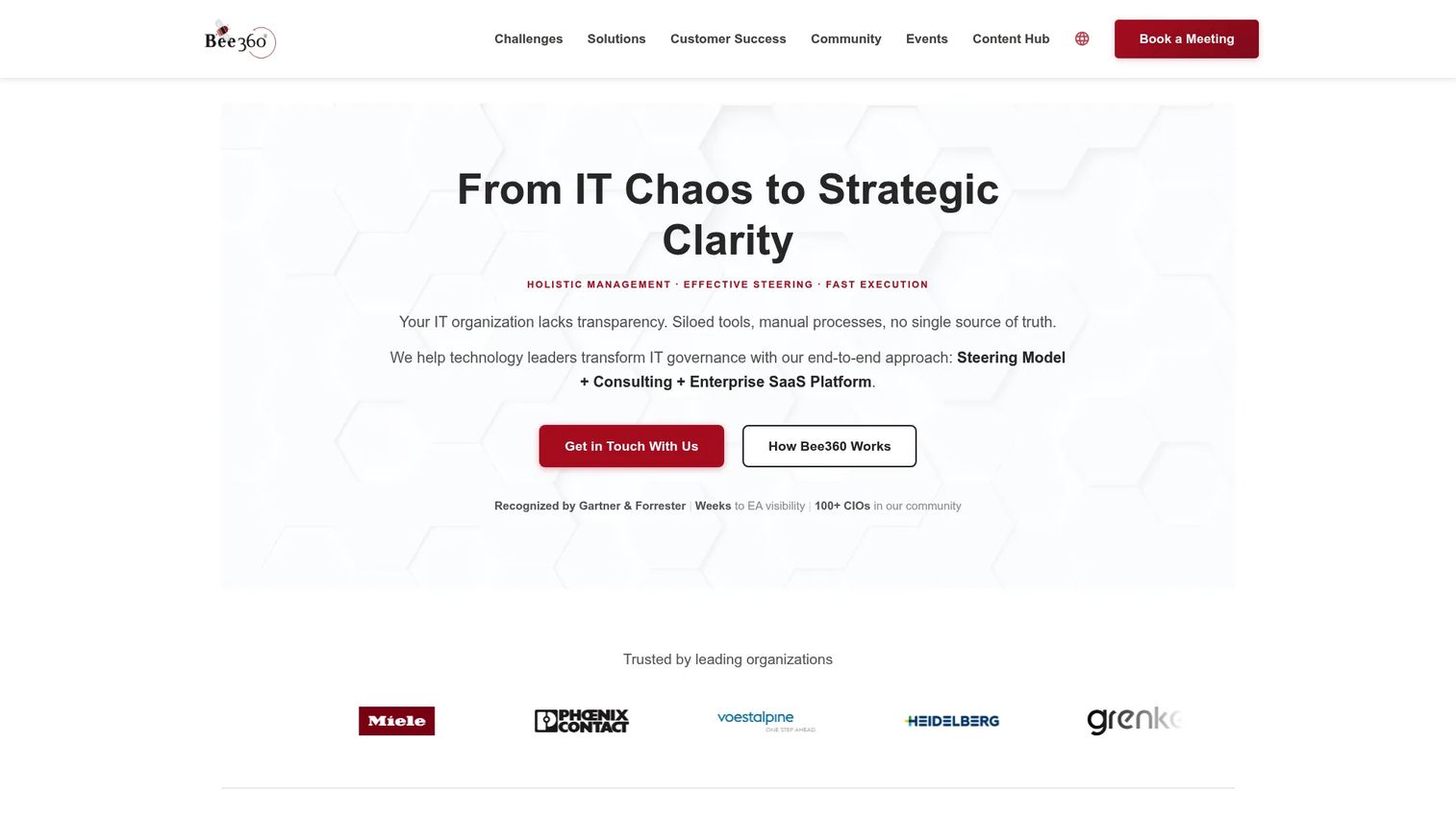
Bee360 is an enterprise SaaS platform that combines strategic portfolio management, enterprise architecture management, and IT financial management in one environment. The ITFM module handles cost models, optimization analysis, forecasting, portfolio rationalization, demand management, automated billing, and business-unit collaboration. For IT leaders who need to connect budget decisions to application portfolios and architecture roadmaps, the platform avoids the data export and reconciliation problem that comes from running separate tools.
Best for: Large IT organizations where financial decisions depend on portfolio, application, and architecture data that currently lives in separate systems.
Key features
- IT cost models with optimization analysis
- Automated billing and business-unit collaboration
- Portfolio rationalization and demand management
- Application cost views and lifecycle tracking
- Forecasting and scenario planning
Why choose Bee360: Bee360 earns its place when IT finance and IT portfolio decisions need to live in the same data model. Teams that only need a standalone ITFM module may find the breadth exceeds their immediate needs, but organizations at the intersection of financial governance and architecture planning will find the integration valuable.
Bee360 pricing: Pricing is enterprise subscription based, determined by the size of the IT budget managed in the platform. Full feature scope and unlimited users are included. Reach out to Bee360 to get a quote tied to your budget volume and deployment scope.
3. KP-One
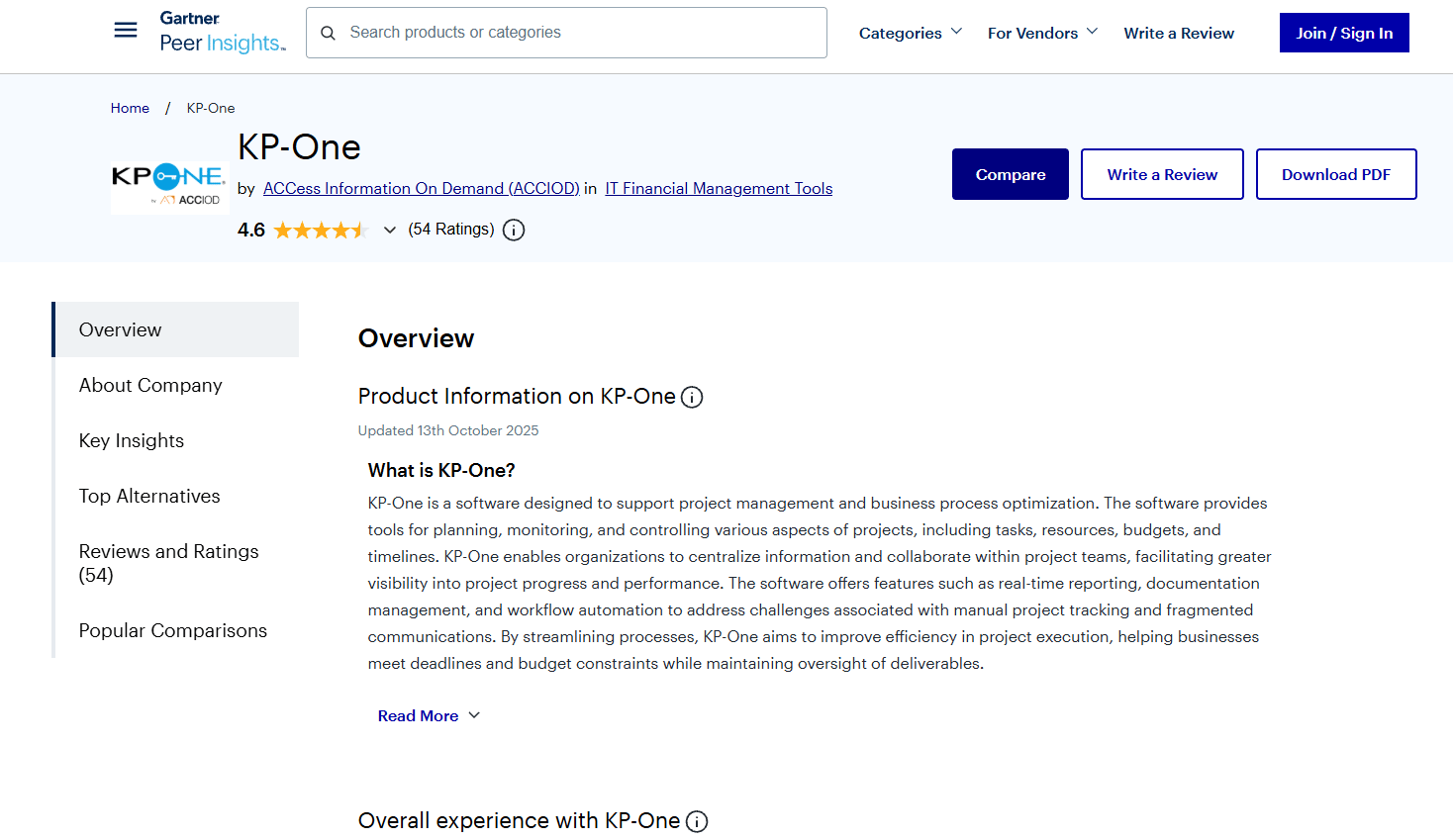
KP-One is an ITFM and IT governance platform that covers automated IT budgeting, expense control, total cost of ownership calculation, service catalog management, and usage-based chargeback. The platform also supports investment portfolio tracking and ROI and payback calculation for IT projects, which helps IT finance teams make the case for or against capital allocation decisions.
Best for: Enterprise IT, finance, and purchasing teams that need structured cost accountability alongside service chargeback and investment governance.
Key features
- Automated IT budgeting and expense control
- Technology total cost of ownership calculation
- Service catalogs and usage-based chargeback
- IT investment portfolio and project benefit tracking
- Alternative scenario modeling with ROI and payback
Why choose KP-One: KP-One is worth evaluating when your ITFM program spans both financial reporting and investment governance. The service catalog and chargeback capabilities make it relevant for organizations formalizing internal billing. Confirm integration coverage with your ERP and ITSM systems early in the buying process.
KP-One pricing: Ask the vendor about deployment model (SaaS or on-premises), seat structure, and implementation services when requesting a quote.
4. MagicOrange
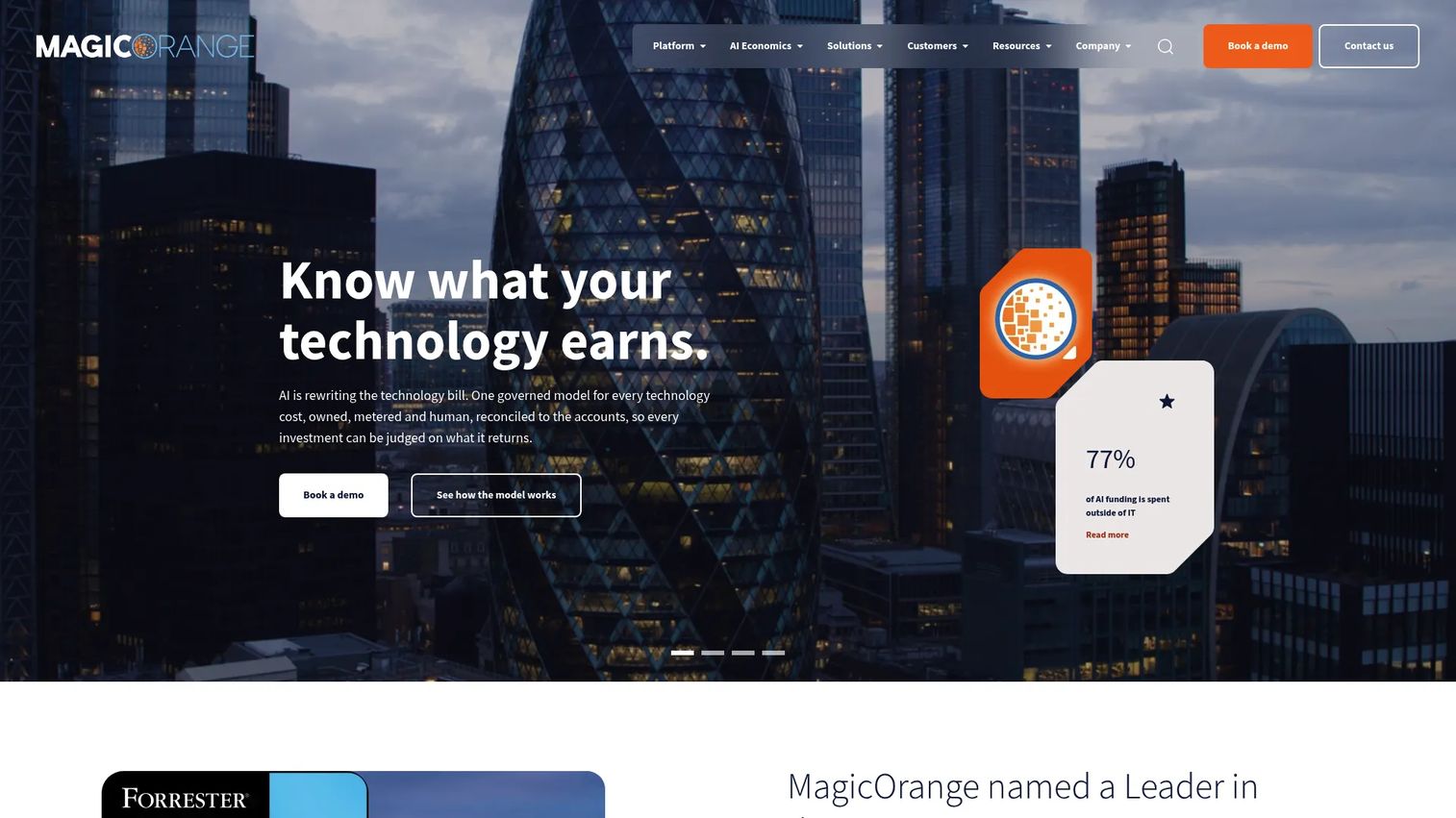
MagicOrange is a cloud-native technology economics platform that covers IT financial management, FinOps, enterprise allocation modeling, budgeting and forecasting, and AI economics. The platform uses driver-based allocation with transfer pricing and profitability modeling, and it connects to SAP, Oracle, Workday, Jira, and ServiceNow through ETL/ELT capabilities and APIs. AI-assisted natural-language data inquiry and anomaly detection round out the analytics layer.
Best for: Large enterprises managing cost transparency across cloud, shared services, and AI spend where allocation logic is complex and multi-jurisdictional.
Key features
- Driver-based cost allocation with transfer pricing
- FinOps: Cloud cost allocation, rightsizing, chargeback reporting
- AI economics and AI spend management
- Budgeting, forecasting, and anomaly detection
- Integrations: SAP, Oracle, Workday, Jira, ServiceNow
Why choose MagicOrange: MagicOrange is the right choice when allocation complexity is the primary blocker. Organizations managing costs across cloud, shared services, and AI spend in multiple markets will find the multi-dimensional modeling useful. Buyers should validate connector depth for their specific ERP and billing sources.
MagicOrange pricing: MagicOrange directs buyers to a sales conversation for pricing. When you contact them, ask how pricing scales with the number of allocation entities, data connectors, and business units.
5. CIO COCKPIT
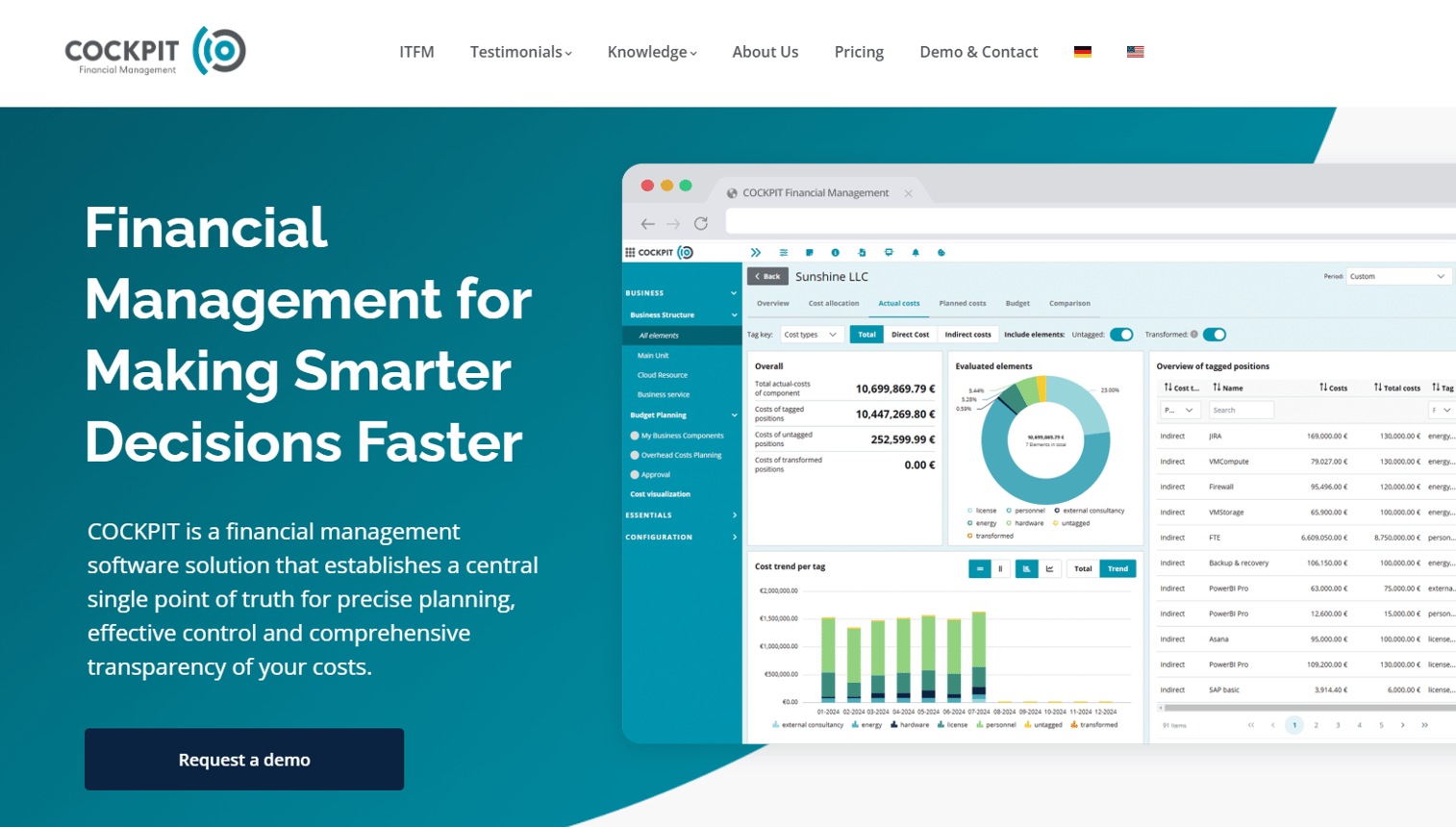
CIO COCKPIT is an IT financial management solution focused on planning, managing, analyzing, and optimizing IT, cloud, SaaS, and hardware costs. It includes integrated cloud cost controlling and FinOps capability with multi-cloud support and cloud-provider data collectors. The platform targets CIO teams that need board-ready visibility into IT cost and performance, with ad-hoc reporting for management conversations.
Best for: CIO teams that need a combined view of IT budget planning and cloud FinOps without running separate systems for each.
Key features
- Integrated cloud cost controlling and FinOps workflows
- IT budget planning and variance reporting
- IT service catalogue management
- Multi-cloud support with cloud-provider data collectors
- Ad-hoc management reporting
Why choose CIO COCKPIT: CIO COCKPIT is worth evaluating when cloud cost management and traditional IT budgeting need to converge in one reporting environment. The executive dashboard focus makes it relevant where finance conversations center on leadership visibility rather than deep allocation modeling.
CIO COCKPIT pricing: Contact CIO COCKPIT directly and ask what is included at each tier, including dashboards, data sources, and implementation support.
G2 rating: 4.0/5
6. CostPerform
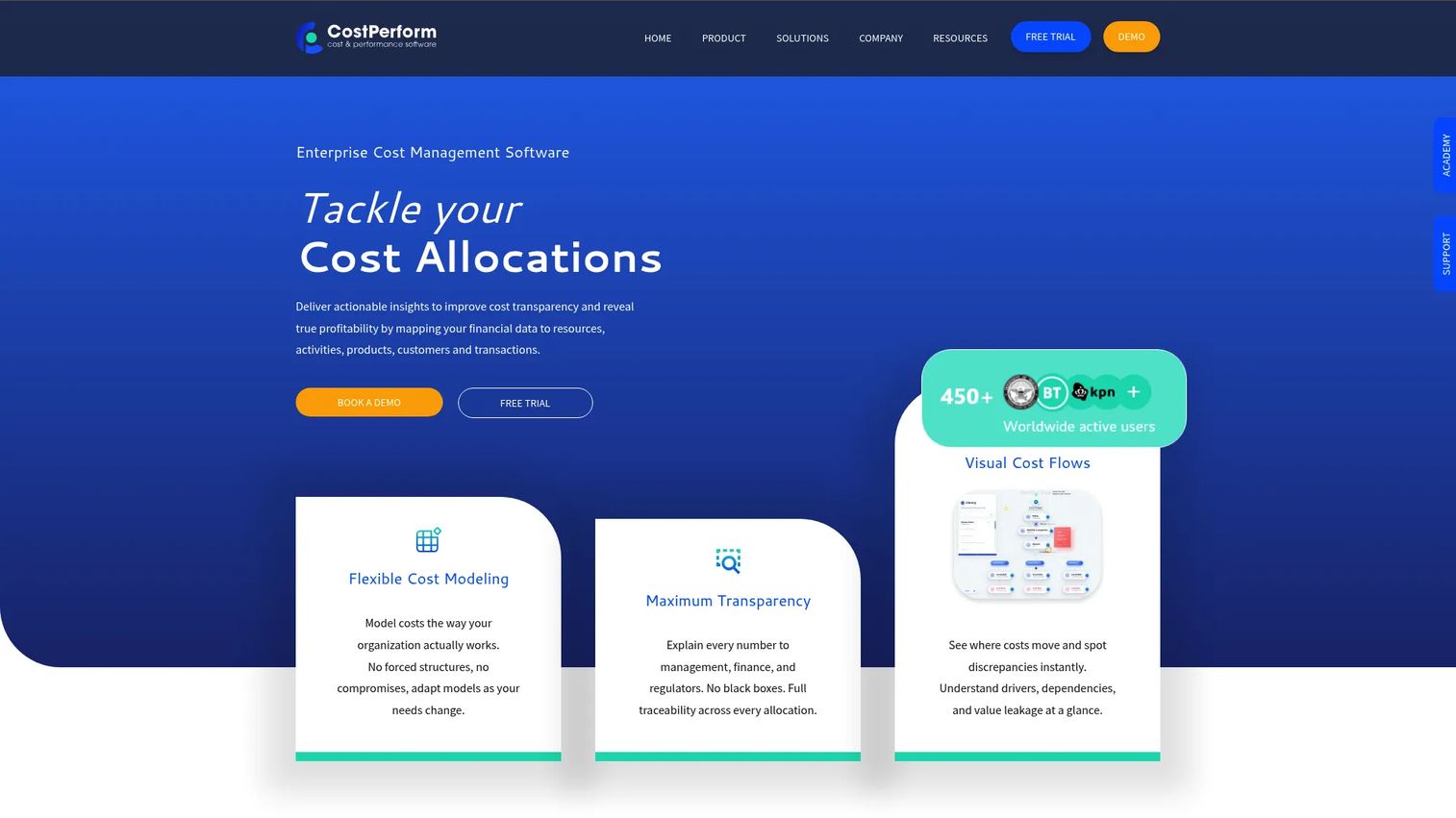
CostPerform is an enterprise cost and profitability management platform built for finance teams that need advanced cost modeling, driver-based allocation, and transparent cost flows. The platform visualizes cost paths so stakeholders can trace exactly how costs flow from input to output, which is particularly useful when allocation decisions need to be auditable and defensible. It supports profitability analysis across products, customers, services, and transactions.
Best for: Finance teams in complex organizations where allocation rigor, auditability, and profitability analysis matter as much as basic cost reporting.
Key features
- Driver-based cost modeling and allocation
- Transparent, traceable visual cost flows
- Profitability analysis: Products, customers, services, transactions
- OPEX and CAPEX pricing model options
- Scenario modeling for financial planning
Why choose CostPerform: Choose CostPerform when cost modeling is the hard problem and your team needs to show exactly why a cost landed where it did. Buyers should ask vendors to demonstrate IT-specific templates and integration paths during evaluation, since the platform spans multiple industries and the ITFM configuration matters.
CostPerform pricing: CostPerform offers OPEX (annual subscription) and CAPEX (license purchase plus annual maintenance) models. Cloud and AI module pricing is based on organizational cloud spend. Contact the vendor for a quote and confirm which model fits your procurement requirements.
G2 rating: 5.0/5
7. CostLens
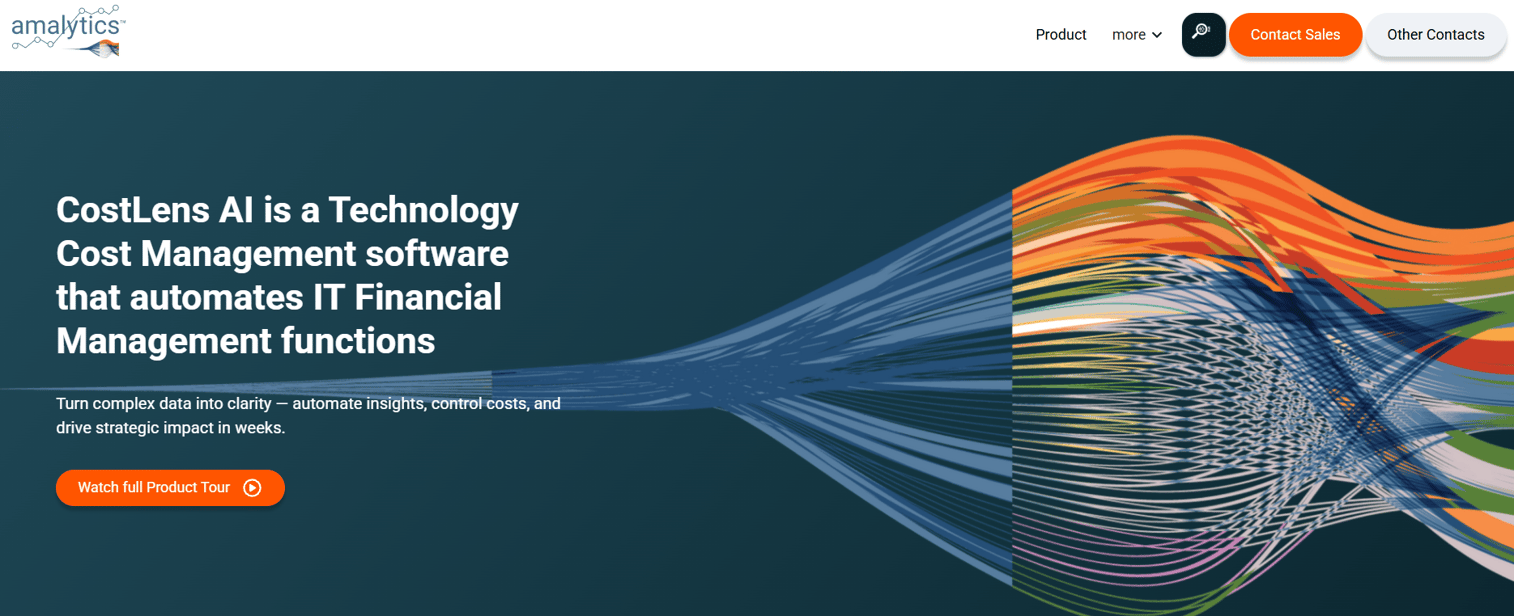
CostLens is a technology cost management platform for hybrid and multi-cloud teams. Its AI layer extracts and cleanses invoice PDFs and spreadsheets automatically, reducing the manual data-preparation work that slows down most cost reporting cycles. The platform covers cost transparency, showback and chargeback automation, budget tracking with variance alerts, cloud analytics, and scenario analytics for planning conversations.
Best for: Technology and finance teams managing hybrid or multi-cloud environments where invoice data is fragmented across formats and sources.
Key features
- AI extraction and cleansing of invoice PDFs and spreadsheets
- Showback and chargeback automation
- Cost transparency and granular spend analysis
- Budget tracking, variance analysis, and spend alerts
- Cloud analytics and cost optimization
Why choose CostLens: CostLens earns its place when data preparation is the bottleneck. If your team spends significant time normalizing invoice data before any analysis can happen, the AI extraction capability addresses that directly. Validate integration depth with your specific cloud providers and billing systems during a demo.
CostLens pricing: When contacting the vendor, ask how pricing scales with the number of users, cloud accounts, and billing connectors you need.
8. Serviceware Financial
Serviceware Financial is an IT financial management platform built for organizations that think in IT services. The platform covers cost transparency and optimization, planning and forecasting, charging and billing with showback and chargeback, IT cost benchmarking, vendor and contract management, transfer pricing, and service catalog management. Cloud cost management is also included. The service-first orientation means costs are structured around what IT delivers, not just where money is spent.
Best for: IT organizations formalizing service catalogs and IT service costing alongside financial governance and reporting.
Key features
- Cost transparency, optimization, and benchmarking
- Service catalog management and transfer pricing
- Charging and billing: Showback and chargeback
- Planning, forecasting, and variance analysis
- Vendor and contract management
Why choose Serviceware Financial: Choose Serviceware Financial when your team already operates with a service catalog orientation and needs financial workflows that reflect how IT is consumed rather than how it is organized. Ask about regional availability and whether implementation support is bundled or separate.
Serviceware Financial pricing: Contact Serviceware and ask about modules, user count, regions covered, and service catalog complexity when requesting a quote.
9. ComSci
ComSci, now part of Upland Software, is an ITFM solution covering IT cost capture, reporting, and optimization, plus IT service pricing, showback, and chargeback. The platform also addresses cloud and SaaS cost and usage management. Organizations that need IT financial accountability across business units, with a focus on cost reporting and service-based billing, will find the core capability set relevant.
Best for: Enterprise IT and finance teams that need IT cost reporting, service pricing, and chargeback alongside cloud and SaaS spend visibility.
Key features
- IT cost capture, reporting, and optimization
- IT service pricing with showback and chargeback
- Cloud and SaaS cost and usage management
- Business-unit accountability reporting
- Executive cost dashboards
Why choose ComSci: ComSci fits when IT cost reporting and chargeback are the primary requirements and cloud spend management is a secondary need. Because the product is now part of the Upland Software portfolio, confirm current product ownership and roadmap during your evaluation to understand future development priorities.
ComSci pricing: Contact Upland's sales team and ask about ComSci specifically, including module scope, seat model, and implementation services.
10. Nicus ITFM Platform
Nicus ITFM Platform is a dedicated IT financial management platform for cost transparency, budgeting, forecasting, planning, and technology investment optimization. The platform supports defensible cost modeling, service and application TCO analysis with fully burdened rates, showback and chargeback, and multi-year planning. Notably, Nicus deploys both on its own cloud and natively on ServiceNow, which matters for organizations that want ITFM inside their existing ITSM environment. G2 recognizes the platform for quality of support and likelihood to recommend.
Best for: Large enterprises that need a dedicated, auditable ITFM system and want the option to run it natively on ServiceNow.
Key features
- Defensible cost modeling and granular cost visibility
- Service and application TCO with fully burdened rates
- Showback, chargeback, and bill of IT workflows
- Budgeting, forecasting, scenario modeling, and multi-year planning
- Native deployment on Nicus Cloud or ServiceNow
Why choose Nicus ITFM Platform: Nicus is a strong choice for IT finance teams that need repeatable, auditable ITFM processes rather than one-off reports. The ServiceNow native deployment option sets it apart for organizations already committed to that platform. Plan for data readiness work before implementation, particularly around GL and CMDB integration.
Nicus ITFM Platform pricing: Contact Nicus and ask about modules, data connectors, and whether ServiceNow native or Nicus Cloud deployment changes the quote.
G2 rating: 4.8/5
11. USU IT Service Management
USU IT Service Management is an AI-powered, modular ITSM platform that includes IT financial management capabilities alongside its core service desk, asset management, and CMDB features. The financial workflows cover expense tracking, budget-to-actuals comparison, forecasting, and consumption-based billing for cost allocation. For organizations where ITSM and ITFM are tightly coupled, running both in one environment reduces data handoffs.
Best for: Mid-sized and large organizations that want ITFM connected to service management operations and prefer modular deployment options.
Key features
- IT cost planning and budget-to-actuals comparison
- Consumption-based billing and cost allocation
- Forecasting tied to service and asset data
- IT asset management and CMDB integration
- Flexible SaaS or on-premises deployment
Why choose USU IT Service Management: USU is worth evaluating when the buyer's ITFM project is inseparable from ITSM operations. Pure ITFM depth, particularly around TBM taxonomy and advanced cost modeling, should be validated against your requirements before committing, since the financial capabilities support service operations rather than act as a standalone finance system.
USU IT Service Management pricing: Pricing is modular and based on end users, managed assets, selected modules, and overall scope. Starter package pricing is available through USU sales. Ask what financial modules are included versus separately priced.
12. Yarken
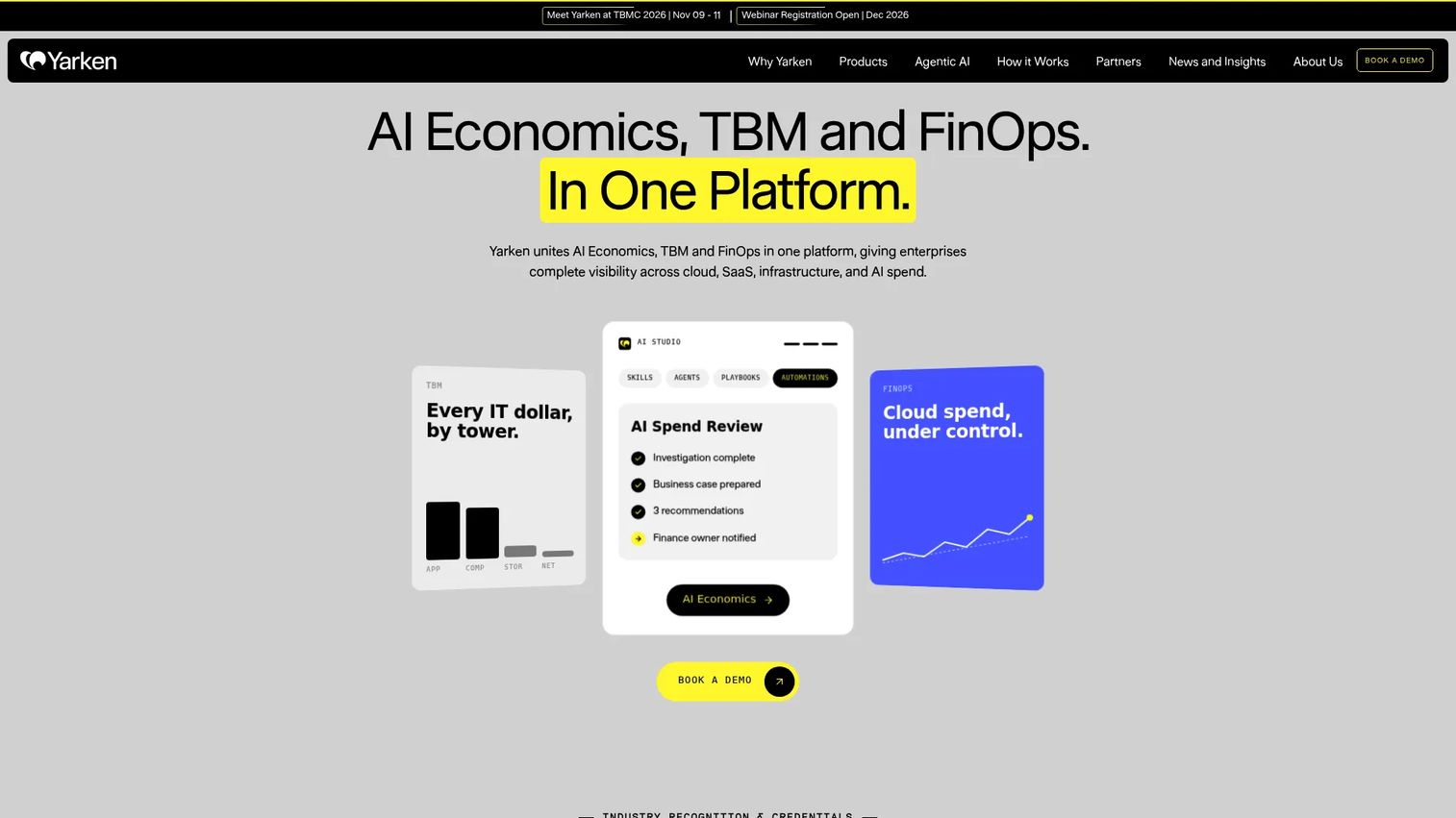
Yarken is an IT financial management platform that unifies TBM, FinOps, AI economics, cloud, SaaS, infrastructure, and AI spend management in one environment. The platform covers cost allocation, showback and chargeback, budgeting and forecasting, and analytics with custom dashboards, anomaly detection, and AI insights. For organizations where technology economics increasingly include AI spend alongside traditional IT categories, the unified approach reduces the need for separate tools.
Best for: Enterprise IT finance and TBM teams managing cloud, SaaS, and AI spend where a unified cost management approach matters.
Key features
- Cost allocation, showback, and chargeback
- Budgeting, forecasting, and variance reporting
- Custom dashboards, anomaly detection, and AI insights
- TBM and FinOps combined in one platform
- AI economics and AI spend management
Why choose Yarken: Yarken is relevant when your ITFM scope is expanding to include AI and SaaS spend and you want a single platform rather than point solutions stitched together. Validate current product maturity and customer references for the AI economics module specifically, since that is a newer capability in the category.
Yarken pricing: Contact the vendor and ask how pricing is determined: By managed spend volume, number of cost entities, or user seat count.
13. brightfin IT Financial Management
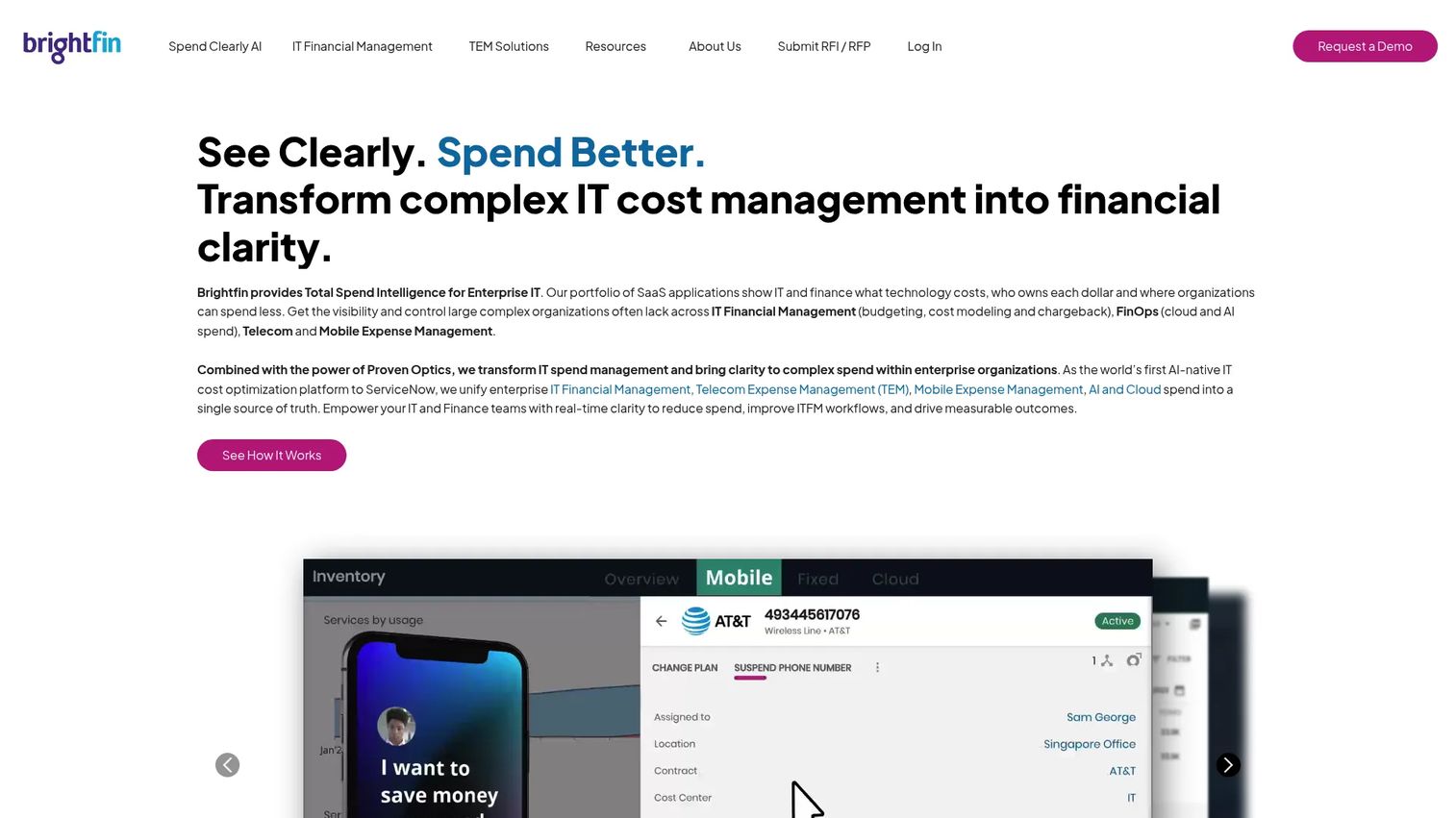
brightfin IT Financial Management is a ServiceNow-native ITFM platform covering automated showback and chargeback, real-time budget-versus-actuals visibility, scenario-ready forecasting, service-aligned cost transparency, and governed budgeting workflows. Building directly on ServiceNow means IT finance data lives alongside ITSM, asset, and service catalog data without integration overhead. Organizations already committed to ServiceNow as their operational platform will find the native approach reduces data reconciliation work significantly.
Best for: Enterprise IT and finance teams managing technology spend within ServiceNow who want ITFM workflows native to that environment.
Key features
- Automated showback and chargeback on ServiceNow
- Real-time budget-versus-actuals visibility
- Scenario-ready forecasting workflows
- Service-aligned cost transparency
- Governed budgeting with approval workflows
Why choose brightfin IT Financial Management: brightfin is a natural fit if ServiceNow is already the operational backbone of IT. The tradeoff to validate is whether ITFM capability depth meets your requirements for TBM taxonomy alignment and advanced cost modeling, or whether a standalone ITFM platform covers more ground.
brightfin IT Financial Management pricing: Contact brightfin and ask how the ITFM module is priced relative to the broader brightfin platform, including managed services and user access tiers.
G2 rating: 4.4/5 (overall brightfin platform rating)
14. BluIQ Chargeback & Cost Recovery
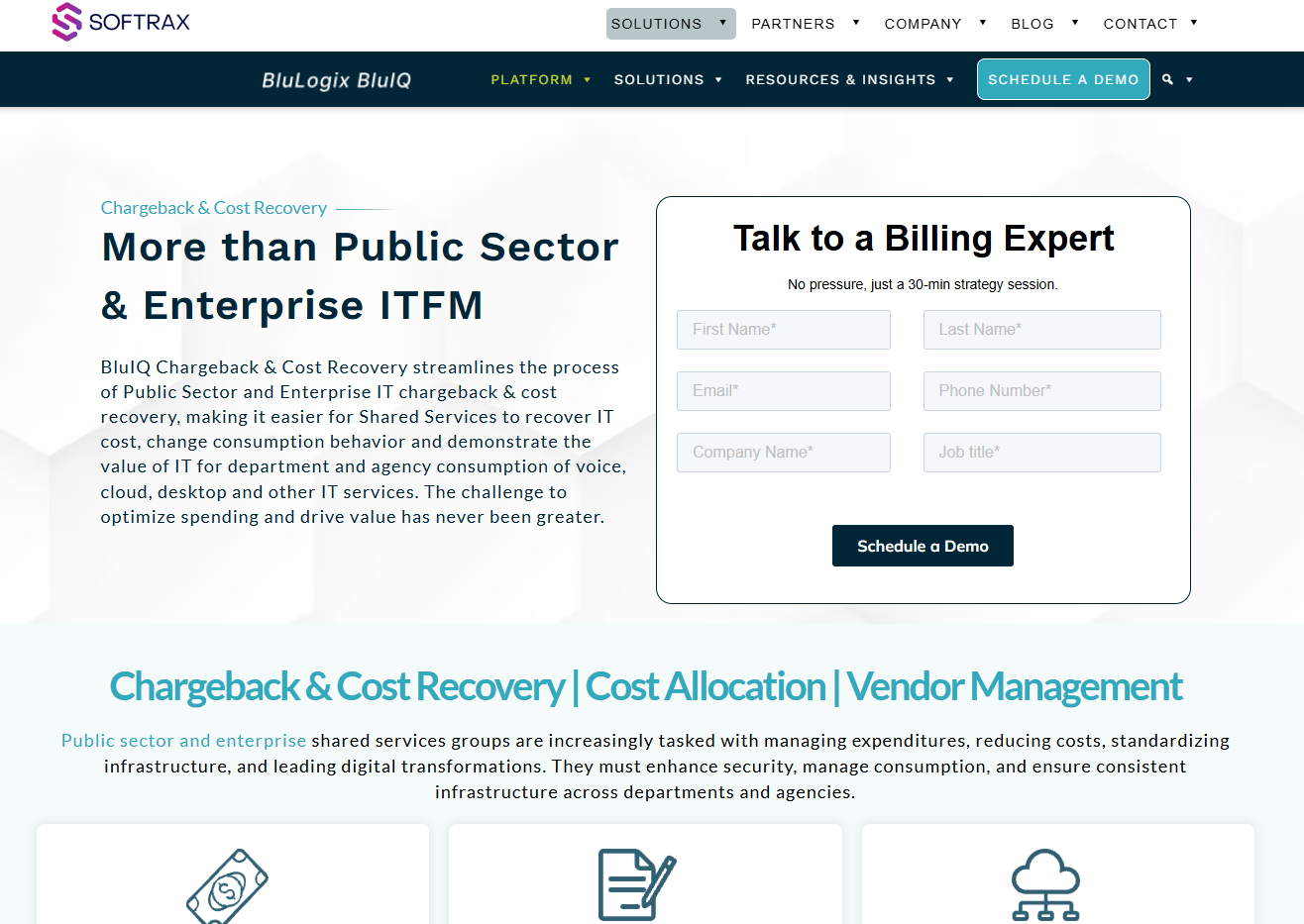
BluIQ Chargeback & Cost Recovery is a focused chargeback and cost-recovery platform designed for public-sector and enterprise shared-services organizations. The platform handles GAAP/GASB ledger-based chargeback, complex metering for usage-based services, chargeback reconciliation to vendor invoices, internal billing and invoice export, and an invoice validation and approval portal. For organizations where internal billing must be auditable against accounting standards, the ledger-based approach matters.
Best for: Public-sector IT and enterprise shared-services organizations that need auditable, usage-based chargeback and internal cost recovery.
Key features
- GAAP/GASB ledger-based chargeback
- Complex metering for usage-based services
- Chargeback reconciliation to vendor invoices
- Internal billing and invoice export
- Invoice validation and approval portal
Why choose BluIQ Chargeback & Cost Recovery: BluIQ fits when chargeback is the urgent, specific problem and audit-grade accuracy matters. The platform is narrower than a full ITFM suite, so organizations that also need IT planning, TBM taxonomy, or executive cost dashboards will likely need BluIQ alongside a broader platform rather than instead of one.
BluIQ Chargeback & Cost Recovery pricing: BluIQ offers usage-based and tiered pricing models, with final pricing through sales. Ask the vendor how pricing scales with the number of billed entities, usage sources, and billing cycles.
Considerations when choosing IT financial management tools
Data integrations
Map your required data sources before sitting through a single demo. The minimum list for most organizations includes ERP or general ledger, cloud billing APIs, vendor invoices, CMDB, and HR labor data. Some ITFM programs also pull from ITSM, project management, and asset inventory systems. A platform that cannot connect to your GL without custom development is a deal-breaker regardless of its reporting quality.
Cost model flexibility
Allocation rules need to match how your organization actually consumes technology, not how a default template expects you to. Ask vendors to show how they handle direct costs, shared infrastructure costs, labor allocation, and consumption-based logic in the same model. A platform that forces you to fit your cost model into its data structure will create reconciliation headaches at month-end.
Showback and chargeback readiness
Showback is a reporting change. Chargeback is a financial and political change. If you're planning chargeback, verify that the platform includes approval workflows, dispute handling, and audit trails before you go live. Without those controls, internal billing creates conflict rather than accountability.
TBM maturity alignment
Some teams need basic cost transparency and a defensible budget model. Others need full TBM taxonomy, service-to-capability mapping, and executive scorecards. Be honest about where your program sits today and where it realistically lands in 18 months. Buying a mature TBM platform for a team still running manual allocations creates adoption problems that have nothing to do with the software.
Adoption across finance and IT
A technically rigorous cost model fails if business-unit leaders don't trust it and IT service owners don't maintain it. During evaluation, ask vendors for reference customers who can speak specifically about finance and IT co-adoption, not just IT-led implementations. The organizations that get value from ITFM tools are the ones where finance and IT use the same numbers.
Conclusion
IBM Apptio remains the benchmark for enterprise ITFM and TBM programs that need breadth across planning, benchmarking, and chargeback. Nicus and Serviceware Financial are strong choices for dedicated IT finance teams that want purpose-built ITFM capability. Bee360 earns its place when portfolio and architecture decisions need to connect directly to financial governance.
For teams where allocation complexity is the primary blocker, CostPerform and MagicOrange are worth a close look. CostPerform brings strong cost-flow auditability; MagicOrange covers organizations managing cloud, shared services, and AI spend across multiple markets.
brightfin and Nicus are the clearest options for ServiceNow-first organizations. BluIQ fits when chargeback is the specific, urgent problem and audit-grade accuracy is non-negotiable.
Before shortlisting: Pick three tools, prepare a sample data set that reflects your actual GL structure and service catalog, and ask each vendor to model the same service cost, rolling forecast, and showback report. The gap between demo and production data is where ITFM evaluations succeed or break down.
If you support enterprise software evaluations and want to show buyers how complex tools work before the technical deep-dive, Start your journey with Guideflow today!
FAQs about IT financial management tools
IT financial management is the process of planning, tracking, allocating, and optimizing technology spend so that IT, finance, and business teams can connect costs to services, consumption, and business outcomes. It covers budgeting, forecasting, cost accounting, allocation modeling, and reporting. Organizations use ITFM to answer the question "where does the technology money go?" in a way that holds up to executive scrutiny.
ITFM stands for IT financial management. The acronym is commonly used by CIO offices, IT finance teams, and Technology Business Management practitioners. You will see it used interchangeably with "IT finance management" in many organizations.
ITFM manages technology finances: Budgets, costs, allocations, and reports. TBM (Technology Business Management) is the broader operating model that connects technology investment to business capabilities and strategic value. ITFM tells you what a service costs. TBM helps you decide whether that investment is worth it and how to communicate the tradeoff to business leadership. Many mature organizations run both together. For more context on budgeting and forecasting software categories adjacent to ITFM, that resource covers related planning tools.
Core capabilities to look for: Budgeting and forecasting, driver-based cost allocation, cost modeling, showback, chargeback, executive reporting dashboards, and integrations with ERP, cloud billing, CMDB, and ITSM systems. More mature programs also need TBM taxonomy support, service costing with fully burdened rates, and multi-year planning. The right feature set depends on where your program sits today and what finance conversations you need to support within the next year.
FinOps focuses primarily on cloud financial operations: Rightsizing, reservation management, cloud billing analysis, and cloud cost allocation. ITFM covers the full technology spending picture, including on-premises infrastructure, software licenses, labor, vendor contracts, shared services, and cloud. FinOps is a subset of ITFM for most large organizations. Some platforms, including MagicOrange and Yarken, explicitly combine both disciplines. For teams managing business process management software decisions alongside ITFM, the overlap between operational and financial tools is worth mapping before selecting a platform.
The clearest triggers: Manual month-end allocations take more than a day, finance leadership questions the accuracy of cost reports, cloud or SaaS spend has grown to where tracking it manually is unreliable, chargeback is being introduced and you need auditable billing, or the CFO wants a rolling forecast rather than a point-in-time budget. If any two of those are true simultaneously, the cost of maintaining spreadsheets probably exceeds the cost of a tool.
Ownership is typically shared. The CIO or VP of IT holds accountability for the overall program. An IT finance team or TBM office handles day-to-day cost modeling and reporting. CFO or finance leadership sets the allocation principles and approves chargeback methodology. Service owners maintain cost data for their specific services. Business-unit leaders review showback reports and dispute allocations when they're wrong. The organizations that get the most from ITFM are the ones where all of those stakeholders work from the same numbers, which is exactly what a good platform enables.
Showback gives business units a view of what technology resources they consumed and what that consumption cost, without issuing an invoice or adjusting their budget. It is a reporting mechanism that creates awareness and sometimes changes behavior. Chargeback converts that consumption view into actual cost recovery: The business unit's budget is reduced by the allocated amount, or an internal invoice is raised. Chargeback requires agreed allocation rules, approval workflows, a dispute process, and clear ownership of each service. Most organizations start with showback to build trust in the cost model before moving to chargeback. Tools like BluIQ, Nicus, and brightfin all support both patterns. For presales teams supporting these evaluations, tools that help demonstrate complex workflows before a technical deep-dive can be found in the broader account management software category for context on enterprise buying processes.