Your spam filter catches the obvious junk. The problem is the message that looks like it came from your CFO, a known supplier, or a trusted partner asking for a wire transfer or urgent credential update.
Business email compromise (BEC) accounted for more than $3 billion in reported losses in 2025, according to complaint data filed with the FBI Internet Crime Complaint Center. Because IC3 publishes reported complaints rather than total fraud activity, the real figure is almost certainly higher, and the reported total reflects complaints filed with a US agency rather than a global tally. Those aren't brute-force attacks. They're socially engineered messages that pass basic authenticity checks and land in inboxes because they're designed to.
Native mailbox controls in Microsoft 365 and Google Workspace block a lot. But they weren't built for behavioral impersonation, lateral phishing from compromised accounts, or the kind of supplier fraud that arrives in a thread that looks perfectly normal. That's the gap intelligent email protection fills: AI, machine learning, behavioral signals, and automated remediation working together before a user makes the wrong click.
This guide helps presales teams, security evaluators, and technical buyers build a defensible shortlist, understand deployment tradeoffs, and know what to validate during a proof of concept.
What's inside
This guide is for presales engineers, security architects, and technical evaluators comparing email security software for Microsoft 365 or Google Workspace environments.
Tools were selected based on:
- Detection quality: Coverage across phishing, BEC, malware, impersonation, and account takeover
- Deployment fit: Gateway, API-native, hybrid, and cloud-native options
- Automation depth: Triage, remediation, and incident response workflows
- Integration breadth: Microsoft 365, Google Workspace, SIEM, SOAR, and CRM stack compatibility
Every price in this guide traces to a document the vendor itself publishes, and the entry says which kind of document it is, because a regional MSRP sheet is not the same commitment as a posted list price. Where a vendor publishes no figure at all, this guide says the product is quote-based rather than estimating a number. Every G2 rating comes from the G2 listing that carries the product's own name. Where a product has no G2 listing of its own, this guide says so instead of borrowing a rating from a different listing.
TL;DR
- Best Microsoft-native option: Microsoft Defender for Office 365 integrates directly with Microsoft 365, Defender XDR, and Sentinel
- Best enterprise suite: Proofpoint covers threat protection, compliance, and user-risk scoring at scale
- Best for BEC and account takeover: Abnormal AI uses behavioral AI to catch identity-based attacks that bypass signature filters
- Best for continuity plus security: Mimecast bundles archiving, email continuity, and threat protection
- Best for SMB and MSP teams: Barracuda Email Protection and IRONSCALES Email Security Platform offer layered protection with manageable admin overhead
- Best for cloud-native SOC teams: Cloudflare Cloud Email Security delivers pre-delivery detection with explainable analysis
What is intelligent email protection software?
Intelligent email protection software uses AI, machine learning, behavioral analysis, threat intelligence, and policy controls to detect and respond to malicious or risky email before it reaches users or causes damage.
The category covers far more than spam filtering. Key capabilities include:
- Inbound threat detection: Phishing, malware, ransomware, credential harvesting, and QR phishing (quishing)
- BEC and impersonation protection: Identity-based analysis using sender relationships, language signals, and domain reputation
- Account takeover protection: Detecting compromised mailboxes sending lateral phishing or fraudulent requests internally
- Attachment and URL analysis: Sandboxing, content disarm and reconstruction (CDR), and time-of-click URL rewriting
- Outbound controls: Data loss prevention (DLP), email encryption, and compliance policy enforcement
- Automated remediation: Post-delivery message removal, quarantine, abuse mailbox triage, and threat hunting
- Deployment flexibility: Secure email gateway (MX record routing), API-native mailbox scanning, hybrid models, and virtual appliances
- Ecosystem integrations: Microsoft 365, Google Workspace, SIEM platforms, SOAR tools, and ticketing systems
What separates intelligent email security from traditional filters is the behavioral layer. Rather than matching against known signatures or static blocklists, these platforms analyze how senders and recipients normally communicate, flag deviations, and act on them automatically.
Presales teams supporting security evaluations should understand the deployment model before demoing any platform. A gateway product changes MX records and routes all mail through the vendor's infrastructure. An API-native product connects directly to the mailbox without touching mail flow. Each affects rollback time, latency, and admin workload differently.
Regulated buyers will also want to evaluate outbound controls: email DLP, encryption, archiving, audit logs, and eDiscovery readiness. These capabilities vary significantly across vendors and tiers. When supporting an RFP, verify which modules are included at which license level, not just which features appear in the product overview.
When to use intelligent email protection software
Stop phishing and BEC before users decide
User security awareness training matters, but it shouldn't be the last line of defense against executive impersonation, invoice fraud, supplier compromise, or QR code phishing. These attacks are designed to look credible. Intelligent email protection intercepts them before employees see them, removing the human as the final control on the most believable threats.
Add protection beyond native mailbox controls
Microsoft 365 and Google Workspace include baseline email filtering, but many organizations add a third-party layer for advanced phishing detection, post-delivery remediation, behavioral BEC analysis, or compliance reporting. The native controls catch volume threats well. The gaps show up in targeted, low-volume attacks that don't match signatures.
Reduce manual investigation work for security teams
Security operations teams spend significant time triaging reported emails, manually pulling messages from compromised threads, and investigating abuse mailbox queues. Automated email threat remediation can handle bulk remediation across multiple inboxes, preserve evidence for investigations, and reduce the time between detection and containment. For presales teams supporting SOC-focused buyers, ask specifically about investigation timelines and SIEM integration during demos.
Intelligent email protection software comparison
The table below is a shortlist for evaluation, not a universal ranking. Detection accuracy, false-positive rates, and administrative workload vary by environment, mail volume, and configuration. Verify current pricing directly with each vendor before entering procurement conversations.
Three of the twelve entries share one owner. Proofpoint, Sophos Email, and Darktrace / EMAIL are all portfolio companies of the private equity firm Thoma Bravo, so they are not independent corporate choices even though they are separate products with separate roadmaps and separate contracts. Rows 2, 7, and 8 are marked below. Two further entries are rebranded acquisitions, noted in their sections.
| # | Product | Best for | Key differentiator | Pricing | G2 rating |
|---|---|---|---|---|---|
| 1 | Microsoft Defender for Office 365 | Microsoft 365 environments | Native Microsoft security stack integration | $2.00/user/month (Plan 1, annual commitment) | 4.5/5 |
| 2 | Proofpoint (Thoma Bravo owned) | Large enterprises | Mature threat protection and compliance suite | Essentials MSRP sheet from $3.03/active user/month; enterprise quote-based | 4.6/5 |
| 3 | Abnormal AI | BEC and account takeover | Behavioral AI for identity-based attacks | Quote-based | 4.7/5 |
| 4 | Mimecast | Continuity and resilience | Security plus archiving and continuity | Quote-based | 4.4/5 |
| 5 | Barracuda Email Protection | SMB and mid-market teams | Layered protection with backup and response | Quote-based | 4.5/5 |
| 6 | Cisco Secure Email Threat Defense | Cisco security environments | Talos threat intelligence across Cisco stack | Quote-based | 4.3/5 |
| 7 | Darktrace / EMAIL (Thoma Bravo owned) | Adaptive behavioral detection | Self-learning model for evolving threats | Quote-based | 4.2/5 |
| 8 | Sophos Email (Thoma Bravo owned) | Sophos security customers | Email security with encryption and DLP | Quote-based | 4.2/5 |
| 9 | FortiMail | Hybrid gateway deployments | Gateway, cloud, virtual, and appliance options | Quote-based | 4.3/5 |
| 10 | Check Point Email Security | Cloud email protection | API-based phishing and malware prevention | Quote-based | 4.6/5 |
| 11 | IRONSCALES Email Security Platform | Security awareness plus remediation | Human and AI phishing response workflow | Quote-based | 4.7/5 |
| 12 | Cloudflare Cloud Email Security | Cloud-native SOC teams | Pre-delivery detection and explainable analysis | Quote-based | Not listed on G2 |
How the 12 platforms compare in detail
1. Microsoft Defender for Office 365
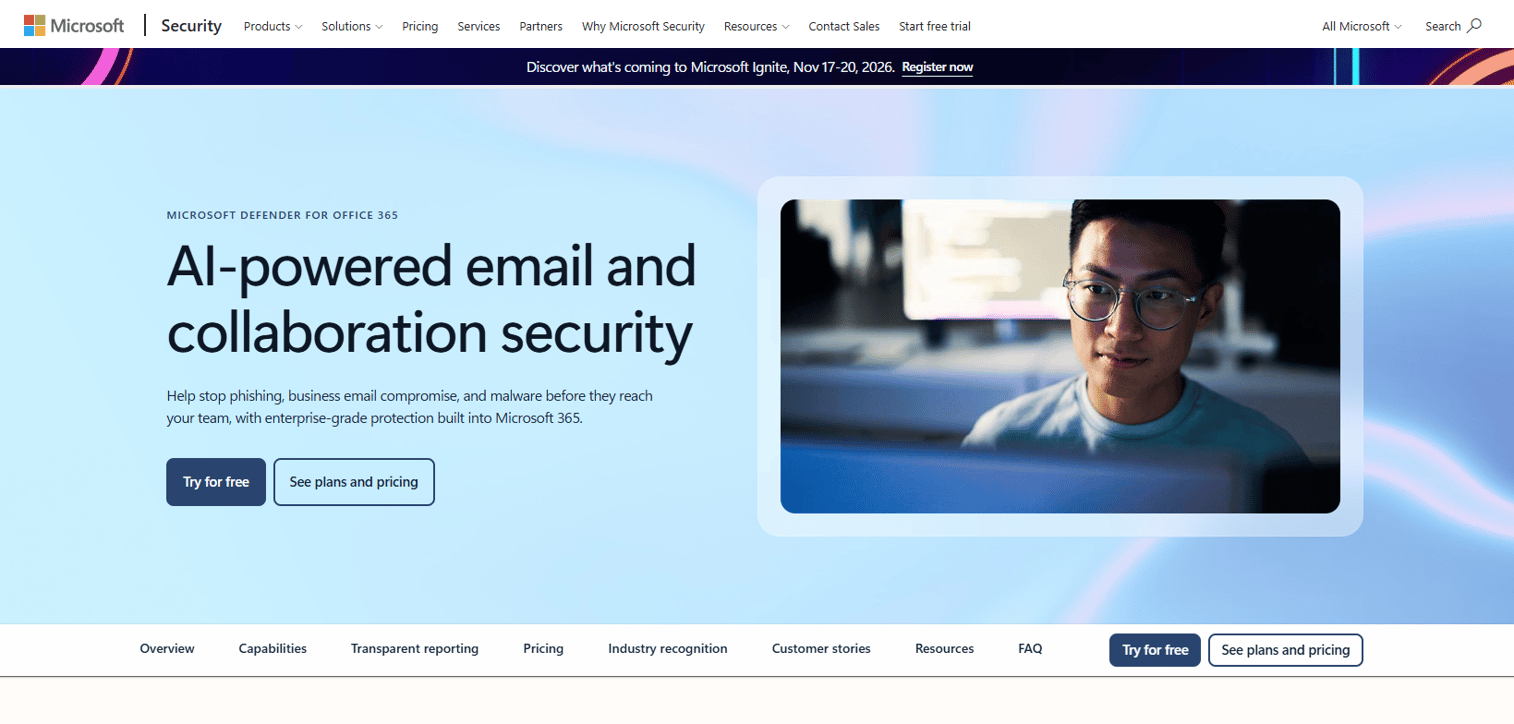
Microsoft Defender for Office 365 is the native email and collaboration security layer for Microsoft 365, protecting Outlook, Teams, SharePoint, and OneDrive against phishing, malware, BEC, and malicious links. It connects directly to Microsoft Defender XDR, Sentinel, and Entra ID, giving security teams a single investigation surface across identity, endpoint, and email signals. For organizations already running the Microsoft security stack, the integration depth is a meaningful operational advantage.
Best for: Microsoft-first organizations that want email protection connected to identity and security operations data.
Key features
- Safe Links: Real-time URL rewriting and click-time protection, including QR codes
- Safe Attachments: Zero-day malware scanning for email and Teams
- Anti-phishing policies: Impersonation protection for users and domains
- Attack simulation training: Phishing simulations and behavior-based training (Plan 2)
- Automated investigation and response: AI-driven triage and remediation (Plan 2)
Why choose Microsoft Defender for Office 365: The strongest fit is when the buyer already runs Microsoft 365 and wants email protection that shares signals with endpoint and identity. During evaluation, verify which plan covers the features the buyer actually needs: Plan 1 covers core protection, while automated investigation and attack simulation require Plan 2 or the Defender Suite.
Microsoft Defender for Office 365 pricing: Plan 1 is $2.00 per user per month on an annual commitment. Microsoft does not post a Plan 2 price on its own security pricing pages, so confirm that tier with Microsoft or a reseller rather than relying on a third-party figure. The broader Microsoft Defender Suite is listed on Microsoft's security pricing page at $12.00 per user per month, paid yearly. Both Office 365 plans are also included in certain Microsoft 365 E3 and E5 bundles, so check the buyer's existing licensing before quoting any standalone plan.
G2 rating: 4.5/5
2. Proofpoint
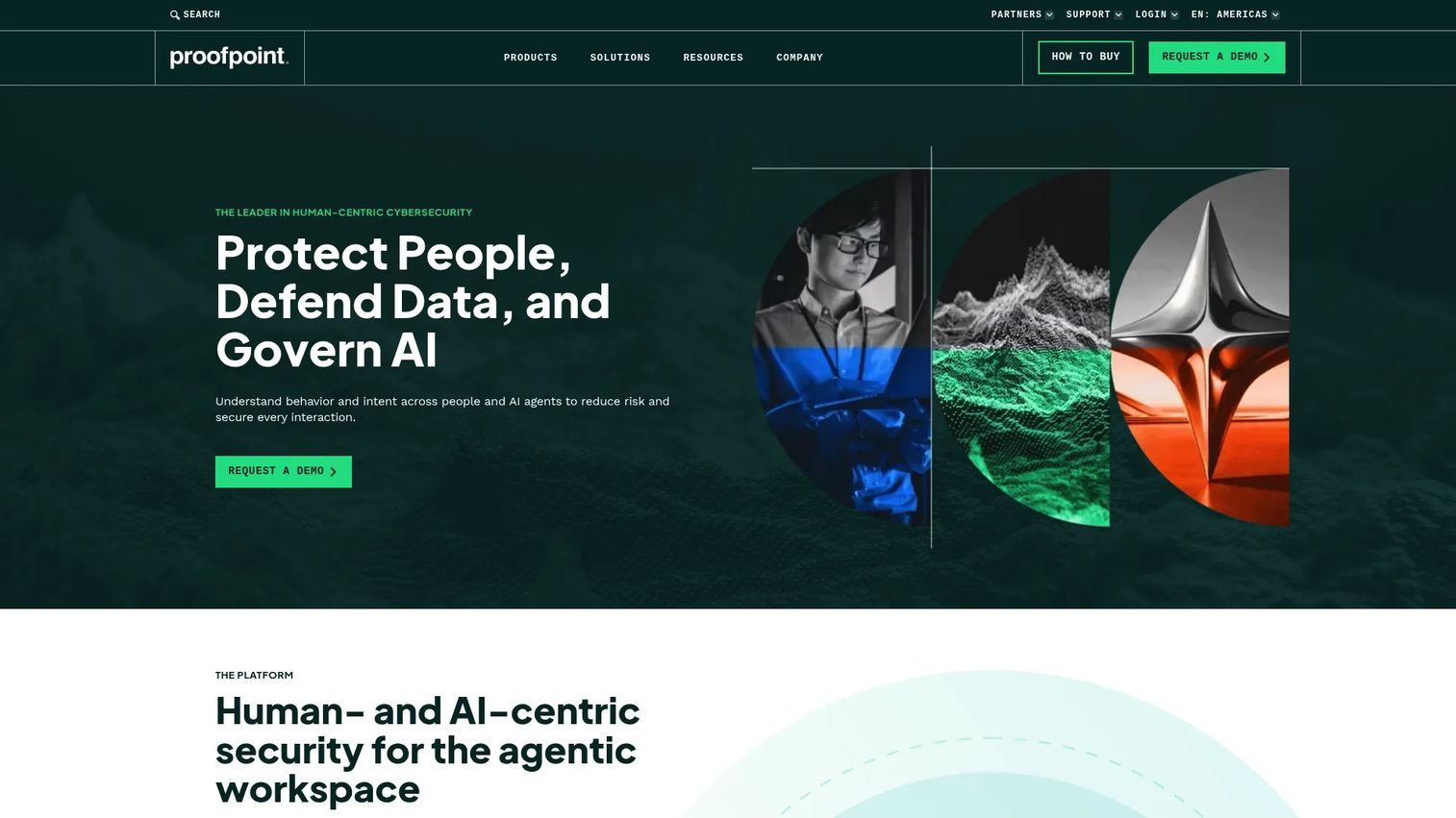
Proofpoint is an enterprise-focused cybersecurity platform covering email threat protection, user-risk scoring, data security, archiving, and compliance. Its email protection includes AI-powered detection for phishing, malware, impersonation, and targeted attacks, paired with URL defense and attachment sandboxing. Security awareness training and data loss prevention round out the platform for organizations managing compliance obligations alongside threat prevention.
Proofpoint has been owned by the private equity firm Thoma Bravo since 2021. Thoma Bravo also owns Sophos and Darktrace, both of which appear later in this list, so a shortlist drawn from entries 2, 7, and 8 would concentrate on one owner. Proofpoint also completed its acquisition of Hornetsecurity in December 2025, which matters for MSP buyers, because Hornetsecurity's MSP-focused products now sit inside the same portfolio.
Best for: Large enterprises needing mature threat protection with compliance, archiving, and user-risk visibility.
Key features
- Advanced threat protection: AI-powered phishing and malware detection
- Impersonation defense: Domain and display-name spoofing protection
- URL defense: Time-of-click URL analysis and rewriting
- Attachment sandboxing: Pre-delivery file analysis
- User risk scoring: Prioritized response based on individual exposure
Why choose Proofpoint: The strongest fit is an enterprise environment with complex compliance requirements, mature SOC workflows, and a need for centralized visibility across threat, risk, and governance data. Presales teams should be prepared for quote-based procurement and implementation cycles that are longer than API-native alternatives.
Proofpoint pricing: Proofpoint does not post Essentials prices on its main pricing page. It does publish a monthly MSRP price list as a regional data sheet, which lists Essentials Business at $3.03 per active user per month, Advanced at $4.13, and Professional at $5.86, plus a Beginner tier at $1.65 that Proofpoint restricts to existing Essentials customers. Because that sheet is a regional MSRP document rather than a US list price, treat these as indicative and confirm the current rate for the buyer's region directly. Enterprise tiers are quote-based and vary by module set, seat count, and contract term.
G2 rating: 4.6/5, on the Proofpoint Core Email Protection listing
3. Abnormal AI
Abnormal AI is a behavioral AI security platform built specifically for detecting email attacks that look legitimate. Rather than relying on known threat signatures, it builds a baseline of normal communication patterns for each user and flags deviations. BEC, vendor compromise, account takeover, and socially engineered attacks are its primary targets. It connects to Microsoft 365 and Google Workspace via API without changing MX records.
Best for: Security teams prioritizing BEC, executive impersonation, vendor fraud, and compromised-account detection over malware-heavy filtering.
Key features
- Behavioral AI detection: Baseline modeling per user and relationship
- Vendor compromise detection: Flags hijacked supplier email threads
- Account takeover protection: Detects compromised internal mailboxes
- Abuse mailbox automation: Automates employee-reported phishing triage
- Post-delivery remediation: Removes threats from inboxes after detection
Why choose Abnormal AI: The fit is strongest when the buyer's problem is believable messages from trusted-looking senders, not high-volume commodity spam. Ask about false-positive rates and how the platform explains its decisions during the proof of concept. Teams coming from a gateway model should plan for the API deployment shift and verify rollback requirements with the buyer's IT team.
Abnormal AI pricing: Abnormal AI prices by quote. Request a custom quote based on mailbox count, product modules, and contract terms.
G2 rating: 4.7/5
4. Mimecast
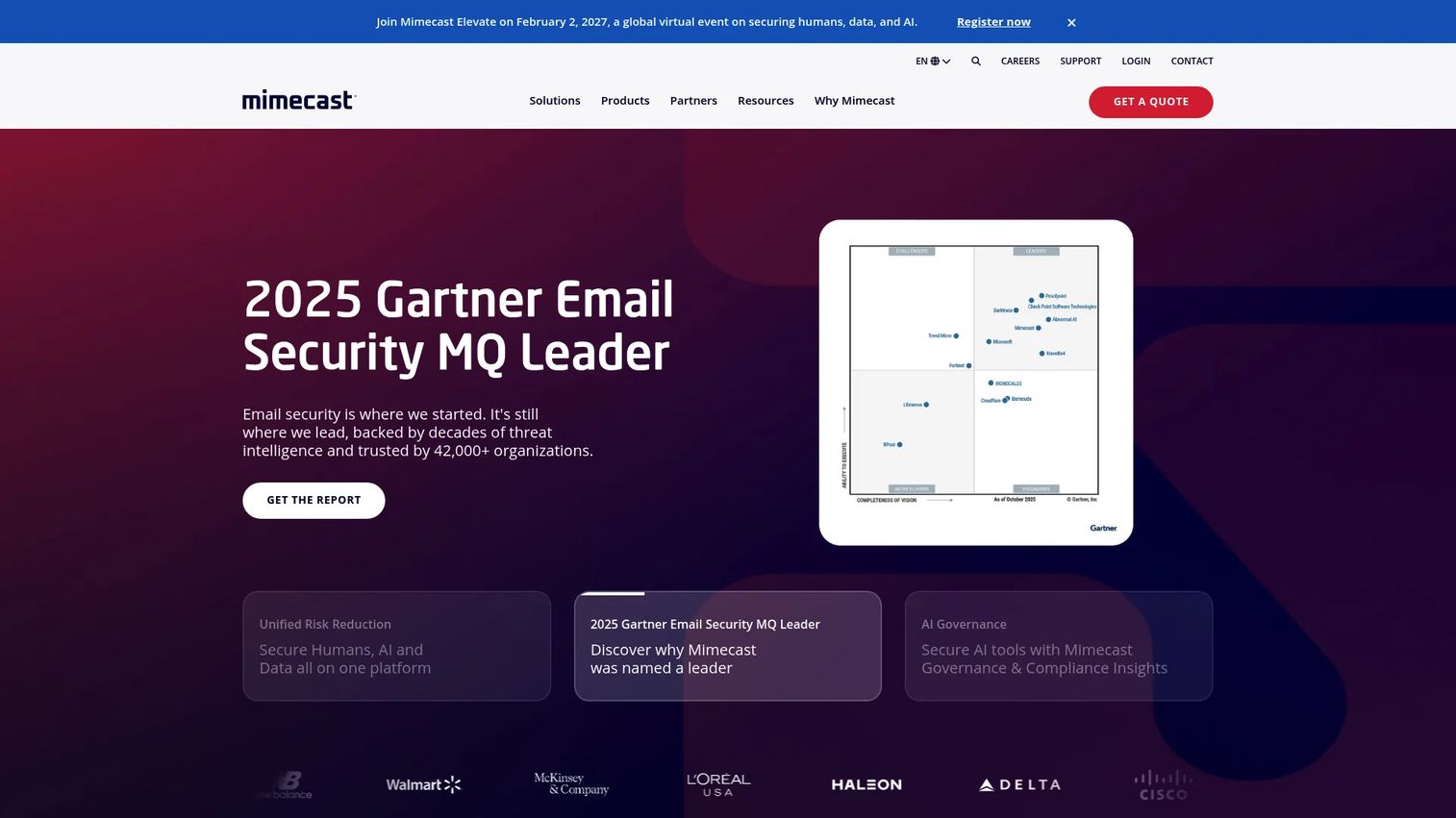
Mimecast is a cloud-based platform covering email threat protection, security awareness training, insider risk, data loss prevention, archiving, and email continuity. Organizations use it when they need security and email resilience under the same vendor relationship: if the primary mail server goes down, Mimecast can continue delivering email through its continuity service. The archiving and eDiscovery capabilities make it a common choice for regulated industries.
Mimecast has been privately held by Permira since 2022, and has since absorbed Elevate Security, Aware, and Code42, which is where much of its insider risk and human risk tooling comes from. Buyers should ask which acquired components are fully integrated and which are still sold as adjacent modules.
Best for: Organizations that need email security alongside continuity, archiving, and compliance governance.
Key features
- AI-powered threat protection: Detection for phishing, malware, and impersonation
- Email continuity: Delivery and access during outage
- Secure messaging: Encrypted message delivery
- Cloud archiving: Retention, eDiscovery, and audit
- Awareness training: Security behavior programs and simulations
Why choose Mimecast: The clearest fit is an organization where email availability and compliance retention matter as much as threat prevention. Buyers evaluating Mimecast should verify which specific modules are included in their package tier. The platform spans several product lines, and the features that matter most for a specific buyer, whether continuity, DLP, or archiving, may sit in different packages.
Mimecast pricing: Mimecast offers Critical, Advanced, and Premium email security plans. Pricing is custom across all tiers and requires a quote from Mimecast directly. No tier prices are posted.
G2 rating: 4.4/5, on the Mimecast Advanced Email Security listing
5. Barracuda Email Protection
Barracuda Email Protection is a cloud-based email security suite covering inbound phishing and malware, AI-powered BEC detection, account takeover protection, post-delivery remediation, email backup, and security awareness training. Its plans range from integrated email protection to premium bundles with incident response and advanced capabilities. The platform is widely used by SMB and mid-market teams that want layered protection without building a dedicated security operations function.
Barracuda has been owned by KKR since 2022, having previously been held by Thoma Bravo. It is a separate owner from the Thoma Bravo entries in this list.
Best for: SMB and mid-market organizations that want phishing prevention, backup, and incident response from a single vendor.
Key features
- Phishing and malware protection: Inbound filtering and sandboxing
- AI-powered BEC detection: Impersonation and fraud identification
- Post-delivery remediation: Automated clawback from inboxes
- Account takeover protection: Suspicious login monitoring and response
- Email backup and archiving: Continuity and retention capabilities
Why choose Barracuda Email Protection: The strongest fit is an SMB or mid-market team that wants bundled prevention, backup, and response without managing separate point products. During evaluation, verify Microsoft 365 and Google Workspace integration depth, how the admin console handles incident response queues, and what the MSP management layer looks like if relevant.
Barracuda Email Protection pricing: Barracuda publishes multiple plans including Integrated Email Protection, Integrated Email Protection Premium, and Premium Plus variants. For MSP environments, verify per-seat and per-tenant licensing terms separately.
G2 rating: 4.5/5
6. Cisco Secure Email Threat Defense
Cisco Secure Email Threat Defense is a cloud-native email security product using AI, machine learning, and Cisco Talos threat intelligence to detect phishing, ransomware, malware, domain impersonation, and QR-code phishing. It integrates with Microsoft 365 via API and supports gateway deployment for mixed environments including Google Workspace, on-premises Exchange, and other mail servers. Organizations running Cisco XDR or Cisco Secure Endpoint get additional correlation across the Cisco security stack.
Best for: Organizations already invested in Cisco security architecture who want email threat intelligence connected to broader Cisco workflows.
Key features
- Talos threat intelligence: Real-time threat feeds with retrospective verdicts
- AI-powered detection: Phishing, BEC, malware, and QR phishing coverage
- Mailbox remediation: Post-delivery message removal
- Domain impersonation detection: Lookalike domain analysis
- Cisco XDR integration: Cross-stack threat correlation
Why choose Cisco Secure Email Threat Defense: The fit is clearest when the buyer already runs Cisco XDR or Secure Endpoint and wants email signals feeding the same investigation surface. Buyers new to Cisco should evaluate integration complexity carefully and clarify whether they need the API-based deployment for Microsoft 365 or gateway-based routing for a mixed mail environment.
Cisco Secure Email Threat Defense pricing: Cisco offers ETD Essentials and ETD Advantage subscription tiers across 1, 3, and 5-year terms. Pricing is not displayed and requires a quote from Cisco or a reseller.
G2 rating: 4.3/5
7. Darktrace / EMAIL
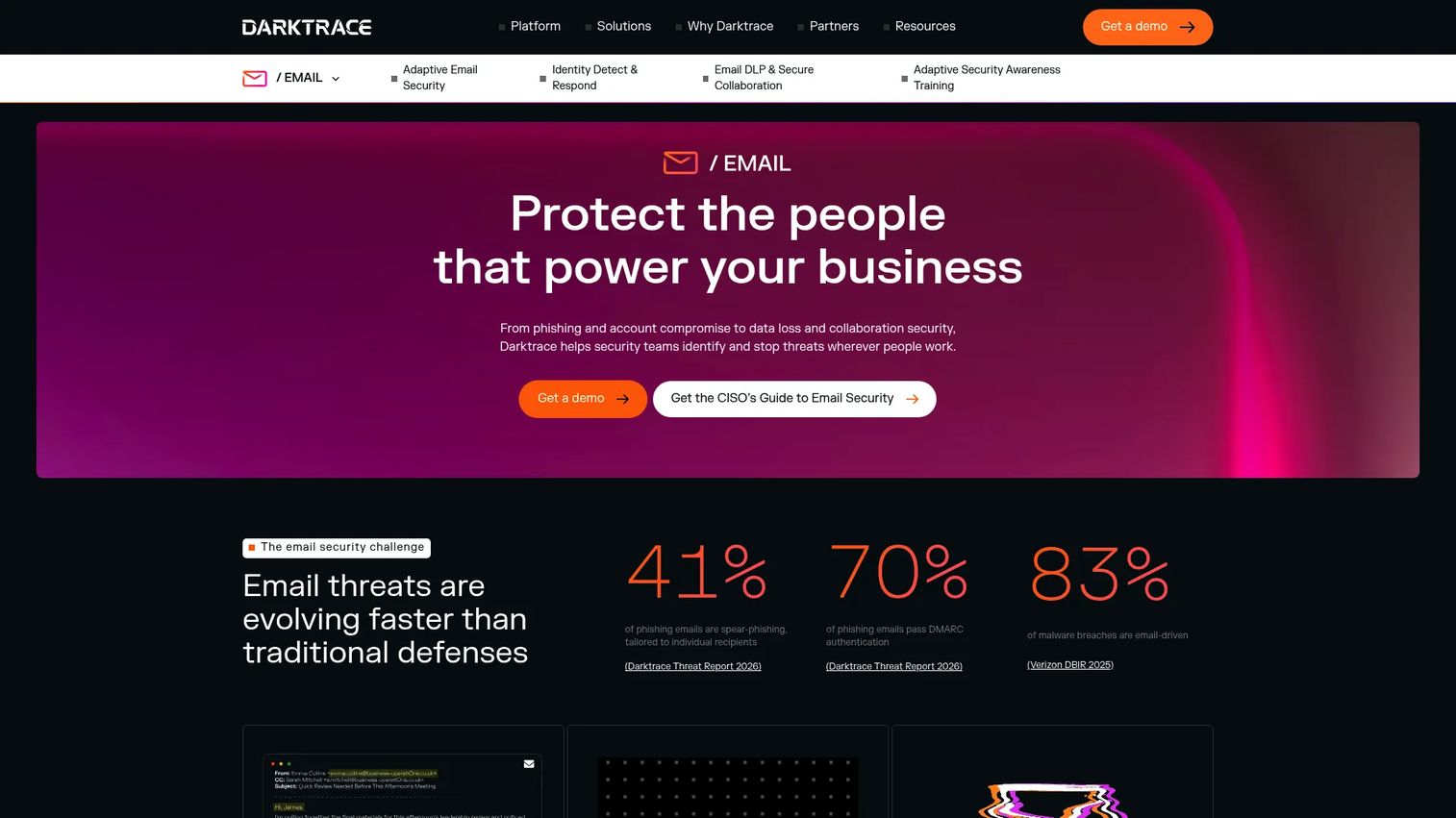
Darktrace / EMAIL uses a self-learning AI model that builds a behavioral baseline for each organization's communication patterns, then detects deviations that suggest phishing, BEC, account compromise, or data exfiltration. Unlike rule-based systems, the model adapts as employee communication norms change. It also covers behavioral DLP for outbound email and supports adaptive security awareness training triggered by detected risk.
Darktrace was taken private by Thoma Bravo in October 2024, the same owner as Proofpoint and Sophos elsewhere in this list.
Best for: Mid-market and enterprise security teams that want a detection model that adapts to changing communication behavior across the organization.
Key features
- Self-learning detection: Behavioral baselining per user and relationship
- Identity Detection and Response: Autonomous containment for account compromise
- Behavioral DLP: Outbound data loss detection based on communication patterns
- Link and attachment protection: Real-time analysis
- Adaptive awareness training: Risk-triggered employee interventions
Why choose Darktrace / EMAIL: The fit is strongest when the buyer wants detection that adapts without manual rule tuning. During evaluation, ask how the model explains specific detections and what controls admins have over autonomous response actions. The autonomous response features require careful scoping in regulated or sensitive environments.
Darktrace / EMAIL pricing: Darktrace prices by quote based on mailbox count and deployment scope.
G2 rating: 4.2/5
8. Sophos Email
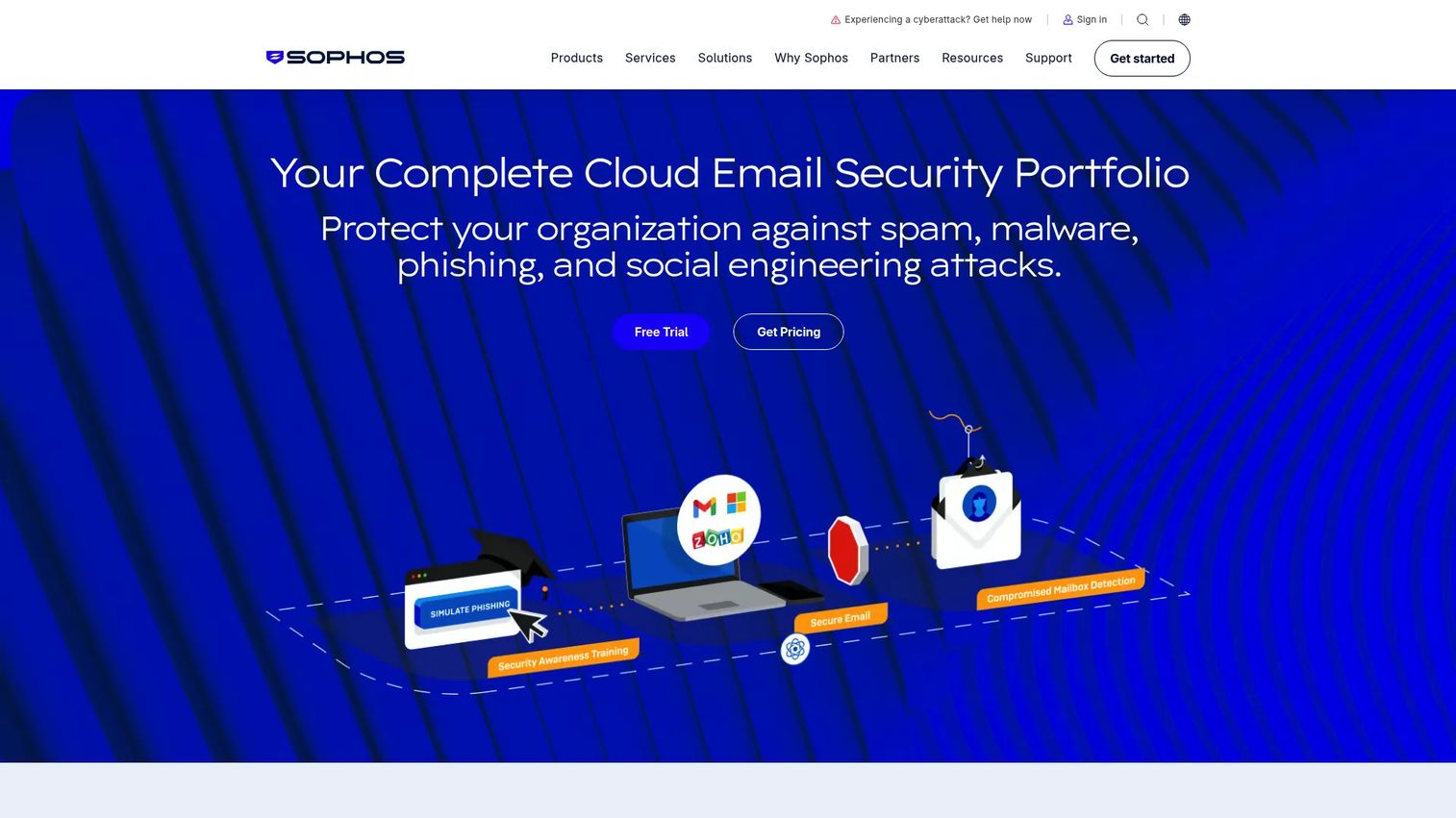
Sophos Email is an AI-powered cloud email security product managed through Sophos Central, the same console used to manage Sophos endpoint, firewall, and network products. It covers phishing, BEC, malware, impersonation, spam, encryption, and DLP across Microsoft 365 and Google Workspace. Post-delivery protection includes automatic email clawback after detection. Sophos Central's unified management makes it a natural fit for teams already using other Sophos products.
Sophos has been owned by Thoma Bravo since 2020, which also owns Proofpoint and Darktrace in this list. The three are independent products but not independent corporate bets.
Best for: SMB and mid-market teams running Sophos endpoint or firewall products who want email security in the same management console.
Key features
- AI-powered threat detection: Phishing, BEC, and malware identification
- Natural-language impersonation protection: BEC and display-name analysis
- Time-of-click URL protection: Rewriting and sandboxed link analysis
- Email encryption and DLP: TLS, S/MIME, and portal encryption with outbound controls
- Post-delivery clawback: Automatic remediation after detection
Why choose Sophos Email: The strongest argument for Sophos Email is operational consolidation: managing email security, endpoints, and network devices from Sophos Central reduces tool switching for IT teams. Presales evaluations should validate reporting depth and whether the buyer needs the Plus tier for specific DLP or encryption features.
Sophos Email pricing: Sophos offers Sophos Email and Sophos Email Plus subscription tiers, licensed per user for shared mailboxes. Pricing requires a quote. A free trial is available.
G2 rating: 4.2/5
9. FortiMail
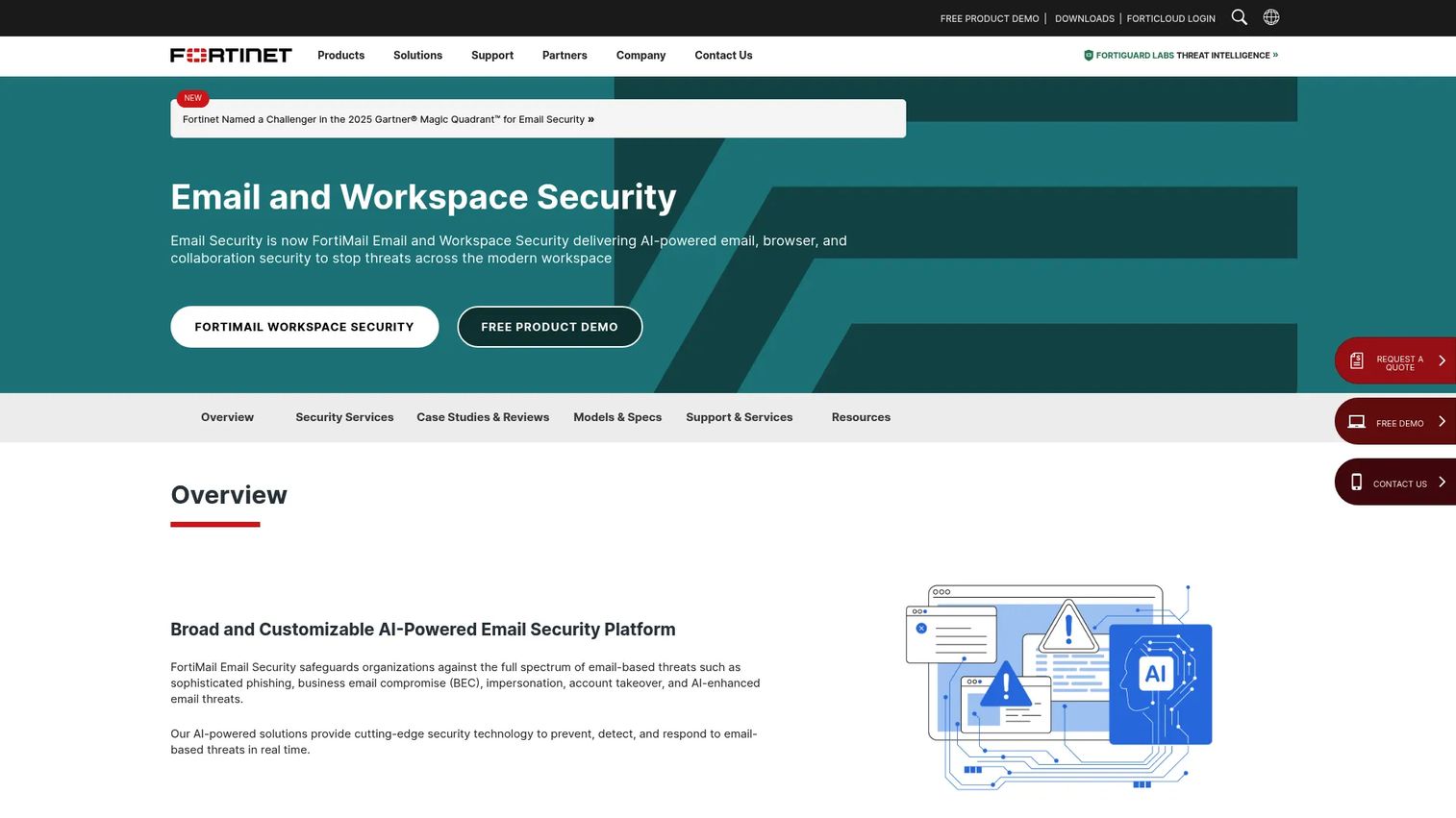
FortiMail is Fortinet's email security product available as a physical appliance, virtual appliance, hosted cloud service, or SaaS subscription. It supports anti-spam, anti-malware, cloud sandboxing, content disarm and reconstruction, DLP, encryption, email continuity, and integration with the Fortinet Security Fabric. Organizations with hybrid infrastructure or specific appliance requirements that other platforms can't accommodate often turn to FortiMail for its deployment flexibility.
Best for: Organizations requiring flexible deployment across gateway, cloud, virtual, or physical appliance models, especially in Fortinet-heavy environments.
Key features
- Secure email gateway: MX-based routing with full inbound and outbound inspection
- Cloud sandboxing: Integration with FortiSandbox for file analysis
- Content disarm and reconstruction: File sanitization before delivery
- DLP and encryption: Outbound controls with policy enforcement
- Email continuity: Failover and delivery during outages
Why choose FortiMail: The fit is strongest when architecture matters as much as detection, particularly for buyers with on-premises infrastructure, compliance requirements around mail routing, or an existing Fortinet deployment. API-native cloud deployment is available for Microsoft 365 and Google Workspace buyers who don't want gateway routing.
FortiMail pricing: Pricing covers appliance purchase, virtual appliance licensing, and cloud/SaaS subscription options.
G2 rating: 4.3/5
10. Check Point Email Security
Check Point Email Security is an API-based, prevention-first email and collaboration security product protecting Microsoft 365, Gmail, Teams, Slack, SharePoint, OneDrive, and several cloud storage platforms. It covers anti-phishing, malware protection, account takeover prevention, URL click-time analysis, file sanitization via CDR, and DLP. Deployment connects via API without routing mail through an external MX, which means no mail flow changes and fast time to protection.
The product came to Check Point through its 2021 acquisition of Avanan, and it is also sold as Harmony Email and Collaboration. Buyers comparing quotes or reading older reviews may meet all three names for the same product, which is worth checking before a shortlist accidentally carries it twice.
Best for: Cloud email teams that want API-based inline protection for Microsoft 365 or Google Workspace without changing MX records.
Key features
- API-based deployment: No MX changes required for cloud mailboxes
- Anti-phishing and BEC prevention: Identity and content analysis
- File sanitization: CDR removes active content before delivery
- Account takeover protection: Suspicious behavior detection
- DLP: Outbound data loss controls across email and collaboration
Why choose Check Point Email Security: The clearest fit is a cloud-first buyer who wants inline protection across email and collaboration tools without a gateway routing model. A 14-day free trial is available. Check Point also offers an optional archiving add-on, DMARC management, and Incident Response as a Service for teams that need additional coverage.
Check Point Email Security pricing: Check Point offers Advanced Protect and Complete Protect packages for Email Only and Email and Collaboration variants. All packages are quote-based.
G2 rating: 4.6/5
11. IRONSCALES Email Security Platform
IRONSCALES is an AI-powered email security platform that connects automated detection with employee-reported phishing analysis, agentic AI remediation, and security awareness training. When a user reports a suspicious email, IRONSCALES analyzes it, correlates it across the mailbox environment, and remediates matching threats automatically. This human-plus-AI loop is the platform's defining characteristic, making it a fit for teams that want employee reporting to actually drive action rather than feed a manual review queue.
Best for: Organizations and MSPs that want employee-reported phishing to trigger automated mailbox-level remediation across the environment.
Key features
- AI phishing and BEC detection: Continuous mailbox behavioral analysis
- Agentic AI remediation: Autonomous threat response across inboxes
- Abuse mailbox automation: Employee-reported email triage and correlation
- Phishing simulation: Security awareness with adaptive training
- Email encryption and DLP: Outbound protection and data controls
Why choose IRONSCALES Email Security Platform: The strongest fit is a team that runs active security awareness programs and wants reported threats to close automatically rather than sit in a queue. MSP buyers should evaluate the multitenant management capabilities and per-tenant reporting depth specifically. A free trial for businesses is available.
IRONSCALES Email Security Platform pricing: IRONSCALES offers Email Essentials, Email Protect, Email Protect 360, Email Protect Pro, Complete Protect, and Human Risk Management plans. All plans require a quote.
G2 rating: 4.7/5
12. Cloudflare Cloud Email Security
Cloudflare Cloud Email Security is a cloud-native email security product using AI, threat intelligence, and security rules to detect phishing, BEC, malware, spam, and spoofing before delivery. It supports inline/MX, API, BCC/journaling, and hybrid deployment. Detection decisions are explainable, which matters for security analysts who need to understand why a message was flagged or released. For buyers already using Cloudflare One for Zero Trust, email security integrates into the same architecture.
The product came to Cloudflare through its 2022 acquisition of Area 1 Security, and it is now sold as part of the Cloudflare One portfolio rather than as a standalone brand.
Best for: Cloud-native security teams that need explainable pre-delivery detection and want email security integrated with broader Zero Trust or SOC workflows.
Key features
- Pre-delivery detection: AI and threat intelligence analysis before inbox delivery
- Multi-channel protection: Email, SMS, Slack, and Teams threat coverage
- Explainable detections: Investigation tools with search, filter, and reclassification
- Flexible deployment: Inline, API, BCC/journaling, and hybrid options
- Post-delivery remediation: Message removal after delivery if needed
Why choose Cloudflare Cloud Email Security: The fit is clearest for cloud-native security teams that want detection they can inspect and action through SOC workflows. The explainability is a meaningful advantage when analysts need to understand detection logic during incident response or RFP audits. Verify Microsoft 365 and Google Workspace compatibility and confirm SOC integration requirements during evaluation.
Considerations when choosing intelligent email protection software
Detection accuracy and false positives
Ask vendors for test data using your own mail samples during a proof of concept, not just published detection rates. False positives on business-critical emails cost time and erode user trust in the system. Verify how admins override incorrect detections, how quickly the model adjusts, and whether detections are explainable enough for SOC investigation.
Deployment model
Secure email gateway deployment routes all mail through the vendor's infrastructure via MX record changes. API-native deployment connects directly to cloud mailboxes without touching mail flow. Hybrid approaches combine both. The choice affects rollback complexity, latency, mail routing visibility, and how quickly the platform can be deployed or removed during evaluation.
Microsoft 365 and Google Workspace fit
Verify coverage for Exchange Online, Gmail, shared mailboxes, distribution groups, and aliases. Post-delivery remediation requires mailbox-level API access, which some gateway-only products handle differently. Also check identity integration: platforms connected to Entra ID or Google Identity can use sign-in signals for account takeover detection.
Vendor ownership, product names, and roadmap risk
Email security has consolidated heavily, and several platforms on any shortlist may answer to the same owner or may have arrived through acquisition. Proofpoint, Sophos, and Darktrace share one private equity owner, and Proofpoint absorbed Hornetsecurity in December 2025. Mimecast and Barracuda each sit with a different private equity firm. Check Point's product was Avanan and is also sold as Harmony Email and Collaboration. Cloudflare's email product began as Area 1 Security. None of this makes a product weaker, but it does affect how much genuine vendor diversification a two-vendor or three-vendor shortlist delivers, and a product sold under two or three names can appear twice on the same list without anyone noticing. Ask about roadmap commitments and support continuity for recently acquired components.
Incident response workflow
Map the buyer's existing workflow before selecting a platform. Ask how user-reported phishing moves from the abuse mailbox to automated remediation. Verify investigation timelines, quarantine release procedures, and whether the platform integrates with the buyer's SIEM or ticketing system. Automated email threat remediation that doesn't connect to the SOC workflow creates a separate investigation silo.
Compliance, DLP, and encryption
Regulated buyers, particularly those in financial services, healthcare, or legal, need outbound email controls alongside inbound threat protection. Verify which tier includes DLP policy enforcement, email encryption, retention archiving, eDiscovery export, and audit log access. These capabilities sit in different modules or tiers across most vendors and should be scoped before procurement.
Conclusion
Email security software selection comes down to your environment, your threat profile, and your security team's operational model.
Microsoft-first organizations should start with Microsoft Defender for Office 365 and evaluate Plan 1 versus Plan 2 based on whether automated investigation and attack simulation are required. Large enterprises with layered compliance requirements should evaluate Proofpoint and Mimecast for their governance depth. Environments where BEC and supplier fraud are the primary concern should look closely at Abnormal AI and Darktrace / EMAIL for their behavioral detection approaches.
SMB and mid-market teams with limited security operations capacity should evaluate Barracuda Email Protection, Sophos Email, and IRONSCALES for their manageable admin overhead and bundled response capabilities. Cloud-native security teams who prioritize SOC integration should review Cloudflare Cloud Email Security and Check Point Email Security.
The right next step is a two-vendor or three-vendor proof of concept using known phishing samples, benign business emails, executive impersonation scenarios, and QR phishing test cases. Measure false positives alongside detection rates, time admin tasks during the trial, and confirm rollback procedures before committing. Check the owner and the product lineage of each finalist too, so a shortlist meant to compare three approaches isn't quietly comparing three products from one owner, or the same product under two names.
Security buyers rarely sit through a live call before they understand what a product does, and detection and remediation workflows are hard to convey in a slide or a screenshot. If your team sells a technical security product, interactive demos let a prospect click through the real detection and response flow at their own pace, before anyone books time. Start your journey with Guideflow today!
FAQs
Intelligent email protection software uses AI, machine learning, behavioral analysis, threat intelligence, and automated remediation to protect inbound, outbound, and internal email. It targets phishing, BEC, malware, ransomware, impersonation, and account takeover, going beyond signature-based spam filtering to detect attacks that appear legitimate.
A secure email gateway is one deployment model within the broader category. It routes all mail through the vendor's infrastructure via MX record changes. Intelligent email protection also includes API-native mailbox scanning without MX changes, post-delivery remediation, behavioral analysis, user-reported email workflows, DLP, encryption, and incident response. Many platforms support both gateway and API-native deployment in the same product.
Native controls in both platforms block high-volume commodity threats effectively. Many organizations add a third-party layer for advanced phishing detection, BEC behavioral analysis, post-delivery remediation across all inboxes simultaneously, deeper compliance reporting, and security workflow integrations. The decision depends on threat profile, compliance requirements, and how much post-delivery visibility the team needs.
Test known phishing samples across multiple categories: executive impersonation, supplier invoice fraud, credential harvesting, QR code phishing, and malicious attachments. Include benign business email in the mix to measure false-positive rates. Simulate a user-reported phishing flow and measure how quickly the platform remediates across the mailbox environment. Time all admin tasks and confirm rollback procedures before ending the trial.
BEC protection depends on identity signals, sender relationship mapping, language analysis, and account takeover detection working together. Abnormal AI and Darktrace / EMAIL are specifically designed around behavioral detection for BEC scenarios. Microsoft Defender for Office 365 and Proofpoint also include impersonation and BEC protection, with different architectural approaches. Evaluate each against your specific threat environment during proof of concept rather than relying on vendor claims alone.
API-based email security connects directly to Microsoft 365 or Google Workspace to inspect mailboxes and remediate threats without routing all mail through an external gateway. Mail flow stays within the cloud provider's infrastructure, and the security platform accesses mailbox content via the provider's API. Some buyers prefer this model for deployment speed and reduced mail-routing complexity. Others still need gateway controls for compliance, archiving, or on-premises infrastructure.
Most platforms combine model tuning, sender reputation databases, relationship analysis between known correspondents, and admin allow lists to reduce incorrect detections. Explainable detections let analysts review the reasoning behind a flag and correct it. During a proof of concept, track false-positive rates on known-good business email, test how quickly allow-list updates take effect, and ask how the model incorporates admin feedback over time.
MSPs need multitenant dashboards that show all customer environments from a single view, delegated administration with customer-level permission controls, customer-specific reporting, automated remediation that scales without per-tenant manual work, integration with PSA and ticketing systems, and flexible per-seat or per-tenant licensing. IRONSCALES, Barracuda, and Sophos have documented MSP programs worth evaluating specifically for multitenant management depth.