Your audit plan lives in one spreadsheet. Your workpapers live in a shared drive. Evidence sits in a mix of email threads, screenshots, and folders nobody can find during fieldwork. When the audit committee asks for a status update, someone spends two days reconciling versions before anyone can answer a simple question.
That is the daily reality for internal audit teams still stitching together disconnected tools. And it is exactly why buyers are comparing platforms now. The global internal audit management software market is projected to grow from about $42.4 billion in 2025 to $52.8 billion by 2030, according to The Business Research Company (2025). The pressure behind that growth is real: more regulation, higher expectations from boards, and a push to bring AI into audit analytics without sacrificing traceability.
The right internal audit software replaces the patchwork with one system that carries an audit from planning through follow-up. That means risk-based planning, structured fieldwork, secure evidence handling, real-time reporting, and standards conformance in a single place. If you have compared broader governance categories like audit management software or contract lifecycle management, the evaluation logic here will feel familiar: coverage, governance, and adoption matter more than any single feature.
What's inside
This guide compares 7 internal audit management platforms for teams evaluating full audit lifecycle coverage in 2026. It is written for internal audit leaders, GRC teams, and procurement stakeholders shortlisting vendors and validating fit before a purchase.
We selected each platform based on four criteria that matter most in real audit buying:
- Lifecycle depth: how well it covers the audit universe, planning, fieldwork, testing, reporting, and remediation.
- Automation and AI: whether AI audit analytics reduce manual effort without breaking traceability.
- Reporting and governance: dashboards, audit committee reporting, versioning, and standards conformance.
- Integrations and fit: how it plugs into your existing stack and scales with your operating model.
TL;DR
Short on time? Here is how the shortlist maps to common buyer needs.
- Best for connected enterprise reporting: Workiva, for teams linking finance, risk, and assurance data with full auditability.
- Best for enterprise GRC depth: MetricStream, for large programs that need a federated data model across risk, compliance, and audit.
- Best for AI-first audit workflows: Optro, for teams prioritizing AI governance and continuous auditing.
- Best for board and governance alignment: Diligent One Platform, for organizations tying audit to board reporting.
- Best for audit-first process discipline: TeamMate, for mature internal audit functions wanting a known audit workflow platform.
- Best for SAP-centered enterprises: SAP Audit Management, for teams already standardized on SAP.
- Best for compliance-led teams: Hyperproof, for groups coordinating audit and compliance without overbuilding.
What is internal audit management software?
Internal audit management software is a system that centralizes and automates the full internal audit lifecycle, from risk-based planning and fieldwork through evidence, reporting, remediation, and standards conformance. It replaces spreadsheets, shared drives, and disconnected tools with one governed environment where auditors, reviewers, and stakeholders work from the same data.
At its core, the software supports six connected workflows: defining the audit universe, planning and scheduling based on risk, executing fieldwork and testing, managing workpapers and evidence, reporting to stakeholders, and tracking remediation to closure. Modern audit management systems layer automation and AI on top of those workflows to cut manual effort.
Most modern internal audit tools include:
- Risk-based audit planning that ties the audit universe to a scored risk assessment.
- Workpapers, evidence management, and reporting in a secure, versioned repository with clear ownership.
- Fieldwork and testing workflows with repeatable templates and review sign-offs.
- Issue and remediation tracking that follows findings from creation to closure.
- Dashboards and audit committee reporting that surface real-time status and coverage.
- Standards conformance aligned to the Global Internal Audit Standards.
- AI audit analytics for anomaly detection, drafting, and summarization.
- Integrations with GRC, ERP, and audit and compliance software already in the stack.
The distinction that matters: a true internal audit management system covers the whole lifecycle, not just one slice like evidence collection or reporting. That breadth is what separates a platform from a point tool.
When to use internal audit management software
Not every team needs an enterprise platform on day one. Here is how to pattern-match your situation.
Centralize audit programs
If your team still runs audits across spreadsheets, email, and shared drives, an internal audit management system is the fix. Centralizing the audit universe, plans, and status into one place ends version chaos and gives leadership a single source of truth. This is usually the first trigger for teams outgrowing manual tooling.
Standardize fieldwork and evidence
When every auditor documents work differently, review takes longer and quality drifts. A platform with repeatable fieldwork templates, secure workpapers, and controlled evidence management makes execution consistent. It also protects sensitive data with access controls and a clean audit trail, which matters for both quality and standards conformance.
Improve reporting and follow-up
If preparing audit committee reporting means days of manual reconciliation, real-time dashboards change the equation. The strongest audit software tools track remediation from finding to closure and generate committee-ready outputs on demand. That shift, from reactive reporting to live visibility, is often the reason a purchase gets approved.
Comparison table
Here is a quick-scan view of the 7 internal audit management platforms before the detailed reviews. Several vendors use quote-based pricing, so we note that where public figures are not published.
| # | Product | Intent | Key use case | Pricing | G2 rating |
|---|---|---|---|---|---|
| 1 | Workiva | Connected reporting and assurance | Linking finance, risk, and audit data with full auditability | Solution-based, quote only | 4.5/5 |
| 2 | MetricStream | Enterprise GRC depth | Federated data model across risk, compliance, and audit | Quote only | 3.8/5 |
| 3 | Optro | AI-first GRC | Audit, risk, infosec, and AI governance in one platform | Quote only | Not listed |
| 4 | Diligent One Platform | Governance and board alignment | Board management plus audit, risk, and compliance | Quote only | 4.3/5 |
| 5 | TeamMate | Audit-first process | Centralized internal audit workflow management | Quote only | 4.2/5 |
| 6 | SAP Audit Management | SAP-native audit | Audit planning and execution inside SAP | Price on request | Not listed |
| 7 | Hyperproof | Compliance-led audit | Compliance, risk, and third-party risk coordination | Free trial available, quote for tiers | 4.5/5 |
The rankings below reflect fit for full internal audit lifecycle coverage, not overall company size. Read each section against your own operating model.
1. Workiva
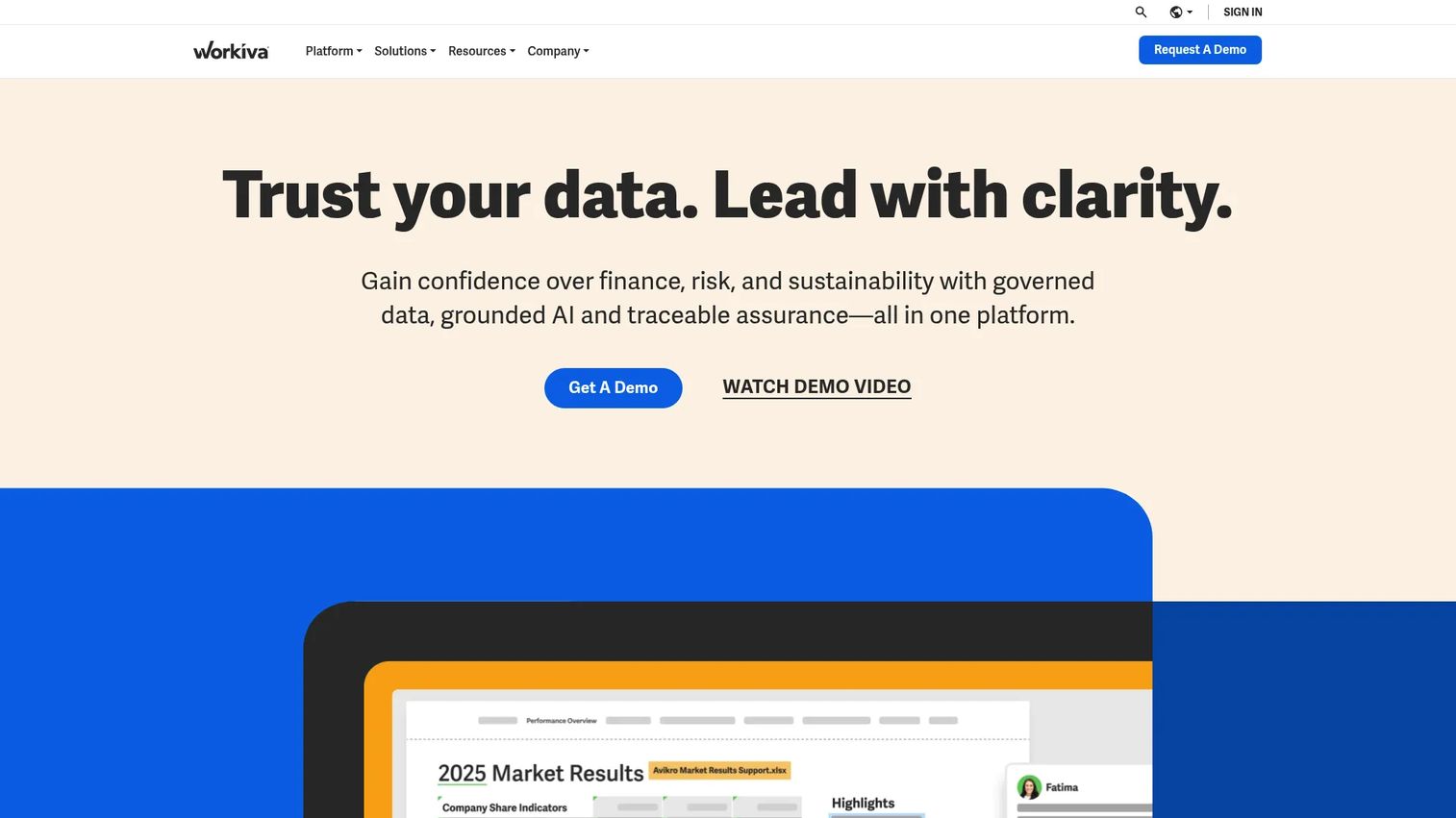
Workiva is a cloud platform for finance, risk, and sustainability reporting with governed data, AI, and assurance built in. For internal audit teams, its strength is connecting audit work to the same governed data that drives financial and risk reporting, so nothing lives in a silo. That connected model makes it a strong fit for enterprises where audit, finance, and risk reporting need to reconcile.
Best for: Enterprises needing connected financial, risk, and sustainability reporting alongside internal audit.
Key strengths
- Connected reporting: Links finance, risk, sustainability, and legal workflows so audit data ties back to source records.
- Workiva AI: Drafts, summarizes, and analyzes across documents to cut manual review time.
- Auditability and traceability: Full linking, collaboration, and version history across documents and data.
Why choose Workiva: If your internal audit function reports into a broader assurance and reporting mandate, Workiva keeps everything traceable in one governed environment. It suits teams that value connected data over standalone audit modules, and its collaboration model helps distributed teams work without breaking the audit trail. Enterprises with heavy reporting obligations get the most from it.
Workiva pricing: Workiva uses a solution-based licensing model, and price is determined by operating metrics tied to expected use. No public starting price is published on its site, so plan for a quote-based conversation. Workiva holds a 4.5/5 rating on G2.
2. MetricStream
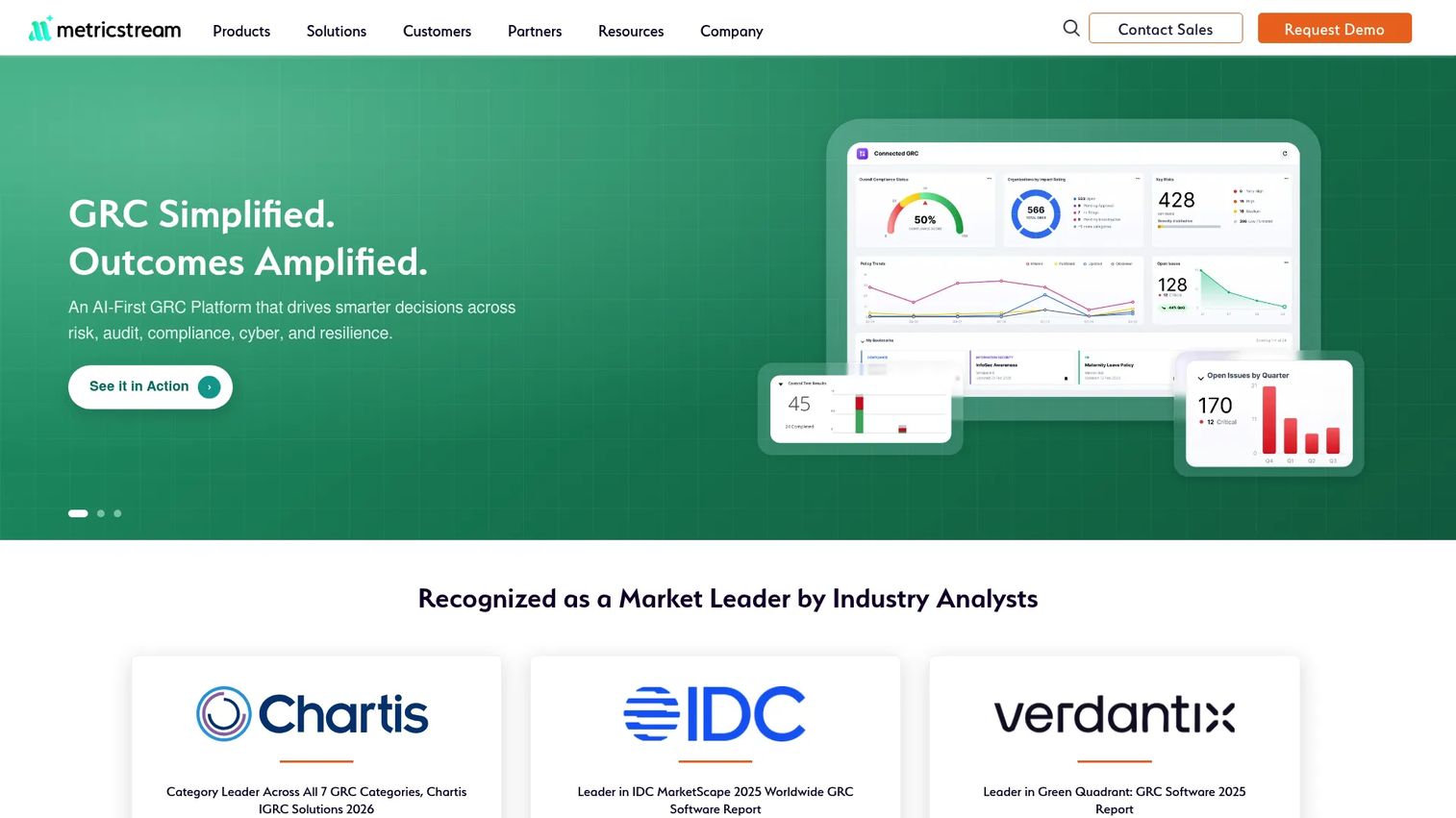
MetricStream is an enterprise GRC software platform spanning risk, compliance, audit, cyber, and resilience management. Its internal audit capabilities sit inside a broader connected GRC environment, which is why large programs choose it: audit does not operate in isolation from risk and compliance. The platform is built for scale and configuration, with agile audit planning and issue management woven through the lifecycle.
Best for: Large enterprises needing an AI-first connected GRC platform where audit shares data with risk and compliance.
Key strengths
- Federated data model: Connects audit, risk, and compliance data so findings and risks stay aligned.
- AppStudio: Configures and extends workflows without heavy custom development.
- AI-powered recommendations: Semantic search and guidance help teams surface relevant data faster.
Why choose MetricStream: Choose MetricStream when internal audit is one part of a larger enterprise GRC program and you need workpapers, evidence, issue management, and dashboards under one roof. It fits organizations that want a configurable platform and are ready to invest in setup for long-term depth. Teams running agile audit programs at scale benefit most.
MetricStream pricing: MetricStream does not display public pricing; its pricing page requests contact for a quote. Expect enterprise packaging tailored to program scope. MetricStream holds a 3.8/5 rating on G2.
3. Optro
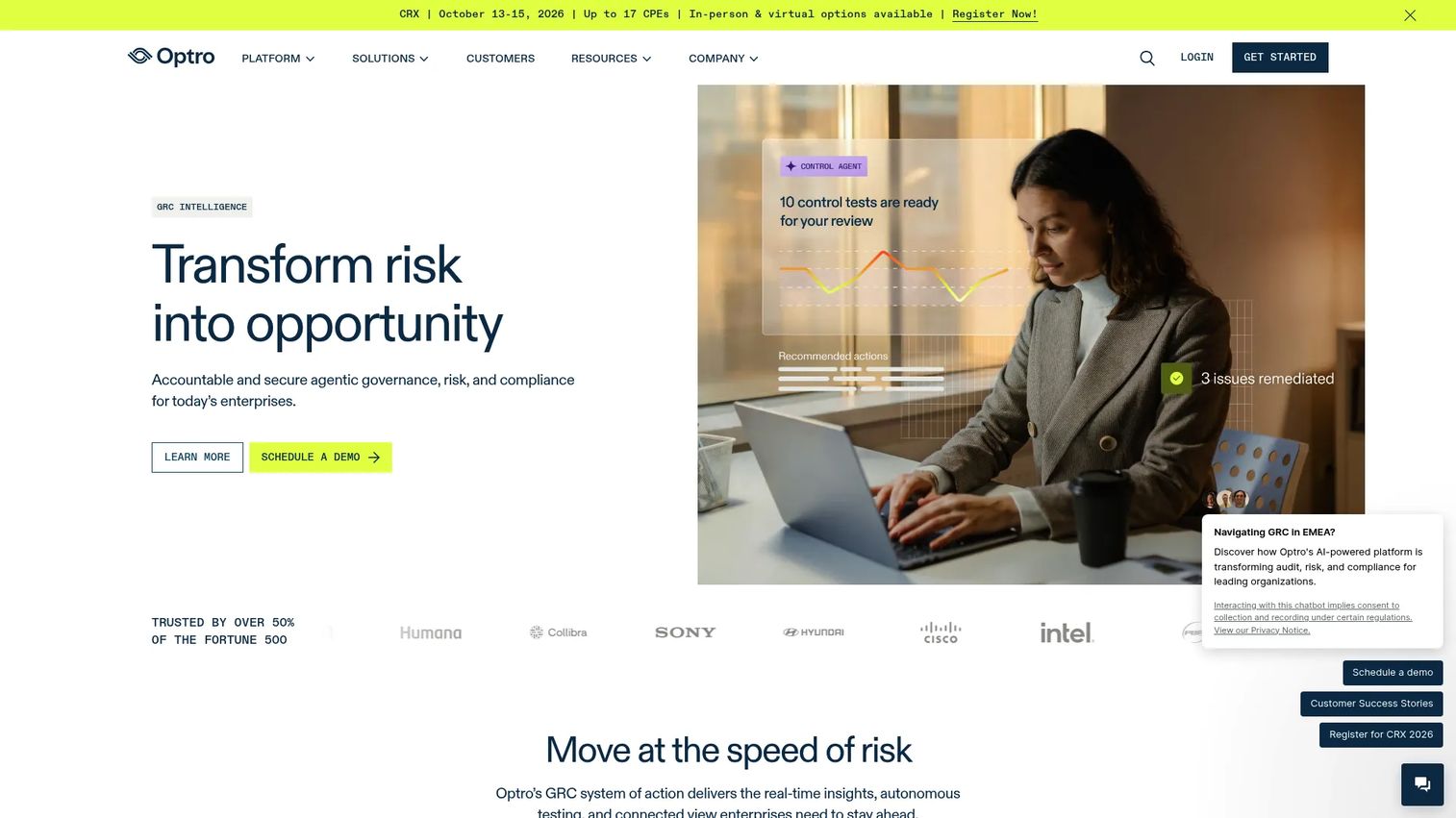
Optro is an AI-powered GRC platform covering audit, risk, infosec, compliance, and AI governance. It positions AI at the center of the audit lifecycle, with continuous auditing and risk alignment as core themes rather than add-ons. For teams that want automation and stakeholder collaboration built in from the start, Optro is a strong operational audit option.
Best for: Mid-market and enterprise teams needing a connected GRC platform with AI at the core.
Key strengths
- Broad module coverage: Audit, risk, infosec, and compliance modules in one connected platform.
- AI governance: Guardrails and oversight for using AI responsibly across audit and risk work.
- Wide connectivity: Support for 30+ frameworks and 200+ integrations to fit existing stacks.
Why choose Optro: Optro fits teams that treat AI audit analytics and continuous auditing as central to how they operate, not experimental extras. Its framework and integration breadth make it adaptable across risk, infosec, and compliance needs alongside internal audit. Mid-market and enterprise teams standardizing on a modern GRC approach get strong value here.
Optro pricing: Optro advertises flexible plans and unlimited stakeholder licenses, but no public numeric price is displayed on its pricing page. Plan for a quote based on your scope. A verified G2 rating was not available at the time of writing.
4. Diligent One Platform
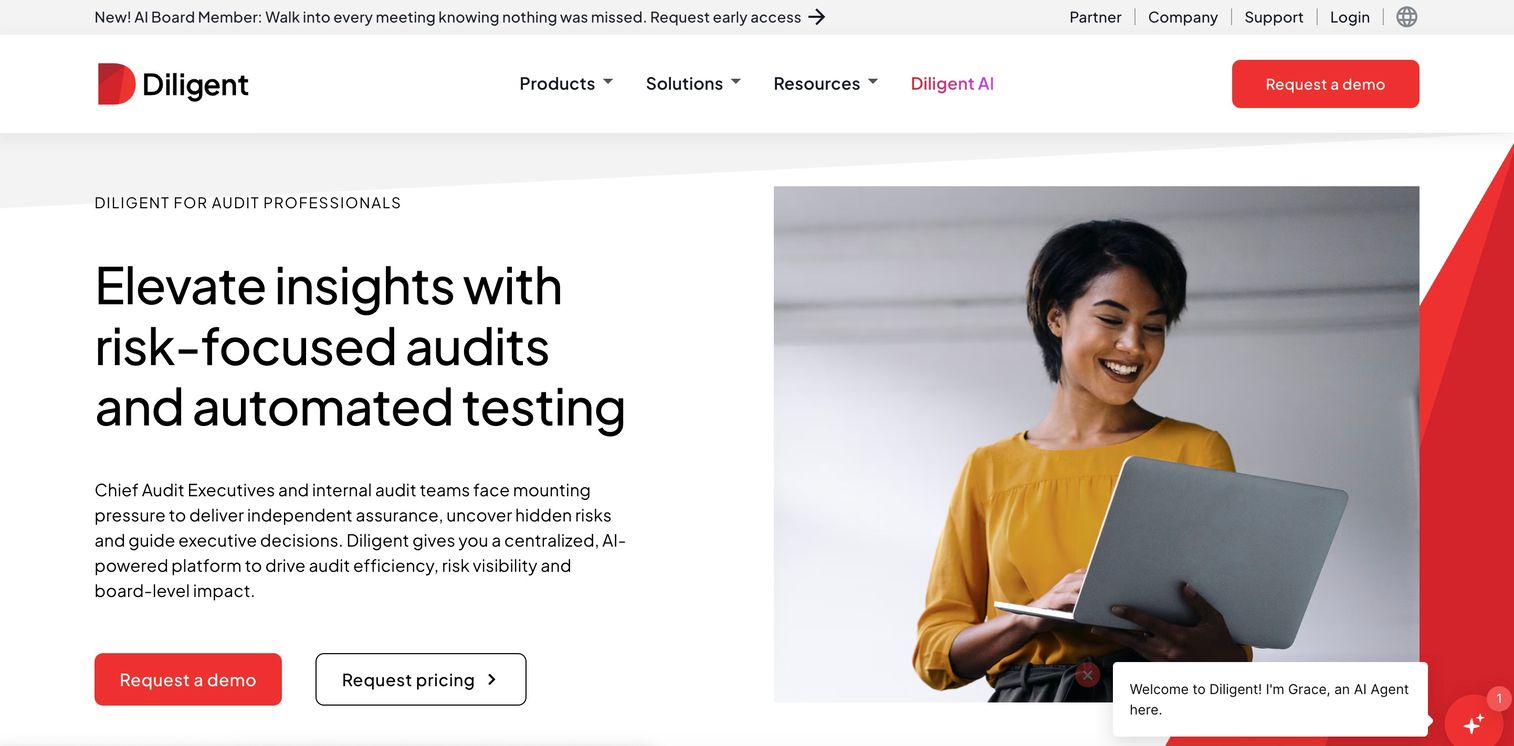
Diligent One Platform is a unified cloud platform for board management and GRC workflows. Its distinguishing angle is tying internal audit directly to board governance, so findings, risks, and audit status roll up into the same environment leadership already uses. For organizations where the audit committee and board are close to the audit function, that alignment is valuable.
Best for: Enterprises needing a single platform for board governance, audit, risk, and compliance.
Key strengths
- Unified governance: Centralizes board management and GRC activities in one place.
- AI-powered insight: Risk data, analytics, and reporting surface what matters for decisions.
- Board-ready output: Templates and dashboards built for board and audit committee reporting.
Why choose Diligent One Platform: Choose Diligent when audit visibility for the board is a first-class requirement, not an afterthought. It fits enterprises with broader governance needs that want audit, risk, and compliance feeding the same reporting layer their directors see. Organizations coordinating governance across multiple functions get the most from its unified model.
Diligent One Platform pricing: Diligent shows a request-pricing flow with no public numeric figure, so pricing is quote-based. Implementation typically involves scoping across the governance and GRC modules you need. Diligent One Platform holds a 4.3/5 rating on G2.
5. TeamMate
TeamMate is audit management software built specifically for internal audit and assurance teams. It is one of the more established audit-first platforms, favored by mature audit functions that want structured workflows and familiar process discipline rather than a broad GRC suite. Its focus stays squarely on the audit lifecycle end to end.
Best for: Internal audit teams needing a centralized, audit-first management platform.
Key strengths
- End-to-end audit workflow: Manages the full audit lifecycle from planning through follow-up.
- Audit trail and documentation: Structured tools for workpapers, evidence, and sign-offs.
- Dashboards and analytics: Reporting that keeps audit status and coverage visible.
Why choose TeamMate: TeamMate fits teams that want a dedicated internal audit management system with deep, audit-specific workflows and process discipline that experienced auditors recognize. It suits functions that prioritize audit depth over cross-domain GRC breadth. Mature audit teams moving off spreadsheets toward a known audit platform are the natural fit.
TeamMate pricing: A readable first-party pricing page was not available at the time of writing, so plan for a direct quote based on team size and modules. TeamMate holds a 4.2/5 rating on G2.
6. SAP Audit Management
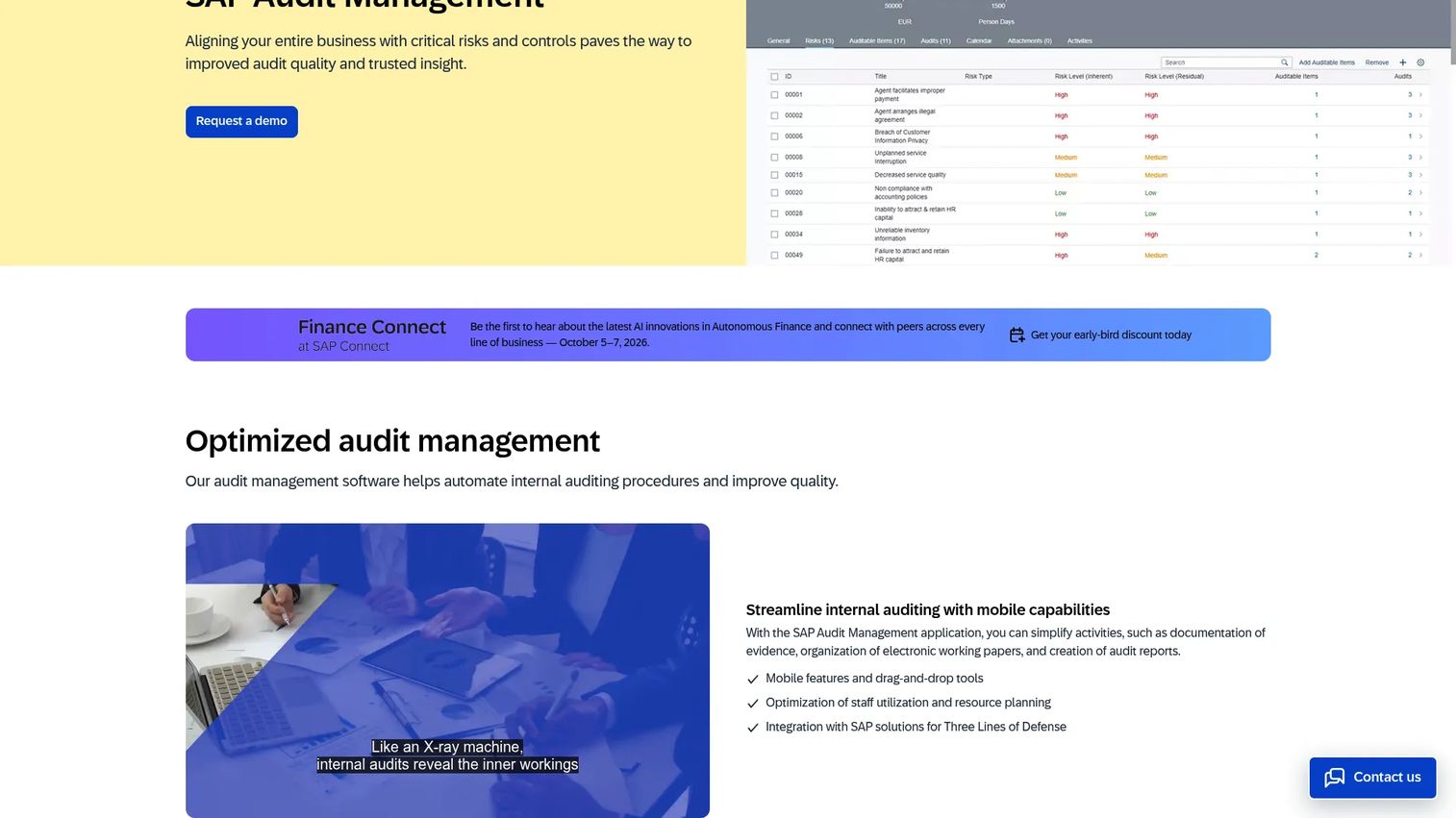
SAP Audit Management is SAP's internal audit software for planning, executing, documenting, and monitoring audits inside a broader enterprise environment. Its biggest advantage is native integration for organizations already standardized on SAP, where audit data can connect to risk and process control modules without a separate integration project.
Best for: Enterprises that need centralized internal audit planning, execution, and follow-up within SAP.
Key strengths
- Audit lifecycle coverage: Planning, management, and performance of audits in one place.
- Results communication: Tools to communicate and monitor audit results with stakeholders.
- Native SAP integration: Connects with SAP Risk Management, SAP Process Control, and SAP Business Integrity Screening.
Why choose SAP Audit Management: SAP Audit Management is the natural choice for SAP-heavy enterprises that want audit workflows living inside the same ecosystem as their risk and process control data. It reduces integration overhead for organizations already invested in SAP. Teams weighing it should factor in their broader SAP footprint and rollout approach.
SAP Audit Management pricing: SAP lists pricing as available on request, with no public numeric figure shown on its product page. Expect enterprise packaging aligned to your SAP landscape. A product-specific G2 rating was not verifiable at the time of writing.
7. Hyperproof
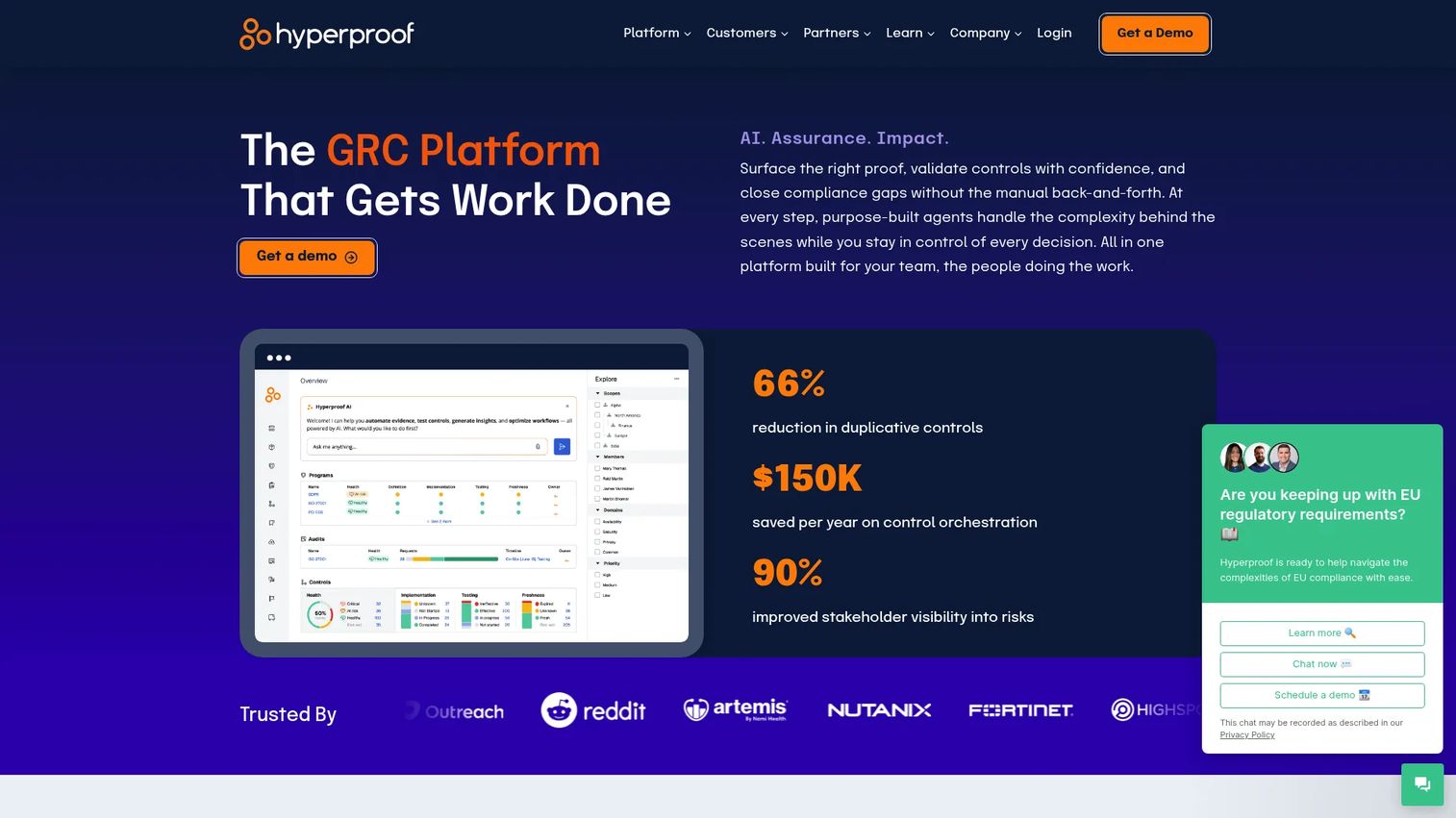
Hyperproof is an AI-powered GRC platform for compliance, risk, audit, and third-party risk management. It leans toward compliance-led teams that need to coordinate audit and compliance work together without adopting a heavyweight enterprise suite. Evidence management and multi-framework support are central to how it operates.
Best for: Mid-market and enterprise teams managing compliance and vendor risk programs alongside audit.
Key strengths
- Multi-framework compliance: Manages compliance across many frameworks in one workspace.
- Risk workflows and dashboards: Structured risk management with clear visibility.
- Third-party risk management: Questionnaires and monitoring for vendor risk programs.
Why choose Hyperproof: Hyperproof fits compliance-led teams that need audit-adjacent workflows and lighter GRC orchestration without overbuilding. It works well when compliance is the primary driver and audit coordination is a close second. Teams juggling multiple frameworks and vendor risk alongside audit needs benefit most from its breadth.
Hyperproof pricing: Hyperproof offers a free trial on its third-party risk management module, with Core and Advanced tiers available through a demo or request flow rather than public dollar figures. Hyperproof holds a 4.5/5 rating on G2.
Considerations before you buy
The demo will look impressive. The real question is whether the platform fits how your team actually audits. Work through this checklist before signing.
Lifecycle coverage
Confirm the platform covers your full audit lifecycle, not just the slice you are struggling with today. A tool strong on evidence but weak on risk-based audit planning still leaves gaps. Map each stage, from audit universe to remediation, against the vendor's actual workflow.
Governance and standards conformance
Check how the audit management system supports the Global Internal Audit Standards and your own quality program. Look for versioning, ownership, review sign-offs, and a clean audit trail. Standards readiness should be built in, not bolted on later.
Integrations and data fit
Your audit and compliance software has to connect to the systems where evidence and risk data already live. Verify integrations with your ERP, GRC, and identity stack before you commit. A platform that forces manual re-entry undermines the automation you are paying for.
Reporting and audit committee output
Ask to see real audit committee reporting, not a marketing dashboard. The right internal audit tools generate committee-ready output on demand and track remediation to closure. If reporting still requires manual reconciliation, the platform has not solved your core problem.
Adoption and change management
The best software fails if auditors avoid it. Evaluate ease of use, onboarding support, and how much the vendor helps with rollout. Adoption is where audit software either earns its cost or becomes shelfware.
Conclusion
There is no single best internal audit software, only the best fit for how your team operates. For enterprises linking audit to finance and risk reporting, Workiva leads on connected assurance. For large, configurable GRC programs, MetricStream offers depth across risk, compliance, and audit. Optro stands out for teams building around AI audit analytics and continuous auditing.
If board and governance alignment drives your decision, Diligent One Platform ties audit directly into board reporting. Mature audit functions wanting an audit-first workflow platform will feel at home with TeamMate. SAP-heavy enterprises get native fit from SAP Audit Management, and compliance-led teams can coordinate audit and vendor risk through Hyperproof.
Whatever you shortlist, weigh lifecycle coverage, governance, reporting, and standards readiness over feature counts. Start by mapping your own audit lifecycle stage by stage, then pressure-test each vendor against it in a live walkthrough with your actual data. The platform that handles your messiest audit, not the cleanest demo scenario, is the one worth buying.
FAQs
Internal audit management software is a system that centralizes and automates the internal audit lifecycle, from risk-based planning and fieldwork through evidence, reporting, and remediation. It replaces spreadsheets and shared drives with one governed environment where auditors and stakeholders work from the same data. The goal is consistent execution, clean audit trails, and real-time visibility.
Strong internal audit tools include risk-based audit planning, fieldwork and testing workflows, secure workpapers and evidence management, issue and remediation tracking, and dashboards for reporting. Look for standards conformance, versioning and governance controls, and integrations with your existing GRC and ERP stack. AI audit analytics for drafting, summarization, and anomaly detection are increasingly standard.
Audit management software supports the Global Internal Audit Standards by enforcing documentation, review sign-offs, and a traceable audit trail across every engagement. It structures workpapers and evidence so conformance is demonstrable rather than reconstructed after the fact. Built-in quality workflows help teams evidence their adherence during external assessments.
Audit management software focuses specifically on the internal audit lifecycle: planning, fieldwork, evidence, reporting, and remediation. GRC software is broader, covering governance, risk, and compliance across the organization, with audit as one module among many. Many enterprise platforms blend both, so the practical difference is depth of audit-specific workflow versus breadth across risk and compliance domains.
For enterprise teams, platforms with a connected data model and deep configuration tend to fit best, such as MetricStream for GRC depth, Workiva for connected reporting, or Diligent One Platform for board alignment. The right choice depends on whether audit needs to share data with finance, risk, compliance, or board governance. Match the platform's data model to your operating model.
Yes. Internal audit software centralizes evidence in a secure, versioned repository with clear ownership and access controls, replacing scattered files and email threads. Workpapers follow repeatable templates with review sign-offs, which speeds up quality review and protects the audit trail. This consistency is often the fastest source of time savings after adoption.
Yes. Most audit management systems generate audit committee reporting on demand through real-time dashboards, replacing days of manual reconciliation. They track findings and remediation to closure so status is always current, and many offer board-ready templates. That shift from reactive to live reporting is often the reason a purchase gets approved.
Teams compare audit management tools by mapping their full audit lifecycle against each vendor's actual workflow, then pressure-testing coverage, governance, integrations, and reporting in a live walkthrough. Standards conformance, ease of adoption, and data fit with the existing stack usually decide the shortlist. Running a real audit scenario with your own data, rather than a clean demo, surfaces the true fit.