Your auditors request a support schedule. Your controller spends three days reconstructing it from shared drives, spreadsheets, and Slack threads. The board asks about revenue recognition. Nobody can produce a clean audit trail fast enough.
A weak audit process becomes visible at the worst time: The financing round, the enterprise security review, or the first real financial statement audit. The software decision shapes whether audit prep is a repeatable finance process or a quarterly scramble.
The financial audit management software market reached $13.75 billion in 2025 and is projected to reach $28.26 billion by 2034, according to The Insight Partners (2026). Cloud-based deployments already account for 58.2% of market revenue, per Dataintelo (2025). Despite that growth, only 28% of chief audit executives say their function has high or advanced data analytics usage, according to The IIA (2025).
The gap between having audit management software and using it well is where deals stall, board questions linger, and due diligence gets painful.
What's inside
This guide covers 20 financial audit software tools evaluated for CPA firms, internal audit teams, finance leaders, and Series B founders preparing for due diligence or board-ready reporting. Tools were chosen and assessed on:
- Audit workflow fit: Workpapers, evidence, risk assessment, and reporting capabilities
- Integration depth: Accounting software, ERP, and spreadsheet connectivity
- AI and analytics: Anomaly detection, evidence automation, and full-population testing
- Pricing transparency: Verified against vendor pricing pages or confirmed as quote-only
Guideflow does not appear in this list. Financial audit software is a separate category unrelated to interactive demo automation.
TL;DR
- Best for CPA firms: AuditFile, ASD Audit, and CCH Axcess Audit serve engagement-based audit workflows with workpapers, methodology, and trial balance management
- Best for audit evidence automation: DataSnipper automates document matching and evidence extraction inside Excel without a full platform migration
- Best for AI audit analytics: MindBridge AI runs 100% transaction analysis with explainable anomaly detection across general ledger populations
- Best for enterprise internal audit and SOX: AuditBoard (now Optro), Diligent One, and Wolters Kluwer TeamMate connect risk, controls, and audit in one operating layer
- Best for financial close and audit automation: Trullion ties audit testing to accounting workflows, revenue recognition, and lease accounting
- Best for SAP-centric enterprises: SAP Audit Management integrates planning, execution, and reporting directly within existing SAP environments
What is financial audit software?
Financial audit software helps audit teams plan, execute, document, review, and report on financial audits with controlled workpapers, evidence trails, risk assessment, analytics, and collaboration.
It sits at the intersection of professional audit methodology and operational finance workflow. For a founder, it is the system that lets your finance lead hand evidence to auditors without rebuilding everything from scratch.
Core capabilities typically include:
- Audit planning and engagement setup: Defining scope, team roles, and timelines before fieldwork begins
- Risk assessment and methodology: Structured forms for identifying material misstatement risk by assertion
- Trial balance and workpaper management: Importing client financials and organizing documentation by engagement section
- Evidence collection and cross-referencing: Attaching source documents, matching data, and maintaining traceability
- Sampling, testing, and analytics: Statistical sampling, journal entry testing, and analytical procedures
- AI anomaly detection and full-population analysis: Reviewing 100% of transactions rather than a sample subset
- Review notes and sign-offs: Reviewer queues, comments, and approval hierarchies
- Reporting and file archiving: Draft report generation, issuance, and retention of completed audit files
- Confirmations and third-party validation: Sending and receiving bank and trade confirmations electronically
- Security controls and access permissions: Role-based access, MFA, SSO, and audit trails
- Integrations with accounting, ERP, and productivity tools: QuickBooks, NetSuite, Xero, SAP, and Microsoft Office
Financial audit software overlaps with GRC platforms, internal audit software, SOX compliance tools, and accounting software. Many enterprise tools treat financial audit as one module within a broader risk and compliance suite. CPA firm tools focus narrowly on engagement delivery, workpapers, and audit standards. Knowing which type you need shapes the shortlist.
For context on adjacent categories, see also accounting practice management software and accounting software.
When to use financial audit software
Prepare for a financial statement audit
When external auditors request evidence, the bottleneck is almost never the information itself. It is the time required to locate, organize, and present it. Financial audit software gives your controller a structured system for maintaining audit-ready evidence throughout the year, not only during fieldwork. For a Series B founder, this reduces the founder-in-every-conversation problem when the board or investors ask about audit outcomes.
Standardize audit work across teams
CPA firms and internal audit departments use audit software to enforce consistent methodology, documentation quality, and review sequences across engagements and staff levels. Without a shared system, partners spend review time reformatting workpapers instead of applying judgment. The software encodes the methodology so execution is repeatable.
Replace sampling-heavy reviews with stronger analytics
Audit analytics tools run full-population transaction testing, flagging anomalies that sample-based procedures miss. This matters when transaction volumes make manual review impractical. One important constraint: AI flags potential issues, but the auditor still evaluates findings and signs off. Software accelerates the analysis; it does not replace the professional judgment behind the conclusion.
Financial audit software comparison
The table below gives a directional shortlist of all 20 tools. Pricing reflects verified vendor information as of October 2026. G2 ratings reflect current listings. Where a vendor does not display public prices, the pricing column notes the buying path.
| # | Product | Best for | Key differentiator | Pricing | G2 rating |
|---|---|---|---|---|---|
| 1 | AuditFile | CPA firms, cloud audits | AI agents, workpapers, e-signatures | From $179/user/mo | Not listed |
| 2 | DataSnipper | Excel-based audit teams | Document matching and evidence extraction in Excel | Quote-based | 4.8/5 |
| 3 | Trullion | Finance and audit automation | AI-powered lease, revenue, and audit workflows | Quote-based | 4.7/5 |
| 4 | AuditBoard (Optro) | Enterprise audit and SOX | Connected GRC with 30+ compliance frameworks | Quote-based | 4.6/5 |
| 5 | Diligent One | Enterprise governance and audit | Unified board, risk, compliance, and audit oversight | Quote-based | 4.3/5 |
| 6 | Diligent HighBond | Internal audit and risk teams | Centralized GRC with automated workflows | Quote-based | 4.3/5 |
| 7 | Onspring | Configurable internal audit | No-code GRC workflow builder | Quote-based | 4.7/5 |
| 8 | Inflo | Accounting firm audit analytics | Digital workpapers, analytics, and client collaboration | From $1,125/mo | 4.4/5 |
| 9 | MindBridge AI | AI audit analytics | 100% transaction analysis with explainable AI | Quote-based | 4.4/5 |
| 10 | Thomson Reuters Checkpoint Tools | CPA firm methodology | Practice aids, PPC programs, and engagement guidance | Quote-based | 4.3/5 |
| 11 | CCH Axcess Audit | CPA firms in CCH ecosystem | Cloud audit tied to Wolters Kluwer suite | Quote-based | Not listed |
| 12 | CCH Axcess Engagement | Workpaper management | Cloud engagement binders and trial balance | Quote-based | Not listed |
| 13 | CCH Axcess Knowledge Coach | Risk-based methodology | Guided dynamic audit programs and methodology | Quote-based | Not listed |
| 14 | CCH Axcess Validate | Audit confirmations | 44,000+ financial institution connections globally | Quote-based | Not listed |
| 15 | ASD Audit | Small accounting firms | Cloud workflow, quality management, and e-confirmations | From 450 EUR | Not listed |
| 16 | Intelex | EHSQ and compliance audits | Environmental, health, safety, and quality audit management | From $44/user/mo | 4.1/5 |
| 17 | SAP Audit Management | SAP-centric enterprises | Audit planning and execution inside SAP ecosystem | Quote-based | 0 ratings |
| 18 | Caseware | Firm and audit team files | AI-powered engagement, analytics, and quality management | Quote-based | 4.0/5 |
| 19 | Wolters Kluwer TeamMate | Enterprise internal audit | Audit, risk, compliance, and controls in one system | Quote-based | 4.3/5 |
| 20 | Galvanize | SOX and controls teams | Integrated GRC now part of Diligent platform | Quote-based | 4.5/5 |
Best 20 financial audit software tools for 2026
1. AuditFile
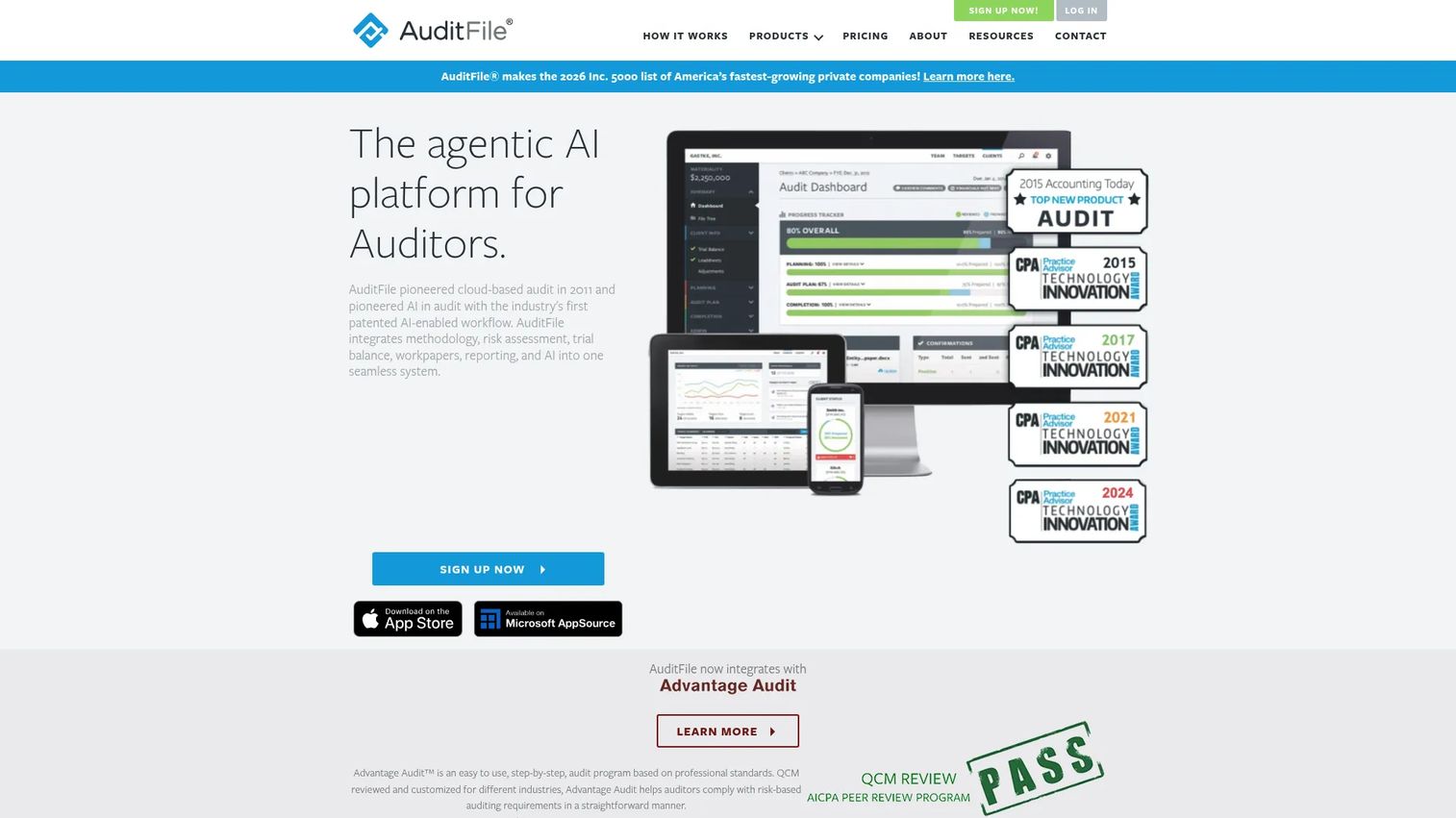
AuditFile is a cloud-based audit platform built for CPA firms and internal audit teams running audits, reviews, and compilations. It covers risk assessment, workpapers, trial balance imports, financial statement generation, and AI-assisted audit workflows from a single browser-based environment. The platform imports trial balances directly from QuickBooks Online, Xero, and NetSuite. A secure client portal, e-signatures, and time and billing round out the engagement management layer.
Best for: Small and midsized CPA firms that want an integrated cloud audit platform without building process around spreadsheets.
Key features
- Cloud workpapers with findings, adjustments, and analytics
- Trial balance imports from QuickBooks Online, Xero, and NetSuite
- AI audit agents for research, evidence review, and workpaper drafting
- Secure client portal with e-signatures and time tracking
- MFA, SSO, IP allowlists, peer review, and Microsoft Office integrations
Why choose AuditFile: Strong fit for firms that want AI-assisted methodology without leaving a single platform. Founders are most likely to encounter AuditFile through their external CPA firm rather than buy it directly.
AuditFile pricing: A 14-day free trial is available. The Professional plan starts at $179 per user per month with a one-year agreement. Pro Plus is $249 per user per month. Enterprise and government customers receive custom pricing.
2. DataSnipper
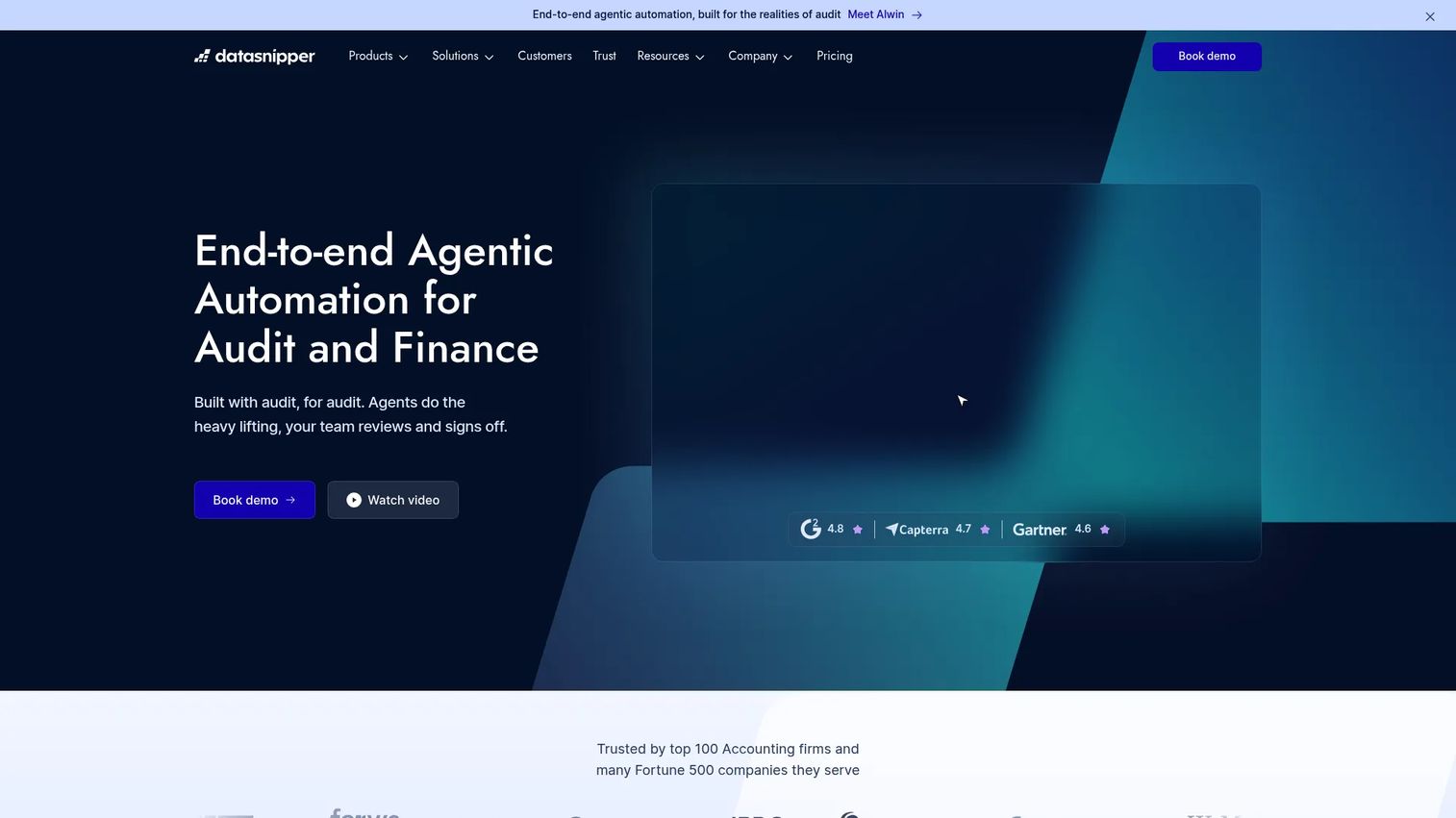
DataSnipper is an agentic audit automation platform that works inside Microsoft Excel. Auditors use it to extract data from documents, cross-reference source evidence against workpaper cells, and match documents at scale without leaving their existing spreadsheet environment. The platform supports document snipping, form extraction, smart search, and AI-driven Excel agents that handle repetitive audit procedures automatically.
Best for: Audit and finance teams that want to automate document-heavy procedures and evidence cross-referencing without migrating to a full audit platform.
Key features
- Document snipping and cross-referencing inside Excel
- Document matching across large evidence populations
- Form extraction and smart search
- Excel Agents for automated audit procedures
- AI Extractions for structured data pull from unstructured documents
Why choose DataSnipper: The strongest argument for DataSnipper is its non-disruptive adoption path. Teams keep their existing Excel workflows and add automation on top. For a founder whose auditors already live in spreadsheets, this lowers implementation risk considerably. See also our roundup of audit management software for platform-level comparisons.
DataSnipper pricing: Pricing is determined by package and team size. DataSnipper directs all buyers to a sales conversation for a tailored quote.
G2 rating: 4.8/5
3. Trullion
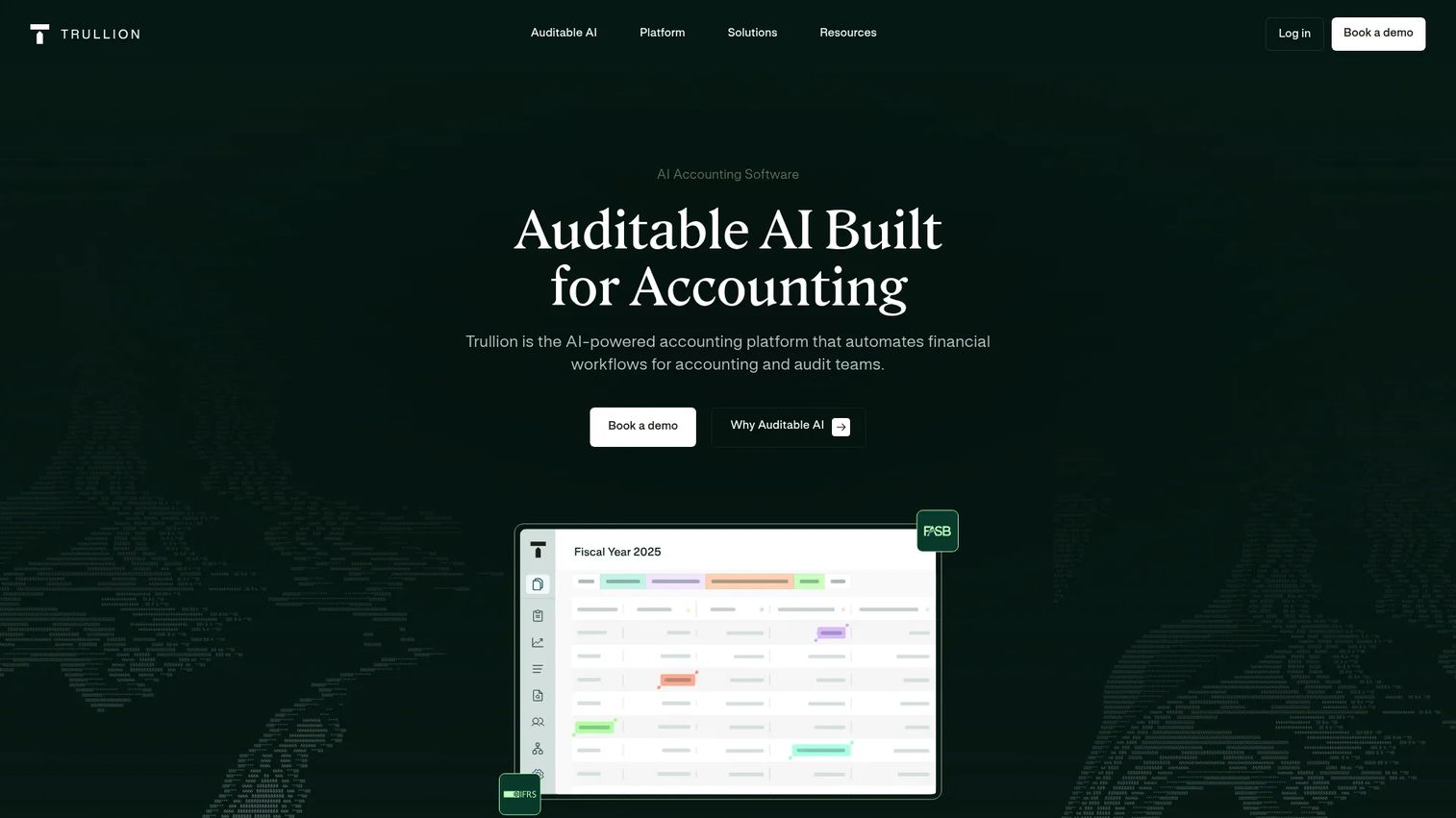
Trullion is an AI-powered accounting platform that automates financial workflows for accounting and audit teams. Its core focus is document-heavy accounting work: Extracting data from contracts, running audit testing, validating financial statement consistency, and managing lease accounting under ASC 842, IFRS 16, and GASB 87. An AI accounting assistant answers questions with sourced references, reducing back-and-forth between finance and auditors.
Best for: Finance teams that need audit support tied to accounting automation, specifically around revenue recognition, lease obligations, and financial close.
Key features
- AI-powered data extraction from PDFs into Excel-ready formats
- AI-driven audit testing, vouching, and tracing
- Financial statement validation and consistency checks
- Lease accounting for ASC 842, IFRS 16, and GASB 87
- AI accounting assistant with sourced answers
Why choose Trullion: For a Series B company dealing with complex lease portfolios or nuanced revenue recognition, Trullion connects the audit readiness problem to the underlying accounting workflow rather than treating them separately. The practical payoff is fewer reconciliation cycles during audit fieldwork.
Trullion pricing: Pricing is not displayed on Trullion's website. The company directs buyers to book a demo or contact sales for a quote.
G2 rating: 4.7/5
4. AuditBoard
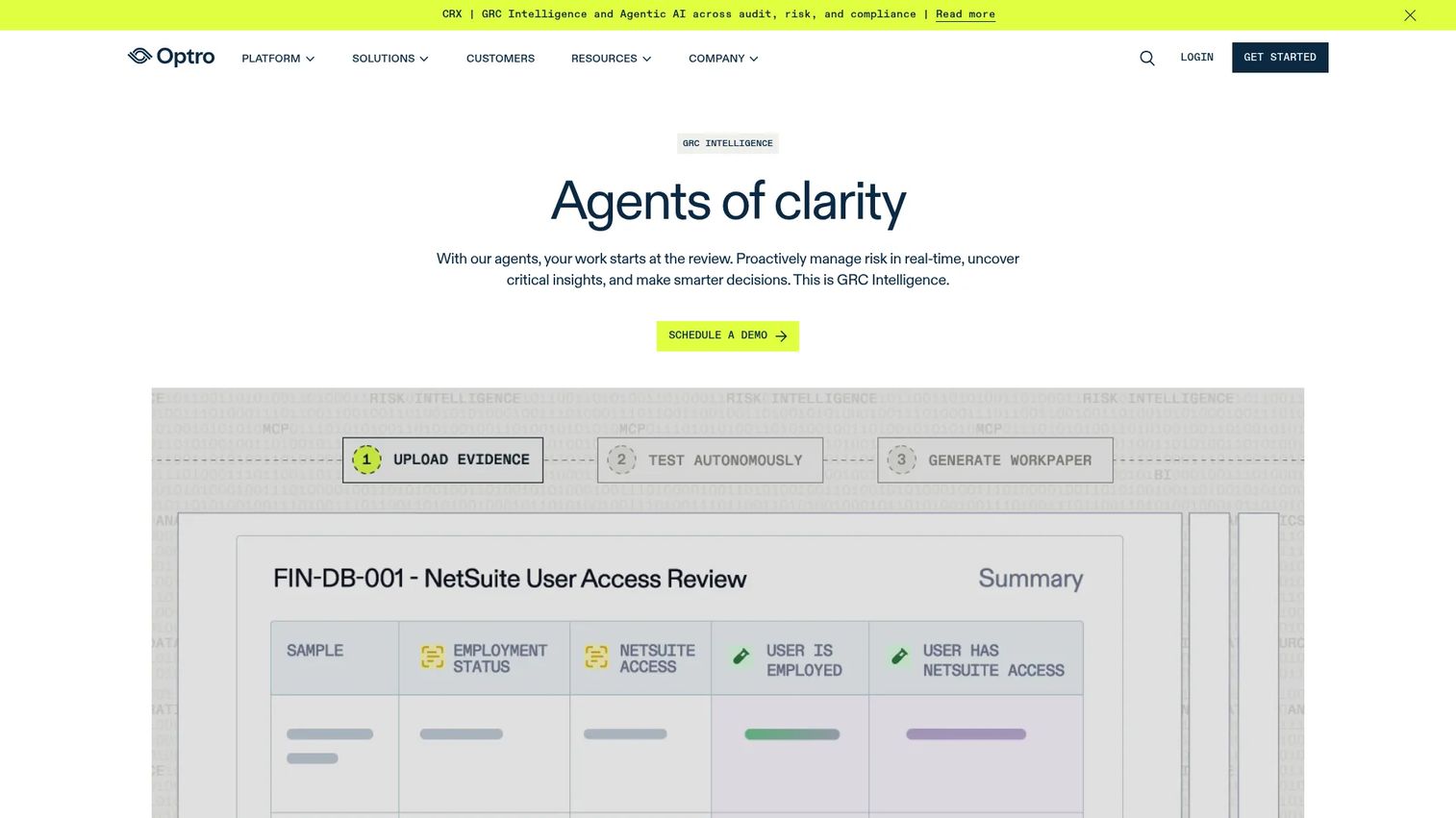
AuditBoard, now operating as Optro, is an AI-powered GRC intelligence platform for audit, risk, information security, and compliance management. The platform provides configurable oversight with audit trails, a preloaded library of 30-plus compliance frameworks, analytics for population testing, and workflow templates. It serves enterprises that need audit, risk, and compliance functions to share data and reporting without maintaining separate systems.
Best for: Enterprise audit, risk, and compliance teams that need a connected GRC platform with SOX testing, issue tracking, and executive reporting.
Key features
- AI-powered GRC insights with configurable oversight and audit trails
- Library of 30+ preloaded compliance frameworks
- Analytics for population testing and continuous monitoring
- Customizable reporting and dashboards
- Integrations and APIs for data collection and task management
Why choose AuditBoard: Good fit when audit readiness is becoming an enterprise operating system problem, not a single engagement question. Founders approaching a public-company transition or enterprise-grade security reviews will find the connected risk-and-compliance layer useful. Note that the product now operates under the Optro brand.
AuditBoard pricing: Pricing is flexible and aligned to organizational needs, but no specific figures appear on the vendor's pricing page. Contact Optro sales for a quote.
G2 rating: 4.6/5
5. Diligent One
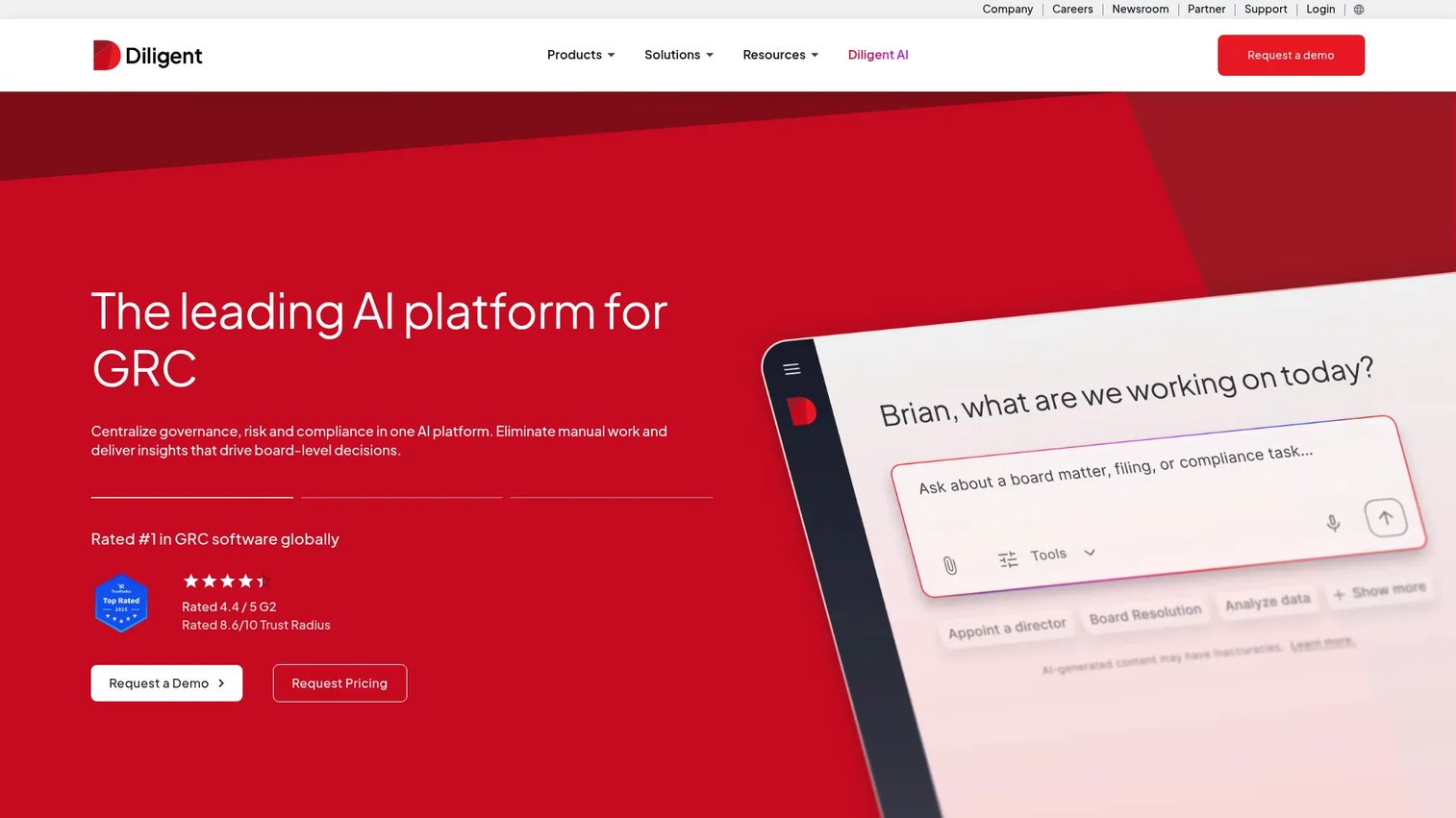
Diligent One is a unified AI-powered governance, risk, compliance, and audit platform for enterprise organizations. It connects board management, risk monitoring, compliance tracking, and audit management in a single operating layer. The platform integrates with 100-plus third-party data providers and offers pre-built and customizable reporting templates that surface risk visibility at the board level.
Best for: Enterprise teams that need audit, risk, compliance, and governance connected under one operating layer with board-level reporting.
Key features
- Unified governance, risk, compliance, and audit applications
- Automated analysis and continuous risk monitoring
- Pre-built and customizable reporting templates and dashboards
- AI-powered GRC capabilities
- Integrations with 100+ third-party data providers
Why choose Diligent One: Use this when board-level visibility is as important as audit execution quality. The platform is heavier than a CPA firm workpaper tool, so it fits mature finance and risk teams rather than early-stage finance functions.
Diligent One pricing: Pricing is customized by organization and requires contacting Diligent directly. No figures appear on the pricing page.
G2 rating: 4.3/5
6. Diligent HighBond
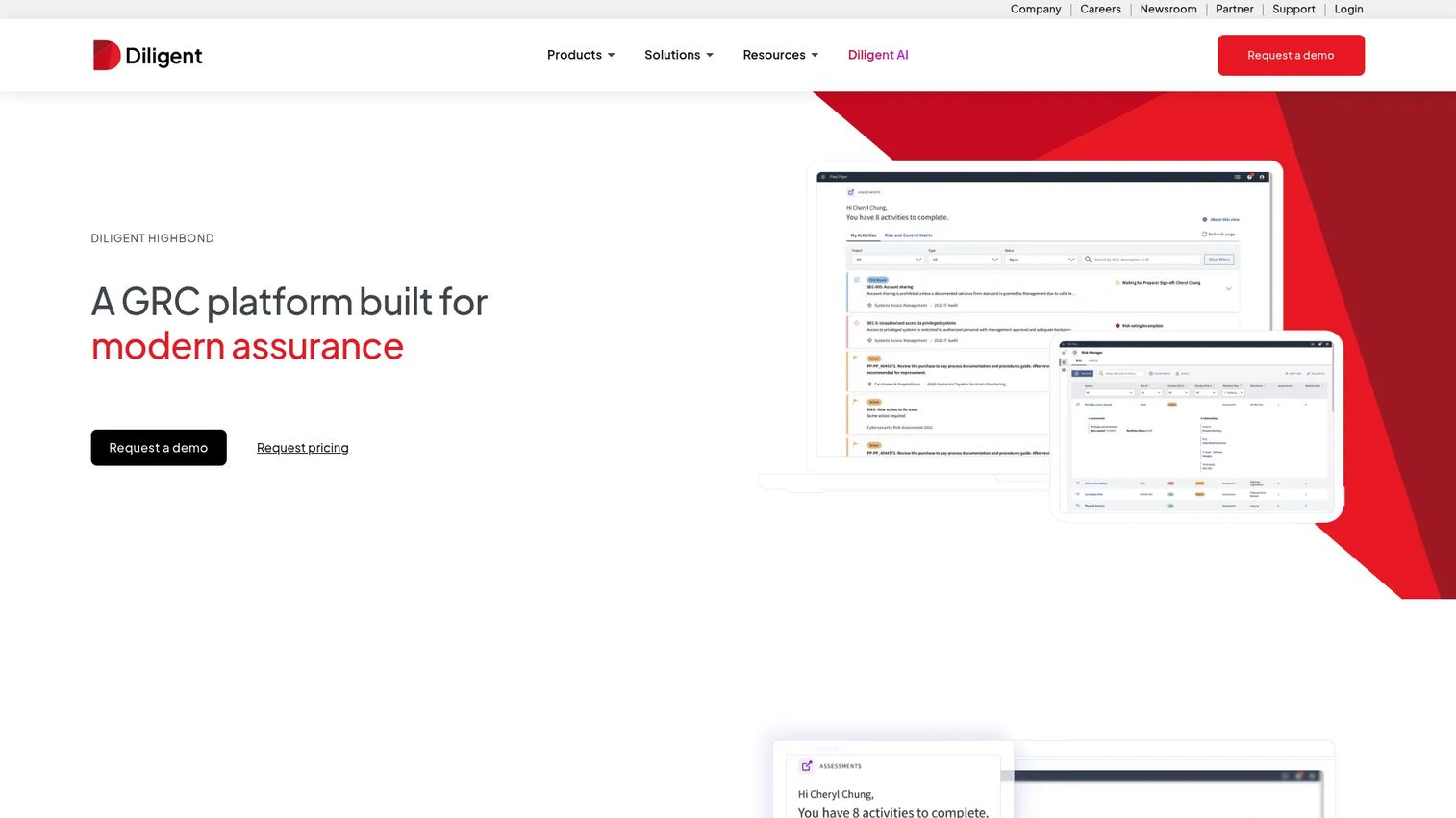
Diligent HighBond is a GRC platform for modern assurance, centralizing governance, risk, compliance, audit workflows, analytics, and dashboards in one environment. It is now integrated into the Diligent One Platform. The platform supports automated end-to-end workflows, advanced data analytics, and configurable reporting for internal audit teams that run structured control-testing cycles.
Best for: Internal audit teams that need structured risk and control workflows, analytics, and remediation tracking across recurring audit programs.
Key features
- Automated end-to-end audit workflows
- Advanced data analytics and dashboards
- Centralized GRC processes and risk scoring
- Issue remediation and follow-up tracking
- Configurable reporting
Why choose Diligent HighBond: Strong fit when the internal audit team cares about repeatable cycles, testing evidence, and remediation follow-up rather than engagement-by-engagement CPA firm workflows. Enterprise-oriented in pricing and complexity.
Diligent HighBond pricing: Pricing requires a request through Diligent's pricing page. No figures are displayed.
G2 rating: 4.3/5
7. Onspring
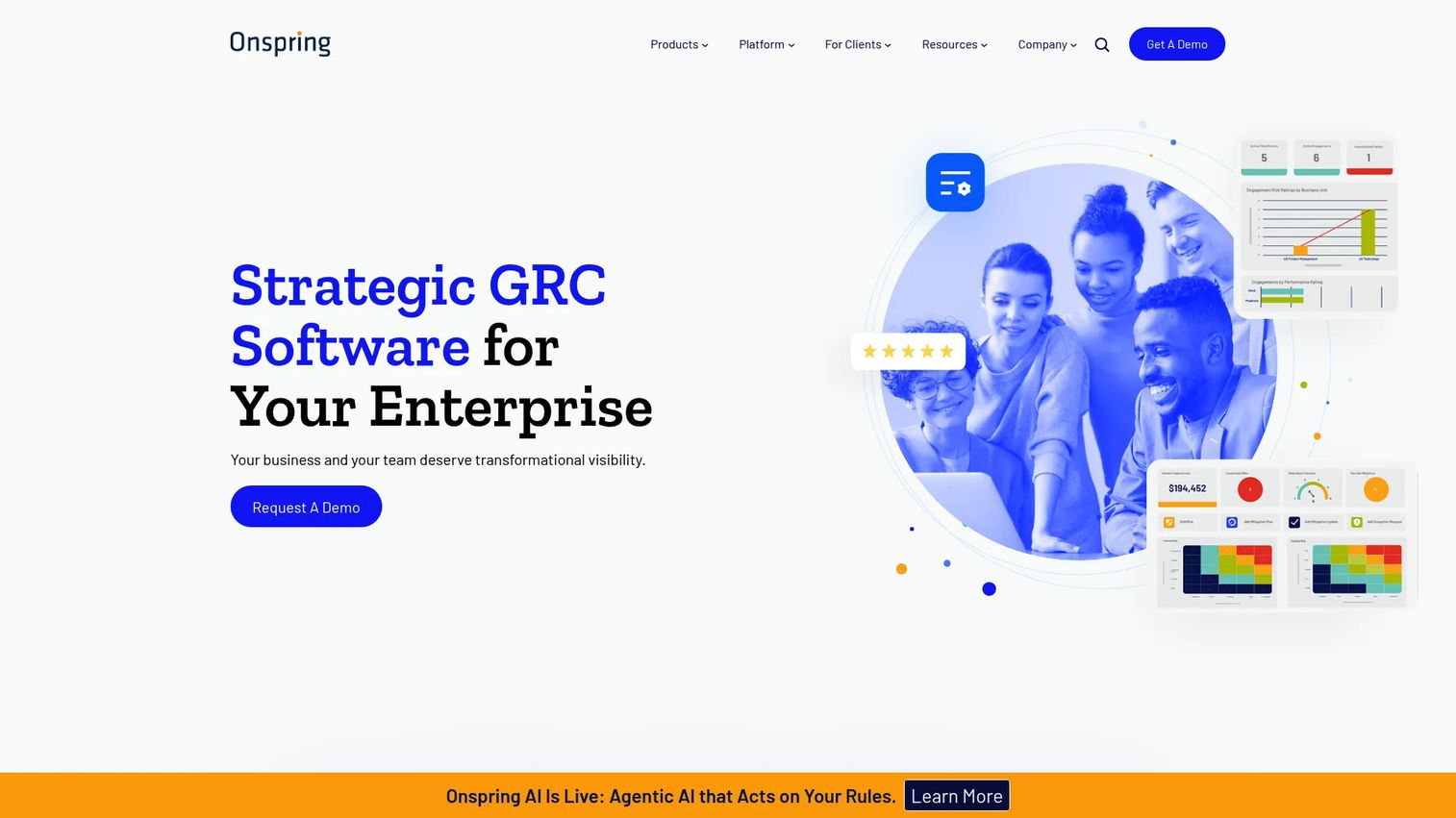
Onspring is a cloud-based, no-code GRC platform for centralizing data, automating workflows, and reporting on business-critical risk and compliance processes. Audit teams use it to build custom workflow configurations, risk registers, issue trackers, and dashboards without developer involvement. Platform levels run from Bronze through Platinum, with AI capabilities available as an add-on on Silver or higher tiers.
Best for: Enterprise GRC teams that want to configure audit workflows around their own methodology rather than adopt a rigid template.
Key features
- Real-time reporting and customizable dashboards
- Workflow automation and task management
- Risk assessments, surveys, and compliance notifications
- No-code configuration across audit and GRC processes
- AI add-on available at Silver tier and above
Why choose Onspring: Good for teams whose audit and compliance workflows are changing quickly and need a flexible configuration layer. For a founder, it fits when finance, risk, and compliance processes are not yet standardized and need a tool that bends to the process rather than forcing the process to bend to the tool.
Onspring pricing: Platform levels (Bronze, Silver, Gold, Platinum) are available, but Onspring does not display prices publicly. All buyers must request a quote. Onspring AI is a separate add-on.
G2 rating: 4.7/5
8. Inflo
Inflo is a digital audit platform for accounting firms, combining working papers, audit data analytics, digital client collaboration, and quality management in one system. The platform ingests client financial data, runs analytics across transactions, and supports the full engagement lifecycle from planning through sign-off. Assistive AI capabilities are explainable by design, which matters for audit teams that need to document how findings were reached.
Best for: Accounting and audit firms that want stronger data analytics and digital client collaboration across engagements without sacrificing audit discipline.
Key features
- Working papers and audit workflow management
- Audit data analytics across transaction populations
- Digital collaboration with clients throughout engagements
- Quality management and engagement reviews
- Assistive, explainable AI capabilities with single sign-on and API integrations
Why choose Inflo: Strong fit when audit quality depends on better client data intake, analytics depth, and a reviewable AI trail. Firms that want to modernize engagement delivery while maintaining methodology standards will find the explainability focus valuable.
Inflo pricing: The Pro Plan is listed at $1,125 per month, which includes all Inflo modules for planning and interim engagement phases, in-platform support and training, and Inflo Collaborate across all phases.
G2 rating: 4.4/5
9. MindBridge AI
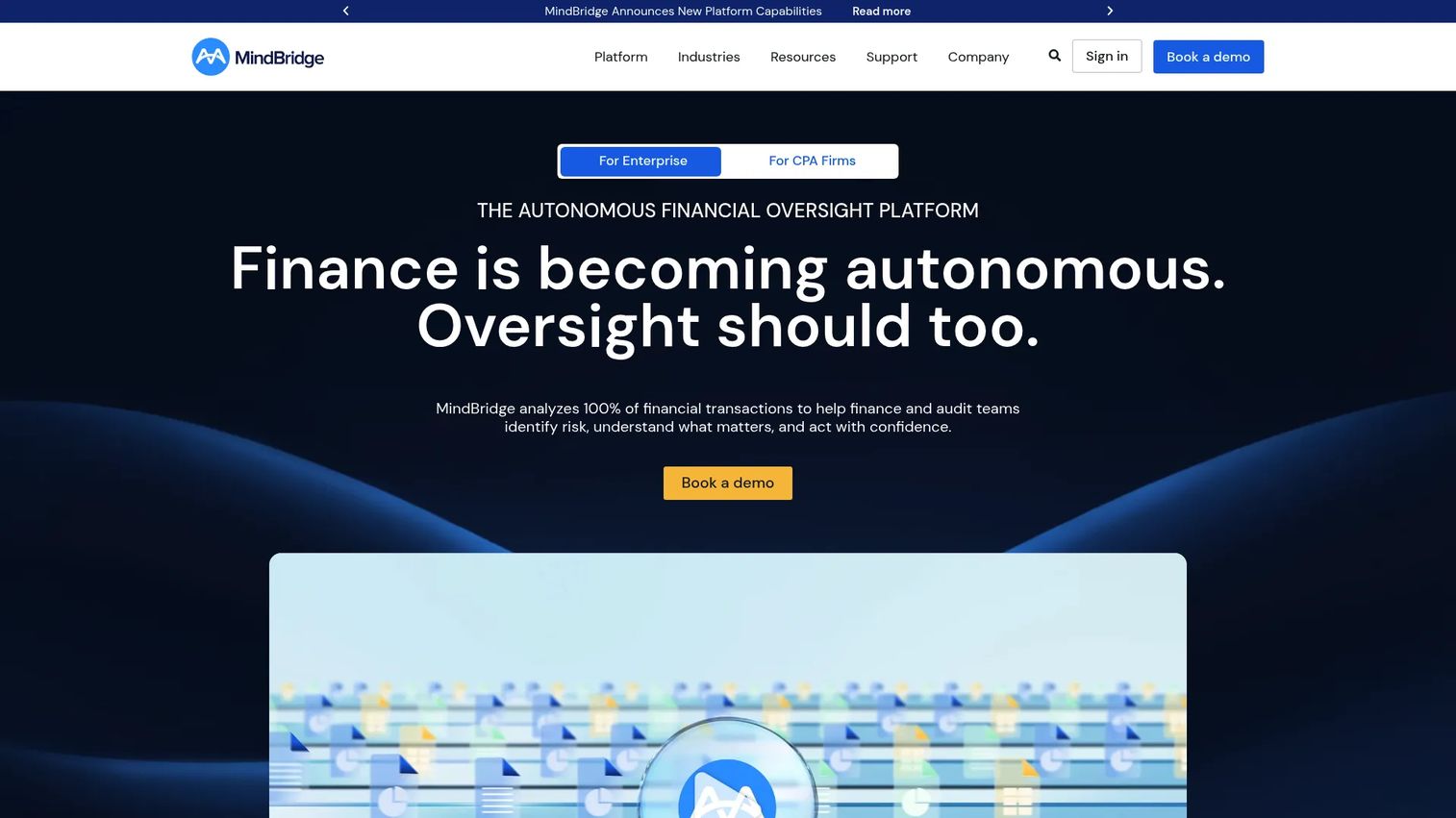
MindBridge AI is an AI-powered financial oversight platform that analyzes financial transactions to identify anomalies, errors, fraud patterns, and emerging risk. Unlike sample-based audit procedures, MindBridge runs 100% transaction analysis across general ledger data, vendor invoices, revenue, payroll, and company cards using an ensemble of statistical models, business rules, and unsupervised machine learning.
Best for: Enterprise finance, internal audit, and CPA teams that need continuous, explainable analysis across large financial transaction populations.
Key features
- 100% transaction analysis across financial systems
- Explainable ensemble AI combining statistical models, business rules, and machine learning
- Risk prioritization and anomaly detection
- Transaction Risk Analytics for general ledger, payroll, and vendor invoices
- Dashboards, filtering, sampling, reporting, and API integrations
Why choose MindBridge AI: Full-population testing changes the risk conversation from "did sampling catch it?" to "here is the full risk distribution." That shift matters for boards and audit committees. One important note: MindBridge surfaces anomalies for auditor review. Final conclusions still require human judgment and sign-off.
MindBridge AI pricing: Pricing is specified in customer order forms and is not published on the vendor's website. Contact MindBridge for pricing.
G2 rating: 4.4/5
10. Thomson Reuters Checkpoint Tools
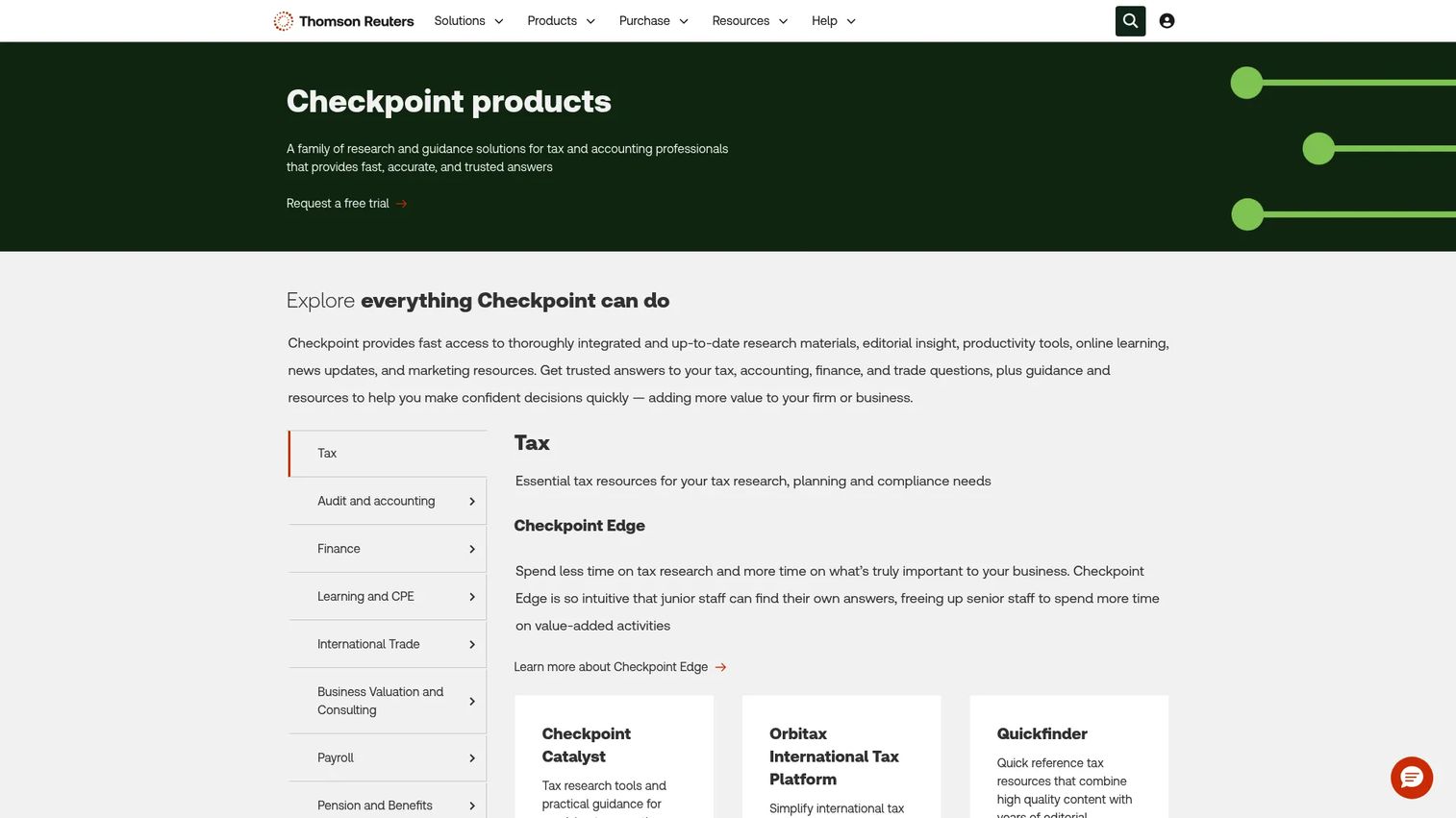
Thomson Reuters Checkpoint Tools provides industry-specific practice aids, audit programs, PPC guidance, and workpapers for accounting and audit professionals. The product sits within the broader Checkpoint research platform and integrates with engagement management tools such as Engagement Manager and Workpapers CS. It is a methodology and guidance resource as much as a workflow tool, which distinguishes it from full audit platforms.
Best for: CPA firms that want audit methodology, guidance, and practical engagement support tied to a trusted research and compliance ecosystem.
Key features
- Industry-specific practical considerations and audit guidance
- Practice Aids Audit Suite and interactive disclosure libraries
- PPC practice aids, workpapers, and audit programs
- Integration with Engagement Manager and Workpapers CS
- Interactive Practice Aids within Checkpoint research environment
Why choose Thomson Reuters Checkpoint Tools: Best fit for firms that want their methodology anchored in authoritative guidance and their workpapers connected to that source. Checkpoint Tools typically pairs with a separate workpaper or engagement platform rather than replacing one entirely.
Thomson Reuters Checkpoint Tools pricing: Pricing is not displayed publicly. Thomson Reuters directs buyers to request a free consultation for package and pricing details.
G2 rating: 4.3/5
11. CCH Axcess Audit
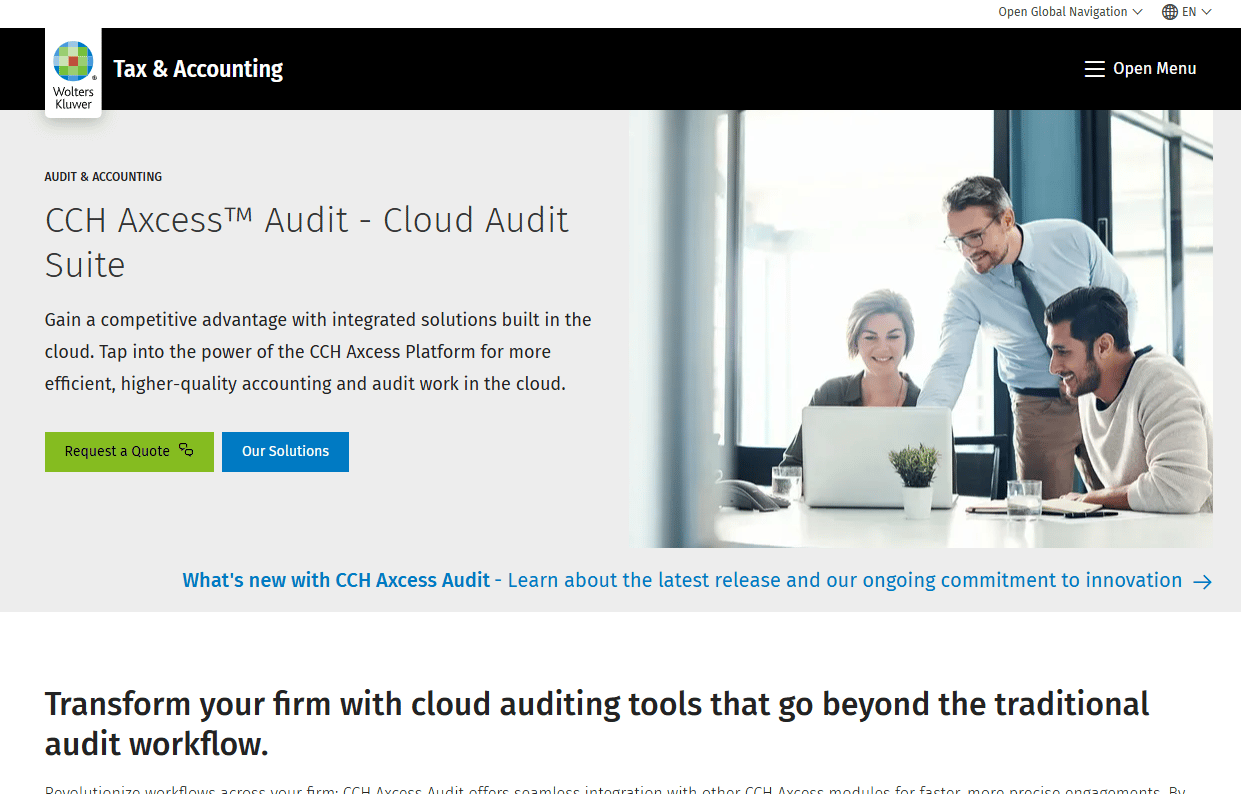
CCH Axcess Audit is cloud-based audit and engagement software for CPA firms operating within the Wolters Kluwer CCH Axcess suite. It supports audit, assurance, tax preparation, and government audit workflows from a single cloud platform. Built-in analytics cover anomaly detection, journal entry testing, and ratio analysis, and the product integrates with CCH Axcess Tax and other suite modules.
Best for: CPA firms already invested in CCH Axcess products that want audit workflows integrated with their existing tax and accounting stack.
Key features
- Cloud-based workpaper management with version control
- Integrated trial balance workflows and automation
- Built-in analytics: Anomaly detection, journal entry testing, ratio analysis
- Suite integration with CCH Axcess Tax and related products
- Government audit workflow support
Why choose CCH Axcess Audit: The practical buying reason is suite fit. If the firm already uses CCH Axcess for tax, adding audit in the same environment reduces data re-entry and improves cross-workflow consistency. Evaluate standalone audit platforms if the firm runs outside the Wolters Kluwer ecosystem.
CCH Axcess Audit pricing: Wolters Kluwer does not publish prices for CCH Axcess Audit. Request a quote through the CCH Axcess engagement page.
12. CCH Axcess Engagement
CCH Axcess Engagement is cloud-based engagement and workpaper management software for audit, assurance, compilation, and business tax workflows. Firms use it to maintain organized workpaper binders, run trial balance workflows, collaborate with team members in real time, and apply AI-enabled testing across engagement data. It connects to CCH Axcess Tax, QuickBooks Online, and Xero through open APIs.
Best for: Accounting firms that need structured workpaper binders, trial balance management, and reviewer-ready engagement files in a cloud environment.
Key features
- Cloud workpaper management with version control and secure collaboration
- Integrated trial balance workflows and automation
- AI-enabled testing across engagement data
- Integration with CCH Axcess Tax, QuickBooks Online, and Xero
- Engagement open APIs for data connectivity
Why choose CCH Axcess Engagement: Focused on workpaper discipline and reviewer efficiency. If the core pain is disorganized binders and inconsistent sign-off processes, this is a more targeted fix than a full GRC or analytics platform.
CCH Axcess Engagement pricing: Pricing requires a quote from Wolters Kluwer. No public figures are listed for CCH Axcess Engagement.
13. CCH Axcess Knowledge Coach
CCH Axcess Knowledge Coach is cloud-based audit software providing risk-based methodology, guided audit planning, risk assessment, and dynamic audit programs for accounting firms. The platform delivers industry-specific audit titles, risk-linked procedures, and centralized review workflows that adapt to the engagement's risk profile as it develops during fieldwork.
Best for: Accounting firms that want structured risk assessment and methodology guidance embedded in their workpaper workflow.
Key features
- Comprehensive risk-based audit methodology with adaptive programs
- Industry-specific audit titles and guidance
- Risk-linked procedures and dynamic forms
- Browser-based access to current workpapers and methodology
- Centralized review and integration with CCH Axcess platform
Why choose CCH Axcess Knowledge Coach: Useful when partners and managers need to enforce consistent methodology across staff and engagements. Knowledge Coach complements engagement software rather than replacing it, so evaluate how it layers with your existing CCH Axcess modules.
CCH Axcess Knowledge Coach pricing: Wolters Kluwer provides request-a-quote and demonstration options. Pricing is not displayed.
14. CCH Axcess Validate
CCH Axcess Validate is cloud-based audit bank-confirmation software that automates secure digital confirmation requests and retrieves certified financial data from financial institutions. It connects to over 44,000 financial institutions across 195 countries, handles authorization workflows, encrypts data in transit, and maintains audit trails throughout the confirmation cycle. The first four confirmation requests are complimentary.
Best for: Audit teams that need controlled, traceable bank confirmations without managing manual follow-up across dozens of institutions.
Key features
- Automated three-step bank confirmation workflow
- Digitally certified bank statements, balances, details, and transactions
- Secure cloud processing with data encryption and audit trails
- Connectivity to 44,000+ financial institutions in 195 countries
- Multi-user access through the CCH Axcess platform
Why choose CCH Axcess Validate: Confirmations are one of the clearest fieldwork bottlenecks in financial statement audits. Automating requests, follow-ups, and response tracking reduces that friction materially. Note that Validate is a specialized tool, not a full audit management platform.
CCH Axcess Validate pricing: The first four confirmation requests are complimentary. Additional requests are priced through a Wolters Kluwer quote.
15. ASD Audit
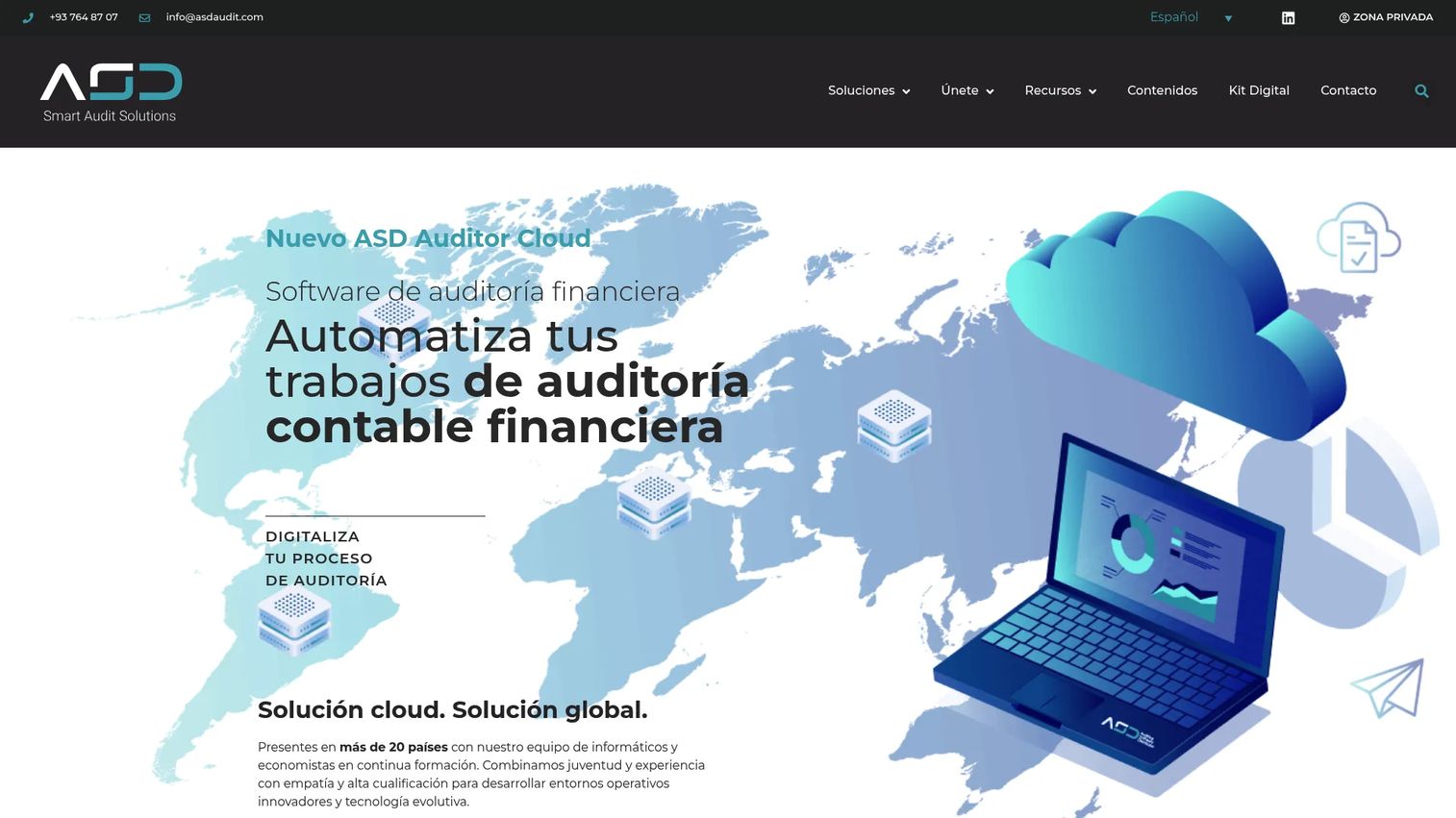
ASD Audit is cloud software for financial audit firms covering audit planning, execution, quality management, and electronic confirmations. The platform imports client financial data, supports collaborative cloud workspaces with browser-based access, and automates electronic circularization for confirmations, including delivery, reminders, response tracking, and summary reports. A quality management module covers independence, proposals, and firm-level dashboards.
Best for: Smaller CPA firms and financial auditors that need cloud-based audit workflow, confirmation automation, and quality management without enterprise overhead.
Key features
- Financial data import, analysis, and financial statement generation
- Audit project planning, risk assessment, and time and expense tracking
- Collaborative cloud workspace with digital file storage
- Electronic circularization with reminders, response tracking, and summaries
- Audit firm quality management including independence and proposals
Why choose ASD Audit: Purpose-built for smaller audit practices that need practical automation without the implementation complexity of enterprise platforms. Pricing through the Kit Digital program starts at 450 EUR for the ASD Confirmation module alone.
ASD Audit pricing: Kit Digital configurations start at 450 EUR for ASD Confirmation (platform plus 500 sends). The ASD Auditor plus ASD Confirmation bundle is 1,980 EUR for 2 users. A full package including quality management starts at 6,000 EUR for 6 users. Standard, Advanced, and Pro plan subscription prices are not displayed on the main pricing page.
16. Intelex
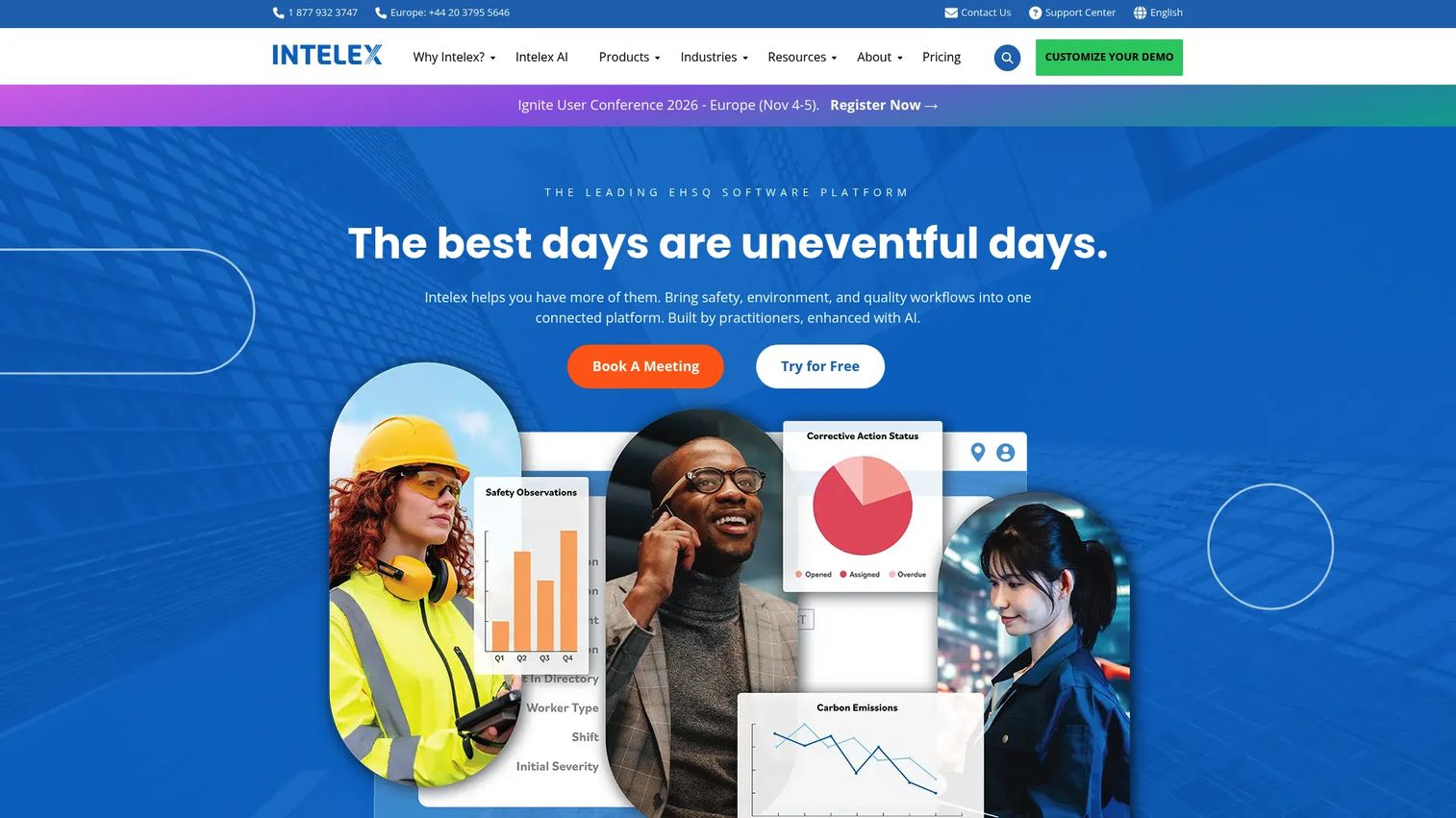
Intelex is an EHSQ and sustainability management platform covering environmental, health, safety, quality, risk, and ESG workflows. Its audit management module sits alongside incident management, training, document control, and root cause analysis. The platform supports mobile and offline audits and includes AI-enhanced workflows at higher tiers.
Best for: Compliance-heavy organizations running audits across quality, safety, environmental, and regulatory programs, not CPA firm financial statement audits.
Key features
- Audit management and compliance tracking
- Incident management and corrective actions
- Root cause analysis and risk dashboards
- Mobile and offline audit capability
- AI-enhanced workflows and business intelligence
Why choose Intelex: The fit for financial audit buyers depends on whether audits extend beyond financial controls into EHSQ and compliance domains. For a pure financial statement audit program, Intelex is a category mismatch. For companies managing quality, safety, and compliance audits alongside financial controls, its breadth is the selling point.
Intelex pricing: The Safety Essentials plan starts at $44 per user per month, billed annually, with a minimum of 25 users. Advanced and Enterprise plans require a sales conversation for pricing.
G2 rating: 4.1/5
17. SAP Audit Management

SAP Audit Management is an enterprise internal audit solution for planning, executing, reporting, and monitoring audits. It covers audit universe management, working paper and evidence management, findings, action plans, and follow-up reporting. The product integrates natively with SAP Risk Management, SAP Process Control, and SAP Business Integrity Screening.
Best for: Large enterprises already running SAP for finance, ERP, or governance that want audit planning and execution within the same environment.
Key features
- Audit planning and audit universe management
- Working paper, evidence, and document management
- Findings, action plans, reporting, and follow-up
- Mobile access and drag-and-drop tools
- Integration with SAP Risk Management, SAP Process Control, and SAP Business Integrity Screening
Why choose SAP Audit Management: The integration argument is the whole case. When audit data and enterprise workflows already live in SAP, keeping audit management in the same system removes translation costs and strengthens data consistency. It is not the default choice for a SaaS finance team without SAP infrastructure.
SAP Audit Management pricing: Pricing is available upon request from SAP. The service is priced by users, with contract duration confirmed during the sales process.
18. Caseware
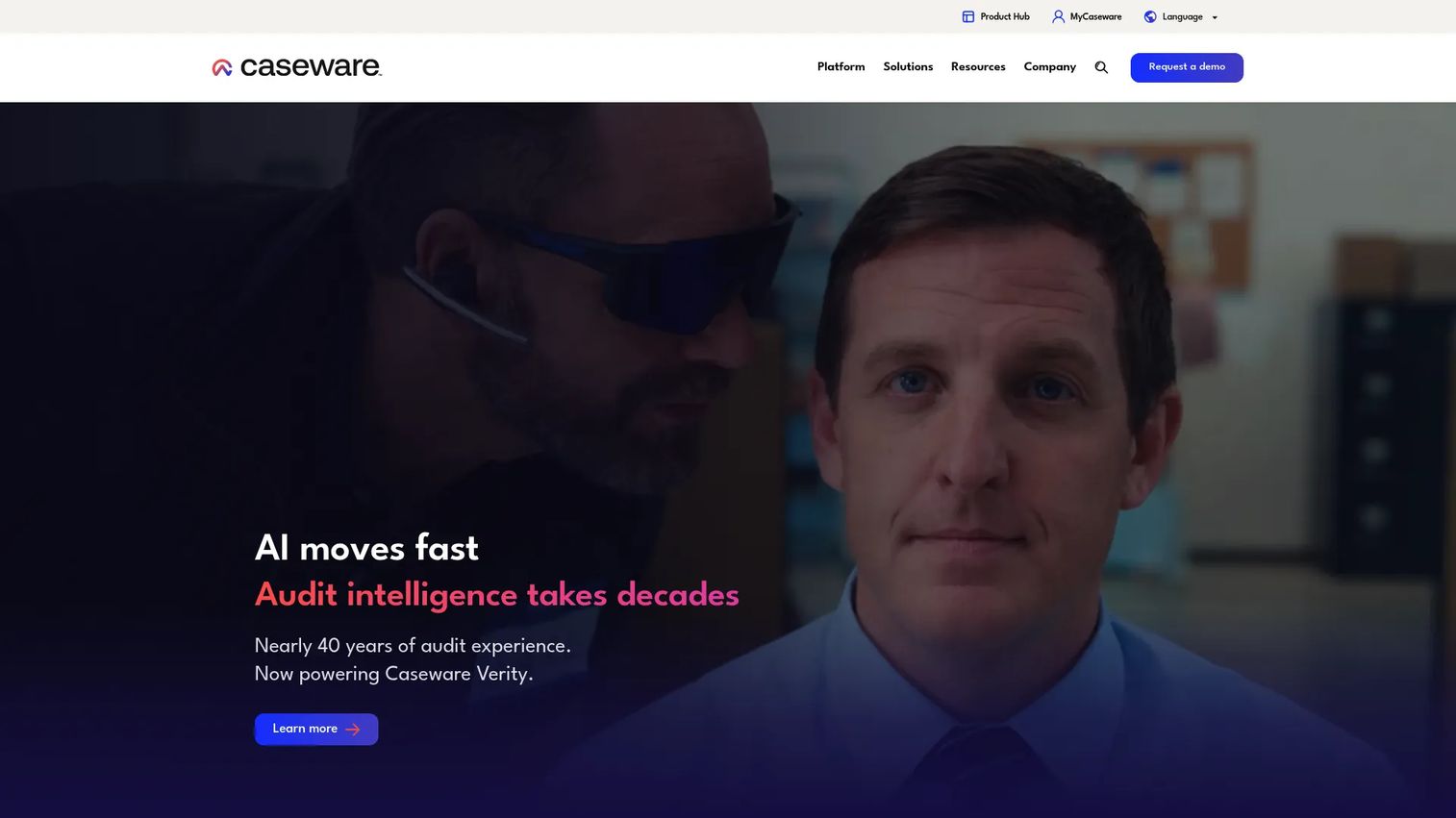
Caseware provides an AI-powered cloud platform for audit, accounting, financial reporting, tax, practice management, and quality management. Audit teams use it for cloud-based engagement workflows, risk-focused audit planning, AI-powered audit intelligence, and financial statement preparation with built-in validation. The platform is priced primarily by active users.
Best for: Accounting and audit firms that need integrated engagement workflows, financial reporting, AI-assisted analytics, and quality management in one platform.
Key features
- Cloud-based engagement workflows and real-time collaboration
- AI-powered audit and accounting intelligence
- Risk-focused audit planning and execution
- Financial statement preparation, validation, and reporting
- Practice management, analytics, and quality management
Why choose Caseware: Caseware is a mature platform with broad coverage across the audit and accounting lifecycle. It tends to fit audit professionals and firm leaders better than founder-led finance teams buying directly. The AI layer adds analytics depth without requiring a separate tool.
Caseware pricing: Pricing is determined by active users. Contact Caseware or log into MyCaseware for current pricing. No public figures are displayed.
G2 rating: 4.0/5
19. Wolters Kluwer TeamMate
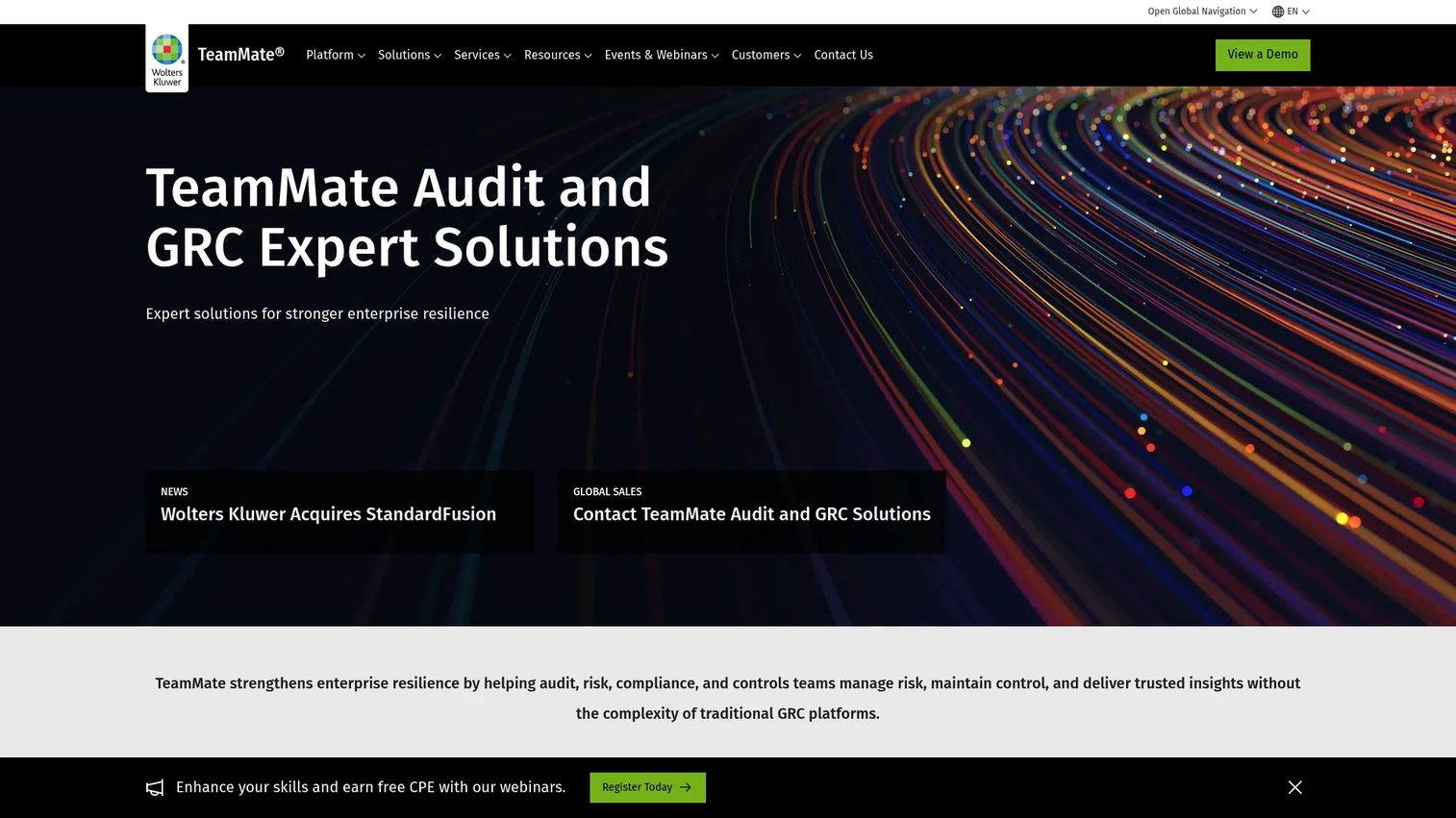
Wolters Kluwer TeamMate is audit and GRC software for managing internal audit, risk, compliance, and controls workflows. TeamMate Audit covers end-to-end audit workflow management including risk assessments, planning, execution, and issue tracking. TeamMate Risk and Compliance and TeamMate Controls extend the platform to broader governance functions. Configurable integrations and APIs connect it to existing data sources and workflow systems.
Best for: Internal audit departments that need a mature, configurable audit management system with integrated risk, compliance, and controls tracking.
Key features
- End-to-end audit workflow management: Risk assessments, planning, execution, issue tracking
- Integrated governance, risk, and compliance management
- Configurable integrations and APIs for data exchange
- TeamMate Risk and Compliance and TeamMate Controls modules
- Reporting and collaboration across audit projects
Why choose Wolters Kluwer TeamMate: Strong fit when internal audit needs structure, visibility, and cross-project reporting at scale. This is a heavyweight platform suited to mature internal audit functions, not a lightweight external audit workpaper tool.
Wolters Kluwer TeamMate pricing: Pricing is customized by program maturity, organizational needs, use case, and requirements. Request a quote through the TeamMate pricing page.
G2 rating: 4.3/5
20. Galvanize
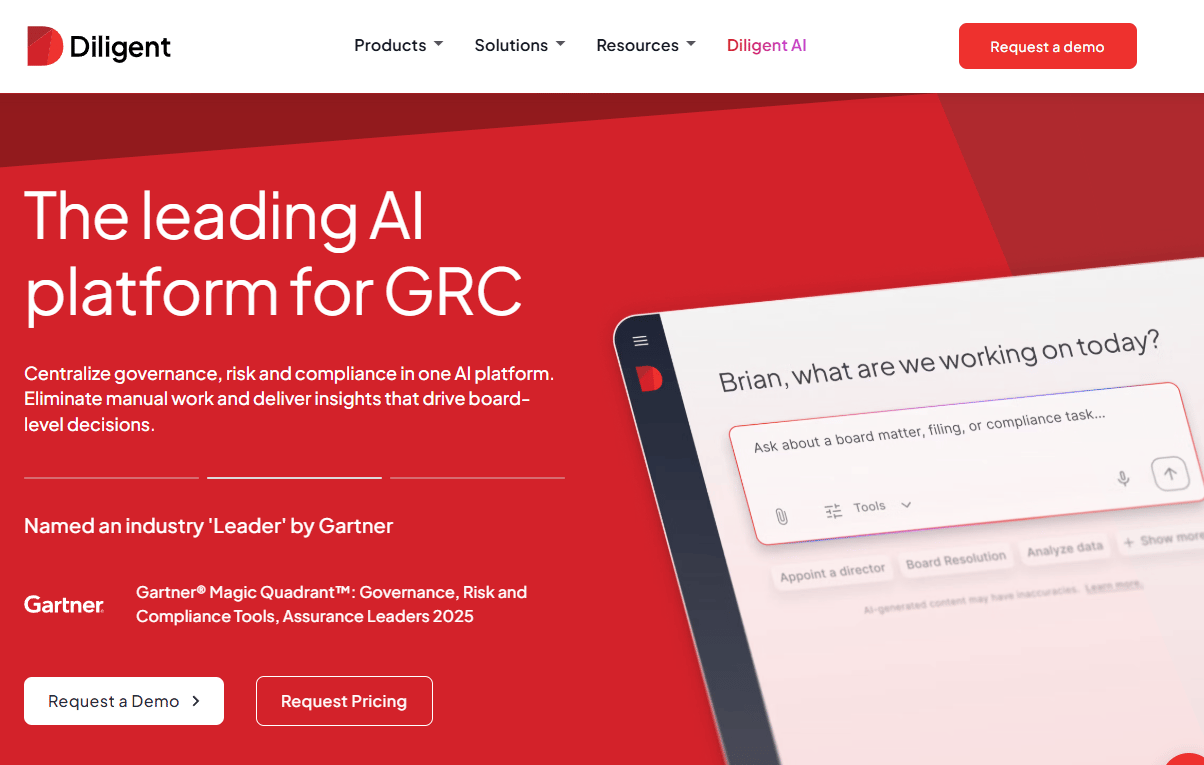
Galvanize has been integrated into the Diligent platform and now operates through HighBond. The software provides cloud-based governance, risk, compliance, audit, and security management capabilities, including audit management, SOX testing, control monitoring, risk analytics, and issue remediation. Teams evaluating Galvanize should verify current product branding and available modules through Diligent directly.
Best for: Audit, SOX, risk, and controls teams that need connected control monitoring and GRC workflows within the Diligent ecosystem.
Key features
- Audit management and documentation
- SOX testing and control monitoring
- Risk assessment and risk analytics
- Issue remediation and follow-up workflows
- Compliance management within Diligent platform
Why choose Galvanize: The integration with Diligent makes Galvanize most relevant for teams already evaluating or using other Diligent products. For SOX compliance and ongoing controls monitoring tied to board-level governance reporting, the combined platform delivers that connectivity.
Galvanize pricing: Pricing is not displayed by Diligent. All buyers must request a quote through Diligent's pricing page.
G2 rating: 4.5/5 (listed under Diligent on G2)
Considerations when choosing financial audit software
Match the tool to your audit type
A CPA firm engagement tool and an enterprise internal audit platform solve different problems. Financial statement workpaper software focuses on engagement delivery, evidence, and reporting to external parties. GRC and internal audit platforms focus on risk assessment cycles, controls testing, and remediation. Buying the wrong category creates a tool that nobody uses.
Check methodology fit before features
Audit software encodes workflows. Before evaluating features, confirm the software supports your firm's review hierarchy, documentation requirements, engagement structure, and professional standards. A methodology mismatch surfaces during review, not during a demo.
Verify integrations with your finance stack
The practical question for any finance leader or founder is whether the team can get clean audit evidence without manual reconstruction. Check that the tool connects to your accounting software, ERP, document storage, and productivity environment. Weak integrations shift the evidence burden back to your controller.
Treat AI as reviewer support, not a decision-maker
AI can accelerate evidence extraction, anomaly detection, and document review. Every tool on this list that uses AI still requires reviewer sign-offs, explainable outputs, and audit trails. Audit quality depends on human judgment applied to AI findings, not AI findings presented without review.
Price the implementation, not only the license
Training, migration, methodology setup, security review, and partner adoption all carry costs that do not appear in a per-user price. A less expensive tool with a six-month adoption curve may cost more by the next audit cycle than a better-scoped platform that teams adopt quickly.
Conclusion
The shortlist depends on your audit type and team.
CPA firms evaluating financial statement audit workflows should compare AuditFile, CCH Axcess Audit, CCH Axcess Engagement, ASD Audit, and Caseware. Each serves engagement-based workpaper and evidence workflows. Thomson Reuters Checkpoint Tools adds methodology depth for firms that want guidance tied to authoritative research.
Finance teams dealing with accounting automation and audit readiness should look at Trullion for lease and revenue recognition workflows, DataSnipper for evidence automation inside Excel, and MindBridge AI when full-population transaction analytics are the priority.
Enterprise audit and compliance teams comparing governance-connected platforms should evaluate AuditBoard (Optro), Diligent One, Diligent HighBond, Onspring, Wolters Kluwer TeamMate, and Galvanize. SAP-centric organizations should start with SAP Audit Management. Intelex fits when audits span EHSQ and compliance programs beyond financial controls.
The practical next step: Shortlist three tools. One for your core audit workflow, one for analytics or evidence automation, and one for enterprise control visibility if the business size warrants it. Then ask each vendor to walk through the exact workflow your finance team runs today, from evidence request to final reviewer sign-off.
FAQs
Financial audit software supports the full financial audit lifecycle: Planning, risk assessment, evidence collection, workpaper management, testing, reviewer sign-offs, and audit file archiving. CPA firms use it for engagement delivery, internal audit teams use it for risk-based audit programs, and finance leaders use it to maintain audit-ready documentation year-round.
Financial audit software focuses on financial statement audit workflows, workpapers, evidence, confirmations, and external reporting. Internal audit software typically covers broader territory: Risk assessments, controls testing, SOX compliance, issue remediation, and operational audit programs. Many enterprise platforms serve both purposes, while CPA firm tools stay focused on financial statement engagements.
Prioritize evidence tracking tied to your accounting system, clean audit trails with role-based access, collaboration tools that let finance hand off directly to external auditors, and reporting that holds up under board and investor scrutiny. Integration with your accounting software is the most practical differentiator at this stage. Tools that reduce manual evidence reconstruction save the most time during fieldwork.
AI tools for audit work are useful when they accelerate evidence review, flag anomalies, and support full-population testing. The condition is that the AI output is reviewable, explainable, and subject to auditor sign-off. Tools like MindBridge AI use ensemble AI with explainable outputs specifically to meet audit evidence standards. AI findings presented without reviewer evaluation do not meet audit quality requirements.
No single answer fits all firm sizes and methodologies. AuditFile suits smaller to midsized firms wanting an integrated cloud platform with AI agents. CCH Axcess Audit, CCH Axcess Engagement, and CCH Axcess Knowledge Coach work best for firms already in the Wolters Kluwer ecosystem. ASD Audit suits smaller practices. Caseware and Thomson Reuters Checkpoint Tools serve firms that prioritize mature methodology and quality management infrastructure.
Enterprise internal audit teams should compare AuditBoard (Optro), Diligent One, Diligent HighBond, Onspring, Wolters Kluwer TeamMate, and Galvanize based on GRC breadth, SOX coverage, and integration depth. SAP Audit Management is the right starting point for SAP-centric organizations. The right choice depends on whether the team needs a narrow audit workflow system or a connected risk-and-compliance operating layer.
Pricing varies by firm size, number of users, modules included, and implementation scope. AuditFile publishes prices starting at $179 per user per month. Inflo lists a Pro Plan at $1,125 per month. Most enterprise platforms, including AuditBoard, Diligent, Onspring, Wolters Kluwer TeamMate, and Caseware, use quote-based pricing. Compare total implementation cost including training and methodology setup, not only license price, when evaluating options. For more context on related software costs, see our roundup of accounting software.
No. Financial audit software supports planning, evidence collection, testing, analytics, documentation, and reporting. It does not replace audit judgment, professional skepticism, or the auditor's responsibility for the final opinion. AI-assisted tools accelerate specific procedures; the auditor evaluates results and reaches conclusions. Software makes audit work faster and more consistent, not autonomous.