Your CSAT scores look fine. Your NPS is neutral. And yet, three accounts are heading toward churn.
That gap between survey scores and actual retention is the real customer happiness problem. Customers rarely tell you they are unhappy until they stop renewing. By then, the damage is done. According to PwC (2025), 53% of bad contact-center experiences result in customers cutting their spending, and 29% of U.S. consumers stopped using a brand entirely because of one poor experience. Those numbers move before any survey dashboard shows the warning.
The tools in this guide exist to close that gap. They measure sentiment, surface friction, reduce repetitive support work, and help customers understand your product without waiting for a CSM to explain it again. Customer happiness is not one metric. It is an operating loop: Understand what customers feel, respond when they struggle, teach them how to get value, and retain them through better experiences.
This guide breaks down 12 customer happiness tools so you can pick the right one for each job in that loop.
What's inside
This guide compares 12 customer happiness tools for CS, support, CX, and lifecycle teams. Tools were evaluated across feedback and survey collection, live support, customer education and adoption, and retention operations. Selection criteria include:
- Use case fit for CSM and support workflows
- Measurement depth (CSAT, NPS, CES, health scoring)
- Integration quality with CRM, help desk, and product analytics tools
- Pricing transparency and G2 rating strength
TL;DR
- Best for customer education and product adoption: Guideflow turns complex workflows into self-serve interactive demos, sandboxes, demo centers, live demos, and mobile demos. CSMs use it to cut repetitive explanations and improve feature adoption without scheduling another call.
- Best all-in-one support suite: Zendesk Suite for teams managing tickets, messaging, voice, and AI-assisted service at scale.
- Best for post-ticket CSAT: Nicereply for one-click feedback tied to agents, teams, and ticket resolution moments.
- Best for enterprise CX programs: Qualtrics Customer Experience for multi-channel experience management with advanced analytics.
- Best for customer success health and retention: Gainsight for health scoring, renewal workflows, and expansion playbooks.
- Best for small-team live chat: Tidio for affordable AI-assisted support with an accessible free starting point.
What is customer happiness tools?
Customer happiness tools are software platforms that help teams understand, measure, and improve how customers feel about their experience across support, onboarding, product usage, communication, and retention.
The category is broader than any single tool type. No single metric equals customer happiness. It combines sentiment, effort, success, support quality, and product value. Teams typically pull from several tool categories depending on where the gap is.
Main tool categories in this space:
- Feedback and survey tools (CSAT, NPS, CES surveys)
- Help desk and live chat tools (ticketing, omnichannel support)
- Customer education and onboarding tools (interactive guides, product demos, knowledge bases)
- Lifecycle communication tools (email automation, segmentation, journeys)
- Customer success and retention tools (health scoring, playbooks, churn signals)
- Loyalty and referral tools (advocacy, rewards, reviews)
Core capabilities to look for:
- CSAT, NPS, and CES survey collection
- Customer happiness score reporting
- Feedback tagging and sentiment analysis
- Live chat and support automation
- Customer segmentation for personalized outreach
- Self-serve education and onboarding content
- Closed-loop workflows for unhappy customers
- Integrations with CRM, help desk, and product analytics tools
The best customer happiness stacks combine measurement with action. A tool that only surfaces scores and does nothing with the signal is a reporting tool, not a happiness tool. What separates effective stacks is the connection between what the data shows and what the team does next.
For more on the adjacent landscape of ai customer service software, see our separate guide.
When to use customer happiness tools
Measure customer sentiment before renewal risk appears
Waiting for a renewal call to discover dissatisfaction is too late. CSMs should trigger CSAT, NPS, and CES surveys at key lifecycle moments: Onboarding completion, support ticket closure, the first value milestone, feature launches, and renewal windows. Automated survey tools send these at scale without manual work. The goal is a signal cadence that surfaces unhappy customers weeks before they become churn conversations.
Reduce repetitive support and onboarding questions
Customer happiness improves measurably when customers know what to do without waiting for a CSM. Help desk tools, knowledge bases, and interactive demos each reduce the volume of "how do I..." tickets. Interactive demos in particular turn repeated explanations into self-serve guided experiences that work at any hour, across any account. For CSMs managing many accounts, that shift from reactive education to self-serve education is what creates capacity for strategic work.
Close the loop after negative feedback
A detractor survey score that generates no follow-up action erodes trust faster than the original bad experience did. Tools should route detractors to account owners, trigger alerts in Slack or the CRM, create follow-up tasks, and tag patterns for product or support teams. Closed-loop workflows are where customer happiness measurement becomes customer happiness improvement.
Customer happiness tools comparison
The 12 tools below cover the core jobs in the customer happiness loop, from measuring sentiment and resolving support issues to educating customers on product workflows and predicting churn before renewal. Here is how they compare at a glance. Pricing reflects the entry-level paid tier where a free tier exists, or the lowest confirmed figure for paid-only tools.
| # | Product | Best for | Key differentiator | Pricing | G2 rating |
|---|---|---|---|---|---|
| 1 | Zendesk Suite | Omnichannel support and service teams | AI agents, ticketing, messaging, voice, and analytics in one suite | From $55/agent/month (annual) | 4.3/5 |
| 2 | LiveAgent | Small and growing support teams | Omnichannel inbox with ticketing, live chat, call center, and social messaging | From $11/agent/month (annual) | 4.5/5 |
| 3 | Mailchimp | Lifecycle communication and email automation | Segmentation, journey builder, and AI recommendations for customer messaging | Free plan available; paid from $13/month | 4.3/5 |
| 4 | SurveyMonkey | General customer feedback and research | Flexible survey creation for CSAT, NPS, and research use cases | Free plan available; team plans available | 4.4/5 |
| 5 | Nicereply | Post-ticket CSAT, NPS, and CES measurement | One-click surveys tied directly to support interactions | From $59/month (annual) | 4.5/5 |
| 6 | Guideflow | Customer education and product adoption | Interactive demos, sandboxes, demo centers, live demos, and mobile demos | Free plan available; paid from $35/month | 5.0/5 |
| 7 | Survicate | In-product and lifecycle feedback | Multi-channel surveys with AI-powered feedback analysis | From $114/month (annual) | 4.6/5 |
| 8 | AskNicely | Frontline CX and NPS coaching workflows | NPS-driven coaching, service recovery, and closed-loop workflows | Custom pricing (contact sales) | 4.7/5 |
| 9 | Qualtrics Customer Experience | Enterprise CX programs | Multi-channel experience management and advanced analytics | Custom pricing (contact sales) | 4.3/5 |
| 10 | Gainsight | Customer success retention and health scoring | Health scoring, success playbooks, and renewal risk workflows | Custom pricing (contact sales) | 4.5/5 |
| 11 | Intercom | Conversational support with AI | Fin AI Agent, shared inbox, ticketing, and help center | From $29/seat/month (annual) | N/A |
| 12 | Tidio | Small-team live chat and AI support | Lyro AI Agent, live chat, multichannel inbox, and automation flows | Free plan available; paid from $24.17/month | 4.6/5 |
Best 12 customer happiness tools for 2026
1. Zendesk Suite
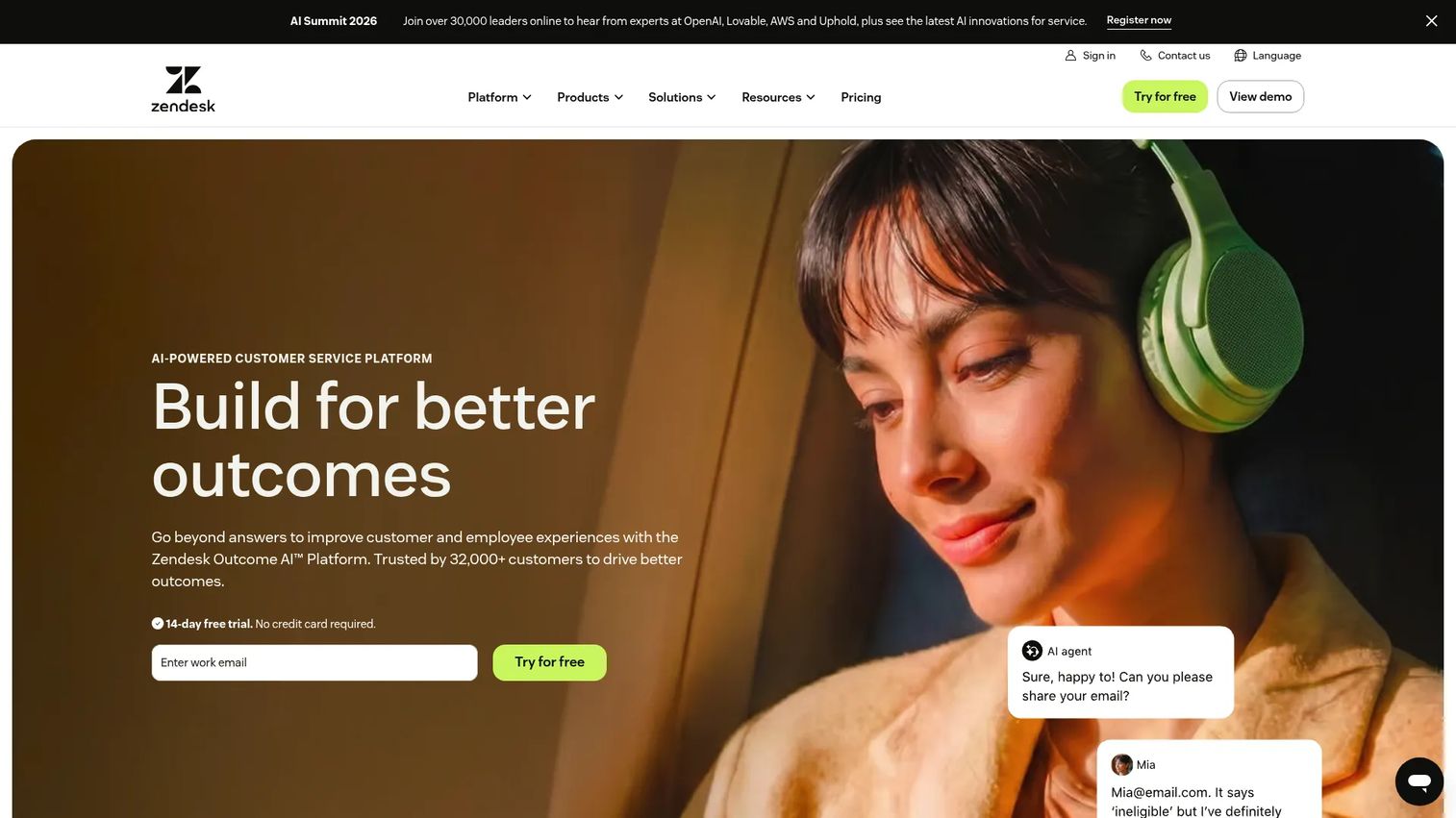
Zendesk Suite is an omnichannel customer service platform that combines ticketing, messaging, voice, email, help center, analytics, and AI automation in one workspace. It is built for support and CX teams that handle high conversation volume across multiple channels and need visibility into agent performance and resolution trends. Zendesk's marketplace has hundreds of native integrations, connecting support data to CRM, analytics, and CS tools.
Best for: Growing and enterprise support teams that need centralized omnichannel service, AI assistance, and reporting.
Key features
- Ticketing and unified agent workspace across email, chat, voice, and SMS
- AI agents and copilot for automated and assisted responses
- Help center and knowledge base for self-serve customer support
- Reporting dashboards for ticket volume, CSAT, and resolution trends
- Marketplace with 1,000+ prebuilt integrations
Why choose Zendesk Suite: Zendesk works best when customer happiness depends on fast, organized, and consistent support across many channels. For CSMs who rely on support data to spot friction patterns, Zendesk's reporting and CRM integrations make it easier to connect support trends to account health. See also our guide to best ai customer service agents for a broader look at AI-assisted support options.
Zendesk Suite pricing: Suite Team starts at $55 per agent per month billed annually ($69 month-to-month). Suite Professional is $115 per agent per month billed annually ($149 month-to-month). Suite Enterprise with Copilot requires a sales conversation. A 14-day free trial is available.
G2 rating: 4.3/5
2. LiveAgent
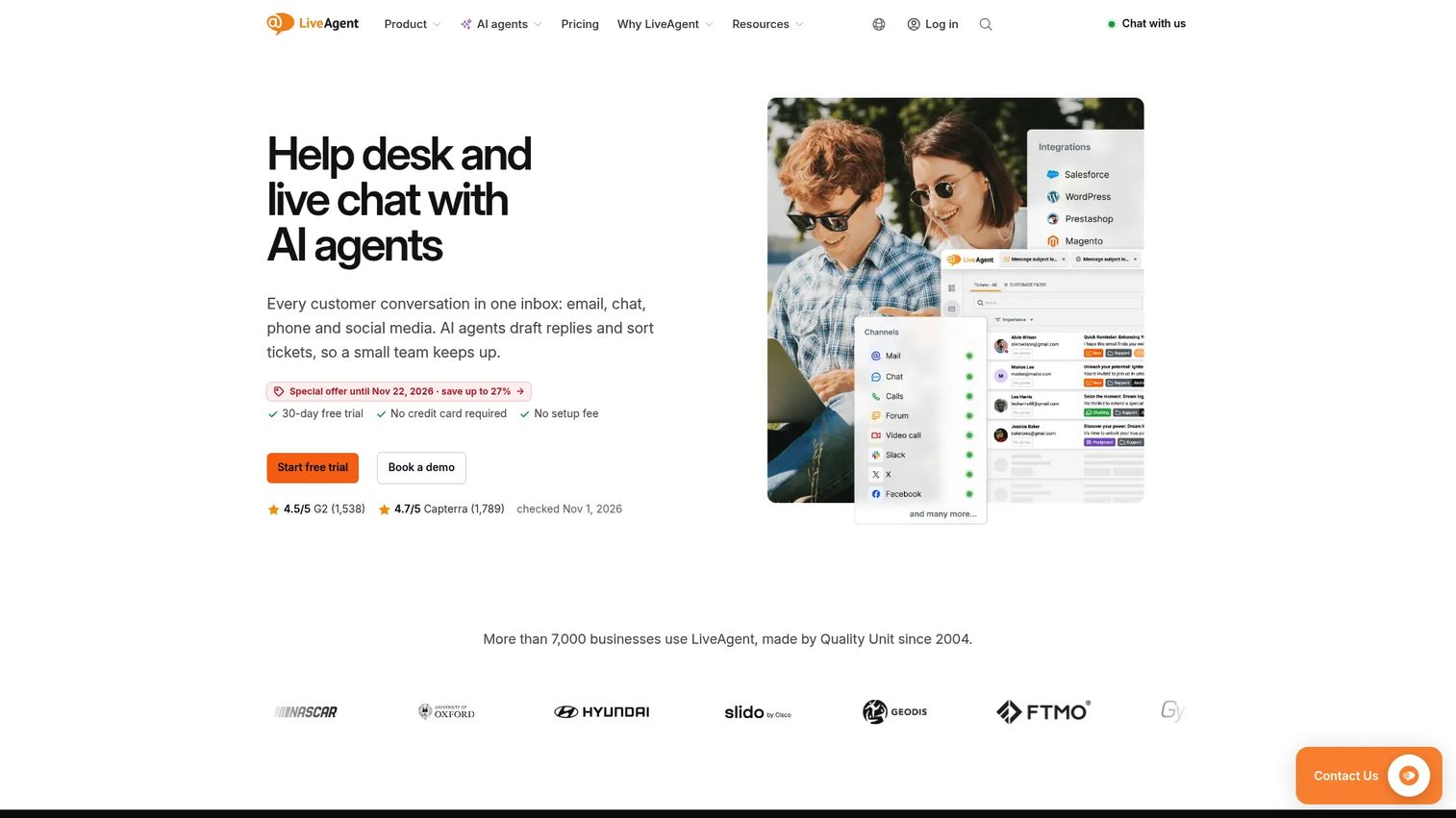
LiveAgent is a help desk and live-chat platform combining ticketing, email, phone, social media messaging, and a knowledge base in one operational workspace. It offers AI chatbot, answer assistant, and autoresponder capabilities alongside ticket summaries and spam filtering. The platform is designed for teams that want broad channel coverage without the complexity of an enterprise suite.
Best for: Small and growing support teams that need omnichannel customer service, ticketing, live chat, and AI assistance.
Key features
- Omnichannel inbox for email, chat, calls, and social media
- Ticketing with SLA rules, automation, tagging, and assignment
- AI chatbot, answer assistant, and autoresponder
- Knowledge base for self-serve support content
- Call center tools with built-in VoIP support
Why choose LiveAgent: A strong choice when customer happiness suffers because customers wait too long or have to restart their issue from scratch after switching channels. LiveAgent keeps conversation history together, so agents have context from every previous interaction.
LiveAgent pricing: Starter plan is $11 per agent per month billed annually (regular $15). Team is $22 per agent per month billed annually (regular $29). Business is $38 per agent per month billed annually (regular $49). Enterprise is $3,199 per month billed annually for 80 included agents. A 30-day free trial is available.
G2 rating: 4.5/5
3. Mailchimp
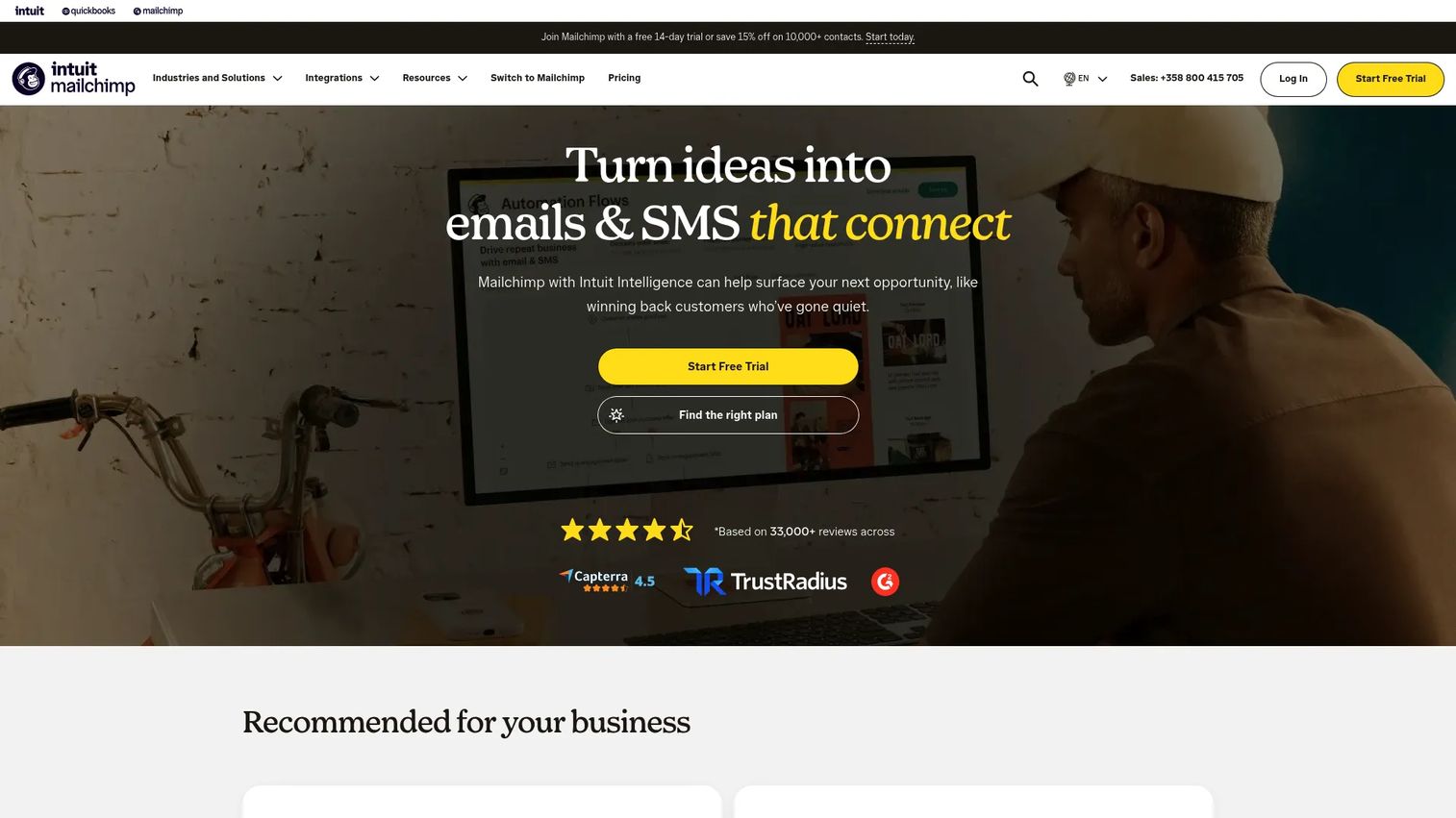
Mailchimp is a marketing automation and email platform that handles audience segmentation, journey building, campaign analytics, landing pages, and signup forms. For customer success teams, the value is in its lifecycle communication capabilities: Sending onboarding nudges, renewal reminders, re-engagement flows, and feature education at the right account moment. It includes generative AI recommendations and 300+ integrations.
Best for: Lifecycle and CS teams that need customer communication journeys, segmentation, and email-based education at scale.
Key features
- Email builder and campaign management
- Marketing automation flows and journey builder
- Audience segmentation and behavioral targeting
- A/B testing and campaign analytics
- Generative AI tools and smart recommendations
Why choose Mailchimp: Mailchimp is not a full customer success platform, but it fills the communication gap between product and CS. It is most useful when customer happiness depends on timely onboarding nudges, renewal reminders, and personalized lifecycle messages that reach customers between CS touchpoints.
Mailchimp pricing: Free plan available for up to 500 contacts. Essentials starts at $13 per month, Standard at $20 per month, and Premium at $350 per month. All prices vary by contact count.
G2 rating: 4.3/5
4. SurveyMonkey
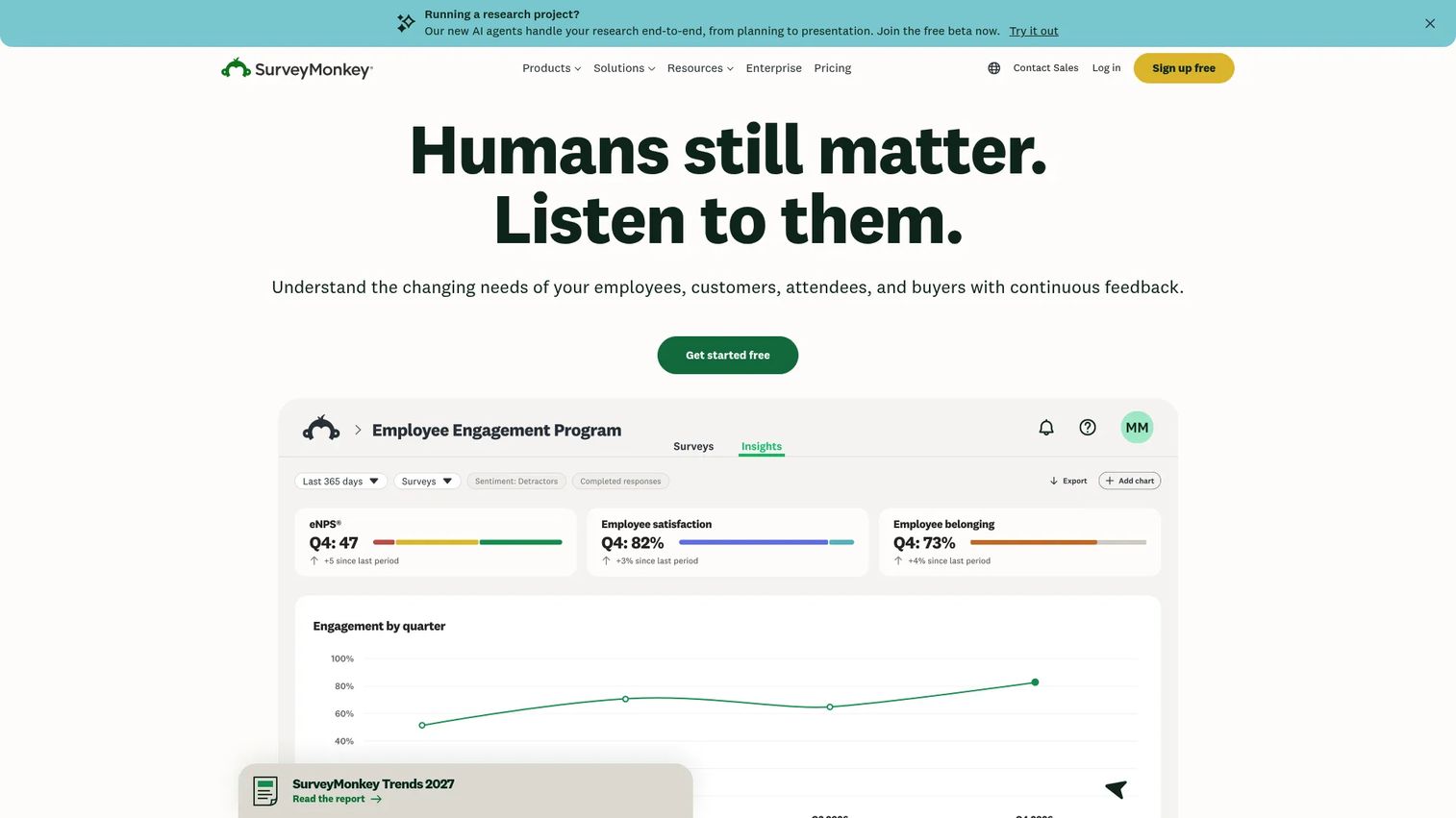
SurveyMonkey is a general survey and research platform used for CSAT, NPS, product feedback, onboarding feedback, and customer research. It supports AI-powered survey generation, advanced logic and branching, sentiment analysis, and audience panels for broader market research. The platform works well when teams need flexible survey creation that extends beyond a single CX workflow.
Best for: Teams that need flexible survey creation across CSAT, NPS, research, and product feedback use cases.
Key features
- AI-powered survey generation and question suggestions
- Logic branching and randomization for adaptive surveys
- Sentiment analysis and response analytics
- CSAT and NPS question templates
- Audience panels for external research
Why choose SurveyMonkey: SurveyMonkey is the right call when CS or CX teams need to run a variety of feedback programs from one place and are not ready for a purpose-built NPS platform. Keep in mind that closed-loop follow-up for detractors will need to happen in your CRM or CS platform, as SurveyMonkey focuses on collection and analysis rather than workflow automation.
SurveyMonkey pricing: Free plan available. Team Advantage and Team Premier paid plans are available billed annually; pricing on the official page displayed in local currency during research. Enterprise pricing requires contacting sales.
G2 rating: 4.4/5
5. Nicereply
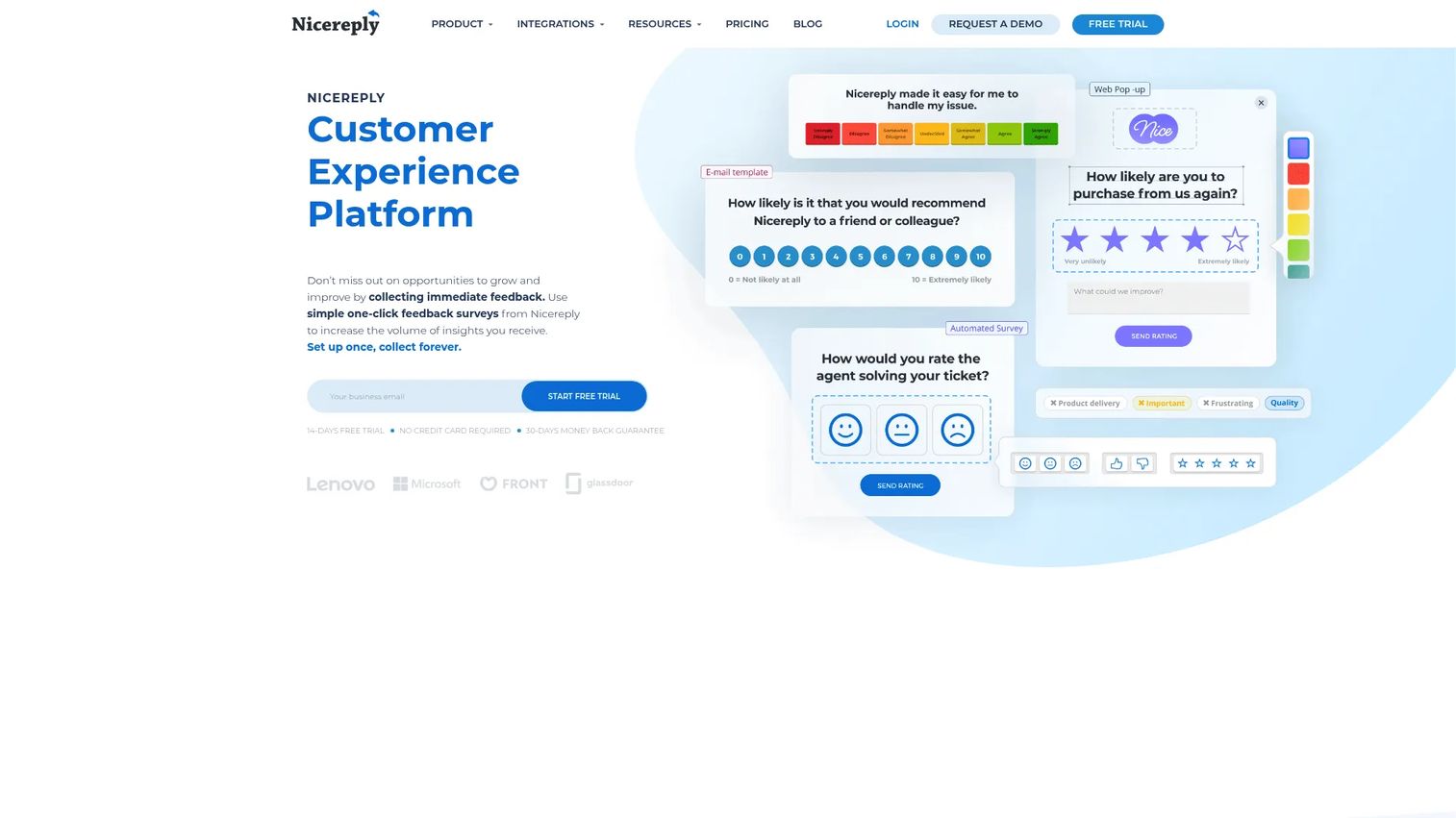
Nicereply is a customer satisfaction measurement tool built specifically around support interactions. It collects CSAT, NPS, and CES feedback through post-resolution surveys, in-signature ratings, links, and website pop-ups. Analytics dashboards break down performance by agent, team, and ticket, making it useful for support QA and coaching workflows.
Best for: Support teams that want simple, targeted satisfaction feedback tied to agents, teams, and ticket resolution moments.
Key features
- CSAT, NPS, and CES survey collection
- Post-resolution, in-signature, link, and website pop-up delivery methods
- Branding, theme, language, and custom question customization
- Native integrations with help desk and CRM platforms
- Agent leaderboards, trend charts, and CSV export
Why choose Nicereply: Nicereply is a narrow tool that does one job well: Measuring how customers feel immediately after a support interaction. If your biggest customer happiness problem is support quality inconsistency across agents or teams, Nicereply gives you the measurement layer to identify and coach the gap.
Nicereply pricing: Starter plan is $59 per month billed annually ($79 month-to-month). Essential is $119 per month annually. Growth is $239 per month annually. Business is $359 per month annually. A 14-day free trial is available; no permanent free tier.
G2 rating: 4.5/5
6. Guideflow
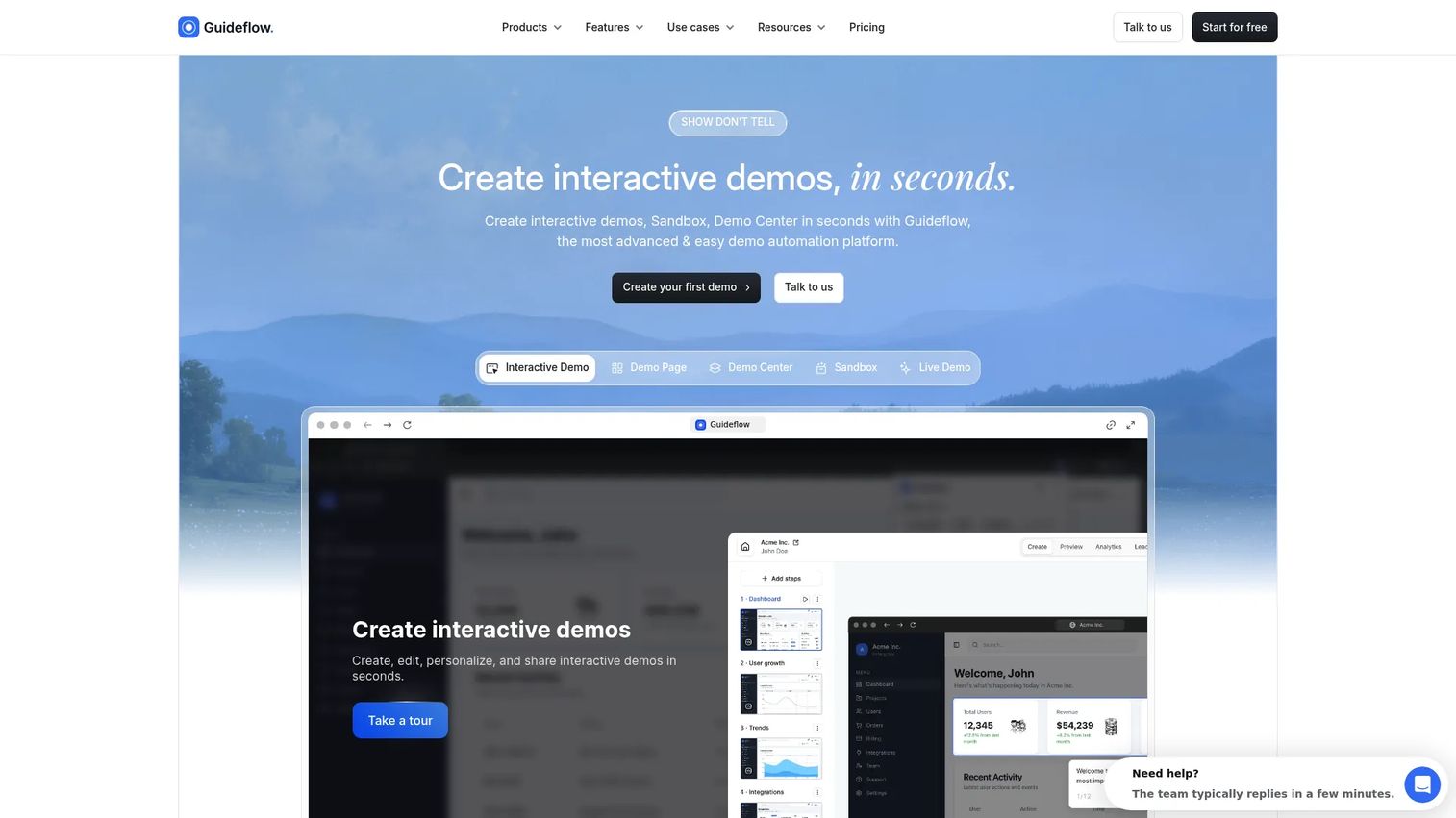
Guideflow is a demo automation platform that turns product workflows into self-serve interactive experiences. For customer success teams, the core use case is straightforward: Instead of re-explaining the same feature for the tenth time, CSMs build an interactive demo once and share it across all accounts. Customers click through the product at their own pace, guided step by step, without needing to schedule a call.
The platform supports five complementary formats. Interactive demos guide customers through a curated path. Sandboxes give users full freedom to explore workflows on their own terms, covering deep technical validation, hands-on feature exploration, and training on complex workflows. A Demo Center organizes all demos in a branded hub for onboarding sequences, customer education libraries, and partner portals. Live demos support real-time walkthroughs during QBRs or renewal conversations, adding the human layer when it matters. Mobile demos cover app-specific product education for mobile-first users.
Best for: CSMs and onboarding teams that repeatedly explain complex product workflows and want to convert that effort into scalable self-serve education.
Key features
- Interactive screenshot, HTML, mobile, and video-based demo creation
- No-code editor with branding, tooltips, CTAs, forms, and branching
- Personalize demos with dynamic variables and account-specific content
- Share via public links, embeds, email, social, and downloadable formats
- Analyze engagement by step, completion rate, drop-off, and viewer identity
Why choose Guideflow: Use it when customers need to understand the product through interaction rather than a written help article or a scheduled walkthrough. Guideflow supports customer education, onboarding, support deflection, feature adoption, and expansion conversations. Its integrations connect demo engagement data into CRM and analytics tools, so CS teams can see exactly where customers explore and where they drop off.
Guideflow pricing: Free plan available, including 5 guideflows, unlimited viewers, and 7-day analytics. Solo plan is $35 per month billed annually. Growth is $499 per month, Advanced is $1,499 per month, and Enterprise pricing requires a conversation with sales.
G2 rating: 5.0/5
Start your journey with Guideflow today!
7. Survicate
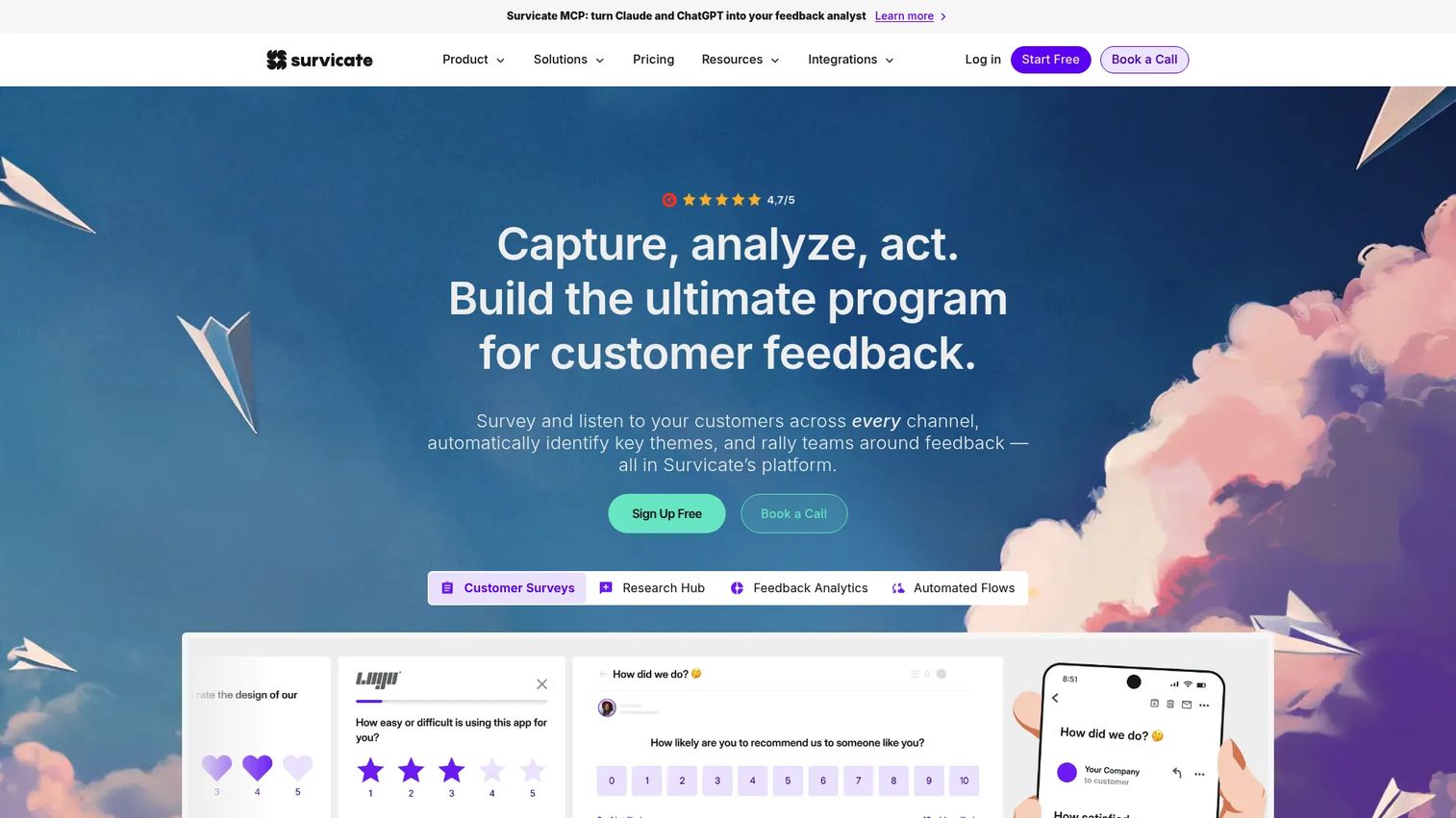
Survicate is a customer feedback platform for collecting input across email, website, mobile apps, and in-product experiences. Its AI-powered Research Hub automatically categorizes feedback themes and surfaces patterns, reducing the manual analysis burden on CS and CX teams. It integrates with CRM and product analytics tools to tie feedback to customer segments and lifecycle stages.
Best for: SaaS teams that need in-app and lifecycle feedback at specific product moments, not only quarterly relationship surveys.
Key features
- In-product, email, website, and mobile app survey delivery
- AI-powered feedback analysis and automatic topic categorization
- NPS tracking with trend reporting
- Custom dashboards with survey targeting and logic branching
- Integrations with business tools and CRMs
Why choose Survicate: Survicate fits when CSMs want to capture feedback at specific product moments, such as after a feature is first used or when a customer completes onboarding. The in-product delivery means customers see the survey in context rather than receiving a generic follow-up email days later. The AI analysis layer helps small teams spot patterns across hundreds of responses without manual tagging. For more on 360 feedback software, see our related guide.
Survicate pricing: Free account available. Growth starts at $114 per month billed annually. Pro starts at $349 per month. Enterprise starts at $569 per month.
G2 rating: 4.6/5
8. AskNicely
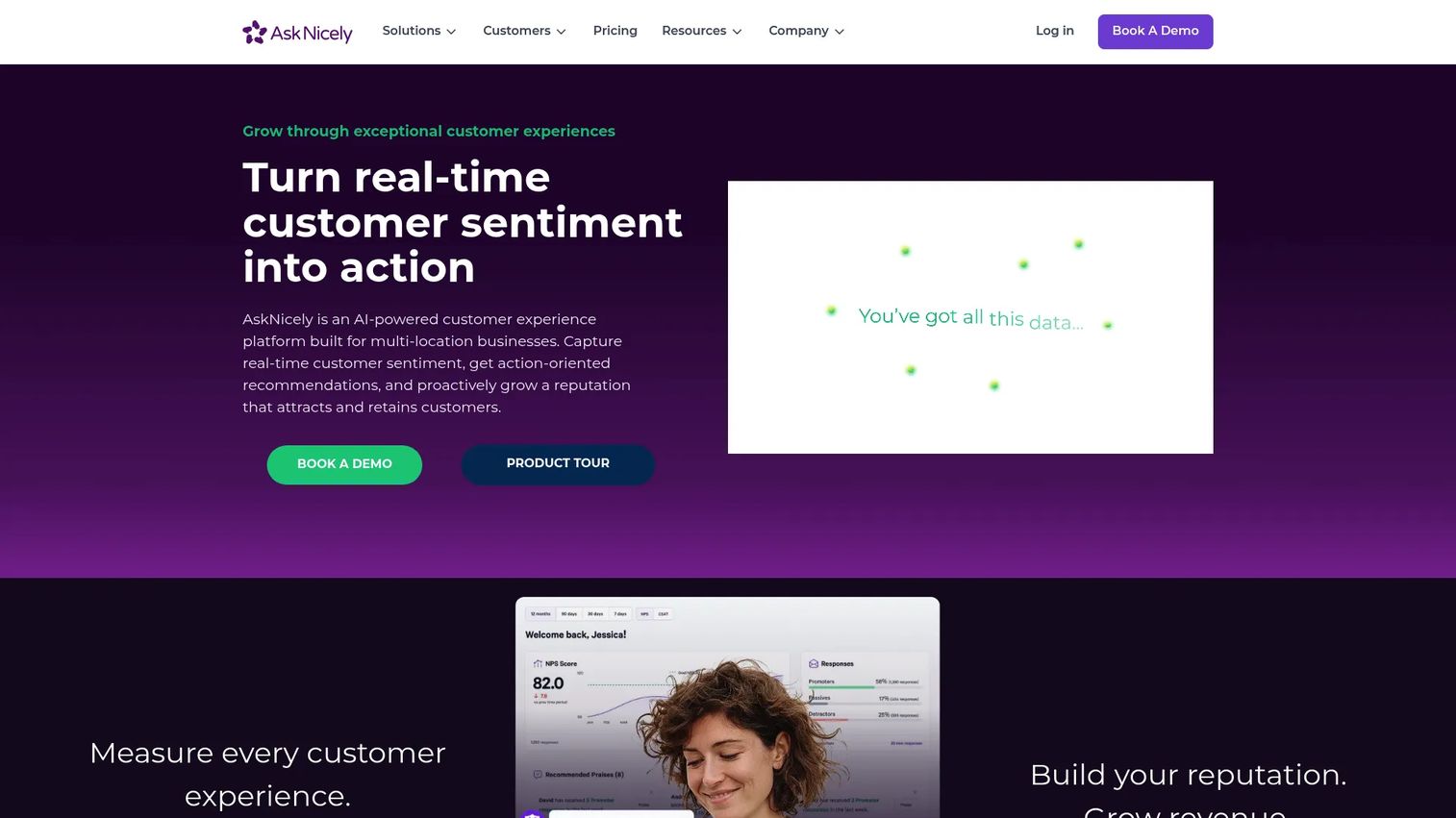
AskNicely is a customer experience platform built for multi-location, service-oriented businesses. It collects NPS, CSAT, and 5-star feedback across email, SMS, web, mobile, and in-store kiosk channels, then routes that feedback into frontline coaching workflows, service recovery alerts, and team dashboards. Its NiceAI layer surfaces recommended focus areas and CX goals based on response patterns.
Best for: Service and frontline teams that use NPS as an operating system and need feedback to drive visible team behavior change.
Key features
- Multi-channel NPS, CSAT, and 5-star feedback collection
- Conversational and AI-powered dynamic survey flows
- Automated workflow alerts and service recovery routing
- Team leaderboards, scorecards, and frontline coaching tools
- Reputation management with testimonial and review request automation
Why choose AskNicely: The defining characteristic of AskNicely is its focus on turning customer feedback into frontline action rather than executive reporting. If customer happiness scores are not changing despite measurement, AskNicely forces the accountability loop by connecting scores to coaching workflows and team targets.
AskNicely pricing: Plans (Learn, Grow, and Transform) are primarily annual and priced based on response volume starting from 500 responses. No free trial or free tier is offered. Contact AskNicely for a quote.
G2 rating: 4.7/5
9. Qualtrics Customer Experience
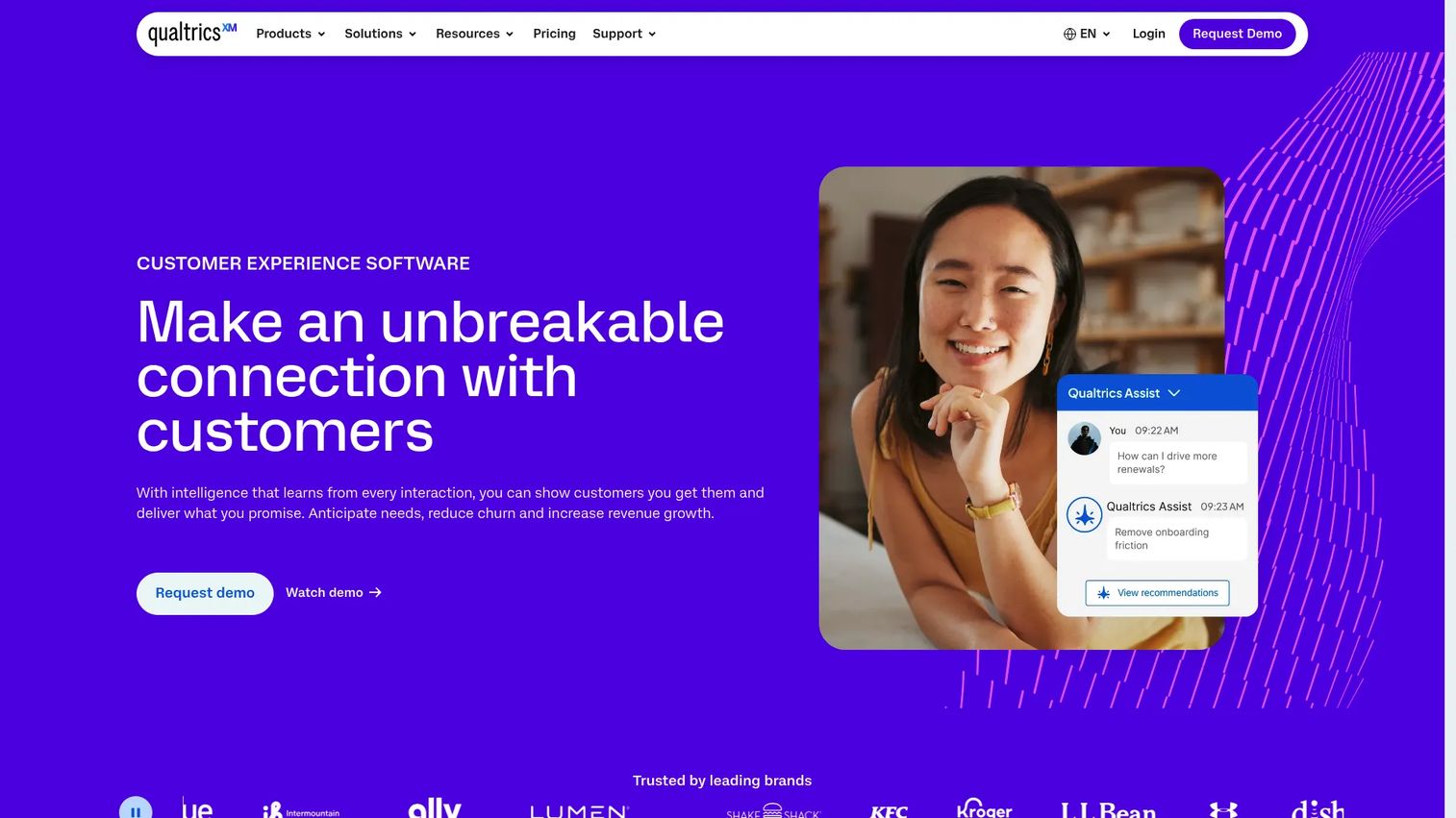
Qualtrics Customer Experience is an enterprise experience management platform that connects customer feedback, behavioral signals, and advanced analytics across surveys, calls, chat, social, and digital interactions. It includes digital experience analytics with session replay and heatmaps, contact center experience analytics, online reputation management, and location experience management for distributed organizations.
Best for: Enterprise CX programs with multiple channels, regions, or business units that need governance, role-based dashboards, and structured experience management.
Key features
- Voice of Customer across surveys, calls, chat, social, and digital behavior
- Omnichannel experience management with automated text analytics
- Digital experience analytics including session replay and funnel analysis
- Contact center experience analytics and agent effectiveness measurement
- Role-based dashboards and workflow automation for large organizations
Why choose Qualtrics Customer Experience: Qualtrics is the right choice when a single-channel tool is not enough and the organization needs to compare CX performance across regions, business units, or customer segments. It carries meaningful implementation effort. The strength is depth of analytics and the ability to structure a CX program across a complex organization.
Qualtrics Customer Experience pricing: Packages are configured based on planned usage, interaction types, and modules. Contact Qualtrics for a quote.
G2 rating: 4.3/5
10. Gainsight
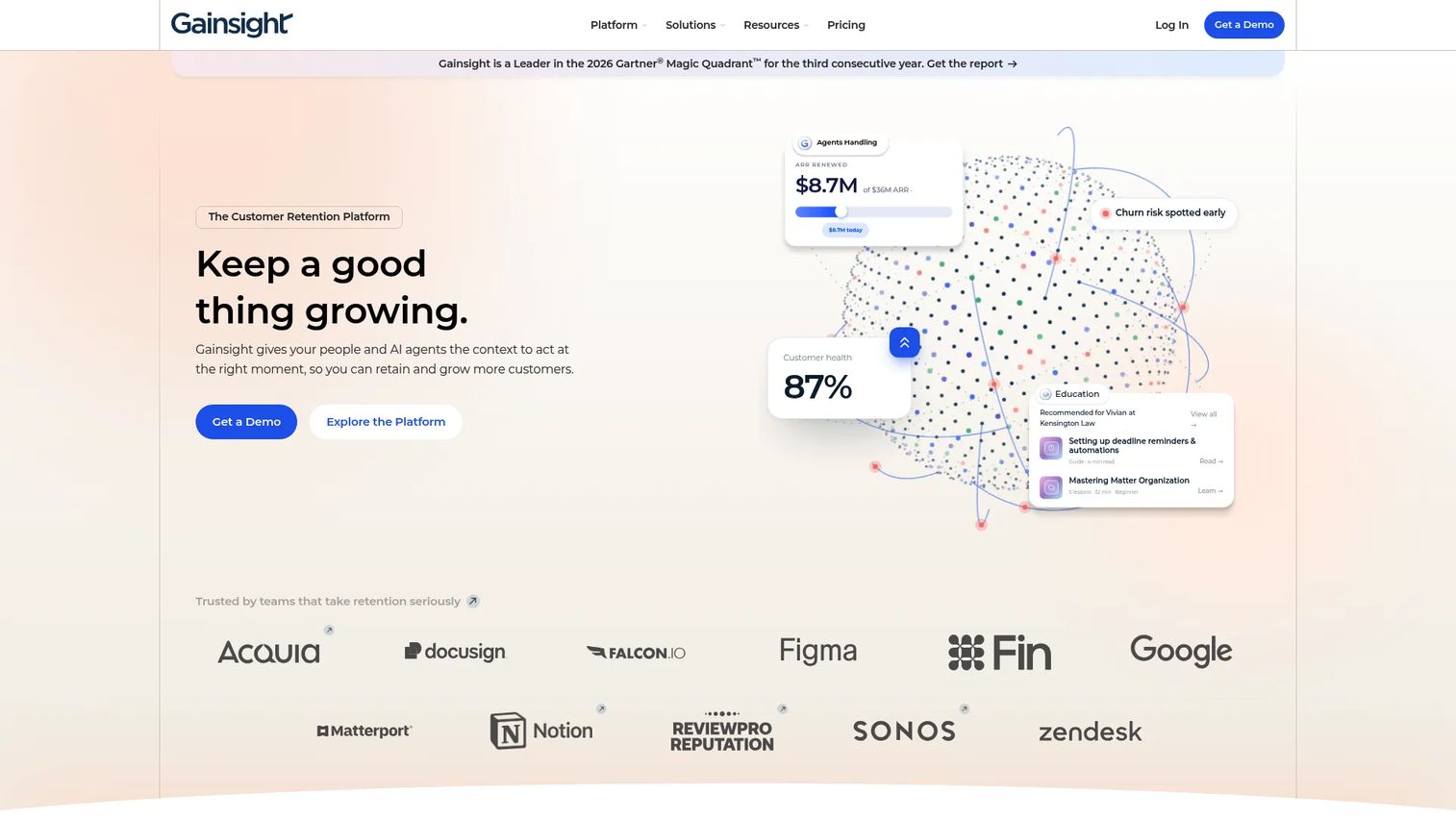
Gainsight is a customer retention platform that connects customer health scoring, renewal workflows, success plans, product adoption signals, and AI-powered insights in one workspace. It is built for CS teams managing retention and expansion across many accounts, where the challenge is knowing which accounts need attention before they escalate.
Best for: Enterprise B2B CS teams managing retention, expansion, and churn risk across large account portfolios.
Key features
- Customer 360 and unified customer context across all data sources
- Health scoring with risk detection and renewal workflow automation
- Success plans, playbooks, and customer timeline tracking
- Product adoption signals and feature usage insights
- AI-powered insights and automation for CSM prioritization
Why choose Gainsight: Customer happiness becomes operational when it feeds CSM prioritization. Gainsight connects survey scores, product usage data, and support history into a single health score, then routes CSMs to the accounts that need attention. It is built for CS teams that want to run structured success programs at scale. See also our guide to best user onboarding software tools for tools that complement Gainsight at the product layer.
Gainsight pricing: Essentials and Enterprise plans both require contacting sales. Gainsight G2 reviewer-reported ranges suggest significant annual investment; it is designed for mid-market and enterprise CS teams.
G2 rating: 4.5/5
11. Intercom
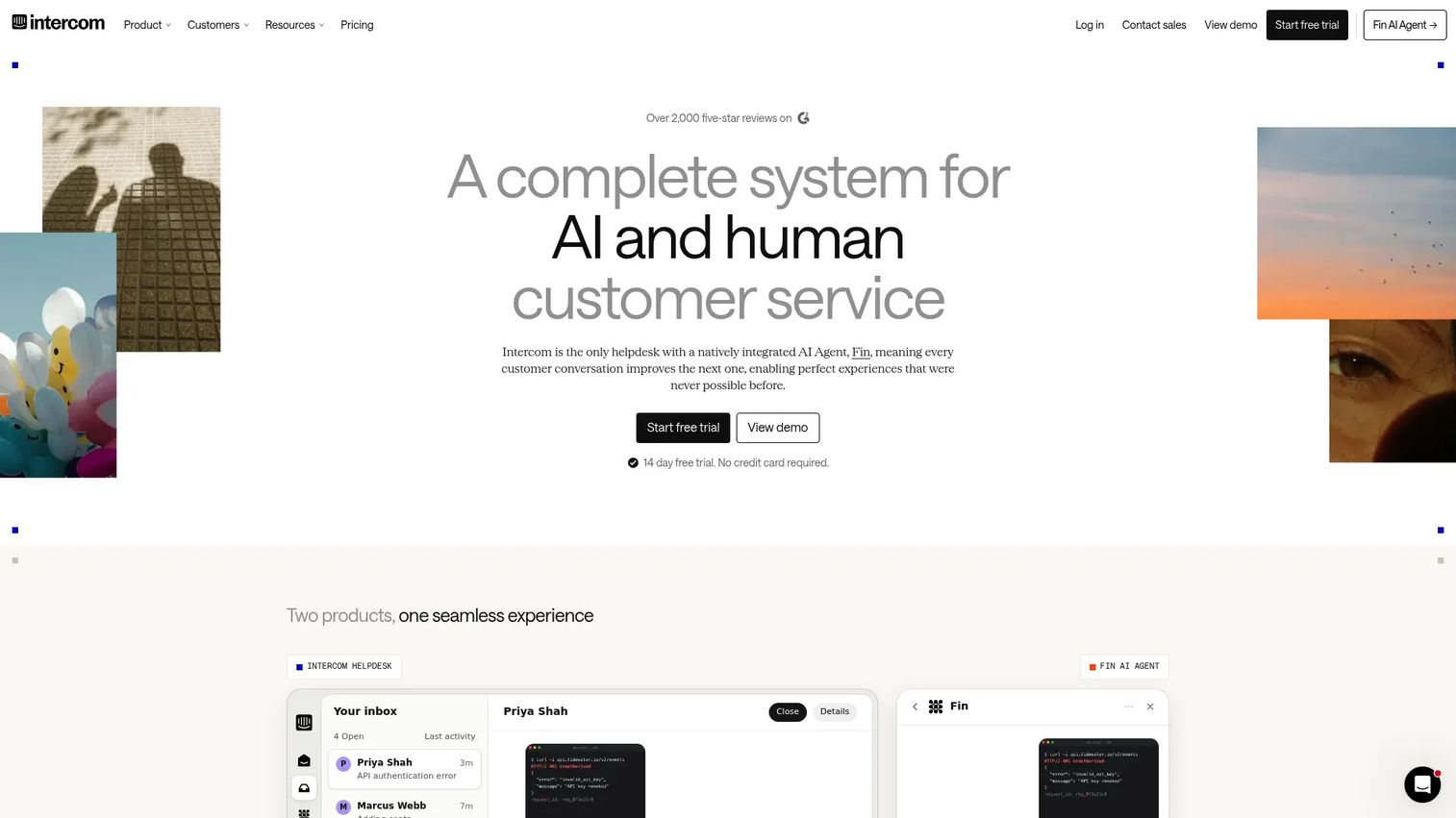
Intercom is an AI-powered customer service platform combining its Fin AI Agent with a shared inbox, ticketing, help center, proactive messaging, and automation workflows. It operates primarily through an in-product or website messenger, giving customers a consistent channel whether they need help, want to search the help center, or are waiting for a human agent. For teams already using best-of-breed ai customer service software, Intercom's conversational layer adds meaningful context to every customer interaction.
Best for: SaaS teams that want live conversations, proactive in-product messages, and help content inside a single customer-facing messenger.
Key features
- Fin AI Agent for automated response and resolution
- Shared inbox with ticketing and round-robin assignment
- Proactive messaging for in-product announcements and onboarding
- Help center with self-serve article delivery inside the messenger
- Workflow automation builder for routing and escalation
Why choose Intercom: Intercom excels when customer happiness depends on fast, contextual support inside the product or on the website. Fin AI Agent deflects common questions so human agents spend their time on complex issues. The proactive messaging layer means teams can reach customers in the product before they open a ticket.
Intercom pricing: Essential plan is $29 per seat per month billed annually ($39 month-to-month). Advanced is $85 per seat per month annually. Expert is $132 per seat per month annually. Fin AI is priced from $0.99 per resolved outcome. Optional add-ons include Copilot from $29 per agent per month.
12. Tidio
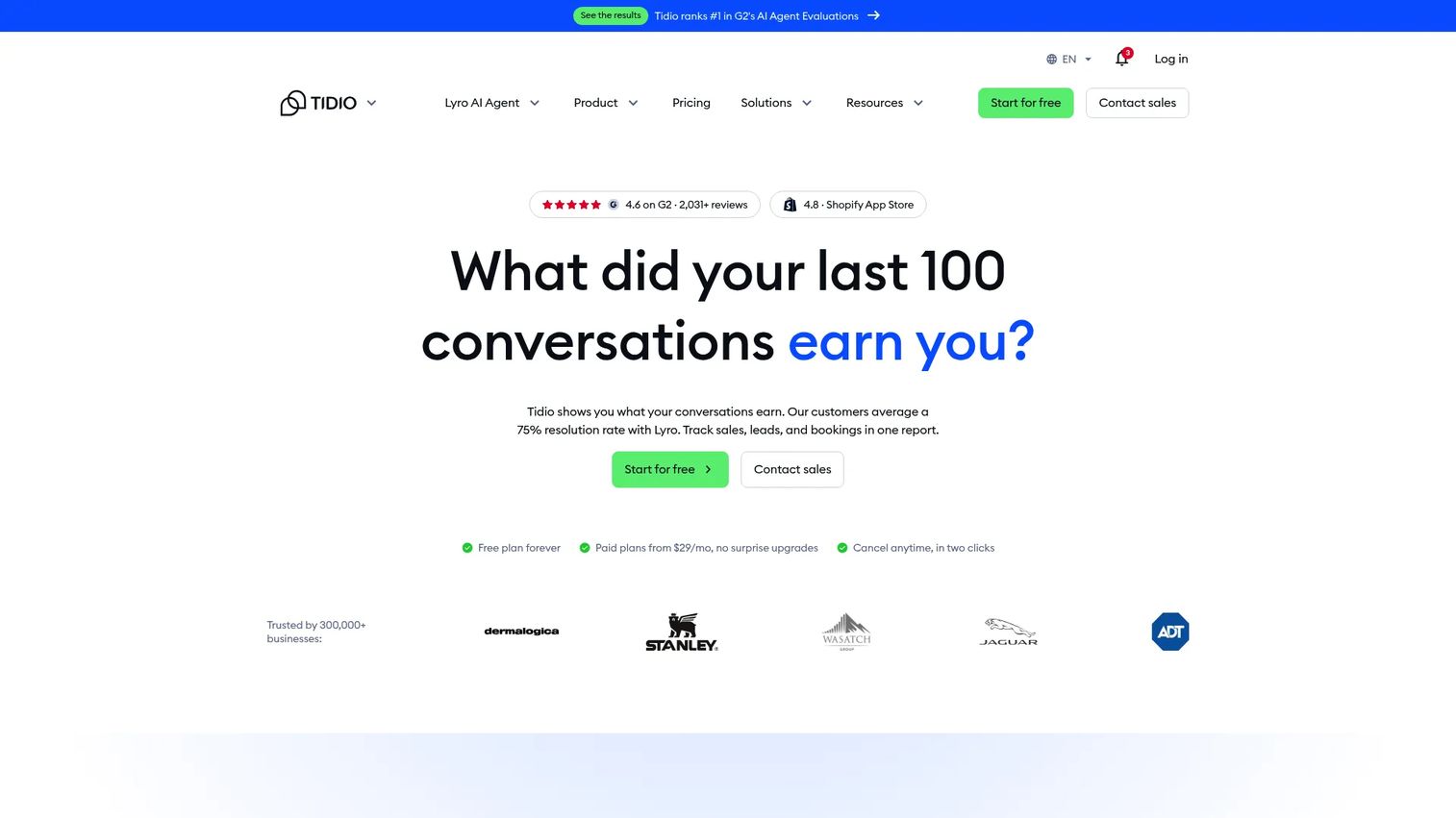
Tidio is an AI-powered customer service platform for small and mid-sized teams. It combines live chat, the Lyro AI Agent, a multichannel inbox for email and social messaging, a Visual Flows automation builder, and built-in sales analytics. The free plan makes it accessible for teams that are building their first real-time support layer without committing to an enterprise contract.
Best for: Small teams that need affordable live chat, AI-assisted support, and multichannel inbox coverage from a single platform.
Key features
- Lyro AI Agent for automated customer support and conversation resolution
- Live chat and ticketing with shared inbox
- Multichannel inbox covering email, WhatsApp, Instagram, and Facebook Messenger
- Visual Flows builder for chatbot automation and routing
- 120+ integrations and visitor tracking
Why choose Tidio: Tidio is the right starting point when a team's most urgent customer happiness problem is slow or absent response time on the website. The free plan covers basic live chat, and the Lyro AI Agent handles common questions so human agents focus on conversations that need context and judgment. Escalation to a live agent is straightforward when the conversation requires it.
Tidio pricing: Free plan available. Starter is $24.17 per month billed annually. Growth starts at $49.17 per month billed annually. Plus starts at $300 per month. Premium pricing requires a conversation with sales. Standalone Lyro AI Agent starts at $32.50 per month.
G2 rating: 4.6/5
Considerations when choosing customer happiness tools
Match the tool to the customer happiness job
A CSAT tool measures satisfaction after a support ticket. A live chat tool resolves questions in real time. An interactive demo platform teaches customers what to do. None of these replace the others. Map your biggest gap first: Measuring sentiment, reducing support volume, educating customers, or predicting churn. Buy one tool that solves that gap before adding more layers.
Check where the signal enters the workflow
A tool that only surfaces scores is reporting, not action. Evaluate whether feedback or engagement data creates a Slack alert, opens a task in your CRM, triggers a CS playbook, or generates a product insight. If the data stops at a dashboard nobody opens, the tool is not driving customer happiness improvement.
Look for customer context, not only survey volume
CSMs need account, plan, lifecycle stage, and product usage context alongside any score. A high NPS from a first-week user and a low CSAT from a power user on a critical workflow are entirely different signals. Tools that surface scores without customer context make prioritization harder, not easier.
Plan the closed-loop process before rollout
Before selecting any feedback tool, define who owns detractors, which escalation path applies to each trigger, and who reviews recurring patterns for product or support improvements. A tool with a clear closed-loop process drives retention; one without it generates reports that go unread.
Evaluate adoption effort and maintenance
Customer happiness tools fail when teams do not maintain surveys, demo assets, automation flows, or segmentation rules after launch. Ask who will own updates after the initial build. Tools with straightforward editing and version control survive longer than those that require engineering involvement every time something changes.
Conclusion
Customer happiness is not a metric. It is an operating discipline that runs across every team touching the customer lifecycle.
For support operations, Zendesk Suite and LiveAgent handle omnichannel ticket and conversation management. For feedback and measurement, Nicereply, Survicate, AskNicely, and Qualtrics Customer Experience cover the range from post-ticket CSAT to enterprise-grade experience programs. SurveyMonkey works when flexibility matters more than depth. Mailchimp handles the communication layer. Gainsight connects feedback and usage data into retention and expansion workflows. Intercom and Tidio cover conversational support and AI-assisted response.
Guideflow occupies a distinct job: Customer education and product adoption. When customers keep opening tickets because they do not understand a workflow, an interactive demo fixes the root cause rather than the symptom. Sandboxes let technical users explore freely. Demo centers organize education by use case or product area. Live demos add the human layer for QBRs and renewals. Mobile demos serve app-specific workflows.
Start by mapping the gap. If your CSAT score is healthy but adoption is low, the problem is not support. If tickets are high but docs are strong, the problem is format. Choose tools by job, not by category.
Start your journey with Guideflow today!
FAQs
Customer happiness tools are software platforms that help teams measure, understand, and improve how customers experience a product or service. The category includes survey tools for CSAT, NPS, and CES collection; help desks and live chat tools for support operations; customer education tools for onboarding and product adoption; lifecycle communication tools; and customer success platforms for health scoring and churn prevention. Most teams use a combination rather than relying on a single platform.
Customer satisfaction typically measures whether a specific interaction met a customer's expectations, often captured right after a support ticket or transaction. Customer happiness is broader and includes confidence in the product, emotional connection to the brand, effort required to get value, and whether the customer wants to keep using the product long term. A customer can be satisfied with individual interactions and still churn because they never achieved the outcome they originally expected.
No single number captures customer happiness completely. Most teams combine CSAT scores from post-interaction surveys, NPS for relationship-level loyalty signals, and CES to measure how much effort a customer expended to resolve an issue. Qualitative feedback, support ticket trends, product usage and feature adoption rates, renewal data, and referral behavior all add context. The strongest picture comes from combining multiple signals rather than optimizing for one score.
A customer happiness score is a company-defined composite metric that combines survey feedback with behavioral and operational signals. Teams often weight CSAT, NPS, CES, product usage frequency, support contact volume, and renewal risk into a single account-level indicator. The specific formula varies by organization. The goal is to surface accounts that need attention before the signals reach a critical point, rather than reacting after a detractor survey arrives.
The right tool depends on the specific gap the team is trying to close. Gainsight is built for retention and health scoring across a large account portfolio. Survey tools like Nicereply and Survicate are best for measuring feedback at the interaction or product moment level. Guideflow fits when the core problem is repetitive education: CSMs who re-explain the same workflows benefit from interactive demos that let customers self-serve. Support tools like Intercom and Zendesk Suite reduce ticket volume when customers are stuck on basic questions.
They can, but measurement alone does not improve retention. The reduction in churn comes from what teams do with the signal. A CSAT tool that generates scores without triggering follow-up action on detractors does not change outcomes. The effective pattern is: Measure, detect unhappy customers early, route them to the right response, educate them on what they are missing, and track whether the intervention worked. Each of those steps needs a tool and a person responsible for it.
Both, but at different moments. CSAT measures sentiment immediately after a specific interaction, such as a support ticket resolution or an onboarding session. It is useful for evaluating support quality and agent performance. NPS measures the overall relationship, capturing whether a customer would recommend the product and reflecting their broader loyalty. Most CS teams benefit from CSAT after key touchpoints and NPS at relationship intervals such as 90 days post-onboarding and before renewal windows.
Interactive demos let customers learn product workflows at their own pace, guided step by step, without waiting for a scheduled call or searching through static documentation. For CSMs, they reduce the volume of repetitive education requests and free up time for high-value account conversations. They also give teams engagement data showing which steps customers complete, where they drop off, and which features they explore, turning education delivery into a source of product adoption insight.