A shipment looks on time until it isn't. The truck sits at a yard for six hours with no alert. The ocean container misses its transshipment connection and nobody knows for two days. By the time your team catches it, the customer has already called asking where their order is. You spend the afternoon chasing carriers on the phone, cross-referencing spreadsheets, and rebuilding a status picture that should have been automatic.
That gap between "what the system says" and "what is actually happening" is what logistics visibility software exists to close. Around 67% of organizations already rely on digital dashboards for end-to-end supply chain visibility, according to Market.US (2025), and companies adopting these platforms report up to 20% improvement in operational efficiency. The stakes are concrete: late exception detection erodes OTIF, drives up detention and dwell time, and pushes down customer satisfaction. When you can see a delay forming instead of confirming it after the fact, you get hours back to act.
The market is scaling fast to meet that demand. Future Market Insights (2025) valued the logistics visibility software market at USD 973.5 million in 2025, projecting it to reach USD 2.84 billion by 2035 at an 11.3% CAGR. By 2026, Strategic Market Research expects roughly 72% of global logistics enterprises to run cloud-based visibility platforms. This guide breaks down which ones are worth your shortlist.
What's inside
This guide covers logistics visibility software built for real-time shipment tracking, predictive ETAs, exception management, and multimodal visibility across ocean, air, rail, truck, and parcel. It is written for logistics leaders, transportation managers, and the product and operations people who evaluate these platforms for data quality, integration fit, and operational impact, not just feature checklists.
We ranked platforms on the criteria that actually decide value in production:
- Visibility coverage across modes, milestones, and facility nodes
- Integration depth with TMS, ERP, WMS, and carrier systems
- Exception handling and the workflows that turn alerts into action
- Carrier onboarding and data quality diagnostics that keep tracking accurate
TL;DR
- Best for enterprise multimodal visibility: project44. Deepest carrier and facility connectivity across ocean, air, rail, and truck, with strong data-quality tooling.
- Best for supply chain orchestration: FourKites. Real-time visibility paired with a control tower and AI-driven execution for large shippers.
- Best for visibility inside a TMS workflow: Shipwell. Multimodal tracking connected to transportation planning, automation, and settlement.
- Best for global network reach: Descartes. Event-based monitoring on top of one of logistics' largest connected networks.
- Best for tracking plus operational workflows: GoComet. AI-native multimodal tracking with predictive ETAs and freight procurement in one place.
- Best for high-value and security-sensitive freight: Overhaul. In-transit risk monitoring and exception prevention for cargo that cannot go dark.
What is logistics visibility software?
Logistics visibility software is a real-time platform that tracks shipments across transport modes, predicts arrival times, flags exceptions early, and connects that data across carriers and internal systems into a single operational view.
It works by pulling location and status signals from many sources, then normalizing them into one picture. Data flows in from GPS, ELD devices, telematics, carrier APIs, EDI messages, mobile driver apps, and carrier network integrations. The platform matches those signals to your shipments, layers analytics on top, and pushes proactive alerts when something drifts from plan.
The core capability stack most buyers evaluate:
- Real-time tracking of in-transit shipments across every mode
- Multimodal coverage spanning ocean, air, rail, truck, and parcel
- Predictive ETA built from live movement plus historical patterns
- Exception management with proactive, real-time alerts
- Integration with TMS, ERP, and WMS to avoid creating another silo
- Carrier onboarding and data-quality dashboards that keep coverage and ETA accuracy high
The difference between a real-time visibility platform and a static status report is timing. A report tells you where freight was. A visibility platform tells you where it is, where it will be, and what to do when the prediction slips.
When to use logistics visibility software
Reduce blind spots across in-transit freight
You need this most when freight moves across modes and geographies you cannot watch directly. A single order might travel by ocean, transfer to rail, then finish on a truck for last-mile delivery. Without one system tying those legs together, you get status from four disconnected sources at four different intervals. A real-time transportation visibility platform gives you continuous shipment status, ETA confidence scoring, and exception awareness in one place, so you stop reconstructing where things are.
Break down tracking silos between internal teams and carriers
When shipment data lives in a carrier portal, a spreadsheet, an email thread, and your TMS all at once, every team works from a different version of the truth. Customer service quotes one ETA, the warehouse plans for another, and procurement has no view at all. End-to-end shipment visibility software pulls these feeds into a single source of truth that carriers, operations, and internal stakeholders read from together. That shared view is what stops the daily "where is this shipment" scramble.
Improve exception response before service levels slip
Proactive alerts matter most in the window before a problem becomes a failure. A missed pickup appointment, a container idling long enough to trigger detention, a delayed inbound shipment that will stall a production line: each of these is recoverable if you catch it early. Strong exception management surfaces the risk, recommends the next action, and routes it to the right owner, so your team spends time resolving issues instead of discovering them.
Comparison table
Use this table to build a fast shortlist before reading the detailed sections. Pricing and G2 ratings should be verified at publishing time, since vendors update packaging and reviews continuously.
| # | Product | Intent | Key differentiation | Pricing | G2 rating |
|---|---|---|---|---|---|
| 1 | project44 | Enterprise multimodal visibility | Deep carrier/facility connectivity plus AI exception resolution | Contact sales | 4.7/5 |
| 2 | FourKites | Supply chain orchestration | Control tower with digital twins and AI execution | Subscription, contact sales | 4.5/5 |
| 3 | Shipwell | Visibility inside a TMS | Multimodal tracking tied to transportation management | Custom quote | 4.6/5 |
| 4 | Descartes | Global network reach | Global Logistics Network with event management | From $10/month (order mgmt) | 4.6/5 |
| 5 | GoComet | Tracking plus workflows | AI-native multimodal tracking and procurement | Free tier plus paid plans | 4.9/5 |
| 6 | Overhaul | High-value freight risk | In-transit risk monitoring and cargo security | Contact sales | 4.6/5 |
| 7 | Shippeo | Real-time transport visibility | Carrier connectivity and predictive insights | Contact sales | 4.7/5 |
| 8 | Trimble Visibility | Transportation execution fit | AI ETA monitoring with TMS integration | Contact sales | 4.4/5 |
1. project44
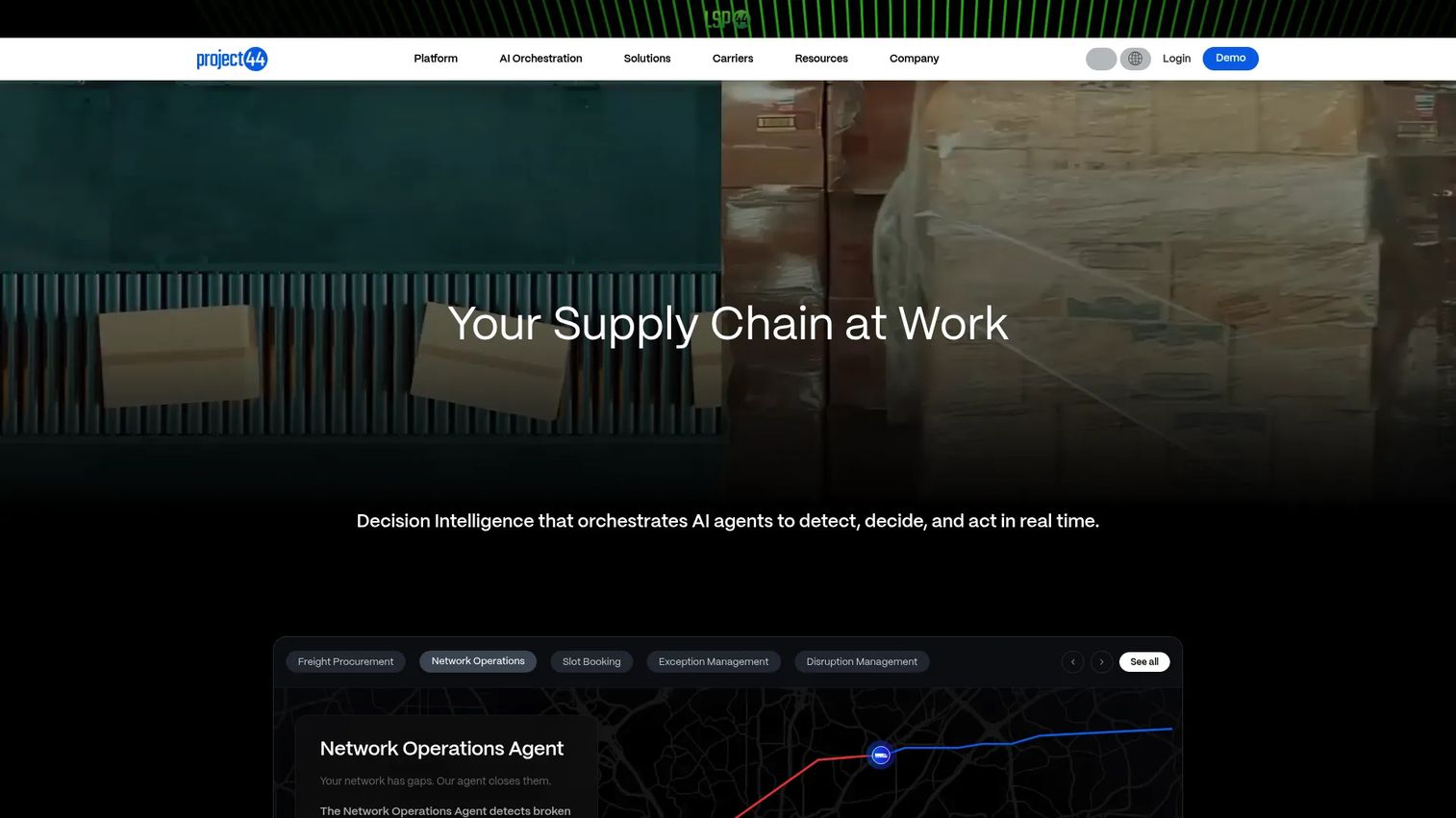
project44 is a decision intelligence platform covering supply chain visibility, transportation management, yard management, and eCommerce logistics. It positions itself around breadth: real-time shipment and inventory visibility across every mode, backed by one of the deepest carrier and facility connectivity networks in the category. For enterprises running complex, multi-leg freight, that connectivity is the whole point.
Best for: Enterprise shippers and logistics teams needing end-to-end supply chain visibility alongside execution tools.
Key strengths
- Multimodal real-time visibility: Tracks shipments and inventory across ocean, air, rail, and truck from a single view.
- AI exception resolution: AI agents surface exceptions and automate workflow steps, so issues get addressed before they hit service levels.
- Transportation execution: Rating, booking, and freight procurement analytics sit alongside visibility, not in a separate tool.
Why choose project44: If your network spans several modes and hundreds of carriers, connectivity depth is the deciding factor, and this is where project44 concentrates its investment. The platform suits teams that want visibility and execution in one place rather than stitching a tracking layer onto a separate TMS. It fits organizations with the scale to justify an enterprise deployment.
project44 pricing: Pricing is not publicly listed. project44 directs prospects to contact sales for a quote based on modes, shipment volumes, and deployment scope. On G2, project44 holds a 4.7/5 rating.
2. FourKites
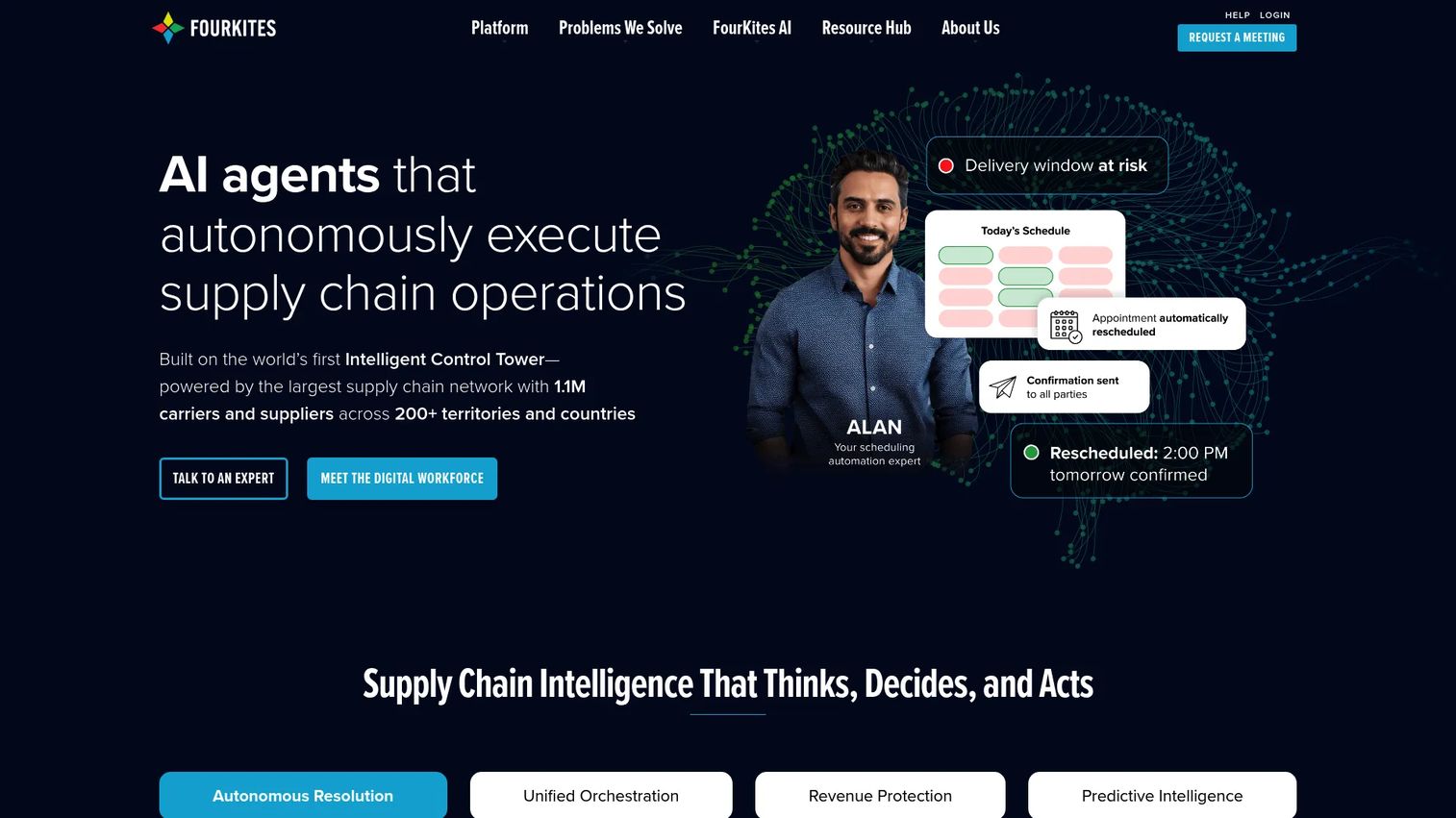
FourKites is an AI-driven supply chain orchestration and real-time visibility platform built for global enterprises. Beyond tracking, it layers an intelligent control tower with digital twins and AI agents that act on the data, moving from passive monitoring toward active execution. The emphasis is on a single source of truth that operations, carriers, and stakeholders can collaborate around.
Best for: Large shippers needing real-time supply chain visibility with execution automation on top.
Key strengths
- Real-time supply chain visibility: Continuous tracking across modes feeds a live operational picture.
- Intelligent control tower: Digital twins model your network so teams can see and simulate impact.
- AI agents and automations: Automated workflows handle repetitive execution steps in the supply chain.
Why choose FourKites: Compared to a TMS-centric stack that manages planning and execution, FourKites focuses on the visibility and orchestration layer that sits across your carriers and systems. Teams that already run a capable TMS but lack a unified real-time view across it choose FourKites to fill that gap. It suits enterprises that want AI-assisted exception handling, not just alerts.
FourKites pricing: FourKites uses subscription-based pricing and describes carrier-side integration as no direct cost, but no public price is listed on its site. Contact sales for a quote. FourKites holds a 4.5/5 rating on G2.
3. Shipwell
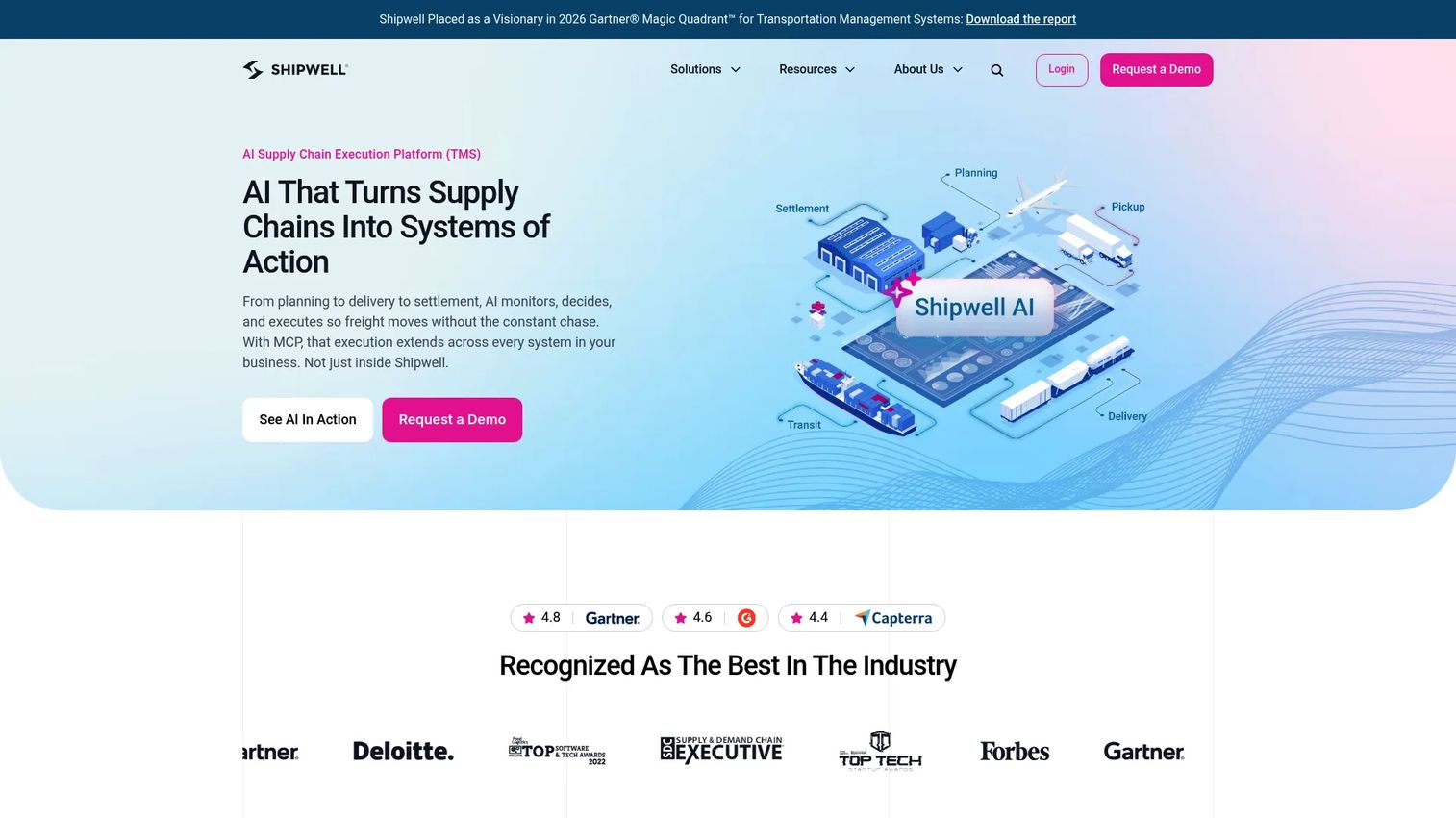
Shipwell is an AI-enabled transportation management platform that ties planning, visibility, automation, and settlement into one system. Its strength is context: shipment visibility does not live in isolation but connects directly to the transportation workflows around it. For teams that want tracking wired into how they actually move freight, that integration matters.
Best for: Shippers needing a cloud TMS with multimodal visibility and automation built in.
Key strengths
- AI workers and in-app assistant: Automate workflow steps and answer operational questions inside the platform.
- Multimodal transportation management: Plan, track, and manage shipments across modes from one system.
- APIs and MCP for integration: Connect Shipwell to the rest of your stack for automation across systems.
Why choose Shipwell: Choose Shipwell when you want visibility and execution to share the same platform rather than bolting a visibility layer onto a separate TMS. Teams replacing fragmented point tools often consolidate here because planning, tracking, and settlement live together. It fits shippers who value automation and want fewer systems to maintain.
Shipwell pricing: Shipwell does not display public pricing and directs visitors to contact sales for a customized quote. On G2, Shipwell holds a 4.6/5 rating.
4. Descartes
Descartes delivers cloud-based logistics and supply chain software spanning transportation, trade compliance, and eCommerce operations, anchored by its Global Logistics Network. That network reach is the differentiator: connectivity to a very large web of carriers, brokers, and logistics parties, with event-based tracking layered on top for shipment monitoring.
Best for: Enterprises needing logistics, supply chain, compliance, or eCommerce operations software with broad network connectivity.
Key strengths
- Global Logistics Network: Connectivity to a large ecosystem of trading and logistics parties.
- Transportation, customs, and compliance: Visibility sits alongside trade compliance and customs tooling.
- eCommerce operations software: Inventory, warehouse, and shipping management for fulfillment-heavy operations.
Why choose Descartes: Network depth matters most when your freight touches many parties across borders, and Descartes has invested decades in that connectivity. Teams that need visibility, customs, and compliance under one roof consolidate here. It fits enterprises managing international movements where event-based tracking and trade documentation intersect.
Descartes pricing: Pricing varies by solution, order volume, integrations, and operational needs. Some solutions publish starting prices, such as order management ranging from $10 to $2,000+ monthly, while others require a quote. Descartes holds a 4.6/5 rating on G2.
5. GoComet
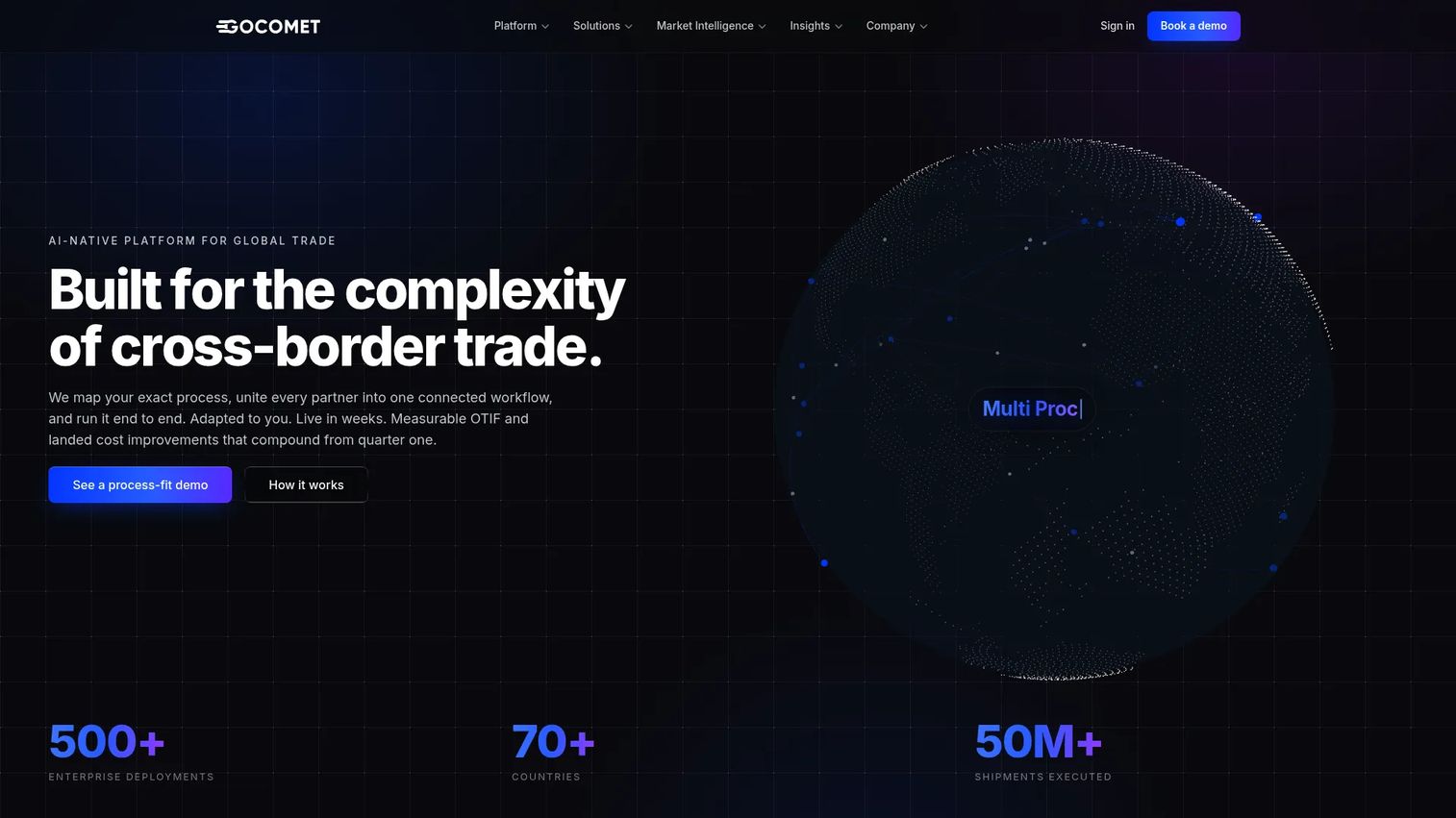
GoComet is an AI-native supply chain visibility and logistics automation platform that combines real-time multimodal tracking with operational workflows. Predictive ETA alerts, milestone monitoring, order management, and freight procurement sit together, so visibility connects directly to the day-to-day work of moving freight rather than standing apart from it.
Best for: Shippers needing end-to-end logistics visibility and automation across modes.
Key strengths
- Real-time multimodal tracking: Follow shipments across modes with milestone-level detail.
- Predictive ETA alerts: Anticipate delays and act on them before they cascade.
- Order management and procurement: Freight procurement and order workflows live alongside visibility.
Why choose GoComet: GoComet suits teams that want a visibility layer with operational workflows attached, not tracking in isolation. Its free container tracking for basic use lowers the barrier to getting started, while paid plans scale with shipment volume and feature needs. It fits shippers looking to consolidate tracking, ETAs, and procurement without a heavyweight enterprise rollout.
GoComet pricing: GoComet offers free container tracking for basic use and flexible paid plans for advanced visibility, with pricing dependent on shipment volume and feature needs. No numeric price is published on the site. GoComet holds a 4.9/5 rating on G2, the highest in this list.
6. Overhaul
Overhaul focuses on in-transit risk monitoring and shipment security for high-value freight. Where general visibility platforms answer "where is it," Overhaul adds "is it safe" to the question. The platform combines real-time tracking with risk mitigation and exception prevention, aimed at cargo that cannot afford to go dark or get compromised.
Best for: Shippers moving high-value or security-sensitive freight that needs monitoring plus risk mitigation.
Key strengths
- In-transit risk monitoring: Continuous oversight of shipment condition and location for sensitive cargo.
- Shipment security: Protection and alerting built for high-value freight exposed to theft or tampering risk.
- Exception prevention: Proactive alerts aimed at stopping incidents before they escalate.
Why choose Overhaul: When the freight is high-value, regulated, or theft-prone, standard tracking is not enough, and Overhaul is built for exactly that context. Teams shipping pharmaceuticals, electronics, or other sensitive goods choose it for the security layer on top of visibility. It fits operations where a single lost or compromised shipment carries outsized cost.
Overhaul pricing: Public pricing is not shown; pages direct visitors to request a quote. On G2, Overhaul holds a 4.6/5 rating.
7. Shippeo
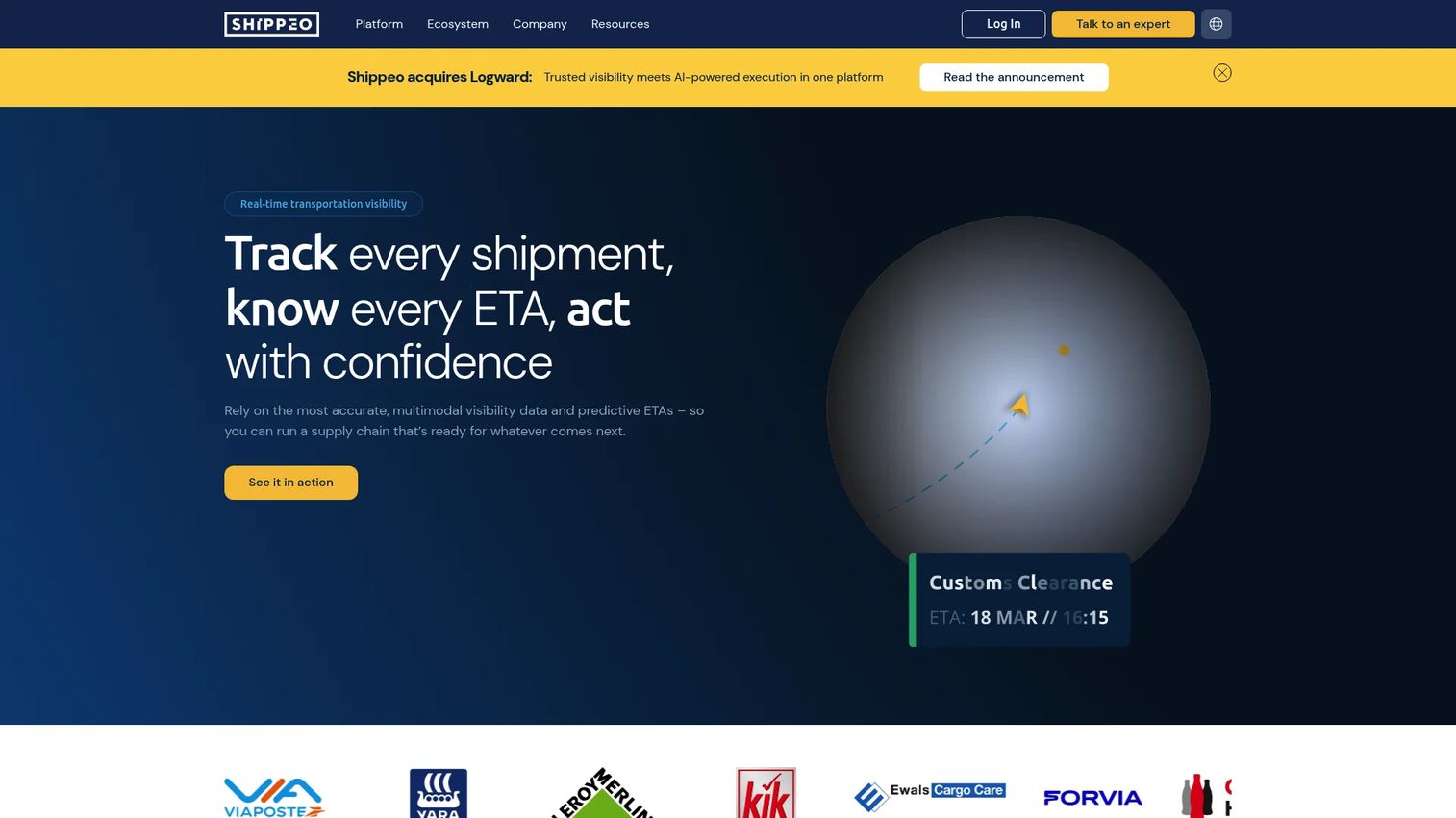
Shippeo is a real-time transportation visibility platform focused on shipment tracking, predictive ETAs, and multimodal coverage. It supports operational teams managing complex transport networks, with carrier connectivity and predictive shipment insights at its core. Shippeo has a strong presence in European operations while serving global supply chains.
Best for: Enterprises needing global, multimodal supply chain visibility with strong ETA prediction.
Key strengths
- Real-time tracking and predictive ETAs: Live shipment status paired with predicted arrival times.
- Multimodal visibility: Coverage across transport modes for complex networks.
- Carrier and port performance analytics: Insight into carrier and port behavior to inform decisions.
Why choose Shippeo: Shippeo fits operational teams that need dependable predictive ETAs across a wide carrier base, particularly those with significant European freight. Its analytics on carrier and port performance help teams hold partners accountable, not just track shipments. It suits enterprises managing complex, multi-region transport networks.
Shippeo pricing: Public pricing is not listed on Shippeo's site; the company directs visitors to contact sales or request a demo. Shippeo holds a 4.7/5 rating on G2.
8. Trimble Visibility
Trimble Visibility is Trimble's end-to-end supply chain visibility solution for in-transit freight tracking and ETA monitoring. It fits naturally into transportation-heavy operations, with real-time visibility, AI-powered ETA monitoring, and TMS integration built for shippers, carriers, and 3PLs managing connected freight workflows.
Best for: Shippers, carriers, and 3PLs needing freight shipment visibility and ETA tracking within transportation operations.
Key strengths
- Real-time in-transit visibility: Continuous tracking of shipments as they move.
- AI-powered ETA monitoring: Predicted arrivals with alerts when timelines shift.
- TMS integration and exception management: Visibility wired into transportation execution and exception workflows.
Why choose Trimble Visibility: Trimble Visibility suits teams already operating in a transportation execution environment that want visibility tightly connected to their workflows. Its exception management and ETA monitoring fit carriers and 3PLs as much as shippers. It fits logistics-heavy operations that value connected transportation tooling over a standalone tracking layer.
Trimble Visibility pricing: Trimble does not publish pricing for its Freight Visibility solution; capabilities are documented but pricing requires contact with sales. Trimble holds a 4.4/5 rating on G2 at the seller level.
Considerations before you buy
Integration coverage
The fastest way a visibility tool fails to deliver is by becoming another silo. Confirm it connects cleanly to your TMS, ERP, WMS, and carrier systems through API and EDI, and that data flows both ways. A platform that only ingests tracking data but cannot push status back into your systems of record adds a screen, not a single source of truth. Ask for specifics on the connectors your stack needs.
Visibility depth
"Real-time" is a claim, not a spec. Check whether the platform tracks only shipment location or also provides mode-by-mode context, milestone-level status, and exception detail. The more complex your network, the more this matters, because a single ETA on a multi-leg move hides more than it reveals. Push vendors to show tracking coverage rates across your actual lanes and modes.
Exception workflows
Alerts alone do not move freight. Assess how the platform turns exceptions into action: does it recommend next steps, route issues to the right owner, and support escalation? A proactive alert that lands in a shared inbox with no workflow behind it becomes noise. Evaluate the operational follow-through, not just the detection.
Carrier onboarding and data quality
Tracking coverage is only as good as the carriers feeding it. Make sure the platform helps onboard carriers quickly and includes data-quality dashboards that diagnose missing or bad tracking data. Weak onboarding quietly erodes ETA accuracy and coverage over time. This capability deserves as much scrutiny as raw tracking breadth.
Outcome measurement
Buyers should be able to defend the business case with numbers. Confirm the vendor can show impact on OTIF, dwell time, detention, freight spend, and customer satisfaction, not just feature counts. If a platform cannot connect visibility to operational outcomes, proving ROI internally becomes a guessing game. Ask for reporting that ties tracking data to the metrics your leadership cares about.
Conclusion
The right logistics visibility platform depends on your network complexity, your existing systems, and the outcomes you need to defend. For enterprise multimodal breadth and deep carrier connectivity, project44 and Descartes lead. For visibility paired with orchestration and AI execution, FourKites stands out. Shipwell and Trimble Visibility fit teams that want tracking wired directly into transportation execution, while GoComet offers an accessible entry point with workflows attached. For high-value or security-sensitive freight, Overhaul is purpose-built, and Shippeo brings strong predictive ETAs across complex, multi-region networks.
The practical next step: shortlist two or three platforms based on your network's mode mix and integration requirements, then run each against your real lanes. Test tracking coverage, exception workflows, and TMS integration with your own shipments before you commit. A demo on a vendor's data proves little; a pilot on your freight proves everything.
FAQs
Logistics visibility software provides real-time shipment tracking combined with analytics, proactive alerts, and predictive ETAs across transport modes. It aggregates location and status data from carriers, devices, and internal systems into a single operational view. The goal is to see where freight is, predict when it will arrive, and flag exceptions before they become service failures.
A transportation management system handles planning and execution: booking freight, rating carriers, and managing tenders. A visibility platform shows what is actually happening to shipments in transit and predicts arrivals. Visibility answers "where is it and when will it arrive," while a TMS answers "how do we move it." Many teams run both, and the strongest results come when they share data cleanly.
They pull from GPS, ELD devices, telematics hardware, carrier APIs, EDI messages, mobile driver apps, and carrier network integrations. These signals get normalized and matched to shipments to create continuous, real-time freight tracking. The breadth and quality of these sources directly determine how accurate and complete the visibility picture is.
Teams typically track improvement in OTIF, dwell time, detention charges, freight spend, and customer satisfaction. Earlier exception detection means fewer service failures and less time spent chasing carriers, which lifts staff productivity. Because problems surface before they escalate, operations move from reactive firefighting to proactive management.
The stronger platforms cover ocean, air, rail, truck, and parcel, plus facility nodes like ports and yards. Multimodal coverage matters most for complex supply chains where a single order moves across several legs and carriers. Without it, you get fragmented status from disconnected sources instead of one continuous shipment view.
Tracking coverage depends entirely on carriers sharing data reliably. Poor onboarding leaves gaps that weaken ETA accuracy and shipment coverage across your network. Platforms that make carrier onboarding fast and include data-quality diagnostics keep the operational picture trustworthy. Onboarding quality is why two platforms with identical features can deliver very different real-world results.
Predictive ETAs combine live movement data with analytics and historical patterns for similar routes, carriers, and conditions. Rather than relying on a scheduled arrival, the platform continuously recalculates arrival based on where the shipment actually is and how comparable moves behaved. The output is a probability-based estimate that updates as conditions change, not a guaranteed exact time.