
New logo growth is the expensive way to grow. You pay for the ad, the SDR, the demo, the discount, and the ramp time before a single dollar of recurring revenue lands.
Expansion revenue is different. The account already exists. They already pay you. They already know how the product works. Growing that account should be the cheapest revenue you book all year.
So why does it keep leaking?
For most SaaS teams, the answer is visibility. Upsell timing lives in one rep's head. Usage signals sit in a product analytics tool nobody in customer success logs into. Renewal risk shows up in a spreadsheet three weeks before the contract ends. The revenue operations software market reflects how much attention this problem now gets, growing from USD 3.7B in 2023 toward a projected USD 15.9B by 2033 according to Allied Market Research (2025).
The fix is not another spreadsheet. It is software that puts account behavior, usage, health, and renewal timing in one workflow so the right person acts at the right moment. This guide covers eight tools that do exactly that.
What's inside
This guide covers eight tools for tracking, forecasting, and operationalizing expansion revenue across customer success, RevOps, billing, and sales. We picked tools that meet real buyer criteria, not marketing claims.
We evaluated each on:
- Reporting depth: how clearly it surfaces expansion MRR, ARR, and NRR
- Workflow fit: whether it serves CS, finance, sales, or RevOps motions
- Revenue visibility: account health, usage signals, and renewal timing
- Integrations: clean connections to CRM and billing systems
- Pricing transparency: what you can actually verify before a sales call
The list is aimed at teams trying to grow expansion MRR, upsells, cross-sells, and net revenue retention without stitching together disconnected reports.
TL;DR
- Best for revenue forecasting: Clari, for pipeline visibility and operating-review-ready expansion numbers.
- Best for customer success expansion workflows: ChurnZero, for health scores, playbooks, and upsell timing.
- Best for billing and subscription analytics: Maxio, for expansion MRR, ARR, and revenue recognition in one system.
- Best for pipeline and account signals: Gong, for conversation intelligence that flags expansion intent early.
- Best for a lighter-weight revenue dashboard: Baremetrics, for fast subscription metrics without a heavy rollout.
- Best for large CS organizations: Gainsight, for multi-motion onboarding, adoption, and expansion at scale.
What is expansion revenue software
Expansion revenue software is a category of tools used to track, forecast, and grow recurring revenue from existing customers through upsells, cross-sells, add-ons, tier upgrades, and packaging changes. It sits across customer success, RevOps, billing, and sales, turning account behavior into revenue signals teams can act on.
Expansion revenue means incremental recurring revenue from customers you already have. It is not new logo revenue, which comes from net-new accounts. It is also usually separated from flat renewals, where a customer keeps the same contract without adding value.
The core expansion levers are consistent across SaaS:
- Upsells: moving a customer to a higher tier or plan
- Cross-sells: selling an additional product or module
- Add-ons: extra seats, usage, or feature packs
- Tier upgrades: graduating an account as usage grows
- Packaging changes: repricing or repackaging to capture more value
The signals buyers should track are just as consistent:
- Expansion MRR: monthly recurring revenue added from existing customers
- Expansion ARR: the annualized version of the same growth
- **Net revenue retention (NRR):** revenue retained plus expanded, minus churn
- Account health: a composite score predicting risk and opportunity
- Product usage: adoption depth that signals readiness to expand
- Renewal timing: when contracts come up and where the risk sits
Good software connects these signals so a customer success manager sees an upsell window before the renewal, not after it closes flat.
When to use expansion revenue software
Track expansion before renewals
Most expansion opportunities are visible weeks before a renewal, if you know where to look. Rising seat usage, feature adoption, and support engagement all signal readiness. CS and RevOps teams use expansion software to catch these signals early, so the renewal conversation includes an upsell instead of a defensive save.
Forecast account growth more accurately
Leadership wants to know how much expansion revenue is coming next quarter, not guess. Forecasting-focused tools tie upsell and cross-sell pipeline to your existing accounts, so expansion shows up in operating reviews alongside new business. This turns expansion from a hopeful line item into a number you can defend.
Replace spreadsheet-based expansion reporting
When CS, finance, and product each maintain their own expansion spreadsheet, the numbers never match. Manual reporting also breaks the moment someone leaves or a formula gets overwritten. Expansion software replaces recurring manual reporting with segmented, live views that everyone trusts, so the monthly revenue review stops being a reconciliation exercise.
Comparison table
Use this table to compare reporting depth, workflow fit, and adoption at a glance. Pricing and G2 ratings reflect verified values from each vendor's own pages and G2 listings at the time of writing. Where a vendor does not publish a numeric price, that is noted directly.
| # | Product | Best for | Key differentiator | Pricing | G2 rating |
|---|---|---|---|---|---|
| 1 | CaptivateIQ | Tying expansion to comp and incentives | Sales performance and commission engine | Custom pricing | 4.7/5 |
| 2 | Gong | Surfacing expansion signals from conversations | Revenue AI and conversation intelligence | Quote-based | 4.7/5 |
| 3 | Maxio | Billing and subscription revenue analytics | Billing plus revenue recognition in one | From $599/mo | 4.3/5 |
| 4 | DealHub | Standardizing quotes and expansion offers | Agentic quote-to-revenue and CPQ | Custom pricing | 4.7/5 |
| 5 | Clari | Forecasting and operating-review reporting | Revenue orchestration and forecasting | Quote-based | 4.6/5 |
| 6 | ChurnZero | CS-led expansion and retention | Health scores, playbooks, and success plans | Subscription | 4.7/5 |
| 7 | Gainsight | Large-scale CS and adoption motions | Customer success plus product experience | Request pricing | 4.5/5 |
| 8 | Baremetrics | Lightweight subscription analytics | Fast MRR and expansion dashboards | From $75/mo | 4.6/5 |
Best 8 expansion revenue software tools for 2026
Each tool below serves a different part of the expansion revenue workflow. Read the "best for" line first to find your fit, then dig into the strengths and pricing.
1. CaptivateIQ

CaptivateIQ is sales performance management software for commissions, planning, and reporting. It matters for expansion revenue when your growth strategy runs through compensation. If reps and CS managers get paid on upsells, cross-sells, and net revenue retention, CaptivateIQ is where those incentives get modeled, calculated, and paid.
The platform connects expansion targets directly to payout logic. That gives RevOps and sales leaders a way to reward the behavior they want more of, whether that is seat expansion, multi-product attach, or larger renewals.
Best for: RevOps and sales leaders who tie expansion revenue to compensation and performance tracking.
Key strengths
- SmartGrid ELT and calculation engine for complex plans
- Real-time modeling and visibility into payout scenarios
- AI-powered admin, payee, and plan assistance
- Seat-based structure that scales with the team
Why choose CaptivateIQ: Choose it when expansion is part of a broader incentive strategy and you need comp math that holds up under audit. It fits mid-market to enterprise teams running complex compensation, not teams that just want a revenue dashboard.
CaptivateIQ pricing: Pricing is customized. The site describes a seat-based model with a one-time setup fee and an optional ASC-606 add-on subscription, with a custom quote from sales.
2. Gong
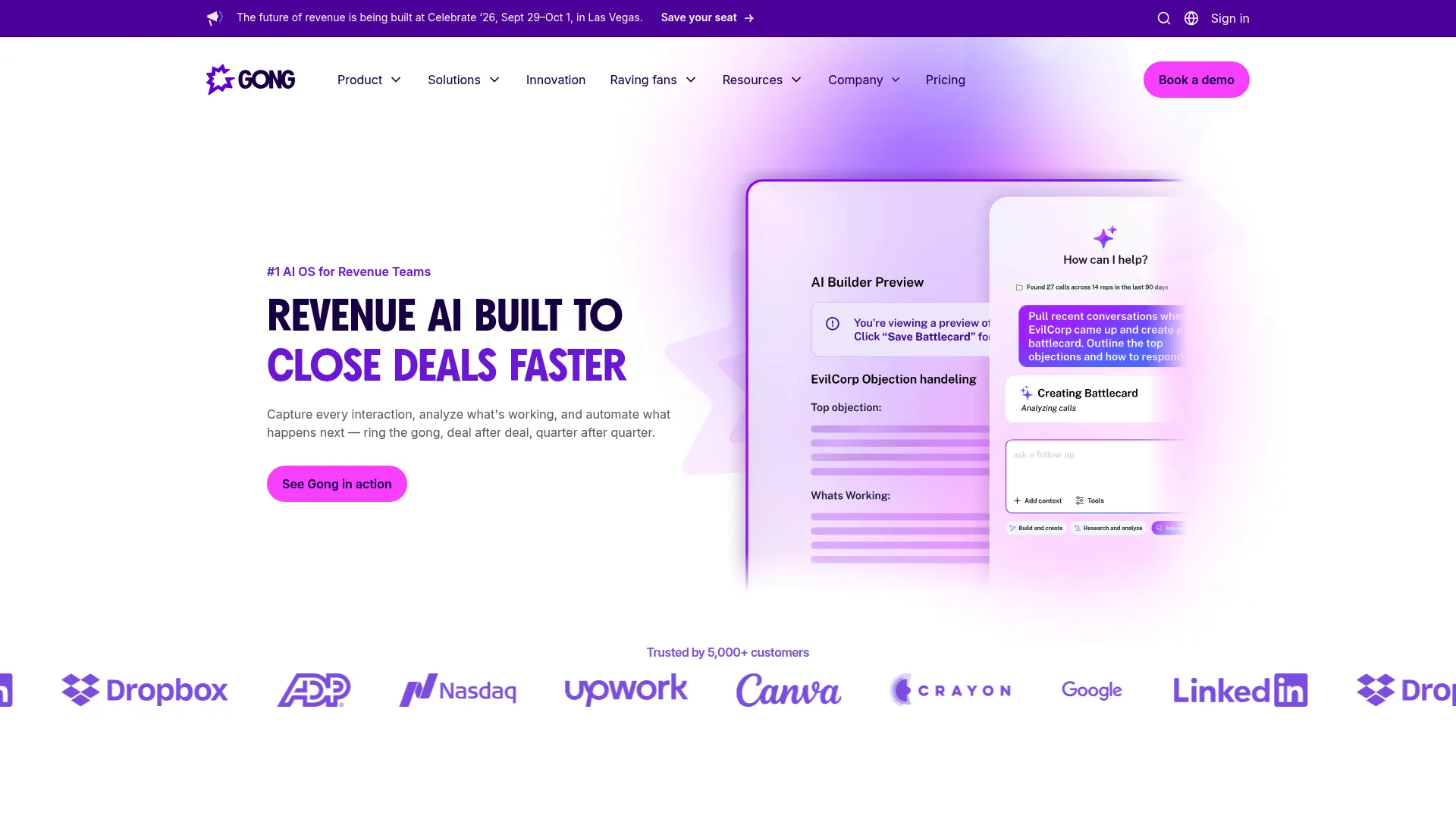
Gong is a revenue AI platform for capturing, analyzing, and acting on customer interactions. For expansion revenue, its value is early signal. Gong listens to calls and reads deal momentum, so account teams catch expansion intent when a customer mentions a new team, a new use case, or a budget increase.
Instead of waiting for a QBR to surface an upsell, reps and CS managers get expansion cues from the conversations already happening. That shortens the gap between intent and action.
Best for: Sales and account teams that want early, conversation-driven indicators of expansion potential.
Key strengths
- Conversation capture and analysis across calls and emails
- Deal risk and forecast insights tied to real interactions
- AI-powered coaching and sales engagement
- Account analytics that flag expansion openings
Why choose Gong: Choose Gong when expansion lives inside customer conversations and your team needs to act on what buyers actually say. It suits mid-market and enterprise revenue teams that already run a call-heavy motion.
Gong pricing: Pricing is quote-based. Gong prices licenses per user plus a platform fee and asks visitors to request a customized proposal.
3. Maxio
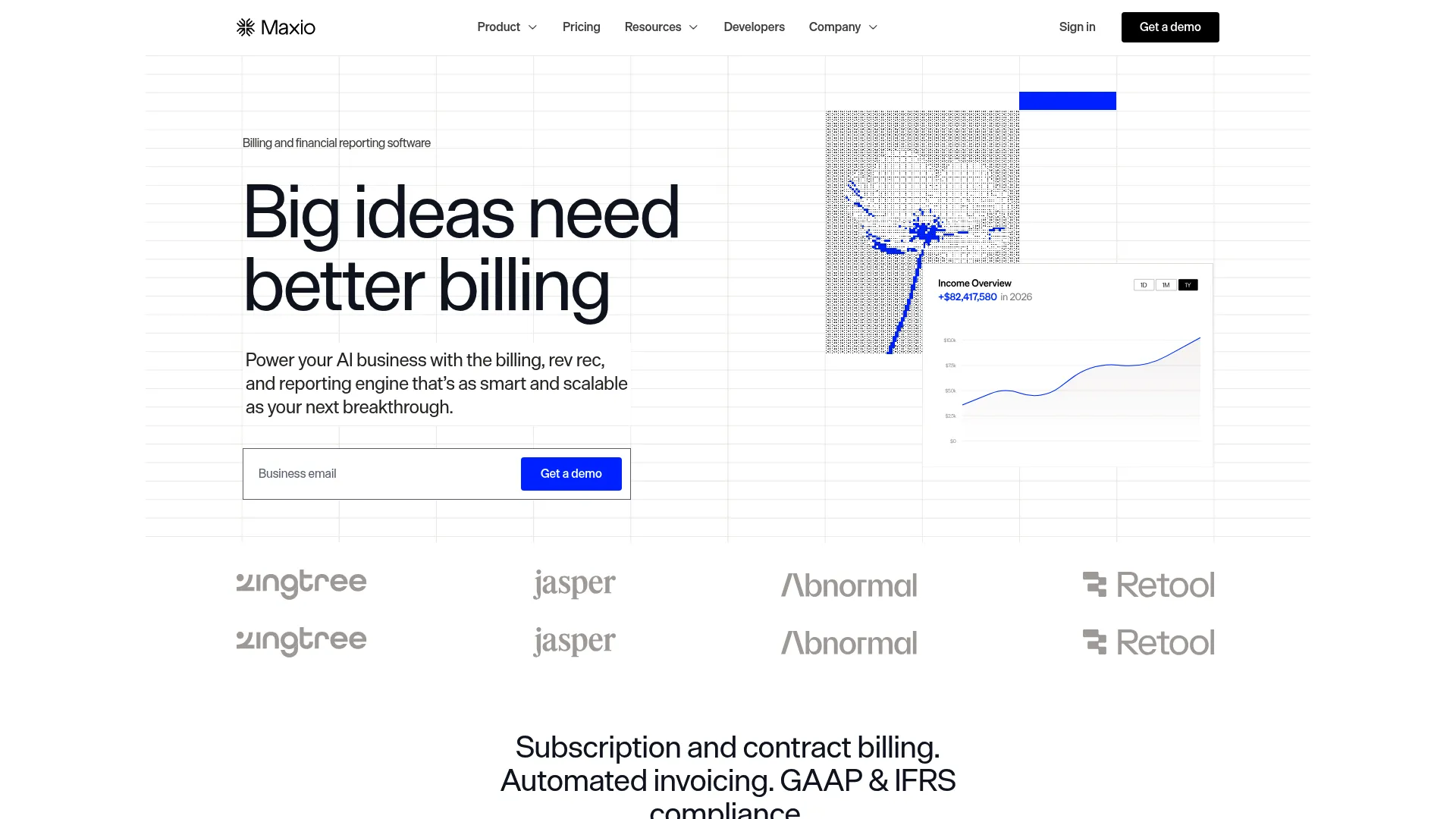
Maxio is a financial operations platform for B2B SaaS and AI companies. It brings billing, subscription management, and revenue recognition together, which makes it a strong fit for finance and RevOps teams that need expansion MRR, ARR, and subscription reporting in one place.
Because Maxio sits on the billing layer, it sees expansion where it actually happens: upgrades, add-ons, and plan changes flowing through invoices. That gives finance an accurate expansion number without exporting from three systems.
Best for: B2B SaaS finance and RevOps teams needing billing, subscriptions, and revenue recognition in one system.
Key strengths
- Subscription billing for complex and usage-based models
- Subscription management across upgrades and add-ons
- Revenue recognition aligned to accounting standards
- Recurring revenue analytics for MRR and ARR
Why choose Maxio: Choose Maxio when expansion accuracy has to reconcile with your books, not just your dashboards. It fits teams that want billing and revenue analytics unified rather than bolted together.
Maxio pricing: Public pricing shows a Grow plan at $599/month and a Scale plan that is quote-based, plus a Build tier at $0. Most agreements are billed annually, with monthly or quarterly options available in premium cases.
4. DealHub
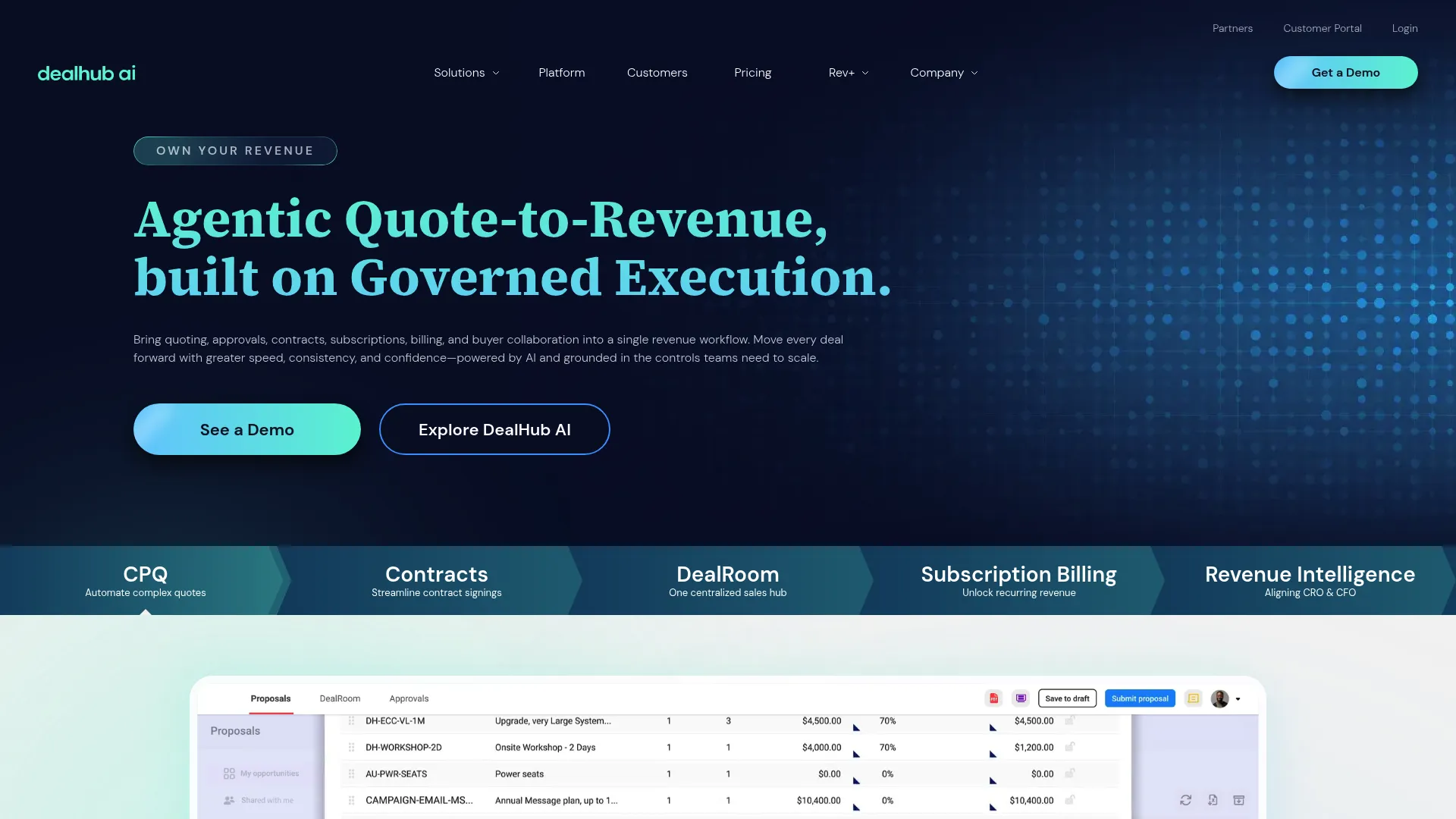
DealHub is an agentic quote-to-revenue platform covering CPQ, contract management, digital sales rooms, subscriptions, and billing. For expansion revenue, it standardizes how upsell and cross-sell offers get quoted, so expansion deals do not turn into one-off spreadsheet exercises.
When a customer is ready to add a module or seats, DealHub handles the configured pricing, discounts, and automated renewals. That keeps expansion motions consistent and fast across the revenue team.
Best for: Mid-market and enterprise revenue teams that need a unified quote-to-revenue workflow for expansion offers.
Key strengths
- CPQ with rules engine, configured pricing, and multi-currency
- Contract management with redlining, templates, and amendments
- DealRoom digital proposals with buyer engagement tracking
- Automated renewals that surface expansion opportunities
Why choose DealHub: Choose DealHub when standardized packaging and repeatable expansion offers matter more than a standalone analytics view. It fits teams that want quoting, contracts, and renewals in one workflow.
DealHub pricing: Public pricing is not shown. DealHub asks teams to request custom pricing, and its G2 listing also shows pricing as contact-only.
5. Clari

Clari is an AI-powered revenue orchestration platform for forecasting, deal inspection, sales engagement, and revenue operations. For expansion, its role is making sure expansion revenue shows up in the forecast and the operating review, not just in a CS tool nobody exports from.
Leadership can see expansion pipeline next to new business, inspect the deals driving it, and hold teams accountable to a number. That is why Clari fits leadership-level reporting.
Best for: Enterprise revenue teams that need expansion to appear in forecasting and operating reviews.
Key strengths
- Revenue AI agents and automated forecasting
- Data autocapture and a unified revenue database
- Opportunity inspection and pipeline management
- Buyer collaboration and conversation intelligence
Why choose Clari: Choose Clari when expansion has to be forecastable and defensible in front of a board. It suits enterprise teams that already run forecasting cadences and want expansion baked in.
Clari pricing: Public pricing is not disclosed. The pricing page asks users to get a quote.
6. ChurnZero
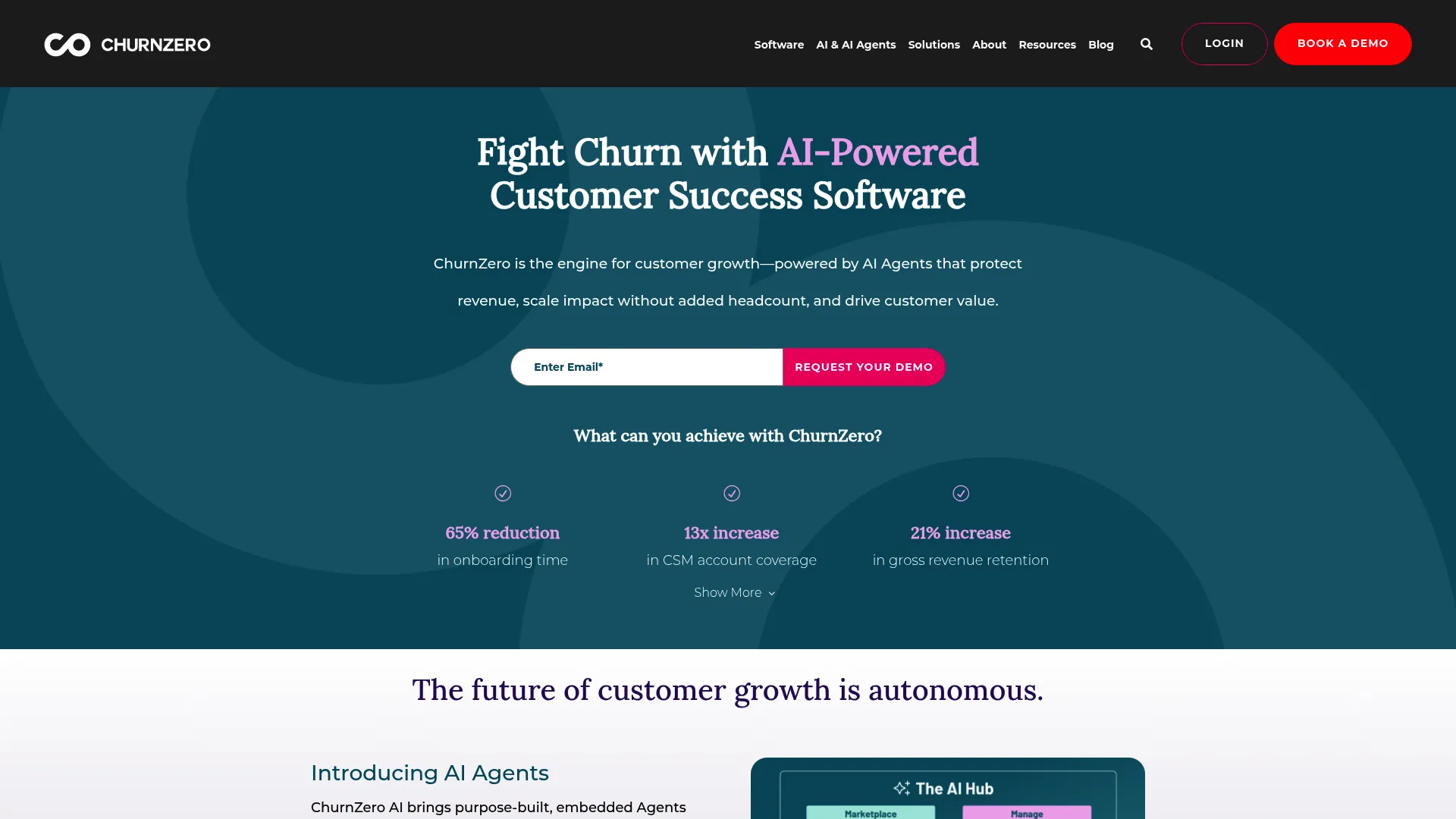
ChurnZero is an AI customer success and customer growth platform for retention, expansion, and digital engagement. It is built for the CS motion, giving teams health scores, lifecycle segmentation, and expansion playbooks that trigger at the right moment.
The strength here is timing. ChurnZero watches health and usage, then prompts CS to act when an account is both healthy and ready to grow. That is how CS-led teams reduce churn and expand accounts in the same workflow.
Best for: B2B SaaS customer success teams managing retention and expansion at scale.
Key strengths
- Customer profiles and health scores that flag risk and opportunity
- Success Plans and playbooks for upsell timing
- Lifecycle segmentation across the customer journey
- AI agents and embedded AI for CS workflows
Why choose ChurnZero: Choose ChurnZero when your expansion motion is owned by customer success and you want playbooks that fire on health and usage signals. It is one of the strongest customer success expansion tools for teams that lead with retention.
ChurnZero pricing: ChurnZero uses a subscription model, and product materials indicate annual subscription offerings. Public numeric pricing is not listed on its site, so request a quote for your account size.
7. Gainsight
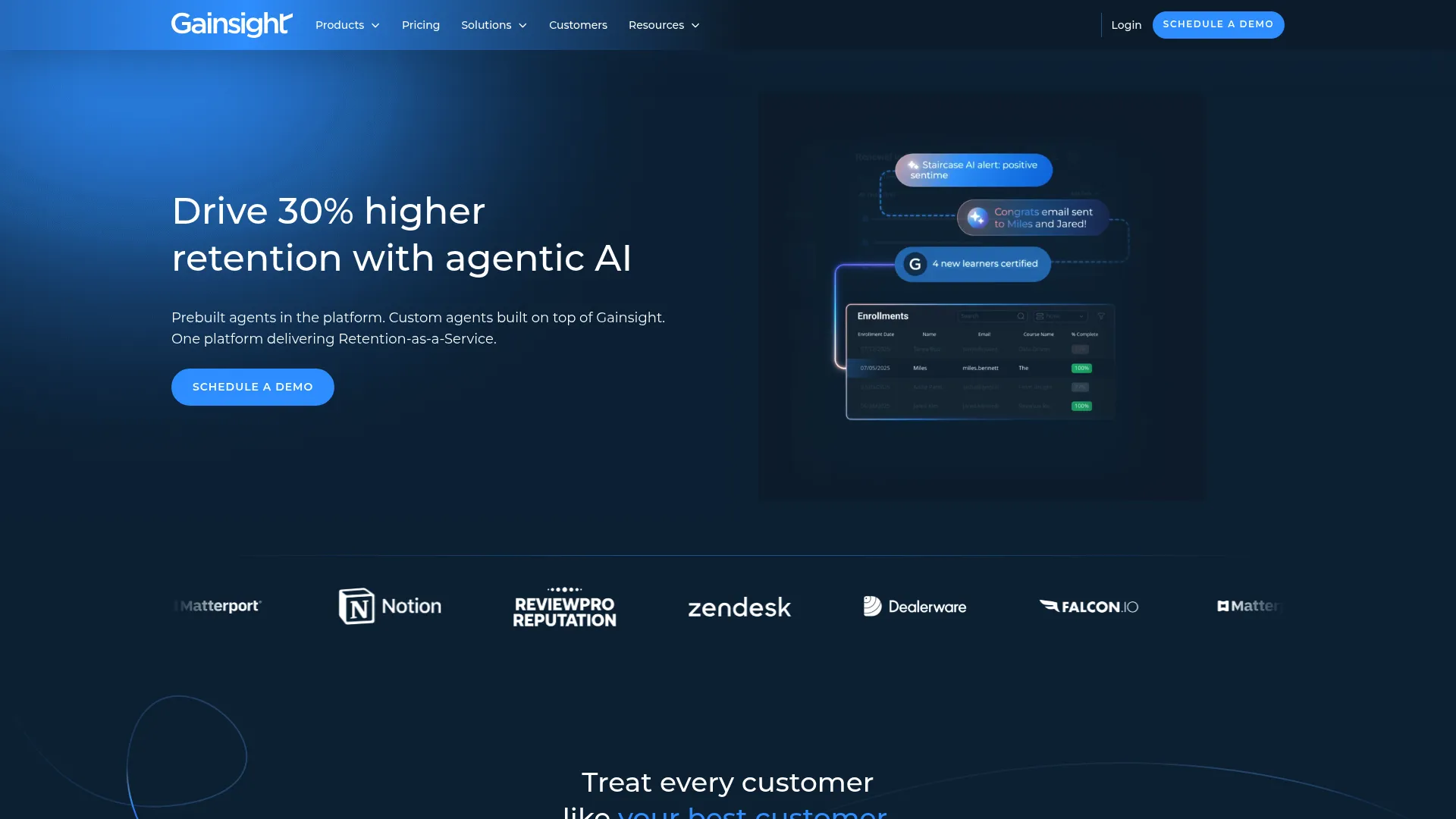
Gainsight is a customer success and customer experience platform for retention, expansion, and product adoption. It fits larger CS organizations running multiple motions at once: onboarding, adoption, retention, and expansion, all under one system.
Where a smaller team might want a focused tool, enterprise CS orgs need Gainsight's breadth. It ties product adoption signals to account health and expansion workflows, so growth motions stay coordinated across many CSMs and segments.
Best for: Large CS organizations managing onboarding, adoption, retention, and expansion across many accounts.
Key strengths
- Customer Success platform for health and account management
- Product Experience for adoption and in-app engagement
- Customer Communities for scaled engagement
- Multi-motion workflows across the lifecycle
Why choose Gainsight: Choose Gainsight when you run several CS motions at scale and need product adoption and expansion in the same platform. It fits enterprise teams over lean startups that want something lighter.
Gainsight pricing: Public pricing is request-only. The pricing page shows Essentials and Enterprise plans for its Customer Success product, both with request pricing, and other product lines offer request pricing or trial and demo options.
8. Baremetrics
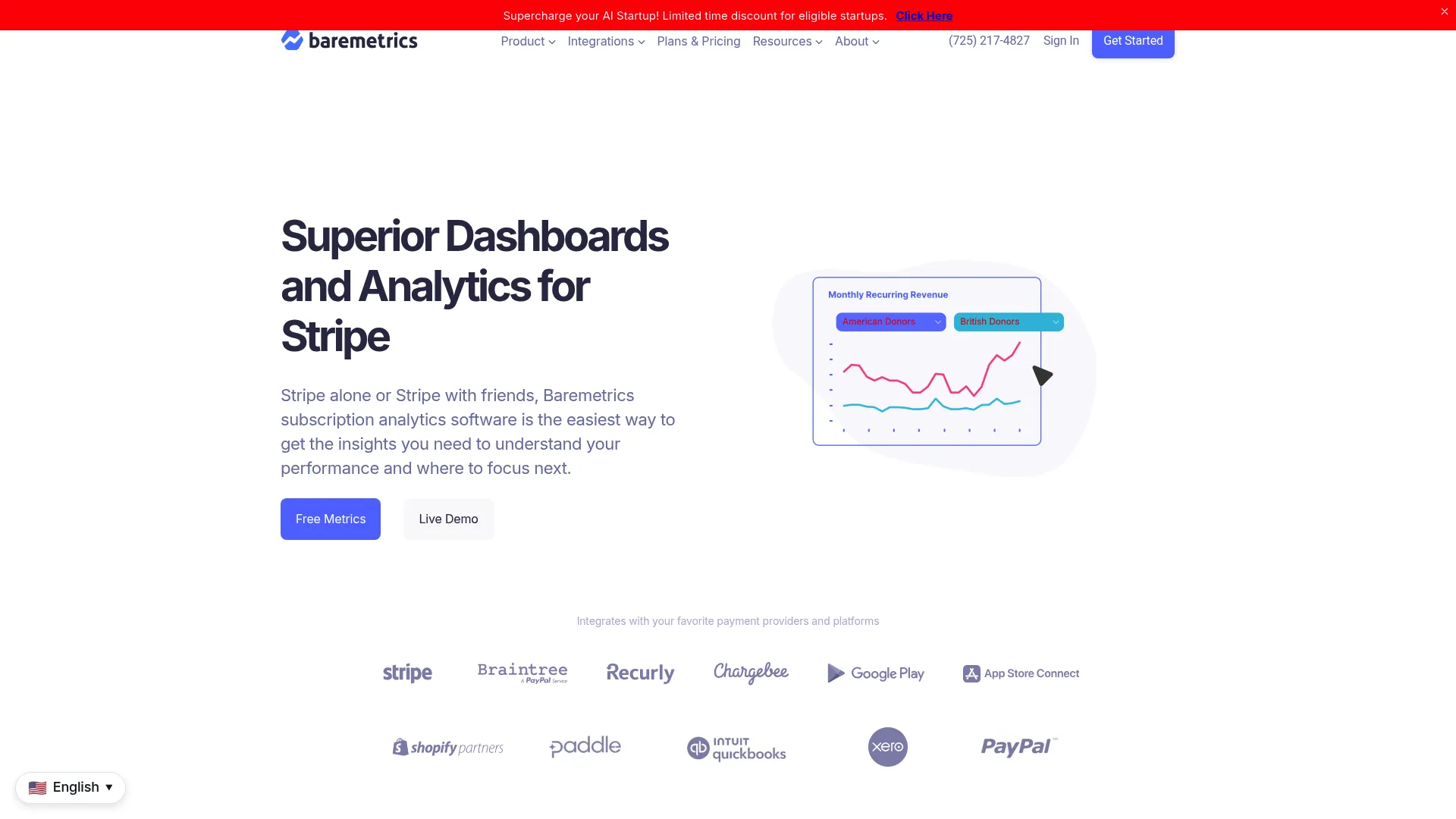
Baremetrics is subscription analytics and financial forecasting software for SaaS businesses. It is the lighter-weight option on this list, built for teams that want quick visibility into MRR, expansion, and churn without a heavy implementation.
Connect your billing system and you get subscription dashboards, segmentation, and forecasting in minutes. For a founder or a small finance team, that speed to insight is the whole point.
Best for: SaaS teams needing subscription metrics, segmentation, and forecasting without a heavy rollout.
Key strengths
- Subscription analytics dashboards for MRR and expansion
- Customer segmentation for expansion analysis
- Revenue forecasting from live subscription data
- Add-ons for payment recovery and cancellation insights
Why choose Baremetrics: Choose Baremetrics when you want expansion and churn visibility fast, without a system to configure. It fits smaller teams and founders over enterprises needing deep workflow orchestration.
Baremetrics pricing: Public pricing shows Launch at $75/month, Growth at $255/month, and Scale at $1,152/month. Payment Recovery and Cancellation Insights add-ons are each $129/month, and a build-your-own-plan option is available.
Considerations
1. What counts as expansion in your model
Before you buy anything, define what expansion means for your business. Do you count plan upgrades, add-ons, and cross-sells, but not flat renewals? Do seat increases count the same as new modules? Teams that skip this end up with software reporting a number nobody agrees on, and every review turns into an argument about definitions instead of actions.
2. How the tool connects to your system of record
Check how the tool integrates with your CRM, billing, CS, and product data before signing. The goal is one reliable view, not another silo that contradicts Salesforce. Verify the specific connectors you need exist and sync cleanly. A tool that cannot read your billing data will never report expansion MRR accurately, no matter how good the dashboard looks.
3. Whether the tool supports segmentation
Expansion planning falls apart without segmentation. You need to slice expansion by account size, industry, lifecycle stage, and product usage to know where growth actually comes from. Confirm the tool lets you build and save these segments, then report on each one. Aggregate NRR hides the segments that are quietly churning while others expand.
4. Whether the workflow fits the team
Match the tool to the team that will own expansion. Finance-led teams need billing and analytics. CS-led teams need health and playbooks. Revenue teams need forecasting. Sales teams need account signals. Buying a CS tool for a finance workflow, or the reverse, creates adoption problems that no feature list fixes.
5. Reporting vs action
Distinguish tools that report on expansion from tools that help you execute it. A dashboard tells you expansion is flat. A playbook engine tells a CSM to call the account showing rising usage this week. Most strong stacks include both: visibility for leadership and workflow support for the people doing the work.
Conclusion
Expansion revenue is the cheapest growth you have, but only if you can see it and act on it in time.
Match the tool to your team. Finance-led teams should start with billing and analytics: Maxio for unified billing and revenue recognition, or Baremetrics for fast subscription dashboards. CS-led teams should start with health and lifecycle: ChurnZero for playbook-driven expansion, or Gainsight for multi-motion CS at scale. Revenue and leadership teams should start with forecasting and signals: Clari to put expansion in the forecast, and Gong to catch expansion intent in conversations. If expansion runs through compensation, CaptivateIQ models the incentives, and if it runs through quoting, DealHub standardizes the offers.
Pick the one that fits the team that owns the number, connect it to your system of record, and define what expansion means before you turn it on. Do that, and the leak you have been patching with spreadsheets starts closing on its own.
FAQs
Expansion revenue software is software used to track, forecast, and grow revenue from existing customers through upsells, add-ons, cross-sells, and tier upgrades. It typically pulls together account health, product usage, and renewal timing so teams in CS, RevOps, finance, or sales can act on expansion opportunities before they pass.
Expansion MRR measures incremental recurring revenue added from existing customers, such as an upgrade or an add-on. Renewal revenue keeps an existing contract flat, so a renewal only counts as expansion if the customer adds value at the same time. Tracking them separately keeps your net revenue retention math honest.
A CRM manages accounts and opportunities, but it usually does not report recurring revenue analytics, customer health, lifecycle tracking, or billing intelligence out of the box. Expansion revenue software adds those layers and connects them, so you see when an account is ready to grow, not just its deal history. Most teams run both.
Customer success, RevOps, finance, sales, and product teams all use it, depending on the goal. CS uses it for health and playbooks, finance for accurate expansion MRR and ARR, sales for account signals, and RevOps and leadership for forecasting. The right tool depends on which team owns the expansion number.
At minimum it should track expansion MRR, expansion ARR, and net revenue retention. Beyond those, look for account health, product usage, upsell conversion, cross-sell conversion, and renewal timing. Together these tell you not just how much you expanded, but where the next opportunity sits.
Yes. Smaller teams often start with lighter subscription analytics like Baremetrics or a focused CS tool before moving to larger revenue platforms. The right entry point depends on whether your first priority is reporting the numbers or executing expansion plays.
It depends on whether your team needs health scoring, playbooks, or broad account analytics. ChurnZero is a strong fit for teams that want health-driven expansion playbooks in a focused workflow, while Gainsight suits larger CS organizations running onboarding, adoption, retention, and expansion motions together. Both are built for customer success ownership of expansion.
Billing software like Maxio is better for revenue accuracy and reporting, because it sees expansion where it happens in invoices and reconciles to your books. Customer success software like ChurnZero or Gainsight is better for expansion execution and account visibility, because it prompts the right play at the right time. Many teams run both: billing for the numbers, CS for the action.