A growing apparel brand can sell through wholesale, ecommerce, retail, and marketplaces while still struggling to trust its inventory. A size and color matrix multiplies quickly across seasonal collections, locations, and channels.
Margin reporting becomes another problem. Production updates live in factory spreadsheets, while allocation decisions depend on yesterday’s stock data. The founder or COO becomes the final system of record.
The category reflects that pressure. Global Industry Analysts valued the apparel management software market at $2.95 billion in 2025. It projected the market to reach $4.23 billion by 2030.
The right apparel software should replace manual coordination with clear ownership. This guide compares 17 options by the operational bottleneck each removes first.
What’s inside
This guide covers apparel management software across ERP, inventory, product lifecycle management, production, wholesale, retail, and ecommerce operations.
We selected the 17 tools using these criteria:
- Apparel matrix support for style, size, color, and season
- Inventory and order management depth
- Production, sourcing, or PLM coverage
- Integration fit across accounting, POS, marketplaces, and ecommerce
- Scalability and implementation demands
Pricing comes from vendor sources. G2 ratings use current headline scores where reliable listings exist.
TL;DR
- Best apparel ERP shortlist: AIMS360, ApparelMagic, BlueCherry, Aptean Fashion & Apparel, and NetSuite cover broad operational workflows
- Best for apparel manufacturing: PolyPM, Aptean Fashion & Apparel, PatternSmith, and Fusion Operations support production focused teams
- Best for PLM and tech packs: Techpacker, Delogue PLM, BlueCherry, and ApparelMagic connect product data with supplier handoffs
- Best for retail and omnichannel: Lightspeed Retail, Cin7 Core, NetSuite, and SAP Business One connect stores with wider operations
- Best for replacing spreadsheets: Uphance, ApparelMagic, DOSS Operations Cloud, and Inventory Planner offer more focused entry points
What is apparel management software?
Apparel management software helps fashion, clothing, footwear, accessories, and textile businesses manage their operational workflows in connected systems.
The category includes broad apparel ERP software and narrower platforms. Those focused products may cover inventory, product lifecycle management, retail, forecasting, or factory execution.
An apparel ERP usually connects finance with purchasing, inventory, customer management, and order processing. Broader platforms may also cover production or warehouse operations.
Apparel inventory software handles a more focused job. It tracks available stock across warehouses, stores, ecommerce channels, and marketplaces. The strongest systems also account for style, size, color, season, and location.
PLM software manages the earlier product development cycle. Typical records include designs, bills of materials, measurements, samples, costing, approvals, and supplier communication. PLM can complement an ERP, but it does not automatically replace financial or warehouse systems.
An apparel CRM focuses on wholesale accounts, customer records, order history, terms, and sales activity. This differs from a generic sales pipeline because the account record often connects directly to products and orders.
Core capabilities to look for
- Matrix inventory: Style, size, color, season, and location logic
- Product development: Materials, tech packs, samples, costing, and approvals
- Vendor management: Purchase orders, supplier records, and factory communication
- Production control: Work in progress, routing, materials, and completion status
- Order management: Wholesale, retail, ecommerce, and marketplace transactions
- Allocation management: Stock assignment across locations and sales channels
- Cost visibility: Purchasing costs, landed cost, margins, and financial reporting
- Customer operations: B2B accounts, terms, order history, and service records
The category boundary matters. A retail POS will not manage apparel production. A PLM platform will not close the books. Choose according to where operational complexity sits today.
When to use apparel management software
Replace spreadsheet based inventory decisions
Spreadsheets become fragile once inventory spans warehouses, sizes, colors, seasonal drops, and wholesale allocations. Teams start reconciling reports instead of making buying decisions.
Apparel inventory management software creates a shared record for stock, purchasing, orders, and replenishment. It also reduces dependence on one operator who understands every exception.
Connect product development to production
Use fashion management software when designs, tech packs, sourcing, costing, and factory updates sit in separate workflows. The handoff becomes expensive when teams retype product information at every stage.
PLM or production management software keeps specifications connected to samples, purchase orders, and manufacturing progress.
Run wholesale, retail, and ecommerce together
Multiple channels create competing demands for the same inventory. Wholesale order management may also require account terms, retailer data, or EDI.
A connected apparel ERP can coordinate orders with inventory, fulfillment, finance, and customer records. That shared system matters when weekly reporting can no longer explain channel level margin.
Apparel management software comparison
The table below compares all 17 platforms by operating model. Some provide broad apparel ERP coverage. Others solve focused problems in PLM, retail, forecasting, pattern design, or factory execution.
Treat pricing as one part of the decision. A lower subscription can still create expensive manual handoffs. A larger system can also delay first quarter value if the team lacks implementation capacity.
| # | Product | Best for | Key differentiator | Pricing | G2 rating |
|---|---|---|---|---|---|
| 1 | AIMS360 | Apparel brands needing integrated ERP | Apparel specific ERP with EDI and matrix inventory | Bronze: $0 monthly for year one under current offer | 4.4/5 |
| 2 | ApparelMagic | Fashion brands connecting PLM and operations | Fashion ERP with B2B ecommerce | From $337 monthly, paid annually | 4.9/5 |
| 3 | BlueCherry | Complex fashion supply chains | Connected ERP, PLM, manufacturing, and fulfillment | Custom pricing | N/A |
| 4 | Aptean Fashion & Apparel | Mid sized and large apparel businesses | Seasonal planning with SKU matrix control | Custom pricing | 4.0/5 |
| 5 | PolyPM | Sewn products manufacturers | Unified ERP and PLM for production | Custom pricing | 4.0/5 |
| 6 | DOSS Operations Cloud | Growing consumer brands | Configurable operations data and workflows | Custom pricing | N/A |
| 7 | NetSuite | Multi entity apparel companies | Broad cloud ERP across finance and operations | Custom pricing | 4.0/5 |
| 8 | SAP Business One | Small and midsize businesses | Established ERP for finance and inventory | Custom pricing | 4.3/5 |
| 9 | Cin7 Core | Growing product businesses | Multichannel inventory and order management | From $349 monthly | 4.3/5 |
| 10 | Uphance | Apparel brands running wholesale and DTC | Apparel operations with PLM and warehouse tools | Custom pricing | N/A |
| 11 | Delogue PLM | Fashion product development teams | Supplier collaboration and product data control | From €145 per user monthly, billed annually | N/A |
| 12 | Techpacker | Teams building fashion tech packs | Focused product development collaboration | Custom pricing, seven day trial | 4.5/5 |
| 13 | Lightspeed Retail | Apparel stores and retail groups | POS with inventory and ecommerce | From $89 monthly | N/A |
| 14 | DecoNetwork | Decorated apparel businesses | Online stores connected to production | From $239 monthly, plus one time license | 3.7/5 |
| 15 | Inventory Planner | Retail and ecommerce forecasting | Demand planning with purchase recommendations | Custom pricing by inventory volume | 4.4/5 |
| 16 | PatternSmith | Pattern and cutting operations | CAD, nesting, and machine output | From $1,500 yearly | N/A |
| 17 | Fusion Operations | Apparel factory execution | Shop floor production visibility | From $173 monthly | 4.9/5 |
Best 17 tools for apparel management software
1. AIMS360
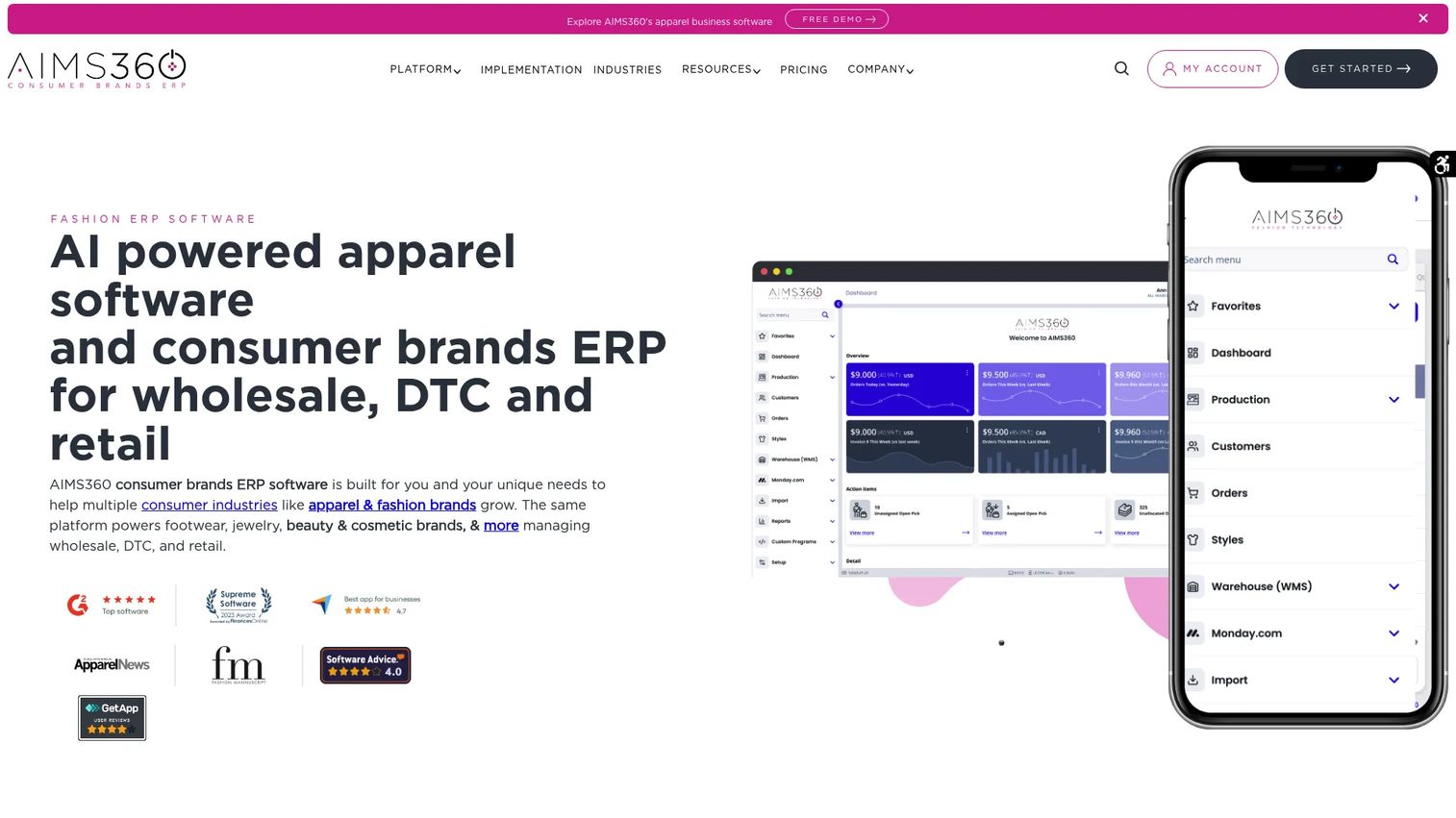
AIMS360 is a cloud ERP built for apparel and other consumer brands. It connects production, omnichannel orders, inventory, warehouse management, accounting, reporting, and integrations.
Its fashion specific structure includes style, color, and size inventory management. Production teams can manage costing, bills of materials, vendors, and work in progress. Native EDI connections support more than 350 retailers.
The broad coverage makes AIMS360 relevant when wholesale, DTC, retail, and warehouse workflows need a common operating layer. It also reduces the need to adapt a generic ERP to basic apparel data structures.
Best for: Growing apparel brands that need ERP across inventory, wholesale orders, production, warehouses, and financial operations.
Key features
- Apparel ERP workflows
- Style, color, and size inventory
- Wholesale order management
- Production and costing
- Native retailer EDI
Why choose AIMS360: Choose it when apparel specific workflows matter more than broad horizontal ERP flexibility. Its coverage fits brands moving beyond disconnected inventory and accounting tools.
AIMS360 pricing: Bronze costs $0 monthly during year one for the first three users under the current offer. It requires a 24 month agreement, with implementation and add ons charged separately.
G2 rating: 4.4/5
2. ApparelMagic
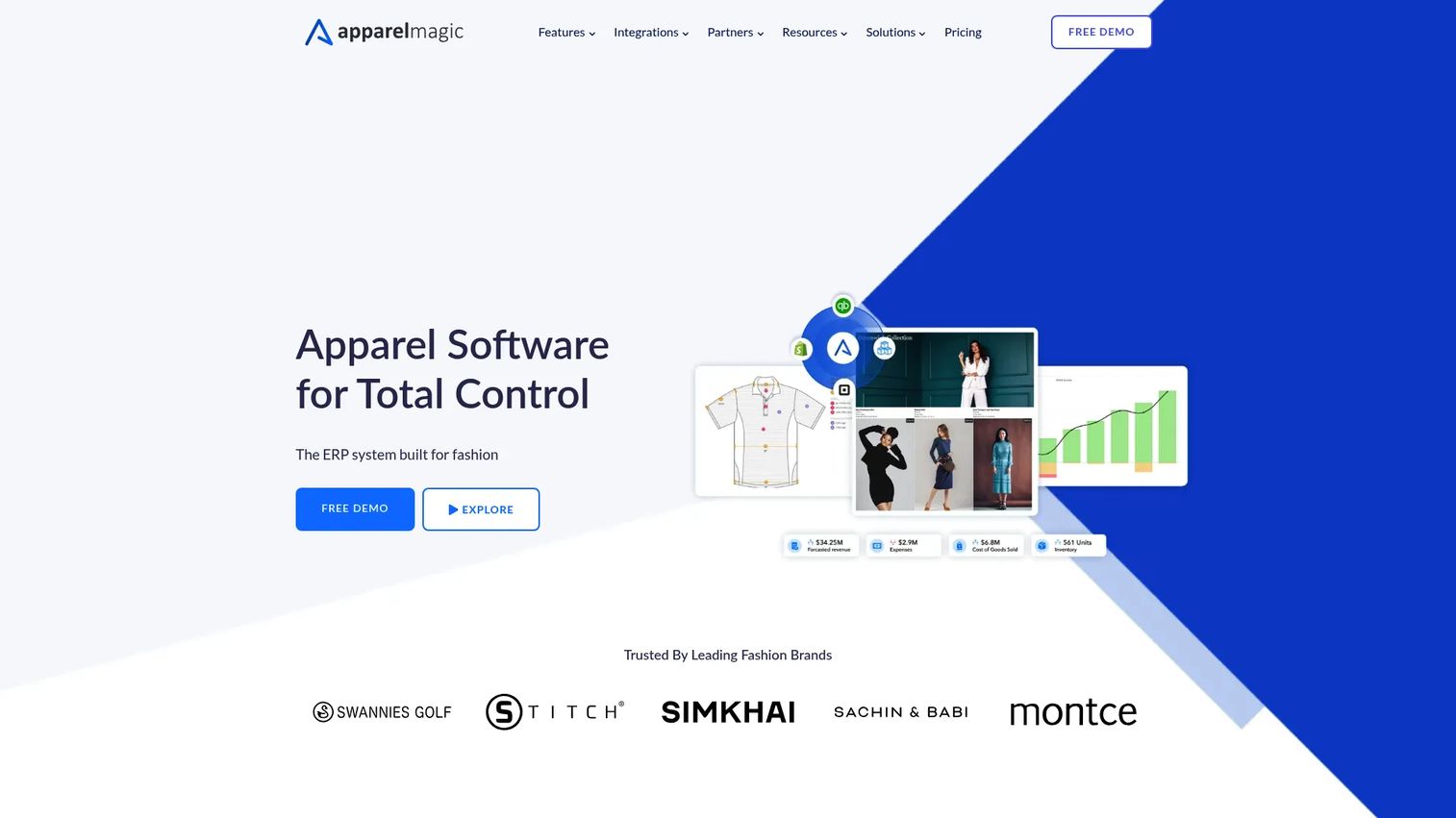
ApparelMagic combines fashion ERP with product lifecycle management. It covers inventory, sales, production, accounting, reporting, and B2B ecommerce.
The platform connects product development with downstream operations. Teams can manage product data, manufacturing workflows, forecasting, multiple warehouses, and wholesale ordering without starting from a blank ERP configuration.
Professional includes three users, three integrations, and three warehouses. It also includes advanced PLM, manufacturing management, multicurrency accounting, and B2B ecommerce. Enterprise expands limits while adding replenishment and API access.
Best for: Fashion brands that want one system for PLM, inventory, sourcing, sales orders, and wholesale operations.
Key features
- Product lifecycle management
- Inventory planning and forecasting
- Manufacturing management
- B2B ecommerce
- Accounting and reporting
Why choose ApparelMagic: It fits teams whose design and sales operations depend on shared product data. The fashion focus can reduce configuration work compared with a horizontal business system.
ApparelMagic pricing: Professional starts at $337 monthly when paid annually. Enterprise starts at $655 monthly, while Ultimate uses custom pricing.
G2 rating: 4.9/5
3. BlueCherry

BlueCherry is a supply chain platform for apparel, footwear, accessories, lifestyle products, and home goods. Its scope runs from product lifecycle management through manufacturing and fulfillment.
The platform covers ERP, product data, planning, shop floor control, quality, warehousing, and order execution. It also supports traceability and digital product passport workflows.
BlueCherry fits organizations where operational complexity spans multiple functions. A buyer may use it to connect design changes with sourcing, factory activity, warehouse stock, and customer orders.
That breadth comes with a different buying motion than a narrow inventory product. Teams should map ownership and implementation capacity before treating broad coverage as an automatic advantage.
Best for: Larger fashion businesses managing complex products, supply chains, manufacturing operations, warehouses, and sales channels.
Key features
- Apparel ERP and PLM
- Supply chain visibility
- Planning and predictive insights
- Manufacturing execution
- Warehouse and fulfillment management
Why choose BlueCherry: Consider it when scale and cross functional control outweigh speed to launch. It suits organizations seeking broad fashion operations coverage.
BlueCherry pricing: Custom pricing. Request a demo and quote from the vendor.
4. Aptean Fashion & Apparel
Aptean Fashion & Apparel is apparel ERP software for fashion brands, wholesalers, distributors, and manufacturers. It targets mid sized and larger organizations with seasonal assortments and complex SKU structures.
The platform supports style, color, and size management at SKU level. Its verified capabilities also include seasonal planning, pre season bookings, demand planning, and allocation.
Aptean adds industry aware intelligence for style substitution. This helps teams working with product variation and shifting availability across a collection.
Its strongest fit appears where merchandise complexity sits alongside broader operational control. Buyers seeking only basic stock counts may find that a focused inventory platform covers the immediate requirement.
Best for: Apparel companies that need ERP depth for seasonal planning, SKU matrices, demand planning, allocation, and multichannel operations.
Key features
- Fashion ERP workflows
- Style, color, and size control
- Seasonal assortment planning
- Demand planning and allocation
- Style substitution intelligence
Why choose Aptean Fashion & Apparel: Choose it when apparel matrix logic and seasonal workflows drive the evaluation. It is positioned for operational depth rather than a narrow inventory fix.
Aptean Fashion & Apparel pricing: Custom pricing. Request a quote from Aptean.
G2 rating: 4.0/5
5. PolyPM
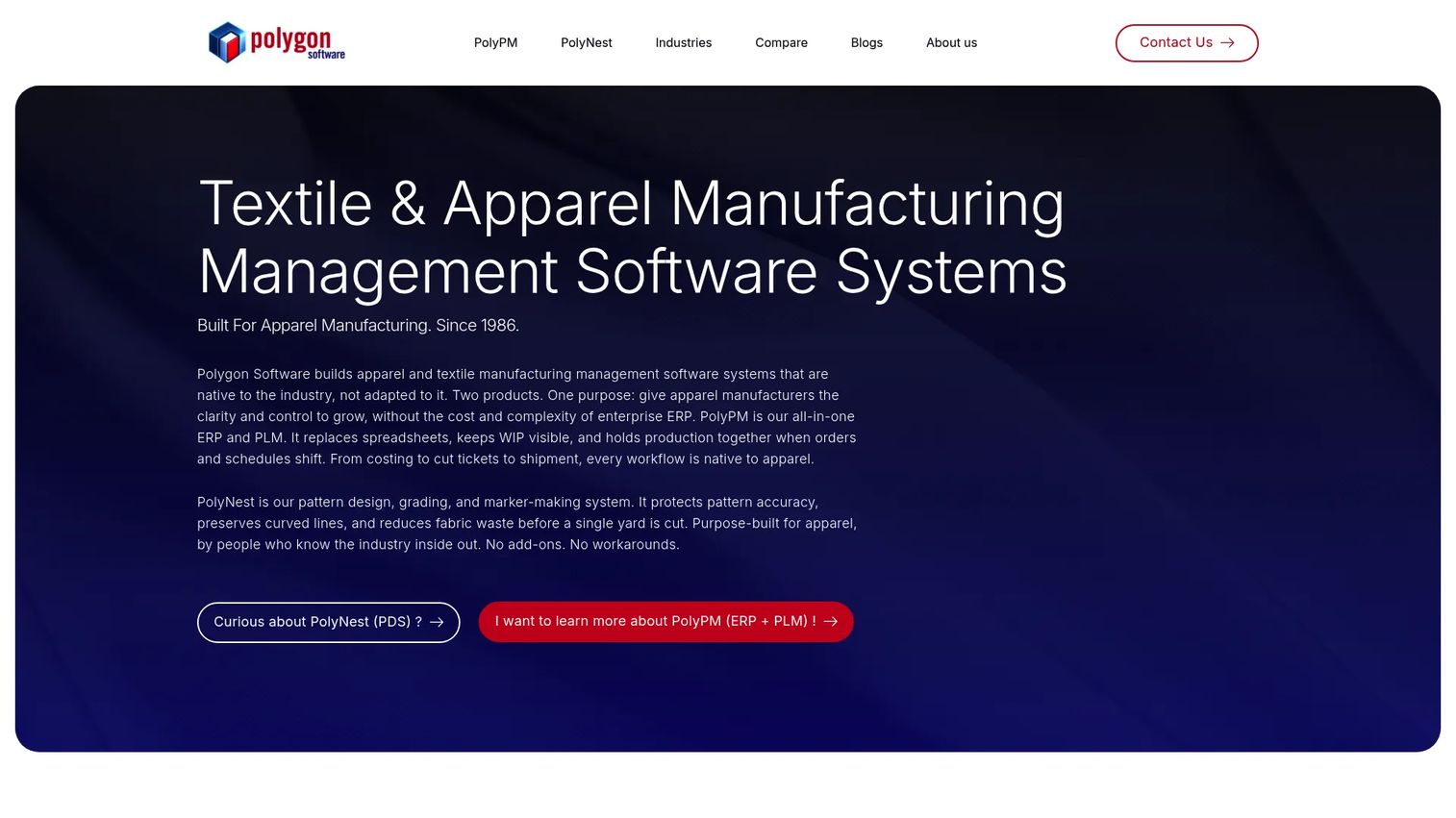
PolyPM combines apparel ERP and PLM for garment, textile, uniform, workwear, and safetywear manufacturers. Its coverage centers on product development and production control.
Teams can work from a unified ERP and PLM database. Production features include bundle level work in progress, roll level materials inventory, and cut planning integration.
The platform also supports screen printing, embroidery, and sublimation production. EDI and retailer integrations connect factory activity with downstream commercial workflows.
PolyPM stands apart from inventory tools that begin after finished goods arrive. It addresses materials, costing, production progress, and shipping within the same operating model.
Best for: Apparel and sewn products manufacturers that need product development, materials control, costing, and production visibility.
Key features
- Unified ERP and PLM
- Bundle level production tracking
- Roll level materials inventory
- Cut planning integration
- Decoration production support
Why choose PolyPM: Use it when the factory is central to the software decision. Its production emphasis makes it more relevant than a sales led inventory platform.
PolyPM pricing: Custom pricing. Request pricing directly from PolyPM.
G2 rating: 4.0/5
6. DOSS Operations Cloud
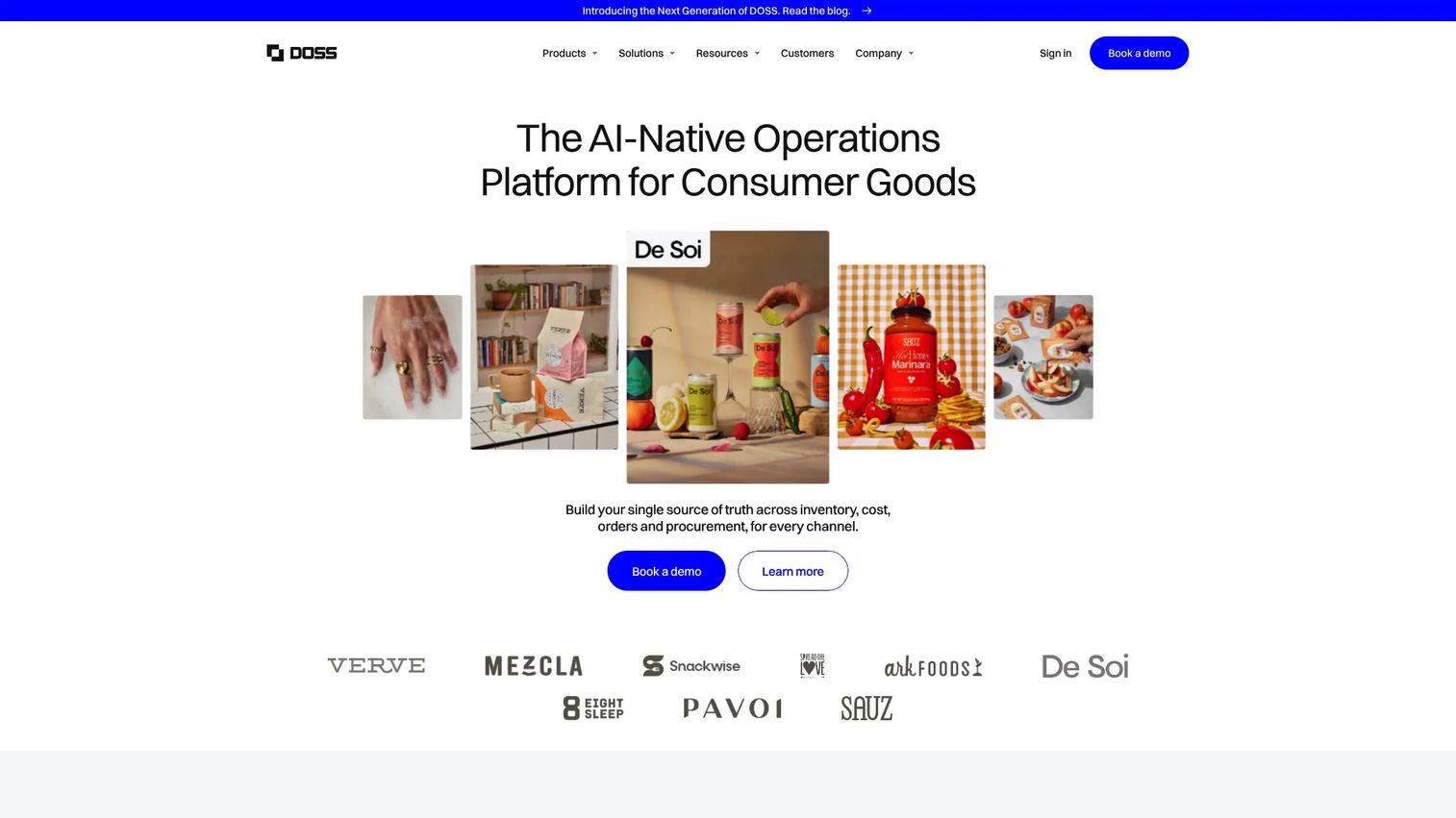
DOSS Operations Cloud is an operations platform for consumer goods businesses. It covers procurement, inventory, orders, finance, integrations, analytics, and workflow automation.
Its configurable data model lets teams create tables, forms, and operational workflows. DataStudio provides analytics, while Dossbot can query records, detect issues, and execute bulk changes.
The platform also includes more than 100 native integrations across channels, suppliers, third party logistics providers, and financial systems. This makes DOSS relevant to physical product brands coordinating several external partners.
For an apparel operator, the decision comes down to workflow fit. DOSS offers adaptable operations infrastructure, while dedicated fashion ERP products provide deeper apparel structures from the start.
Best for: Growing consumer brands that need adaptable inventory, procurement, order, finance, and reporting workflows.
Key features
- Inventory and order management
- Procurement workflows
- Configurable operational data
- Real time analytics
- AI assisted bulk changes
Why choose DOSS Operations Cloud: It fits teams that value a configurable operations layer. Consider apparel matrix requirements carefully during evaluation.
DOSS Operations Cloud pricing: Custom pricing through sales. One recurring fee covers platform access, applications, and ongoing support.
7. NetSuite
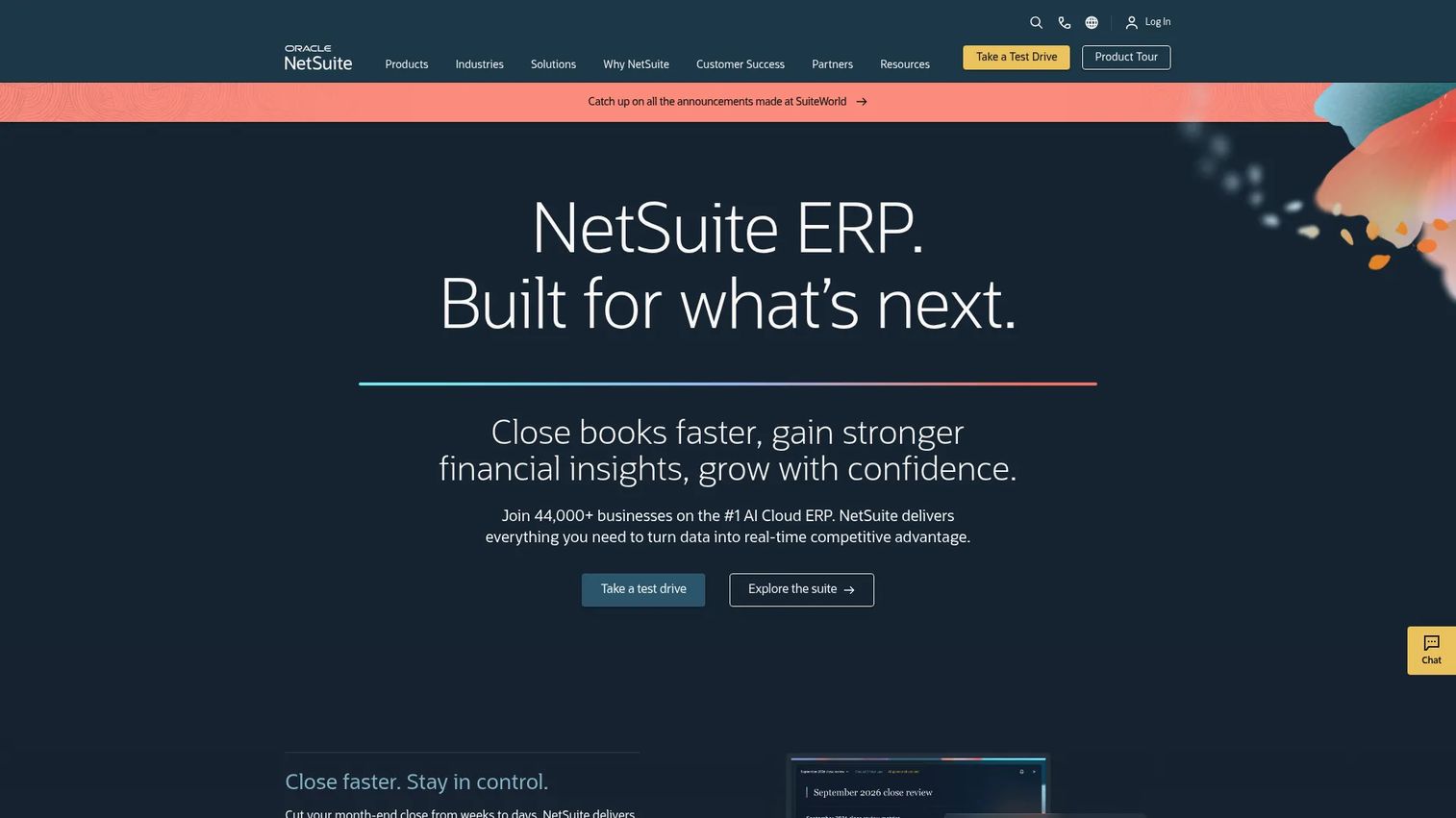
NetSuite is a broad cloud ERP covering finance, supply chain, inventory, orders, procurement, warehouses, commerce, and customer management. Apparel companies can configure it around their operating model.
Its main strength is breadth across business functions. Finance leaders gain accounting and reporting, while operations teams manage purchasing, stock, fulfillment, and warehouse activity.
NetSuite also includes CRM, commerce, analytics, customization, and integration capabilities. Multi entity businesses can use that scope to create a common financial and operational backbone.
Apparel specific processes may require implementation design or additional configuration. Buyers should document matrix inventory, seasonal collections, and production requirements before selecting an implementation partner.
Best for: Growing or multi entity apparel companies seeking one ERP backbone across finance, inventory, orders, and commerce.
Key features
- Cloud financial management
- Inventory and warehouse control
- Order and procurement management
- CRM and commerce
- Analytics and reporting
Why choose NetSuite: Choose it when financial control and operational scale outweigh native fashion specialization. Implementation ownership will shape time to value.
NetSuite pricing: Custom pricing combines the core platform, selected modules, users, and implementation. Eligible early stage United States technology startups can access NetSuite QuickStart for free.
G2 rating: 4.0/5
8. SAP Business One
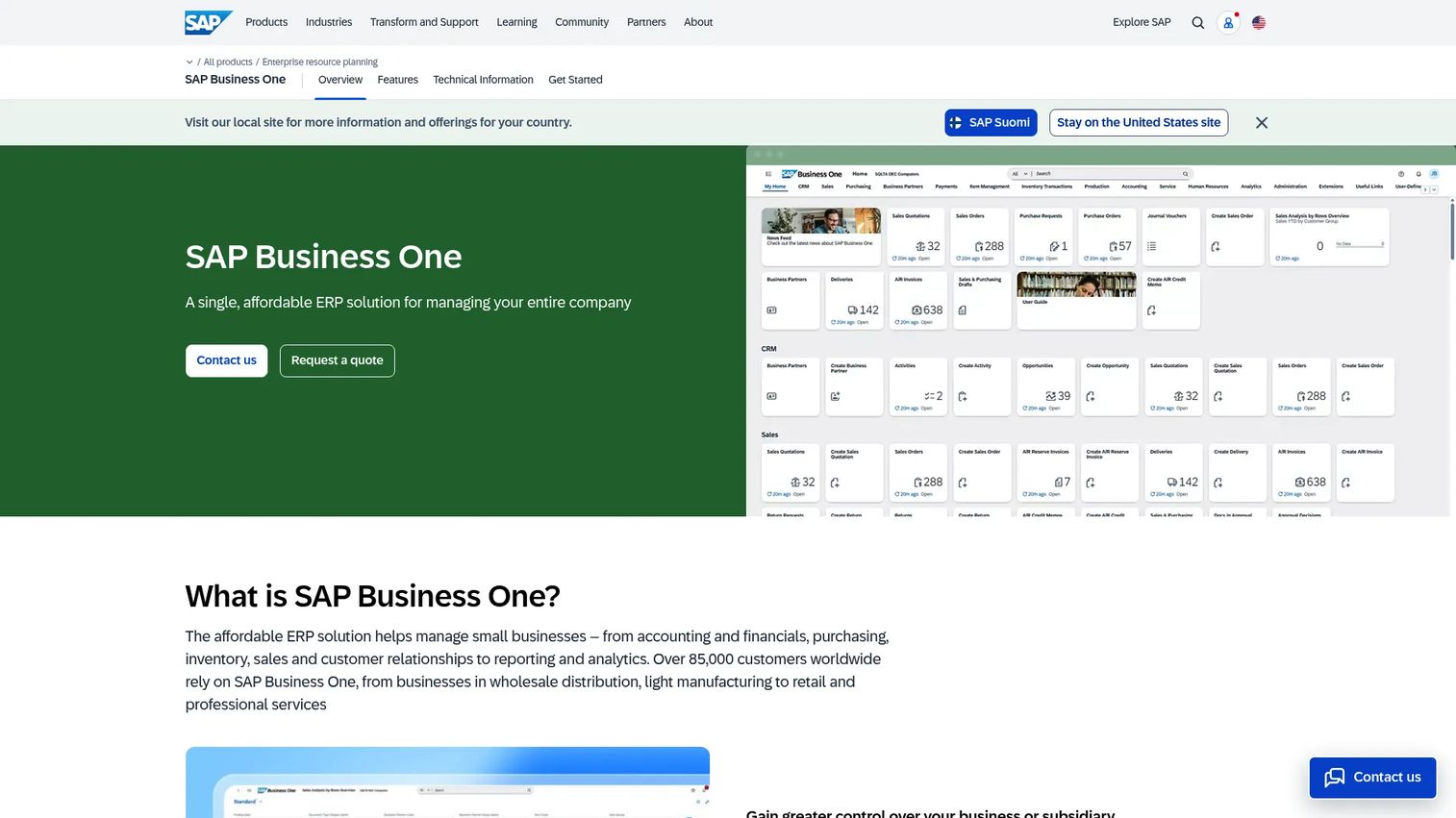
SAP Business One provides ERP for small and midsize businesses. It connects finance, purchasing, inventory, sales, customer records, reporting, and analytics.
The system supports cloud or on premises deployment. Web and mobile access extend core workflows beyond desktop users.
For apparel companies, the product provides an established operational foundation. Industry fit often depends on partner configuration around variants, seasonal ranges, and other clothing ERP software requirements.
That makes implementation expertise important. A partner must understand both the platform and the apparel operating model, especially where inventory logic goes beyond standard SKUs.
Best for: Small and midsize apparel businesses comfortable configuring industry workflows through an implementation partner.
Key features
- Financial management
- Inventory control
- Purchasing workflows
- Sales and customer management
- Business reporting
Why choose SAP Business One: Consider it when finance and inventory discipline are the immediate priorities. Confirm apparel matrix support during partner selection.
SAP Business One pricing: Custom pricing. SAP directs buyers to request a quote.
G2 rating: 4.3/5
9. Cin7 Core
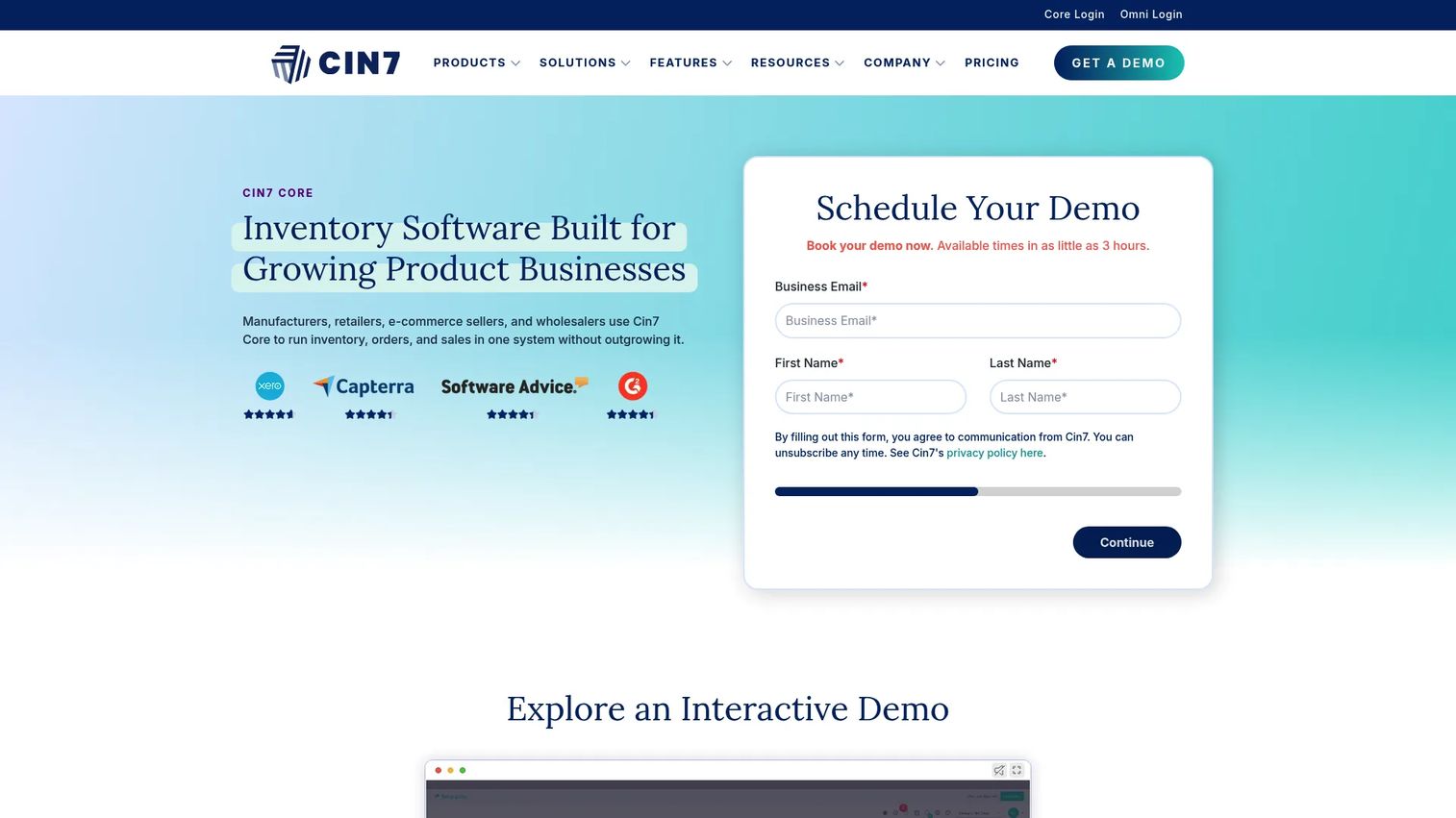
Cin7 Core provides inventory and order management for growing product businesses. It covers purchasing, sales, warehouses, manufacturing, point of sale, and B2B ordering.
The platform connects ecommerce, marketplaces, accounting, and shipping services. Its multichannel structure can help apparel brands coordinate orders and inventory without implementing a broad ERP first.
Manufacturing capabilities include material requirements planning on the Pro plan. Advanced adds warehouse management for operations with greater fulfillment complexity.
Apparel teams should test style matrix handling during evaluation. General inventory depth does not automatically guarantee the variant views required for seasonal collections.
Best for: Small and midsize apparel brands needing stronger inventory, orders, purchasing, warehouses, and ecommerce integration.
Key features
- End to end inventory
- Multichannel order management
- Purchasing and replenishment
- Manufacturing planning
- Warehouse management
Why choose Cin7 Core: It fits brands that have outgrown basic ecommerce inventory but are not ready for a fashion ERP project.
Cin7 Core pricing: Standard starts at $349 monthly. Pro costs $599 monthly, while Advanced costs $1,199 monthly. A 14 day trial is available.
G2 rating: 4.3/5
10. Uphance
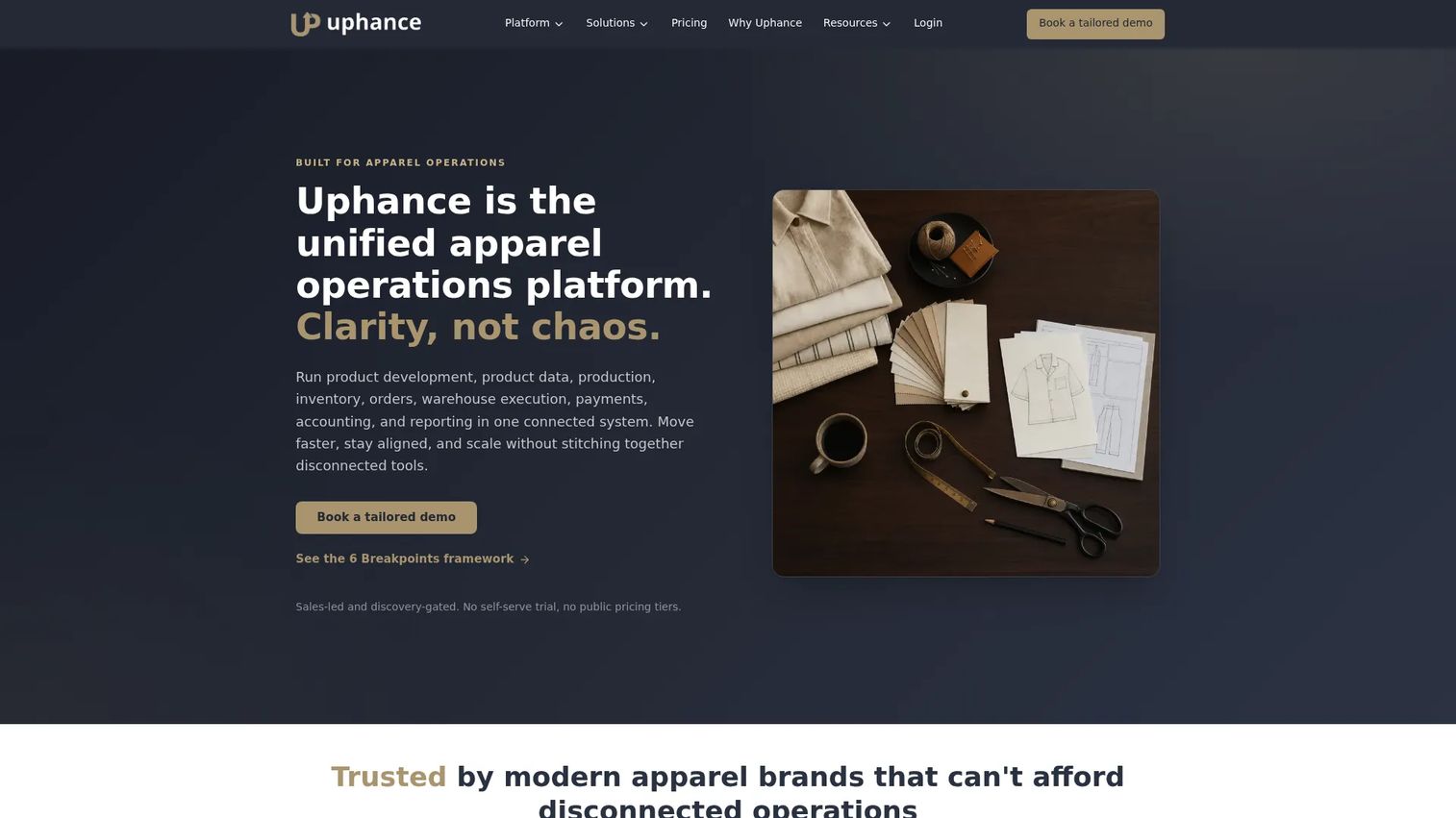
Uphance is an apparel operations platform connecting product development with production, inventory, orders, warehouses, payments, and reporting.
Its PLM capabilities include line planning, tech packs, product variations, graded size specifications, and multiseason product management. B2B features support wholesale selling alongside direct channels.
Warehouse functions include inventory syncing, barcode scanning, stocktaking, batch picking, and bin transfers. Mobile operations extend those workflows onto the warehouse floor.
Uphance offers apparel specific coverage without positioning itself as a generic finance first ERP. Its strongest fit is a fashion brand managing wholesale and DTC with warehouse or third party logistics complexity.
Best for: Mid market apparel brands combining product development, wholesale, DTC, inventory, and warehouse execution.
Key features
- Apparel product lifecycle management
- B2B wholesale platform
- Multichannel inventory syncing
- Barcode warehouse operations
- Product variation management
Why choose Uphance: Choose it when apparel workflows and warehouse execution matter more than broad horizontal ERP coverage.
Uphance pricing: Custom pricing after discovery. Uphance does not offer a free trial.
11. Delogue PLM
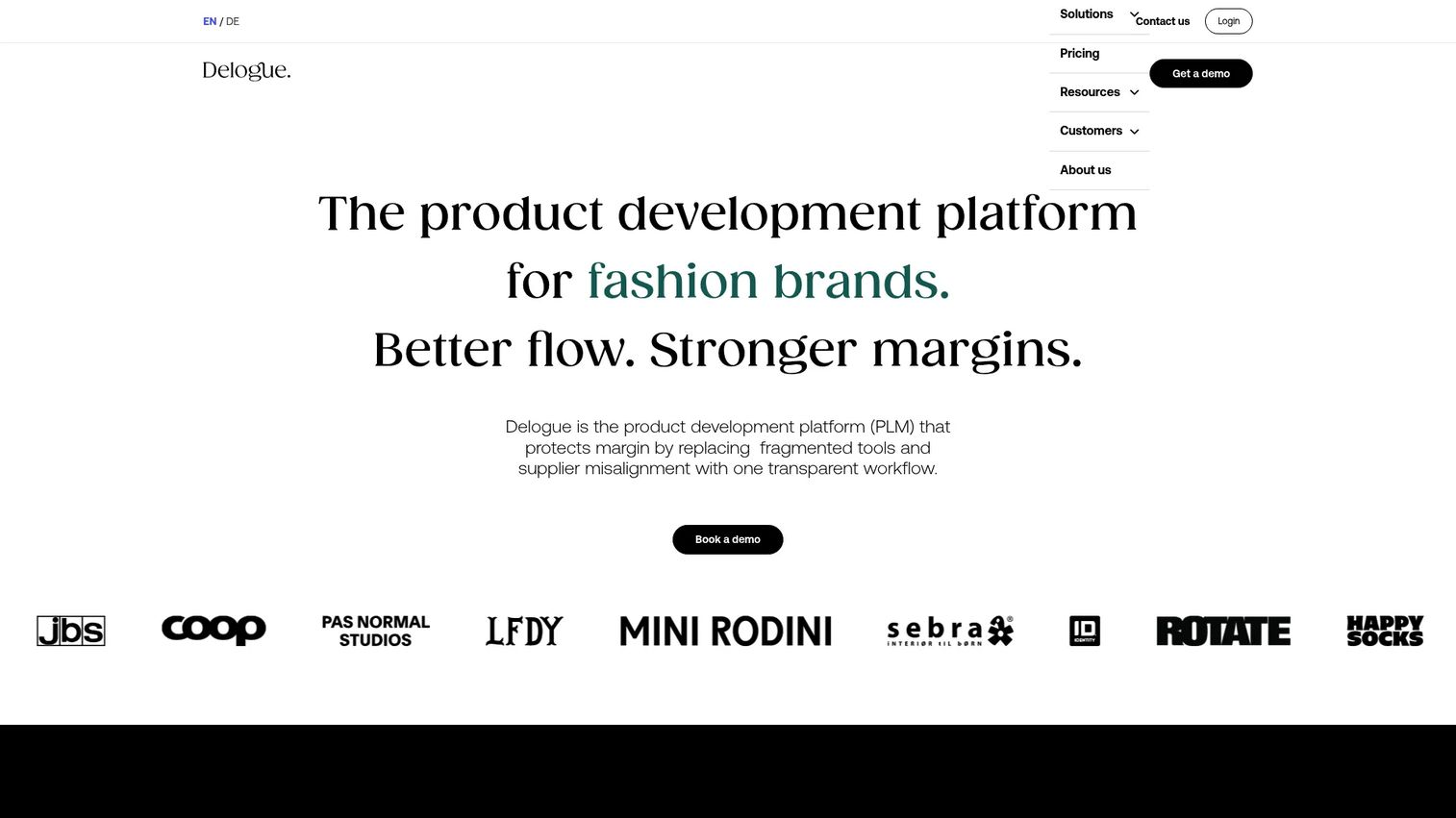
Delogue PLM centralizes product development for fashion, apparel, and lifestyle brands. It focuses on product data, costing, compliance, workflows, and supplier collaboration.
Teams can manage bills of materials, samples, versions, pricing, care labels, and product records. Supplier workflows support communication and supply chain traceability.
Delogue is a PLM system rather than a full ERP. It addresses the design to supplier handoff before inventory, order processing, and financial execution take over.
That boundary makes it useful when product development causes the biggest delays. Brands seeking warehouse or accounting control will need connected systems for those functions.
Best for: Fashion teams that need controlled product data, sample tracking, costing, and supplier collaboration.
Key features
- Bill of materials management
- Sample and version tracking
- Product costing
- Supplier collaboration
- Compliance and care labels
Why choose Delogue PLM: Use it when product development is the bottleneck. Pair it with ERP or inventory software for downstream execution.
Delogue PLM pricing: Essential starts at €145 per user monthly when billed annually. Professional costs €199, while Premium costs €249 per user monthly.
12. Techpacker
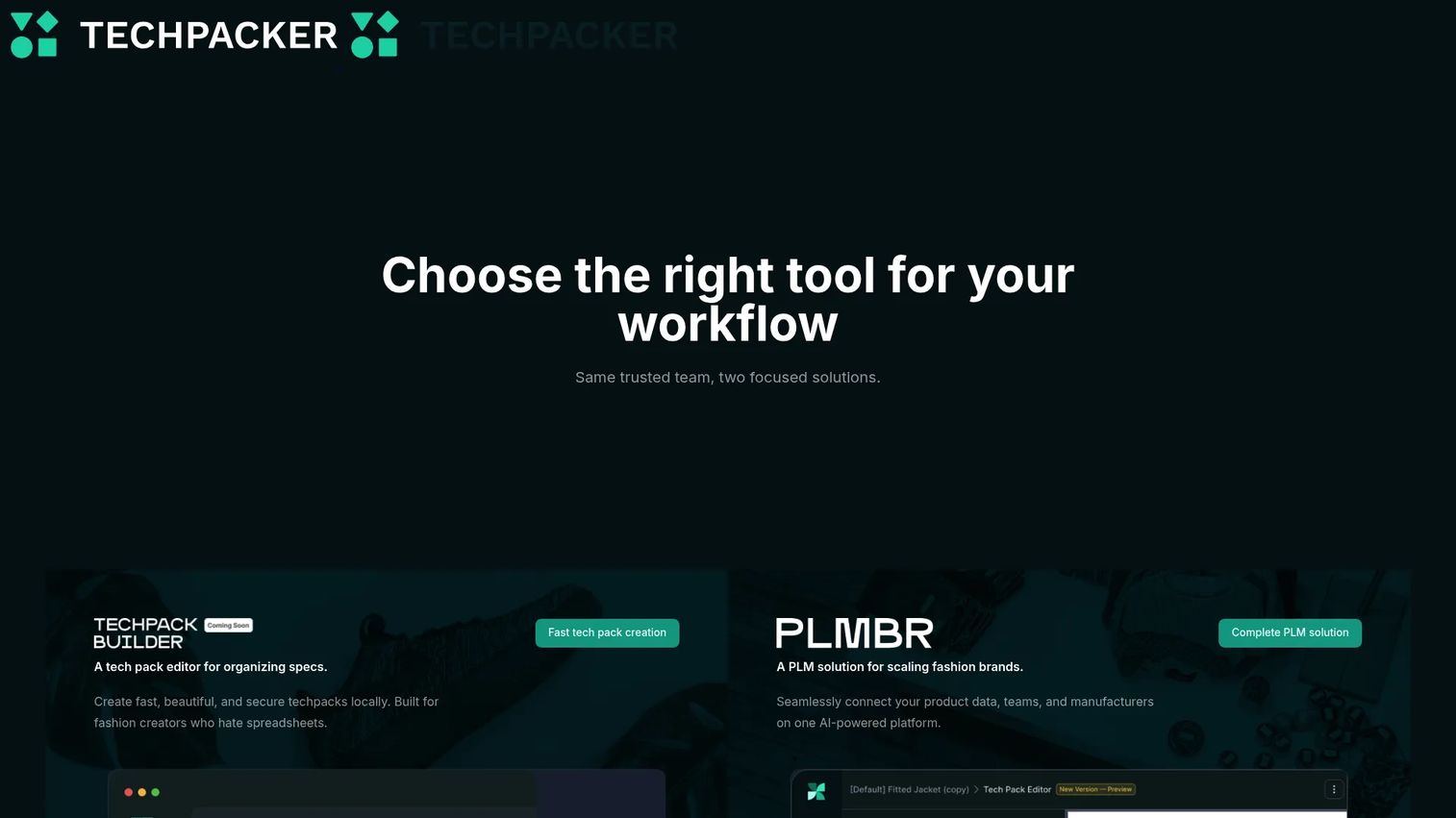
Techpacker is product development software for fashion brands and manufacturers. It focuses on creating tech packs and coordinating production information.
Teams can build reusable design files and specifications through a brand library. Comments, version control, and edit highlighting help product teams coordinate changes with suppliers.
Milestone tracking provides visibility into development stages. Excel exports and integrations connect product information with wider workflows.
Techpacker is narrower than apparel ERP software. It fits design and production teams that need better documentation without replacing inventory, accounting, or wholesale systems.
Best for: Fashion product teams managing tech packs, specifications, supplier comments, and product development milestones.
Key features
- Digital tech packs
- Reusable specification libraries
- Supplier collaboration
- Version control
- Development milestone tracking
Why choose Techpacker: Choose it when product documentation and supplier communication create the most rework. It provides a focused alternative to broad PLM projects.
Techpacker pricing: Custom pricing. A free seven day trial is available.
G2 rating: 4.5/5
13. Lightspeed Retail
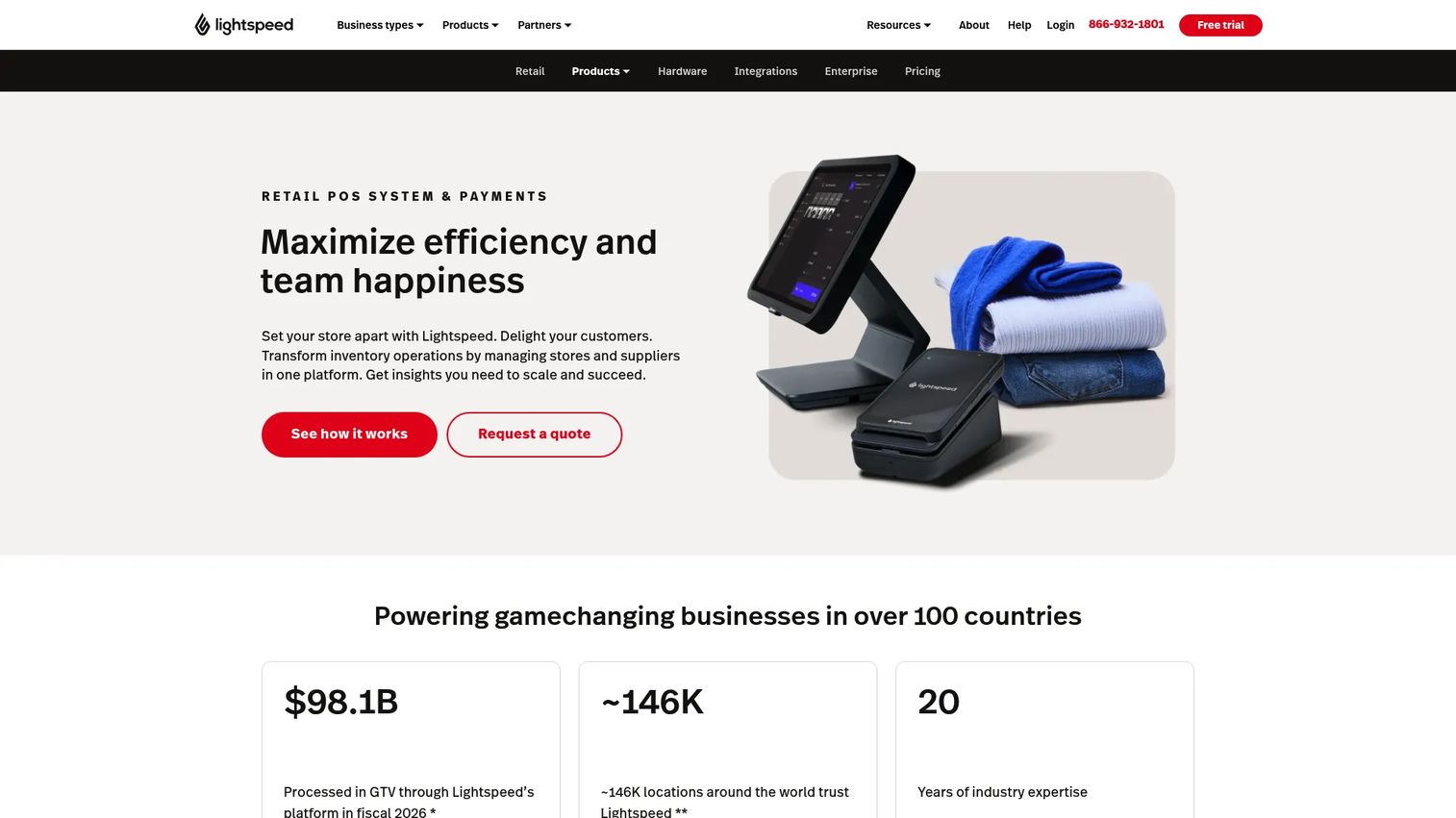
Lightspeed Retail combines point of sale with inventory, payments, ecommerce, customer profiles, and reporting. It is built around store operations.
Retailers can manage inventory across locations and channels. Ecommerce and marketplace capabilities connect online sales with physical stores, while reporting supports daily trading decisions.
Customer profiles, loyalty features, and marketing functions help stores manage repeat business. An open API and third party integrations extend the retail stack.
Lightspeed is strongest where stores sit at the center of the operating model. It does not replace fashion PLM or apparel production management.
Best for: Apparel retailers that need POS, store inventory, customer records, ecommerce, and multilocation reporting.
Key features
- Retail point of sale
- Multilocation inventory
- Integrated payments
- Ecommerce and marketplaces
- Customer profiles and loyalty
Why choose Lightspeed Retail: Choose it when retail selling drives the software decision. Production heavy businesses will need separate manufacturing systems.
Lightspeed Retail pricing: Basic starts at $89 monthly. Core costs $149 monthly, while Plus costs $289 monthly. Each plan includes one register.
14. DecoNetwork
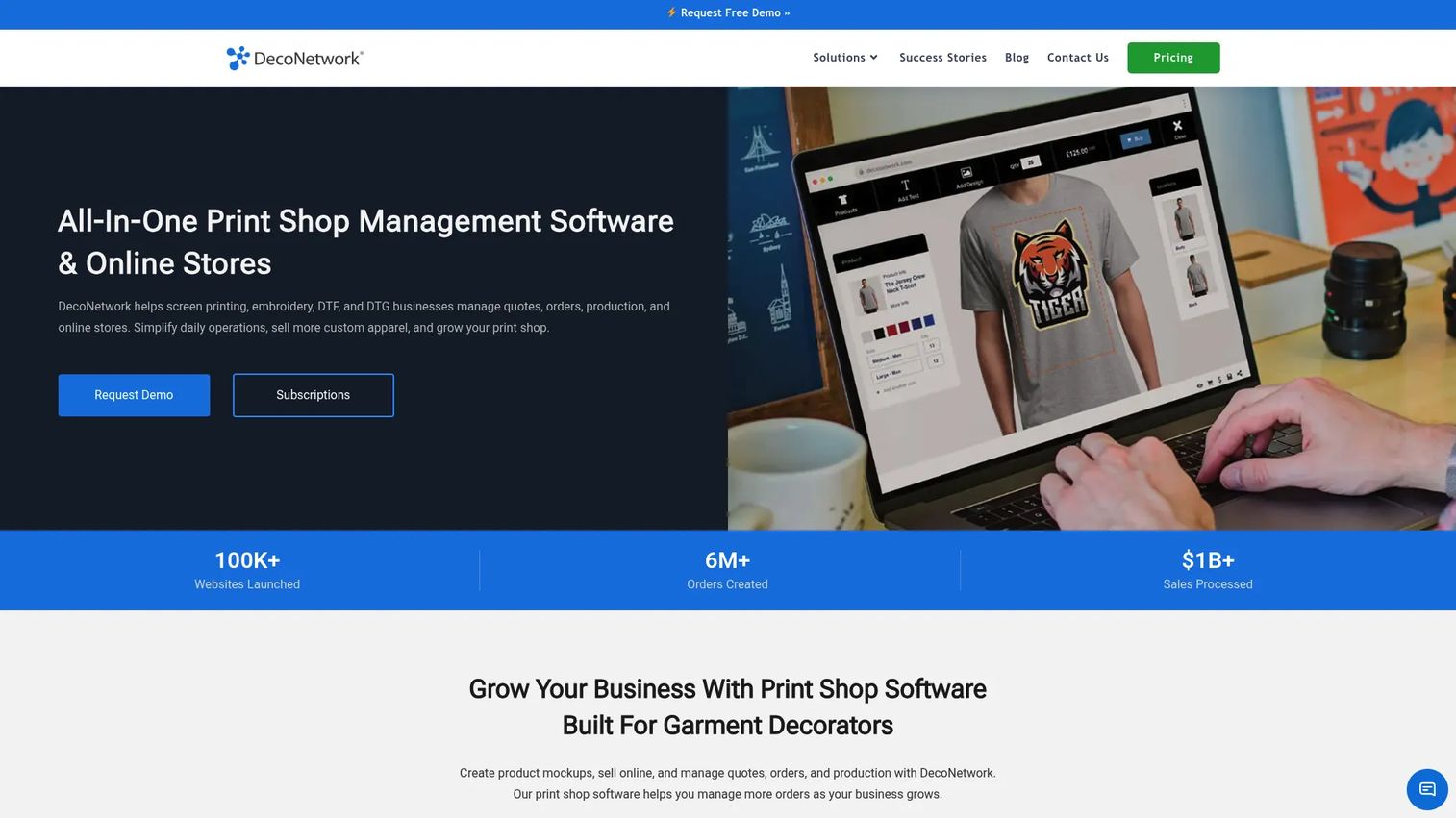
DecoNetwork provides management software for garment decorators. Its target users include screen printers, embroidery businesses, and custom apparel operators.
The platform connects branded online stores with product personalization and ordering. Teams can manage quotes, orders, product mockups, customer records, inventory, and production.
Its online designer supports customized products, while art and production workflows address the handoffs specific to decoration businesses. Enterprise adds API access.
DecoNetwork serves a different operating model from seasonal fashion ERP. Its value sits in custom order intake and decoration production rather than collection based PLM.
Best for: Screen printers and custom apparel decorators managing online stores, artwork, quoting, orders, and production.
Key features
- Branded online stores
- Product personalization
- Quotes and order management
- Decoration production workflows
- Customer management
Why choose DecoNetwork: Use it when customization and decorated apparel production drive revenue. Fashion brands managing seasonal sourcing need a different system.
DecoNetwork pricing: Standard starts at $239 monthly plus a one time license. Premium starts at $339 monthly, while Enterprise starts at $439 monthly.
G2 rating: 3.7/5
15. Inventory Planner
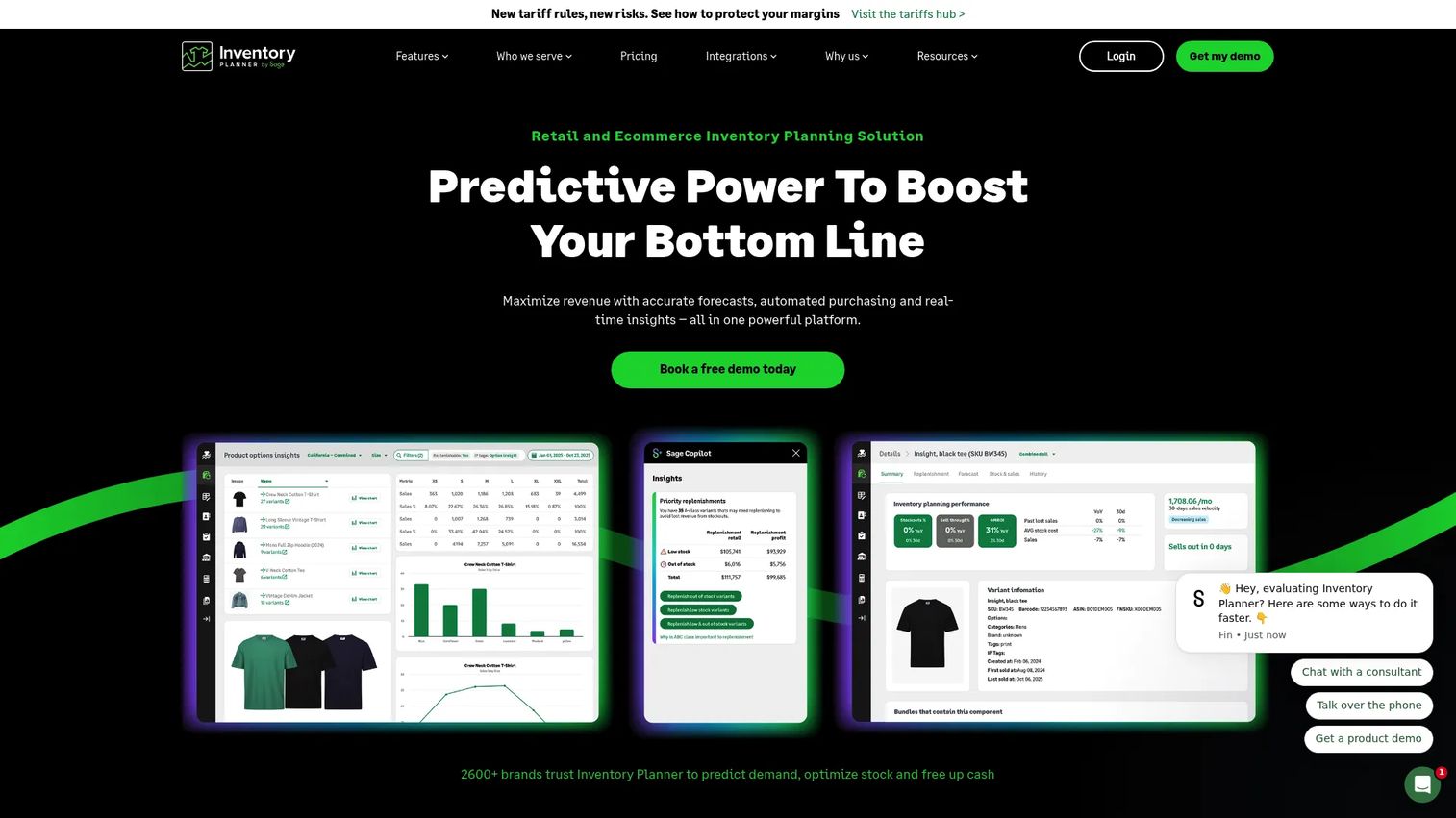
Inventory Planner focuses on demand forecasting and replenishment for retail, ecommerce, wholesale, and omnichannel businesses.
The platform produces purchasing recommendations from demand data. It also supports multilocation planning, open to buy workflows, inventory reporting, and stock transfers.
Integrations connect it with ecommerce, ERP, and inventory systems. Unlimited users are included under its pricing model.
Inventory Planner complements an operational system rather than replacing one. It becomes useful when buying decisions create excess stock, shortages, or weak cash allocation.
Best for: Apparel brands that need demand forecasting and purchasing recommendations across warehouses, stores, and ecommerce channels.
Key features
- Demand forecasting
- Automated purchase recommendations
- Multilocation planning
- Open to buy planning
- Inventory performance reports
Why choose Inventory Planner: Choose it when replenishment quality is the immediate issue. Keep the existing ERP or inventory platform as the transaction system.
Inventory Planner pricing: Custom pricing based on inventory volume. Unlimited users are included.
G2 rating: 4.4/5
16. PatternSmith
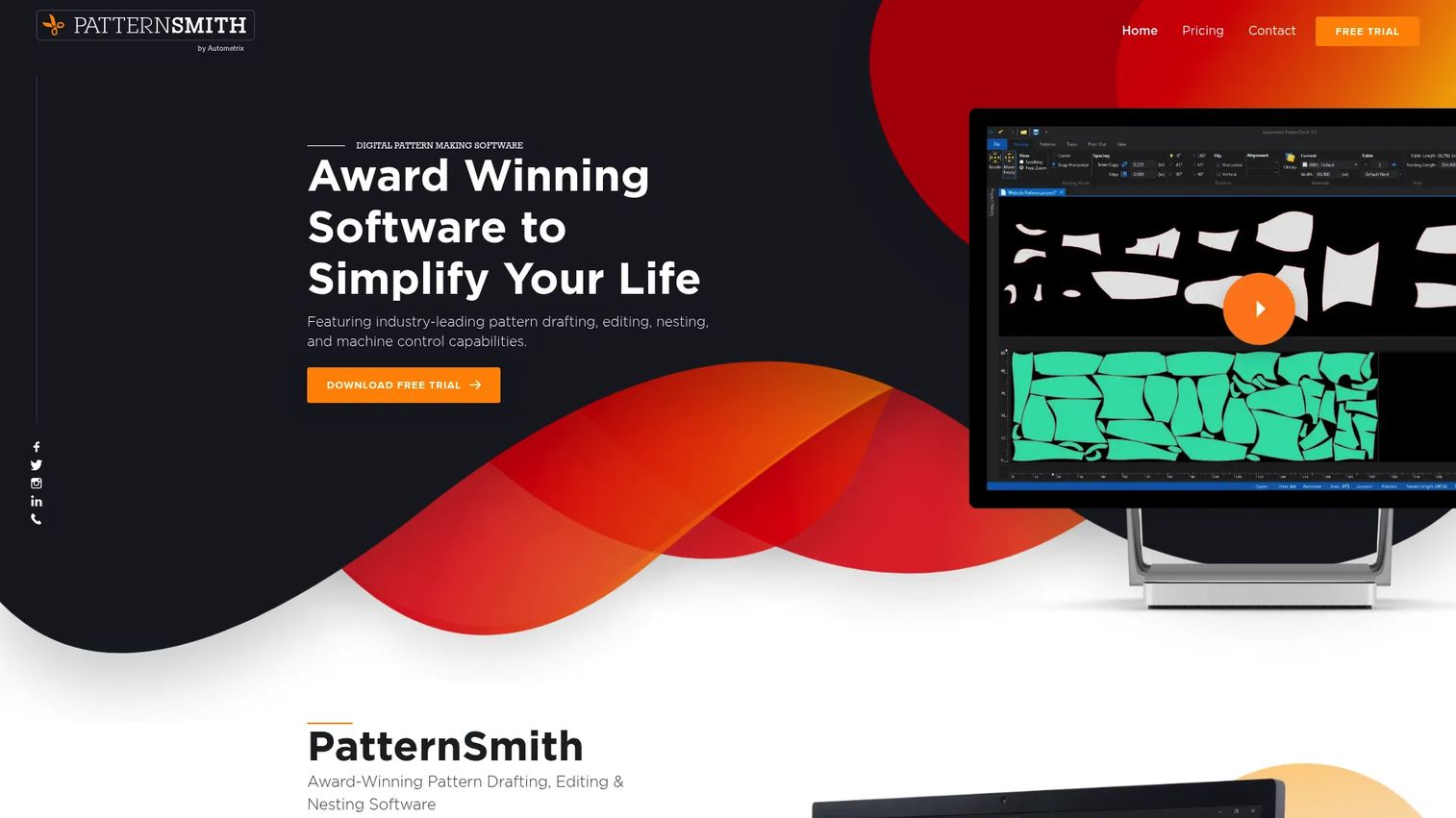
PatternSmith provides two dimensional pattern drafting, editing, nesting, and machine control. It supports apparel and other textile based manufacturing environments.
The software handles manual and automatic nesting alongside digitizing and parametric templates. Its file support includes several common CAD and machine formats.
Additional products cover workflow processing, project management, material libraries, and specialized design tasks. Production teams can connect digital patterns with cutting output.
PatternSmith is a specialist tool rather than apparel ERP. It addresses pattern development and material use before broader production, inventory, and financial workflows.
Best for: Apparel manufacturers and cut and sew teams needing digital patternmaking, nesting, and cutting machine output.
Key features
- Two dimensional pattern design
- Manual and automatic nesting
- CAD file exchange
- Parametric templates
- Cutting machine output
Why choose PatternSmith: Choose it when pattern development or nesting efficiency constrains production. It complements ERP and manufacturing execution systems.
PatternSmith pricing: PatternSmith 2D CAD costs $1,500 yearly. A 30 day free trial includes all features and requires no credit card.
17. Fusion Operations
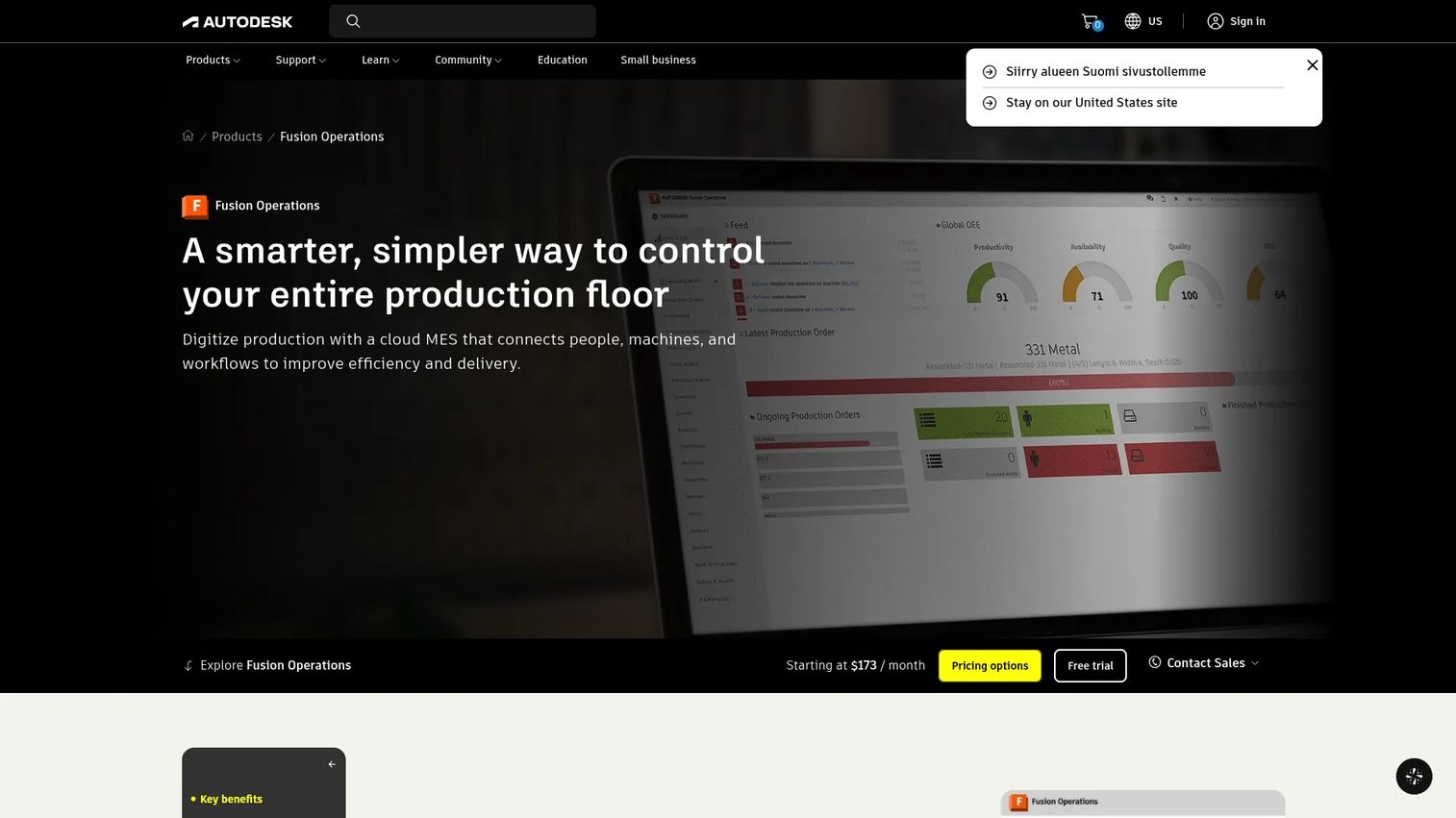
Fusion Operations is a cloud manufacturing execution system. It connects people, machines, and production workflows across the shop floor.
Capabilities include production tracking, scheduling, material requirements planning, quality, traceability, inventory, and maintenance. Operational data gives managers current visibility into factory performance.
The platform applies across manufacturing and fabrication environments. An apparel manufacturer can use it for shop floor execution, but fashion specific product management remains outside its central role.
Fusion Operations therefore complements apparel ERP or PLM. It is most relevant when production progress, work instructions, and quality records remain manual.
Best for: Apparel manufacturers needing shop floor visibility, production scheduling, traceability, quality control, and maintenance records.
Key features
- Production tracking
- Scheduling and MRP
- Quality management
- Materials traceability
- Shop floor analytics
Why choose Fusion Operations: Use it when factory execution is the core problem. Keep apparel ERP or PLM for product and commercial records.
Fusion Operations pricing: Plans start at $173 monthly. Annual terms and a 14 day free trial are available.
G2 rating: 4.9/5
Considerations when choosing apparel management software
Match the tool to your operating model
Start with how the company makes money and fulfills demand. Brands, wholesalers, retailers, manufacturers, and decorators need different systems.
A PLM tool will not fix store inventory. Likewise, a POS platform will not manage seasonal production or factory work in progress.
Check size, color, style, and season logic
Ask vendors to demonstrate a live style matrix using your own SKU structure. Test variants, pre packs, case packs, substitutions, allocation rules, and seasonal reporting.
Generic inventory software can look adequate until assortment complexity reaches the warehouse.
Map every operational handoff
Document the path from design to sourcing, production, receiving, allocation, and sales channels. Identify every spreadsheet and manual approval along that path.
The chosen platform should remove data entry between teams. Avoid creating another reporting layer that leaves existing systems untouched.
Verify integrations and system ownership
List the required connections across ecommerce, POS, accounting, EDI, third party logistics, marketplaces, warehouses, and business intelligence.
Assign ownership for products, inventory, orders, customers, and financials. Two systems should not control the same record without clear synchronization rules.
Evaluate implementation cost
Subscription price rarely captures the full commitment. Include migration, SKU cleanup, warehouse process changes, chart of accounts work, and staff training.
Executive ownership matters too. Delayed adoption postpones operating leverage and keeps the founder or COO inside routine exceptions.
Conclusion
The right apparel management software depends on where complexity lives.
AIMS360, ApparelMagic, BlueCherry, Aptean Fashion & Apparel, and NetSuite cover broad ERP requirements. PolyPM, PatternSmith, and Fusion Operations fit production focused teams, although each addresses a different manufacturing layer.
Techpacker and Delogue PLM concentrate on product development. Lightspeed Retail, Cin7 Core, and Inventory Planner cover retail, inventory, or planning requirements without pretending to replace every operational system.
DecoNetwork stands apart for decorated apparel businesses. DOSS offers configurable operations infrastructure, while SAP Business One provides an established ERP foundation.
Choose by operating model first. Then evaluate budget and implementation capacity.
Before signing a contract, run one collection through the proposed system. Include product setup, purchasing, receiving, channel allocation, order processing, and margin reporting. That exercise will reveal whether the platform removes coordination or simply moves it.
FAQs
Apparel management software supports operational workflows for fashion, clothing, footwear, accessories, and textile businesses. It may cover inventory, orders, production, sourcing, PLM, apparel CRM, or sales channels.
The category includes broad ERP platforms and focused systems. A focused product may handle only retail, forecasting, factory execution, or product development.
Apparel management software is the broader category. It includes apparel ERP, PLM, inventory, POS, production, forecasting, and specialized design tools.
Apparel ERP usually covers finance, purchasing, inventory, customer records, and order controls. Some platforms add manufacturing, warehouses, product lifecycle management, or commerce.
There is no universal winner. A fashion brand needing broad operations should evaluate apparel ERP, while a product development bottleneck points toward PLM.
Retail led companies should prioritize POS and inventory. Brands struggling with replenishment should evaluate forecasting software alongside their transaction system.
Small brands can begin with ecommerce, accounting, and inventory tools. This setup works while order volume, locations, and product variants remain manageable.
ERP becomes more useful when wholesale, production, finance controls, or multiple warehouses outgrow manual coordination. The right timing depends on process complexity rather than company age.
Look for style, size, color, season, warehouse, and location tracking. Strong apparel inventory software should also support purchasing, allocation, replenishment, returns, and channel synchronization.
Test the software using your current SKU structure. A generic product grid may struggle with pre packs or collection level reporting.
Pricing ranges from focused subscriptions under $100 monthly to larger ERP projects priced through sales. The cost changes with users, modules, inventory volume, integrations, and implementation work.
Include migration, training, SKU cleanup, and process redesign in the budget. Those costs often affect first quarter value more than the subscription.
Yes, if the platform supports multichannel orders and synchronized inventory. Wholesale workflows may also require customer terms, B2B ordering, EDI, account pricing, and retailer specific documents.
Check how the system reserves inventory between channels. Weak allocation logic can create overselling even when every channel is technically connected.
Clean product data before migration. Standardize SKU structures, vendors, warehouse locations, customer records, and the chart of accounts.
Then map order, purchasing, production, receiving, allocation, and returns workflows. This prevents old spreadsheet exceptions from becoming permanent ERP configuration.
Clothing ERP software adds industry structures such as style, size, color, and season matrices. It may also include production costing, wholesale orders, line sheets, or apparel allocation.
Generic ERP can support these workflows through configuration. Buyers should compare implementation effort against the native apparel capabilities offered by specialist platforms.
Clothing order client management software connects customer records with products, wholesale terms, sales orders, and fulfillment status. In apparel, this function often sits inside ERP or apparel CRM software.
The useful distinction is operational connection. A customer database provides limited value when sales teams cannot see current inventory, open orders, or account pricing.