You don’t want another subscription. You want a campaign to move from lead capture to revenue reporting without a spreadsheet holding everything together.
An all-in-one marketing platform promises that connection. Yet buying more functionality won’t automatically resolve conflicting contact records or unclear ownership between marketing and sales.
The category keeps growing. Mordor Intelligence values the global marketing automation software market at $8.16 billion in 2026. That investment makes selecting the right operating model more important than collecting another feature checklist.
For digital marketers, all-in-one marketing software should replace recurring work. Think fewer manual audience exports, clearer follow-up rules, and reporting you can explain during a pipeline review.
The best all-in-one marketing platform for your business depends on where those handoffs happen. An ecommerce retention team needs different capabilities from an agency managing client accounts.
Treat marketing tool consolidation as a workflow decision. A marketing platform for growing businesses earns its place when your team can retire disconnected processes, not simply cancel subscriptions.
What’s inside
- A comparison of 17 platforms: Options spanning CRM-centered marketing, lifecycle messaging, creator businesses, agency operations, and enterprise customer experience.
- Four selection criteria: Workflow coverage, customer-data connections, reporting usefulness, and pricing structure.
- Practical buying guidance: What to test when choosing a marketing platform for growing businesses, including migration ownership and specialist tools worth retaining.
- Pricing and rating context: Vendor pricing and available G2 scores from November 2026 research, with product-specific distinctions explained.
- An important availability warning: Oracle’s entry explains why its former Advertising offering should not enter a new purchasing shortlist.
TL;DR
- Best overall for growing marketing teams: HubSpot, particularly when shared CRM records and connected sales processes drive the consolidation decision.
- Best for automation-heavy lifecycle teams: ActiveCampaign, with multistep journeys and personalized messaging across channels.
- Best for value-conscious suite buyers: Zoho Marketing Plus, combining campaign coordination with execution and analytics.
- Best for enterprise campaign orchestration: Salesforce Marketing Cloud, especially for organizations already operating within Salesforce.
- Best marketing platform for small business creators: Systeme.io for funnels and courses; Kartra for digital-product selling with checkout and memberships.
- Best for ecommerce retention: Klaviyo, when customer behavior and purchase-related messaging matter more than general business administration.
What is an all-in-one marketing platform?
An all-in-one marketing platform combines multiple marketing functions in a connected system, typically covering customer data, campaign execution, automation, and measurement.
The scope varies considerably. Some products begin with email and add audience management. Others connect CRM and marketing automation across a broader customer platform.
Creator-focused platforms take another route. Their central workflow connects a landing page builder to checkout and digital-product delivery. Enterprise portfolios assemble several applications around shared customer data.
Useful capabilities to evaluate include:
- Email marketing: Campaign creation, templates, testing, and automated follow-up
- Contact management: Customer records and segmentation
- Website conversion: Landing pages and lead capture forms
- Journey building: Behavioral triggers and branching workflows
- Measurement: Campaign reporting and revenue attribution
- Connections: Integrations with sales and ecommerce systems
- Governance: Permissions, consent controls, and administrative ownership
The value comes from what happens between these functions. A form submission should reach the right record, trigger appropriate communication, and remain traceable through your reporting.
All-in-one marketing software also needs to match your business model. A course seller’s purchase journey differs from a B2B opportunity involving account ownership and sales qualification.
That distinction changes what “complete” means. Checkout and course access may matter more than opportunity stages for one buyer. Another needs detailed scoring and CRM synchronization.
A marketing automation platform can be part of this broader setup without replacing every application. Similarly, a shared dashboard does not guarantee consistent attribution.
Evaluate the connections directly. Ask how consent changes travel between channels. Test what happens when an existing customer submits a new form.
All-in-one does not mean best at everything. Keep a specialist when it performs a revenue-critical job that your broader suite cannot match.
The objective is a manageable operating model. Consolidate common campaign work while preserving the depth your strongest channels require.
When to use an all-in-one marketing platform
Consolidate a scattered marketing stack
Consider consolidation when routine launches require copying audiences between applications or reconciling competing customer records. Map those handoffs before comparing vendors.
Choose a platform that can own the complete process you want to replace. Moving email alone won’t resolve disconnected sales follow-up.
Launch campaigns without waiting on engineering
A landing page builder and connected forms can give marketers more control over campaign execution. Automated follow-up extends that control beyond the initial conversion.
During evaluation, rebuild an existing campaign using your own assets. Include approval requirements and tracking configuration, rather than judging only the page editor.
Prove pipeline impact from one system
Connected customer records can help teams follow a lead from acquisition into the sales process. That matters when leadership asks which campaigns produced qualified opportunities.
Test reporting against a known customer journey before migration. Attribution still requires consistent identifiers and agreed definitions of pipeline contribution.
All-in-one marketing platform comparison
Compare these platforms by the workflow you need to own. A low starting price means little if the required automation sits elsewhere.
The table distinguishes entry pricing from enterprise product pricing where those differ. Salesforce Starter, for example, is separate from the organization-level Marketing Cloud Next editions.
Prices below are in USD. Annual billing is identified where it changes the advertised amount.
Blank rating cells mean a suitable product-specific score was unavailable in the supplied research. They do not mean the product has no reviews.
Oracle remains in the comparison as an availability warning, not a purchasing recommendation. Adobe Experience Cloud is a portfolio rather than a single standardized subscription.
| # | Product | Best for | Key differentiator | Pricing | G2 rating |
|---|---|---|---|---|---|
| 1 | HubSpot | Growing teams connecting marketing and sales | Shared customer platform and CRM | Free; Starter $7/seat/month | 4.4/5, Marketing Hub |
| 2 | ActiveCampaign | Lifecycle automation | Multistep, cross-channel journeys | Request plan pricing | 4.4/5 |
| 3 | Zoho Marketing Plus | Coordinated marketing teams | Campaign operations and execution together | $25/month annually; $30 monthly | 4.3/5 |
| 4 | Salesforce Marketing Cloud | Enterprise campaign orchestration | Connected journeys and customer engagement | Next Growth $1,500/org/month annually | 4.1/5 |
| 5 | Mailchimp | Small, email-focused teams | Campaigns and audience management | Free; Essentials $13/month | |
| 6 | Brevo | Lean multichannel teams | Messaging plus CRM capabilities | Free; Starter from $9/month | 4.5/5 |
| 7 | Keap | Service-business follow-up | CRM connected to payments and operations | $299/month or $2,988/year | |
| 8 | Systeme.io | Creators and course sellers | Funnels connected to digital-product delivery | Free; Startup $17/month | |
| 9 | GetResponse | Webinar-led marketing | Email, lead generation, and monetization | Starter $19/month; $15.58 annually | 4.3/5 |
| 10 | Kartra | Digital-product businesses | Checkout, memberships, and funnels | Essentials $59/month; $52 annually | 3.9/5 |
| 11 | HighLevel | Agencies and client operations | CRM with client marketing workflows | Starter $97/month | 4.6/5 |
| 12 | Adobe Experience Cloud | Enterprise customer experience | Customer data, content, and experience applications | Custom pricing | |
| 13 | Oracle Advertising and CX | Reviewing legacy deployments | Advertising products have reached end of life | Not applicable to discontinued Advertising products | |
| 14 | Klaviyo | Ecommerce lifecycle marketing | Customer profiles connected to messaging | Free; Email $20/month | 4.6/5 |
| 15 | Marketo Engage | B2B demand generation | Lead and account engagement with revenue measurement | Custom pricing | 4.1/5 |
| 16 | Microsoft Dynamics 365 Customer Insights | Microsoft-centered revenue teams | Unified profiles and journey orchestration | $1,700/tenant/month annually | 4.0/5 |
| 17 | Odoo Marketing Automation | Marketing connected to business operations | Workflows within a modular business suite | One App Free; Standard $24.90/user/month annually | 4.2/5, Odoo overall |
The 17 best all-in-one marketing platforms for 2026
1. HubSpot
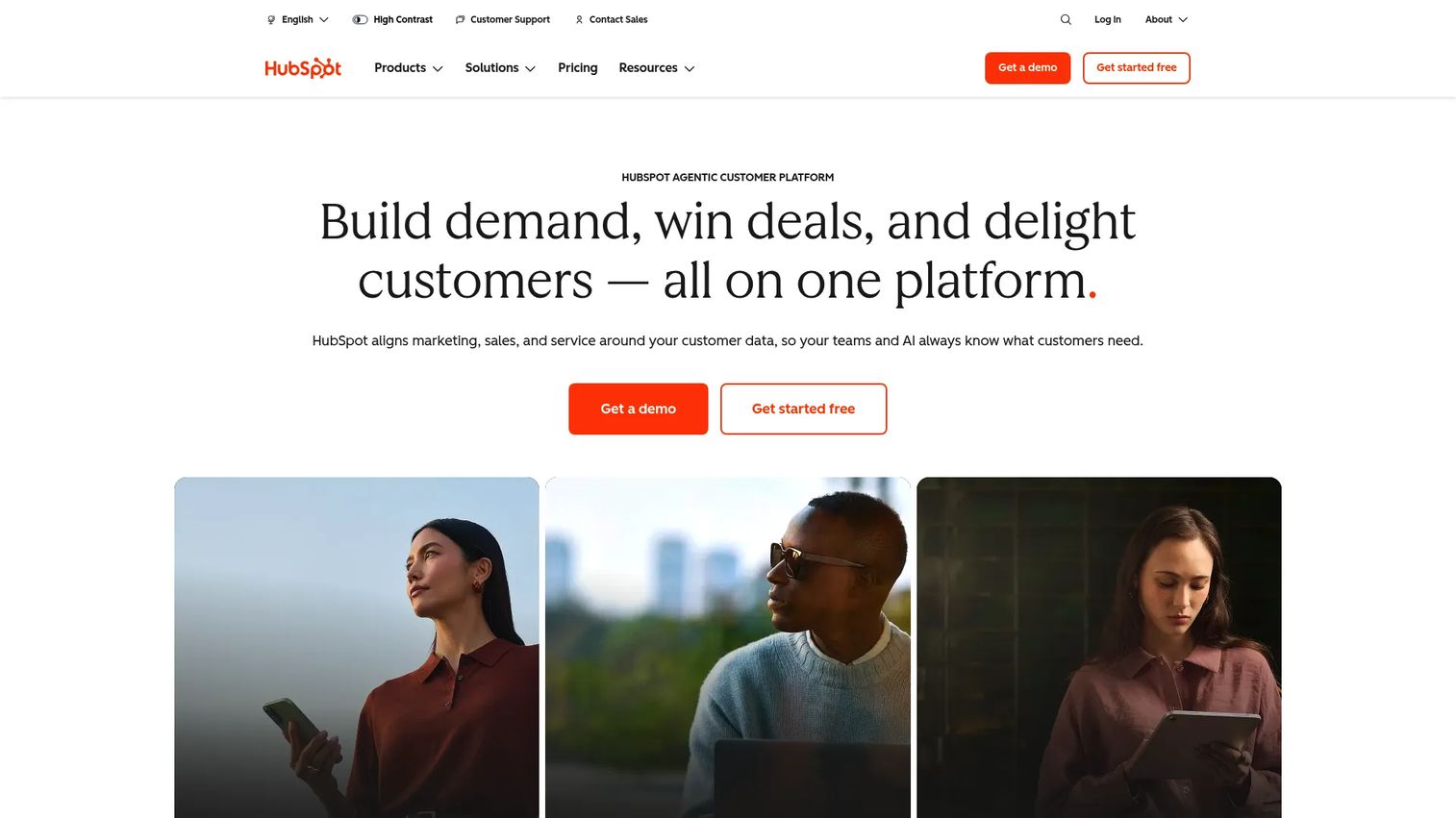
HubSpot combines marketing with a broader customer platform covering sales, service, content, and data. Its strongest consolidation argument is the shared customer record. Marketing activity can sit alongside deal management rather than requiring separate databases.
Best for: Growing teams that want CRM and marketing automation connected to their revenue process.
Evaluate it through the handoff your team struggles with most. For example, follow a new inquiry through assignment and subsequent sales activity. Look for places where a marketer still needs to update another system manually.
The wider platform also creates an important purchasing question. Decide which departments will use it before comparing Marketing Hub’s subscription against your current email bill.
A landing page builder matters less if the resulting inquiry still disappears into an unmanaged queue. Test ownership and lifecycle definitions with sales present.
Key features
- Free CRM and contact management
- Email marketing and automation
- Sales pipelines and deal management
- Website builder and content management
- Service ticketing and live chat
Why choose HubSpot: Choose it when connected customer operations matter more than optimizing a single channel. Budget for the tier your workflows require.
The pricing page lists Professional and Enterprise onboarding fees of $3,000 and $7,000, respectively. Include those in first-year comparisons.
HubSpot pricing: Free tools are available; Marketing Hub Starter starts at $7/seat/month. Professional starts at $800/month, while Enterprise starts at $3,600/month.
G2 rating
4.4/5 for Marketing Hub, rather than a company-wide HubSpot score.
2. ActiveCampaign
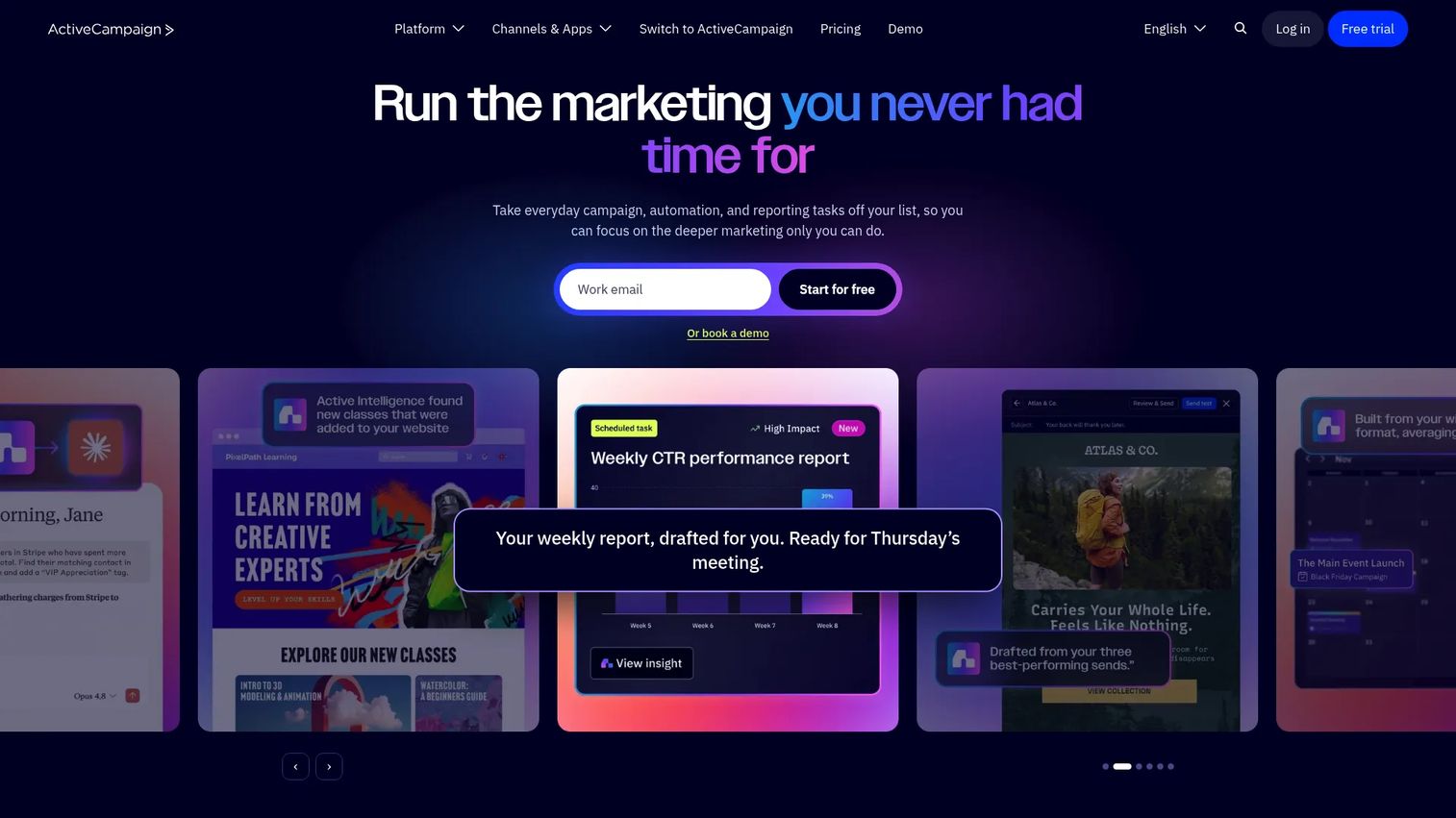
ActiveCampaign is a marketing automation platform centered on personalized customer experiences. It supports multistep campaigns across email, SMS, and WhatsApp. The fit is strongest when your primary work involves deciding what a contact should receive next.
Best for: Lifecycle marketers managing behavior-driven communication across multiple customer segments.
Start evaluation with an existing journey containing meaningful decision points. Include contacts who qualify for competing campaigns and customers who should stop receiving promotional follow-up.
That exercise tests more than whether an automation canvas looks approachable. It reveals how clearly your team can understand campaign eligibility and ongoing ownership.
For CRM and marketing automation consolidation, document the sales requirements separately. The research supports its marketing capabilities, but does not establish that it replaces every pipeline-management requirement.
Ask who will maintain the logic after launch. A large collection of automated campaigns still needs naming standards and a process for retiring obsolete sequences.
Key features
- Multistep marketing automation
- Cross-channel campaign execution
- AI-assisted automation creation
- Personalized customer messaging
Why choose ActiveCampaign: Choose it when lifecycle decision-making is the central requirement. Treat deeper sales operations as a separate evaluation workstream.
ActiveCampaign pricing: Request pricing for Starter, Plus, Pro, or Enterprise through its pricing page. A free trial is available; the researched configuration used annual billing for 1,000 contacts.
G2 rating
3. Zoho Marketing Plus
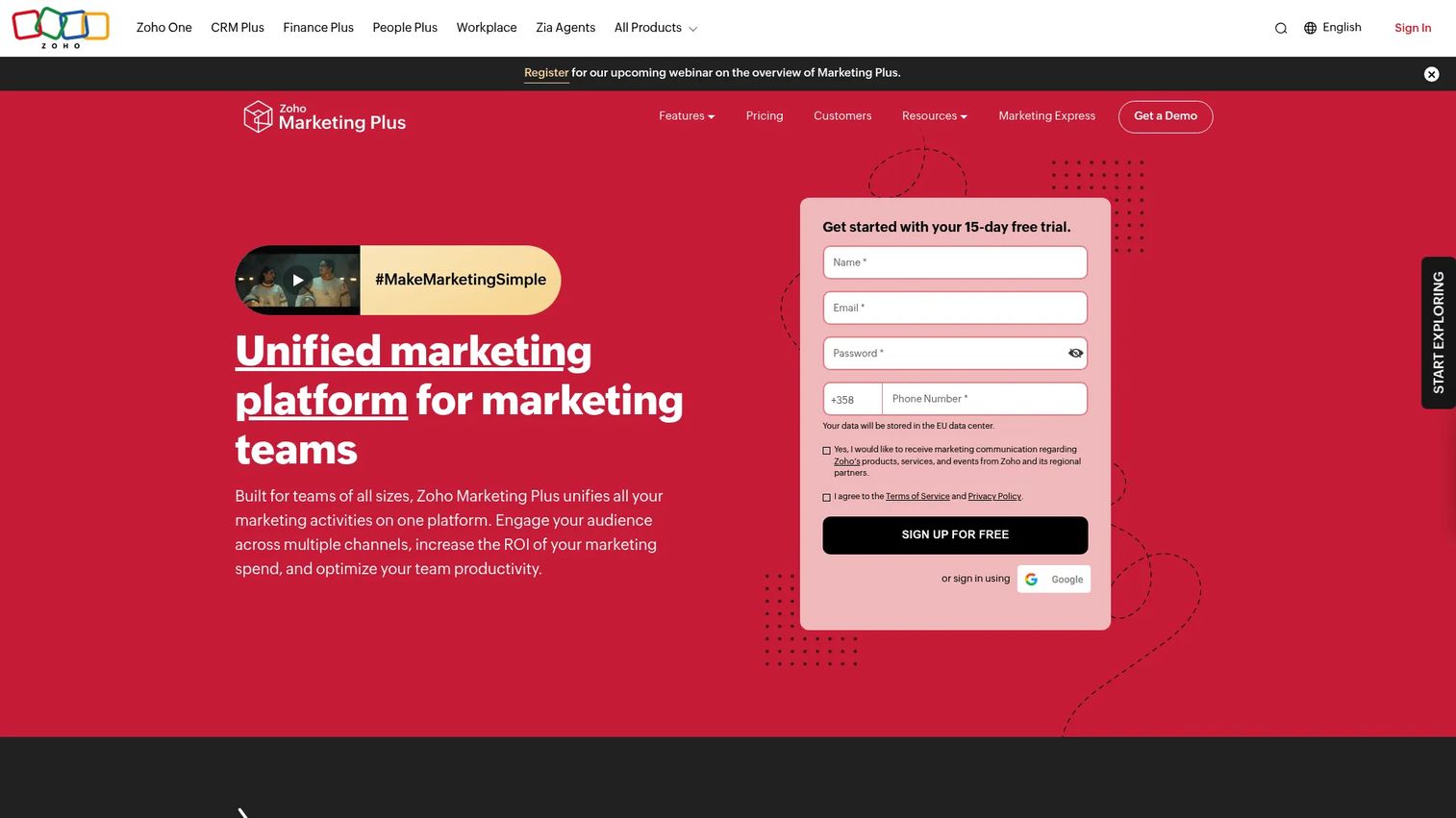
Zoho Marketing Plus brings campaign planning and execution into a coordinated marketing workspace. Its coverage includes communication channels alongside budget management and shared collateral. That makes it worth evaluating when operational coordination consumes as much time as campaign creation.
Best for: Value-conscious teams seeking broad marketing coverage and clearer ownership across campaigns.
Use a launch with several contributors as your evaluation scenario. Check whether the team can maintain a common campaign structure without moving approvals into an unrelated document.
For CRM and marketing automation requirements, map how contact records connect to your sales process. A unified marketing workspace and a complete revenue operating model are different purchasing decisions.
The entry package also contains several capacity boundaries. Zoho lists one marketer, 1,000 contacts, 10,000 visitors, one brand, and 25 webinar attendees.
Those allowances make workload forecasting important. Include the number of people creating campaigns, rather than counting only the database you plan to import.
Key features
- Multichannel campaign execution
- Personalized customer journeys
- Unified marketing analytics
- Campaign and budget management
- Website heatmaps and A/B testing
Why choose Zoho Marketing Plus: Choose it when campaign coordination and suite coverage both matter. Evaluate the full allowance package before judging value.
Zoho Marketing Plus pricing: Plans cost $25/month billed annually or $30/month billed monthly. A 15-day free trial is available.
G2 rating
4. Salesforce Marketing Cloud
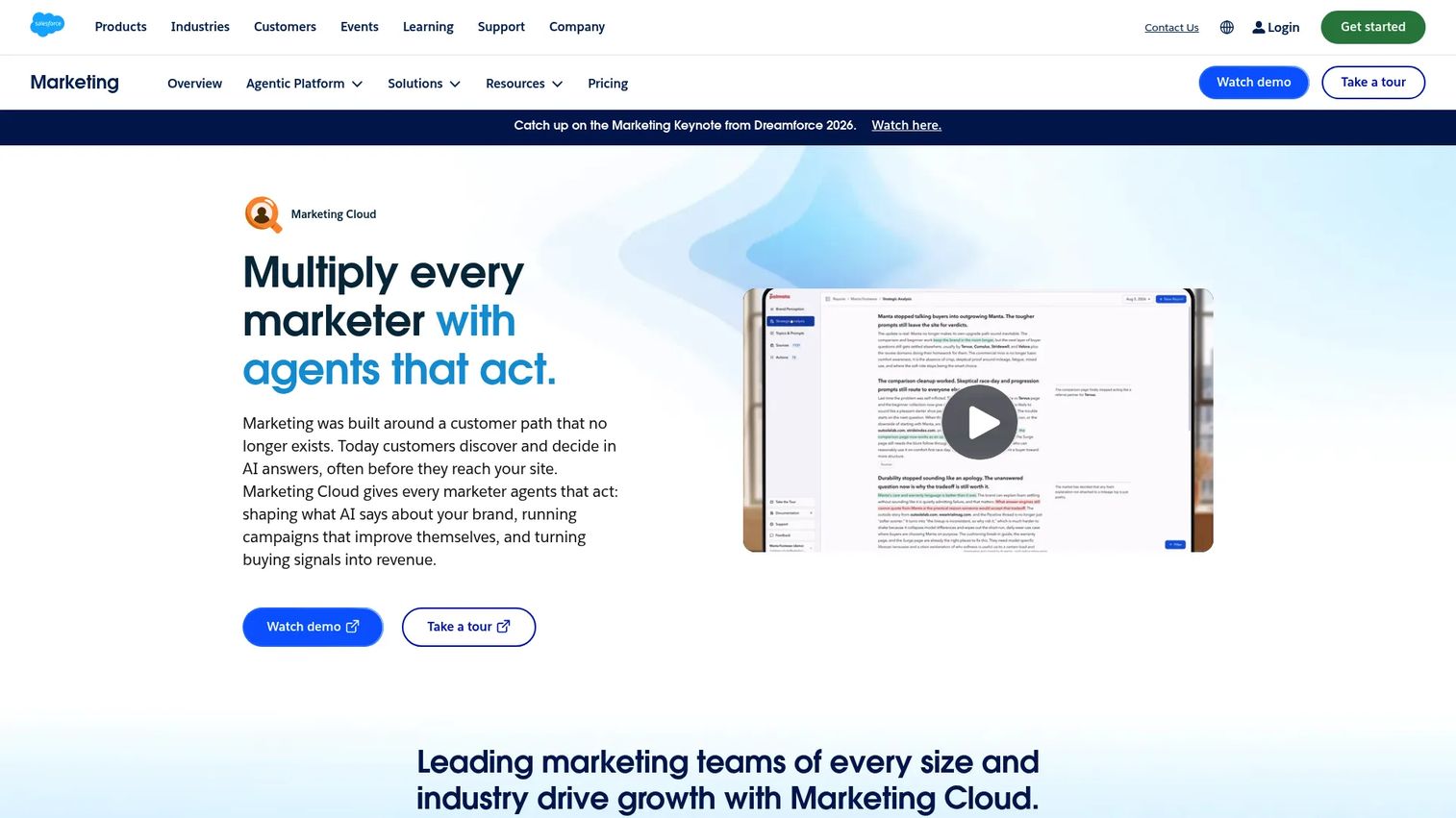
Salesforce Marketing Cloud supports personalized customer engagement across channels. Its marketing automation platform includes journey creation and campaign attribution reporting. Organizations already using Salesforce should examine how these capabilities fit their existing customer-data model.
Best for: Enterprise campaign teams that need coordinated journeys and defined administrative ownership.
The buying process requires product-level precision. Salesforce markets several editions and extensions under its marketing portfolio. A broad platform presentation can obscure which subscription covers the workflow you intend to deploy.
Build an evaluation around one customer journey spanning acquisition and subsequent engagement. Include consent changes and the reporting your revenue team expects.
Bring the person responsible for customer data into that exercise. Their assessment matters when the campaign relies on information maintained outside marketing.
Separate essential functionality from optional expansion. Salesforce lists additional products for personalization, intelligence, loyalty, and other marketing requirements.
Key features
- Multichannel customer journeys
- Forms and landing pages
- Consent management
- Campaign attribution reporting
- AI-assisted engagement scoring
Why choose Salesforce Marketing Cloud: Choose it when enterprise journey orchestration connects to an established Salesforce operating model. Specify the required editions before procurement.
Salesforce Marketing Cloud pricing: Next Growth costs $1,500/org/month and Advanced costs $3,250/org/month, both billed annually. Salesforce Starter separately starts at $25/user/month.
G2 rating
5. Mailchimp
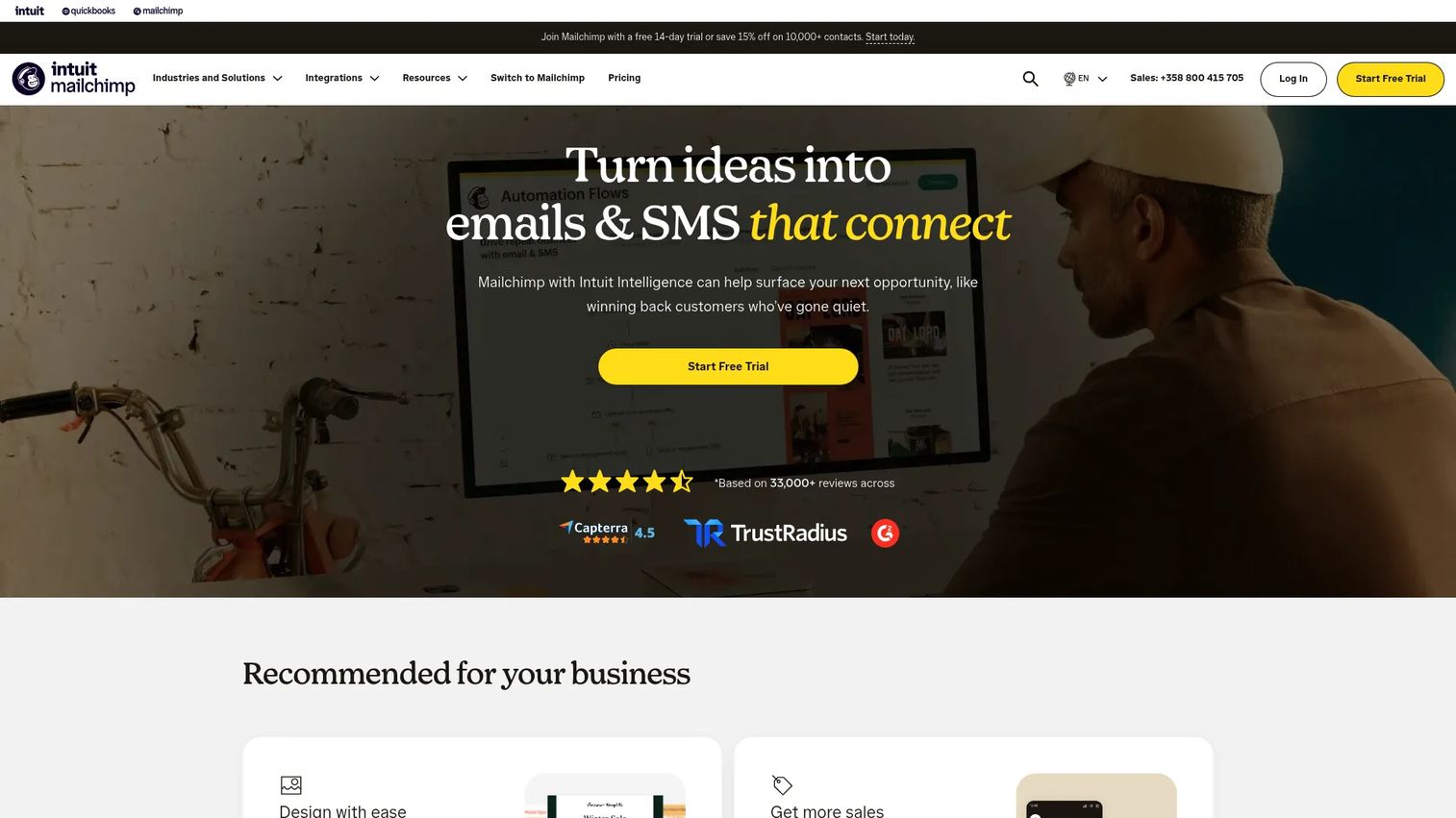
Mailchimp is an email marketing platform with automation and audience management. It combines campaign creation with behavioral targeting and analytics. Its focus makes it a practical candidate when email remains the center of your marketing operation.
Best for: Small teams seeking a marketing platform for small business campaigns and audience development.
Start with the work you repeat weekly. Build a newsletter and a follow-up sequence, then examine how the same contact appears across both.
A useful trial should include segmentation changes. Check whether the person maintaining your audiences can explain why someone receives a message without asking another colleague.
Do not assume broader campaign coverage means your sales CRM can disappear. Compare the operational needs of account owners separately from the requirements of email subscribers.
Contact-based pricing also deserves attention before migration. Decide which records you intend to keep and how you will maintain that database after launch.
Key features
- Email campaign templates
- Marketing automation flows
- Audience segmentation
- Behavioral targeting
Why choose Mailchimp: Choose it when an email-centered operating model matches your team’s work. Evaluate sales-process requirements independently.
Mailchimp pricing: A Free plan is available; Essentials starts at $13/month. Standard starts at $20/month and Premium at $350/month, with pricing varying by contact count.
6. Brevo
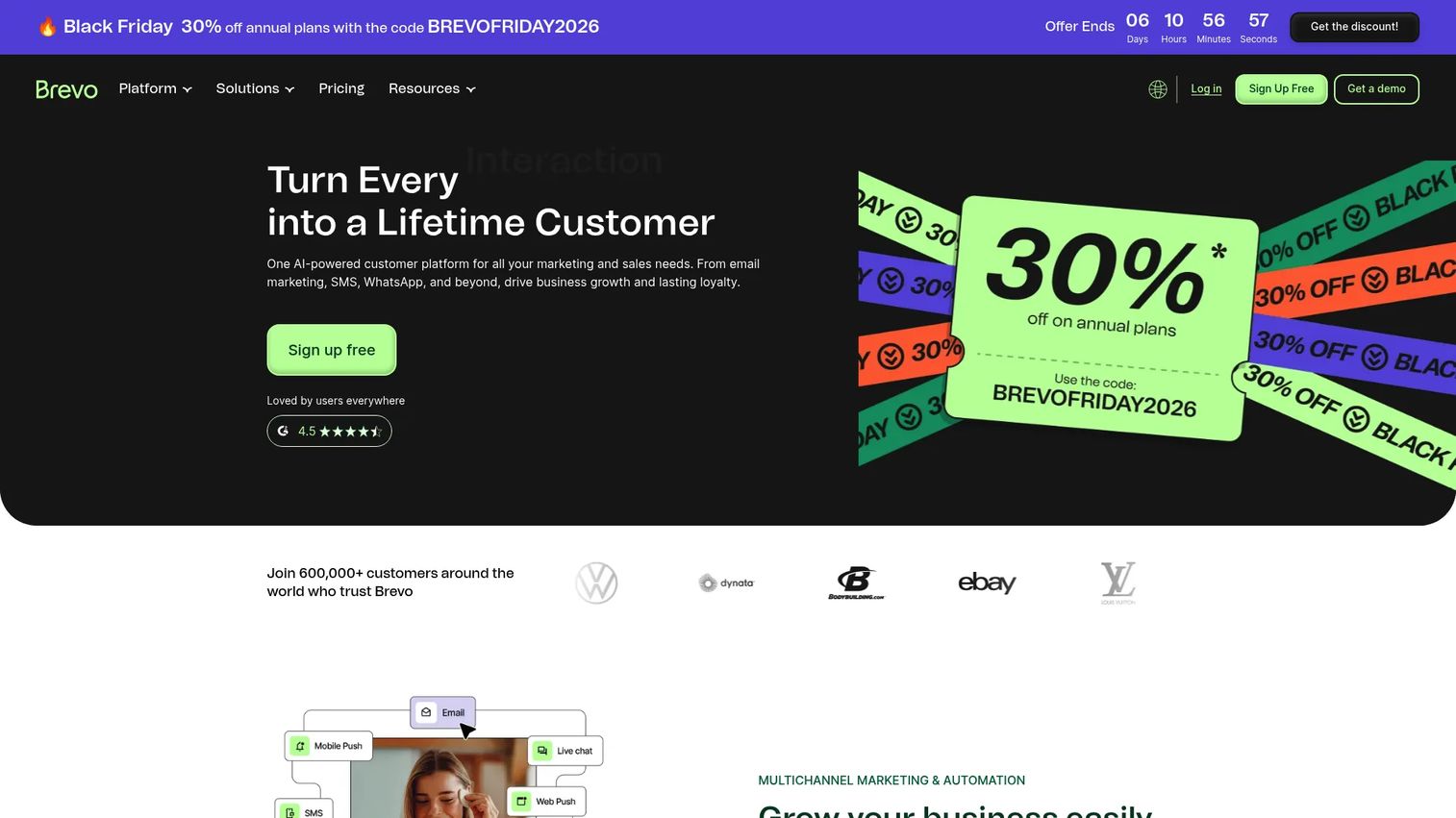
Brevo combines messaging with CRM and automation. Alongside its email marketing platform, it supports SMS, WhatsApp, push notifications, and customer communication tools. This breadth makes it relevant to lean teams consolidating both campaigns and follow-up.
Best for: Budget-conscious teams seeking a marketing platform for small business communication across channels.
Evaluate Brevo with a practical conversion path. Capture an inquiry, assign the resulting contact, and inspect the next communication.
The useful question is whether that sequence replaces work your team currently performs manually. Avoid valuing channels that your audience does not use.
Model sending behavior alongside database size. Brevo’s paid pricing varies with email volume, contacts, and add-ons, so a contact-only estimate misses part of the cost.
Its free allowance supports up to 300 emails per day. Consider the timing of your campaigns when assessing that limit.
Key features
- Email and mobile messaging
- Marketing automation and segmentation
- Landing pages and signup forms
- CRM and sales pipelines
- Analytics and A/B testing
Why choose Brevo: Choose it when messaging and manageable sales follow-up belong together. Test your reporting requirements before consolidating established analytics workflows.
Brevo pricing: Free is available; Starter begins at $9/month and Standard at $18/month. Professional starts at $499/month; annual subscriptions receive a 10% discount.
G2 rating
7. Keap
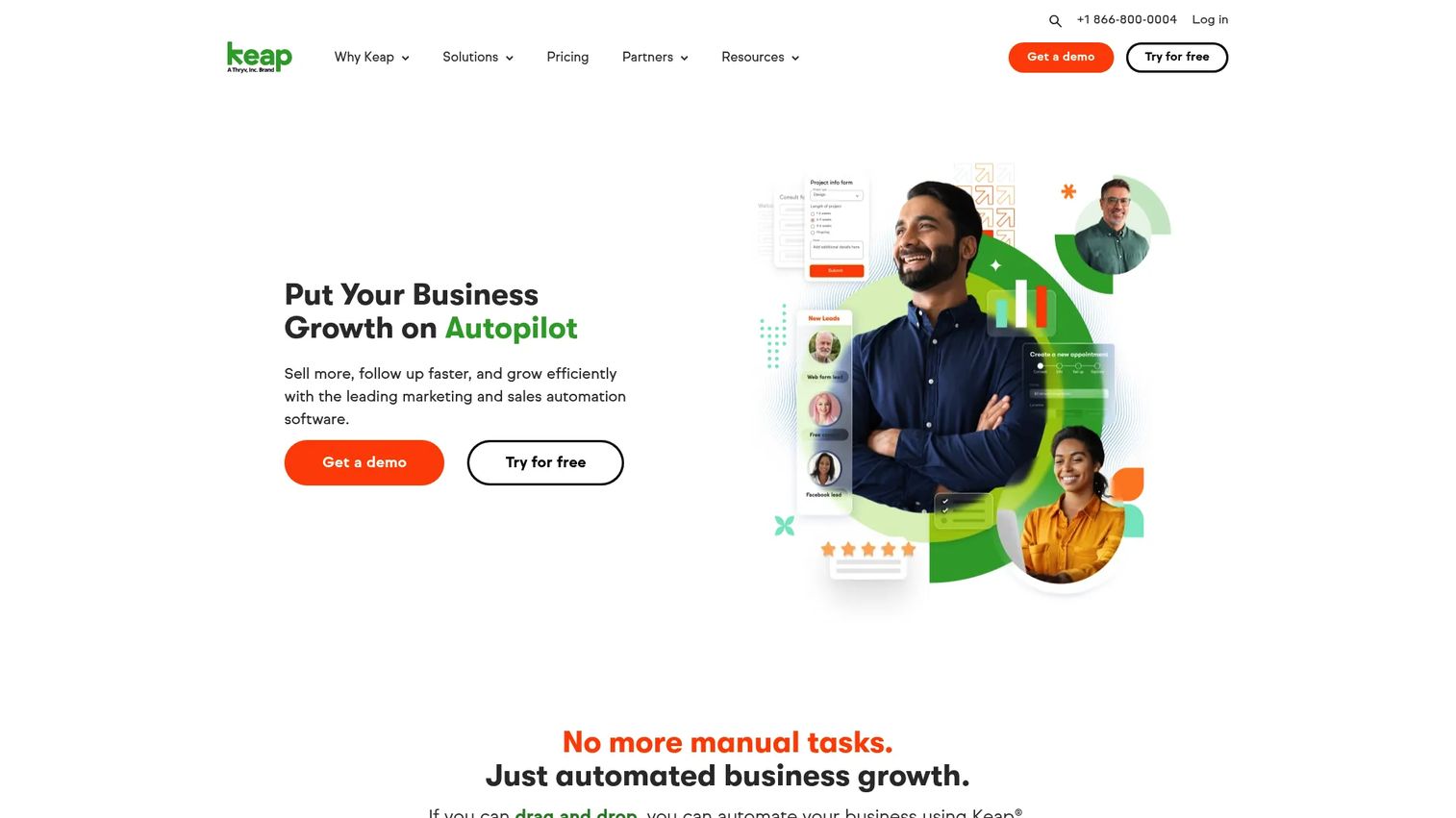
Keap connects CRM and marketing automation with small-business operations. Its capabilities extend from contact follow-up into scheduling and payments. The consolidation case centers on the customer relationship after an inquiry arrives.
Best for: Consultants and service businesses seeking a marketing platform for small business client management.
Assess Keap as more than an email marketing platform. Build a service inquiry workflow that proceeds to an appointment and then an invoice.
That sequence exposes the value of connected operations. It also identifies whether your existing accounting or booking process needs to remain alongside the platform.
If you are comparing a sales funnel builder, examine the entire customer process rather than the page alone. Keap’s landing pages and forms are part of a broader business-automation approach.
The researched plan includes two users. Additional users cost $39/month each, while separate text-marketing tiers affect communication costs.
Key features
- CRM and contact management
- Email and text automation
- Sales pipelines and appointments
- Quotes, invoices, checkout, and payments
- Landing pages and forms
Why choose Keap: Choose it when client follow-up extends into operational tasks. Compare its value against the business applications it can replace.
Keap pricing: Subscriptions start at $299/month or $2,988 billed annually. A free trial is available.
8. Systeme.io
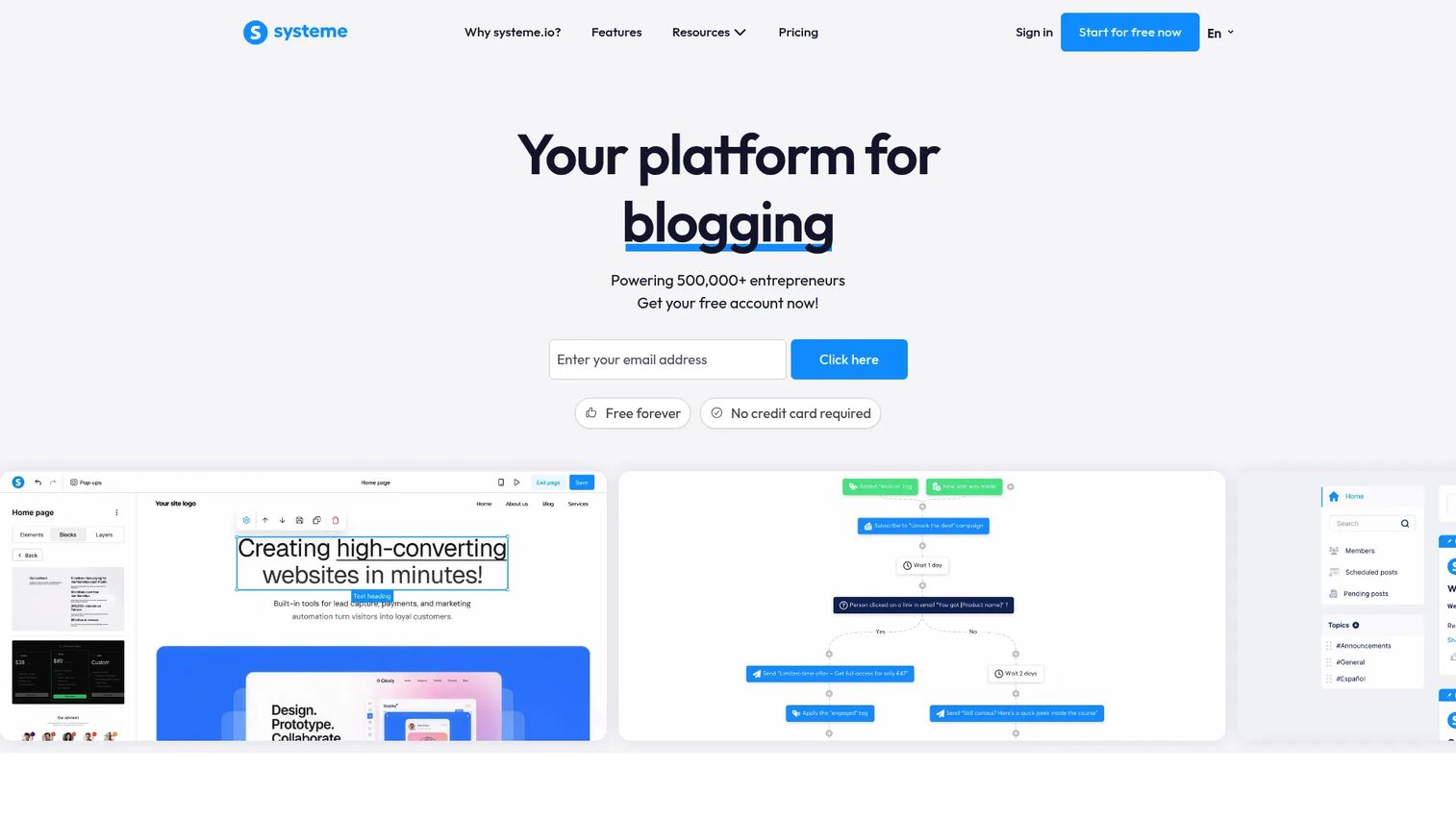
Systeme.io combines funnels and email with courses and online selling. Its sales funnel builder includes drag-and-drop editing and purchase-related elements. Creators can evaluate acquisition and digital-product delivery within the same platform.
Best for: Entrepreneurs choosing a marketing platform for small business courses or digital offers.
Use a complete offer as your trial scenario. Begin with the landing page builder, continue through follow-up, and inspect what happens after purchase.
Course delivery deserves the same attention as lead generation. Evaluate whether the learning structure fits the product you intend to sell.
Systeme.io supports drip scheduling and student-progress tracking. Those details matter when your commercial offer depends on customers moving through content over time.
The buying comparison changes if your business primarily manages negotiated B2B opportunities. Document those requirements separately rather than treating every marketing platform as interchangeable.
Key features
- Drag-and-drop sales funnels
- A/B testing and order bumps
- Email campaigns and segmentation
- Course lessons and drip scheduling
- Student-progress tracking
Why choose Systeme.io: Choose it when marketing and digital-product fulfillment share a straightforward operating model. Evaluate sales-account management separately.
Systeme.io pricing: Free is available; Startup costs $17/month for up to 5,000 contacts. Webinar costs $47/month, and Unlimited costs $97/month.
9. GetResponse
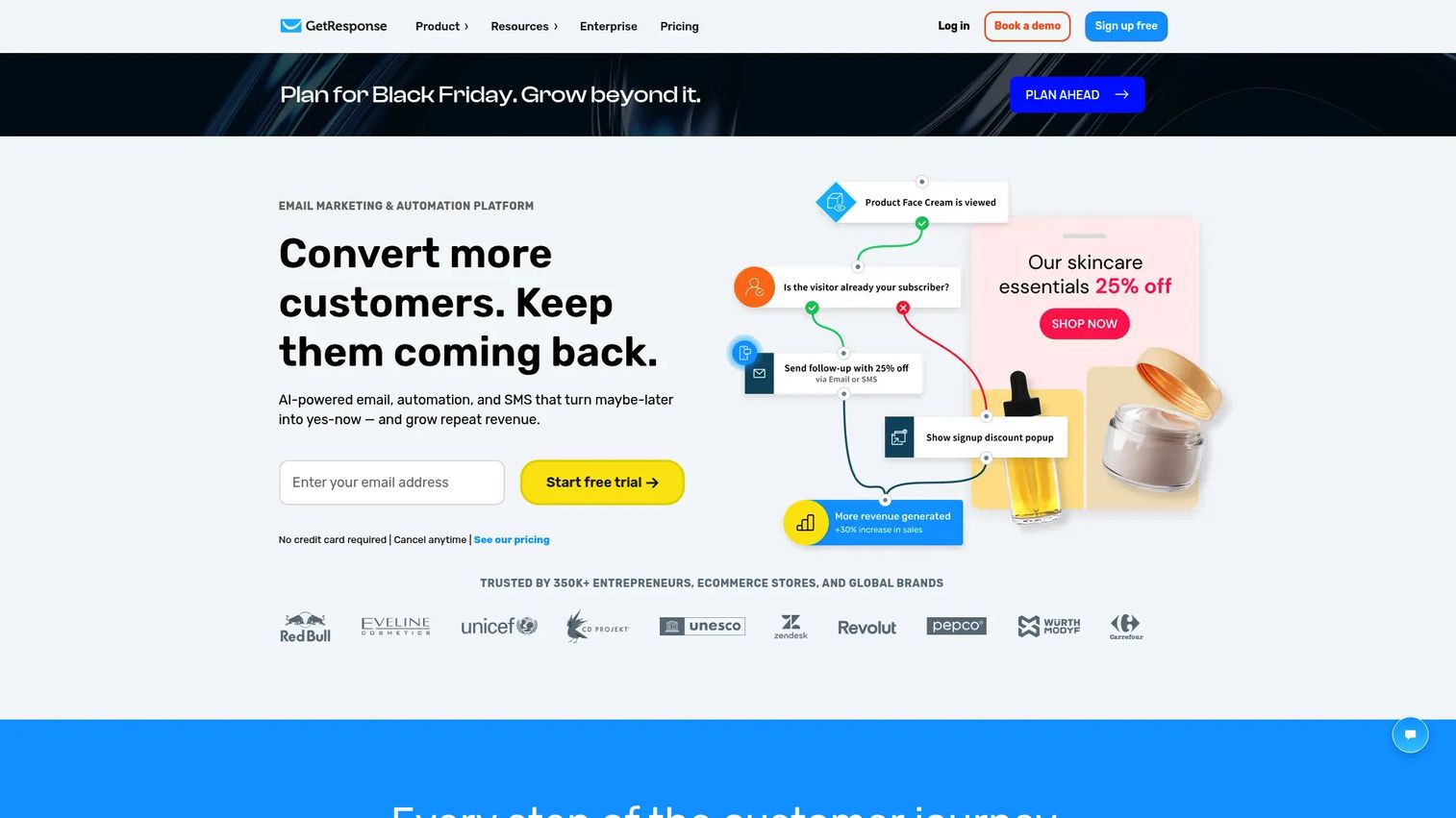
GetResponse connects email marketing with lead generation and content monetization. The email marketing platform supports visual automation alongside webinars and course creation. It suits teams whose educational content is part of acquisition or revenue generation.
Best for: Marketers running webinar-led campaigns and ongoing audience nurture.
Test the complete attendee journey. Include registration, subsequent communication, and the next offer you want someone to consider.
A landing page builder supports the initial conversion, but the follow-up process determines whether the platform fits your operation. Check how the team maintains audience eligibility between events.
If you are comparing it with a dedicated sales funnel builder, focus on the outcome you need. Webinar enrollment and course selling have different requirements from opportunity management.
GetResponse also supports ecommerce connections and abandoned-cart recovery. Include those workflows in your evaluation only when they belong to your business model.
Key features
- Visual email automation
- Landing pages, forms, and popups
- Webinars and course creation
- Ecommerce integrations
- Abandoned-cart recovery
Why choose GetResponse: Choose it when educational campaigns connect directly to nurture or monetization. Keep complex sales-pipeline requirements on a separate checklist.
GetResponse pricing: Starter costs $19/month or $15.58/month billed annually. A free account with a 14-day premium trial is available.
G2 rating
10. Kartra
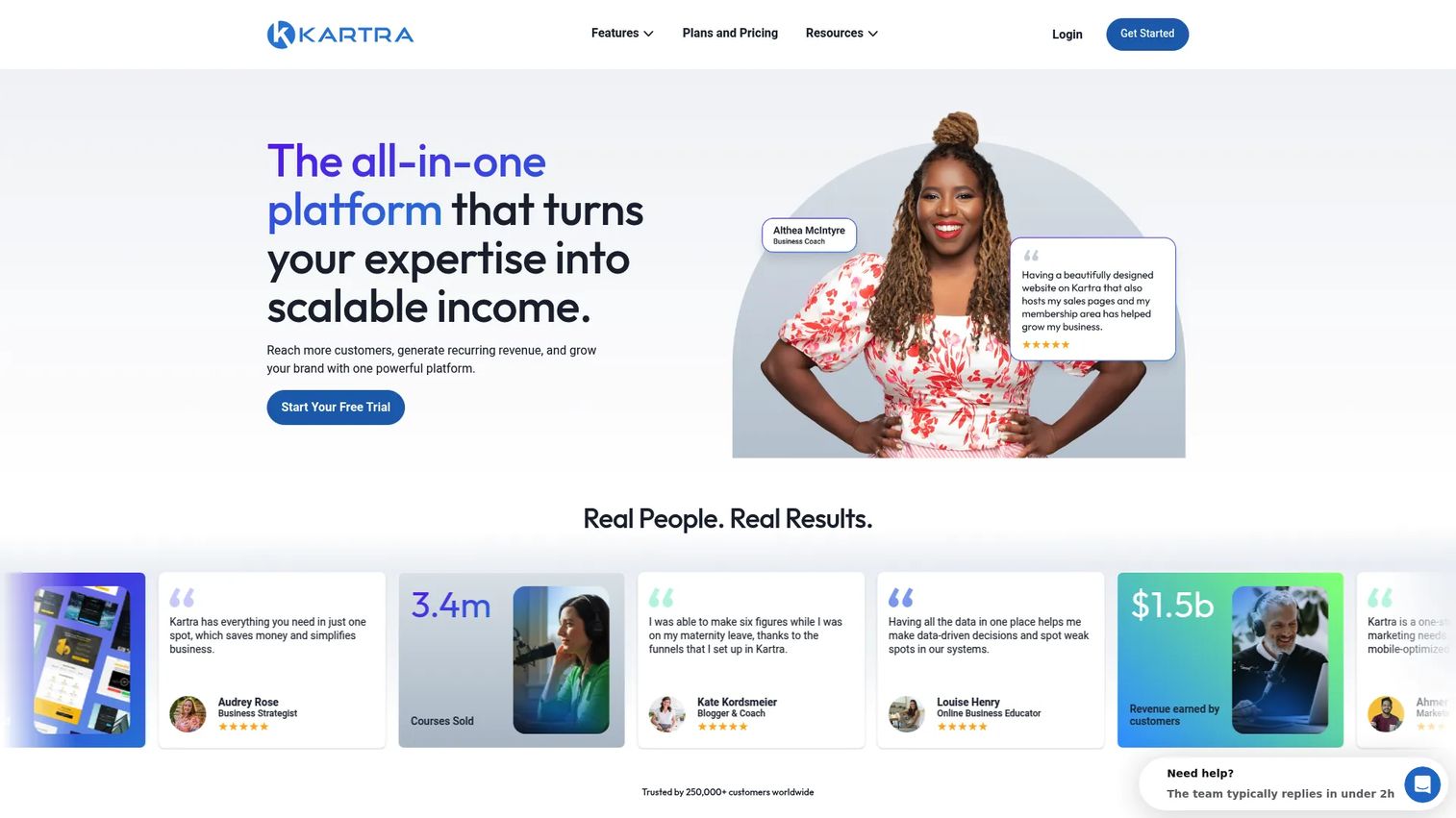
Kartra connects marketing funnels with checkout and product delivery. Its landing page builder sits alongside memberships, email automation, and native video hosting. The platform fits businesses selling expertise or digital products directly.
Best for: Coaches and creators consolidating acquisition with paid-content delivery.
Evaluate Kartra using an offer you already sell. Recreate the purchase path and inspect the customer’s access after payment.
A sales funnel builder should support the commercial structure of your business. Test whether the proposed configuration accommodates your product catalog without unnecessary manual administration.
Plan boundaries matter here. Essentials includes 500 contacts, five pages, one product, and 10,000 emails per month.
Starter adds memberships and courses, while Growth includes affiliate management and advanced automations. Match the intended operating model to the correct package before comparing entry prices.
Key features
- Landing pages and websites
- Behavioral email automation
- Memberships and online courses
- Checkout upsells and order bumps
- Native video hosting
Why choose Kartra: Choose it when checkout and customer access are central to consolidation. Its packaging makes offer complexity an important buying factor.
Kartra pricing: Essentials costs $59/month or $52/month billed annually. A 30-day free trial is available.
G2 rating
11. HighLevel
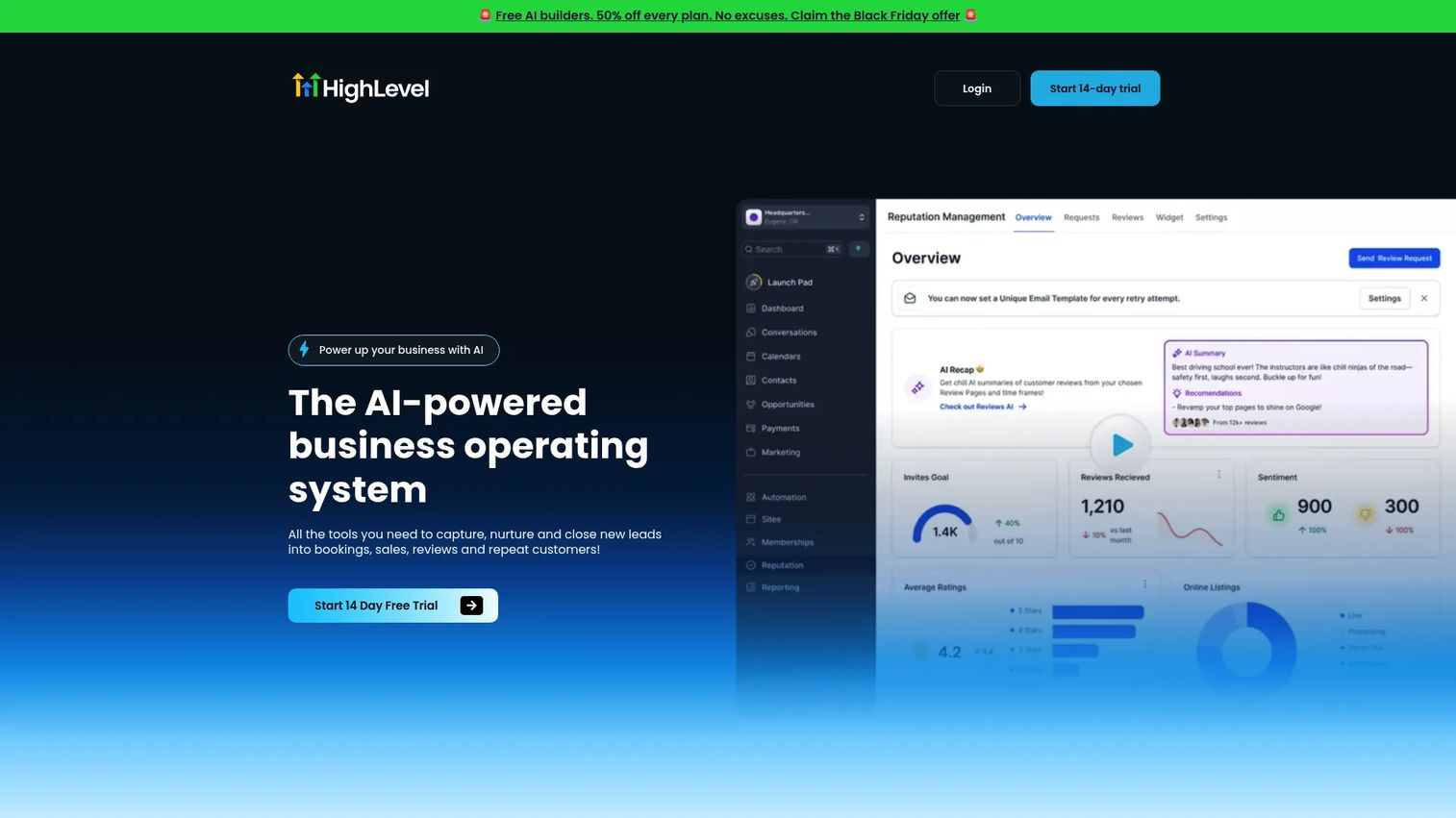
HighLevel is a sales and marketing platform for agencies and businesses. It combines CRM workflows with messaging and client-facing marketing operations. Its coverage also includes bookings, payments, reputation management, and courses.
Best for: Agencies that need repeatable client marketing operations across accounts.
Start your evaluation with a client onboarding process. Then test how your team maintains the resulting campaigns after the initial setup.
For an agency, campaign functionality is only part of the decision. Account organization and service ownership determine whether consolidation improves delivery.
Assess the landing page builder and sales funnel builder against your standard client package. Include the communication channels you routinely manage, rather than every available feature.
In-house marketers should run a different test. Focus on whether the platform matches internal revenue ownership rather than adopting an agency-oriented operating model unnecessarily.
Key features
- CRM and pipelines
- Website and funnel builder
- Email and SMS workflows
- Booking calendars and payments
- Online reputation management
Why choose HighLevel: Choose it when client operations are part of the marketing workload. Compare the platform against your delivery model, not an isolated campaign.
HighLevel pricing: Starter costs $97/month, Unlimited $297/month, and Agency Pro $497/month. A 14-day free trial is available.
G2 rating
12. Adobe Experience Cloud
Adobe Experience Cloud is an enterprise customer-experience portfolio. It spans customer data and content alongside analytics, personalization, commerce, and journey orchestration. Evaluate it as a collection of connected applications rather than one fixed marketing subscription.
Best for: Enterprise teams coordinating customer experiences across established data and content operations.
Start by defining the architecture you intend to improve. Identify which systems will own customer profiles and which teams will maintain experience delivery.
That preparation makes vendor discussions more useful. Without it, portfolio breadth can obscure the specific applications required for your first deployment.
Include content operations in the assessment. Adobe Experience Manager provides content management and digital asset management within the wider portfolio.
Also separate portfolio evaluation from individual product selection. Marketo Engage, reviewed below, addresses a more specific B2B marketing-automation requirement.
Key features
- Unified customer profiles
- Cross-channel analytics
- Content and digital asset management
- Personalization and experimentation
- Customer-journey orchestration
Why choose Adobe Experience Cloud: Choose it when the purchase concerns enterprise experience architecture. Define a bounded initial deployment before expanding the application footprint.
Ask procurement to distinguish software commitments from delivery work. Your evaluation should identify the internal owners responsible for each application and its supporting data.
Adobe Experience Cloud pricing: Custom pricing.
13. Oracle Advertising and CX
Oracle Advertising and CX requires an availability warning. Oracle states that all Oracle Advertising products and support ended on September 30, 2024. The former Advertising offering should not enter a new purchasing shortlist.
Best for: Teams reviewing legacy references or existing architecture, rather than selecting a new Advertising deployment.
Older category lists can make broad vendor labels appear current. This entry matters because purchasing decisions need product-level availability, not historical portfolio descriptions.
Do not interpret the Advertising shutdown as a statement about every Oracle CX application. The distinction concerns the discontinued Advertising products.
If your organization is assessing an Oracle marketing automation platform, identify the exact current application first. Ask for its present documentation and commercial terms.
Migration planning should also begin with an inventory. Establish which legacy capabilities your organization used and which business processes still depend on their outputs.
Key features
Historical portfolio coverage included:
- Connected advertising and customer-experience applications
- Customer data integration
- Audience-targeting capabilities
- Contextual advertising capabilities
Why choose Oracle Advertising and CX: Do not choose the discontinued Advertising products for a new deployment. Evaluate current Oracle applications individually.
For legacy environments, involve the people responsible for data retention and downstream reporting. A familiar vendor name is insufficient evidence of continuing product support.
Oracle Advertising and CX pricing: New-deployment pricing is not applicable to the discontinued Advertising products.
14. Klaviyo
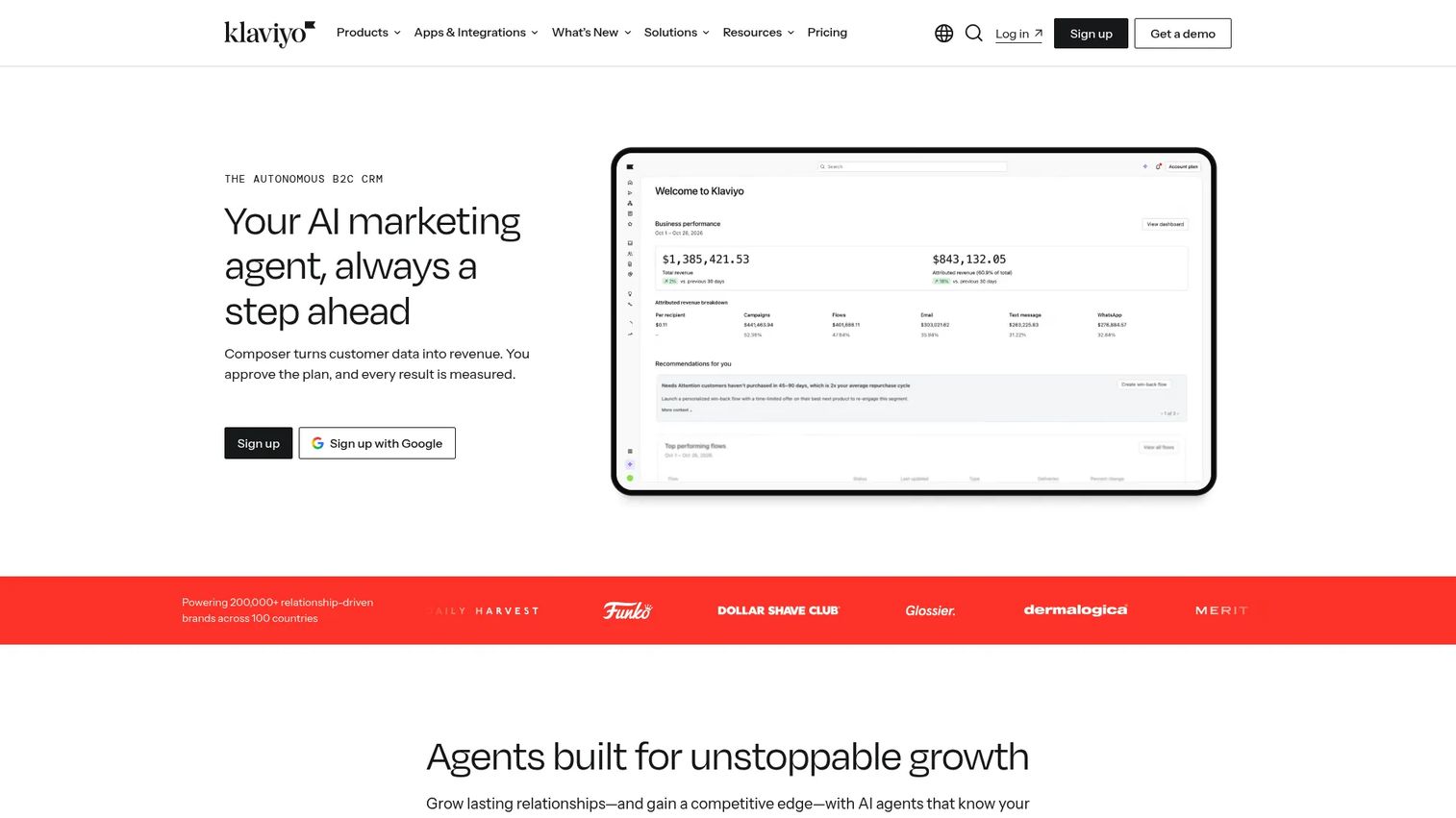
Klaviyo combines customer profiles with messaging and analytics for B2C businesses. Its email marketing platform includes campaign flows and segmentation. The consolidation case centers on customer lifecycle communication rather than general business administration.
Best for: Ecommerce teams prioritizing retention and behavior-based messaging.
Evaluate it with a customer journey tied to your store. Inspect the information available for segmentation and how the team uses that information in campaigns.
Revenue reporting deserves a separate test. Agree internally on the attribution rules you need before comparing platform dashboards with finance reports.
Budget around active profiles and messaging volume. These are central pricing drivers, so list growth and channel expansion should both appear in your forecast.
The free plan supports up to 250 active profiles and 500 emails per month. Use those limits to judge a small pilot, not a full-scale operating budget.
Key features
- Email campaigns and flows
- Customer segmentation
- SMS and mobile messaging
- Customer profiles and analytics
- AI-assisted campaign composition
Why choose Klaviyo: Choose it when customer behavior drives your marketing priorities. Evaluate broader sales administration separately from retention workflows.
Klaviyo pricing: A Free plan is available. The Email plan starts at $20/month for 500 active profiles.
G2 rating
15. Marketo Engage
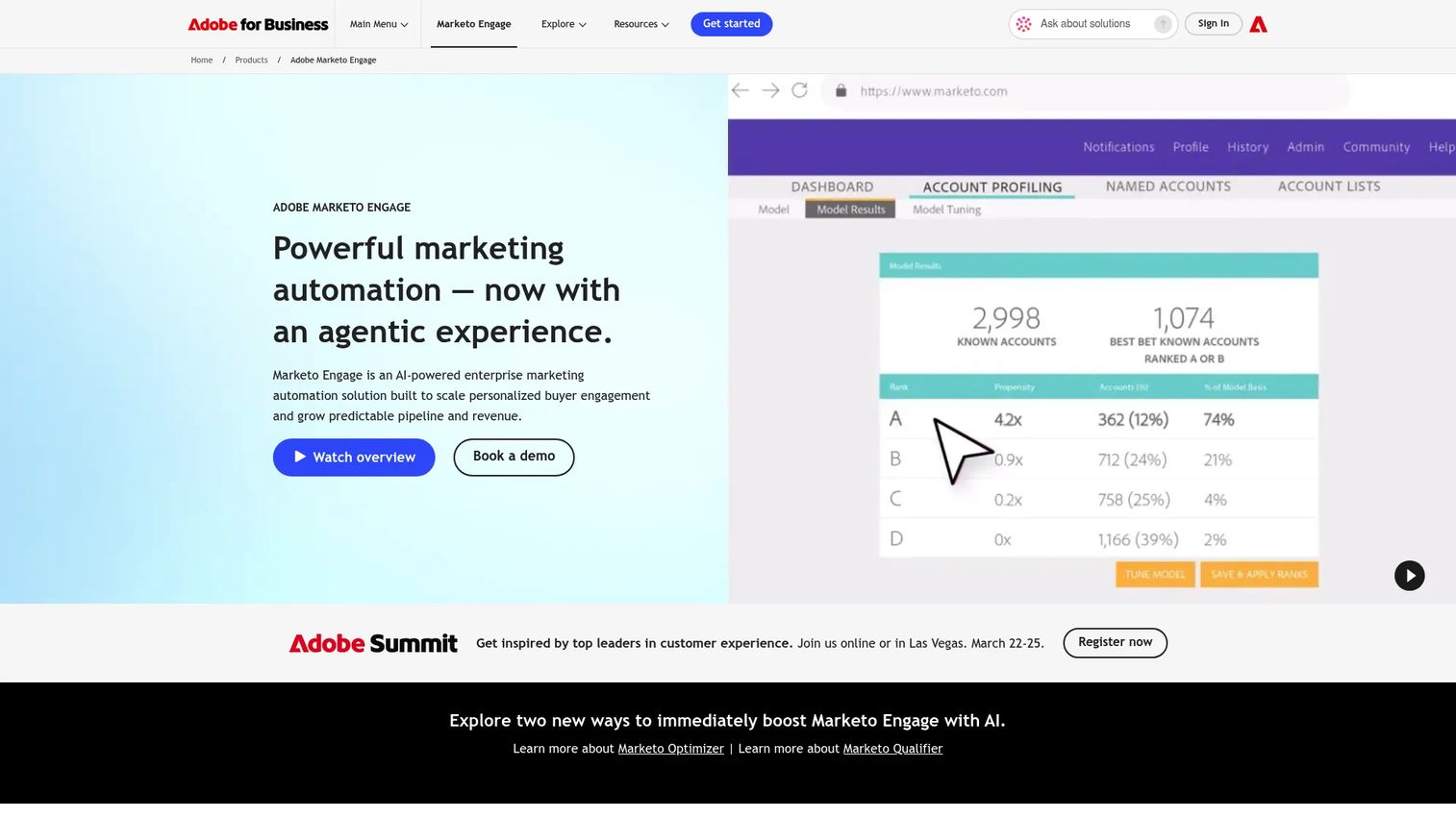
Marketo Engage is an enterprise marketing automation platform focused on buyer engagement and revenue measurement. It connects lead and account activity with sales engagement. Its fit is strongest when B2B qualification and ongoing nurture require deliberate operational management.
Best for: Demand-generation teams managing complex buying journeys and sales handoffs.
Build the evaluation around qualification decisions. Define what makes someone ready for sales and what happens when they need further nurture.
Include account-level questions alongside individual lead behavior. A business purchase can involve several contacts whose activity needs interpretation together.
The platform also covers campaign orchestration across multiple channels. Choose a bounded use case for the initial assessment rather than trying to model every campaign simultaneously.
Assign an operational owner before procurement. Your team needs someone accountable for campaign structure and the quality of data passed into sales workflows.
Key features
- Lead scoring and CRM integration
- Lead and account profiles
- Audience segmentation
- Omnichannel campaign orchestration
- Marketing attribution and reporting
Why choose Marketo Engage: Choose it when B2B lifecycle management is a dedicated discipline. Test scoring and sales acceptance using your own qualification rules.
Its position within Adobe’s portfolio should inform integration planning. Avoid assuming that separate Adobe product names represent a single bundled subscription.
Marketo Engage pricing: Custom pricing for Growth, Select, Prime, and Ultimate.
G2 rating
16. Microsoft Dynamics 365 Customer Insights
Microsoft Dynamics 365 Customer Insights combines customer-data unification with journey orchestration. It creates unified profiles and supports real-time segmentation. The platform fits organizations connecting marketing activity with an existing Dynamics operating model.
Best for: Microsoft-centered revenue teams evaluating CRM and marketing automation around shared customer information.
Begin with identity and data ownership. Determine which records should become a unified customer profile and who resolves conflicting information.
Then test a journey using that profile. This sequence helps distinguish a data-readiness problem from a campaign-building requirement.
Capacity definitions deserve careful attention. The base plan includes unlimited users, 100,000 Unified People, and 10,000 Interacted People.
Those measures describe different workloads. Model both the population you need to understand and the people who will receive journey interactions.
Key features
- Unified customer profiles
- Real-time customer segments
- Cross-channel customer journeys
- Email, text, and push channels
- Copilot-assisted content and journey creation
Why choose Microsoft Dynamics 365 Customer Insights: Choose it when customer-data consolidation and journey execution belong together. Evaluate identity rules before importing your full database.
Attach pricing requires a qualifying Dynamics 365 application. Treat eligibility as part of procurement rather than assuming the lower rate applies.
Microsoft Dynamics 365 Customer Insights pricing: Base pricing is $1,700/tenant/month paid annually; qualifying Attach pricing is $1,000/tenant/month. A free trial is available.
G2 rating
17. Odoo Marketing Automation
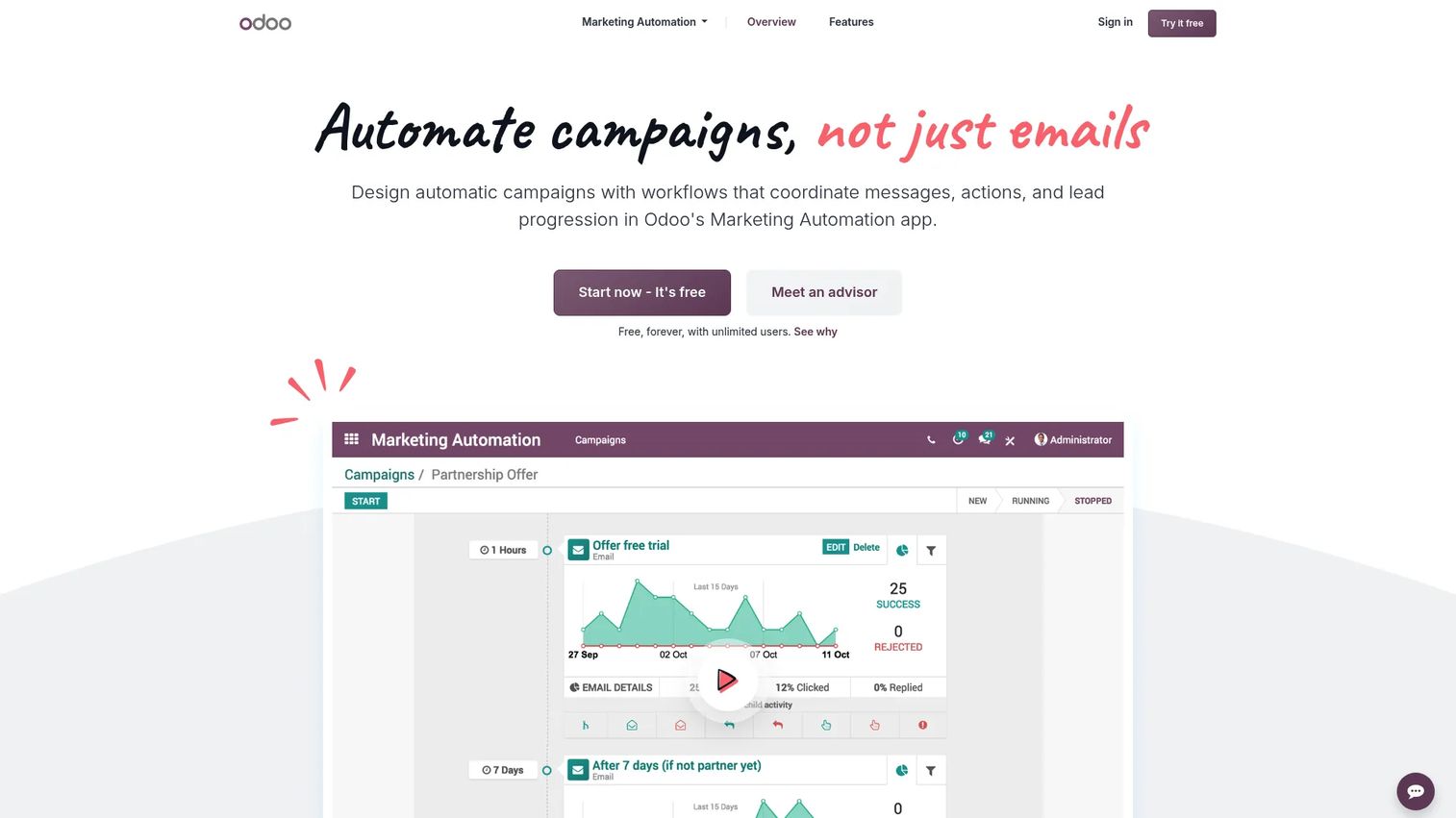
Odoo Marketing Automation creates targeted, multistep campaigns within Odoo’s business application suite. It connects marketing activity to CRM and other operational applications. The main attraction is continuity with business processes already managed in Odoo.
Best for: Companies that want campaign automation connected to wider business operations.
Evaluate a workflow that crosses departmental boundaries. For example, examine how a campaign action changes a record used by sales.
That test matters more than counting applications included in a subscription. The practical benefit depends on whether the connected process matches how your organization works.
Odoo supports both campaign communication and record-level actions. Technical teams can also work with server actions and Python-code automation.
Keep ownership explicit. Decide which changes marketers may make independently and which require review from the administrator responsible for operational data.
Key features
- Demographic and behavioral segmentation
- Time-based workflows and branching
- Email, SMS, and record updates
- Campaign testing and performance metrics
- CRM and ecommerce connections
Why choose Odoo Marketing Automation: Choose it when marketing belongs within an existing Odoo operating model. Test application dependencies before assuming one subscription covers the workflow.
Some functionality depends on related Odoo applications. Include those requirements when evaluating the free option versus the broader paid suite.
Odoo Marketing Automation pricing: One App Free is available. Standard costs $24.90/user/month and Custom $49/user/month, both billed annually.
G2 rating
Considerations when choosing an all-in-one marketing platform
Start with the workflows you can replace
List the manual handoffs you want to remove during the first deployment. Marketing tool consolidation should have named retirement targets, including spreadsheets and duplicate record maintenance.
Evaluate the complete process with its current owner present. A successful campaign build means little if sales still reconstructs the customer’s history.
Check the pricing trigger points
Model database growth and messaging volume alongside user access. Include onboarding and the subscriptions that will remain.
Compare first-year costs with an expected growth scenario. Use the tier required by your workflows rather than the cheapest advertised package.
Match CRM depth to your sales motion
CRM and marketing automation requirements differ between ecommerce and sales-led B2B. Define account ownership and qualification rules before reviewing vendors.
Ask sales to test the handoff. Marketing should not evaluate a shared revenue process alone.
Audit reporting before migration
Trace a known customer journey through the proposed platform. Inspect source attribution and the treatment of repeat conversions.
Agree on the reporting model before moving data. Consolidated dashboards still need consistent definitions.
Preserve useful specialization
Keep specialized software when it supports a critical workflow better than the broader suite. Product analytics and advanced creative production are examples worth assessing independently.
Require every retained application to have a clear owner and purpose. The objective is less operational drag, not the smallest possible software count.
Choose the platform that replaces your recurring work
HubSpot is the strongest starting point here for growing teams connecting marketing with a shared CRM. ActiveCampaign suits lifecycle automation, while Zoho Marketing Plus addresses coordinated campaign operations.
For enterprise evaluation, distinguish Salesforce’s editions from Adobe’s wider portfolio. Marketo Engage focuses on B2B engagement, while Microsoft emphasizes unified customer data and journeys.
Creator businesses should compare Systeme.io with Kartra. GetResponse deserves attention for webinar-led campaigns, and HighLevel fits agency operations.
Klaviyo serves ecommerce lifecycle priorities. Mailchimp and Brevo offer email-centered starting points, while Keap connects client follow-up with business administration. Odoo belongs on the shortlist when operations already run there.
The right all in one marketing platform should match your operating model. A marketing platform for growing businesses must accommodate the next stage without forcing premature enterprise complexity.
Shortlist a few candidates and rebuild a campaign your team runs regularly. Map the tools each replaces, calculate first-year cost, and assign migration ownership.
Judge marketing tool consolidation by the work that disappears and the decisions that become clearer.
FAQs
An all-in-one marketing platform connects several marketing functions within a shared system or product suite. All-in-one marketing software commonly covers email, contact management, landing pages, forms, automation, analytics, and campaign management. Coverage varies, so evaluate complete workflows instead of assuming every platform includes equivalent functionality. Confirm which capabilities belong to the base subscription and which require additional products.
The best all-in-one marketing platform depends on the business process you need to manage. Mailchimp and Brevo suit email-centered operations, while Keap connects client follow-up with scheduling and payments. Systeme.io serves funnel-led creators, and HubSpot deserves consideration when shared CRM records are the priority. Choose a marketing platform for small business workflows by testing the tasks you repeat weekly.
It can cost less when it replaces several subscriptions and reduces ongoing administrative work. Calculate the complete cost using the required plan, expected usage, implementation work, and retained applications. A lower subscription bill is less useful if reporting still requires manual reconciliation. Compare the proposed setup against your current operating cost, including the time spent maintaining connections.
Choose specialized tools when a particular workflow contributes enough revenue to justify deeper functionality and separate administration. Advanced product analytics or creative production may need capabilities outside a general marketing suite. Keep those applications when their value is clear and their connections are manageable. Consolidate surrounding campaign work without forcing every department into the same software.
Look for campaign creation, customer segmentation, automated follow-up, and measurement connected to the same underlying records. Add landing pages and forms when your team owns acquisition, plus sales connections when qualification crosses departments. Larger organizations should evaluate permissions and consent management alongside reporting. The required feature set follows your operating model, so write acceptance criteria before comparing vendor checklists.
Klaviyo is a strong candidate when ecommerce retention and customer-based messaging drive the decision. Mailchimp or Brevo also deserve evaluation when the immediate requirement centers on email campaigns and audience management. Test the connection to your commerce platform using representative customer activity. Examine attribution rules separately, because marketing-reported revenue and financial reporting may answer different questions.
HubSpot suits teams prioritizing shared CRM operations, while ActiveCampaign fits lifecycle communication requirements. Marketo Engage and Salesforce Marketing Cloud deserve consideration for enterprise campaign management. Microsoft Dynamics 365 Customer Insights fits customer-data and journey requirements within Dynamics, while Zoho Marketing Plus supports coordinated marketing operations. Compare qualification rules and sales handoffs before choosing by company size alone.
Start with the package required for your workflows, then calculate its cost at current usage and expected growth. Include contact allowances, user access, message volume, implementation, and any required additional products. Distinguish monthly billing from annually committed rates, and check whether promotional offers affect the comparison. Ask each vendor to price the same operating scenario so the proposals remain comparable.