
Your picking accuracy drops during peak season. Again. You add temp labor, you extend shifts, and the error rate still climbs. Most teams read that as a staffing problem. It usually is not.
It is a coordination problem. The software layer that should be sequencing receiving, putaway, picking, packing, and shipping is either missing, siloed, or too rigid to keep pace with volume. According to Grand View Research (2024), the global warehouse automation market reaches USD 27.4B in 2026 and is projected to hit USD 59.5B by 2030, an 18.7% CAGR. That spend is not going into more forklifts. It is going into the software that decides what those forklifts, robots, and people do next.
Here is the gap most buyers miss. Warehouse automation software is not the same thing as physical automation. The conveyors, AS/RS, AMRs, and pick-to-light arrays are the muscle. The software is the nervous system that tells the muscle when to move, in what sequence, and against which order. Get the software layer right and throughput, accuracy, and inventory control improve even before you add a single robot. Get it wrong and you have automated the wrong steps at the wrong time.
This guide is built for operations leaders, supply chain teams, and technically minded product managers doing category research. If you evaluate onboarding systems and activation tooling by measurable impact and maintainability, you already have the right instincts for choosing warehouse software. Think of it the way you would think through any marketing automation or contract lifecycle management buying decision: outcomes first, feature lists second. We compare seven warehouse automation solutions and show you when you need a WMS, when you need orchestration, and when you need both.
What's inside
This is a practical buyer's guide, not a generic "what is warehouse automation" explainer. We cover the definition, the software taxonomy that separates a WMS from full warehouse execution software, readiness signals, ROI framing, and a shortlist of seven tools. We selected vendors based on four criteria: control-layer depth (receiving through shipping), automation orchestration (how well the software coordinates robotics and conveyors), integration breadth (ERP, hardware, and inventory management software), and fit clarity (whether the tool is honest about who it serves). Pricing and ratings come from verified first-party and G2 sources where available.
TL;DR
- Best broad WMS category understanding: A dedicated warehouse management system is the control layer most teams need first, before layering on physical automation.
- Best for ERP-standardized teams: NetSuite, if warehouse management already lives inside your finance and operations stack.
- Best for complex fulfillment and orchestration: Softeon, with WMS, WES, and distributed order management in one platform.
- Best transparent pricing for growing teams: CoreWMS (CoreIMS), starting around $65 per user per month with configurable inventory control.
- Best unified WMS, WCS, and WES: AscentWL, for operations that need coordinated execution across people, systems, and automation.
- Best open-source extensibility: Zoones, with no license fees and deep hardware and ERP integration.
- Best flat-fee 3PL fit: UnieWMS, at a single $500 per month plan with guided workflows and client billing.
What is warehouse automation software?
Warehouse automation software is the digital control layer that plans, sequences, and coordinates warehouse work, from receiving and putaway through picking, packing, and shipping, while directing any connected physical automation such as robotics, conveyors, and sortation. It sits between your ERP or order source and the physical operation, turning demand into executable, optimized work.
The category spans a few distinct software types that buyers routinely confuse:
- Warehouse management system (WMS): The system of record for inventory and warehouse operations. A WMS owns receiving, putaway, slotting, picking, packing, shipping, and inventory management software functions. Roughly 93% of logistics professionals use WMS systems, according to Synkrato (2026).
- Warehouse execution software (WES): The layer that optimizes and sequences work in real time, balancing labor and automation to hit throughput and service-level targets.
- Warehouse control software (WCS): The layer that directly drives physical equipment, AS/RS, conveyors, sortation, and pick-to-light, translating instructions into machine commands.
- Automated warehouse software and orchestration: Increasingly, vendors merge WMS, WES, and WCS so a single platform can coordinate people, systems, and automation without brittle handoffs.
Key capabilities buyers should expect from any serious platform:
- Real-time inventory visibility and cycle-count support for tight inventory control
- Directed workflows for receiving, putaway, picking, packing, and shipping
- Labor management and task interleaving to lift throughput
- Barcode, RFID, and AIDC scanning for accuracy at every touch
- Integration with ERP, order management, and warehouse floor hardware
- Support for automation in warehousing: robotics, AMRs, conveyors, pick-to-light, and sortation
- Analytics, dashboards, and reporting to prove ROI and safety compliance
Here is the useful mental model. Nearly 80% of warehouses globally remain non-automated, per Synkrato (2026). Most of those operations get more value from a strong WMS control layer than from expensive hardware bolted onto weak software. Warehouse automation technology delivers returns when the software decides work intelligently, not when a robot moves faster.
When to use warehouse automation software
Fix accuracy and inventory control before adding hardware
If your cycle counts drift, your pick errors climb during peak, or your team cannot trust on-hand numbers, you have a software problem, not a robotics problem. A warehouse management system gives you a single source of truth and directed workflows that cut errors at the source. Deploy this layer first. It is the highest-ROI move for most non-automated operations.
Coordinate labor and automation at scale
When you already run conveyors, AMRs, or sortation, and your bottleneck is sequencing rather than muscle, you need warehouse execution software or a unified platform. Automated warehouse systems shine here because the software balances human and machine work in real time, smoothing throughput across shifts and order profiles.
Support complex, multi-node fulfillment
If you fulfill across multiple warehouses, sales channels, or 3PL clients, look for distributed order management and multi-tenant billing on top of the WMS. This is where fulfillment gets hard and where orchestration software earns its implementation cost by keeping promises to every channel.
Comparison table
The table below summarizes each warehouse automation software option by intent, key use case, pricing, and rating. Use it to shortlist, then read the detailed sections for fit. Pricing reflects verified first-party or G2 sources; where a vendor uses quote-based pricing, we note that rather than guess.
| # | Product | Intent | Key use case | Pricing | G2 rating |
|---|---|---|---|---|---|
| 1 | WMS | Warehouse control layer | Onboard receiving through shipping visibility | Quote-based | Not verified |
| 2 | NetSuite | ERP plus WMS | Warehouse inside a unified cloud ERP | Quote-based | Not verified |
| 3 | Softeon | WMS, WES, DOM | Complex fulfillment and orchestration | Quote-based | 4.3/5 |
| 4 | CoreWMS | Inventory and WMS | Configurable inventory control | From $65/user/mo | 4.0/5 |
| 5 | AscentWL | WMS, WCS, WES | Unified automation execution | Quote-based | Not verified |
| 6 | Zoones | Open-source WMS | Extensible, hardware-integrated ops | Open source, no license fees | Not verified |
| 7 | UnieWMS | 3PL WMS with billing | Flat-fee guided warehouse ops | $500/month flat | Not verified |
1. WMS
The warehouse management system category is the foundation of any warehouse automation stack, and WMS represents the connectivity and management layer that keeps distributed operations coordinated. Before you evaluate any named vendor, it helps to understand what a WMS control layer is supposed to do: own inventory as a system of record, direct every physical task, and feed clean data upstream to your ERP and downstream to your automation. This is the layer that turns a warehouse from a set of manual habits into a measurable operation.
Best for: Operations that need a reliable connectivity and management backbone before layering on physical automation.
Key strengths
- Connectivity backbone: Keeps warehouse systems and devices communicating reliably, so directed work does not stall on a dropped signal.
- Management layer: Centralizes design, integration, and ongoing management of the operational environment.
- Always-on support: Round-the-clock support and global partnerships keep operations moving across shifts and locations.
Why choose WMS: The WMS category matters because it is the control layer that everything else depends on. Robotics, conveyors, and labor management all rely on a WMS to know what to do. If you are early in your automation journey, get this layer right first. It delivers the accuracy and inventory control gains that justify later hardware investment, and it prevents you from automating broken processes.
WMS pricing: Pricing for this category is typically quote-based and scoped to your operation's size, integration depth, and support needs. No public price was verified on the brand site during research, which is common for operationally scoped warehouse software. Expect a discovery conversation that maps your throughput, SKU count, and integration requirements before you see a number.
2. NetSuite
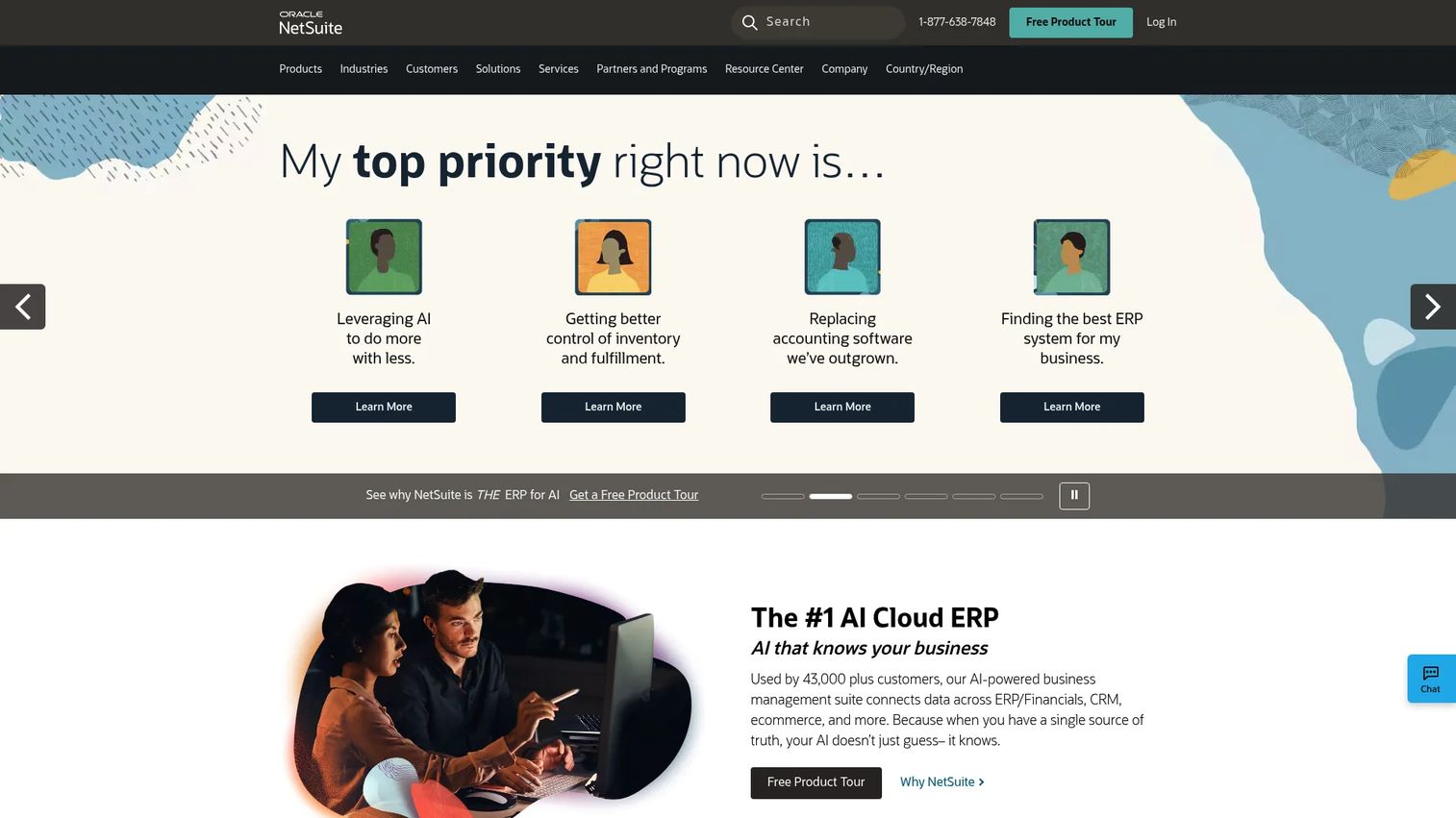
NetSuite is a cloud ERP and business management platform that folds inventory and warehouse management into a broader finance and operations stack. For teams that want warehouse automation software inside the same system that runs their books, order-to-cash, and procurement, NetSuite removes the integration seams between finance and the floor. Its warehouse capabilities lean on AIDC scanning, directed workflows, and tight inventory control connected to ERP-native order and demand data.
Best for: Mid-market to enterprise companies already standardized on a unified cloud ERP.
Key strengths
- Financial management and ERP: Warehouse activity ties directly to accounting, so inventory and cost data stay reconciled without a separate sync.
- Order-to-cash and procure-to-pay automation: Fulfillment and replenishment run against live financial and procurement data.
- Multi-currency and global support: Handles multi-entity, multi-region operations under one platform.
Why choose NetSuite: If your bottleneck is fragmented data between finance, procurement, and the warehouse, a unified ERP with embedded WMS beats stitching a standalone WMS to your books. NetSuite fits teams that value one system of record over best-of-breed depth in any single warehouse function. The tradeoff is that warehouse-specific automation depth may not match a specialized WMS, so match the fit to your complexity.
NetSuite pricing: NetSuite uses contact-sales, quote-based pricing, and no public first-party price was verified during research. Licensing typically scales with modules, user count, and entity complexity. Budget for implementation as a meaningful line item, since ERP-scale deployments involve configuration, data migration, and change management.
3. Softeon
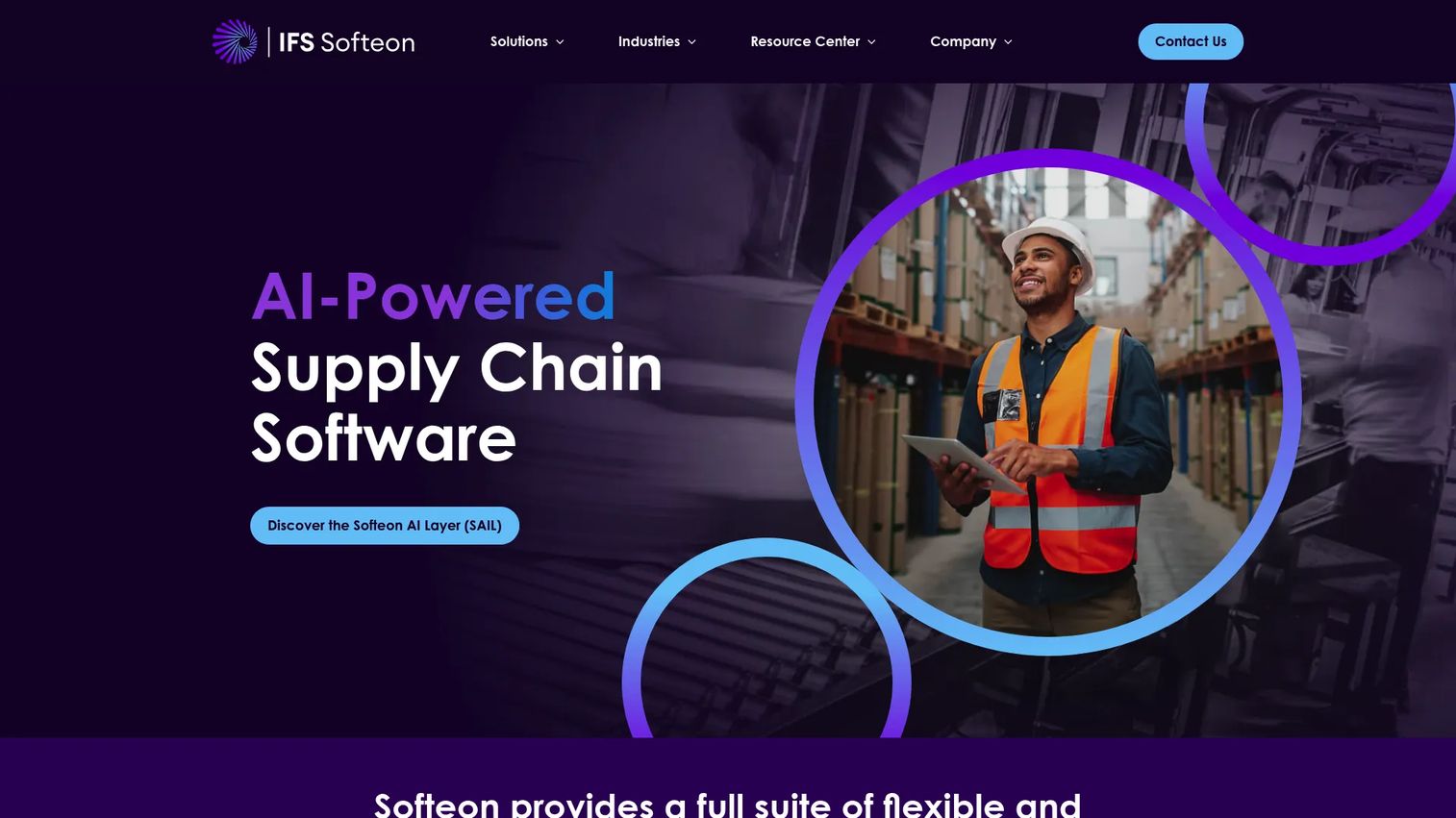
Softeon is a supply chain software provider focused on warehouse management, warehouse execution, and distributed order management. It is built for operations where fulfillment complexity is the defining challenge: high SKU counts, mixed order profiles, and a real need to orchestrate labor alongside automation. Softeon's combination of WMS, WES, and DOM in one platform means the software can sequence and optimize work rather than simply record it.
Best for: Complex warehouse and fulfillment operations needing WMS, WES, and DOM capabilities together.
Key strengths
- Warehouse Management System (WMS): Full control-layer coverage across receiving, putaway, picking, packing, and shipping.
- Warehouse Execution System (WES): Real-time work optimization that balances labor and automation for throughput.
- Distributed Order Management (DOM): Coordinates fulfillment across nodes and channels so promises hold across the network.
Why choose Softeon: Softeon fits enterprises with higher orchestration demands, where the software must actively decide the best next action rather than follow a static plan. If your operation already runs automation and your constraint is coordination, the WES and DOM layers are where the value concentrates. It is a heavier platform than a lightweight 3PL WMS, so it rewards operations with real complexity.
Softeon pricing: Softeon uses quote-based pricing with no public price shown on its site, which is standard for orchestration-grade platforms scoped to operation complexity. It holds a 4.3/5 rating on G2. Expect pricing to reflect module selection (WMS, WES, DOM), volume, and integration scope, so plan for a scoping conversation.
4. CoreWMS
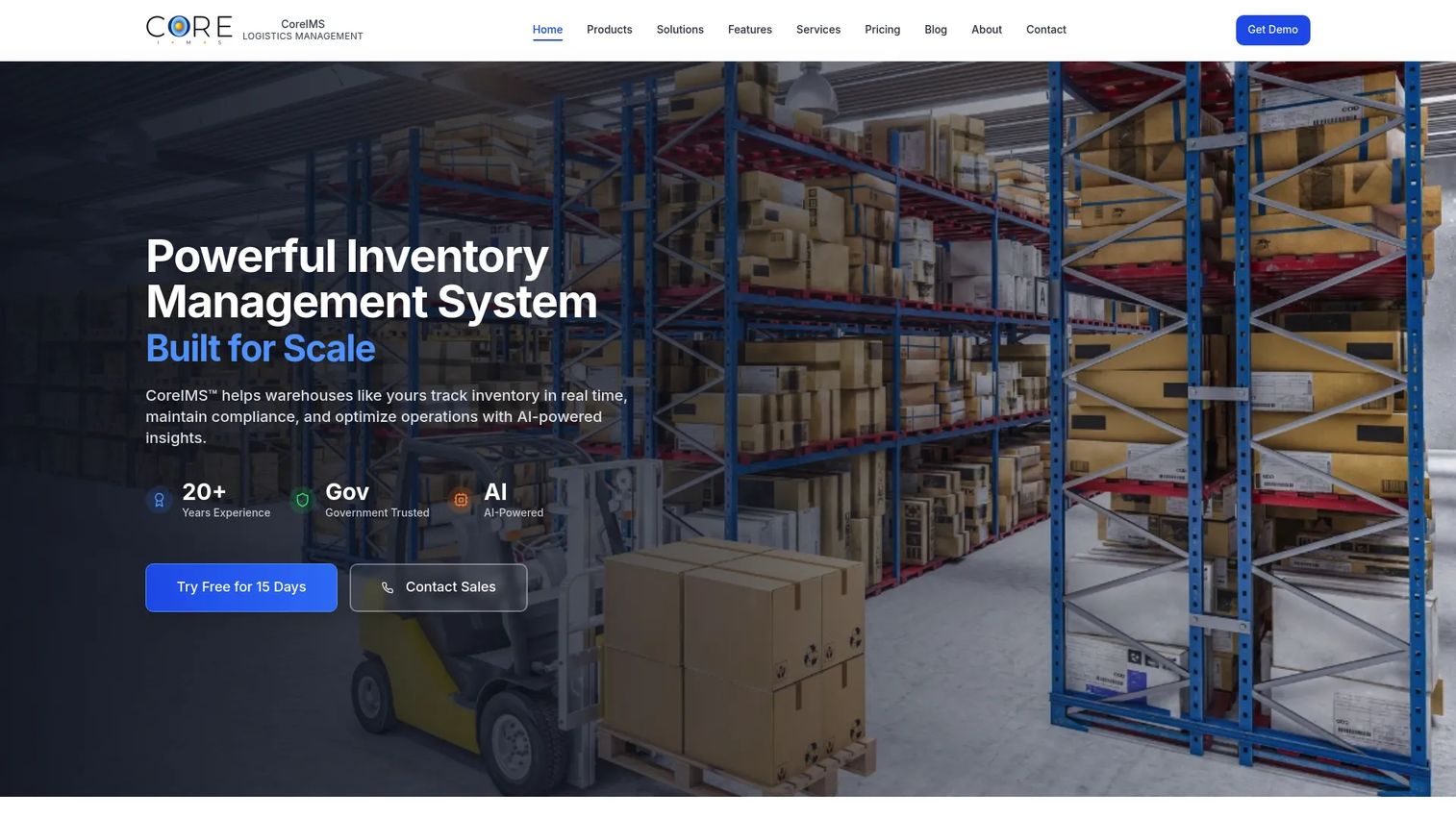
CoreWMS, presented as CoreIMS on its official site, is inventory and warehouse management software built for commercial, government, and regulated operations. It stands out in this list for transparent pricing and a product-led buying motion, a rarity in warehouse software where quote-based pricing dominates. It covers real-time inventory tracking, receiving, shipping, transfers, kitting, and manufacturing work orders, with barcode scanning and role-based access baked in.
Best for: Warehouses and 3PLs needing configurable inventory control with government and compliance support.
Key strengths
- Real-time inventory tracking: Live visibility across multiple warehouses and locations for tight inventory control.
- Broad operational coverage: Receiving, shipping, transfers, kitting, and manufacturing work orders in one system.
- Reporting and access controls: Dashboards, barcode scanning and printing, and role-based access for compliance-heavy environments.
Why choose CoreWMS: CoreWMS fits smaller or growing teams that want configurable inventory control without an enterprise-scale commitment. The transparent pricing and free trial let you validate fit before a large spend, which matters for teams that need to prove ROI early. If your operation is regulated or government-adjacent, the compliance support is a strong differentiator.
CoreWMS pricing: CoreIMS lists a Government Edition and CoreIMS 4.0 from $65 per user per month on G2, with a Standard Edition from $80 per user per month on the brand site and Enterprise from $8,000. A 15-day free trial is available, but there is no free tier. It holds a 4.0/5 rating on G2. The transparent, per-user model makes budgeting straightforward compared to quote-only vendors.
5. AscentWL
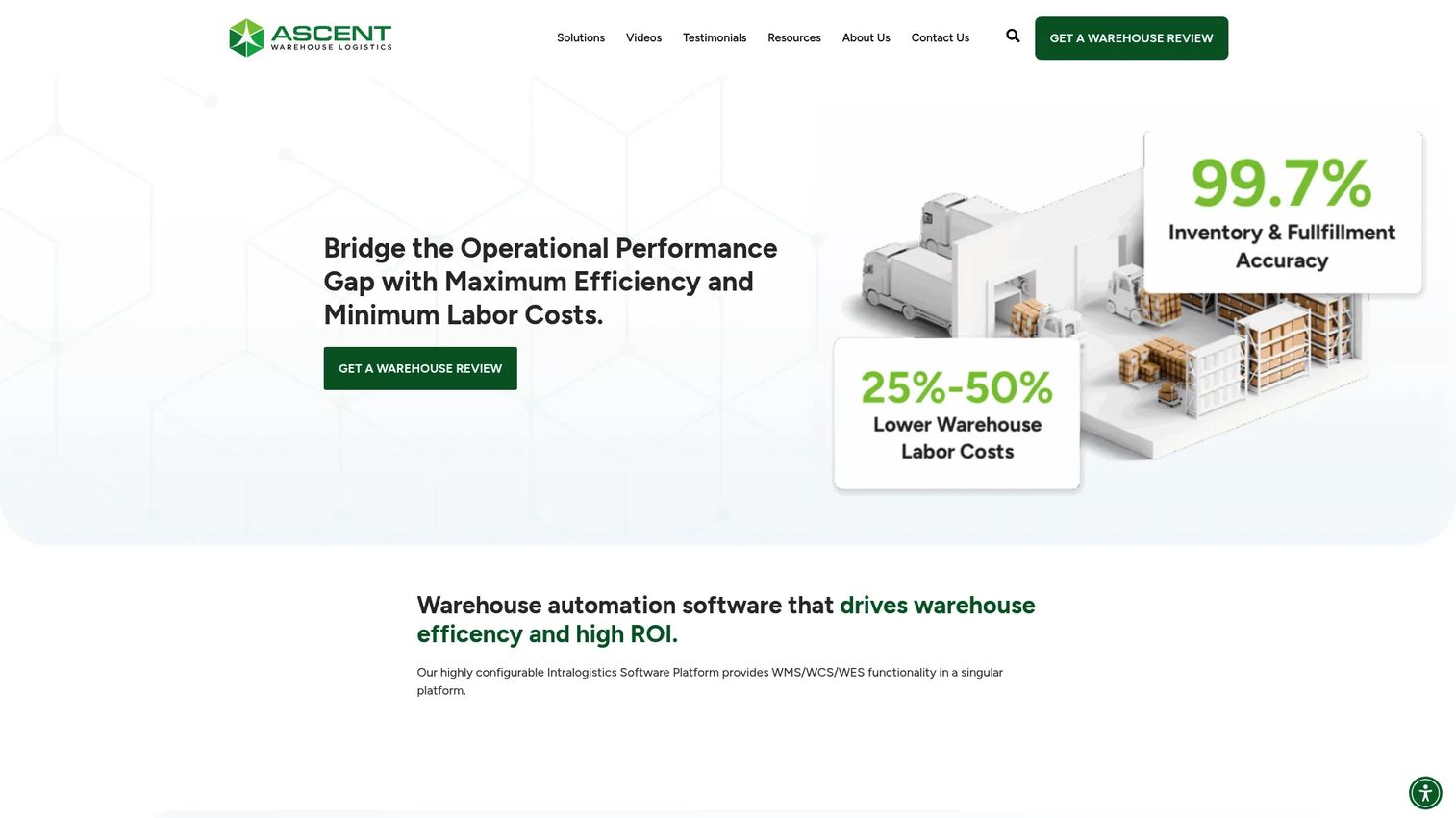
AscentWL is warehouse automation software that unifies WMS, WCS, and WES functionality in a single platform. That combination is the point: instead of running separate systems for inventory control, equipment control, and work optimization, AscentWL puts the software layer that connects people, systems, and automation under one roof. For operations that need coordinated execution rather than a stack of point tools, that unification is where the ROI lives.
Best for: Mid-market warehouses needing unified warehouse automation and execution software.
Key strengths
- WMS, WCS, and WES in one platform: One system spans inventory control, equipment control, and real-time work optimization.
- Direct automation control: Drives automation and picking technologies directly, reducing brittle handoffs between systems.
- Accuracy reporting: Inventory and fulfillment accuracy reporting to prove operational gains and support compliance.
Why choose AscentWL: AscentWL fits operations where the constraint is coordination across separate systems. When your WMS, your equipment controllers, and your labor planning do not talk cleanly, throughput suffers at the seams. A unified platform removes those seams. Choose it when you want one software layer orchestrating execution rather than integrating three vendors yourself.
AscentWL pricing: AscentWL does not publish public pricing, and no price was verified on the brand site during research. Given its unified WMS, WCS, and WES scope, expect pricing to reflect automation complexity, integration depth, and operation size. A scoping conversation that maps your equipment and throughput targets is the natural first step.
6. Zoones
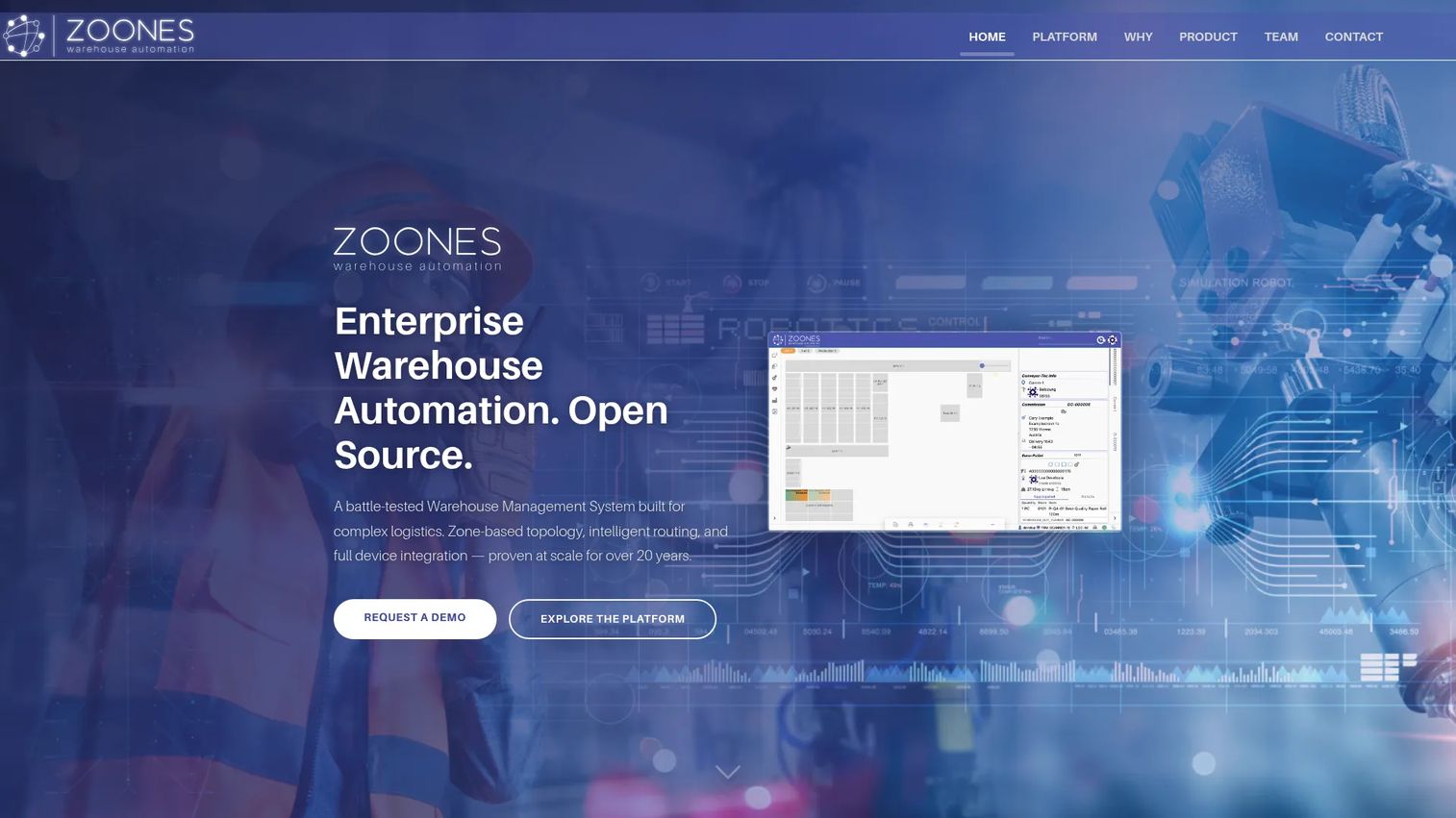
Zoones is an open-source enterprise warehouse management software platform for complex logistics and warehouse automation. Its open-source positioning is the differentiator: no license fees, no per-user pricing, and no feature gating. For teams that value software extensibility and want to integrate deeply with existing infrastructure, ERP systems, and warehouse floor hardware, Zoones gives you the control that closed platforms rarely offer.
Best for: Warehouses needing an open-source WMS with automation and device integration.
Key strengths
- 3D and 2D warehouse modeling: 3D warehouse modeling with 2D real-time visualization for spatial planning and monitoring.
- End-to-end workflows: Picking, packing, dispatch, delivery, and warehouse control workflows in one system.
- Deep integrations: Connects to ERP systems, hardware devices, and automation equipment for infrastructure-first teams.
Why choose Zoones: Zoones fits teams that want to own and extend their warehouse software rather than rent it. The open-source model removes license costs and gives engineering-minded operations the freedom to customize workflows and integrations. The tradeoff is that you take on more implementation and maintenance ownership, so it suits teams with the technical capacity to run it well.
Zoones pricing: Zoones is fully open source with no license fees, no per-user pricing, and no feature gating, per its public site. There are no published paid-plan prices. Your real cost is implementation, hosting, and internal engineering time, which can be highly favorable at scale if you have the technical resources to support it.
7. UnieWMS
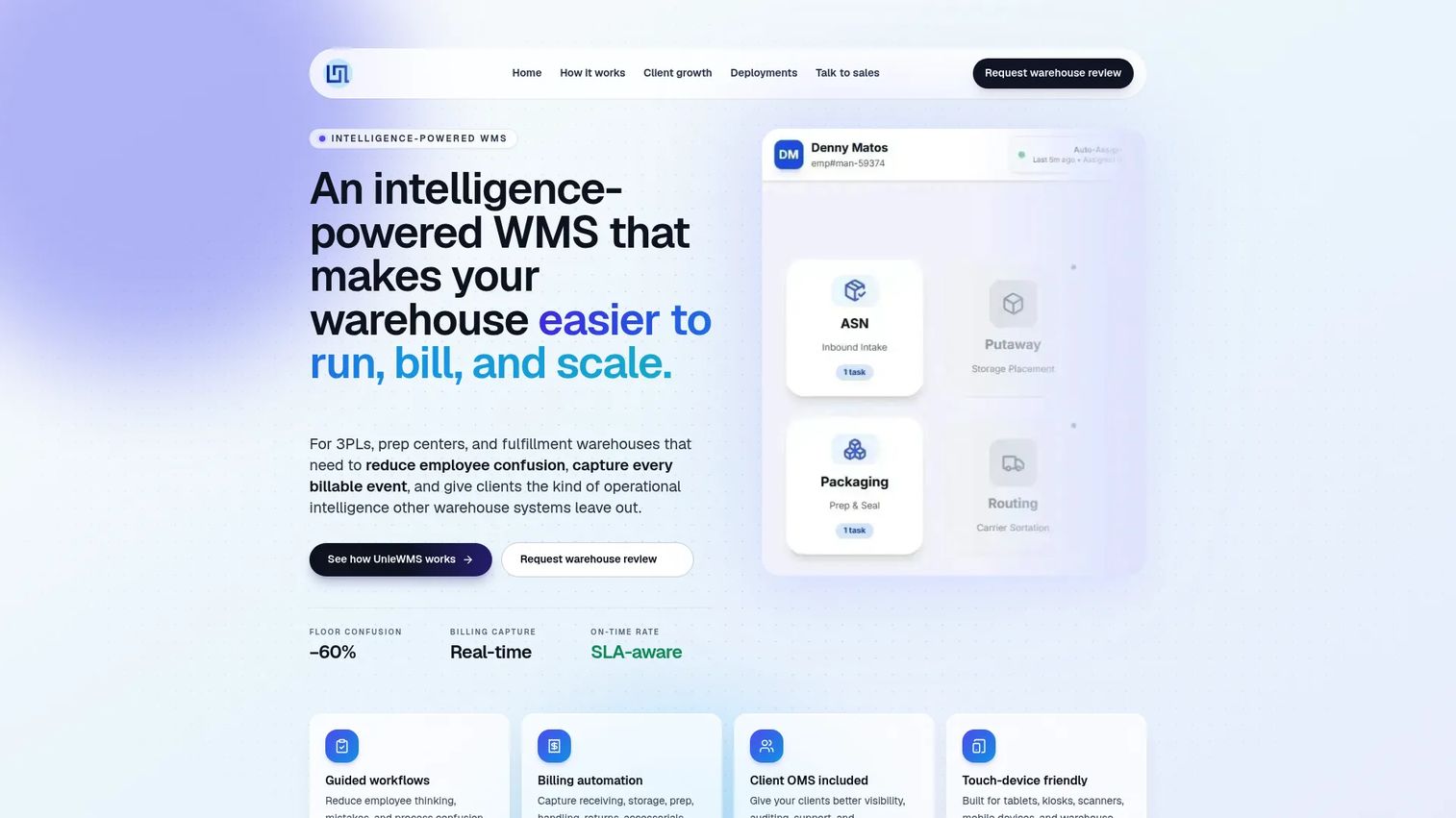
UnieWMS is an intelligence-powered warehouse management system built for 3PLs, prep centers, and fulfillment warehouses. It emphasizes guided workflows that make floor execution easier to adopt, plus billing automation and integrated client visibility. For teams that want cleaner operations without a heavy enterprise rollout, UnieWMS pairs practical warehouse logic with a flat-fee model that keeps budgeting simple.
Best for: 3PLs and warehouses needing a flat-fee WMS with client billing and operational visibility.
Key strengths
- Guided warehouse workflows: Step-by-step floor execution that speeds adoption and reduces training load.
- Billing automation: Automates billing for warehouse activities, which is essential for 3PL client accounting.
- Integrated OMS and client portal: Client visibility through an integrated order management and portal layer.
Why choose UnieWMS: UnieWMS fits 3PLs that need to bill clients accurately and give them visibility without building a custom portal. The guided workflows lower the adoption barrier for floor staff, which matters when turnover is high. The flat-fee model is compelling for growing operations that want predictable costs rather than per-user pricing that scales with headcount.
UnieWMS pricing: UnieWMS uses a single flat plan at $500 per month with unlimited orders and users, per its site. Additional client accounts run $17 per month after the first 20. There is no free tier. The flat-fee structure makes it one of the most predictable options here for 3PLs scaling order volume without scaling software cost.
Considerations before you buy
Choosing warehouse automation software is a systems decision, not a feature checklist. Here is what to verify before you commit.
Control-layer fit and system of record
Decide whether you need a standalone WMS, an ERP-embedded warehouse module, or a unified WMS, WCS, and WES platform. The wrong control layer creates integration debt you pay for every release. Map your receiving-through-shipping workflows against the tool before signing.
Automation orchestration depth
If you run or plan to run robotics, conveyors, AMRs, or sortation, confirm the software actually orchestrates them, not just logs their output. Real orchestration balances labor and automation in real time. Ask vendors to show sequencing under peak load, not a clean demo.
Integration and data cleanliness
Warehouse automation technology lives or dies on clean integration with your ERP, order management, and hardware. Confirm supported connectors, API depth, and how the tool handles inventory reconciliation. Fragmented data produces fragmented decisions.
ROI, implementation, and total cost
Model ROI against accuracy gains, labor efficiency, and throughput, not license price alone. Factor implementation, migration, and change management into total cost. A cheaper tool with a brutal rollout can cost more than a scoped enterprise platform.
Compliance, cybersecurity, and future readiness
For regulated operations, confirm compliance support and OT cybersecurity posture. Ask about predictive maintenance and digital twin readiness if you plan to scale automation. These capabilities separate durable platforms from tools you outgrow in two years.
Conclusion
The strongest pick depends on your maturity and complexity. If you are among the nearly 80% of warehouses still running non-automated, start with a solid WMS control layer, since accuracy and inventory control gains come from the software deciding work well, not from hardware alone. For ERP-standardized teams, NetSuite keeps warehouse and finance in one system. For complex, orchestration-heavy fulfillment, Softeon brings WMS, WES, and DOM together. CoreWMS gives growing teams transparent per-user pricing, AscentWL unifies WMS, WCS, and WES for coordinated execution, Zoones offers open-source extensibility, and UnieWMS delivers flat-fee simplicity for 3PLs.
Your next step: shortlist two or three of these based on your control-layer needs and orchestration depth, then run each through your own throughput and integration scenarios rather than a scripted vendor walkthrough. The right warehouse software is the one that improves your metrics under your real conditions.
FAQs
Warehouse automation software is the digital control layer that plans, sequences, and coordinates warehouse work from receiving through shipping, while directing connected physical automation like robotics and conveyors. It turns order demand into optimized, executable tasks and keeps inventory accurate. The software decides the work; the hardware performs it.
Not exactly. A warehouse management system is the system-of-record control layer for inventory and warehouse operations, and it is the core of most automation stacks. Automated warehouse software often adds execution (WES) and equipment control (WCS) on top of the WMS to orchestrate robotics and conveyors. A WMS is where you start; full orchestration is where you scale.
Expect real-time inventory visibility, directed workflows for receiving through shipping, labor management, and AIDC scanning for accuracy. It should integrate with your ERP, order management software, and warehouse floor hardware. Strong analytics and reporting matter for proving ROI and supporting compliance.
Prioritize multi-tenant support, client billing automation, and per-client visibility, since 3PLs serve many customers under one operation. Guided workflows lower training load when floor turnover is high. Flat-fee pricing, like UnieWMS at $500 per month, keeps costs predictable as order volume grows.
Warehouse software is the digital layer that plans and directs work, including the WMS, WES, and WCS. Warehouse automation systems usually refer to the physical equipment, AS/RS, conveyors, AMRs, and sortation. The software is the nervous system; the systems are the muscle. You need both, but the software determines whether the hardware pays off.
Track pick and inventory accuracy, throughput per labor hour, order cycle time, and cost per order before and after deployment. Compare gains against total cost, including implementation, migration, and change management, not just license price. Most non-automated operations see the fastest ROI from accuracy and labor efficiency improvements the software drives.
Watch for clean data migration, realistic go-live sequencing, and how the tool behaves under peak load rather than in a scripted walkthrough. Confirm integration depth with your ERP and hardware early, since integration is where most implementations slip. Plan change management for floor staff, because adoption determines whether the software delivers.
Yes. Warehouse automation technology is designed to orchestrate robotics, AMRs, conveyors, pick-to-light, and sortation, typically through a WES or WCS layer that translates work into machine commands. Confirm the specific equipment connectors and sequencing capabilities with each vendor. Real orchestration balances human and machine work in real time, which is where throughput gains come from.