Your paid social team needs new creative again. Your ecommerce team is waiting on more reviews. Meanwhile, tagged customer posts are sitting in social feeds with no clear path to reuse. User-generated content software exists because those assets become genuinely useful only when they move from scattered feeds and inboxes into a workflow you can govern, publish, and measure.
The case for fixing this is concrete: 65% of consumers say UGC is important to their shopping journey, according to the Bazaarvoice Shopper Index (2025). That's not a soft brand metric. It maps directly to conversion rate, review volume, and ROAS on paid campaigns that use customer creative instead of studio assets.
The challenge is that "UGC software" covers four distinct job types: Sourcing creator content, collecting customer reviews, displaying visual content on websites, and aggregating social proof for events and campaigns. The wrong tool for your job adds workflow steps without adding results.
This guide separates those categories, compares 15 platforms across pricing and G2 ratings, and helps you pick based on where your content comes from and where it needs to go.
What's inside
This guide is for growth marketers, ecommerce teams, and social media managers evaluating UGC platforms in 2026. Tools were selected based on four criteria:
- Content source coverage: Does the platform handle the type of content your team needs, reviews, creator video, social posts, or a mix?
- Rights and compliance workflow: Can you get permission before publishing, especially for paid channels?
- Publishing and syndication reach: Where does the content actually go, product pages, ad platforms, retail partners?
- Measurement and attribution: Can you connect content performance to revenue metrics like conversion lift or ROAS?
Pricing and G2 ratings were verified against vendor pages and G2 listings. Tools are organized to help you match platform type to your primary use case.
TL;DR
- Best for enterprise review syndication: Bazaarvoice, with its retail network reach for brands that need reviews distributed across major retailers
- Best for ecommerce reviews and retention: Yotpo, which connects reviews, loyalty, and UGC in one ecommerce-native stack
- Best for managed creator content at scale: Cohley, for teams that need a recurring supply of licensed creator assets
- Best for fast UGC video production: Billo, purpose-built for DTC brands that need ad creative quickly
- Best for visual UGC on ecommerce sites: Flowbox, with shoppable galleries and rights management built in
- Best for social walls and event displays: Walls.io, for moderated social aggregation across websites and live events
What is user-generated content software?
User-generated content software helps brands collect, source, organize, moderate, secure rights to, publish, and measure content created by customers, creators, employees, advocates, or community members.
UGC formats vary widely. The main categories include photos, short-form videos, text reviews, star ratings, social posts, testimonials, and Q&A. Those assets come from customers post-purchase, creators running paid or gifted campaigns, employees on internal advocacy programs, and community members responding to brand prompts.
UGC creation software versus UGC management software
These two categories solve different problems, and confusing them is a common buying mistake.
UGC creation software helps brands source net-new content from creators or customers. These are creator marketplaces and campaign management platforms where you brief creators, ship product, receive deliverables, and get usage rights. Cohley, Billo, Insense, and Trend fit here.
UGC management software helps brands collect, curate, approve, publish, and measure content that already exists, typically in social feeds or customer review databases. Bazaarvoice, PowerReviews, TINT, Flowbox, EmbedSocial, and Walls.io fit here.
Many platforms cross both categories. Yotpo handles reviews and loyalty. Emplifi handles social publishing and community UGC. Knowing which job is your primary need narrows the shortlist fast.
Key capabilities to look for
- Creator discovery and brief management
- Ratings and review capture and display
- Rights management and usage licensing
- Content moderation and approval queues
- Website and ecommerce gallery publishing
- Paid social export and ad platform integrations
- Review syndication to retail partners
- UGC analytics and conversion attribution
- Integrations with ecommerce platforms, CRM, and ad accounts
When to use user-generated content software
Refresh paid social creative before fatigue hits
Creative fatigue is a real cost problem. When CPMs rise and click-through rates drop, the bottleneck is usually content variety, not spend. Creator video platforms like Billo and Insense let you brief multiple creators simultaneously and receive ad-ready video assets with usage rights for Meta and TikTok. This cuts the cycle from brief to usable creative, which matters when your ROAS is slipping week over week.
Turn customer reviews into conversion assets
Reviews are your highest-trust content, but they only drive conversions when they appear on the right pages at the right moment. Review platforms like Bazaarvoice and PowerReviews collect ratings post-purchase, run moderation, and syndicate those reviews to retail partners. The difference between a tool that collects reviews and one that syndicates them across distribution networks can determine whether your reviews actually influence buyers researching at Target or Amazon.
Publish social proof on websites and product pages
A customer photo tagged on Instagram delivers no conversion lift sitting in your notifications. Visual UGC platforms like Flowbox and Nosto pull that content, request rights, tag it to products, and display it in shoppable galleries on your product detail pages. The connection between UGC discovery and onsite revenue becomes measurable when the display layer is in place.
Manage permissions before content goes live
Reposting customer content without explicit permission creates legal exposure. This matters most when the content goes into paid ads, where platform policies and copyright law both apply. Rights management workflows inside platforms like Bazaarvoice and TINT automate permission requests, track approval status, and store records with expiration dates. Build this workflow before you scale distribution.
User-generated content software comparison
Picking user-generated content software by feature count leads to the wrong decision. The more practical approach: Start with the primary content source (creator video, customer reviews, or social posts), then filter by where that content needs to go. The table below maps each UGC platform to its primary job, so you can shortlist by workflow rather than by vendor size.
All pricing and G2 ratings were verified against live vendor pricing pages and G2 listings.
| # | Product | Best for | Key differentiator | Pricing | G2 rating |
|---|---|---|---|---|---|
| 1 | Bazaarvoice | Enterprise review syndication | Retail network reach for review distribution | From $6,500/year | 4.2/5 |
| 2 | Yotpo | Ecommerce reviews and retention | Reviews, loyalty, and UGC in one stack | Free tier; paid from $15/mo | 4.3/5 |
| 3 | Cohley | Managed creator content at scale | AI-assisted briefs and perpetual content rights | Custom pricing | 4.4/5 |
| 4 | Billo | Fast UGC video for paid social | One-time credit packs, no subscription | From $1,000 (one-time) | 4.3/5 |
| 5 | Insense | Creator content and whitelisted ads | Direct Meta and TikTok Spark Ads integration | From $500/mo | 4.5/5 |
| 6 | Trend | Scalable creator photo and video | No subscription; credit-based packages | From $550 (one-time) | 4.5/5 |
| 7 | Skeepers | Reviews, influencer, and brand communities | Integrated UGC, influencer, and feedback suite | Custom pricing | 4.3/5 |
| 8 | PowerReviews | Retail review collection and syndication | Benchmarking and syndication analytics | Custom pricing | 4.4/5 |
| 9 | TINT | Loyalty, advocacy, and UGC | Omnichannel loyalty with UGC and receipts | Custom pricing | N/A |
| 10 | Flowbox | Shoppable visual UGC for ecommerce | Product tagging and shoppable galleries | Custom pricing | 4.7/5 |
| 11 | Later | Social media management with UGC discovery | Social scheduling with creator tools | From $18.75/mo (annual) | 4.5/5 |
| 12 | Nosto | UGC inside ecommerce personalization | Shoppable UGC connected to AI merchandising | Custom pricing | 4.6/5 |
| 13 | EmbedSocial | Website UGC and review embeds | Free tier with paid plans from $29/mo | From $29/mo | 4.8/5 |
| 14 | Emplifi | Enterprise social marketing and UGC | Unified social publishing, care, and UGC | From $1,249/mo | 4.4/5 |
| 15 | Walls.io | Social walls for events and websites | 14-source aggregation with moderation | From $243/mo | 4.8/5 |
Best 15 user-generated content software for marketing teams
1. Bazaarvoice
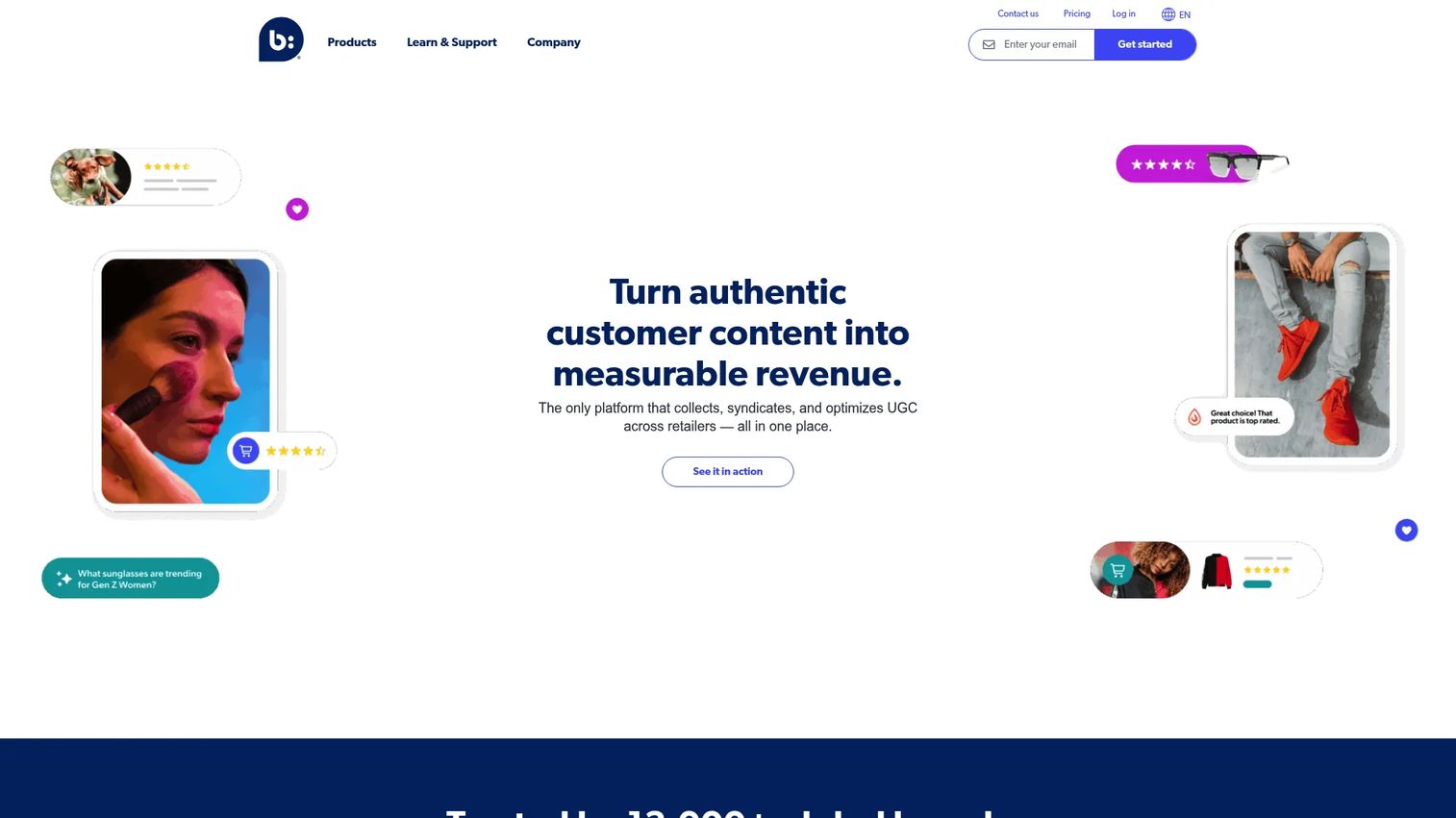
Bazaarvoice is an enterprise UGC platform built around ratings, reviews, and social commerce. It sits at the center of a retail network that connects brands to major retail partners, so reviews collected on a brand's site can syndicate to retailer product pages automatically. The platform covers product sampling campaigns, creator marketing, visual and social content, and moderation alongside its core review infrastructure.
Best for: Enterprise brands and retailers that need review distribution across major commerce channels, not just their own site.
Key features
- Ratings and reviews collection, display, and moderation
- Retail syndication network for multi-retailer distribution
- Product sampling campaign management
- Social commerce galleries and visual UGC
- Q&A and content insights reporting
Why choose Bazaarvoice: The retail network is what separates Bazaarvoice from most review tools. If your buyers research on retail sites before purchasing, syndication reach matters more than any single platform feature. It's a heavier investment suited to teams with volume and distribution complexity.
Bazaarvoice pricing: Contact sales for package-specific pricing.
G2 rating: 4.2/5
2. Yotpo
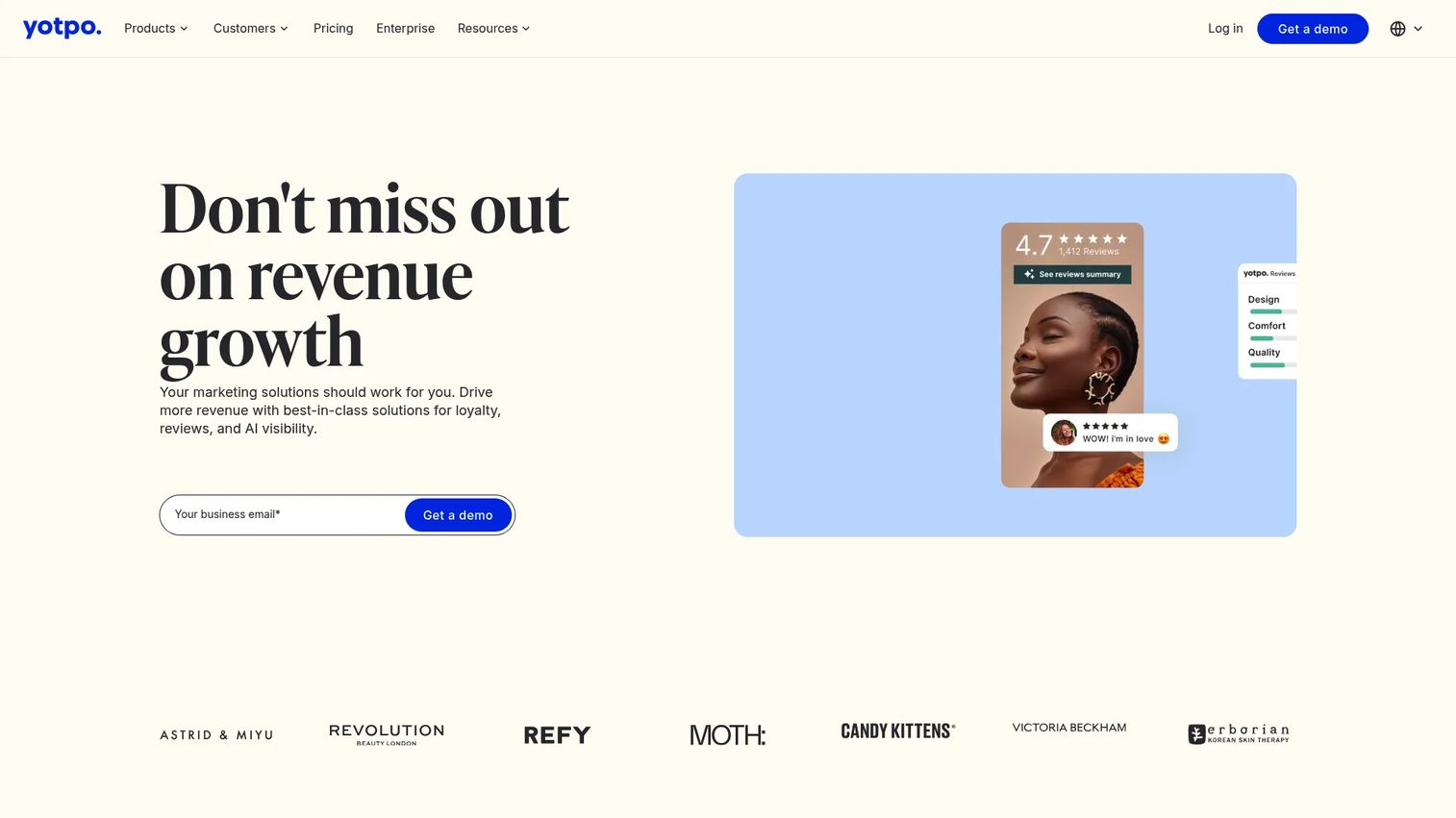
Yotpo is an ecommerce retention platform that combines product reviews, photo and video UGC, loyalty programs, and referral tools. The UGC modules connect directly to retention workflows, so a customer who submits a review or photo can be enrolled in a loyalty tier automatically. Yotpo is modular: You can start with reviews only and add loyalty or SMS as the program grows.
Best for: Ecommerce brands that want reviews, visual UGC, and customer retention programs managed from a single vendor relationship.
Key features
- Product reviews with photo and video submission
- AI-powered review summaries and smart sorting
- Review syndication and SEO schema
- Loyalty and referral program management
- Ecommerce integration with Shopify, Salesforce Commerce Cloud, and others
Why choose Yotpo: The free Reviews and UGC tier gives small ecommerce teams a usable starting point, while the platform scales into loyalty, SMS, and cross-channel retention as volume grows. Teams that want UGC integrated with their loyalty mechanics, rather than managed as a separate tool, will find this architecture efficient.
Yotpo pricing: Reviews and UGC Free plan starts at $0 per month (up to 50 orders per month). The Starter plan begins at $15 per month, and the Pro plan starts at $119 per month. Loyalty and Referrals Pro starts at $199 per month. Premium and Enterprise tiers use custom pricing.
G2 rating: 4.3/5
3. Cohley
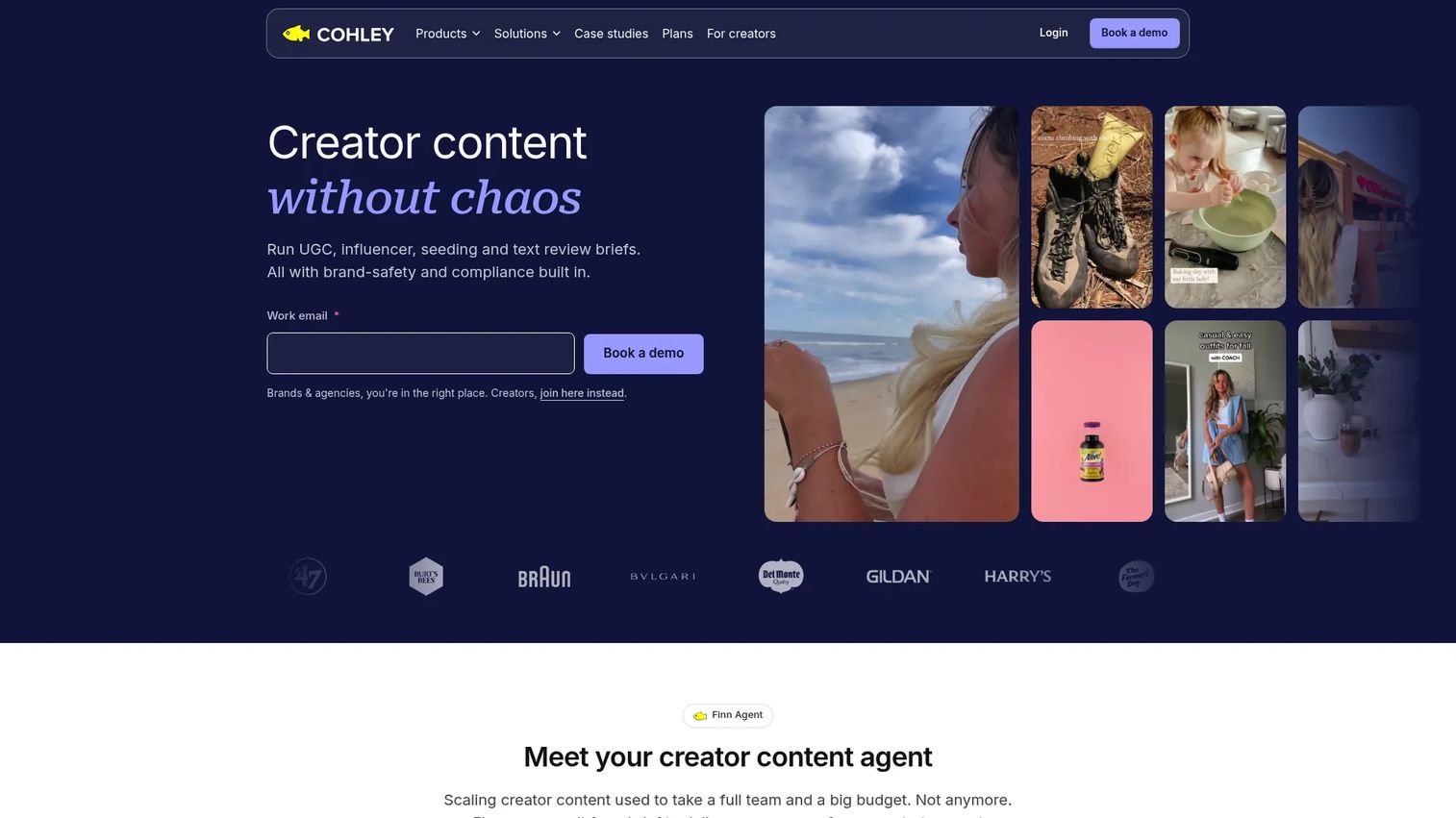
Cohley is a creator content platform for brands that need recurring, scalable UGC rather than one-off campaign assets. It handles creator sourcing, campaign briefs, asset review, contracting, payments, and rights management. The platform includes an AI assistant (Finn Agent) for brief generation and content analysis, and all content produced through Cohley comes with perpetual usage rights. It covers photo, video, influencer partnerships, product reviews, and product seeding.
Best for: Enterprise and mid-market brands that need a managed, ongoing supply of creator content across paid social, ecommerce, and retail channels.
Key features
- Creator sourcing and application review
- AI-assisted brief creation and content analysis
- Automated contracting, payments, and rights management
- Product review collection and syndication
- Campaign content delivery for paid social, ecommerce, and retail
Why choose Cohley: Cohley works best when content volume is a recurring problem, not a one-time campaign need. The managed services tier adds campaign strategy, creator management, and analysis for teams that want to outsource the operational work.
Cohley pricing: Custom pricing only, with an optional 3-month paid pilot before annual commitment. Typical creator compensation runs around $250 per UGC video and $50 per UGC photo according to Cohley's FAQ. Contact Cohley for platform pricing.
G2 rating: 4.4/5
4. Billo
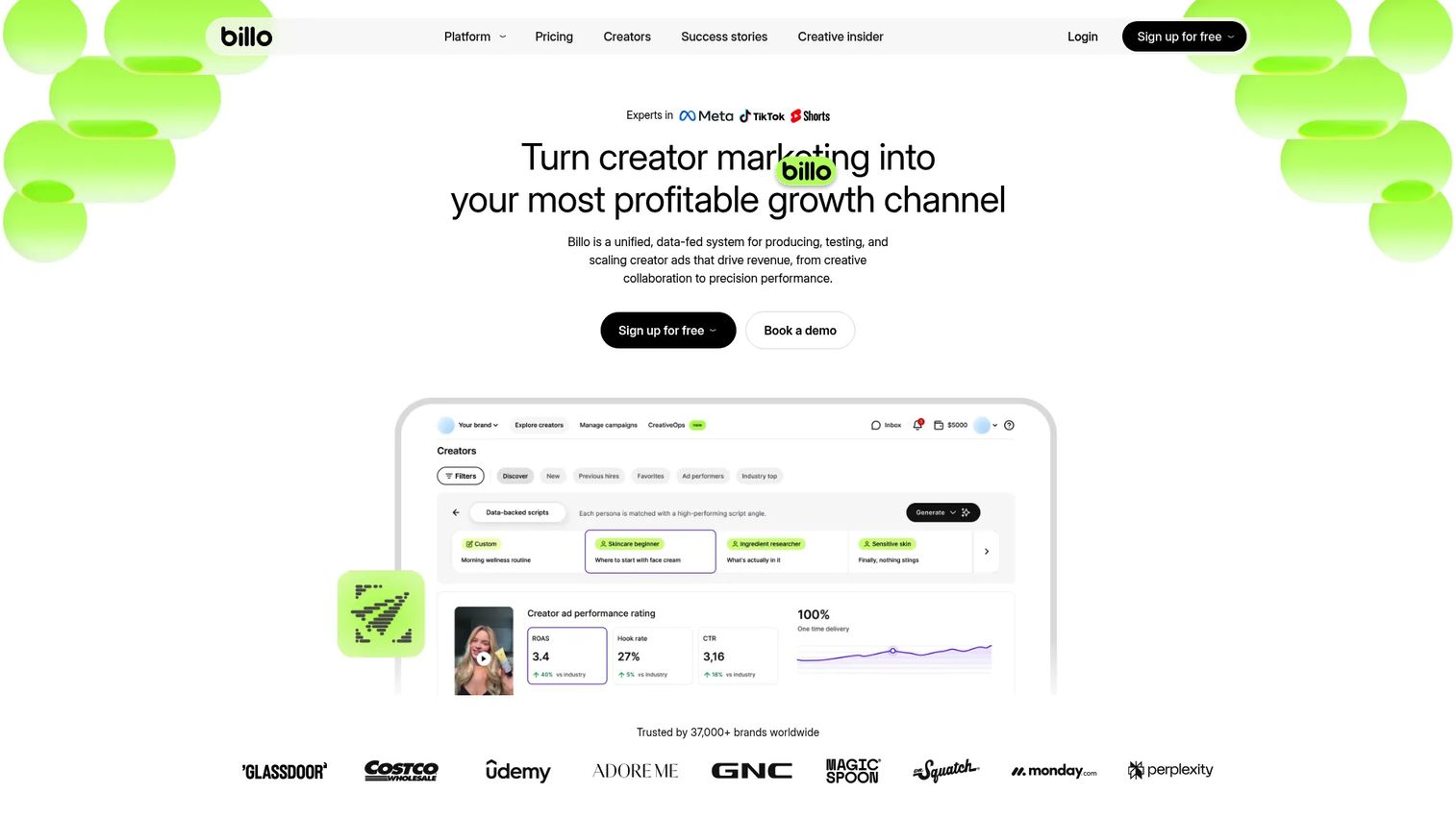
Billo is a creator marketing platform for producing, testing, and scaling UGC ads. Brands submit a brief and product, Billo matches them with vetted creators, and the delivered videos come ready for Meta and TikTok campaigns. Packages are structured as one-time credit purchases rather than subscriptions, which suits teams running project-based creative sprints.
Best for: Small and mid-market ecommerce brands that need video ad creative quickly without committing to a monthly SaaS fee.
Key features
- Vetted creator marketplace with performance-based matching
- UGC video and organic creator-profile posting
- Meta Partnership Ads and TikTok Spark Ads support
- Creative analytics and ad variation tracking
- Performance-data-driven brief templates
Why choose Billo: The one-time pack structure makes Billo accessible for teams that want to test creator UGC without a long-term platform contract. For teams that need predictable monthly creative volume, the CreativeOps subscription starting from $149 per month adds more structure.
Billo pricing: Credit packs are one-time purchases. The Essential pack is $1,000, the Professional pack is $2,500 (with a $300 bonus), and the Refine pack is $5,000 (with a $700 bonus). Balances are valid for 12 months. CreativeOps starts from $149 per month. Managed service starts from $2,000 per month plus video costs. Individual video pricing starts at $99.
G2 rating: 4.3/5
5. Insense
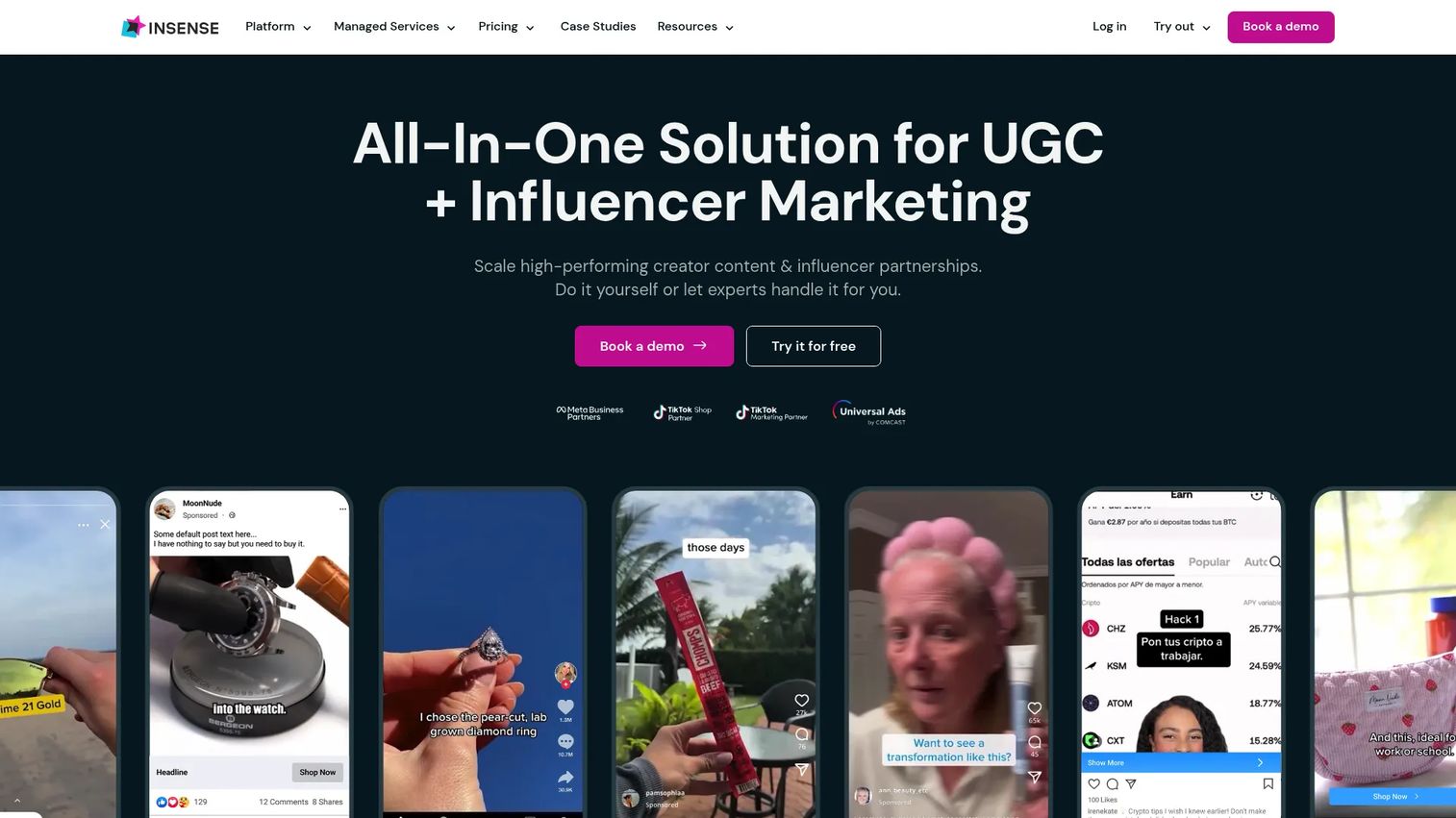
Insense is a creator content and influencer platform built specifically around paid social execution. The core workflow connects brands with UGC creators, manages briefs and deliverables, handles content licensing, and routes approved videos directly into Meta Partnership Ads and TikTok Spark Ads. This makes the path from brief to live ad shorter than platforms that stop at content delivery.
Best for: Paid social teams that need creator content and paid usage rights bundled into a single workflow.
Key features
- Creator marketplace with brief management
- Automated contracting and creator payments
- Content rights management and asset library
- Direct Meta Partnership Ads and TikTok Spark Ads integration
- Campaign performance tracking across ad placements
Why choose Insense: The platform is built for paid social teams rather than organic social managers. If the primary goal is feeding creative into ad campaigns rather than publishing to owned channels, the direct ad platform integrations reduce the steps between approved content and live spend.
Insense pricing: No free tier. The Trial plan is $650 for one month. The Brand plan is $500 per month ($1,500 billed quarterly). The Agency plan is $800 per month ($2,400 billed quarterly). Creator payments are separate from platform fees.
G2 rating: 4.5/5
6. Trend
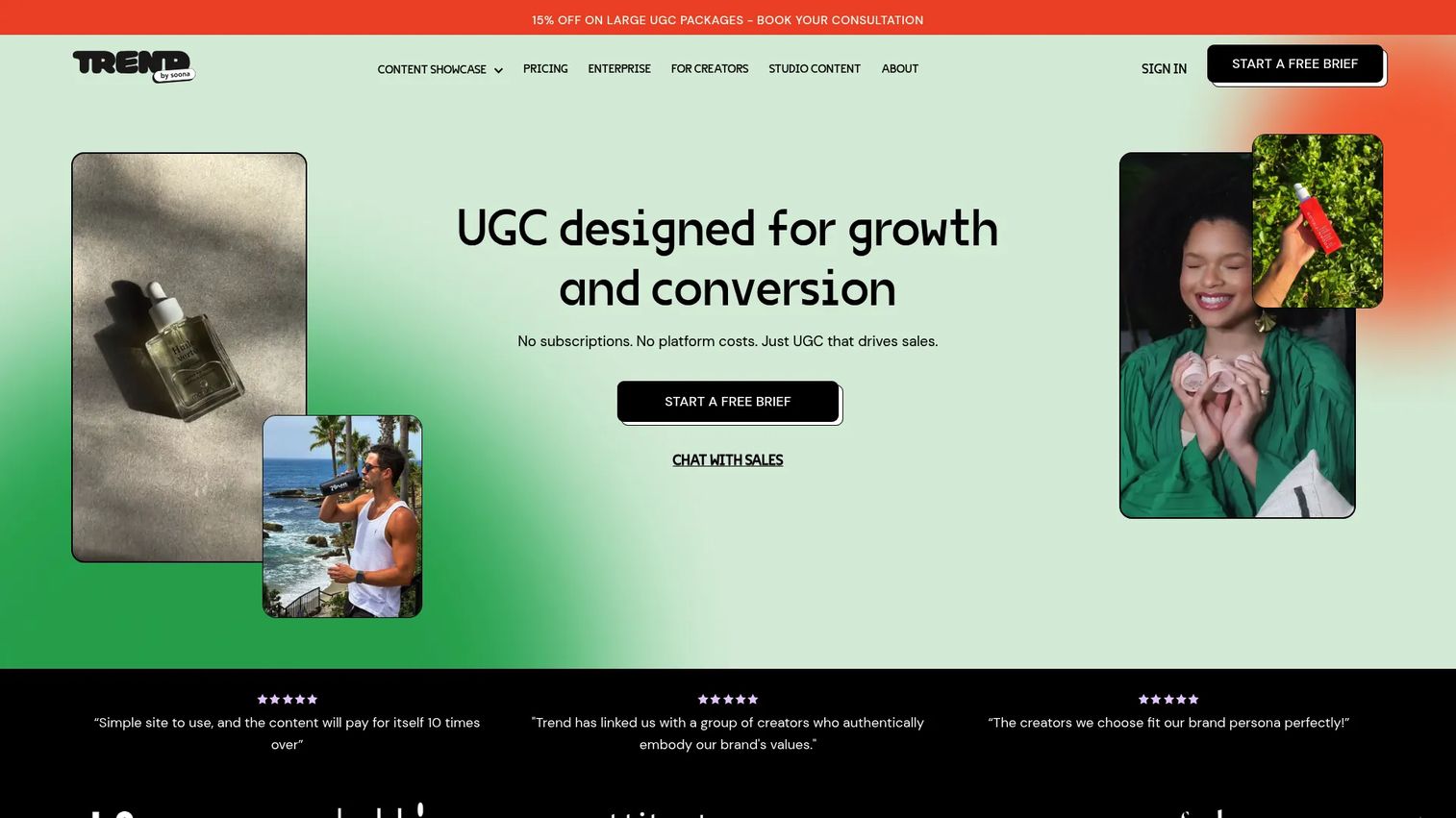
Trend is a self-serve UGC platform focused on connecting brands with creators for custom product photos and videos. The model is credit-based with no subscription, platform fees, or contracts. Creators apply to campaigns, brands select based on profile fit, ship product, and receive content with 100% usage and distribution rights included. Trend covers testimonials, unboxings, and product-in-use content.
Best for: Brands that need scalable, licensed creator photos and videos for ecommerce and advertising without an enterprise platform contract.
Key features
- Creator application review and selection
- Custom product photography and video formats
- In-platform creator messaging and project tracking
- Unlimited project requests
- 100% licensing and distribution rights on approved content
Why choose Trend: The credit-based pricing model suits teams that run content production in bursts rather than continuously. No long-term contract and no platform fee means the cost tracks directly to content produced.
Trend pricing: One-time credit packages. Starter: $550 (up to 6 videos or 15 photos). Essential: $1,045 (up to 14 videos or 35 photos). Growth: $1,980 (up to 28 videos or 70 photos). Scale: $3,872 (up to 56 videos or 140 photos). Credits expire after 12 months.
G2 rating: 4.5/5
7. Skeepers

Skeepers is a customer engagement platform that combines influencer marketing, brand communities, verified reviews, and feedback management. Where most UGC platforms focus on one or two content types, Skeepers positions itself as a broader customer advocacy suite. Teams can run influencer campaigns with AI creator matching, build communities with gamification and product testing, and collect verified photo, text, and video reviews with syndication.
Best for: Brands that want reviews, influencer content, and customer community management under one vendor contract.
Key features
- AI-assisted influencer campaign management and creator matching
- Brand communities with gamification, rewards, and product testing
- Verified photo, text, and video review collection
- Review syndication across retail and ecommerce channels
- Feedback and sentiment analytics
Why choose Skeepers: Skeepers suits brands that want a broader customer advocacy program rather than a point solution for one content type. The tradeoff is integration complexity: A platform covering influencer, community, and reviews will have more configuration requirements than a dedicated review tool.
Skeepers pricing: Contact Skeepers sales for a package quote. G2 reviewers report pricing varies by service scope and volume.
G2 rating: 4.3/5
8. PowerReviews
PowerReviews is a ratings, reviews, and UGC platform for brands and retailers. Its focus is on the operational side of review programs: Collection, sampling, moderation, syndication, and analytics with competitive benchmarking. The syndication network distributes reviews to retail partners, and the analytics suite shows how review volume, rating distribution, and content quality affect conversion.
Best for: Retail and ecommerce brands where review volume, distribution coverage, and performance benchmarking drive buying committee decisions.
Key features
- Ratings and reviews collection and display
- UGC syndication to retail partners
- Product sampling program management
- Questions and answers module
- Review analytics with competitive benchmarking
Why choose PowerReviews: PowerReviews is a strong fit when review quality, volume, and distribution are the core measurement criteria. Benchmarking against category competitors gives marketing teams data to bring to the channel and category management conversation.
PowerReviews pricing: Contact PowerReviews for a quote. G2 reviewer-reported pricing varies by review volume and syndication scope.
G2 rating: 4.4/5
9. TINT
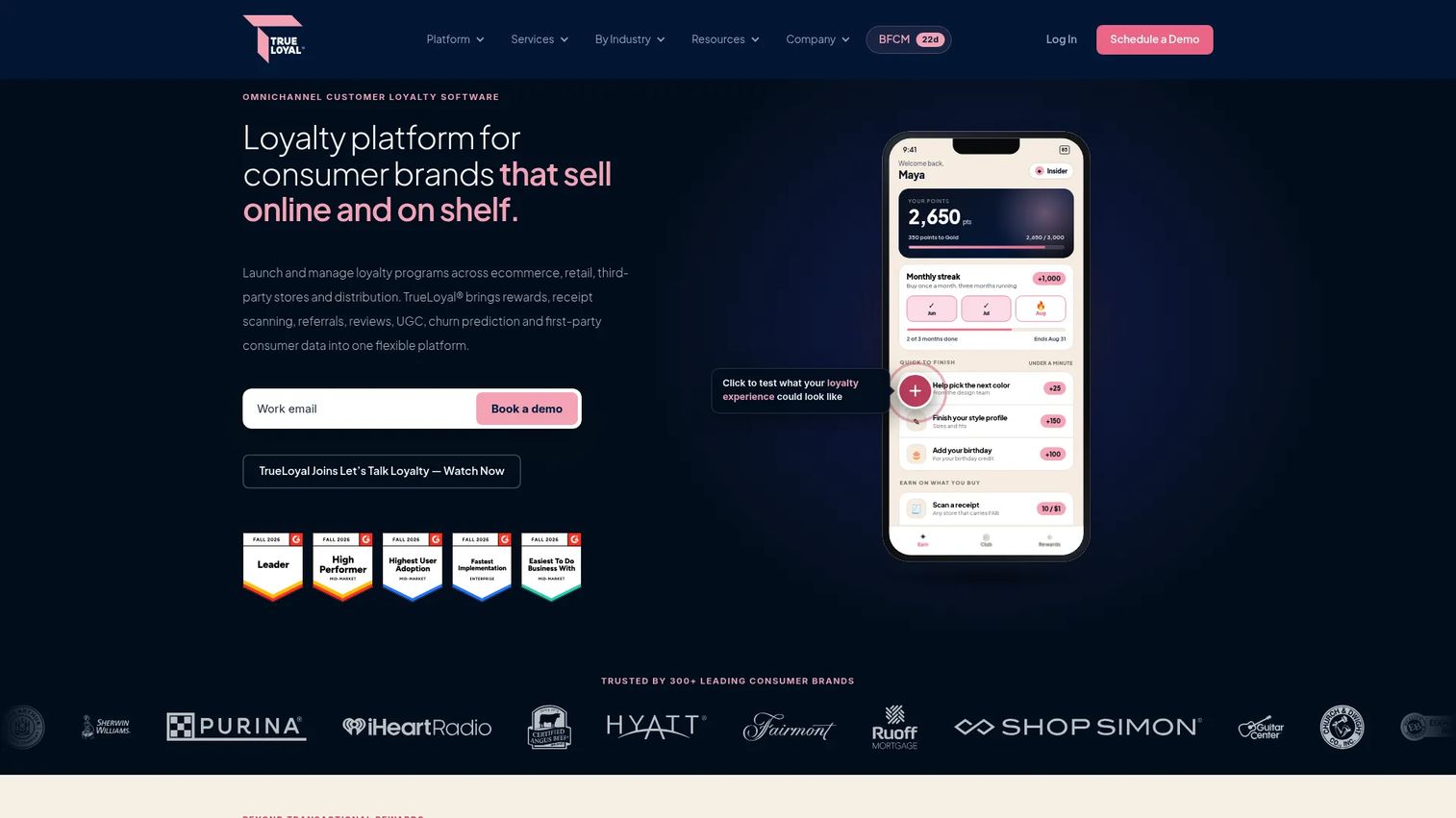
TINT has undergone a product transition and currently operates as TrueLoyal, an omnichannel customer loyalty platform for consumer brands. Its capabilities now focus on rewards and tiered loyalty programs, receipt scanning for offline purchase capture, referrals and customer advocacy, and reviews alongside user-generated content. The platform is positioned for brands building first-party data and loyalty infrastructure rather than pure UGC display.
Best for: Consumer brands building loyalty and advocacy programs that incorporate UGC collection and community engagement.
Key features
- Tiered loyalty and rewards program management
- Receipt scanning for offline purchase verification
- Referral and customer advocacy workflows
- Reviews and user-generated content collection
- Advanced analytics and first-party data capture
Why choose TINT: Teams building a customer loyalty program where UGC is one component of a broader engagement strategy will find TrueLoyal's integrated approach efficient. If the primary need is a standalone visual UGC display or social wall tool, evaluate other options on this list.
TINT pricing: Custom pricing based on program goals, scale, and integrations.
10. Flowbox
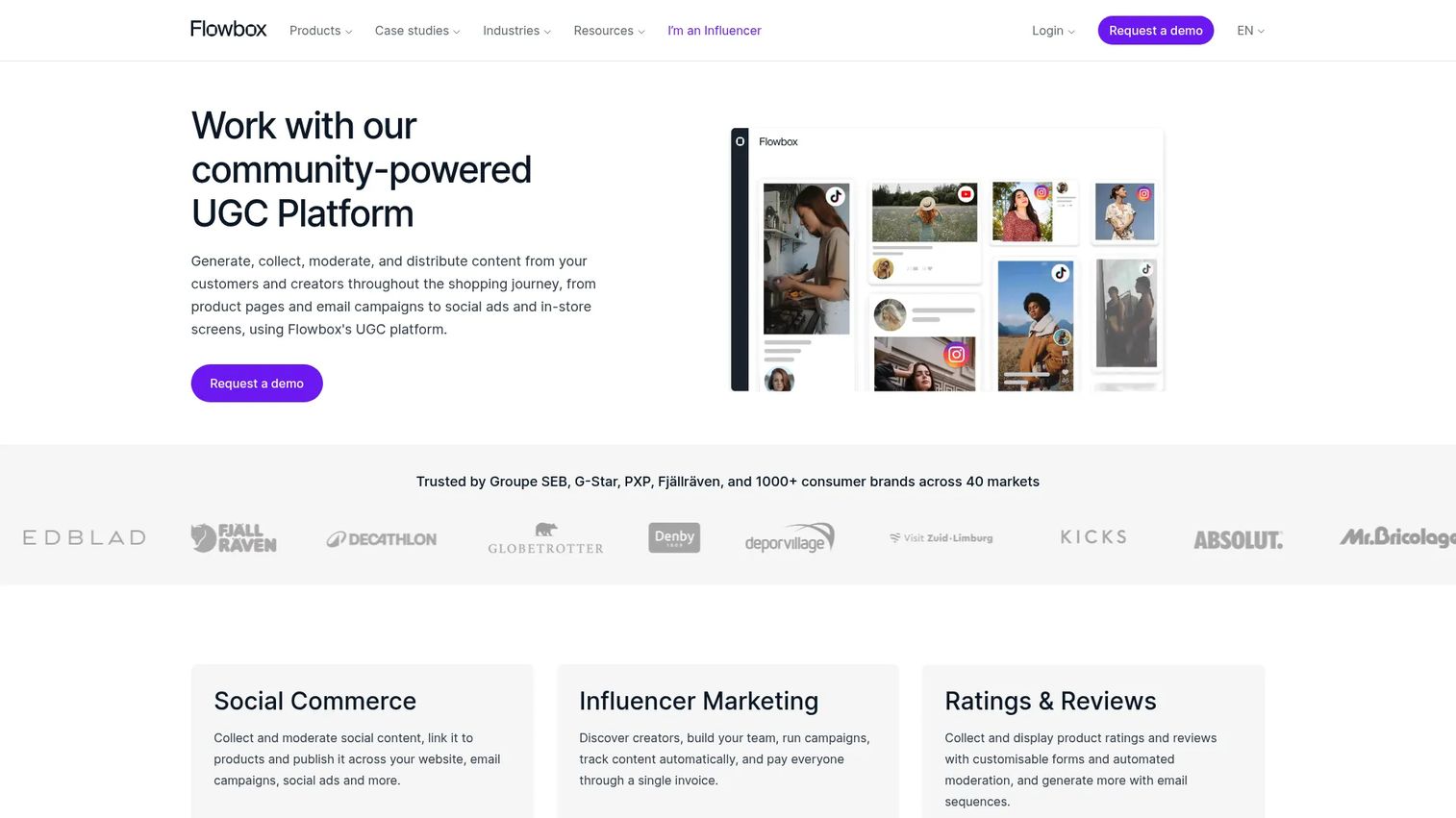
Flowbox is a visual UGC and influencer marketing platform built for ecommerce teams. It collects social content from Instagram, TikTok, Facebook, Pinterest, X, and YouTube; manages media rights; tags content to products using AI recognition; and publishes shoppable galleries on product and category pages. The platform also covers influencer discovery, campaign management, ratings and reviews, and social publishing.
Best for: Ecommerce teams that want customer social content tagged to products and displayed in shoppable galleries on their site.
Key features
- Social content collection across six major platforms
- AI product recognition and manual product tagging
- Media rights request and management workflows
- Shoppable gallery publishing for ecommerce pages
- Influencer discovery and campaign tools
- Performance analytics and ecommerce integrations
Why choose Flowbox: Flowbox earns its place when the goal is connecting social content to onsite conversion. Product tagging and shoppable display are the core differentiators. For teams whose primary need is review syndication or creator sourcing rather than visual display, the platform's focus may be broader than needed.
Flowbox pricing: Custom pricing. Invoiced annually. Price depends on website visitors, domains, features, and add-ons. Contact Flowbox for a quote.
G2 rating: 4.7/5
11. Later
Later is a social media management and influencer marketing platform. Its UGC capabilities sit inside a broader social workflow that includes multi-platform scheduling, visual planning, analytics, AI caption generation, and Link in Bio pages. For teams that want UGC discovery and creator collaboration without migrating to a dedicated UGC-only platform, Later offers these features alongside scheduling in one interface.
Best for: Social media teams that want lightweight UGC discovery and creator tools inside their existing social management workflow.
Key features
- Multi-platform scheduling and auto-publishing
- Visual content calendar and planning
- Creator collaboration and influencer campaign tools
- Link in Bio pages with analytics
- AI caption and content idea generation
Why choose Later: Later makes sense for social teams already managing publishing, scheduling, and analytics in one place who want to add UGC discovery without adopting a separate platform. It's not the right choice for teams whose primary need is review syndication or enterprise-scale rights management.
Later pricing: Plans are billed annually. Starter: $18.75 per month. Growth: $37.50 per month. Scale: $82.50 per month. A 14-day free trial is available. No free tier.
G2 rating: 4.5/5
12. Nosto
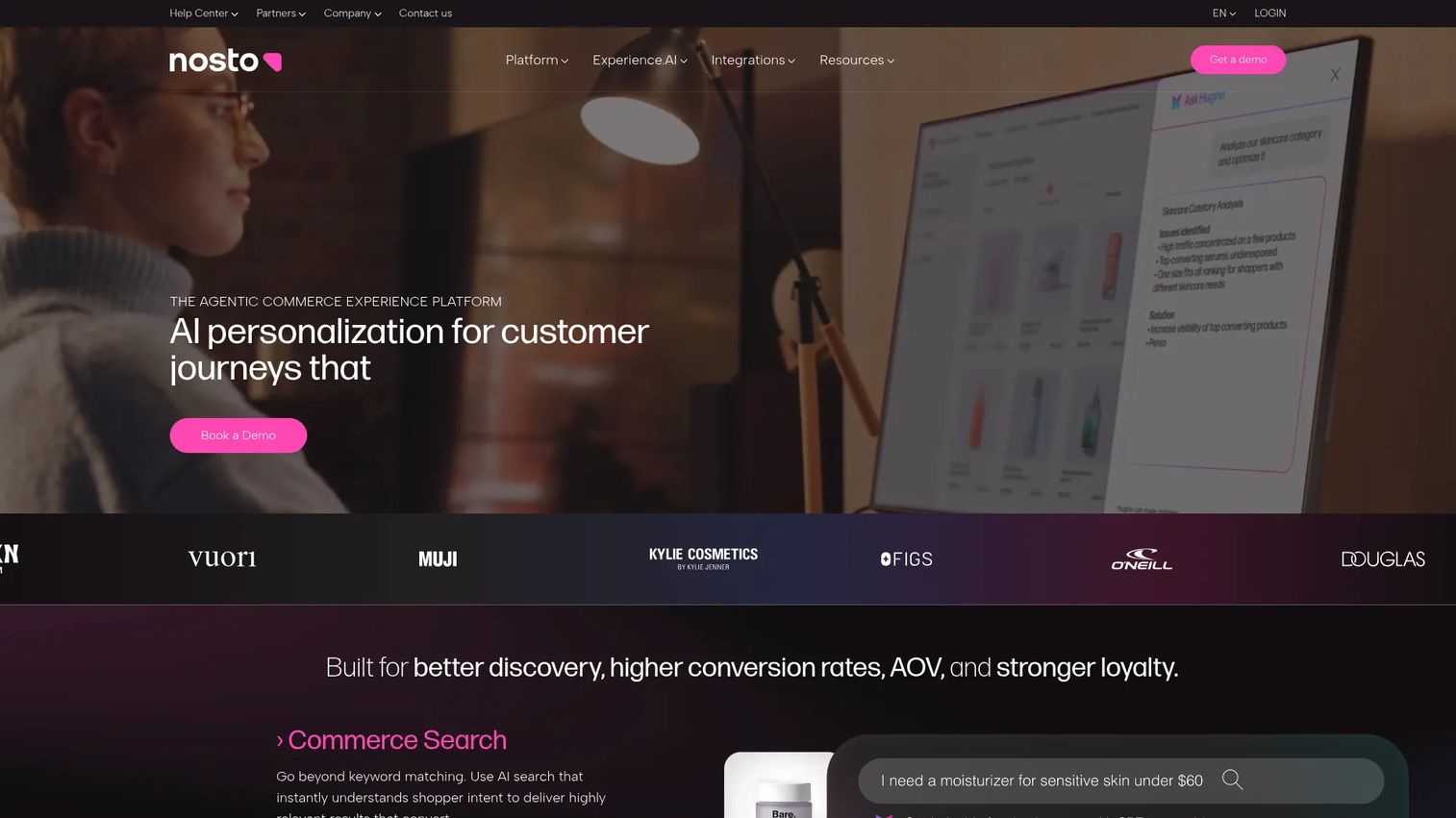
Nosto is an AI-powered Commerce Experience Platform. Its UGC capability is one module within a broader personalization suite that covers search, product recommendations, category merchandising, A/B testing, and behavioral pop-ups. Shoppable UGC in Nosto connects customer social content to product discovery and onsite merchandising logic, so the same session that shows a customer a personalized recommendation can surface relevant UGC alongside it.
Best for: Ecommerce teams that want UGC integrated into broader onsite personalization and merchandising, rather than managed as a standalone content layer.
Key features
- Shoppable UGC with product tagging
- AI-powered search and product recommendations
- Real-time content personalization and behavioral pop-ups
- A/B testing and experimentation
- Dynamic bundles and post-purchase upsell tools
Why choose Nosto: Nosto fits teams where UGC is one part of a larger conversion optimization program. If you're evaluating a personalization platform and want UGC included in that stack rather than as a separate contract, Nosto covers both. Teams that need standalone UGC management without the broader commerce experience layer will find the scope larger than needed.
Nosto pricing: Modular, quote-based pricing. Price depends on GMV, traffic, selected modules, and support requirements. Contact Nosto for a quote.
G2 rating: 4.6/5
13. EmbedSocial
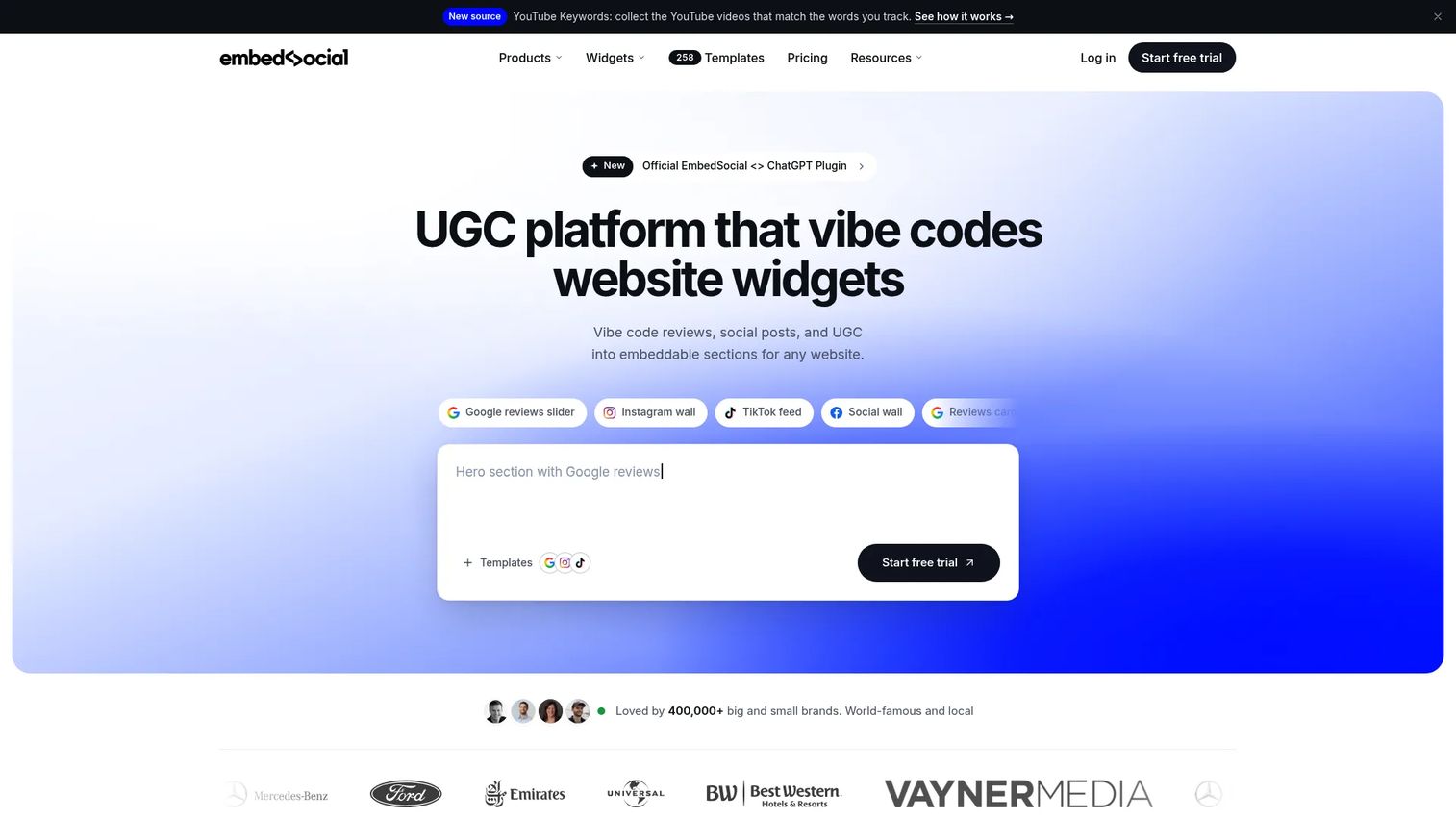
EmbedSocial is a UGC platform for collecting, managing, and embedding social content, reviews, and customer feeds on websites. It uses an AI widget builder to generate embeddable displays and covers social media feeds, review aggregation, story embeds, and form-based content collection. The free tier makes it accessible for small teams running their first social proof experiment.
Best for: Small and mid-market teams that need quick, low-cost website UGC embeds without an enterprise implementation.
Key features
- Social media feed and review widgets
- AI widget builder for fast embed creation
- Story and social proof embeds
- Form-based content collection
- Widget analytics and moderation tools
Why choose EmbedSocial: The free tier (one source, 500 monthly views) lets teams test social proof on their site before committing to a paid plan. For agencies managing multiple client sites, paid tiers add more sources, unlimited widgets, and team collaboration features at a price point significantly below enterprise platforms.
EmbedSocial pricing: Free plan available at $0 per month (1 source, 500 monthly views). Pro: $29 per month. Pro Plus: $49 per month. Premium: $99 per month. Enterprise: Custom pricing.
G2 rating: 4.8/5
14. Emplifi
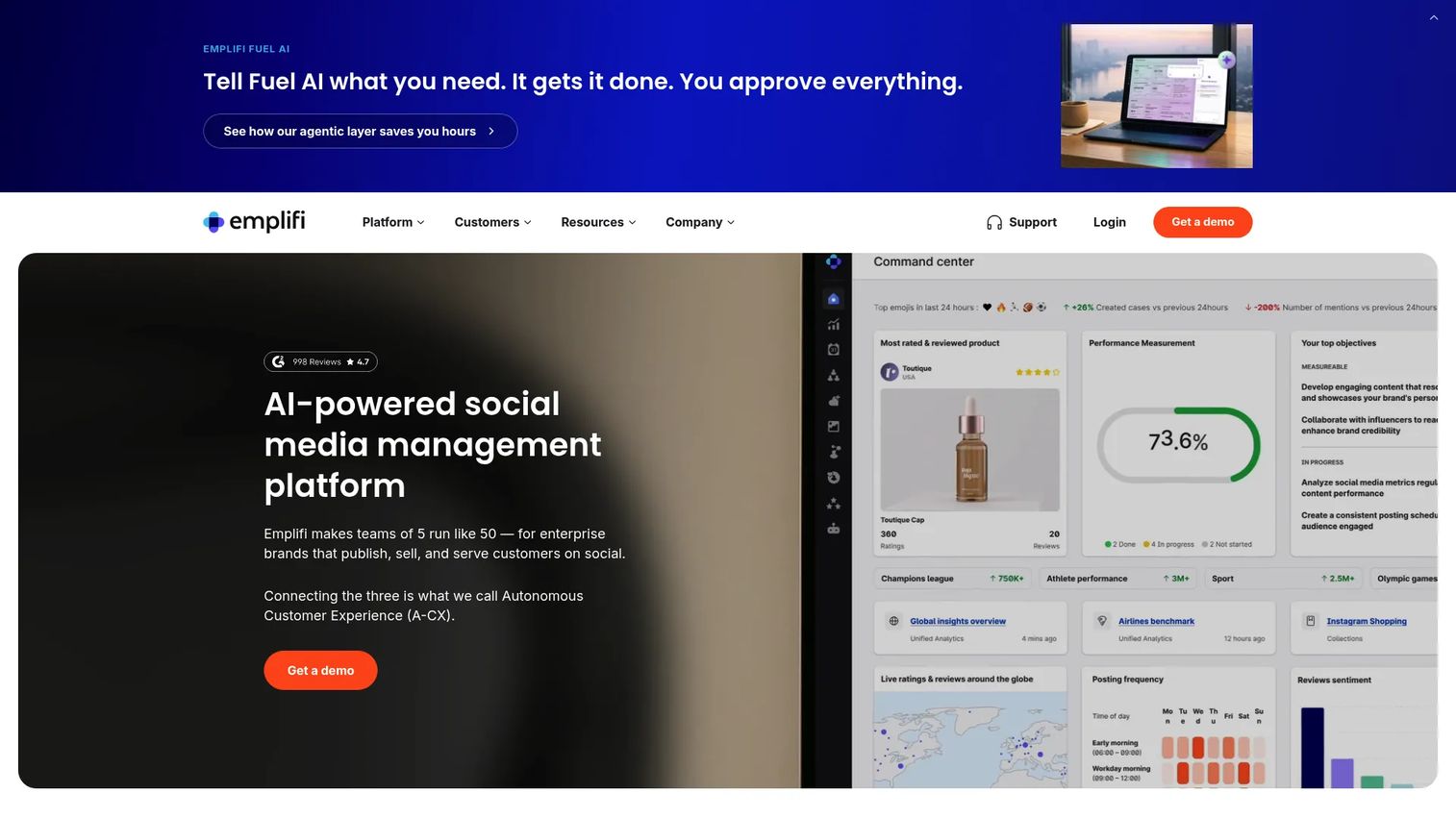
Emplifi is a customer experience platform that combines social marketing, commerce, and customer care. For marketing teams, the relevant surface is the Social Marketing suite, which covers AI-powered content creation, multi-platform publishing, unified analytics and listening, a social inbox for customer care, and UGC workflows alongside creator content and ratings and reviews. Emplifi's scope is enterprise: Its pricing reflects a platform built for large social teams with cross-functional responsibilities.
Best for: Enterprise social teams that need UGC management within a broader social marketing, commerce, and customer engagement platform.
Key features
- AI-assisted content creation and social publishing
- Unified social analytics and listening dashboard
- Unified inbox for social care and messaging
- UGC collection and rights workflows
- Ratings, reviews, and live commerce tools
Why choose Emplifi: Emplifi fits organizations where social publishing, community management, customer care, and UGC are managed by a single team and need to share data across a unified dashboard. The platform entry point reflects its enterprise positioning; smaller teams with narrower UGC needs will find dedicated tools more cost-efficient.
Emplifi pricing: Social Marketing Essential: $1,249 per month. Social Marketing Advanced: $2,499 per month. Intelligent and Social Care tiers use custom quote pricing. No free tier.
G2 rating: 4.4/5
15. Walls.io

Walls.io is a social wall and UGC display platform for websites, live events, digital signage, and internal communications. It aggregates content from 14 sources, including direct uploads, applies AI-assisted moderation, and displays the result in embeddable widgets. Additional features include live polls, lead capture forms, photo booth capabilities, and GDPR/CCPA compliance tools.
Best for: Event, marketing, and internal communications teams that need moderated social walls for live events and website displays.
Key features
- Social media aggregation from 14 sources plus direct uploads
- AI-assisted content moderation and manual approval
- Embeddable widgets for websites and digital signage
- Live polls, reactions, and lead capture forms
- Digital photo booth with branded overlays
Why choose Walls.io: Walls.io is the right choice when the primary output is a live or persistent social display rather than a review syndication network or creator content pipeline. It suits event marketers running conference hashtag walls, community teams managing campaign hubs, and internal communications teams aggregating employee content.
Walls.io pricing: A 14-day free trial is available with no credit card required. Professional plan: $243 per month. Enterprise plan: Custom pricing. No permanent free tier.
G2 rating: 4.8/5
Considerations when choosing user-generated content software
Match the tool to the content source
The single most common buying mistake in this category is evaluating features before defining the content source. A creator marketplace that produces licensed video assets for paid ads, a review platform that syndicates ratings to retail partners, and a visual UGC tool that displays social posts in shoppable galleries are three different purchases. Name the primary job before shortlisting.
Check rights management before publishing anything
Usage rights, attribution, expiration dates, and paid channel permissions must all be documented before you scale distribution. This matters most when content goes into paid ads, where platform policies and copyright law apply simultaneously. Tools that handle rights workflows in-platform (automated permission requests, approval tracking, stored records) reduce the operational risk of scaling UGC into paid creative.
Evaluate moderation and brand safety
Every UGC workflow needs a moderation layer. Consider whether the platform supports automated filters, manual review queues, creator approval workflows, and escalation paths. For brands running campaigns in regulated categories or with broad audiences, the absence of moderation infrastructure creates direct risk.
Look at integrations, not just exports
A UGC platform that can't connect to your ecommerce stack, ad accounts, or CRM creates more reporting work, not less. Verify whether the platform integrates natively with the systems your team already uses: Shopify or commerce platforms, Meta and TikTok ad managers, your MAP, and any retail syndication partners. Tool consolidation is a real ROI driver here, particularly for growth teams managing attribution across multiple channels.
Prove performance beyond engagement
Impressions and clicks don't answer the CAC question. Before committing to a platform, map what performance metrics it can surface: Conversion lift from review display, ROAS on creator video ads, review volume growth, syndication coverage across retail partners, and revenue attributed to shoppable UGC galleries. Establish a baseline first so the comparison is meaningful.
Conclusion
The right user-generated content software depends on what you're trying to produce, where it needs to go, and how you'll prove it worked.
For enterprise review programs with retail distribution, Bazaarvoice and PowerReviews remain the strongest options. Ecommerce teams building reviews into retention programs will find Yotpo's modular stack efficient. Creator content production for paid social points toward Cohley for managed programs, Billo for fast credit-based projects, Insense for ad-ready workflows, and Trend for licensed photo and video at scale.
For visual UGC on ecommerce sites, Flowbox and Nosto are purpose-built, though Nosto adds value only when broader personalization is in scope. Social proof on websites and events is where EmbedSocial and Walls.io lead, with Emplifi serving enterprise teams that need UGC inside a full social operations platform.
Start by shortlisting three tools based on your primary content source, rights requirements, and publishing channel. Run pilots that measure the specific metric you're accountable for, whether that's review volume, ad ROAS, or onsite conversion lift, before committing to an annual contract.
Start your journey with Guideflow today!
FAQs about user-generated content software
User-generated content software helps brands collect, manage, publish, and measure content created by customers, creators, or community members. Core functions include collection (reviews, social posts, creator submissions), rights management (permission requests and usage licensing), moderation (approval queues and filters), publishing (website widgets, ad exports, retail syndication), and analytics (conversion impact, review volume, content performance).
The terms are largely interchangeable in practice. "Software" tends to emphasize a specific functional capability, such as review collection or rights management. "Platform" often implies an end-to-end workflow that covers sourcing, managing, distributing, and measuring content across multiple channels. Many vendors use both terms for the same product.
There is no universal answer because ecommerce needs vary by content priority. Review-heavy brands that sell through retail partners tend to need Bazaarvoice or PowerReviews for syndication reach. Brands focused on onsite conversion with visual content benefit more from Flowbox or Nosto for shoppable gallery display. Yotpo suits brands that want reviews, loyalty, and UGC in a single ecommerce-native stack.
Most platforms automate permission requests by sending a message to the content creator asking for rights to repurpose their post. Approval status, expiration dates, and usage scope (organic, paid, or retail) are recorded in the platform. Paid channel usage carries the highest risk; always verify that the rights grant explicitly covers advertising before exporting content to ad platforms.
Yes. Creator content platforms like Billo, Insense, and Trend are built specifically for this workflow. They deliver licensed video content ready for Meta and TikTok campaigns, with some platforms integrating directly with ad managers to reduce the steps from approved content to live spend. Customer testimonials and product videos from these platforms are commonly used to refresh ad creative and reduce creative fatigue without increasing production costs.
The five features that have the most impact on day-to-day operations are rights management workflows, content moderation and approval queues, publishing integrations with ecommerce and ad platforms, analytics tied to revenue metrics (conversion lift, ROAS, review volume), and syndication reach for review-focused programs. Prioritize based on your primary use case rather than evaluating all five equally.
Establish a baseline before switching tools. For review programs: Track review volume growth, average rating, and conversion rate on pages with reviews versus pages without. For creator content in paid channels: Measure ROAS and cost per acquisition against studio creative benchmarks. For visual UGC on product pages: Measure click-through rate on shoppable galleries and revenue attributed to UGC-influenced sessions. Attribution methodology matters as much as the metrics chosen.
No. EmbedSocial's free tier, Billo's one-time credit packs, and Trend's project-based pricing all serve small teams without requiring enterprise contracts. Smaller brands typically start with creator video for paid social or website embeds for social proof, where the investment is low and the feedback loop is fast. Enterprise features like retail syndication, advanced governance, and multi-brand management become relevant as volume and organizational complexity grow. For more content marketing tools and social media management tools that complement a UGC stack, see our related guides. Teams focused on marketing analytics software will also find those resources useful for building the measurement layer around any UGC program.