Your ERP can be spotless and your forecast can still miss badly. The reason is usually the same: Supplier commitments, shipment signals, and compliance documents arrive too late to act on. According to the MHI Annual Industry Report (2025), 75% of companies say supply chain synchronization and coordination is genuinely challenging. That number reflects a structural problem, not a software configuration issue.
Supply chains break at partner handoffs, not inside the four walls of the company. A purchase order confirmed late by a Tier 2 supplier, a container sitting unreported at a port, an invoice stuck in a compliance queue: Each of these creates downstream drag that no internal planning system can fully compensate for. The category built to fix this is supply chain business networks, platforms that connect external partners into shared data, document, and workflow layers.
This guide cuts through the vendor noise and gives you a practical shortlist of 15 platforms, separated by what each one actually does best.
What's inside
This guide is for founders, COOs, procurement leaders, and operations executives comparing supply chain network platforms. It covers:
- Multi-enterprise platforms for supplier, logistics, procurement, and trading-partner collaboration
- Broad networks and focused tools separated by best-fit use case
- Selection criteria tied to partner onboarding speed, network density, data interoperability, compliance depth, and execution workflows
- Verified pricing context and G2 ratings for each tool
Tools were chosen based on network reach, supplier onboarding capability, logistics and procurement coverage, analytics, and implementation track record across enterprise deployments.
TL;DR
- Best overall enterprise network: SAP Business Network, for organizations that need procurement, logistics, asset collaboration, and trading-partner document exchange in one platform
- Best procurement-led network: SAP Ariba or Coupa Supply Chain Collaboration, for supplier collaboration tied to sourcing, spend, and invoicing workflows
- Best network-first architecture: E2open e2net, for companies that need reusable partner connections and a normalized external data model
- Best for planning plus execution: Kinaxis Maestro or Blue Yonder Supply Chain Network, for teams connecting supply chain planning to network-aware operational response
- Best logistics visibility layer: Project44 or FourKites, for teams focused on carrier visibility, ETA signals, and shipment exception management
- Founder takeaway: Pick the network that matches the highest-friction handoff, not the vendor with the broadest slide deck
What is a supply chain business network?
A supply chain business network is a digital platform that connects multiple companies across a supply chain so they can share data, documents, workflows, and operational signals in a shared environment.
It is different from an ERP because it extends outside the company walls to connect external suppliers, carriers, distributors, and customers. It differs from a supply chain design map because it supports live transaction workflows and real-time collaboration, not just static modeling. Unlike point-to-point EDI, a modern business network often lets partners connect once and reuse those connections across multiple buyers or relationships.
The participants in a supply chain network are the nodes: Suppliers, plants, warehouses, ports, carriers, distribution centers, retailers, and end customers. The connections between them, the links, carry material flows, shipment legs, financial documents, data exchanges, and contractual commitments.
Key capabilities across this category:
- Supplier and partner onboarding
- Electronic document exchange (purchase orders, invoices, ASNs, customs documents)
- Purchase order and forecast collaboration
- Shipment, carrier, and inventory visibility
- Exception management and workflow routing
- Trade compliance and e-invoicing support
- Analytics, anomaly detection, and recommendation workflows
- Network data model or digital twin representation
- APIs, EDI, portals, and reusable partner connections
The global multi-enterprise supply chain networks market was estimated at $8.4 billion in 2025 (Dataintelo, 2025). That growth reflects the shift from bilateral integrations, which require individual setup per partner relationship, toward shared network infrastructure that spreads connection costs across many participants.
Platforms in this category range from broad business networks covering procurement through logistics, to specialized logistics visibility layers, to procurement-led collaboration suites. Understanding which type matches your broken handoff is the first decision to get right.
When to use supply chain business network tools
Connect external partners without rebuilding every integration
Bilateral integrations fail at scale. When supplier count grows from 50 to 500, or when a carrier network spans 30 countries, maintaining one-off IT connections becomes the bottleneck itself. A network platform makes partner onboarding repeatable: Connect once, extend to new partners using existing infrastructure. The integration cost shifts from custom development to configuration and onboarding.
Respond to disruptions before they become board problems
Visibility is necessary but not sufficient. The platforms that justify their cost in tough quarters are the ones that connect signals to operational action. A shipment delay should trigger an exception workflow and a recommended response, not just a dashboard alert. Supply chain resilience, measured partly by Time to Recover after a disruption, improves when the platform routes ownership and records resolution, not just flags problems.
Standardize documents, compliance, and collaboration
Purchase orders, invoices, advance shipping notices, customs documents, and e-invoicing mandates all create friction when managed through email and spreadsheets. A network platform standardizes these flows, reduces manual work, and creates cleaner audit trails. For companies operating across multiple countries, the compliance layer (e-invoicing mandates, customs filing, restricted-party screening) becomes as important as the operational visibility layer.
Supply chain business network tools comparison
The table below covers all 15 platforms with verified pricing and G2 ratings. Most enterprise platforms in this category use quote-based pricing; ask sales to break out subscription cost, integration fees, and partner activation costs separately.
| # | Product | Best for | Key differentiator | Pricing | G2 rating |
|---|---|---|---|---|---|
| 1 | SAP Business Network | Broad enterprise multi-enterprise collaboration | Procurement, logistics, asset, and trading-partner network in one | Free supplier tier; enterprise quote-based | 4.2/5 |
| 2 | SAP Ariba | Procurement-led supplier collaboration | Source-to-pay with supplier discovery and invoice workflows | Quote-based | 4.1/5 |
| 3 | GEP Business Network | Unified procurement and supply chain collaboration | Multi-tier supply chain and procurement in one vendor relationship | Quote-based | N/A |
| 4 | E2open e2net | Network-first supply chain connectivity | Large partner network with reusable multi-tenant connections | Quote-based | 2.5/5 |
| 5 | E2open Harmony | Unified UX across e2open supply chain applications | Connects e2open visibility, planning, and trade modules | Quote-based | N/A |
| 6 | Infor Nexus | Global supply chain and trade orchestration | Multi-enterprise network covering goods, documents, and capital | Quote-based | 4.1/5 |
| 7 | Oracle Fusion Cloud Supply Chain Collaboration | Oracle-centered supply chain collaboration | Native integration across Oracle SCM and ERP workflows | Quote-based | N/A |
| 8 | Blue Yonder Supply Chain Network | Planning and execution network alignment | Multi-enterprise visibility and orchestration with command center | Quote-based | 4.1/5 |
| 9 | Kinaxis Maestro | Concurrent planning and rapid scenario response | AI-infused end-to-end supply chain orchestration | Quote-based | N/A |
| 10 | Coupa Supply Chain Collaboration | Spend and supplier collaboration | Purchase order, forecast, and delivery-schedule coordination | Quote-based | 4.2/5 |
| 11 | One Network Enterprises | Multi-party execution across trading partners | Real-time planning and execution network with AI/ML decisioning | Quote-based | 4.2/5 |
| 12 | Tradeshift | Supplier commerce, AP automation, and e-invoicing | Transaction-based pricing with a free entry tier for sellers | Free up to 30 invoices/quarter; $0.30 to $0.80/transaction | 3.8/5 |
| 13 | Jaggaer One | Source-to-pay supplier network governance | Strategic sourcing, contracts, and procurement in one suite | Quote-based | 4.1/5 |
| 14 | Project44 | Transportation visibility and logistics operations | Carrier network visibility with AI-powered exception and TMS | Quote-based | 4.7/5 |
| 15 | FourKites | Freight tracking and yard management | Real-time multimodal visibility and predictive disruption warnings | Quote-based | 4.5/5 |
Best 15 tools for supply chain business networks
1. SAP Business Network
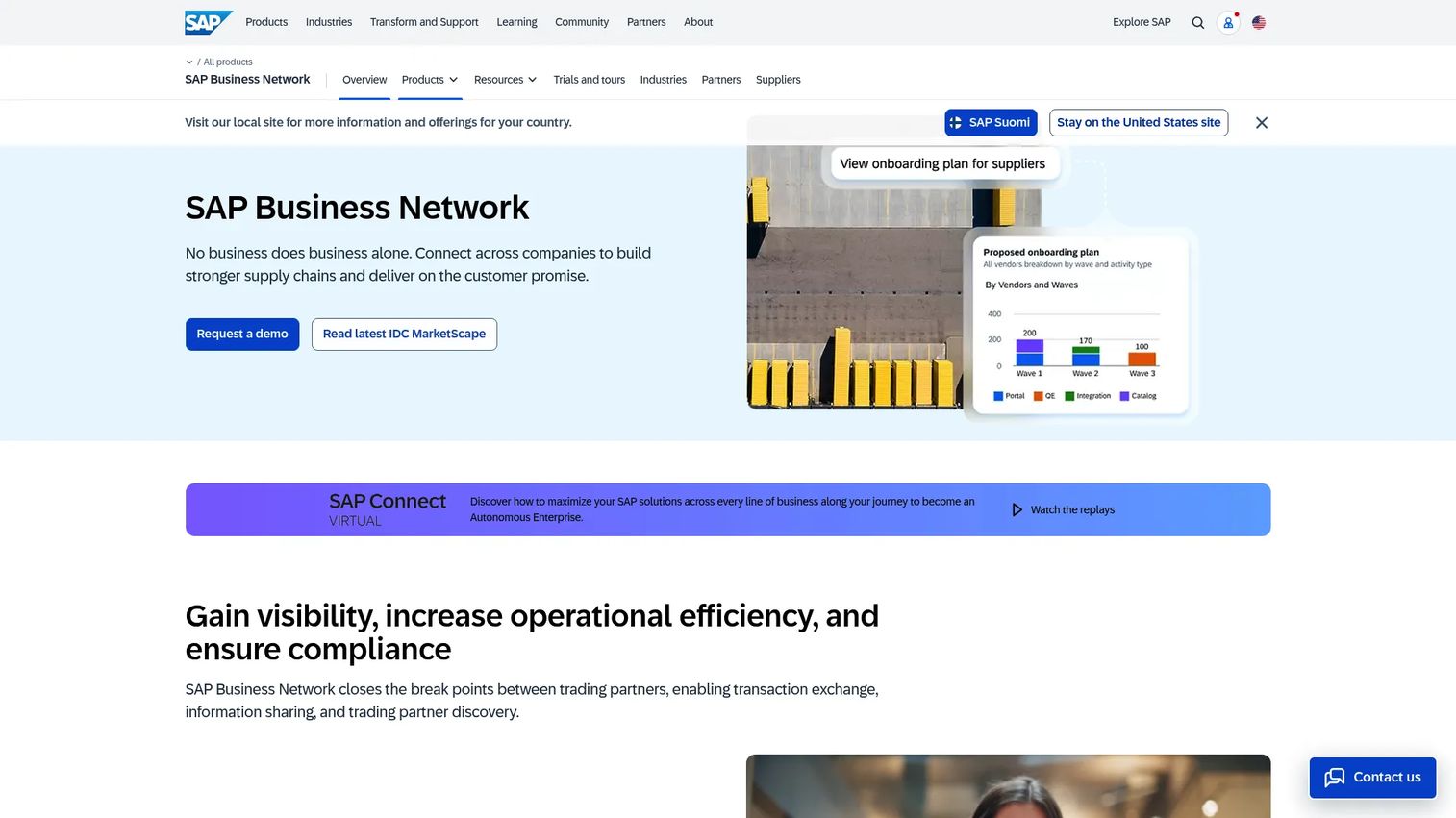
SAP Business Network is a hosted B2B collaboration platform connecting buyers, suppliers, logistics providers, and trading partners across procurement, supply chain, logistics, and asset-management processes. It handles electronic order management, e-invoicing, supplier discovery, catalog management, and real-time document and payment-status visibility. The platform supports supplier onboarding, logistics collaboration, asset collaboration, and material traceability within one network.
Best for: Large enterprises that need procurement, logistics, supplier collaboration, and compliance under one network platform.
Key features
- Supplier onboarding and searchable supplier profiles
- Electronic order management and e-invoicing
- Logistics and asset collaboration workflows
- Material traceability across supply tiers
- Real-time document and payment-status visibility
Why choose SAP Business Network: Choose it when network breadth matters more than depth in any single workflow. It fits organizations ready for enterprise-scale change management and committed to the SAP ecosystem across multiple functions.
SAP Business Network pricing: The Standard supplier account is free. Enterprise pricing combines a fixed subscription with transaction-volume fees, and Promote subscription pricing requires login to view. Ask SAP to itemize subscription, transaction, and integration costs at initial scoping.
G2 rating: 4.2/5
2. SAP Ariba

SAP Ariba is an enterprise spend-management and procurement platform covering sourcing, supplier collaboration, contracts, buying, and invoicing. It sits inside the SAP ecosystem and connects directly to SAP Business Network for supplier-facing workflows. The Ariba Network is one of the largest supplier networks by transaction volume, which reduces onboarding friction for suppliers already registered.
Best for: Companies that need supplier collaboration tied to sourcing, contracts, purchasing, and invoice management in a single procurement motion.
Key features
- AI-assisted sourcing with bid analysis and RFx workflows
- Supplier discovery, onboarding, and collaboration
- Guided buying, catalog management, and procurement workflows
- Automated invoice processing and centralized invoice management
- Source-to-contract and procure-to-pay process coverage
Why choose SAP Ariba: Use it when procurement is the first broken handoff and supplier governance is a priority. It is less appropriate as a standalone logistics visibility layer or when the team is not already committed to the SAP stack.
SAP Ariba pricing: The standard edition is priced per user per year under a 1 to 5-year contract; the exact figure requires a quote from SAP. Supplier accounts on the connected SAP Business Network have a free Standard tier.
G2 rating: 4.1/5
3. GEP Business Network
GEP Business Network is an enterprise platform for connecting and collaborating with suppliers, customers, distributors, and other supply chain partners across procurement and operations. GEP positions it around multi-tier supply chain collaboration, supplier identification and authentication, forecast and capacity-planning collaboration, and AI-driven recommendations. The platform supports low-code and no-code configuration for adapting workflows without heavy IT involvement.
Best for: Enterprises that want procurement and supply chain collaboration managed through a single vendor relationship rather than separate procurement and network tools.
Key features
- Multi-tier supply chain collaboration
- Supplier and partner identification, invitation, and authentication
- Forecast, purchase order, and capacity-planning collaboration
- Low-code/no-code workflow configuration
- Supplier discovery and information sharing
Why choose GEP Business Network: Use it when procurement and supply chain transformation sit in the same executive program. Validate network depth by region and supplier type before committing, since GEP's network reach varies by geography and industry.
GEP Business Network pricing: GEP does not display pricing on the public site. Ask GEP's sales team for a quote that separates the platform subscription, module costs, and partner onboarding fees.
4. E2open e2net
E2open e2net is a scalable, multi-enterprise cloud network for connecting trading and logistics partners across supply chain operations. Its key architectural claim is reusable multi-tenant connections: A supplier or carrier already on the e2net network connects once, then reuses that connection for multiple buyer relationships. The platform includes a canonical data model that normalizes data from different partners into a consistent representation, reducing the translation work between systems.
Best for: Companies that need reusable connections across a large base of trading partners and want to treat network density as a strategic capability, not a one-time integration project.
Key features
- Reusable multi-tenant trading-partner connections
- Integrated data model creating a digital representation of the physical supply chain
- SAP-certified ERP connectivity
- Real-time collaborative visibility and secure data exchange
- Partner onboarding at reduced incremental cost per new connection
Why choose E2open e2net: Use it when the biggest bottleneck is repeatedly connecting external partners from scratch. Organizations with high partner turnover or rapid geographic expansion benefit most from the reusable-connection model.
E2open e2net pricing: E2open does not publish e2net pricing. Ask sales for quote-based pricing tied to transaction volume, partner count, and module scope.
G2 rating: 2.5/5 (based on 1 verified G2 review for E2net Open Partner Network)
5. E2open Harmony

E2open Harmony provides a unified user experience across e2open's connected supply chain applications, covering visibility, collaboration, planning, global trade, logistics, and supply operations. Where e2net is the network connectivity layer, Harmony is the interface and workflow orchestration layer that brings together data from different e2open modules into one operating view. It supports exception management, decision support, and operational recommendations across the connected network.
Best for: Organizations already running multiple e2open modules that want consistent workflows, shared data, and exception handling across planning, execution, and trade functions.
Key features
- Common user experience across e2open supply chain applications
- Streamlined workflows and integrated cross-module processes
- End-to-end supply chain visibility and collaboration
- Exception management and operational decision support
- Network orchestration connecting e2open data layers
Why choose E2open Harmony: Use it when you have or plan to deploy multiple e2open capabilities and need a unified operating layer rather than switching between separate module interfaces. Confirm which e2open modules are required for your specific use case before scoping the deployment.
E2open Harmony pricing: No public pricing is available. Contact e2open for a quote that covers the Harmony layer alongside any underlying e2open module subscriptions.
6. Infor Nexus
Infor Nexus is a cloud-based, multi-enterprise supply chain network platform connecting supply chain partners and orchestrating processes from source to delivery and payment. It covers purchase order collaboration, supplier and carrier collaboration, shipment visibility, trade documentation, supply chain finance, and AI-driven predictive insights. Infor positions Nexus strongly for global manufacturing, retail, and apparel supply chains where goods movement, trade documents, and working capital all need a shared operating layer.
Best for: Companies managing global goods movement, supplier collaboration, and trade finance together, particularly in retail, apparel, and manufacturing with complex international lanes.
Key features
- End-to-end visibility for orders, shipments, and inventory
- Supplier and carrier collaboration and engagement
- Global transportation planning and execution
- Supply chain finance and financial process automation
- Multi-tier traceability and sustainability management
Why choose Infor Nexus: Use it when physical goods, trade documents, and financial flows need one shared platform rather than separate procurement and logistics tools. Validate fit by industry and the complexity of your international trade lanes.
Infor Nexus pricing: Infor does not display pricing publicly for Nexus. Ask sales for a quote separating platform access, transaction volume, and supply chain finance module costs.
G2 rating: 4.1/5 (based on 8 verified G2 reviews)
7. Oracle Fusion Cloud Supply Chain Collaboration
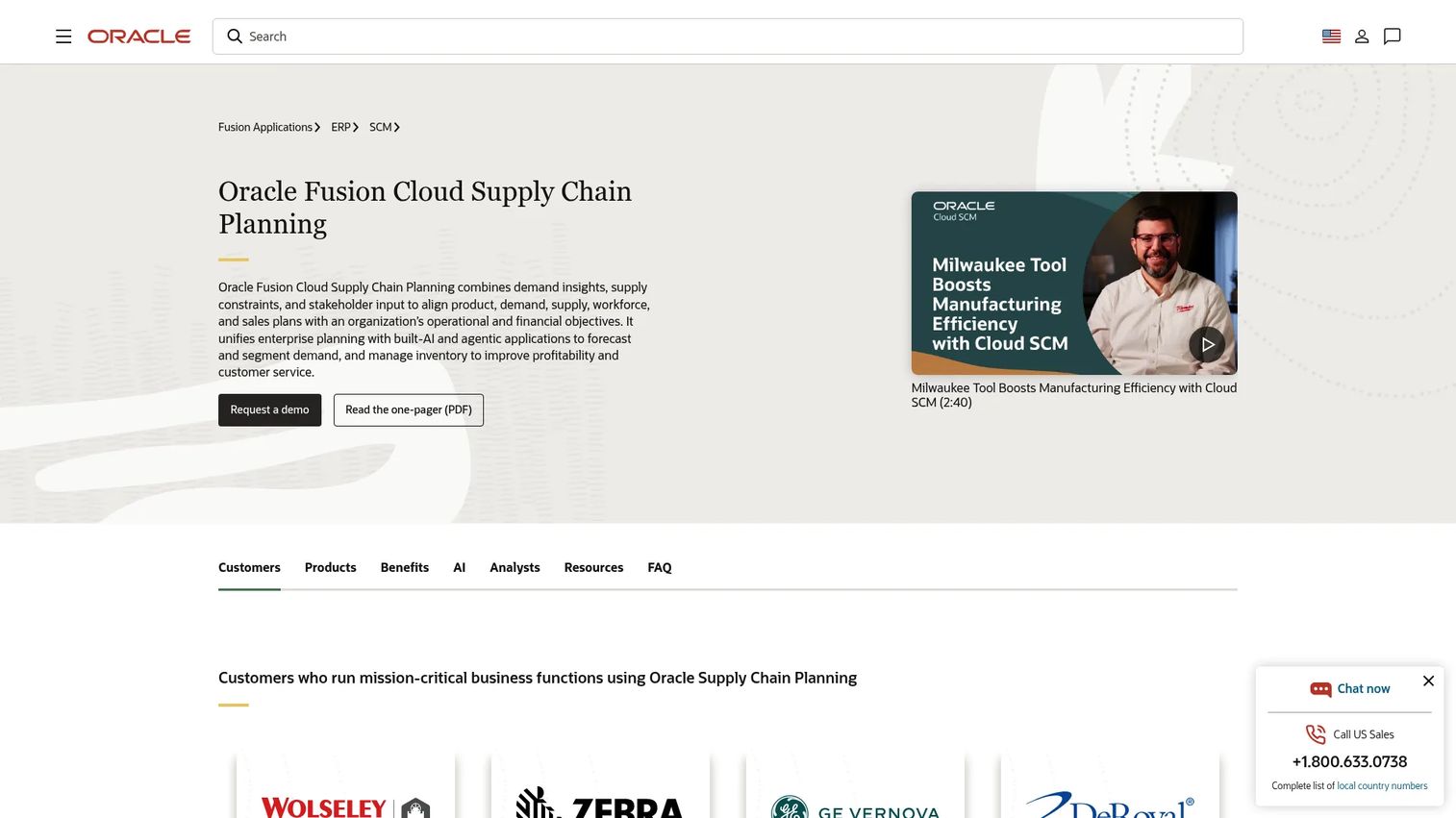
Oracle Fusion Cloud Supply Chain Collaboration is a cloud platform for coordinating supply, demand, vendor-managed inventory, contract manufacturing, and B2B processes with trading partners. It is natively integrated with Oracle Fusion Cloud SCM and ERP, which makes it the natural collaboration layer for companies already standardizing on Oracle. Supplier order-forecast collaboration, VMI replenishment workflows, and contract manufacturing production-status updates are its core workflows.
Best for: Large enterprises committed to Oracle Cloud as the system of record for supply chain and ERP operations.
Key features
- Supplier order-forecast collaboration and commitment management
- Vendor-managed inventory with replenishment workflows and inventory thresholds
- Contract manufacturing collaboration and production-status updates
- Native integration with Oracle Fusion Cloud SCM and ERP
- Supply planning support and multilevel supply chain coordination
Why choose Oracle Fusion Cloud Supply Chain Collaboration: Use it when Oracle is already the center of your technology stack. It reduces fragmentation for teams that want their collaboration layer to read and write directly into Oracle SCM data rather than maintaining a separate integration.
Oracle Fusion Cloud Supply Chain Collaboration pricing: Oracle maintains a global price list for Fusion Cloud services, but the specific price for the supply chain collaboration module requires a quote. Ask Oracle to include the license, implementation, and user access fees as separate line items.
G2 rating: No verified G2 rating for this specific product at time of writing.
8. Blue Yonder Supply Chain Network
Blue Yonder Supply Chain Network is an AI-powered digital supply chain network connecting trading partners with multi-enterprise visibility, real-time orchestration, and coordinated execution. It covers multi-tier inventory, order, shipment, and product data, and includes a Supply Chain Command Center with alerts, analytics, and execution workflows. Blue Yonder positions the platform for retail, manufacturing, and distribution use cases where planning and execution need tighter feedback loops across partners.
Best for: Enterprises that need planning, inventory visibility, and network execution to respond together when demand or supply conditions shift.
Key features
- Multi-enterprise connectivity and multi-tier inventory visibility
- Real-time order, shipment, and product data orchestration
- Supply Chain Command Center with alerts and analytics
- Network-aware execution and fulfillment workflows
- AI-powered orchestration and decision support
Why choose Blue Yonder Supply Chain Network: Use it when forecast changes need to trigger operational responses across inventory and fulfillment partners, not just internal planning teams. Validate implementation scope carefully; Blue Yonder deployments in large retail and manufacturing environments typically require significant configuration and change management.
Blue Yonder Supply Chain Network pricing: Blue Yonder directs buyers to contact sales for pricing. Ask for a quote that separates the network layer, planning modules, and implementation services.
G2 rating: 4.1/5 (for Blue Yonder overall on G2)
9. Kinaxis Maestro
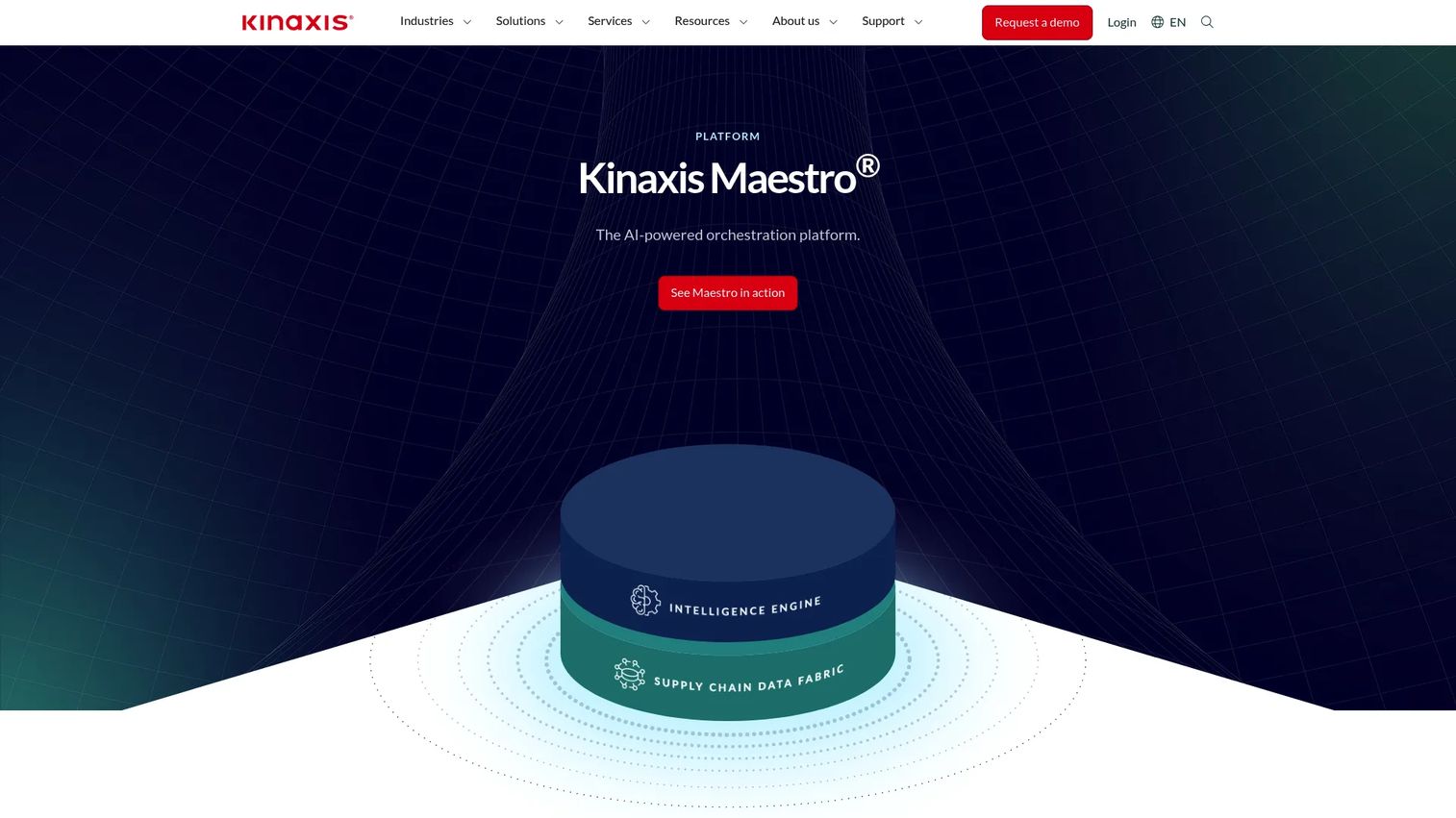
Kinaxis Maestro is an AI-infused end-to-end supply chain orchestration platform built around concurrent planning: The ability to plan across demand, supply, and operations simultaneously rather than sequentially. It supports rapid scenario modeling so teams can evaluate alternative responses before committing to a course of action. Maestro connects supply chain planning to external signals and execution workflows, making it a strong choice when decision latency is the primary operational cost.
Best for: Large enterprises that need fast scenario planning and concurrent supply chain decisioning when demand, supply, or logistics conditions change.
Key features
- Concurrent supply chain planning and decisioning across functions
- Real-time visibility and scenario modeling
- AI-powered automation and decision intelligence
- Supply response management and collaboration workflows
- Integration with external signals and execution systems
Why choose Kinaxis Maestro: Use it when the core pain is the time it takes leadership to understand options and commit to a response. It helps teams avoid reacting to disruptions after they become revenue misses. It is a planning and response platform first; buyers should evaluate separately whether they also need a supplier collaboration or logistics visibility layer.
Kinaxis Maestro pricing: Kinaxis directs buyers to request a demo; no public pricing is available. Ask sales for a quote that breaks out platform access, user licensing, and implementation costs.
G2 rating: No verified G2 rating for Kinaxis Maestro specifically at time of writing.
10. Coupa Supply Chain Collaboration
Coupa Supply Chain Collaboration enables buyers and suppliers to coordinate purchase orders, forecasts, delivery schedules, and supply commitments. It supports PO collaboration with confirmations, comments, CSV processing, and change history, forecast collaboration for sharing demand forecasts and supplier responses, and scheduling-agreement collaboration for delivery schedules. Coupa positions the product as part of its broader spend management suite, so it fits organizations that want supplier collaboration and spend visibility in one platform.
Best for: Organizations that need structured buyer-supplier collaboration tied to spend discipline, where the CFO and procurement leader both care about supplier network performance.
Key features
- Purchase order collaboration with confirmations and change history
- Forecast collaboration with demand sharing and supplier responses
- Scheduling agreement collaboration for delivery commitments
- Supplier communication and shortage visibility management
- Integration with Coupa's spend management and invoicing suite
Why choose Coupa Supply Chain Collaboration: Use it when spend visibility and supplier collaboration are tightly linked business goals. It is strongest when the finance team is already involved in procurement governance rather than treating supply chain collaboration as a separate operational function.
Coupa Supply Chain Collaboration pricing: Coupa does not display pricing on its public site. Ask sales for a quote that separates the collaboration module, spend management components, and supplier portal access.
G2 rating: 4.2/5 (for Coupa overall on G2)
11. One Network Enterprises
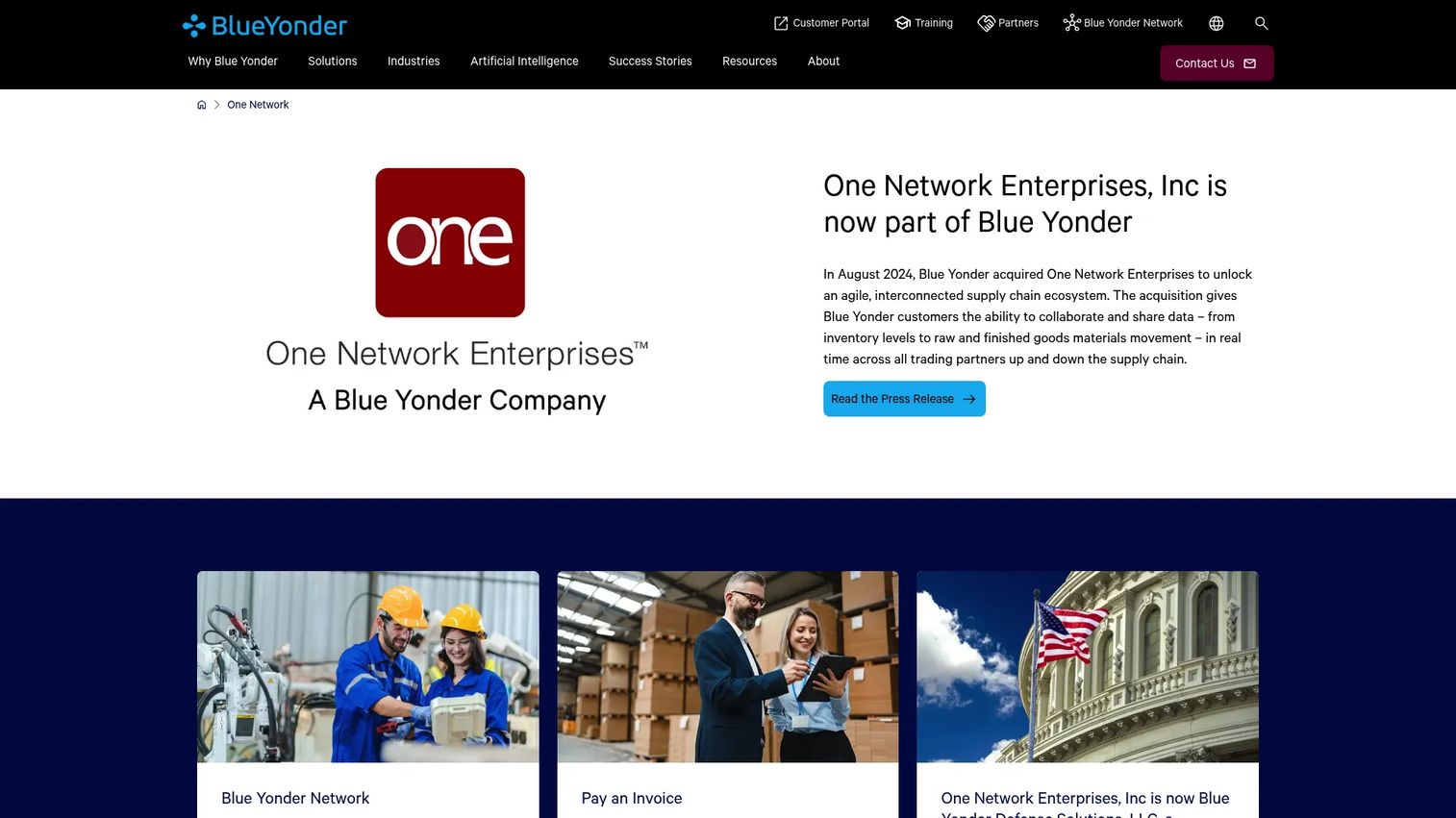
One Network Enterprises is a supply chain management provider offering a multi-party digital supply chain network for planning, execution, visibility, collaboration, and optimization. It connects demand, supply, logistics, and execution coordination across multiple companies on one shared plan, and includes AI/ML-powered autonomous decisioning and real-time control tower capabilities. Note that One Network has been acquired by Blue Yonder; confirm the current product roadmap and go-to-market structure with the vendor before committing.
Best for: Large, complex enterprises managing multi-party supply chain planning and execution where multiple companies must act on the same operational plan.
Key features
- Multi-party supply chain collaboration and execution
- Real-time control tower visibility and AI/ML decisioning
- Integrated planning and execution on a shared network
- Logistics optimization and transportation execution
- Demand collaboration across trading partners
Why choose One Network Enterprises: Use it when internal planning alone is not enough because the execution outcome depends on suppliers, logistics partners, and customers acting in coordination. Verify the current product structure and roadmap given the Blue Yonder acquisition.
One Network Enterprises pricing: No public pricing is available. Contact the vendor directly for a quote, and clarify product positioning within the Blue Yonder portfolio before starting a commercial conversation.
G2 rating: 4.2/5
12. Tradeshift
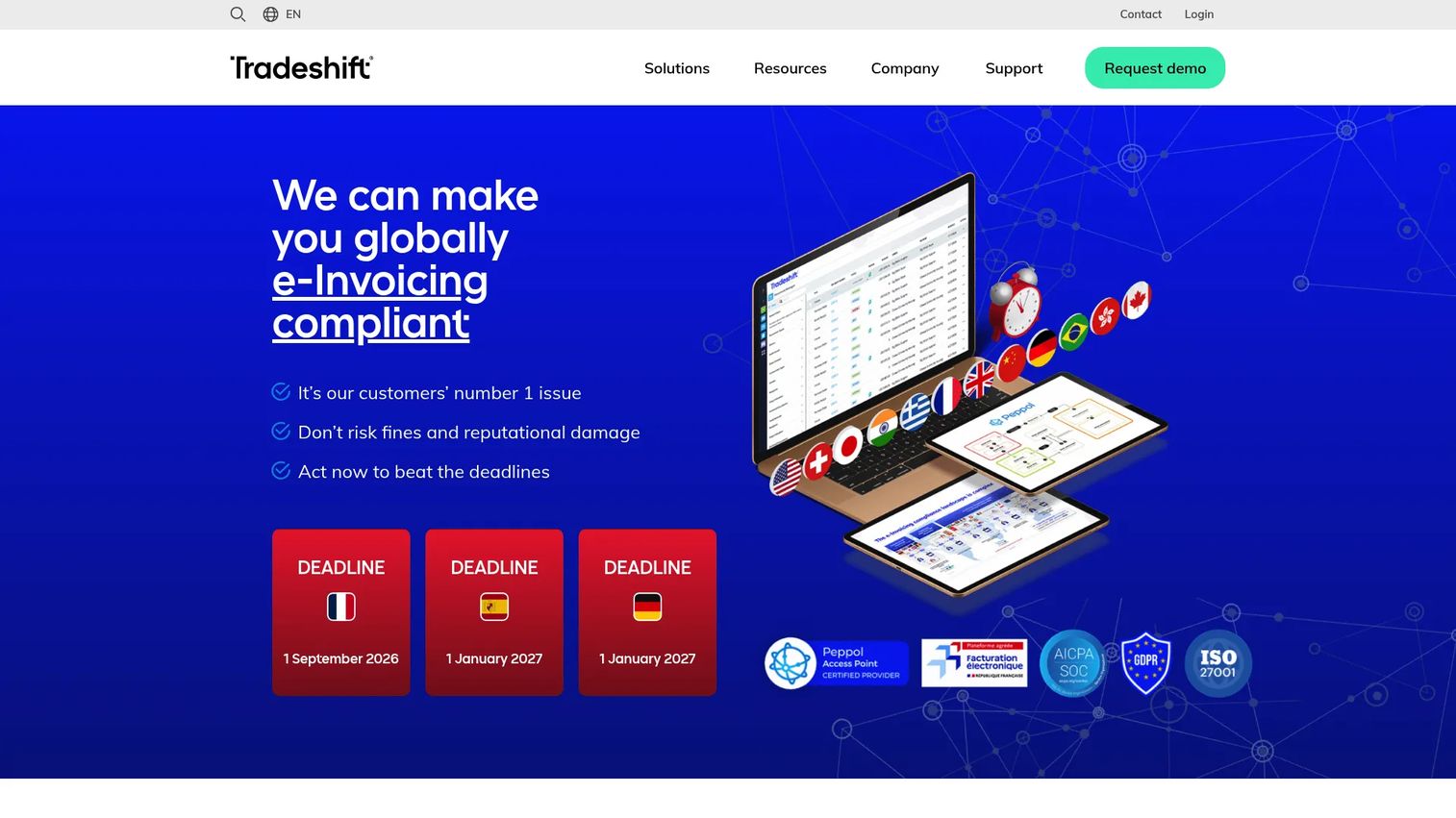
Tradeshift is a business commerce platform for AP automation, global e-invoicing compliance, procurement, supplier collaboration, and payments. It is more finance and supplier-commerce led than logistics led, and its transaction-based pricing model makes it one of the few platforms in this category with a public, verifiable entry tier. Tradeshift supports e-invoicing compliance and clearance across global markets and handles supplier onboarding at scale.
Best for: Mid-sized and large businesses where supplier invoicing, AP automation, and e-invoicing compliance create the highest operational drag.
Key features
- AI-powered invoice capture, coding, validation, and matching
- Global e-invoicing compliance and clearance
- Supplier onboarding and commerce collaboration
- Approval workflows and real-time AP insights
- ERP and business-system integrations
Why choose Tradeshift: Use it when invoicing and supplier commerce are the primary friction points. It is more appropriate as a finance and supplier collaboration layer than as a logistics visibility or procurement sourcing tool.
Tradeshift pricing: Seller pricing is transaction-based and billed quarterly in arrears. The entry tier covers up to 30 invoices per quarter at no charge. Paid tiers run from $0.80 per transaction for 31 to 300 transactions, down to $0.30 per transaction for 3,001 to 15,000 transactions. Above 15,001 transactions per quarter, pricing is custom. Buyer and platform subscription pricing requires a sales conversation.
G2 rating: 3.8/5
13. Jaggaer One
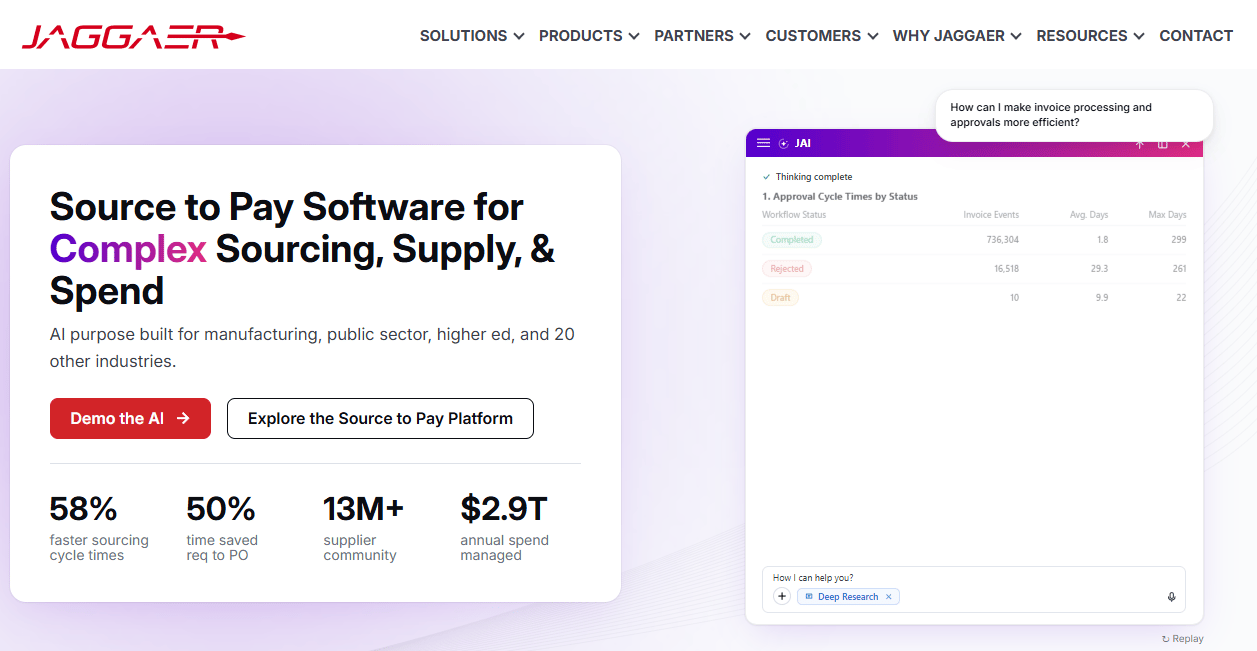
Jaggaer One is an integrated source-to-pay and spend management platform covering procurement, sourcing, contracts, supplier management, invoicing, analytics, and supply chain processes. It supports strategic sourcing with RFx workflows, bid evaluation, and auctions, alongside contract lifecycle management and spend analytics with AI classification and anomaly detection. Jaggaer is strongest as a procurement governance and supplier management platform rather than a broad logistics or multi-enterprise execution network.
Best for: Enterprise procurement organizations managing complex supplier bases and source-to-pay governance where procurement workflow maturity is the primary requirement.
Key features
- Strategic sourcing with RFI/RFP/RFQ workflows and auctions
- Contract lifecycle management with authoring, negotiation, and AI review
- Spend analytics with multi-source visibility and AI classification
- Supplier management, onboarding, and risk monitoring
- Procurement automation and direct-materials sourcing
Why choose Jaggaer One: Use it when supplier governance, contract discipline, and procurement workflow maturity are the core requirements. Evaluate it alongside other source-to-pay platforms and be clear about whether you also need a logistics or multi-enterprise execution network to complement it.
Jaggaer One pricing: Jaggaer does not display pricing on its public site. Ask sales for a quote that covers the platform, active modules, and supplier portal fees separately.
G2 rating: 4.1/5 (based on 86 verified G2 reviews for Jaggaer)
14. Project44
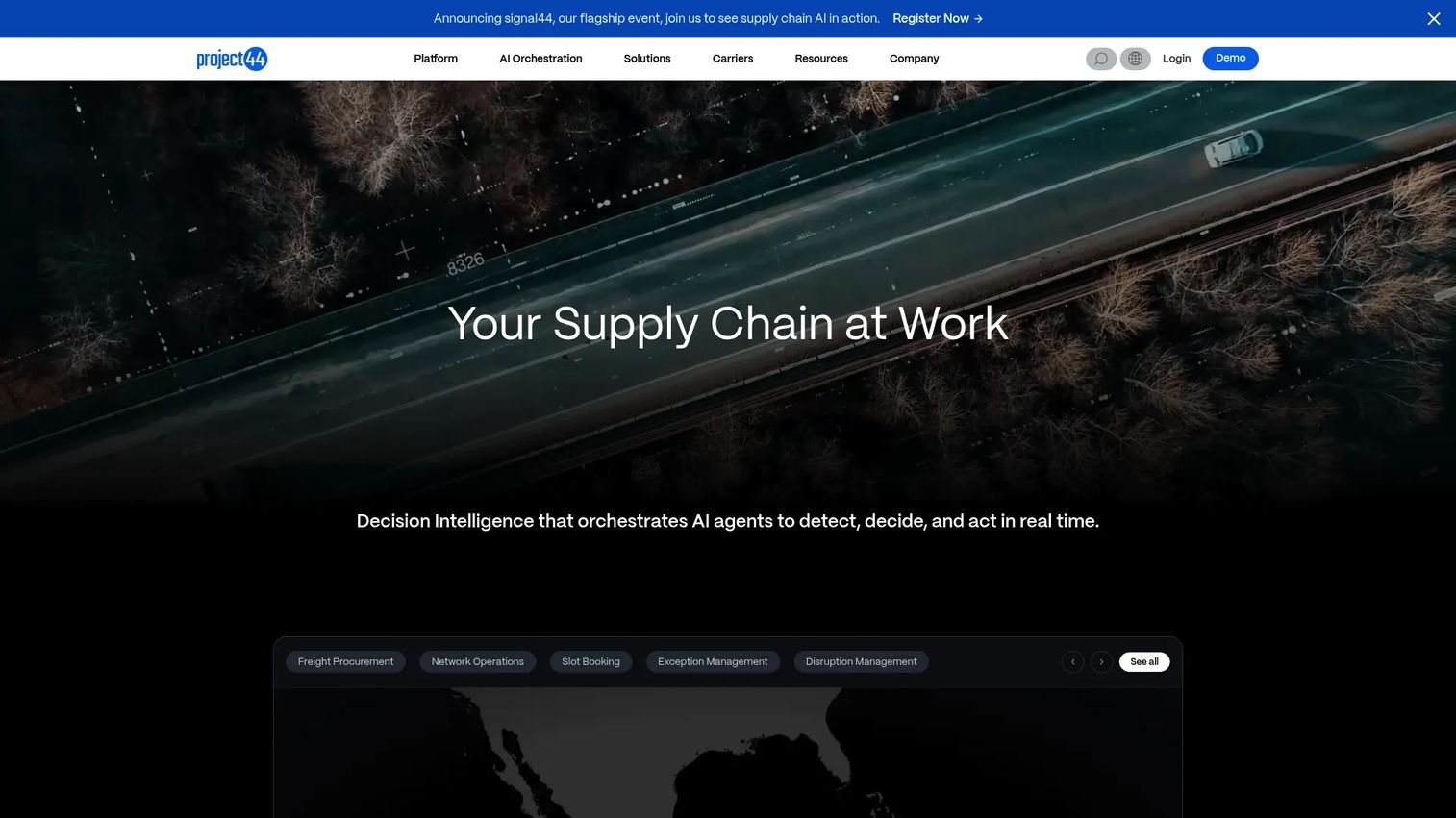
Project44 is a decision intelligence platform for global supply chains, combining transportation management, real-time shipment visibility, yard management, and logistics automation. It connects to carriers, telematics providers, ports, and ERPs to deliver predictive ETAs, disruption alerts, and exception handling across truckload, LTL, ocean, rail, air, and parcel. Project44 has expanded from pure visibility into transportation management, freight audit, and AI-powered agents for procurement, execution recovery, and document management.
Best for: Enterprise shippers that need end-to-end supply chain visibility, transportation management, and AI-powered logistics operations across a large carrier network.
Key features
- Real-time shipment visibility with predictive ETAs and disruption alerts
- Transportation management including procurement, planning, and execution
- Yard management with appointment scheduling and dock workflows
- AI agents for freight procurement, execution recovery, and exception handling
- ERP, WMS, TMS, carrier, and telematics integrations
Why choose Project44: Use it when transportation blind spots drive customer escalations or inventory uncertainty. Pair it with a procurement or supplier collaboration tool if the root problem starts upstream of the logistics layer.
Project44 pricing: Project44 does not post pricing publicly. Enterprise buyers should expect quote-based pricing; ask sales to break out the visibility layer, TMS functionality, and AI agent modules separately.
G2 rating: 4.7/5
15. FourKites

FourKites is an AI-driven supply chain intelligence platform providing real-time visibility, predictive insights, and execution capabilities across global supply chains. It covers truckload, LTL, ocean, rail, air, parcel, and last-mile shipment tracking, alongside Dynamic Yard yard-management and task automation. FourKites emphasizes predictive disruption warnings and impact analysis so operators can act before a delay reaches the customer or production floor.
Best for: Large enterprises that need to track freight movement and logistics exceptions across a broad carrier network, with a particular focus on disruption prevention and yard optimization.
Key features
- Real-time shipment visibility across truckload, LTL, ocean, rail, air, parcel, and last mile
- Predictive disruption warnings and impact analysis
- Dynamic Yard management and task automation
- Carrier network connectivity and multimodal tracking
- AI-driven exception management and response
Why choose FourKites: Use it when logistics uncertainty is the main cost driver and you need better signals before customers or plants feel the miss. Like Project44, it is a logistics visibility layer first; complement it with a procurement or supplier collaboration platform if the problem originates earlier in the supply chain.
FourKites pricing: FourKites does not display pricing publicly. Enterprise deployments are quote-based; ask sales to separate the visibility platform, yard management module, and any AI feature costs.
G2 rating: 4.5/5
Considerations when choosing a supply chain business network tool
Match the network to the broken handoff
Avoid picking based on platform breadth alone. If the operational pain is freight delays, a logistics visibility network will outperform a procurement platform in time to value. If the pain is supplier onboarding speed or invoice disputes, procurement and document exchange depth matter far more than carrier connectivity. Map the highest-friction handoff first, then shortlist tools that address it directly.
Check partner density before buying features
A supply chain business network becomes valuable when the partners you need are already reachable or easy to onboard. Ask every vendor for partner coverage by region, transport mode, supplier tier, and industry. A platform with impressive features but thin coverage in your key supplier geographies will underdeliver regardless of its capabilities.
Test onboarding speed with real partners
Do not accept generic onboarding claims. Ask vendors for the actual process for four scenarios: A small Tier 2 supplier, a strategic direct-materials supplier, a primary carrier, and a regional distributor. Compare portal, EDI, API, and managed-onboarding paths. The onboarding model determines how quickly the network generates value after contract signing.
Validate the data model and exception workflow
Visibility without workflow creates another dashboard that nobody acts on. Evaluate how the platform normalizes data from different partners, flags anomalies, recommends action, routes ownership to the right team, and records resolution. According to the Parabola Supply Chain Tech Stack Report (2025), 51% of supply chain leaders cite limited visibility or reporting as a top tech-stack pain point. The gap is rarely data collection; it is the workflow from signal to decision.
Separate implementation cost from subscription cost
These platforms regularly require integration work, change management, partner activation programs, and process redesign. The CFO-level question is payback period, not subscription price. Ask vendors for references at your company size and ask those references specifically about time-to-first-value and total implementation cost versus the initial quote.
Conclusion
The right supply chain business network is the one that addresses your most expensive handoff failure, not the one with the widest feature set on a slide.
For most enterprise operations teams, the shortlist breaks down by operational priority. SAP Business Network suits organizations that need procurement, logistics, and trading-partner collaboration in one network. SAP Ariba and Coupa Supply Chain Collaboration fit companies where procurement governance is the first priority. E2open e2net is the network-first choice when partner connectivity and data normalization are the core problem. Infor Nexus earns its place in global manufacturing and retail supply chains where trade finance and goods movement need one platform. Kinaxis Maestro and Blue Yonder Supply Chain Network connect planning to execution when decision latency is the operational risk. Project44 and FourKites address logistics visibility directly and efficiently. Tradeshift solves supplier commerce and e-invoicing compliance with a transparent, transaction-based pricing model. Jaggaer One fits complex procurement organizations that need source-to-pay discipline above all else.
If disruptions start in supplier commitments, prioritize supplier onboarding and collaboration depth. If delays surface in freight, prioritize carrier network visibility. If leadership decisions lag, prioritize planning and exception workflows. If invoices and compliance consume operations time, prioritize document exchange and e-invoicing.
If your team sells complex software and needs buyers to understand the product before a live call, interactive demos can shorten the explanation cycle considerably.
Start your journey with Guideflow today!
FAQs
A supply chain business network is a digital platform that connects multiple companies across a supply chain so they can share data, documents, workflows, and operational signals in a shared environment. It extends beyond any single company's ERP to connect external suppliers, carriers, distributors, and customers, and it differs from bilateral EDI because partners often connect once and reuse those connections across multiple relationships.
Supply chain management software can be internal planning or execution software that operates entirely within one organization's systems. A business network specifically connects external partners into shared workflows, documents, and data layers. Some platforms combine both capabilities, running internal planning and external partner collaboration in the same system.
Companies with many suppliers, carriers, distributors, plants, or global trade requirements are the primary candidates. Manufacturers, retailers, CPG brands, logistics-heavy businesses, and complex industrial supply chains all reach for these platforms when spreadsheets and bilateral integrations stop scaling. The trigger is usually a specific failure: A supplier commitment miss, a compliance bottleneck, or a freight exception that leadership discovered too late.
Partner onboarding speed and coverage matter most, because a network is only valuable when the partners you need are reachable. After that, evaluate document exchange depth (purchase orders, invoices, ASNs, customs), exception management and workflow routing, analytics that recommend action rather than just report status, and integrations with your ERP and TMS. The goal of each feature is reducing the time between a supply chain signal and an operational decision.
No. EDI is one data exchange pattern that a business network may support alongside APIs, portals, and proprietary connectors. A modern supply chain business network also provides data normalization, exception workflows, analytics, and compliance capabilities that traditional EDI networks do not. EDI handles message exchange; a business network handles the operational collaboration built on top of that exchange.
Implementation timelines vary significantly by partner count, integration depth, data quality, and workflow scope. Enterprise deployments typically run in phases over several months. The most practical approach is to start with one high-friction process and a defined partner group, measure results against a baseline, then expand. Avoid full-platform launches that defer any value until all partners are onboarded.
Tie ROI to reduced manual work in document processing, faster exception resolution measured in hours or days, fewer freight delays reaching customers or plants, lower compliance risk in e-invoicing and customs, and reduced executive escalation per disruption event. Set a baseline before vendor selection: Current exception volume, average resolution time, onboarding time per new supplier, and invoice processing cost. Without a baseline, any improvement claim is unverifiable.
Project44 and FourKites are the logistics visibility-focused options in this list, covering carrier connectivity, predictive ETAs, and shipment exception management across multiple transport modes. Both are strong choices when the primary pain is freight tracking and disruption prevention. If the root problem starts in procurement, supplier collaboration, or trade compliance rather than in the logistics layer, a broader network platform will address more of the value chain.