You know the supply chain is broken before the data confirms it. A supplier slips a ship date. A warehouse count doesn't match the ERP. A forecast built three weeks ago no longer matches what's actually selling. By the time the numbers reconcile, you've already paid for it in expedited freight, stockouts, or written-down inventory.
Most teams blame the disruption. But the disruption isn't the root cause. The root cause is that visibility, planning, and execution live in separate systems that don't talk to each other in time to matter. When your demand signal sits in a spreadsheet, your supplier status sits in email, and your inventory sits in a warehouse system nobody trusts, you're not managing a supply chain. You're reconstructing it after the fact.
That gap is expensive, and it's getting more attention. The global supply chain management software market is projected to grow from roughly $34.9 billion in 2025 to as much as $110.5 billion by the mid-2030s, at a 9 to 11% CAGR, according to Straits Research and Market Research Future (2025). Companies aren't spending that money because SCM software is fashionable. They're spending it because the cost of fragmented visibility and reactive planning keeps rising.
The right supply chain management software closes the loop between what you plan, what you buy, what you move, and what you can actually see. This guide breaks down the platforms worth evaluating in 2026, organized by the job you're trying to do, not by brand recognition.
What's inside
This guide is for operations leaders, supply chain managers, procurement teams, inventory planners, and the systems-minded evaluators who have to prove a platform fits before signing off on it. If you already know what SCM software is and you're comparing supply chain management tools to build a shortlist, you're in the right place.
We selected these 10 supply chain management platforms based on four things: breadth of core capabilities (planning, visibility, inventory, procurement, logistics, warehousing, orchestration), fit across company types (retail, manufacturing, distribution, multi-enterprise), strength of AI-driven planning, and how well each handles disruption and risk. Pricing and ratings reflect what vendors and review platforms publish; several SCM vendors quote custom pricing only.
TL;DR
- Best for retail and import-heavy brands: TradeBeyond, for multi-enterprise sourcing, compliance, and traceability workflows.
- Best for ERP-adjacent operations: NetSuite Supply Chain Management, if you already run or want integrated cloud ERP.
- Best for large, complex enterprises: Oracle SCM Cloud and SAP SCM, for end-to-end orchestration and global scale.
- Best for AI-driven planning and demand volatility: Blue Yonder and Kinaxis RapidResponse, for scenario modeling and rapid what-if analysis.
- Best for multi-enterprise network collaboration: E2open, for multi-tier visibility across distributed partners and carriers.
- Best for mid-market execution: Epicor SCM, for warehouse, inventory, and production control in manufacturing and distribution.
What is supply chain management software?
Supply chain management software is a category of applications that plan, coordinate, and execute the flow of goods, information, and money across suppliers, manufacturers, warehouses, carriers, and customers. SCM software connects the functions that used to run in isolation so teams can plan demand, control inventory, manage procurement, move product, and see what's happening across the network in near real time.
Modern supply chain management solutions typically cover a common set of core capabilities:
- Demand planning: forecasting future demand using historical data, market signals, and statistical or AI models.
- Inventory management: tracking stock levels, setting reorder points, and balancing service levels against carrying cost.
- Procurement and supplier management: sourcing, purchase orders, supplier collaboration, and performance scoring.
- Logistics and transportation management: planning routes, booking carriers, and tracking shipments end to end.
- Warehouse management: receiving, put-away, picking, packing, and fulfillment execution.
- Real-time visibility and analytics: exception alerts, KPI dashboards, and network-wide status.
- Orchestration across systems and partners: coordinating decisions and data across ERP, suppliers, and logistics providers.
Most cloud-native SCM software delivers these as modular packages, so you can start with planning or execution and expand. The strongest supply chain execution software ties planning decisions directly to what happens on the warehouse floor and on the road, which is where the fragmentation problem usually shows up first.
When to use supply chain management software
Not every team needs a full SCM platform on day one. These three situations are where the investment tends to pay for itself.
Improve real-time visibility
If your team spends more time reconciling data across suppliers, warehouses, and carriers than acting on it, fragmented tracking is already costing you money. The tell is exception management: you find out about a late shipment or a short receipt after it's caused a downstream problem, not before. SCM software with real-time visibility surfaces exceptions as they happen and routes them to the person who can act, which turns a three-day reconciliation into a same-day decision.
Control inventory and demand planning
Stockouts on your best sellers and overstock on the slow movers are two symptoms of the same problem: forecasts that don't match reality. If margins are eroding because you're either losing sales or discounting dead inventory, that's a planning-discipline gap. Supply chain planning software tightens the loop between demand signals and replenishment, so reorder points reflect what's actually selling rather than what sold last quarter.
Coordinate multi-enterprise operations
When spreadsheets fail, it's usually because the supply chain crossed a boundary they can't handle: multiple business units, cross-border flows, or a partner network where you don't own the data. At that point you need orchestration, not more tabs. A multi-enterprise network platform gives suppliers, carriers, and internal teams a shared source of truth, which is the only way to coordinate decisions across parties who don't share a system.
Comparison table
Use this table to shortlist by fit, not by brand awareness. Every platform here can run a supply chain. The differences that matter are intent (what job it's built for), differentiation (where it wins), and how it prices. Ratings are drawn from G2 where a current, product-level rating was available.
| # | Product | Intent | Key differentiation | Pricing | G2 rating |
|---|---|---|---|---|---|
| 1 | TradeBeyond | Retail and brand sourcing | Multi-enterprise sourcing, compliance, traceability | Custom (contact sales) | Not published |
| 2 | NetSuite SCM | ERP-adjacent operations | Supply chain inside cloud ERP | Custom (quote-based) | Not published |
| 3 | Oracle SCM Cloud | Large enterprise suite | Integrated cloud SCM at global scale | Custom (contact sales) | 4.0/5 |
| 4 | SAP SCM | Enterprise orchestration | AI-driven, end-to-end supply chain | Custom (base + premium) | Not published |
| 5 | Epicor SCM | Mid-market manufacturing | Execution across order-to-cash | Custom (contact sales) | 4.1/5 |
| 6 | Blue Yonder | AI-driven planning | Retail and supply chain planning | Custom (contact sales) | 4.1/5 |
| 7 | E2open | Multi-enterprise network | Network collaboration, carrier marketplace | From $549/year (marketplace) | 4.1/5 |
| 8 | Kinaxis RapidResponse | Concurrent planning | Scenario modeling, disruption response | Custom (contact sales) | 4.0/5 |
| 9 | Coupa SC Design & Planning | Network design | Digital twin, simulation, optimization | Custom (contact sales) | 4.2/5 |
| 10 | Körber SCM | Execution and automation | Warehouse, transport, order orchestration | Custom (contact sales) | Not published |
1. TradeBeyond
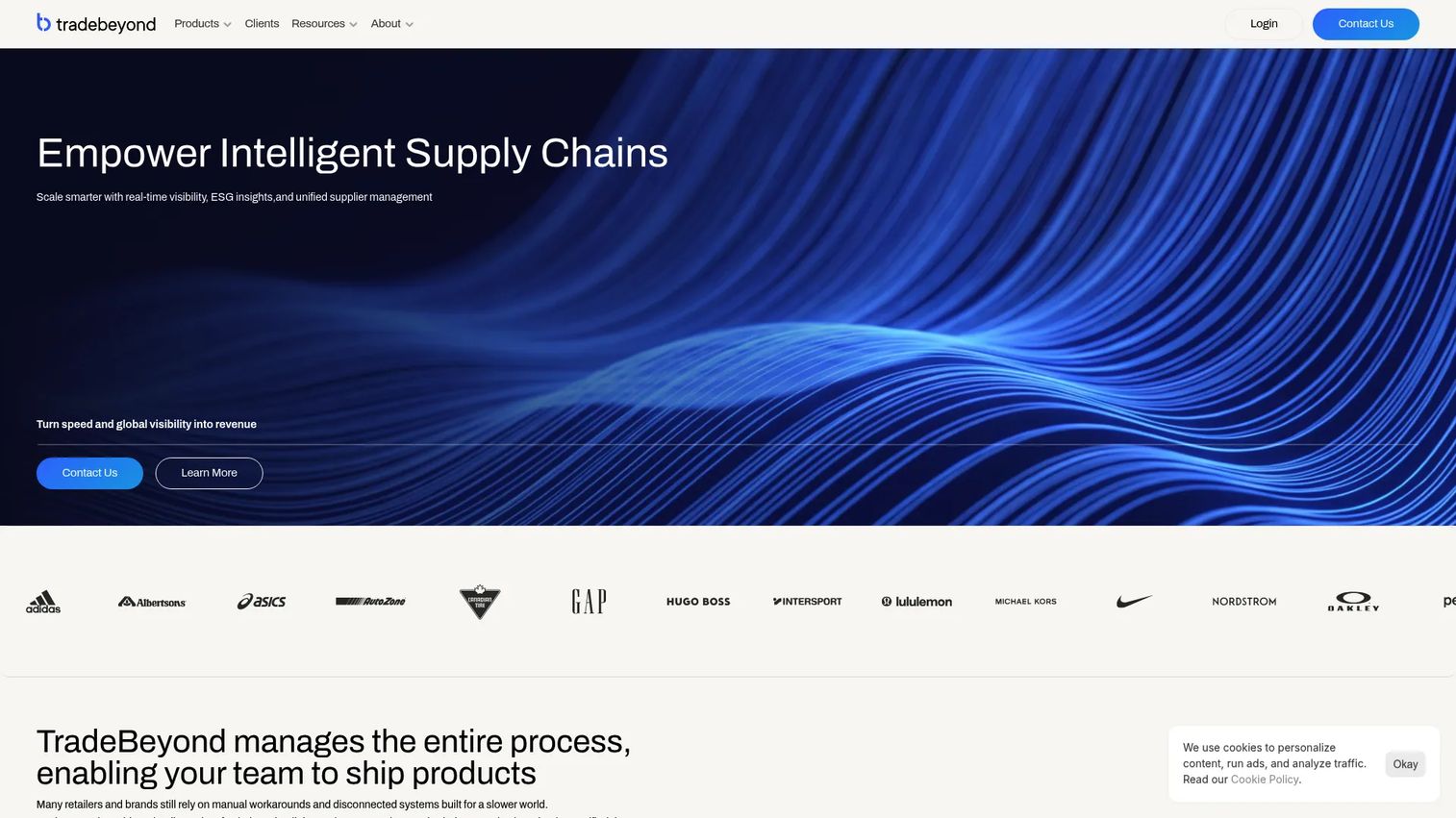
TradeBeyond is an end-to-end supply chain platform built for retailers and brands, with a strong emphasis on sourcing, supplier collaboration, and compliance. Where general SCM suites treat sourcing as one module among many, TradeBeyond centers the workflow that import-heavy businesses live in: managing suppliers, product lifecycles, orders, and quality across a multi-enterprise network. It's a fit for teams whose supply chain complexity is concentrated upstream, in sourcing and vendor coordination rather than in-house manufacturing.
Best for: Retailers and consumer brands that source and import at scale and need supplier, compliance, and traceability workflows in one place.
Key strengths
- Supplier management: Centralizes supplier onboarding, collaboration, and performance so procurement and sourcing teams work from one record.
- Product lifecycle and order management: Connects PLM and order management so product decisions and purchase orders stay in sync.
- Traceability and quality: Supports inspection, quality management, and traceability, which matters for sustainability and ESG compliance in retail supply chains.
Why choose TradeBeyond: If your operational risk lives in the supplier base and your reporting burden is growing around traceability and ESG, TradeBeyond is built for that reality rather than retrofitted for it. Manufacturing-heavy operations may find execution-first platforms a closer fit, but for brand and import workflows this is a natural anchor.
TradeBeyond pricing: TradeBeyond does not publish public pricing. The site routes evaluators to contact sales for a quote based on scope. Plan for a custom, contract-based engagement rather than a self-serve tier.
2. NetSuite Supply Chain Management
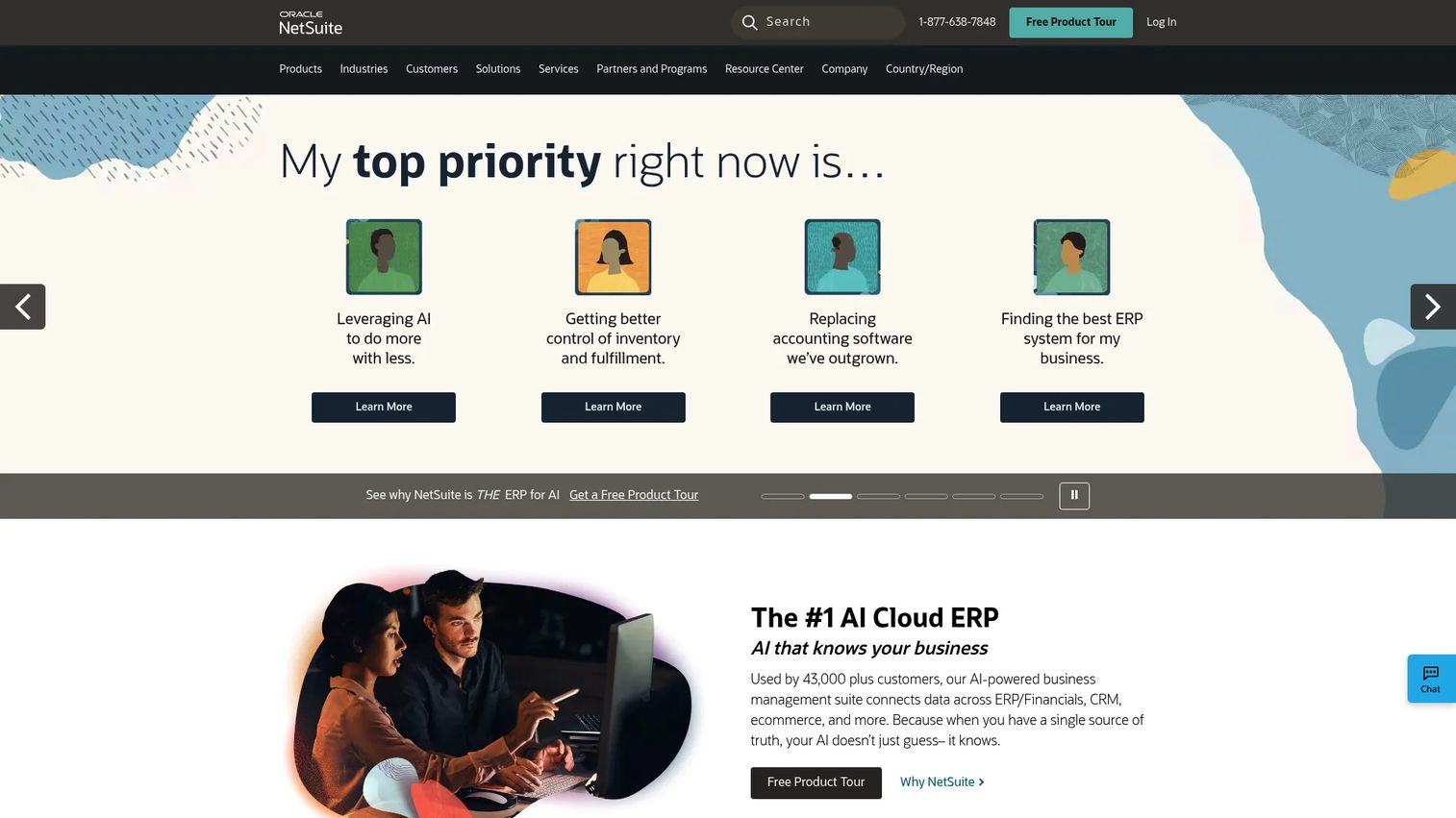
NetSuite Supply Chain Management delivers supply chain capabilities inside NetSuite's cloud ERP, which is its defining advantage. Demand planning, procurement, vendor coordination, warehouse operations, and inventory fulfillment all run against the same financial and operational data. For teams already on NetSuite, or evaluating cloud ERP and SCM together, that shared data model removes the integration work that usually eats the first year of a supply chain project.
Best for: Businesses that want integrated supply chain capabilities inside a cloud ERP rather than bolting SCM onto a separate finance system.
Key strengths
- Demand planning: Forecasts demand against live sales and inventory data already in NetSuite.
- Procurement and vendor management: Runs sourcing, purchase orders, and vendor coordination without exporting to a separate procurement tool.
- Warehouse operations: Connects receiving, fulfillment, and inventory to the same system that runs your books.
Why choose NetSuite SCM: The pitch is consolidation. If you're running a growing operation and want planning, inventory, and fulfillment to share one source of truth with finance, NetSuite reduces the number of systems you maintain. Teams that need deep, specialized planning may pair it with a dedicated planning tool, but the operational breadth here is real.
NetSuite SCM pricing: NetSuite sells through a quote-based model rather than published pricing, and the Supply Chain Management capabilities are typically priced as part of a broader NetSuite ERP engagement. Expect an annual contract scoped to your module mix and user count.
3. Oracle SCM Cloud
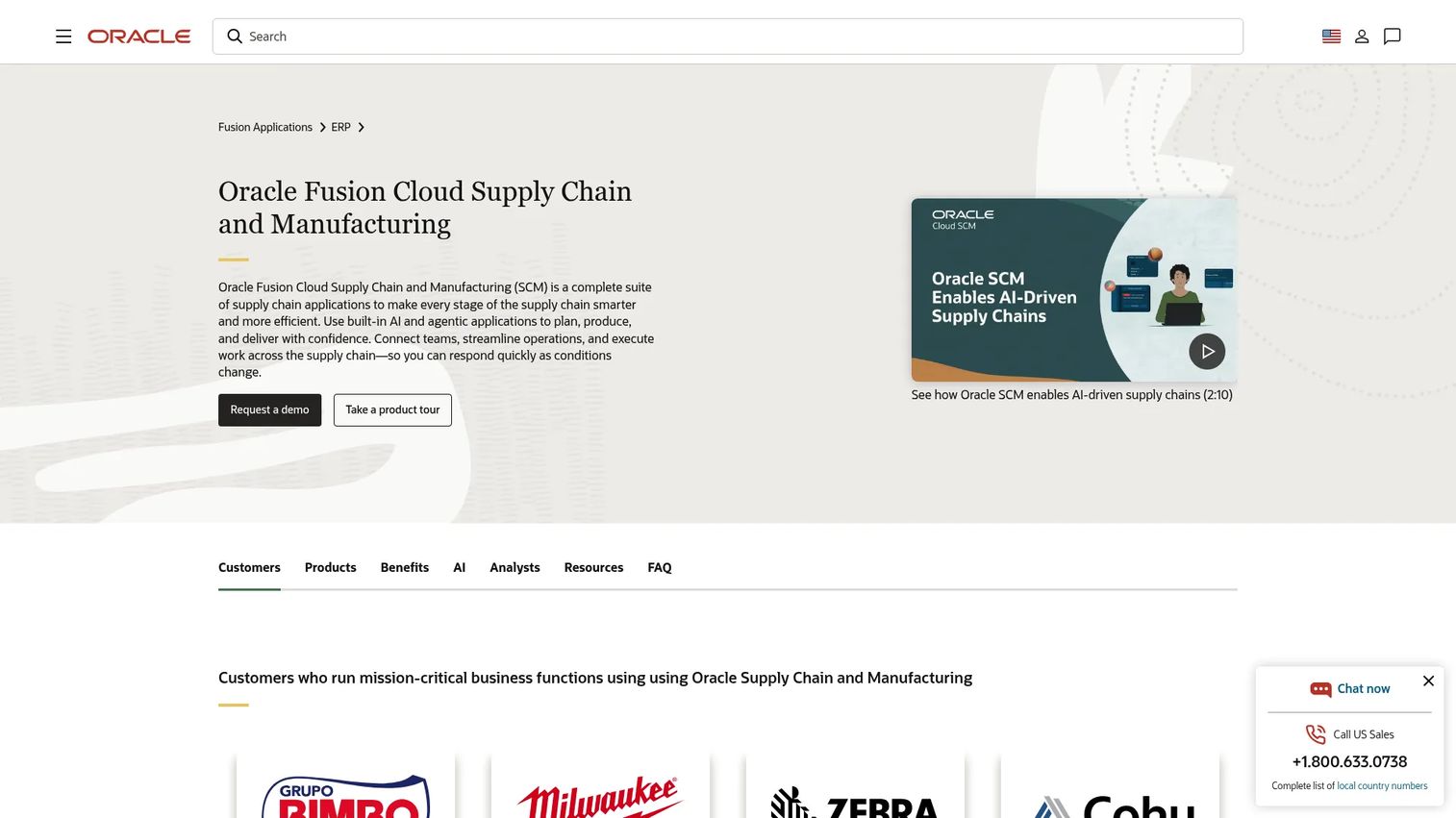
Oracle SCM Cloud is a full cloud suite for supply chain and manufacturing, spanning planning, execution, logistics, procurement, and analytics. It's built for large enterprises with complex, global environments where the requirement isn't a single capability but an integrated backbone that ties supply chain to the rest of the Oracle stack. Machine learning and AI-driven planning run throughout, and global trade management addresses the cross-border complexity that trips up lighter platforms.
Best for: Large enterprises that need one integrated cloud SCM suite spanning planning, execution, and logistics at global scale.
Key strengths
- Supply chain planning: Combines demand, supply, and sales and operations planning in one cloud environment.
- Inventory management: Provides enterprise-wide inventory visibility and control across locations.
- Order management and fulfillment: Orchestrates orders from capture through fulfillment across the network.
Why choose Oracle SCM Cloud: Oracle earns its place when governance, integration depth, and scale are non-negotiable. If you're standardizing a large organization on a single cloud platform and need the SCM layer to match, this fits. Smaller teams will find the implementation scope significant, which is the trade-off for enterprise-grade breadth. It holds a 4.0/5 rating on G2.
Oracle SCM Cloud pricing: Oracle does not publish public pricing for SCM Cloud. Pricing is scoped through Oracle's sales process based on modules, users, and deployment. Plan for an enterprise contract.
4. SAP SCM
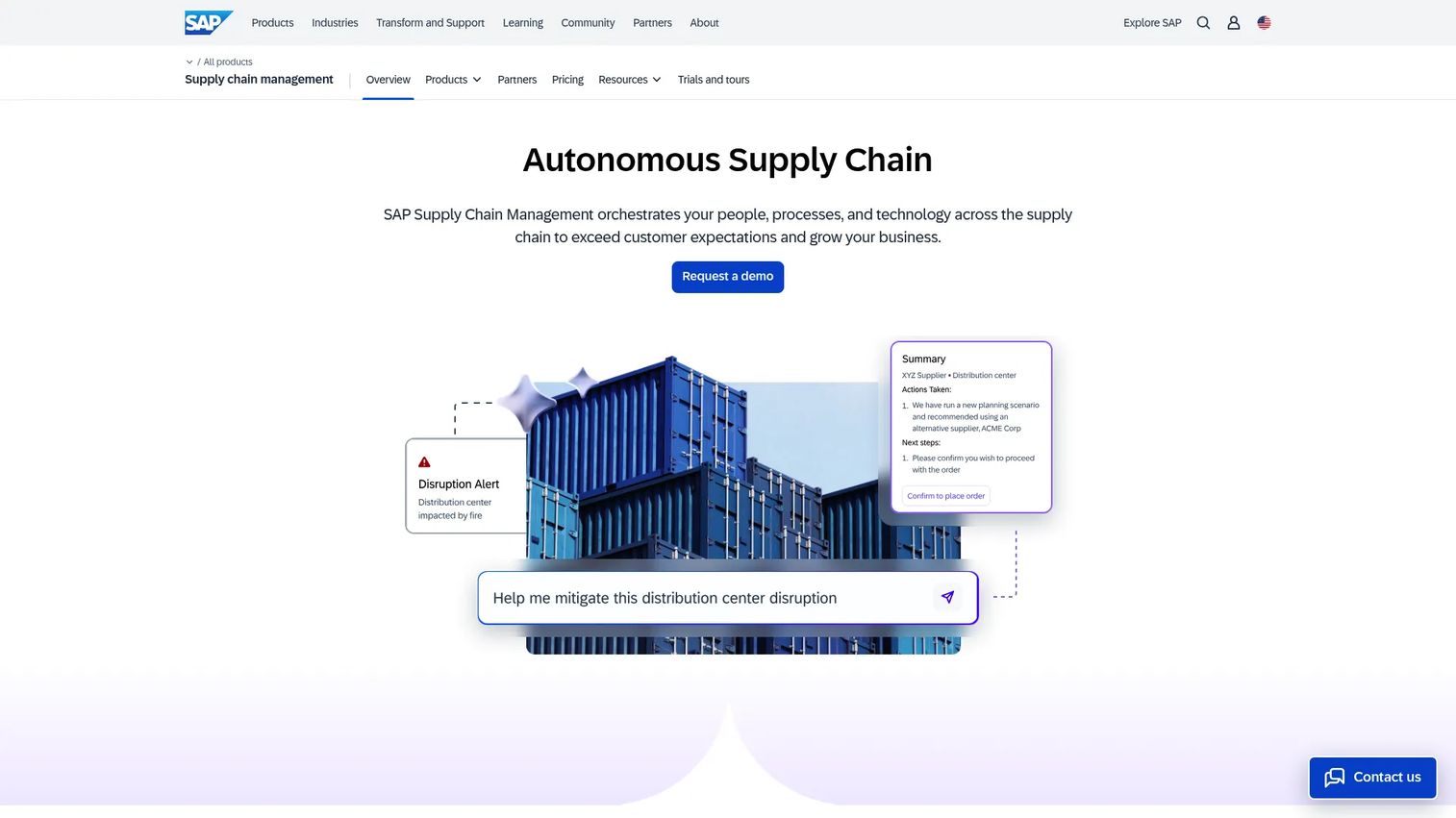
SAP SCM is SAP's supply chain suite for planning, logistics, manufacturing, and asset management, framed around the idea of an autonomous, AI-driven supply chain. Its differentiation is orchestration: SAP connects planning assistants, logistics, manufacturing, and product design into a single transparent flow across a multi-enterprise network. For enterprises already invested in the SAP ecosystem, that end-to-end cross-system transparency is the core reason to standardize here.
Best for: Enterprises seeking an integrated SAP supply chain platform with modular cloud capabilities and end-to-end orchestration.
Key strengths
- AI-driven orchestration and automation: Coordinates planning and execution across the supply chain with AI assistance built in.
- End-to-end visibility: Delivers transparency across operations, from product design through fulfillment.
- Modular packages: Ships as base and premium packages with add-ons, so you scope the footprint to your operation.
Why choose SAP SCM: SAP wins on ecosystem depth and orchestration. If your goal is one transparent flow across manufacturing, logistics, and planning, and you're already running SAP, the integration payoff is substantial. This is enterprise-scale software, so evaluate implementation capacity alongside capability, plus sustainability and traceability requirements if ESG reporting is in scope.
SAP SCM pricing: SAP describes base and premium supply chain packages with add-on solutions but does not publish a numeric price. The pricing page routes to sales, so expect a scoped, contract-based enterprise engagement.
5. Epicor SCM
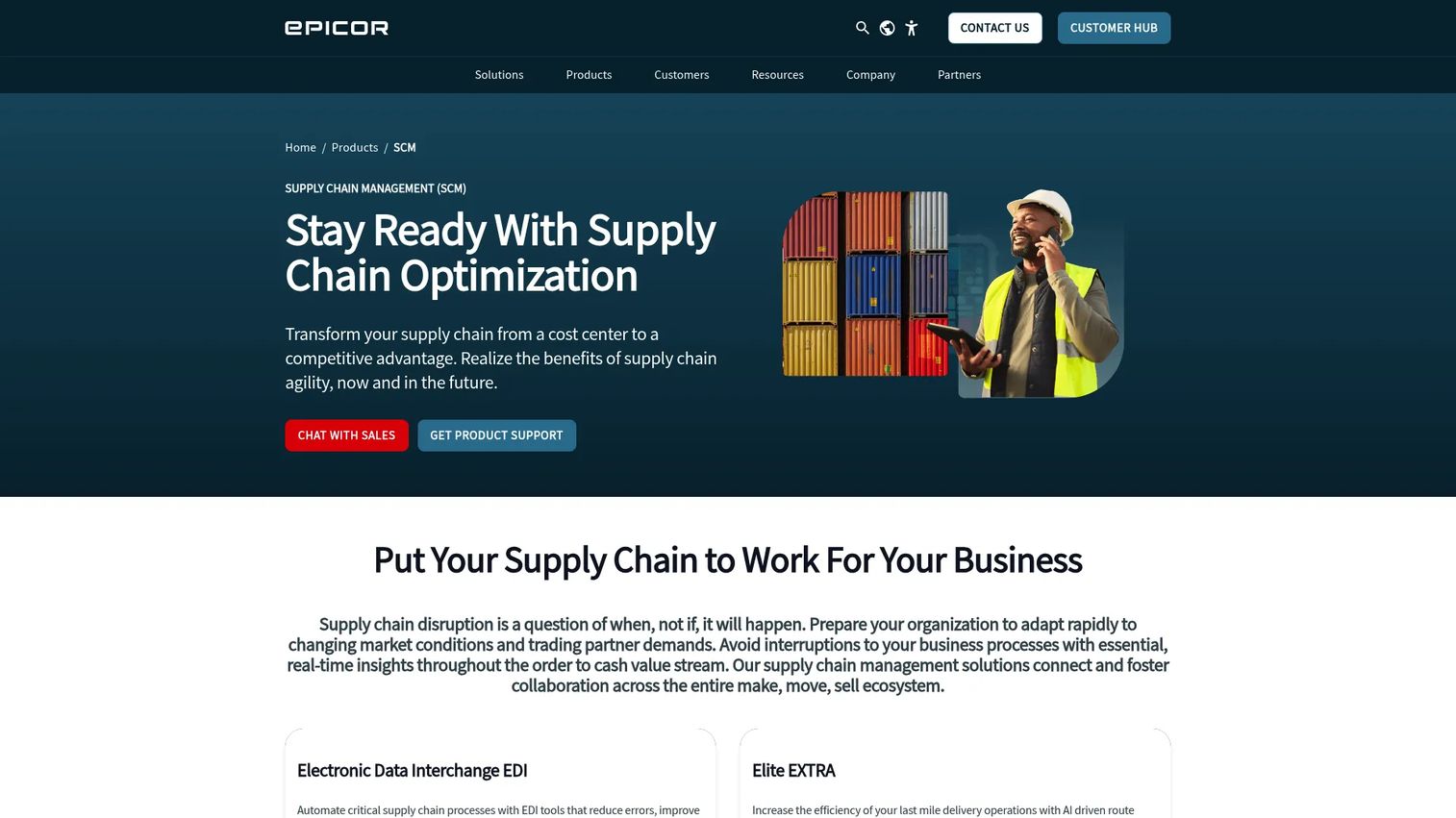
Epicor SCM is a supply chain suite built for operational control, with real-time insight across the order-to-cash value stream. It's a strong fit for mid-market manufacturers and distributors that live in execution: warehouse operations, real-time inventory, supplier portals, planning, and production scheduling. Where enterprise suites emphasize strategy and orchestration, Epicor emphasizes getting product received, stocked, and shipped accurately.
Best for: Manufacturers and distributors needing an integrated supply chain management suite focused on execution and operational control.
Key strengths
- Warehouse management and fulfillment: Runs receiving, put-away, picking, and shipping with real-time inventory accuracy.
- Supplier collaboration: Includes a supplier portal, supplier relationship management, and EDI automation to coordinate purchasing.
- Forecasting and inventory optimization: Epicor IP&O supports demand planning and inventory optimization for execution-heavy teams.
Why choose Epicor SCM: If your team's pain is on the floor, inaccurate counts, slow receiving, purchasing that isn't synced with production, Epicor's execution focus fits better than a strategy-first suite. It carries a 4.1/5 rating on G2, reflecting solid reviewer sentiment among mid-market operators.
Epicor SCM pricing: Epicor does not publish public pricing for its SCM suite. The product pages direct evaluators to contact sales for a scoped quote. Expect a contract based on modules and user count.
6. Blue Yonder
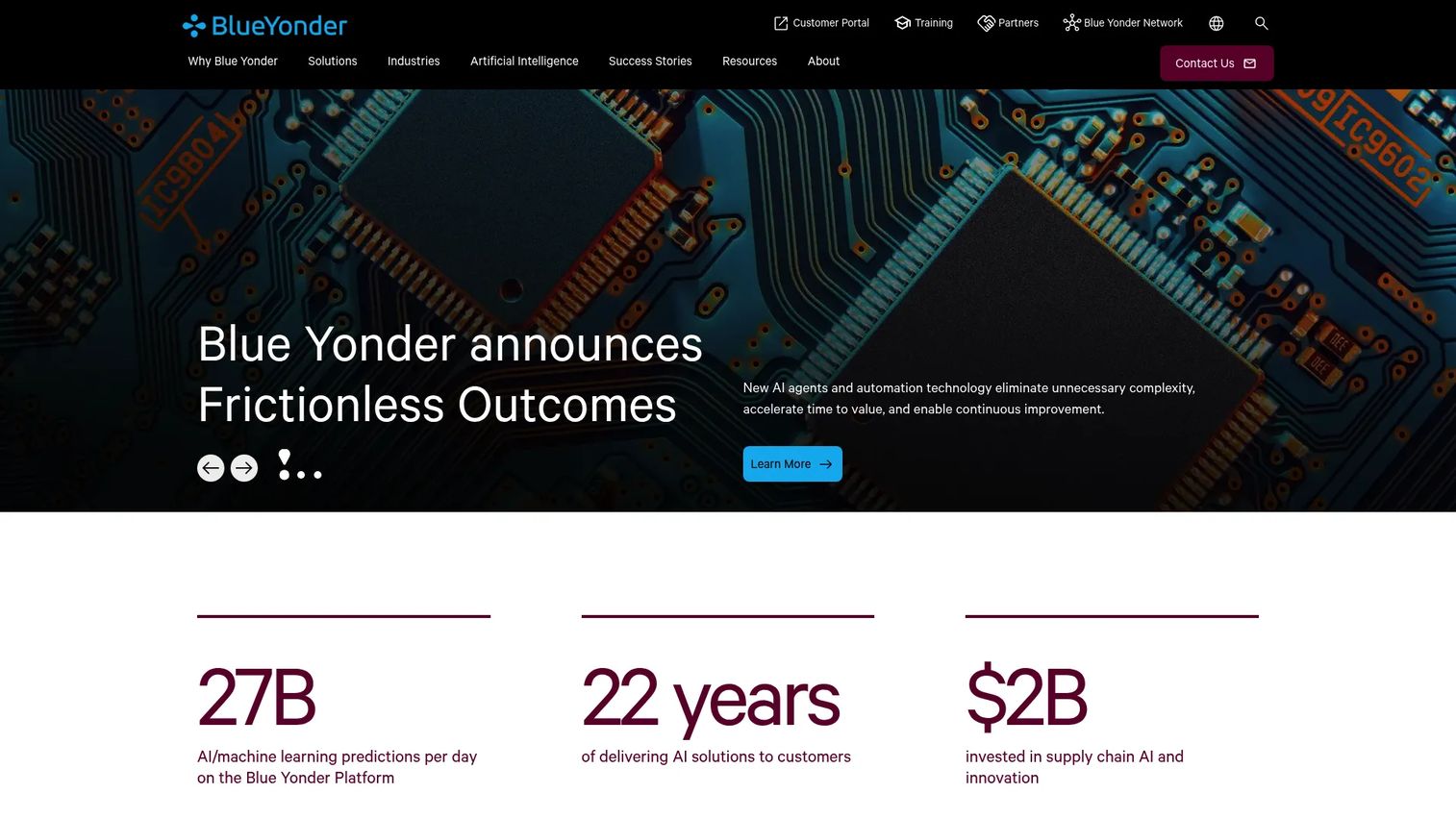
Blue Yonder is an AI-powered supply chain and retail planning provider built for responsiveness under demand volatility. Its strength is AI-driven planning: forecasting, inventory optimization, and scenario planning that help teams react when demand shifts faster than a static plan can absorb. Blue Yonder also spans warehouse, transportation, and workforce management, so retail planning and execution can sit on one platform.
Best for: Large retailers and supply chain organizations needing AI-assisted, end-to-end planning and execution.
Key strengths
- Supply chain planning: AI-driven forecasting and planning built for demand volatility and rapid response.
- Retail planning and category management: Purpose-built capabilities for retail assortment, allocation, and category decisions.
- Warehouse, transportation, and workforce management: Extends planning into execution across the physical network.
Why choose Blue Yonder: For teams whose core problem is demand volatility and who want AI-assisted decisions rather than manual replanning, Blue Yonder is a strong anchor. Retail and consumer operations get the most from its planning depth. It holds a 4.1/5 rating on G2.
Blue Yonder pricing: Blue Yonder does not publish public pricing. The site leads with demo and contact flows, so pricing is scoped through sales. Plan for an enterprise contract sized to your planning and execution footprint.
7. E2open
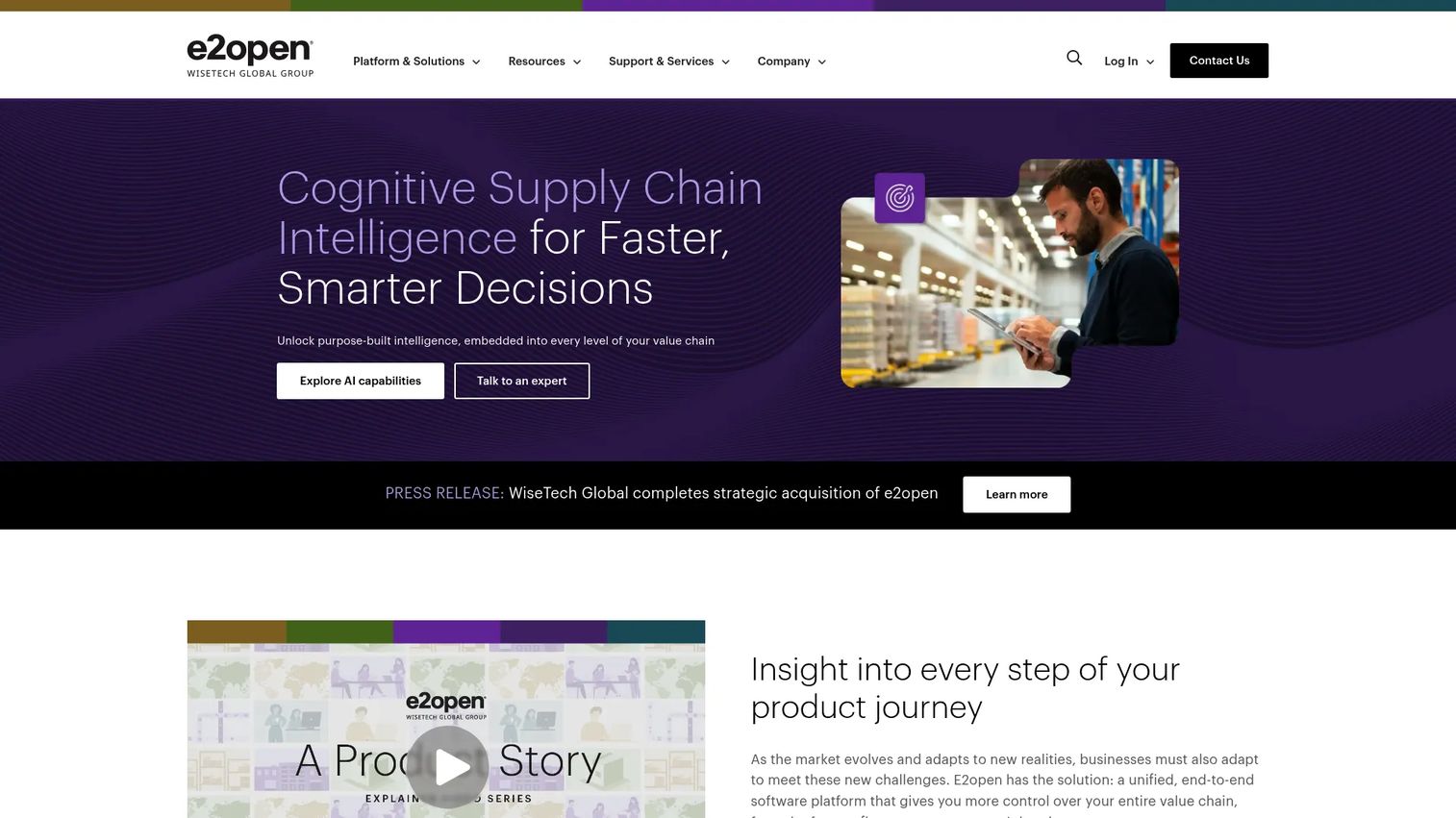
E2open is a cloud-based supply chain platform built around network collaboration and a carrier marketplace connecting shippers and carriers. Its differentiation is the network itself: multi-tier visibility and orchestration across distributed partners, which is exactly where long, cross-border supply chains break down. When you can't see past your tier-one suppliers, network effects matter, and E2open's model is designed for that multi-enterprise reality.
Best for: Enterprises needing supply chain network collaboration and carrier marketplace access across distributed partners.
Key strengths
- Carrier marketplace: Subscription-based access and integrations connecting shippers with carriers for logistics and transportation management.
- Carrier scorecards: Quarterly scorecards to measure and manage carrier performance across the network.
- Procurement discovery: Supplier discovery and certification to extend visibility deeper into the supply base.
Why choose E2open: If your supply chain is long, distributed, and spans partners you don't control, E2open's multi-tier visibility and collaboration model is built for that problem. The carrier marketplace is a practical entry point for logistics-heavy teams. It carries a 4.1/5 rating on G2.
E2open pricing: E2open publishes carrier marketplace subscription tiers: Web Connect+ at $549 per year, eConnect at $4,500 per year, and eConnect+ and LTLConnect at $18,000 per year, all billed annually. The site also indicates a no-cost web portal option for carriers. Broader platform pricing beyond the marketplace is quoted through sales.
8. Kinaxis RapidResponse
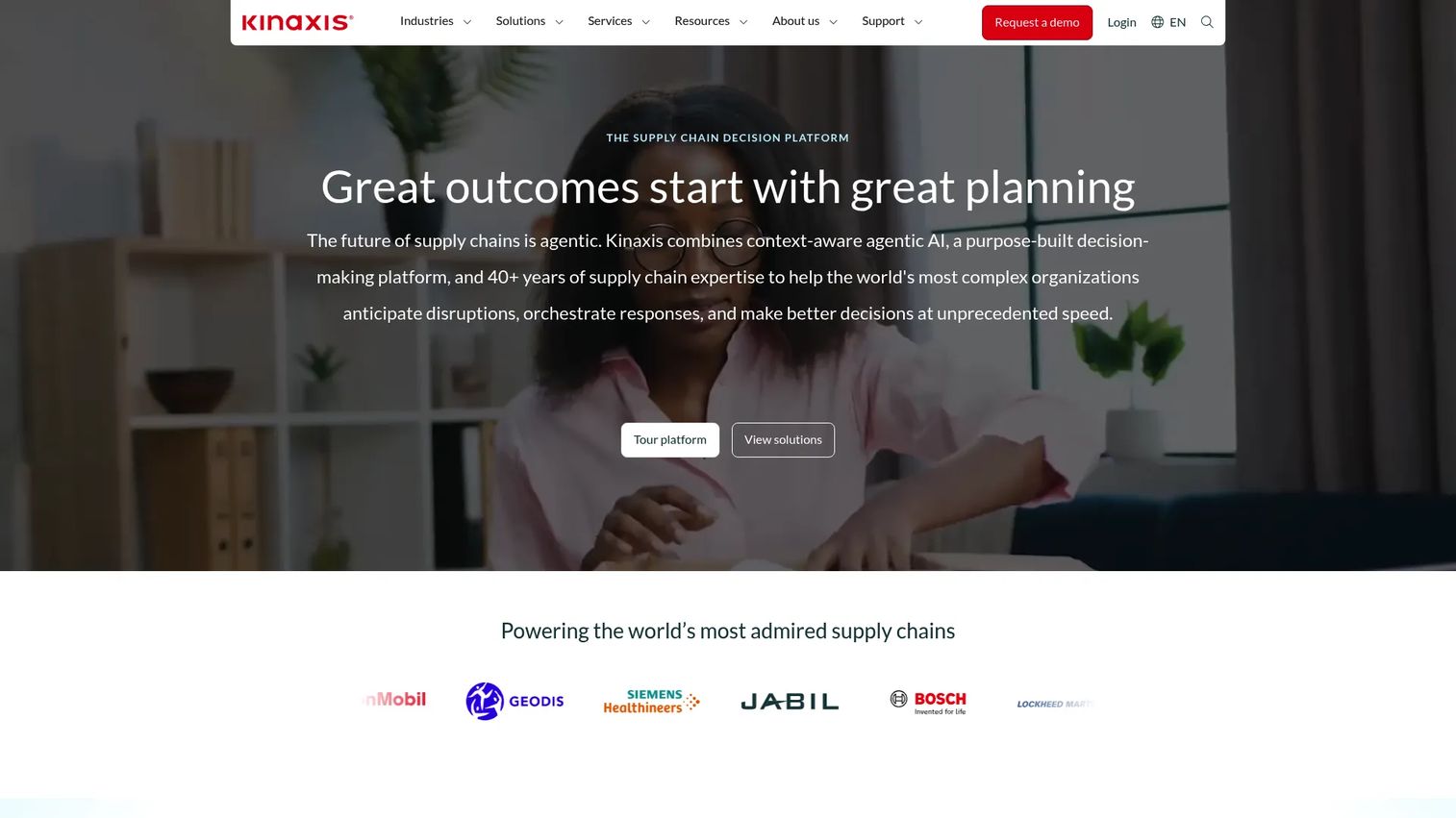
Kinaxis RapidResponse is a cloud supply chain planning and orchestration platform known for concurrent planning: the ability to model changes across functions simultaneously rather than in sequential handoffs. Its strength is decision speed under disruption. When a supplier goes down or demand spikes, teams run what-if scenario simulations and see the network-wide impact in real time, which shortens the gap between disruption and response.
Best for: Enterprise supply chain teams needing concurrent planning and rapid scenario analysis across functions.
Key strengths
- Concurrent planning: Simultaneous planning across functions so a change in one area reflects instantly everywhere.
- What-if scenario simulation: Model disruptions and demand shifts and compare outcomes before committing.
- Real-time orchestration: Coordinates supply chain decisions across functions with live visibility.
Why choose Kinaxis RapidResponse: For teams whose competitive edge is reacting faster than the disruption, rapid what-if modeling is the core value. Kinaxis is strongest where planning agility and cross-function visibility matter more than a single execution module. Note that Kinaxis now markets the platform as Maestro, formerly RapidResponse, so current pages use mixed naming. It holds a 4.0/5 rating on G2.
Kinaxis RapidResponse pricing: Kinaxis does not publish public pricing. Engagements are scoped through sales, so plan for an enterprise contract based on scope and users.
9. Coupa Supply Chain Design & Planning
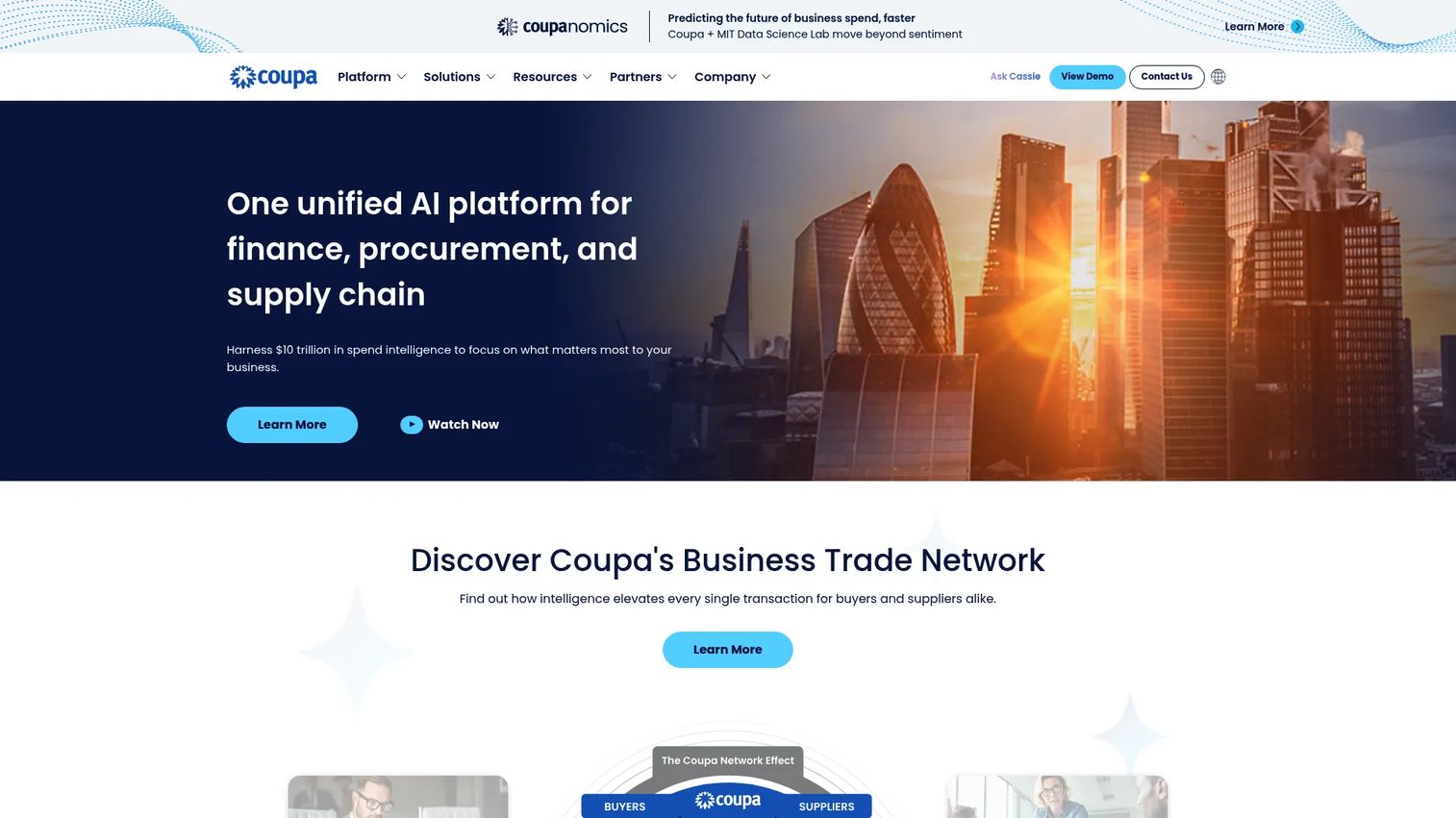
Coupa Supply Chain Design & Planning is supply chain design and planning software focused on continuous network strategy, simulation, and optimization. Its differentiation is a supply chain digital twin: a common data model of your network that teams use to run scenarios and optimize across demand, sourcing, production, transportation, inventory, and fulfillment. The angle here is resilience and working-capital optimization, modeling better structural choices rather than just executing the current plan.
Best for: Large enterprises needing supply chain design, simulation, and optimization to make better structural and cost decisions.
Key strengths
- Digital twin: A common data model of the supply chain that mirrors the real network for analysis.
- Scenarios and simulation: Run and compare scenarios to stress-test network strategy before committing capital.
- Cross-network optimization: Optimize across strategy, demand, sourcing, production, transportation, inventory, and fulfillment.
Why choose Coupa: If your questions are structural, where to source, how much to hold, how the network should be shaped for resilience and cost, Coupa's design and simulation focus fits better than a pure execution tool. It's a strong complement to planning and execution systems. It carries a 4.2/5 rating on G2, the highest published rating in this list.
Coupa pricing: Coupa does not publish public pricing for Supply Chain Design & Planning. Commercial packaging is scoped through sales, so expect an enterprise contract.
10. Körber Supply Chain Management
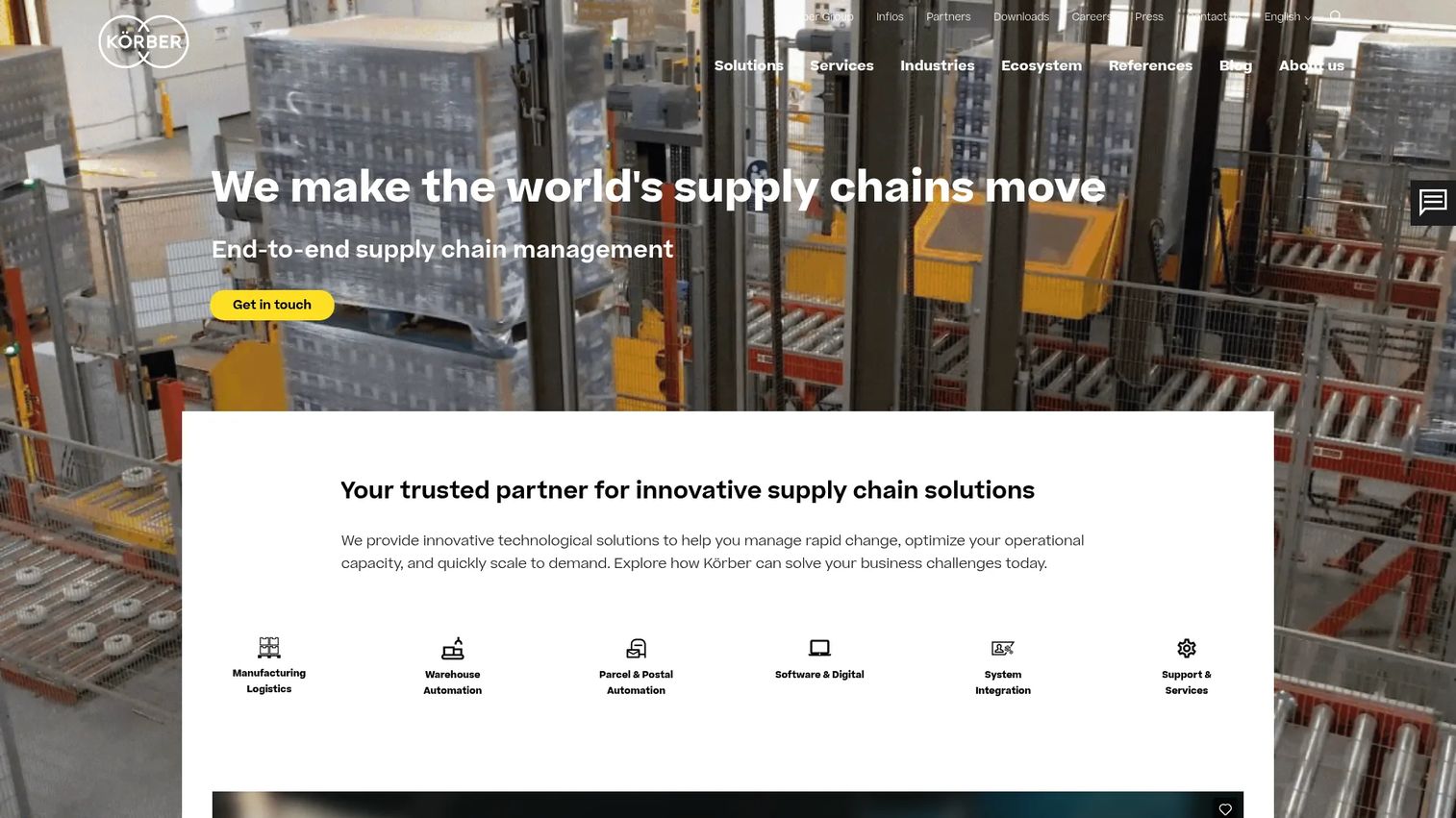
Körber Supply Chain Management is a supply chain software and services provider covering warehouse management, transportation, order orchestration, and automation. Its position is cloud-native execution infrastructure: modular software plus automation services that support supply chain operations across workflows. For teams looking to build out execution across warehousing, transport, and order management with room to add automation, Körber offers that breadth.
Best for: Enterprises needing modular supply chain execution software and automation services across warehousing, transport, and orders.
Key strengths
- Warehouse management: Cloud or on-premises deployment with mobile-enabled warehouse functionality.
- Order orchestration: Order management with enterprise inventory visibility across the network.
- Transportation and yard: Transportation, yard, and logistics software to coordinate movement.
Why choose Körber: If you want modular execution infrastructure and the option to layer in automation as operations scale, Körber's breadth across warehouse, transport, and orders fits. It suits teams building or consolidating execution rather than starting from strategic planning. Note that Körber's supply chain software has been rebranding toward the Infios name, so current listings use mixed naming.
Körber pricing: Körber does not publish public pricing. The site uses request-a-demo and contact flows, so pricing is scoped through sales based on your workflow mix.
How to choose the right SCM software
The list above sorts into clear fit patterns. Match your biggest gap to the platform's core intent, and the shortlist gets short fast.
Match the platform to your primary job
If your risk lives upstream in sourcing and compliance, TradeBeyond is built for that. If it lives in planning agility, Kinaxis RapidResponse and Blue Yonder lead. If it's execution on the warehouse floor, Epicor and Körber fit. If it's network structure and cost, Coupa's design focus is the anchor. Don't buy for a job you don't have.
Weigh integration against your existing stack
The cheapest integration is the one you don't have to build. If you already run NetSuite, its SCM capabilities remove a year of integration work. If you're standardized on Oracle or SAP, their SCM suites keep you on one backbone. For multi-enterprise networks where partners live outside your systems, E2open's network model matters more than any single feature.
Score operational complexity honestly
Enterprise suites reward large, complex, global operations and demand real implementation capacity in return. Mid-market teams often get more value faster from focused execution or ERP-adjacent platforms. Be honest about the complexity you actually run, not the complexity you aspire to.
Insist on real-time visibility and measurable impact
Whatever you shortlist, verify it delivers real-time visibility with exception management and KPI dashboards you'll actually use. As a systems-minded evaluator, tie the decision to metrics: forecast accuracy, stockout rate, carrying cost, on-time delivery. A platform that can't prove impact against those numbers is hard to defend.
Conclusion
The pattern across these 10 supply chain management solutions is simple: the best fit depends on where your supply chain breaks, not on which brand is loudest. Retail and import-heavy brands anchor on TradeBeyond. Large, complex enterprises standardize on Oracle SCM Cloud or SAP SCM. Teams fighting demand volatility lean on Blue Yonder and Kinaxis RapidResponse. Distributed networks need E2open. Execution-heavy mid-market operations get more from Epicor and Körber. And teams making structural, cost-driven decisions turn to Coupa.
Cloud-native SCM software has made it easier to start with one capability and expand, which means you don't have to solve everything at once. Pick the three capabilities that matter most right now, real-time visibility, planning discipline, and orchestration are the usual starting three, and build your shortlist around the platforms that lead on those. Then validate with a scoped evaluation against your own data before you sign.
The right platform won't eliminate disruption. It will let you see it sooner and respond faster, which is the whole point.
FAQs
Supply chain management software is used to plan, coordinate, and execute the flow of goods and information across suppliers, warehouses, carriers, and customers. It handles demand planning, inventory management, procurement, logistics, and real-time visibility in one connected system. The goal is to replace fragmented spreadsheets and disconnected tools with a single source of truth that supports faster, better decisions.
Prioritize real-time visibility with exception management, AI-driven planning and forecasting, inventory optimization, procurement and supplier management, and logistics and transportation management. Orchestration across systems and partners matters most if your supply chain spans multiple business units or a partner network. Match the feature set to your biggest operational gap rather than chasing the longest feature list.
It improves inventory management by tightening the loop between demand forecasting and replenishment. Better forecast accuracy means reorder points reflect what's actually selling, which reduces both stockouts on fast movers and overstock on slow ones. Real-time inventory visibility across locations also cuts the buffer stock teams carry just to compensate for not knowing what they have.
ERP is broader: it runs finance, HR, procurement, and operations as one system of record for the whole business. SCM software focuses specifically on planning and executing the supply chain, demand, inventory, logistics, and supplier coordination. Many platforms overlap, and some SCM capabilities ship inside ERP suites like NetSuite, but dedicated SCM tools usually go deeper on planning and network orchestration.
For large, complex, global operations, Oracle SCM Cloud and SAP SCM lead on end-to-end orchestration and ecosystem depth, while Kinaxis RapidResponse and Blue Yonder lead on enterprise-scale planning. "Enterprise" in practice usually means many business units, cross-border flows, heavy compliance requirements, and the internal capacity to run a significant implementation. The best fit depends on whether your priority is orchestration, planning agility, or design.
Mid-market teams should prioritize usability, integrations with their existing stack, planning and execution breadth, and implementation speed. Platforms like Epicor SCM and NetSuite Supply Chain Management are built for operational control and ERP-adjacent fit without the implementation scope of the largest enterprise suites. The goal is measurable impact in months, not a multi-year rollout.
Cloud-native SCM software is the better fit for most teams because it delivers easier updates, faster deployment, and orchestration across systems and partners without maintaining on-premises infrastructure. It matters most when you need real-time visibility across a distributed network or want to add capabilities incrementally. On-premises still has a place in some regulated or highly customized environments, but cloud is the default direction of the category.
Compare supply chain management platforms on the criteria that map to your operational reality: real-time visibility, AI-driven planning, inventory management, procurement, logistics, orchestration, scalability, and pricing. Start by identifying where your supply chain breaks most often, then weight those capabilities heaviest. Run a scoped evaluation against your own data and tie the decision to measurable outcomes like forecast accuracy, on-time delivery, and carrying cost.