Serial numbers stop being an IT footnote the moment a packaging line goes live. Suddenly you have unique identifiers to generate, codes to print and verify, scanners to sync, events to log, trading partners to onboard, and auditors asking for clean records going back years. The cost of getting any one of those wrong is not abstract. A blocked shipment, a rejected batch, or a broad recall you could have targeted are all downstream of weak serialization.
The category is bigger than most buyers expect. It spans regulated pharmaceutical serialization software, CPG anti-counterfeit systems, enterprise ERP serialization, and broader supply chain traceability software that stitches events across manufacturers and distributors. There is also a second, unrelated meaning of the term, data serialization, that shows up in the same searches, which is worth separating early so you evaluate the right tools.
The numbers back the urgency. The global product serialization software market was valued at about USD 1.2 billion in 2023 and is projected to reach USD 4.8 billion by 2033, a CAGR near 16.5%, according to Verified Market Reports (2024). Within track-and-trace, serialization solutions account for 58.34% of global revenue in 2025, with pharma manufacturers holding 40.09% of end-user revenue, per Mordor Intelligence (2025). That growth reflects regulatory pressure and rising counterfeit risk, not vendor hype.
This guide is written for operational buyers, product and supply chain owners who are past the definition stage and are comparing vendors. Below you get a shortlist, a comparison table, and honest guidance on where each tool fits.
What's inside
This list covers serialization platforms built for regulated product workflows, packaging line integration, auditability, and partner data exchange, plus one data-serialization platform for teams whose "serialization" problem is really about portable data interchange. We selected tools based on data verification depth, scanning and line integration, audit trail quality, interoperability, implementation support, and industry fit.
The seven picks span pharma, CPG, enterprise ERP environments, and supply chain network orchestration. Each section names who the tool is best for, what it does well, and how pricing works where a public figure exists. Where a vendor keeps pricing behind a sales conversation, that is stated plainly rather than guessed.
TL;DR
- Best overall for end-to-end serialization and traceability: rfxcel, strong on serial allocation, verification, and supply chain visibility for regulated goods.
- Best for CPG and anti-counterfeit workflows: ZPI Software, built around packaging-line data collection and product tracking.
- Best for enterprise ERP-led environments: SAP, for organizations already standardizing on SAP for master data and business processes.
- Best for data-platform teams and interoperability: Confluent, the data serialization angle with schema governance and streaming.
- Best for regulated manufacturing ecosystems: Oracle, for broad cloud and supply chain workflows.
- Best for life sciences operating models: Körber, integrated manufacturing and supply chain solutions at scale.
- Best for supply chain network orchestration: TraceLink, for multi-enterprise partner collaboration and compliance networking.
What is serialization software?
Serialization software assigns, manages, and tracks unique identifiers, serial numbers, on individual product units so each item can be authenticated, traced, and reported across manufacturing and distribution.
In regulated product contexts, the core functions cluster into a repeatable set:
- Generate and allocate serial numbers at the unit, case, and pallet level, often using standards like GS1 and SGTIN.
- Encode and print barcodes or Data Matrix codes on packaging.
- Scan and verify each unit as it moves through the packaging line.
- Track events across aggregation, distribution, and returns.
- Support audits, recalls, and partner exchange with clean, exportable records and event logs.
There is a naming collision worth clearing up. In software engineering, data serialization means converting objects or data structures into a portable format (Avro, JSON, Protobuf) so they can be stored, transmitted, and reconstructed across systems. Product serialization software, which most of this list covers, is about physical unit identity and supply chain traceability. Confluent, item four, is the data serialization option; the rest are product serialization and traceability platforms.
Why it matters is concrete. Serialization and traceability solutions let you authenticate genuine units, detect diversion and counterfeits, run targeted recalls instead of pulling entire lots, and produce audit trails regulators accept. That combination reduces both compliance risk and the operational blast radius when something goes wrong.
When to use serialization software
Meet regulatory serialization requirements
Pharma, biotech, and medtech teams face mandated reporting and unit-level identity rules across markets. Serialization compliance software standardizes identifiers and event logs so you can report consistently and prove chain-of-custody. If regulators expect verifiable serial data at each handoff, manual tracking will not scale, and inconsistent identifiers become audit findings.
Protect channels and reduce diversion
Brands dealing with gray-market leakage, counterfeits, or uncontrolled distribution need unit-level visibility to see where product actually goes. Track and trace software flags when a unit surfaces somewhere it should not, which turns diffuse suspicion into a specific, actionable signal. This matters for CPG serialization software buyers as much as pharma.
Improve recall precision and audit readiness
When master data is clean and every unit is serialized, a recall can target specific lots or even individual units rather than an entire product line. Serialized inventory management software with strong audit trails also shortens audit prep from weeks of reconstruction to a query. The payoff is fewer broad, costly disruptions and faster, defensible responses.
Comparison table
This table helps separate regulated manufacturing and traceability tools from the data-serialization platform in the mix. Read "Intent" as the primary job each tool is bought to do, not a full feature inventory. Pricing reflects publicly available figures where a vendor lists them; several use request-a-quote flows.
| # | Product | Intent | Key differentiation | Pricing | G2 rating |
|---|---|---|---|---|---|
| 1 | rfxcel | End-to-end track-and-trace for regulated goods | Serial allocation, verification, and real-time supply chain visibility | Request pricing | Not listed |
| 2 | ZPI Software | CPG packaging-line serialization | Automatic line data collection, serialization, condition monitoring | Contact vendor | Not listed |
| 3 | SAP | Enterprise ERP-led serialization | Master data governance inside SAP business processes | Request a quote | 4.4/5 |
| 4 | Confluent | Data serialization and interoperability | Schema Registry and Stream Governance for portable data | Free tier, consumption-based | 4.4/5 |
| 5 | Oracle | Enterprise cloud and supply chain operations | OCI breadth with 200+ cloud services and free tier | Free tier, then pay-as-you-go | 4.1/5 |
| 6 | Körber | Life sciences and regulated manufacturing | Integrated hardware, software, and services at scale | Contact vendor | 4.5/5 |
| 7 | TraceLink | Supply chain network orchestration | Integrate Once, Interoperate with Everyone partner network | From $1,000/yr per MINT Link | 4.5/5 |
1. rfxcel
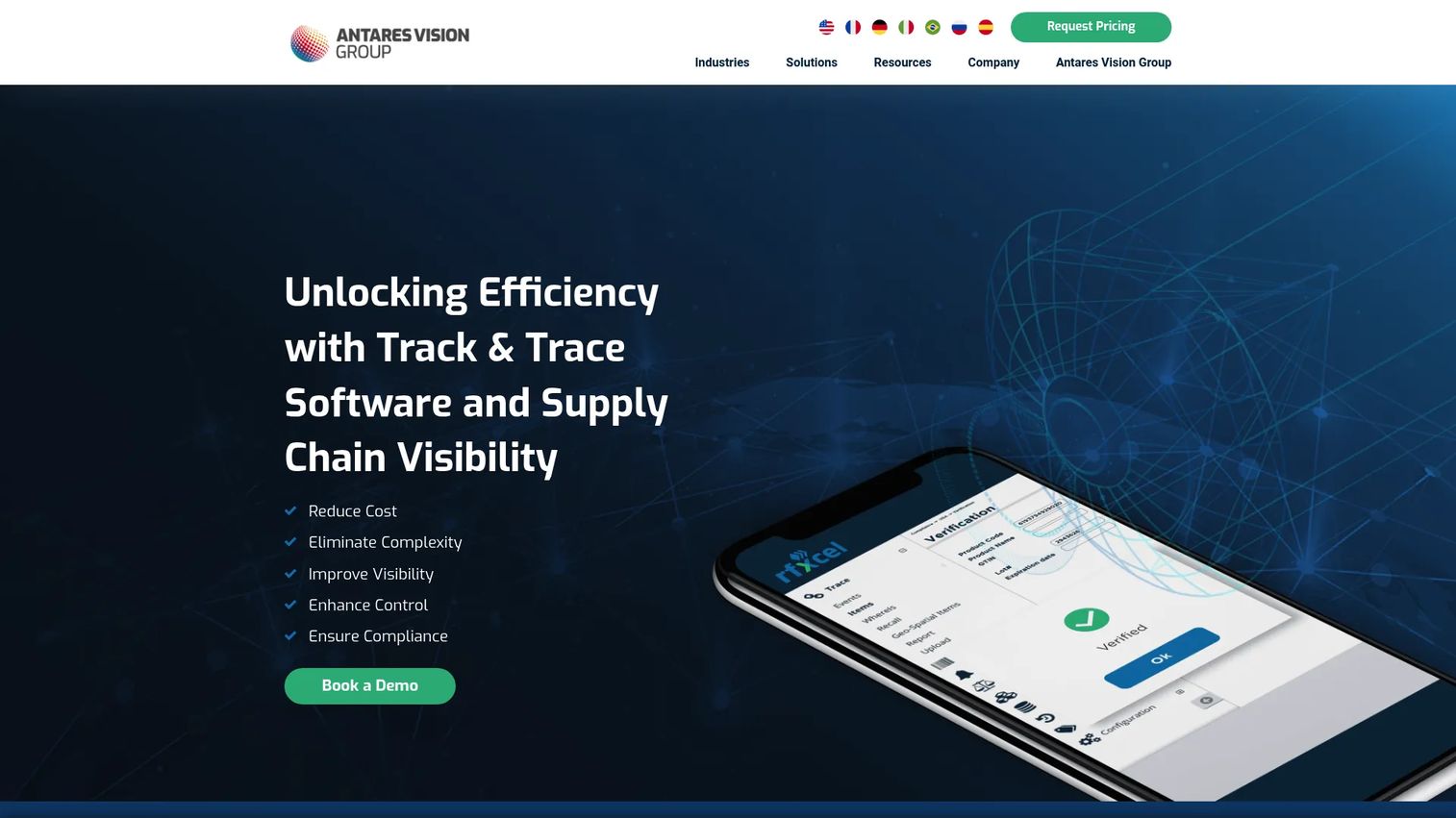
rfxcel is supply chain track-and-trace and visibility software built for regulated industries. It covers the full serialization lifecycle: allocating serial numbers, encoding and printing codes, verifying units through the line, and maintaining the event trail regulators expect. For pharma and other regulated goods, it treats serialization as one layer inside broader traceability rather than a standalone label task.
Best for: Enterprises needing track-and-trace, serialization, and supply chain visibility for regulated goods.
Key strengths
- End-to-end traceability: Ties unit-level serial data to events across manufacturing and distribution, so you can trace any item without stitching systems.
- Real-time environmental monitoring: Adds condition data (temperature, location) on top of identity, useful for cold-chain and sensitive products.
- Compliance management: Structures identifiers and reporting to standardize what you submit across markets and audits.
Why choose rfxcel: If your operation spans multiple regulated markets and you need serialization plus supply chain visibility in one system, rfxcel fits the profile. It suits teams that want robust onboarding and want serialization data to feed broader traceability, not sit in a silo. The tradeoff is that this is enterprise tooling, so scoping and implementation deserve real planning time.
rfxcel pricing: rfxcel does not publish numeric pricing. The site routes to a request-pricing and contact-sales flow, which is standard for enterprise serialization and traceability solutions where scope drives cost. Expect pricing to reflect market coverage, volume, and integration depth rather than a per-seat rate.
2. ZPI Software
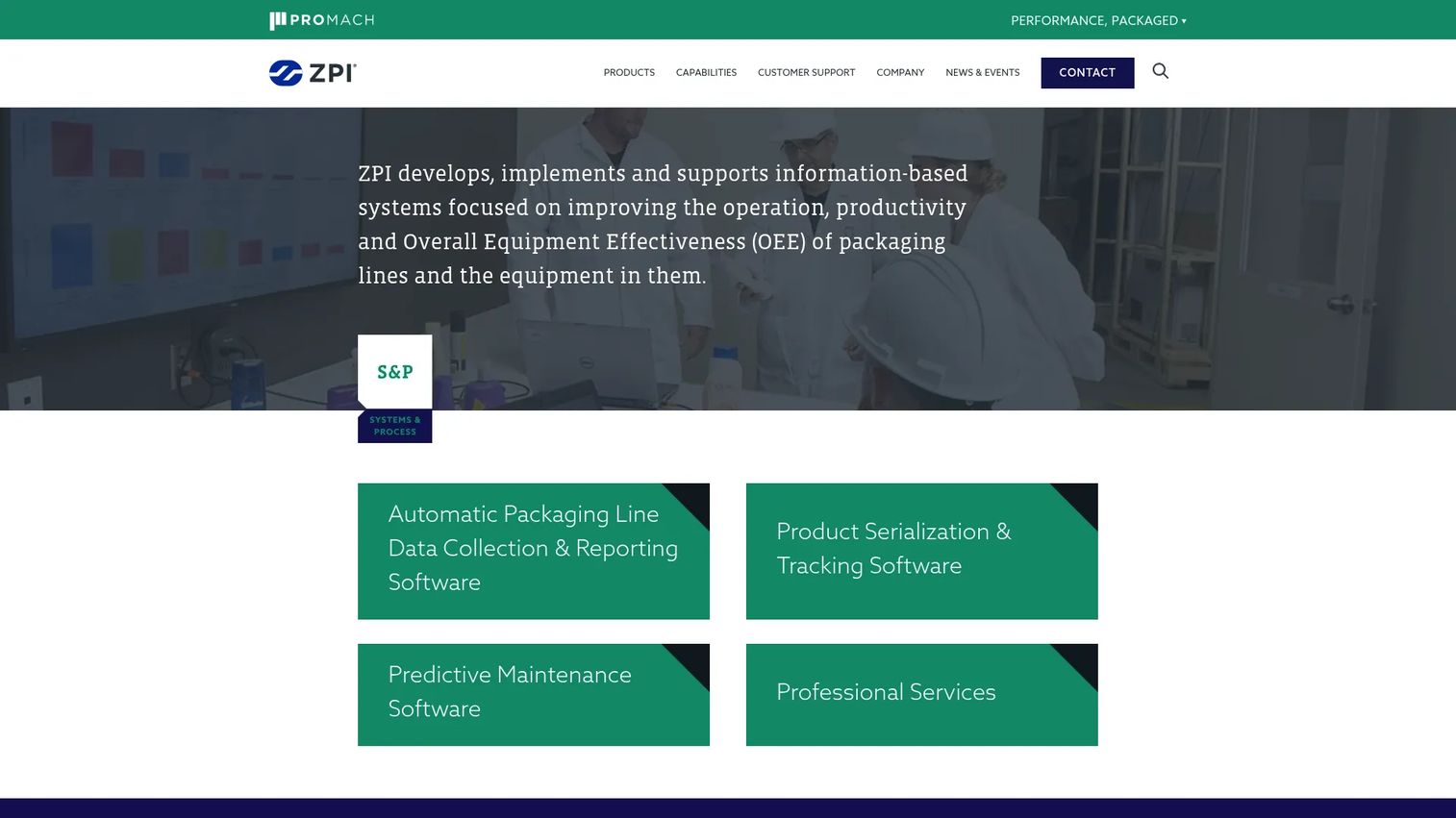
ZPI Software focuses on the packaging line itself: automatic data collection, product serialization and tracking, and predictive maintenance for packaged-goods manufacturers. That line-level orientation makes it a strong CPG serialization software candidate for teams whose serialization needs are tightly coupled to production equipment and throughput.
Best for: Packaged-goods manufacturers needing OEE, downtime, serialization, or maintenance software close to the line.
Key strengths
- Automatic packaging line data collection and reporting: Pulls serialization and performance data straight from the line, reducing manual capture and reconciliation.
- Product serialization and tracking: Handles unit identity and movement for both serialized and non-serialized products.
- Predictive maintenance and condition monitoring: Surfaces equipment issues before they cause downtime, tying line health to serialization uptime.
Why choose ZPI Software: Choose ZPI when serialization is one part of a broader line-performance problem. Manufacturers that also care about OEE, downtime, and maintenance get serialization and equipment intelligence from one hardware-agnostic system. It is a better fit for line-centric CPG teams than for firms whose primary driver is multi-market regulatory reporting.
ZPI Software pricing: ZPI does not display public pricing. Product pages instruct visitors to contact the company for details, so pricing depends on line count, module mix, and deployment scope. Treat cost as a scoped conversation tied to how many lines and plants you need to instrument.
3. SAP

SAP is the enterprise software vendor whose ERP is the system of record at a large share of regulated manufacturers. For serialization, its value is less about a standalone product and more about handling product category serialization, uniqueness scope, and master data governance inside the business processes teams already run in SAP. If your ERP is SAP, keeping serialization master data in the same environment reduces reconciliation.
Best for: Large enterprises needing integrated ERP with serialization tied to finance, supply chain, and manufacturing master data.
Key strengths
- SAP Business Suite and Cloud ERP: Serialization lives alongside procurement, manufacturing, and finance rather than in a disconnected tool.
- Business AI including Joule: Adds AI-assisted workflows across the enterprise business processes serialization data flows through.
- Business Data Cloud and analytics: Gives a governed data layer for reporting on serialized inventory and events at scale.
Why choose SAP: SAP makes sense when serialization is one requirement within a much larger ERP standardization. The pull is master data integrity and a single governed environment; the cost is that this is enterprise ERP, so serialization arrives as part of a broader platform commitment. Teams not already on SAP will find a dedicated serialization platform faster to stand up.
SAP pricing: SAP does not expose public pricing for its ERP and business AI packages; both route to request-a-quote and request-demo flows. SAP holds a 4.4/5 rating on G2. Pricing scales with modules, users, and deployment, so budget for a quote-driven enterprise engagement.
4. Confluent
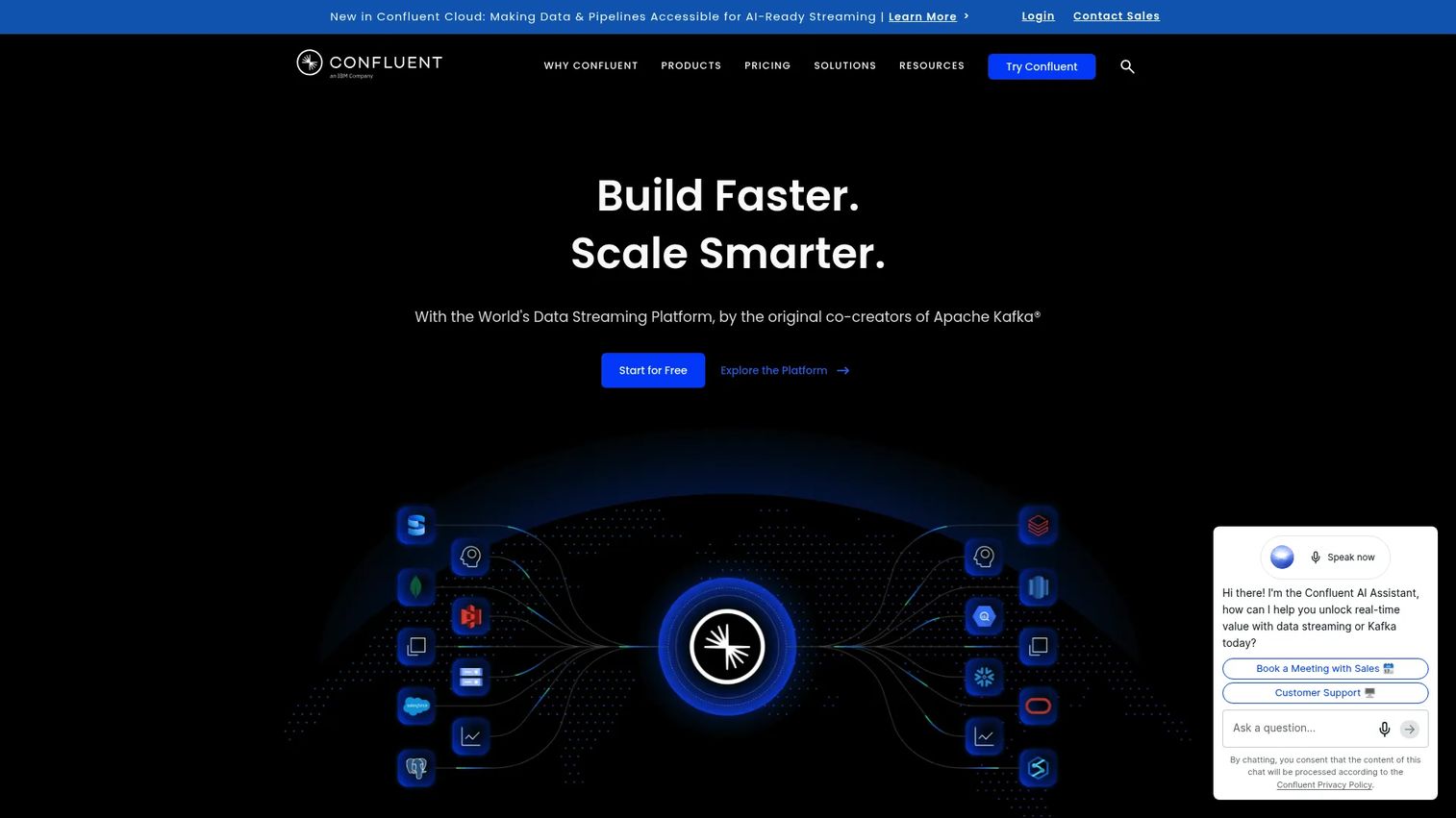
Confluent is the odd one out by design, and it belongs here because "serialization software" pulls in the data-engineering meaning of the word too. This is the data serialization angle: not packaging lines, but portable data interchange. Confluent is a data streaming platform built on Apache Kafka, and its Schema Registry and Stream Governance handle how data is serialized and evolved across systems using Avro, JSON, and Protobuf.
Best for: Data-platform teams building real-time streaming pipelines who need portable, governed data interchange across systems.
Key strengths
- Managed Kafka with elastic scaling: Fully managed clusters with infinite storage, so teams move data without operating Kafka themselves.
- Stream Governance and Schema Registry: Enforces serialization schemas and safe evolution, which is the interoperability backbone for portable interchange.
- Confluent Cloud for Apache Flink: Adds stream processing and AI/ML functions on the same governed data.
Why choose Confluent: Choose Confluent only if your "serialization" problem is data serialization, moving structured data reliably between services, not tracking physical units. For product serialization and traceability, it is the wrong category. For portable interchange with schema governance, it is a strong fit and pairs with data replication via Cluster Linking.
Confluent pricing: Confluent Cloud uses consumption-based pricing. You can start free with $400 in free credit, though the site does not publish a fixed starting price. Confluent holds a 4.4/5 rating on G2. Model cost against your data throughput and retention rather than seats.
5. Oracle
Oracle is a broad enterprise software and cloud infrastructure vendor whose relevance to serialization comes through its supply chain and regulated-operations footprint. Oracle Cloud Infrastructure offers 200-plus cloud services, and companies running broad ERP and supply chain workflows on Oracle can extend that into serialization and traceability rather than bolting on a separate stack.
Best for: Enterprises needing a broad cloud platform with databases, infrastructure, and supply chain workflows under one vendor.
Key strengths
- Oracle Cloud Infrastructure (OCI): 200-plus services spanning compute, storage, databases, and AI to support serialization data at scale.
- Integrated cloud services: Serialization and traceability plug into the same environment as networking, databases, and developer tooling.
- Distributed cloud options: Public, hybrid, multicloud, and dedicated deployments suit regulated environments with residency or isolation needs.
Why choose Oracle: Oracle fits organizations already invested in its cloud and supply chain workflows that want serialization inside that governance and integration model. The strength is breadth; the consideration is that serialization is a workload on a large platform, not a purpose-built serialization product. Firms wanting a focused pharma tool may prefer a specialist.
Oracle pricing: Oracle Cloud Free Tier includes Always Free services with no time limit plus a Free Trial with US$300 in credit valid for 30 days, then pay-as-you-go. Oracle Cloud Infrastructure Compute holds a 4.1/5 rating on G2. Overall serialization cost depends on the specific services and volume you consume.
6. Körber
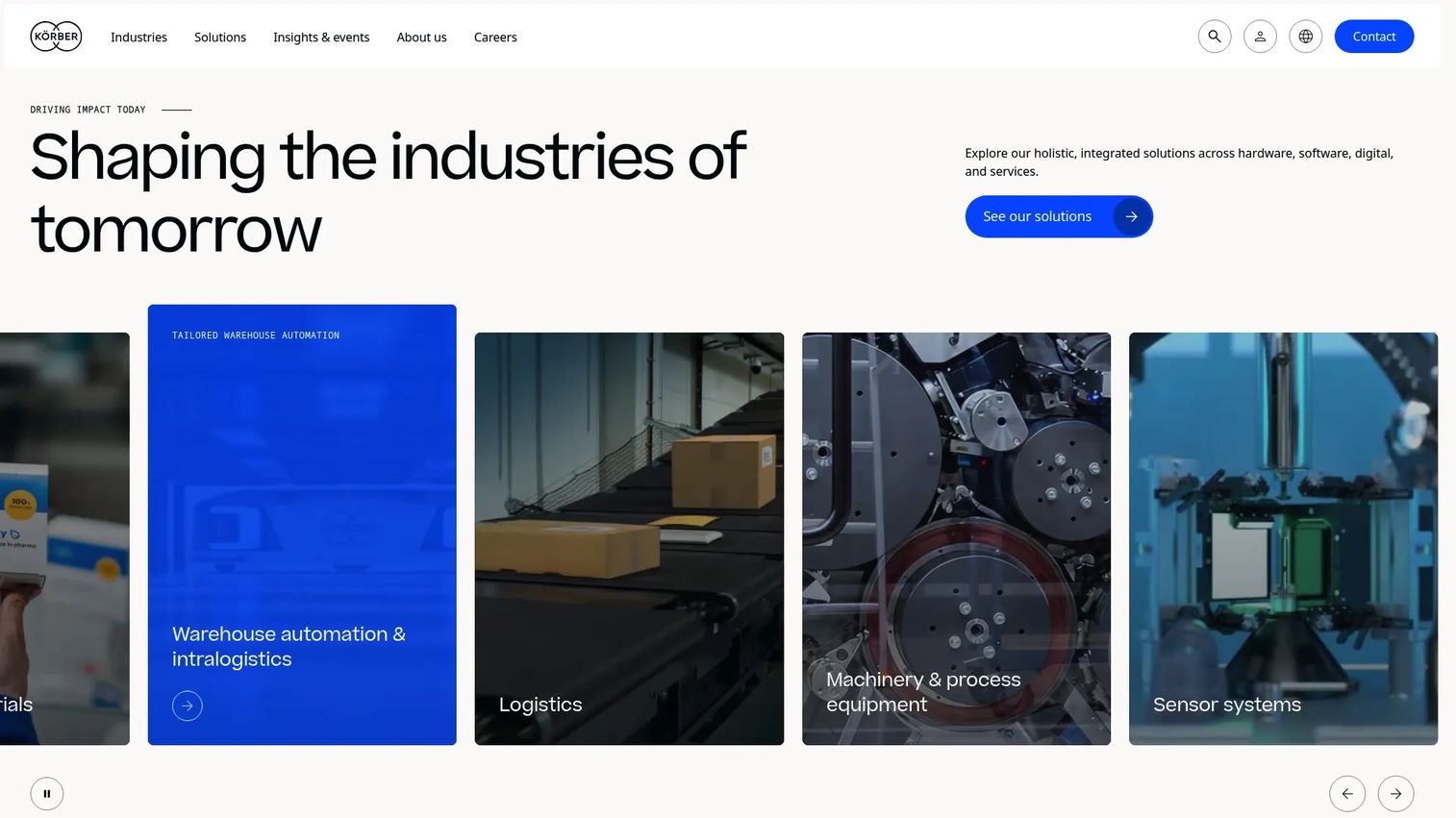
Körber is a global technology company providing integrated solutions for manufacturing and supply chains, with a dedicated pharma and life sciences practice. For serialization, its appeal is combining hardware, software, digital, and services so packaging-line serialization and downstream supply chain handoffs are covered by one partner rather than a patchwork of vendors.
Best for: Enterprises needing integrated industrial automation and supply chain solutions across life sciences manufacturing.
Key strengths
- Integrated hardware, software, digital, and services: Serialization on the line connects to broader manufacturing and supply chain execution.
- Pharma and life sciences solutions: Purpose-built for regulated manufacturing scale, compliance, and traceability.
- Warehouse automation and intralogistics: Extends serialized product tracking into distribution and fulfillment.
Why choose Körber: Körber suits pharma and life sciences teams that want serialization embedded in a wider manufacturing and logistics operating model. The strength is scope and integration; the consideration is that this is an enterprise, services-inclusive engagement rather than a quick standalone deployment. Körber holds a 4.5/5 rating on G2.
Körber pricing: Körber does not publish public pricing on its website, and there is no visible standard price for its serialization offerings. Cost will reflect the mix of hardware, software, and services in scope, so treat it as a scoped enterprise engagement rather than a list-price purchase.
7. TraceLink
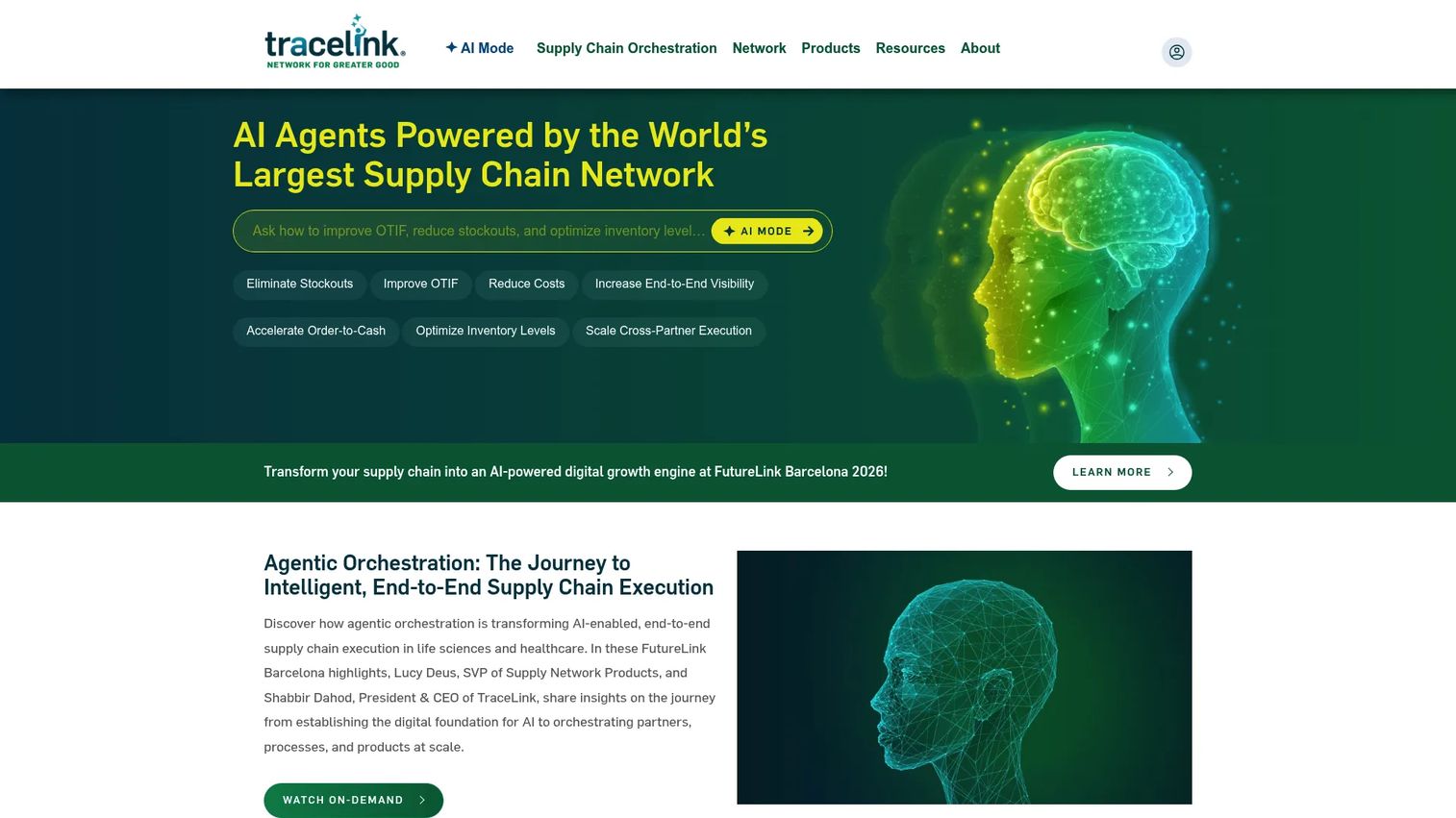
TraceLink provides a cloud-based digital network for life sciences and healthcare supply chain orchestration, visibility, compliance, and partner collaboration. Where several tools here focus on generating and verifying serial data, TraceLink focuses on the network layer: connecting trading partners so serialized data moves cleanly between manufacturers, distributors, and dispensers.
Best for: Life sciences and healthcare companies needing multi-enterprise supply chain orchestration and compliance networking.
Key strengths
- Integrate Once, Interoperate with Everyone: Connect once to the network and exchange data with any onboarded partner, cutting point-to-point integration work.
- Configurable transaction support: Handles UI, API, and message-based integrations, so partners can join at their own capability level.
- Network onboarding included: Partner onboarding comes without separate integration costs, lowering the barrier to expanding the network.
Why choose TraceLink: TraceLink fits distributed life sciences ecosystems where the hard part is not serializing a unit but exchanging that data across many partners with clean audit trails. The network model reduces integration overhead as partners grow. TraceLink holds a 4.5/5 rating on G2 and publishes transparent tier pricing, which is rare in this category.
TraceLink pricing: TraceLink publishes MINT pricing in three tiers: Essential Visibility at $1,000, Extended Visibility at $2,000, and Full Visibility at $5,000, each as an annual cost per MINT Link with $0 onboarding cost. The page states there are no charges for transaction volume, file size, custom file maps, partner onboarding, or integration maintenance, which makes budgeting predictable.
Considerations before you buy
Serialization is an operational system, not a label printer. These criteria separate tools that scale from tools that create new manual work.
Data verification and identifier standards
Confirm the tool generates, allocates, and verifies serial numbers to the standards your markets require, GS1 and SGTIN among them. Weak verification means bad data enters your event trail, and bad data is what auditors and recalls expose. Ask how the system prevents duplicate or invalid identifiers at generation.
Scanning and packaging line integration
Serialization only works if it matches the physical line. Check whether the software is hardware-agnostic or tied to specific scanners and printers, and how it handles line speed, aggregation, and reject handling. A tool that cannot keep pace with the line becomes a bottleneck, not a control.
Audit trail quality and exportability
Your audit trail is the artifact regulators actually inspect. Evaluate how events are logged, how far back records are retained, and how cleanly you can export them under time pressure. The difference between weeks of reconstruction and a single query is usually in this feature.
Interoperability and partner onboarding
Serialized data has to cross company boundaries. Assess how the platform exchanges data with trading partners, which integration methods it supports, and what onboarding a new partner actually costs in time and money. This is where supply chain traceability software either compounds value or accumulates friction.
Conclusion
The right serialization software depends on your regulatory burden and packaging environment, not brand prestige. For end-to-end track-and-trace across regulated markets, rfxcel is the strongest all-rounder. CPG and line-centric teams should look hard at ZPI Software. If your world runs on ERP, SAP and Oracle let serialization live inside existing governance. Körber suits life sciences teams wanting an integrated manufacturing and supply chain partner, and TraceLink wins when the challenge is orchestrating serialized data across many trading partners.
Confluent stands apart deliberately, if your serialization problem is really data serialization and portable interchange, it belongs on your list; if it is physical unit identity, it does not.
Start by naming your primary driver: compliance reporting, anti-counterfeit, recall precision, or partner data exchange. Then shortlist the two tools that match that driver and your packaging reality, and pressure-test each against the verification, line integration, audit, and interoperability criteria above before committing.
FAQs
Serialization software generates and allocates unique serial numbers to individual product units, encodes them into barcodes or Data Matrix codes, verifies units through the packaging line, and logs events across the supply chain. That data supports authentication, targeted recalls, and audit reporting. In short, it gives every unit a traceable identity from production through distribution.
Product serialization assigns physical identifiers to real-world units for track-and-trace and compliance. Data serialization is a software-engineering concept, converting data structures into portable formats like Avro, JSON, or Protobuf so systems can store and exchange them. Most tools in this guide handle product serialization; Confluent handles data serialization. The shared word describes two unrelated problems.
Pharmaceuticals lead, driven by regulatory mandates and counterfeit risk, and pharma manufacturers hold roughly 40% of track-and-trace end-user revenue per Mordor Intelligence (2025). CPG, food and beverage, medical devices, and high-value branded goods also adopt it for anti-counterfeit and diversion control. Any industry facing recalls, gray-market leakage, or unit-level compliance reporting benefits.
Prioritize data verification that prevents duplicate or invalid identifiers, hardware-agnostic scanning and packaging line integration, deep and exportable audit trails, and interoperability for partner data exchange. Support for GS1 and SGTIN standards is table stakes in regulated markets. Implementation support and industry fit determine how quickly the system actually goes live.
When every unit carries a verified serial number and event history, you can trace exactly which lots or units are affected and recall only those. Instead of pulling an entire product line, you target the specific population at risk. Clean master data and audit trails make the recall faster to execute and easier to defend to regulators.
Yes. Serialization is only as reliable as its connection to the physical line, where codes are printed, scanned, and verified in real time. Look for hardware-agnostic tools that keep pace with line speed and handle aggregation and reject scenarios. Poor line integration turns serialization into a manual bottleneck rather than an automated control.
Ask how serial numbers are generated and validated, which scanners and printers the system supports, how far back audit records are retained and how quickly they export, and what onboarding a new trading partner costs in time and fees. Also confirm which markets and regulatory regimes the vendor supports out of the box, so you are not funding custom work later.