Hold too much inventory and you tie up cash that could fund the roadmap. Hold too little and you eat stockouts, rush shipping, and angry customers. Safety stock lives in the middle of that tension, and most teams still set it with a spreadsheet formula that hasn't been touched in six months.
That gap is expensive. The safety stock optimization market for distribution centers was valued at $3.2B in 2025 and is forecast to reach $7.1B by 2034, growing at a 9.8% CAGR, with software solutions making up 58.3% of that spend (MarketIntelo, 2025). Teams are moving off spreadsheets because static buffers can't keep up with demand variability, lead time variability, and forecast error that change week to week.
For a product manager, this is not just a supply chain problem. Inventory decisions hit working capital, customer experience, and the operational overhead your team carries every quarter. A bad safety stock model produces the same symptoms as bad onboarding: friction you can measure but can't easily trace, and a slow bleed that shows up in the numbers before anyone names the cause. The right software replaces manual safety stock calculation with forecasting, replenishment automation, and clear visibility into service levels.
This guide breaks down seven tools built for that job, from lightweight ecommerce replenishment to enterprise supply chain planning.
What's inside
This list is for inventory, supply chain, operations, and finance teams evaluating software that helps calculate, optimize, and automate safety stock decisions. It is a buyer's guide, not a glossary, so the focus stays on how each tool handles the parts that actually break.
We chose tools based on four criteria:
- Inventory planning depth: forecasting, reorder point logic, and safety stock optimization by SKU or category
- Forecasting and lead-time handling: demand history, exception handling, and lead time variability
- Automation: replenishment recommendations, purchase order support, and alerts
- Integration fit and visibility: ERP connectivity plus reporting on service levels and excess stock
The list includes options for SMB, mid-market, and enterprise teams so you can match the tool to your planning maturity, not just your feature wishlist.
TL;DR
- Best overall fit for most teams: Netstock combines demand planning, inventory optimization, and supplier performance without forcing you to build a planning process from scratch.
- Best for SMB and ecommerce: Inventory Planner by Sage handles forecasting and multi-location replenishment for retail-heavy operations.
- Best for advanced, AI-native planning: RELEX Solutions unifies demand, inventory, pricing, and supply for complex retail and manufacturing environments.
- Best for faster rollout and operational visibility: EazyStock automates reorder points, order quantities, and safety stock on top of your existing ERP.
- Best for enterprise process maturity: SAP Integrated Business Planning coordinates service-level targets across demand, supply, and inventory at scale.
- Best for Oracle-centric stacks: Oracle Fusion Cloud Demand Management ties demand sensing and replenishment into existing Oracle SCM.
What is safety stock software?
Safety stock software is a class of inventory planning software that calculates and optimizes buffer inventory using demand variability, lead time variability, and target service levels, then recommends replenishment actions to prevent stockouts without inflating carrying costs.
Safety stock is the extra inventory you hold to absorb uncertainty. It differs from cycle stock, which is the inventory you plan to sell between replenishment cycles. Cycle stock covers expected demand. Safety stock covers the surprises.
The surprises come from a handful of predictable sources:
- Demand spikes: promotions, seasonality, and sudden interest in a SKU
- Supplier delays: shipments that arrive late or short
- Forecast error: the gap between what you predicted and what actually sold
- Long lead times: more time between order and delivery means more room for things to go wrong
- Service level targets: the fill rate you commit to, expressed as a percentage
- Z-score planning: the statistical factor that maps a target service level to a buffer quantity in the safety stock formula
How software helps: instead of a static safety stock calculation copied across a spreadsheet, these tools update buffers continuously as demand and lead times shift. They add scenario planning so you can model a supplier delay before it happens, visibility into which SKUs are over- or under-buffered, and replenishment recommendations that turn the math into purchase orders. The result is inventory optimization that reacts to real signals instead of last quarter's assumptions.
When to use safety stock software
Reduce stockouts without padding inventory
If fill rate directly shapes customer experience, you need buffers tuned to reality, not padded "just in case." That matters most for fast-moving SKUs, promotional demand, and unstable suppliers where a single missed shipment cascades into lost sales. Software lets you protect availability on the items that count while trimming the ones quietly hoarding cash.
Replace spreadsheet-based planning
Manual safety stock formulas work until they don't. Version drift creeps in, one analyst updates a tab nobody else sees, and lead times stay frozen at values set months ago. When planning happens weekly across hundreds of SKUs, spreadsheets can't keep pace. Software centralizes the logic, updates inputs automatically, and cuts the manual errors that quietly erode service levels.
Align service levels with cash flow goals
Every point of service level you add costs carrying capital. The teams that get this right tune service-level targets by SKU, category, or region instead of applying one blanket number. A high-margin, high-demand item might warrant 98% availability. A slow, expensive SKU might not. Software makes that tradeoff explicit and adjustable, so finance and operations argue over data instead of gut feel.
Comparison table
Compare these tools on four things: planning depth (does it forecast and optimize, or just calculate?), automation (does it recommend replenishment or stop at the number?), integration fit with your ERP, and pricing structure. Ratings are from G2 at time of writing.
| # | Product | Intent | Key differentiation | Pricing | G2 rating |
|---|---|---|---|---|---|
| 1 | Netstock | Mid-market inventory + demand planning | AI-assisted planning connected to your ERP | From $900/month | 4.6/5 |
| 2 | Inventory Planner by Sage | SMB and ecommerce replenishment | Forecasting and multi-location planning for retail | Quote-based | 4.5/5 |
| 3 | RELEX Solutions | Enterprise unified planning | AI-native demand, inventory, and pricing | Quote-based | 4.6/5 |
| 4 | EazyStock | SMB inventory optimization | Automatic reorder point and safety stock on top of ERP | Quote-based | 4.4/5 |
| 5 | StockIQ | Mid-market to enterprise supply chain planning | Forecasting plus supplier scorecards | Quote-based | 4.6/5 |
| 6 | SAP Integrated Business Planning | Enterprise integrated planning | S&OP with real-time scenario simulation | Quote-based | 4.3/5 |
| 7 | Oracle Fusion Cloud Demand Management | Oracle-stack demand planning | Demand sensing and replenishment inside Oracle SCM | Quote-based | 4.6/5 |
1. Netstock
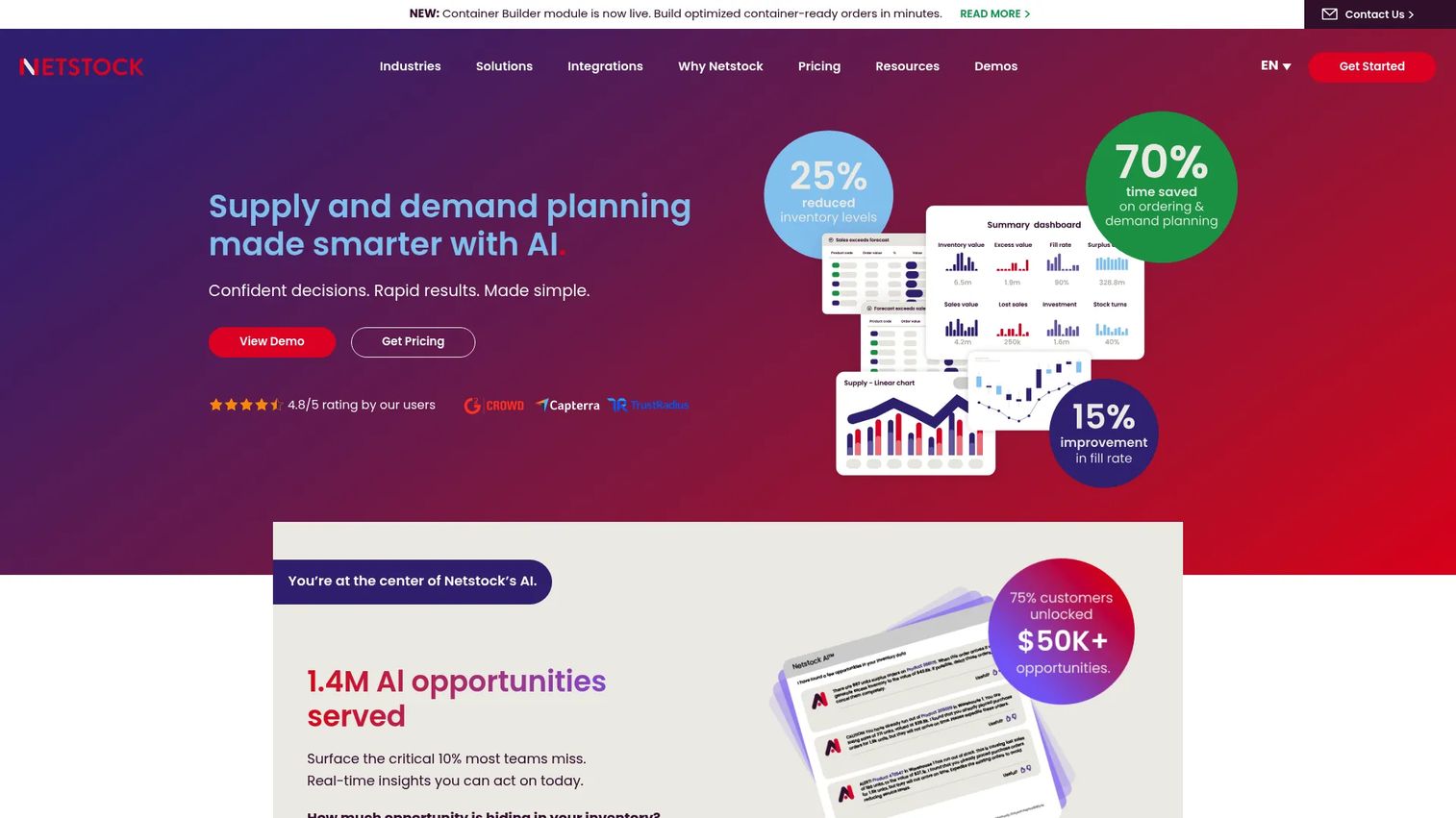
Netstock is AI-powered supply and demand planning software built for teams that want inventory optimization, forecasting, and ordering without hiring a planning team first. It connects to your ERP and layers planning intelligence on top, so you get demand forecasts, safety stock recommendations, and replenishment suggestions from data you already have. For a mid-market operation drowning in SKUs, that combination is the fastest path from spreadsheet chaos to a repeatable process.
Best for: Mid-market companies that need AI-assisted inventory and demand planning connected to an ERP.
Key strengths
- Inventory optimization: Sets and updates buffers by SKU so you stop over-stocking slow movers and under-stocking fast ones.
- Demand planning and forecasting: Builds forecasts from historical demand and flags exceptions before they become stockouts.
- Inventory ordering and supplier performance: Turns forecasts into order recommendations while tracking how reliably suppliers deliver.
Why choose Netstock: It hits the sweet spot for teams that want serious planning depth without a multi-year implementation. The ERP connection means you are not rebuilding your data model, and the what-if planning lets you pressure-test a supplier delay or demand spike before committing capital. For a product manager who thinks in terms of time-to-value, this is the option that ships results in weeks, not quarters.
Netstock pricing: Netstock states that pricing starts at $900/month, billed as an annual subscription, based on the product and bundle selected. The entry Essentials plan sits at that starting price, while its Predictor and Capacity Planner tiers require a custom quote. There is no free tier.
2. Inventory Planner by Sage
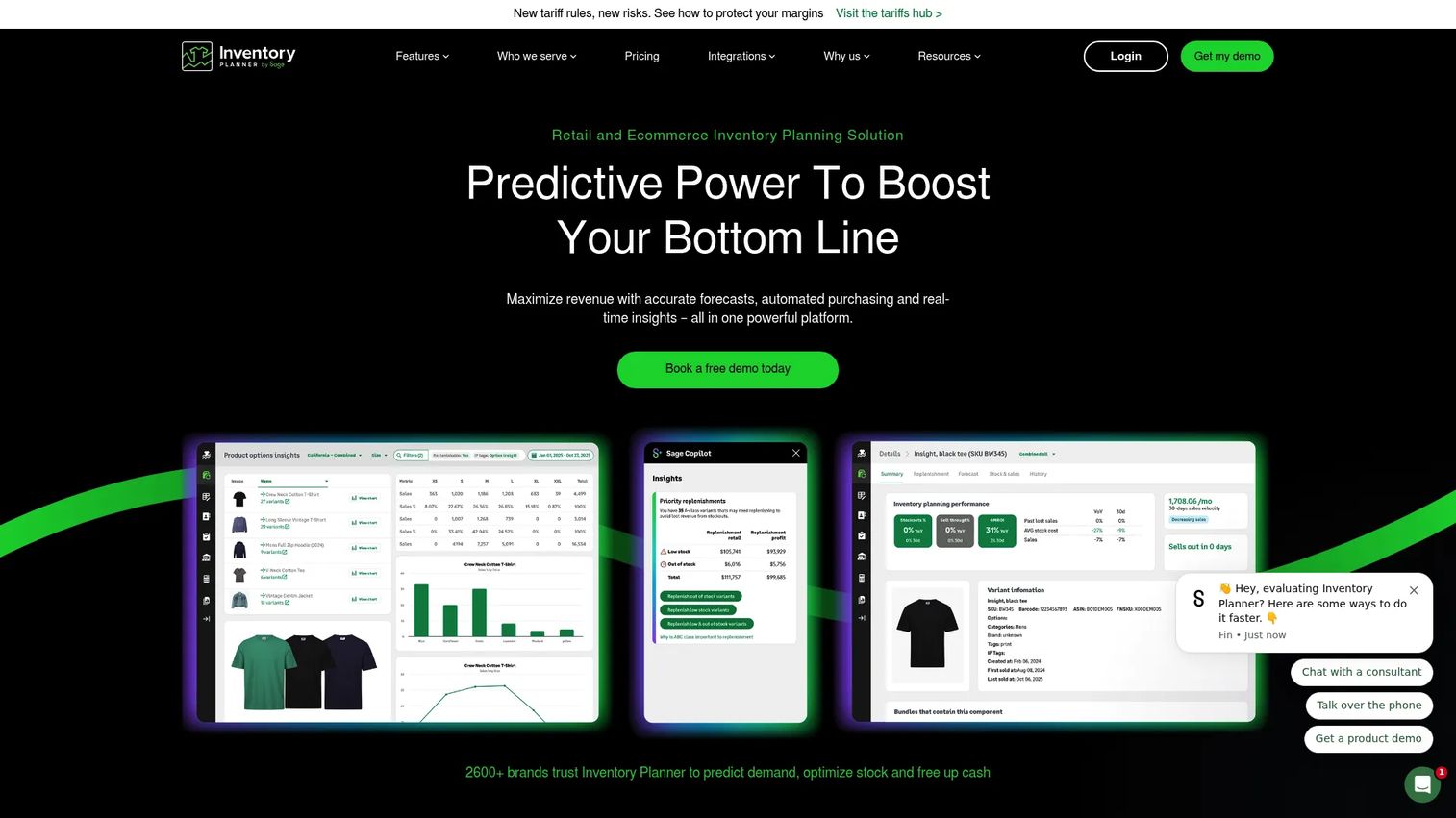
Inventory Planner by Sage is inventory planning and demand forecasting software aimed at retail and ecommerce teams. It focuses on the operational realities of selling physical products online: forecasting demand, generating purchase recommendations, and planning stock across multiple locations. If your business runs on Shopify-style catalogs and seasonal demand swings, this tool speaks your language.
Best for: Retailers and ecommerce brands that need forecasting, replenishment, and multi-location inventory planning.
Key strengths
- Demand forecasting: Projects future demand from sales history so reorder timing matches actual patterns, not guesses.
- Automated purchasing recommendations: Generates what to buy and when, reducing the manual math behind every purchase order.
- Multi-location planning: Balances stock across warehouses and channels so buffers reflect where demand actually lands.
Why choose Inventory Planner by Sage: For smaller and ecommerce-heavy operations, this is the practical choice. It emphasizes faster rollout and replenishment controls over deep multi-echelon modeling, which is exactly what a lean team needs. You get forecasting and safety stock logic without the overhead of an enterprise planning suite.
Inventory Planner by Sage pricing: Public pricing is quote-based. The pricing page notes that cost is tied to inventory volume and asks prospects to request a quote, so there is no published entry price.
3. RELEX Solutions
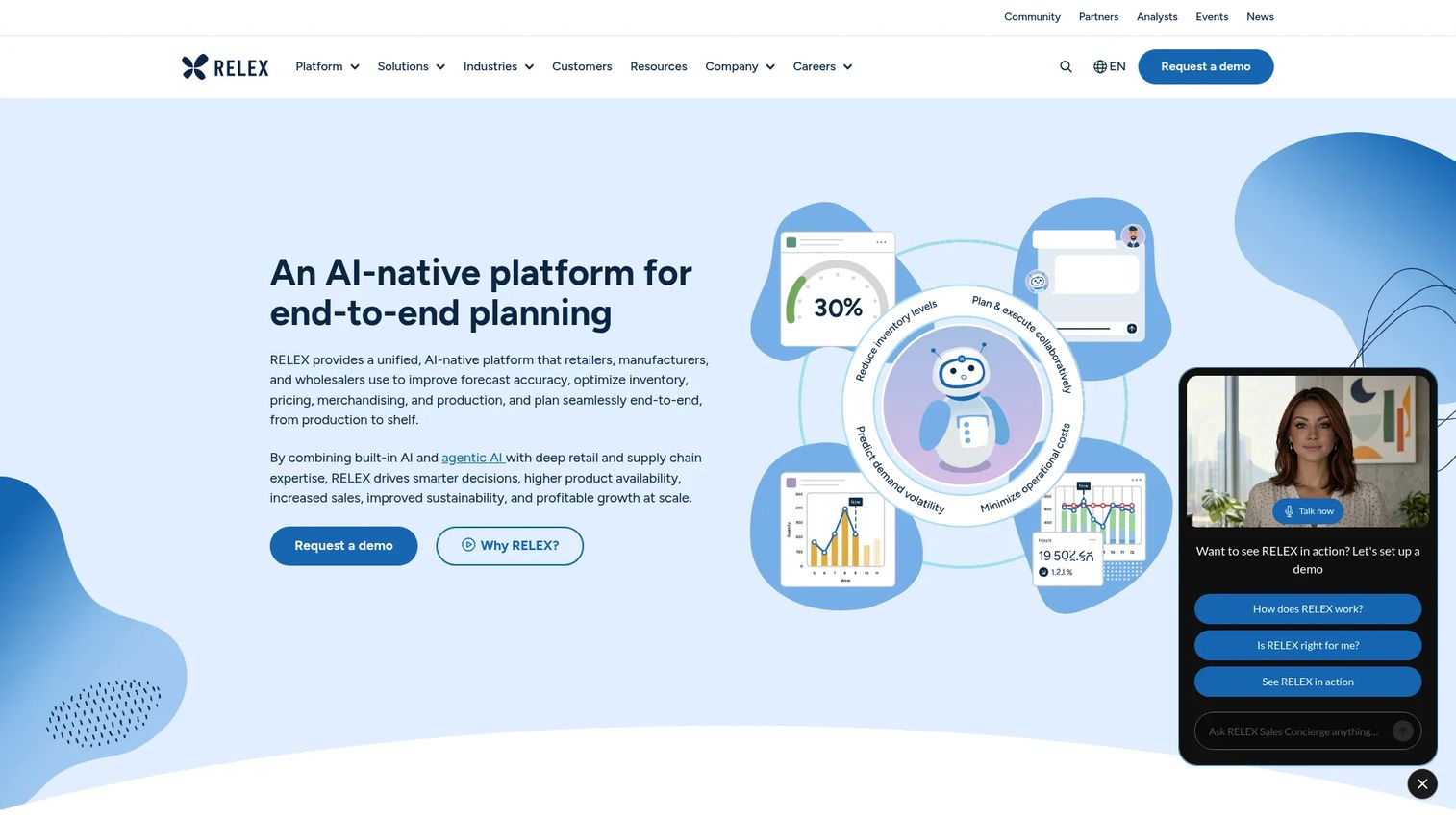
RELEX Solutions is AI-native retail and supply chain planning software that unifies forecasting, inventory, pricing, merchandising, and production planning in one platform. Where lighter tools handle one slice of the problem, RELEX aims to connect the whole chain, so a demand signal flows through to inventory buffers, pricing decisions, and supply plans without manual handoffs. That end-to-end view is what complex operations need to keep safety stock aligned with everything else.
Best for: Large retailers, manufacturers, and wholesalers needing unified planning and optimization.
Key strengths
- Unified end-to-end planning: Connects demand, supply, inventory, and pricing so buffer decisions reflect the full picture, not one isolated formula.
- Price optimization and promotion planning: Models how promotions shift demand, which keeps safety stock accurate through volatile periods.
- Franchise pricing with centralized governance: Lets multi-location operations set policy centrally while optimizing for local markets.
Why choose RELEX Solutions: The AI-native architecture matters most when demand variability and lead time variability compound across thousands of SKUs and many locations. RELEX handles that scale and ties supplier behavior and demand signals into a single planning loop. It is the pick for organizations that have outgrown point tools and need planning depth across retail, manufacturing, and wholesale.
RELEX Solutions pricing: RELEX does not publish public pricing. The site routes prospects to a demo request rather than listing prices, so expect a quote-based, enterprise-oriented engagement.
4. EazyStock
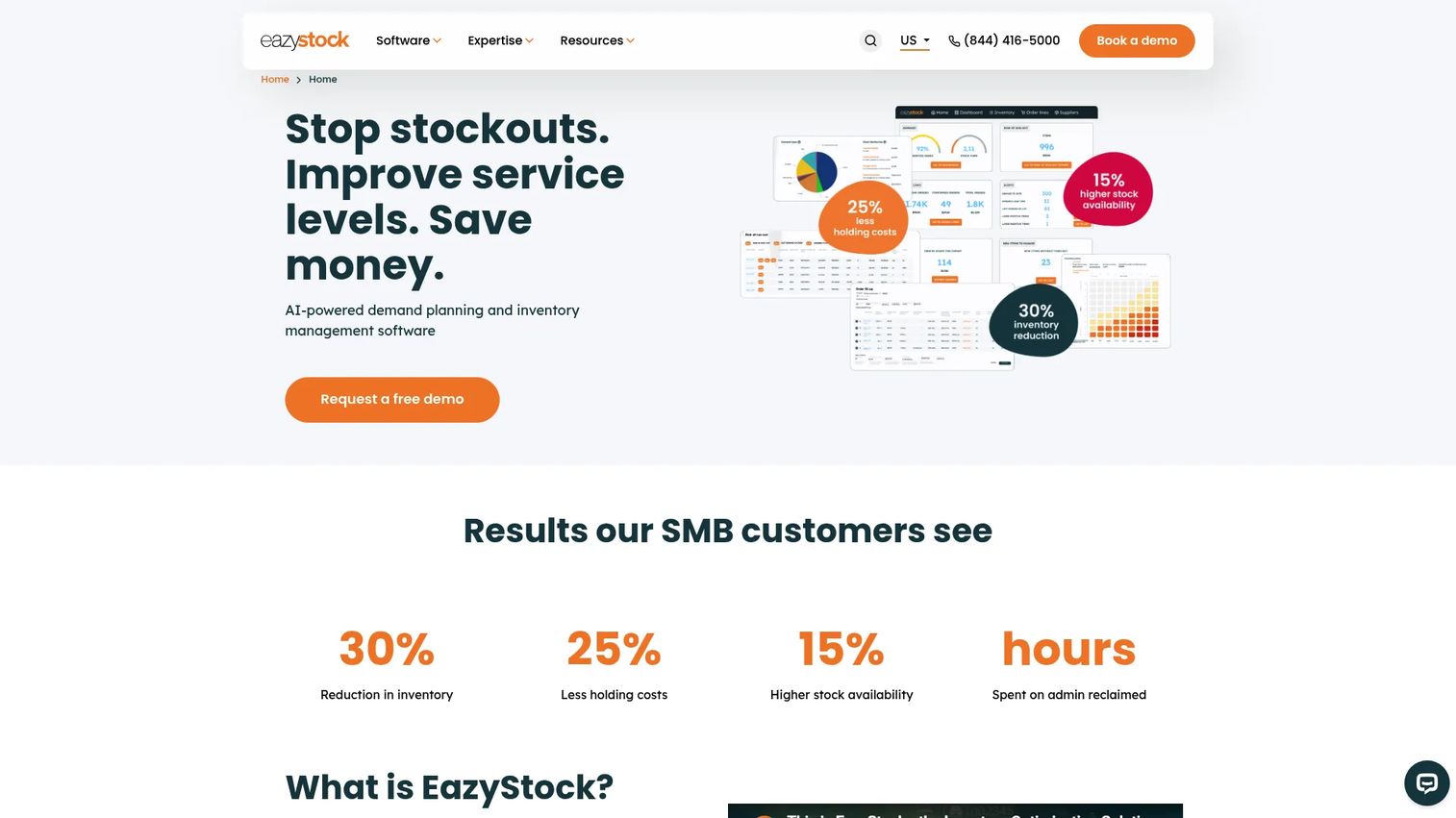
EazyStock is cloud-based inventory optimization software built for SMBs that want automated forecasting and replenishment without a heavy implementation. It plugs into your existing ERP through ready-made connectors and takes over the repetitive decisions: reorder points, order quantities, and safety stock levels. The goal is simpler operational visibility and faster decision support for teams that do not have a dedicated planning function.
Best for: SMBs that need automated inventory forecasting, replenishment, and purchasing decisions.
Key strengths
- ERP integration with ready-made connections: Connects to common ERPs quickly so you skip custom data plumbing.
- Machine-learning demand forecasting: Learns demand patterns and adjusts forecasts as behavior shifts.
- Automatic reorder point, order quantity, and safety stock calculation: Handles the core math continuously instead of leaving it in a spreadsheet.
Why choose EazyStock: If you want the safety stock calculation automated and sitting on top of the ERP you already run, EazyStock keeps the footprint light. It targets teams that value speed and clarity over deep customization, which fits SMBs moving off manual planning for the first time.
EazyStock pricing: Pricing is quote-based. EazyStock says cost depends on ROI and the software version and asks prospects to request a free quote, so no public entry price is listed.
5. StockIQ
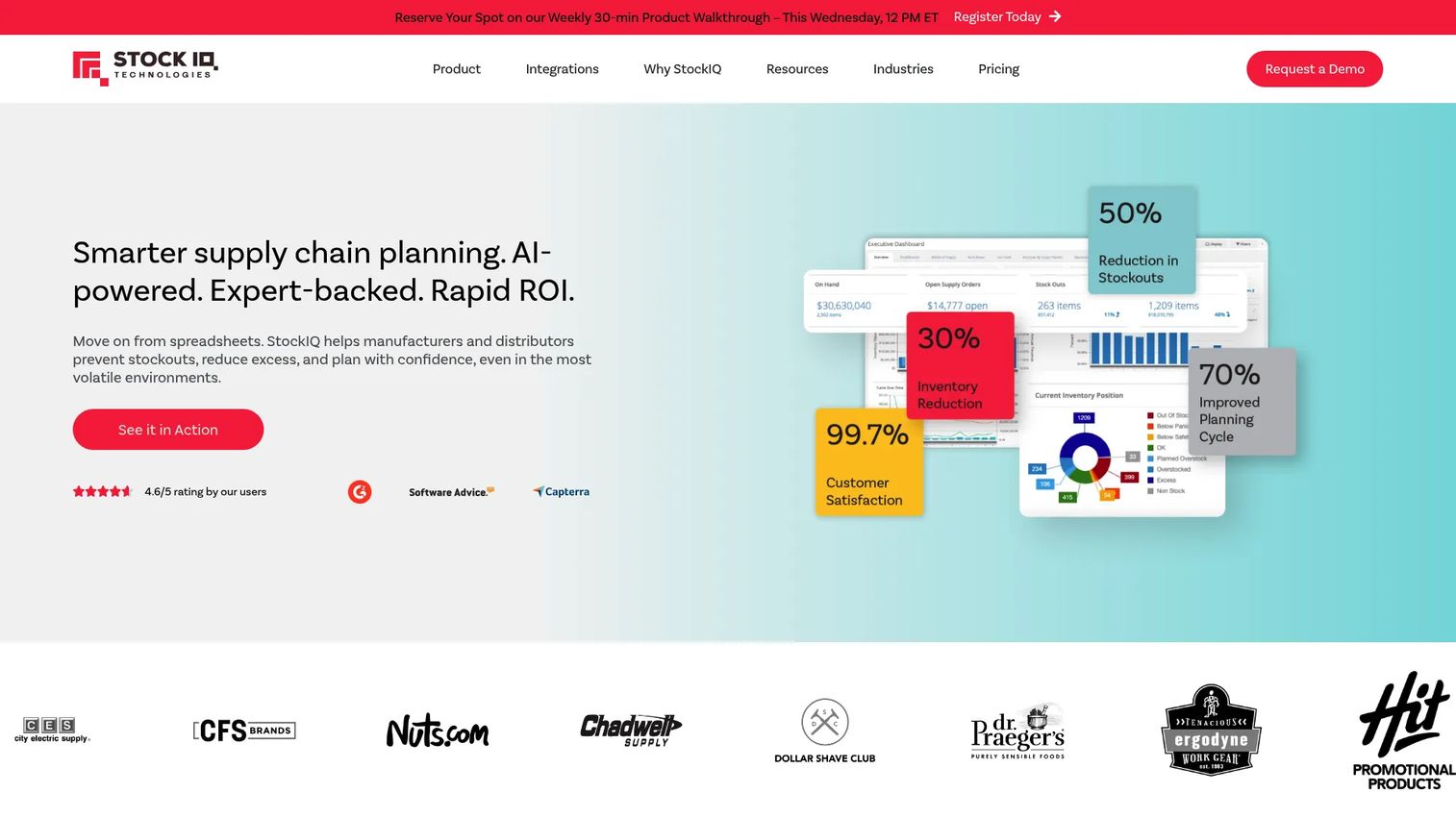
StockIQ is supply chain planning software covering demand forecasting, replenishment, supplier performance, promotion planning, and SIOP. It earns a spot on a safety stock list because good buffers depend on the layers around them: an accurate forecast, reliable supplier data, and disciplined replenishment. StockIQ treats safety stock as one output of a connected planning process rather than a standalone number.
Best for: Mid-market to enterprise distributors and manufacturers needing ERP-connected supply chain planning.
Key strengths
- AI-enhanced demand forecasting: Improves forecast accuracy, which is the input that makes every downstream buffer more reliable.
- Replenishment planning with automatic order generation: Converts plans into orders so the workflow does not stall at the recommendation.
- Supplier performance tracking and scorecards: Surfaces lead time variability so buffers reflect how suppliers actually behave.
Why choose StockIQ: For distributors and manufacturers who plan by SKU and category, StockIQ brings planning discipline and cross-functional visibility. The supplier scorecards are the differentiator here: they turn lead time variability from a guess into tracked data, which is often the missing piece in safety stock accuracy.
StockIQ pricing: Pricing is quote-based and depends on your ERP, SKU count, locations, and planning complexity. StockIQ offers Core and Enterprise tiers and says it returns pricing within one business day, but no public numeric price is listed.
6. SAP Integrated Business Planning
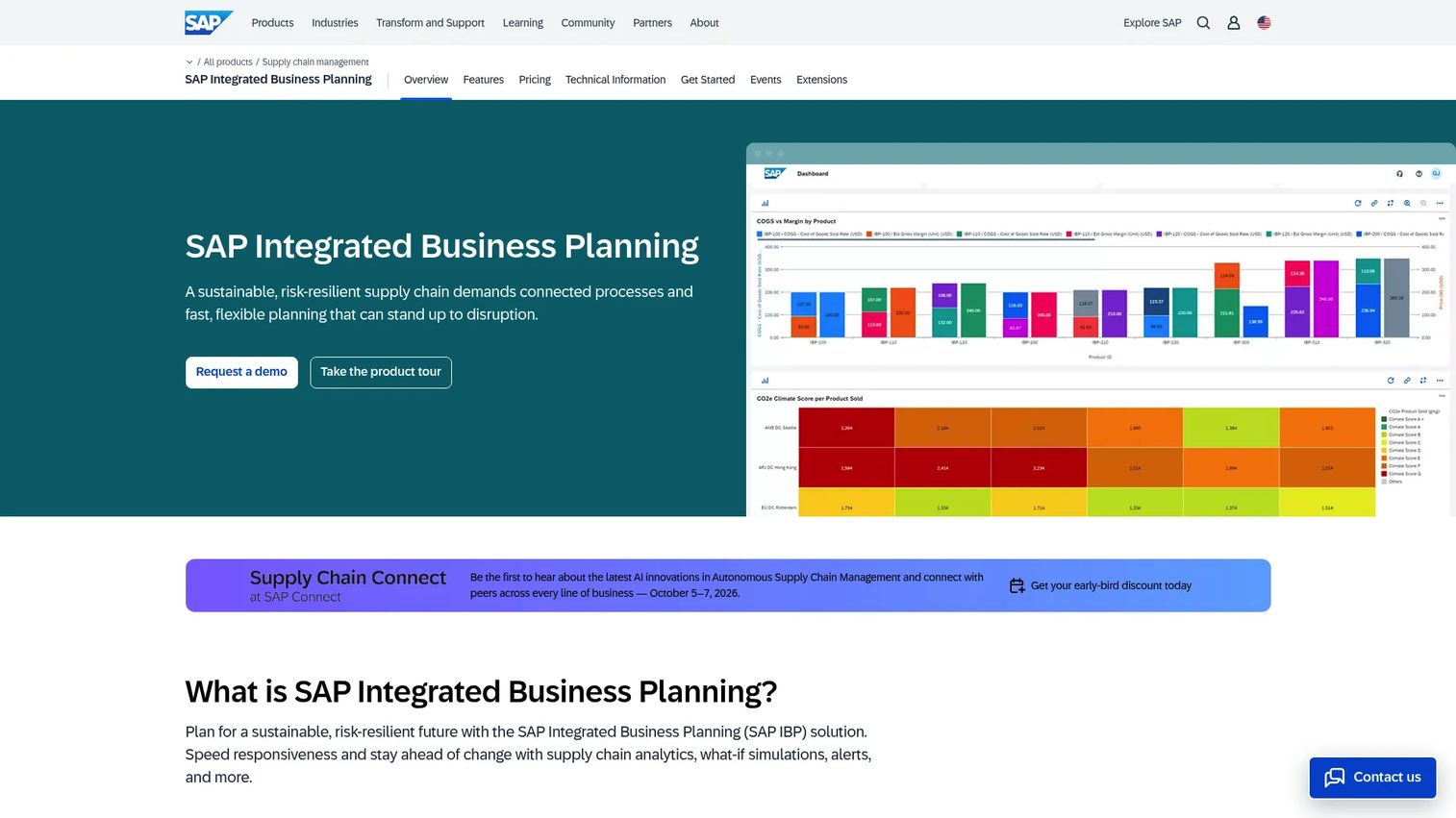
SAP Integrated Business Planning is cloud-based supply chain planning software for S&OP, forecasting, inventory, and supply planning. It is an enterprise platform, built for organizations that need to coordinate service-level targets across demand, supply, and inventory functions in one system. When planning spans multiple regions, business units, and stakeholders, that integration is the point.
Best for: Enterprise supply chain teams needing integrated planning across demand, supply, and inventory.
Key strengths
- Sales and operations planning (S&OP): Aligns demand, supply, and finance on one plan so service levels and cash goals stay connected.
- Real-time planning and scenario simulation: Models the impact of a disruption before it hits, which protects buffers under pressure.
- Forecasting and demand management: Drives the demand signal that safety stock optimization depends on across the enterprise.
Why choose SAP Integrated Business Planning: This fits larger organizations with process maturity and the resources to run integrated planning well. The scenario simulation and cross-functional alignment are what enterprises need to tune service levels consistently across many regions and product lines. It is heavier than a point tool by design, because the job it does is bigger.
SAP Integrated Business Planning pricing: SAP does not display a public price on its pricing page; the flow routes to a demo request. Expect an enterprise, quote-based engagement.
7. Oracle Fusion Cloud Demand Management
Oracle Fusion Cloud Demand Management is Oracle's cloud demand planning software for sensing, predicting, and shaping demand, then automating replenishment. Its natural home is an Oracle-centric enterprise stack, where it plugs into Oracle SCM and connects demand planning directly to inventory policy and replenishment decisions. For teams already committed to Oracle, that native fit removes integration friction.
Best for: Large enterprises needing integrated demand planning and replenishment inside Oracle SCM.
Key strengths
- Manage multiple demand signals and segment demand: Blends signals and segments SKUs so buffers reflect real demand patterns.
- Machine-learning forecasting and scenario simulation: Improves forecast accuracy and lets planners test scenarios before acting.
- Demand-driven replenishment and inventory policy planning: Ties service level, lead time, and replenishment into one policy engine.
Why choose Oracle Fusion Cloud Demand Management: If you already run Oracle SCM, this is the path of least resistance for demand planning and safety stock support. The inventory policy planning connects service-level targets to replenishment automation without bolting on a third-party tool. It is an enterprise choice, best for organizations with the scale and Oracle footprint to justify it.
Oracle Fusion Cloud Demand Management pricing: Oracle does not publicly list first-party pricing for this product, so plan on a direct quote through Oracle sales.
Considerations
Before you shortlist, pressure-test each tool against the parts of safety stock that actually break.
Forecasting quality
A better safety stock formula still fails if the forecast feeding it is weak. Check forecast accuracy, whether the tool uses historical demand well, and how it handles exceptions like promotions or one-off spikes. The forecast layer is the foundation; everything downstream inherits its errors.
Lead-time variability
Demand gets most of the attention, but supplier performance data matters just as much. Look for dynamic lead-time updates rather than static assumptions baked in at setup. Tools that track supplier reliability turn lead time variability from a hidden risk into a managed input.
Integration fit
The right tool fits your existing planning stack. Confirm ERP, WMS, ecommerce, and BI connectivity before you commit, because a planning tool that cannot read clean data or write recommendations back is just another silo. This is where lightweight tools with ready-made connectors often win on speed.
Automation and workflows
Decide whether you need a tool that only calculates safety stock or one that recommends replenishment actions. Inspect the alert logic, purchase order support, and approval workflows. Replenishment automation is where teams recover the most manual time, so weigh it heavily if planning currently eats your week.
Governance and reporting
For cross-functional teams, role-based access, auditability, and service-level reporting are not optional. You need to show finance why buffers moved and prove the service-level targets you committed to. Good reporting turns safety stock from a black box into a defensible decision.
Conclusion
The shortlist sorts cleanly by segment. Netstock is the strongest all-around fit for mid-market teams that want planning depth fast. Inventory Planner by Sage suits SMB and ecommerce operations. EazyStock keeps things light for SMBs automating replenishment on top of an existing ERP. StockIQ brings supplier discipline for distributors and manufacturers. For enterprise scale, RELEX Solutions leads on AI-native unified planning, while SAP Integrated Business Planning and Oracle Fusion Cloud Demand Management fit process-mature organizations, especially inside their respective ecosystems.
The best tool depends on three things: how complex your planning is, how well it integrates with your stack, and how much automation you actually want. Do not buy the biggest platform if a lighter tool clears your bar.
Next step: pick two or three that match your segment and test them against your real SKU complexity and current forecast quality. The tool that handles your messiest data is the one worth buying.
FAQs
Safety stock software calculates and optimizes buffer inventory based on demand variability and lead time variability, then recommends when and how much to reorder. It replaces manual safety stock calculation with continuous, data-driven planning so you prevent stockouts without overstocking.
Not exactly. Safety stock is a use case that lives inside broader inventory planning software and demand planning software. Most tools on this list handle safety stock as one output of a wider planning process that also covers forecasting, reorder points, and replenishment.
At minimum, it needs demand history, lead times, a measure of variability, target service levels, and supplier reliability data. The quality of those inputs, especially the forecast and lead-time data, determines how accurate the resulting buffers are.
Software updates buffers continuously as demand and lead times change, runs scenario modeling, and pulls in dynamic lead times instead of static assumptions. It also removes the manual errors and version drift that quietly break spreadsheet-based safety stock formulas.
Businesses with multiple locations, high SKU counts, volatile demand, or long lead times feel the pain most. As of 2026, sophisticated safety stock optimization is still concentrated among large multinationals and leading retailers, with mid-market adoption under 25% (MarketIntelo, 2026), so there is room for growing teams to gain an edge.
Compare forecast accuracy, integration fit with your ERP and WMS, replenishment automation, and reporting depth. Also weigh how the tool handles lead time variability and whether service levels can be tuned by SKU, category, or region.
Yes, when the planning model is accurate and service levels are tuned well. By matching buffers to real demand and lead-time risk instead of blanket padding, the software trims the excess inventory that ties up cash while still protecting fill rate on the SKUs that matter.