

Revenue leakage rarely shows up in one obvious place. It hides in the gap between clinical work, coding, charge capture, and denial follow-up. A charge gets missed on the floor. A code doesn't match documentation. A claim goes out clean but comes back denied for a reason nobody catches until the next audit. By the time finance sees the number, the trail is cold and the money is gone.
Revenue integrity software is the system that closes that gap. It sits in the middle of the revenue cycle, connecting clinical operations to financial outcomes, and it surfaces problems early enough to turn them into corrective action instead of write-offs. The stakes are real and growing. The U.S. healthcare revenue integrity market is forecast to grow from USD 3,448.8 million in 2026 to USD 5,692.5 million by 2033 at an 8.6% CAGR, according to Coherent Market Insights (2026). That growth reflects a simple pressure: margins are thin, denials are rising, and manual review can't keep pace with claim volume.
For a healthcare finance leader, this is an infrastructure decision, not a feature checklist. You want repeatable workflows, measurable financial impact, and clean operating signals that hold up in a board conversation. This guide ranks the strongest revenue integrity solutions for 2026 so you can shortlist by operational fit, not vendor claims. If interactive product walkthroughs are part of how your own team evaluates or demos software, that context helps, but the picks below are healthcare-specific.
What's inside
This guide covers 6 revenue integrity software options built for hospitals, health systems, and multi-specialty provider groups. We selected and ranked them on the factors that actually move revenue: charge capture and charge integrity, denial prevention, compliance support, analytics depth, workflow automation, and fit for revenue cycle teams. The list is built for buyers who need a defensible operating system across the middle of the revenue cycle, not another disconnected point tool. Each entry includes who it fits best, its key strengths, and honest notes on pricing visibility so you can move from long list to shortlist faster.
TL;DR
- Best for denial analytics and closed-loop correction: MDaudit, with remittance-driven detection and payer-centric rules.
- Best for enterprise revenue cycle breadth: Optum, for organizations wanting coding, CDI, and charge capture under one vendor.
- Best for chargemaster management and pricing defensibility: FinThrive, with benchmarking and revenue capture automation.
- Best for data-driven operations: Inovalon, for cloud analytics across claims and eligibility workflows.
- Best for broad revenue cycle and claims workflow: Waystar, for teams standardizing payments and denial workflows.
- Best for CDM governance: Craneware, for hospitals wanting chargemaster accuracy and pricing consistency.
What is revenue integrity software?
Revenue integrity software is a healthcare platform that monitors charge capture, coding, denials, compliance, and reporting across the middle revenue cycle to detect issues early and turn them into corrective action before revenue is lost.
It works as the connective layer between clinical operations and financial outcomes. Clinicians document care, coders translate it, billing submits it, and payers respond. Revenue integrity management is what watches that entire chain and flags where documentation, charges, and codes fall out of sync.
The core functions cover:
- Charge capture and coding integrity: catching missed, duplicate, or mismatched charges before claims go out.
- Denial prevention and root cause analysis: using remittance data and denial patterns to find the underlying cause, not just the symptom.
- Compliance and audit readiness: improving documentation consistency and building a defensible audit trail.
- Analytics and dashboards: giving finance and revenue cycle leaders trend visibility and revenue cycle analytics they can act on.
- Corrective action workflow automation: routing issues to the right owner with tracked resolution instead of email threads.
- Closed-loop operational feedback: feeding what payers actually paid back into pre-bill review so the same error doesn't repeat.
Clinical documentation integrity sits at the front of this chain. When documentation is complete and specific, coding is defensible and denials drop. Revenue integrity software makes that link measurable instead of assumed.
When to use revenue integrity software
Not every revenue cycle problem calls for a dedicated platform. These three situations are where the investment pays back fastest.
Reduce denials before they hit the payer
If your team is spending most of its energy on after-the-fact denial cleanup, you're playing defense. The value of a denials management approach built on prevention is that it catches the coding gap, the missing authorization, or the charge mismatch during pre-bill review. Earlier detection means fewer appeals, faster clean claims, and less recovered revenue lost to timely-filing limits.
Tighten charge capture and coding consistency
Hospitals, outpatient centers, and multi-department systems all struggle with the same thing: charges that never make it onto the claim and codes that don't match documentation. Revenue integrity software gives you defensible charge integrity and pricing across departments, which matters when a single missed charge type repeated across thousands of encounters becomes a seven-figure leak.
Build a more auditable revenue cycle
When leadership needs stronger compliance, cleaner trend reporting, and an audit trail that survives scrutiny, spreadsheets stop being enough. The right platform gives finance and the board consistent numbers, and gives auditors a defensible record of who changed what and why. That audit readiness is often what turns a reactive compliance posture into a proactive one.
Comparison table
Here is a side-by-side view of the 6 revenue integrity solutions in this guide. Most vendors in this category use contact-sales pricing rather than public tiers, so pricing reflects what is publicly verifiable. Ratings are shown where a current source was available.
| # | Product | Intent | Key differentiation | Pricing | G2 rating |
|---|---|---|---|---|---|
| 1 | MDaudit | Denial analytics and audit compliance | Remittance-driven detection, payer-centric rules, closed-loop correction | Contact sales | Not verified |
| 2 | Optum | Enterprise revenue cycle | Broad coding, CDI, and charge capture under one vendor | Contact sales | 3.4/5 |
| 3 | FinThrive | CDM and revenue capture | AI revenue cycle intelligence, charge capture automation, price transparency | Contact sales | Not rated |
| 4 | Inovalon | Data-driven operations | Cloud analytics across claims, eligibility, and scheduling | Contact sales | 4.4/5 |
| 5 | Waystar | Revenue cycle platform | Unified claims and payer payment management | Contact sales | 4.4/5 |
| 6 | Craneware | Chargemaster management | Logic-based CDM building and comparative pricing | Contact sales | Not verified |
1. MDaudit
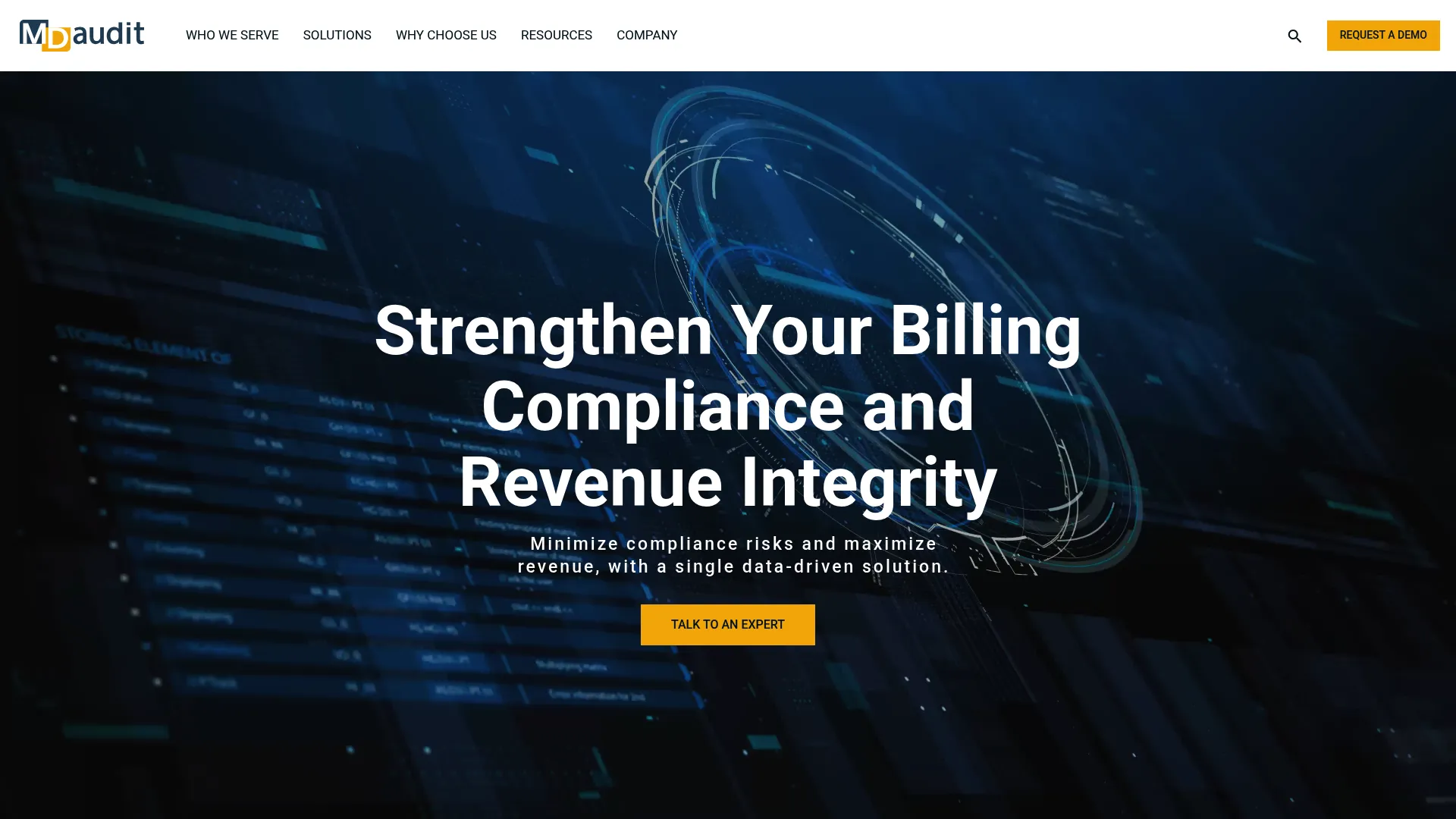
MDaudit is healthcare billing compliance and revenue integrity software built around audits, risk analytics, and workflow automation. Its differentiation is in mechanism, not just outcomes. Instead of stopping at reporting that a denial happened, it uses remittance data and 835 remittance analysis to trace why it happened, then routes the fix. That closed-loop model is what separates it from tools that only surface problems after the money is already at risk.
The platform leans on a payer-centric rules engine and targeted pre-payment sampling to find billing risk before claims go out. Internal audit teams get structured workflows instead of ad hoc spreadsheets, and revenue integrity teams get the corrective action loop that turns a single detected pattern into a systemic fix.
Best for: Healthcare organizations where denial prevention and root cause discovery are the top priority.
Key strengths
- Remittance-driven detection: 835 remittance analysis surfaces the real reason a claim was denied, not just the fact that it was.
- Payer-centric rules engine: rules tuned to how specific payers behave, so risk gets caught before submission.
- Closed-loop correction: detected issues route to owners with tracked resolution, closing the gap between finding and fixing.
Why choose MDaudit: Choose it when your biggest leak is denials you can't explain and audits that eat staff time. Its strength is diagnosis plus corrective workflow, which matters most for teams that already know they have a denial problem and need to find the systemic cause rather than chase individual claims.
MDaudit pricing: MDaudit does not publish public pricing on its site, which directs visitors to request a demo or talk to an expert. Expect a contact-sales, quote-based model scaled to organization size and claim volume. There is no publicly listed free tier.
2. Optum
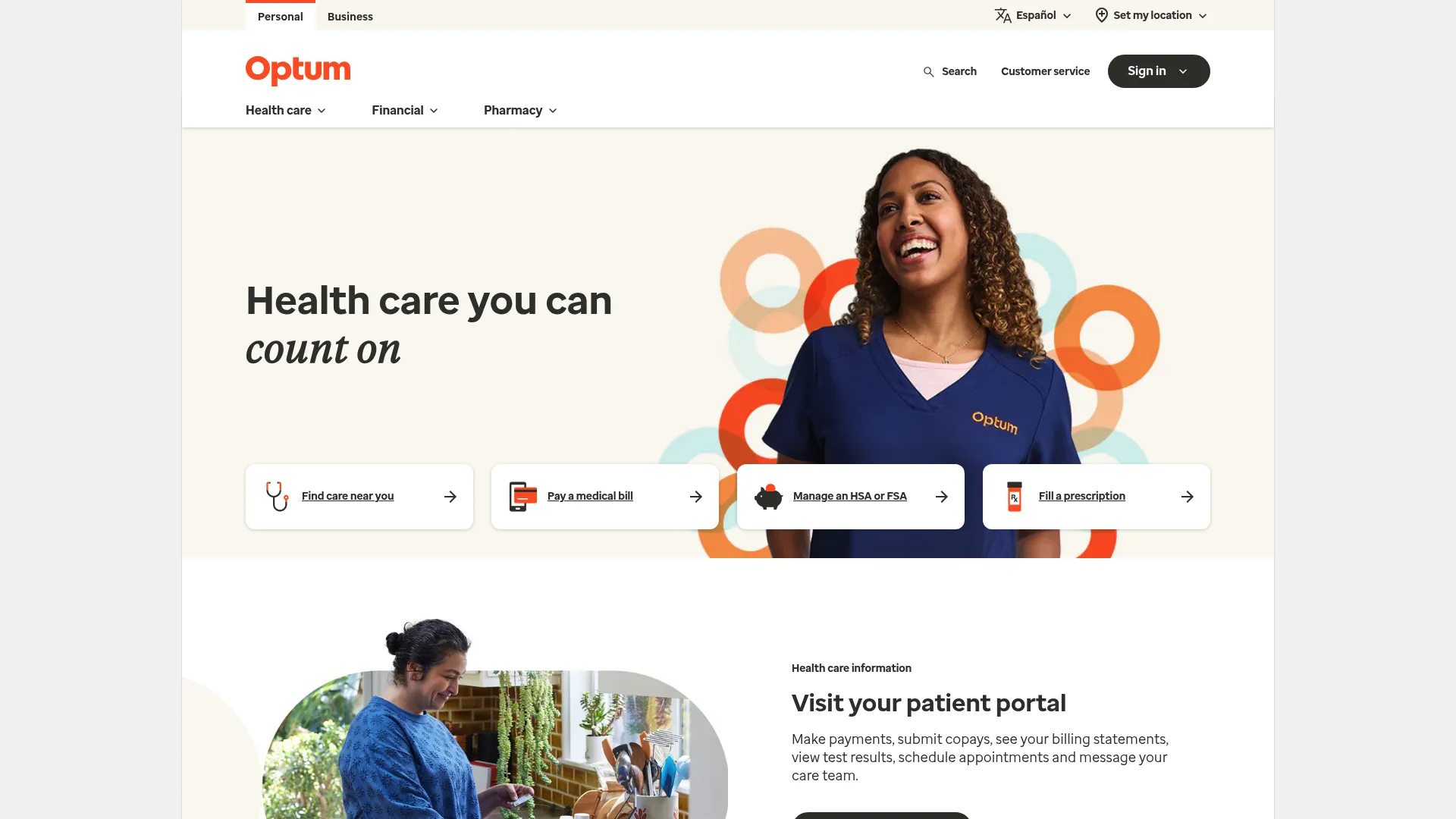
Optum, part of UnitedHealth Group, brings enterprise-scale revenue cycle coverage that few vendors can match. Its revenue integrity relevant capabilities span clinical language intelligence, computer-assisted coding, clinical documentation integrity, outpatient charge capture, and coding and documentation services. For organizations that want broad coverage from one vendor rather than assembling point tools, that breadth is the whole pitch.
Optum fits health systems that value modular, enterprise-grade coverage and the credibility of a large, established vendor. The tradeoff is that its copy stays generic and its buying model runs through sales conversations rather than transparent packaging, so evaluation takes longer than with a focused point solution.
Best for: Large health systems wanting enterprise revenue cycle breadth and clinical documentation support under one vendor.
Key strengths
- Clinical language intelligence: natural-language capabilities that support coding accuracy and CDI at scale.
- Enterprise CAC and CDI: computer-assisted coding and documentation integrity built for high claim volume.
- Outpatient charge capture: coverage across settings, useful for multi-facility systems.
Why choose Optum: Choose it when your priority is consolidating multiple revenue cycle functions with a single large vendor and you have the scale to justify enterprise engagement. It fits organizations that weight breadth and vendor stability over the diagnostic depth of a specialized denial tool.
Optum pricing: Optum does not publish clear public product pricing. Its marketplace pages read as contact-sales, private-quote flows. Its G2 seller profile shows a 3.4/5 rating. Expect enterprise, quote-based contracts.
3. FinThrive
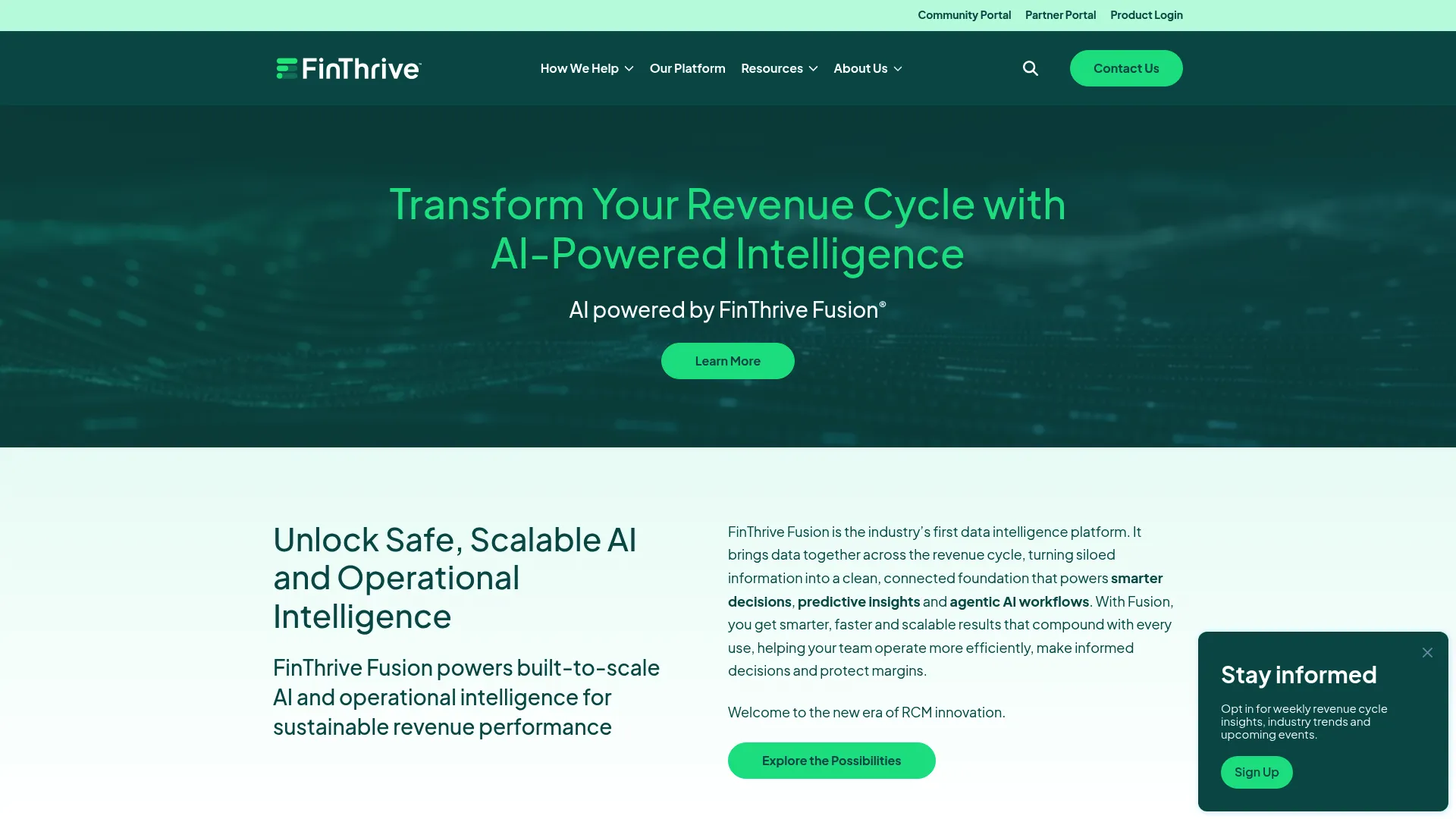
FinThrive is a healthcare revenue cycle management company with strong footing in chargemaster management, revenue capture, and pricing defensibility. Its AI-powered revenue cycle intelligence, delivered through FinThrive Fusion, pairs with charge capture automation and price transparency tools. For teams whose leakage traces back to charge master accuracy and defensible pricing, this is a natural fit.
The platform pairs benchmark coverage with workflow automation and compliance framing, which helps revenue cycle leaders defend both charges and prices when payers or auditors push back. Its emphasis leans toward standardized pricing and CDM management, so it shines brightest where charge integrity and pricing defensibility are the core concern.
Best for: Healthcare organizations that care most about chargemaster accuracy and defensible pricing.
Key strengths
- AI revenue cycle intelligence: FinThrive Fusion applies analytics across the revenue cycle to surface capture and pricing gaps.
- Charge capture automation: reduces missed and mismatched charges before claims are submitted.
- Price transparency and patient access: tools that support compliance and defensible pricing.
Why choose FinThrive: Choose it when your revenue cycle problems concentrate in the chargemaster and pricing, and you want benchmarking to defend both. It fits teams that value end-to-end revenue cycle coverage with a pricing-integrity emphasis over a denial-first diagnostic model.
FinThrive pricing: FinThrive uses a contact and demo-based sales model with no public numeric pricing. Its G2 seller profile currently shows no reviews and no established star rating. Expect quote-based enterprise contracts sized to your organization.
4. Inovalon
Inovalon is a healthcare SaaS company built around cloud-based platforms and analytics for claims, eligibility, scheduling, pharmacy, and patient payments. Its relevance to revenue integrity comes through operational intelligence: the more accurately you can see claims and eligibility data across your operation, the earlier you catch the mismatches that turn into denials and revenue leakage.
For teams that treat revenue integrity as a data problem first, Inovalon's strength is breadth of connected healthcare workflows and the analytics layered on top. Claims management, eligibility verification, and operational automation feed a shared data foundation that supports cleaner claims and faster issue detection.
Best for: Healthcare organizations that need data-driven revenue cycle, eligibility, scheduling, or pharmacy workflow software.
Key strengths
- Cloud-based healthcare workflows: connected operations that reduce fragmented, siloed data.
- Claims management and eligibility verification: front-end accuracy that prevents downstream denials.
- Operational automation: scheduling and workflow automation that reduces manual overhead.
Why choose Inovalon: Choose it when your revenue integrity strategy is anchored in data and operational intelligence rather than a single charge or denial workflow. It fits organizations that want a broad cloud platform spanning multiple revenue cycle functions with analytics at the center.
Inovalon pricing: Inovalon does not publish public numeric pricing on its first-party sources. Its G2 seller profile shows a 4.4/5 rating. Expect quote-based contracts scaled to platform scope and usage.
5. Waystar

Waystar is a unified healthcare revenue cycle platform focused on simplifying payments and revenue operations. Its relevance to a revenue integrity stack comes through denial management, claims workflow, and financial clearance. If your goal is to standardize how claims and payer payments move through the organization, Waystar covers that end-to-end motion.
It is more of a broad revenue cycle platform than a dedicated revenue integrity point solution, which is exactly what some teams want. Claim and payer payment management, financial clearance, and price transparency sit together, so denial workflows connect to the payment operations around them rather than living in a separate tool.
Best for: Healthcare organizations that need broad revenue cycle management with strong claims and payment automation.
Key strengths
- Unified revenue cycle platform: claims, payments, and clearance in one connected system.
- Claim and payer payment management: denial workflow tied directly to payment operations for cleaner claims.
- Financial clearance and price transparency: front-end tools that reduce downstream rework.
Why choose Waystar: Choose it when you want a broad platform that standardizes claims and payment workflows across the revenue cycle, with denial management built in. It fits teams consolidating multiple revenue operations rather than buying a narrow diagnostic tool.
Waystar pricing: Waystar lists four claim management packages, Starter, Core, Performance, and Premium, but does not publish package pricing and directs buyers to request a quote. Its G2 rating is 4.4/5. Expect tier-based, quote-driven pricing.
6. Craneware
Craneware is healthcare revenue cycle software focused on chargemaster maintenance and the workflows around it. For hospitals and health systems that want stronger CDM governance, its logic-based chargemaster building and editing is the core draw. It flags missing, invalid, and replaced CPT and HCPCS codes, which is exactly the kind of charge integrity detail that quietly drains revenue when left unmanaged.
Craneware also offers comparative pricing and fee schedule analysis, so charge integrity connects to pricing accuracy and revenue capture. That combination makes it particularly relevant for organizations where the chargemaster is the single biggest source of leakage and inconsistency.
Best for: Hospitals and health systems that want stronger chargemaster governance and pricing consistency.
Key strengths
- Logic-based chargemaster building: structured CDM editing that keeps the charge master clean and current.
- Code validation: flags missing, invalid, and replaced CPT and HCPCS codes before they cause denials.
- Comparative pricing analysis: fee schedule comparison that supports pricing accuracy and defensibility.
Why choose Craneware: Choose it when the chargemaster is your primary leakage point and you need disciplined governance over it. It fits organizations that want CDM accuracy and operational consistency as the foundation of their charge integrity program.
Craneware pricing: Craneware does not display public numeric pricing; at least one module page directs buyers to contact sales. Expect a contact-sales, quote-based model. No free tier is publicly listed.
Considerations before you buy
Once you've narrowed to two or three platforms, evaluate them against the criteria that actually predict whether the tool earns its place.
Analytics depth and revenue cycle analytics
Reporting that just tells you a denial happened isn't enough. Look for root cause analysis, trend visibility, and benchmarking that turns raw claim data into decisions. The best revenue integrity solutions show you where the leak is, not just that revenue is down.
Workflow automation and corrective action
Detection without action is a dashboard nobody reads. Verify that issues route to the right owner with tracked resolution, and that the platform supports genuine workflow automation and corrective action, not just alerts. Closed-loop correction is what turns a finding into recovered revenue.
Audit readiness and audit trail
Confirm the platform builds a defensible audit trail: who changed what, when, and why. Strong audit readiness and clinical documentation integrity support are what let you walk into a compliance review or a board meeting with clean, defensible numbers.
Integration fit and charge capture accuracy
The tool has to plug into your EHR, billing system, and remittance feeds. Check charge capture accuracy across your actual departments and settings, and confirm the integration scope matches your stack. A platform that can't ingest your 835 files or match your chargemaster is a gap, not a solution.
Conclusion
The best revenue integrity software depends less on brand and more on where your revenue actually leaks. If unexplained denials and root cause discovery are the priority, MDaudit's remittance-driven, closed-loop model is the sharpest fit. If you want enterprise breadth across coding, CDI, and charge capture under one vendor, Optum covers that scale. FinThrive and Craneware both lead when chargemaster management and pricing defensibility are the core problem, while Inovalon and Waystar suit teams treating revenue integrity as a broad, data-driven revenue cycle motion.
Start by naming your biggest leakage point: denials, charge capture, the chargemaster, compliance, or fragmented data. Shortlist the two platforms that attack that point most directly, then pressure-test them on analytics depth, workflow automation, and audit readiness. The right system pays for itself by turning silent leakage into recovered, defensible revenue.
Start your journey with Guideflow today!
FAQs
Revenue integrity software monitors, detects, and helps correct issues across charge capture, coding, denials, compliance, and reporting. It sits in the middle of the revenue cycle, connecting clinical documentation to financial outcomes, and surfaces problems early enough to fix them before they become write-offs. Most platforms combine analytics with corrective action workflow so findings turn into recovered revenue.
Denial management software is narrower: it focuses on working, appealing, and resolving denials after they happen. A revenue integrity program software approach is broader, covering prevention, detection, and correction across the whole revenue cycle. In other words, denials management is one function inside a revenue integrity system, which also spans charge capture, coding integrity, compliance, and clean claims.
Hospital revenue integrity buyers should evaluate analytics depth, workflow automation, audit readiness, integration fit, and charge capture accuracy. The platform needs to connect to your EHR, billing system, and remittance feeds, and it should support root cause analysis rather than surface-level reporting. Prioritize tools that route corrective action to owners with tracked resolution.
Yes. Revenue integrity software strengthens compliance by improving documentation consistency, building a defensible audit trail, and standardizing charge workflows. That combination makes audits faster and cleaner, and it gives finance and compliance leaders numbers they can defend in a review or a board meeting.
No. Hospitals, outpatient centers, and multi-specialty groups can all benefit from healthcare revenue integrity tooling. The key is matching the scope of the platform to the complexity of the organization. A large system may need enterprise breadth, while a focused group may get more value from a specialized charge integrity or denial prevention tool.
Track denial rate, clean claim rate, charge lag, coding accuracy, recovered revenue, and audit findings. Together these show whether your revenue integrity program is preventing leakage upstream or just cleaning up after it. Benchmarking these metrics against peers tells you whether a number is a genuine problem or normal for your segment.
No. It should augment audits, automate detection, and focus human review where it matters most. The strongest programs use the software to catch high-volume, pattern-based issues automatically, then direct auditor time toward complex, high-risk cases that need judgment. That pairing improves both audit readiness and staff efficiency.