A single failed delivery costs you more than a wasted trip. It burns a driver hour, triggers a support ticket, refunds a customer, and quietly erodes the margin you fought for on that order. Multiply that across a peak week and the last mile becomes the most expensive stretch of your entire supply chain.
That is why 72% of last-mile delivery companies had adopted route optimization software by 2024, according to World Metrics. The category is scaling fast too. The global last-mile route optimization software market was worth USD 2.52 billion in 2024 and is forecast to reach USD 7.8 billion by 2035 at a 10.9% CAGR, per WiseGuy Reports.
The problem is not whether to buy last mile delivery software. It is which platform actually fits your fleet model, your order volume, and the data your team needs to prove the spend was worth it. Routing, dispatch automation, real-time tracking, and proof of delivery all matter, but they matter differently depending on whether you run five drivers or five hundred.
What's inside
This guide is for logistics operators, founders, and product managers evaluating last mile delivery management software in 2026. We compared eight platforms against the criteria that decide real deployments, not marketing pages.
We selected and ranked tools on four factors:
- Routing and dispatch depth: automated route planning, dynamic dispatch, and re-optimization
- Visibility and communication: real-time tracking, ETA updates, and live tracking pages
- Proof of delivery: photo, signature, barcode, and timestamp capture
- Fit and integration: fleet model support, API integrations, delivery analytics, and pricing transparency
TL;DR
- Best for clean daily execution: Onfleet, for owned-fleet and courier operations that need dispatch, tracking, and POD in one tool.
- Best for enterprise scale: DispatchTrack, FarEye, Bringg, and Locus, depending on fleet complexity and orchestration needs.
- Best for small teams and tight budgets: Shipday, with a free tier and paid plans from $19 a month.
- Best for proof of delivery and driver workflow: Track-POD, with electronic POD and flexible per-driver or per-order pricing.
- Best for dense route planning: Route4Me, for teams optimizing high-stop workloads and field operations.
- Best for hybrid fleets: Bringg and FarEye, which orchestrate owned drivers, 3PLs, and external carriers together.
What is last mile optimization software?
Last mile optimization software is a platform that plans, dispatches, tracks, and verifies deliveries across the final leg from a depot or store to the customer's door. It replaces spreadsheets, manual dispatch, and phone-based check-ins with automated routing, live visibility, and digital proof of delivery.
The last mile is the most cost-heavy and failure-prone part of fulfillment. These tools exist to cut miles driven, reduce failed stops, improve driver utilization, and keep customers informed without a human touching every order.
Core capabilities you should expect:
- Route optimization: automated route planning that accounts for time windows, vehicle capacity, traffic, and driver shifts
- Dispatch automation: rule-based or dynamic assignment of orders to drivers, with re-optimization when conditions change
- Real-time tracking: live driver and vehicle location, plus live tracking pages customers can open without an app
- Customer communication: automated ETA updates over SMS, WhatsApp, or email
- Proof of delivery: electronic capture of photos, signatures, barcodes, and timestamps
- Delivery analytics: on-time performance, cost per stop, exception rates, and driver productivity
- API integrations: connections to order management, ecommerce, WMS, and ERP systems
Priorities shift by fleet type. An owned fleet leans on driver apps and dispatch control. A hybrid fleet or outsourced fleet leans on carrier orchestration and 3PL visibility. Enterprise operations lean on constraint-heavy routing and control-tower analytics. Small teams lean on speed to set up and accessible pricing.
When to use last mile delivery software
Automate dispatch across a growing fleet
Manual dispatch breaks the moment you cross a few dozen daily orders. When a dispatcher spends the morning assigning stops by hand, route optimization and dispatch automation give hours back and cut the errors that create failed deliveries. This is the trigger for most first purchases.
Give customers real-time visibility
Where-is-my-order calls flood support the moment tracking is unclear. Real-time tracking and automated ETA updates deflect those tickets and set expectations. Live tracking pages let customers watch the driver approach without installing anything, which lifts satisfaction and reduces missed handoffs.
Prove delivery and cut disputes
Chargebacks and "I never got it" claims eat margin. Electronic proof of delivery with photo, signature, and timestamp capture ends most disputes before they start. For bulky goods, regulated items, or high-value orders, POD is not optional, it is the evidence trail.
Last mile optimization software comparison
Here is how the eight platforms compare on fit, differentiation, pricing, and rating. Use it as a shortlist filter, then read the sections that match your fleet model. Pricing reflects publicly listed values at the time of writing, and several enterprise tools use custom, volume-based pricing.
| # | Product | Best for | Key differentiator | Pricing | G2 rating |
|---|---|---|---|---|---|
| 1 | Onfleet | Owned fleets and couriers | Clean dispatch, tracking, and POD in one tool | From $619/mo | 4.6/5 |
| 2 | DispatchTrack | Bulky goods and 3PL-heavy ops | AI routing plus delivery experience | Custom | 4.5/5 |
| 3 | FarEye | Enterprise hybrid fleets | Carrier orchestration and returns | Custom | 4.7/5 |
| 4 | Bringg | Multi-node retail and logistics | Owned, 3PL, and hybrid orchestration | Custom | Not listed |
| 5 | Locus | Complex, multi-region routing | AI dispatch planning and control tower | Custom | 4.4/5 |
| 6 | Shipday | Small and local delivery teams | Free tier plus SMS/WhatsApp ETAs | From $0/mo | Not yet rated |
| 7 | Track-POD | POD-first fleets | Electronic POD with flexible licensing | From $49/mo | 4.5/5 |
| 8 | Route4Me | Dense route workloads | Route optimization and field ops | Custom | 4.7/5 |
Best 8 tools for last mile optimization
1. Onfleet
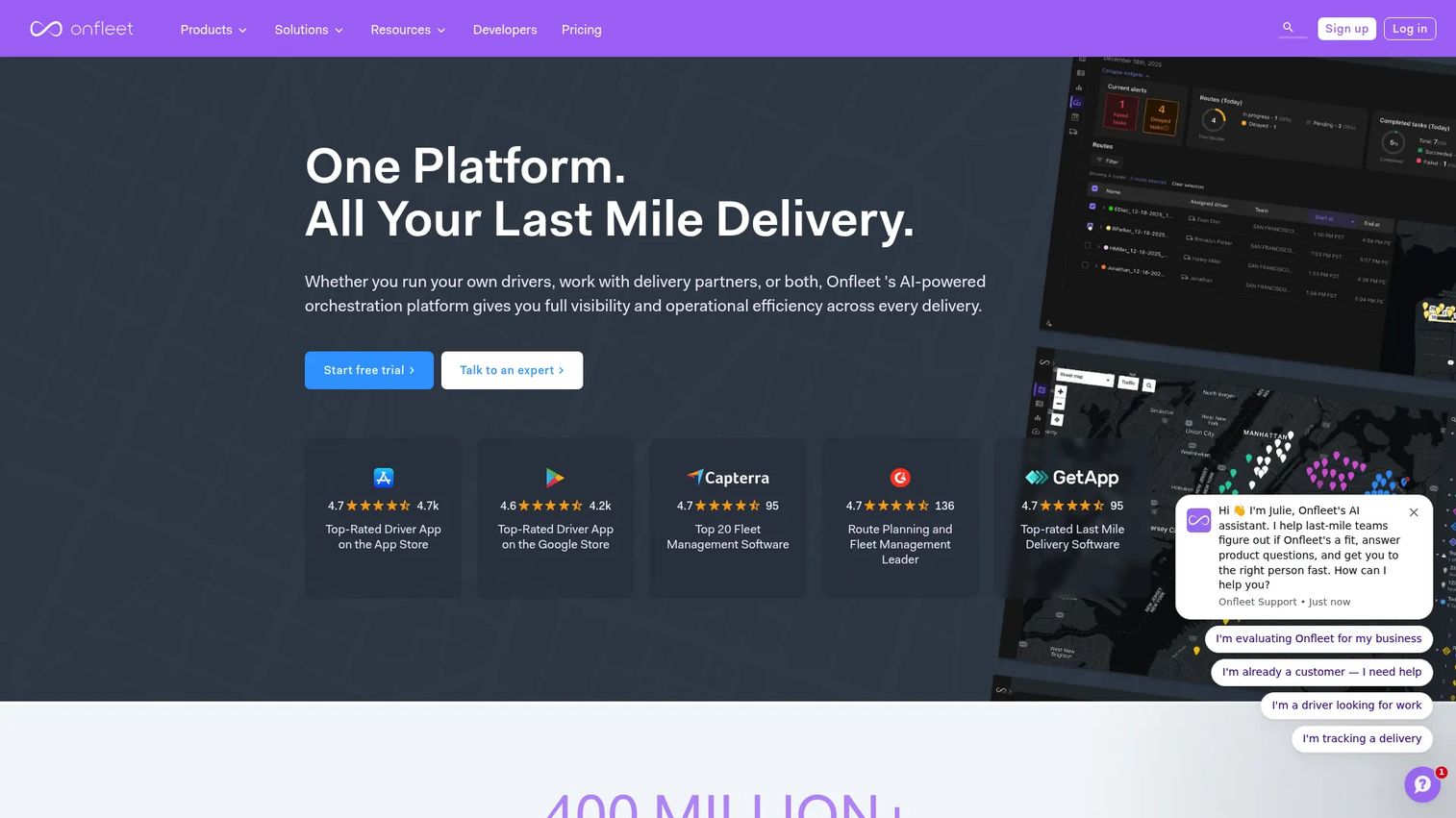
Onfleet is last mile delivery software built for businesses managing drivers, couriers, or both. It pulls route optimization, dispatch, live tracking, and proof of delivery into a single operational view, so a dispatcher can plan the day, assign stops, and watch execution without juggling tools. Teams choose it for clean daily delivery execution rather than heavyweight enterprise orchestration.
The strength here is operational focus. Onfleet handles the recurring rhythm of a delivery day well: optimize routes in the morning, auto-assign to drivers, push ETA updates to customers, and capture POD at the door. The driver app and dispatcher dashboard stay in sync, which is what keeps failed stops down.
Best for: operations teams running owned fleets or courier networks that want dispatch, tracking, and POD in one place.
Key strengths
- Route optimization for time windows and capacity
- Assign and dispatch with driver auto-assignment
- Real-time visibility and tracking across the fleet
- Customer ETA notifications and live tracking pages
- Proof of delivery capture at the door
Why choose Onfleet: it fits mid-sized delivery operations that need reliable daily execution and clean data without a long enterprise implementation. If your bottleneck is manual dispatch and unclear tracking, this closes that gap fast.
Onfleet pricing: the Launch plan starts at $619 a month and includes 2,500 delivery or pickup tasks. Scale starts at $1,349 a month and Enterprise starts at $3,099 a month. A Courier Suite add-on starts at $299 a month. Billing is monthly and there is no free tier.
2. DispatchTrack
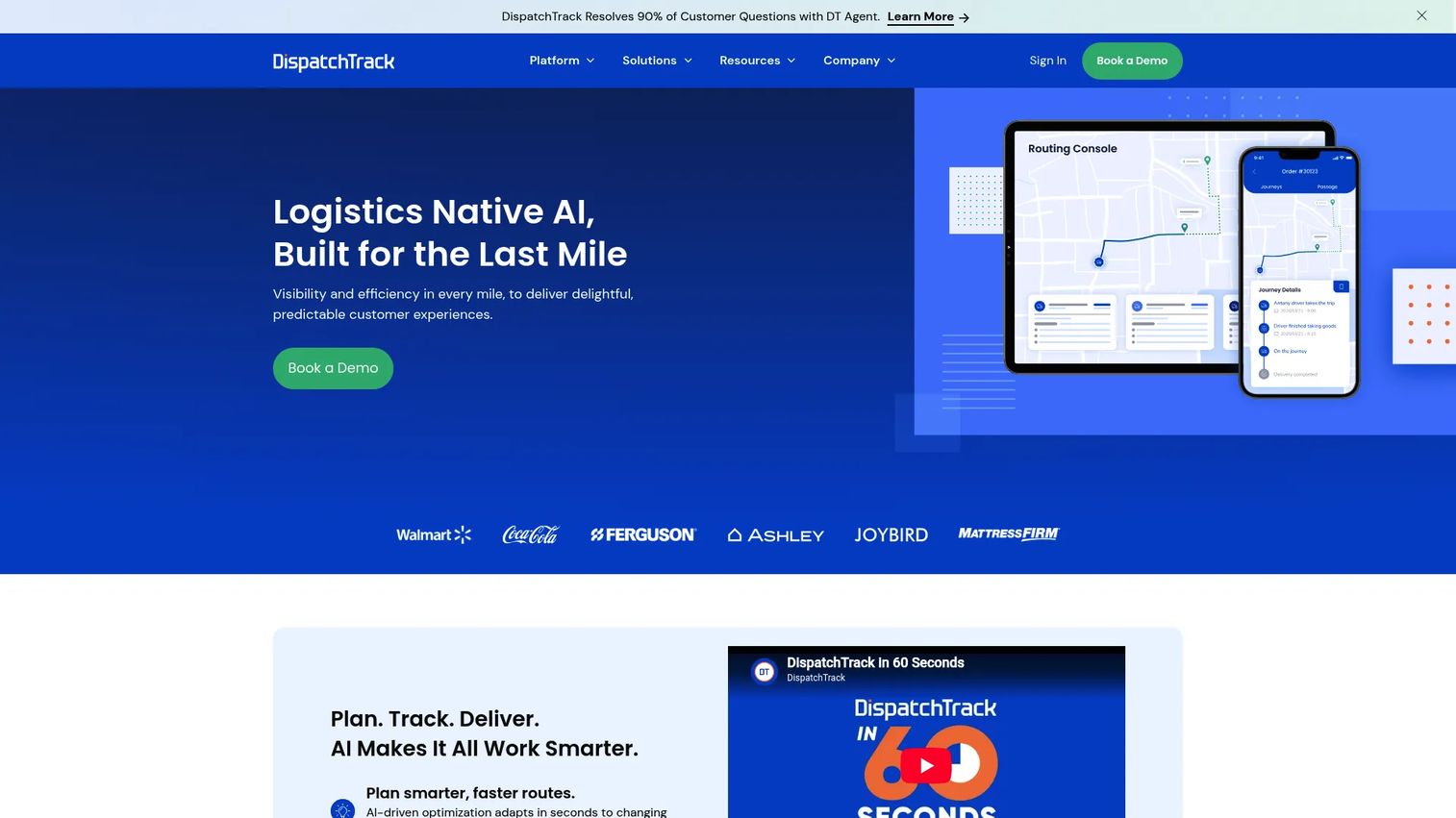
DispatchTrack is last mile delivery management software focused on routing, tracking, and the customer delivery experience. It leans on AI-powered route optimization and pairs that with real-time visibility and exception management, so operations teams can plan tight routes and react when a stop goes sideways.
Where DispatchTrack fits best is heavier, more complex deliveries. Bulky goods, furniture, appliances, field service, and 3PL-heavy operations all need scheduling precision and strong customer communication, because a missed appointment for a two-person delivery is expensive. The platform's exception handling and notification flows are built for exactly that.
Best for: businesses moving bulky goods or running field service and 3PL-heavy delivery operations.
Key strengths
- AI-powered route optimization and planning
- Real-time delivery tracking and visibility
- Customer communication and ETA updates
- Exception management for at-risk stops
- Electronic proof of delivery
Why choose DispatchTrack: if your deliveries involve appointment windows, heavy items, or a mix of your own trucks and third-party carriers, DispatchTrack's routing and delivery experience tooling handles that complexity better than lighter dispatch tools.
DispatchTrack pricing: DispatchTrack lists Starter, Professional, and Enterprise plans billed per month on an annual basis, along with an annual minimum order. Public prices are not displayed, so contact DispatchTrack for a quote based on your volume.
3. FarEye
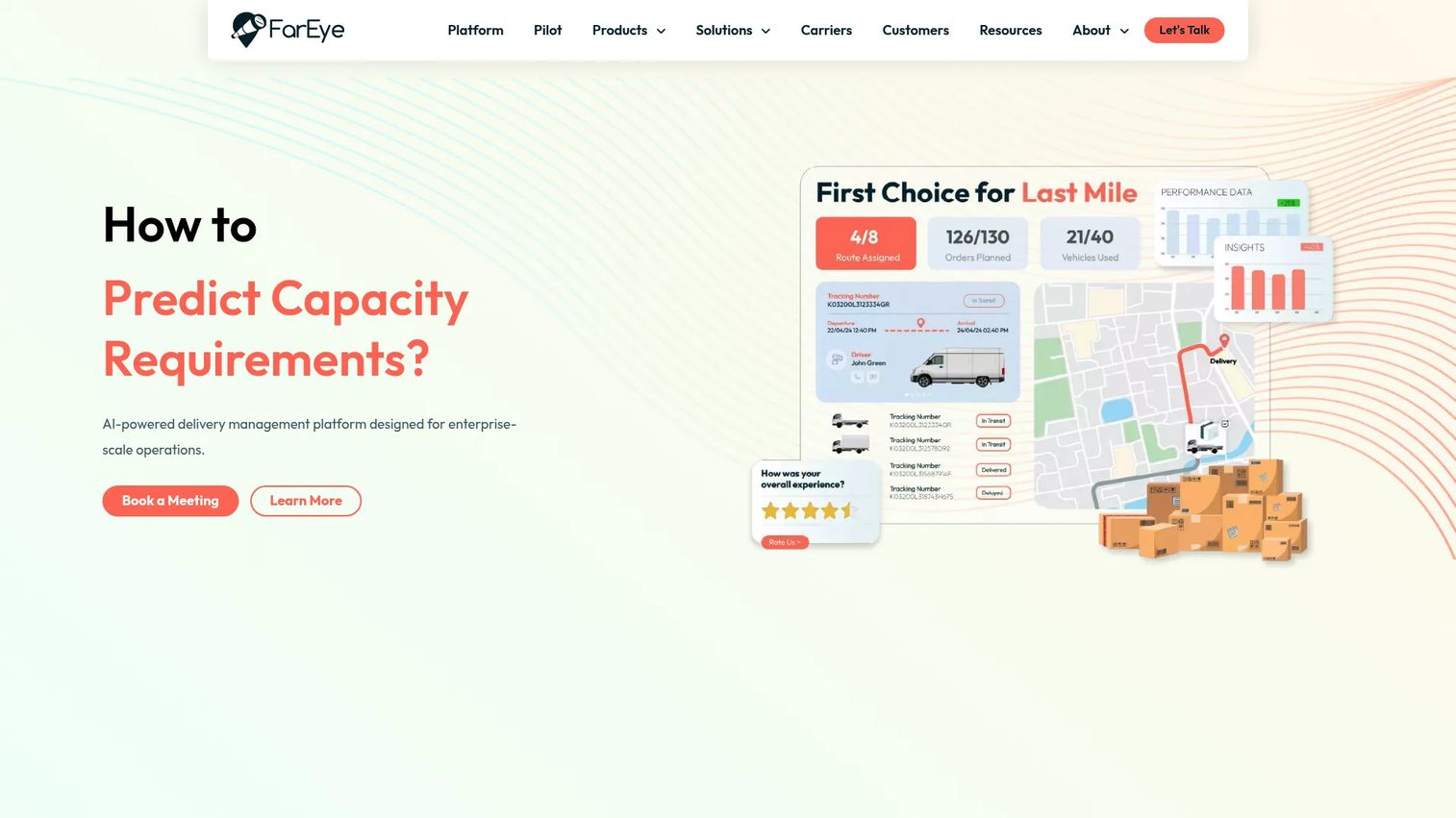
FarEye is a last-mile delivery and logistics execution platform built for enterprise scale. It handles route planning and dispatch, real-time delivery visibility, and returns management, and it orchestrates deliveries across owned drivers and external carriers. The pitch is end-to-end last mile control rather than a single function.
For large operations, the differentiator is carrier orchestration and the delivery experience layer. FarEye supports hybrid fleets, branded tracking, and predictive ETAs, which matters when you are coordinating a national footprint and every carrier needs to feed one clean view. Returns management rounds out the loop, which most lighter tools skip.
Best for: enterprise logistics teams that need end-to-end last-mile orchestration across owned and third-party fleets.
Key strengths
- Route planning and dispatch at scale
- Real-time delivery visibility across carriers
- Carrier orchestration for hybrid fleets
- Branded tracking and predictive ETAs
- Returns management
Why choose FarEye: it fits enterprises that run high volume across multiple fleet types and want one platform to plan, track, and manage returns. The delivery experience management layer helps protect the brand at the doorstep, not just move the box.
FarEye pricing: FarEye does not publish public pricing. Pricing is scoped to enterprise deployments, so you will need to contact FarEye for a quote based on volume and modules.
4. Bringg
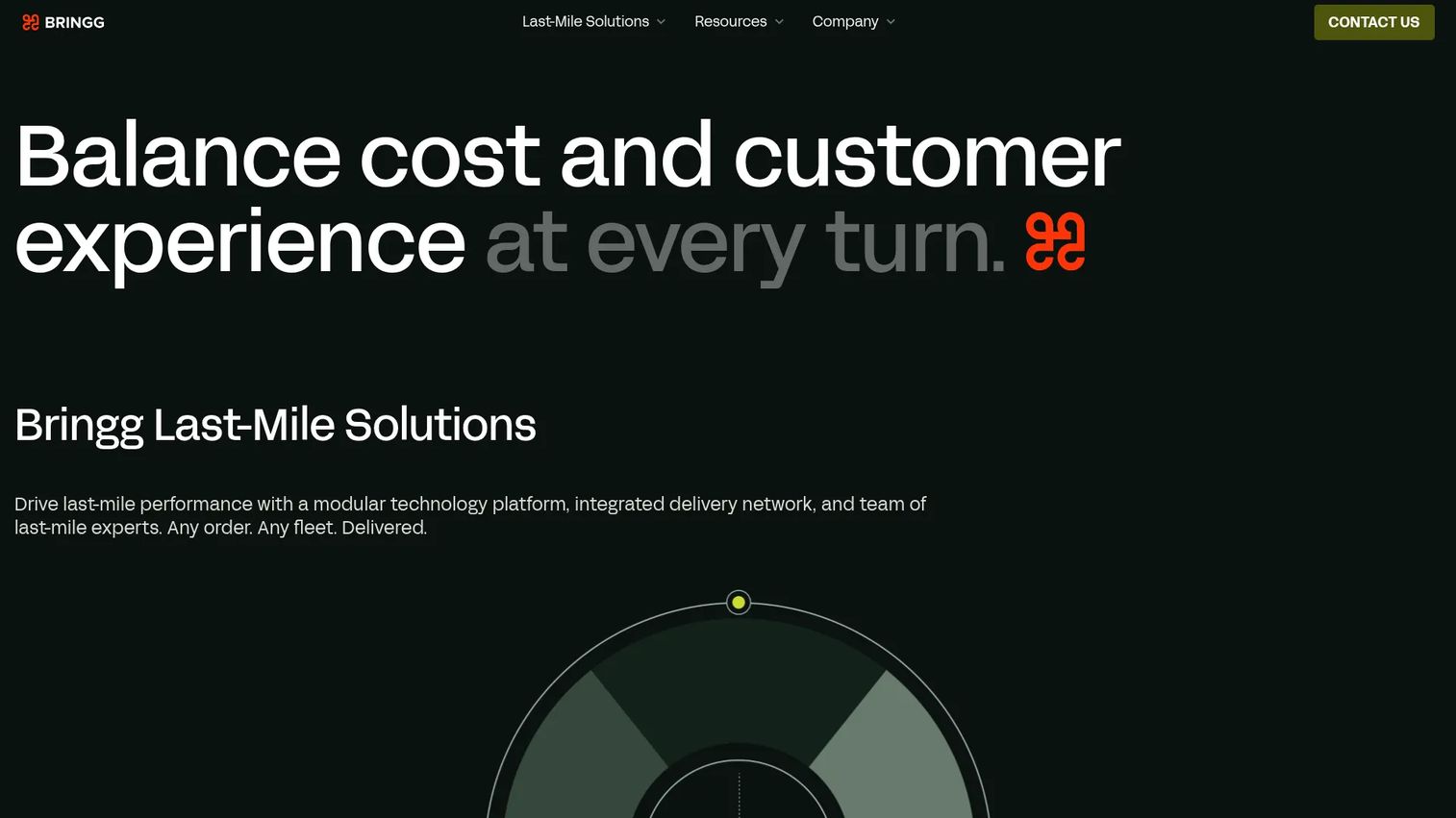
Bringg is a last-mile delivery and fulfillment platform built around orchestration. It centralizes planning, routing, dispatch, and driver management, then layers real-time monitoring with maps, exceptions, and driver communication on top. The core idea is coordinating delivery across owned fleets, 3PLs, and external carrier networks from one system.
Bringg suits multi-node operations, which is where retail and logistics get complicated. When orders can ship from a store, a dark store, or a warehouse, and be delivered by your driver or a partner carrier, you need a layer that decides and tracks all of it. That is Bringg's home turf, and its external carrier network extends reach without adding your own trucks.
Best for: retail and logistics enterprises coordinating deliveries across owned, third-party, and hybrid fleets.
Key strengths
- Centralized planning, routing, and dispatch
- Driver management and communication
- Route optimization and planning
- Real-time delivery monitoring and exceptions
- External carrier network access
Why choose Bringg: if you run multi-node fulfillment and a mix of owned and outsourced fleets, Bringg's orchestration and carrier network give you one control layer instead of stitching several tools together.
Bringg pricing: Bringg does not publish public pricing on its site. Costs are scoped to enterprise deployments, so contact Bringg directly to size a plan against your fleet and volume.
5. Locus
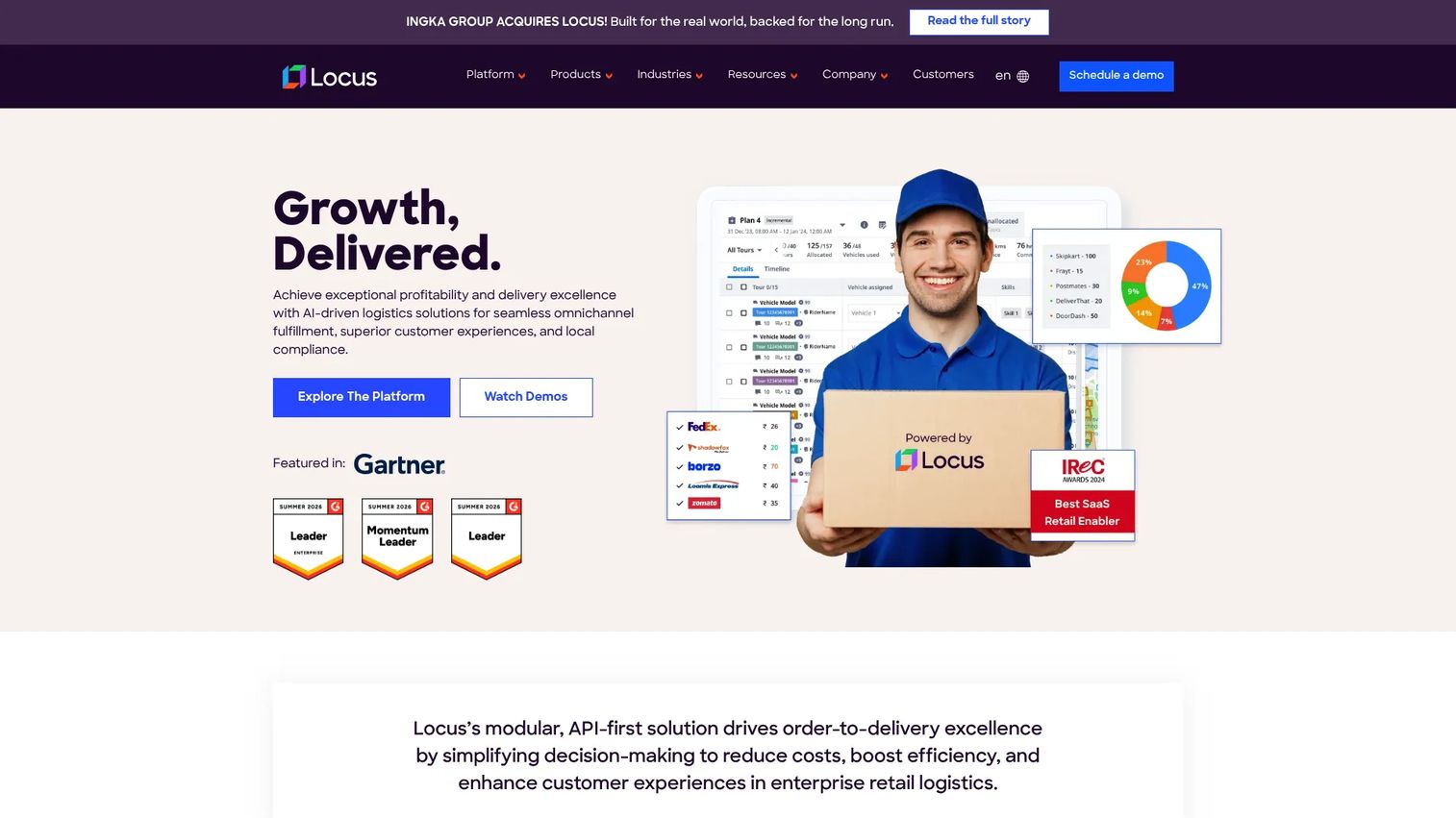
Locus is an AI-powered logistics platform for enterprise transportation, dispatch, routing, and delivery operations. It combines dispatch planning and route optimization with real-time fleet visibility and hub operations, positioning itself as a configurable dispatch and delivery orchestration layer for complex networks.
The reason to look at Locus is constraint-heavy routing. When your routes must respect vehicle types, capacity, time windows, driver skills, and multi-region rules all at once, simple optimizers fall over. Locus's AI dispatch planning and dynamic re-optimization are built for that density, and the control-tower view keeps multi-region operations visible in one place.
Best for: enterprise logistics teams that need configurable, constraint-heavy dispatch optimization across regions.
Key strengths
- AI dispatch planning and route optimization
- Dynamic re-optimization as conditions change
- Real-time fleet visibility and track-and-trace
- Hub operations and delivery orchestration
- Multi-region control-tower view
Why choose Locus: it fits teams whose routing problem is genuinely hard, with many constraints and high volume across regions. If your current tool cannot model your real-world rules, Locus's configurability is the draw.
Locus pricing: Locus does not list fixed public pricing. Pricing is customized per client and based on shipment volume, so you will need to request a quote scoped to your operation.
6. Shipday
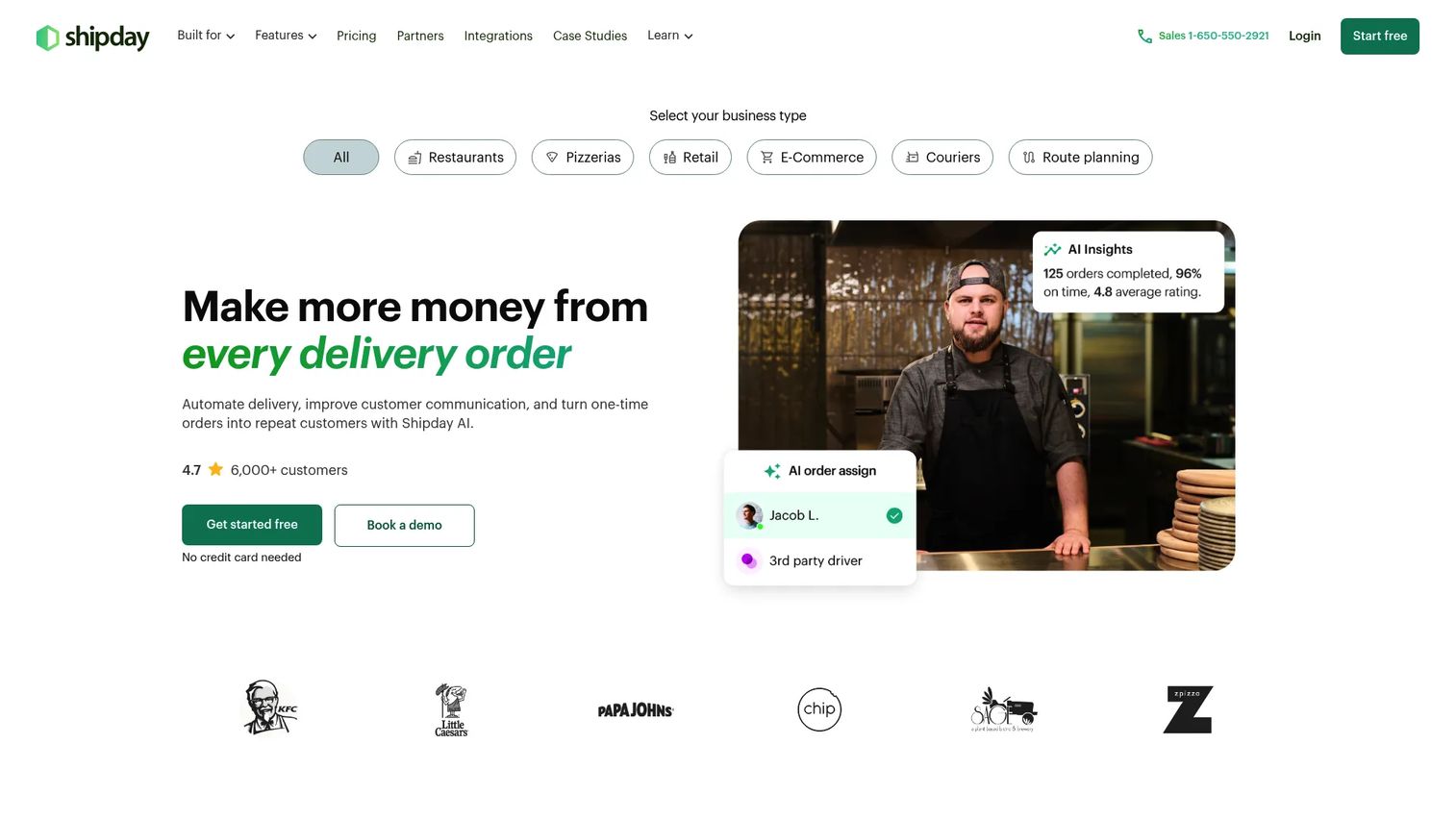
Shipday is delivery management software aimed at local delivery operations. It covers real-time tracking, route optimization with auto-dispatch, and branded tracking with SMS notifications and a customizable driver app. The clear draw is accessibility: you can start free and scale into paid plans as volume grows.
Shipday fits restaurants, couriers, and local delivery businesses that need dispatch, tracking, and customer notifications without an enterprise budget or a long rollout. For a small team, the ability to set up quickly and send SMS or WhatsApp ETAs matters more than deep carrier orchestration. This is where an SMB should start its search.
Best for: restaurants, couriers, and local delivery businesses needing dispatch, tracking, and customer notifications on a small budget.
Key strengths
- Real-time delivery tracking
- Route optimization and auto-dispatch
- SMS and WhatsApp ETA notifications
- Customizable, branded driver app
- Proof of delivery capture
Why choose Shipday: it removes the cost barrier for small operators. If you are running local delivery and want routing, tracking, and customer messaging today without a sales cycle, the free tier gets you live fast.
Shipday pricing: the Basic plan is free forever. Professional Lite is $19 a month, Professional is $39 a month, and Branded Premium is $79 a month. A Business AI plan is $349 a month. Order allowances and per-order overages apply per plan.
7. Track-POD
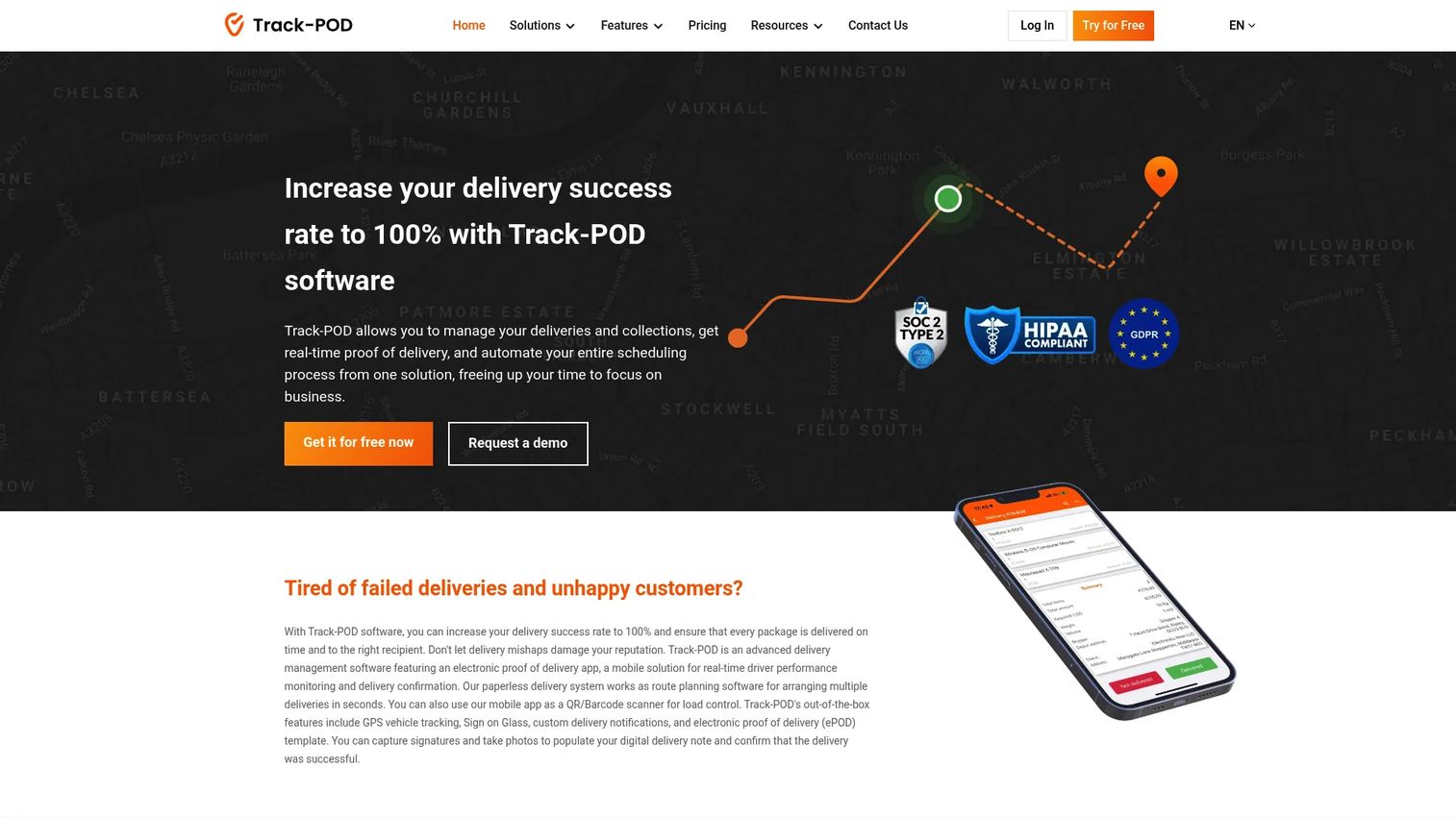
Track-POD is delivery management software with electronic proof of delivery at its center, paired with route planning and real-time driver tracking. If your operation lives or dies on clean delivery evidence and a solid driver workflow, this is a strong fit.
The differentiator is POD depth and licensing flexibility. Electronic proof of delivery, live ETA notifications, and route optimization come together in a driver app that keeps evidence and status in sync. Track-POD also offers both per-driver and per-order plans, so you can match the pricing model to how your operation actually scales, whether that is more drivers or more orders.
Best for: last-mile fleets that need proof of delivery, dispatch, and live tracking in one practical tool.
Key strengths
- Electronic proof of delivery capture
- Real-time driver and vehicle tracking
- Live ETA notifications to customers
- Route planning and optimization
- Flexible per-driver or per-order licensing
Why choose Track-POD: it puts POD and driver workflow first, and the flexible licensing means you pay in the shape that fits your operation. For fleets where delivery evidence drives disputes and compliance, that focus pays off.
Track-POD pricing: the Advanced plan is $49 a month per driver or vehicle billed annually, and Ultimate is $89 a month per driver or vehicle billed annually. Order-based plans run from an S plan at $285 a month for 1,500 orders up to an XL plan at $1,440 a month for 12,000 orders. A free trial is available.
8. Route4Me
Route4Me is a last-mile route optimization and dispatch platform for planning, optimizing, tracking, and managing delivery and service routes. Its center of gravity is routing itself, with dispatch, real-time tracking, and proof of service rounding out the workflow.
Route4Me shines when the core problem is dense route planning. Teams juggling high-stop workloads, many daily addresses, and field operations use it to turn a messy list into an efficient sequence. Proof of delivery and service capture, including notes, images, and e-signatures, ties the field work back to a record. The customizable, add-on based approach lets you scale features to match how you operate.
Best for: teams optimizing dense route workloads and field operations that need strong routing first.
Key strengths
- Route planning and optimization for high-stop routes
- Dispatch and real-time tracking
- Proof of delivery and service with notes and images
- E-signature capture in the field
- Customizable, add-on based feature set
Why choose Route4Me: if routing quality is your primary lever and you have dense, high-volume routes, Route4Me's optimization focus is the reason to shortlist it. Field service teams get the same benefit as delivery fleets.
Route4Me pricing: Route4Me does not publish fixed public pricing. Subscription cost is customized based on selected features, add-ons, and operational scale, so request a quote scoped to your requirements.
Considerations before you buy
Fleet model fit
Match the tool to how you actually deliver. Owned fleets need strong dispatch and driver apps. Hybrid fleets and outsourced fleets need carrier orchestration and 3PL visibility, which is where Bringg and FarEye lead. Buying an owned-fleet tool for a carrier-heavy operation creates gaps you will feel daily.
Integration effort and API depth
Your delivery software has to talk to your order management, ecommerce, WMS, or ERP. Check the API integrations and prebuilt connectors before you commit. For a product manager, the real cost is not the license, it is the engineering time to wire it in and the maintenance as those systems change.
Data and analytics quality
Instrumentation is how you prove the spend was worth it. Look for delivery analytics that segment by driver, region, customer type, and exception reason, not just a single on-time number. If you cannot export and slice the data, you cannot defend the tool at the next budget review.
Proof of delivery capabilities
Confirm which POD types the tool captures: photo, signature, barcode, ID verification, and timestamp. Then check how easily that evidence flows into reporting and customer support workflows. POD that lives trapped in a driver app does not help your dispute team.
Pricing model and scalability
Pricing models differ sharply here. Some tools charge per driver, some per order, some flat monthly, and enterprise platforms quote custom by volume. Model your growth curve against each structure, because the cheapest entry tier can become the most expensive option at scale.
Conclusion
The right last mile routing software depends on your operating model, not a feature checklist. Small and local teams should start with Shipday for its free tier and fast setup, or Track-POD when proof of delivery and driver workflow lead. Route4Me is the pick when dense route optimization is the core problem you need solved.
For mid-sized owned fleets that want clean daily execution across dispatch, tracking, and POD, Onfleet is the straightforward choice. As complexity climbs into bulky goods, appointment-based delivery, or field service, DispatchTrack fits well. And for enterprise operations juggling owned drivers, 3PLs, and carriers across regions, FarEye, Bringg, and Locus each bring the orchestration and constraint-heavy routing that scale demands.
Next step: shortlist two tools that match your fleet model, then run a pilot on one real delivery zone. Measure cost per stop, on-time rate, failed deliveries, and support ticket volume before and after. The numbers, not the demo, tell you whether the platform earns its place.
FAQs
Last mile optimization software plans routes, automates dispatch, tracks deliveries in real time, sends customer ETA updates, and captures proof of delivery. It replaces manual dispatch and spreadsheets with a system that cuts miles, reduces failed stops, and keeps everyone informed. The goal is lower delivery cost and better on-time performance across the final leg to the customer.
Route optimization sequences stops to minimize distance and time while respecting time windows and vehicle capacity. That means fewer miles driven, lower fuel spend, and more stops per driver hour. It also cuts failed deliveries by building realistic routes, and fewer failed stops means fewer costly redeliveries, refunds, and support tickets.
The core set is route optimization, dispatch automation, real-time tracking, ETA notifications, proof of delivery, delivery analytics, and API integrations. Priorities shift by fleet type: owned fleets weight driver apps and dispatch control, while hybrid and outsourced fleets weight carrier orchestration and 3PL visibility. Match the feature depth to your actual delivery model.
The strongest platforms now support both, but the emphasis differs. Owned fleets get the most from dispatch control, driver apps, and route optimization. Hybrid fleets need orchestration and visibility across owned drivers, 3PLs, and external carriers, which is where Bringg and FarEye style platforms lead. Pick based on how many fleet types you coordinate.
Shipday and Route4Me are the usual picks for small teams. Choose Shipday if you want dispatch plus customer notifications with a free tier and fast setup. Choose Route4Me if your main need is dense route optimization for high-stop workloads. Both let a small operation get live without an enterprise budget or long rollout.
Onfleet, FarEye, Bringg, and Locus fit enterprise operations, depending on complexity. FarEye and Bringg lead on hybrid-fleet and carrier orchestration across multi-node networks. Locus fits constraint-heavy, multi-region routing with a control-tower view. Onfleet suits high-volume owned-fleet execution. Scope the choice to your fleet mix and routing complexity.
Check which POD types each tool captures: photo, signature, barcode, ID verification, and timestamp. Then evaluate how easily that evidence connects to reporting and customer support workflows. POD only pays off when your dispute and CS teams can pull the record instantly, so prioritize export and integration over the raw capture list.
Focus on instrumentation, integration effort, segmentation of customer or fleet types, maintenance cost, reporting quality, and operational scalability. The license is rarely the real cost, engineering time to integrate and maintain the platform across releases is. Confirm you can measure the outcomes that justify the spend, then match the pricing model to your growth curve.