
A physician and their staff spend an average of 13 hours a week on prior authorizations, working through roughly 39 requests per physician, and 89% of clinicians report that the process increases burnout, according to an AMA survey cited by Forbes Councils in 2025. That is a full workday, every week, lost to phone calls, fax queues, and payer portals before a single patient is treated.
The math gets worse downstream. Every stalled authorization delays care, and every missed requirement turns into a denial that revenue cycle teams have to chase weeks later. The prior authorization software market is scaling in response, projected to reach USD 5.68 billion by 2036 at a 14.1% CAGR from 2026 to 2036, per Meticulous Research (2026). AI-based prior authorization tools alone are expected to climb from USD 1.74 billion in 2026 to USD 4.21 billion by 2031, a 19.38% CAGR, according to Mordor Intelligence (2026).
So the question for most buyers is no longer whether to automate. It is which vendor fits your EHR, your payer mix, and the specific authorization workflows your team runs every day. The right prior authorization software cuts manual follow-up, gives staff real visibility into payer status, and reduces the denials that drain reimbursement. The wrong fit becomes another disconnected tab your team ignores.
What's inside
This guide is for revenue cycle leaders, specialty practice managers, hospital operations teams, and healthcare IT buyers comparing prior authorization vendors in 2026. Every tool below was selected against four criteria that matter most when you actually deploy this software:
- EHR and billing integration so authorizations live inside existing clinical and financial workflows
- Payer connectivity and requirements intelligence across medical and pharmacy benefits
- Automation depth for detecting need, gathering data, submitting, and tracking status
- Workflow visibility through dashboards, alerts, and clean stakeholder handoffs
We favored vendors with real provider or payer adoption, verifiable feature sets, and public pricing where available. Where a vendor keeps pricing behind a sales conversation, we say so rather than guessing.
TL;DR
- Best for enterprise revenue cycle teams: Experian Health, for automated authorization management tied to patient access and identity workflows.
- Best for payer-network automation and revenue cycle scale: Waystar, for claims, denials, and financial clearance in one platform.
- Best for AI-driven healthcare workflow automation: Innovaccer, for authorization automation on top of a unified data platform.
- Best for pharmacy prior auth workflows: CoverMyMeds, free for providers and pharmacists, built for medication access.
- Best for specialty and utilization management workflows: Cohere Health, for payer-provider clinical collaboration.
- Best for network-based payer connectivity: Availity, for broad payer relationships and administrative exchange.
- Best for mixed-EHR environments: Myndshft, for automated medical and pharmacy authorizations with real-time benefits.
- Best for practical workflow visibility: Rhyme, for operational control across healthcare admin workflows.
What is prior authorization software?
Prior authorization software is a healthcare workflow tool that automates the process of requesting, tracking, and securing payer approval for medical services, procedures, and medications before they are delivered. It replaces the manual mix of phone calls, faxes, and payer portals with a structured, trackable workflow.
The core workflow follows five stages: detect that a service needs authorization, collect the required clinical and demographic data, submit the request to the payer, track its status in real time, and resolve the decision, including appeals when a request is denied. The best automated prior authorization software reduces manual follow-up at every stage and gives staff a single view of where each request sits.
Strong medical prior authorization software typically includes the following capabilities:
- EHR integration so authorization data flows in and out of the clinical system without duplicate entry
- Payer requirements intelligence that keeps up with changing rules across plans and benefit types
- Submission automation that populates and sends requests with minimal manual work
- Status tracking and alerts so staff know when a payer responds or a request stalls
- Denial reduction support through cleaner submissions and structured appeal workflows
These prior authorization solutions span pharmacy, medical, and specialty workflows, and the right choice depends heavily on which of those dominates your volume. A pharmacy-heavy organization has very different needs than a specialty surgical group or a multi-site health system.
When to use prior authorization software
Not every practice needs the same depth of automation. Here is how to pattern-match your situation before you shortlist prior auth software.
Reduce manual phone, fax, and portal work
If your staff spends hours each day resubmitting requests and calling payers for status, that is the clearest signal. Manual authorization work does not just burn labor. It delays care while patients wait and pulls trained staff away from higher-value tasks. Automated prior authorization software absorbs the repetitive submission and follow-up so your team handles exceptions, not routine requests.
Standardize workflows across multiple sites or specialties
A single clinic can run authorizations on tribal knowledge. A multi-location group or health system cannot. When different sites handle the same payer differently, you get inconsistent turnaround times and avoidable denials. Prior authorization software enforces repeatable workflows across locations and specialties, so a request looks the same whether it originates in cardiology or orthopedics. Consistency here matters as much as raw speed.
Improve visibility from request to decision
Lack of tracking is where authorizations quietly die. A request sits in a payer queue, no one follows up, and the patient's procedure gets rescheduled. Software with dashboards, status alerts, and clear handoffs gives every stakeholder, from the front desk to the billing team, a shared view of where each case stands. That real-time tracking prevents duplicate work and catches stalled requests before they become denials.
Comparison table
The comparison below focuses on vendor fit, workflow style, pricing visibility, and current G2 ratings where a verified listing was available. Several prior authorization companies keep pricing behind a sales conversation, which is standard for enterprise healthcare software. We note that rather than estimate.
| # | Product | Intent | Key use case | Pricing | G2 rating |
|---|---|---|---|---|---|
| 1 | Experian Health | Enterprise revenue cycle | Automated authorization tied to patient access and identity | Custom (contact sales) | Not verified |
| 2 | Waystar | Revenue cycle scale | Claims, denials, and financial clearance in one platform | Custom (contact sales) | 4.4/5 |
| 3 | Innovaccer | AI workflow automation | Authorization automation on a unified data platform | Custom (contact sales) | Not verified |
| 4 | CoverMyMeds | Pharmacy prior auth | Electronic prior authorization for medication access | Free for providers and pharmacists | 3.7/5 |
| 5 | Cohere Health | Specialty and UM | Clinical prior authorization for health plans | Custom (contact sales) | Not verified |
| 6 | Availity | Payer connectivity | Network-based payer-provider administrative exchange | Free tier; Essentials Plus $25/month | Not verified |
| 7 | Myndshft | Mixed-EHR environments | Automated medical and pharmacy authorizations | Custom (contact sales) | 3.5/5 |
| 8 | Rhyme | Workflow visibility | Operational control across admin workflows | Custom (contact sales) | Not verified |
1. Experian Health
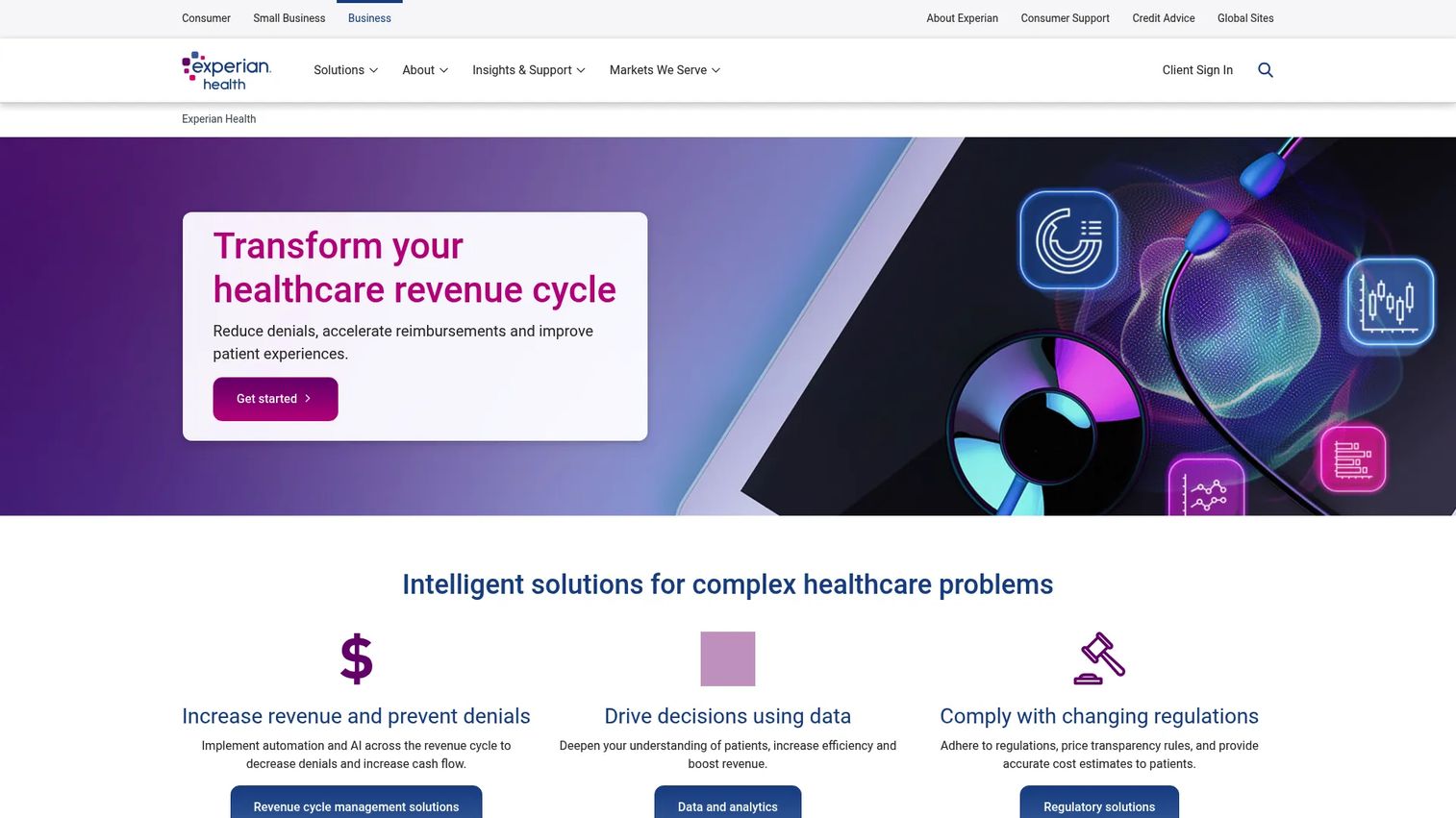
Experian Health brings prior authorization into a broader revenue cycle and patient access platform. Its authorization tooling automates the detection of which services require approval, routes requests to the right payer, and keeps a knowledgebase of payer rules current so staff are not manually checking requirement changes. Because it sits alongside patient estimates, identity verification, and data verification, authorization data connects to the rest of the front-end financial workflow.
Best for: Hospitals and large provider organizations that want authorization management embedded in a full revenue cycle and patient access stack.
Key strengths
- Revenue cycle depth: Authorization lives inside a platform that also handles patient estimates, claims context, and financial clearance.
- Knowledgebase intelligence: Payer requirement updates are maintained centrally, reducing manual rule-checking that leads to denials.
- Identity and data verification: Coverage and identity checks reduce the bad-data errors that trigger downstream denials.
Why choose Experian Health: If your organization already thinks about authorization as part of a connected revenue cycle rather than a standalone task, Experian Health fits the way enterprise providers actually operate. It suits teams that want fewer point tools and more workflow continuity from patient access through reimbursement.
Experian Health pricing: Experian Health does not publish public pricing. Its healthcare product pages route buyers to contact and request-information flows, which is typical for enterprise revenue cycle software priced by organization size and module scope. Expect a custom quote based on your volume and which modules you deploy.
2. Waystar
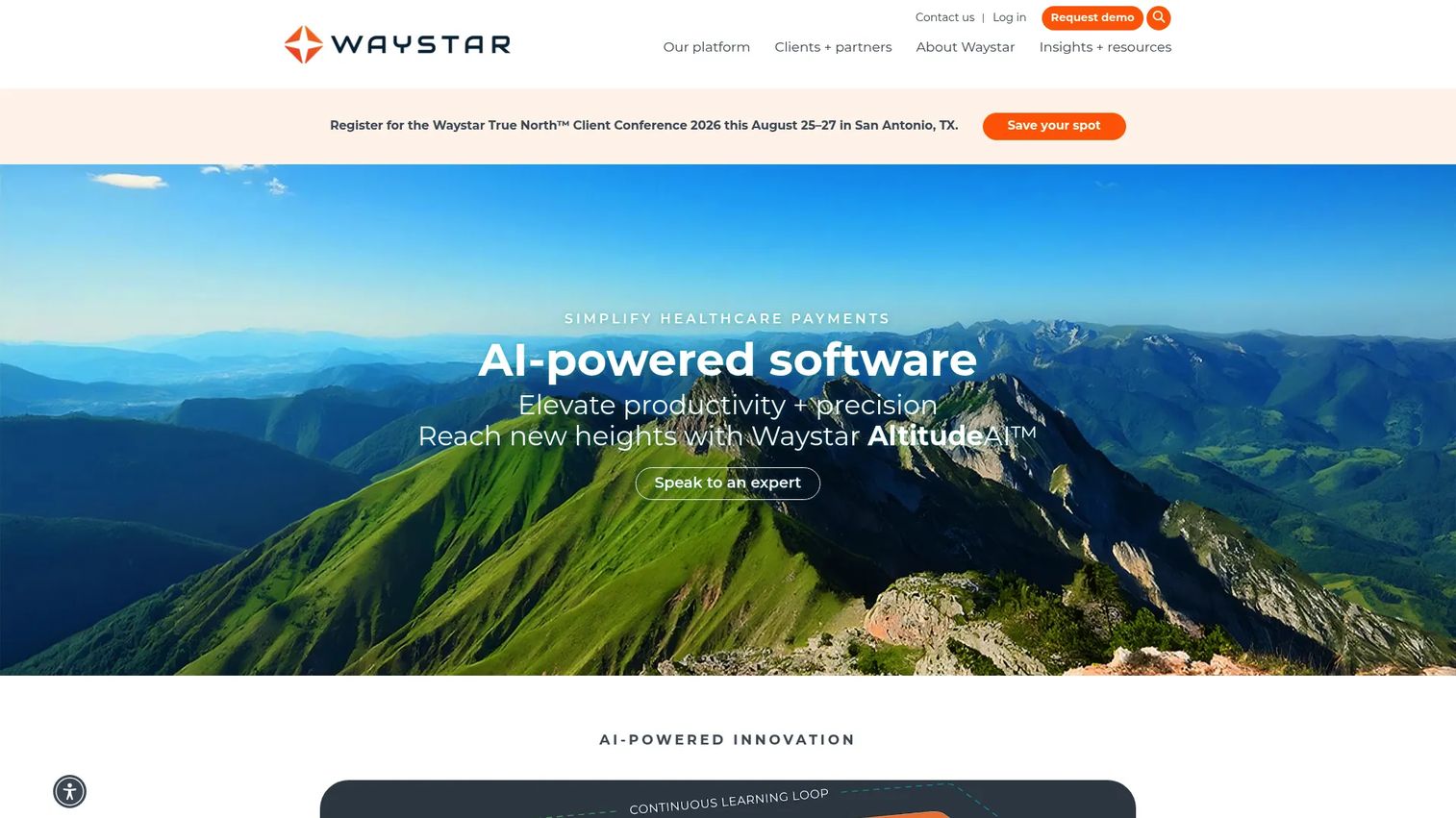
Waystar is a healthcare revenue cycle platform that treats prior authorization as one part of a connected financial workflow spanning claims, payments, and financial clearance. Its authorization automation ties into denial recovery and coverage detection, so requests that clear the front end are less likely to resurface as denials later. For finance-led provider organizations, that end-to-end view is the draw.
Best for: Healthcare finance and revenue cycle teams that want authorization inside an integrated claims and payments platform built for scale.
Key strengths
- Claim management and denial recovery: Authorization connects directly to the denial workflows where missed approvals usually surface.
- Coverage detection and price transparency: Automated coverage checks reduce the eligibility errors that stall authorizations.
- Analytics and reporting: Platform-wide reporting gives revenue cycle leaders visibility into authorization and denial trends together.
Why choose Waystar: Waystar fits organizations that view prior authorization as inseparable from the rest of the revenue cycle. If you want claims, payments, and authorizations reporting in one place rather than reconciling separate tools, its integrated model earns its keep. It holds a 4.4/5 rating on G2.
Waystar pricing: Waystar publishes packaged plans, Starter, Core, Performance, and Premium, on its site but does not display numeric prices, directing visitors to request pricing instead. Expect a custom quote scoped to your transaction volume and the packages you select.
3. Innovaccer
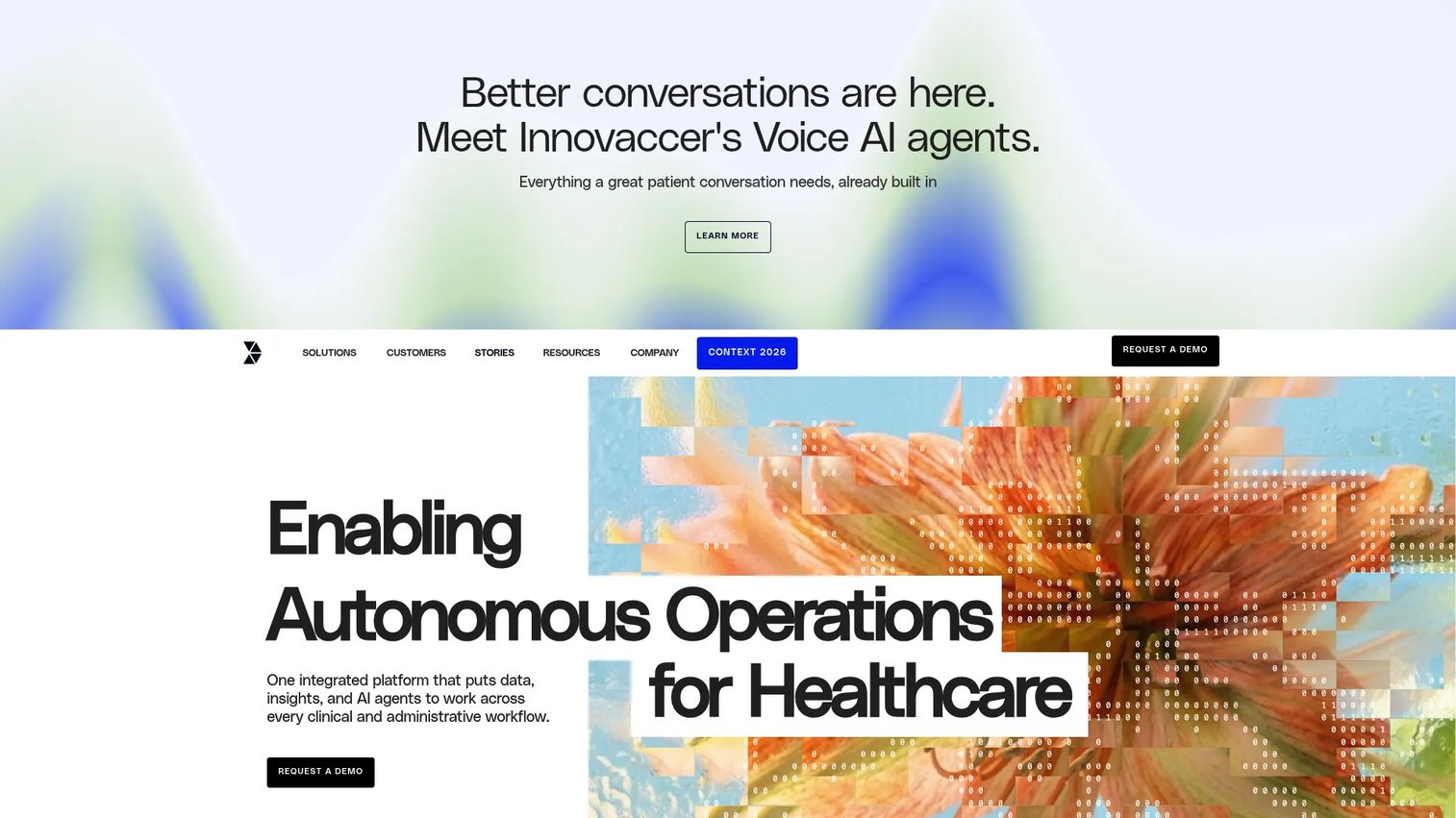
Innovaccer approaches prior authorization as one workflow inside a broader healthcare data activation and AI platform. It unifies disparate healthcare data, then layers healthcare-native AI copilots and agents on top to automate workflows across revenue cycle, access, quality, pharmacy, and care coordination. For organizations already investing in AI-driven healthcare workflow automation, authorization becomes one more process the platform can streamline.
Best for: Healthcare organizations that want prior authorization automation as part of a unified data and AI strategy, not a standalone tool.
Key strengths
- Healthcare-native AI: Copilots and agents automate authorization steps within a broader clinical and administrative context.
- Data activation platform: Unifying fragmented data gives authorization workflows cleaner inputs and fewer errors.
- Cross-workflow automation: Authorization sits alongside quality, pharmacy, and care coordination on one platform.
Why choose Innovaccer: Innovaccer suits larger organizations that treat prior authorization as part of a wider operational-visibility and data-unification effort. If you are consolidating fragmented systems and want AI automation spanning multiple administrative workflows, its platform breadth is the fit. Smaller practices needing only authorization may find the platform broader than their immediate need.
Innovaccer pricing: Innovaccer does not sell its platform through a public pricing page. Its site states it does not sell platforms directly online and routes buyers to request a demo. Pricing is scoped per deployment based on data volume and the workflows you activate.
4. CoverMyMeds
CoverMyMeds is the widely used standard for electronic prior authorization in pharmacy and medication access workflows. It automates ePA requests, surfaces prescription decision support and affordability insights, and integrates with EHR and pharmacy systems so authorization happens close to the point of prescribing. For medication-heavy organizations, its payer and PBM reach is hard to match.
Best for: Healthcare providers and pharmacies that need strong electronic prior authorization for medications and prescription access.
Key strengths
- Electronic prior authorization: Purpose-built ePA workflows for medication requests across a wide payer and PBM network.
- Affordability insights: Prescription decision support surfaces cost and coverage information at the point of prescribing.
- EHR and pharmacy integration: Authorization connects directly to prescribing and dispensing systems.
Why choose CoverMyMeds: For pharmacy-focused prior authorization, CoverMyMeds is the natural first evaluation. It stays free for providers and pharmacists because it partners with health plans, PBMs, and pharmaceutical manufacturers, which removes cost as a barrier to adoption. It holds a 3.7/5 rating on G2.
CoverMyMeds pricing: CoverMyMeds is free for healthcare providers and pharmacists. The company funds the platform through partnerships with health plans, PBMs, and pharmaceutical manufacturers rather than charging the prescribing side. There is no public per-seat or subscription price because providers do not pay to use it.
5. Cohere Health
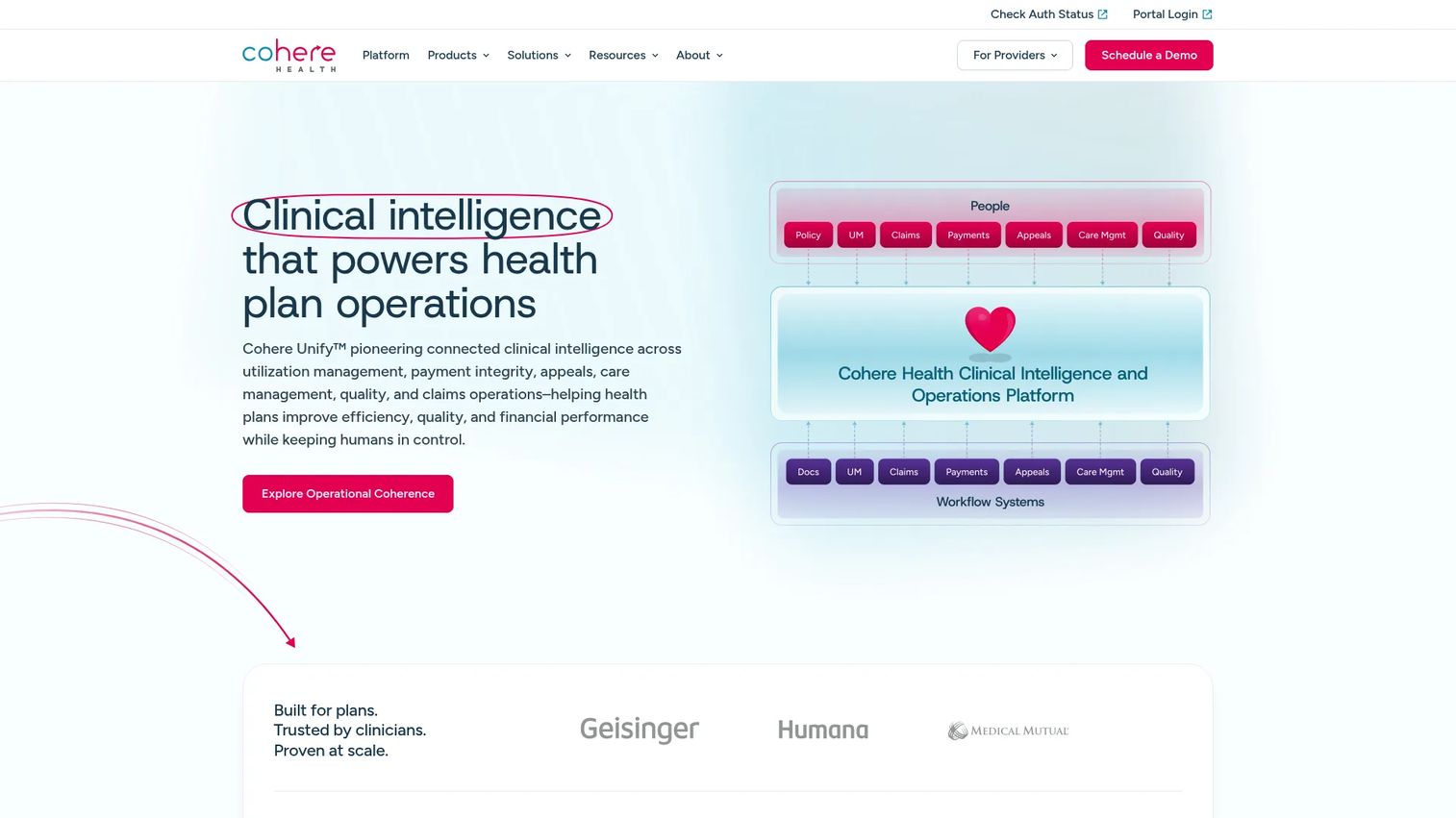
Cohere Health is clinical intelligence software built primarily for health plans, with prior authorization at the center of its offering. It applies AI-powered authorization automation alongside payment integrity, appeals, care management, quality, and claims operations. Its strength is the utilization management style of workflow, where clinical review and payer-provider collaboration drive the authorization decision.
Best for: Health plans and risk-bearing provider organizations that need enterprise clinical decision automation and utilization management.
Key strengths
- AI-powered authorization: Automates clinical review and decisioning within a utilization management workflow.
- Payment integrity workflows: Connects authorization decisions to broader payment accuracy and appeals processes.
- Care and quality operations: Authorization sits alongside care management, quality, and claims operations support.
Why choose Cohere Health: Cohere Health fits organizations where authorization is fundamentally a clinical-review problem, not just a submission task. Health plans and risk-bearing providers running utilization management get guided workflows and review efficiency built for that context. Specialty groups collaborating closely with payers on complex approvals are a strong fit.
Cohere Health pricing: Cohere Health does not publish public pricing. Its site routes visitors to demo and contact forms rather than listing prices, consistent with enterprise clinical software sold to health plans. Pricing is scoped to deployment size and the modules an organization licenses.
6. Availity
Availity operates one of the largest healthcare networks connecting payers and providers, which makes payer connectivity its core strength. It handles eligibility and coverage verification, claims submission and status, and prior authorization within a single administrative exchange. For organizations that work across many payers, that breadth of payer relationships reduces the number of separate portals staff have to touch.
Best for: Healthcare organizations that need broad payer connectivity and administrative workflow automation across many plans.
Key strengths
- Payer network reach: One of the largest payer-provider networks, reducing reliance on individual payer portals.
- Eligibility and coverage verification: Real-time checks feed cleaner data into authorization requests.
- Claims and authorization together: Authorization workflows sit alongside claims submission and status in one exchange.
Why choose Availity: Availity earns its place when payer breadth is the priority. If your team submits authorizations across a wide payer mix and wants fewer portals to manage, its network depth is the differentiator. The free Essentials tier also lowers the barrier for smaller practices to start.
Availity pricing: Availity offers a free Essentials tier and a paid Essentials Plus plan at $25 per month, with an advanced Essentials Pro tier whose pricing is not publicly listed. The free tier makes it accessible for smaller organizations, while larger deployments move to the paid tiers.
7. Myndshft
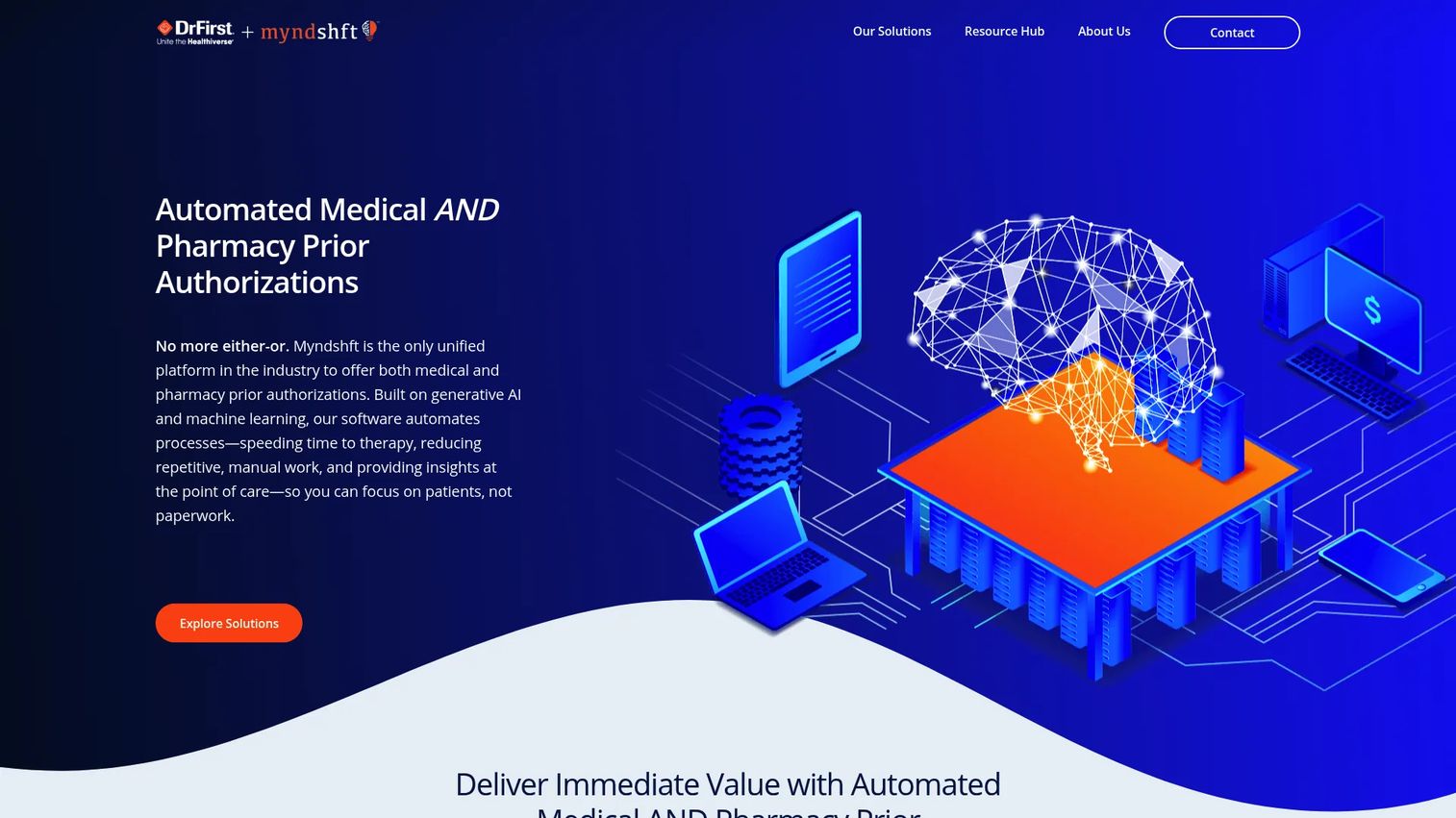
Myndshft automates both medical and pharmacy prior authorizations, which makes it a fit for organizations running mixed benefit types across varied EHR environments. It pairs authorization automation with real-time eligibility and benefits verification and patient financial responsibility, so staff see coverage, cost, and authorization status together. That combined view reduces the manual burden of stitching those checks across systems.
Best for: Healthcare organizations operating across mixed-EHR environments that need combined medical and pharmacy authorization automation.
Key strengths
- Medical and pharmacy automation: Handles both benefit types rather than specializing in only one.
- Real-time eligibility and benefits: Coverage verification feeds directly into authorization decisions.
- Patient financial responsibility: Surfaces cost and price transparency alongside authorization status.
Why choose Myndshft: Myndshft fits teams that need one tool spanning medical and pharmacy authorizations without forcing everything into a single EHR. Organizations juggling multiple clinical systems get automation and workflow monitoring that reduces manual follow-up across both benefit types. It holds a 3.5/5 rating on G2.
Myndshft pricing: Myndshft does not display public pricing on its site and uses a contact-sales model. Pricing is scoped to organization size and the mix of medical and pharmacy authorization volume you process, so expect a custom quote.
8. Rhyme
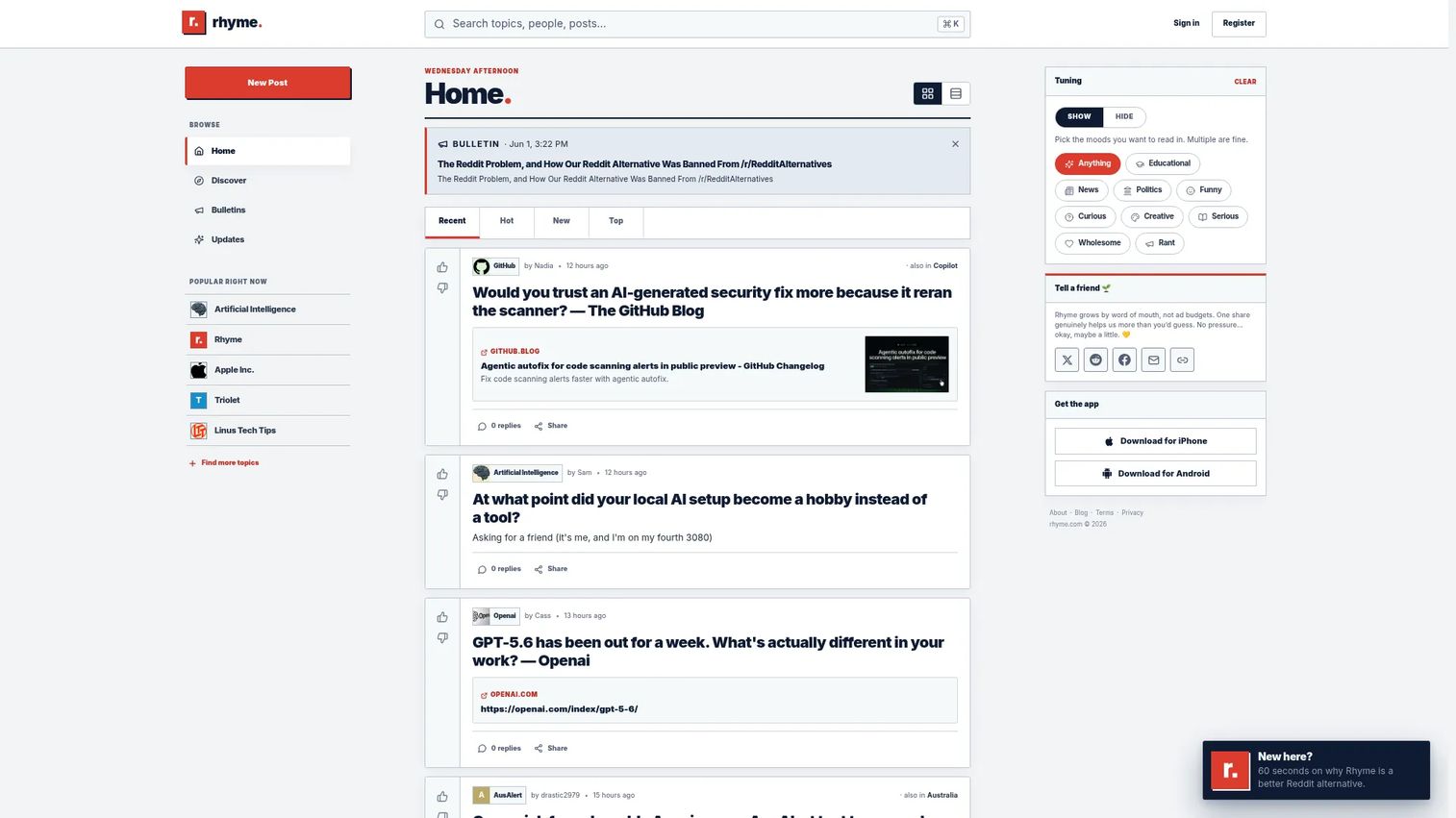
Rhyme focuses on the practical side of prior authorization: giving healthcare teams operational control and clear visibility over where each request stands. Rather than positioning around broad platform breadth, it centers on the day-to-day workflow of submitting, tracking, and resolving authorizations so staff spend less time hunting for status and more time moving cases forward.
Best for: Provider organizations that want practical workflow visibility and operational simplification over authorization requests.
Key strengths
- Workflow visibility: A clear view of authorization status keeps staff from chasing payers for updates.
- Operational control: Structured handling of submission and resolution reduces cases that stall unnoticed.
- Practical admin focus: Built around the real authorization workflow rather than a broad, general-purpose platform.
Why choose Rhyme: Rhyme suits teams that want to fix the specific pain of authorization visibility without adopting a sprawling platform. If your main problem is requests disappearing into payer queues and staff losing track, its focus on operational control and tracking speaks directly to that. It is grounded in the workflow buyers actually run day to day.
Rhyme pricing: Rhyme does not publish public pricing on its site and does not list plan tiers or prices. Buyers should request a quote scoped to their authorization volume and workflow needs.
Considerations before you buy
A vendor demo looks clean. Your real payer mix and EHR do not always cooperate. Before you sign, pressure-test each shortlisted option against these criteria.
EHR and billing integration depth
Confirm the software integrates with your specific EHR and billing system, not just a generic list. Ask how authorization data flows both directions and whether staff have to re-enter anything. Shallow integration recreates the manual work you are trying to eliminate.
Payer connectivity and coverage
Map the vendor's payer connections against your actual payer mix. A tool with broad connectivity that misses your top three payers still leaves your team in portals. Ask specifically how the vendor keeps changing payer rules current, since stale requirements drive denials.
Pharmacy, medical, or specialty fit
Match the tool to your dominant authorization type. Pharmacy-heavy organizations, specialty surgical groups, and health plans running utilization management have genuinely different needs. A pharmacy-focused tool will not serve a specialty medical workflow well, and vice versa.
Workflow visibility and reporting
Evaluate the dashboards and alerts your staff will use daily. Can they see every pending request, spot stalled cases, and hand off cleanly between roles? Reporting depth also determines whether leadership can spot denial trends before they become revenue problems.
Implementation and support reality
Ask about implementation timeline, required internal effort, and ongoing support. Enterprise healthcare software often carries a real deployment lift. Talk to a reference customer with a similar EHR and payer mix about how the rollout actually went.
Conclusion
The right prior authorization software depends far more on fit than on any single feature list. For enterprise revenue cycle teams that want authorization inside a connected patient-access stack, Experian Health and Waystar are the natural evaluations. Organizations pursuing AI-driven workflow automation across many administrative processes should look at Innovaccer. Pharmacy-heavy teams get the most from CoverMyMeds, while health plans and specialty groups running utilization management fit Cohere Health.
For broad payer connectivity, Availity's network reach and free tier make it easy to start. Myndshft serves mixed-EHR environments that need both medical and pharmacy automation, and Rhyme is built for teams whose core problem is authorization visibility and operational control.
Your next step is practical: build a shortlist of two or three tools that match your dominant authorization type, then verify EHR integration and payer coverage directly with each vendor using your real payer mix. A short reference call with a similar organization will tell you more than any demo about how the rollout actually lands.
FAQs
Prior authorization software automates the process of requesting, tracking, and securing payer approval for medical services, procedures, and medications before they are delivered. It replaces manual phone calls, faxes, and payer portals with a structured workflow that detects authorization needs, collects data, submits requests, and tracks status. The goal is fewer manual touches, faster approvals, and fewer denials.
Denials often come from missing information, wrong payer requirements, or stale rules. Prior authorization software reduces denials by validating data before submission, keeping payer requirement knowledgebases current, and flagging incomplete requests before they go out. Cleaner submissions and structured appeal workflows mean fewer requests come back rejected, which protects reimbursement and speeds care.
Prioritize EHR and billing integration, payer connectivity across your actual payer mix, automation depth for submission and follow-up, and workflow visibility through dashboards and alerts. Match the tool to your dominant authorization type, whether pharmacy, medical, or specialty. Then verify implementation timeline and support before committing, ideally with a reference customer on a similar system.
For most provider organizations, yes. Without EHR integration, staff re-enter clinical and demographic data by hand, which recreates the manual work the software is meant to eliminate and introduces errors that cause denials. Deep, bidirectional integration lets authorization data flow between the clinical system and the authorization tool automatically. Always confirm the vendor supports your specific EHR, not just a generic list.
Specialty practices and organizations running utilization management often fit clinical-review-focused tools like Cohere Health, which is built around payer-provider clinical collaboration. Myndshft suits specialty groups that span mixed EHR environments and need both medical and pharmacy automation. The right choice depends on your payer relationships and whether authorization is primarily a clinical-review or submission-tracking problem.
Pharmacy prior authorization handles medication approvals, works through pharmacy benefit managers, and lives close to the prescribing and dispensing workflow, which is where a tool like CoverMyMeds specializes. Medical prior authorization covers procedures, services, and imaging, working through medical benefits and often requiring more clinical documentation. Some tools, like Myndshft, automate both, but many organizations run separate workflows for each.
Buyers compare prior authorization vendors on EHR fit, payer connectivity against their real payer mix, automation depth, workflow visibility, and implementation reality. Since most vendors use custom pricing, focus the evaluation on fit rather than list price. Build a two-to-three tool shortlist, run vendor demos with your own payer scenarios, and talk to a reference customer with a similar EHR and specialty mix.
Most prior authorization software uses custom pricing scoped to organization size, transaction volume, and the modules deployed, so vendors like Experian Health, Waystar, Innovaccer, Cohere Health, Myndshft, and Rhyme route buyers to a sales conversation. CoverMyMeds is free for providers and pharmacists because it is funded by health plans and PBMs. Availity offers a free Essentials tier and a paid Essentials Plus plan at $25 per month.