A missed delivery window rarely starts on the road. It starts hours earlier, when an order got assigned to the wrong node, the wrong driver, or the wrong carrier, and nobody caught it until the truck was already out. Manual order assignment scales badly. Add distributed inventory, tight service-level agreements, and volatile capacity, and the cost shows up everywhere: rework, overtime, penalty fees, and churned customers who never tell you why they left.
The category is growing because the problem is expensive. The global smart order routing software market reached $2.8B in 2025 and is projected to hit $6.7B by 2034 at a 10.2% CAGR, according to Dataintelo (2025). That growth tracks a simple shift. Operations teams stopped treating routing as a mileage problem and started treating it as a systems problem, one that touches the OMS, the WMS, the fleet, and the customer experience all at once.
That reframing matters for anyone choosing software. Good order routing software does not just draw efficient lines on a map. It applies routing logic to every order, selects the right fulfillment node, handles exceptions without a human babysitting the queue, and pushes decisions back into the systems your team already lives in. Order routing automation is the difference between a plan that survives contact with reality and one that unravels by 10am. This guide compares nine platforms built for teams that need that level of control across multi-node fulfillment, dispatch, and real-time rerouting.
What's inside
This guide compares nine order routing software platforms for operations and product leaders who need more than a delivery app. It covers broad route planning software, OMS routing inside distributed inventory, enterprise logistics orchestration, and dispatch-heavy fleet operations. We selected tools based on four criteria: routing logic depth (rules, facility selection, optimization), integration fit across OMS, WMS, ERP, TMS, CRM, and telematics, exception handling and real-time rerouting, and visibility into what is actually happening after dispatch. Pricing and G2 ratings reflect verified vendor and G2 sources where public data exists.
TL;DR
- Best for broad route planning and dispatch: Route4Me, for configurable last-mile route optimization software and driver execution at scale.
- Best for OMS-native routing: Stord, for rule-based facility selection inside distributed inventory and multi-node fulfillment.
- Best for enterprise logistics orchestration: Locus, for AI routing, automated dispatch, and multi-carrier control-tower visibility.
- Best for dispatch-heavy fleets: Geotab, for telematics, tracking, and route execution across managed vehicles.
- Best for last-mile visibility: FarEye and Bringg, for delivery orchestration and branded post-purchase experience.
What is order routing software?
Order routing software is a system that decides how each order gets fulfilled and delivered by applying routing rules to select the right node, carrier, or driver, then optimizing the path to the destination. It sits at the center of fulfillment, connecting order intake to the physical work of picking, dispatching, and delivering.
The category overlaps with several adjacent tools, and the distinctions matter when you build a stack. Route planning software focuses on sequencing stops for a fleet across a shift. Route optimization software applies constraints like time windows, vehicle capacity, and traffic to minimize miles and delay. Order routing automation is the layer that removes manual assignment entirely, letting rules and models decide where an order goes. Intelligent order routing extends that with logic that weighs inventory position, cost, service level, and node capacity in real time. OMS routing embeds these decisions inside the order management system so routing is not a separate silo bolted onto fulfillment.
Core capabilities to expect from order routing software:
- Routing rules and facility selection: logic that assigns each order to the optimal node or fleet based on inventory, cost, distance, and SLA.
- Route optimization: constraint-based sequencing that accounts for capacity, time windows, and traffic.
- Real-time rerouting: dynamic adjustment when capacity, weather, service windows, or inventory shift mid-day.
- Exception handling: automated logic for failed deliveries, stockouts, and capacity breaches so the queue does not stall.
- ETA updates and delivery visibility: live tracking and customer-facing status across the last mile.
- Integrations: connectors into OMS, WMS, ERP, TMS, CRM, and telematics so routing decisions flow through the whole stack.
- Logistics orchestration: coordination across first, middle, and last mile for complex networks.
For product and operations leaders, the practical test is whether the software changes an operational metric you already report on: on-time delivery, cost per order, or the volume of manual exceptions your team handles per day.
When to use order routing software
Not every fulfillment operation needs a dedicated routing platform. These are the situations where it earns its place in the stack.
Automate multi-node fulfillment
When inventory lives across multiple warehouses, stores, or 3PL nodes, manual assignment breaks down fast. A human picking the fulfillment location for every order cannot weigh inventory levels, shipping cost, and delivery promise at the speed orders arrive. Order routing automation applies consistent facility-selection logic to every order, so multi-node fulfillment scales without adding headcount or introducing the errors that come with rushed manual decisions.
Reroute orders in real time
Plans made at 6am rarely hold all day. Capacity drops when a driver calls out, weather closes a lane, a service window shifts, or inventory at a chosen node sells through. Real-time rerouting lets the software react to those changes and reassign orders on the fly, instead of leaving dispatchers to firefight one exception at a time. This is where exception handling separates operational software from a static planning tool.
Improve last-mile execution
The last mile is where cost and customer sentiment concentrate. Dispatchers and planners use last-mile routing to cut redundant miles, tighten delivery windows, and reduce the rework that comes from failed or late deliveries. Layer in ETA updates and delivery visibility, and the customer sees a credible promise while the operations team sees where every order sits in real time.
Comparison table
The nine platforms below span the full range of routing needs, from broad last-mile route planning to OMS-native routing and enterprise orchestration. Route4Me leads for general routing relevance, with Stord placed early for teams whose primary need is OMS routing inside distributed inventory. Most vendors in this category use custom, volume-based pricing rather than public list prices, so treat the pricing column as guidance and confirm against a current quote.
| # | Product | Intent | Key differentiation | Pricing | G2 rating |
|---|---|---|---|---|---|
| 1 | Route4Me | Last-mile route planning and dispatch | Configurable route optimization plus driver execution apps | Custom; 7-day trial | 4.7/5 |
| 2 | Stord | OMS-native order routing | Rule-based facility selection inside distributed inventory | Custom | 4.1/5 |
| 3 | Locus | Enterprise logistics orchestration | AI routing, automated dispatch, control-tower visibility | Custom, volume-based | 4.4/5 |
| 4 | Geotab | Dispatch with telematics | Fleet tracking and route execution on telematics data | Custom via reseller | Not published |
| 5 | FarEye | Last-mile delivery orchestration | Routing plus branded post-purchase experience | Custom | 4.7/5 |
| 6 | LogiNext | Enterprise routing workflows | AI-native first, middle, and last-mile orchestration | Custom | 4.4/5 |
| 7 | Shipsy | Logistics orchestration at scale | Multi-carrier management across large networks | Custom | 4.5/5 |
| 8 | Descartes | Enterprise supply chain routing | Broad logistics suite with deep integration depth | From $1,349/mo (Sellercloud) | 4.6/5 |
| 9 | Bringg | Delivery orchestration and handoff | Carrier network across 70+ countries | Custom | 4.6/5 |
1. Route4Me
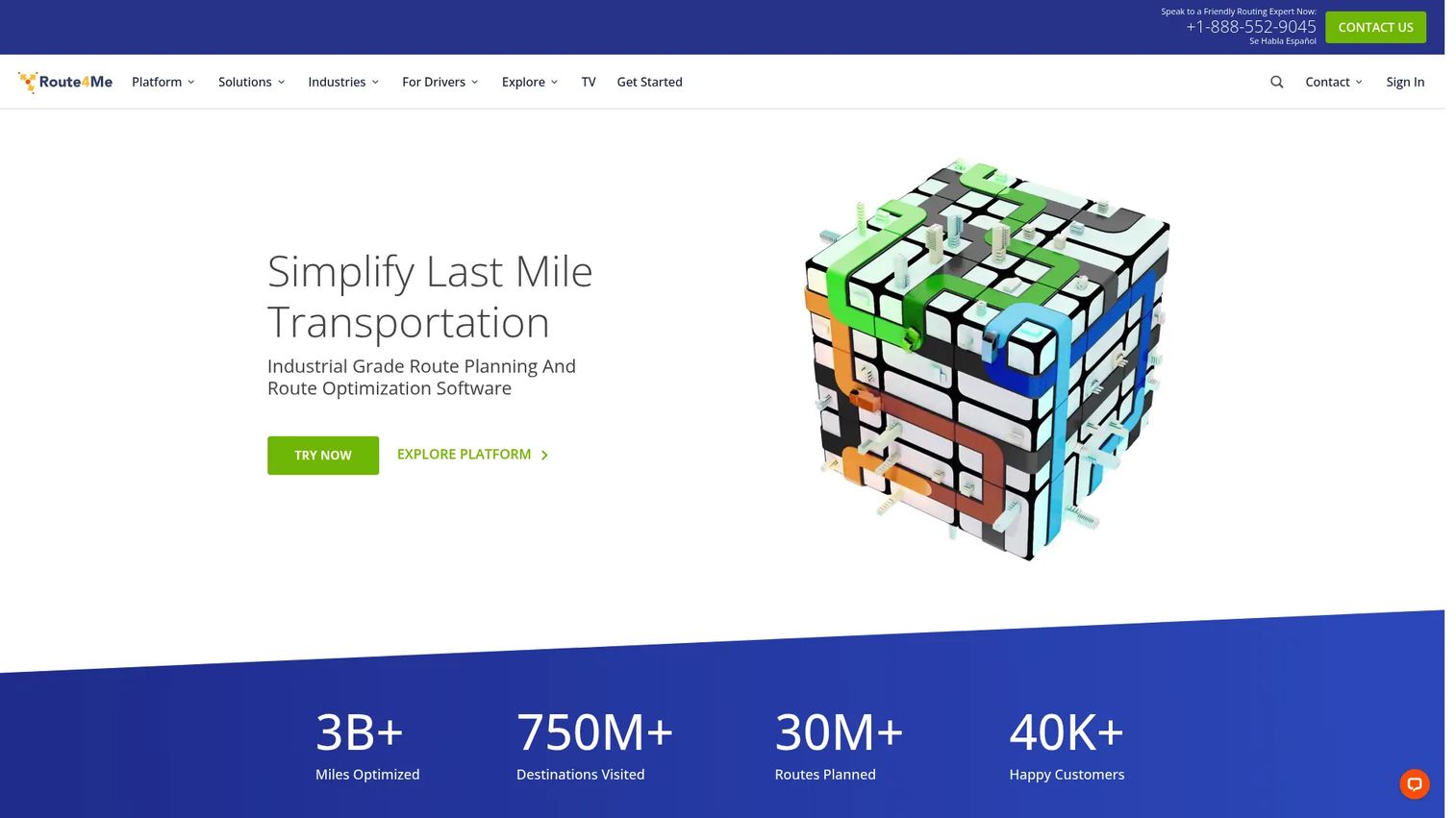
Route4Me is a last-mile route planning, optimization, dispatch, and tracking platform built for teams running multi-stop fleets. It handles the full loop: build optimized routes against constraints, dispatch them to drivers, then track execution with real-time GPS. For operations leaders who want configurable routing without a heavy enterprise implementation, it is a practical starting point that scales as route complexity grows.
Best for: Businesses that need configurable last-mile routing and dispatch software at scale.
Key strengths
- Dynamic route optimization: Sequences multi-stop routes against time windows, capacity, and traffic to cut miles and delay.
- Dispatch and real-time GPS tracking: Pushes routes to drivers and tracks progress live, so dispatchers see slippage as it happens.
- Driver mobile apps and route execution: Gives drivers turn-by-turn guidance and proof-of-delivery capture in the field.
Why choose Route4Me: If your routing problem is fundamentally a fleet and last-mile problem, Route4Me covers planning, dispatch, and execution in one place without forcing an enterprise-scale rollout. It fits teams that want to tune routing rules themselves and layer in real-time rerouting as volume grows, rather than buying a full logistics orchestration suite they will not use.
Route4Me pricing: Route4Me does not publish fixed list pricing. Its support pages state that pricing is customized, with configurable package and custom enterprise plans available through a consultation. A 7-day free route planner trial is offered so teams can test the core routing workflow before committing. Confirm current pricing against a quote based on your fleet size and route volume.
2. Stord
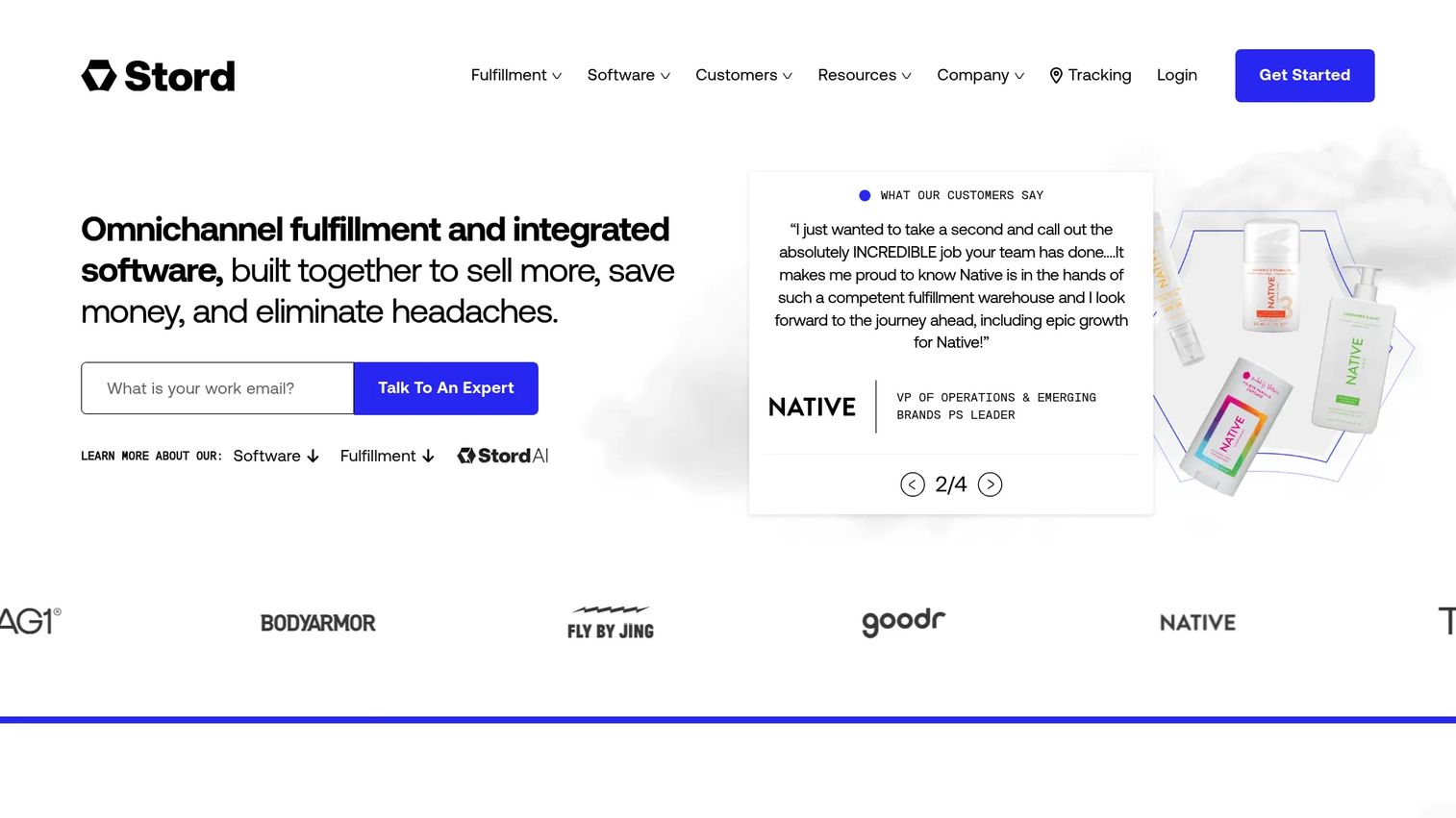
Stord is a cloud supply chain and commerce enablement platform for omnichannel brands, and its strength for this guide is OMS-native order routing. Rather than treating routing as a separate mapping tool, Stord makes facility selection and rule-based routing decisions inside the order management layer, which matters when inventory is distributed across nodes and channels.
Best for: Omnichannel DTC and B2B brands that need integrated fulfillment plus supply chain software with routing built into the OMS.
Key strengths
- Order management (OMS): Centralizes orders across channels so routing logic runs against a single source of truth.
- Warehouse management (WMS): Ties routing decisions to real inventory positions and node capacity.
- AI-powered estimated delivery dates and workflows: Generates ETA updates and automates fulfillment workflows across the network.
Why choose Stord: When your routing problem lives inside the order management system, a bolt-on route planner adds a silo. Stord embeds intelligent order routing where the order data already sits, so facility selection weighs inventory, cost, and delivery promise together. That makes it a strong fit for brands scaling multi-node fulfillment who want OMS routing and warehouse execution under one platform.
Stord pricing: Stord does not disclose a standard list price. Its pricing page states there is no standard list price on the site and that pricing is customized by solution. Pricing will depend on your fulfillment footprint, volume, and which parts of the platform you adopt, so plan for a scoped quote.
3. Locus
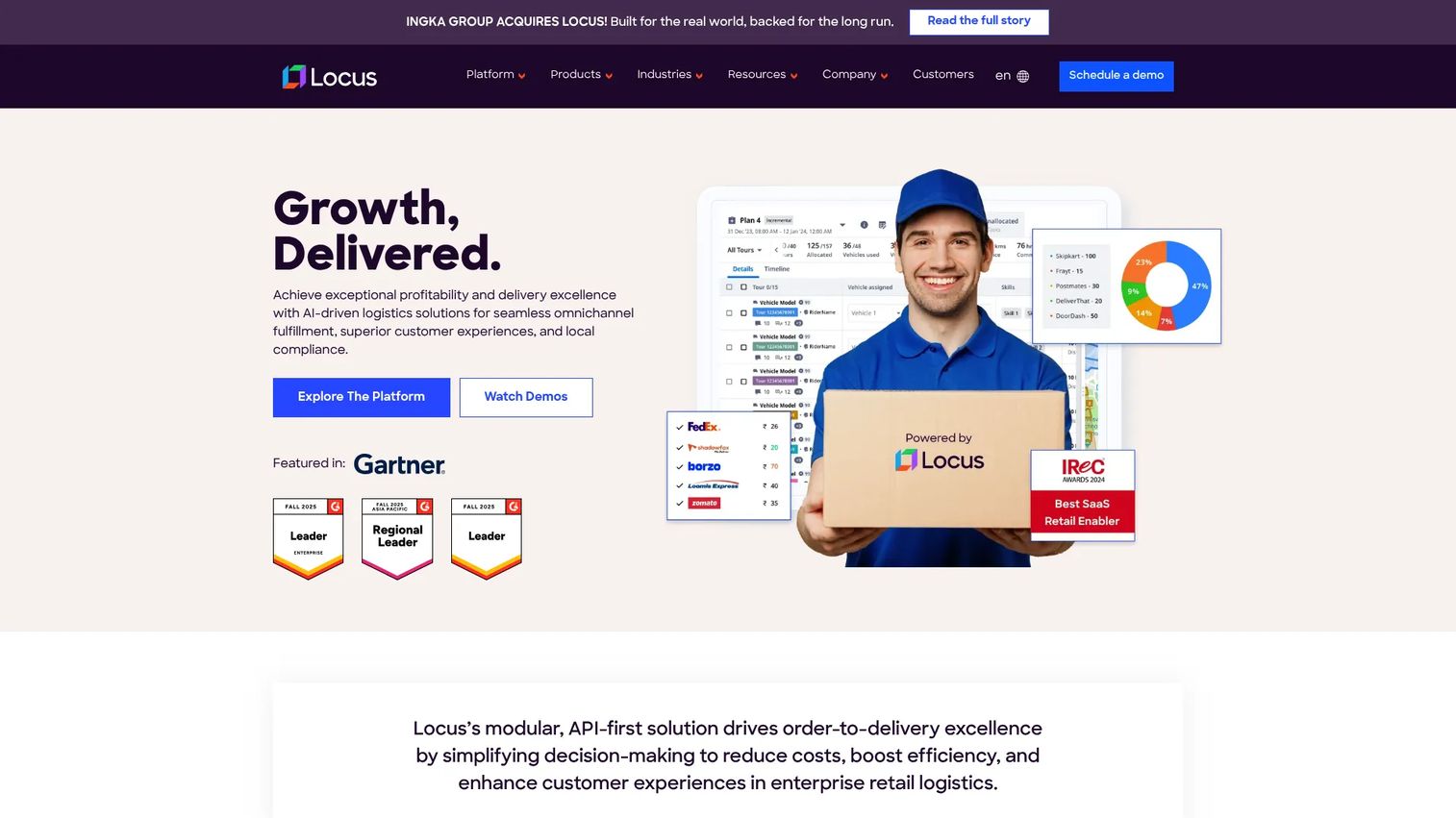
Locus is enterprise transportation management software for dispatch planning, route optimization, fleet visibility, and delivery orchestration. It targets the buyer whose operation is too complex for a single-fleet planner: multiple carriers, high shipment volume, and a need for real-time control across the network. The control-tower view is the differentiator for teams coordinating routing across many moving parts.
Best for: Large enterprises that need configurable, multi-carrier last-mile and transportation management.
Key strengths
- AI route optimization: Builds efficient routes at scale against complex, multi-constraint conditions.
- Automated dispatch: Assigns and releases routes without manual queue management.
- Real-time control tower and multi-carrier orchestration: Gives a live view across carriers, with rerouting when conditions change.
Why choose Locus: Locus fits the enterprise buyer who needs logistics orchestration, not just a route planner. If you coordinate multiple carriers, run high daily volume, and need real-time rerouting with visibility across the whole network, its control-tower model is built for that scale. Teams with a simpler single-fleet operation may not need this depth, but growing networks tend to grow into it.
Locus pricing: Locus does not use fixed subscription fees. Its own FAQ states pricing is customized based on shipment volume and client needs, with modules available à la carte or in packages. Expect a volume-based quote scoped to your network size and the specific modules you adopt.
4. Geotab
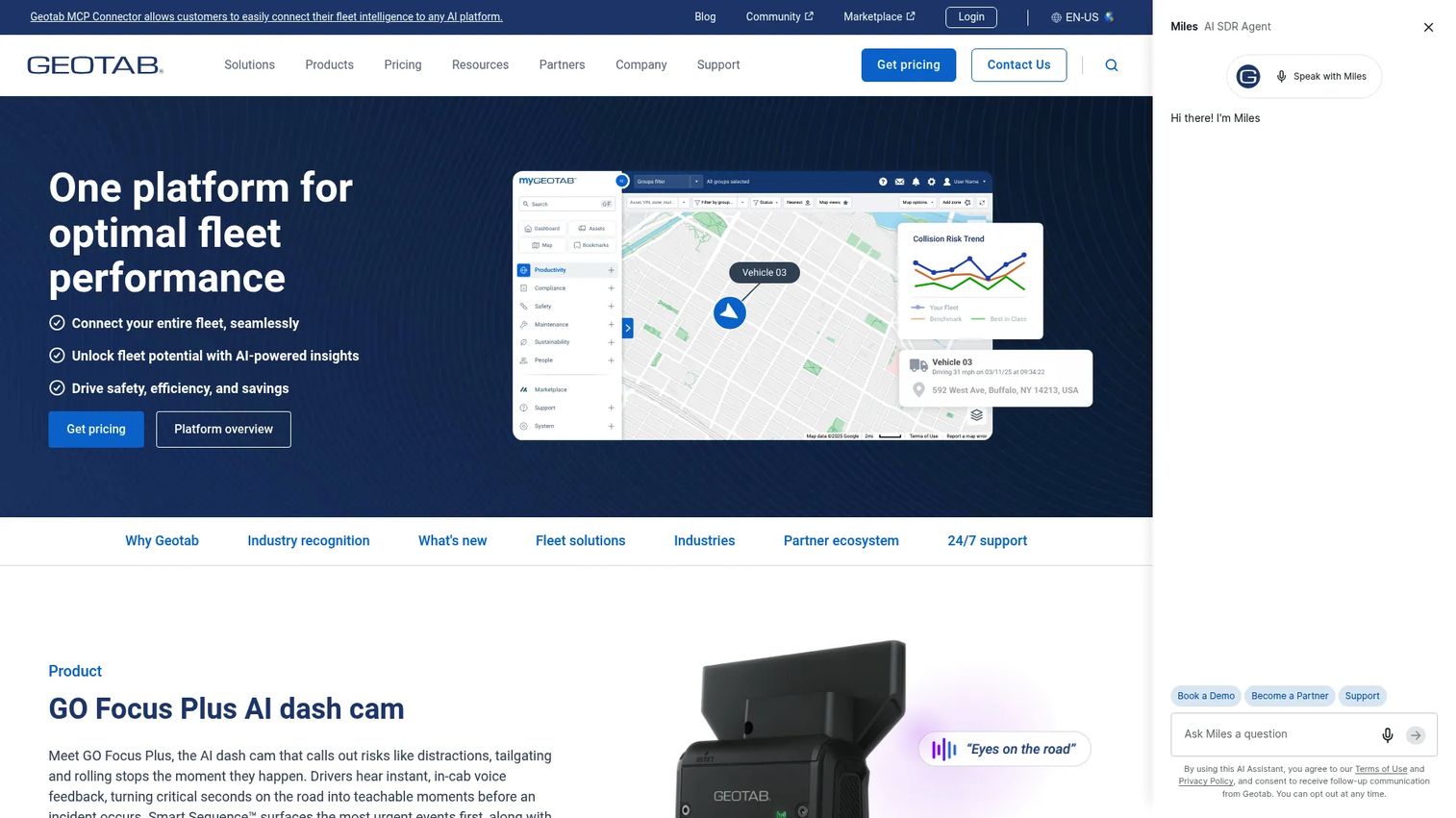
Geotab is a fleet management and vehicle telematics platform, and its relevance to routing comes from the telematics adjacency. For dispatch-heavy operations, routing decisions are only as good as the vehicle data behind them. Geotab supplies GPS location, driver behavior, and maintenance signals that feed route execution and dispatch software workflows through its marketplace ecosystem.
Best for: Fleets that need telematics, safety, and maintenance visibility alongside route execution.
Key strengths
- GPS location tracking: Provides the live vehicle position data that dispatch and rerouting decisions depend on.
- Driver safety and behavior reporting: Surfaces the driver-level signals that affect route reliability and cost.
- Maintenance and diagnostic monitoring: Flags vehicle health so capacity planning accounts for downtime.
Why choose Geotab: Geotab is the pick when your routing challenge is inseparable from your fleet data. If you already run a large managed fleet and want telematics feeding dispatch and route execution, its marketplace of add-ons lets you assemble routing and delivery capabilities on top of a strong telematics core. It complements dedicated routing tools rather than replacing OMS-native routing.
Geotab pricing: Geotab does not publish public pricing on its site and directs buyers to contact a reseller for current pricing. Because Geotab sells through a reseller network with hardware and software components, pricing depends on fleet size, device selection, and the marketplace add-ons you choose. Request a quote through an authorized reseller.
5. FarEye
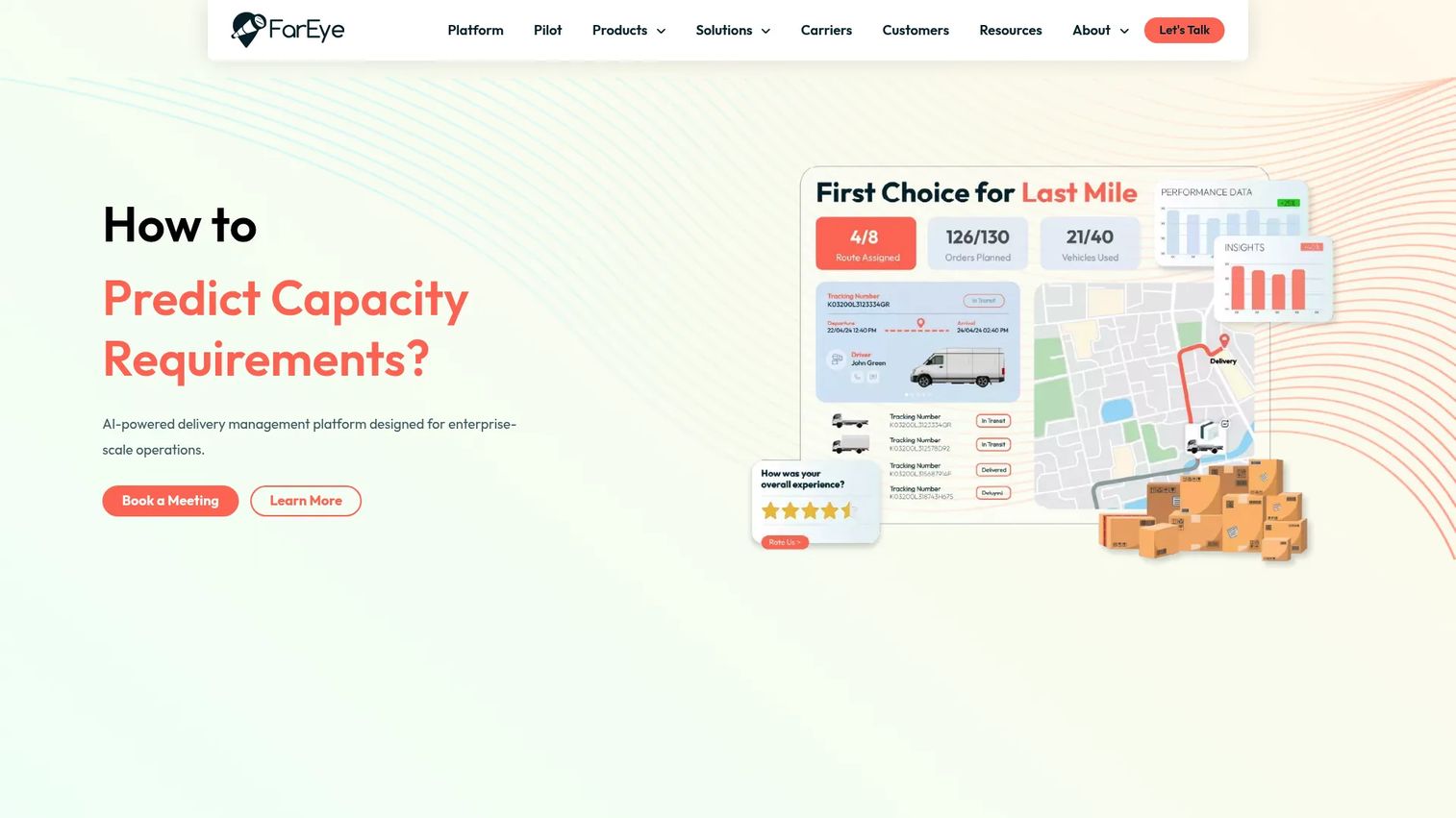
FarEye is enterprise last-mile logistics software for delivery orchestration, tracking, routing, and post-purchase customer experience. Where some tools stop at dispatch, FarEye extends control through the whole delivery lifecycle, including the customer-facing side. That post-dispatch visibility is the reason retailers and large shippers choose it.
Best for: Large shippers and retailers that need end-to-end last-mile delivery orchestration.
Key strengths
- Route planning and optimization: Builds efficient last-mile routes against real-world constraints.
- Real-time delivery tracking and visibility: Gives operations and customers a live view of every order in transit.
- Branded post-purchase experience and returns: Extends control into ETA updates, notifications, and returns.
Why choose FarEye: FarEye stands out when delivery visibility and customer experience matter as much as routing efficiency. If missed ETAs and blind spots after dispatch are hurting your customer metrics, its orchestration and post-purchase tooling close that gap. It suits enterprise retailers who treat the last mile as a brand touchpoint, not just an operational cost line.
FarEye pricing: FarEye uses custom enterprise pricing and does not publish a public price. Cost will scale with delivery volume and the modules you adopt across routing, tracking, and post-purchase experience. Plan for a scoped enterprise quote.
6. LogiNext
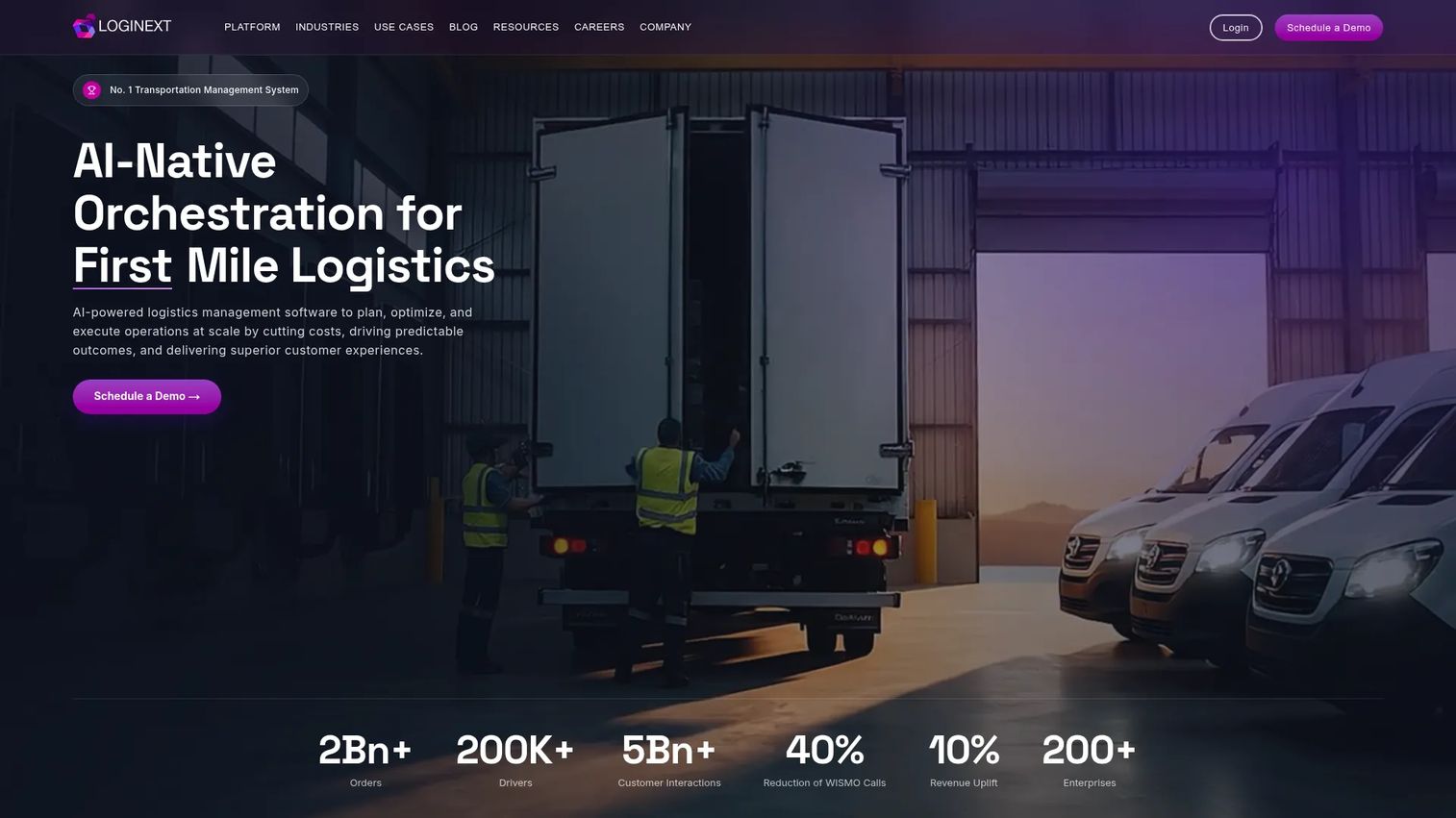
LogiNext is AI-native logistics orchestration software for first, middle, and last-mile delivery operations. It is built for enterprises that need routing workflows spanning the full delivery chain rather than a single segment. The breadth is the point: one platform coordinating planning, tracking, and validation across the network.
Best for: Enterprises managing complex logistics, routing, and delivery visibility across multiple delivery stages.
Key strengths
- Route planning and optimization: Automates routing across first, middle, and last mile with AI-driven logic.
- Live tracking: Provides real-time delivery visibility across the full chain.
- Delivery validation: Confirms completed deliveries to close the loop on exception handling.
Why choose LogiNext: LogiNext fits teams that need flexible orchestration across more than the last mile. If your operation spans first-mile pickup, middle-mile transfer, and final delivery, its AI-native approach coordinates routing and visibility across all of them. That makes it a fit for enterprises that want a single orchestration layer rather than stitching together segment-specific tools.
LogiNext pricing: LogiNext does not expose public pricing on its pricing page, which directs visitors to a demo instead of posted prices. Cost will depend on volume, delivery stages covered, and modules adopted. Request a demo and scoped quote for your operation.
7. Shipsy
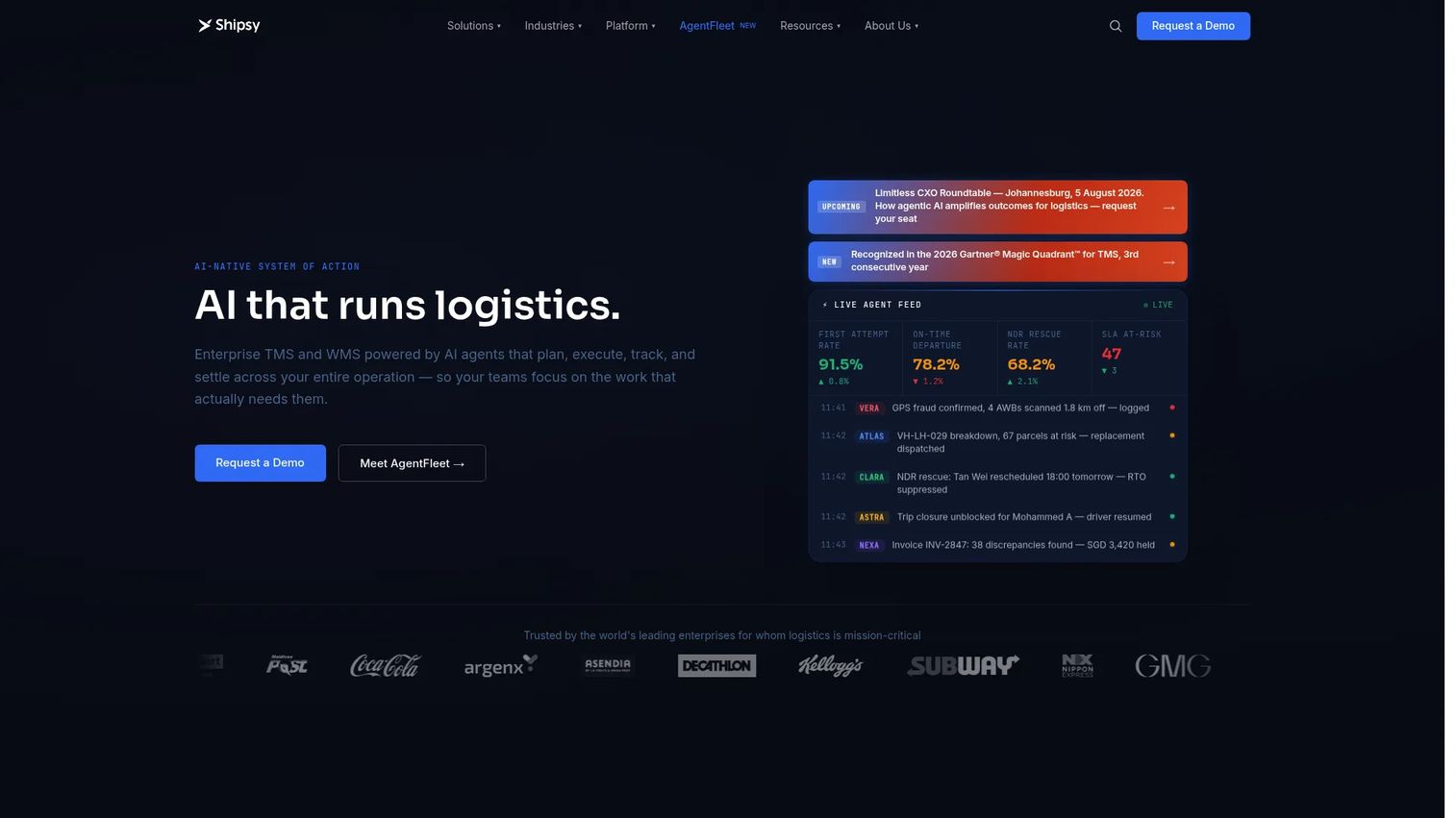
Shipsy is an AI-enabled logistics and supply chain management platform built for enterprises coordinating movement across large, often cross-border networks. Its depth in transportation management and multi-carrier handling makes it a strong fit for operations where routing decisions span many carriers and geographies at once.
Best for: Enterprises that need logistics orchestration across transportation, tracking, and fulfillment.
Key strengths
- Transportation Management System: Coordinates routing and carrier decisions across a large transportation network.
- Warehouse Management System: Ties routing to warehouse operations and inventory position.
- Multi-Carrier Management: Routes orders across many carriers, useful for cross-border and high-volume networks.
Why choose Shipsy: Shipsy is the pick when routing complexity comes from network scale and carrier diversity. If you move volume across borders and juggle many carriers, its multi-carrier management and TMS depth handle routing decisions that a single-fleet tool cannot. It suits large enterprises that need workflow depth across transportation, warehousing, and fulfillment in one platform.
Shipsy pricing: Shipsy does not expose a public pricing page; its site directs visitors to request a demo. Because pricing is quote-based and scales with network size and modules, plan to scope pricing directly with the vendor based on your carrier mix and volume.
8. Descartes
Descartes is a supply chain and logistics software provider offering solutions for ecommerce operations, transportation, customs compliance, and global trade intelligence. It is the most broadly scoped vendor in this guide, with routing sitting inside a much larger suite. For enterprises that value integration depth and a long track record across complex supply chain operations, that breadth is the draw.
Best for: Businesses that need enterprise logistics, ecommerce operations, or trade compliance software with routing as part of a larger suite.
Key strengths
- Ecommerce operations software (IMS, OMS, WMS, PIM, shipping): Covers order management and routing inside a full commerce operations stack.
- Transportation and fleet management: Handles route planning and fleet coordination at enterprise scale.
- Customs and regulatory compliance: Adds trade and compliance depth that global operations need.
Why choose Descartes: Descartes fits enterprises that want routing embedded in a broad, integration-heavy platform rather than a standalone tool. If your operation spans ecommerce operations, transportation, and global trade compliance, consolidating on one long-established vendor reduces the integration surface across OMS, WMS, ERP, and TMS. It suits complex supply chains that prize breadth and legacy trust.
Descartes pricing: Descartes is a multi-product company, and pricing varies by product. Its Sellercloud ecommerce operations product publishes annual subscription pricing starting at $1,349 USD per month, varying by order volume and add-ons. Most other Descartes products use quote-based or modular pricing, so scope pricing per product with the vendor.
9. Bringg
Bringg is an enterprise last-mile delivery and fulfillment platform for retailers and logistics providers. Its focus is delivery orchestration and the operational handoff between planning, dispatch, and the driver, backed by a large carrier network. For teams where delivery visibility and customer experience drive the buying decision, Bringg is built around that outcome.
Best for: Enterprise teams that need a configurable last-mile delivery and fulfillment platform.
Key strengths
- Modular platform for planning, dispatch, and driver management: Assembles routing and delivery workflows from configurable modules.
- Real-time delivery tracking, notifications, and branded customer experience: Delivers ETA updates and delivery visibility to customers and operations.
- Carrier network across 70+ countries with 250+ carrier solutions: Routes orders across a broad carrier ecosystem for global reach.
Why choose Bringg: Bringg fits enterprises that need to orchestrate delivery across their own fleet and a wide carrier network. If your operation hands off between planning, dispatch, and multiple carriers, its modular platform and large carrier network coordinate that handoff while keeping delivery visibility intact. It suits retailers and logistics providers who need configurability and global carrier reach.
Considerations for choosing order routing software
The right tool depends less on feature lists and more on how routing decisions flow through your existing stack. Evaluate against these criteria before you shortlist.
Routing logic depth
Not all routing is equal. A last-mile planner sequences stops; an OMS-native engine selects fulfillment nodes based on inventory, cost, and SLA. Decide whether your core problem is route optimization software for a fleet or intelligent order routing across distributed inventory, because the two need different engines.
Integration fit
Routing is only useful if decisions reach the systems that act on them. Check depth of WMS integration, ERP integration, TMS integration, CRM integration, and telematics. Shallow connectors create manual reconciliation work that erases the automation gains. Map your stack before you evaluate.
Exception handling and rerouting
Ask how the software behaves when a plan breaks. Real-time rerouting and automated exception handling are what keep the queue moving when a driver drops, inventory sells through, or a service window shifts. A tool that plans well but cannot react is a planning tool, not an operational one.
Visibility and instrumentation
For product and operations leaders, measurement is not optional. Look for delivery visibility, ETA updates, and analytics you can tie to on-time performance and cost per order. If you cannot instrument the routing decision, you cannot prove its impact or iterate on it.
Implementation and maintenance fit
Consider how the tool holds up across releases and volume growth. Some fit a single fleet today; others scale into full logistics orchestration. Match the implementation weight to your actual complexity, not an aspirational one, so the rollout does not stall.
Conclusion
Order routing software spans a wide range, and the best choice follows your routing complexity, not a generic ranking. For broad route optimization and dispatch across a fleet, Route4Me covers planning and execution without a heavy rollout. For OMS-native routing inside distributed inventory, Stord makes facility selection where the order data already lives. For enterprise logistics orchestration across many carriers, Locus and its control-tower model scale to that complexity, while Descartes and Shipsy add breadth for global supply chains. For dispatch-heavy fleets, Geotab brings telematics to route execution. And for last-mile delivery visibility and customer experience, FarEye and Bringg orchestrate the handoff and the post-purchase view.
The practical next step is simple. Shortlist two tools based on your routing complexity and your integration stack, then run them against a real slice of your order volume before committing. Fulfillment automation only pays off when the routing engine fits the systems around it, so test that fit before you scale.
FAQs
Order routing software is a system that decides how each order is fulfilled and delivered by applying routing rules to select the right node, carrier, or driver, then optimizing the path. It automates decisions that manual assignment cannot make fast or consistently at scale, and typically integrates with the OMS, WMS, and fleet systems that execute the work.
Route planning software focuses on sequencing stops for a fleet across a shift, optimizing the physical path. Order routing software is broader: it first decides where and how each order should be fulfilled, including facility and carrier selection, before optimizing the route. Many platforms combine both, but the routing decision comes before the route plan.
Intelligent order routing inside an OMS means the order management system automatically selects the optimal fulfillment node or carrier for each order by weighing inventory position, cost, node capacity, and delivery promise in real time. It embeds routing logic where order data lives, so multi-node fulfillment decisions run without a separate routing silo.
The integrations that matter most are the systems that hold your order and inventory data and the ones that execute delivery. That usually means OMS routing connectors, plus WMS integration, ERP integration, TMS integration, CRM integration, and telematics for fleet data. Shallow integrations force manual reconciliation, so evaluate depth, not just whether a connector exists.
Most enterprise order routing platforms support real-time rerouting, adjusting assignments when capacity, weather, service windows, or inventory change during the day. The depth varies: some react automatically through exception handling rules, while others surface changes for a dispatcher to approve. Ask vendors how the system behaves when a plan breaks mid-shift.
No. While dispatch software and last-mile routing serve delivery fleets, order routing software also covers OMS routing for distributed inventory, multi-carrier orchestration, and multi-node fulfillment where no owned fleet is involved. Retailers, 3PLs, and omnichannel brands use it to select fulfillment nodes and carriers, not only to sequence their own trucks.
Start with your core routing problem: fleet route optimization, OMS-native facility selection, or enterprise logistics orchestration across carriers. Then evaluate integration depth across your stack, exception handling and real-time rerouting, and visibility you can tie to on-time and cost metrics. Shortlist two tools that fit that complexity and test them against real order volume.
Most order routing and route planning software vendors use custom, volume-based pricing rather than public list prices, so expect a scoped quote based on order volume, fleet or network size, and modules adopted. Look for a trial or pilot where available, confirm what scales the price, and factor in implementation and integration effort alongside the license cost.