A client books a Saturday slot at 11pm, then never shows. Another calls to reschedule and lands in voicemail. A third would have rebooked, but your paper waiver took ten minutes and they didn't come back. Every one of these is a revenue leak, and none of them shows up cleanly in your books.
Here's the number that should reframe how you think about it: 67% of Gen Z and 64% of Millennials have abandoned a business because of a poor booking system, according to MassageBook Pro's 2026 market analysis. That same research found 78% of massage bookings now happen online, on a mobile device. The bottleneck isn't demand for massage. It's friction between a client's intent and a confirmed, paid appointment.
The right massage therapy software closes that gap. It turns a late-night browse into a booked slot, protects that slot with reminders and deposits, takes payment without a card reader dance, and keeps the client records that bring people back. The global massage therapy software market was valued at USD 600 million in 2024 and is forecast to reach USD 1.2 billion by 2033 at an 8.5% CAGR, per Verified Market Reports (2025). Buyers are consolidating tools, and this guide helps you pick the one that reduces manual admin fastest. If reminders are your single biggest pain, a dedicated appointment reminder software roundup is worth a look too, and businesses leaning on packages will want to study loyalty management mechanics.
What's inside
This guide compares seven massage booking software tools for 2026: MassageBook, Appointy, PocketSuite, WellnessLiving, ClinicSense, Mindbody, and Vagaro. We selected each tool on six criteria that decide whether the software earns its place: online booking quality, automated reminders and no-show prevention, payment processing, client records and SOAP notes, staff and resource management, and setup speed. Whether you're a solo therapist working from one room, a clinic that needs clinical documentation, or a multi-provider studio juggling calendars, one of these will match your workflow. Pricing and G2 ratings are current as of July 2026.
TL;DR
- Best overall all-in-one workflow: MassageBook, built specifically for massage and bodywork with booking, SOAP notes, and retention in one place.
- Best for fast setup and solo therapists: PocketSuite, a mobile-first app that gets a lightweight practice live quickly, or Appointy for affordable self-scheduling.
- Best for clinics that need SOAP notes: ClinicSense, documentation-first with intake, consent forms, and charting at the core.
- Best for membership and package-heavy businesses: WellnessLiving, with memberships, POS, and retention tooling.
- Best for multi-provider scheduling and resources: Vagaro, with staff calendars and room-level scheduling.
- Best for larger operations needing broad business management: Mindbody, an established marketplace platform for multi-location wellness businesses.
What is massage booking software?
Massage booking software is a platform that lets clients schedule massage appointments online while giving therapists the tools to manage bookings, payments, and client records in one system. It replaces phone tag, paper waivers, and manual reminders with an automated workflow that runs whether you're on the table or asleep.
The strongest massage appointment scheduling software covers the full chain from booking to rebooking. Core capabilities include:
- Online booking: a self-serve page or widget where clients pick a service, therapist, and time without calling.
- Automated reminders and confirmations: email and SMS notifications that cut no-shows before they hit revenue.
- Payment processing and deposits: card capture, prepayments, deposits, tips, and point-of-sale checkout.
- Intake forms and client records: digital health-history forms and a client profile that persists across visits.
- SOAP notes: structured clinical documentation for practitioners who need charting and treatment records.
- Staff and resource management: shared calendars, staff assignment, and room or table scheduling for multi-provider teams.
- Retention tools: rebooking prompts, memberships and packages, gift certificates, and review requests.
Most massage therapist software bundles these into tiered plans. Solo practitioners often need only booking, reminders, and payments, while clinics and studios add SOAP notes, resource management, and memberships. The category overlaps with broader wellness and salon platforms, so the right pick depends less on feature count and more on how cleanly the tool matches your business model.
When to use massage booking software
Fill your calendar without manual back-and-forth
If you're a solo therapist, every phone call to schedule an appointment is time off the table. Self-scheduling matters most when clients want to book outside your working hours, which, per that 78% mobile-booking figure, is most of the time. A public booking page turns your website, Google profile, and social bio into an always-open front desk. Busy clinics feel this too: front-desk staff spend fewer hours on the phone and more on the client in the room.
Reduce no-shows before they hit revenue
No-show prevention is where software pays for itself fastest. Automated reminders sent by email and SMS a day or two before the appointment cut the "I forgot" cancellation. Requiring a deposit or a card on file at booking adds skin in the game, and a clear cancellation policy gives you grounds to charge for late drops. Together, reminders, confirmations, deposits, and policies protect the slot you already worked to fill.
Run a smoother multi-provider operation
Once you have two or more therapists, staff management and resource management become decision factors, not nice-to-haves. You need shared calendars so bookings don't collide, staff-level assignment so clients pick their preferred therapist, and room or table scheduling so two providers aren't sent to the same space. Multi-location businesses add another layer, needing location-aware booking and consolidated reporting across sites.
Comparison table
Here's a scannable view of all seven tools by intent, primary use case, entry pricing, and G2 rating. Use it to shortlist two or three, then read the full sections below. This is the fastest way to compare massage scheduling software side by side.
| # | Product | Intent | Key use case | Pricing | G2 rating |
|---|---|---|---|---|---|
| 1 | MassageBook | All-in-one for massage | Booking, SOAP notes, marketing, retention | From $15/mo | 3.7/5 |
| 2 | Appointy | Affordable scheduling | Self-scheduling and reminders | Free; from $29.99/mo | 4.5/5 |
| 3 | PocketSuite | Mobile-first solo ops | Booking, payments, fast launch | From $49.99/mo | - |
| 4 | WellnessLiving | Membership-heavy wellness | Memberships, POS, retention | From $39/mo | 4.5/5 |
| 5 | ClinicSense | Documentation-first clinics | SOAP notes, intake, charting | From $39/mo | - |
| 6 | Mindbody | Larger multi-location ops | Scheduling, marketplace, scale | From $79/mo per location | 3.7/5 |
| 7 | Vagaro | Salon and wellness studios | Booking, payments, staff calendars | From $23.99/mo | 4.6/5 |
1. MassageBook
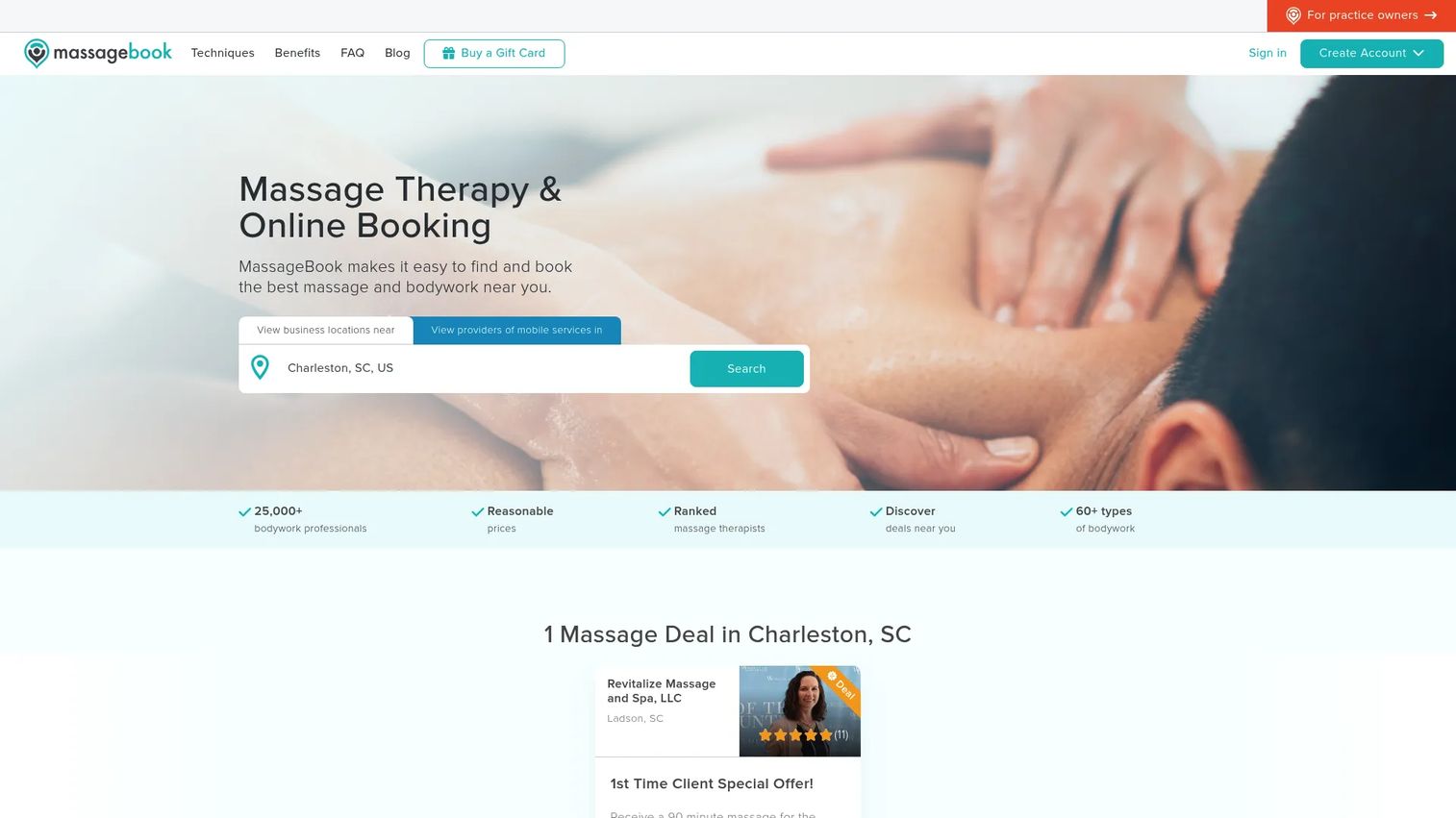
MassageBook is booking and practice-management software built specifically for massage and bodywork professionals, paired with a public directory where clients find and book therapists near them. Because it was designed for this vertical rather than adapted from a general salon tool, the workflow maps closely to how a massage practice actually runs, from online booking through SOAP notes to rebooking prompts. It's the most complete all-in-one pick for therapists who want one system instead of a stack.
Best for: Massage therapists and bodywork practices that want online booking plus practice management and marketing in a single tool.
Key strengths
- Online booking and scheduling: A self-serve booking page plus directory exposure that turns discovery into confirmed appointments.
- Client records, SOAP notes, and intake forms: Digital intake and structured SOAP charting keep clinical documentation and client history in one profile.
- Marketing and retention tools: Website integration, automated reminders, gift certificates, and rebooking prompts to keep clients coming back.
Why choose MassageBook: If your priority is a workflow-first system built around massage rather than a generic scheduler with massage bolted on, MassageBook is the natural fit. The directory listing also gives solo therapists a discovery channel most tools don't offer. Adding staff carries no extra per-seat cost, which keeps small teams affordable.
MassageBook pricing: MassageBook offers three plans: Transition at $15.00/month, Practice at $44.25/month, and Clinic at $74.25/month. Every account starts with a 30-day free trial and no credit card is required. That $15 entry tier makes it one of the more accessible ways for a solo therapist to get a full-featured system live.
2. Appointy
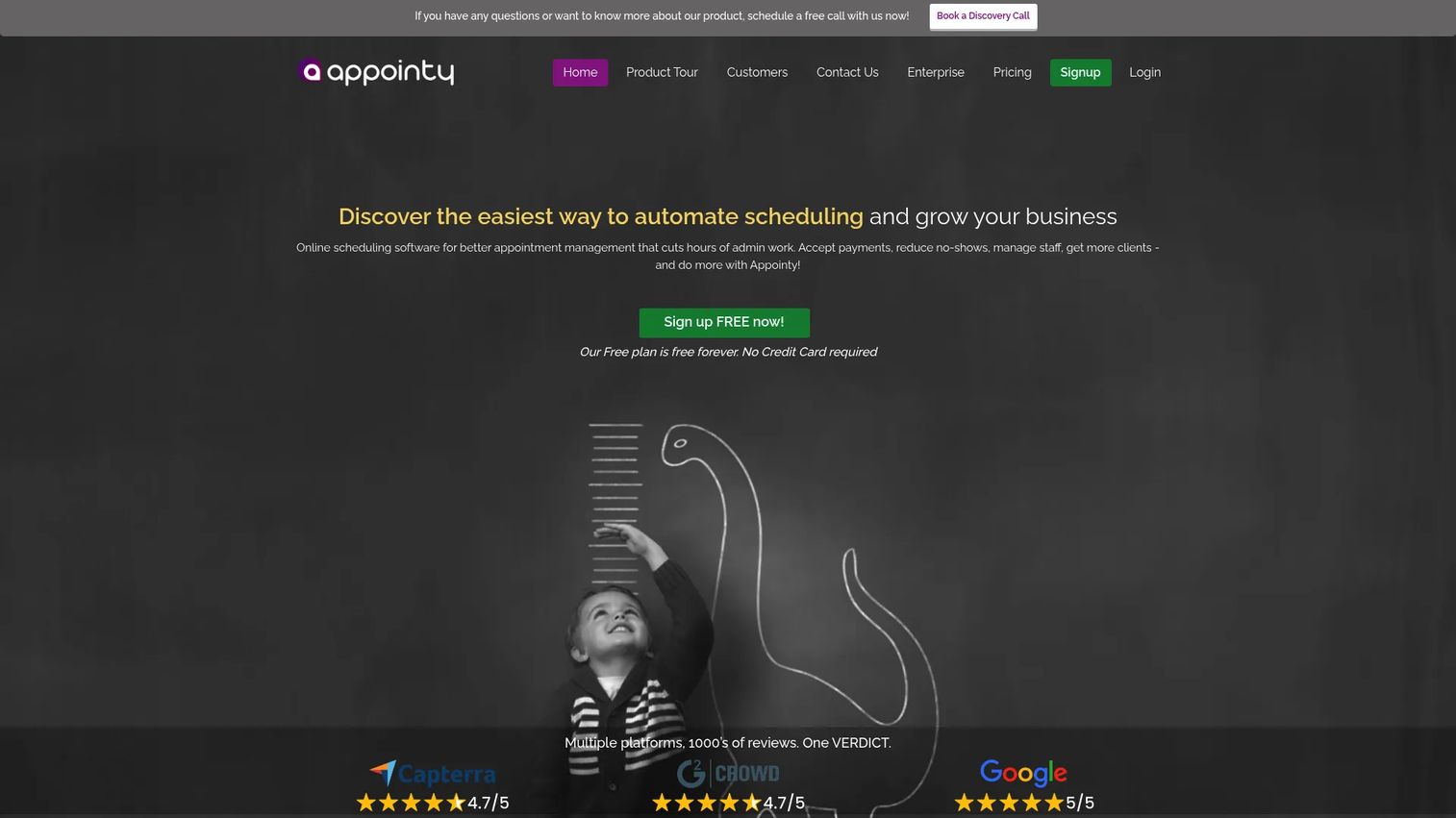
Appointy is online appointment scheduling software for businesses of all kinds, with a free plan that makes it an easy first step for cost-conscious therapists. It's not massage-specific, but its scheduling automation covers the essentials a practice needs: a 24/7 booking page, calendar sync, automated reminders, and staff assignment. For a solo practitioner testing whether software beats a paper diary, the free tier removes the risk from that decision.
Best for: Businesses that need affordable appointment booking and scheduling automation without a big upfront commitment.
Key strengths
- Online self-scheduling: A round-the-clock booking page that captures appointments while you work or sleep.
- Calendar sync and automated reminders: Two-way calendar sync plus email and SMS reminders to cut no-shows.
- Multi-location and resource scheduling: Staff assignment and resource management that scale from solo to multi-provider setups.
Why choose Appointy: Appointy suits therapists who want a proven, general-purpose scheduler and value a genuine free tier over vertical-specific charting. As you grow into multi-location or resource-heavy scheduling, the paid tiers unlock the depth without forcing a platform switch.
Appointy pricing: Appointy has a Free plan at $0/month, then Growth at $29.99/month, Professional at $59.99/month, and Enterprise at $99.99/month. Annual billing lowers the effective monthly rate, and a 14-day free trial covers the premium plans. Appointy holds a strong 4.5/5 on G2.
3. PocketSuite
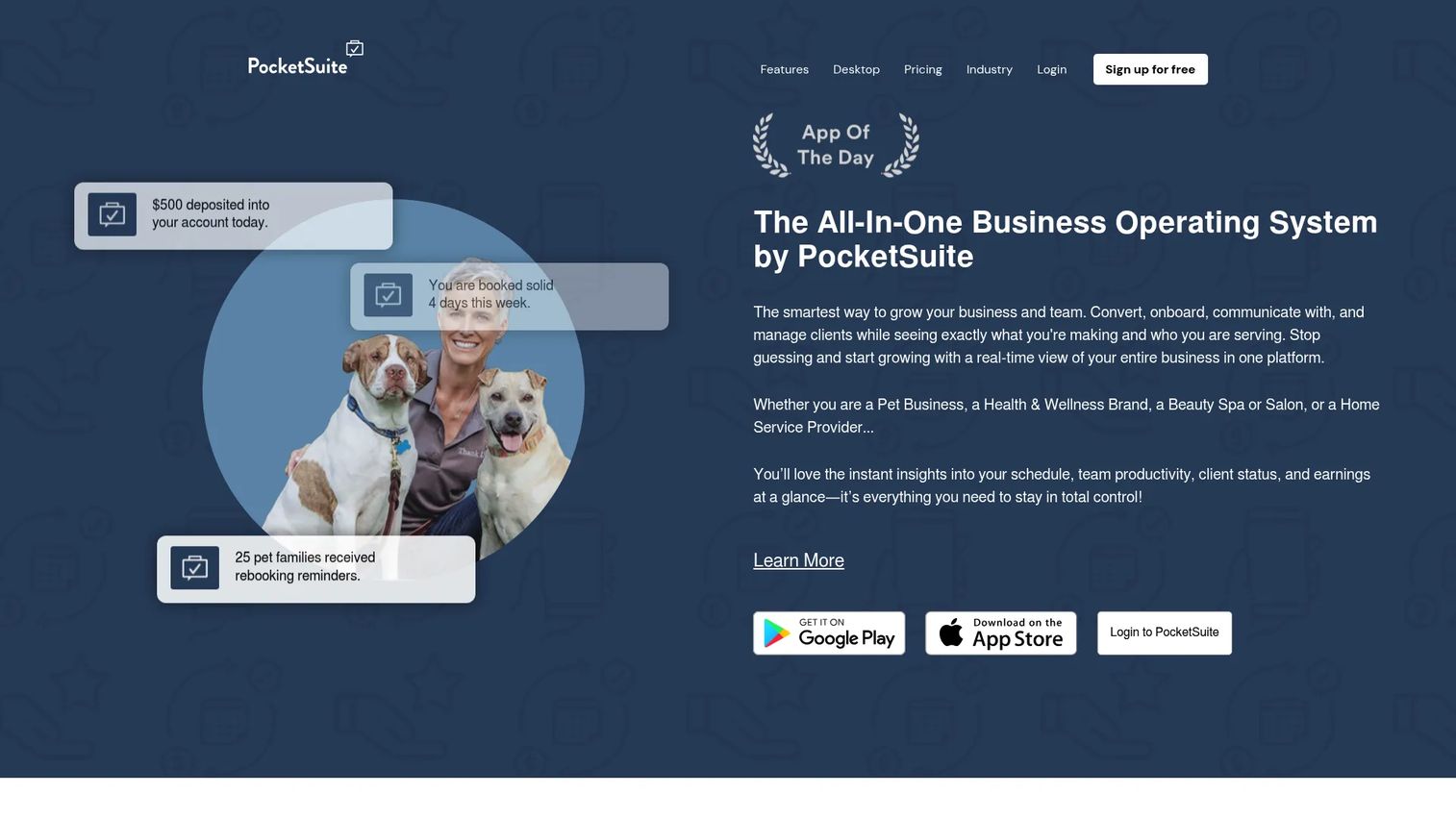
PocketSuite is all-in-one business management software for service businesses, delivered as a mobile-first app that gets a solo practice live fast. It handles online booking, payments, automated reminders, and team operations from your phone, which fits therapists who run their whole business between sessions rather than at a front desk. The lightweight launch path is the draw: booking links, intake, invoicing, and POS without a long configuration project.
Best for: Solo and small service businesses that want booking, payments, and operations in one mobile app.
Key strengths
- Online booking and payments: Booking links plus invoicing and POS so clients book and pay in one flow.
- Automated reminders and scheduling: Confirmations and reminders that reduce no-shows without manual texting.
- Team, payroll, and facility management: Tools to grow from solo into a small team, including memberships and packages.
Why choose PocketSuite: Choose PocketSuite if you want the fastest path from signup to a working, phone-run practice and value bundled operations over deep clinical charting. Its memberships and packages support recurring revenue, and QuickBooks-friendly workflows keep bookkeeping tidy.
PocketSuite pricing: PocketSuite offers Premium at $49.99/month, Team at $99.99/month, Facility at $149.99/month, and a custom-priced Enterprise plan. There's a 30-day free trial to test the fit before committing. Pricing scales with the size of your team and facility needs rather than per booking.
4. WellnessLiving
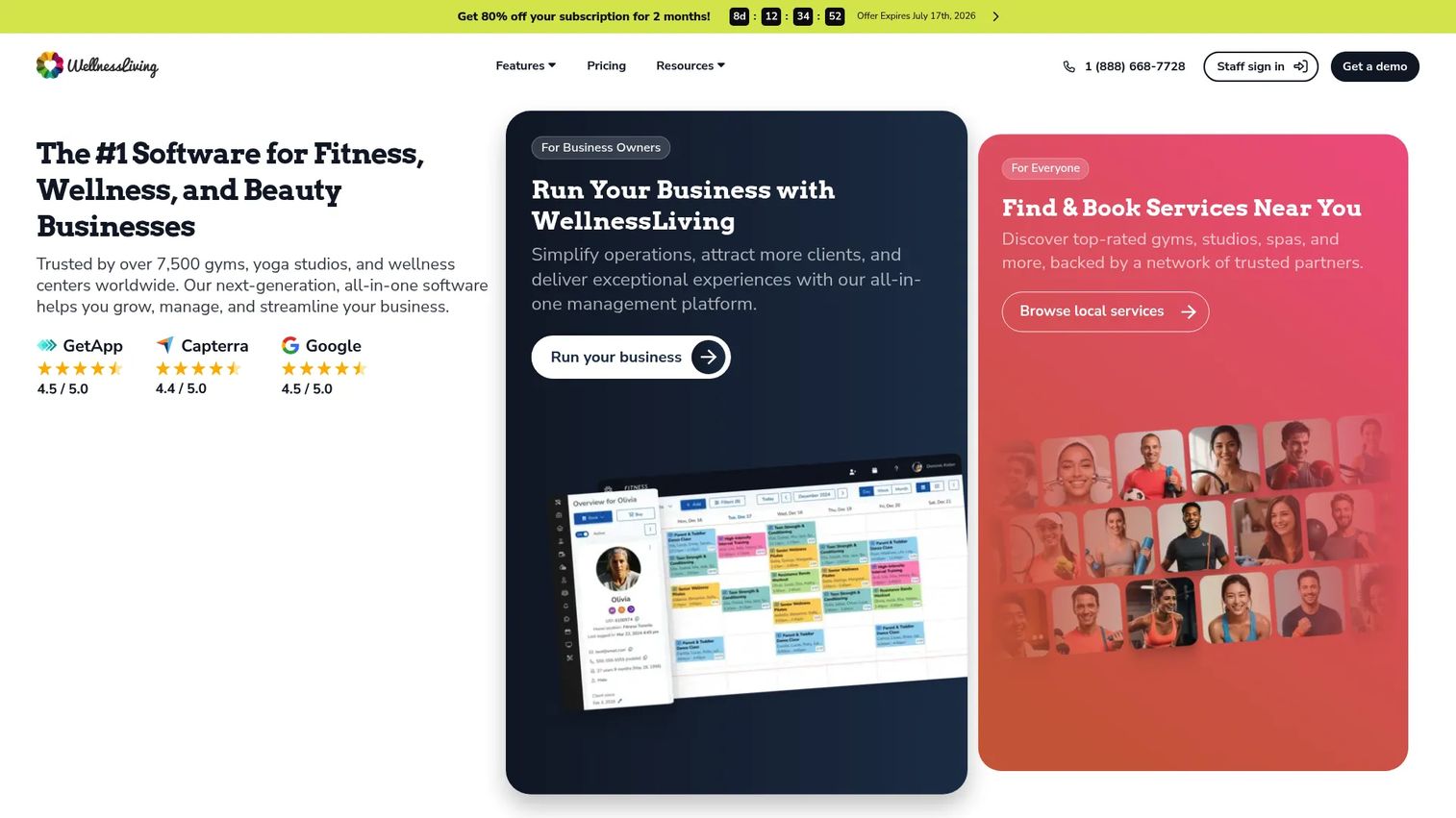
WellnessLiving is all-in-one business management software for wellness and fitness businesses, and its strength is the operations layer around booking rather than booking alone. If your business runs on memberships and packages, WellnessLiving's CRM, POS, marketing, and reporting give you the recurring-revenue tooling a bare scheduler lacks. It also supports multi-location operations, which matters once you're running more than one site.
Best for: Fitness, yoga, spa, and wellness businesses that need an all-in-one operations platform, not just a booking page.
Key strengths
- Online booking and scheduling: Self-serve booking with client check-ins and staff calendars.
- Client CRM, reminders, and retention: Automated reminders, a client CRM, and marketing tools to drive rebooking and loyalty.
- Memberships, POS, and reporting: Membership billing, point-of-sale, and reporting for businesses built on recurring revenue.
Why choose WellnessLiving: WellnessLiving fits businesses that have outgrown a simple scheduler and need memberships, deposits, and retention automation in one platform. Its integration library connects to thousands of popular apps, so it slots into an existing stack rather than replacing everything.
WellnessLiving pricing: Public pricing shows Business from $39/month, Starter at $69/month, BusinessPro from $69/month, and a quote-based Enterprise plan. Annual billing is available on the Business and BusinessPro tiers. WellnessLiving carries a 4.5/5 rating on G2.
5. ClinicSense
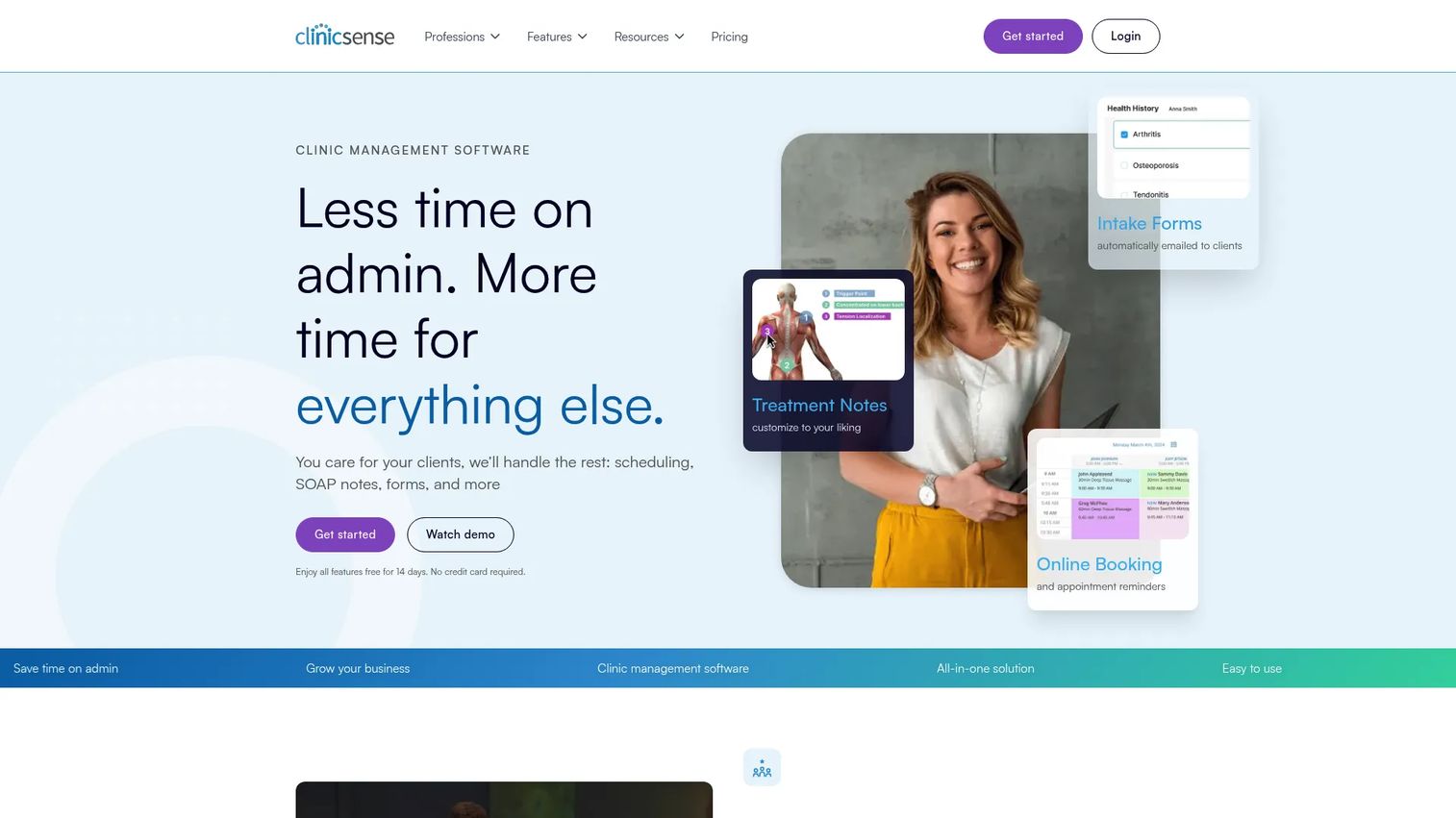
ClinicSense is practice management software for health and wellness clinics, and it stands out for putting documentation at the center. For practitioners who chart every session, SOAP notes, intake forms, and consent forms are first-class features rather than afterthoughts. It pairs that clinical foundation with online booking, automated reminders, invoicing, and client communications, so the care workflow and the scheduling workflow live in one system.
Best for: Health and wellness practices that need scheduling, charting, and client management together.
Key strengths
- SOAP notes, intake, and consent forms: Structured clinical documentation built for practitioners who need proper records.
- Online booking and automated reminders: Self-serve scheduling plus reminders that protect the calendar from no-shows.
- Reporting, invoicing, and client communications: Billing, reporting, and follow-up messaging to keep the practice organized.
Why choose ClinicSense: Choose ClinicSense when clinical documentation and client care workflows are your priority over marketing breadth or membership billing. For a clinic scheduling multiple treatment types, the charting depth is what separates it from general salon tools.
ClinicSense pricing: ClinicSense offers Lite at $39/month for new and part-time practitioners, Standard at $69/month for full-time practitioners, and Premium at $99/month for clinics and wellness centers. A 14-day free trial lets you test it first, and annual billing includes one month free.
6. Mindbody
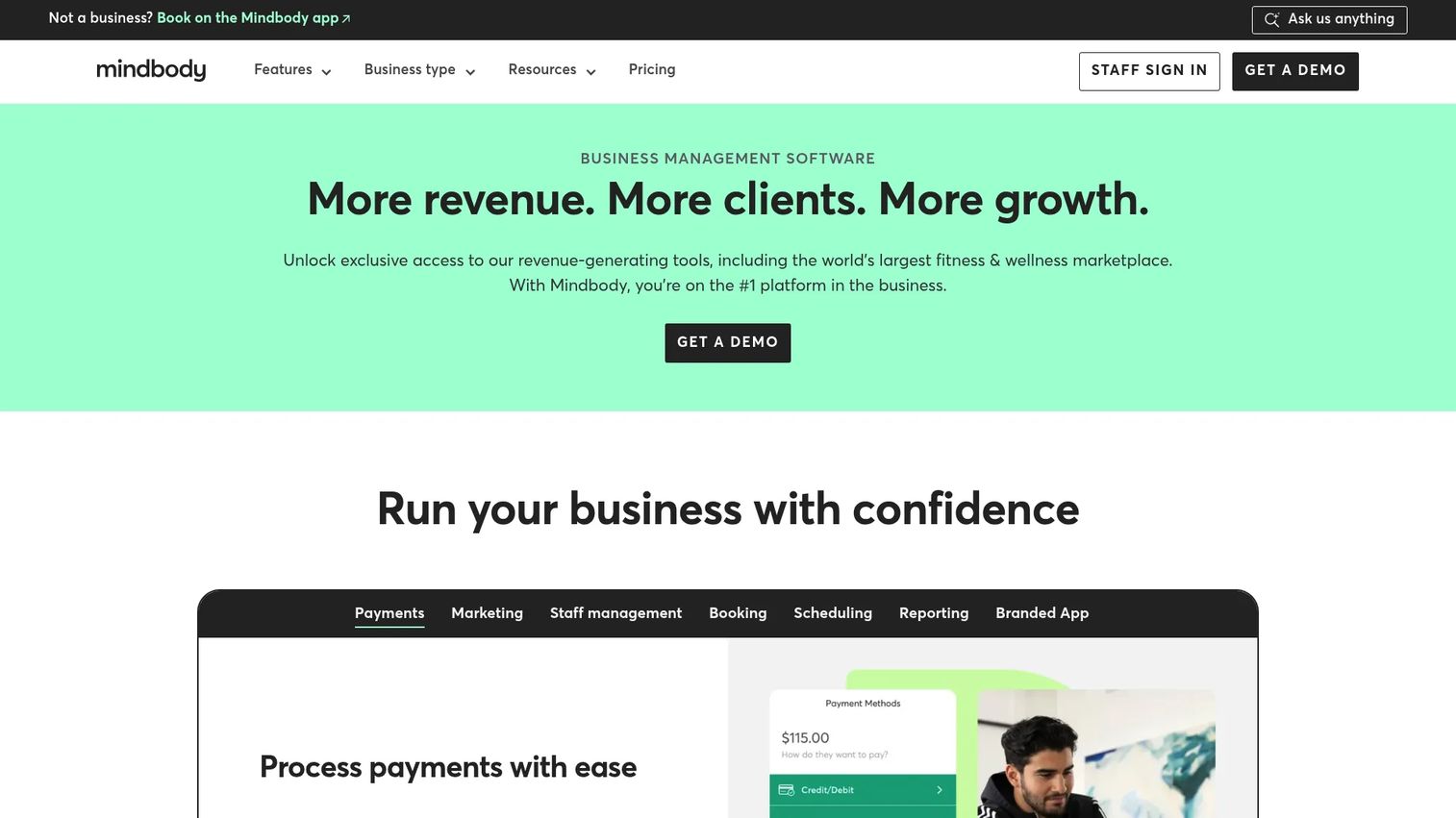
Mindbody is business management software for fitness, beauty, and wellness businesses, with one of the most established marketplace presences in the category. Its consumer app is a discovery channel where clients search, book, and buy, which gives larger studios a marketing reach a standalone scheduler can't match. Alongside that reach, it covers scheduling, payments, memberships, staff management, and reporting at scale.
Best for: Fitness, spa, and wellness operators needing an all-in-one scheduling and client management platform that scales.
Key strengths
- Booking and scheduling: Full scheduling with staff management and a consumer marketplace for client discovery.
- Payments and client management: Integrated payment processing plus client profiles and history.
- Reporting and marketing automation: Business reporting and marketing tools built for multi-location operations.
Why choose Mindbody: Mindbody fits larger studios and multi-location businesses that value marketplace reach and a widely recognized platform. If discovery through a consumer app is part of your growth plan, that reach is the differentiator; a smaller solo practice may find its scope broader than needed.
Mindbody pricing: Mindbody's public pricing starts at $79 USD/month per location, with three named plans: Starter, Accelerate, and Ultimate. Higher tiers are quote-based through sales. It carries a 3.7/5 rating on G2. The per-location model suits operations running multiple sites rather than a single treatment room.
7. Vagaro
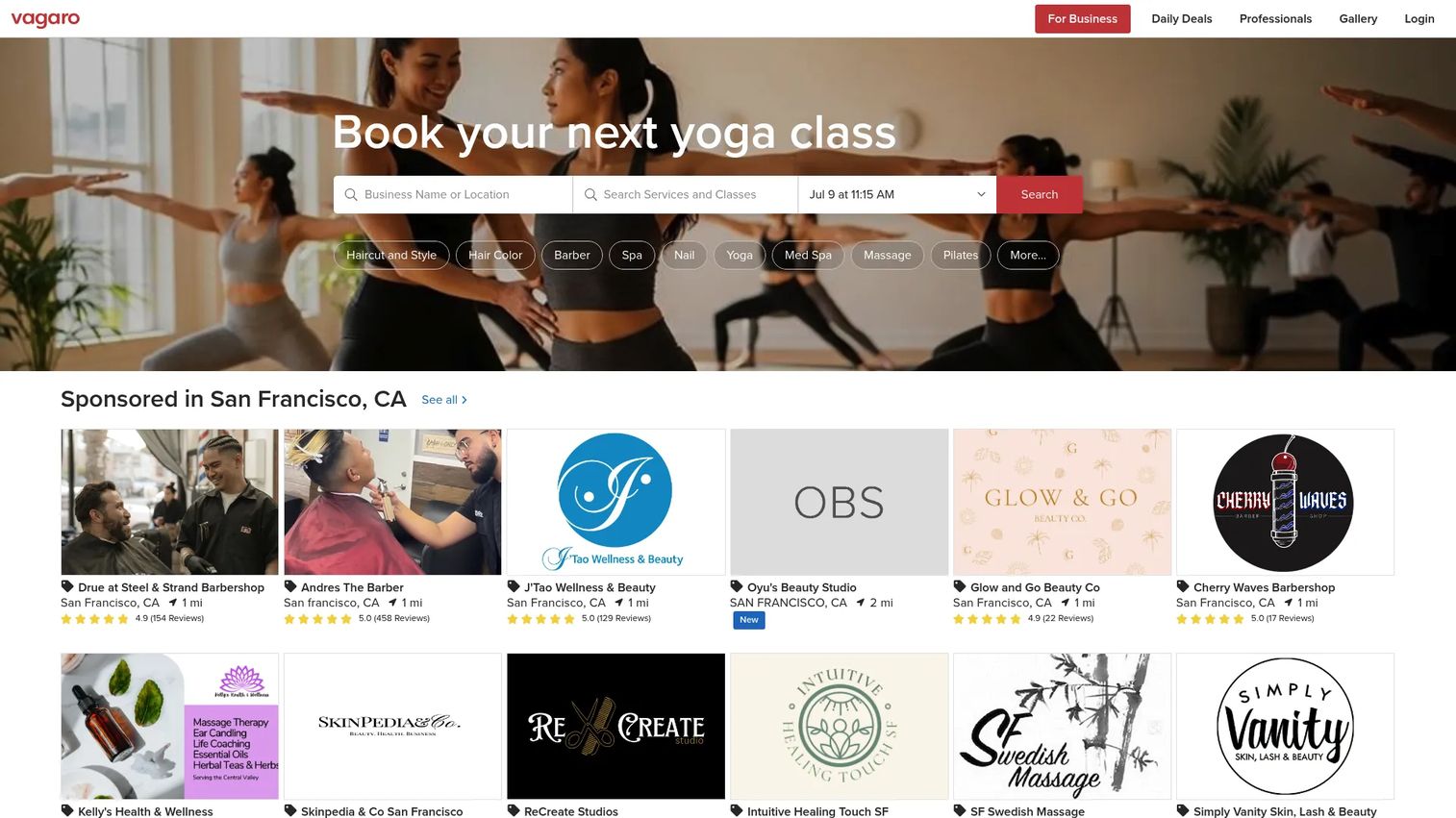
Vagaro is business software for appointment scheduling, payments, client management, and marketing across salons, spas, and service businesses. Scheduling sits at the core, with staff calendars and room-level booking that make it a strong fit for multi-provider operations. Because it's flexible across service types, a massage studio that also offers other treatments can run everything from one calendar.
Best for: Salons, spas, and wellness studios that need booking plus payments and staff calendars in one system.
Key strengths
- Online booking and calendar management: Self-serve booking with staff calendars and resource management for busy teams.
- Payments and merchant services: Integrated payment processing, deposits, and checkout with built-in merchant services.
- Client tracking, reminders, and reporting: Client profiles, automated reminders, and reporting to manage retention.
Why choose Vagaro: Vagaro suits studios that want a flexible, scheduling-first platform with strong staff and resource management and integrated payments. Its low entry price and per-calendar add-on model make it easy to start solo and add therapists as you grow. Mobile access lets staff manage the calendar from anywhere.
Vagaro pricing: Vagaro's US base subscription starts at $23.99 per month, with additional employee calendar licenses at $10 per month each. That structure keeps a solo start cheap and scales predictably as you add providers. Vagaro holds the highest rating in this list at 4.6/5 on G2.
Considerations before you switch
Before you commit, run each shortlisted tool through the checklist below. The goal is the same one that opened this guide: pick the system that reduces manual admin fastest without leaking revenue.
Booked: booking and no-show protection
Test the client-facing booking flow yourself on a phone, since that's where most bookings happen. Confirm the tool sends both email and SMS reminders, supports deposits or a card on file, and lets you set a cancellation policy. No-show prevention is the feature most likely to pay back the subscription in the first month.
Paid: payments and deposits
Check which payment processor the tool uses and what the transaction fees are, not just the monthly price. Confirm it handles deposits, prepayments, tips, and point-of-sale checkout for retail. Payment processing that's clunky at checkout costs you at exactly the wrong moment.
Documented: records and SOAP notes
If you chart, treat SOAP notes as a decision criterion, not a bonus. Verify the intake forms, consent forms, and charting match how you actually document sessions. A clinic that switches to a tool with weak documentation ends up keeping notes somewhere else, which defeats the point.
Retained: memberships, packages, and reviews
Look for retention tools that fit your model: rebooking prompts, memberships and packages, gift certificates, and automated Google reviews requests. Recurring revenue from packages and memberships is what smooths out the seasonal dips.
Setup and migration
Fast setup and clean migration decide how quickly the tool earns its place. Check whether the vendor imports your existing client list and history, and how long onboarding takes. A free trial is the cheapest way to test setup speed before you move your whole practice.
Conclusion
The right pick comes down to your business model, not a feature scoreboard. Solo and mobile practitioners who want the fastest launch lean toward PocketSuite or the free-tier flexibility of Appointy. Therapists who want a massage-native all-in-one get the most from MassageBook. Clinics that live in their charts should start with ClinicSense for its SOAP notes depth. Multi-provider studios and salons that need staff and room scheduling fit Vagaro, while membership-driven wellness businesses match WellnessLiving, and larger multi-location operations that value marketplace reach look to Mindbody.
Whichever you shortlist, judge it on one thing: how fast it closes the gap between a client's intent and a booked, paid, documented appointment. Start a free trial with your top two, run a real week of bookings through each, and keep the one that reduces your manual admin the most. The tool that gets you off the phone and back on the table is the one worth paying for.
FAQs
For solo therapists, the best massage booking software combines easy online booking, automated reminders, simple payment processing, and fast setup. PocketSuite suits therapists who run everything from their phone, MassageBook offers a massage-native all-in-one with a low entry price, and Appointy's free plan removes the risk of trying software at all. The right pick is whichever gets you booking and taking payment with the least configuration.
MassageBook and ClinicSense both include SOAP notes, and both build charting into the core workflow rather than treating it as an add-on. ClinicSense leans hardest into documentation, pairing SOAP notes with intake and consent forms for clinics that chart every session. If clinical records matter to your practice, prioritize how the notes template matches your actual documentation.
No-show prevention comes from four features working together: automated reminders by email and SMS, booking confirmations, deposits or a card on file at booking, and a clear cancellation policy. Reminders handle the honest forgetters, while deposits and policies give clients a reason not to drop late. Most tools in this guide, including MassageBook, WellnessLiving, and Vagaro, cover all four.
Yes. Most massage scheduling software includes payment processing that handles card capture, deposits, prepayments, tips, and point-of-sale checkout for retail products. Vagaro and Mindbody include built-in merchant services, while PocketSuite bundles invoicing and POS. Check the per-transaction fee, not just the monthly price, since that's where payment costs actually add up.
Yes. Tools built for multi-provider operations offer staff management and resource management, including shared calendars, staff-level assignment, and room or table scheduling. Vagaro, WellnessLiving, and Mindbody all handle multiple staff and resources, and several support multi-location businesses. These features matter most once you have two or more therapists sharing space.
Yes. WellnessLiving, PocketSuite, Mindbody, and Vagaro all support memberships and packages, which turn one-time clients into recurring revenue. Packages prepay a block of sessions, while memberships bill on a schedule, and both smooth out seasonal booking dips. If recurring revenue is central to your model, weight this capability heavily.
A clinic switching software should prioritize migration help, setup speed, records depth, and workflow fit. Confirm the vendor imports your existing client list and SOAP notes history, check how long onboarding takes, and run a free trial with real bookings before committing. The best move is testing your top two on a live week, then keeping the one that reduces manual admin the most, whether that's ClinicSense for charting or a broader corporate on-site and multi-location platform for larger operations.