Sales closes the order. The customer expects prompt fulfillment. Then operations finds the wrong SKU, an expired price, or a missing approval.
That broken handoff affects more than processing speed. It creates invoice disputes, fulfillment delays, and customer escalations after the commercial work is done.
Order entry software addresses this gap by validating order details before they reach inventory or production. This matters for distributors handling emailed purchase orders and manufacturers managing customer specific catalogs.
Dataintelo valued the global order entry software market at $2.99 billion in 2025. Its 2026 report projects a 7.8% compound annual growth rate through 2034.
The best system protects the order to cash cycle by preventing bad data from moving downstream.
What's inside
This guide compares 15 order entry software tools for sales, RevOps, customer service, finance, operations, and fulfillment teams.
We assessed each product using these criteria:
- Order capture: Email, PDF, EDI, POS, portal, or sales rep input
- Validation controls: Catalog rules, pricing, inventory checks, and approvals
- Operational fit: ERP integration and fulfillment handoff quality
- Commercial evidence: Verified pricing and review signals
The list covers ERP platforms, document automation, retail systems, and B2B ordering tools. Use it to match the software category to your order source and operating model.
TL;DR
- Best ERP native options: Sage 100, SAP Business ByDesign, Business Central, NetSuite, and Infor keep orders close to finance and inventory
- Best for EDI orders: TrueCommerce supports trading partner connectivity and structured document exchange
- Best for retail operations: Cin7 Core, Brightpearl, Square for Retail, ERPAG, and Unicommerce connect orders with stock
- Best for document automation: Conexiom and Esker convert purchase orders into validated ERP data
- Best for sales order control: Cavallo applies workflow rules, while Order Sender supports field order capture
What is order entry software?
Order entry software captures customer orders, validates their details, applies business rules, and sends clean data to downstream systems.
An order entry system sits between the source of an order and the teams responsible for delivering it. Sources can include ecommerce stores, point of sale terminals, sales representatives, customer calls, distributor portals, EDI files, or emailed documents.
The system usually captures:
- Customer and billing details
- Product SKUs and quantities
- Contract prices and discounts
- Shipping and tax information
- Approval and credit status
- Requested delivery dates
- Warehouse or production requirements
- Customer specific instructions
After order capture, the software checks the data against product catalogs, pricing rules, inventory availability, and approval thresholds. Accepted records can then move into ERP, accounting, warehouse, production, or order fulfillment software.
This workflow supports automated order processing without removing the controls that protect margins and delivery commitments.
Key capabilities to look for
- Multi channel order capture
- Product catalog management
- Customer specific pricing
- Approval workflow routing
- ERP and inventory synchronization
- Order status tracking
- Exception management
- Searchable audit history
Order entry software differs from adjacent categories. An ERP usually acts as the financial and operational system of record. Order management software covers the wider lifecycle, including allocation, fulfillment, shipping, returns, and customer updates.
EDI handles structured data exchange between trading partners. Document automation extracts order data from PDFs, spreadsheets, emails, and other unstructured files.
Some order entry programs cover one of these functions. Others combine several. Start with the source of your orders, then evaluate the downstream handoff.
When to use order entry software
Capture orders without rekeying customer data
Use order entry software when employees repeatedly copy orders from email, PDF files, spreadsheets, calls, or portals. Multi channel order ingestion reduces duplicate work and gives each team a consistent record.
This use case is common in distributor order entry and order entry software for manufacturing. Both environments often combine customer documents with complex catalog data.
Enforce pricing and catalog rules before fulfillment
Apply automated order validation when incorrect SKUs, discounts, or quantities regularly reach operations. The system can compare each line against approved catalogs, contract pricing, inventory, and minimum quantities.
Approval workflows also route unusual discounts or credit issues to the right owner. That keeps risky orders away from warehouse or production queues.
Hand clean orders to operational systems
Sales, customer service, finance, and operations need the same accepted order record. ERP integration removes another rekeying step and preserves field mappings across the handoff.
Clean data helps order fulfillment software manage picking, packing, production, shipping, and invoicing. It also gives customer service a reliable order status when buyers ask for updates.
Order entry software comparison
The table below compares 15 order entry systems by their strongest use case, differentiator, pricing, and G2 rating.
These tools solve different problems. ERP platforms keep orders close to accounting and supply chain records. EDI products handle structured partner documents, while retail systems connect order capture with POS and inventory.
| # | Product | Best for | Key differentiator | Pricing | G2 rating |
|---|---|---|---|---|---|
| 1 | Sage 100 | Established small and midsize businesses | Integrated accounting, inventory, manufacturing, and distribution | Custom pricing | 3.7/5 |
| 2 | SAP Business ByDesign | Midmarket ERP standardization | Cloud ERP across finance, sales, projects, and supply chain | Custom pricing | 4.0/5 |
| 3 | Microsoft Dynamics 365 Business Central | Microsoft centered businesses | ERP workflows connected with Microsoft 365 | From $8 per user monthly, paid yearly | 4.0/5 |
| 4 | Oracle NetSuite | Growing multichannel companies | Unified finance, commerce, inventory, and fulfillment | Custom pricing | 4.1/5 seller average |
| 5 | Infor CloudSuite Distribution | Wholesale distributors | Distribution specific workflows and branch inventory | Custom pricing | 4.0/5 |
| 6 | Cin7 Core | Product sellers with complex inventory | Connected order, warehouse, and manufacturing control | From $349 monthly | 4.1/5 seller average |
| 7 | TrueCommerce EDI Solutions | Trading partner order exchange | EDI network with ERP connectivity | From £75 monthly | 4.4/5 |
| 8 | Square for Retail | Stores and small retailers | POS orders connected with retail inventory | Free plan, Plus from $49 monthly per location | N/A |
| 9 | ERPAG | Small manufacturers and distributors | Affordable ERP and manufacturing workflows | From $49 monthly | 4.8/5 |
| 10 | Brightpearl | Multichannel retailers and wholesalers | Retail operations with accounting and automation | Custom pricing | 4.5/5 |
| 11 | Cavallo | Wholesale distribution teams | ERP connected margin and exception controls | Custom pricing | 3.5/5 |
| 12 | Order Sender | Field sales and wholesale ordering | Offline mobile capture with digital catalogs | From €5.60 per user monthly, billed annually | N/A |
| 13 | Unicommerce | Ecommerce and omnichannel operations | Marketplace, warehouse, returns, and shipping workflows | Custom pricing | 4.5/5 |
| 14 | Conexiom | Document heavy manufacturers and distributors | Purchase order automation with ERP integration | Custom pricing | 4.6/5 |
| 15 | Esker | Enterprise order to cash automation | AI powered extraction and workflow orchestration | Custom pricing | 4.4/5 |
Best 15 tools for order entry software
1. Sage 100
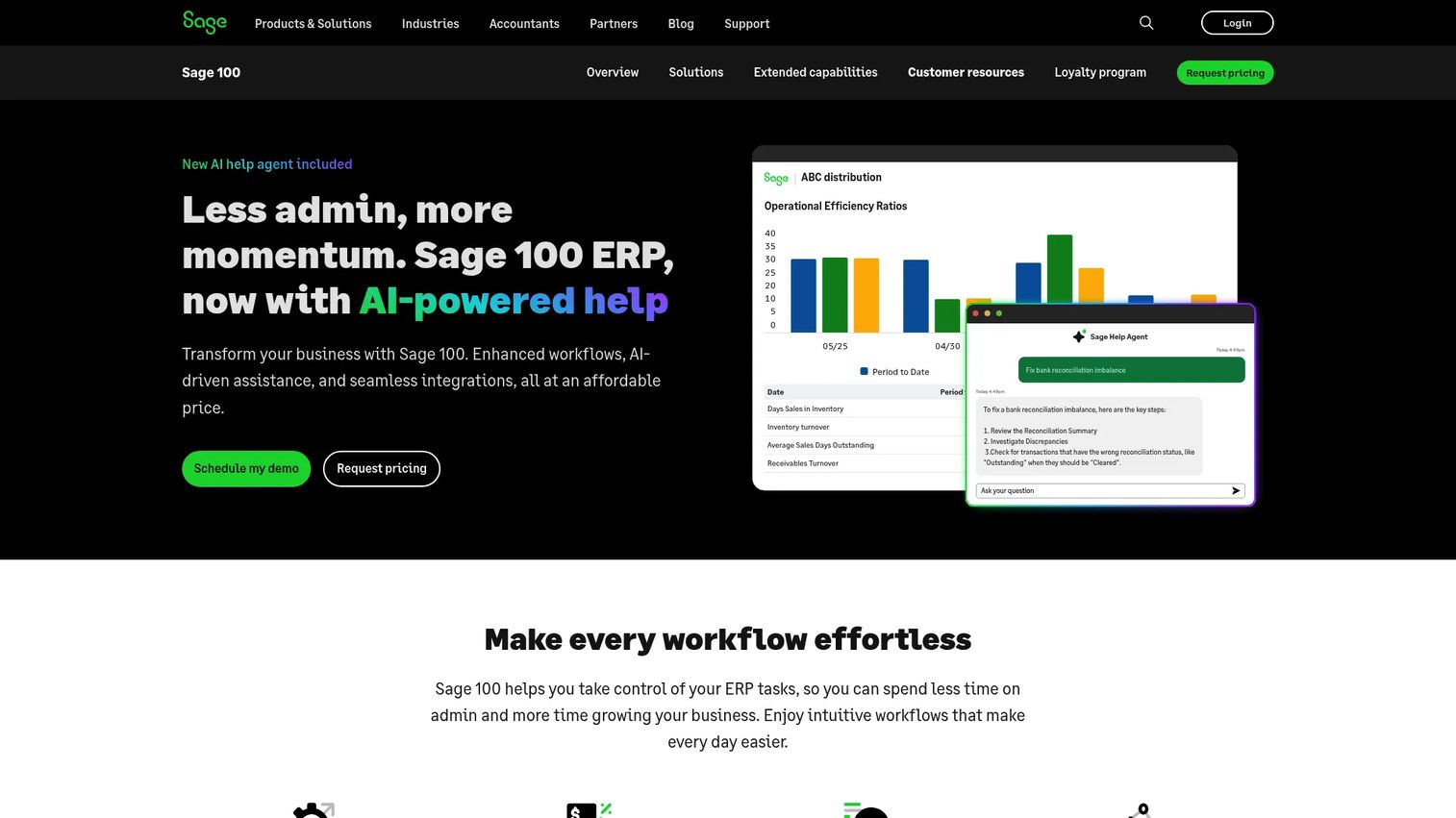
Sage 100 is an ERP and business management platform for small and midsize companies. It connects sales order entry with inventory, purchasing, accounting, warehouse management, and manufacturing.
The platform also supports returns, bills of materials, and lot or serial tracking. This breadth suits established distributors and manufacturers that want orders inside their financial workflow.
Best for: Established US businesses needing sales order entry connected with accounting and inventory.
Key features
- Sales order processing
- Inventory and warehouse management
- Purchasing workflows
- Lot and serial tracking
- Financial reporting
Why choose Sage 100: Choose it when your team wants a mature ERP rather than a separate order capture layer. It also fits companies working with Sage implementation partners.
Sage 100 pricing: Custom pricing. Sage prices Essentials, Advanced, and Complete by organizational size and selected capabilities.
G2 rating: 3.7/5
2. SAP Business ByDesign
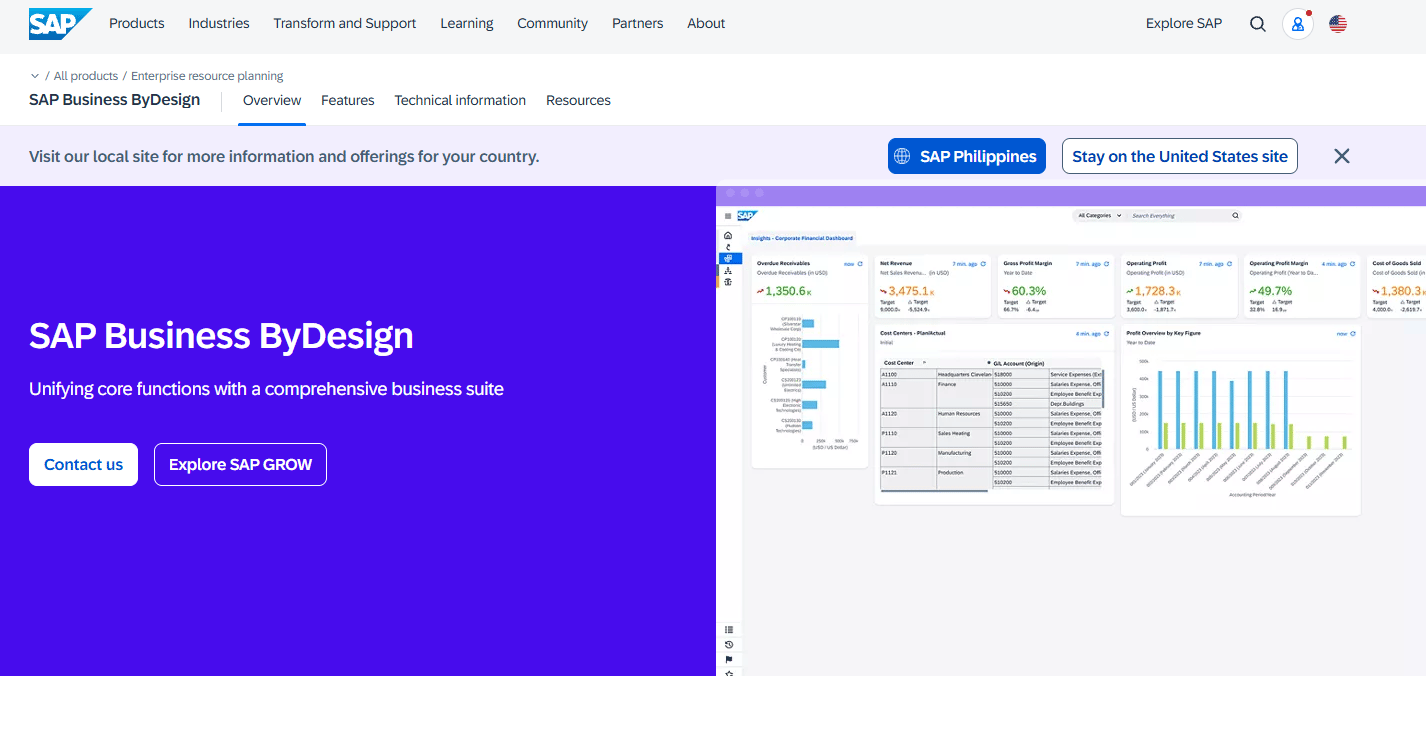
SAP Business ByDesign is a cloud ERP for fast growing and midsize companies. It covers finance, customer management, human resources, projects, manufacturing, and wholesale distribution.
Its integrated structure helps standardize sales order processing across departments. Reporting and analytics give managers visibility into the wider order to cash workflow.
Best for: Midmarket businesses standardizing order entry across sales, finance, and supply chain operations.
Key features
- Sales order management
- Finance and accounting
- Manufacturing workflows
- Wholesale distribution
- Operational analytics
Why choose SAP Business ByDesign: It fits companies seeking one cloud ERP for several business functions. Buyers wanting only a lightweight order entry program may prefer a narrower product.
SAP Business ByDesign pricing: Custom pricing. Subscription and implementation costs reflect users, business scope, and deployment partner.
G2 rating: 4.0/5
3. Microsoft Dynamics 365 Business Central
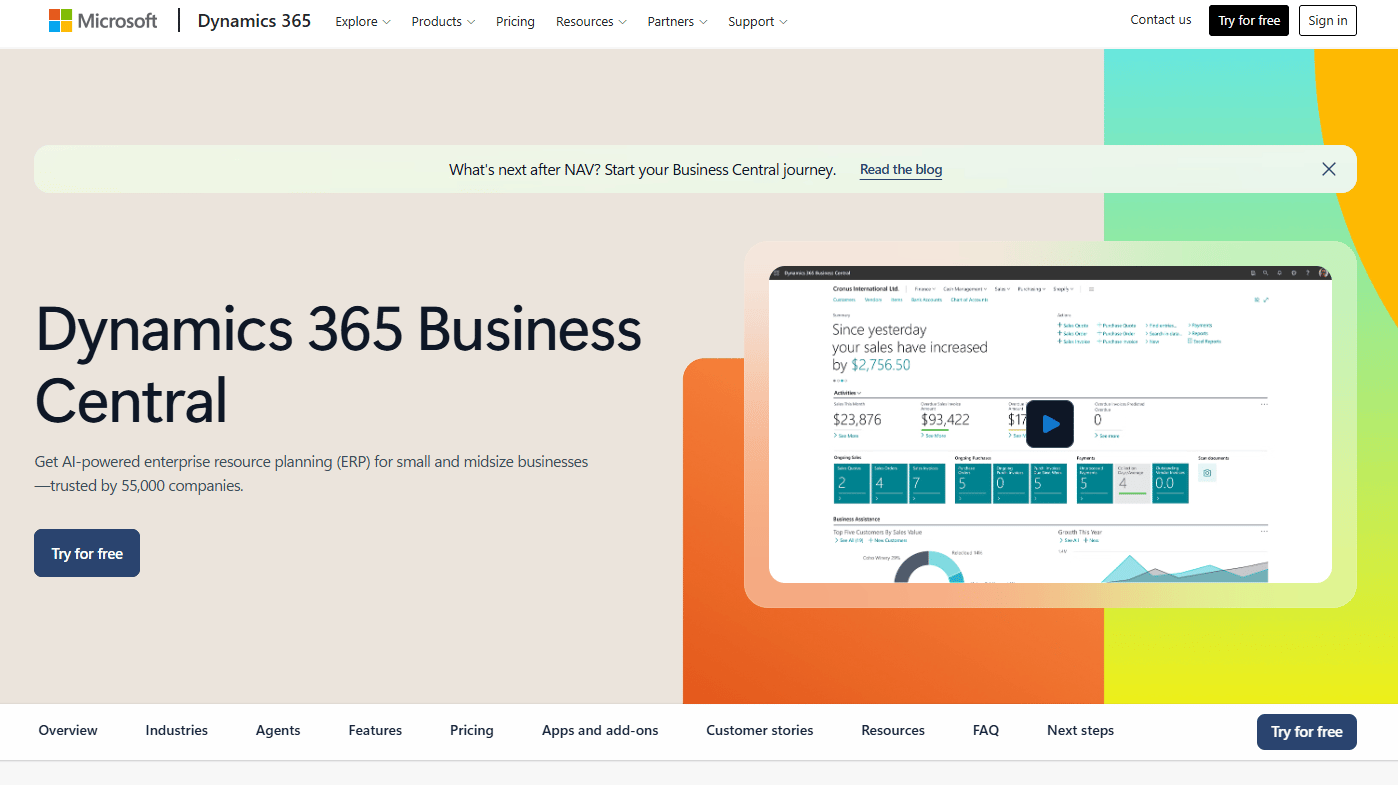
Microsoft Dynamics 365 Business Central is an ERP for small and midsize businesses. It connects sales orders with finance, purchasing, inventory, warehouse management, manufacturing, and services.
Microsoft 365 connections support teams already working in Excel, Outlook, or Teams. Copilot and automated workflows add assistance without replacing core order controls.
Best for: Microsoft centered teams needing order entry tied to financial and supply chain records.
Key features
- Sales and purchasing workflows
- Inventory and warehouse management
- Financial management
- Manufacturing and service management
- Microsoft 365 connections
Why choose Microsoft Dynamics 365 Business Central: It suits teams that want sales order entry inside a familiar Microsoft environment. A large partner network also supports implementation and customization.
Microsoft Dynamics 365 Business Central pricing: Team Members starts at $8 per user monthly, paid yearly. Essentials costs $80, while Premium costs $110.
A 30 day trial is available.
G2 rating: 4.0/5
4. Oracle NetSuite
Oracle NetSuite is a cloud ERP covering finance, inventory, order management, supply chain, CRM, and ecommerce. Global management features also support multicurrency operations, tax handling, and consolidation.
The platform fits growing organizations that have outgrown disconnected accounting or inventory tools. Its order management capabilities connect commercial activity with fulfillment and financial posting.
Best for: Scaling companies managing orders across locations, subsidiaries, or sales channels.
Key features
- Order and inventory management
- Warehouse and supply chain control
- Financial management
- Global business management
- CRM and ecommerce
Why choose Oracle NetSuite: Choose it when order entry must sit within a broader ERP program. Its operational range fits companies managing multichannel or multisubsidiary complexity.
Oracle NetSuite pricing: Custom pricing. Annual cost includes the core platform, user licenses, optional modules, and implementation.
G2 rating: 4.1/5 seller average
5. Infor CloudSuite Distribution
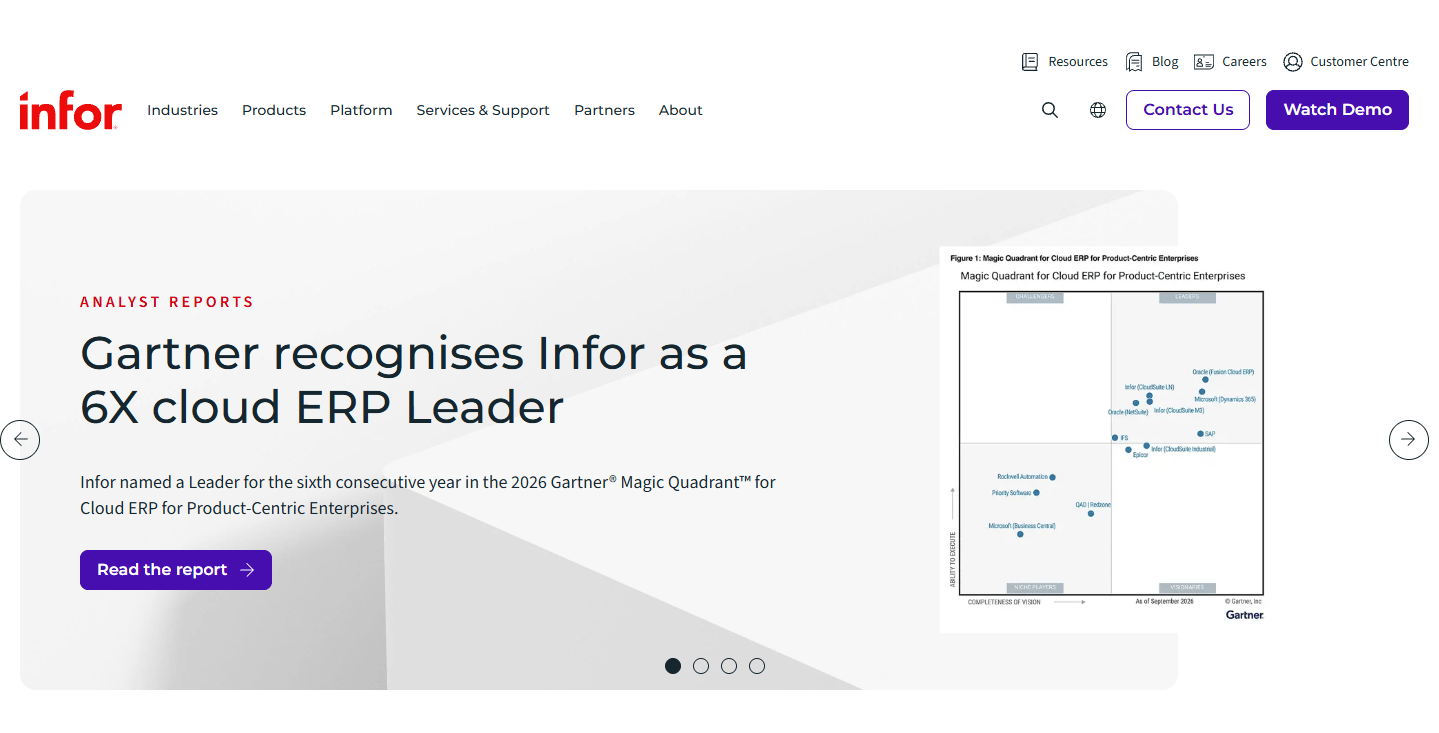
Infor CloudSuite Distribution is a cloud ERP built for wholesale distributors. It combines order management with purchasing, warehouse operations, inventory control, analytics, and multisite management.
Industry focused workflows help teams account for branch stock and supply chain planning. Role based workspaces give different functions access to relevant information.
Best for: Distributors with branch operations, inventory heavy orders, and complex fulfillment workflows.
Key features
- Omnichannel order management
- Inventory control
- Warehouse operations
- Purchasing workflows
- Multisite management
Why choose Infor CloudSuite Distribution: It offers distribution depth that broad business tools may lack. Evaluate it when availability and branch inventory shape every order promise.
Infor CloudSuite Distribution pricing: Custom pricing. Cost reflects users, selected modules, implementation scope, and distribution complexity.
G2 rating: 4.0/5
6. Cin7 Core
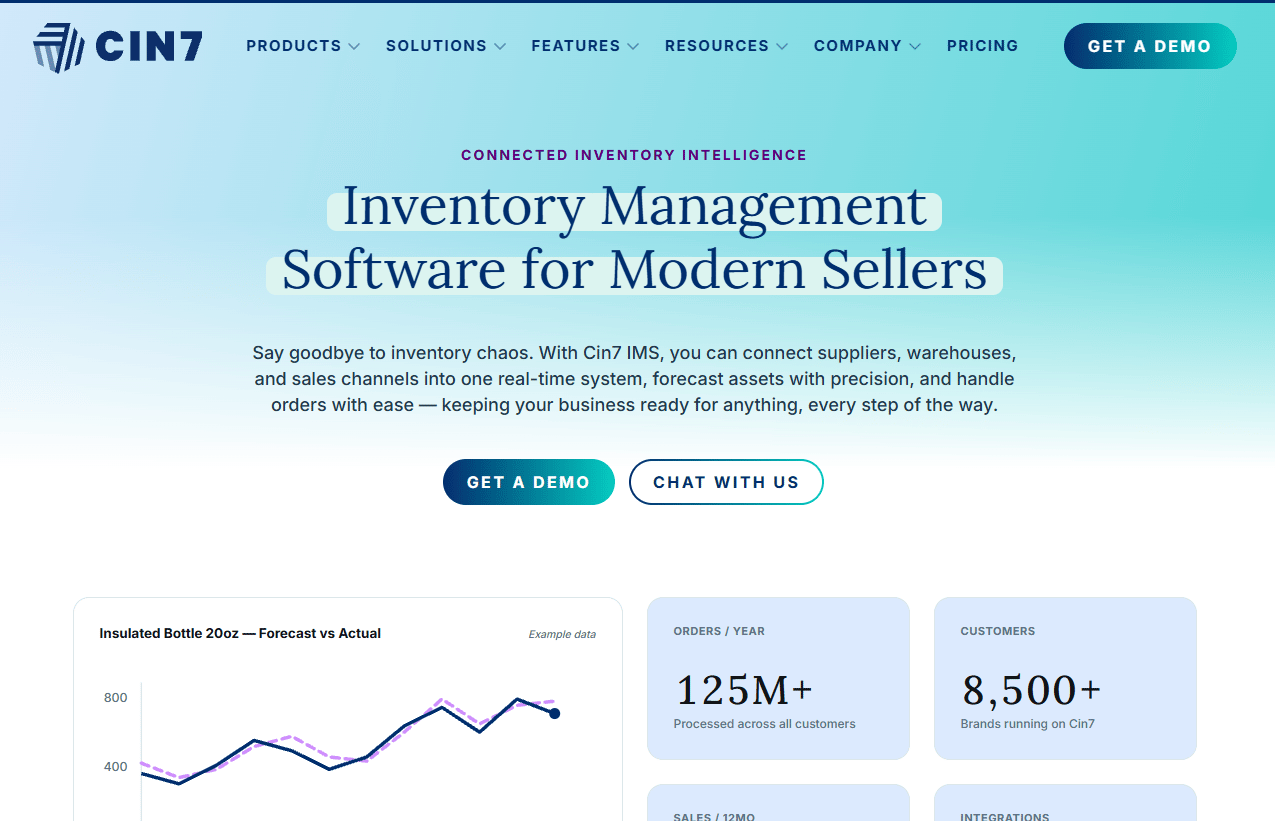
Cin7 Core connects inventory, orders, warehouse activity, manufacturing, POS, and B2B ecommerce. Product sellers can manage stock and sales without adopting a broad enterprise ERP.
Its B2B portal supports customer ordering, while accounting connections pass accepted data downstream. Automated reorder points and demand forecasting add purchasing context.
Best for: Manufacturers, wholesalers, and ecommerce sellers needing inventory first order accuracy.
Key features
- Multichannel order management
- Inventory and warehouse control
- B2B ecommerce portal
- Manufacturing management
- Accounting connections
Why choose Cin7 Core: It fits businesses that need stock context before accepting orders. The platform also covers purchasing and production alongside order capture.
Cin7 Core pricing: Standard costs $349 monthly. Pro costs $599, while Advanced costs $1,199.
G2 rating: 4.1/5 seller average
7. TrueCommerce EDI Solutions
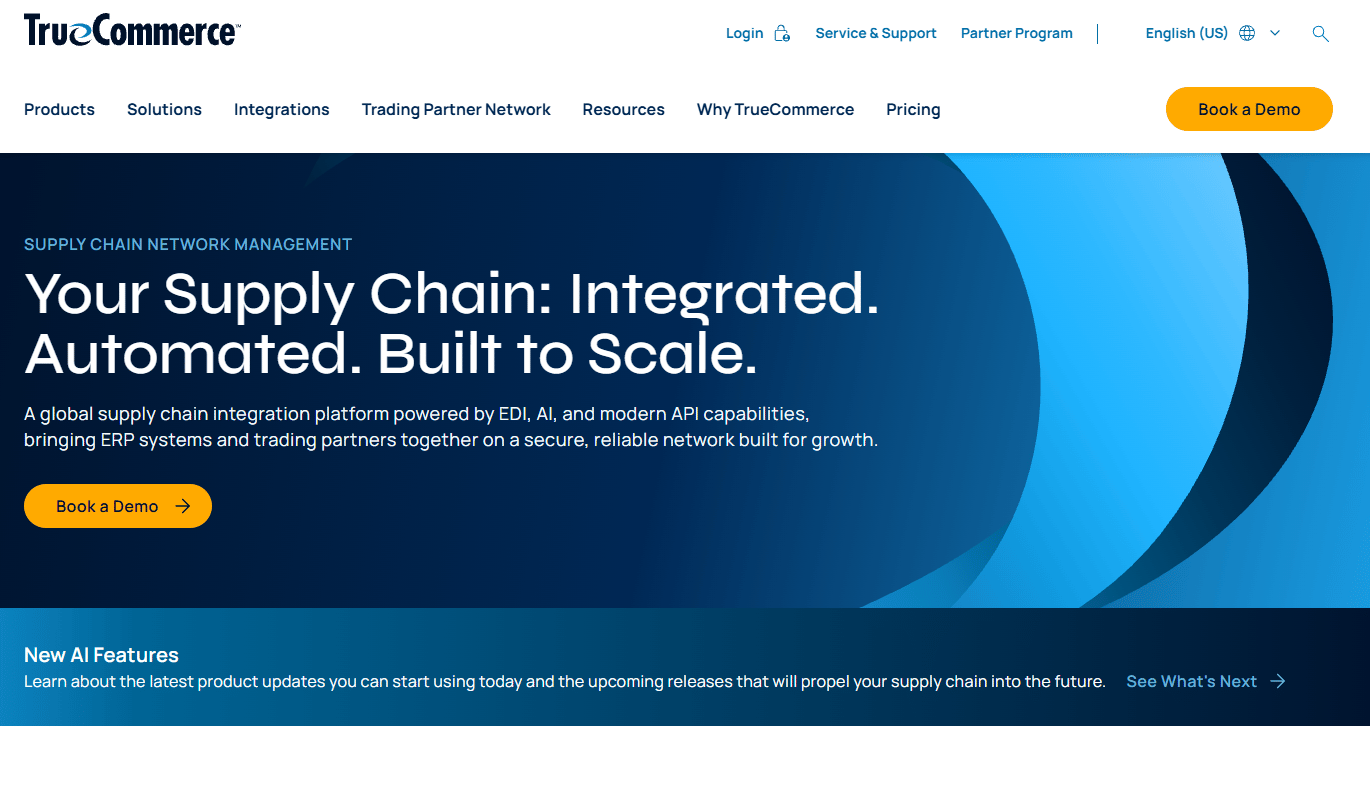
TrueCommerce EDI Solutions connects companies with retailers, suppliers, and other trading partners. It supports EDI exchange, ERP connectivity, partner onboarding, API workflows, and managed services.
The platform handles structured orders alongside invoices and shipping documents. Its supplier portal can extend digital exchange to partners without full EDI capability.
Best for: Businesses receiving structured orders from retailers, suppliers, or distribution partners.
Key features
- EDI order automation
- ERP connectivity
- Trading partner onboarding
- Supplier portal
- Managed EDI services
Why choose TrueCommerce EDI Solutions: Pick it when trading partner connectivity drives the order entry problem. Sales representative forms and retail POS workflows require a different category.
TrueCommerce EDI Solutions pricing: UK plans start at £75 monthly for Hub. Essentials starts at £379, while Advanced starts at £749.
G2 rating: 4.4/5
8. Square for Retail
Square for Retail combines POS order capture with payments, inventory, vendor management, and online selling. It gives retailers a shared view of store and digital transactions.
Purchase order tools support stock replenishment, while reporting covers sales and cost of goods sold. Customer profiles and employee permissions extend the retail workflow.
Best for: Small and midsize retailers connecting in store orders with inventory and payments.
Key features
- Retail POS
- Inventory tracking
- Purchase order management
- Vendor management
- Online sales connection
Why choose Square for Retail: It fits retailers that prioritize store operations and straightforward inventory control. Manufacturers with production requirements need deeper planning capabilities.
Square for Retail pricing: The Free plan costs $0 per location monthly. Plus costs $49, while Premium costs $149 per location monthly.
Plus and Premium include 30 day trials.
9. ERPAG
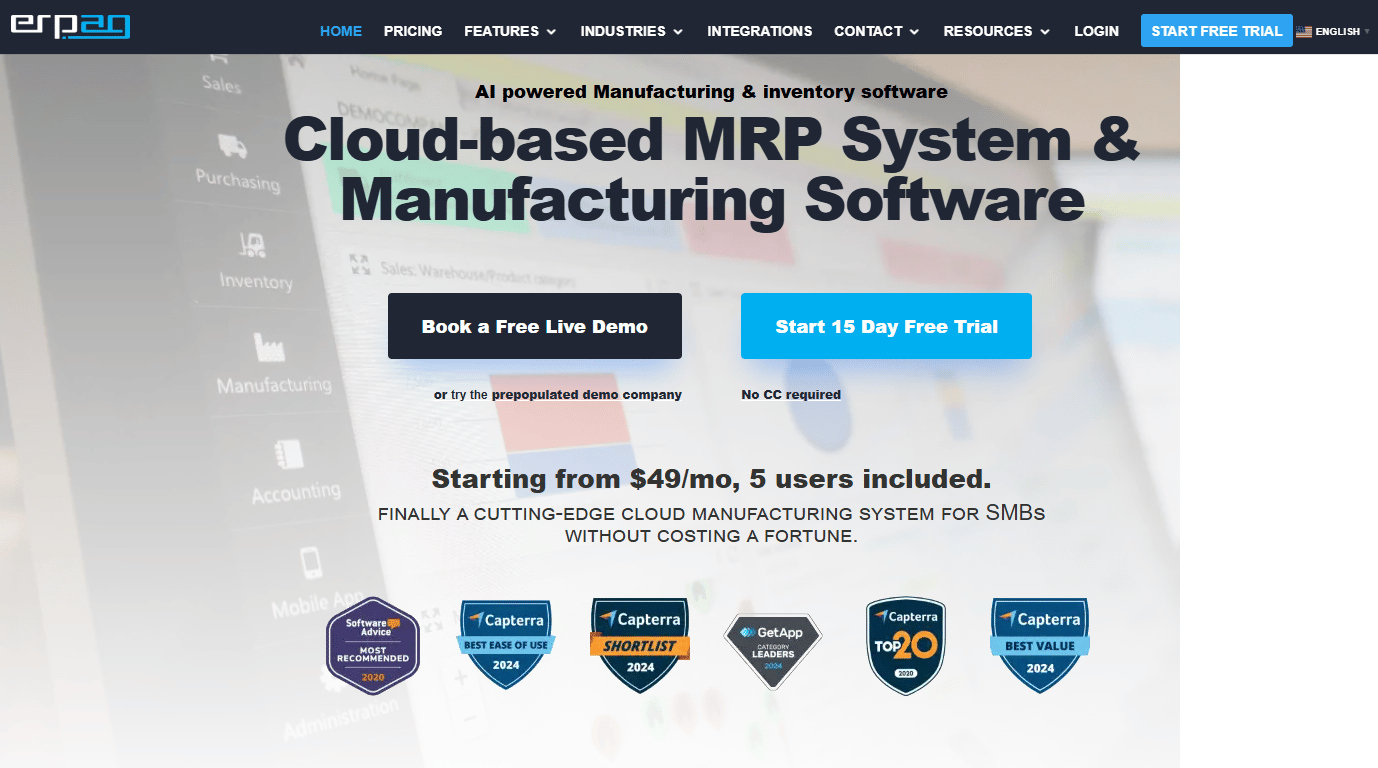
ERPAG is a cloud ERP and manufacturing platform for small and midsize businesses. It connects sales orders with inventory, purchasing, production, and barcode workflows.
Manufacturers can manage multilevel bills of materials and serial tracking. Connections include accounting and ecommerce products.
Best for: Smaller manufacturers and distributors needing accessible ERP and manufacturing controls.
Key features
- Sales order entry
- Manufacturing management
- Inventory tracking
- Barcode workflows
- Multiwarehouse support
Why choose ERPAG: It brings manufacturing order processing software within reach of smaller teams. The product suits buyers that need more than inventory without enterprise implementation scope.
ERPAG pricing: Basic starts at $49 monthly, then costs $99 after three months. Professional costs $99, while Advanced costs $199 monthly.
A 15 day trial is available.
G2 rating: 4.8/5
10. Brightpearl
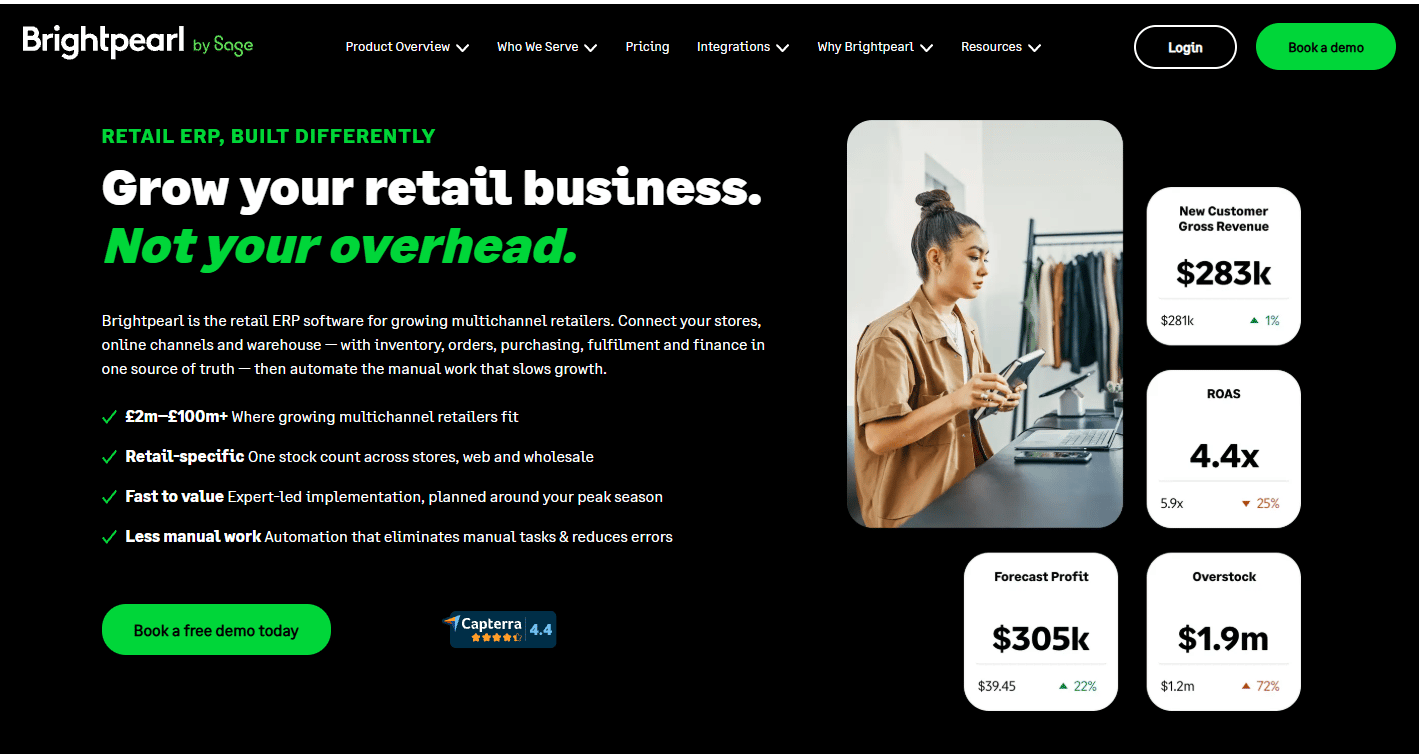
Brightpearl is a retail operations platform for multichannel merchants. It combines order management with inventory planning, purchasing, warehouse tasks, accounting, and customer records.
Retail automation helps high volume sellers coordinate activity across channels. Reporting provides a connected view of commerce operations.
Best for: Fast growing retailers and wholesalers managing high order volumes across multiple channels.
Key features
- Multichannel order management
- Inventory planning
- Warehouse management
- Retail accounting
- Reporting and analytics
Why choose Brightpearl: It fits merchants that need B2B order management connected with stock and financial posting. Its retail focus is more specific than a general ERP.
Brightpearl pricing: Custom pricing. Cost reflects order volume, sales channels, users, and implementation, with unlimited users included.
G2 rating: 4.5/5
11. Cavallo
Cavallo provides order management and profitability software for wholesale distributors. It adds workflow automation, margin controls, warehouse functions, invoicing, and payment collection around ERP processes.
The system helps teams review exceptions before fulfillment receives the order. Customer portals can also support B2B order capture.
Best for: Wholesale distributors seeking stronger order controls around existing ERP workflows.
Key features
- Sales order automation
- Workflow rules
- Margin protection
- Exception handling
- ERP connections
Why choose Cavallo: Choose it when pricing errors and order exceptions create margin risk. Its value sits in controlling accepted orders before operations inherits them.
Cavallo pricing: Custom pricing. Cost reflects the ERP environment, users, selected modules, and implementation scope.
G2 rating: 3.5/5
12. Order Sender
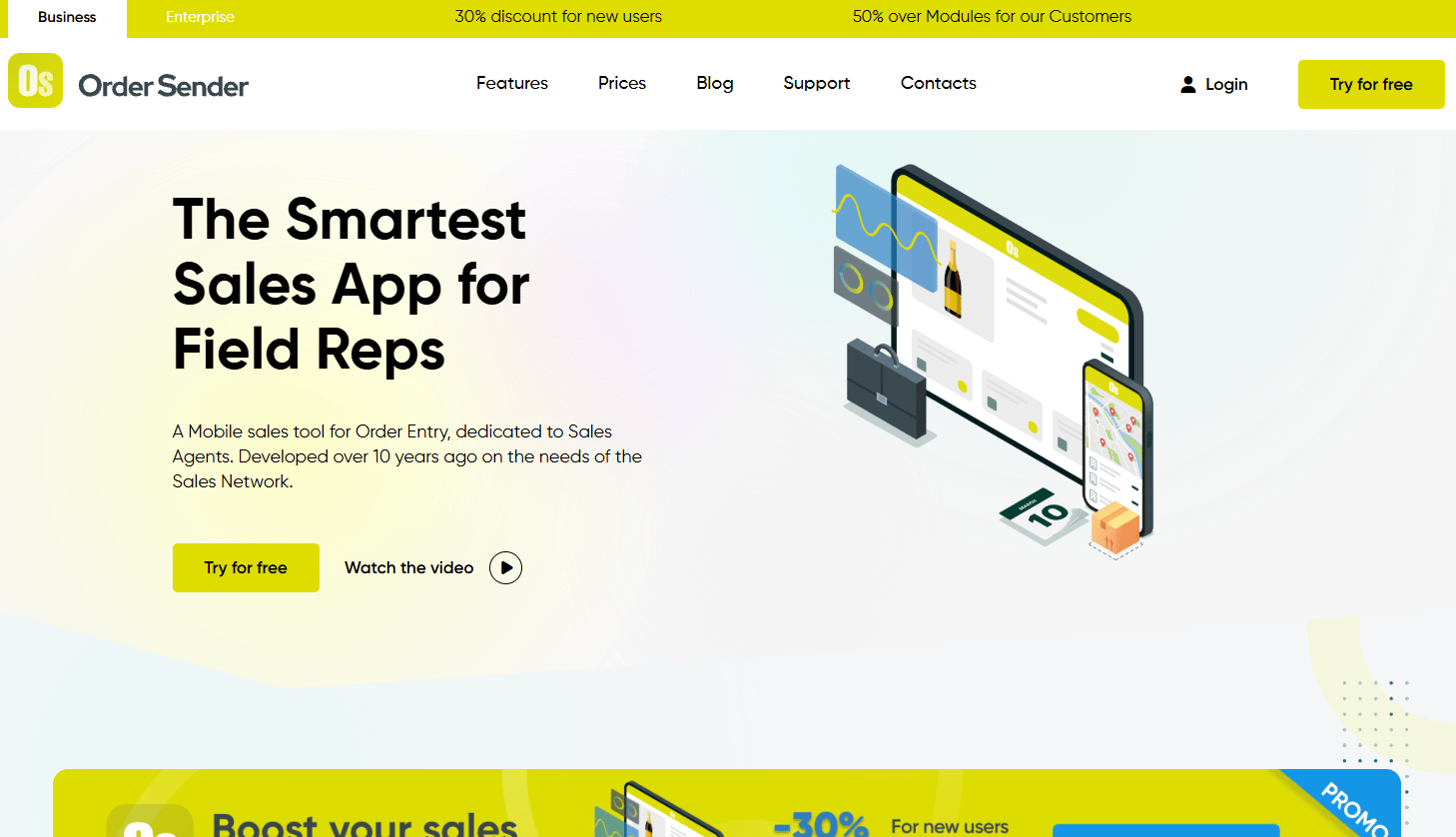
Order Sender gives field representatives mobile and web tools for collecting customer orders. Digital catalogs, customer data, offline access, and product variants support accurate sales activity away from the office.
Orders can move through ERP, API, or CSV connections. The software also supports B2B customer ordering and commission tracking.
Best for: Field sales teams capturing orders through customer specific catalogs.
Key features
- Mobile order entry
- Offline order capture
- Digital product catalogs
- B2B customer ordering
- ERP and API connections
Why choose Order Sender: It addresses the sales handoff before back office entry begins. Reps can submit structured orders without relying on email or spreadsheets.
Order Sender pricing: Basic starts at €5.60 per user monthly with annual payment. A 15 day trial is available.
13. Unicommerce
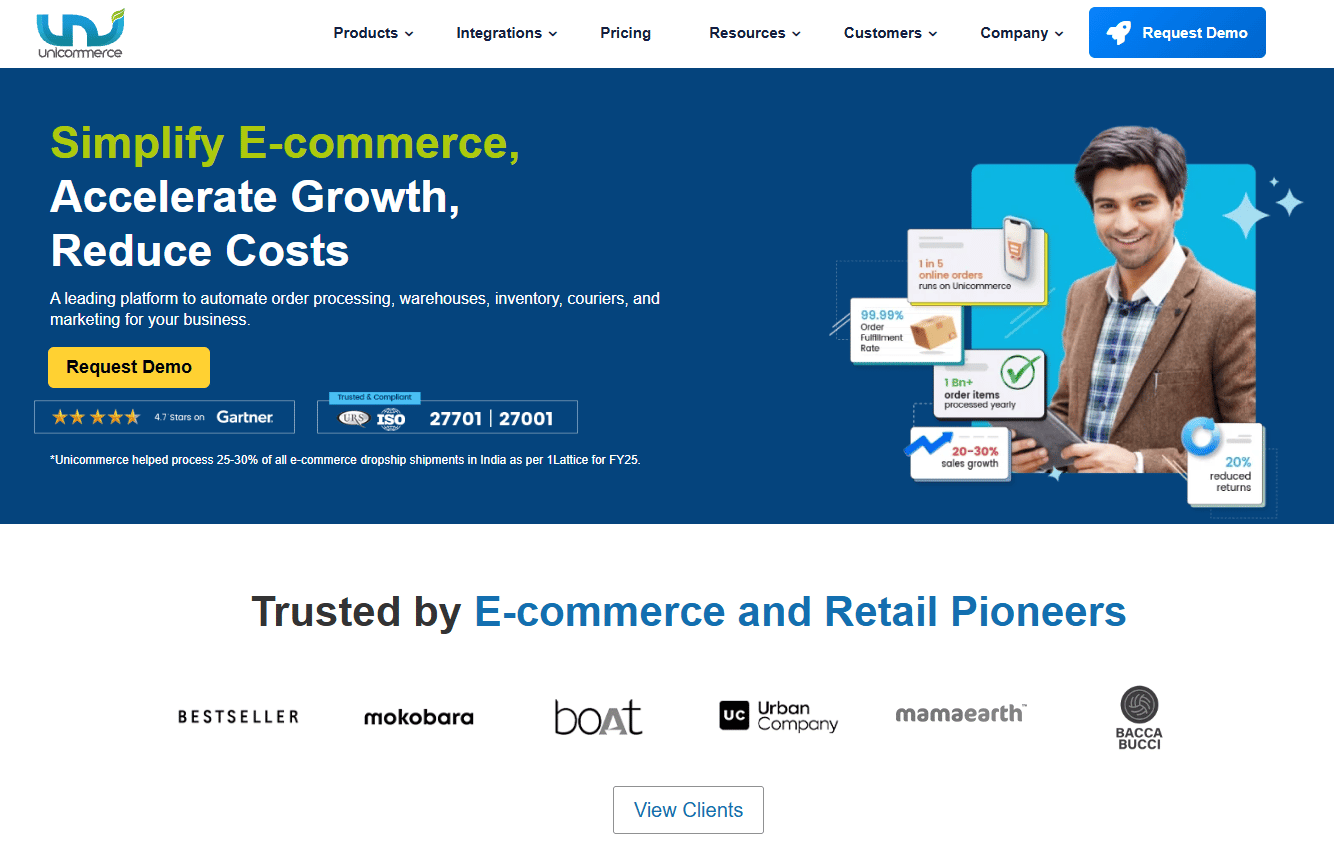
Unicommerce supports ecommerce order, inventory, warehouse, shipping, and returns operations. Brands can coordinate marketplace activity with stock across warehouses and other sales channels.
Automated fulfillment and courier connections move accepted orders toward dispatch. Dashboards provide visibility into operational activity and exceptions.
Best for: Ecommerce brands and omnichannel retailers managing marketplaces, warehouses, shipping, and returns.
Key features
- Marketplace order synchronization
- Inventory management
- Warehouse operations
- Returns management
- Shipping automation
Why choose Unicommerce: It fits teams processing orders across ecommerce channels at scale. The product connects order intake with warehouse dispatch and returns workflows.
Unicommerce pricing: Custom pricing for Professional and Enterprise plans. Cost reflects features, channels, order volume, and warehouse requirements.
G2 rating: 4.5/5
14. Conexiom
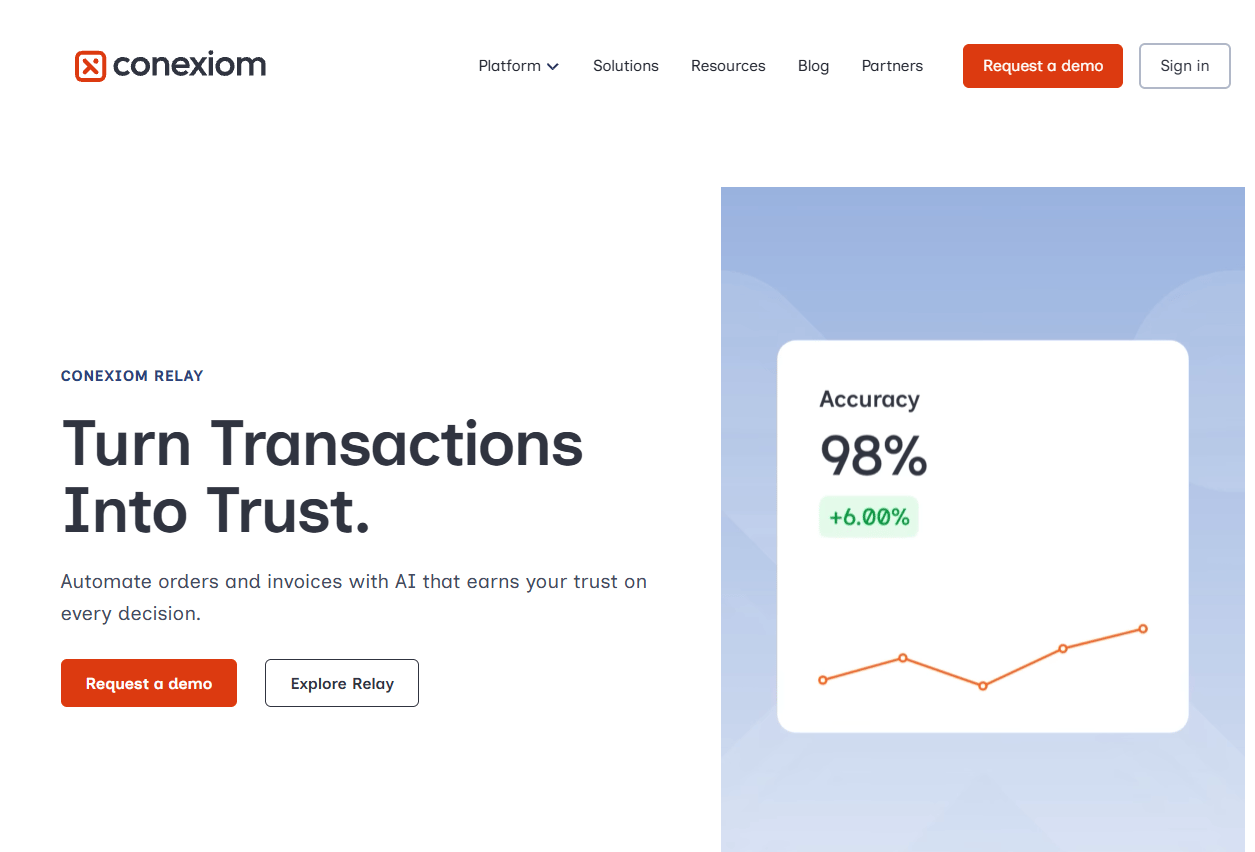
Conexiom automates orders and invoices for manufacturers and distributors. It converts emailed documents and other formats into structured data for connected ERP systems.
Business rules govern validation, while exception explanations help employees resolve unusual records. Native connections cover more than 40 ERP platforms.
Best for: Manufacturers and distributors processing high volumes of emailed purchase orders.
Key features
- Email order capture
- Purchase order automation
- ERP integration
- Business rule validation
- Exception explanations
Why choose Conexiom: It targets the rekeying problem directly. Choose it when customer documents are the main source of sales orders and ERP data entry consumes employee time.
Conexiom pricing: Custom pricing. Cost reflects document volume, ERP connections, order complexity, and automation scope.
G2 rating: 4.6/5
15. Esker
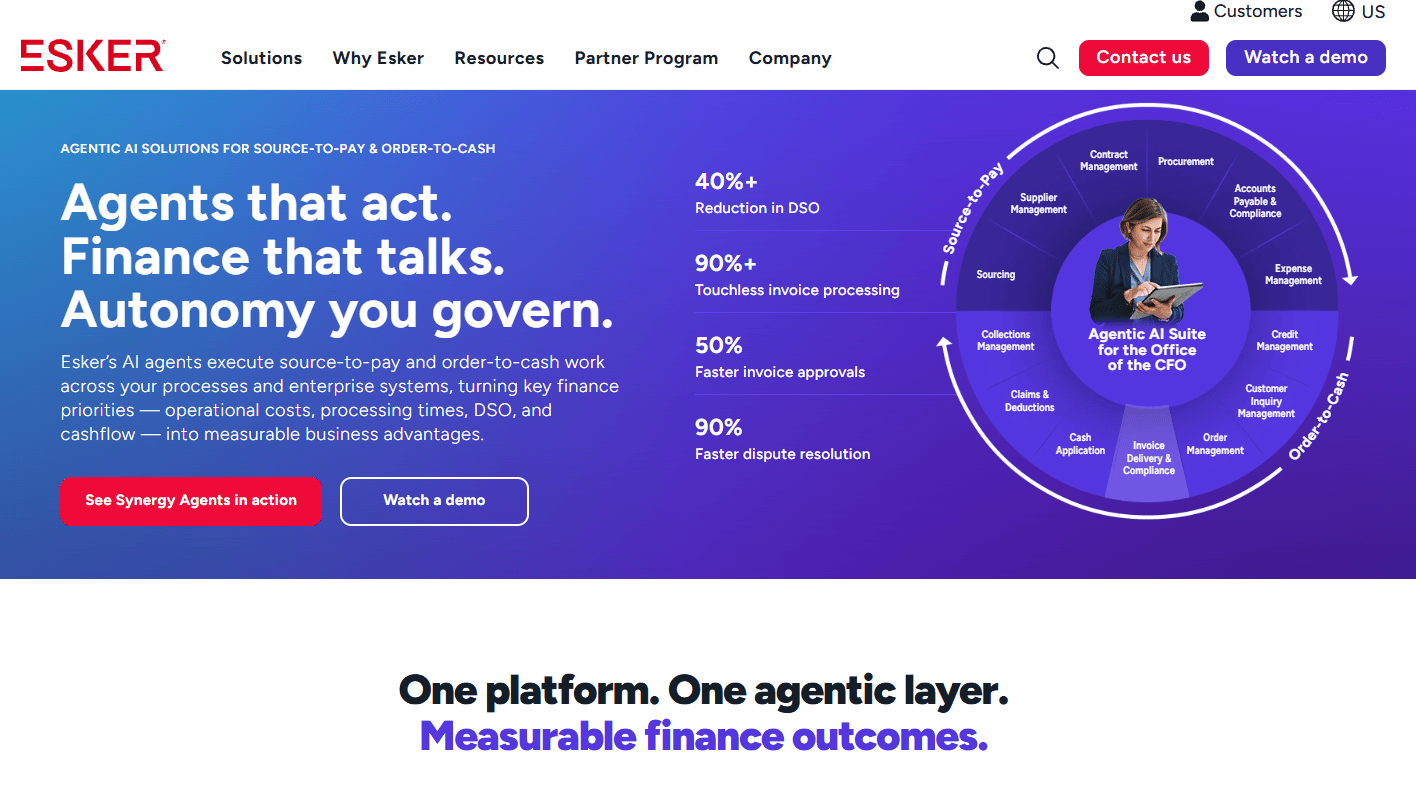
Esker provides AI powered automation for source to pay and order to cash workflows. Its order management capabilities support data extraction, validation, workflow orchestration, and customer service processes.
The platform suits larger teams receiving orders through varied document channels. Automation routes exceptions for review rather than passing questionable data straight into operations.
Best for: Midmarket and enterprise teams automating high volume customer order intake.
Key features
- AI order capture
- Order to cash automation
- Data validation
- Workflow orchestration
- Customer service visibility
Why choose Esker: It fits organizations that need automated order processing across many document formats. Its broader process coverage also supports connected finance workflows.
Esker pricing: Custom pricing. Cost reflects modules, document volume, ERP landscape, languages, and implementation requirements.
G2 rating: 4.4/5
Considerations when choosing order entry software
Start with the order source
Document heavy teams should assess extraction and validation. Retailers need POS connections, while EDI driven businesses need trading partner connectivity.
Field sales organizations should test mobile access and offline order capture. The source determines which software category belongs on your shortlist.
Check catalog and pricing controls
Review support for customer specific SKUs, contract pricing, substitutions, minimum quantities, and discount thresholds. Product catalog management should prevent invalid items from entering the workflow.
Ask how the system handles expired prices and unauthorized discounts. Speed means little if the order still requires manual correction.
Verify ERP and inventory handoff
Check supported connectors, field mapping, synchronization timing, and error logs. Confirm whether the ERP integration sends data in one direction or keeps order status synchronized.
Inventory visibility also matters. Sales teams need current stock information before promising delivery dates.
Map approvals before implementation
Document who approves special pricing, credit holds, backorders, and fulfillment exceptions. Then test whether the software can reproduce or improve that path.
A generic approval workflow often breaks once real customer terms enter the process. Use representative orders during evaluation.
Test the customer service view
Customer service needs order history, shipment updates, and exception notes. Without that visibility, employees still chase operations for answers.
Check whether the interface presents a usable record across the order lifecycle. A clean handoff should reduce customer escalations after the sale.
Conclusion
The right order entry software depends on where orders originate and which system owns fulfillment.
ERP native buyers should compare Sage 100, SAP Business ByDesign, Business Central, NetSuite, and Infor. These products keep order processing close to finance and inventory.
Retail and ecommerce teams should assess Cin7 Core, Square for Retail, ERPAG, Brightpearl, and Unicommerce. Their strengths center on stock, channels, warehouse activity, and commerce operations.
TrueCommerce suits EDI heavy order flows. Conexiom and Esker address purchase order automation, while Cavallo focuses on order controls. Order Sender supports field representatives.
Before buying, run representative orders through each finalist. Include a standard order, a pricing exception, a stock issue, and an approval case.
Do not buy order entry software only for speed. Buy it for the rules that keep bad orders out of fulfillment.
Start your journey with Guideflow today!
FAQs
Order entry software captures customer orders and validates the data before processing. It applies catalog rules, pricing, inventory checks, and approval requirements.
The accepted record then moves into ERP, accounting, inventory, fulfillment, or order management software.
Order entry software focuses on capturing an order correctly. It validates customer details, products, pricing, quantities, and approvals before operational processing begins.
Order management software covers the broader lifecycle. That can include allocation, fulfillment, shipping, returns, invoicing, and customer updates.
Manufacturers needing ERP depth can compare Sage 100, SAP Business ByDesign, Business Central, NetSuite, Infor, and ERPAG. The right choice depends on production and inventory requirements.
Conexiom and Esker fit manufacturers processing many emailed purchase orders. Cin7 Core also supports manufacturing alongside inventory and sales orders.
Yes, when the system validates each order against defined business rules. Useful checks include SKU validity, contract pricing, quantities, inventory, customer details, and approval status.
Automation alone does not guarantee accuracy. The quality of your catalog data and validation rules determines what the software catches.
Many order entry systems either operate inside an ERP or connect with one. Integration lets accepted orders move downstream without another manual entry step.
Check connector support, field mapping, synchronization timing, and exception handling. Your team should also establish who maintains the connection after implementation.
TrueCommerce is the most EDI focused option in this list. It supports trading partner onboarding, ERP connectivity, supplier portals, and managed EDI services.
Conexiom and Esker may suit teams handling document based purchase orders or EDI exceptions. Their focus is broader document and workflow automation.
Yes, especially when representatives handle complex catalogs or customer specific pricing. The software can also route discounts and unusual terms for approval before fulfillment.
A reliable order record creates cleaner handoffs between sales, customer service, finance, and operations. That protects the customer experience after the deal closes.
Pricing varies by product category. Retail and smaller inventory products often charge monthly, while some offer free plans or trials.
ERP, EDI, and enterprise automation vendors usually price by users, modules, transaction volume, implementation, and integrations. Compare total implementation cost alongside the subscription.