Month-end close shouldn't require five exports and one controller who holds everything together in memory. Yet that's the reality at most independent operators: Production volumes live in one system, invoices arrive through email, owner payments get calculated in spreadsheets, and nobody can see the full picture without assembling it manually.
The oil and gas ERP market reached $3.69 billion in 2026, according to Mordor Intelligence, and 76% of oil and gas and chemicals companies now use cloud computing, per EY's 2025 Future of Energy Survey. The infrastructure exists. The question is which system earns its place before your next close cycle, without creating a new dependency on the person who configured it.
This guide compares 15 oil and gas back office software options across accounting depth, production workflow fit, reporting clarity, and operator relevance. Use it to shortlist three tools: One that fits your current process, one that fits your next operating stage, and one lightweight option you can rule out quickly.
Which system removes you as the integration layer?
What's inside
This guide covers 15 oil and gas back office software tools for 2026, evaluated against criteria that matter to founders, CFOs, controllers, and operators replacing fragmented workflows.
- Who it's for: Independent operators, enterprise energy companies, and finance leads evaluating purpose-built accounting software for oil and gas companies
- Selection criteria: Accounting depth (AP, JIB, revenue distribution, GL), production workflow fit, reporting visibility, and operator relevance by company size
- What you'll find: A comparison table, per-tool breakdowns, pricing guidance, G2 ratings, and a buyer's checklist
- What to verify: Pricing on all vendor pages before purchasing; most tools use quote-based models
TL;DR
- Best overall for energy back-office depth: Enverus, for operators needing source-to-pay, field tickets, invoices, and spend visibility in one energy-specific platform
- Best for production-first independent operators: Greasebook (up to 2,000 wells) or TinyPumper (remote monitoring for small producers)
- Best for independent operator accounting: PakEnergy, WolfePak, SSI, Bolo, or OGsys, depending on JIB complexity and entity count
- Best for enterprise energy companies: Quorum Software, P2 Energy Solutions, W Energy Software, or SAP, depending on scale and integration requirements
- Best lightweight option: QuickBooks or Xero for small teams before petroleum-specific workflows outgrow general accounting
- Best for reserves and economics: PHDwin, when valuation and reserve analysis sit alongside board reporting and planning
What is oil and gas back office software?
Oil and gas back office software is software that manages the financial, accounting, reporting, procurement, and administrative workflows that support oil and gas operations. Unlike general accounting platforms, it handles petroleum-specific requirements that standard tools cannot process without manual workarounds.
Core workflows covered by purpose-built oil and gas accounting software:
- Accounts payable and invoice approvals
- Joint interest billing (JIB) and owner statements
- Revenue distribution and division-of-interest maintenance
- General ledger and financial close
- Accounts receivable and owner payment processing
- Production data capture, run tickets, gauges, and allocation
- Reconciliation of field volumes to purchaser statements
- AFE tracking and cost control
- Severance tax and regulatory reporting
- Procurement and supplier workflows
- Audit trails, compliance controls, and reporting
Key capabilities to evaluate:
- Petroleum-specific GL chart of accounts
- Multi-entity and multi-owner support
- Integration between production data and financial close
- Owner portal or statement generation
- State regulatory report builders
- Approval workflows and permission controls
Production accounting versus financial accounting
These two categories get conflated, but they address different parts of the workflow. Production accounting starts upstream: Field volumes, purchaser statements, run tickets, allocations across commingled wells, and reconciliation of what was produced against what was sold. The output is clean, verified volume data.
Financial accounting takes that output and converts it into revenue entries, owner payments, JIB billings, GL postings, severance tax calculations, and financial statements. The best oil and gas back office tools either integrate both sides or connect cleanly to systems that own each side.
The gap between them is where most manual work happens. A team reconciling field data in one spreadsheet and journal entries in another is carrying key-person risk in every close cycle.
When to use oil and gas back office software
Replace spreadsheet-driven close workflows
If month-end close depends on a controller manually assembling five exports, your financial reporting has key-person risk baked in. When a new finance leader or CFO joins, they cannot operate the system without tribal knowledge. Purpose-built oil and gas accounting software builds the reconciliation, approval, and reporting logic into the platform so anyone with the right permissions can run the process.
Connect production data to accounting
Field volumes, purchaser checks, and run tickets need to connect directly to JIB calculations, revenue distribution, and GL postings. When those systems don't talk, reconciliation takes days and audit trails are weak. Tools like Greasebook, PakEnergy, Quorum, and W Energy Software are built to close that gap, reducing the manual handoff between field reporting and financial close.
Scale accounting without adding manual headcount
AP automation, approval workflows, recurring owner statements, and digital field tickets let a lean finance team handle more assets without adding head count. For operators growing from 50 wells to 500, or from 3 entities to 30, the question is whether your current system scales with the operation or breaks under it.
Oil and gas back office software comparison
Use the table below to narrow your shortlist. Verify pricing and G2 ratings directly with vendors before purchasing. Most purpose-built oil and gas tools use quote-based pricing tied to well count, user seats, modules, and implementation scope.
| # | Product | Best for | Key differentiator | Pricing | G2 rating |
|---|---|---|---|---|---|
| 1 | Enverus | Energy companies needing source-to-pay and spend automation | Supplier, procurement, invoice, and field ticket workflows in one energy suite | Quote-based | 4.4/5 |
| 2 | Greasebook | Independent operators focused on production reporting | Field data capture and production accounting for 2 to 2,000 wells | Quote-based | N/A |
| 3 | PakEnergy | Independent upstream and midstream operators | Cloud-based accounting, production, and land in one platform | Quote-based | 3.8/5 |
| 4 | WolfePak | Oil and gas accounting teams needing petroleum workflows | Integrated accounting, land, production, and owner relations | Quote-based | 3.8/5 |
| 5 | SSI | Operators needing petroleum accounting and document workflows | JIB, revenue payables, dashboards, and document imaging | Quote-based | N/A |
| 6 | Bolo (IFS) | Upstream companies needing automated JIB and revenue accounting | AI-powered AP invoicing with SOX and GAAP compliance support | Quote-based | N/A |
| 7 | OGsys (Quorum On Demand) | Operators needing purpose-built upstream accounting | AP, JIB, revenue, and GL on a Quorum-integrated platform | Quote-based | 5.0/5 |
| 8 | P2 Energy Solutions (IFS) | Larger operators with production, land, and accounting complexity | Field-through-financials with geospatial and land management | Quote-based | 3.5/5 |
| 9 | Quorum Software | Energy companies needing broad operational and financial coverage | Upstream, midstream, measurement, and AI-connected workflows | Quote-based | 4.2/5 |
| 10 | W Energy Software | Operators modernizing from legacy energy systems | Cloud field-to-finance for upstream and midstream | Quote-based | 4.5/5 |
| 11 | SAP | Enterprise energy companies with global finance requirements | Enterprise ERP with procurement, controls, and global reporting | From $3.46/user/mo (Build); broader ERP by quote | 4.2/5 |
| 12 | QuickBooks | Small operators with simple books and few entities | Cloud accounting with invoicing, bank feeds, and reporting | From $0/mo (Free) to $170/mo (Advanced) | 4.0/5 |
| 13 | Xero | Small teams wanting cloud accounting basics | Bank reconciliation, bills, invoicing, and financial reports | From $27/mo (Early) | 4.4/5 |
| 14 | PHDwin | Teams needing reserves, economics, and decline-curve analysis | Engineering economics with SQL backend and multi-user support | From $1,593/quarter (Standard) | N/A |
| 15 | TinyPumper | Small producers needing remote well monitoring | Wireless sensors and gateway with GreaseBook app integration | Hardware plus custom monthly rate per facility | N/A |
Best 15 oil and gas back office software tools for 2026
1. Enverus
Enverus provides data, analytics, and workflow software built specifically for the energy industry. Its business automation capabilities span source-to-pay, supplier management, RFx, digital field tickets, invoice processing, JIB workflow support, and spend visibility across the supply chain. Energy companies use it to connect procurement, operations, accounting, and suppliers without stitching together separate tools.
Best for: Energy companies that need connected procurement, AP, field operations, and supplier workflows under one energy-specific platform.
Key features
- Source-to-pay and RFx sourcing workflows
- Contract price compliance and purchase order management
- Digital field ticket capture and approval
- Invoice automation and JIB workflow support
- Spend visibility and supplier management
- AI-powered workflows with document analysis
Why choose Enverus: Enverus fits organizations where the bottleneck isn't just accounting, it's the entire handoff from procurement and field activity through to invoice approval and financial close. If supply chain, operations, and accounting teams each work in separate systems today, Enverus reduces that fragmentation at scale.
Enverus pricing: Pricing is quote-based and structured through order-form agreements. Ask sales to break down costs by module (e.g., procurement, AP, analytics), user seats, and implementation. Enverus doesn't post pricing publicly; the annual platform cost and contract duration vary by solution scope.
G2 rating: 4.4/5 based on 309 reviews.
2. Greasebook
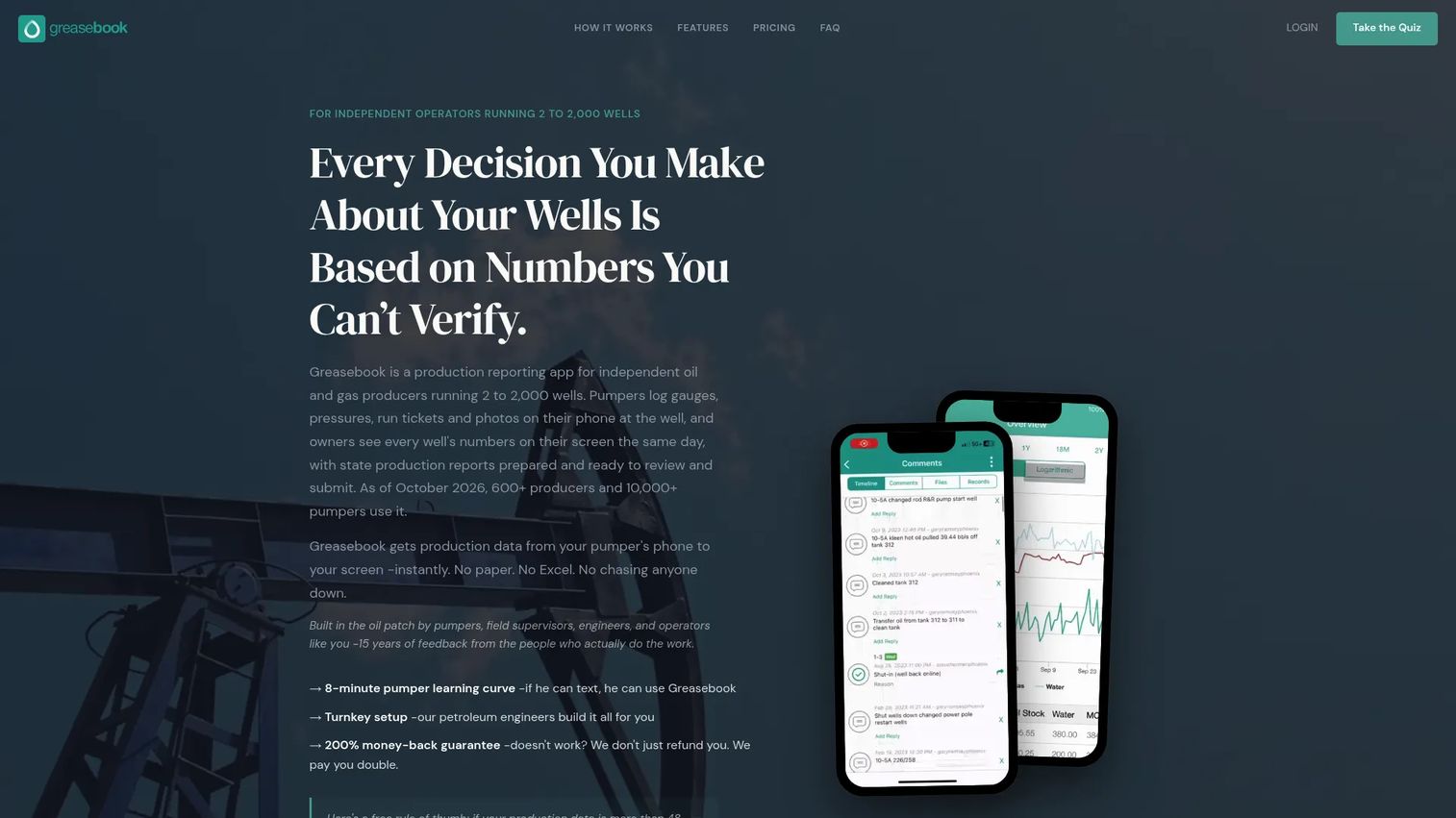
Greasebook is a production reporting application designed specifically for independent U.S. oil and gas operators. It handles field data collection across gauges, pressures, run tickets, BS&W draws, water hauls, and dual-product tanks. The platform includes production graphs, decline curves, downtime tracking, well-testing tools, state and federal report builders, and an allocation engine for multi-well facilities.
Best for: Independent operators running 2 to 2,000 wells who need clean, daily production data before accounting workflows begin.
Key features
- Field data collection: Gauges, pressures, run tickets, photos
- Production graphs, decline curves, and alarm alerts
- Well testing and multi-well allocation engine
- State and federal regulatory report builder
- Offline operation with GPS pumper tracking
Why choose Greasebook: Production data quality drives accounting accuracy. Greasebook fits teams where field reporting, not ERP configuration, is the daily bottleneck. If your pumpers are still calling in numbers or using paper run tickets, this is the starting point that makes everything downstream cleaner.
Greasebook pricing: Greasebook prices by operational complexity rather than a posted rate card. To get a quote, complete their online qualification quiz. Ask about well count, number of users, integrations with your accounting system, and implementation support. Pricing is month-to-month.
3. PakEnergy
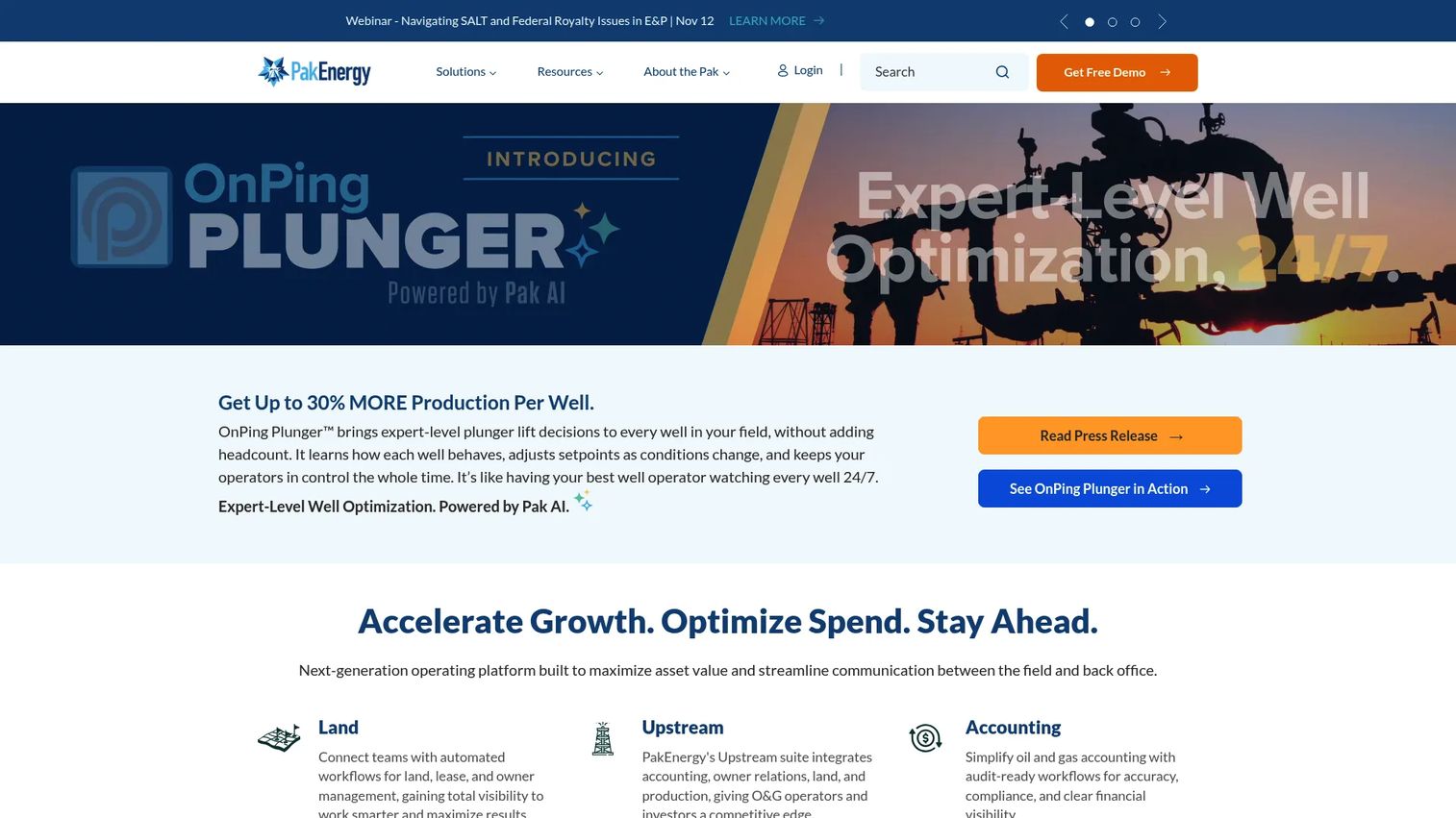
PakEnergy is a cloud-based business automation platform built for independent upstream and midstream oil and gas companies. It covers land management, lease and owner management, GIS mapping, accounting (AP, AR, bank reconciliation, revenue billing), production data capture, SCADA integration, allocation, and regulatory reporting. The platform targets companies that need multiple back-office workflows connected without jumping to a large enterprise ERP.
Best for: Independent operators and energy accounting teams managing petroleum-specific accounting workflows across land, production, and finance.
Key features
- Oil and gas accounting with AP, AR, and bank reconciliation
- Revenue billing and owner payment workflows
- Land and lease management with GIS mapping
- Production data capture, allocation, and SCADA integration
- Regulatory reporting and dashboards
Why choose PakEnergy: PakEnergy fits the gap between outgrown spreadsheets and full enterprise ERP. If your team is managing JIB, owner statements, and revenue distribution manually today, this is a purpose-built path forward that doesn't require a 12-month implementation project.
PakEnergy pricing: Pricing is user-based and varies by selected modules. PakEnergy directs buyers to contact sales for a quote. When you call, ask about minimum user count, module-by-module cost, implementation fees, and what data migration support looks like for chart of accounts and division-of-interest records.
G2 rating: 3.8/5
4. WolfePak
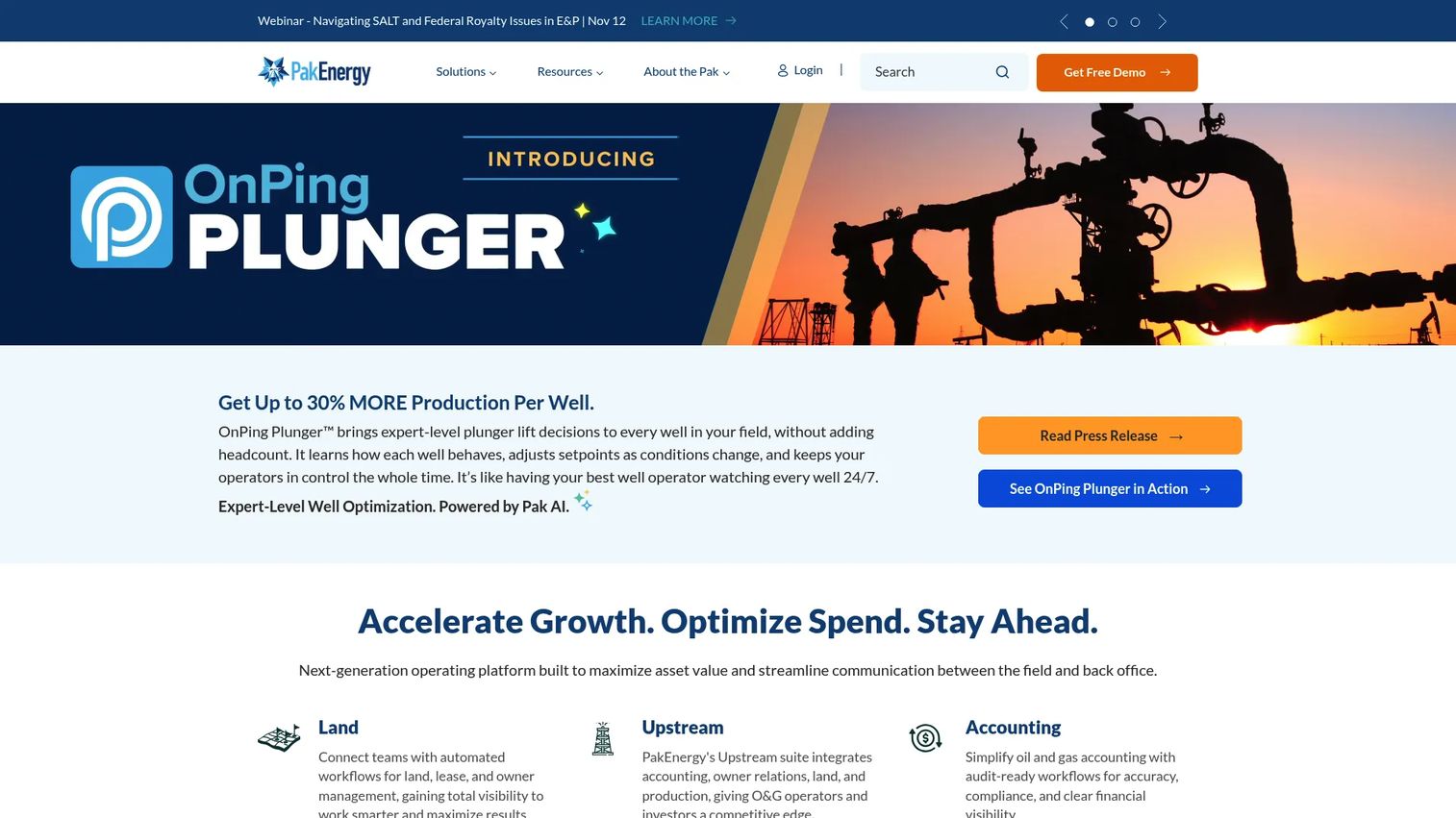
WolfePak is an oil and gas software platform that now redirects to PakEnergy, reflecting the brands' consolidation. The underlying product covers petroleum accounting, land, production, owner relations, wellsite operations, and transportation workflows. It has a long track record with independent operators needing audit-ready accounting and integrated owner management.
Best for: Oil and gas accounting teams that need petroleum-specific workflows, including JIB, revenue distribution, and land management, in a single connected platform.
Key features
- Oil and gas accounting with audit-ready workflows
- Land, lease, and owner management
- Field data capture and production surveillance
- Joint interest billing and check-writing support
- Revenue distribution and owner statements
Why choose WolfePak: WolfePak is worth evaluating when QuickBooks-style accounting no longer supports your owner statements, JIB, and revenue distribution work. Teams that have grown past three or four entities and are manually reconciling owners each month will find the petroleum-specific structure materially reduces close time.
WolfePak pricing: Contact PakEnergy (the current operating entity) and ask specifically about WolfePak product modules, minimum user requirements, and what implementation covers for existing data migration.
G2 rating: 3.8/5 from 2 reviews for WolfePak Financial Software.
5. SSI
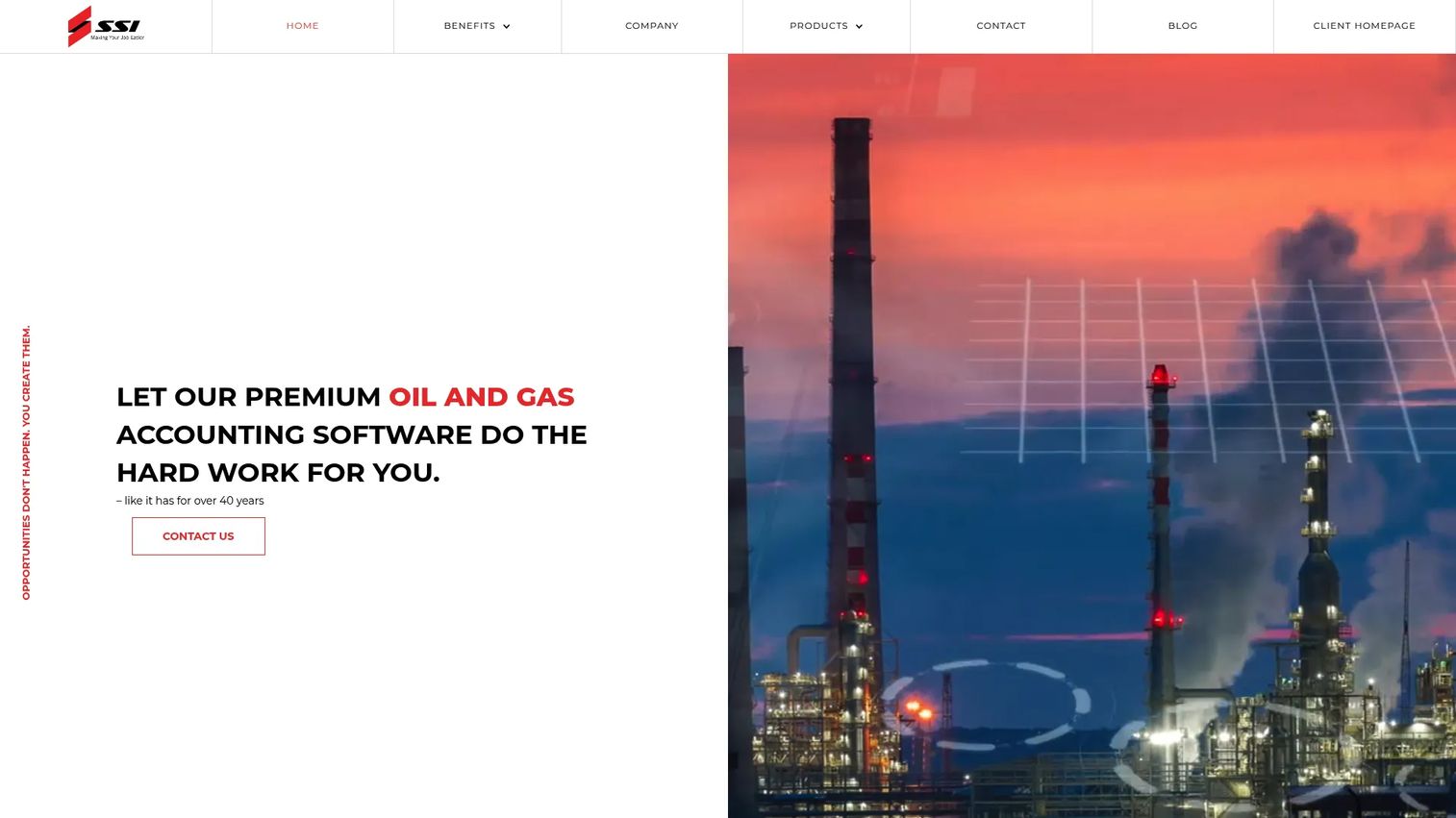
SSI (Energy Back Office) is an oil and gas accounting software suite for petroleum and land-management enterprises. It supports both on-premises and cloud SaaS deployment and covers joint interest billing, revenue payables, well and executive dashboards, profitability analysis, AFE management, document imaging, emailing, archiving, and paperless workflows. The platform targets companies needing comprehensive back-office coverage from an established petroleum accounting vendor.
Best for: Oil and gas companies needing integrated accounting, well management, ownership tracking, and document workflows with on-premises or cloud deployment options.
Key features
- Joint interest billing and revenue payables
- Well and executive dashboards with profitability analysis
- AFE tracking and management
- Document imaging, emailing, and archiving
- Paperless workflow support
Why choose SSI: SSI belongs on the shortlist when implementation support model and long-term vendor stability matter alongside workflow fit. For teams comparing established petroleum accounting systems, the combination of JIB depth and document management in one platform reduces tool count.
SSI pricing: Contact SSI sales and ask about deployment model (cloud vs. on-premises), modules required, user seat costs, implementation timeline, and ongoing support structure.
6. Bolo (IFS)
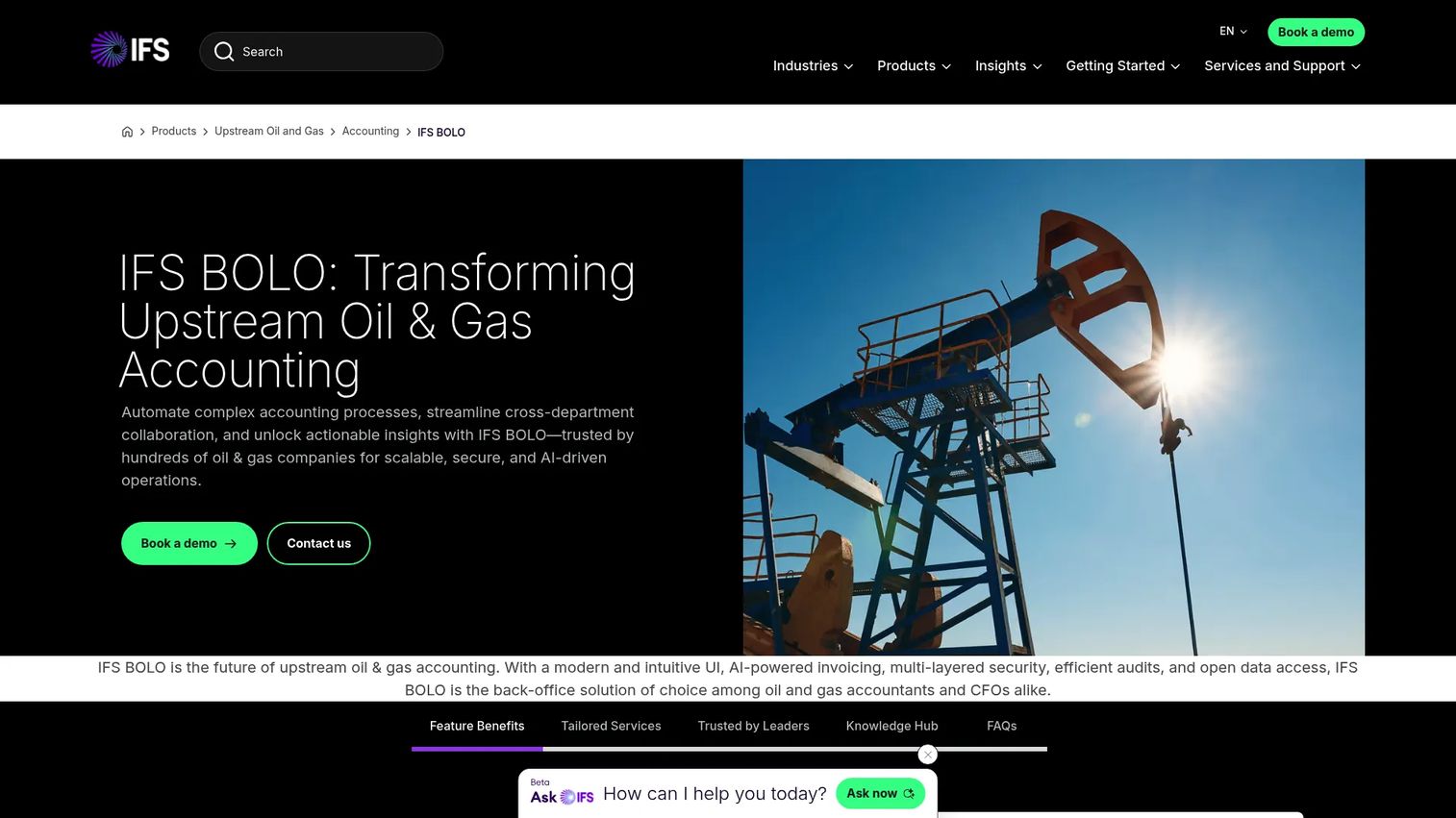
IFS BOLO is upstream oil and gas accounting software from IFS, targeting automation of financial, revenue, and joint-interest accounting. It covers revenue distribution, complex ownership management, royalty and severance tax workflows, GAAP and SOX compliance support with audit trails, and AI-powered AP invoicing with Microsoft Power BI integration. Cloud or on-premises deployment is available with third-party integrations.
Best for: Upstream oil and gas companies needing scalable JIB, revenue distribution, ownership management, and compliance-ready reporting.
Key features
- Automated JIB and revenue distribution workflows
- Complex ownership and royalty management
- Severance tax at state and federal levels
- GAAP and SOX compliance with audit trails
- AI-powered AP invoicing and Power BI integration
Why choose Bolo: Bolo fits buyers who want established petroleum accounting depth and prioritize compliance infrastructure over broad ERP scope. If your audit trails and SOX controls are a board-level concern, the compliance architecture here is purpose-built for that requirement.
Bolo pricing: Contact IFS sales with your well count, entity count, user requirements, and compliance framework to get an accurate quote. Ask specifically about implementation cost and timeline alongside annual platform fees.
7. OGsys (Quorum On Demand Accounting)
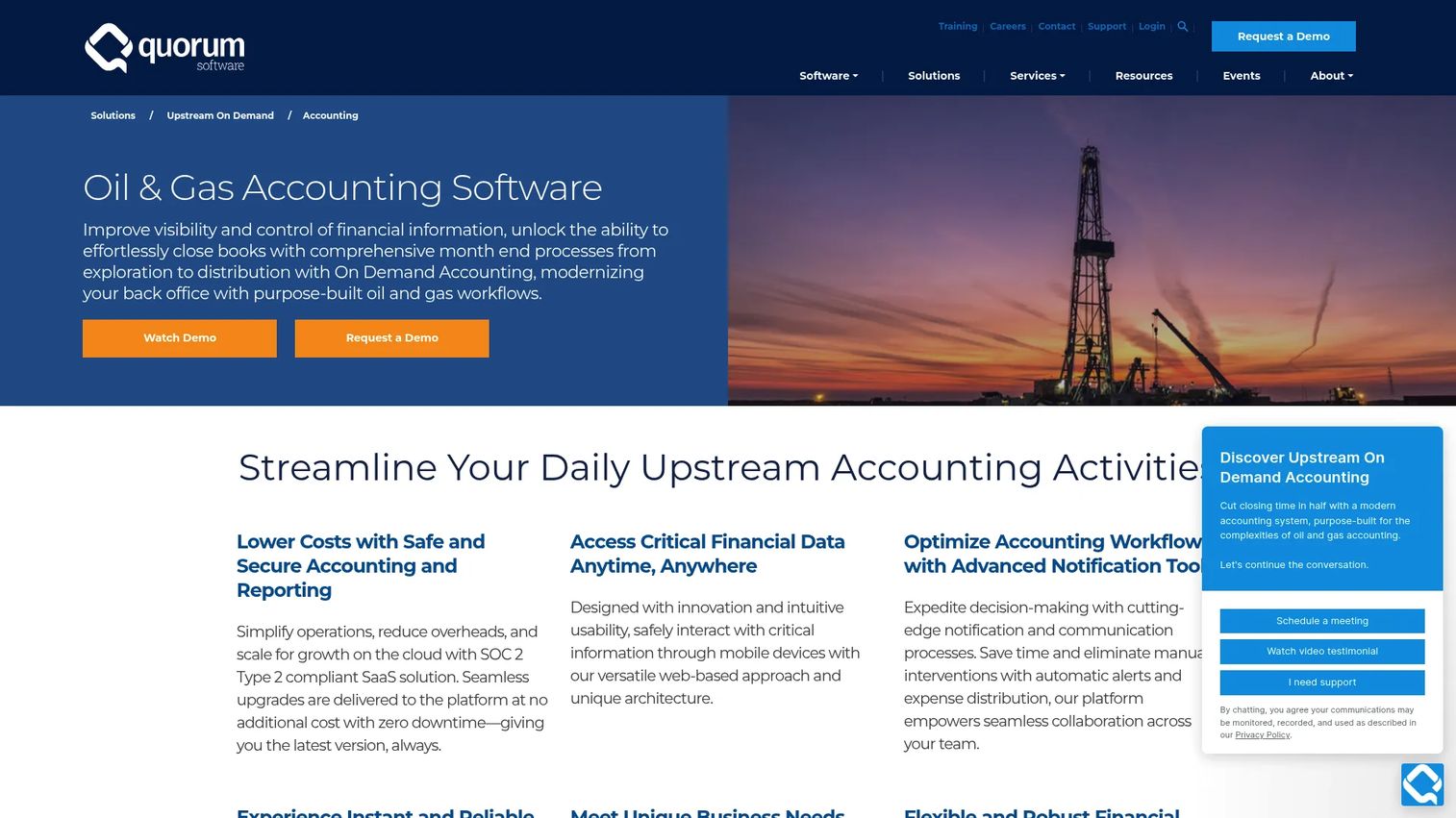
OGsys now operates as Quorum Software's On Demand Accounting product. The platform handles accounts payable and invoice workflow management, revenue processing, division-order management, joint interest billing, AFE management, and general ledger with accounts receivable, reporting, and reconciliation. It integrates natively with Quorum's land, production, and AFE systems.
Best for: Oil and gas operators needing purpose-built upstream accounting, JIB, revenue workflows, and direct integration with Quorum's broader energy platform.
Key features
- AP and invoice workflow management
- Revenue processing and division-order management
- Joint interest billing and AFE management
- General ledger, AR, and reconciliation
- Native integration with Quorum land and production systems
Why choose OGsys: If your team is already in or evaluating Quorum's ecosystem, On Demand Accounting is the natural accounting layer. The native integrations between accounting, land, and production eliminate manual data handoffs that otherwise create close-cycle delays.
OGsys pricing: Pricing is handled through Quorum Software. Contact Quorum and ask about On Demand Accounting specifically, including module pricing, seat count, implementation, and what the integration with Quorum land or production systems costs in total.
G2 rating: 5.0/5 from 1 review (G2 listing for On Demand Accounting).
8. P2 Energy Solutions (IFS)
P2 Energy Solutions is now part of IFS and provides upstream oil and gas software spanning field operations, production, accounting, land management, and geospatial information. The platform supports field-through-financials management, production data capture, operational reporting, and land and mineral-rights workflows for larger operators with complex operational and accounting requirements.
Best for: Larger upstream operators and energy companies needing mature, integrated software across field operations, production, land management, accounting, and geospatial data.
Key features
- Field-through-financials operational management
- Production operations and data capture
- Oil and gas accounting workflows
- Land and mineral-rights management
- Geospatial information and analytics
Why choose P2 Energy Solutions: P2 fits companies that have outgrown point accounting tools and need operational data, land management, and financial close connected across a single platform. For operators with complex land positions or multi-basin production, the integrated geospatial and land capabilities add specific value.
P2 Energy Solutions pricing: Pricing is handled through IFS. Enterprise implementations are quote-based. Ask about product modules, implementation timeline, data migration scope, user seats, and ongoing support model.
G2 rating: 3.5/5
9. Quorum Software
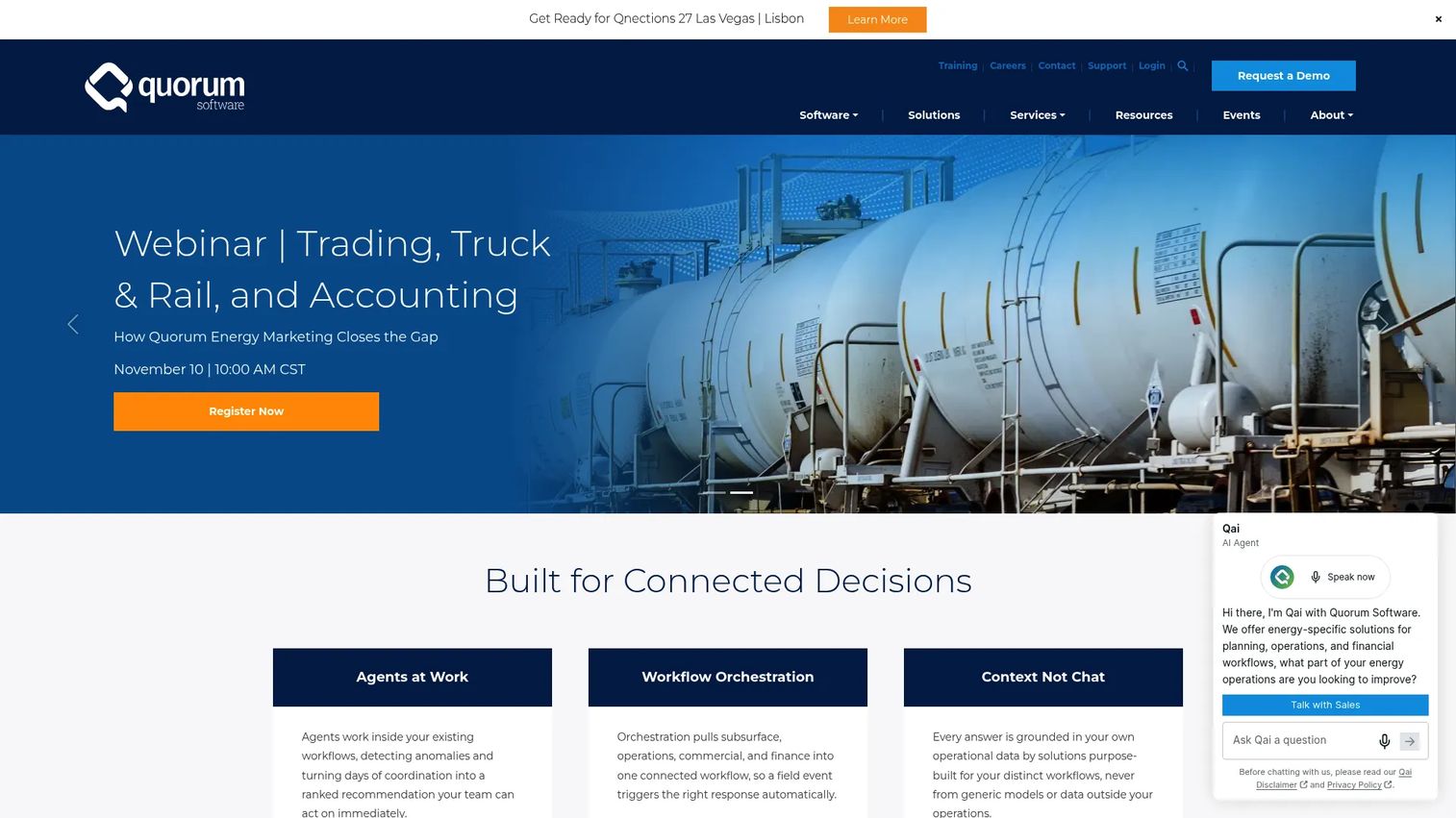
Quorum Software provides purpose-built energy software spanning upstream, midstream, measurement, and energy transition workflows. Its product family covers financial planning, portfolio management, reserves forecasting, petroleum economics, well lifecycle, production operations, accounting, land management, gas and liquids measurement, and AI-connected workflow orchestration. It operates as a broad energy software platform for companies that need multiple operational areas connected.
Best for: Energy companies seeking integrated software across finance, operations, land, production, and measurement rather than a collection of point tools.
Key features
- Financial planning, reserves forecasting, and petroleum economics
- Well lifecycle, production operations, and accounting
- Land and midstream management
- Gas and liquids measurement with testing and calibration
- AI-connected workflow orchestration and governed analytics
Why choose Quorum Software: Quorum fits operators trying to consolidate multiple energy workflows instead of managing separate systems for accounting, land, production, and measurement. If system fragmentation is the actual problem, the breadth of Quorum's platform addresses it at the source rather than adding another integration point.
Quorum Software pricing: Contact Quorum and ask which product modules apply to your operation, what the total annual cost looks like for your well count and entity structure, and what implementation covers in terms of data migration and training.
G2 rating: 4.2/5 based on 10 reviews.
10. W Energy Software
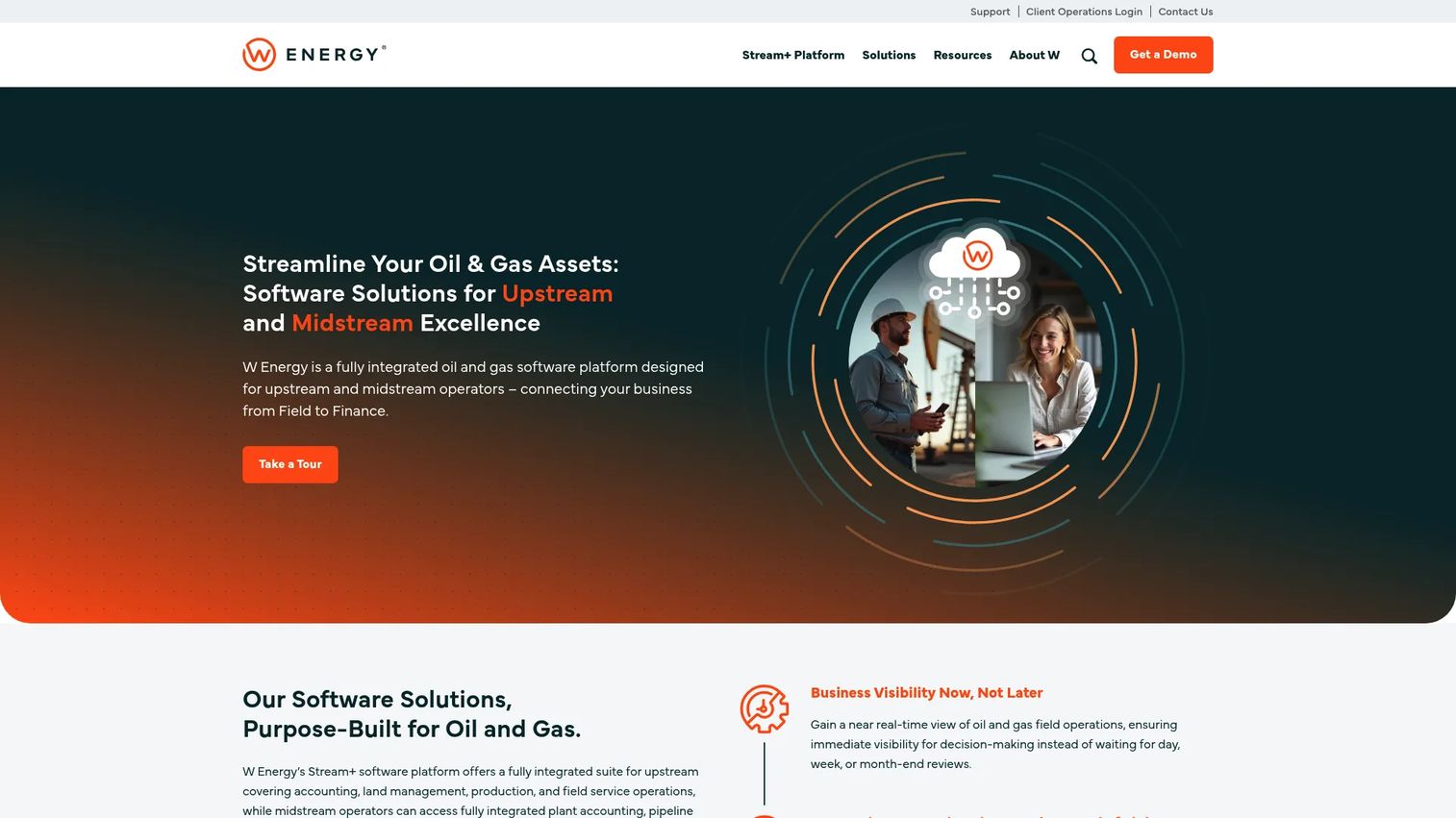
W Energy Software is a cloud-based oil and gas platform connecting field operations to finance for upstream and midstream operators. It covers integrated upstream accounting, land management, production, and field service on the upstream side, plus plant accounting, pipeline accounting, land management, and transportation for midstream operations. The DataView reporting and analytics layer provides real-time operational visibility.
Best for: Upstream and midstream operators modernizing from legacy energy systems to cloud-based field-to-finance workflows.
Key features
- Integrated upstream accounting, land, and production
- Midstream plant accounting, pipeline accounting, and transportation
- Field service operations management
- Real-time reporting and analytics through DataView
- Cloud deployment with workflow automation
Why choose W Energy Software: W Energy is a strong fit when the goal is modernizing legacy on-premises energy systems without losing the petroleum-specific functionality your team depends on. The cloud architecture also makes it easier for a new CFO or VP of Finance to access reporting without on-site access to legacy systems.
W Energy Software pricing: Pricing is quote-based. Contact W Energy and ask about upstream versus midstream module pricing, well count parameters, implementation timeline, and what the DataView reporting layer costs within or alongside the base platform.
G2 rating: 4.5/5.
11. SAP

SAP is enterprise software spanning cloud ERP, finance, procurement, supply chain, HR, and business AI. For energy companies, SAP handles enterprise finance, global procurement, compliance controls, asset-intensive operations management, and large-scale reporting. It is not petroleum accounting software in the independent operator sense. SAP fits organizations where oil and gas operations connect with global entities, complex procurement, and enterprise governance requirements.
Best for: Large energy companies with global finance, procurement, compliance, and enterprise reporting needs across multiple business units or geographies.
Key features
- Cloud ERP with embedded AI and analytics
- Financial management, procurement, and supply chain
- Governance controls and compliance reporting
- Asset-intensive operations management
- CRM and customer experience modules
Why choose SAP: SAP earns its place when finance operations must connect with enterprise controls, global entities, and procurement at a scale where purpose-built petroleum accounting tools stop being sufficient. It typically requires oil and gas implementation expertise and a longer deployment timeline than smaller industry-specific tools.
SAP pricing: SAP Build base user pricing starts at $3.46 per user per month. Broader SAP ERP and industry cloud applications are priced by contract, cloud deployment type, implementation partner, and module scope. Ask sales for a module-specific quote tied to your entity count and operational scope.
G2 rating: 4.2/5.
12. QuickBooks

QuickBooks is cloud-based general accounting software built for small and midsize businesses. It covers automated bookkeeping, bank feeds, invoicing, expense and bill management, financial reporting, and basic dashboards. It is not oil and gas accounting software. For small operators with simple books, few entities, and no JIB or owner distribution complexity, it covers the basics at low cost. The accounting software category at this end of the market is well-served by QuickBooks, but petroleum workflows require manual workarounds or add-on tools.
Best for: Small operators with simple books, minimal entities, and no current need for JIB, revenue distribution, or production accounting workflows.
Key features
- Automated bookkeeping and bank feeds
- Invoicing and payment acceptance
- Expense and bill management
- Financial reporting and dashboards
- Budgeting and project profitability tracking
Why choose QuickBooks: QuickBooks makes sense at the earliest stage, when the operation is simple enough that petroleum-specific features aren't yet needed. The moment JIB, multiple owners, severance tax workflows, or production reconciliation enter the picture, purpose-built oil and gas accounting software handles those requirements that QuickBooks cannot without significant manual intervention.
QuickBooks pricing: QuickBooks Online offers a Free plan at $0/mo, Simple Start at $19/mo (promotional), Essentials at $42.50/mo (promotional), Plus at $70/mo (promotional), and Advanced at $170/mo (promotional). Standard prices are roughly double the promotional rates after the first three months. All plans are billed monthly.
G2 rating: 4.0/5 (QuickBooks Online).
13. Xero

Xero is cloud accounting software for small businesses. It covers online invoicing, bank connections and reconciliation, bill tracking, expense claims, project tracking, financial reporting, payroll, and multi-currency accounting. Like QuickBooks, it is a general accounting tool with no built-in petroleum accounting logic. For small oil and gas-adjacent businesses that need clean cloud accounting without complex industry-specific workflows, it fills the gap at a reasonable price point. If you're researching broader accounts payable automation software, Xero integrates with several AP-focused tools that can extend its capability.
Best for: Small oil and gas-adjacent teams that need cloud accounting basics before petroleum-specific workflows become central to operations.
Key features
- Cloud accounting with bank reconciliation
- Invoicing, quotes, and payment collection
- Bill tracking and expense management
- Project tracking and financial reports
- Multi-currency accounting and payroll
Why choose Xero: Xero fits small teams that value cloud-first accounting and simple finance workflows with strong bank feed connectivity. It is not suitable for JIB, production accounting, or owner revenue distribution without significant additional tooling. Teams approaching that complexity should shortlist purpose-built oil and gas platforms rather than extending Xero.
Xero pricing: Early plan starts at $27/mo, Growing at $59/mo, and Established at $97/mo. All plans are billed monthly. Higher tiers add automation, advanced dashboards, multi-currency, project tracking, and expense features.
G2 rating: 4.4/5.
14. PHDwin
PHDwin is oil and gas reserves, decline-curve analysis, forecasting, and economics software. It runs on a Microsoft SQL Server backend with multi-user collaboration and supports Arps, SEDM, Scheduled, Lin-Time, and Flat forecasting methods alongside economic modeling, reserves reporting, scenario management, and Excel integration. PHDwin is not general back-office accounting software. It earns its place in this list because reserves, valuation, and planning workflows often sit close to board reporting, acquisition analysis, and financial planning in oil and gas companies.
Best for: Oil and gas organizations performing reserves evaluation, production forecasting, decline-curve analysis, and economic modeling alongside back-office reporting.
Key features
- Decline-curve analysis with multiple forecasting methods
- Economic modeling and reserves reporting
- Scenario management and sensitivity analysis
- Multi-user collaboration with SQL Server backend
- Excel integration for model export and sharing
Why choose PHDwin: PHDwin is a specialist tool that complements your accounting system rather than replacing it. It earns its place when reserves and economics influence board reporting, acquisition decisions, asset divestitures, or investor presentations. Teams that currently model reserves in Excel and present them separately from financial close are the target fit.
PHDwin pricing: Standard Installation subscriptions start at $1,593 for a quarterly subscription or $4,956 for an annual subscription. Network Installation (supporting concurrent users and shared databases) starts at $3,822 per quarter or $11,892 annually. A complimentary 14-day trial is available.
15. TinyPumper
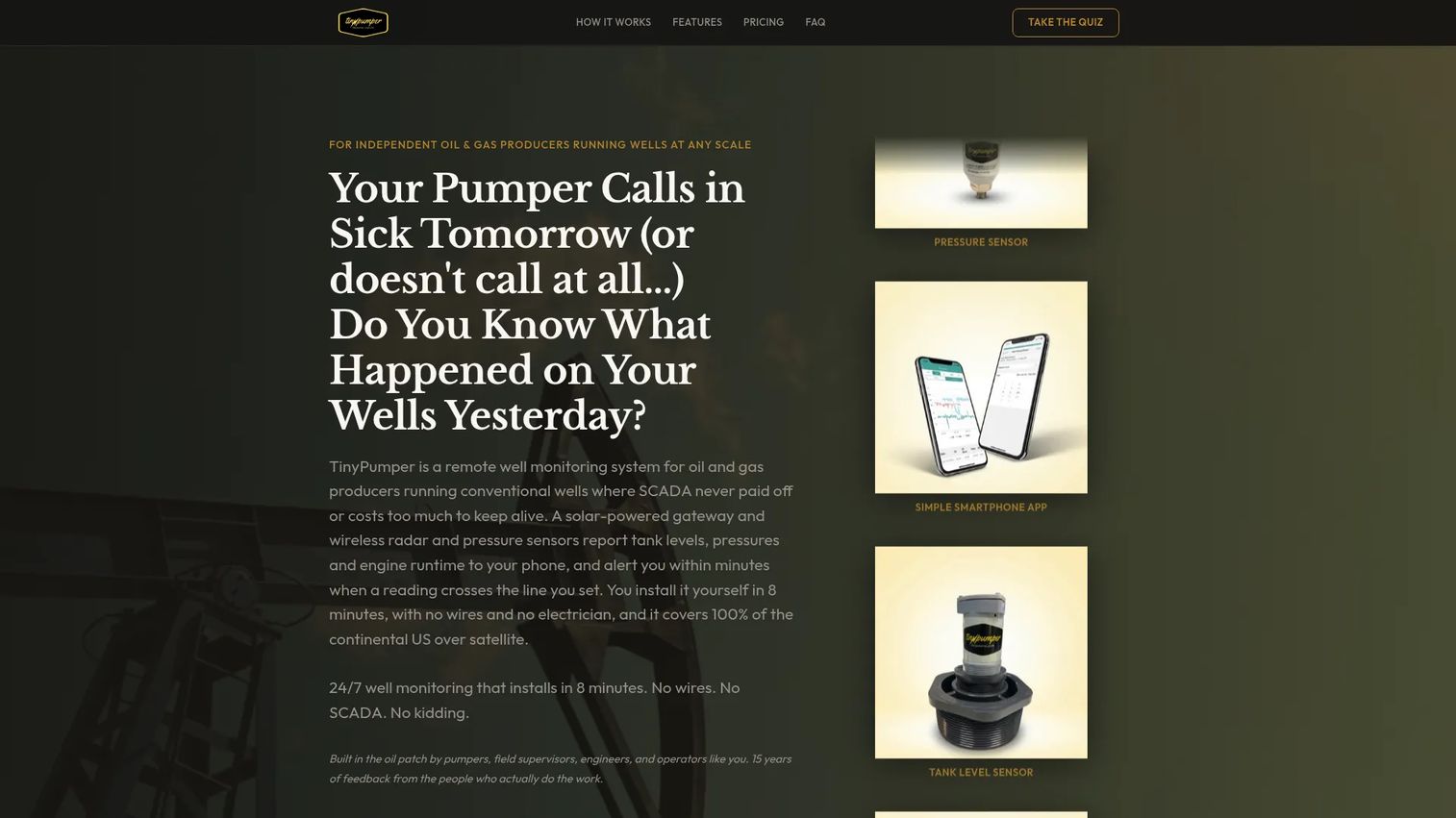
TinyPumper is remote well monitoring hardware and software for independent oil and gas producers. It uses wireless sensors and a gateway device to monitor tank levels, pressure, flow, and equipment runtime around the clock, delivering alerts, reports, and readings through the GreaseBook app. TinyPumper is not an accounting platform. It addresses the data-capture side of production reporting for small conventional producers who need visibility into what their wells are doing without on-site checks.
Best for: Independent oil and gas operators needing low-cost remote monitoring for conventional wells, particularly producers who rely on manual pumper checks today.
Key features
- 24/7 tank-level, pressure, flow, and equipment-runtime monitoring
- Wireless gateway supporting up to 8 sensors per unit
- Alerts, reports, and readings through the GreaseBook app
- Month-to-month billing with no long-term contract
Why choose TinyPumper: TinyPumper fits small producers who need better production visibility without enterprise-level complexity. When manual pumper checks are creating blind spots in daily production data, remote monitoring closes that gap at a hardware cost of a few hundred dollars per device. The GreaseBook app integration connects monitoring data to the production reporting workflow you may already use.
TinyPumper pricing: Hardware costs a few hundred dollars per device. Monthly monitoring is priced as one custom rate per facility, billed month-to-month. Exact pricing requires completing TinyPumper's online qualification quiz.
Considerations when choosing oil and gas back office software
Match the tool to your operating model
A small producer with 20 wells and two royalty owners has completely different requirements than a mid-size independent managing 400 wells, 200 owners, and three entities. The wrong tool at either end creates cost and adoption drag. Before shortlisting, map your well count, entity structure, owner count, and whether you operate, have working interests, or manage royalties. The answers change which category of software is relevant.
Map production data to your finance workflow
Trace the path from field volume to financial close. Where do run tickets get entered? Who reconciles purchaser statements to your allocation? How does that volume data flow into JIB calculations and revenue distribution? Every manual step in that chain is a risk. Good oil and gas back office tools either own the full path or integrate cleanly with the system that owns field data. For more context on accounting practice management software and how finance workflows connect across tools, that resource covers adjacent considerations.
Verify implementation and migration effort
Chart of accounts migration, division-of-interest records, historical production data, vendor master data, and open invoices all need to move when you switch platforms. For a founder handing accounting over to a new CFO or controller, implementation timeline and data migration quality determine whether the transition succeeds or creates six months of reconciliation problems. Ask every vendor for a specific migration plan, not a general promise.
Check reporting, audit trails, and controls
Your back-office software needs to support approval workflows, role-based permissions, reporting consistency, and audit readiness before your next board meeting or investor review. If a vendor cannot show you a clear audit trail from field ticket to GL entry to financial statement, that's a gap. This matters especially when a new finance leader needs to build credibility with the board fast. The best business intelligence software guide covers reporting infrastructure that often layers on top of these operational systems.
Compare software against outsourced accounting
Outsourced oil and gas accounting makes sense when expertise or staffing is the primary constraint. Software makes more sense when process ownership, repeatable reporting, audit trails, and internal visibility are the gaps. If your team can't see the business without asking the accounting firm three questions, that's a software problem, not a staffing one.
Conclusion
The best oil and gas back office software is not the tool with the longest feature list. It's the system that connects field activity, accounting, reporting, and approvals without making one person the integration layer.
For broad energy back-office automation, Enverus covers source-to-pay with the most cross-functional depth. For production-first independent operators, Greasebook cleans up field data and TinyPumper closes the monitoring gap. PakEnergy, WolfePak, SSI, Bolo, and OGsys each address petroleum accounting for independent operators, with differences in deployment model, compliance infrastructure, and JIB depth. For enterprise energy operations, Quorum, P2, W Energy, and SAP serve different scales and integration requirements.
QuickBooks and Xero handle early-stage accounting until petroleum-specific workflows outgrow them. PHDwin sits separately as the reserves and economics layer that complements accounting rather than replacing it.
Your next step: Shortlist three tools. One that fits your current close process, one that fits your next operating stage, and one you can rule out quickly after a 30-minute demo. For more on how software vendors in this space show complex workflows to buyers, the accounting software guide and accounts payable automation software guide cover adjacent buyer considerations worth reading alongside this one.
FAQs
Oil and gas back office software is software that manages the financial, accounting, reporting, procurement, and administrative workflows that support oil and gas operations. It includes accounts payable, joint interest billing, revenue distribution, general ledger, production accounting, run ticket processing, severance tax reporting, and audit controls. Purpose-built platforms handle petroleum-specific requirements that general accounting software cannot support without manual workarounds.
Production accounting starts with field data: Volumes, gauges, run tickets, purchaser statements, and allocation across commingled wells. The output is verified, reconciled volume data. Financial accounting takes that output and converts it into revenue entries, owner payments, JIB billings, GL postings, severance tax calculations, and financial statements. The best oil and gas back office tools integrate both sides or connect cleanly between systems that own each layer.
The trigger is usually one of four things: JIB complexity grows beyond manual calculation, revenue distribution to multiple owners requires regular owner statements, additional entities make multi-company accounting unwieldy, or regulatory reporting requirements exceed what QuickBooks handles natively. When reconciling field volumes to purchaser checks takes more than a day each month, that's also a clear signal that purpose-built petroleum accounting software will pay for itself in controller time.
The highest-impact workflows are AP and invoice approvals, joint interest billing, revenue distribution and owner payments, production data reconciliation, severance tax reporting, and cash visibility across entities. For operators with working interest partners, JIB and owner statements are often the most time-intensive monthly processes. Getting those two workflows into a system that generates them automatically reduces close time and key-person risk more than any other single improvement.
Outsourcing helps when expertise or staffing is the primary constraint: A small operator that cannot hire a petroleum accountant locally may get faster results through an outsourced firm. Software is the stronger path when the company needs internal process ownership, repeatable board-ready reporting, audit trails that don't depend on a third party, and visibility the leadership team can access directly. Many operators combine both: Outsourced bookkeeping support running within a purpose-built oil and gas platform.
Ask about implementation timeline and what data migration covers, specifically for chart of accounts, division-of-interest records, historical production, and open invoices. Ask about pricing drivers: Is it per well, per user, per module, or per entity? Ask what the reporting layer looks like for board-ready financial statements. Ask about approval workflows and permission controls. Ask for references from operators at your well count and entity structure, not just large enterprise references.
Small teams can start with general accounting software if operations are simple: A handful of wells, one entity, and no working interest partners requiring JIB. The calculus changes once production, JIB, owner payments, or regulatory reporting enter the picture. At that point, the manual workarounds required to run petroleum workflows through general accounting software typically cost more in controller time than the difference in platform price.
There is no single answer because the right choice depends on your operating model. Enverus leads for broad energy automation and source-to-pay workflows. Greasebook is the strongest production-first tool for independent operators. PakEnergy, WolfePak, SSI, Bolo, and OGsys each serve independent operator accounting with different depths of JIB, compliance, and deployment flexibility. Quorum, P2, W Energy, and SAP serve enterprise energy companies at different scales. QuickBooks and Xero remain valid for the earliest stage. PHDwin is the specialist tool for reserves and economics, sitting alongside your accounting system rather than replacing it.