Your ad platforms all claim the same conversion. Your CRM tells a different story. Finance only wants to know which campaigns created revenue.
This measurement gap is widespread. According to MMA Global’s 2024 research, 80% of marketers were dissatisfied with reconciling results across different measurement tools.
The best marketing attribution software for 2026 won’t create perfect certainty. It should give you clearer assumptions, cleaner data, and a defensible way to move budget.
That means looking beyond attractive dashboards. You need to assess tracking methods, attribution models, integration depth, and the revenue question each platform answers.
What’s inside
This guide compares 17 marketing attribution tools for growth teams, demand generation leaders, ecommerce marketers, agencies, and marketing operations teams.
We selected the platforms using these criteria:
- Attribution depth across campaigns and customer journeys
- CRM, advertising, ecommerce, and data warehouse coverage
- Reporting for pipeline, revenue, ROAS, CAC, and LTV
- Pricing clarity and current G2 ratings
- Fit for specific business models and measurement workflows
You’ll also learn where attribution breaks, which model answers each question, and what data you need before implementation.
TL;DR
- Best overall for CRM native attribution: HubSpot combines marketing activity with lifecycle and revenue data
- Best for B2B pipeline attribution: Dreamdata maps account journeys across complex buying committees
- Best for paid media teams: Cometly or RedTrack connects campaign activity with revenue and conversion data
- Best for ecommerce ROAS: Northbeam MTA or Triple Pixel focuses on store performance and advertising efficiency
- Best for call heavy funnels: WhatConverts, Invoca, or Phonexa tracks phone leads alongside digital activity
- Best for reporting automation: Coupler.io moves recurring attribution data into spreadsheets and BI dashboards
What is marketing attribution software?
Marketing attribution software tracks and assigns credit to the marketing touchpoints that influence conversions, pipeline, revenue, and customer value.
These platforms combine data from advertising channels, websites, CRMs, ecommerce systems, and offline interactions. Marketers use the resulting attribution reporting to compare campaign performance under consistent rules.
Common attribution models
| Model | Best for | Weakness |
|---|---|---|
| First touch | Identifying what first created demand | Ignores later interactions |
| Last touch | Understanding what preceded conversion | Overcredits the final interaction |
| Linear | Reviewing the full customer journey | Treats every touchpoint equally |
| Position based | Valuing discovery and conversion | Downplays middle journey activity |
| Time decay | Analyzing recent conversion influence | Undervalues early demand creation |
| Data driven | Finding patterns across large datasets | Needs enough clean conversion data |
First touch attribution answers which source introduced someone. Last touch attribution focuses on the final known interaction before conversion.
Linear attribution divides credit across recorded touchpoints. Position based attribution gives more weight to the beginning and end of a journey.
Time decay prioritizes recent activity. Data driven attribution uses observed patterns to calculate how much credit each interaction receives.
Core features to look for
- Multi touch customer journey tracking
- CRM and advertising platform integrations
- First party and server side tracking
- Revenue, ROAS, CAC, and LTV reporting
- Identity resolution and account matching
- Offline conversion and call imports
- Dashboard and BI exports
- Data activation into advertising platforms
Where attribution gets messy
Attribution remains a model rather than an objective record of causation. Dark social, word of mouth, consent gaps, and offline conversations often leave no trackable event.
B2B buying committees create another problem. One person reads an article, another attends an event, and a third signs the contract.
Poor CRM hygiene makes every model weaker. Missing lifecycle stages, inconsistent UTMs, and duplicate conversions carry straight into the report.
Use attribution to make better budget decisions. Don’t treat it as perfect truth.
When to use marketing attribution software
Prove campaign impact beyond platform reports
Advertising platforms apply their own lookback windows and attribution logic. Several channels can claim the same conversion.
Independent attribution software lets you compare those channels using shared revenue rules. This supports campaign ROI tracking across paid search, social media, affiliates, and other acquisition sources.
Connect touchpoints to pipeline and closed won revenue
B2B teams need more than lead source reporting. They must connect campaigns with CRM stages, opportunities, account activity, and revenue.
Multi touch attribution tools can show which interactions influenced pipeline across a long sales cycle. The result helps marketing defend contribution without claiming sole ownership.
Reallocate budget before CAC drifts
Growth teams need early warning when channel efficiency changes. ROAS attribution, CAC attribution, and payback reporting can expose rising acquisition costs.
Use those signals alongside incrementality testing and marketing mix modeling. Attribution shows recorded relationships, while those methods help assess causal impact.
Marketing attribution software comparison
This table is a shortlist, not a universal ranking. Choose a marketing attribution platform according to your business model, data readiness, CRM complexity, and reporting workflow.
A B2B company may prioritize account journeys and closed won attribution. Ecommerce teams usually care more about ROAS, CAC, LTV, and purchase behavior.
| # | Product | Best for | Key differentiator | Pricing | G2 rating |
|---|---|---|---|---|---|
| 1 | HubSpot | CRM native attribution | Marketing and lifecycle reporting in one platform | Free, Starter from $7 per seat monthly | 4.4/5 for Sales Hub |
| 2 | Dreamdata | B2B revenue attribution | Account journey mapping for buying committees | Free plan, paid plan uses custom pricing | 4.7/5 |
| 3 | Cometly | Paid media revenue tracking | Advertising spend connected to pipeline and LTV | Core from $750 monthly | 4.8/5 |
| 4 | RedTrack | Performance marketing attribution | First party tracking with conversion APIs | Free plan, Brand from $69 monthly | 4.5/5 |
| 5 | Adobe Analytics | Enterprise digital analytics | Flexible segmentation and journey analysis | Custom pricing | 4.2/5 |
| 6 | Northbeam MTA | Ecommerce media measurement | Attribution plus media mix insights | Starter from $1,500 monthly | 4.5/5 |
| 7 | HockeyStack | B2B funnel analytics | Full funnel buyer journey reporting | Custom pricing | 4.4/5 |
| 8 | Ruler Analytics | Lead to revenue attribution | Online and offline journey tracking | Small from $267 monthly | 4.6/5 |
| 9 | WhatConverts | Call and form attribution | Lead quality reporting across inbound channels | Call Tracking from $30 monthly | 4.9/5 |
| 10 | Invoca | Enterprise call attribution | Conversation analytics connected to media | Custom pricing | 4.5/5 |
| 11 | CaliberMind | B2B multi touch attribution | Revenue and account engagement analytics | Custom pricing | 4.5/5 |
| 12 | RevSure | Pipeline intelligence | Attribution linked with predictive forecasting | Early Adopter from $4,000 monthly | 4.7/5 |
| 13 | SegmentStream | Modeled measurement workflows | Online and full funnel measurement packages | Online from $800 monthly | 4.7/5 |
| 14 | Usermaven | SaaS attribution and analytics | Website and product analytics together | Custom pricing | 4.8/5 |
| 15 | Phonexa | Lead distribution attribution | Calls, leads, and routing in one platform | Lite from $250 monthly plus setup | 4.9/5 |
| 16 | Triple Pixel | Shopify attribution evaluation | Store and advertising measurement focus | Contact Triple Pixel for pricing | Not available |
| 17 | Coupler.io | Reporting automation | Data connectors for spreadsheet and BI workflows | Free, Starter from $32 monthly | 4.8/5 |
Best 17 tools for marketing attribution software
The tools below follow the same order as the comparison table. Each entry explains its strongest measurement fit, key capabilities, pricing, and G2 rating.
1. HubSpot

HubSpot combines marketing, sales, service, content, data management, and CRM capabilities. Its value for attribution comes from keeping campaign activity close to lifecycle and deal records.
Growth teams can reduce data movement between separate marketing automation and CRM systems. This makes HubSpot appealing when tool consolidation matters alongside attribution.
Its rating requires context. The available 4.4/5 G2 score applies to Sales Hub rather than every HubSpot product.
Best for: Midmarket teams using HubSpot for marketing automation and CRM reporting.
Key features
- Marketing automation and lead generation
- Sales pipeline and deal management
- CRM based lifecycle reporting
- Campaign and revenue dashboards
- Customer journey records
Why choose HubSpot: Consolidation is the main reason. It fits teams that want attribution within an existing customer platform rather than another standalone reporting layer.
HubSpot pricing: Free costs $0. Starter begins at $7 per seat monthly, while Professional starts at $800 monthly. Professional also requires a $3,000 onboarding fee.
G2 rating: 4.4/5 for HubSpot Sales Hub.
2. Dreamdata
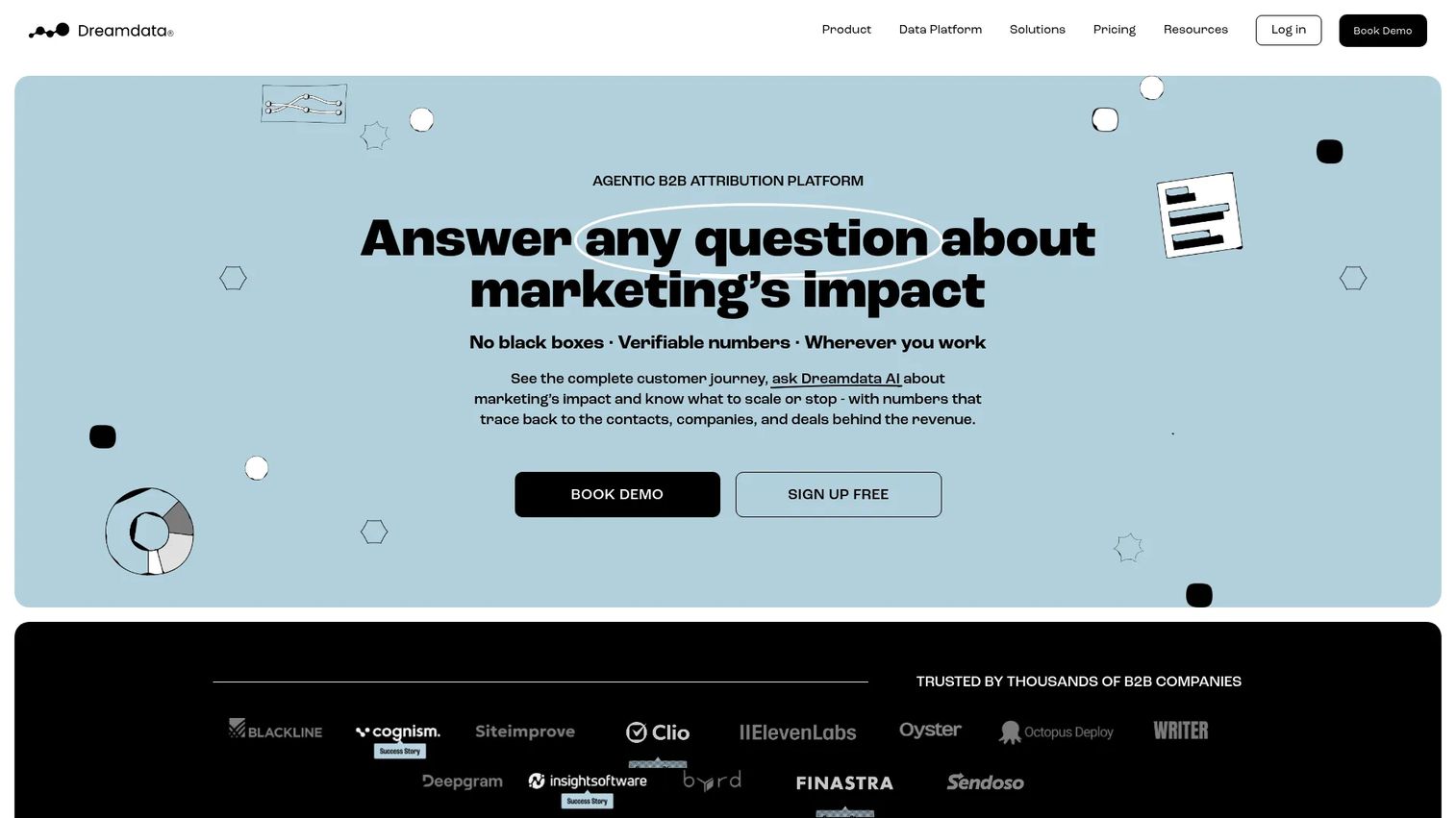
Dreamdata is a B2B attribution and activation platform. It builds customer journey timelines, connects touchpoints with revenue, and supports account focused analysis.
This structure fits long sales cycles involving several contacts. Marketing teams can review pipeline attribution at the account level instead of treating every lead as an isolated buyer.
Audience activation extends those insights into advertising workflows. That connection helps marketers move from analysis to campaign execution.
Best for: B2B SaaS teams measuring pipeline across complex account journeys.
Key features
- Customer journey timelines
- Custom attribution models
- ROI and ROAS reporting
- Audience building and activation
- Contact intelligence
Why choose Dreamdata: It focuses on the full B2B account journey. Choose it when influenced pipeline and closed won attribution matter more than single lead source reporting.
Dreamdata pricing: The Free plan costs $0 monthly. Attribution and Activation uses custom pricing, with Activation available as an add on.
G2 rating: 4.7/5.
3. Cometly

Cometly is a B2B SaaS marketing attribution platform connecting advertising activity with pipeline and closed revenue. Its first party server side pixel collects campaign events outside native advertising dashboards.
The platform supports multi touch attribution, customer journey mapping, and conversion API connections. Teams can also synchronize CRM or warehouse data.
Cometly prices according to monthly website traffic. This usage model deserves attention if pageviews rise faster than revenue.
Best for: Paid media teams optimizing advertising with pipeline and LTV data.
Key features
- First party server side tracking
- Multi touch attribution
- Conversion API integrations
- Customer journey mapping
- Custom reporting dashboards
Why choose Cometly: It connects advertising spend with downstream revenue events. This supports budget decisions based on customer value rather than lead volume.
Cometly pricing: Core starts at $750 monthly. Annual billing saves 20%, while Enterprise uses custom pricing.
G2 rating: 4.8/5.
4. RedTrack
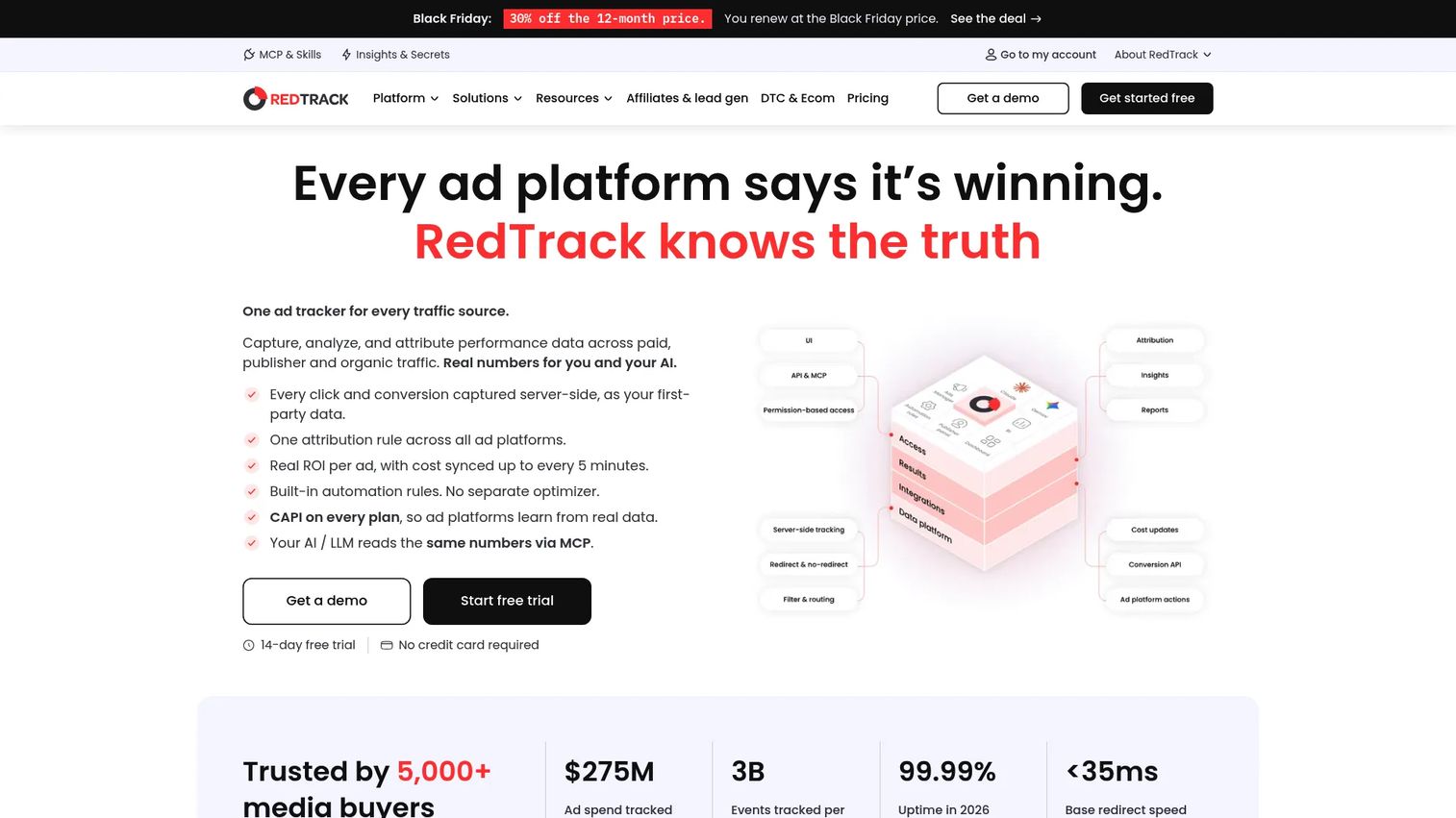
RedTrack provides performance marketing analytics across advertising, affiliates, and ecommerce campaigns. It combines first party tracking with server side conversions and advertising cost data.
Performance teams can use multi touch attribution to evaluate journeys across networks. Automated stop rules and traffic distribution also connect measurement with campaign operations.
Pricing varies by product type and tracked activity. Agencies or brands should model expected event volume before comparing plans.
Best for: Performance marketers managing several advertising networks or affiliate programs.
Key features
- Server side conversion tracking
- Multi touch journey reporting
- Conversion API connections
- Advertising cost synchronization
- Automated campaign rules
Why choose RedTrack: It provides an independent view of paid performance. The platform suits teams that distrust channel self reporting and need granular campaign controls.
RedTrack pricing: Relay is free. Brand starts at $69 monthly, Solo at $118, Team at $279, and Enterprise at $699.
G2 rating: 4.5/5.
5. Adobe Analytics
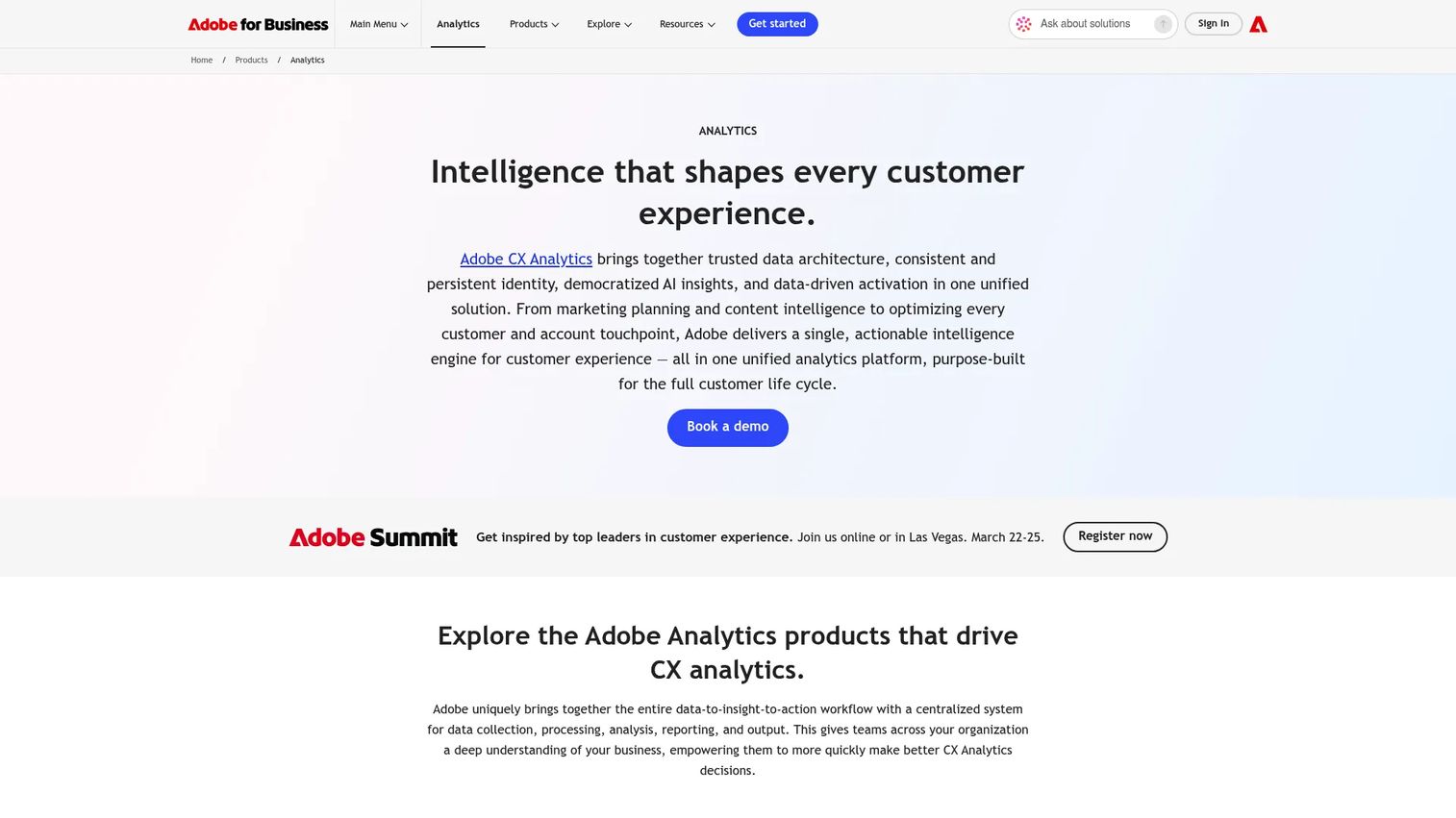
Adobe Analytics is an enterprise digital analytics platform for web and mobile behavior. It offers flexible segmentation, journey analysis, advanced reporting, and extensive data governance.
Analysis Workspace lets analytics teams build custom projects around their reporting questions. Anomaly detection and contribution analysis help investigate unexpected performance changes.
This platform makes the most sense when dedicated analysts can manage implementation and reporting design. Lean growth teams seeking a quick attribution layer should account for that operating model.
Best for: Large organizations with analytics resources and complex digital measurement requirements.
Key features
- Flexible audience segmentation
- Digital journey analysis
- Custom attribution reporting
- Enterprise data governance
- Anomaly detection
Why choose Adobe Analytics: It offers deep analytical control. Existing Adobe Experience Cloud users can keep measurement within their established data environment.
Adobe Analytics pricing: Custom pricing applies to Select, Prime, and Ultimate packages. Contact Adobe for a quote.
G2 rating: 4.2/5.
6. Northbeam MTA
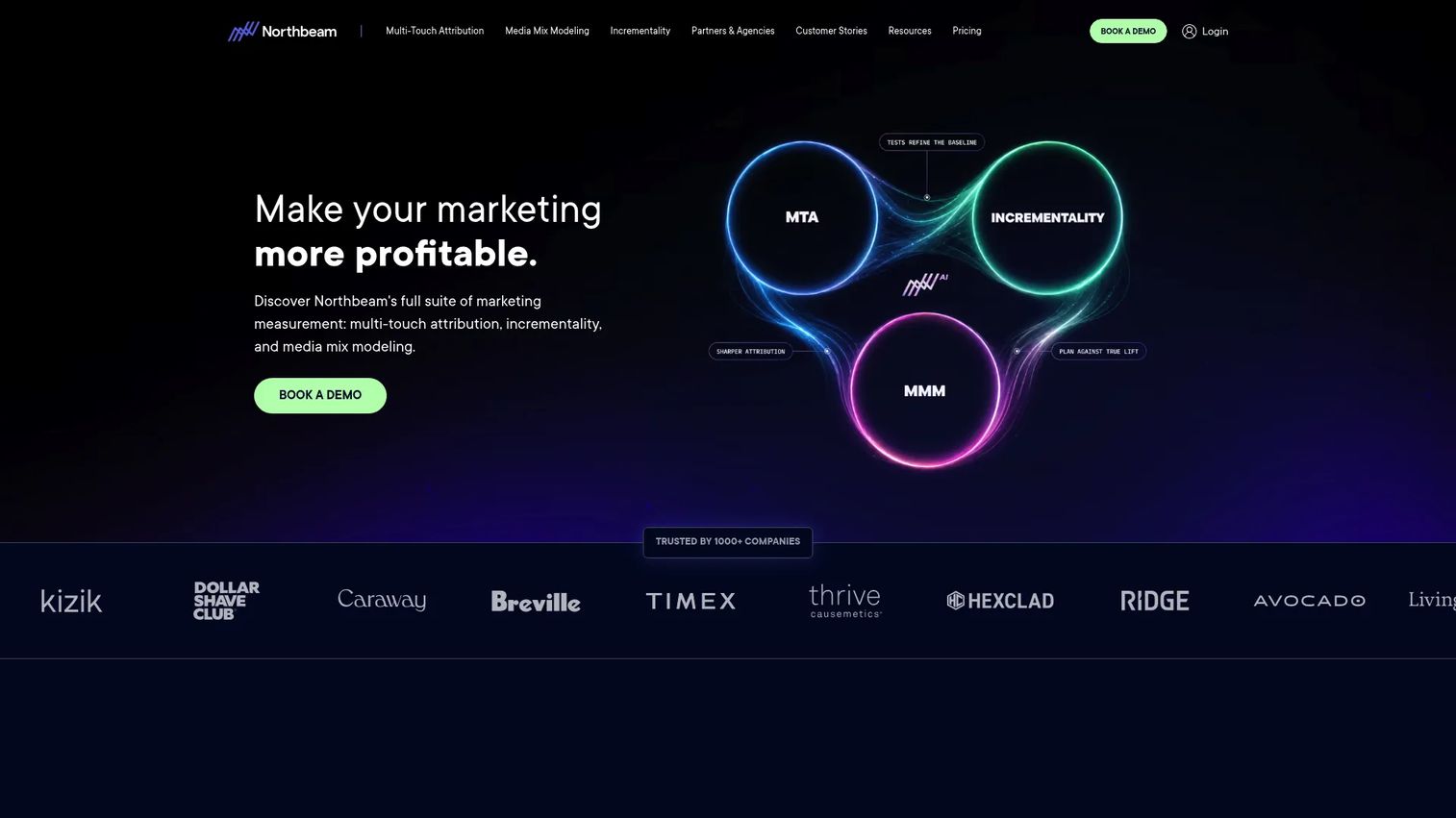
Northbeam MTA is a marketing intelligence platform for ecommerce and direct to consumer teams. It combines multi touch attribution with incrementality and media mix modeling.
Flexible lookback windows let marketers compare different attribution assumptions. Omnichannel dashboards show performance across metrics, campaigns, and advertising channels.
Northbeam also supports view through attribution using clicks and deterministic views. Its pricing makes the strongest case for brands with enough media spend to justify dedicated measurement.
Best for: Ecommerce teams measuring ROAS, CAC, and media efficiency across channels.
Key features
- Multi touch ecommerce attribution
- Flexible attribution windows
- Omnichannel performance dashboards
- Incrementality measurement
- Media mix modeling
Why choose Northbeam MTA: It supports several measurement methods. Ecommerce operators can compare platform ROAS with independent attribution and broader media analysis.
Northbeam MTA pricing: Starter begins at $1,500 monthly. Professional starts at $3,500 monthly, while Growth and Enterprise use custom pricing.
G2 rating: 4.5/5.
7. HockeyStack
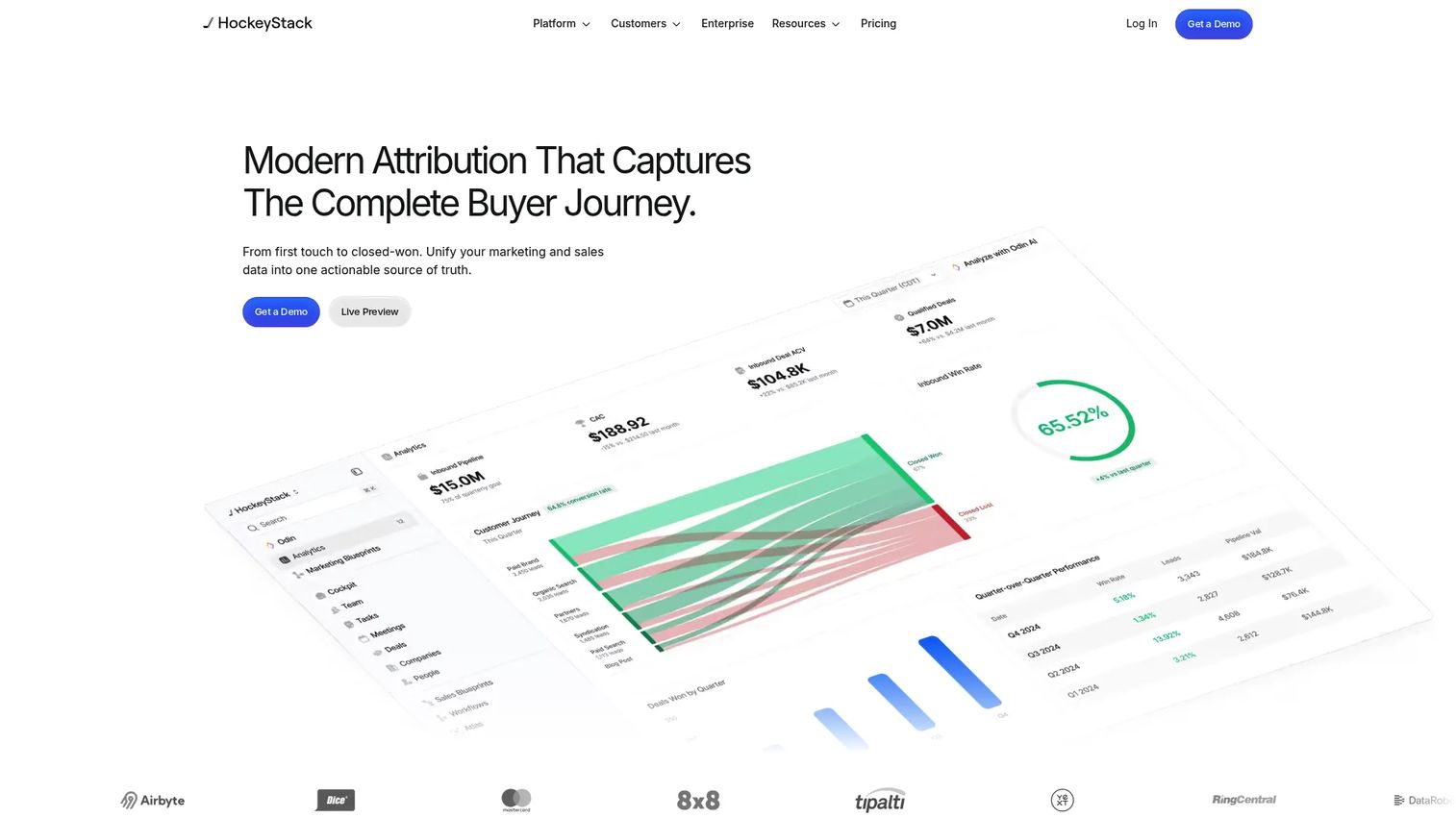
HockeyStack unifies marketing, sales, and revenue data for B2B reporting. It focuses on buyer journeys, multi touch attribution, and full funnel analysis.
Growth teams can connect CRM records with advertising and warehouse data. Custom dashboards then show movement across the funnel rather than stopping at lead creation.
The platform also provides lift and incrementality reporting. Forward looking recommendations add another layer for teams moving from campaign retrospectives toward budget planning.
Best for: B2B revenue teams measuring full funnel journeys and account activity.
Key features
- Holistic buyer journey tracking
- Multi touch attribution
- Lift and incrementality reporting
- Custom dashboards
- CRM and warehouse synchronization
Why choose HockeyStack: It connects marketing activity with the wider revenue journey. This works well when growth teams need visibility beyond lead source fields.
HockeyStack pricing: Custom pricing. G2 lists a usage based Basic price of $599 monthly.
G2 rating: 4.4/5.
8. Ruler Analytics
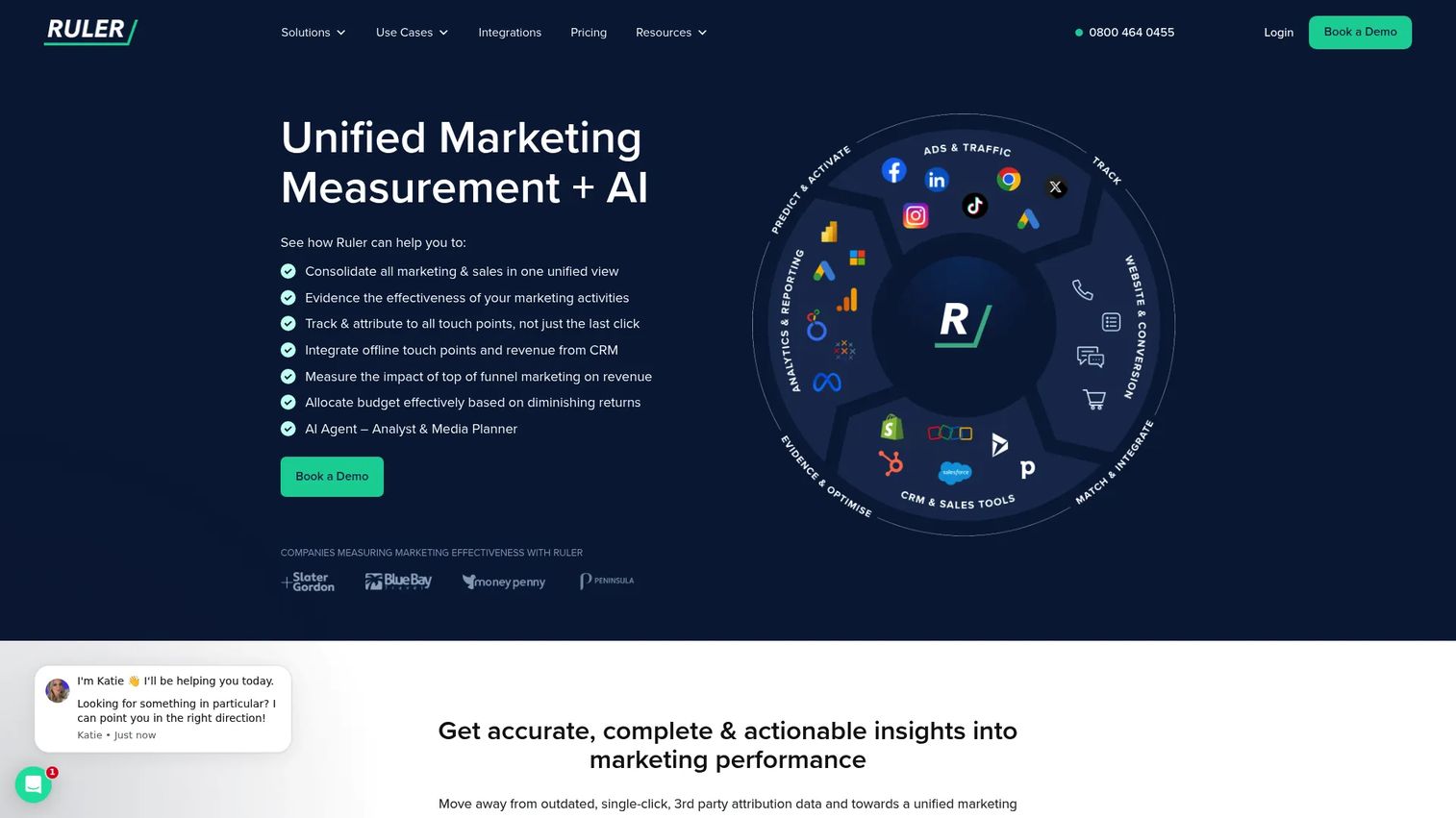
Ruler Analytics connects marketing touchpoints with CRM revenue. Its first party tracking covers forms, phone calls, live chat, ecommerce activity, and offline conversions.
The platform supports first click, last click, linear, time decay, position based, and data driven attribution models. Marketing mix modeling adds budget planning and forecasting.
This breadth makes Ruler relevant for service businesses and B2B lead generation teams. Call charges sit outside the core subscription, so include them in your cost estimate.
Best for: Lead generation teams connecting anonymous visits with closed revenue.
Key features
- First party visitor tracking
- Form and call attribution
- Multiple attribution models
- Marketing mix modeling
- CRM revenue reporting
Why choose Ruler Analytics: It follows leads beyond the initial form. Teams can connect acquisition sources with later CRM outcomes and offline activity.
Ruler Analytics pricing: Small starts at $267 monthly. Medium costs $668, Large costs $1,326, and Advanced begins at $2,000.
G2 rating: 4.6/5.
9. WhatConverts
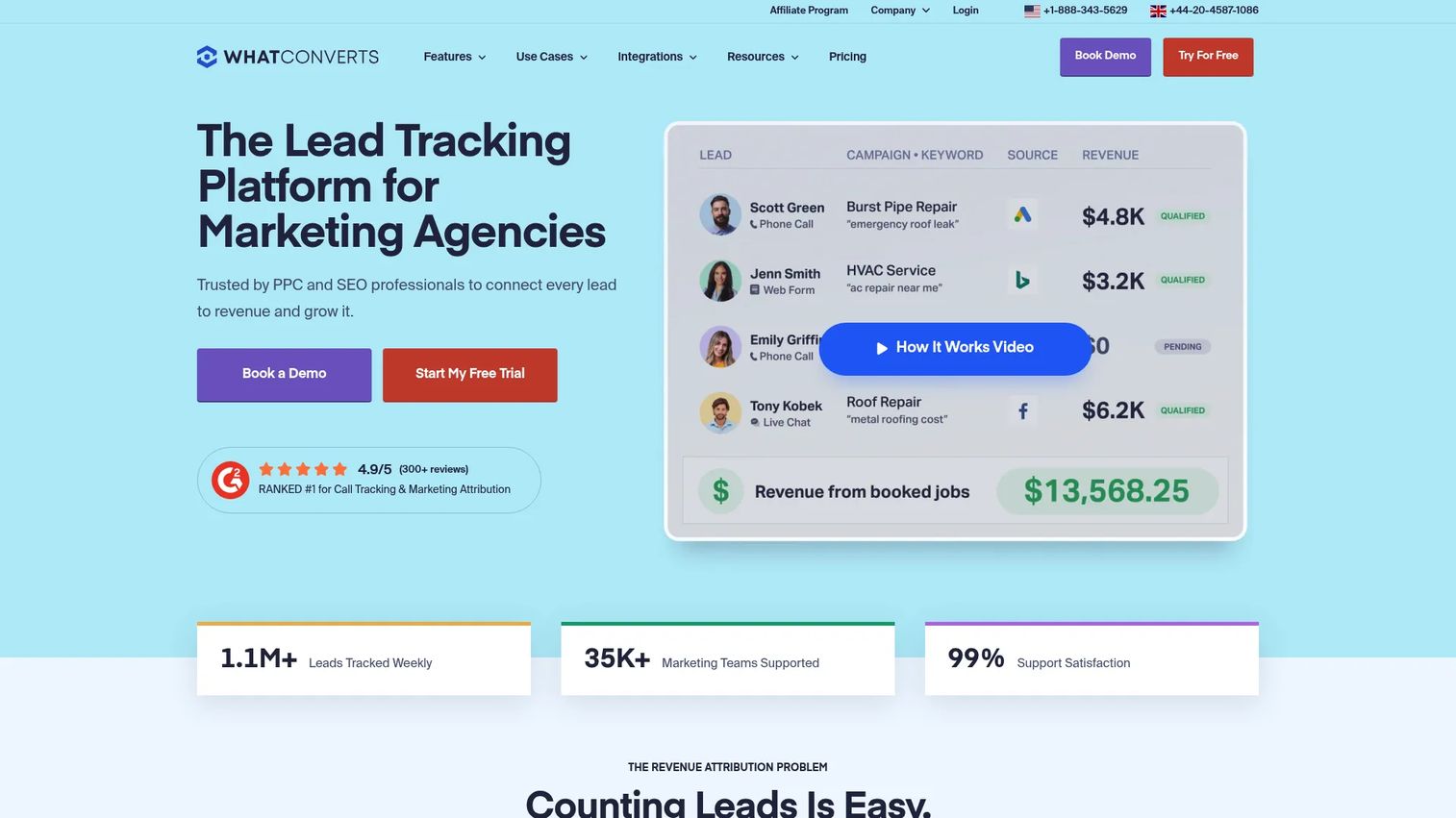
WhatConverts tracks inbound leads from calls, forms, chats, and transactions. Reporting connects each conversion with its campaign, keyword, landing page, and visitor history.
Lead management features help teams assess quality alongside volume. This distinction matters when several channels generate inquiries but few create qualified opportunities.
Agency plans support unlimited accounts and client reporting. Additional usage charges apply after the included monthly credits.
Best for: Agencies and lead driven businesses measuring inbound lead quality.
Key features
- Call and form tracking
- Chat and transaction tracking
- Campaign attribution
- Lead quality reporting
- Scheduled client reports
Why choose WhatConverts: It answers where a lead originated and whether it was valuable. That combination supports agency reporting and local lead generation.
WhatConverts pricing: Call Tracking starts at $30 monthly. Plus costs $60, Pro costs $100, and Elite costs $160.
G2 rating: 4.9/5.
10. Invoca

Invoca connects marketing and digital journey data with inbound phone conversations. It serves enterprise teams where calls represent high value conversions.
Dynamic and static numbers support call tracking attribution. Conversation analytics adds transcripts, summaries, sentiment analysis, and custom AI models.
Call management includes intelligent routing, recording, IVR, and flow controls. Optional packages add further conversation analysis or contact center capabilities.
Best for: Enterprise marketers connecting campaign spend with inbound call outcomes.
Key features
- Dynamic call tracking
- Conversation analytics
- AI call scoring
- Intelligent call routing
- CRM data connections
Why choose Invoca: It measures a conversion path that web analytics often misses. This fits call heavy industries with large media budgets and contact centers.
Invoca pricing: Custom pricing across Pro, Enterprise, Elite, Performance Professional, and Performance Enterprise. Contact Invoca for a quote.
G2 rating: 4.5/5.
11. CaliberMind
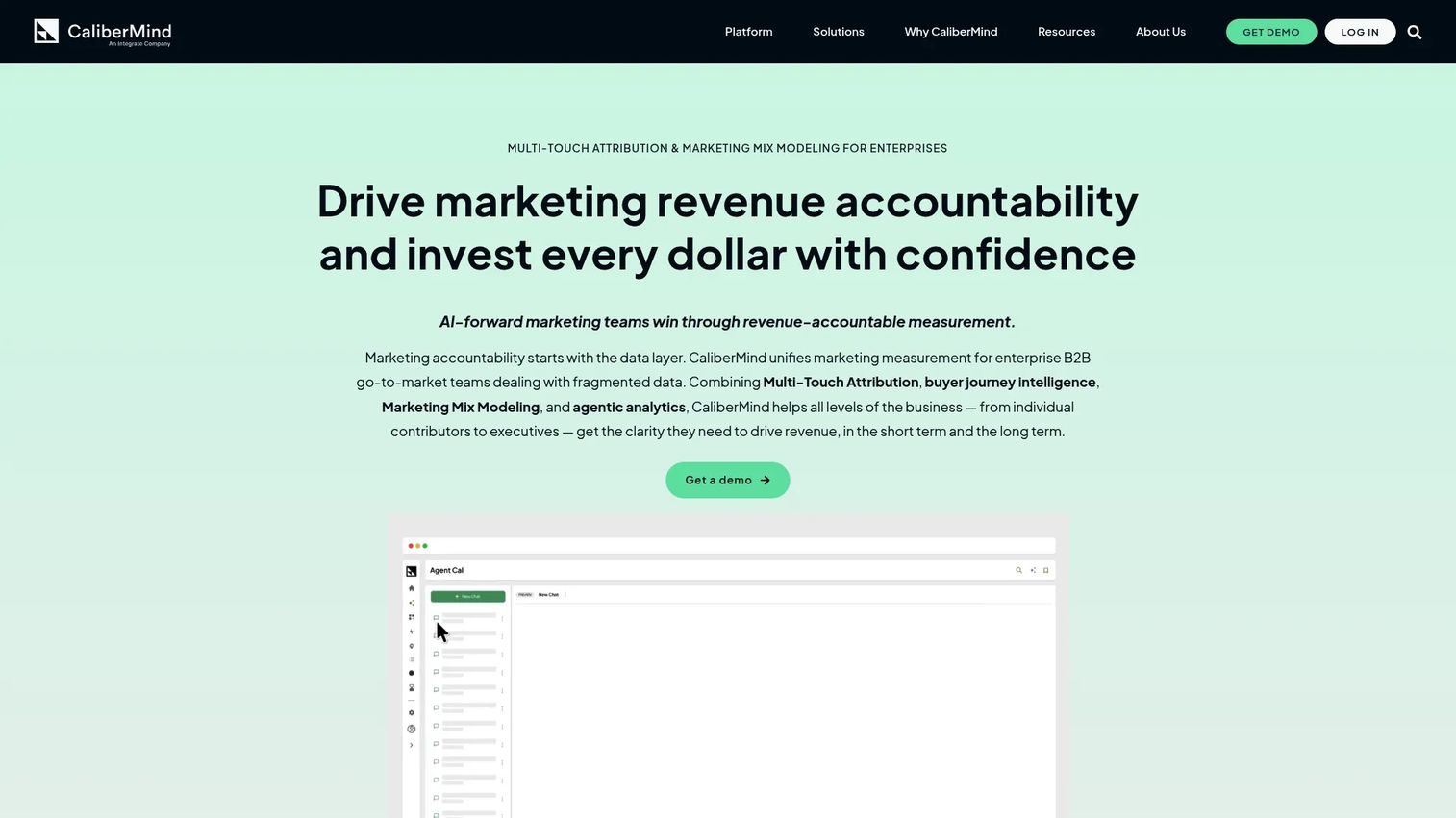
CaliberMind is a B2B go to market intelligence platform. It combines multi touch attribution with account engagement analysis, buyer journey intelligence, and marketing mix modeling.
Its data layer supports enterprise CRM and marketing stacks through more than 170 connectors. Teams can also activate audience segments across advertising platforms.
The platform fits organizations that need attribution within a broader revenue operations reporting framework. Pricing reflects data volume and technology requirements.
Best for: Enterprise B2B teams measuring account engagement and revenue contribution.
Key features
- Multi touch revenue attribution
- Account engagement scoring
- Buyer journey intelligence
- Marketing mix modeling
- Enterprise data connectors
Why choose CaliberMind: It combines attribution with account based measurement. Revenue teams can analyze campaign impact alongside engagement signals and sales activity.
CaliberMind pricing: Custom pricing. The quote reflects data volume, technology stack, and go to market requirements.
G2 rating: 4.5/5.
12. RevSure
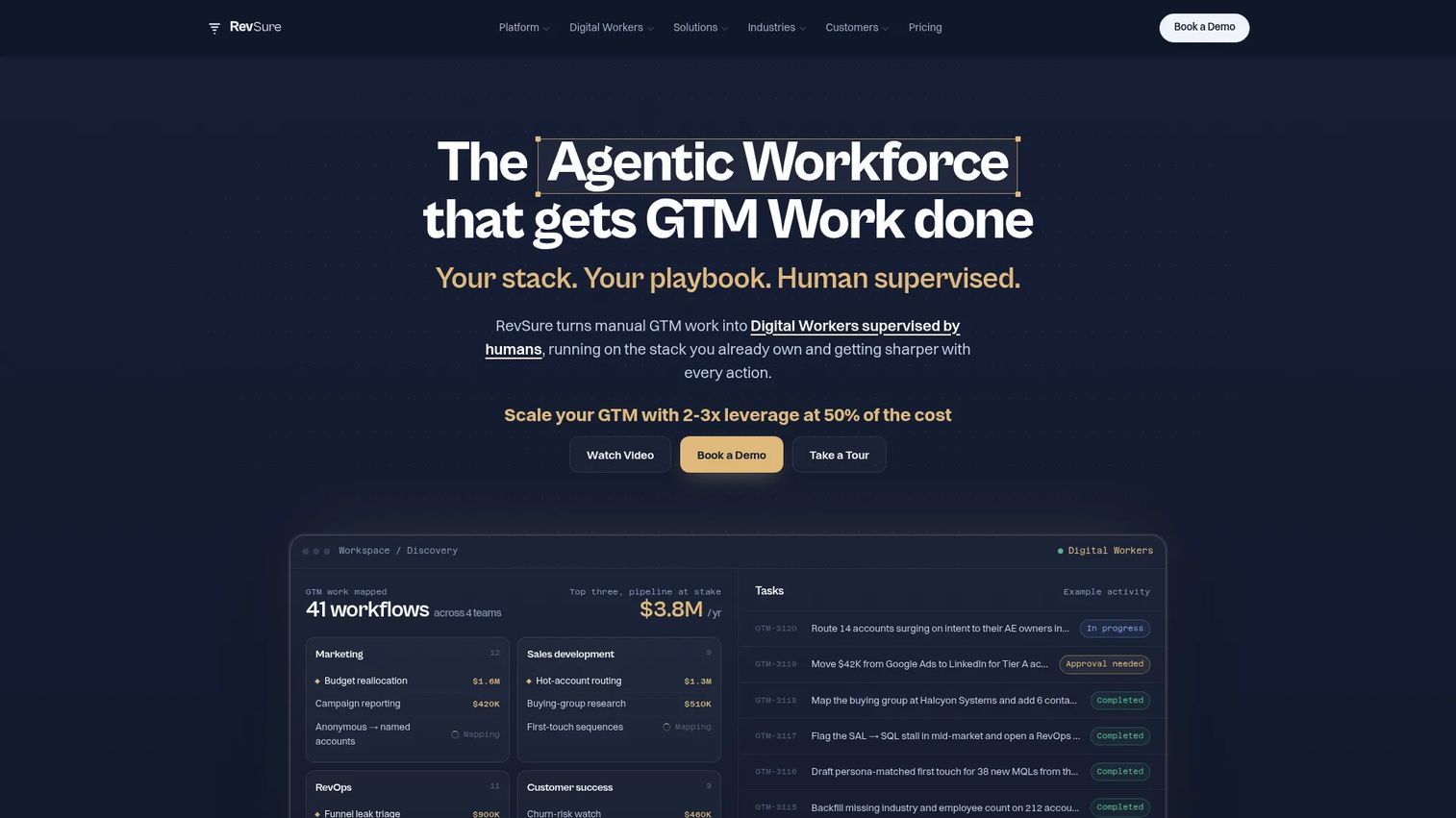
RevSure combines attribution, predictive pipeline intelligence, funnel analytics, and AI driven execution. Its measurement capabilities include multi touch attribution, incrementality, and marketing mix modeling.
Predictive scoring helps teams assess pipeline potential. Forecasting connects campaign analysis with future revenue planning rather than limiting attribution to historical reports.
The platform also offers AI agents for prospecting and revenue execution. Those additions broaden the purchase beyond attribution software alone.
Best for: B2B teams connecting campaign impact with pipeline forecasting.
Key features
- Multi touch attribution
- Marketing mix modeling
- Incrementality measurement
- Predictive pipeline scoring
- Revenue forecasting
Why choose RevSure: It ties attribution to pipeline planning. This supports marketers who need campaign data to inform forecast discussions.
RevSure pricing: Early Adopter starts at $4,000 monthly. Growth costs $6,000 monthly, while Enterprise uses custom pricing.
G2 rating: 4.7/5.
13. SegmentStream
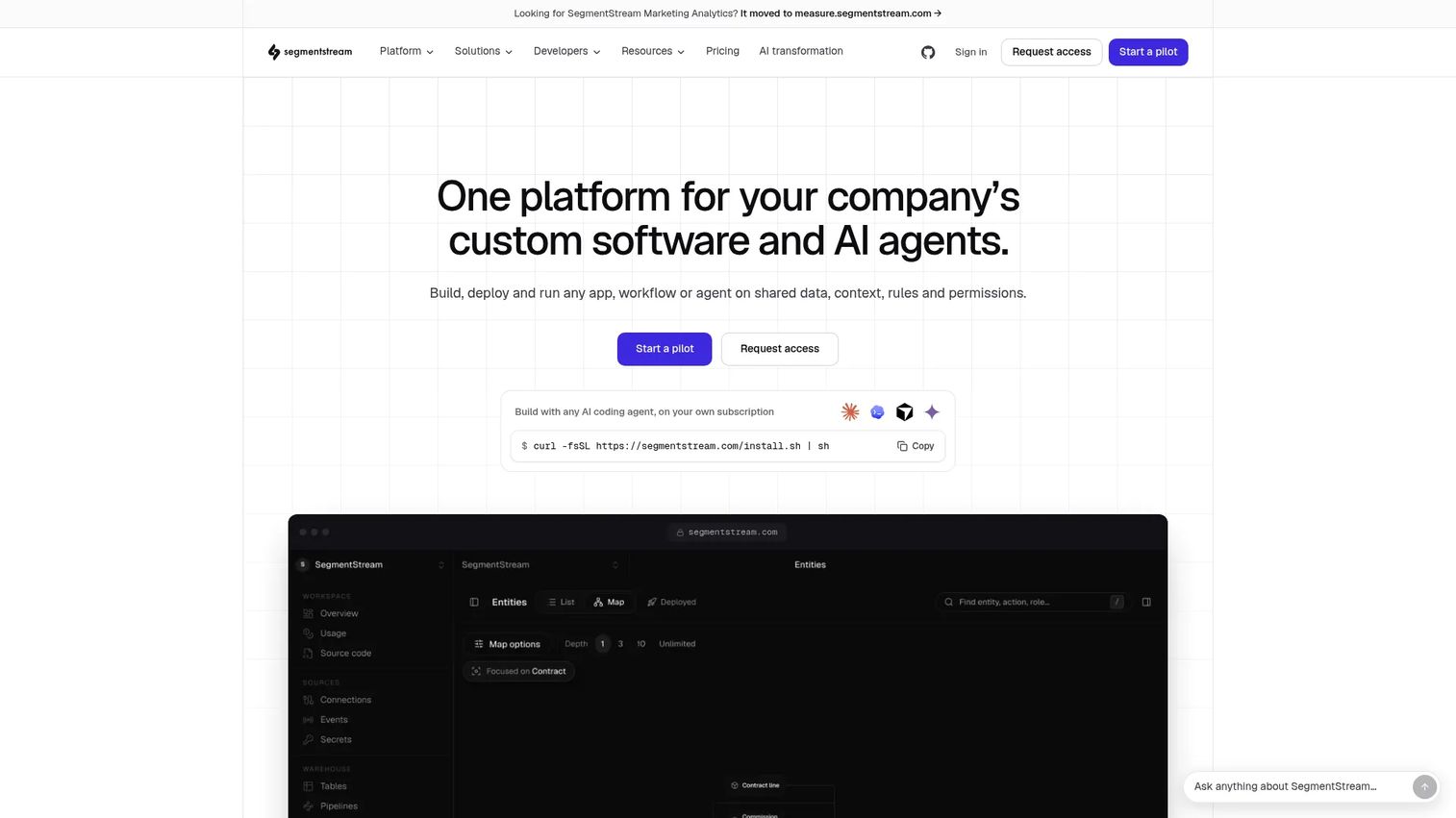
SegmentStream currently positions its wider platform around AI native company infrastructure. Its pricing page still presents Online, Full Funnel, and Enterprise measurement packages.
The Online package addresses businesses where conversions happen digitally. Full Funnel adds CRM and warehouse conversion capabilities.
Enterprise includes server side conversion tracking, automated budget allocation, and additional security services. Buyers should confirm how the current product direction maps to their attribution requirements.
Best for: Teams evaluating modeled measurement alongside unified business data infrastructure.
Key features
- Online conversion measurement
- CRM conversion support
- Warehouse conversion support
- Server side conversion tracking
- Automated budget allocation
Why choose SegmentStream: Its packages span online and full funnel measurement. Confirm the implementation scope before treating it as a standalone attribution purchase.
SegmentStream pricing: Online starts at $800 monthly. Full Funnel begins at $1,200, while Enterprise starts at $5,000 monthly.
G2 rating: 4.7/5.
14. Usermaven

Usermaven combines marketing attribution with website and product analytics. B2B SaaS teams can follow acquisition activity into product engagement within the same reporting environment.
No code event tracking reduces implementation work for lean teams. Journey analysis, funnels, segments, and retention reports support broader growth questions.
This scope can replace separate website analytics and product reporting tools for some buyers. Check whether its integrations cover your CRM and advertising stack before consolidating.
Best for: Lean SaaS teams combining acquisition attribution with product behavior analysis.
Key features
- Multi touch attribution
- Website and product analytics
- Customer journey tracking
- No code event tracking
- Funnel and retention reports
Why choose Usermaven: It connects marketing acquisition with product usage. This helps product led teams compare campaign quality using downstream behavior.
Usermaven pricing: Custom pricing for Business and Enterprise plans. Contact Usermaven for a quote.
G2 rating: 4.8/5.
15. Phonexa
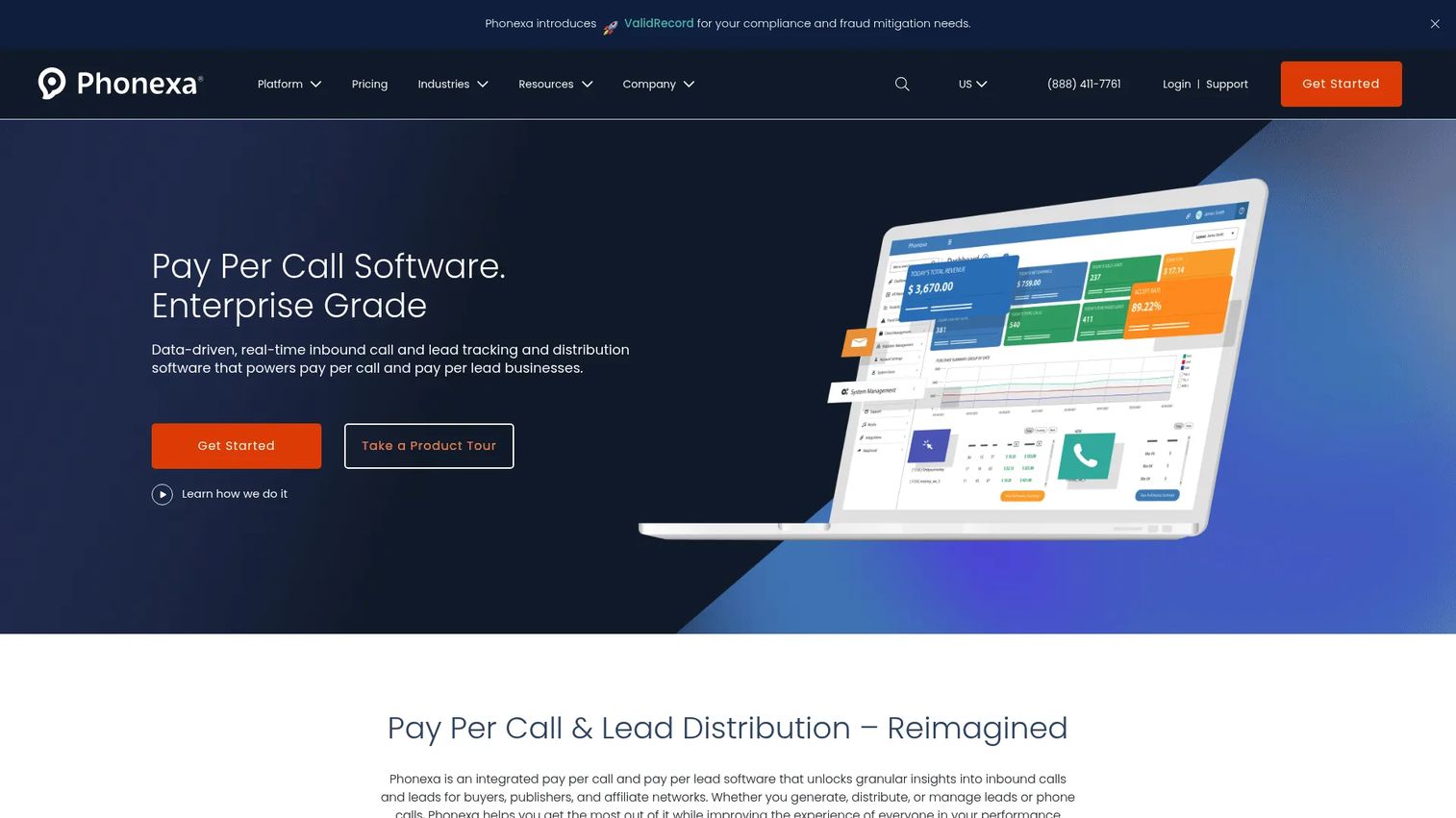
Phonexa tracks inbound calls and leads while supporting real time distribution. Its audience includes lead generators, affiliate networks, publishers, and performance marketing teams.
Ping post routing helps buyers compare and distribute leads. Fraud detection, duplicate checks, and click tracking support high volume acquisition workflows.
The platform also includes IVR tools, call recording, and automated accounting. Usage charges can increase the total cost beyond the base subscription.
Best for: Performance teams combining attribution with lead distribution and partner operations.
Key features
- Inbound call tracking
- Lead tracking and distribution
- Ping post routing
- Fraud and duplicate detection
- Click and campaign analytics
Why choose Phonexa: It connects attribution with lead operations. This fits businesses where routing and partner performance matter after conversion.
Phonexa pricing: Lite starts at $250 monthly with a $500 setup fee. Premium costs $500 monthly, while Enterprise costs $1,000 monthly.
G2 rating: 4.9/5.
16. Triple Pixel
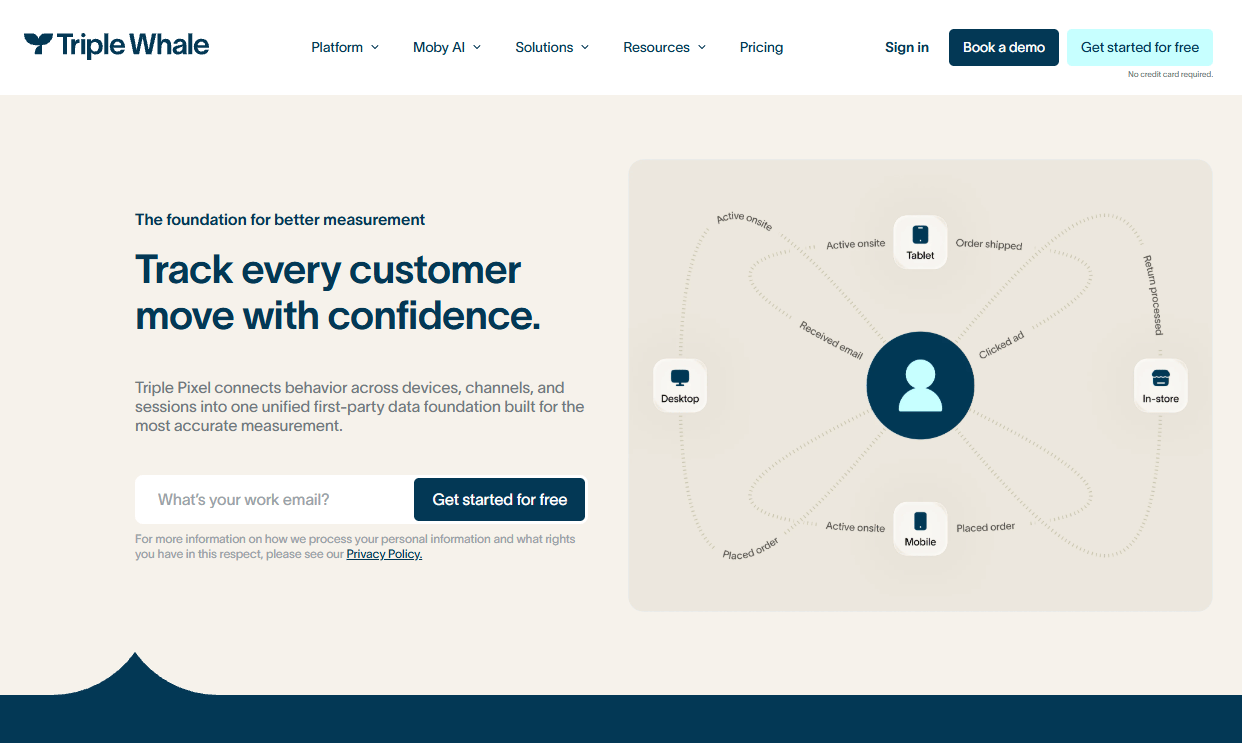
Triple Pixel appears in this shortlist for ecommerce teams evaluating Shopify focused attribution. However, accessible first party documentation did not provide enough current detail for a full capability assessment.
Treat the platform as a due diligence candidate rather than a decision ready recommendation. Ask for current product documentation, supported data sources, implementation requirements, and measurement methodology.
The supplied site also lacked verifiable pricing and a dedicated G2 listing. Those gaps make direct comparison difficult.
Best for: Shopify teams willing to validate the current product directly with the vendor.
Key features
- Current capabilities require vendor confirmation
- Supported integrations require vendor confirmation
- Attribution methods require vendor confirmation
- Reporting coverage requires vendor confirmation
Why choose Triple Pixel: Evaluate it if Shopify attribution is your core requirement. Request a current product demonstration before adding it to a shortlist.
Triple Pixel pricing: Contact Triple Pixel for pricing.
17. Coupler.io
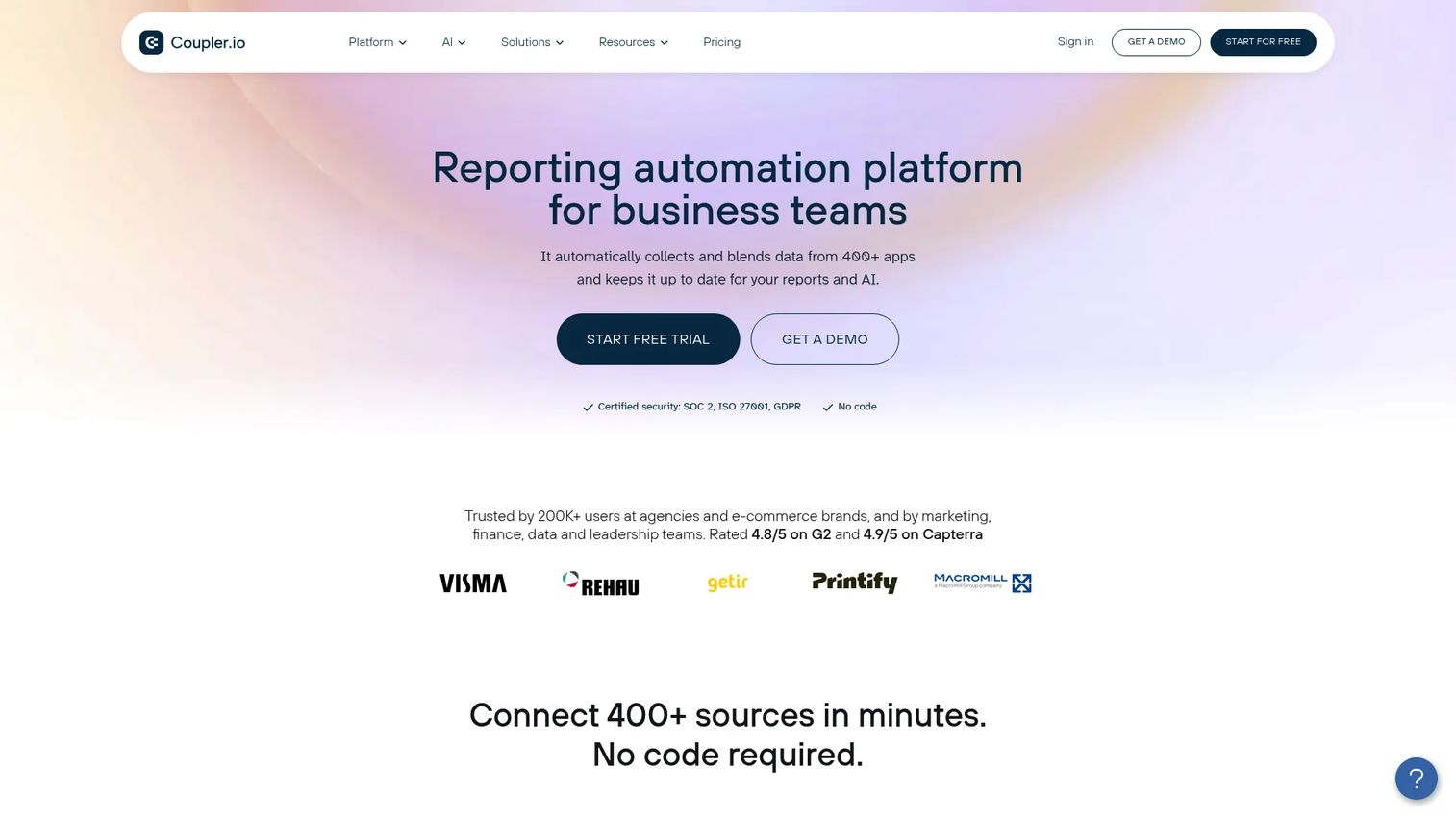
Coupler.io is a reporting automation and data integration platform rather than a pure attribution engine. It collects and blends data from more than 400 business applications.
Marketers can send data into spreadsheets, warehouses, BI tools, dashboards, APIs, or AI tools. Scheduled refreshes reduce the manual work behind recurring performance reports.
Transformations support formulas, filters, aggregation, append operations, and joins. Teams still need to define their own attribution logic and reporting assumptions.
Best for: Marketers building attribution dashboards in spreadsheets or BI tools.
Key features
- More than 400 data connectors
- Scheduled reporting refreshes
- Data blending and transformations
- Spreadsheet and warehouse destinations
- BI dashboard workflows
Why choose Coupler.io: It gives analysts control over reporting workflows. Choose it when you already know how attribution should be calculated.
Coupler.io pricing: Free costs $0. Starter begins at $32 monthly, Active at $132, and Pro at $259.
G2 rating: 4.8/5.
Considerations when choosing marketing attribution software
Start with the business model
B2B SaaS teams need account journeys, CRM stages, pipeline influence, and closed won reporting. Ecommerce marketers usually prioritize ROAS, CAC, LTV, and purchase behavior.
Call heavy businesses need offline attribution. Agencies may care more about client dashboards, account separation, and scheduled reporting.
Audit your data before buying
Attribution software inherits broken UTMs, missing CRM stages, duplicate conversions, and inconsistent offline imports. Fix those inputs before evaluating dashboard accuracy.
Review campaign naming, lifecycle stages, revenue records, consent signals, and conversion events. Otherwise, you’ll automate the same reporting arguments.
Match the model to the question
First touch shows what created demand. Last touch identifies the final recorded interaction before conversion.
Multi touch attribution shows journey influence. Data driven attribution needs enough clean observations to produce useful outputs.
Check integration depth
Confirm field level access for your CRM, advertising accounts, ecommerce platform, call data, and warehouse. A listed integration doesn’t guarantee the fields you need will sync.
Also check export options. Your finance or RevOps team may need the data in an existing BI environment.
Know where attribution breaks
Dark social, word of mouth, privacy restrictions, and offline conversations create blind spots. Buying committees also make person level journeys incomplete.
Use attribution alongside incrementality testing and marketing mix modeling where appropriate. The goal is better decisions rather than artificial certainty.
Conclusion
The best marketing attribution software depends on the revenue question you need to answer.
HubSpot works well when CRM consolidation matters. Dreamdata fits B2B teams mapping account journeys and influenced pipeline.
Cometly and RedTrack focus on paid media measurement. Northbeam MTA serves ecommerce teams combining attribution with broader media analysis.
WhatConverts suits agencies and lead driven companies. Invoca adds enterprise conversation analytics, while Phonexa connects attribution with lead distribution.
Coupler.io takes a different route. It helps teams automate reporting while retaining control over dashboard logic.
Before buying anything, audit your UTMs, conversion events, lifecycle stages, and revenue records. Then run the same historical campaign through each shortlisted platform.
Compare the differences. Ask why they exist. Attribution your CFO will believe starts with visible assumptions, not a prettier chart.
FAQs
Marketing attribution software tracks customer touchpoints and assigns conversion credit using defined attribution models. It connects marketing activity with outcomes such as pipeline, revenue, ROAS, CAC, or LTV.
The output helps marketers compare campaigns using a consistent measurement framework. Results still depend on tracking quality and model assumptions.
The best choice depends on CRM complexity, sales cycle length, and whether you report at contact or account level. HubSpot fits teams wanting CRM native reporting, while Dreamdata focuses on account journeys.
CaliberMind supports enterprise B2B measurement. HockeyStack and RevSure add full funnel or predictive pipeline analysis.
Northbeam MTA supports ecommerce attribution, incrementality, and media mix modeling. RedTrack provides first party tracking with server side conversion workflows.
Cometly connects advertising activity with revenue and LTV. Shopify focused teams can also evaluate Triple Pixel after confirming its current capabilities.
Multi touch attribution assigns conversion credit across several recorded interactions. It provides a wider customer journey view than first touch or last touch attribution.
Common models include linear, position based, time decay, and data driven attribution. Each model answers a different measurement question.
Accuracy depends on clean tracking, consistent CRM data, consent coverage, identity resolution, and offline conversion capture. Missing touchpoints make every model less complete.
Two platforms can produce different results from the same campaign. Lookback windows, identity rules, and credit models often explain the gap.
Some platforms can replace parts of web analytics, especially campaign reporting and revenue attribution. Others work alongside behavioral analytics rather than replacing them.
Many teams use one platform for website behavior and another for revenue credit. Consolidation makes sense only when the replacement covers your required events and exports.
Start with consistent UTMs, advertising spend, conversion events, CRM stages, and revenue records. Ecommerce teams also need purchase and customer value data.
Call heavy businesses need phone conversion records. Every team should document consent signals and identity matching rules.
Advertising platforms use different lookback windows, view through rules, and identity methods. Each platform also has an incentive to claim conversions.
Independent attribution tools apply their own deduplication and model logic. Compare the assumptions before deciding which report should guide budget.