A hospital can have an incident-reporting process, an audit calendar, a policy library, a claims system, and a credentialing workflow. That still does not mean its leaders can see risk early enough to act.
The failure is rarely a missing form. It is fragmented accountability: Events reported into one system, policies living in another, claims handled by a third team, and no shared view of what is escalating and who owns resolution. According to the World Health Organization (2023), around 1 in 10 patients is harmed while receiving hospital care, and more than half of that harm is preventable. The market for patient safety and risk management software reflects that urgency: Grand View Research valued it at $2.5 billion globally in 2025, with North America accounting for nearly half of that revenue.
If you are evaluating this category for a healthcare product company or health system, the question is not which platform has the longest feature list. The question is which workflow creates the greatest current operating exposure, and which software fits the team that will own it day to day.
What's inside
This guide is for healthcare SaaS founders, operations executives, and the compliance or clinical quality leaders they delegate evaluation to. Selection criteria include:
- Healthcare workflow specificity (not generic GRC software repurposed for healthcare)
- Coverage across the key job categories: Patient safety, incident reporting, claims, policy management, and provider screening
- Implementation fit: Who owns configuration, taxonomy, and ongoing administration
- Verifiable product information and current G2 ratings
TL;DR
- Best for broad enterprise healthcare risk operations: Riskonnect Healthcare, for organizations connecting patient safety, claims, compliance, and enterprise risk under one operating model
- Best for configurable multi-workflow programs: Origami Risk Platform, for health systems that need adaptable workflows across risk, claims, provider performance, and employee health
- Best for patient safety and policy governance: RLDatix Safety & Risk Management, for hospitals standardizing event reporting, organizational learning, and policy access
- Best for clinical safety improvement: Inovalon VigiLanz Safety Management, for teams focused on safety-event reporting and Just Culture programs
- Best for flexible incident and quality operations: Sentact, for hospitals that need configurable frontline reporting with real-time analytics
- Best for compliance and audit operations: symplr Compliance, for compliance leaders standardizing risk assessments, policies, audits, and corrective actions
- Best for sanctions and exclusion screening: Verisys FACIS, the specialist pick for continuous provider, workforce, and vendor monitoring
What is healthcare risk management software?
Healthcare risk management software is a platform that helps hospitals, health systems, payers, and healthcare organizations identify, report, investigate, mitigate, document, and monitor clinical, operational, financial, compliance, and workforce risks.
What it typically includes
- Incident, event, and near-miss reporting with automated routing
- Investigation workflows, root cause analysis, and corrective action tracking
- Patient safety and clinical quality programs
- Compliance assessments, audits, and policy lifecycle management
- Claims, litigation, and insurance risk administration
- Risk registers, executive dashboards, and regulatory reporting
- Provider performance, credentialing, or exclusion screening
- Role-based access controls, audit trails, and EHR integrations
How the category breaks down
Not every healthcare risk platform does the same job. Understanding the sub-categories helps you choose the right starting point:
| Software type | Primary job | Typical buyer | Example outcome |
|---|---|---|---|
| Enterprise healthcare risk platform | Connect risk, safety, claims, compliance, and governance | Risk, compliance, operations leadership | Shared view of enterprise risk and remediation status |
| Patient safety platform | Capture and learn from adverse events | Quality and patient safety teams | Faster event review and safety improvement |
| Healthcare compliance platform | Manage policies, assessments, audits, and corrective actions | Compliance leaders | Better documentation and audit readiness |
| Clinical surveillance platform | Detect clinical safety signals | Pharmacy, nursing, clinical quality teams | Earlier intervention on safety risks |
| Credentialing and screening platform | Screen providers, staff, vendors, and entities | Medical staff services and compliance | Ongoing exclusion and sanctions monitoring |
Broad suites reduce system sprawl. A specialist may be the stronger purchase when the first operational gap is sharply defined. The two buying paths are not mutually exclusive: Many organizations run a specialist alongside a broader platform.
When to use healthcare risk management software
Centralize incident reporting and follow-through
Inconsistent event intake, incomplete investigations, and slow corrective action are the most common triggers. A dedicated system connects reporting to ownership, deadlines, and trend analysis so leaders can see what is escalating. Without structured follow-through, reporting volume becomes a metric rather than a safety outcome.
Standardize compliance, policy, and audit work
Regulatory change, survey preparation, and policy lifecycle management all generate evidence that needs to live somewhere organized. Software supports the process of collecting, reviewing, and acting on that evidence. It does not itself make an organization compliant with any law or accreditation standard.
Scale risk governance across multiple facilities
Hospital systems, ambulatory networks, and surgery center portfolios face a coordination problem: Local teams operate differently, but leadership needs a consistent picture. Common taxonomies, role-based workflows, and standardized dashboards give distributed organizations a shared operating model without eliminating local configuration.
Healthcare risk management software comparison
No single platform serves every healthcare risk job equally. Start with the workflow that currently creates the greatest operating exposure, then evaluate how each tool fits that specific need.
| # | Product | Best for | Key differentiator | Pricing | G2 rating |
|---|---|---|---|---|---|
| 1 | Riskonnect Healthcare | Broad enterprise healthcare risk programs | Connects risk, safety, claims, compliance, and enterprise risk in one platform | Contact sales | 4.3/5 |
| 2 | Origami Risk Platform | Configurable risk, claims, and safety operations | Healthcare workflows across patient safety, claims, provider performance, employee health, RMIS, EHS, and GRC | Contact sales | 4.5/5 |
| 3 | RLDatix Safety & Risk Management | Patient safety, event reporting, and policy governance | Connected incident reporting, safety learning, policy management, and claims capabilities | Contact sales | 3.9/5 |
| 4 | Inovalon VigiLanz Safety Management | Clinical event reporting and safety improvement | Safety-event and near-miss reporting with Just Culture program support | Contact sales | N/A |
| 5 | Sentact | Flexible incident reporting and healthcare quality | Configurable incident workflows, root cause analysis, rounding, and real-time dashboards | Contact sales | 5.0/5 |
| 6 | symplr Compliance | Healthcare compliance and audit operations | Risk assessments, policy management, audits, incidents, surveys, and corrective actions | Contact sales | N/A |
| 7 | Verisys FACIS | Provider, workforce, vendor, and entity screening | Healthcare sanctions, exclusions, debarments, and continuous monitoring | Contact sales | 4.6/5 |
Best healthcare risk management software tools for 2026
1. Riskonnect Healthcare
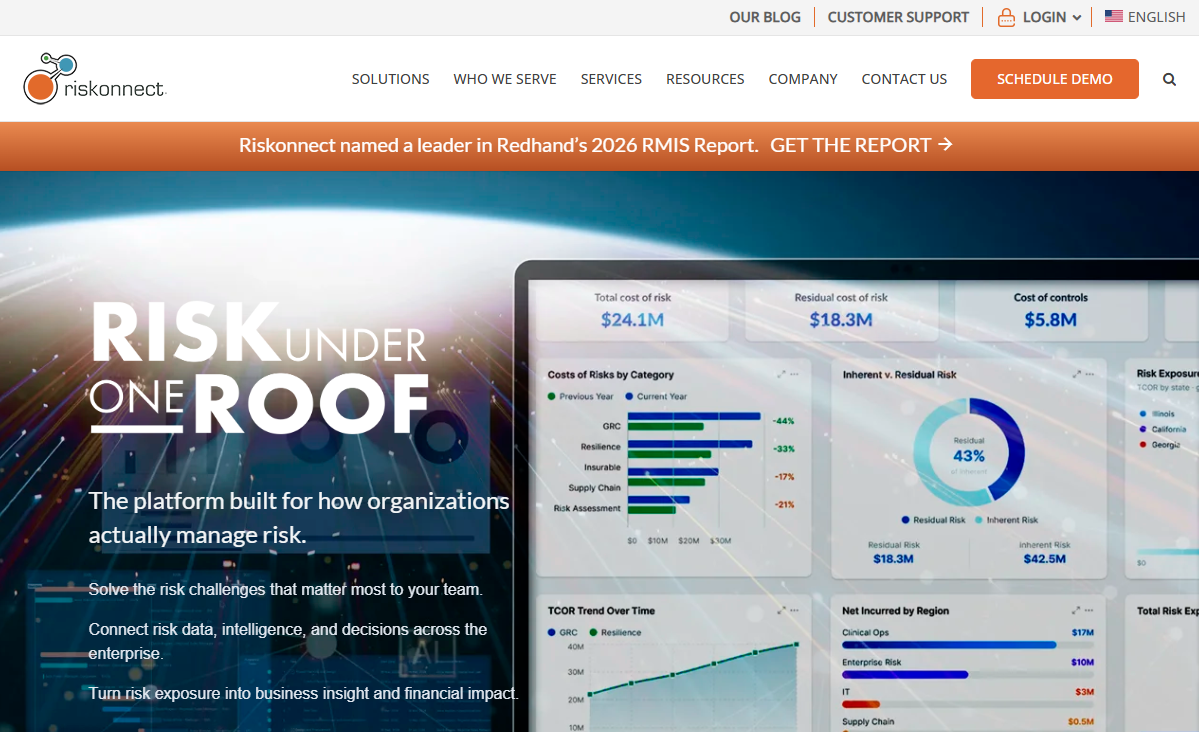
Riskonnect Healthcare is an integrated risk management platform for hospitals and health systems that need to connect patient safety, claims, compliance, provider quality, and enterprise risk under one operating model. Its positioning centers on giving accountable owners a shared view of risk data, from frontline event reports through executive dashboards. The platform handles both reactive workflows (event capture, claims administration) and proactive programs (compliance assessments, third-party risk).
Best for: Health systems and healthcare organizations that need broad risk coverage across clinical, operational, financial, and compliance functions.
Key features
- Patient, visitor, and employee incident reporting with automated notifications
- Claims administration and risk management information system capabilities
- Healthcare compliance management including HIPAA assessments and control testing
- Enterprise risk registers and executive dashboards
- Provider quality management workflows
Why choose Riskonnect: It suits organizations trying to consolidate several risk programs under a single operating model, particularly those with a defined enterprise risk function. A smaller team buying a narrow incident-reporting tool will likely find the scope more than they need at first.
Riskonnect Healthcare pricing: Riskonnect prices through sales conversations. Cost depends on selected modules, facility count, user roles, and integration requirements. Contact Riskonnect directly for a project-specific quote.
G2 rating: 4.3/5
2. Origami Risk Platform
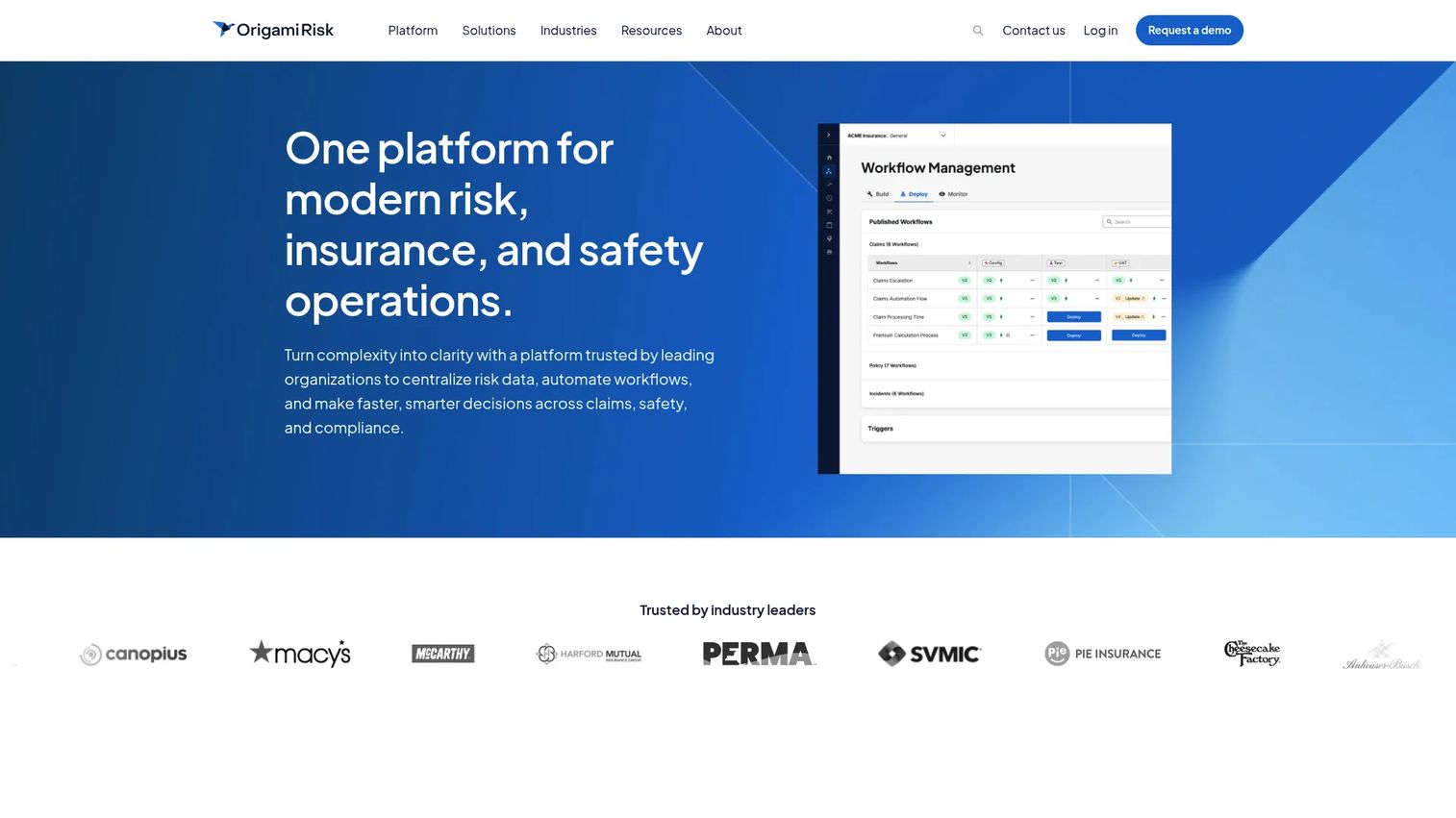
Origami Risk is a cloud-based SaaS platform for risk, safety, compliance, and insurance operations. Its healthcare deployment covers patient safety, claims management, provider peer review, employee health, and broader enterprise risk programs. The platform is designed to support different workflows across hospitals, ambulatory surgery centers, and multi-site health systems from a connected data environment.
Best for: Healthcare groups that need configurable workflows across risk, claims, provider performance, and employee safety within a shared governance structure.
Key features
- Event reporting and root cause analysis workflows
- Claims management and administration with consolidated data and analytics
- Provider peer review including FPPE and OPPE support
- Employee health and safety tracking
- Configurable dashboards, reporting, and analytics
Why choose Origami Risk: Adaptability is its strength. Organizations with departments that have distinct workflow requirements but want shared governance and consolidated reporting will get the most from this platform. That configurability only pays off when the organization agrees on data definitions and escalation logic before going live, so internal ownership matters significantly here.
Origami Risk pricing: Origami prices through sales conversations. The final cost depends on selected modules, user count, facility scope, integrations, and implementation services. Reach out to Origami directly for a tailored proposal.
G2 rating: 4.5/5
3. RLDatix Safety & Risk Management
RLDatix provides healthcare-specific software connecting incident reporting, root cause analysis, risk registers, patient feedback, claims management, and policy governance. Its focus on organizational learning distinguishes it from broader enterprise risk platforms: The system is built around the idea that safety data should drive improvement workflows, not just documentation. Policy management is delivered through PolicyStat, giving frontline staff searchable access to current policies.
Best for: Hospitals and health systems that want patient safety, event reporting, policy management, and quality improvement in a healthcare-focused platform.
Key features
- Incident and near-miss reporting with structured investigation workflows
- Safety learning, review, and improvement programs
- Policy management with version control through PolicyStat
- Claims management and patient feedback workflows
- Enterprise risk registers and risk prioritization
Why choose RLDatix: Clinical and safety workflow depth is the case for this platform. It belongs on the shortlist when frontline reporting adoption, patient safety culture, policy governance, and quality improvement are the primary operating gaps. Buyers should confirm which product modules are included in their intended deployment, since the RLDatix suite spans multiple products.
RLDatix Safety & Risk Management pricing: Pricing requires a sales conversation and depends on which product modules are included. Policy management, risk and safety, quality, and claims each represent separate deployment decisions. Contact RLDatix to scope the right combination.
G2 rating: 3.9/5
4. Inovalon VigiLanz Safety Management
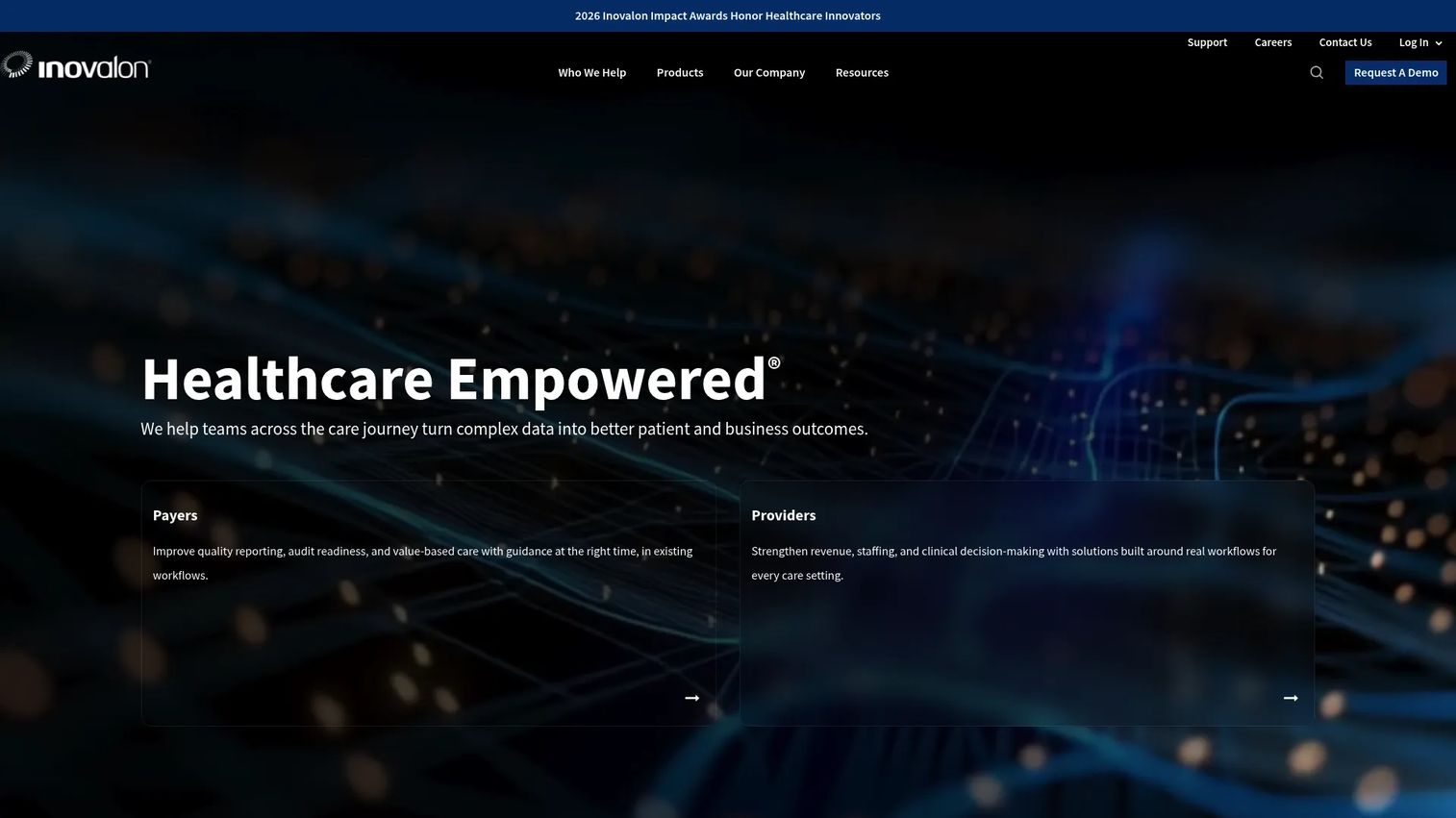
Inovalon VigiLanz Safety Management is a clinical patient safety software designed to improve how healthcare organizations report events, analyze near misses, and build a Just Culture program. It supports safety-event reporting, near-miss capture, data-driven safety improvement initiatives, and clinical improvement workgroups. The product suits organizations whose immediate operational need is clinical safety operations rather than a broad enterprise risk or claims suite.
Best for: Clinical quality, patient safety, and ambulatory care teams that want to improve safety-event reporting and learn from near misses.
Key features
- Safety-event and near-miss reporting workflows
- Root cause analysis of adverse events
- Data-driven patient safety improvement initiatives
- Just Culture program support
- Clinical improvement workgroups and analytics
Why choose Inovalon VigiLanz: Its specialization is a strength when clinical teams need the product to reflect safety and quality workflows, not a generic risk framework. Organizations that also need claims management, policy governance, or enterprise risk registers should evaluate whether VigiLanz fits alongside a broader platform rather than replacing one.
Inovalon VigiLanz Safety Management pricing: Pricing requires a sales conversation with Inovalon. VigiLanz packaging may sit within a broader Inovalon offering. Contact Inovalon directly to confirm scope and commercial terms.
5. Sentact
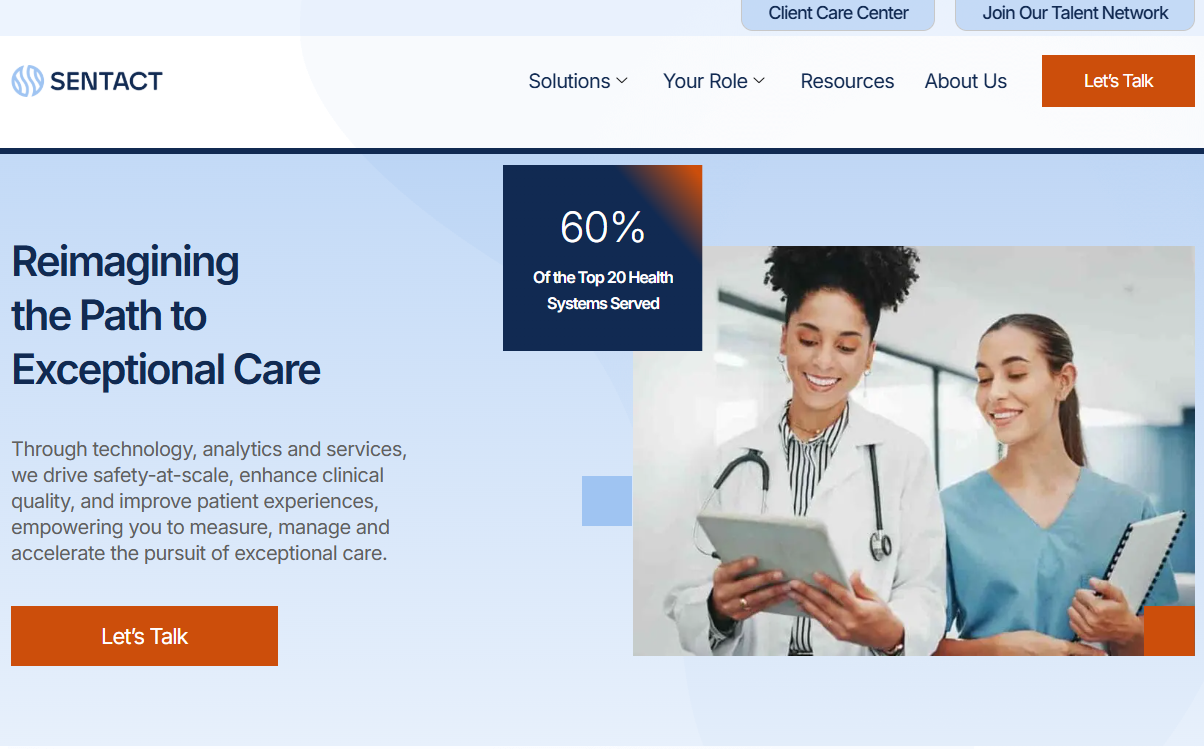
Sentact provides clinical operations technology for hospitals and health systems, covering patient safety, quality, patient experience, compliance, and regulatory readiness. Its incident management module supports configurable reporting forms, automated routing, root cause analysis, and real-time dashboards. The platform also delivers clinical rounding programs, audit functionality, and patient and staff feedback capture, making it a practical choice for organizations that want frontline adoption across multiple quality programs.
Best for: Healthcare organizations that want configurable incident reporting and quality operations without starting from a generic enterprise risk framework.
Key features
- Configurable incident and near-miss reporting forms with automated routing
- Root cause analysis tools and automated alert workflows
- Clinical rounding: Inspections, audits, and surveys with analytics
- Real-time dashboards and operational reporting
- Patient and staff feedback capture via kiosks, QR codes, and text
Why choose Sentact: Its story focuses on making reports easier to submit, assigning ownership quickly, and using recurring data patterns to improve quality. Organizations should assess whether scope beyond incident reporting and rounding, such as claims management, enterprise risk registers, or complex policy governance, requires a complementary platform.
Sentact pricing: Pricing requires a sales or demo conversation. Commercial terms depend on facility count, product scope, and implementation requirements. Contact Sentact for a tailored quote.
G2 rating: 5.0/5
6. symplr Compliance
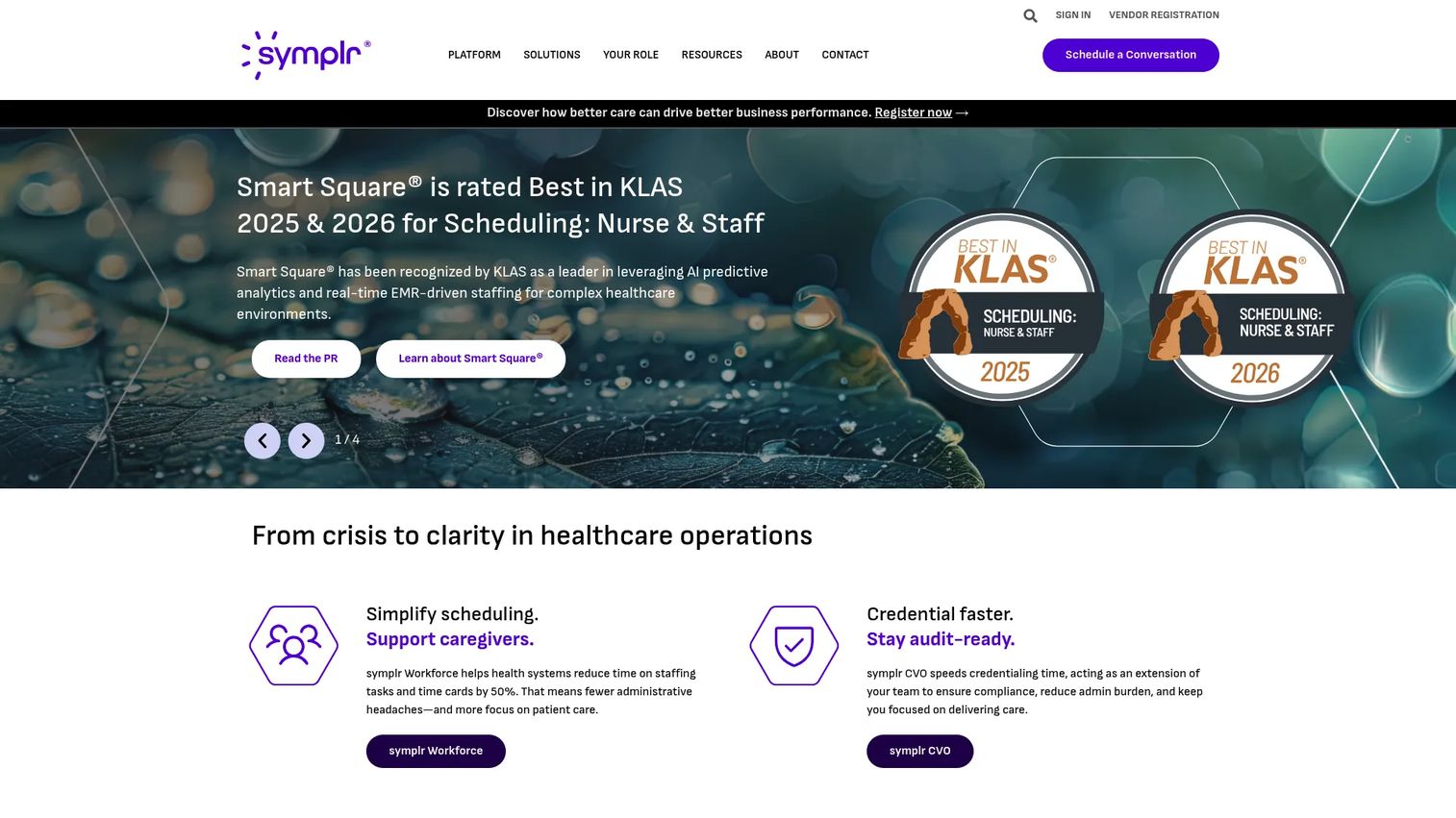
symplr Compliance is a healthcare compliance management platform that centralizes risk assessments, policy and document lifecycle management, incident reporting, audit workflows, survey management, and corrective action tracking. Its risk assessment content is attorney-curated and updated quarterly, covering healthcare-specific regulatory requirements. The platform suits compliance teams that need both the content and the workflow infrastructure to manage assessments, policies, and evidence in one place.
Best for: Compliance leaders who need to standardize policy governance, risk assessments, audits, issue tracking, and corrective actions across a healthcare organization.
Key features
- Risk assessment management with attorney-curated regulatory content
- Policy and document lifecycle management with version control
- Audit and survey management workflows
- Issue and corrective action tracking
- Incident management with configurable workflows and audit trails
Why choose symplr Compliance: It is the specialist for compliance operations. Audit readiness, policy lifecycle control, and corrective action accountability are where it performs best. Organizations that also need a clinical patient safety program, claims administration, or provider screening will need additional platforms to cover those workflows.
symplr Compliance pricing: symplr prices through demo and sales conversations. Platform scope, selected modules, organizational size, and implementation requirements all influence the commercial package. Contact symplr directly for a scoped proposal.
7. Verisys FACIS
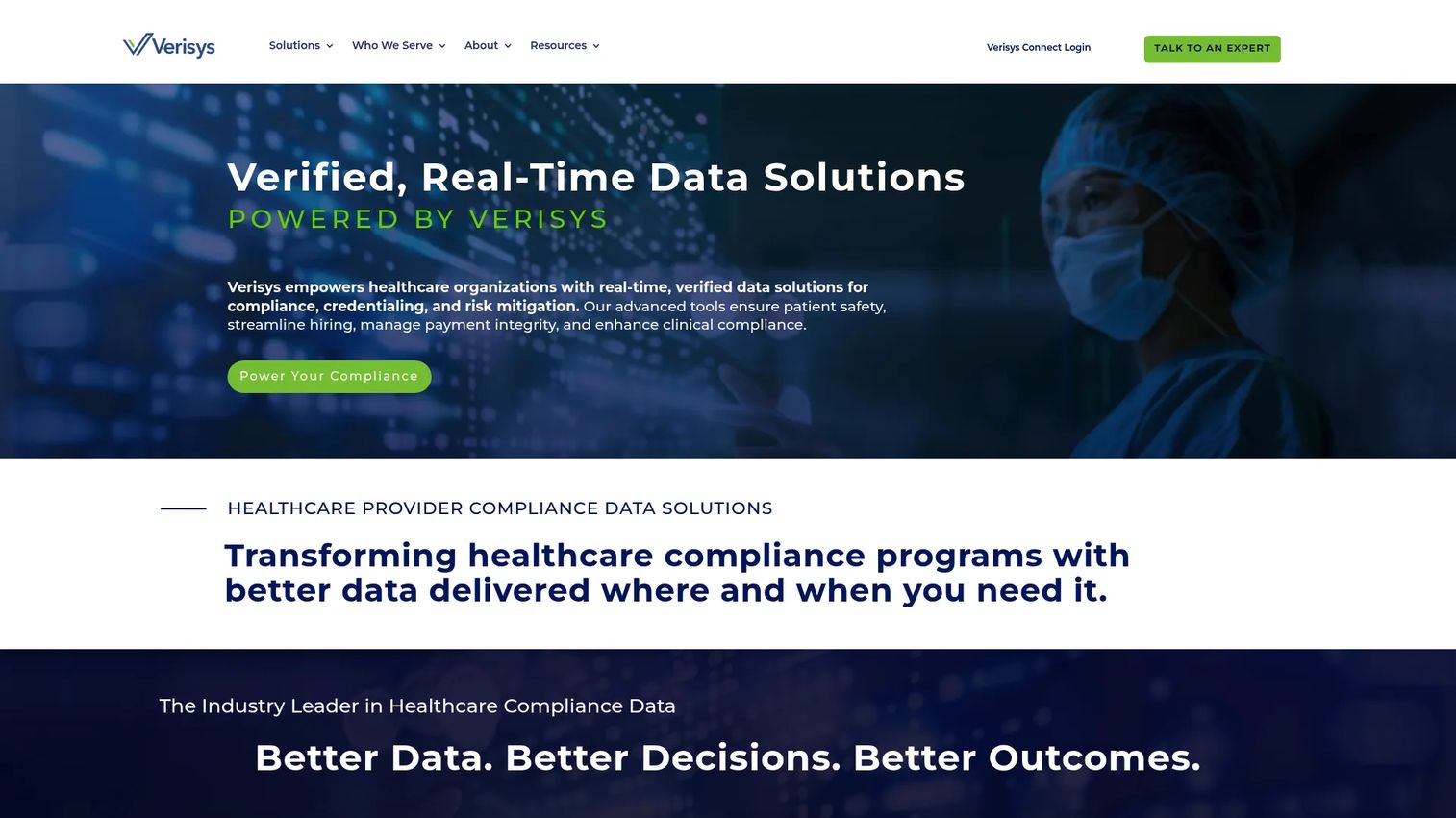
Verisys FACIS is a specialized healthcare screening and monitoring database, not a full risk management suite. Its job is to screen providers, employees, contractors, vendors, and entities for exclusions, debarments, sanctions, disciplinary actions, and licensing actions across federal and state sources. FACIS Level 3 coverage spans all 56 U.S. jurisdictions and multiple provider types, with ongoing monitoring and automated adverse-action alerts. Access is available through API, SFTP, batch processing, or a secure portal.
Best for: Medical staff services, compliance, credentialing, workforce, and vendor management teams that need continuous healthcare sanctions and exclusion monitoring.
Key features
- Provider, entity, and individual screening for exclusions and sanctions
- FACIS Level 1M and Level 3 coverage across 56 U.S. jurisdictions
- Continuous monitoring with automated adverse-action alerts
- Workforce and vendor screening capabilities
- API, SFTP, batch processing, and secure portal access
Why choose Verisys FACIS: Choose it when provider and workforce eligibility is the specific risk-control gap. It should sit alongside a broader risk platform when the organization also needs event reporting, quality workflows, claims, or compliance management. FACIS is the specialist; it does not replace those programs.
Verisys FACIS pricing: Pricing requires a conversation with Verisys. Cost is tied to screening level (Level 1M or Level 3), population size, monitoring cadence, verification options, and contract terms. Contact Verisys for a population-specific quote.
G2 rating: 4.6/5
Considerations when choosing healthcare risk management software
Match the platform to the workflow you need to fix first
Do not compare every tool against a generic feature checklist. Start with the operational gap: Event reporting, compliance management, claims, clinical surveillance, or provider screening. A category mismatch creates expensive software that no one operationalizes. A broad enterprise suite purchased to solve a narrow reporting problem often stalls at configuration.
Verify cross-functional ownership before buying
Risk leaders, quality teams, legal, compliance, medical staff services, finance, IT, and frontline clinical users may all touch the platform. Define who owns taxonomy maintenance, workflow configuration, training, reporting design, and release changes. Software that has no named internal owner becomes shelfware within 18 months.
Test integration depth, not logos
Ask vendors how their product exchanges data with your EHR, HR systems, claims infrastructure, identity management, and analytics stack. Require specific examples of data direction, update frequency, and error handling. An integration that pushes data in one direction on a weekly batch is a very different operational commitment than a real-time bidirectional connection.
Evaluate auditability and governance controls
Review role-based permissions, audit trail granularity, document versioning, retention controls, escalation rules, and report export options. These details matter more than a dashboard demo when a regulator, board committee, or legal team asks how a specific decision was made and who approved it.
Model total implementation cost separately
Separate subscription pricing from data migration, implementation services, configuration time, integration development, ongoing administration, training, and change management. For an organization at growth stage, the more useful question is whether the platform reduces dependence on a few internal subject-matter experts over time or creates a new dependency on vendor professional services.
Conclusion
Healthcare risk management software is a collection of adjacent categories. The right product depends on the workflow your organization needs to standardize first.
Riskonnect Healthcare suits organizations consolidating multiple risk programs across clinical, claims, compliance, and enterprise functions. Origami Risk Platform fits multi-site health systems that need configurable workflows and shared governance across risk, claims, and provider performance. RLDatix Safety & Risk Management belongs on the shortlist when patient safety reporting, policy management, and clinical quality improvement are primary. Inovalon VigiLanz Safety Management focuses on clinical safety-event reporting and Just Culture programs. Sentact covers configurable incident workflows, clinical rounding, and frontline quality operations. symplr Compliance handles compliance-specific operations: Risk assessments, policies, audits, and corrective actions. Verisys FACIS is the specialist for continuous sanctions and exclusion monitoring across providers, workforce, and vendors.
Pick the workflow that creates the greatest current exposure. Shortlist two broad platforms and one specialist. Ask each vendor to demonstrate that workflow using your operating model, not a generic script. If you sell into the healthcare market yourself and want to show complex product workflows without exposing live systems, Guideflow can help your team build interactive demos that work for buying committees, compliance reviewers, and procurement teams alike.
Start your journey with Guideflow today!
FAQs
Healthcare risk management software is a platform for identifying, reporting, assessing, investigating, mitigating, and documenting clinical, operational, compliance, workforce, and financial risks in hospital and healthcare settings. Features vary significantly between broad enterprise platforms that cover claims, compliance, and safety together, and specialist tools focused on a single category such as incident reporting or provider screening.
Prioritize the features that address your most urgent operational gap. Commonly evaluated capabilities include event and near-miss reporting, investigation workflows, corrective action tracking, policy and document management, compliance audit trails, analytics dashboards, EHR integrations, and role-based access controls. Start with what you need to standardize first, not the longest feature list on a comparison sheet.
Patient safety software focuses specifically on adverse events, near misses, quality improvement, and organizational learning workflows. Healthcare risk management software may include those functions alongside claims administration, enterprise risk registers, compliance management, provider oversight, and financial risk programs. Some platforms cover both; others specialize in one or the other.
These platforms can centralize evidence, policies, audit workflows, risk assessments, issue management, and corrective action documentation. That structure supports the compliance process. The software does not itself make an organization compliant with any law, regulation, or accreditation standard. Regulatory outcomes depend on organizational processes, training, leadership accountability, and operational decisions.
Incident reporting is one input into a broader risk program. The full lifecycle runs from initial event capture through automated routing, investigation, contributing-factor identification, corrective action assignment, completion monitoring, and trend analysis. Reporting volume alone is not a safety outcome. The operational question is whether reports are reaching the right owners, generating investigations, and producing changes that reduce recurrence.
Healthcare GRC platforms typically focus on governance, compliance, assessments, policies, controls, and audit workflows. An RMIS emphasizes claims management, insurance programs, safety events, risk financing, and loss data. Many enterprise healthcare platforms overlap across both categories, which is why buyers need to confirm which specific workflows a vendor's implementation covers before purchasing.
Most enterprise platforms in this category price through sales conversations, with no public tier structure. Cost depends on the modules selected, facility count, user roles, implementation services, integration requirements, and data migration scope. When requesting quotes, ask vendors to separate the annual software subscription from one-time implementation and ongoing professional services costs. That separation gives you a clearer picture of the total three-year commitment.
They can, but scope matters more for smaller organizations than for large systems. A small hospital or ambulatory group should start with its highest-priority risk workflow and evaluate whether the vendor's implementation model, configuration requirements, and administrative load fit their internal capacity. A narrowly scoped specialist often delivers faster time to value than a broad suite that requires months of taxonomy design before it produces useful data. For organizations exploring claims management software or related healthcare operations tooling, the same principle applies: Match the tool to the workflow, not the other way around.
One-time screening checks a provider or employee against sanctions and exclusion databases at a specific moment, such as during onboarding. Continuous monitoring runs those checks on an ongoing cadence and alerts the organization when a new adverse action appears between screening cycles. Federal healthcare programs expect providers to screen at least monthly for OIG exclusions; continuous monitoring automates that requirement and reduces the manual workload for medical staff services and compliance teams.