A single laptop now generates more security signal than an entire office did a decade ago. Process events, network connections, registry changes, file writes, memory activity, all of it streams continuously. Traditional antivirus was built to match known bad files. It was never designed to reason across that volume of behavioral telemetry, correlate it into an attack story, and give an analyst a way to act.
That gap is why endpoint detection and response software has moved from nice-to-have to non-negotiable. The global EDR market is projected to grow from USD 7.23 billion in 2026 to USD 45.95 billion by 2034, a 26.0% CAGR, according to Fortune Business Insights. Attackers moved faster than prevention-only tools could keep up, and buyers noticed.
If you sit in presales or run technical validation, this category carries a specific burden. You need a tool that survives a security review, integrates with the stack your prospect already owns, and produces alerts an analyst can trust at 2 a.m. That is a different bar than "does it detect malware." For readers who evaluate adjacent security categories, our roundups of the best AI cybersecurity solutions and the best AI security posture management tools cover the neighboring layers you will likely be asked about in the same buying cycle.
This guide breaks down 10 endpoint detection and response solutions worth shortlisting in 2026, with the practical detail you need to defend a pick.
What's inside
This guide covers 10 endpoint detection and response tools that hold up in real 2026 buying cycles. We selected platforms based on detection quality, response and remediation depth, integration fit with SIEM and SOAR, reporting and compliance logging, and how cleanly each scales from mid-market to enterprise. The angle is practical: which tools are easy to defend in a security review, which reduce analyst busywork, and which match a specific stack. This is written for presales, sales engineers, and technical buyers who need to compare edr software without wading through vendor brochures. Pricing and G2 ratings reflect verified values where publicly available.
TL;DR
- Best for autonomous response at scale: SentinelOne Singularity Endpoint pairs EDR with AI-driven remediation and rollback.
- Best for Microsoft-heavy stacks: Microsoft Defender for Endpoint, native coverage across the Defender ecosystem.
- Best for broad XDR correlation: Palo Alto Cortex XDR and Trend Vision One extend detection across endpoint, network, cloud, and identity.
- Best for threat hunting depth: CrowdStrike Falcon Insight, strong analyst workflow and telemetry.
- Best for all-in-one plus managed coverage: Cynet bundles XDR and 24x7 MDR.
- Best for leaner teams: Sophos Intercept X and Bitdefender GravityZone favor straightforward operations.
What is endpoint detection and response software?
Endpoint detection and response (EDR) software continuously records endpoint activity, analyzes it for signs of compromise, alerts security teams, and gives them tools to investigate and respond. Where antivirus asks "is this file known bad," EDR asks "is this behavior part of an attack," then lets an analyst contain it.
EDR is one of several related categories, and buyers routinely confuse them:
- EPP (endpoint protection platform): prevention-first. Blocks known threats before execution. Many modern suites combine EPP and EDR in one agent.
- EDR: detection, investigation, and response at the endpoint layer. Records telemetry, surfaces threats, enables containment.
- XDR (extended detection and response): correlates telemetry across endpoint, network, cloud, identity, and email into unified detections.
- MDR (managed detection and response): a service, not software. Human analysts monitor, investigate, and respond on your behalf, often on top of an EDR product.
Core EDR capabilities to expect:
- Telemetry collection: continuous recording of process, file, network, and memory activity.
- Analytics and detection: behavioral analysis, machine learning, and MITRE ATT&CK mapping.
- Alerting and triage: prioritized detections with attack context.
- Automated response: isolation, quarantine, process kill, and rollback.
- Threat hunting and forensic investigation: query-based hunts and root cause analysis.
- Integrations: SIEM integration, SOAR integration, and threat intelligence feeds.
When to use EDR software
Replace antivirus when you need investigation and response
Signature-based prevention still catches commodity malware, but it goes quiet the moment an attacker uses legitimate tools, stolen credentials, or fileless techniques. When your organization needs to see what happened after the initial block, trace lateral movement, and answer "how did they get in," basic prevention is no longer enough. This gap widened with distributed and remote work, where endpoints live outside the corporate perimeter and telemetry is the only reliable source of truth.
Support threat hunting and incident response
Security teams that run proactive hunts or own incident response need contextual investigation, not just alerts. EDR tools give analysts the timeline: which process spawned which, what network connections opened, what files changed. That supports root cause analysis and lets responders take remediation actions, isolation, quarantine, rollback, from the same console instead of chasing evidence across machines.
Standardize security reviews and compliance reporting
Regulated environments need centralized visibility and defensible records. EDR platforms produce audit logs, compliance logging, and a single place to run response workflows across every endpoint. For BFSI and healthcare buyers, that centralized reporting is often the deciding factor. BFSI represented 25.31% of global EDR spending in 2025, per Mordor Intelligence, and healthcare is forecast to grow at a 25.23% CAGR through 2031.
Comparison table
Use this table as a fast shortlist before you read the full write-ups. It maps each of the endpoint detection and response solutions below to its primary intent, core differentiation, publicly available pricing, and current G2 rating. Where a vendor does not publish pricing, that reflects quote-based packaging rather than a missing figure.
| # | Product | Intent | Key differentiation | Pricing | G2 rating |
|---|---|---|---|---|---|
| 1 | SentinelOne Singularity Endpoint | Autonomous EDR and EPP | AI-driven remediation and rollback | From $69.99/endpoint/yr | 4.7/5 |
| 2 | Palo Alto Cortex XDR | Enterprise XDR | Multi-source telemetry correlation | Quote-based | 4.6/5 |
| 3 | Microsoft Defender for Endpoint | Microsoft-native EDR | Deep Defender ecosystem fit | From $12/user/mo (Defender Suite) | 4.4/5 |
| 4 | CrowdStrike Falcon Insight | EDR and XDR | Threat hunting and analyst workflow | Falcon Go from $7.99/device/mo | 4.6/5 |
| 5 | Trend Vision One | Unified XDR | Cyber risk plus detection | Quote-based, 30-day trial | 4.7/5 |
| 6 | Sophos Intercept X | Prevention plus EDR | Deep learning, central management | Quote-based, free trial | Not published |
| 7 | Cisco Secure Endpoint | EDR in Cisco stack | Talos threat intelligence | Quote-based (Essentials/Advantage/Premier) | 4.5/5 |
| 8 | Cynet | All-in-one XDR and MDR | Unified platform plus 24x7 coverage | Quote-based | 4.7/5 |
| 9 | Bitdefender GravityZone | Layered endpoint security | Single-agent, single-console | Quote-based, free trial | 4.5/5 |
| 10 | Check Point Harmony Endpoint | EPP, EDR, and XDR | Single agent with DLP | Quote-based, free trial | 4.5/5 |
1. SentinelOne Singularity Endpoint
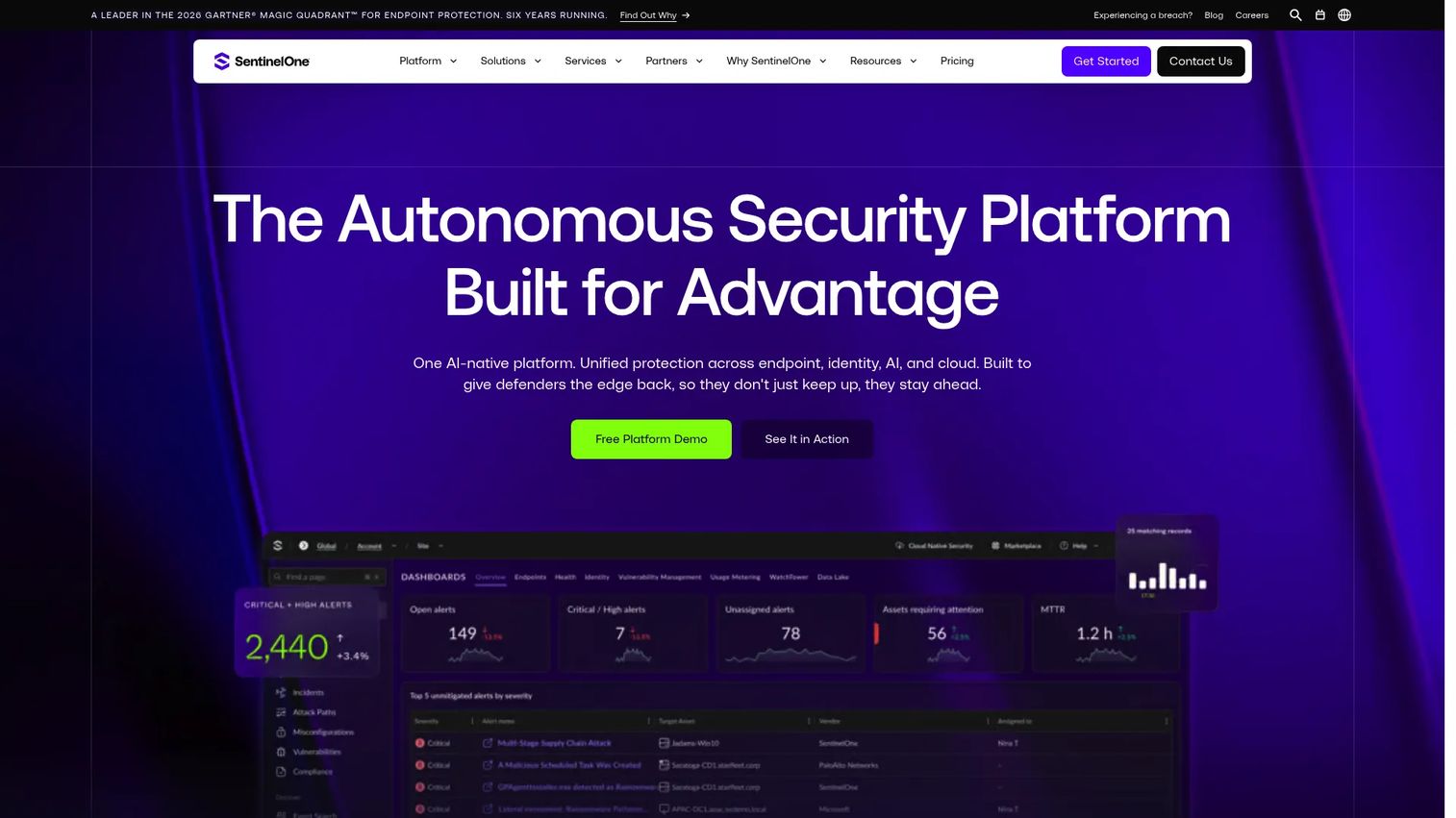
SentinelOne Singularity Endpoint is an AI-powered endpoint security platform that combines EPP, EDR, and automated remediation in a single agent. It shows up on enterprise shortlists because it leans hard on autonomous response: the platform can detect, correlate, and act on a threat without waiting for an analyst to click through a queue. That matters when your prospect's security team is understaffed and every minute of dwell time counts.
Best for: Mid-market and enterprise teams that want autonomous endpoint protection with AI-driven response.
Key strengths
- Autonomous EDR: Detects and remediates threats automatically, cutting mean time to respond.
- One-click rollback: Reverses ransomware and malicious changes without a full reimage.
- Investigation depth: Storyline correlation links related events into a single attack narrative.
Why choose SentinelOne: Security teams like the fast remediation and the forensic depth of Storyline, which reconstructs an attack chain automatically instead of forcing analysts to stitch events together by hand. It is a strong fit when the buyer wants EDR and prevention consolidated in one agent and values automation over manual triage.
SentinelOne pricing: SentinelOne publishes packages on its pricing page. Singularity Core starts at $69.99 per endpoint annually, Singularity Commercial is $229.99 per endpoint annually, and Singularity Enterprise is contact-sales. Listed prices apply to 5 to 100 workstations, and final pricing may vary through authorized partners. There is no free tier. SentinelOne holds a 4.7/5 rating on G2.
2. Palo Alto Networks Cortex XDR

Palo Alto Networks Cortex XDR is an AI-driven endpoint security and XDR platform that detects, prevents, and responds to attacks by correlating telemetry across endpoints and adjacent data sources. Its core strength is breadth: Cortex XDR connects endpoint, network, cloud, identity, and email signals, then applies analytics to surface detections that endpoint-only tools would miss.
Best for: Enterprises that want unified endpoint and XDR protection with AI-driven detection and response.
Key strengths
- Multi-source correlation: Stitches endpoint, network, cloud, and identity data into single incidents.
- Native investigation: Built-in tooling for root cause analysis and response.
- Automation: Native playbooks for investigation and response reduce swivel-chair work.
Why choose Cortex XDR: It is the natural pick for teams already invested in Palo Alto tooling, where Cortex slots into an existing security operations fabric. The correlation across data sources is genuinely useful when a prospect's attack surface spans more than endpoints, which describes most enterprises in 2026.
Cortex XDR pricing: Palo Alto does not publish first-party pricing for Cortex XDR, so packaging is quote-based through the vendor and its partners. Buyers should scope by endpoint count and the number of data sources they plan to onboard. Cortex XDR holds a 4.6/5 rating on G2.
3. Microsoft Defender for Endpoint
Microsoft Defender for Endpoint is an enterprise endpoint security platform for preventing, detecting, investigating, and responding to advanced threats. For Microsoft-heavy organizations, its biggest advantage is native fit: it plugs directly into the Defender ecosystem and Microsoft 365, which simplifies deployment, licensing, and cross-signal correlation.
Best for: Organizations that want Microsoft-native endpoint security tightly integrated with the Defender ecosystem.
Key strengths
- Endpoint detection and response: Behavioral detection with automated investigation and remediation.
- Attack surface reduction: Proactive controls that shrink exploitable pathways.
- Ecosystem correlation: Signals flow across Defender, Entra, and Microsoft 365.
Why choose Defender for Endpoint: If your prospect already runs Microsoft 365 E5 or the Defender Suite, the operational simplicity is hard to beat. There is one less agent vendor to manage, and identity, email, and endpoint signals correlate natively. That native posture is often the strongest reason to shortlist it in a Microsoft-centric environment.
Defender for Endpoint pricing: Defender for Endpoint is available in Plan 1 and Plan 2 and is included in Microsoft 365 E5. Microsoft's pricing page surfaces the Microsoft Defender Suite at $12.00 per user per month, paid yearly, with a Defender Vulnerability Management add-on at $2.00 per user per month. There is no free tier. It holds a 4.4/5 rating on G2.
4. CrowdStrike Falcon Insight
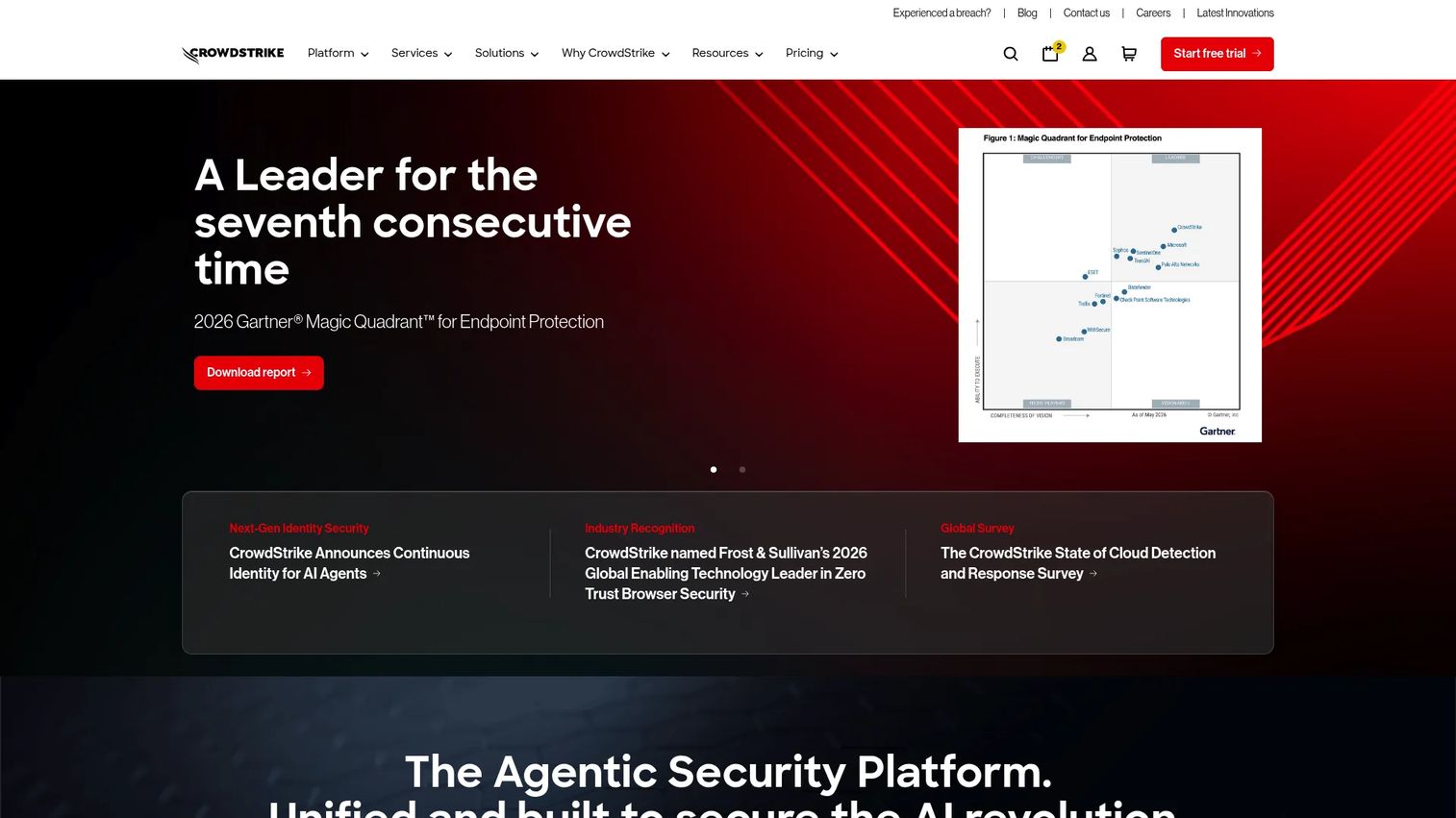
CrowdStrike Falcon Insight is CrowdStrike's endpoint detection and response and XDR offering, built for detecting, investigating, and responding to threats. Falcon is a common comparison point against SentinelOne and Microsoft because of its telemetry depth and the analyst experience: threat hunters get rich context and fast queries, which shortens investigations.
Best for: Security teams that need endpoint visibility, EDR, and XDR in one platform.
Key strengths
- AI-powered EDR: Behavioral detection with threat context baked into alerts.
- Threat hunting: Query-driven hunts across endpoint telemetry.
- Rapid response: Automated containment plus native XDR.
Why choose Falcon Insight: Buyers often shortlist it for larger environments where analyst workflow and hunting maturity matter. The cloud-native agent scales without heavy on-prem infrastructure, and the investigation experience is a frequent reason teams pick it over alternatives during a POC.
Falcon Insight pricing: CrowdStrike offers a free 15-day trial. Its public pricing page lists Falcon Go at $7.99 per device billed monthly, with Falcon Go, Pro, and Enterprise tiers available on monthly or annual billing. Falcon Insight capabilities sit within the broader Falcon platform, so scope pricing against the tier that includes the EDR and XDR modules you need. Falcon holds a 4.6/5 rating on G2.
5. Trend Vision One

Trend Vision One is Trend Micro's AI-powered platform for unified detection, investigation, response, and cyber risk management. It is positioned for teams that want more than standalone endpoint coverage: Vision One pulls endpoint into a broader attack surface context spanning cloud, email, network, and identity, then orchestrates detection and response across all of it.
Best for: Organizations that want a consolidated XDR and cyber risk platform across multiple security layers.
Key strengths
- Single platform: Covers cloud, hybrid, and on-prem environments in one console.
- AI risk insights: Threat detection paired with automated response and risk scoring.
- Broad coverage: Endpoint, cloud, email, network, and identity telemetry in one view.
Why choose Trend Vision One: It fits teams consolidating multiple point tools into a single detection and response layer, especially where cyber risk visibility is a board-level ask. The extended visibility beyond the endpoint is the differentiator when a prospect's mandate is broader than endpoint security alone.
Trend Vision One pricing: Trend Micro does not publish public pricing for Vision One; the site promotes a 30-day trial and directs buyers to sales for deployment scoping. Because packaging spans multiple modules, scope by which security layers you plan to activate. Vision One holds a 4.7/5 rating on G2.
6. Sophos Intercept X
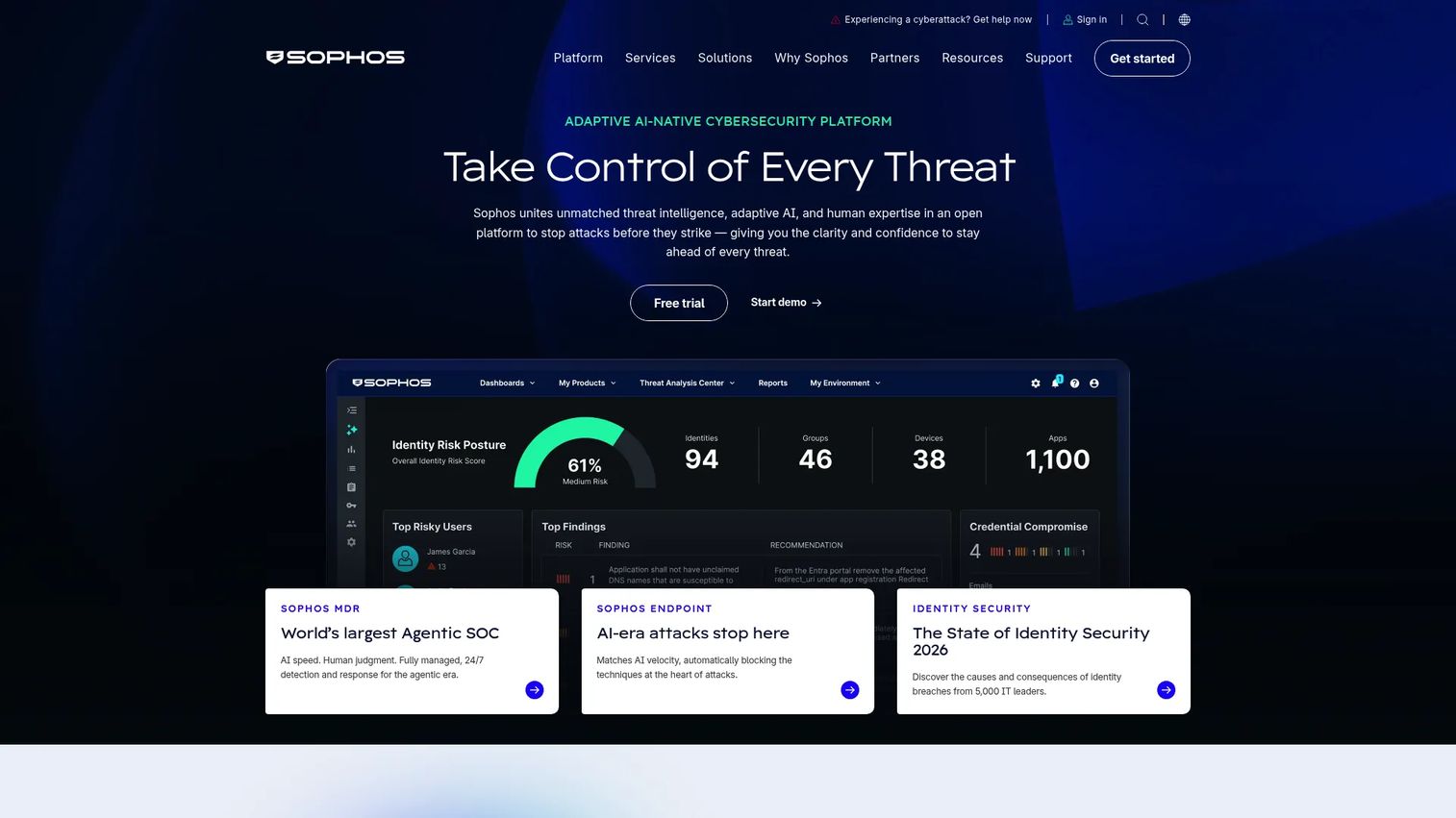
Sophos Intercept X is Sophos's endpoint protection and EDR platform, built to block exploits, ransomware, and attacker techniques. It pairs strong prevention with EDR visibility and is a frequent pick for leaner security teams that want capable detection without a heavy operational lift. Central cloud management through Sophos Central keeps administration in one place.
Best for: Organizations that want centrally managed endpoint protection with EDR and ransomware defense.
Key strengths
- Deep learning prevention: AI-based blocking of known and novel malware.
- Exploit and ransomware mitigation: Dedicated anti-ransomware and exploit controls.
- Central management: Single cloud console via Sophos Central.
Why choose Intercept X: It works well for organizations that value straightforward operations and want prevention and EDR from one vendor. Teams without a large SOC often appreciate the balance of strong defaults and accessible management, which keeps day-to-day administration manageable.
Intercept X pricing: Sophos handles Intercept X pricing through a custom quote and does not display a public starting price. The pricing page offers a free trial, so teams can validate detection and management fit before committing. Scope pricing by endpoint count and whether you add managed detection services.
7. Cisco Secure Endpoint
Cisco Secure Endpoint is Cisco's cloud-native endpoint security product for threat detection, response, and remediation. It earns its shortlist spot in Cisco-centric organizations, where it integrates with the broader Cisco security stack and draws on Talos threat intelligence, one of the larger commercial threat research operations, to enrich detections.
Best for: Organizations that want Cisco-native endpoint protection with EDR and XDR integration.
Key strengths
- EDR and threat hunting: Endpoint visibility with query-based investigation.
- Endpoint isolation and device control: Containment actions from the console.
- Talos threat intelligence: Detections enriched by Cisco's research team.
Why choose Cisco Secure Endpoint: It is the natural inclusion when a prospect already runs Cisco networking and security, since the endpoint layer folds into existing XDR and operations. Talos intelligence is a credible differentiator in a security review, and the ecosystem fit reduces integration friction for Cisco shops.
Cisco Secure Endpoint pricing: Cisco lists Essentials, Advantage, and Premier tiers on its licensing page but does not publish public pricing. Packaging is quote-based, typically through Cisco or a partner, and tier choice depends on whether you need XDR integration and advanced threat hunting. Cisco Secure Endpoint holds a 4.5/5 rating on G2.
8. Cynet
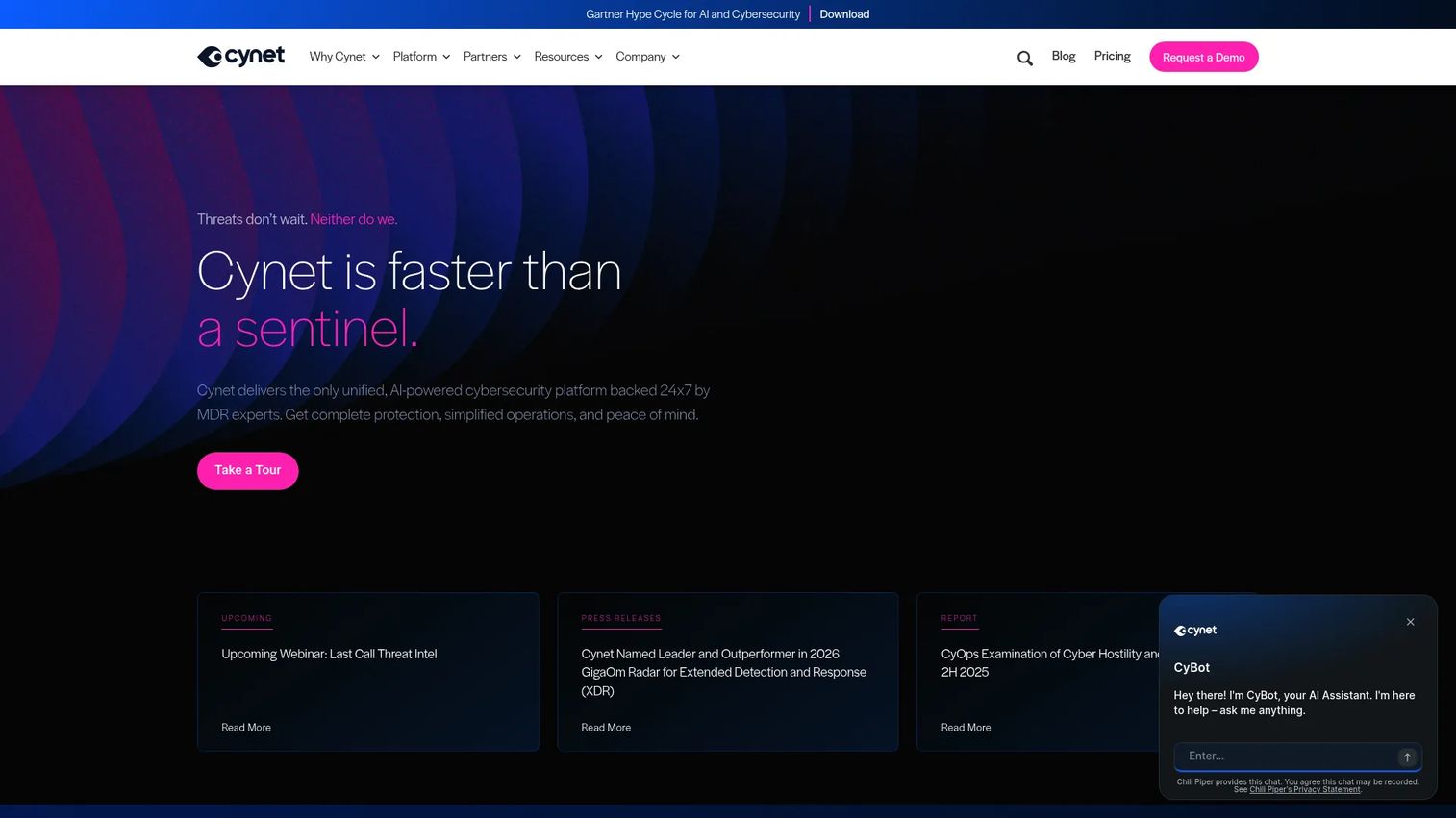
Cynet is a unified, AI-powered cybersecurity platform that combines XDR with MDR and 24x7 security operations. It appeals to teams that want broad coverage without stitching together many separate tools: endpoint, user, identity, network, email, SaaS, cloud, and mobile security sit in one platform, with managed coverage available on top.
Best for: MSPs and security teams that want an all-in-one XDR and MDR platform with 24x7 coverage.
Key strengths
- Unified platform: One console across endpoint, identity, network, email, and cloud.
- CyAI automation: AI-driven detection, automation, and response.
- CyOps managed coverage: 24x7 MDR and security expert support.
Why choose Cynet: It is attractive to lean teams and MSPs that want consolidation plus a managed safety net. Bundling XDR and MDR means a smaller team can operate at a higher level without hiring a full SOC, which is a strong story in a resource-constrained buying conversation.
Cynet pricing: Cynet's pricing page shows Protect, Elite, and All-in-One tiers with per-endpoint, per-month packaging, but does not display numeric prices; buyers request a quote. Scope by endpoint count and whether you want the managed CyOps layer. Cynet holds a 4.7/5 rating on G2.
9. Bitdefender GravityZone
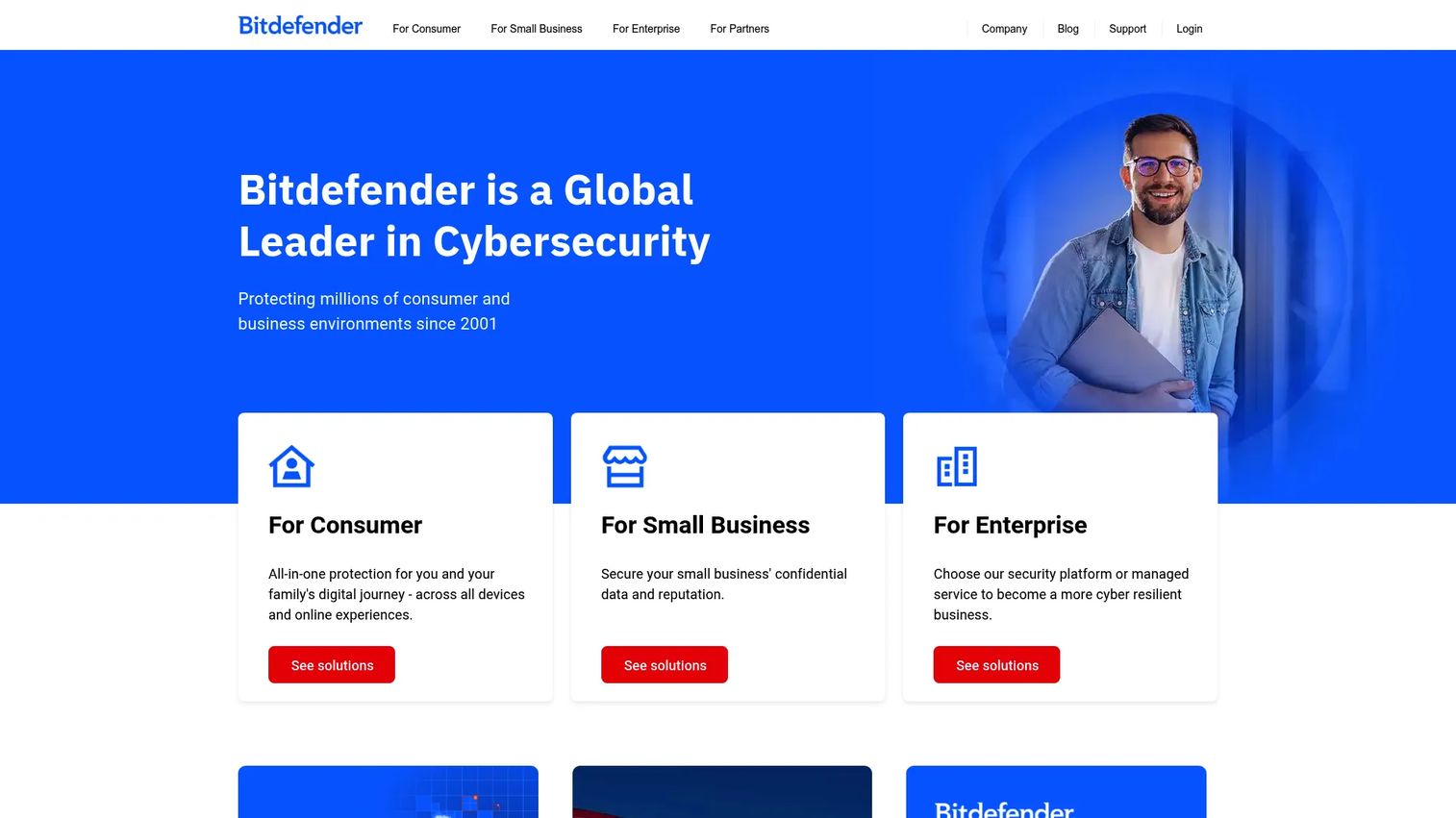
Bitdefender GravityZone is Bitdefender's unified business cybersecurity platform covering endpoint, cloud, email, identity, and network protection. Its layered protection and single-agent, single-console design make it a strong fit for SMB and mid-market teams that want capable telemetry and detection without a complex deployment.
Best for: Small to mid-market and enterprise teams that want centralized, layered endpoint security with add-on services.
Key strengths
- Single agent, single console: One deployment across endpoints and cloud workloads.
- Prevention plus response: Layered controls with detection and response.
- Add-on modules: Risk management and patch management extend coverage.
Why choose GravityZone: It fits teams that prioritize operational simplicity and want to add capabilities like patch management or managed services over time. SMEs are the fastest-growing EDR buyer segment, expected to grow at a 25.03% CAGR through 2031 per Mordor Intelligence, and GravityZone is built to serve that end of the market cleanly.
GravityZone pricing: Bitdefender offers configurable online pricing for some GravityZone products and free trials, though a public U.S. numeric starting price was not visible on the pages reviewed. Scope by endpoint count and which modules you activate. GravityZone holds a 4.5/5 rating on G2.
10. Check Point Harmony Endpoint

Check Point Harmony Endpoint is an endpoint security platform that protects laptops, desktops, and servers with combined EPP, EDR, and XDR in a single agent. It fits teams already considering Check Point's broader security architecture, where the endpoint layer folds into a familiar management model and shared threat prevention.
Best for: Organizations that want centralized endpoint protection with EPP, EDR, and XDR plus DLP features.
Key strengths
- Single-agent EPP, EDR, and XDR: Consolidated protection in one lightweight agent.
- Centralized management: One console for policy and response.
- Broad threat prevention: Ransomware, malware, phishing, and zero-day defense.
Why choose Harmony Endpoint: It is a logical shortlist entry for organizations standardizing on Check Point, since the endpoint agent integrates with the wider architecture and adds DLP. The single-agent EPP, EDR, and XDR model keeps the endpoint footprint light while covering prevention and response.
Harmony Endpoint pricing: Check Point does not display public numeric pricing; the site offers a free trial and request-a-demo path, with quotes handled through partners. Scope by endpoint count and whether you need the DLP and XDR capabilities. Harmony Endpoint holds a 4.5/5 rating on G2, based on 286 reviews.
Considerations before you buy
Detection quality and false positives
Alert volume is not detection quality. A tool that fires on everything drowns analysts and erodes trust in the console. Judge detections by precision and context: does each alert map to MITRE ATT&CK, explain why it fired, and include the evidence an analyst needs to decide? In a POC, count how many alerts required human triage versus how many were actionable. False positives cost analyst time, and analyst time is the scarcest resource in most SOCs.
Response actions and remediation depth
Detection without response is half a product. Verify the depth of automated response: can the tool isolate a host, quarantine a file, kill a process, and roll back malicious changes from the console? Check whether isolation is truly network-level and whether rollback works for ransomware without a reimage. During validation, walk through a full containment sequence, not just an alert. The difference between good and great EDR often lives in how fast and how cleanly it contains.
SIEM, SOAR, and threat intelligence integrations
An EDR tool lives inside a larger stack. Confirm SIEM integration for log forwarding, SOAR integration for automated playbooks, and native threat intelligence enrichment. The real question is whether the tool reduces swivel-chair work or adds another console analysts must watch. Ask which CRMs, SIEMs, and SOAR platforms are supported natively versus through custom work.
Compliance, logging, and audit readiness
Regulated buyers need defensible records. Verify retention windows for telemetry, the granularity of compliance logging, and how easily you can export audit-ready reports. Centralized reporting matters most when auditors ask "show me every response action taken last quarter" and you need an answer in minutes, not days.
Performance and scalability
Agent overhead shows up in user complaints and IT tickets. Verify CPU and memory footprint, how the platform scales to your endpoint count, and how much admin complexity each added feature introduces. Large enterprises accounted for 63.38% of EDR deployments in 2025 per Mordor Intelligence, so scalability testing at realistic volume belongs in every enterprise POC.
Conclusion
The right endpoint detection and response software depends on the stack you already own and the team that will run it. For autonomous response and rollback, SentinelOne Singularity Endpoint leads. For Microsoft-centric environments, Microsoft Defender for Endpoint is the operationally simplest pick. For broad XDR correlation, Palo Alto Cortex XDR and Trend Vision One extend detection well beyond the endpoint. CrowdStrike Falcon Insight stands out for threat hunting depth, Cynet for all-in-one coverage with managed support, and Sophos Intercept X and Bitdefender GravityZone for leaner teams that want straightforward operations. Cisco Secure Endpoint and Check Point Harmony Endpoint are natural fits inside their respective ecosystems.
For presales teams, the next step is concrete: shortlist two or three of these edr tools, run them side by side in a POC against your real telemetry, and validate integration fit with your SIEM and SOAR before you commit. In 2026, the tool that survives a security review and reduces analyst toil will beat the one with the longest feature list every time.
FAQs
Endpoint detection and response software continuously records activity on endpoints, analyzes it for signs of compromise, alerts security teams, and provides tools to investigate and respond. It goes beyond blocking known malware to detecting suspicious behavior and enabling containment and remediation.
EDR agents collect telemetry from endpoints, process creation, file changes, network connections, and memory activity, and stream it to an analytics engine. That engine applies behavioral analysis and machine learning to surface threats, then presents prioritized alerts with context so analysts can triage, hunt, and trigger response actions like isolation or quarantine.
Antivirus is prevention-focused and matches files against known malware signatures. EDR adds visibility, investigation, and response: it records what happens on the endpoint, detects behavior-based attacks that evade signatures, and lets analysts trace root cause and contain threats. Most modern platforms combine both.
EDR focuses on the endpoint layer, capturing endpoint activity and supporting detection, alerting, and remediation there. XDR extends that model across the security stack, collecting and correlating telemetry from endpoint, network, cloud, identity, and email into unified detections and a single investigation console.
EDR is software your team operates. MDR is a managed service where external analysts provide 24/7 monitoring, human investigation, and response on your behalf, often built on top of an EDR product. Teams without a full SOC frequently pair an EDR tool with MDR coverage.
For most organizations, no. EDR is a core layer, but layered security still matters: prevention, identity protection, email security, network controls, and often XDR correlation or MDR services. EDR gives you endpoint visibility and response, not a complete security program on its own.
Prioritize what survives a security review and a POC: detection precision, response and remediation depth, native SIEM and SOAR integration, compliance logging, and agent performance at scale. The strongest picks reduce analyst toil and integrate cleanly with the prospect's existing stack rather than adding another console.
Look past the per-endpoint headline. Confirm whether EDR, XDR, and threat hunting sit in the entry tier or require upgrades, whether billing is monthly or annual, and what managed services cost if you need them. Factor in operational costs too: analyst time, integration work, and any minimum contract terms.
Enterprise-leaning options on this list include SentinelOne Singularity Endpoint, Palo Alto Cortex XDR, CrowdStrike Falcon Insight, Trend Vision One, and Microsoft Defender for Endpoint. The right fit depends heavily on your existing stack, so validate integration and scale in a POC before committing.
Tools known for streamlined administration and integrated workflows include Sophos Intercept X and Bitdefender GravityZone for leaner teams, Microsoft Defender for Endpoint in Microsoft-centric shops, and Cynet for teams that want an all-in-one platform with 24x7 managed coverage layered on top.