Your delivery team says the program is on track. Finance sees margin pressure. The customer asks for a revised date. And the operating review still runs on three spreadsheets that disagree.
That gap is exactly what earned value management software closes. EVM software creates a shared view of cost, completed work, and schedule performance so your operating team, board, and customers are all reading the same signal. According to PMI research cited by Gitnux in 2026, 59% of organizations already use EVM on at least some projects. The global EVM software market reached USD 1.1 billion in 2024 and is forecast to grow at a 10.5% CAGR through 2033, per Business Research Insights (2025). If your delivery model carries material cost or schedule risk, this category deserves a look before the next board review forces the question.
This guide cuts through the noise. The tools below were selected for EVM depth, forecast and reporting capability, integration fit, and evidence of adoption in complex delivery environments.
What's inside
This guide is for founders, finance leaders, and PMO owners evaluating compliance management software adjacent to project controls, and for executives who need a fast shortlist to hand to their program controls team.
- A 12-tool comparison covering dedicated EVM, enterprise project controls, and accessible PMO options
- Plain-English explanation of PV, EV, AC, CPI, SPI, and EAC and what each tells an executive
- Selection guidance for government contractors, capital programs, construction teams, and growing PMOs
- Verified pricing and G2 ratings for every tool
- A buyer checklist covering integrations, governance, reporting depth, and implementation ownership
Tools were chosen for EVM depth, forecasting capability, scheduling integration, industry fit, and adoption evidence.
TL;DR
- Best for compliance-driven programs: Deltek Cobra for dedicated earned value, forecasting, and audit-ready program controls
- Best for schedule-intensive capital programs: Oracle Primavera P6 for enterprise-grade critical path scheduling with EVM workflow support
- Best for enterprise project controls: EcoSys (now Octave Sequence Enterprise) for centralized cost, planning, and portfolio reporting
- Best for construction cost visibility: 4castplus for field-to-finance cost tracking with integrated EVM reporting
- Best for accessible PMO reporting: ProjectManager or Microsoft Project when the team needs foundational earned value capability before a full project controls rollout
What is earned value management software?
Earned value management software tracks planned work, completed work, and actual cost against an approved baseline so teams can measure project health and forecast the likely completion outcome.
The software turns raw project data into management signals. It does not fix bad estimates or inconsistent progress reporting. It surfaces those problems sooner, which is where its real value sits.
Core EVM metrics
| Metric | Meaning | Executive question answered |
|---|---|---|
| Planned value (PV) | Budgeted cost of scheduled work | What should we have completed by now? |
| Earned value (EV) | Budgeted cost of completed work | How much planned work have we finished? |
| Actual cost (AC) | What the completed work cost | What did the delivered work actually cost? |
| Cost variance (CV) | EV minus AC | Are we over or under budget? |
| Schedule variance (SV) | EV minus PV | Are we ahead or behind plan? |
| Cost performance index (CPI) | EV divided by AC | How efficiently are we spending? |
| Schedule performance index (SPI) | EV divided by PV | How efficiently are we delivering planned work? |
| Estimate at completion (EAC) | Expected total cost | What will this program likely cost when complete? |
Key capabilities to look for
- Baseline and work breakdown structure (WBS) management
- Cost actuals and schedule data integration
- CPI, SPI, EAC, ETC, and variance reporting
- What-if forecasts and scenario modeling
- Portfolio dashboards and executive reporting
- Audit trails, governance, and role-based access
- ERP, scheduling, timekeeping, and resource planning integrations
EVM software vs. project management software
General project management tools coordinate tasks, owners, and timelines. Dedicated EVM platforms calculate and govern performance against cost and schedule baselines, often for high-value or compliance-driven programs. The distinction matters when your contracts, capital budgets, or board expectations require traceable performance measurement rather than task completion tracking.
Choose dedicated EVM when contracts or program governance require auditable performance measurement. Choose project management with EVM fields when the team needs basic cost and schedule visibility without formal EVMS controls. Either way, agree on the baseline, the progress measurement method, and the source of actual cost data before you buy anything.
When to use earned value management software
Track material delivery risk before it becomes a board surprise
Use EVM when a delayed product, implementation, or capital project can materially affect revenue, margin, or customer commitments. CPI, SPI, and EAC turn weekly status updates into measurable variance signals your finance team and board can act on rather than just absorb.
Govern customer or government programs with formal reporting requirements
Certain contracts require documented performance reporting, baseline governance, and repeatable forecasts. For programs operating under ANSI/EIA 748 or subject to DCMA surveillance, a dedicated EVMS platform provides the audit trails and controlled replanning that spreadsheets cannot sustain.
Consolidate cost and schedule data across a portfolio
When your organization runs multiple programs, subcontractors, or workstreams, manually merging reports costs significant analyst time. Portfolio-level EVM reporting replaces that process with governed rollups, so leadership sees a single consistent performance view instead of a Friday afternoon reconciliation exercise.
Earned value management software comparison
Product selection depends on whether your primary constraint is compliance depth, scheduling integration, cost governance, construction controls, or accessible PMO reporting. The tools below cover that full spectrum.
| # | Product | Best for | Key differentiator | Pricing | G2 rating |
|---|---|---|---|---|---|
| 1 | Deltek Cobra | Government and defense compliance programs | Dedicated EVM, forecasting, and audit logging | Contact for quote | 4.5/5 |
| 2 | Oracle Primavera P6 | Schedule-intensive capital programs | Enterprise CPM scheduling with EVM workflow | Perpetual license from $2,750/user | Not verified |
| 3 | EcoSys | Enterprise project controls portfolios | Centralized cost, planning, and portfolio reporting | Contact for quote | 4.2/5 |
| 4 | Contruent Enterprise | Large capital programs | Integrated cost, planning, and EV reporting | Contact for quote | 4.1/5 |
| 5 | ARES PRISM | Cost engineering and capital controls | Lifecycle cost management with WBS/CBS EVM | Contact for quote | 4.1/5 |
| 6 | 4castplus | Construction and project cost management | Field, procurement, labor, and cost in one platform | Contact for quote | 4.4/5 |
| 7 | Safran Risk | Risk-informed EVM forecasting | Monte Carlo schedule and cost risk analysis | Contact for quote | 3.0/5 |
| 8 | Deltek Open Plan | Integrated scheduling for government programs | DCMA-ready scheduling with Deltek ecosystem fit | Contact for quote | 4.5/5 |
| 9 | Oracle Primavera Unifier | Enterprise cost, contracts, and capital governance | Configurable workflows with P6 and ERP integration | Perpetual license from $3,950/user | 4.3/5 |
| 10 | Microsoft Project | Teams using Microsoft scheduling workflows | Familiar scheduling with earned value fields | From $10/user/month (annual) | 4.0/5 |
| 11 | Empower | Personal financial planning | Personal portfolio and retirement tools | Free dashboard available | Not verified |
| 12 | ProjectManager | Smaller PMOs needing accessible reporting | Cloud planning with portfolio dashboards and EVM support | From $13/user/month (annual) | 4.4/5 |
Pricing and G2 ratings verified October 2026 from each vendor's pricing page and G2 listing.
Best 12 earned value management software tools for 2026
1. Deltek Cobra
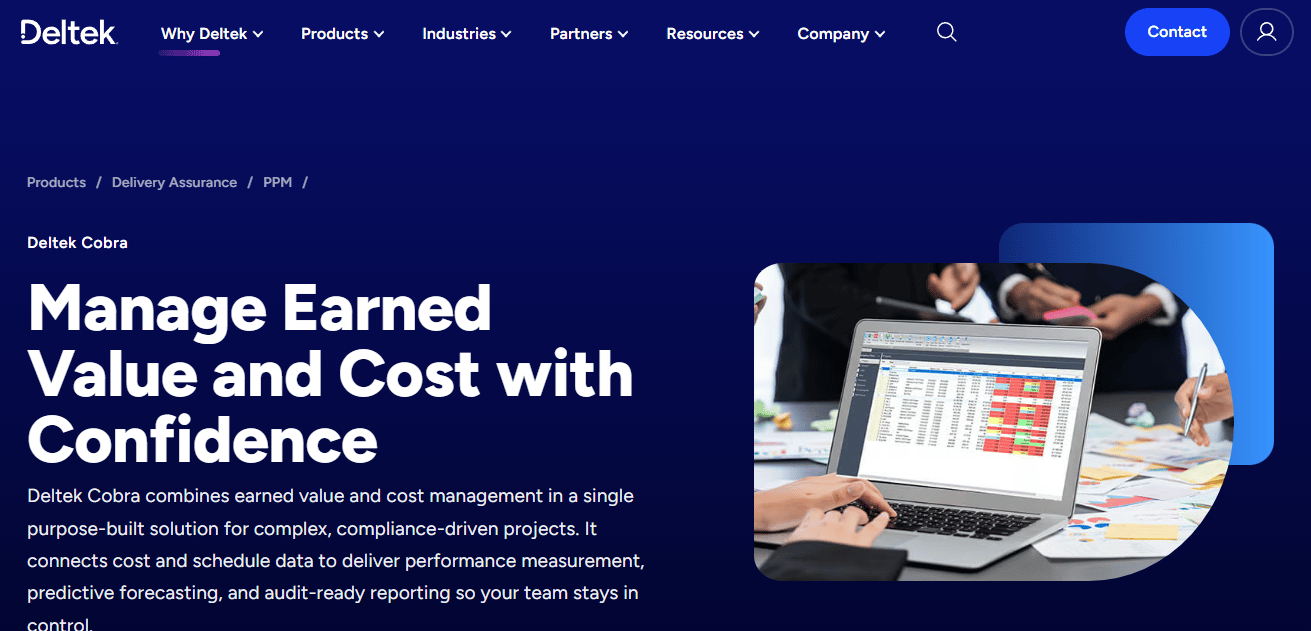
Deltek Cobra is a dedicated earned value and cost management platform built for complex, compliance-driven programs. It connects cost and schedule data, supports multiple forecast scenarios, and generates audit-ready reporting for government contractors, aerospace and defense organizations, construction firms, and professional services teams. The platform integrates with ERP systems and scheduling tools to bring actuals and planned work into a single controlled environment.
Best for: Organizations running government, aerospace, or defense programs where EVM reporting must withstand formal customer or regulatory review.
Key features
- Earned value performance measurement against controlled baselines
- Predictive EAC forecasting with what-if scenario modeling
- AI-powered variance narrative scoring
- Automated compliance reporting workflows
- ERP and scheduling system integrations
Why choose Deltek Cobra: Choose Cobra when the program requires dedicated EVM depth rather than EVM fields bolted onto a general project plan. Implementation requires disciplined data ownership, a defined WBS, and clean schedule inputs from the outset.
Deltek Cobra pricing: Deltek does not publish numeric pricing. Contact their team directly for quote terms and contract minimums. G2 reviewers report it as an enterprise-tier investment consistent with dedicated project controls platforms.
G2 rating: 4.5/5
2. Oracle Primavera P6
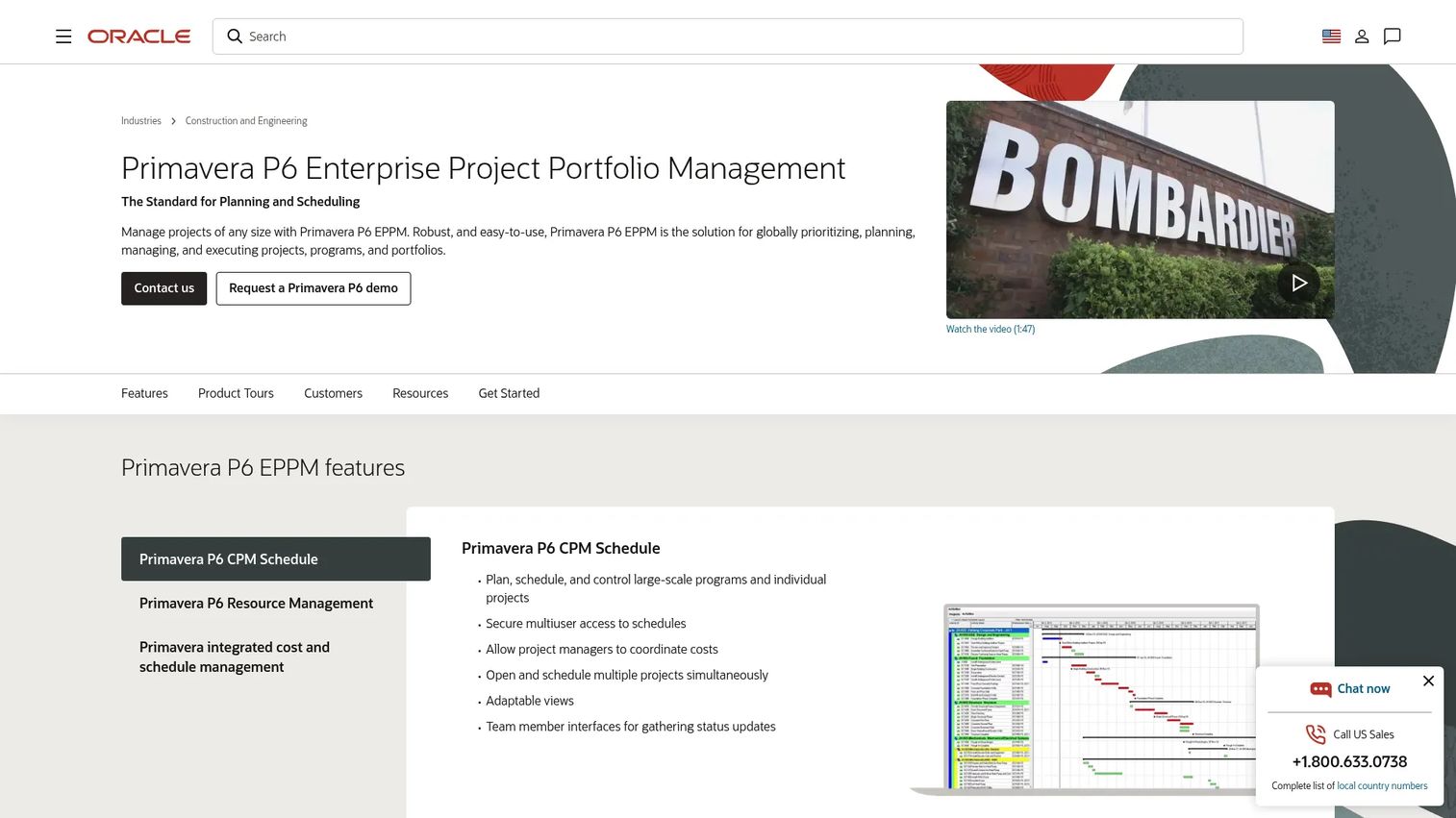
Oracle Primavera P6 is an enterprise scheduling platform with deep adoption across construction, engineering, infrastructure, aerospace, and defense. Its core strength is critical path method (CPM) scheduling with baseline comparison, resource loading, and multi-project program controls. Teams often pair it with dedicated cost control or EVM tooling for deeper financial governance.
Best for: Programs where schedule logic, dependencies, resource loading, and multi-project planning drive the quality of earned value reporting.
Key features
- Critical path method scheduling for large programs
- Baseline comparison and controlled replanning
- Resource and cost loading across activity networks
- Multi-project and portfolio program controls
- Integration with the broader Oracle Primavera ecosystem
Why choose Oracle Primavera P6: Choose P6 when the scheduling engine is the organization's system of record for planned work. Teams with significant financial governance requirements often add a dedicated cost control platform alongside it.
Oracle Primavera P6 pricing: Oracle's perpetual license list price starts at $2,750 per application user, with software update and support at $605 per user annually. Cloud deployment pricing is not publicly displayed. Contact Oracle for current subscription options and enterprise terms.
G2 rating: Not currently verified from the G2 listing for this specific product.
3. EcoSys
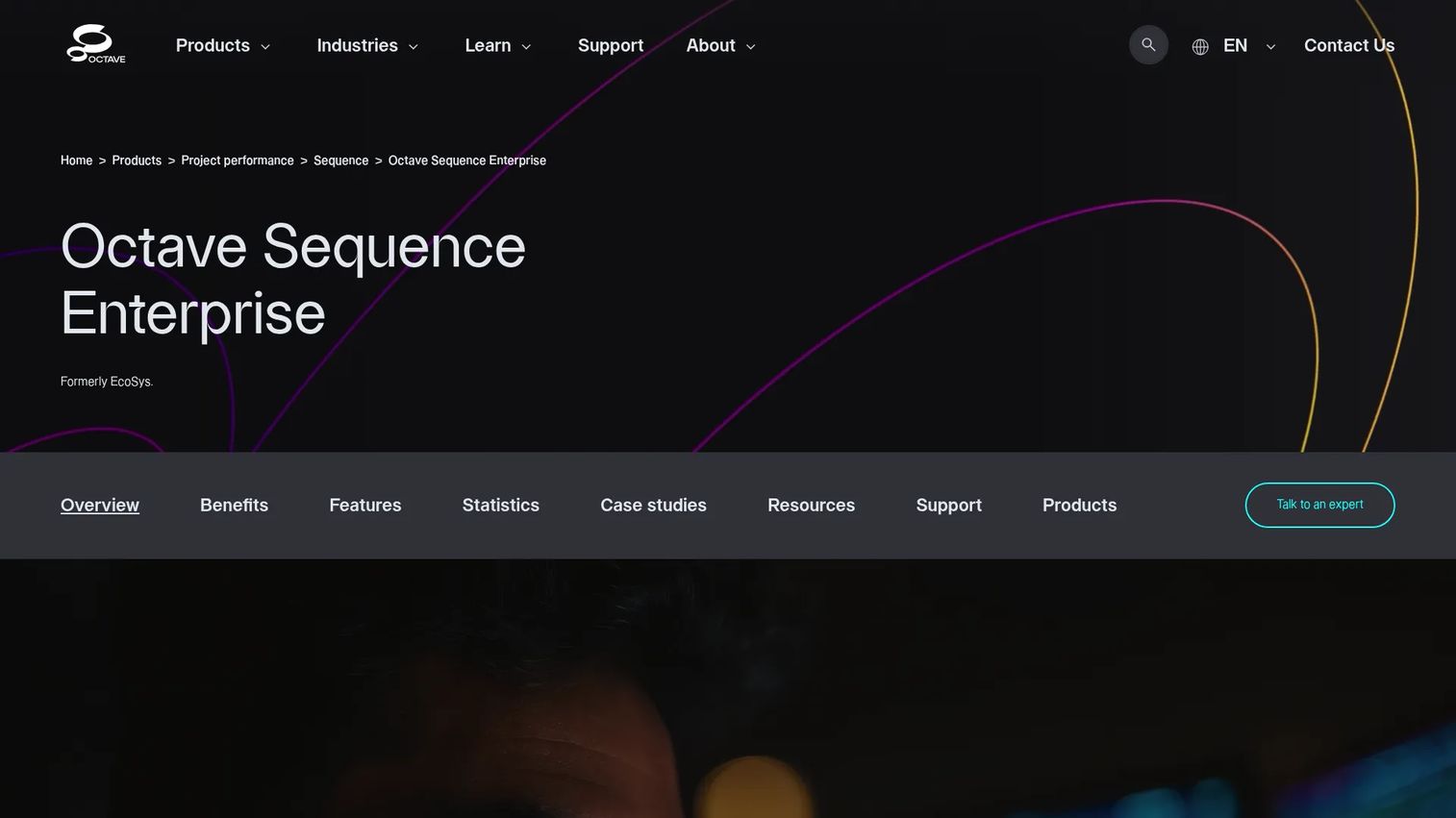
EcoSys, now rebranded as Octave Sequence Enterprise, is an enterprise project controls platform for capital planning, cost management, forecasting, and portfolio reporting. It suits organizations that need one governed data model across major programs rather than separately managed spreadsheets and scheduling exports. The platform covers project portfolio management, earned value, budgeting, and capital budgeting workflows.
Best for: Enterprise PMOs and capital program teams consolidating portfolio data across cost, planning, forecasting, and executive reporting into a single governed environment.
Key features
- Centralized project controls with a single data model
- Earned value and performance management
- Capital budgeting and funding workflows
- Configurable executive portfolio dashboards
- Budgeting, forecasting, and project planning integration
Why choose EcoSys: EcoSys is a stronger fit for organizations with established project controls processes than for a team seeking a lightweight first EVM tool. The consolidation benefit becomes material when fragmented reporting across multiple programs has become a board visibility problem. Also worth exploring for teams evaluating application portfolio management software with a delivery controls layer.
EcoSys pricing: Pricing is not publicly displayed. Contact Octave directly for package names, quote structure, and implementation scope.
G2 rating: 4.2/5
4. Contruent Enterprise
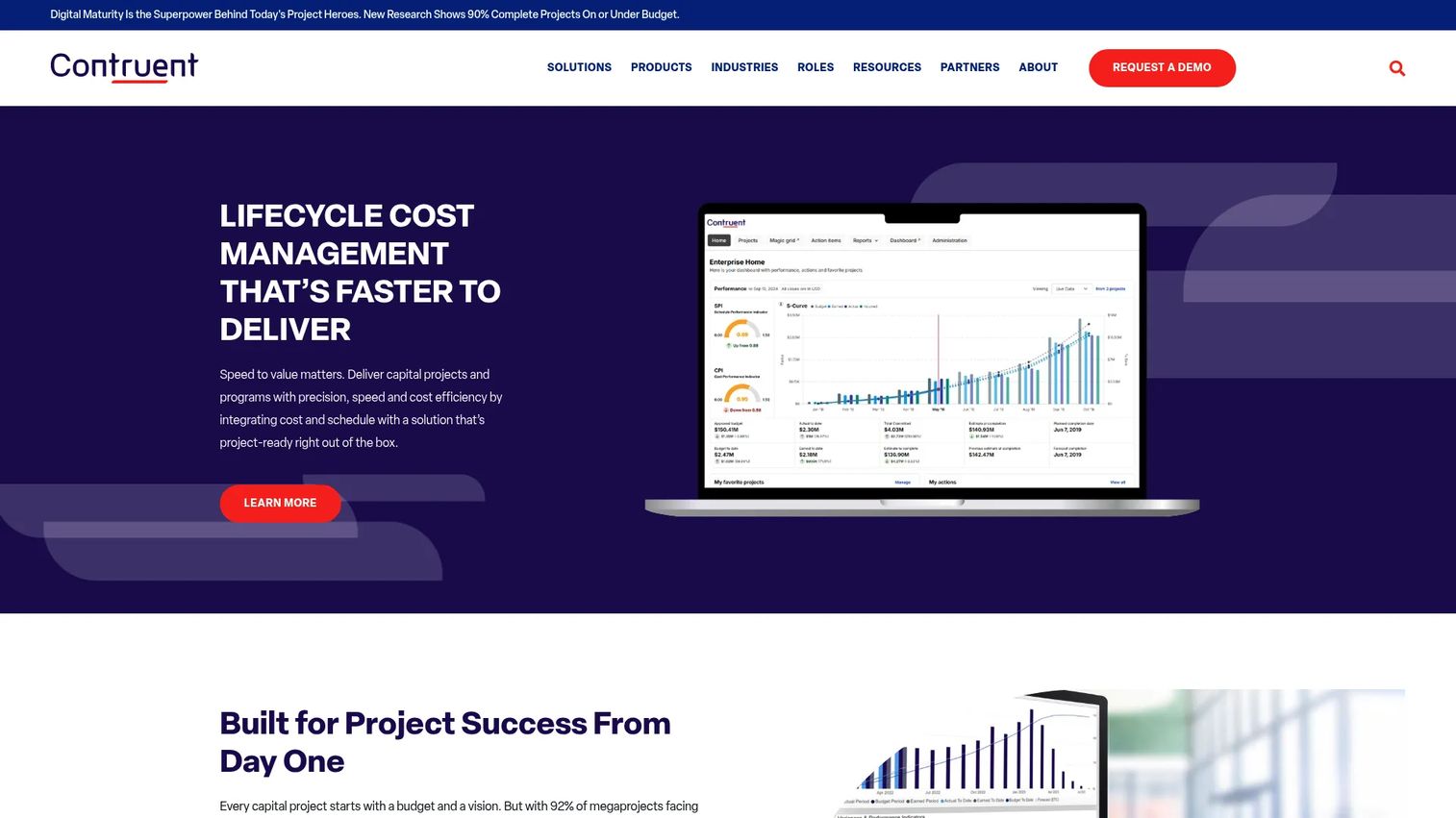
Contruent Enterprise is a SaaS-based lifecycle cost management and project controls platform designed for owners, EPCs, and engineering and construction organizations managing complex capital projects. It consolidates cost management, integrated scheduling, earned value, contract activity management, and portfolio reporting under one system. Change management workflows are auditable across cost, schedule, and scope simultaneously.
Best for: Large construction, engineering, and energy capital programs where multiple data sources need consolidating into a single performance view with traceable change records.
Key features
- Cost management, scheduling, and earned value in one platform
- Contract, invoice, and change-order management workflows
- Real-time portfolio dashboards and business intelligence
- Auditable change management across cost, schedule, and scope
- ERP, financial, and legacy-system integrations
Why choose Contruent Enterprise: Choose it when strategic delivery involves long-lived capital contracts, multiple external stakeholders, or situations where forecast errors carry high financial consequences. Buyers should validate current module coverage and migration path during evaluation, as the product was formerly known as ARES PRISM.
Contruent Enterprise pricing: Pricing requires a direct conversation with their sales team. The official FAQ confirms contact is required for quote terms.
G2 rating: 4.1/5
5. ARES PRISM
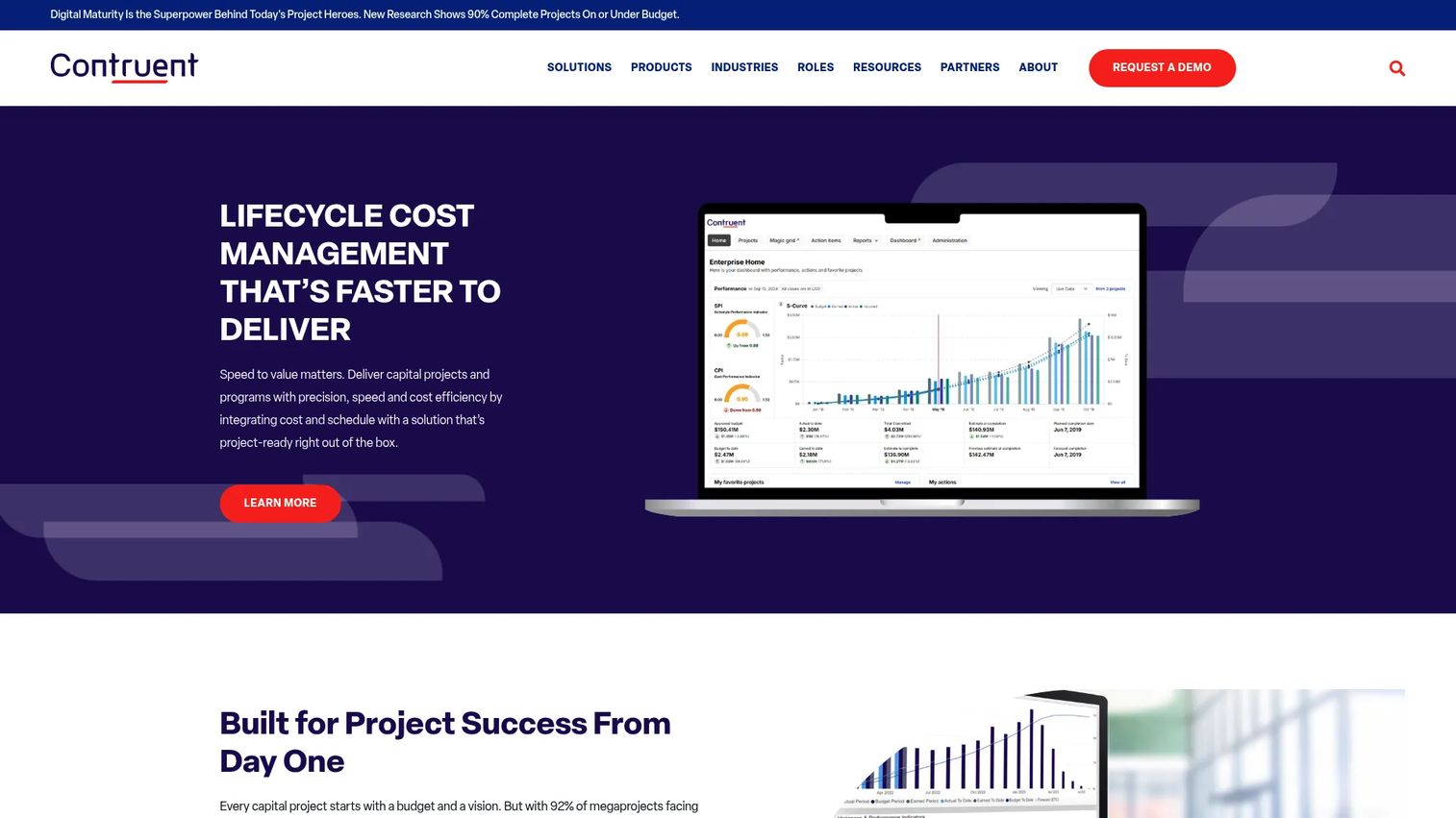
ARES PRISM, now operating as Contruent Enterprise following a 2023 rebrand, remains listed separately in project controls evaluations due to its established market recognition. The product covers lifecycle cost management with WBS and CBS-based earned value, budget management, procurement, vendor management, and real-time reporting dashboards. Buyers evaluating ARES PRISM should confirm they are reviewing the current Contruent Enterprise product and packaging before proceeding.
Best for: Cost engineering teams and capital project organizations that need detailed forecasting, structured project controls, and procurement visibility.
Key features
- Lifecycle cost management with WBS/CBS structures
- Budget and earned value management
- Contract, payment-claim, and change-order workflows
- Procurement, vendor management, and bid analysis
- Real-time dashboards and business intelligence
Why choose ARES PRISM: Relevant if your business carries material delivery margin risk and needs a stronger cost forecasting discipline than spreadsheets can sustain. Confirm how the product connects to your scheduling, ERP, and field data sources before signing.
ARES PRISM pricing: Pricing is not displayed and requires direct vendor contact. The product now operates under the Contruent brand and is quoted through their sales team.
G2 rating: 4.1/5
6. 4castplus
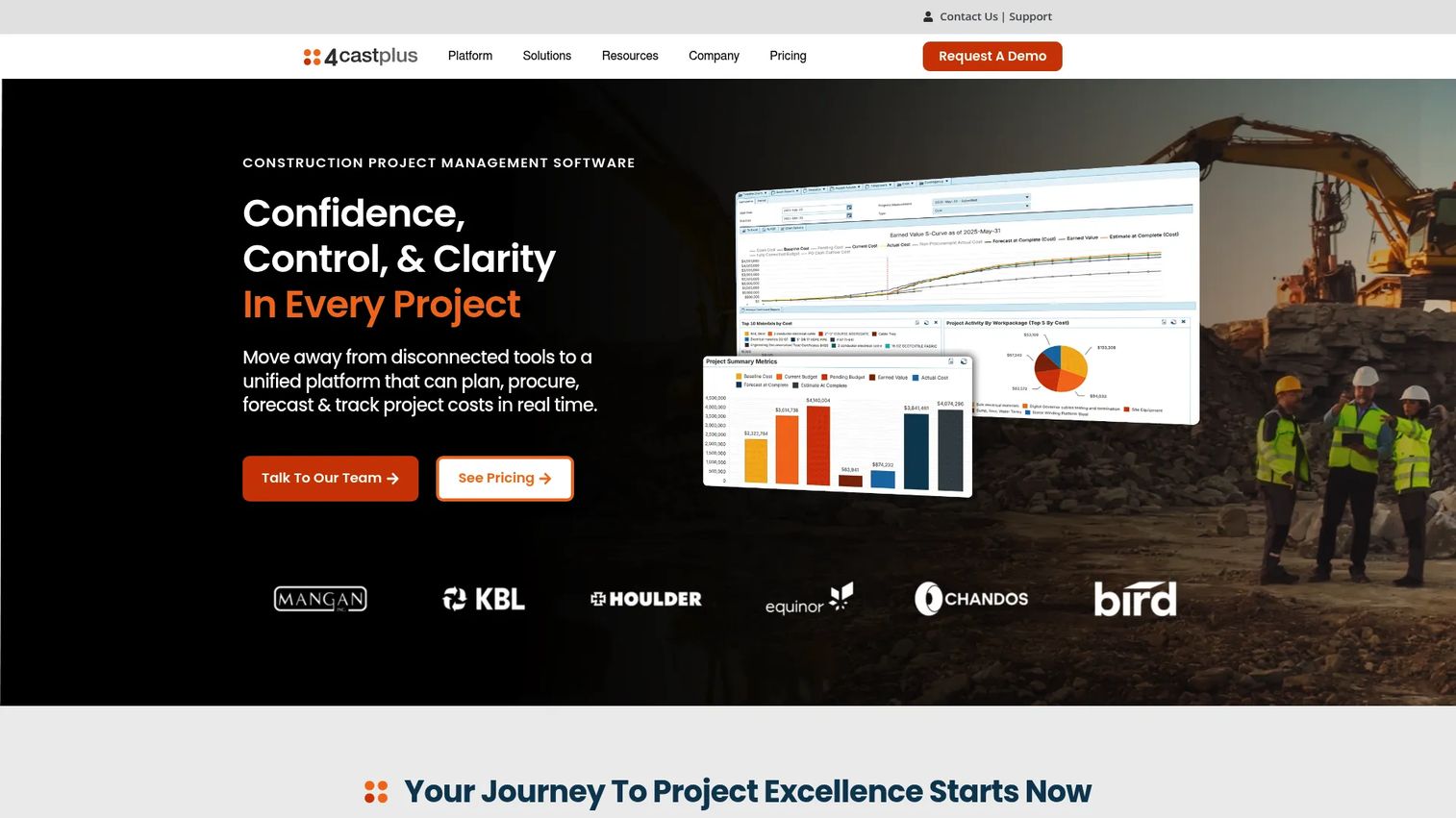
4castplus is a cloud-based project cost management and construction project management platform for owners, contractors, and engineering or EPCM firms. It brings project controls together with procurement, mobile jobsite cost entry, and labor tracking, connecting field data to EVM reporting without a separate cost system. CPI and SPI monitoring run against time-phased budgets built from real procurement and labor actuals.
Best for: Construction, energy, and engineering teams that need jobsite and procurement cost data feeding directly into EVM performance metrics rather than a separate end-of-period reconciliation.
Key features
- Time-phased budgeting, forecasting, and earned value management
- Integrated procurement: RFQs, purchase orders, and subcontract management
- Mobile jobsite entry for cost, hours, and progress capture
- Custom dashboards, analytics, and reporting
- ERP and enterprise application integrations
Why choose 4castplus: Strong fit when EVM must reflect operational cost data from the jobsite, not just finance system actuals received weeks later. It is a practical option for founders who need to see whether project profitability is drifting before the month-end finance close. Fees are billed annually and vary by software licenses, user count, implementation, and integration scope.
4castplus pricing: Annual pricing is customized based on software licenses, implementation, training, and user count. Contact 4castplus for a current quote.
G2 rating: 4.4/5
7. Safran Risk
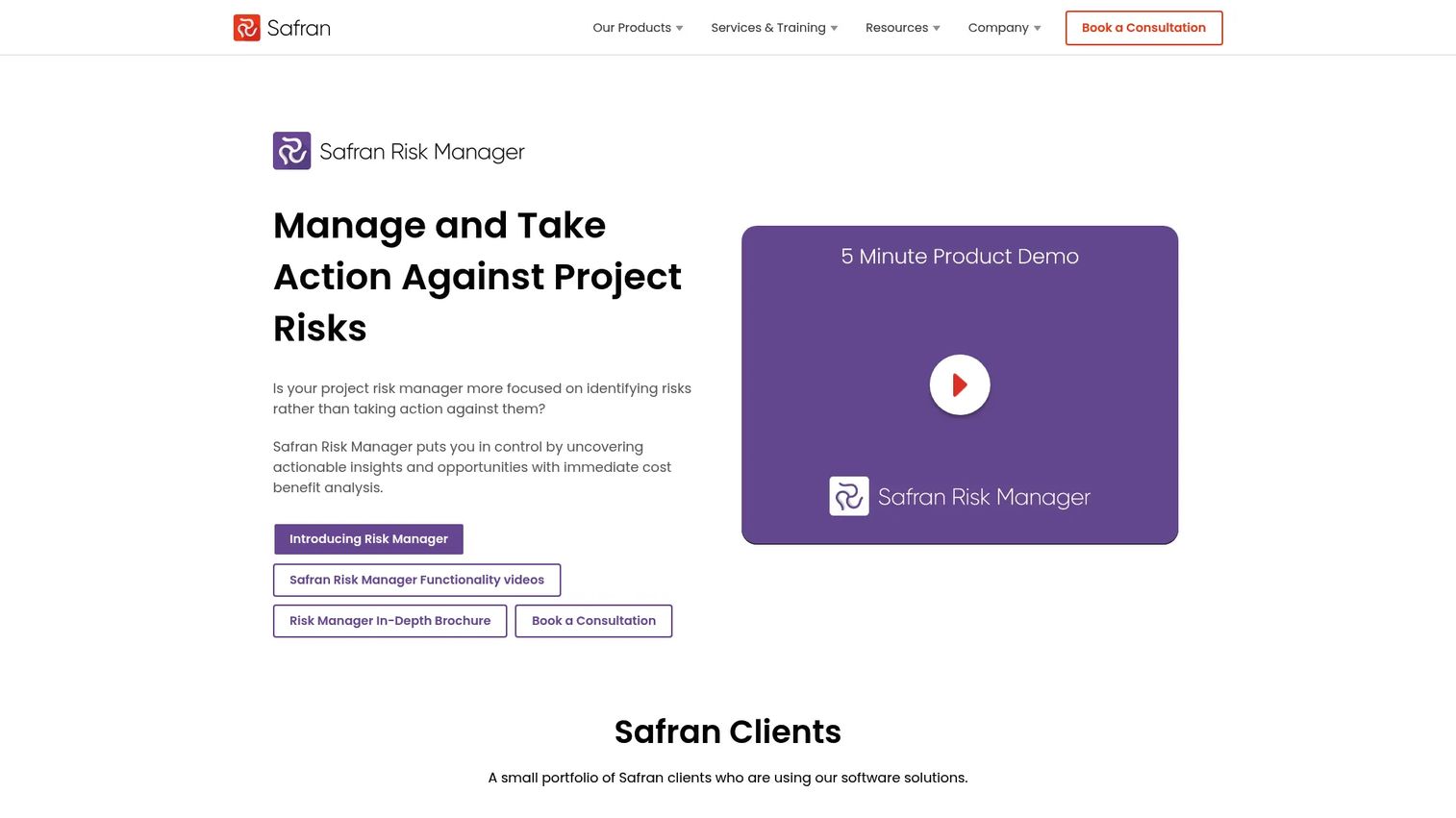
Safran Risk is a specialist project risk analysis platform. It belongs in an EVM evaluation because point-estimate forecasts become more credible and more useful when they account for uncertainty in schedule and cost outcomes. The platform runs quantitative risk analysis using Monte Carlo simulation, generating probability distributions rather than single-point completion dates.
Best for: Program controls teams that need risk-adjusted schedule and cost forecasts alongside formal EVM reporting, particularly on programs with high schedule uncertainty.
Key features
- Integrated cost and schedule risk analysis
- Monte Carlo simulation for probabilistic forecasting
- Risk histograms, sensitivity analysis, and cost-flow reporting
- Risk register integration
- Forecast scenario comparison
Why choose Safran Risk: Position it as a specialist complement rather than a core EVM platform. It typically sits beside a scheduling or project controls system and adds the range of likely delivery outcomes that a single-point EAC cannot provide. Useful when executives need a confidence interval on delivery dates, not one optimistic estimate.
Safran Risk pricing: Pricing requires direct contact with Safran. Annual or per-user licensing terms are not publicly displayed.
G2 rating: 3.0/5
8. Deltek Open Plan
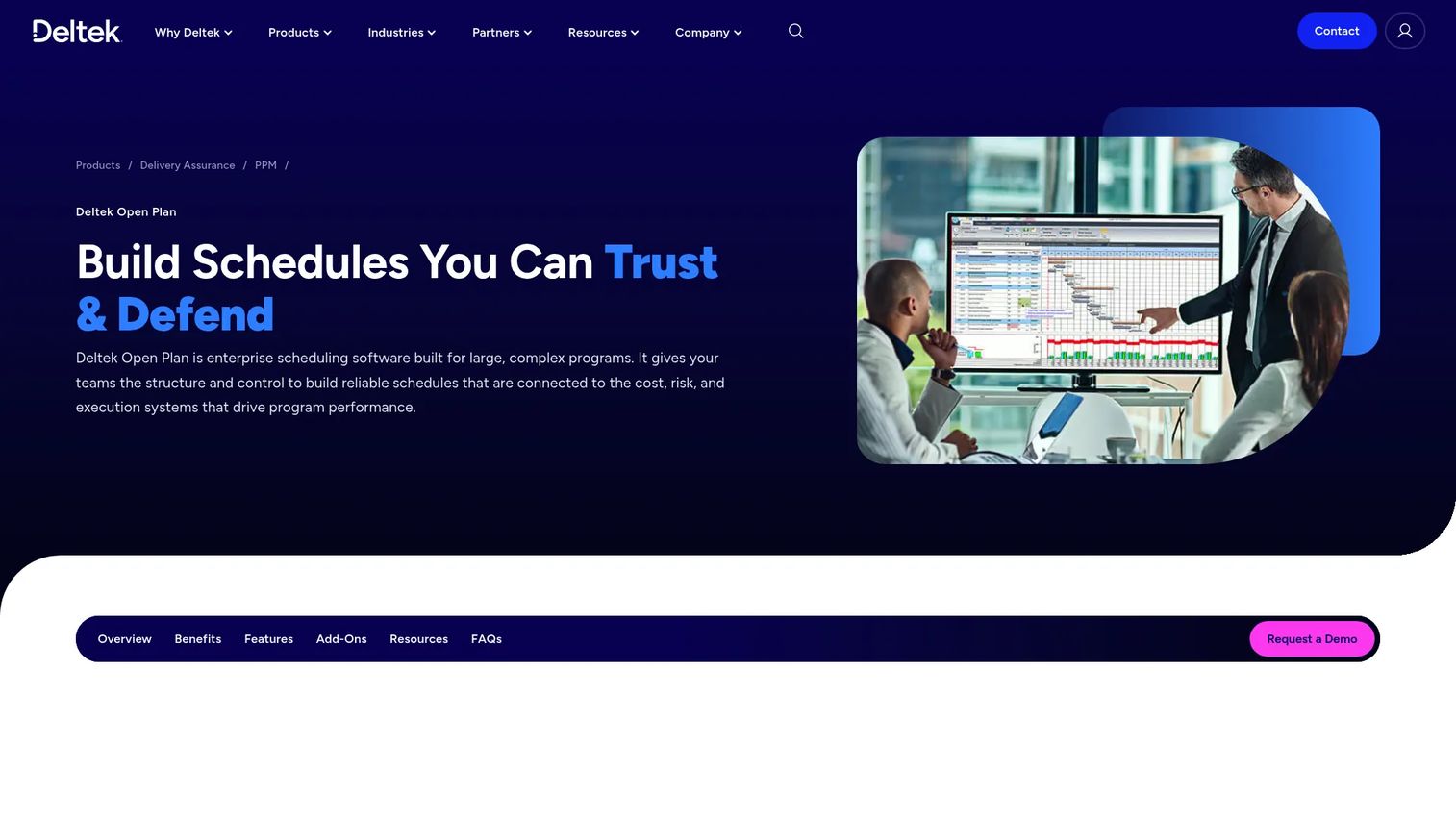
Deltek Open Plan is enterprise scheduling software designed for large, compliance-driven programs. Its distinguishing characteristic is automated DCMA, DECM, and Time Now schedule-quality checks built into the planning workflow. It integrates natively with Deltek solutions and also connects to Oracle Primavera P6, Microsoft Project, and Jira for organizations running mixed scheduling environments.
Best for: Government contractors and program teams that need a scheduling environment with built-in compliance checks and native connection to broader Deltek project controls workflows.
Key features
- Automated DCMA and DECM schedule-quality checks
- Controlled replanning and baseline management with audit history
- Resource-loaded integrated master scheduling
- Work breakdown structure management
- Native integrations with Deltek, Primavera P6, and Microsoft Project
Why choose Deltek Open Plan: Choose it when schedule governance and compliance quality checks are non-negotiable, and when the organization already operates within the Deltek project controls environment. It is less relevant for teams seeking a standalone lightweight EVM tracker without formal scheduling requirements.
Deltek Open Plan pricing: Pricing is not publicly displayed. Contact Deltek directly for licensing terms and current packaging.
G2 rating: 4.5/5
9. Oracle Primavera Unifier
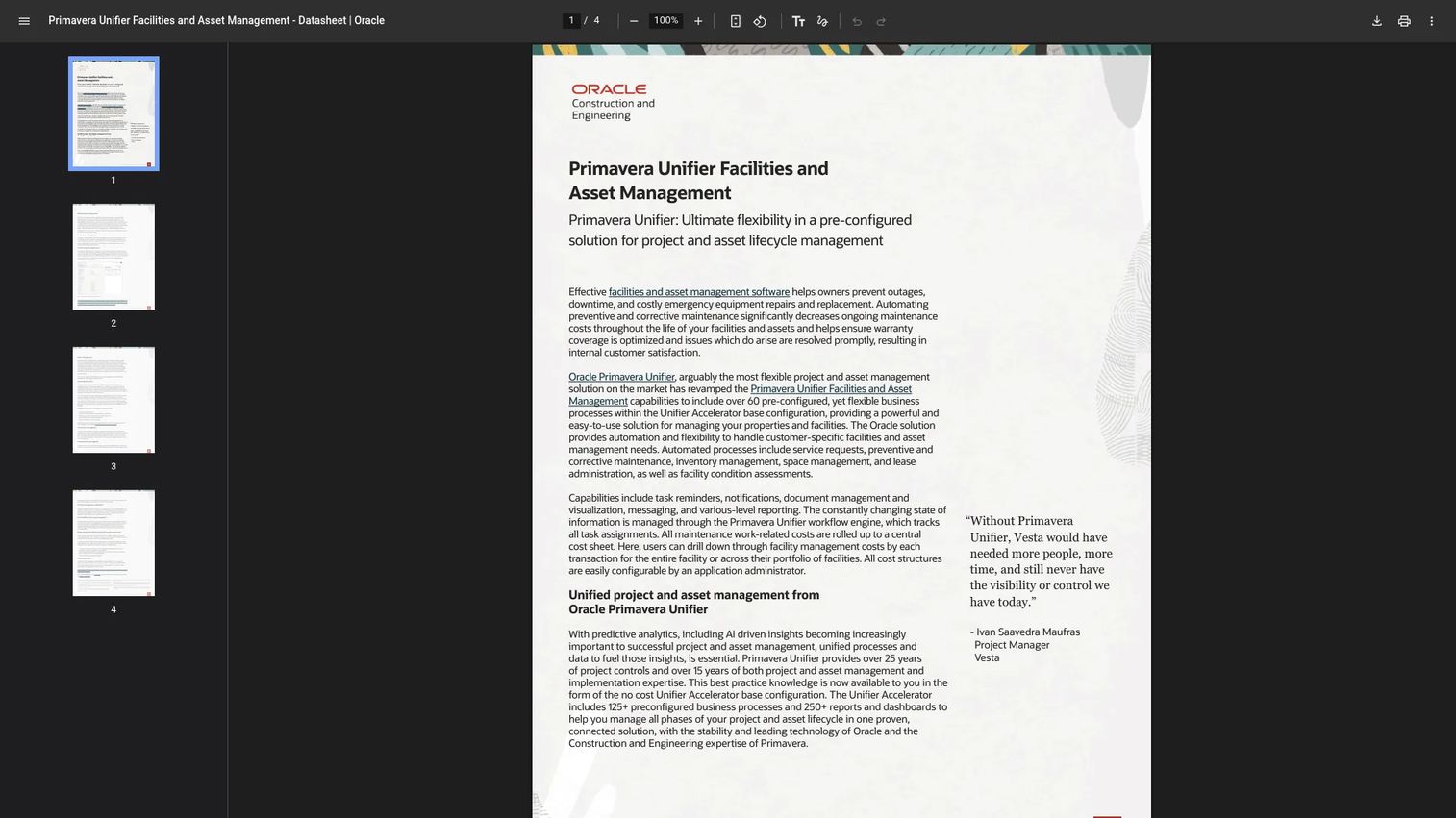
Oracle Primavera Unifier extends project controls into enterprise cost management, contract workflows, capital planning, and portfolio governance. It connects to P6 for scheduling and to Oracle ERP for financial data, creating a governed environment where cost, commitments, and performance reporting draw from consistent sources. The platform covers facilities, maintenance, lease, and asset management alongside project controls, making it relevant for long-lived capital programs and infrastructure portfolios.
Best for: Enterprises managing complex capital programs, portfolios, and facilities with requirements that cross project delivery and asset operations.
Key features
- Integrated cost control and contract management workflows
- Capital planning, earned value, and commitment management
- Configurable business process automation with no-code and low-code tools
- RESTful APIs and Oracle Cloud integration services
- Mobile workflows with online and offline support
Why choose Oracle Primavera Unifier: Fits a company whose delivery model includes regulated, multi-stakeholder, or capital-intensive programs that cannot run on informal approvals. Validate implementation effort, configuration ownership, and integration scope carefully before committing. Buyers evaluating broader aerospace erp software stacks will find Unifier fits naturally alongside Oracle's broader platform.
Oracle Primavera Unifier pricing: Oracle's published perpetual-license list price is $3,950 per application user with a minimum of 25 users. Cloud service pricing is not publicly displayed. Contact Oracle for current cloud subscription options and enterprise terms.
G2 rating: 4.3/5
10. Microsoft Project
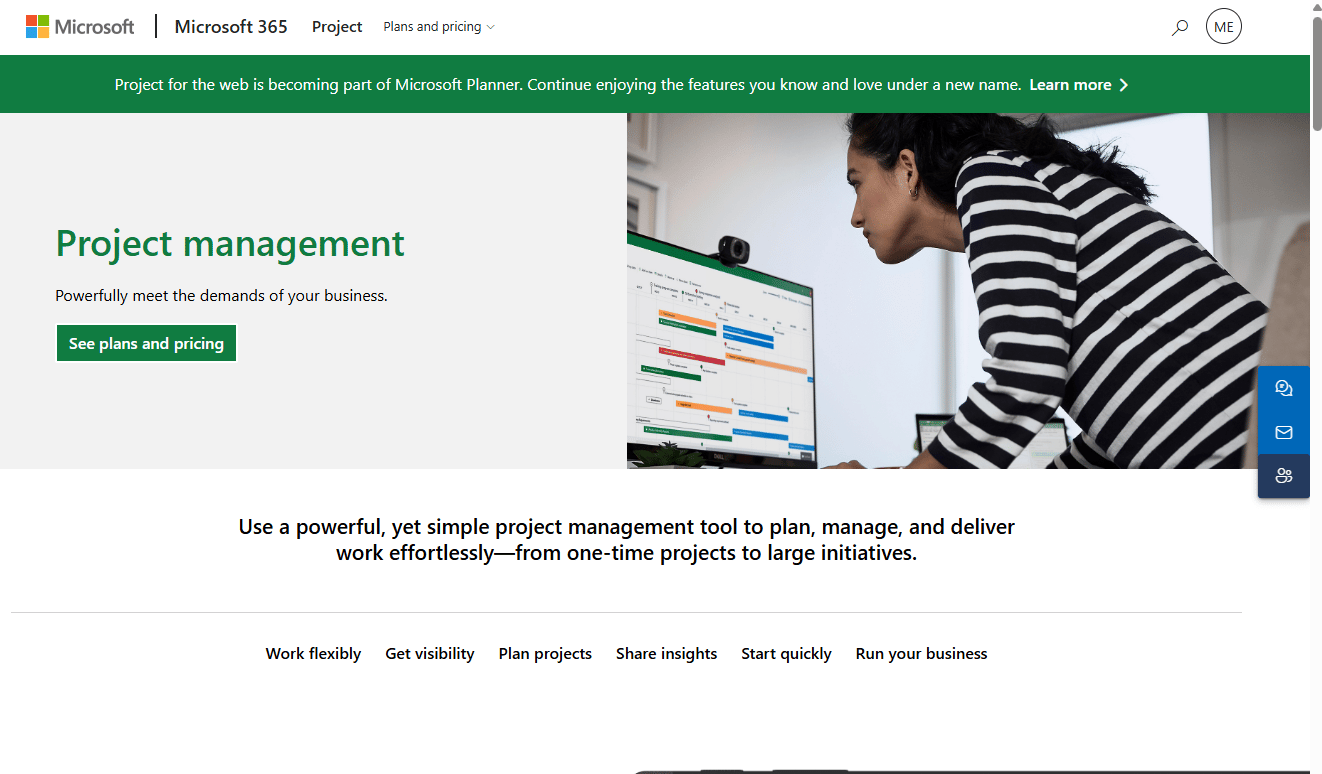
Microsoft Project is project management software with baseline cost tracking, resource management, Gantt scheduling, and earned value fields built into the standard interface. For teams already running Microsoft scheduling workflows, it lowers adoption friction considerably. Organizations with formal compliance requirements, multi-contractor data, or audit needs will typically outgrow it, but as a first step toward disciplined EVM, it covers the fundamentals.
Best for: Smaller PMOs and project teams already using Microsoft tools that need foundational schedule and earned value tracking before investing in a dedicated project controls platform.
Key features
- Gantt chart scheduling with task dependencies
- Baseline cost tracking and critical path
- Resource assignments and budget management
- Earned value fields (PV, EV, AC, CPI, SPI)
- Integration with Microsoft 365 and Power BI
Why choose Microsoft Project: A reasonable starting point when the company needs better project visibility this quarter but has not yet reached the complexity that justifies a full project controls deployment. Note that Microsoft Project Online is scheduled for retirement on September 30, 2026, so verify your deployment option against current Microsoft packaging.
Microsoft Project pricing: Plans start at $10/user/month (billed annually) for Planner Plan 1. The Planner and Project Plan 3 runs $30/user/month annually, and Plan 5 runs $55/user/month annually. One-time purchase options include Project Standard 2024 at $679.99 and Project Professional 2024 at $1,129.99.
G2 rating: 4.0/5
11. Empower
Empower in the verified research resolves to a personal financial planning and wealth management platform, covering portfolio analysis, retirement planning, budgeting, and workplace financial services. Buyers researching an EVM reporting tool under this name should verify the specific product and vendor during their evaluation, as the "Empower" name appears across multiple unrelated software categories.
Best for: Individuals and organizations seeking integrated personal financial planning, investing, and workplace retirement plan administration.
Key features
- Portfolio analysis and investment tracking
- Retirement planning and projections
- Budgeting, cash-flow, and net-worth tools
- Personalized portfolio management
- Workplace retirement-plan administration
Why choose Empower: If your search is for a browser-based EVM reporting platform, confirm the specific product name and vendor before evaluation. The Empower at empower.com serves a personal finance audience rather than a project controls function.
Empower pricing: The personal dashboard and financial tools are free. Investment advisory services carry an annual fee of 0.89% on assets under management for the Personal Strategy tier, with no minimum. The Premier Managed Account charges 0.5% annually.
G2 rating: Not currently verified for this product.
12. ProjectManager
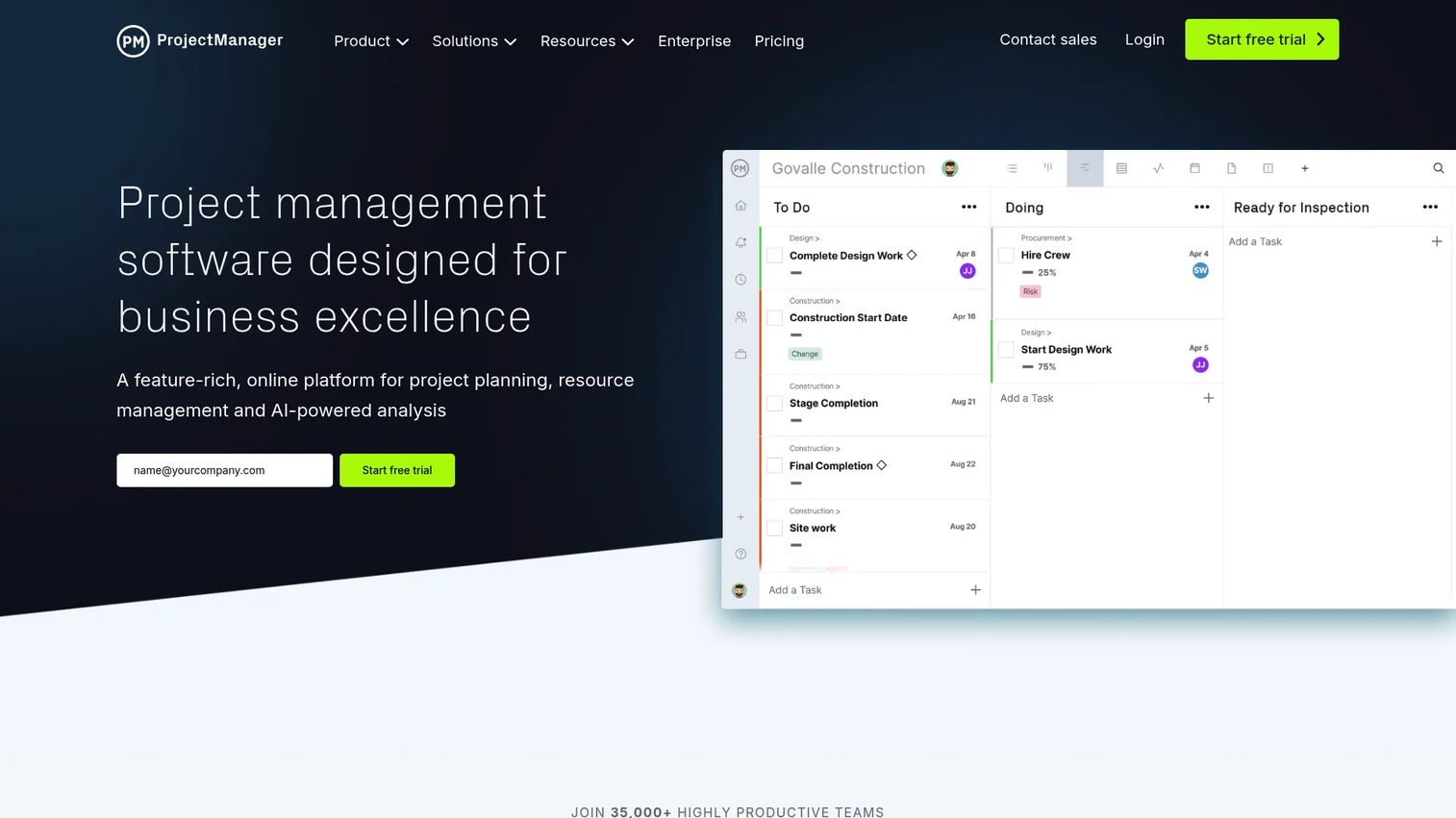
ProjectManager is cloud project and work management software covering planning, resource management, cost tracking, portfolio dashboards, and earned value reporting. It positions itself for teams that need accessible, broad-coverage project management without the implementation weight of a dedicated project controls suite. The Business plan adds portfolio management, resource and cost capabilities, reporting depth, and AI Project Insights.
Best for: Small to midsize PMOs that need planning, dashboards, portfolio visibility, and earned value reporting in one cloud application without a long configuration cycle.
Key features
- Gantt, Board, Sheet, and Calendar planning views
- Portfolio dashboards, roadmaps, and advanced reports
- Resource management, workload planning, and time tracking
- Budget and cost tracking with earned value support
- Team collaboration across projects and workstreams
Why choose ProjectManager: Good for the founder who needs operating visibility this quarter before building a formal project controls function. Teams with high governance programs, multi-contractor data requirements, or audit obligations should test reporting depth and baseline control carefully against their actual program requirements. Cross-reference against budgeting and forecasting software guides if your primary constraint is financial planning rather than schedule performance.
ProjectManager pricing: The Team plan starts at $13/user/month billed annually. Business runs $28/user/month annually ($32/user/month billed monthly). Enterprise pricing requires a custom quote. No free plan; a free trial is available.
G2 rating: 4.4/5
Considerations when choosing earned value management software
Match the system to your reporting obligation
A project manager's need for budget variance visibility differs from a government contractor's need for controlled baselines, traceability, and repeatable forecasts. Start with the reporting obligation. Then choose the system that fits it, not the other way around.
Confirm the schedule system of record
EVM is only as credible as the schedule behind it. Identify whether your organization runs P6, Microsoft Project, another planning tool, or disconnected spreadsheets. Ask how baseline changes, progress updates, and critical path shifts actually flow into the EVM model before you evaluate any platform.
Validate actual cost integration
Do not treat "ERP integration" as a checkbox. Ask which actual costs flow in, how often they refresh, whether labor and subcontractor costs are included, and who reconciles exceptions. Many implementations fail here rather than in the EVM calculation itself. Reviewing budgeting software options alongside EVM tools helps clarify where financial actuals will originate.
Test forecast credibility under pressure
Ask the vendor to demonstrate EAC, ETC, and variance forecasts using a realistic scenario with change orders, rate changes, and incomplete progress data. The forecast the tool produces during a smooth demo is not the forecast your board will see when a program is under pressure.
Budget for implementation ownership
EVM platforms need defined owners across finance, PMO, and delivery. A platform will not create consistent work packages, baselines, or progress rules on its own. Teams that skip this step tend to find that the software produces numbers nobody trusts.
Conclusion
The right earned value management software matches your program's complexity, reporting stakes, and implementation capacity.
Deltek Cobra is the lead choice for dedicated compliance-oriented earned value management in government and defense programs. Oracle Primavera P6 suits schedule-intensive capital programs where the CPM engine drives reporting quality. EcoSys, Contruent Enterprise, and Oracle Primavera Unifier serve enterprise project controls environments with portfolio governance requirements. ARES PRISM (now Contruent) fits cost engineering teams on capital programs. 4castplus is built for construction and project-driven operations where field cost data must connect to EVM metrics. Safran Risk adds probabilistic forecasting to any program controls environment where point estimates aren't enough. Deltek Open Plan handles schedule governance for compliance-driven programs. Microsoft Project suits teams building EVM discipline before a full project controls rollout. ProjectManager is the accessible cloud option for PMOs that need portfolio visibility now.
Before shortlisting, run the same baseline, actual cost, and forecast scenario through two candidate tools. The demo should show what your operating review will look like when the program is under pressure, not when it is running smoothly.
Start your journey with Guideflow today!
FAQs
Project management software handles tasks, dates, assignments, and team coordination. EVM software adds baseline cost and schedule controls, performance indices (CPI, SPI), variance analysis, and completion forecasting. Some project management tools include basic EVM fields, while dedicated EVM systems serve programs with compliance, audit, or high-consequence delivery requirements.
At minimum: PV, EV, AC, CV, SV, CPI, SPI, EAC, ETC, and VAC. The calculation is only useful if the project baseline, progress measurement method, and actual cost source are consistent and reliable. Numbers from a bad baseline mislead faster than no numbers at all.
The practical triggers are: A high-value program with customer or government reporting commitments, recurring cost overruns on complex delivery work, a portfolio too large to manage through manually merged spreadsheets, or a board that needs a defensible delivery forecast rather than a status narrative. Teams managing compliance management software programs under formal governance often hit this threshold before they expect to.
Microsoft Project includes baseline, cost, resource, and earned value fields. It works for foundational tracking on smaller programs with straightforward data sources. Teams running formal EVMS controls, multi-contractor actuals, or programs subject to DCMA surveillance typically need a dedicated EVM platform that provides the baseline governance and audit trail Microsoft Project does not offer at that depth.
ANSI/EIA 748 is a standard defining the guidelines for earned value management systems, widely referenced in U.S. government and defense contracting contexts. It describes the processes an EVMS must follow rather than certifying specific software. Buyers should validate their contract language, reporting requirements, and the vendor's capability claims with their internal program controls and compliance experts before assuming a tool is sufficient.
The scheduling system provides planned work, activity status, and progress context. ERP, finance, timekeeping, and procurement systems provide actual cost data. The EVM tool reconciles both sources against the approved baseline, preserves an audit trail of changes, and surfaces variances. The quality of that integration determines whether EAC and CPI reflect reality or just what was entered manually.
Aerospace, defense, government contracting, construction, engineering, energy, and infrastructure are the primary verticals. Professional services firms managing large implementation portfolios and SaaS companies running enterprise delivery programs also use EVM when delivery cost and schedule risk become material to investor and customer commitments. The common factor is high-consequence delivery, not the specific industry.
Start with the reporting decision the system must improve: Delivery forecast credibility, margin visibility, contract reporting, or board metrics on program performance. Then delegate the technical evaluation to Finance, PMO, and delivery leaders who will own baseline integrity and source data. Your role is to frame the problem the system must solve, set the shortlist criteria, and confirm the implementation ownership model before the purchase is made. Evaluating this alongside business process management software can help identify where EVM fits in your broader operating infrastructure.