

Your team knows the gaps exist. Someone on sales can't run a discovery call cleanly. Two engineers are the only ones who touch the billing system. A whole department is one departure away from losing a critical skill. You feel the risk, but the evidence is scattered across spreadsheets, manager guesses, half-finished performance reviews, and a certification tracker nobody has opened since Q2.
That scatter is the actual problem. Not the gap itself, but the fact that no one can see it clearly enough to act.
The market has noticed. The global skill gap analysis tools market was valued at $6.9 billion in 2024 and is projected to reach $14.2 billion by 2033, growing at a 15.6% CAGR, according to HTF Market Insights (2024). Budget is moving because guesswork is expensive. When you can't measure who knows what, you over-hire, you train the wrong people, and you promote the wrong reasons.
Skills gap analysis software fixes the visibility problem first. It turns opinions about capability into structured data you can report, plan around, and defend to leadership. This guide breaks down four tools that do it well.
What's inside
This guide is written for HR, L&D, workforce planning, and sales enablement leaders who need to turn raw skill data into decisions, not just another dashboard nobody reads.
We chose tools based on four criteria:
- Skills intelligence and taxonomy depth: how well the tool structures skills and competencies
- Reporting: whether outputs serve individuals, managers, and leadership
- Development planning: support for upskilling, certifications, and action plans
- Integrations: how cleanly it connects to your HRIS and systems of record
The list covers both team-level use and enterprise-scale workforce planning.
TL;DR
- Best for skills intelligence and fast reporting: MuchSkills, with AI-driven skill mapping and gap analysis across individuals and teams.
- Best for governed, template-led assessment workflows: TalentGuard, built around competency management and internal mobility.
- Best for outcome-focused upskilling programs: Lepaya, which ties development directly to business impact.
- Best for enterprise workforce planning and role benchmarking: Mercer, with consulting depth behind talent and career solutions.
If you need speed and clarity across a growing team, start with MuchSkills. If you're planning at enterprise scale, Mercer earns the look.
What is skills gap analysis software
Skills gap analysis software compares the skills your people currently have against the skills their roles require, then reports the gap across employees, teams, departments, and the full organization.
Instead of guessing who can do what, you get a structured, comparable view of capability. That view drives hiring plans, training budgets, promotion decisions, and workforce planning.
Core capabilities usually include:
- Skills matrix: a grid that maps people against skills and proficiency levels
- Competency mapping: frameworks that define what each role or level requires
- Skills intelligence: AI-assisted tagging, inference, and benchmarking of skills data
- Gap reporting: individual, manager, team, and leadership-level views of missing skills
- Development planning: upskilling and reskilling plans tied to identified gaps
- Certification tracking: records of completed and expiring certifications
- Internal mobility: matching people to open roles based on skill fit
- Integrations: connections to HRIS, LMS, and performance systems
The best tools go past assessment. They connect the gap you found to the action that closes it, and they keep that data current as roles and people change.
When to use skills gap analysis software
Diagnose team capability gaps
Reach for this software when a leader needs a clear, current view of what a team can actually do. Maybe a sales manager suspects half the team can't handle a new competitive threat. Maybe a department is scaling and nobody knows where the depth is thin. A skills gap assessment replaces the hunch with a proficiency map you can point to and act on.
Build development and certification plans
Use it when the goal is upskilling, reskilling, and tracking who completed what. Once you know the gaps, you assign training, set targets, and monitor progress over time. Certification tracking matters most here, especially in regulated functions where an expired credential is a compliance risk, not just a missing badge.
Support workforce planning and internal mobility
Bring it in when you need to align talent supply with future business needs. If a product launch demands new skills, or a role is changing, or you'd rather promote from within than rehire, a skill gap analysis tool shows you who is close to ready and who needs a plan. That's the difference between reactive hiring and deliberate internal mobility.
Comparison table
The four tools below serve different jobs. MuchSkills leads for skills intelligence and speed. TalentGuard leans into governed competency data. Lepaya centers on upskilling outcomes. Mercer brings enterprise consulting depth. Pricing and ratings reflect the most recent verified data available at the time of writing.
| # | Product | Best for | Key differentiator | Pricing | G2 rating |
|---|---|---|---|---|---|
| 1 | MuchSkills | Skills intelligence and fast reporting | AI Role Builder and skill gap analysis with visual skill mapping | Starter from €5 / $5.5 per member/month | 4.5/5 |
| 2 | TalentGuard | Governed competency data and internal mobility | Career pathing tied to governed skills and readiness analytics | From $1.60/user/day (Front-Line Manager Development) | 4.6/5 |
| 3 | Lepaya | Outcome-focused upskilling programs | Blended training tied to measurable business impact | Not publicly listed | Not listed |
| 4 | Mercer | Enterprise workforce planning and benchmarking | Consulting-backed talent, career, and benchmarking depth | Not publicly listed | 3.8/5 |
Best 4 skills gap analysis software for 2026
1. MuchSkills
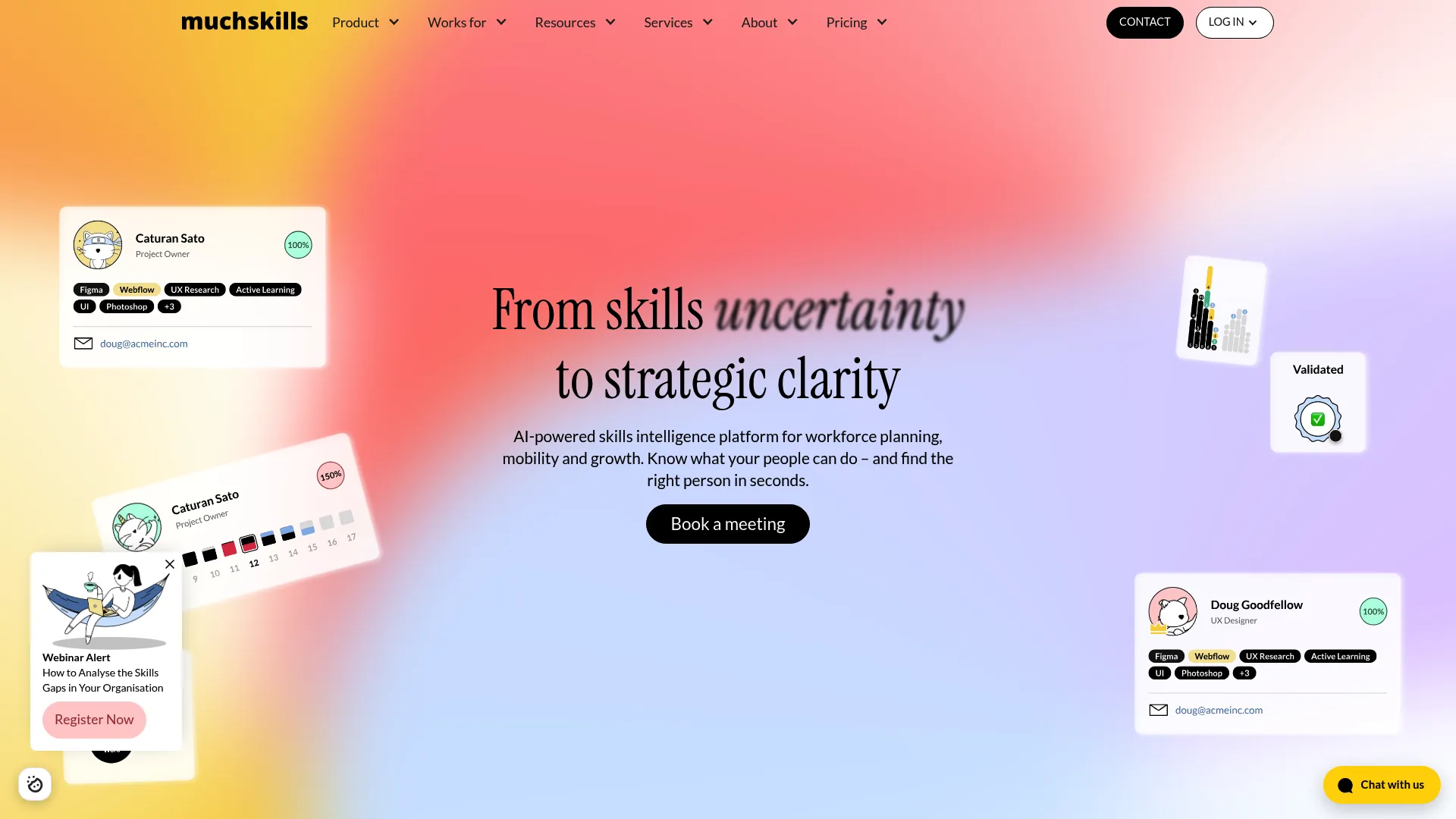
MuchSkills is an AI-powered skills intelligence platform built for workforce skills mapping, gap analysis, and planning. It turns scattered capability data into visual skill matrices that leaders can read in seconds. The tool is designed for teams that need broad visibility across individuals, departments, and the whole organization without spending weeks building a taxonomy by hand.
Where it stands out is the combination of AI-assisted skill mapping and gap analysis. You define what a role needs, and the platform surfaces where the gaps sit. That makes it useful for both a manager checking one team and a workforce planner looking across the company.
Best for: Organizations that need skills intelligence, certification tracking, and workforce planning in one visual system.
Key features
- Skills and competency mapping
- Certification tracking
- AI Role Builder and skill gap analysis
Why choose MuchSkills: If your priority is fast, readable skills intelligence across a growing team, MuchSkills gets you from raw data to a usable skills matrix quickly, without a heavy setup phase.
MuchSkills pricing: The Starter plan starts at €5 / $5.5 per member per month, billed monthly or annually, and supports up to 100 users with a free trial to start. Professional, Consulting Suite, and Enterprise plans are quote-based and available on request.
2. TalentGuard
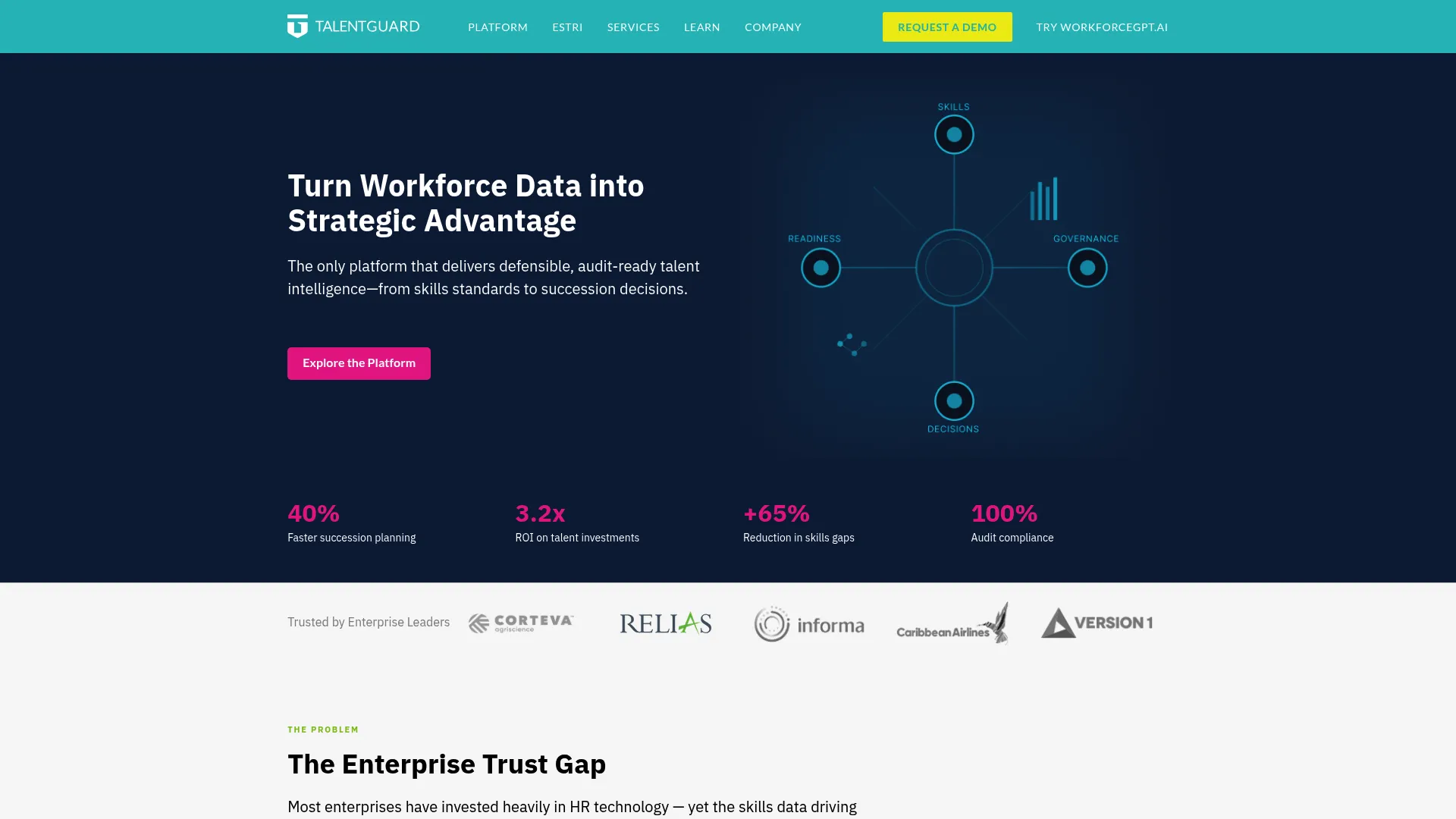
TalentGuard is an enterprise talent management platform built around governed skills data, career pathing, assessments, performance, and succession. It suits teams that want a structured, repeatable assessment process rather than ad-hoc spreadsheets. The competency mapping sits at the center, so the skills data stays consistent as it flows into development and mobility decisions.
The internal mobility angle is the differentiator. Because the skills data is governed and tied to career paths, TalentGuard connects the gaps you find to the roles people could move into. That makes it a strong fit for organizations that want to promote from within on evidence, not instinct.
Best for: Mid-to-large organizations needing governed skills data and internal talent mobility.
Key features
- Governed skills and competency management
- Career pathing and internal mobility
- Talent assessment and readiness analytics
Why choose TalentGuard: Choose it when governance matters as much as the assessment itself. If you need one source of truth for competencies that feeds performance, succession, and mobility, TalentGuard is built for that structure.
TalentGuard pricing: Public pricing is shown per solution package. Front-Line Manager Development is $1.60 USD per user per day, billed annually at $579. HR Manager Enablement is $12.00 USD per day, billed annually at $3,903. The Competency Consultants Blueprint is $199.99 USD per role, with a 100-role minimum.
3. Lepaya
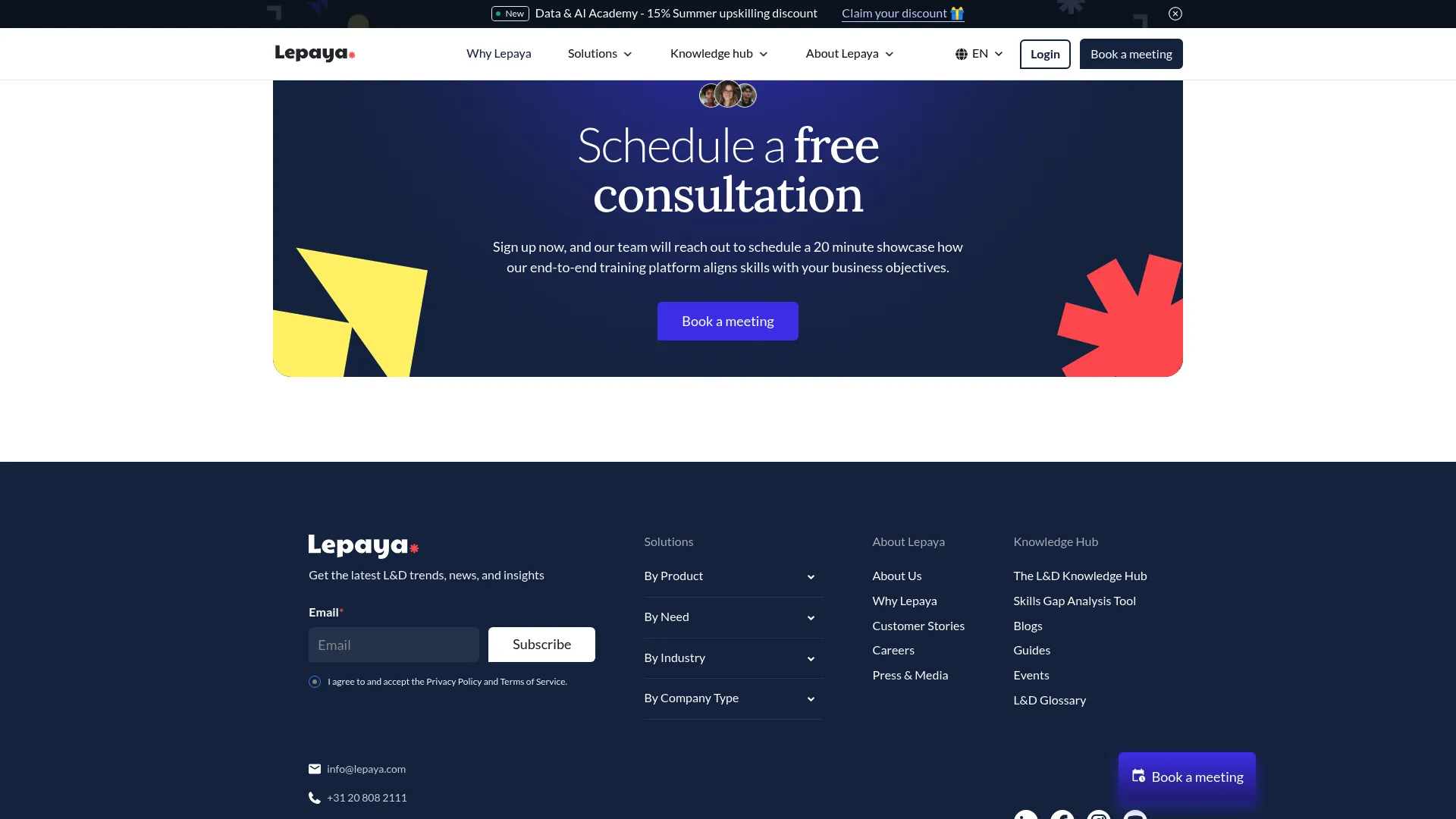
Lepaya is a blended training platform for enterprise workforce upskilling, built to tie development directly to business impact. It fits teams that want a fast, guided path from identifying a gap to running a program that closes it. The platform pairs a portal for planning and impact tracking with a mobile app for self-paced learning.
The emphasis here is on outcomes, not just assessment. Lepaya connects individual development to measurable business results, so the reskilling work you fund can be tied back to what it changed. For leaders who need to justify a training budget, that connection is the point.
Best for: Enterprises seeking blended upskilling programs tied to measurable business outcomes.
Key features
- Lepaya Portal for workforce insights, program planning, and impact tracking
- Lepaya App for mobile-first self-paced learning, AI coach, role-plays, and nudges
- Blended training programs and academies for different career levels
Why choose Lepaya: Pick Lepaya when the priority is turning identified gaps into real upskilling, fast, with a clear line back to business impact. It leans development-first rather than reporting-first.
Lepaya pricing: Lepaya does not list public pricing on its site. Contact the company directly for a quote based on program scope and headcount.
4. Mercer
Mercer is a global consulting firm focused on health, wealth, career, and talent solutions. For skills work, it brings something the others do not: deep benchmarking data and consulting support behind role and job-family analysis. That suits enterprise teams that need governance and planning depth, not just a tool.
Mercer's strength is strategic workforce planning at scale. Skills libraries, role benchmarking, and leader and employee reporting connect skills data to broader business goals. When the decision is large, cross-functional, and needs external credibility, Mercer's consulting backbone earns its place.
Best for: Enterprises seeking consulting and advisory depth across career, talent, and workforce planning.
Key features
- Talent and career solutions
- Role and job-family benchmarking
- Health, benefits, retirement, and investment consulting
Why choose Mercer: Choose Mercer when you need enterprise-grade benchmarking and advisory support, not a self-serve app. It fits large organizations planning workforce strategy across many roles and regions.
Mercer pricing: Mercer does not publish pricing on its main corporate site. Engagements are scoped through a specialist, so contact the company to discuss requirements.
Considerations
Skills taxonomy and framework depth
A weak taxonomy poisons everything downstream. If "communication" means five different things across five managers, your reports are noise. Check how the tool structures skills, whether it supports competency mapping to role and level, and whether it uses a skill taxonomy you can trust. Depth here is what separates real skills intelligence from a glorified survey.
Reporting and stakeholder views
Different people need different outputs. An individual wants to see their own gaps. A manager wants the team view. Leadership wants the org-level picture tied to business goals. Confirm the tool produces all of these without you rebuilding the data each time. Manager-ready, one-click reporting saves hours you would otherwise lose to formatting.
Development workflow fit
Finding the gap is half the job. The tool should connect directly to upskilling, certifications, action plans, and internal mobility. Ask whether a gap can trigger a development plan, whether certification tracking includes renewal workflows, and whether progress feeds back into the skills matrix automatically.
Integrations and data sources
Your skills data should not live in isolation. Check how the tool connects to your HRIS, performance systems, and LMS. When the systems of record talk to each other, the skills data stays current and you stop maintaining duplicate records by hand.
Governance and maintenance
Skills data rots. People learn, roles change, and last year's matrix quietly goes stale. Evaluate versioning, clear ownership, and refresh cadence. A tool that makes updates cheap and assigns responsibility for keeping data current is the one that still works in eighteen months.
Conclusion
The four tools here solve different versions of the same problem. MuchSkills is the fastest path to visual skills intelligence across a growing team, with AI-assisted mapping and gap analysis. TalentGuard is the governed, structured choice when competency data has to feed performance, succession, and internal mobility. Lepaya is the pick when your priority is turning gaps into upskilling tied to business impact. Mercer is the enterprise option when you need benchmarking data and consulting depth behind large workforce decisions.
Your next step depends on what you need most. If you want a fast, readable skills matrix without a long build, start with MuchSkills. If you're operationalizing competencies across a mid-to-large org, evaluate TalentGuard. If development outcomes matter more than reporting, look at Lepaya. And if you're planning workforce strategy at enterprise scale, Mercer is worth the conversation.
Whichever you choose, decide first whether your priority is diagnosis, development, or planning. That answer narrows the list faster than any feature comparison.
FAQs
A skills gap analysis compares the skills your workforce currently has against the skills their roles require. The difference is the gap. It shows you where capability is missing across individuals, teams, and the whole organization, so you can plan hiring, training, and development around evidence instead of guesswork.
Look for a skills matrix, competency mapping, and gap reporting at individual, manager, team, and leadership levels. Strong tools add skills intelligence with AI-assisted tagging, development and certification tracking, internal mobility matching, and integrations with your HRIS and LMS. The goal is connecting the gap you find to the action that closes it.
Start by defining the skills and proficiency levels each role requires. Then assess current skills through self-assessment, manager ratings, 360 feedback, or validated tests. A skills gap analysis tool compares the two and produces a matrix showing where the team falls short. The clearest picture usually blends multiple input sources rather than relying on one.
Yes. When skills data is structured and current, the software can match people to open roles based on skill fit rather than title or tenure. Tools built around governed competency data connect gaps to career paths, so you can see who is close to ready for a move and who needs a development plan first.
A skills matrix is a grid mapping people against specific skills and proficiency levels, giving you a snapshot of who can do what. A competency framework defines what each role or level should require in the first place. The framework sets the standard. The matrix measures reality against it. You need both for a reliable analysis.
For most teams, a full analysis once or twice a year keeps data current without creating survey fatigue. Run it more often around triggers: a product launch, a reorganization, rapid headcount growth, or a new competitive threat. Continuous or event-based updates work best when the tool makes refreshing the data cheap and clearly owned.
It is. When a manager can see exactly where each rep or team member is strong and where they lag, coaching becomes specific instead of generic. Manager-level reporting turns a vague "improve your discovery calls" into a targeted plan tied to a measurable gap, which is far easier to act on and track over time.
It aligns talent supply with future business needs. By mapping current skills against what upcoming roles and strategy will require, the software shows where you are short before it becomes a crisis. That lets you decide deliberately between upskilling, reskilling, internal mobility, and external hiring, rather than reacting once a gap has already stalled the business.
.avif)