Your campaign looks profitable until the supplier raises its price, stock disappears, or late deliveries trigger refunds. By then, the ad platform has already spent your budget.
Dropshipping software affects far more than product importing. It determines whether inventory stays accurate, orders reach the right supplier, and tracking reaches customers. Those operational details decide whether a winning campaign remains profitable after fulfillment.
The category is growing with that pressure. Verified Market Research estimated the global dropshipping software market at $1.72 billion in 2025. Its 2026 report projects $5.80 billion by 2033.
The right dropshipping automation software should remove repetitive work without hiding costs or creating another disconnected app. Start with the operational problem you need to solve. Then choose the smallest stack that protects margin, delivery expectations, and reporting clarity.
What’s inside
This guide covers 17 dropshipping software tools for ecommerce marketers, marketplace sellers, dropshippers, and operators trying to automate without losing margin.
We selected the tools using these criteria:
- Supplier access: Product range, supplier reliability, and sourcing relevance
- Operational control: Product importing, inventory synchronization, and price updates
- Fulfillment: Order routing, shipment tracking, and delivery visibility
- Commercial fit: Pricing clarity, platform compatibility, and margin impact
The list includes all in one platforms, supplier sourcing software, product importing tools, print on demand services, and accounting software. This distinction matters because several tools solve different parts of the operating workflow.
TL;DR
- Best all around automation: AutoDS combines sourcing, importing, monitoring, and fulfillment across supported sales channels
- Best for AliExpress workflows: DSers supports bulk processing, supplier mapping, and automated synchronization
- Best for US and EU sourcing: Spocket offers supplier access, branded invoicing, and store integrations
- Best for branded fulfillment: Zendrop adds custom branding, US warehousing, and automated fulfillment
- Best for supplier breadth: Syncee covers marketplace sourcing, bulk imports, and catalog synchronization
- Best for specialized operations: Printful handles custom products, while Link My Books handles bookkeeping and tax reconciliation
What is dropshipping software?
Dropshipping software is ecommerce operations software that helps sellers source products, import listings, sync inventory and prices, route orders to suppliers, track shipments, and measure profit without holding inventory.
The category includes several distinct tool types:
- Supplier sourcing tools: Find products and suppliers using searchable catalogs
- Product import tools: Move supplier listings into an ecommerce storefront
- Automation platforms: Route orders and synchronize stock, prices, or tracking
- Marketplace tools: Coordinate listings and fulfillment across sales channels
- Accounting tools: Reconcile sales, fees, taxes, refunds, and payouts
- Print on demand tools: Produce customized items after customers order
A dropshipping automation platform usually covers more of the operating cycle than a directory. It may connect product research with listing management, inventory monitoring, order placement, and shipment updates.
A dropshipping supplier directory focuses earlier in the process. It helps you identify products or vendors, but may offer fewer fulfillment controls. Meanwhile, dropshipping accounting software works after the sale. It connects revenue with fees and supplier costs to show what remains.
Key features to look for
- Product importing and catalog editing
- Inventory and price synchronization
- Automated order routing
- Supplier vetting and location filters
- Shipping tracking updates
- Branded packaging options
- Marketplace and store integrations
- Accounting and tax reconciliation
- Margin and fee visibility
- Customer communication support
The best software for dropshipping depends on the job you need done. A large supplier catalog means little when stock data is stale. Strong automation also has limited value if shipping costs erase your campaign margin.
Dropshipping software cannot repair weak product selection or poor supplier economics. It helps operators scale the processes that become fragile once orders start arriving.
When to use dropshipping software
Automate orders before manual work breaks
Manual fulfillment can work during early product tests. It becomes risky once order volume forces someone to copy customer details between systems.
Use automated dropshipping software when order placement, status checks, or tracking updates consume daily operating time. Automation reduces avoidable entry errors and gives your team more capacity for supplier problems requiring judgment.
Sync inventory before campaigns scale
A strong campaign creates trouble when its product sells out without warning. The same applies when supplier price changes make your target CPA unprofitable.
Connect inventory synchronization and price synchronization before increasing spend. This helps marketers avoid paying for traffic to unavailable products or products with shrinking margins.
Expand channels without duplicating operations
Selling across a storefront and several marketplaces creates separate catalogs, order queues, and customer expectations. Manual processes multiply with every channel.
An automated dropshipping platform can centralize selected workflows across supported stores and marketplaces. Platform fit matters more than tool count. Choose software around the channels producing revenue now.
Dropshipping software comparison
The comparison below covers automation platforms, product importers, supplier directories, fulfillment services, and accounting software. Compare tools by operational job before comparing subscription prices.
Pricing also needs context. A free platform can still carry product, shipping, or fulfillment costs. Higher priced marketplace dropshipping software may replace several smaller apps when it handles inventory, orders, and tracking together.
G2 ratings are included only when a current listing was available in the supplied research. N/A means no qualifying rating was confirmed.
| # | Product | Best for | Key differentiator | Pricing | G2 rating |
|---|---|---|---|---|---|
| 1 | AutoDS | Multi-channel automation | Research, importing, monitoring, and fulfillment | From $26.90/month | N/A |
| 2 | DSers | AliExpress order automation | Bulk processing and supplier mapping | Free, paid from $19.90/month | 5.0/5 |
| 3 | Spocket | US and EU supplier sourcing | Supplier marketplace with branded invoicing | From $39.99/month | 4.2/5 |
| 4 | Zendrop | Branded fulfillment | Custom branding and US warehousing | Free, Pro from $49/month | N/A |
| 5 | Syncee | Supplier marketplace breadth | Product discovery and catalog automation | Free, paid from $39.99/month | 5.0/5 |
| 6 | CJdropshipping | Sourcing and global fulfillment | Sourcing, warehousing, packaging, and fulfillment | Free, paid from $15.99/month | 5.0/5 |
| 7 | Doba | Supplier catalog access | Centralized catalog and listing automation | From $28.66/month quarterly | 4.8/5 |
| 8 | Inventory Source | Supplier feed automation | Inventory sync and order routing | Free directory, automation from $199/month | N/A |
| 9 | Dropified | Importing and fulfillment | Product pages and automated supplier orders | $1 trial, then $50/month | 5.0/5 |
| 10 | Importify | Flexible product importing | Imports from more than 25 marketplaces | From $14.95/month | 4.8/5 |
| 11 | AliDropship | WooCommerce store ownership | WordPress based AliExpress operations | From $39/month | 4.9/5 |
| 12 | SaleHoo | Supplier research | Vetted suppliers and product research | From $9/month annually | 4.5/5 |
| 13 | Spark Shipping | Complex supplier automation | Custom feeds and intelligent order routing | From $299/month | 4.5/5 |
| 14 | Modalyst | Curated supplier sourcing | Curated catalog with automated fulfillment | Free, paid from $35/month | 4.7/5 |
| 15 | Printful | Print on demand dropshipping | Custom product production and fulfillment | Free, Growth at $24.99/month | 4.4/5 |
| 16 | Shopify Collective | Retailer to brand sourcing | Native supplier network for eligible stores | Free for eligible Shopify stores | N/A |
| 17 | Link My Books | Accounting and tax reconciliation | Marketplace bookkeeping and payout matching | From $20/month | 4.8/5 |
Best 17 tools for dropshipping software
1. AutoDS
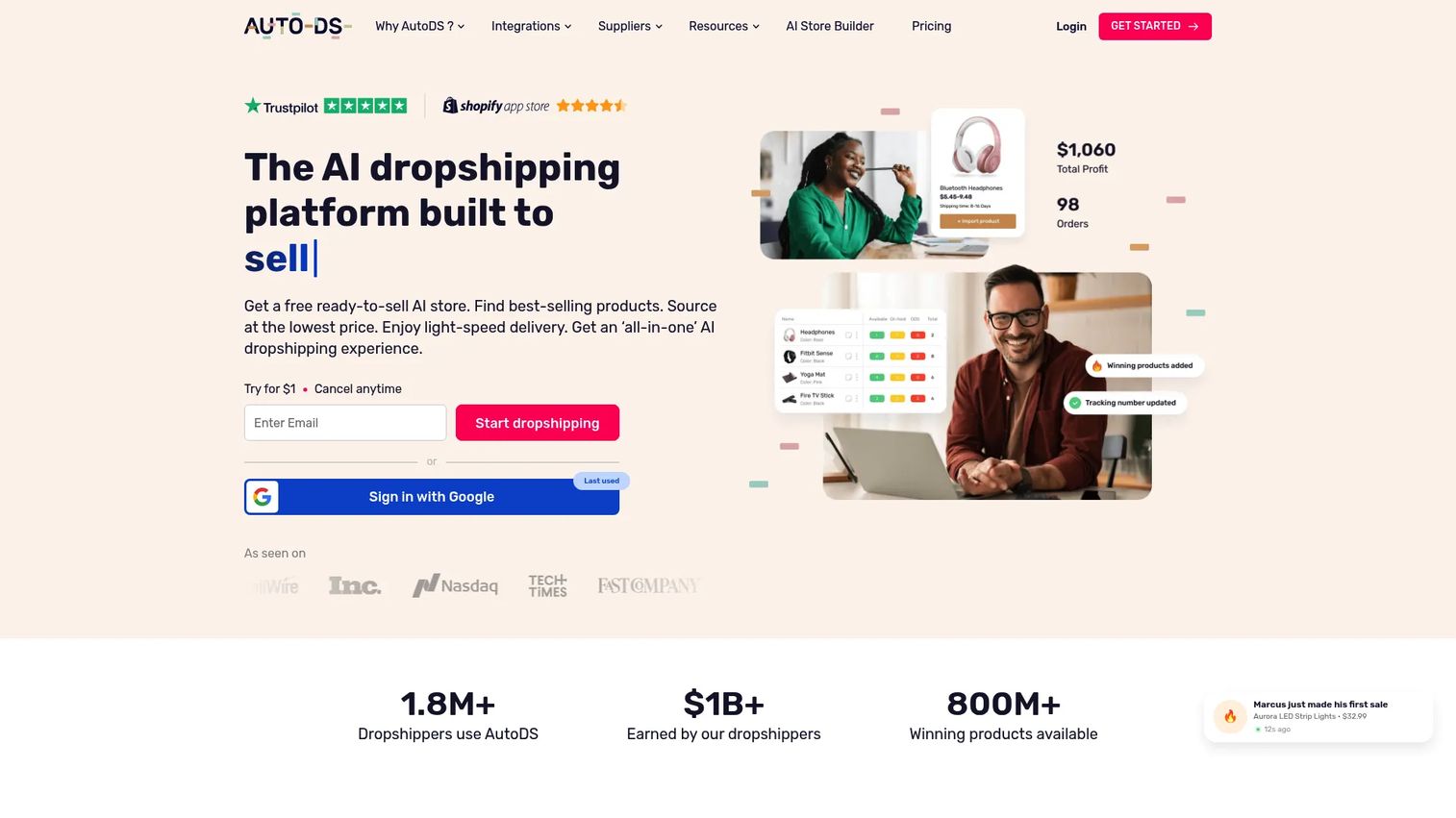
AutoDS is a broad dropshipping automation platform for product research, importing, listing management, and fulfillment. It connects several operating tasks that sellers often manage through separate apps.
The platform imports from more than 25 suppliers and monitors stock or price changes. Automatic fulfillment and tracking updates reduce repetitive order handling. Multi-channel support also suits operators managing several sales surfaces.
Best for: Sellers who need broad automation across supported stores and marketplaces.
Key features
- Product importing from more than 25 suppliers
- Automatic fulfillment and tracking updates
- Price and stock monitoring
- Product research and marketplace tools
- AI listing copy generation
Why choose AutoDS: Its breadth suits operators who want a control center rather than a narrow importer. Consolidation can reduce handoffs between sourcing and fulfillment workflows.
Watch total cost as your product limits, selling channels, and add-ons increase. Compare the full operating bill against the apps AutoDS would replace.
AutoDS pricing: Import starts at $26.90 monthly. Starter costs $49.90 monthly when billed annually, and a three day trial is offered.
2. DSers
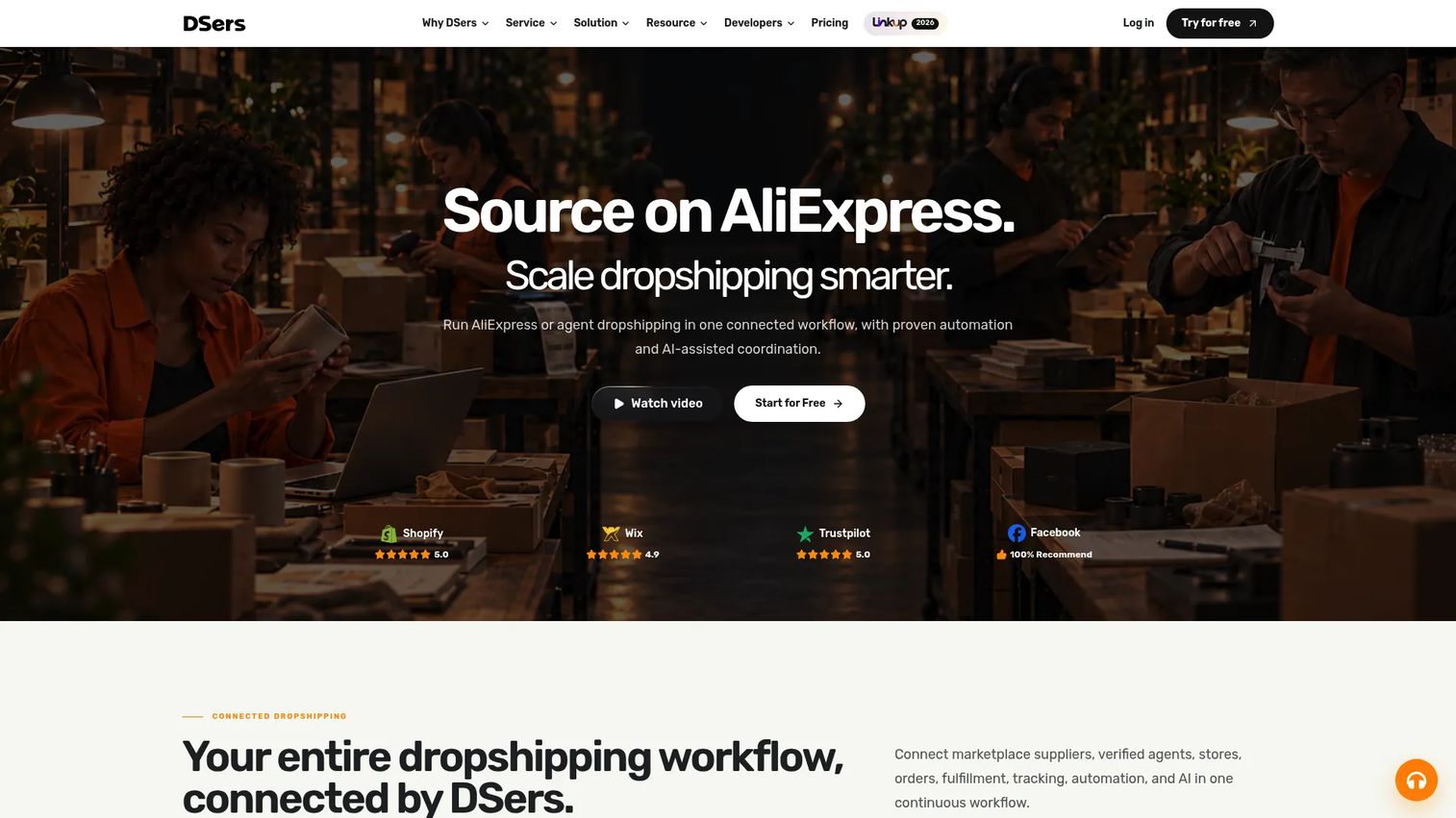
DSers focuses on sourcing, store management, and fulfillment automation. Its supplier mapping and bulk order processing make it especially relevant for AliExpress driven stores.
Sellers can import products in bulk, map variants to suppliers, and synchronize inventory or tracking. Multi-store management supports operators running more than one storefront. Branded tracking pages also extend the workflow beyond initial order placement.
Best for: Stores processing significant AliExpress order volume across one or more ecommerce sites.
Key features
- Bulk product importing and publishing
- Bulk order processing
- AliExpress supplier mapping
- Automatic inventory synchronization
- Branded tracking pages
Why choose DSers: Pick it when AliExpress sits at the center of your sourcing model. The free plan also gives early-stage sellers a low-cost starting point.
Stores seeking a wider supplier mix may need another sourcing service. Check whether that extra tool creates duplicate catalog or inventory controls.
DSers pricing: Basic is free. Advanced starts at $19.90 monthly, while Pro costs $49.90 monthly.
G2 rating: 5.0/5
3. Spocket
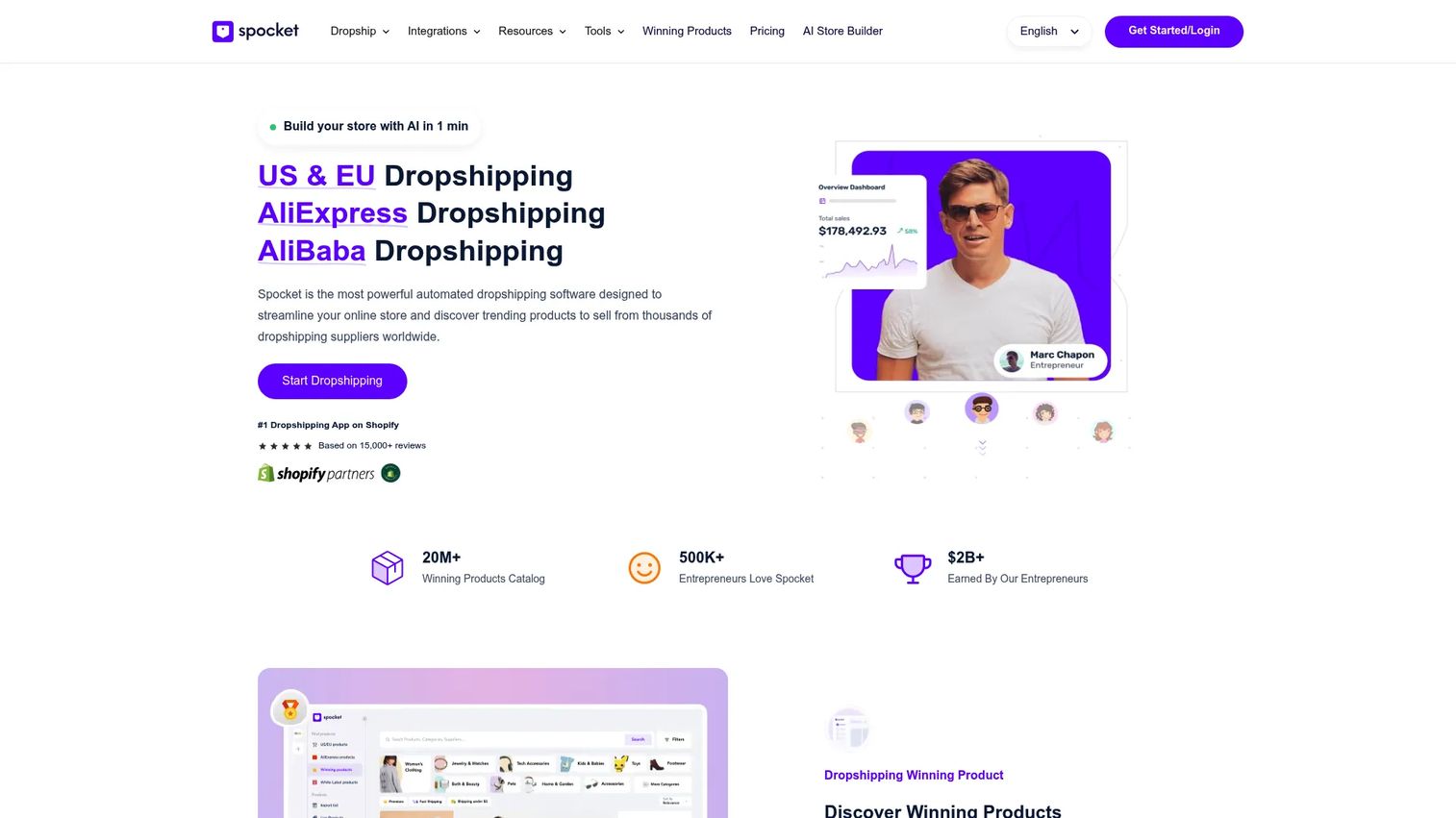
Spocket connects retailers with dropshipping suppliers and supports product importing, fulfillment, and order tracking. Its catalog includes supplier options from the US and Europe.
That regional focus matters when delivery expectations influence conversion or repeat purchases. Spocket also supports product samples and branded invoicing. Integrations include major hosted and self-managed ecommerce platforms.
Best for: Stores seeking US and EU supplier access with automated order handling.
Key features
- US and EU supplier access
- One-click product importing
- Automated order fulfillment
- Branded invoicing
- Inventory and order tracking
Why choose Spocket: It fits operators trying to move beyond overseas-only sourcing. Regional suppliers may support shorter delivery windows for selected products.
Product costs can exceed mass-market catalog pricing. Model gross margin with shipping, refunds, and paid media before increasing campaign spend.
Spocket pricing: Starter costs $39.99 monthly. Paid plans include a seven day trial, while annual Professional pricing starts at $24 monthly.
G2 rating: 4.2/5
4. Zendrop
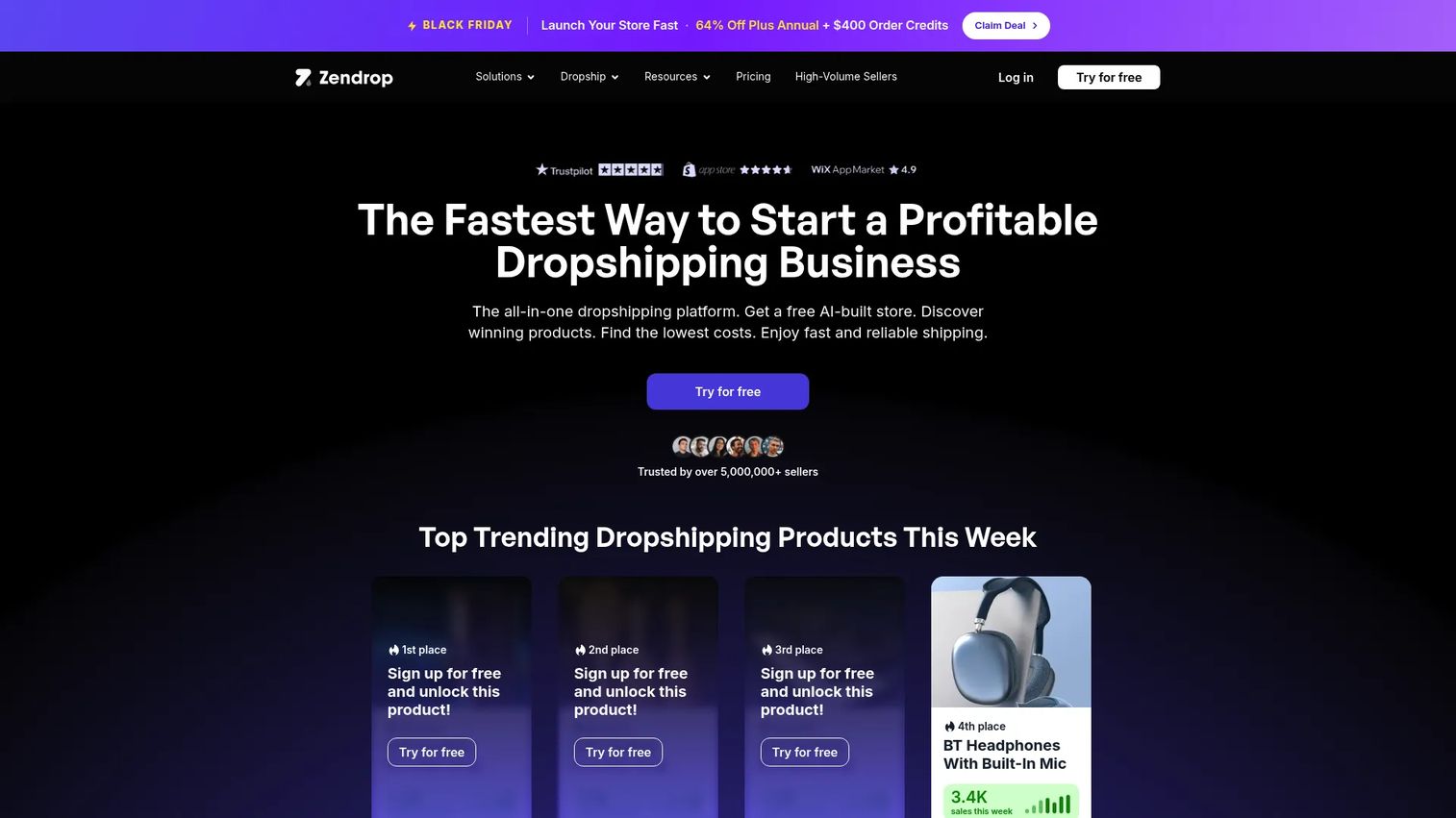
Zendrop combines product discovery, sourcing, fulfillment, and store integrations. It also offers custom branding and US warehousing services.
The platform suits stores moving from quick product tests toward a more controlled post-purchase experience. Automated fulfillment reduces manual processing. Print on demand and AI store tools extend its scope beyond standard supplier resale.
Best for: Sellers building a branded operation with fulfillment support.
Key features
- Automated dropshipping fulfillment
- Custom branding
- US warehousing services
- Print on demand
- Store and marketplace integrations
Why choose Zendrop: Consider it when packaging and fulfillment experience matter alongside product sourcing. It supports a more brand-led model than a basic importer.
Feature availability varies by plan. Match branding and warehousing requirements to the relevant package before moving order volume.
Zendrop pricing: Free costs $0 monthly with limited access. Pro starts at $49 monthly or $399 annually.
5. Syncee
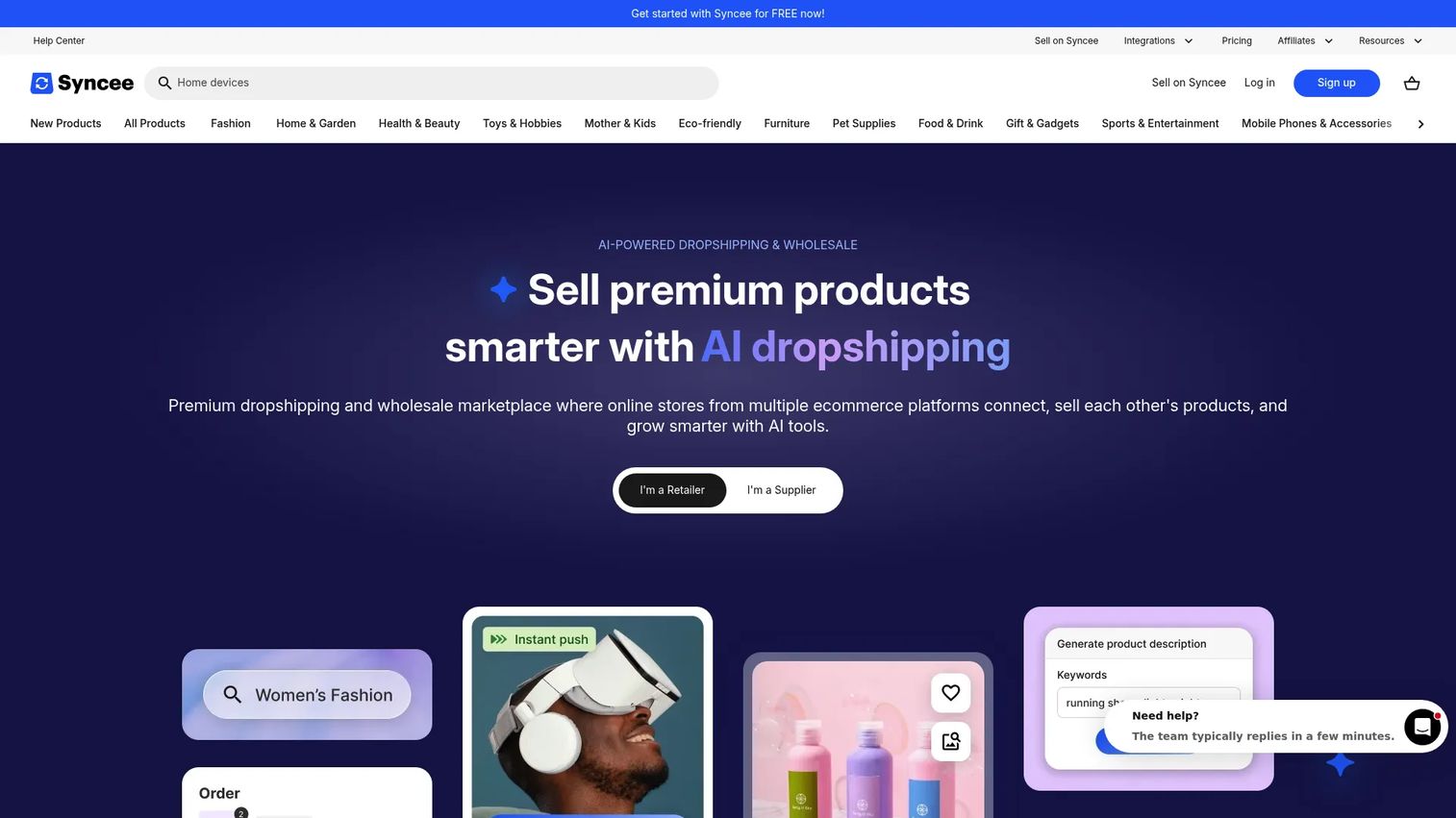
Syncee is a dropshipping and wholesale marketplace connecting online stores with suppliers. It combines product discovery with catalog automation.
Retailers can import products individually or in bulk. Syncee also synchronizes orders, payments, inventory, and shipment tracking. These capabilities reduce manual feed maintenance when several suppliers populate one storefront.
Best for: Retailers wanting broad supplier discovery with automated product data management.
Key features
- AI product search
- One-click product imports
- Bulk catalog importing
- Inventory synchronization
- Shipment tracking synchronization
Why choose Syncee: It fits stores where supplier variety and catalog management carry equal weight. The marketplace can reduce the work of maintaining individual product feeds.
Still review each supplier’s location, processing time, and shipping rules. Marketplace access does not remove supplier-level due diligence.
Syncee pricing: A free plan is available. Basic starts at $39.99 monthly and includes a three day trial.
G2 rating: 5.0/5
6. CJdropshipping
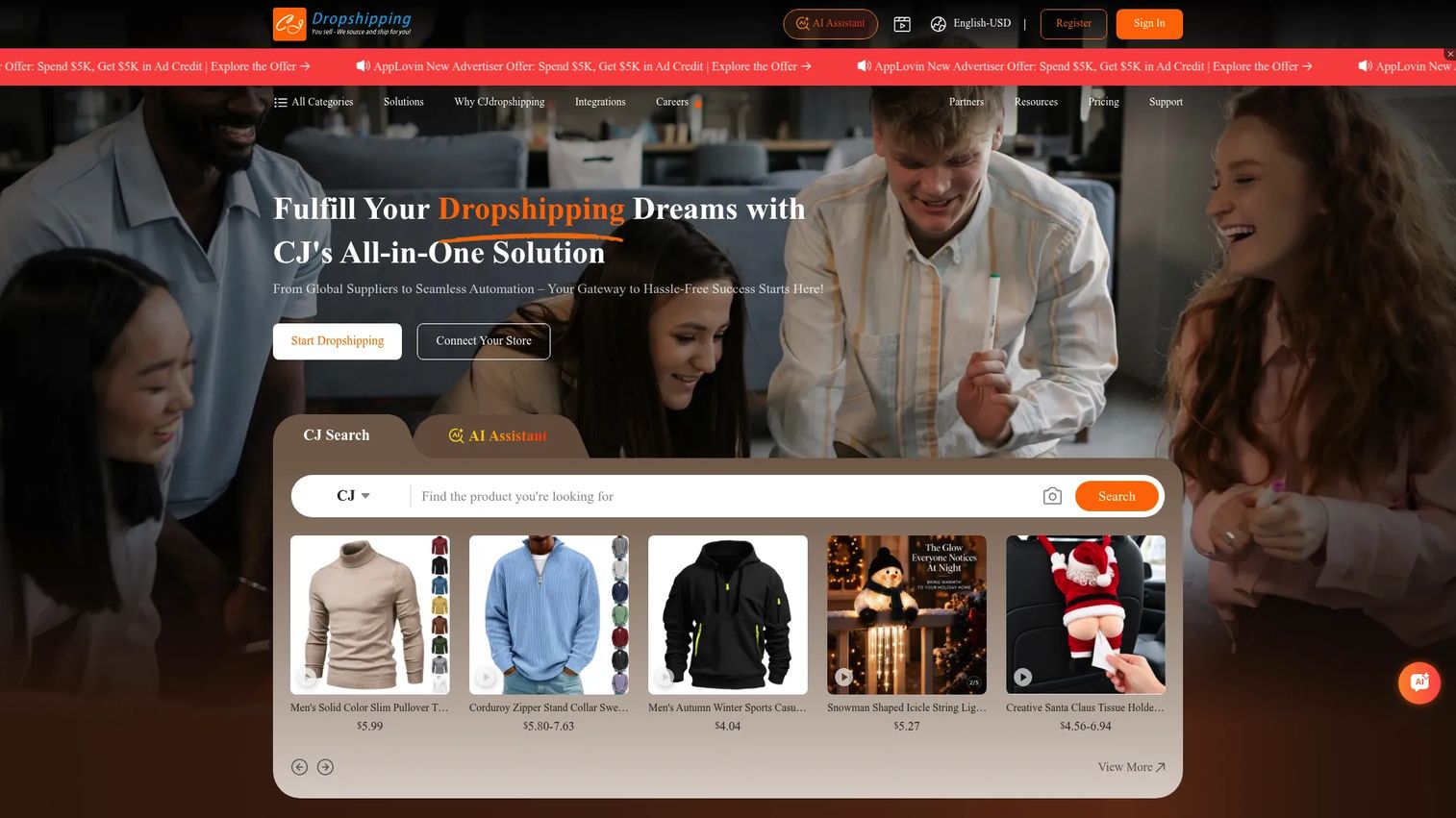
CJdropshipping combines sourcing, store connections, fulfillment, warehousing, and shipping. It provides operational services alongside its software.
Sellers can request sourcing, list products, and route orders through the platform. Global warehousing and quality inspection support more involved fulfillment workflows. Packaging options help stores add a stronger brand layer.
Best for: Operators needing sourcing assistance and fulfillment support within one workflow.
Key features
- Product sourcing and listing
- Global warehousing
- Automatic order fulfillment
- Quality inspection
- Customized packaging
Why choose CJdropshipping: It suits sellers who need supplier support beyond product importing. Warehousing and inspection can help when fulfillment control becomes a growth constraint.
Check product availability and shipping routes before scaling ads. Delivery performance can vary by product location and customer destination.
CJdropshipping pricing: The Free plan costs $0 monthly. Paid Prime plans start at $15.99 monthly.
G2 rating: 5.0/5
7. Doba
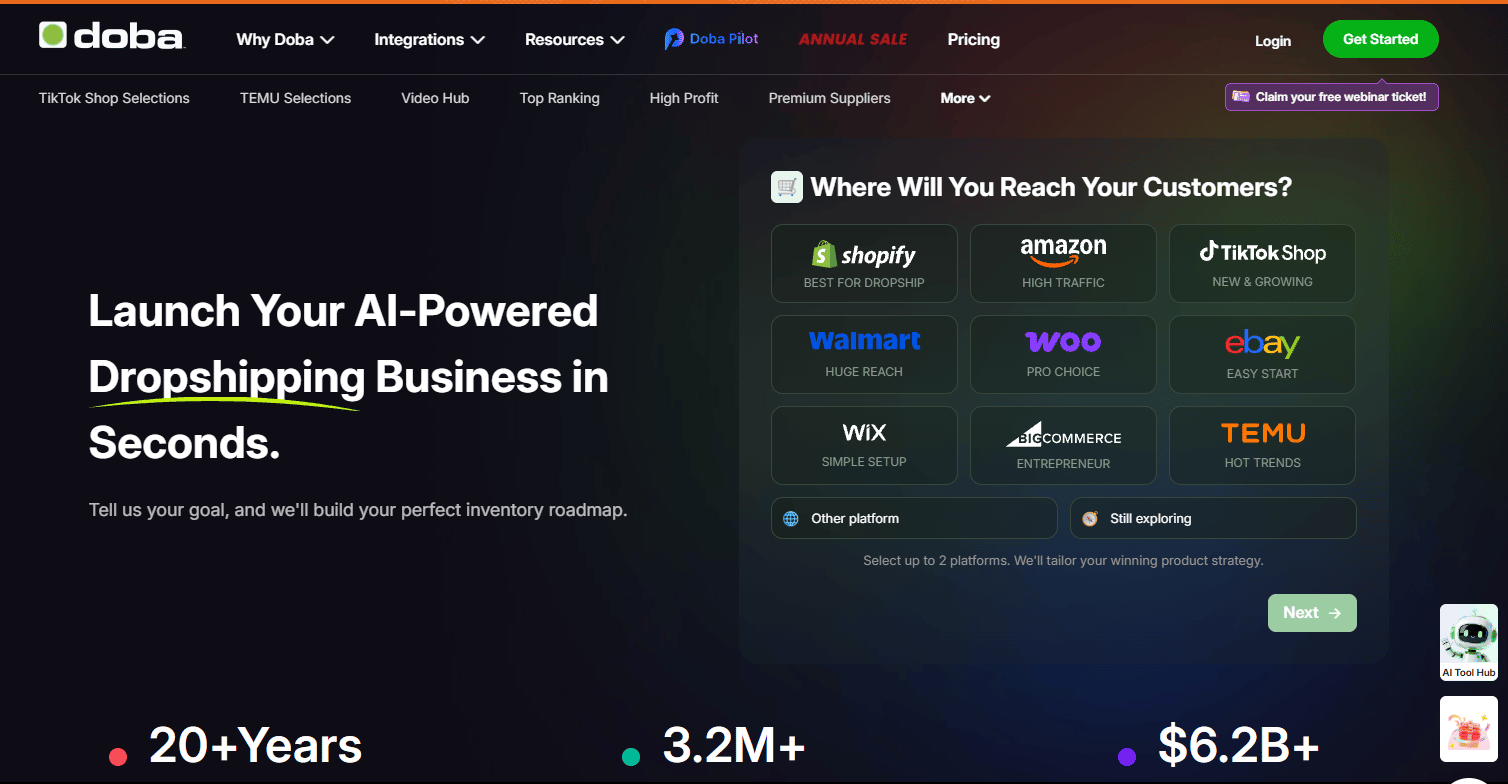
Doba provides a centralized dropshipping catalog with product sourcing, listing automation, and order management. Its platform connects sellers with suppliers without requiring individual relationships at the start.
Inventory and price synchronization help keep storefront data aligned with supplier information. Doba also supports several ecommerce platforms and marketplaces. Higher plans add listing capacity, API access, and automation tools.
Best for: Retailers seeking centralized supplier access with ecommerce integrations.
Key features
- Centralized supplier catalog
- AI product research
- One-click product listings
- Inventory and price synchronization
- Multichannel integrations
Why choose Doba: It can reduce supplier discovery work for stores that want a central catalog. Listing and inventory features also extend it beyond a static directory.
Evaluate each product against delivery windows and landed cost. Easy catalog access can encourage assortment growth before margin has been proven.
Doba pricing: Limited starts at $28.66 monthly when billed quarterly. Basic and Standard advertise $0.99 trials.
G2 rating: 4.8/5
8. Inventory Source
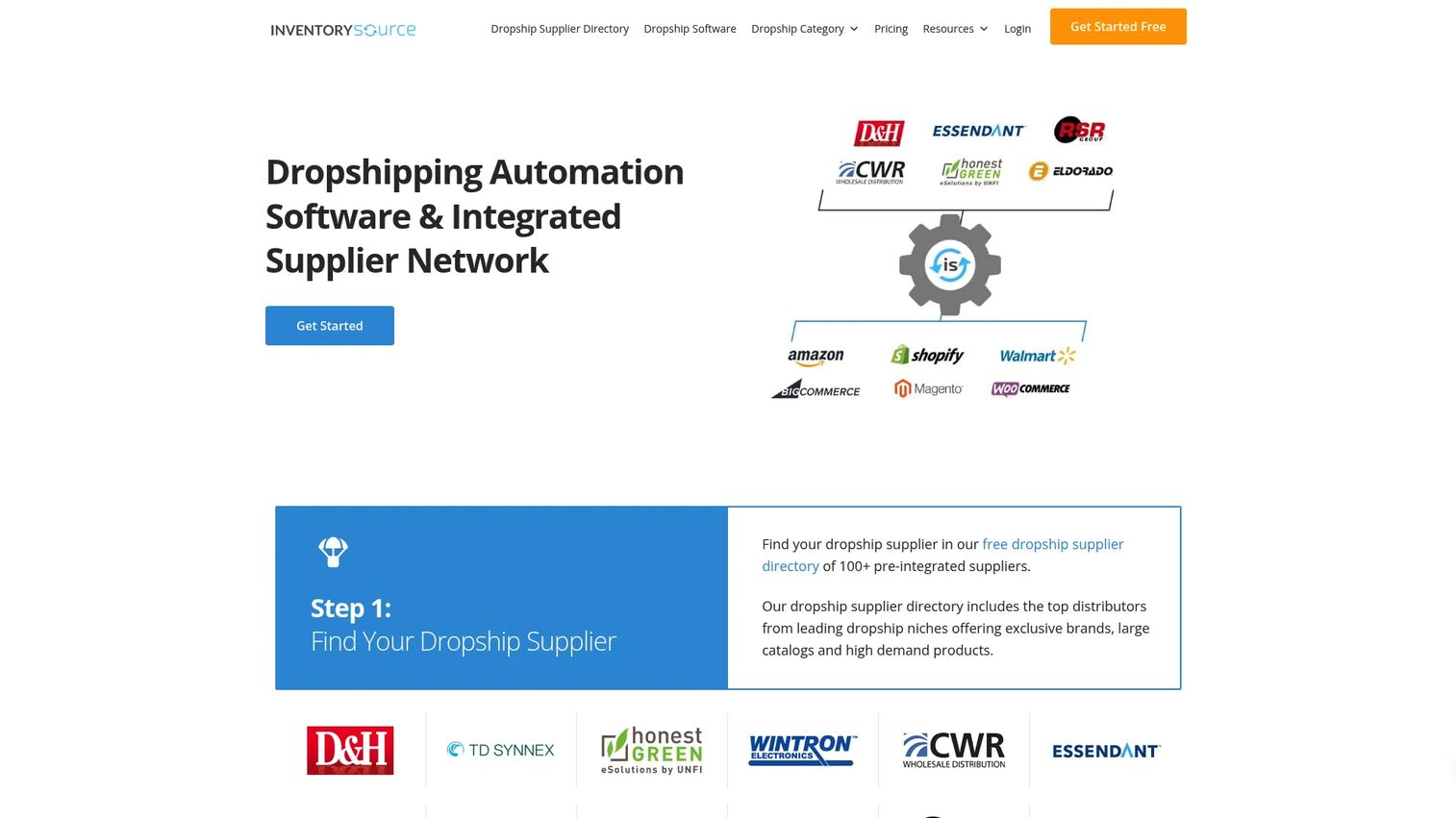
Inventory Source automates supplier catalogs, inventory updates, pricing, order routing, and shipment tracking. It works well for sellers managing structured supplier feeds.
The service separates inventory automation from full order automation. This lets established stores choose how much of the supplier workflow to automate. A free directory also supports initial supplier research.
Best for: Operators needing dependable supplier feed and inventory synchronization.
Key features
- Supplier directory access
- Product catalog management
- Inventory and pricing synchronization
- Automated order routing
- Shipment tracking updates
Why choose Inventory Source: It fits businesses with established supplier relationships and large catalogs. The separate automation levels help buyers avoid paying for order routing before they need it.
Costs rise quickly compared with beginner importers. The value case becomes stronger when feed errors or manual orders already consume staff time.
Inventory Source pricing: Supplier Directory Search is free. Inventory Automation starts at $199 monthly, while Full Automation starts at $299 monthly.
9. Dropified
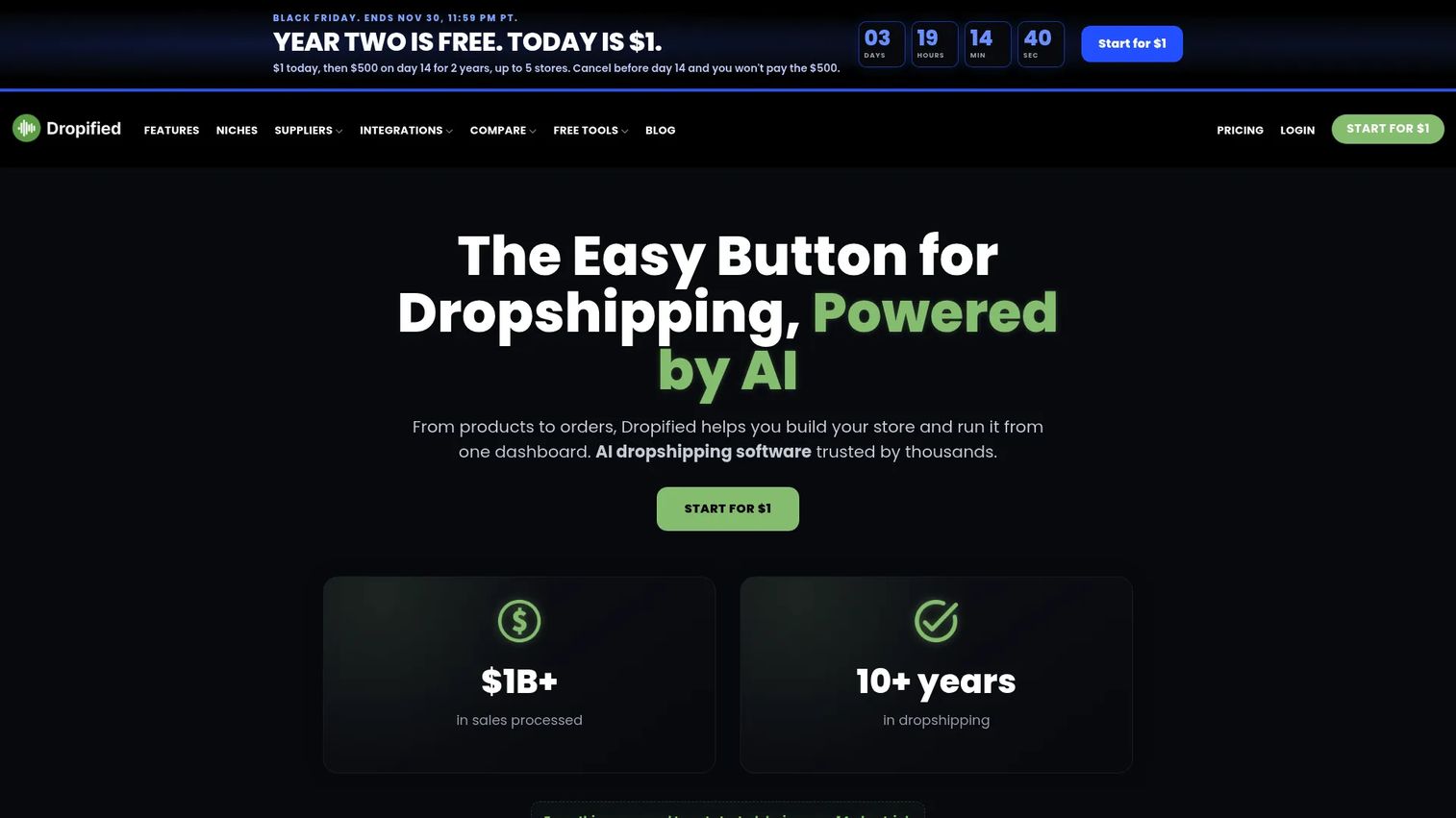
Dropified combines product discovery, product page creation, marketing assistance, and automated ordering. It supports several supplier sources and ecommerce platforms.
Automated orders can run through supported marketplaces, with tracking synchronized afterward. The product page tools help sellers move from research to listing without rebuilding every asset manually.
Best for: Sellers wanting product imports and supplier ordering within one operating process.
Key features
- Trending product search
- AI-built product pages
- Automated supplier ordering
- Tracking synchronization
- Multi-platform store integrations
Why choose Dropified: Choose it when a basic product importer leaves too much work between discovery and fulfillment. Its single-plan structure also makes package comparison straightforward.
Check supported supplier sources before committing. The workflow delivers the most value when your preferred vendors fit its automation coverage.
Dropified pricing: A 14 day trial costs $1. The monthly plan then costs $50, while annual billing costs $500.
G2 rating: 5.0/5
10. Importify
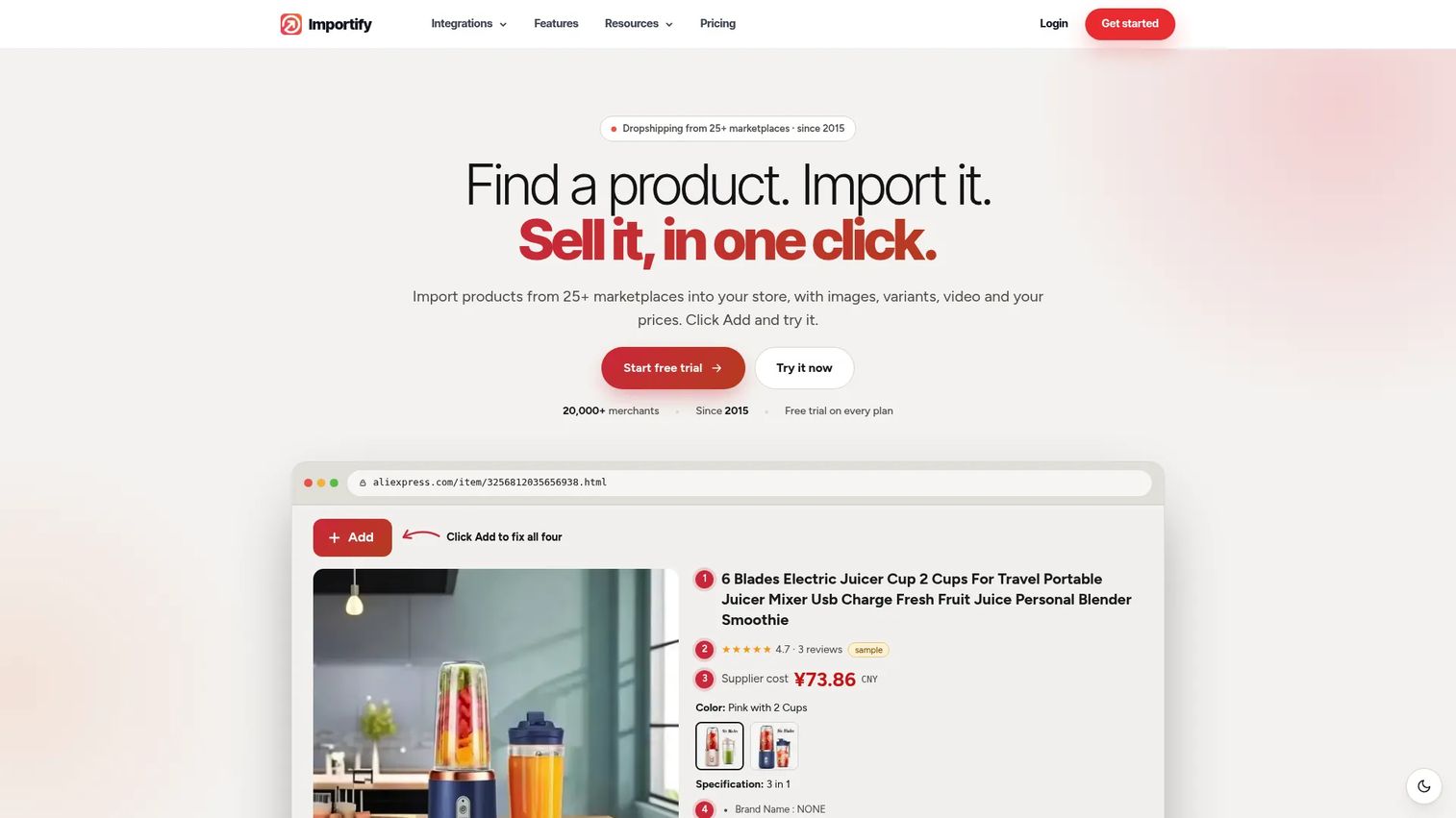
Importify imports products from more than 25 marketplaces into supported ecommerce stores. It focuses on flexible product importing rather than broad operational management.
Sellers can customize listings, apply pricing rules, and switch suppliers. Higher plans add AI tools and selected fulfillment functions. This setup suits early-stage stores testing products across several sources.
Best for: Merchants needing flexible importing without a large automation suite.
Key features
- Imports from more than 25 marketplaces
- Listing customization
- Pricing rules
- Automatic currency conversion
- One-click supplier switching
Why choose Importify: It gives lean teams a focused path from supplier page to storefront listing. The entry price is lower than several all in one platforms.
Deeper fulfillment automation sits on higher plans. Stores with growing order volume should compare those costs before adding separate operational apps.
Importify pricing: Basic starts at $14.95 monthly with a one day trial. Annual billing receives a 20% discount.
G2 rating: 4.8/5
11. AliDropship
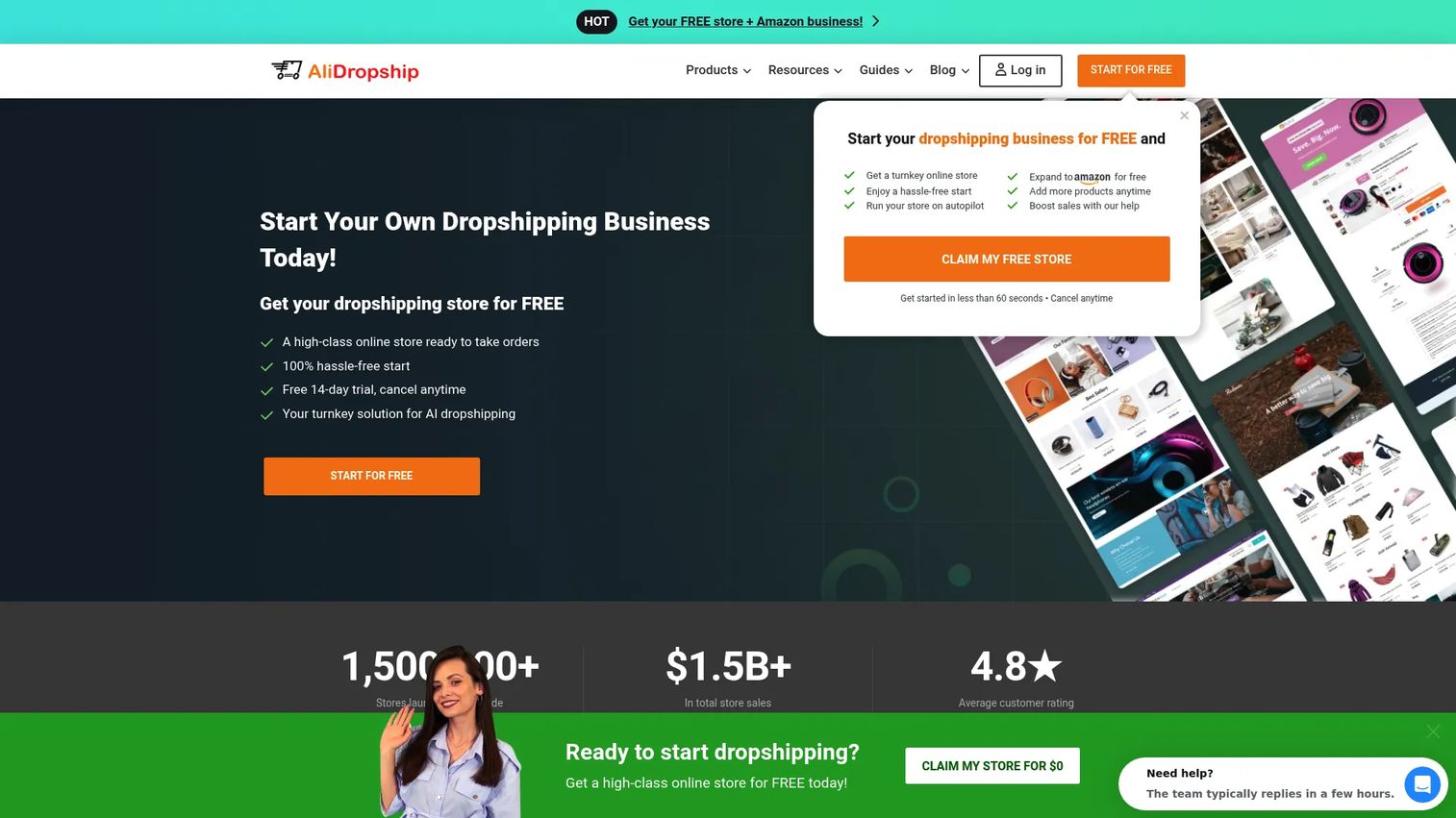
AliDropship supports WordPress based stores connected to AliExpress. It covers product search, importing, pricing, inventory management, and order fulfillment.
The platform gives merchants direct ownership of their WordPress and WooCommerce setup. It also includes product review importing, SEO tags, and abandoned cart emails. Current plans scale according to cumulative store orders.
Best for: WooCommerce sellers who want control over their hosting and store configuration.
Key features
- WordPress based store management
- AliExpress product importing
- Pricing automation
- Automatic order fulfillment
- Inventory management
Why choose AliDropship: It fits sellers who prefer a self-managed storefront over a fully hosted model. The trade-off is greater responsibility for hosting, updates, and site maintenance.
This WooCommerce dropshipping software works best for operators comfortable managing WordPress. Budget for technical upkeep alongside the subscription.
AliDropship pricing: Basic starts at $39 monthly after a 14 day trial. Advanced costs $99 monthly for stores exceeding 100 cumulative orders.
G2 rating: 4.9/5
12. SaleHoo
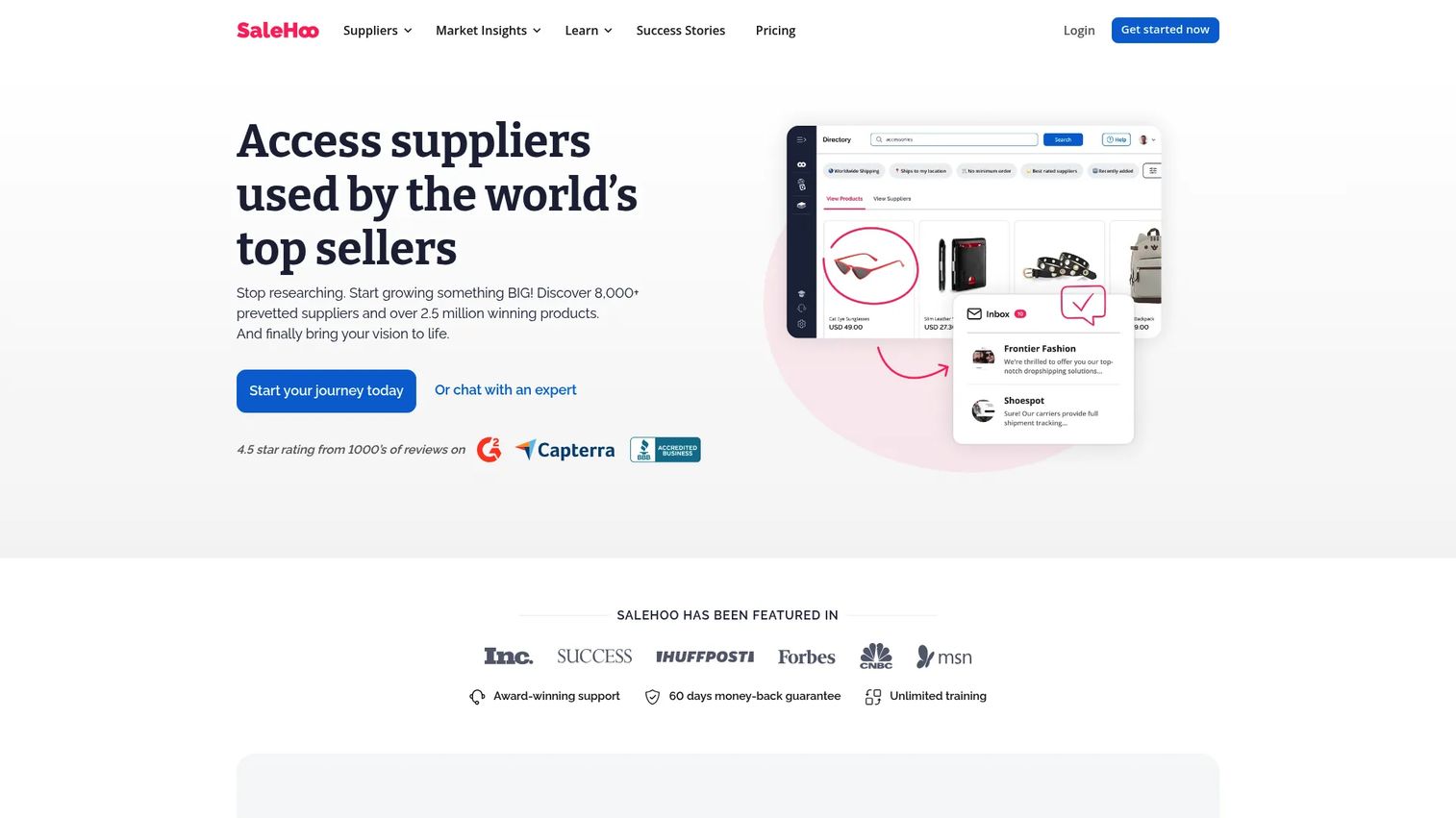
SaleHoo combines a vetted supplier directory with product research, training, and seller support. Its directory includes more than 8,000 vetted suppliers.
The platform also provides Shopify importing and inventory synchronization. These additions make SaleHoo more useful than a static supplier list. Training resources help new sellers evaluate products before building a larger software stack.
Best for: Beginners researching suppliers and products before scaling operations.
Key features
- More than 8,000 vetted suppliers
- Product research tools
- Supplier recommendations
- Shopify product importing
- Inventory synchronization
Why choose SaleHoo: It reduces early supplier research guesswork and adds structured ecommerce education. That makes it useful before order volume requires heavier automation.
Its strongest role is discovery and validation. Sellers needing advanced routing across several suppliers should compare dedicated automation platforms.
SaleHoo pricing: Starter costs $9 monthly when billed annually. Pro costs $49 monthly on annual billing.
G2 rating: 4.5/5
13. Spark Shipping
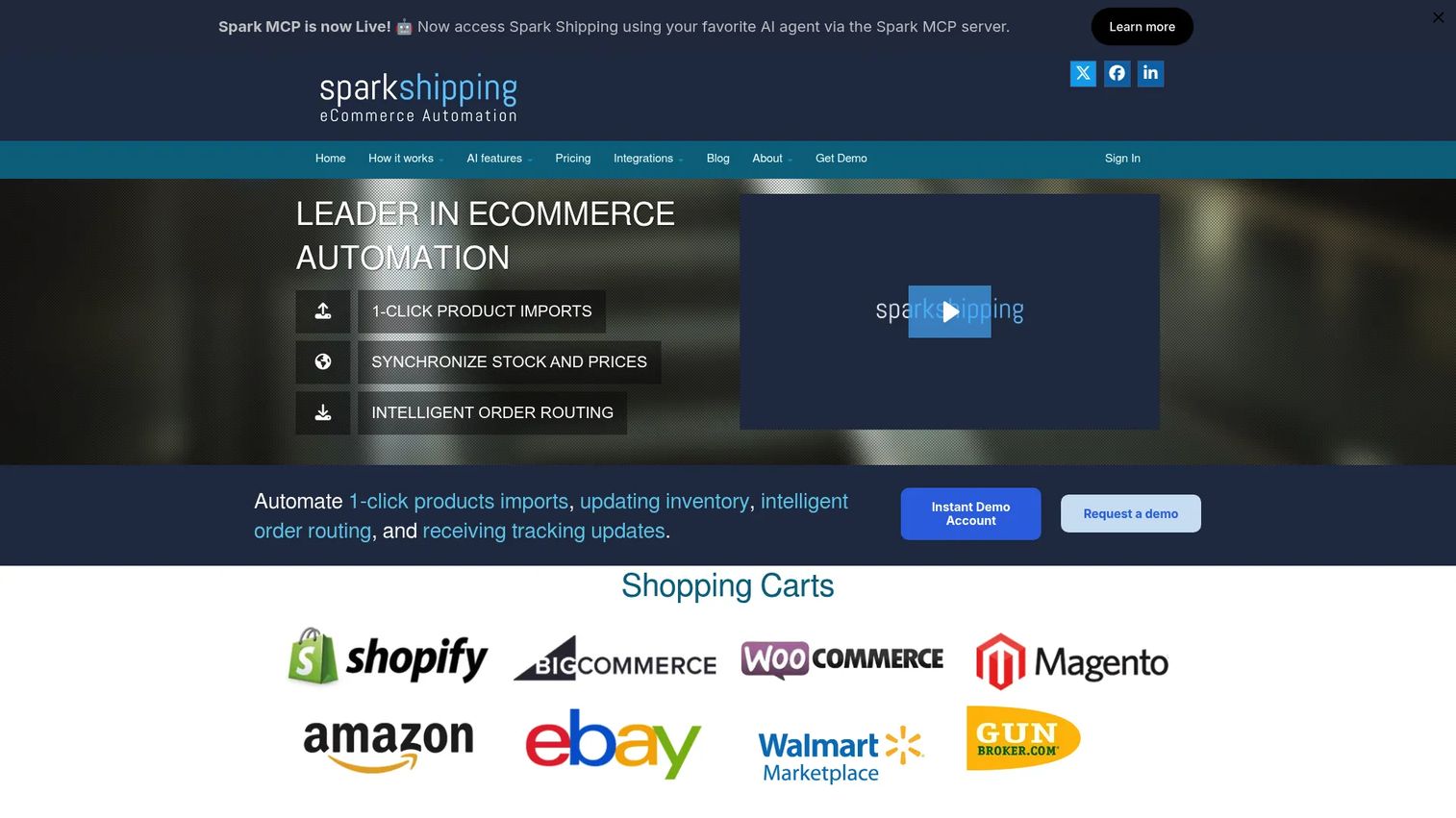
Spark Shipping targets ecommerce retailers managing complex supplier and fulfillment operations. It automates product imports, inventory feeds, order routing, and tracking updates.
Supplier connections can use email, EDI, FTP, CSV, XML, or API workflows. Intelligent routing supports stores sending orders across multiple vendors. Pricing scales with order volume and operational capacity.
Best for: Higher-volume retailers with complex supplier integrations.
Key features
- One-click product imports
- Intelligent order routing
- Automated inventory synchronization
- Custom supplier connections
- Automated tracking updates
Why choose Spark Shipping: It offers operational depth for businesses that have outgrown basic plugins. Flexible supplier connectivity supports vendors with different technical processes.
The $299 starting price makes it a poor fit for early tests. Evaluate it when manual supplier coordination already creates measurable labor or order errors.
Spark Shipping pricing: Startup costs $299 monthly. Growth costs $499 monthly, and no free trial is offered.
G2 rating: 4.5/5
14. Modalyst
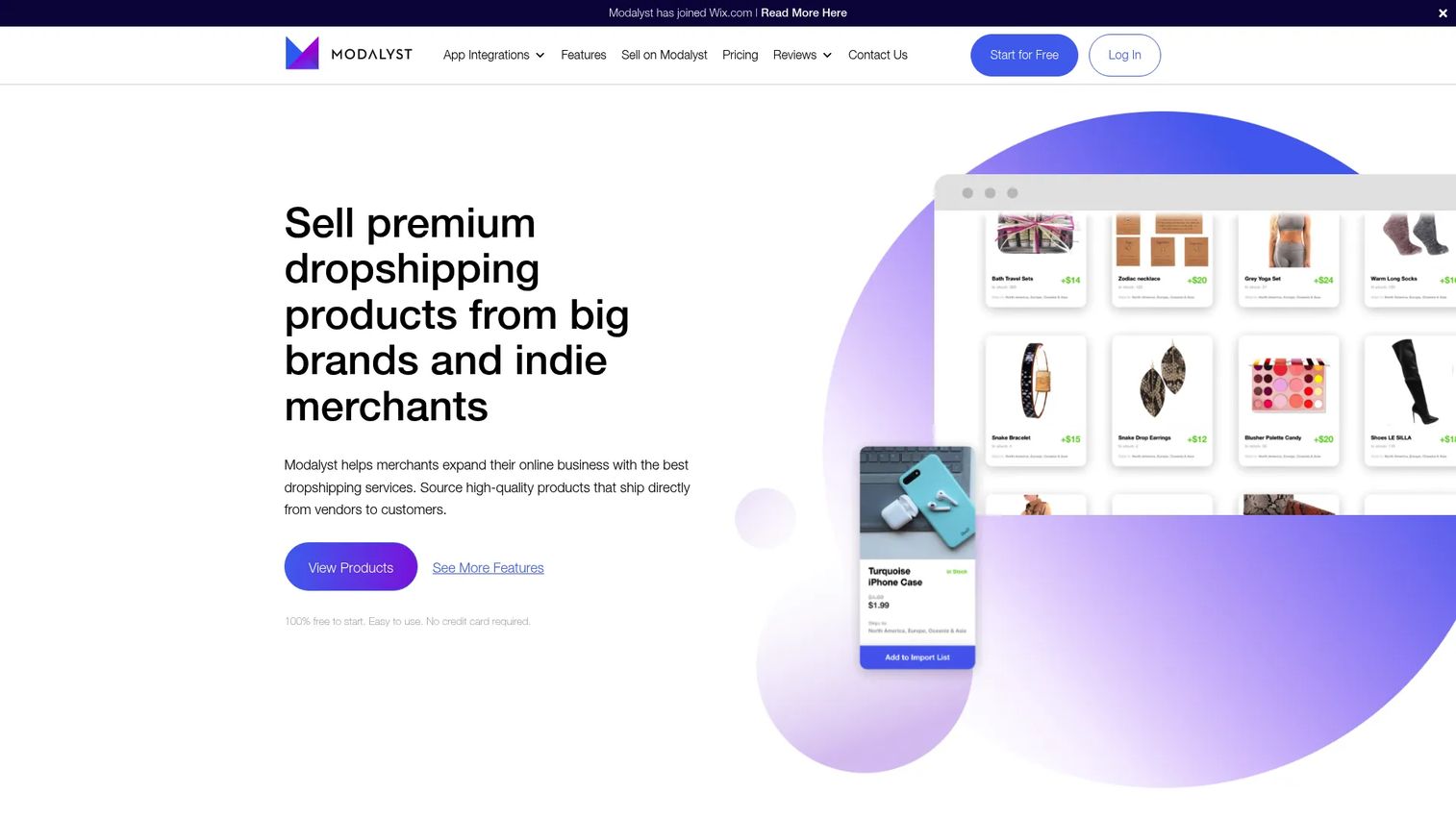
Modalyst provides a curated product catalog with store integrations and automated fulfillment. Its marketplace suits merchants prioritizing product style and assortment curation.
Users can import products with one click and receive inventory updates. Automated markups support consistent pricing logic. Shopify and Wix integrations connect the catalog with storefront operations.
Best for: Fashion and lifestyle stores seeking curated supplier products.
Key features
- Curated product catalog
- One-click product imports
- Real-time inventory updates
- Automated order fulfillment
- Custom pricing markups
Why choose Modalyst: It suits stores where product curation matters more than raw catalog volume. The free plan also gives smaller merchants room to assess supplier fit.
Check shipping performance before scaling acquisition. Curated products still require product-level validation across destination markets.
Modalyst pricing: Hobby is free for up to 25 products. Start Up costs $35 monthly or $30 monthly with annual billing.
G2 rating: 4.7/5
15. Printful
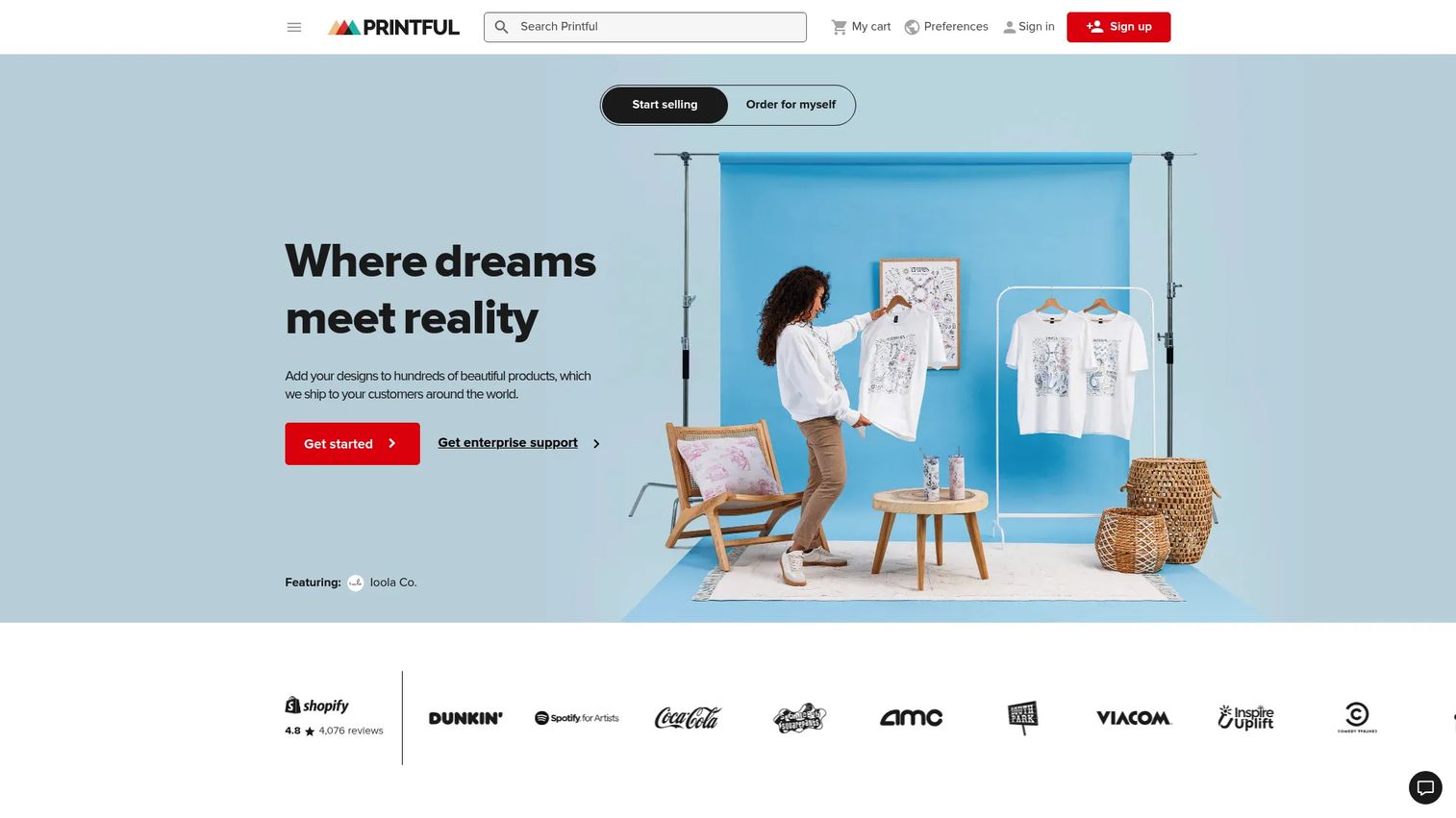
Printful is a print on demand dropshipping platform for custom merchandise. It produces, fulfills, and ships products after customers place orders.
The catalog includes hundreds of customizable products. Design and mockup tools support listing creation, while store integrations pass orders into fulfillment. Branding options help sellers create a more consistent customer experience.
Best for: Creators and brands selling custom products without holding inventory.
Key features
- Print on demand fulfillment
- Hundreds of customizable products
- Design and mockup tools
- Store and marketplace integrations
- Custom labels and packaging
Why choose Printful: It is the strongest fit here for custom apparel, accessories, home goods, or creator merchandise. Production on demand removes the need for upfront stock purchases.
Margin depends on base cost, shipping, taxes, and acquisition spend. Model contribution profit per item before increasing paid traffic.
Printful pricing: The Free plan costs $0 monthly. Printful Growth costs $24.99 monthly and becomes free after $12,000 in annual sales.
G2 rating: 4.4/5
16. Shopify Collective
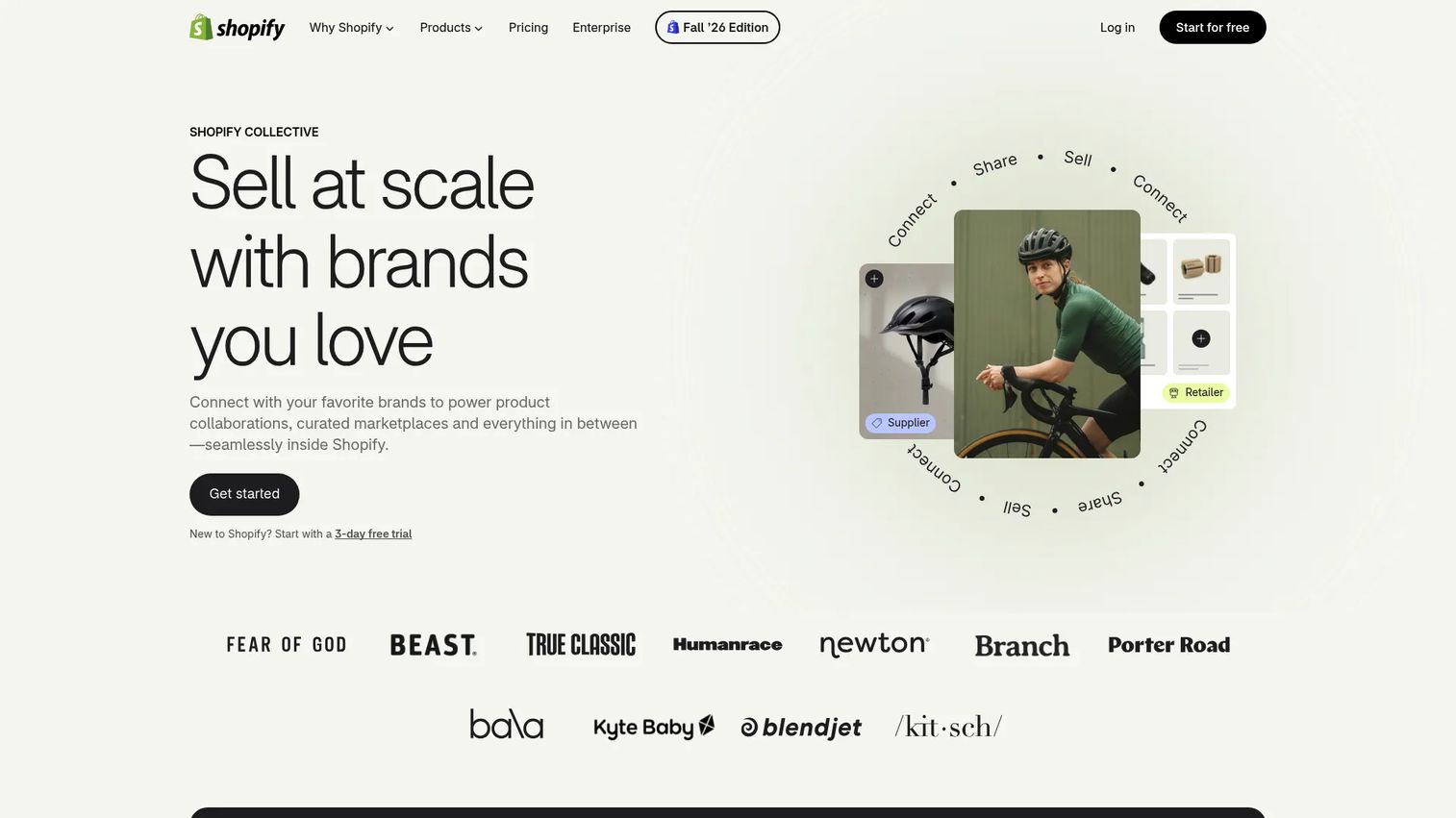
Shopify Collective connects eligible Shopify retailers with brands that fulfill orders directly. Retailers can expand their catalog without purchasing inventory.
Product information, inventory, and pricing synchronize between participating stores. Suppliers handle fulfillment and shipping. The system also manages supplier payments after fulfillment.
Best for: Eligible Shopify merchants sourcing products from participating brands.
Key features
- Native Shopify app
- Brand to retailer sourcing
- Automatic inventory synchronization
- Supplier-direct fulfillment
- Automatic supplier payments
Why choose Shopify Collective: It keeps sourcing and order management within Shopify. That can reduce the number of external systems a merchant must manage.
Eligibility and geographic availability affect fit. Confirm that your store and desired suppliers can participate before planning an assortment around it.
Shopify Collective pricing: The app is free for eligible stores using a qualifying Shopify plan. It has no setup fees or high commissions.
17. Link My Books
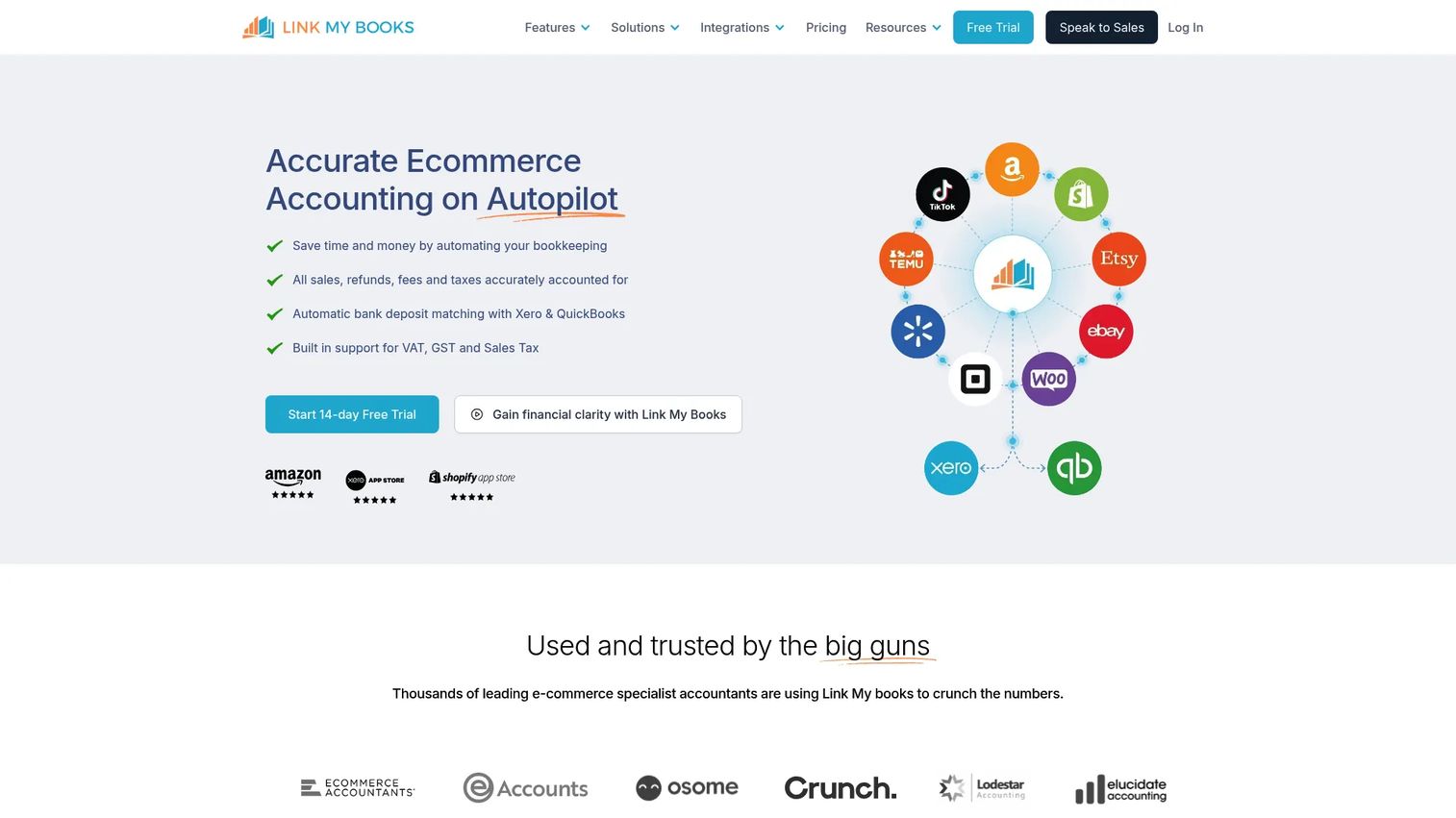
Link My Books automates ecommerce bookkeeping and payout reconciliation. It sends sales, fees, refunds, taxes, and payouts into Xero or QuickBooks.
This is dropshipping accounting software rather than a sourcing platform. It belongs in the stack because campaign ROAS does not show contribution profit. Channel-level reporting helps operators compare revenue with cost of goods and tax obligations.
Best for: Ecommerce sellers needing cleaner marketplace bookkeeping and profit reporting.
Key features
- Automatic payout reconciliation
- Xero and QuickBooks integrations
- VAT and GST reporting
- Cost of goods tracking
- Channel-level profit reporting
Why choose Link My Books: It helps marketers test whether profitable campaigns remain profitable after fees, returns, and supplier costs. That creates reporting a finance team can defend.
It complements sourcing and fulfillment software rather than replacing them. Add it when accounting complexity blocks clear margin decisions.
Link My Books pricing: Lite starts at $20 monthly for one channel and 15 monthly orders. A 14 day free trial is available.
G2 rating: 4.8/5
Considerations when choosing dropshipping software
Supplier reliability beats catalog size
A large catalog has limited value when suppliers miss processing windows or provide stale inventory data. Check supplier location, product samples, return handling, and shipment history.
Review these factors at product level. One dependable supplier can protect more revenue than thousands of listings you cannot confidently advertise.
Inventory and price sync protect ad spend
Stockouts turn acquisition spend into dead traffic. Untracked supplier price increases can also push a winning campaign below its target margin.
Confirm how often the tool updates inventory and prices. Understand whether changes publish automatically or require approval.
Shipping visibility reduces support load
Customers want accurate delivery expectations and current tracking. Missing updates create avoidable support requests and refund pressure.
Check whether the software synchronizes tracking with your storefront. Branded tracking pages and customer notifications can further reduce uncertainty.
Platform fit matters more than app count
Choose software that supports the storefronts and marketplaces producing revenue today. Avoid overlapping apps that each modify listings, inventory, or orders.
Map which system owns every field before installation. Duplicate automation can create conflicting prices or incorrect stock information.
Margin reporting decides what scales
Product cost covers only part of the profit equation. Include ad spend, shipping, transaction fees, refunds, chargebacks, and taxes.
Your reporting should connect operational costs with channel performance. A campaign with strong ROAS can still lose money after fulfillment.
Conclusion
The best dropshipping software matches the operational bottleneck already costing you time or margin.
AutoDS offers the broadest automation coverage in this list. DSers fits stores built around AliExpress, while Spocket emphasizes US and EU supplier access. Zendrop suits sellers developing a branded fulfillment experience.
Syncee, Doba, SaleHoo, and Modalyst focus more heavily on supplier or product discovery. Printful serves custom merchandise businesses. Link My Books provides the accounting layer needed to understand profit after platform fees and taxes.
Start by naming the job you need software to own:
- Source dependable products
- Import and maintain listings
- Automate fulfillment and tracking
- Reconcile payouts and measure margin
Then compare pricing within that category. Resist installing several overlapping apps before you have proven product economics.
A lean stack should make your numbers clearer. If it adds another dashboard without improving inventory accuracy, delivery visibility, or contribution margin, keep looking.
FAQs
The best choice depends on your first operational job. DSers suits AliExpress order workflows, while SaleHoo focuses on supplier research. Spocket offers supplier sourcing with fulfillment features.
Zendrop and AutoDS cover broader operating processes. Beginners should start with one core platform before adding specialist apps.
Dropshipping automation software manages repetitive ecommerce workflows. Common tasks include product importing, price synchronization, inventory updates, order routing, and tracking updates.
Automation reduces manual handling but does not remove supplier risk. You still need to validate product quality, shipping economics, and return policies.
Software can automate much of the operating workflow. It can synchronize catalogs, route supported orders, and send tracking data to your storefront.
Human judgment remains necessary for product strategy, creative testing, supplier disputes, customer support, and marketplace compliance. Automated dropshipping works best when clear rules handle routine work.
Verified Shopify dropshipping software options in this list include DSers, Spocket, Zendrop, Syncee, Dropified, SaleHoo, Printful, and Shopify Collective. AutoDS also supports multiple selling channels.
Integration depth differs by tool. Check whether the connection covers importing only or also handles inventory, orders, and tracking.
WooCommerce compatible options in the supplied research include AliDropship, Importify, Dropified, Spocket, Doba, and Link My Books. Syncee also supports ecommerce store integrations.
WooCommerce offers more control over hosting and store configuration. That ownership also creates additional maintenance work compared with a hosted platform.
Prices range from free plans to several hundred dollars monthly. DSers, Zendrop, Syncee, CJdropshipping, Modalyst, Printful, and Shopify Collective offer free entry options under defined conditions.
Subscription cost is only one part of the calculation. Include product charges, shipping, transaction fees, refunds, and any automation add-ons.
Prioritize reliable inventory updates, price synchronization, order automation, and shipment tracking. Supplier quality and platform compatibility matter just as much.
Growth teams should also look for margin visibility. Reliable reporting helps determine whether stronger sales are producing stronger profit.
It becomes worthwhile when manual work causes order errors, late tracking updates, stockouts, or unclear profit reporting. Automation can also help teams manage more volume without duplicating every task.
A lighter setup may be enough during early product testing. Add software when a specific operating constraint becomes measurable.