A single ocean shipment can pass through a dozen touchpoints before it reaches the consignee. A booking confirmation in one inbox. A bill of lading in a shared drive. An ETA update buried in a carrier portal login nobody remembers. A demurrage invoice that arrives three weeks late, after the charge already stacked up. When your team runs this across hundreds of containers a month, the spreadsheet stops being a system and starts being a liability.
That is the real problem ocean freight software solves. It is not just about knowing where a box is. It is about controlling and coordinating booking, documentation, exception response, and freight spend in one place, so shipment execution does not depend on one person remembering to check five portals.
The category is growing fast because the pain is real. The global ocean freight software market is projected to grow from $1.8 billion in 2023 to $3.6 billion by 2032, a 7.5% CAGR, according to Dataintelo (2024). And as of early 2026, roughly 42% of the world's top-100 shippers have deployed dedicated ocean freight allocation modules, up from 19% in 2021 per Dataintelo (2026). The teams that centralize early stop firefighting and start forecasting.
This is an operator's shortlist. Whether you run a growing logistics team, a freight forwarding operation, or a shipper managing rate volatility and detention costs, the right tool depends on which problem hurts most: visibility, booking, documentation, automation, or enterprise TMS breadth.
What's inside
This guide covers eight ocean freight management software platforms selected for category fit, not generic transportation breadth. We chose tools that materially help with the specific work ocean freight teams do every day: track and trace, booking management, documentation management, freight rate management, exception handling, and analytics.
We favored platforms built for ocean cargo software use cases over broad TMS suites that treat container shipping as an afterthought. Each entry includes an honest read on who it fits, where it shines, and what it costs when pricing is publicly verifiable. Tools are ranked by relevance to ocean freight operations, not alphabetically.
TL;DR
- Best overall for end-to-end operational control: Flexport combines forwarding services, shipment visibility, and workflow management in one platform.
- Best for container lifecycle visibility and cost governance: BuyCo takes a control tower approach to booking, track and trace, and demurrage and detention management.
- Best for collaborative document workflows: Cargoo centralizes booking, shipping instructions, bills of lading, and real-time visibility with carrier scale.
- Best for AI-assisted procurement and visibility: GoComet pairs shipment visibility with freight procurement automation and invoice audit.
- Best for freight forwarders wanting an operations ERP: Shipthis runs quotes, shipments, rates, and documentation in one workflow.
- Best for enterprise TMS fit: SAP Transportation Management delivers freight planning, execution, and settlement inside a broader supply chain suite.
What is ocean freight software?
Ocean freight software is a category of logistics technology that centralizes the planning, booking, tracking, documentation, and cost management of containerized ocean shipments in one system. It replaces fragmented email threads, carrier portals, and spreadsheets with a single source of truth for shipment execution.
Unlike a general freight forwarding software suite that spreads across every mode, strong ocean freight forwarding software goes deep on the container lifecycle, from booking through delivery and invoice reconciliation.
Core capabilities most teams look for:
- Track and trace: real-time container tracking software with milestone updates and ETA prediction across carriers and ports.
- Booking management: submit, confirm, and amend carrier bookings without leaving the platform.
- Documentation and compliance: generate and manage shipping instructions, bills of lading, and customs compliance paperwork in one place.
- Freight rate management: store, compare, and apply contract and spot rates so cost is visible before you book.
- Exception handling: flag missed milestones, rollovers, and delays early enough to act.
- Planning and ETA support: align scheduling with realistic arrival windows.
- Analytics and KPI reporting: track cost per container, on-time performance, and demurrage exposure.
- Supply chain collaboration: give shippers, forwarders, and carriers a shared workspace instead of scattered inboxes.
The strongest platforms function as a supply chain control tower for ocean freight: they orchestrate work across parties rather than just displaying where a box sits.
When to use ocean freight software
Not every team needs a dedicated platform on day one. Here is how to tell when the operational drag justifies the switch.
Centralize booking and documentation
When bookings live in email and documentation lives in shared drives, small teams cope. But once volume climbs past a few dozen containers a month, the manual work compounds. A missed amendment, a wrong bill of lading, a documentation management gap that stalls a container at customs. Dedicated booking management and documentation tooling pays for itself the moment a single documentation error stops costing you a full day of rework.
Improve shipment visibility and exception response
Late ETAs, missed milestones, and status gaps quietly erode service levels. If your team learns about a rollover from an angry customer instead of a system alert, visibility is your problem. Real-time track and trace with proactive exception flags lets you respond before a delay becomes a churn risk. This is where container tracking software earns its keep.
Control freight spend and compare carrier options
Rate volatility and detention costs justify dedicated software fast. Without freight rate management, you cannot compare carrier options cleanly, and without automated demurrage and detention tracking, charges stack up unnoticed. When freight spend variability starts showing up in board conversations, rate comparison and cost governance stop being nice-to-haves.
Comparison table
Here is the full shortlist at a glance. Pricing and ratings reflect publicly verifiable values at the time of writing; where a vendor gates pricing behind a sales conversation, we note it honestly.
| # | Product | Intent | Key differentiation | Pricing | G2 rating |
|---|---|---|---|---|---|
| 1 | Flexport | End-to-end forwarding plus software | Freight services, visibility, and fulfillment in one platform | Usage-based fulfillment fees from $0.50/unit; freight quote-based | 4.2/5 |
| 2 | BuyCo | Container shipping control tower | Container lifecycle visibility and cost governance | Not publicly listed | Not listed |
| 3 | Cargoo | Collaborative ocean freight management | Document workflows plus carrier network scale | Not publicly listed | Not listed |
| 4 | GoComet | Visibility plus procurement automation | AI-assisted tracking, reverse auctions, invoice audit | Free basic tracking; paid plans on request | 4.9/5 |
| 5 | Shipthis | Freight forwarding operations ERP | All-in-one forwarder workflow with 30-day trial | Single plan, user-based; 30-day free trial | Not listed |
| 6 | SAP Transportation Management | Enterprise TMS fit | Freight planning, execution, and settlement in SAP suite | Price upon request | 4.2/5 |
| 7 | Riege Freight Forwarding Software | Forwarding plus customs TMS | Air, ocean, and customs in one cloud platform | Not publicly listed | Not listed |
| 8 | Linbis Ocean Shipments Software | Ocean shipment management for smaller teams | Quote-to-shipment plus document generation | From $150/user/month | Not rated |
1. Flexport
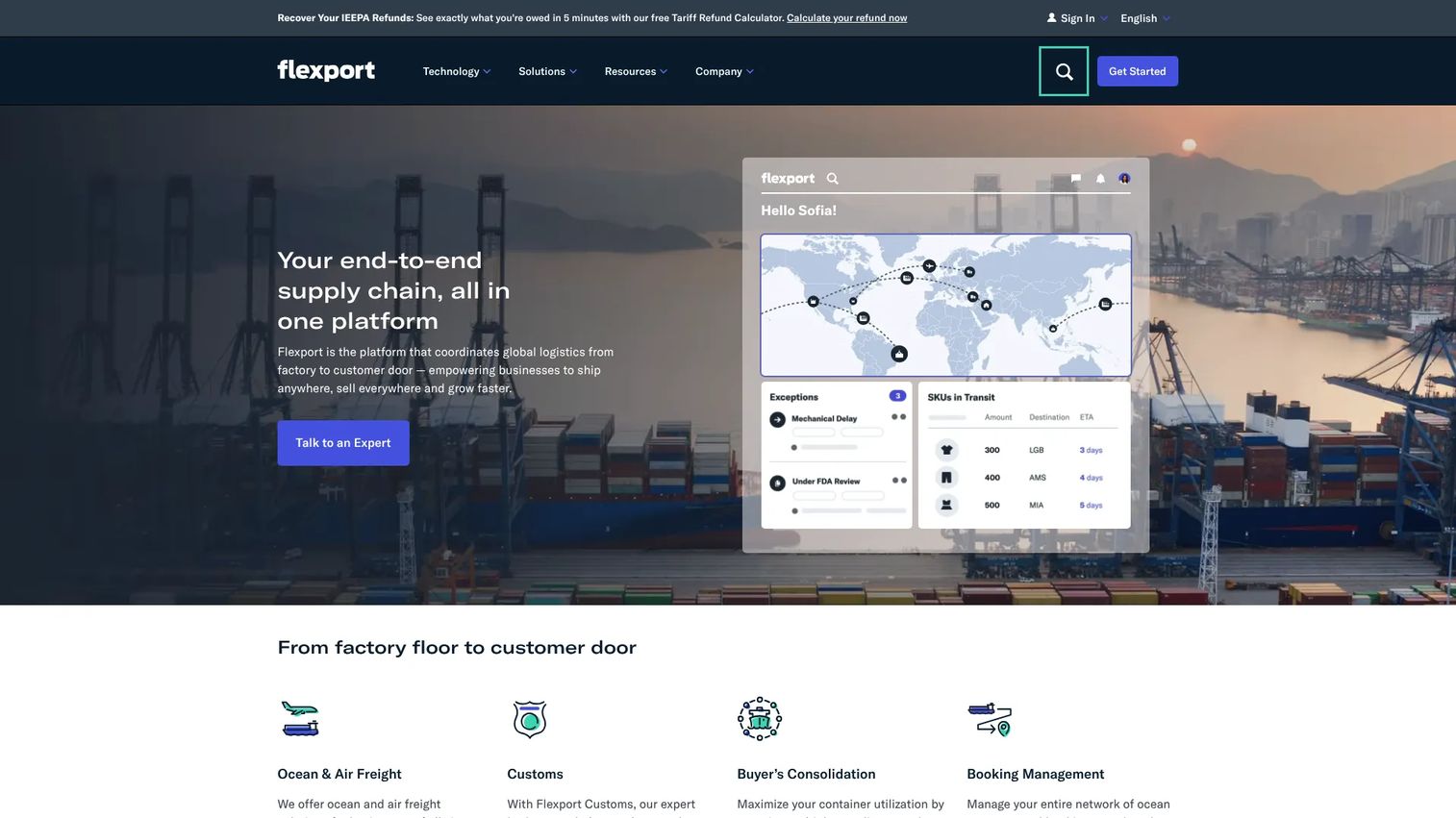
Flexport is a global freight forwarding and supply chain platform that pairs actual freight services with software for shipment visibility and workflow management. It moves ocean, air, and trucking freight, then layers on tracking, analytics, and a fulfillment and warehouse network. For teams that want one partner handling both the physical move and the operational control layer, Flexport is the most complete option on this list.
The appeal for an operator is consolidation. Instead of stitching a forwarder together with a separate visibility tool and a separate documentation system, you get shipment execution, track and trace, and a broad view of your supply chain in one place.
Best for: Businesses that want freight forwarding, fulfillment, and shipment visibility from a single platform rather than a stack of point tools.
Key strengths
- Freight plus software: Ocean, air, and trucking services managed alongside the software that tracks them, so operations and execution share one system.
- Shipment visibility: Real-time tracking and supply chain visibility that reduce the "where is my container" scramble across carrier portals.
- Fulfillment network: A warehouse and fulfillment layer that extends control past port arrival into last-mile delivery.
Why choose Flexport: If your team is spending too much time coordinating between a forwarder, a visibility tool, and a documentation process, Flexport collapses that into one relationship. The trade-off is that you are buying into a platform and a service model, not just software. For teams that want the forwarder and the tech to be the same vendor, that is the point.
Flexport pricing: Flexport's fulfillment pricing is usage-based and partially public. Domestic fulfillment starts around $0.50 per unit, case picking runs about $1.50 per carton, and pallet picking about $14 per pallet, plus storage fees. Many core freight services are quote-based, so you will talk to an expert for a full ocean freight quote. Flexport holds a 4.2/5 rating on G2.
2. BuyCo
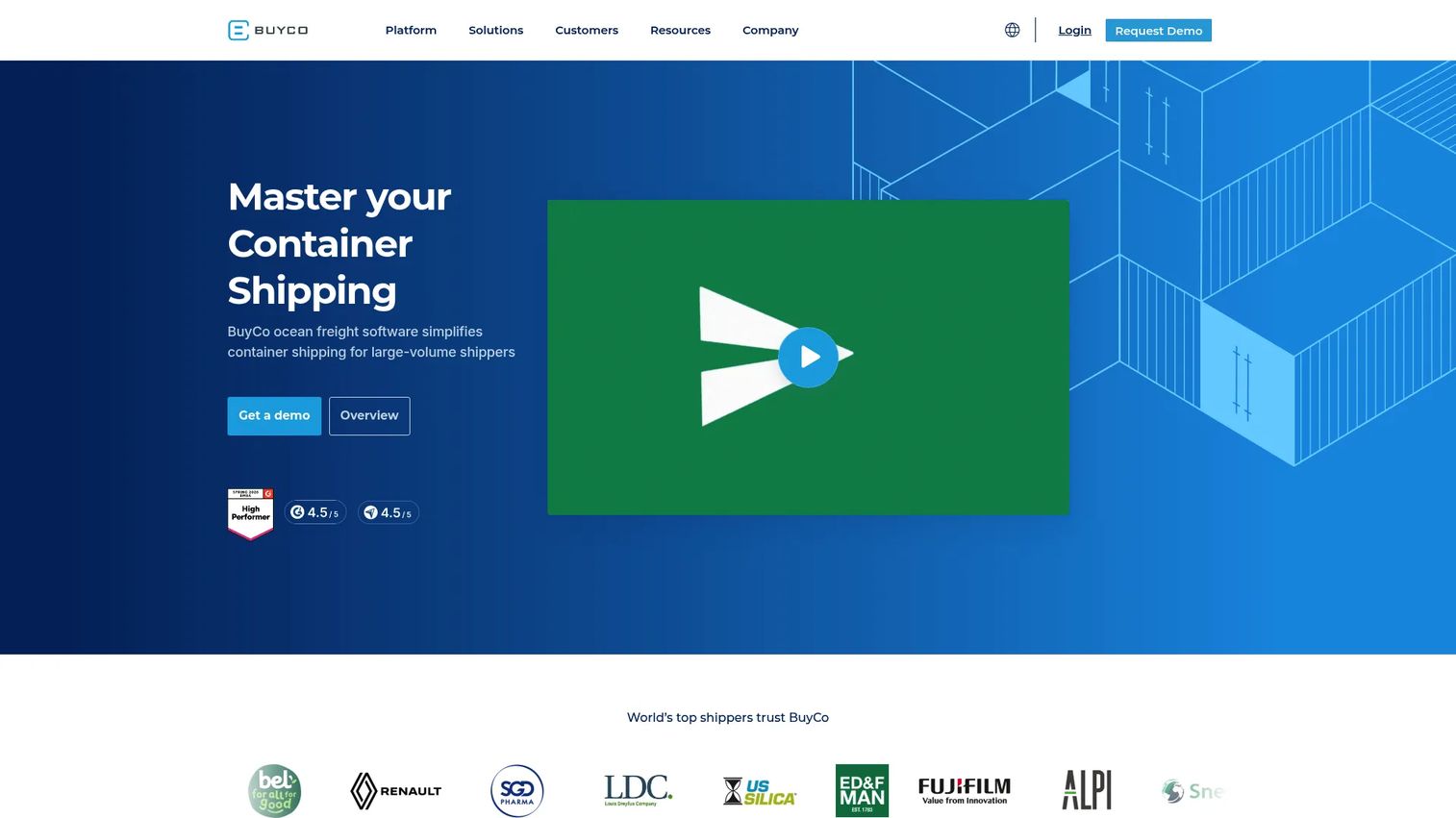
BuyCo is ocean freight software built for large-volume shippers who need to manage container shipping operations in one platform. Its framing is control tower: instead of tracking a box, you orchestrate the entire container lifecycle, from booking operations through track and trace to document management, with cost governance layered across it.
For exporters and importers moving containers at scale, the value is coordination. BuyCo pulls booking management, real-time visibility, and documentation into a shared workspace so the shipper, the forwarder, and the carrier are working from the same data instead of trading emails.
Best for: Large exporters and importers managing high container volumes who need control tower orchestration rather than point visibility.
Key strengths
- Container lifecycle visibility: Real-time container track and trace across the full journey, so exceptions surface before they become demurrage charges.
- Booking operations: Centralized booking management that removes the back-and-forth of carrier portals and email confirmations.
- Document management: A single place for shipping instructions and bills of lading, tied to each shipment.
Why choose BuyCo: BuyCo fits teams whose main pain is scale, not feature gaps. When you are running enough containers that manual coordination and demurrage and detention management become full-time work, the control tower model earns its place. It is more platform than lightweight tool, which suits high-volume operations better than a small forwarder.
BuyCo pricing: BuyCo does not publish pricing on its site, and no public price was verifiable at the time of writing. Given its focus on large-volume shippers, expect a demo-first, quote-based conversation. Reach out through the site to scope a plan against your container volume.
3. Cargoo
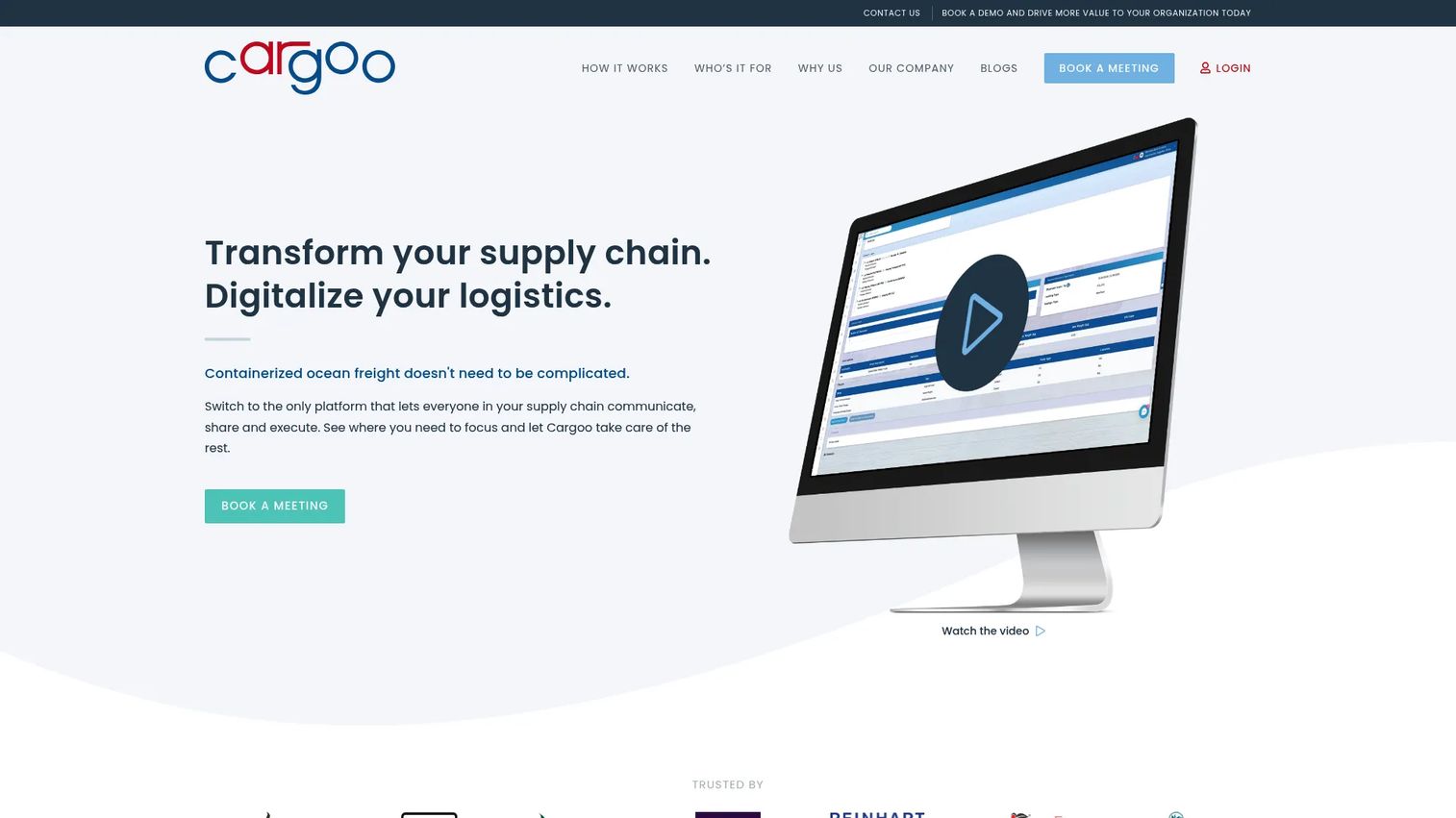
Cargoo is ocean freight management software built around digitalized container shipping workflows and collaboration. Its strength is document workflows: booking, shipping instructions, bills of lading, and real-time visibility, all in a shared cloud environment with proactive alerts and access to a large carrier network.
Where Cargoo stands out is supply chain collaboration. Ocean freight involves shippers, forwarders, and carriers touching the same shipment, and Cargoo gives them a common workspace instead of parallel inboxes. That shared layer is what turns documentation management from a bottleneck into a routine.
Best for: Shippers and logistics teams managing containerized ocean freight who want collaborative document workflows and real-time tracking in one place.
Key strengths
- Booking: Streamlined booking management that keeps confirmations and amendments inside the platform.
- Visibility and track and trace: Real-time shipment visibility with proactive alerts so status gaps do not go unnoticed.
- Document management system: Centralized handling of shipping instructions and bills of lading, shared across all parties on the shipment.
Why choose Cargoo: Choose Cargoo when the friction is not just tracking but coordination across parties. The collaborative model fits teams where documentation errors and communication gaps cause the most rework. Its carrier network scale means the visibility layer covers the lanes most shippers actually use.
Cargoo pricing: Cargoo uses a demo-first, contact-based model, and no public pricing was verifiable at the time of writing. To scope cost against your shipment volume and workflow complexity, request a demo through the site.
4. GoComet
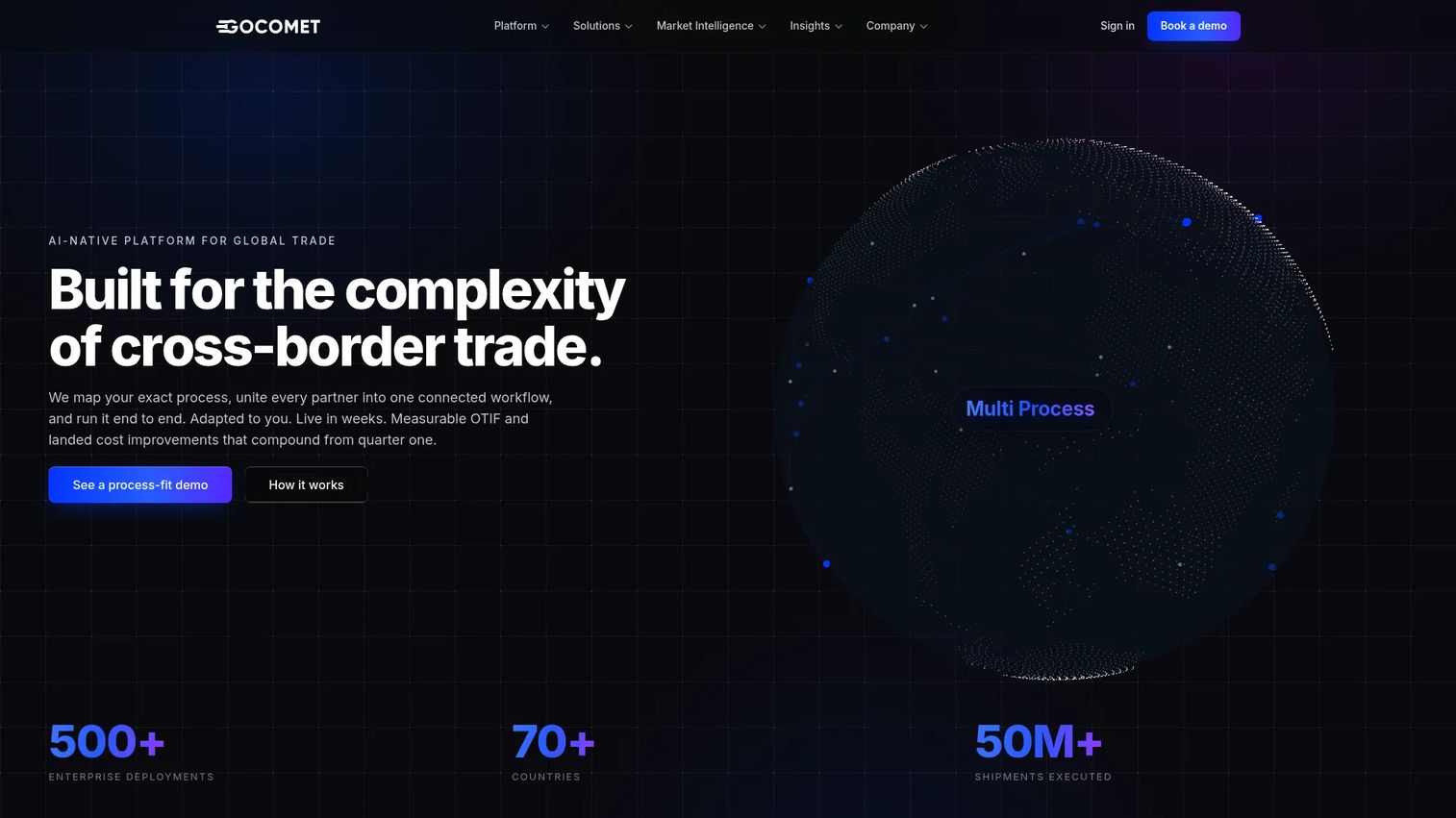
GoComet is a supply chain visibility and logistics automation platform that goes beyond tracking into procurement and cost control. It combines real-time shipment visibility with freight procurement through reverse auctions, plus invoice reconciliation and audit. For teams that want to see shipments and control what they pay for them, that combination is rare.
The procurement angle matters. Most visibility tools tell you where a container is; GoComet also helps you negotiate the rate before you book and catch billing errors after delivery. That closes the loop between shipment visibility and freight spend.
Best for: Global shippers who need shipment visibility alongside freight procurement automation and invoice audit in one platform.
Key strengths
- Real-time shipment visibility: Container tracking software with ETA prediction across carriers and lanes.
- Freight procurement: Reverse auctions that make rate comparison and freight rate management competitive instead of manual.
- Invoice reconciliation: Automated audit that catches overbilling and detention charges before they slip through.
Why choose GoComet: GoComet fits teams whose pain spans both visibility and cost. If you are tracking containers in one tool and negotiating rates in a spreadsheet, GoComet consolidates that. The invoice audit layer is a practical hedge against demurrage and detention charges that would otherwise go unnoticed.
GoComet pricing: GoComet offers free basic container tracking for simple use, with flexible paid plans for advanced visibility and procurement features. No public paid price is listed; you will talk to the team to scope advanced tiers. GoComet holds a strong 4.9/5 rating on G2.
5. Shipthis
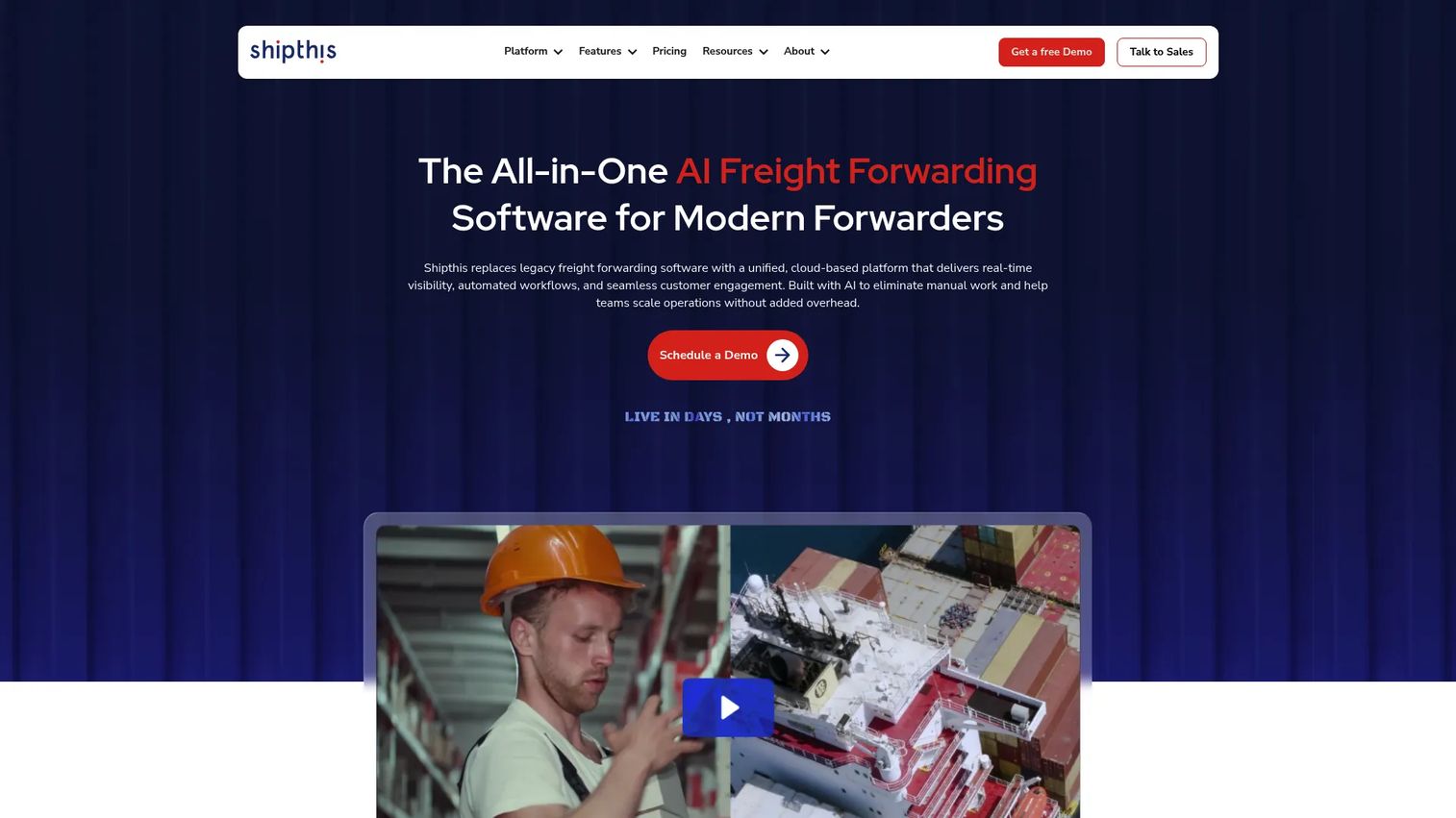
Shipthis is freight forwarding software built as an all-in-one operations platform. It handles shipments, workflows, documents, tracking, and related operations in one system, which makes it a strong fit for forwarders who want an operations ERP rather than a single-purpose visibility tool.
The differentiator is workflow. Shipthis lets forwarders build customizable workflows and prioritize tasks, so ocean freight operations run on a repeatable process instead of tribal knowledge. For a growing forwarding team, that structure is what lets the business scale without everything routing through the founder or the ops lead.
Best for: Freight forwarders who need an all-in-one operations platform covering quotes, shipments, rates, and documentation.
Key strengths
- Customizable workflows: Task prioritization and configurable processes that standardize how ocean freight operations run.
- Track and trace: Shipment visibility built into the same system that handles quotes and documentation.
- Document management: Automated notifications and documentation management so paperwork keeps pace with the shipment.
Why choose Shipthis: Shipthis fits forwarders who are tired of running operations across disconnected tools. The single-platform model covers quote-to-delivery, which reduces the handoff friction that stalls shipments. The 30-day free trial lets a team validate the workflow fit before committing.
Shipthis pricing: Shipthis offers a single plan with all features included, priced on a per-user basis, plus a 30-day free trial. No public numeric subscription price is listed on the pricing page, so you will confirm per-seat cost directly. Billing is available annually or quarterly.
6. SAP Transportation Management
SAP Transportation Management is enterprise transportation software for freight planning, execution, and settlement inside SAP's broader supply chain suite. It is not an ocean-only tool; it is a multimodal TMS that handles route and carrier optimization, freight cost calculation, and settlement, with ocean freight as one mode among several.
For larger operations teams that already run SAP or need transportation planning across every mode, this is the enterprise fit. The strength is depth and integration, not lightweight speed. When your ocean freight is part of a much larger logistics footprint, keeping it inside the same suite as the rest of your supply chain has real value.
Best for: Enterprises needing integrated transportation planning, visibility, and freight settlement within SAP environments.
Key strengths
- Freight planning and execution: End-to-end shipment execution across ocean and other modes in one system.
- Route and carrier optimization: Planning and scheduling with route optimization and carrier connectivity built in.
- Freight cost and settlement: Freight charge calculation and settlement, so cost control is native rather than bolted on.
Why choose SAP Transportation Management: Choose SAP TM when ocean freight is one part of a large, multimodal operation and integration with the rest of your supply chain matters more than ocean-specific depth. It is the right call for enterprises with the ops team and system footprint to justify a full TMS. Smaller ocean-focused teams will find lighter tools on this list a closer fit.
SAP Transportation Management pricing: SAP lists two cloud service options and shows price upon request for both, with no public numeric price displayed. Pricing is structured in spend blocks and requires a sales conversation. SAP TM holds a 4.2/5 rating on G2.
7. Riege Freight Forwarding Software
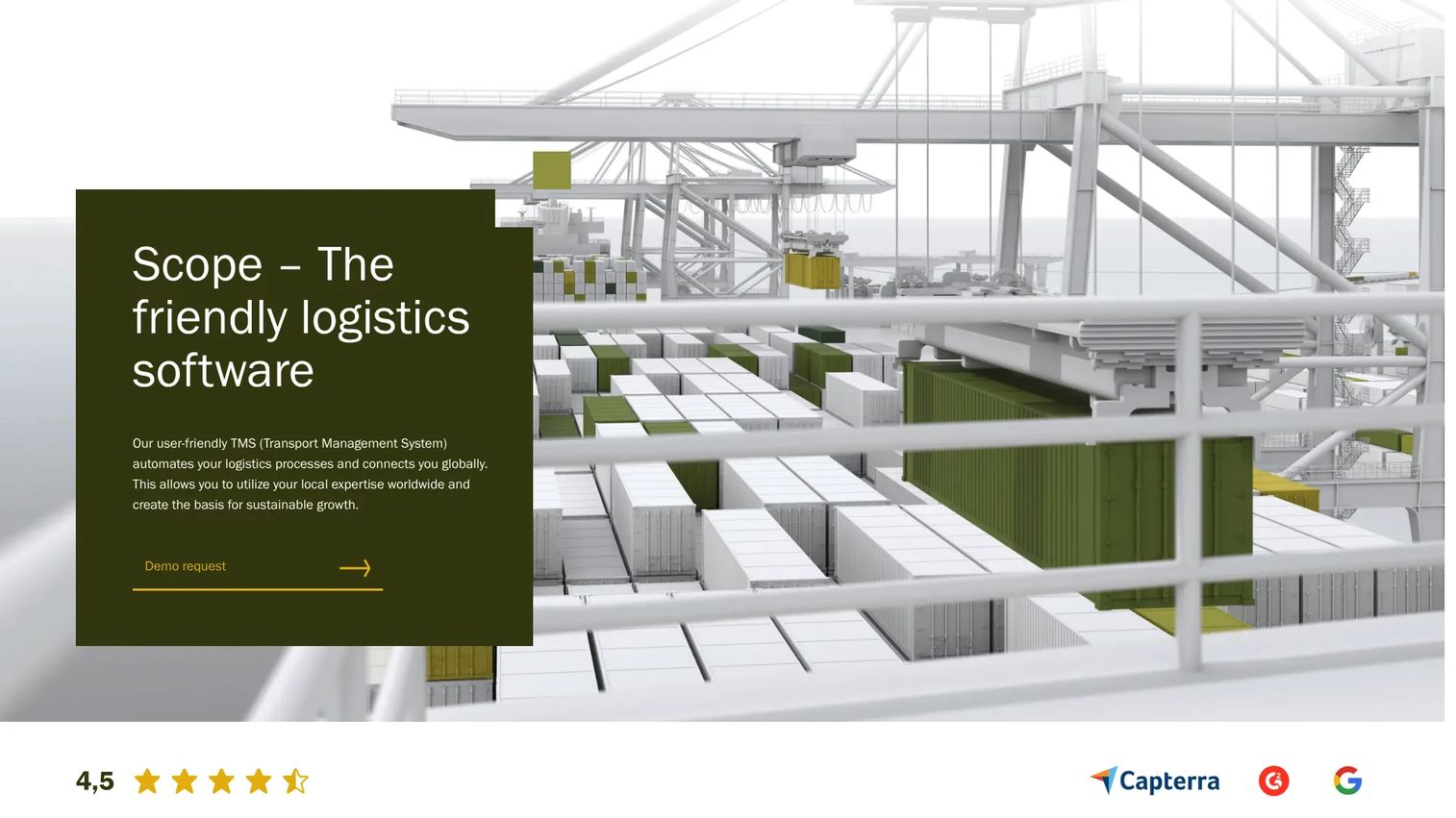
Riege Freight Forwarding Software, branded Scope, is a cloud-based freight forwarding and customs TMS covering air, ocean, and logistics digitization. It handles ocean freight shipment management and tracking alongside air freight workflow automation and customs software for multiple countries, including the USA.
The fit here is established forwarding teams that need standardized shipment processing and customs compliance in one integrated system. Riege leans into workflow standardization, which is what keeps a forwarding operation consistent as it grows and as staff turns over.
Best for: Freight forwarders seeking an integrated TMS covering air, ocean, and customs operations in one cloud platform.
Key strengths
- Ocean freight management: Shipment management and tracking purpose-built for forwarding workflows.
- Air freight automation: Workflow automation across modes, so a multimodal forwarder runs one system.
- Customs software: Customs compliance handling across multiple countries, tied into the shipment record.
Why choose Riege: Riege fits forwarders who want workflow standardization and customs compliance in the same platform that runs their ocean and air operations. The integrated model reduces the gaps between shipment processing and customs filing. It suits established teams that value a mature, standardized process over a lightweight tool.
Riege pricing: Riege's pricing page is gated and no public pricing was verifiable at the time of writing. Expect a demo-first, quote-based process. Contact Riege through its site to scope Scope against your forwarding volume and customs needs.
8. Linbis Ocean Shipments Software
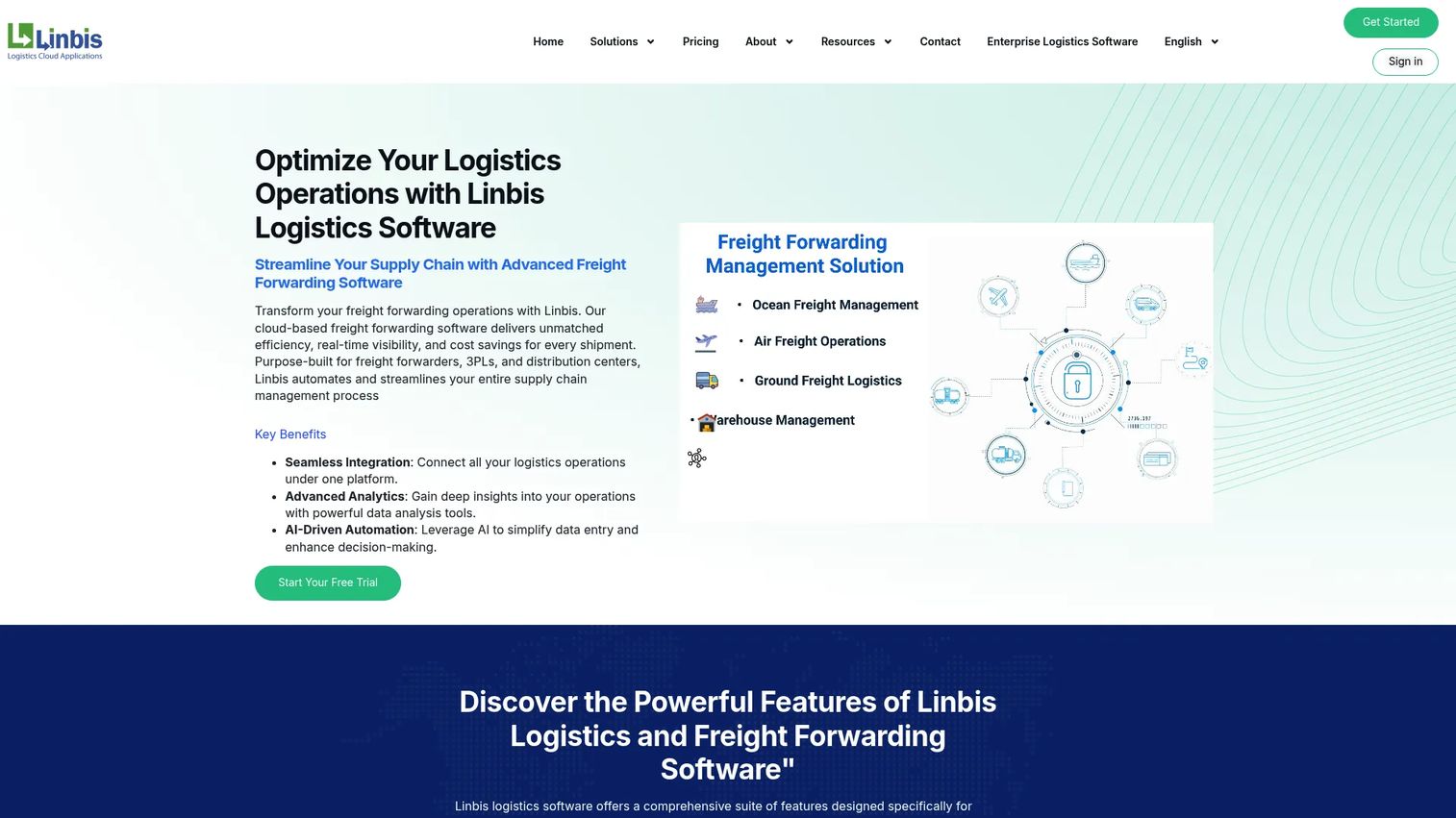
Linbis Ocean Shipments Software is cloud-based logistics software for freight forwarding, with ocean shipment management as a core capability. It handles quote-to-shipment conversion and document generation for bills of lading and booking confirmations, which makes it a practical fit for smaller teams and growing operators.
Linbis is the accessible entry point on this list. For a forwarder or 3PL that has outgrown spreadsheets but is not ready for an enterprise platform, it covers the essential ocean shipment and documentation management workflow at a published, predictable price.
Best for: Freight forwarders and 3PLs needing ocean shipment and documentation management without enterprise-scale complexity.
Key strengths
- Ocean shipment management: Core container shipment handling built for smaller and growing operations.
- Quote-to-shipment: Convert quotes into active shipments without re-keying data.
- Document generation: Automated bills of lading and booking confirmations, so documentation management keeps pace.
Why choose Linbis: Linbis fits teams that want dedicated ocean freight software with transparent pricing and a low barrier to entry. It is the pragmatic choice when the goal is process efficiency and getting off spreadsheets, not enterprise orchestration. Growing operators can start small and expand tiers as volume climbs.
Linbis pricing: Linbis publishes clear tiers. The Startup plan is $150 per month for one user, Premium is $299 per month including three users, and Enterprise is custom pricing with a demo. Its transparent, published pricing is a differentiator on a list where most vendors gate cost behind sales.
Conclusion
The right ocean freight software comes down to which problem hurts most. If you want a single vendor handling both the physical move and the operational control layer, Flexport is the most complete pick. If your pain is scale and container lifecycle orchestration, BuyCo's control tower approach fits high-volume shippers. Cargoo wins on collaborative document workflows, GoComet on pairing visibility with procurement and invoice audit, and Shipthis on giving freight forwarders an all-in-one operations ERP.
For enterprises that need multimodal transportation planning inside an existing supply chain suite, SAP Transportation Management is the enterprise-grade choice. Riege suits established forwarders who need ocean, air, and customs in one standardized system. And Linbis is the accessible, transparently priced starting point for smaller teams getting off spreadsheets.
Start with your biggest constraint. If it is visibility, prioritize track and trace and ETA prediction. If it is documentation, weight document workflows and compliance. If it is spend, focus on freight rate management and demurrage and detention control. Then shortlist two tools, run a real shipment through each, and let the operational fit decide.
FAQs
Ocean freight software centralizes the booking, tracking, documentation, and cost management of containerized ocean shipments in one system. Instead of coordinating across carrier portals, email threads, and spreadsheets, your team works from a single source of truth. It handles track and trace, booking management, documentation, freight rate management, and analytics so shipment execution runs on a repeatable process.
Prioritize based on your biggest constraint. For most teams, real-time track and trace with ETA prediction, booking management, and documentation management are the non-negotiables. Beyond that, freight rate management and demurrage and detention tracking matter when spend is the pain, and supply chain collaboration matters when coordination across shippers, forwarders, and carriers causes the most rework.
A general TMS manages transportation across every mode: road, rail, air, and ocean. Ocean cargo software goes deep on the container lifecycle specifically, from booking through bills of lading to demurrage and detention. A TMS like SAP Transportation Management fits enterprises coordinating all modes, while dedicated ocean tools fit teams whose primary problem is containerized ocean freight.
Focus on container tracking software with reliable carrier connectivity and accurate ETA prediction. The value is not just seeing where a box is; it is getting proactive alerts on missed milestones and rollovers before a customer calls. Tools like GoComet and Cargoo lead with real-time visibility and exception flags, which is what turns tracking into a response system.
It surfaces exceptions early and audits charges after the fact. Real-time track and trace flags delays and container availability windows before free time expires, so your team can act rather than react. Platforms with invoice reconciliation, like GoComet, also catch overbilled demurrage and detention charges. Automated demurrage and detention management is where the software pays for itself fastest.
For forwarders, the strongest fits are operations platforms that cover the full workflow. Shipthis runs quotes, shipments, rates, and documentation in one system with a 30-day trial. Riege suits established forwarders needing ocean, air, and customs together. Linbis is the accessible option for smaller forwarders and 3PLs who want dedicated ocean freight forwarding software at transparent pricing.
Many ocean freight vendors gate pricing behind a demo, so scope cost against your actual container volume rather than a list price. Where pricing is published, like Linbis at $150 per user per month, it is easier to budget. On implementation, favor tools that let you run a real shipment during a trial. Shipthis offers a 30-day free trial and GoComet offers free basic tracking, both of which let you validate fit before committing.
The switch usually pays off once manual coordination starts causing errors and rework. If your team learns about delays from customers, if documentation mistakes stall containers at customs, or if demurrage charges arrive as surprises, spreadsheets have become a liability. As volume climbs past a few dozen containers a month, dedicated software stops being an expense and starts being the cheaper option.