A patient responds to an ad, calls a clinic, or arrives through a provider referral. Then the handoff breaks between marketing, intake, scheduling, and follow up.
The lead didn’t disappear. The handoff did.
Healthcare CRM software helps teams track these transitions without creating another disconnected database. According to Grand View Research, the global healthcare CRM market generated $21.5 billion in 2025. North America represented 53% of that revenue.
The right platform should show who owns the next action and whether an inquiry became a booked appointment. It also needs controls for sensitive data and clear integration paths to clinical systems.
This guide evaluates healthcare CRM systems through that operational lens. The central question is simple: Where are you losing patients, and which CRM fixes that handoff?
What’s inside
This guide compares CRM for healthcare organizations across patient acquisition, intake, service, referrals, and retention.
- Who it’s for: Healthcare growth, patient access, referral, sales, and operations teams
- How tools were chosen: Healthcare fit, CRM workflows, integrations, data controls, and implementation practicality
- What the comparison covers: Best use case, key differentiator, pricing, and G2 rating
- What it avoids: Treating CRM, EHR, and EMR systems as interchangeable
Pricing comes from vendor pages. Ratings reflect the verified G2 research supplied for this comparison.
TL;DR
- Best for enterprise health systems: Salesforce Health Cloud supports broad patient relationship and care coordination workflows
- Best for healthcare marketing teams: HubSpot for Healthcare connects campaign activity with intake and acquisition pipelines
- Best for patient service operations: Zendesk for Healthcare centers on support requests, routing, and communication management
- Best for Microsoft centered organizations: Microsoft Cloud for Healthcare connects healthcare capabilities across Microsoft products
- Best for intake heavy practices: NexHealth and Tebra combine scheduling, forms, reminders, and patient communication
- Best for referral intelligence: Trella Health helps post acute teams prioritize referral relationships and market opportunities
What is healthcare crm software?
Healthcare CRM software is a customer relationship management system designed for patient relationships, outreach, intake, referrals, scheduling, follow ups, and engagement.
CRM in healthcare extends relationship and communication workflows around clinical systems. It tracks the patient journey from initial inquiry through booking, service, retention, and reactivation.
A patient acquisition CRM can help marketing teams connect campaign responses with booked visits. Intake staff can see pending forms or appointment requests. Referral teams can monitor sources, status changes, and partner relationships.
A patient engagement CRM may also support post visit education, recall campaigns, satisfaction outreach, and service requests. These workflows make ownership visible across departments.
Healthcare CRM software does not replace an EHR or EMR. Clinical systems hold medical records and care documentation. CRM platforms manage nonclinical relationship, pipeline, and communication activity around that record.
Key capabilities to look for
- Patient and contact profile management
- Intake and appointment workflows
- Referral source tracking
- Segmented outreach and follow up
- Care coordination workflows
- EHR and EMR integration support
- Audit logs and role based access
- Consent aware communications
- Appointment level marketing attribution
- Acquisition and retention reporting
Some healthcare CRM systems support operational, analytical, collaborative, and strategic use cases. Your required model depends on the handoffs you need to fix.
Healthcare crm versus EHR and EMR
| System | Primary job | Who uses it | Best for |
|---|---|---|---|
| CRM | Relationship and engagement workflows | Marketing, intake, patient access, service, and referral teams | Acquisition, retention, outreach, and referrals |
| EHR | Longitudinal clinical record | Clinicians and care teams | Clinical documentation and care history |
| EMR | Practice level medical record | Providers and practice staff | Record management within a practice |
A healthcare CRM with EHR integration can add relationship context without becoming the clinical system of record. Confirm which fields move between systems before buying.
When to use healthcare crm software
Convert patient inquiries into booked appointments
Use healthcare CRM software when inquiries arrive through forms, calls, events, partner referrals, or campaigns. The system can route each request, assign follow up tasks, and show whether the patient booked.
This visibility gives marketing, sales, and patient access teams a shared pipeline. It also supports cleaner attribution from campaign spend to completed scheduling activity.
Keep referrals from disappearing between teams
Referral management CRM workflows help teams record the source, status, owner, and next action. They can also support provider relationship management and care transition visibility.
This matters when several departments touch the same referral. A shared record creates shorter cycles, fewer stalls, and cleaner handoffs.
Retain patients after the first visit
Patient retention CRM workflows can organize follow ups, recall campaigns, reactivation lists, and educational outreach. Teams can segment communications using appropriate patient attributes and consent rules.
The platform should support your controls. It does not determine whether a campaign meets legal or regulatory requirements.
Healthcare crm software comparison
The best healthcare CRM depends on which handoff breaks first. Enterprise health systems often need broad data models and governance. Independent practices may care more about scheduling, intake, and reminders.
Healthcare CRM pricing can change with users, locations, implementation, support, integrations, and patient volume. Compare total ownership cost rather than license fees alone.
| # | Product | Best for | Key differentiator | Pricing | G2 rating |
|---|---|---|---|---|---|
| 1 | Salesforce Health Cloud | Enterprise health systems | Healthcare data models and care workflows | From $350 per user monthly, billed annually | N/A |
| 2 | HubSpot for Healthcare | Healthcare marketing and acquisition | Campaign, intake, and referral workflows | Free plan, paid plans from $7 per seat monthly | 4.4/5 |
| 3 | Zendesk for Healthcare | Patient service operations | Omnichannel support and request routing | From $19 per agent monthly, billed annually | 4.3/5 |
| 4 | Microsoft Cloud for Healthcare | Microsoft centered organizations | Healthcare capabilities across Microsoft products | Custom pricing | N/A |
| 5 | Creatio | Process heavy healthcare teams | No code CRM and workflow design | From $40 per user monthly | 4.6/5 |
| 6 | LeadSquared | High volume acquisition teams | Lead capture and marketing automation | From $2,000 per account annually | 4.5/5 |
| 7 | Zoho CRM | Smaller healthcare teams | Flexible CRM with a free edition | Free for up to three users | 4.1/5 |
| 8 | NexHealth | Digital intake and scheduling | Health record connected patient experience | Custom pricing | 4.8/5 |
| 9 | Tebra | Independent practices | Practice growth and patient operations | From $49 per provider monthly | 4.1/5 |
| 10 | OperaDDS | Dental practices | Dental communication and paperless forms | Custom pricing | N/A |
| 11 | Monday CRM | Visual intake and referral pipelines | Customizable boards and task ownership | From $12 per seat monthly, billed annually | N/A |
| 12 | Insightly | Relationship and project workflows | CRM combined with project management | From $29 per user monthly, billed annually | 4.2/5 |
| 13 | Bitrix24 | Budget conscious operations teams | Flat organization pricing and broad tools | Free plan, paid plans from $69 monthly | 4.1/5 |
| 14 | FreeAgent CRM | Configurable relationship pipelines | Custom fields and workflow flexibility | Custom pricing | 4.2/5 |
| 15 | Actium Health | Patient access and communication | Conversational AI for healthcare outreach | Custom pricing | 3.5/5 |
| 16 | Trella Health | Post acute referral teams | Referral market intelligence | Custom pricing | N/A |
| 17 | HIPAA CRM | Healthcare specific CRM buyers | Healthcare focused CRM positioning | Custom pricing | N/A |
Best 17 tools for healthcare crm software
1. Salesforce Health Cloud
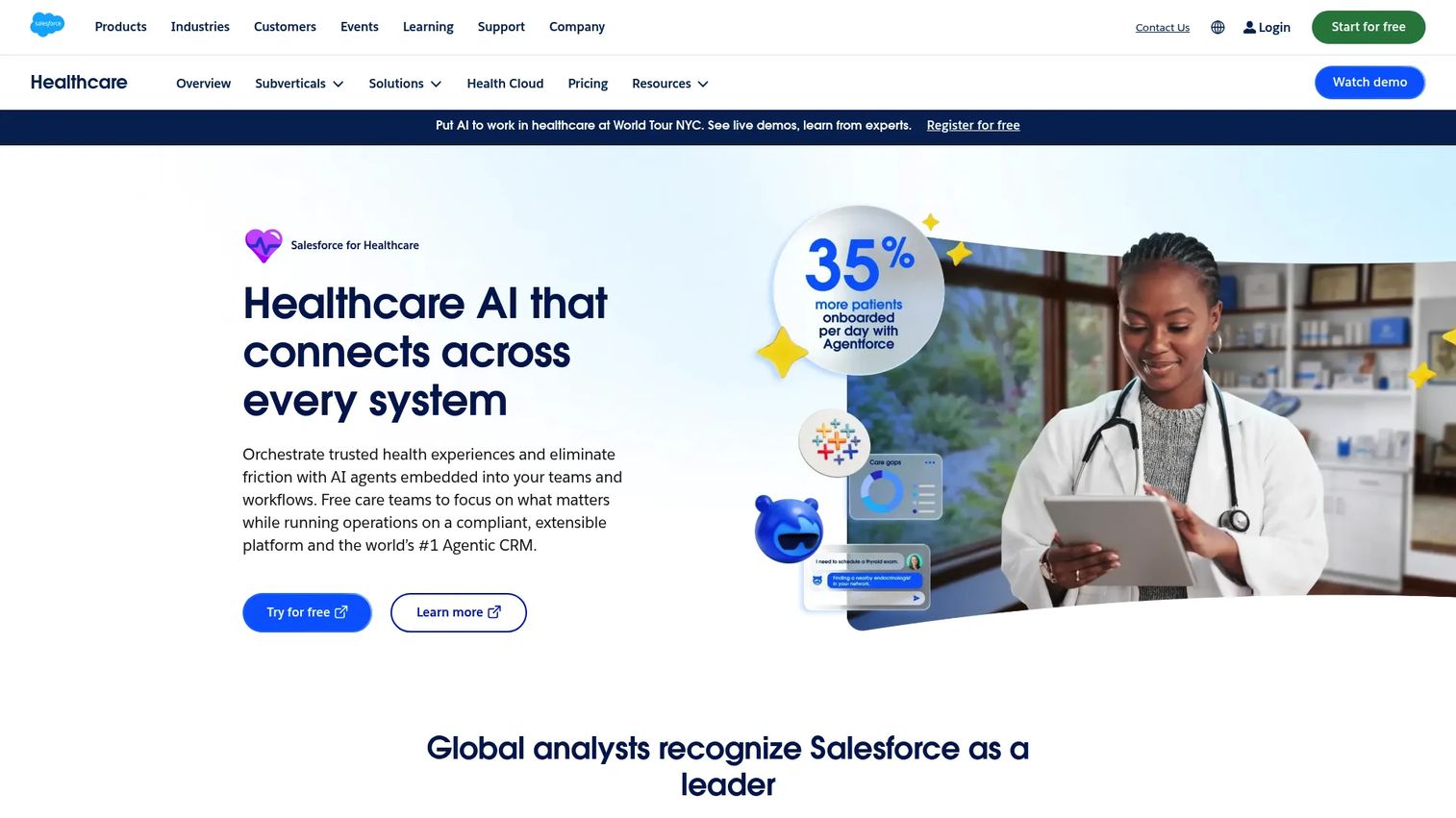
Salesforce Health Cloud is a healthcare CRM platform for providers, payers, life sciences organizations, and public health teams. It connects patient and member relationships with care workflows, service operations, analytics, automation, and AI.
Its clinical and insurance data models support organizations that need a hospital CRM across several departments. Integrated care management and referral capabilities help teams coordinate activity beyond a marketing pipeline.
Salesforce also supports EHR integration through healthcare interoperability standards. Organizations can connect clinical context with relationship workflows while keeping the CRM separate from the clinical record.
Best for: Enterprise health systems needing a broad CRM layer across patient, member, referral, and care coordination workflows.
Key features
- Clinical and insurance data models
- Integrated care management
- Referral and utilization management
- EHR and HL7 compliant integration
- Agentforce for Health Cloud
Why choose Salesforce Health Cloud: Choose it when the CRM must support several departments and complex governance. Smaller practices may find its pricing and implementation demands excessive.
Salesforce Health Cloud pricing: Health Cloud Sales and Service Core costs $350 per user monthly, billed annually. Advanced costs $525 per user monthly.
Higher editions range from $700 to $725 per user monthly. Salesforce advertises a 30 day trial.
G2 rating: A current aggregate product rating wasn’t available in the verified research.
2. HubSpot for Healthcare
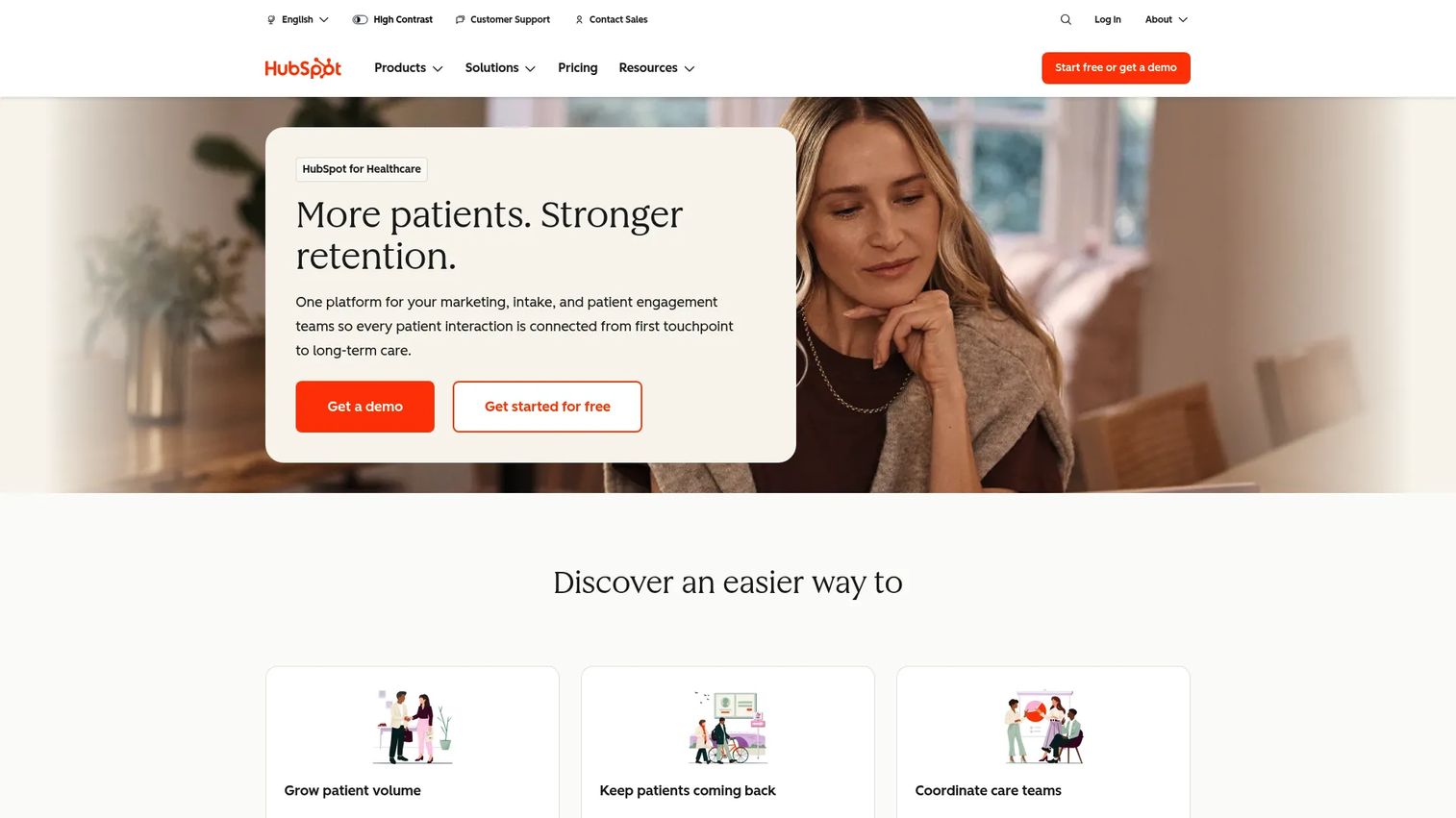
HubSpot for Healthcare connects healthcare marketing, intake, referral, and patient engagement workflows. Its broader customer platform covers contact records, campaigns, forms, pipelines, and reporting.
For CRM for healthcare marketing, the appeal is adoption. Marketing teams can capture demand while intake or sales style roles manage follow up in the same environment.
HubSpot supports post appointment check ins, reengagement campaigns, and wellness reminders. It also provides sensitive data properties with role based controls for configured healthcare deployments.
Healthcare teams still need to define approved data handling and communication practices. The platform’s flexibility does not remove internal governance responsibilities.
Best for: Healthcare growth teams seeking campaign to patient acquisition visibility across multiple locations.
Key features
- Patient volume and campaign attribution
- Automated follow up campaigns
- Referral relationship tracking
- EHR and scheduling connectivity
- Sensitive data properties
Why choose HubSpot for Healthcare: Choose it when adoption and campaign execution matter across marketing and intake. It fits teams that want familiar CRM workflows with healthcare configuration options.
HubSpot for Healthcare pricing: The free plan costs $0. Starter begins at $7 per seat monthly.
Professional starts at $1,300 monthly. Enterprise starts at $4,700 monthly.
G2 rating: 4.4/5 for HubSpot overall.
3. Zendesk for Healthcare
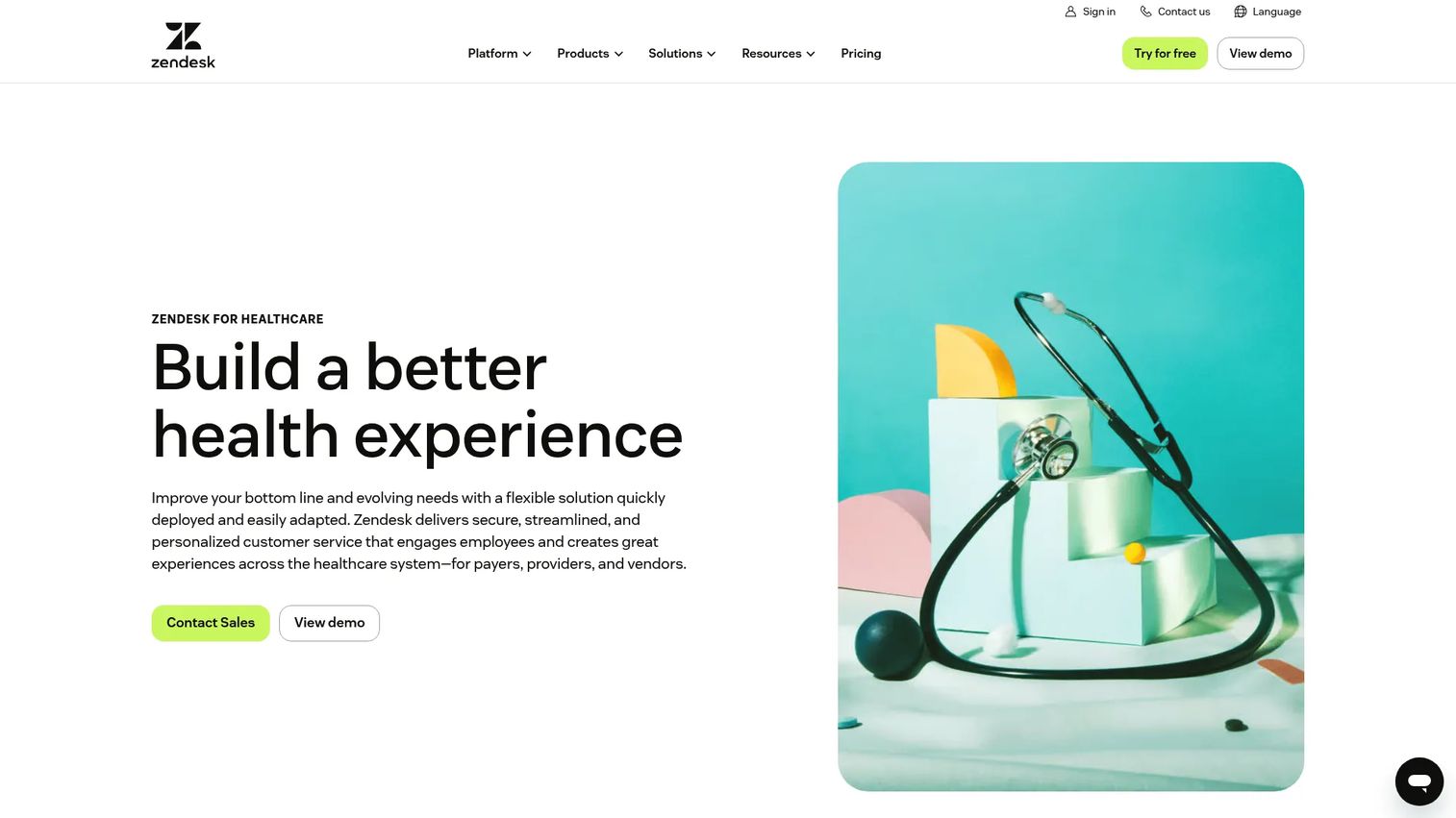
Zendesk for Healthcare focuses on patient, member, provider, and customer service workflows. It brings phone, chat, email, text, and mobile requests into an omnichannel support environment.
This makes Zendesk relevant when patient communication volume creates missed requests or repeated handoffs. Teams can route cases, collaborate across distributed groups, and report on service operations.
Its integrations can connect EHR data, medical device information, appointment history, and partner context. Role based permissions and data protection capabilities support controlled access.
Zendesk is best viewed as a patient communication platform rather than a clinical CRM. Its strength sits in service management, request handling, and support analytics.
Best for: Healthcare organizations that need structured patient service and support operations at scale.
Key features
- Omnichannel patient support
- Request routing workflows
- Distributed team collaboration
- Service analytics and reporting
- Role based permissions
Why choose Zendesk for Healthcare: Choose it when inbound communication and service ownership are the main problems. Look elsewhere for broad patient acquisition or clinical relationship management.
Zendesk for Healthcare pricing: Support Team starts at $19 per agent monthly, paid yearly. Suite Team costs $55 per agent monthly.
Suite Professional costs $115 per agent monthly. Enterprise packaging uses custom pricing.
G2 rating: 4.3/5 for Zendesk for Customer Service.
4. Microsoft Cloud for Healthcare
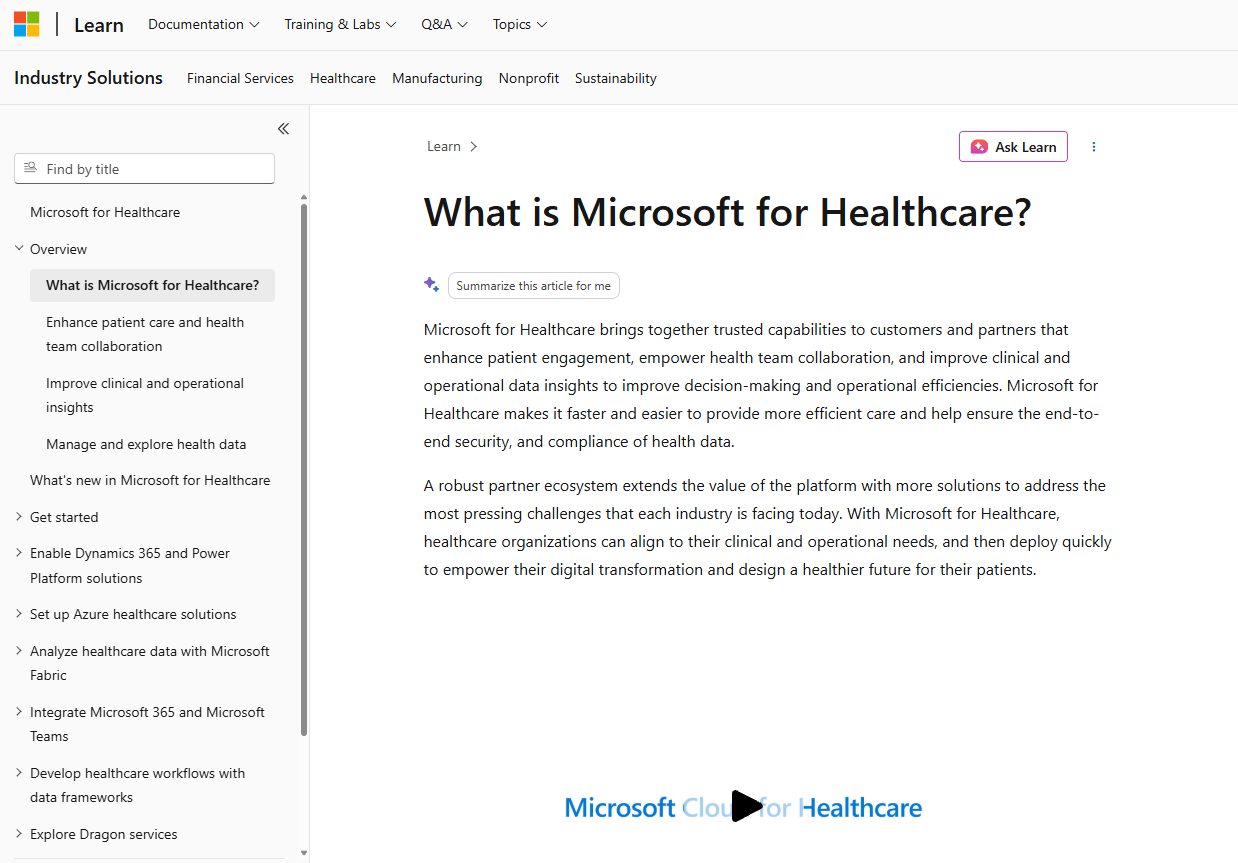
Microsoft Cloud for Healthcare brings together healthcare capabilities across Azure, Dynamics 365, Power Platform, Microsoft 365, Fabric, and Nuance services.
The offering supports patient engagement, virtual visits, unified patient views, and care collaboration. It also covers remote monitoring, analytics, interoperability, and healthcare data management.
This approach suits organizations already committed to Microsoft identity, productivity, data, and cloud infrastructure. Existing governance and technical expertise can help teams connect CRM in healthcare with broader operational systems.
The buying process requires careful component mapping. Microsoft Cloud for Healthcare is a collection of products and services rather than a single packaged hospital CRM subscription.
Best for: Healthcare organizations already running significant Microsoft infrastructure.
Key features
- Unified patient and member views
- Patient engagement workflows
- Virtual visits and care coordination
- Healthcare data interoperability
- Clinical and operational analytics
Why choose Microsoft Cloud for Healthcare: Choose it when CRM capabilities must align with Microsoft architecture. Organizations without that foundation may face a broader implementation project.
Microsoft Cloud for Healthcare pricing: Custom pricing. Licensing depends on the Microsoft products and Azure components selected.
5. Creatio
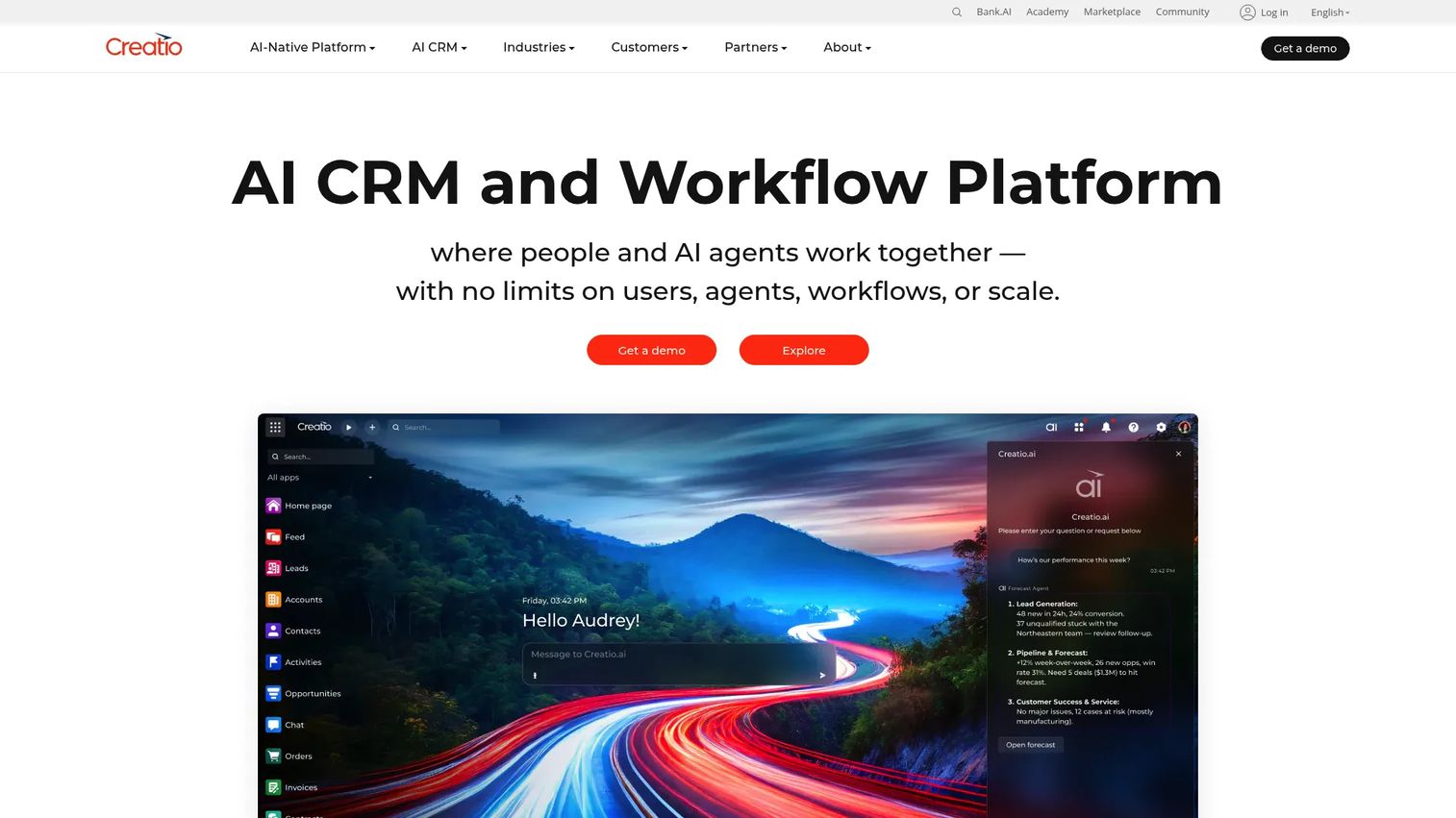
Creatio combines CRM applications with no code workflow automation and AI agents. Healthcare organizations can use it to model complex intake, referral, service, or internal operations processes.
The platform includes sales, marketing, and service automation. Its no code tools support custom applications and workflow design without building every process from scratch.
This flexibility matters when your patient journey doesn’t fit a standard sales pipeline. Teams can configure routing, case management, dashboards, and omnichannel engagement around their operating model.
Creatio is designed for midsize and enterprise organizations. New customers face a minimum annual purchase and a standard multiyear contract, making it less suited to small practices.
Best for: Process heavy healthcare teams that need configurable CRM and case workflows.
Key features
- No code application design
- Sales and service CRM
- AI agents and workflows
- Omnichannel engagement
- Enterprise governance
Why choose Creatio: Choose it when intake or referral processes need extensive configuration. Its contract structure favors organizations planning a substantial deployment.
Creatio pricing: Growth costs $40 per user monthly. Enterprise costs $75 per user monthly.
Unlimited uses custom pricing. New customers have a $10,000 annual minimum and a standard three year term.
G2 rating: 4.6/5.
6. LeadSquared
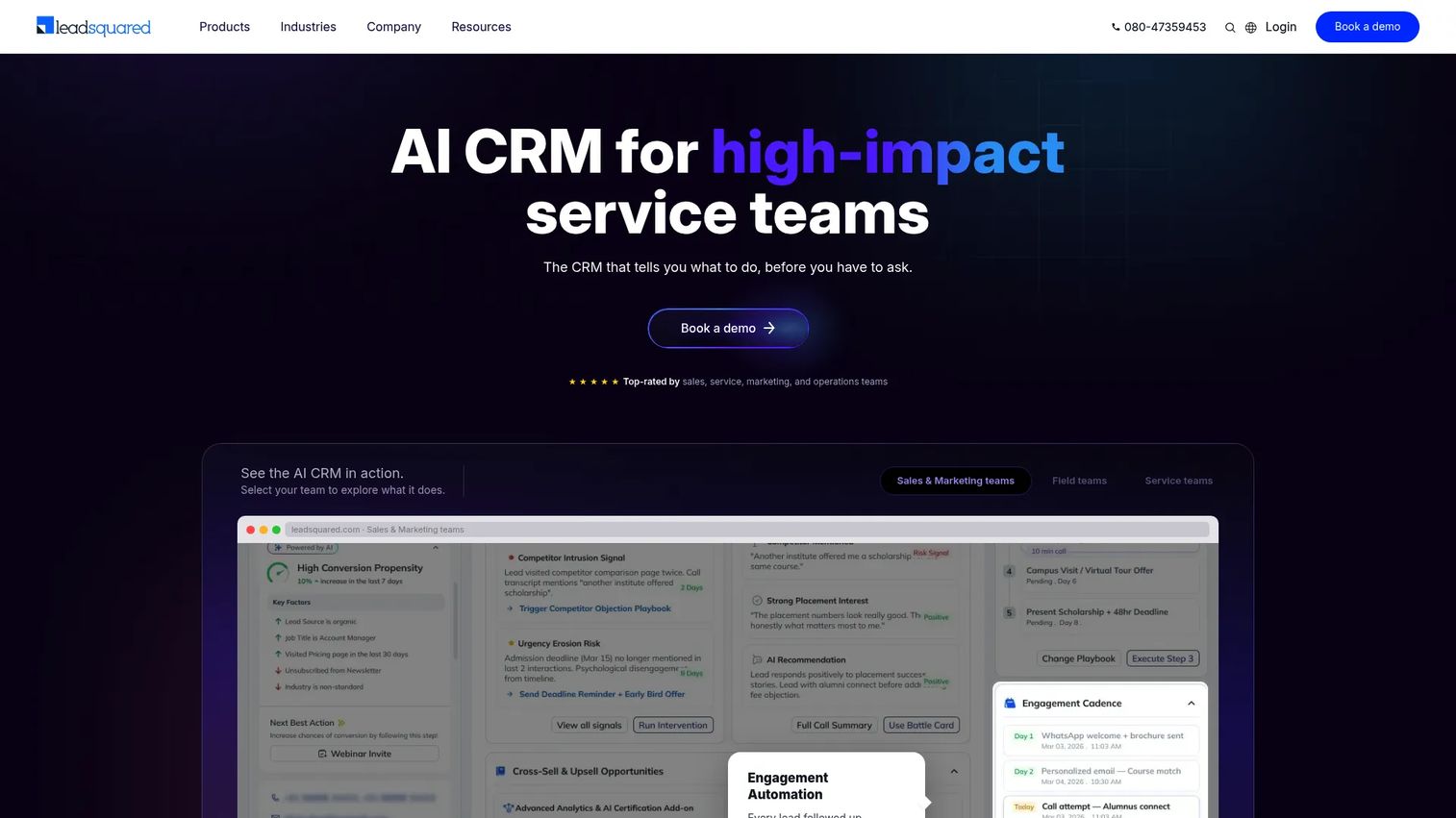
LeadSquared combines lead management, healthcare marketing automation, sales execution, and service workflows. It fits organizations processing high volumes of inquiries across digital, call, and field channels.
Teams can capture leads, score them, distribute records, and trigger nurturing campaigns. Landing pages and email capabilities support acquisition programs, while dashboards track follow up activity.
The platform works well when response discipline matters. A patient inquiry can move through routing, qualification, appointment outreach, and handoff without relying on personal spreadsheets.
Its published prices cover Marketing Automation plans. Other suites require a sales conversation, so buyers should map the exact products needed before comparing costs.
Best for: High volume patient acquisition teams focused on response speed and conversion.
Key features
- Lead capture and scoring
- Automated lead distribution
- Multichannel marketing campaigns
- Sales task automation
- Pipeline analytics
Why choose LeadSquared: Choose it when inquiry volume exposes weak routing and delayed follow up. It offers more acquisition structure than practice focused scheduling platforms.
LeadSquared pricing: Marketing Pro costs $2,000 per account annually. Marketing Super costs $3,500 per account annually.
Pricing for other LeadSquared products is custom.
G2 rating: 4.5/5.
7. Zoho CRM
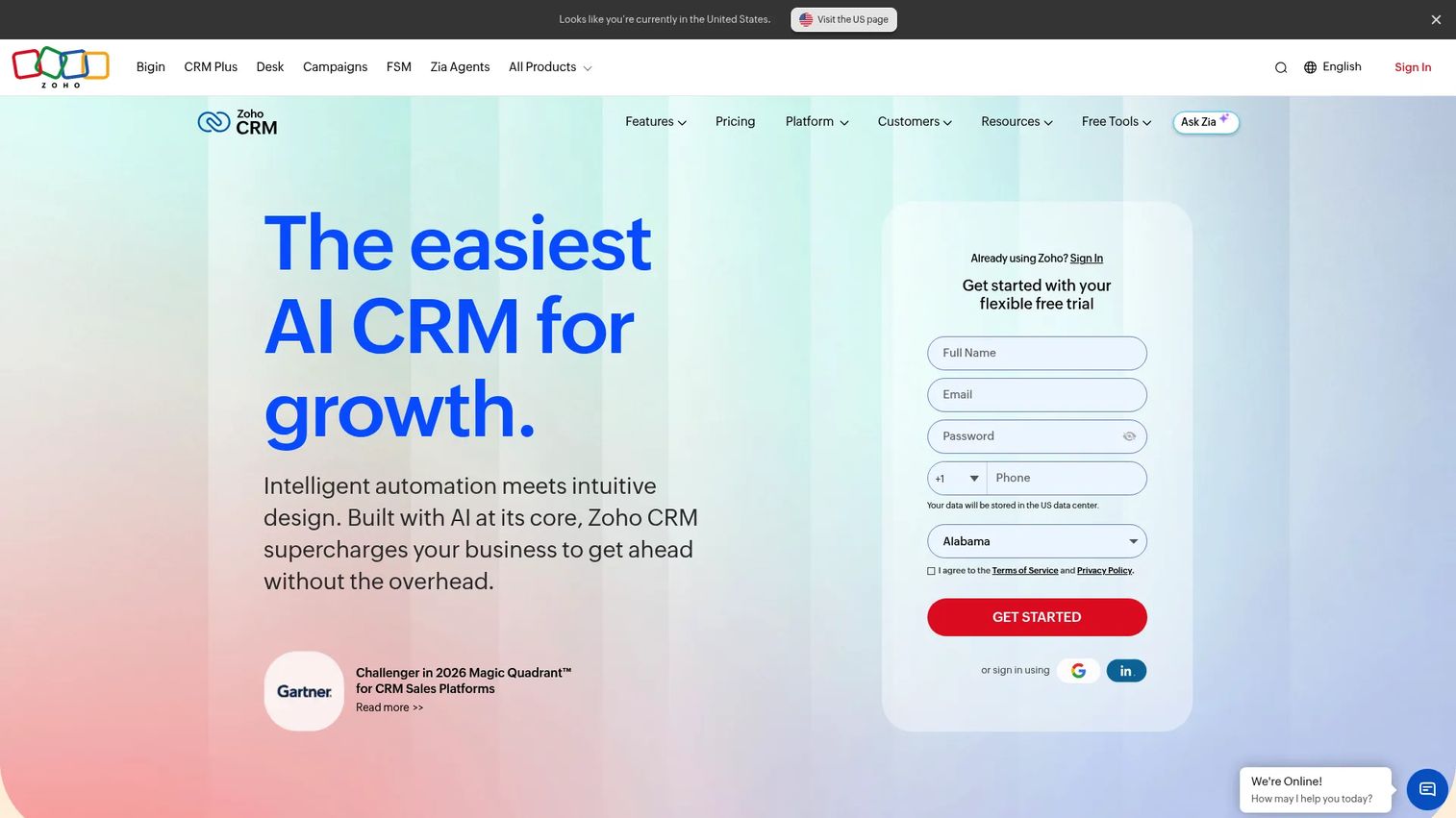
Zoho CRM manages leads, contacts, deals, sales processes, and customer relationships. Smaller healthcare teams can configure it for provider relations, patient acquisition, or nonclinical referral workflows.
The platform supports workflow automation, forecasting, pipeline management, and custom processes. Its free edition gives small teams a low cost starting point.
Zoho isn’t packaged as a healthcare specific system in this comparison. Organizations must decide which data belongs in the CRM and configure access accordingly.
It works best for healthcare contact management where flexibility and cost control matter more than clinical workflow depth. Examples include partnerships, employer relationships, and referral outreach.
Best for: Small and midsize healthcare teams seeking configurable CRM at a controlled cost.
Key features
- Lead and contact management
- Workflow automation
- Sales pipeline tracking
- Forecasting and reporting
- Custom process configuration
Why choose Zoho CRM: Choose it when a general CRM can handle the workflow with careful configuration. Teams needing healthcare specific intake features may prefer a practice platform.
Zoho CRM pricing: The free edition supports up to three users. Paid editions include Standard, Professional, Enterprise, and Ultimate.
G2 rating: 4.1/5.
8. NexHealth
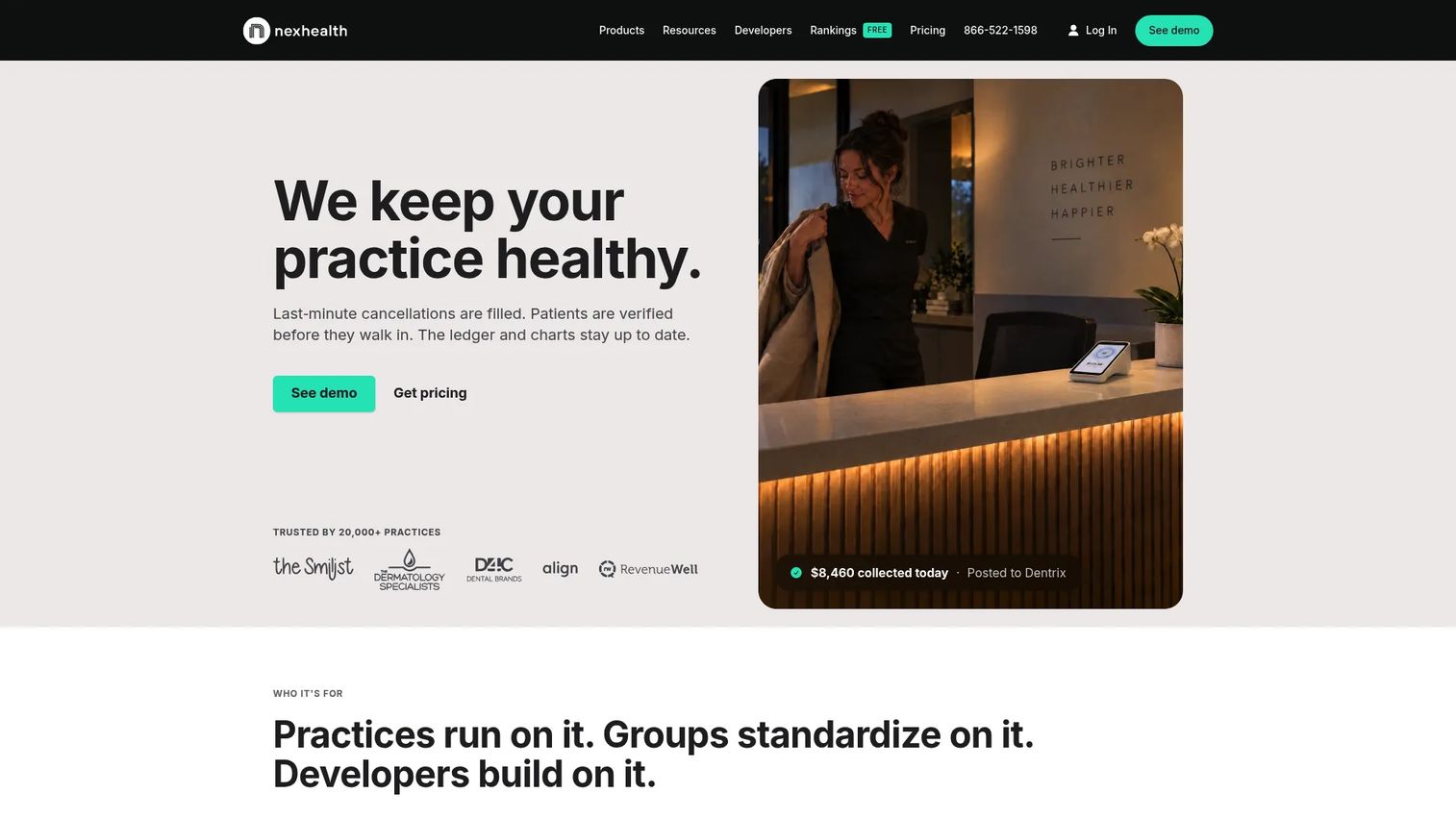
NexHealth is a patient experience platform for dental and medical practices. It connects scheduling, communications, forms, payments, insurance verification, and analytics with health record systems.
Its online booking supports health record synchronization, Google booking, waitlist automation, and recalls. Patient messaging covers campaigns, reminders, and review requests.
NexHealth stands out as patient intake software CRM for front office operations. It focuses on moving someone from inquiry to scheduled visit without repeated manual entry.
This is narrower than a general healthcare CRM. That focus works well for practices where scheduling delays, incomplete forms, and missed reminders cause the biggest revenue leakage.
Best for: Medical and dental practices prioritizing digital intake and booked appointments.
Key features
- Online scheduling
- Digital patient forms
- Automated reminders
- Recall campaigns
- Health record synchronization
Why choose NexHealth: Choose it when front office friction blocks patient conversion. Enterprise health systems needing broad care coordination may require a wider CRM layer.
NexHealth pricing: Custom pricing. Monthly and annual billing options are available.
G2 rating: 4.8/5.
9. Tebra
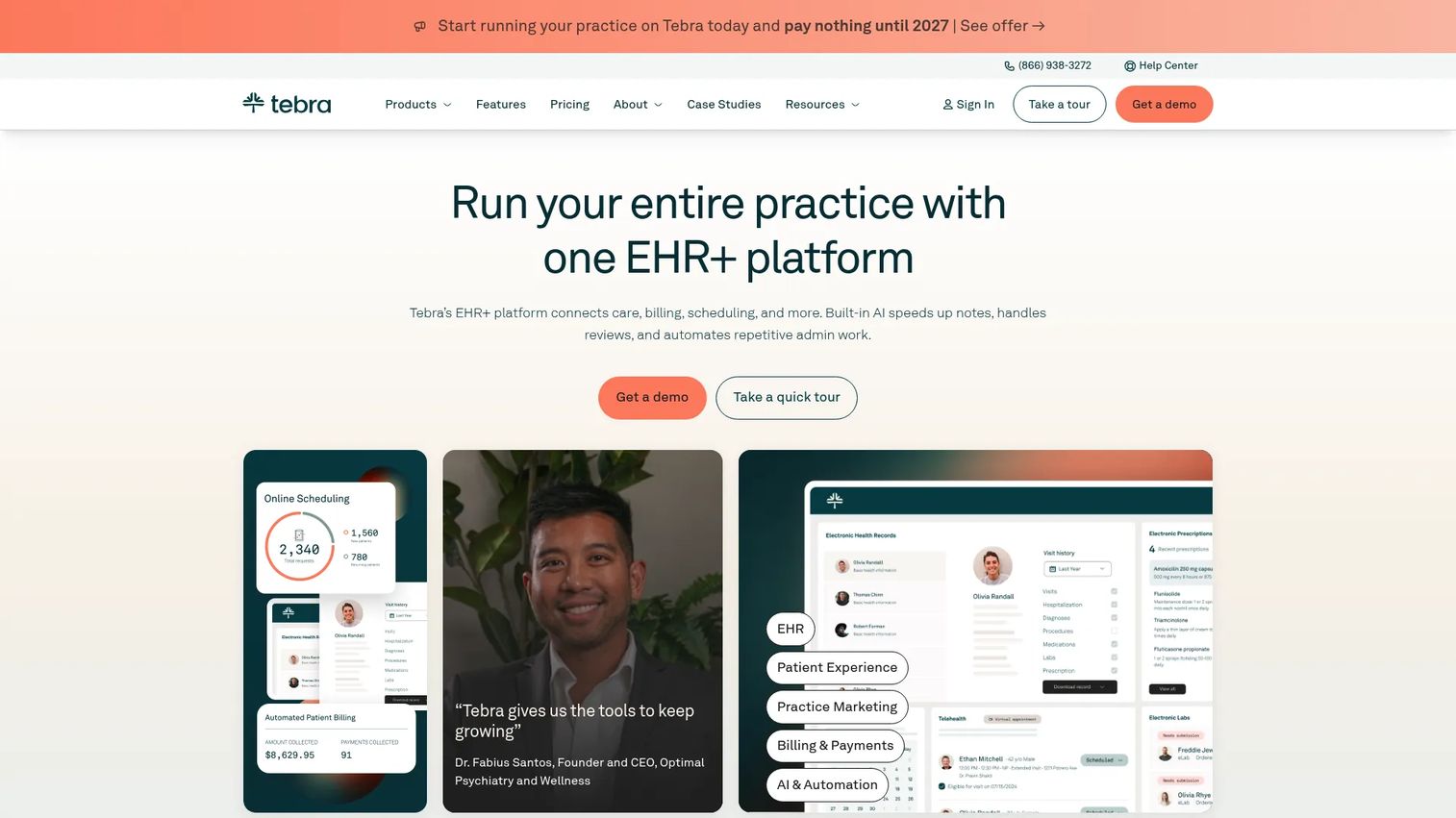
Tebra combines EHR, billing, telehealth, patient experience, payments, and practice marketing. It targets independent healthcare practices seeking a connected operational platform.
Patient experience capabilities include online scheduling, reminders, digital intake, portal access, messaging, and review management. Marketing tools support practice visibility and patient acquisition.
Tebra reaches beyond medical CRM software because it includes clinical and billing products. Buyers can select patient experience packages or broader practice bundles.
The platform fits smaller organizations that want one vendor across practice growth and operations. Compare the relevant modules carefully because provider type and claim volume affect pricing.
Best for: Independent practices needing patient acquisition and operational workflows.
Key features
- Online scheduling and intake
- Patient reminders and messaging
- Reputation management
- Medical billing workflows
- EHR and telehealth options
Why choose Tebra: Choose it when local practice growth and front office execution belong in the same buying decision. Its wider scope may exceed a simple CRM requirement.
Tebra pricing: Patient Experience and Marketing starts at $49 per provider monthly for nonphysicians. Physician plans start at $99 per provider monthly.
Broader bundles range from $225 to $799 per provider monthly.
G2 rating: 4.1/5.
10. OperaDDS
OperaDDS is dental communication software for patient reminders, digital forms, and secure messaging. It also supports communication between practice team members.
Its narrow dental focus is the main reason to shortlist it. Teams can address repetitive paperwork and appointment communication without adapting a generic CRM.
OperaDDS also supports case presentation workflows. That capability can help dental teams communicate treatment information within a familiar practice context.
This platform isn’t a broad patient acquisition CRM for hospitals or multispecialty networks. It suits dental practices with a defined communication and engagement problem.
Best for: Dental practices seeking patient messaging and paperless forms.
Key features
- Appointment reminders
- Digital patient forms
- Secure patient communication
- Interoffice messaging
- Dental case presentations
Why choose OperaDDS: Choose it when dental workflows matter more than broad CRM customization. Larger organizations should compare its scope against their referral and reporting requirements.
OperaDDS pricing: Custom pricing. Contact OperaDDS for a quote.
11. Monday CRM
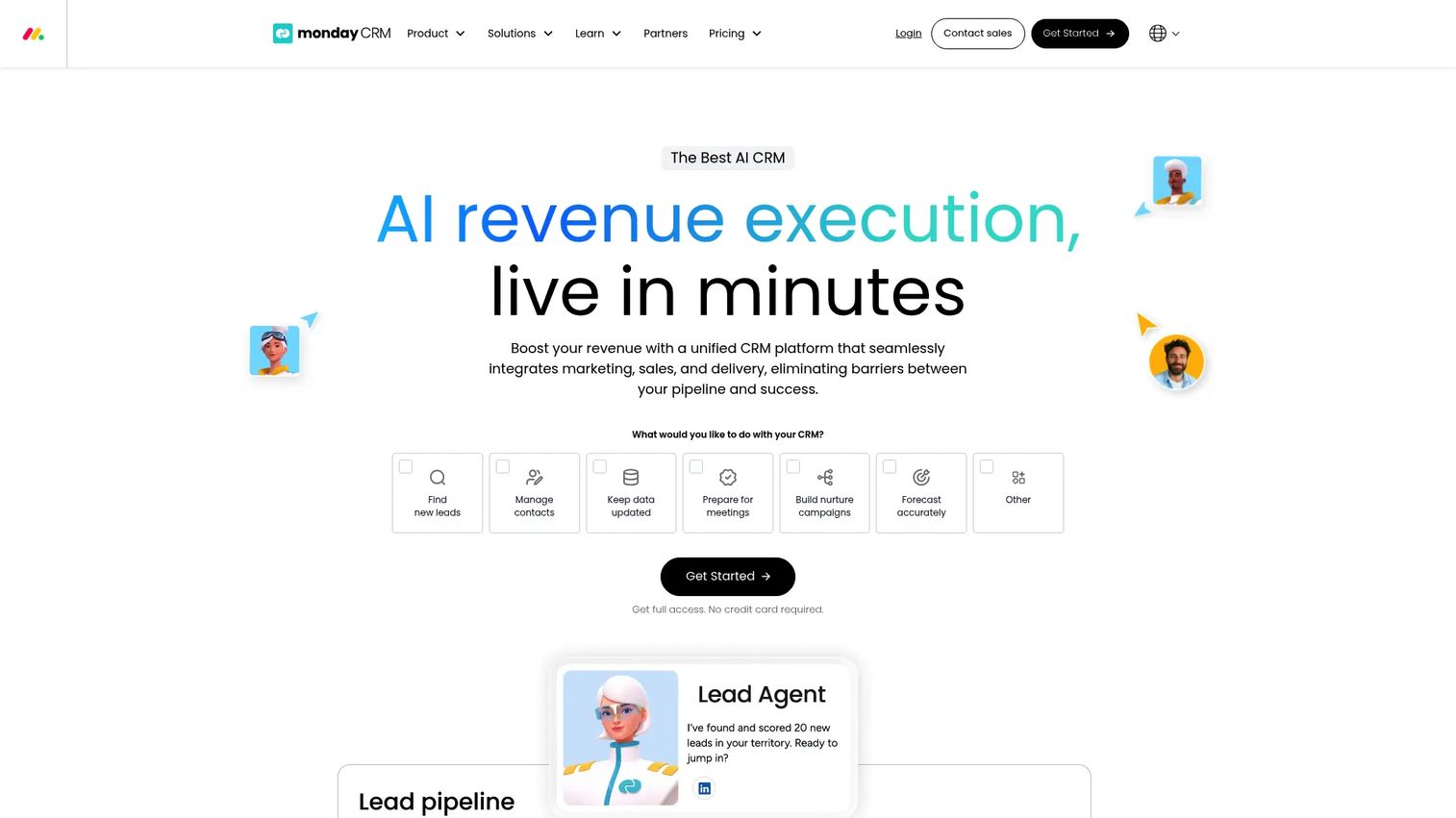
Monday CRM provides customizable pipelines, communication tracking, automation, and reporting. Healthcare teams can adapt visual boards for inquiries, referrals, partnerships, and internal tasks.
Its flexible interface makes ownership visible. A referral coordinator can see status changes, while managers can review workload and stalled records.
Monday CRM also supports email, call, meeting, and activity tracking. Automated sequences and workflows can reduce repetitive coordination across nonclinical teams.
The product isn’t healthcare specific. Keep clinical information outside the platform unless your security and legal teams approve the proposed configuration.
Best for: Teams seeking visual pipeline management for intake or referral workflows.
Key features
- Customizable CRM boards
- Task and activity ownership
- Workflow automations
- Communication tracking
- Pipeline dashboards
Why choose Monday CRM: Choose it when visibility and task coordination are the priorities. Healthcare specific data models or patient workflows require more configuration.
Monday CRM pricing: Basic costs $12 per seat monthly, billed annually. Standard costs $17, while Pro costs $45 per seat monthly.
Plans start at three users. A 14 day trial is available.
12. Insightly
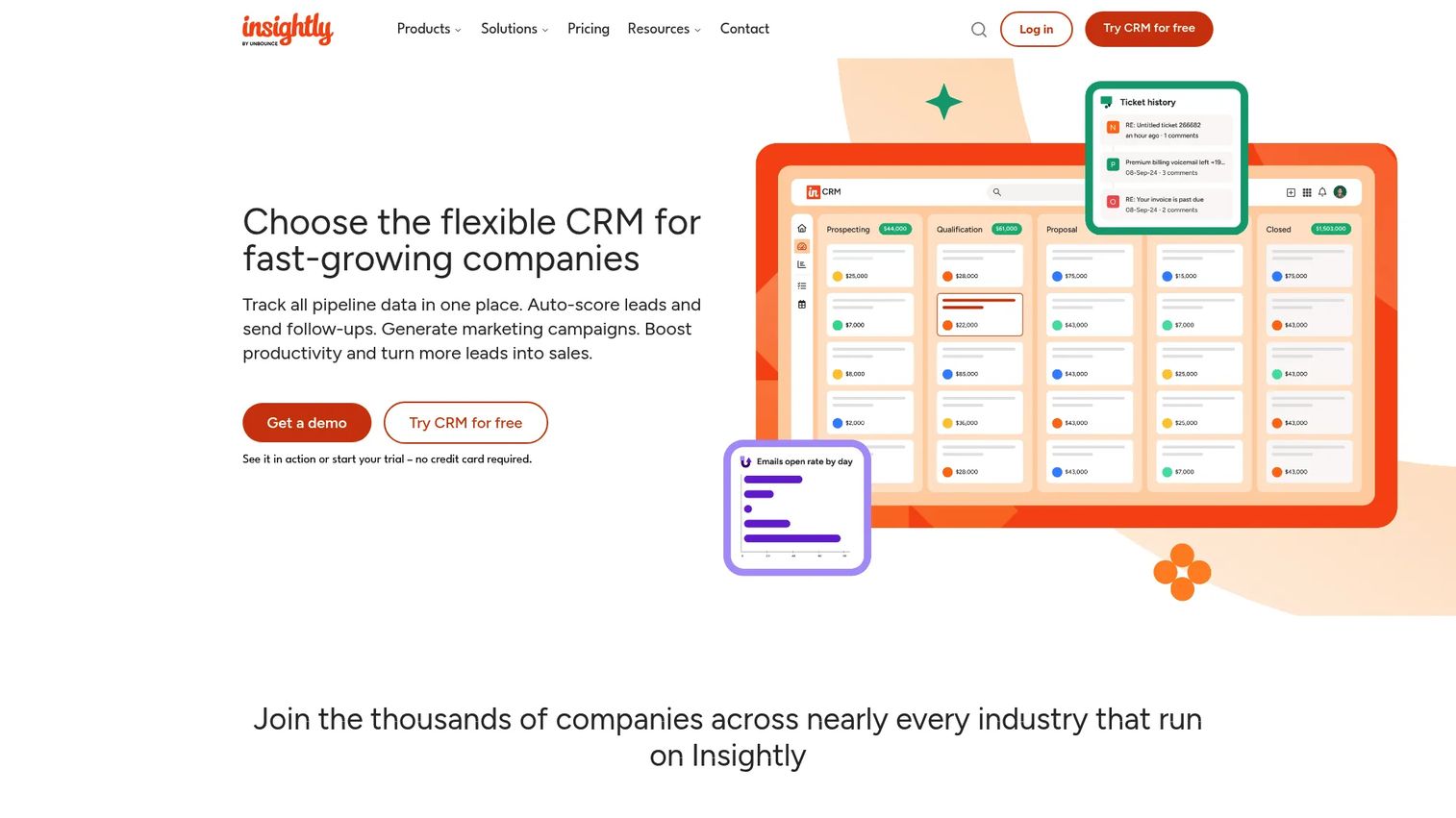
Insightly combines CRM with project management and workflow automation. That pairing suits healthcare service organizations where a relationship creates follow through work.
Teams can manage contacts, opportunities, projects, and email activity. Advanced dashboards help managers track pipeline and delivery status.
This structure can support provider relations, partnerships, implementation projects, or B2B healthcare sales. A completed opportunity can move into a tracked project without losing context.
Insightly also offers marketing and service products. Buyers should decide whether they need the CRM alone or a wider package.
Best for: Relationship driven healthcare organizations that need project tracking after the handoff.
Key features
- Contact and opportunity management
- Integrated project tracking
- Workflow automation
- Reports and dashboards
- Email integration
Why choose Insightly: Choose it when execution after a sale or referral matters as much as pipeline visibility. Practice focused scheduling requires a different platform.
Insightly pricing: Plus costs $29 per user monthly, billed annually. Professional costs $49, while Enterprise costs $99 per user monthly.
A 14 day trial is available.
G2 rating: 4.2/5.
13. Bitrix24
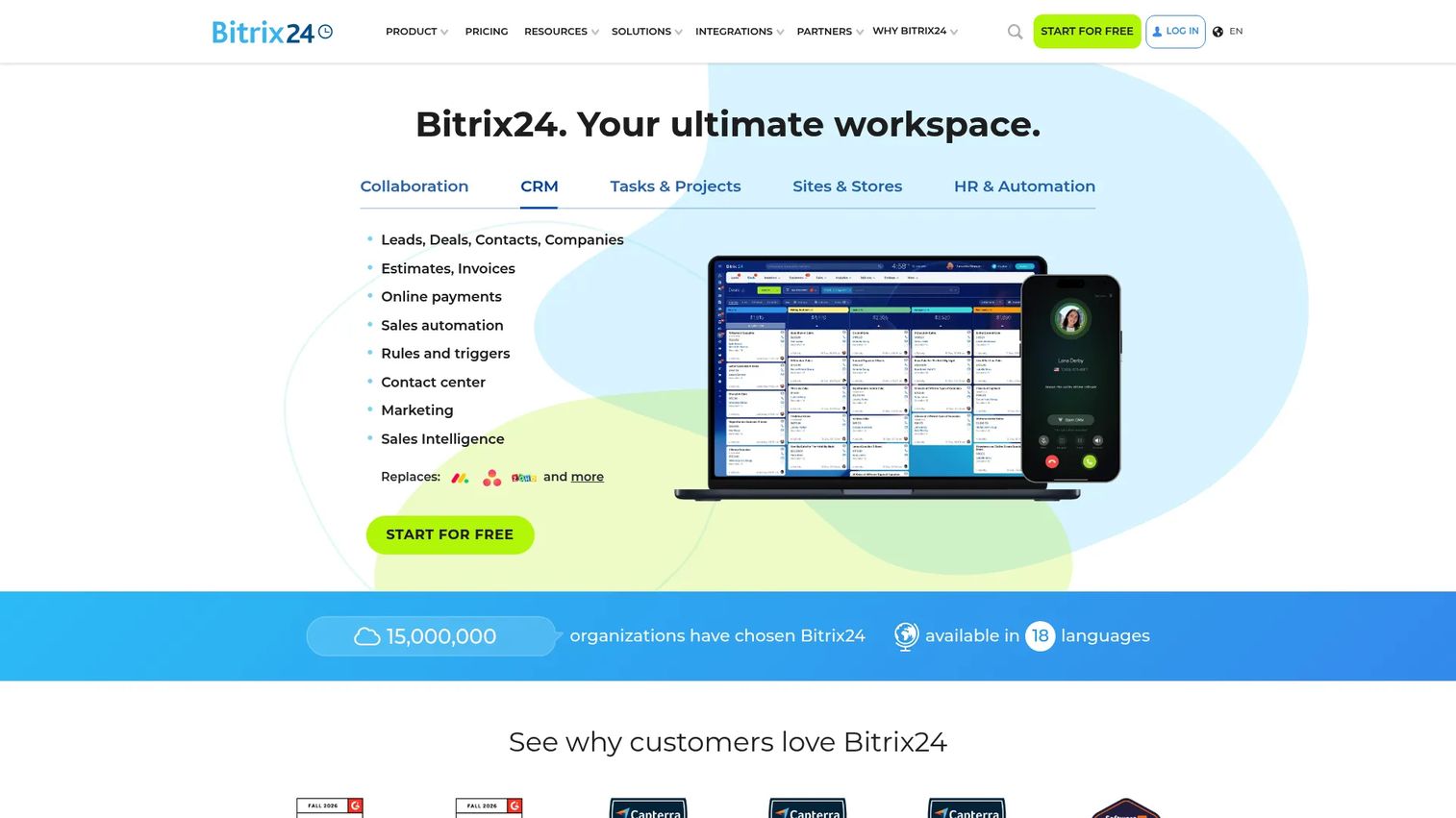
Bitrix24 combines CRM, task management, collaboration, communication, and business automation. Its organization based pricing differs from the per seat model common in this category.
CRM functions cover leads, deals, contacts, pipelines, invoicing, payments, and analytics. The workspace also includes project tools, chat, calendars, documents, and file storage.
That breadth can help budget conscious healthcare operations teams consolidate nonclinical work. It can also create adoption challenges if employees only need a narrow workflow.
Healthcare buyers should establish strict rules around sensitive information. Bitrix24 is a general business platform rather than a healthcare specific CRM.
Best for: Budget conscious organizations seeking CRM and collaboration in one subscription.
Key features
- Lead and contact management
- Task and project tools
- Communication channels
- Workflow automation
- Invoicing and analytics
Why choose Bitrix24: Choose it when flat organization pricing and broad functionality fit your operating model. Avoid using its breadth as a reason to skip governance planning.
Bitrix24 pricing: A free plan is available. Basic costs $69 per organization monthly for five users.
Standard costs $144 for 50 users. Professional costs $289 for 100 users.
G2 rating: 4.1/5.
14. FreeAgent CRM
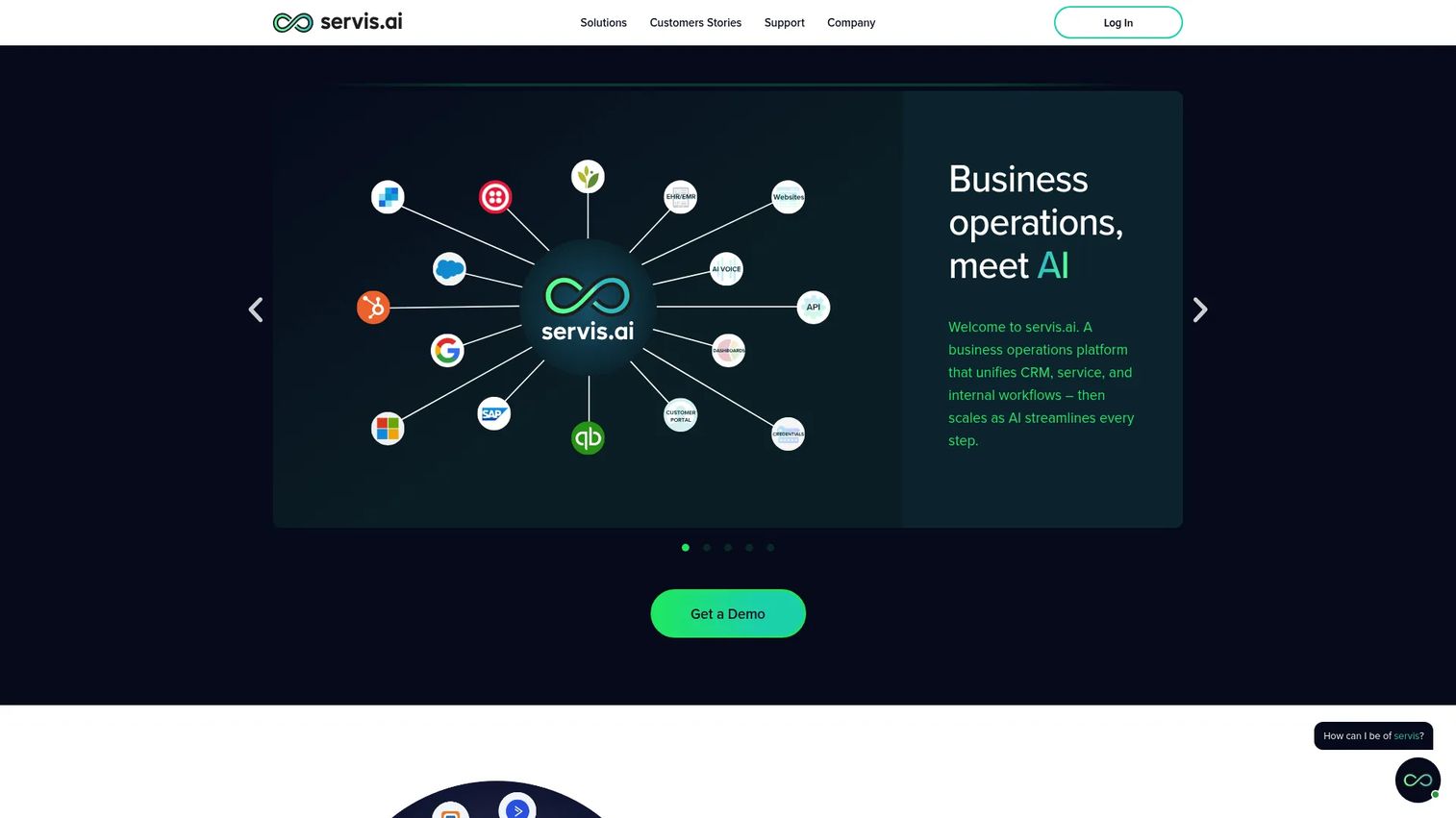
FreeAgent CRM is a customizable CRM for customer relationships, sales activity, and business workflows. It supports healthcare adjacent sales, partnerships, and provider relationship management.
Core capabilities include account records, opportunities, task management, and email tracking. Custom fields and workflows let teams model processes that don’t fit a rigid pipeline.
This flexibility can support inquiry, referral, or partner activity. Teams still need to define where clinical and protected information will live.
FreeAgent works best when a spreadsheet has become too fragile, yet the organization doesn’t need a large healthcare CRM deployment.
Best for: Small and midsize teams needing configurable relationship pipelines.
Key features
- Contact and account management
- Opportunity pipeline tracking
- Tasks and activities
- Email tracking
- Custom fields and workflows
Why choose FreeAgent CRM: Choose it when workflow flexibility matters more than healthcare specific packaging. Validate security controls before introducing sensitive data.
FreeAgent CRM pricing: Custom pricing. Contact FreeAgent CRM for a quote.
G2 rating: 4.2/5.
15. Actium Health
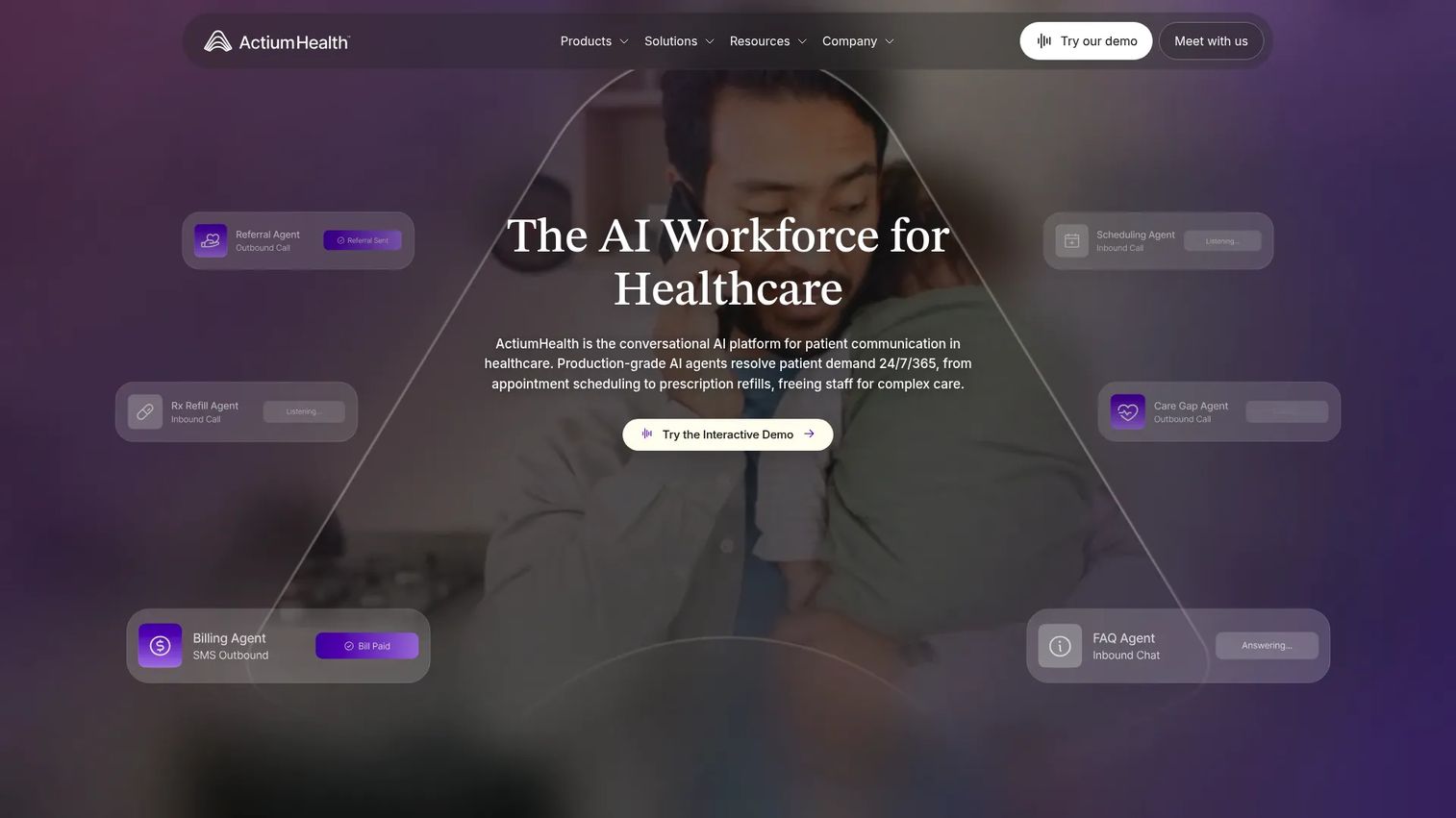
Actium Health is a conversational AI platform for healthcare patient communication. It supports inbound and outbound interactions across access, scheduling, referrals, and follow up.
Inbound agents can handle appointment requests, frequently asked questions, call routing, and prescription refill workflows. Outbound capabilities support EHR based care gap or referral outreach.
Actium Health also provides analytics for interaction accuracy, sentiment, compliance, and operational performance. This makes it relevant to contact centers and patient access teams.
Its current positioning is narrower than a general patient growth CRM. Consider it an automation layer for healthcare communications rather than a replacement for every relationship system.
Best for: Health systems automating patient access and communication workflows.
Key features
- Inbound healthcare AI agents
- Outbound patient outreach
- Appointment and referral workflows
- EHR based campaigns
- Interaction analytics
Why choose Actium Health: Choose it when communication capacity is the bottleneck. Teams seeking a conventional contact and opportunity database may need a separate CRM.
Actium Health pricing: Custom pricing. Cost drivers include call volume, locations, EHR integrations, selected features, and customization.
G2 rating: 3.5/5.
16. Trella Health
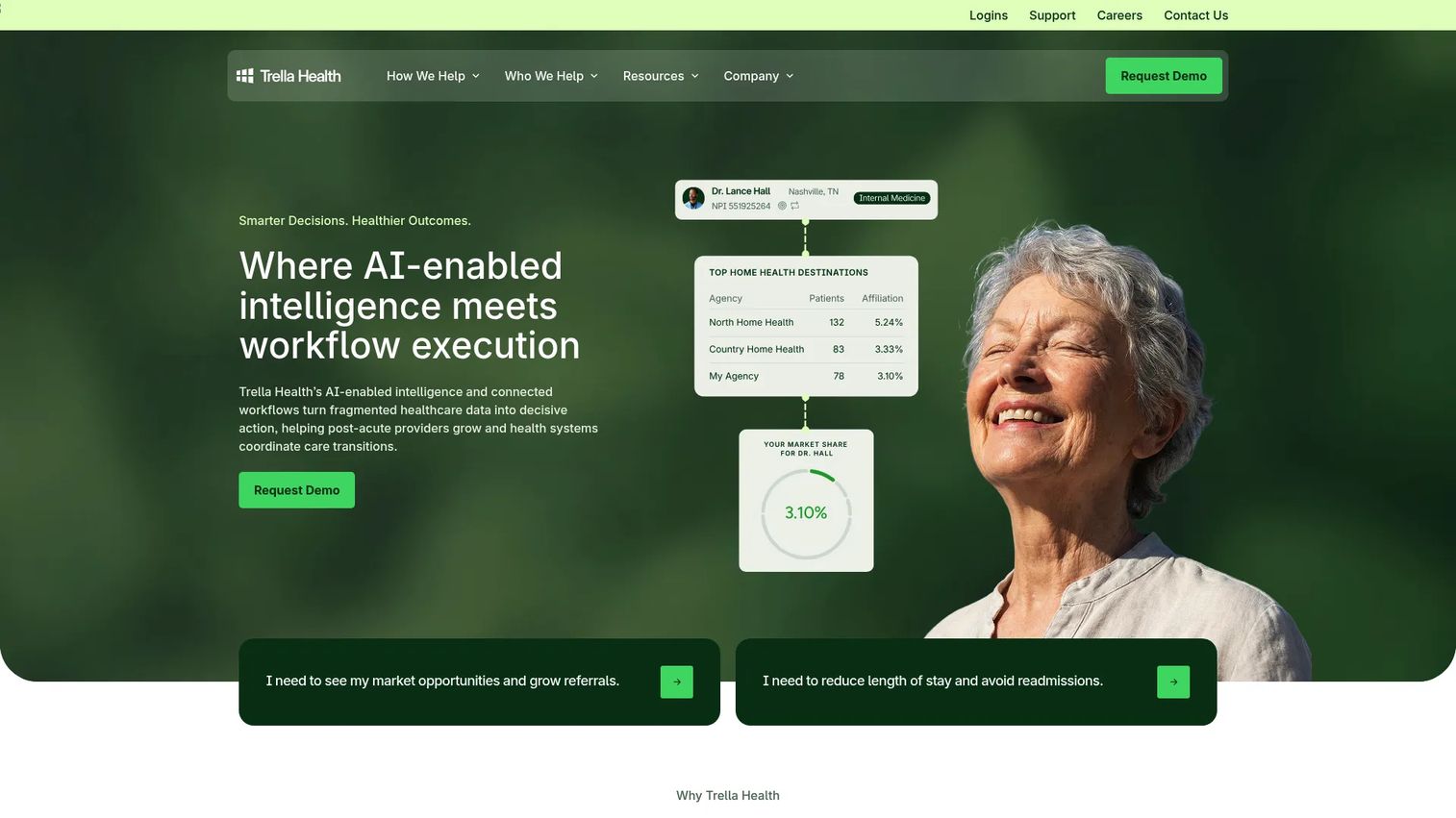
Trella Health provides market intelligence, CRM workflows, referral management, discharge automation, and healthcare data connectivity.
Its market data covers Medicare, Medicare Advantage, and commercial sources. Sales teams can use referral analytics to identify provider relationships and territories that deserve attention.
Mobile CRM workflows support referral growth in the field. EHR connected discharge automation adds care transition and patient placement capabilities.
Trella Health is particularly relevant to home health, hospice, post acute providers, and health systems. It isn’t a general CRM replacement for every department.
Best for: Post acute organizations and referral network teams prioritizing market intelligence.
Key features
- Referral source analytics
- Healthcare market intelligence
- Mobile CRM workflows
- Discharge automation
- Network growth reporting
Why choose Trella Health: Choose it when market signal should determine outreach priority. General marketing automation or practice intake requires different capabilities.
Trella Health pricing: Custom pricing. Contact Trella Health for a quote.
17. HIPAA CRM
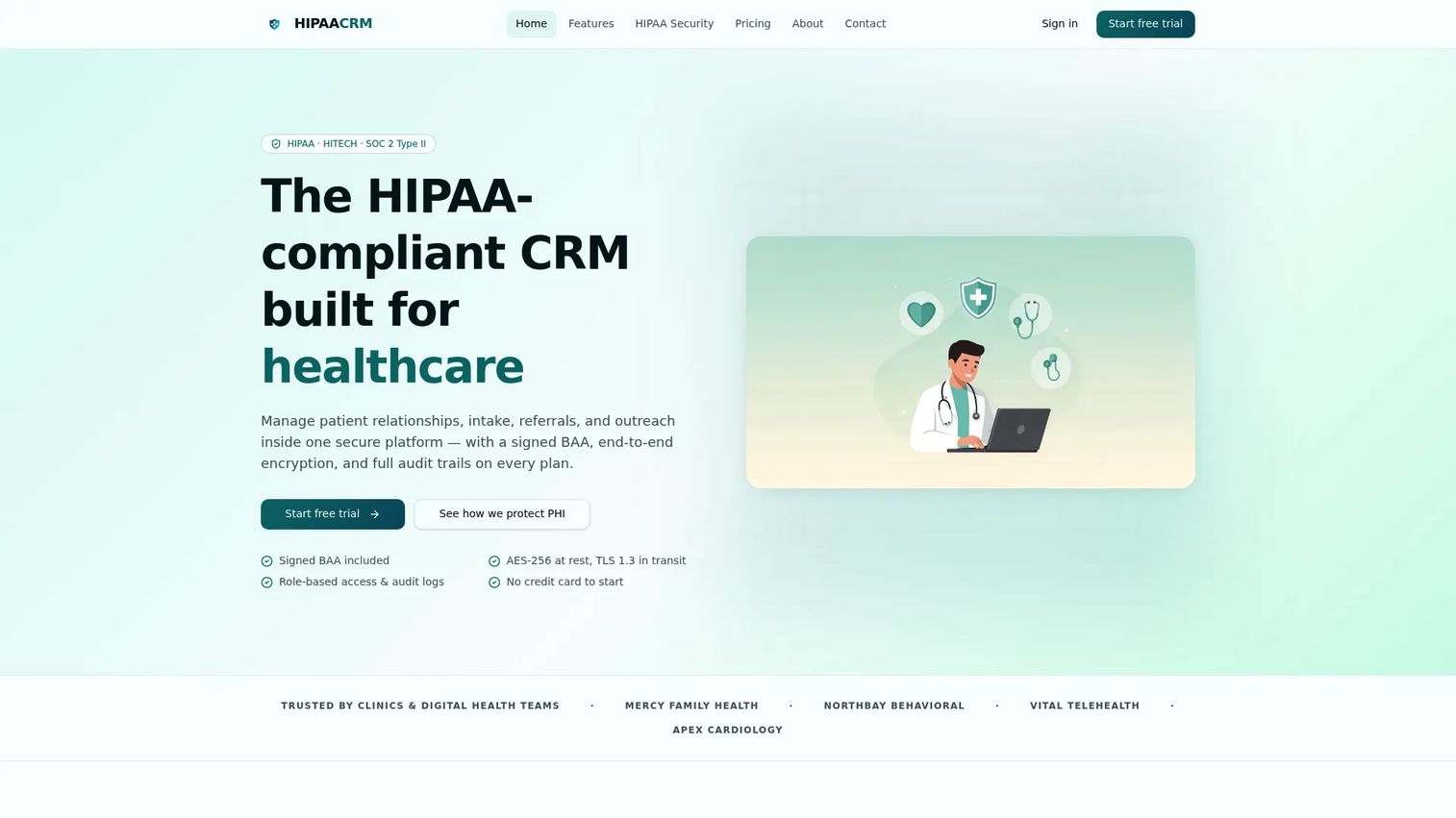
HIPAA CRM positions itself as a healthcare specific CRM for practices, clinics, and digital health teams.
Its healthcare focus makes it relevant to smaller organizations that want a CRM marketed around protected data workflows. That positioning can reduce the initial translation required with a general business platform.
The available research didn’t provide enough detail to compare specific capabilities or implementation requirements. Buyers should request product documentation before adding it to a final shortlist.
Ask for the proposed data architecture, security controls, administrative features, and integration methods. Include your legal, IT, and security teams in that review.
Best for: Healthcare teams seeking a CRM positioned specifically for healthcare use cases.
Key features
- Healthcare specific CRM positioning
- Practice and clinic focus
- Digital health use cases
Why choose HIPAA CRM: Evaluate it when healthcare packaging is a primary requirement. Validate every BAA, access, security, and data handling requirement during procurement.
HIPAA CRM pricing: Custom pricing. Contact HIPAA CRM for a quote.
Considerations when choosing healthcare crm software
Verify what data the CRM will hold
Start by listing every data field entering the platform. Some teams can keep workflows nonclinical, while others need protected health information in the CRM.
That decision affects contracts, access controls, implementation effort, and vendor review. Do not buy a patient acquisition tool until you know where protected data will live.
Confirm BAA and security requirements early
Ask whether the vendor will sign a Business Associate Agreement where required. Review encryption, audit trails, role based access, authentication, retention policies, and administrative controls.
A product described as a HIPAA compliant CRM does not automatically make your use compliant. Validate requirements with internal legal and security teams.
Map the complete patient acquisition workflow
Document the path from campaign response through intake, scheduling, referral, visit, follow up, and reactivation. Mark the owner and system at every transition.
This exercise exposes whether you need healthcare marketing automation, patient intake software, or referral intelligence. It also prevents another partial system from entering the stack.
Check EHR and EMR integration depth
An integration can mean an API, middleware connection, native connector, export, or manual process. Ask which fields move and how frequently updates occur.
Confirm the sync direction, permissions, error handling, and record matching process. A healthcare CRM with EHR integration should have a specific architecture, not a vague promise.
Price the implementation
Compare licenses with data migration, administrator time, implementation partners, integrations, reporting setup, and training. Include ongoing support and maintenance.
The cheapest subscription can become expensive when every workflow requires custom work. Per seat pricing also grows quickly across large patient access teams.
Conclusion
The best healthcare CRM software fixes a specific broken handoff.
Salesforce Health Cloud suits enterprise health systems needing a broad relationship and care coordination layer. HubSpot for Healthcare fits campaign driven patient acquisition, while LeadSquared supports high volume inquiry conversion.
Zendesk for Healthcare works well for service operations. Microsoft Cloud for Healthcare fits organizations already invested in Microsoft infrastructure.
NexHealth and Tebra address intake, scheduling, and practice growth. OperaDDS narrows that focus to dental communication. Actium Health targets patient access automation, while Trella Health supports referral strategy.
Shortlist three tools around your weakest workflow. Then validate BAA terms, protected health information handling, integrations, implementation ownership, and total cost.
Finally, run a dummy patient journey through each platform. Start with an inquiry and follow it through scheduling, referral, service, and reactivation. The winning system should show who owns every step.
FAQs
Healthcare CRM software manages relationship, outreach, intake, referral, communication, and patient engagement workflows. It supports nonclinical activity around the patient journey.
A healthcare CRM can track inquiries, outreach, appointment status, and follow up ownership. It should remain distinct from the clinical system of record.
No. EHR and EMR platforms manage clinical documentation and medical records.
CRM systems handle patient acquisition, relationships, communications, referrals, and retention workflows. Integration can connect relevant data without making the CRM a clinical record system.
The best choice depends on your operating model. Salesforce Health Cloud fits enterprise health systems, while HubSpot for Healthcare suits marketing led acquisition.
LeadSquared supports high volume inquiry follow up. NexHealth and Tebra fit practices focused on scheduling, digital intake, and patient communication.
Evaluate role based access, audit logs, encryption, authentication, administrative controls, and data retention settings. Ask whether the vendor supports a BAA when your use requires one.
Your legal, IT, privacy, and security teams should review the proposed configuration. Software features alone do not determine compliance.
Healthcare CRM systems can connect through APIs, middleware, native connectors, exports, or partner built implementations. Integration depth varies widely.
Verify supported clinical systems, data fields, sync direction, update frequency, permissions, and error handling. Ask how duplicate records and failed updates are managed.
Healthcare CRM pricing varies by users, locations, patient volume, selected modules, implementation, support, and integrations. Entry prices range from free general CRM editions to enterprise plans costing hundreds per user monthly.
Compare subscriptions with migration, configuration, training, and administration costs. Total ownership cost matters more than the first invoice.
Zoho CRM suits small teams needing flexible contact and pipeline management. NexHealth focuses on scheduling and intake, while Tebra covers wider practice operations.
OperaDDS fits dental communication workflows. Monday CRM can support visual nonclinical pipelines when the practice has strong data governance.