You handed out 40 cards at the conference. You got back a stack of someone else's. Two weeks later, none of those contacts are in your CRM, and the follow-ups you meant to send never happened.
That gap is where pipeline dies. A paper card does one thing: it transfers ten lines of text to someone who may or may not type them into a phone. It does not capture the lead, route it, or remind you to follow up. For a sales team, that is the whole job.
Digital business card software fixes the part that actually matters: getting a contact saved, attributed, and worked. The category has grown fast because the math is obvious. Roughly 37% of businesses had adopted digital business cards by 2026, up from 16% in 2020, according to research compiled by Wavecnct. IT and technology companies drive about 40% of global usage, making sales-heavy SaaS orgs the largest adopters.
The friction these tools remove is the same friction interactive product experiences remove later in the funnel. When a buyer can self-serve a contact exchange, then later self-serve a product walkthrough, you cut the manual steps that stall deals. If you also run product evaluations, the same logic applies to interactive demos and digital adoption tooling that lets buyers move at their own pace.
This guide ranks the tools by one question: does it actually get the contact saved, routed, and followed up on? Not whether it shares a pretty card. We weighed save rate, sharing methods (QR, NFC, wallet), CRM sync, security, and pricing.
What's inside
This guide compares 10 digital business card software tools for sales teams, field reps, and team buyers. We chose the list based on five factors: usability, sharing options (QR code, NFC, Apple Wallet, Google Wallet), lead capture, integrations and CRM sync, and team readiness. Each tool gets an overview, who it fits, key strengths, a reason to choose it, and verified pricing. We also flag which options work well as a free digital business card versus which justify a paid team rollout. The goal is a shortlist you can buy from, not a definition you already know.
TL;DR
- Best for sales teams overall: Mobilo, for its lead capture, CRM routing, and team admin story built around moving contacts into pipeline.
- Best free digital business card: Wave Connect, with a genuine free tier, wallet sharing, and contact capture at no cost.
- Best for team rollout and governance: Uniqode, for SSO, structured branding, and scalable team management.
- Best for NFC and wallet sharing: V1CE, with NFC, QR, and Apple or Google Wallet on every card plus follow-up tooling.
- Best for enterprise security: HiHello, an SOC 2 Type II certified platform used across a large share of the Fortune 500.
What is digital business card software?
Digital business card software is a platform that creates a shareable electronic business card, a virtual profile holding your name, role, contact details, and links, that recipients can save instantly without typing anything.
Instead of printing and reprinting a business card digital tools let you update once and share the same profile everywhere. Sharing happens through a QR code business card scan, an NFC tap, a wallet pass, a link, SMS, email, an email signature widget, or even a smartwatch. The recipient saves your contact in seconds, and the better platforms capture their details back to you.
Core capabilities to look for:
- Contact sharing: QR, NFC, Apple Wallet, Google Wallet, link, SMS, email, and widget options so you can share on any device.
- Lead capture: forms and scanning that pull the other person's details back to you, not just push yours out.
- CRM sync: automatic routing of captured contacts into Salesforce, HubSpot, or your sales engagement stack.
- Branding: consistent logos, colors, and layouts across an entire team.
- Analytics: views, taps, saves, and engagement so you can see what works.
- Security and admin controls: SSO, permissions, data privacy, and centralized provisioning for teams.
The category sits next to other tools that reduce buyer friction. The same instinct that pushes teams toward a digital business card app pushes them toward self-serve product experiences and business intelligence dashboards that surface signal automatically.
When to use digital business cards
Replace paper cards at events
Events and conferences are the highest-friction networking moment. You meet dozens of people in hours, hands are full, and paper cards get lost or tossed. A QR code or NFC tap moves a contact in one motion, and lead capture pulls their details back so you leave with a worked list, not a pile of cardboard. Field teams running booths benefit most here.
Standardize outbound and follow-up
A digital card is not just a share, it is a capture-and-route system. Reps share a profile, qualify interest on the spot, and let CRM sync push the contact into the right sequence. That removes the manual data entry step where most follow-up dies. The faster a contact lands in your CRM, the faster the AI app builder software and automation in your stack can act on it.
Roll out a team-wide networking system
For sales leaders and RevOps, the value is consistency. Admin controls let you provision cards, enforce branding, manage permissions, and pull engagement reporting across the team. One profile standard means every rep represents the brand the same way, and every captured lead lands in the same place. This is where team-tier plans and SSO matter.
Comparison table
Here is how the 10 tools compare on intent, core use case, pricing, and G2 rating. Use it as a fast filter before reading the full sections. Pricing reflects each vendor's public pricing page as of mid-2026.
| # | Product | Intent | Key use case | Pricing | G2 rating |
|---|---|---|---|---|---|
| 1 | Blinq | Individuals and teams | Cards with lead capture and CRM sync | Free; Premium from $7.33/mo | 4.8/5 |
| 2 | Mobilo | Teams and field sales | NFC cards with lead capture and routing | Pro from $4.99 one-time; Teams $48/user/yr | 5.0/5 |
| 3 | Wave Connect | Individuals to enterprise | Free cards with wallet and capture | Free; Pro from $7/mo | 4.6/5 |
| 4 | V1CE | Networking professionals | NFC plus client capture and follow-up | Smart Card from £75; Client Capture £49.99/mo | 4.9/5 |
| 5 | HiHello | Teams and enterprise | Branded cards plus signatures, secure | Free; Professional $6/mo | 4.6/5 |
| 6 | Popl | In-person GTM teams | Badge scanning and lead capture | Free individual; team pricing on request | 4.6/5 |
| 7 | Uniqode | Teams needing governance | QR and cards with SSO and rollout | First card free; Team $6/user/mo | 4.95/5 |
| 8 | Haystack | Teams and individuals | Cards with scanning and CRM sync | Free; Business $2.50/user/mo | 4.6/5 |
| 9 | Dot | Professionals and teams | Tap-to-share browser profile | Free for life; Pro $15/mo | N/A |
| 10 | Tapni | Sales teams and pros | NFC sharing with CRM lead sync | Free tier; Pro $49.90/yr | N/A |
1. Blinq
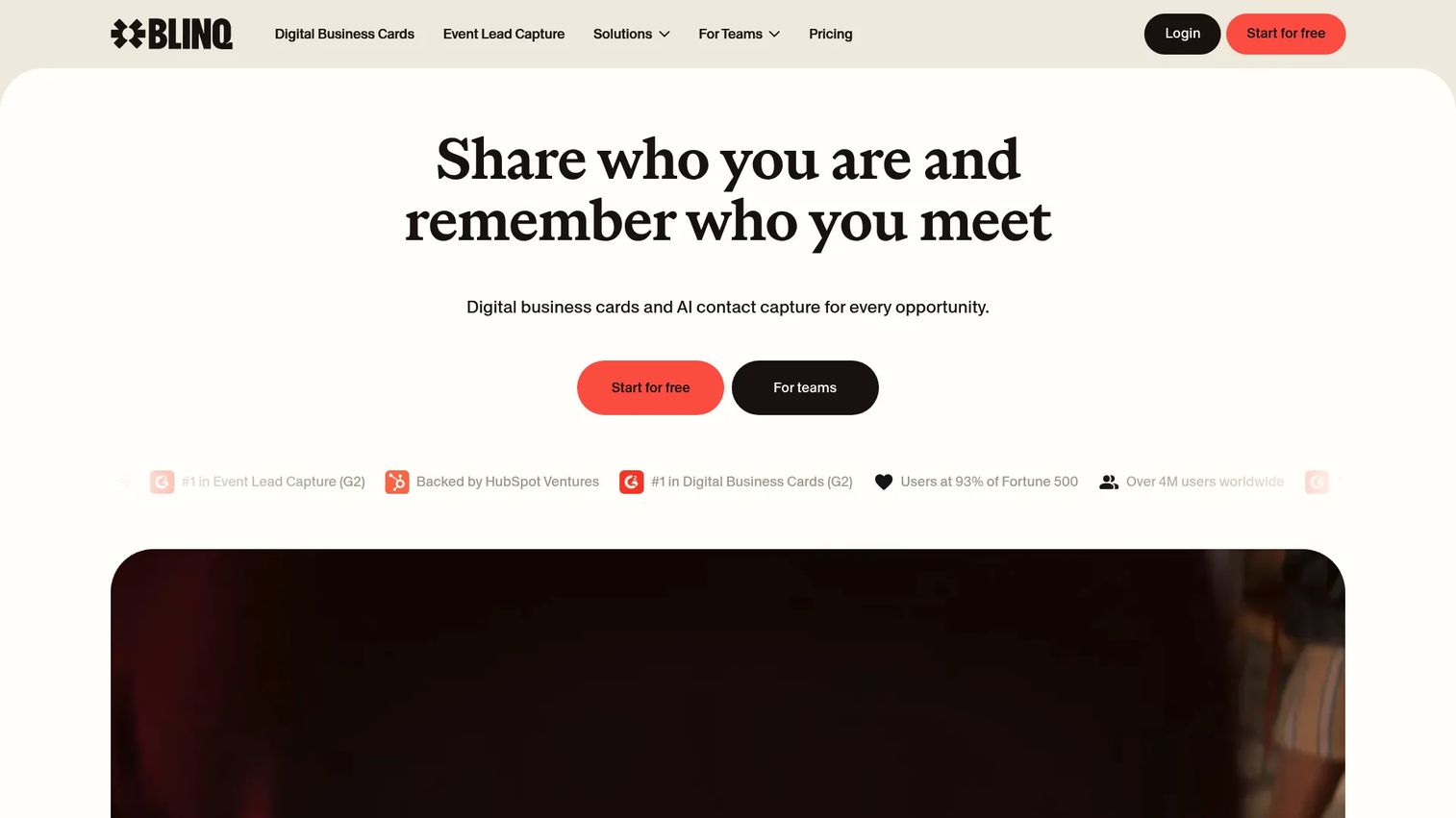
Blinq is a digital business card platform built for both solo professionals and teams that need contacts captured and synced, not just shared. It covers QR, wallet, email, SMS, and embeddable widget sharing, then layers on an AI notetaker and contact enrichment so the details you capture come in cleaner. For a sales org, the value is the team admin dashboard plus CRM sync that moves a new contact into your pipeline without manual entry.
Best for: Teams and individuals that want flexible sharing plus lead capture and CRM sync in one place.
Key strengths
- Broad sharing methods: QR, wallet, email, SMS, and widget options cover every device a prospect might use.
- AI enrichment and notetaker: captured contacts arrive enriched, and call notes attach automatically.
- Team admin and CRM sync: a central dashboard provisions cards and routes leads into your CRM.
Why choose Blinq: If your team lives in a CRM and wants captured contacts to land there automatically, Blinq's enrichment and admin controls do the routing work. The free tier lets reps test it before you commit budget, and the per-card Business pricing scales cleanly across a team.
Blinq pricing: Blinq offers a free-forever tier. Premium runs $9.99 per month billed monthly, or $7.33 per month billed annually. Business is $6.99 per month per card billed monthly, or $4.99 per month per card billed annually. Enterprise is custom, contact sales. Lead Capture credits are an optional add-on at $9.99 each.
2. Mobilo
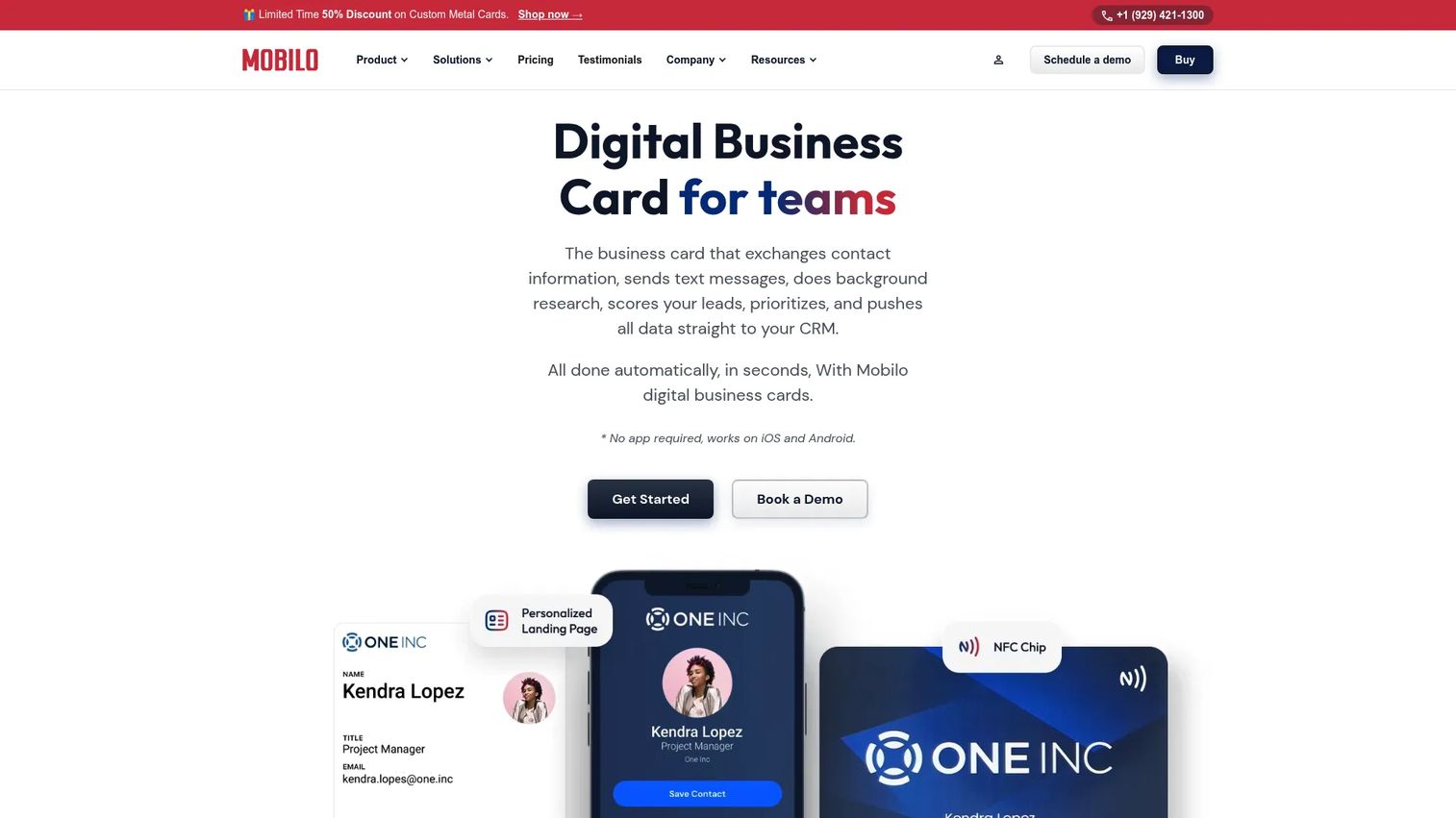
Mobilo pairs an NFC smart business card with software focused on lead capture and contact tracking, which is why it lands high for sales teams. Each card maps to a personal landing page, and a tap or QR scan moves your details over while capture pulls the prospect's back. The team story is the differentiator: admin controls, lead routing, and tracking built so a sales org can manage cards and follow-up centrally.
Best for: Teams and field reps who want NFC digital business cards with built-in lead capture and routing.
Key strengths
- NFC plus QR sharing: a tap or scan shares your profile instantly on any modern phone.
- Lead capture and tracking: captured contacts are logged and tracked, not just exchanged.
- Team admin and routing: centralized management routes leads to the right rep or sequence.
Why choose Mobilo: Sales leaders who care about turning hallway conversations into CRM records will like Mobilo's capture-and-route focus. The one-time card cost keeps individual entry cheap, and the Teams license adds the admin layer for standardized rollout.
Mobilo pricing: Mobilo's Pro cards start at $4.99 as a one-time cost. The Teams plan is $48 per employee per year, with card costs shown separately on the pricing page. A free tier is available for getting started.
3. Wave Connect
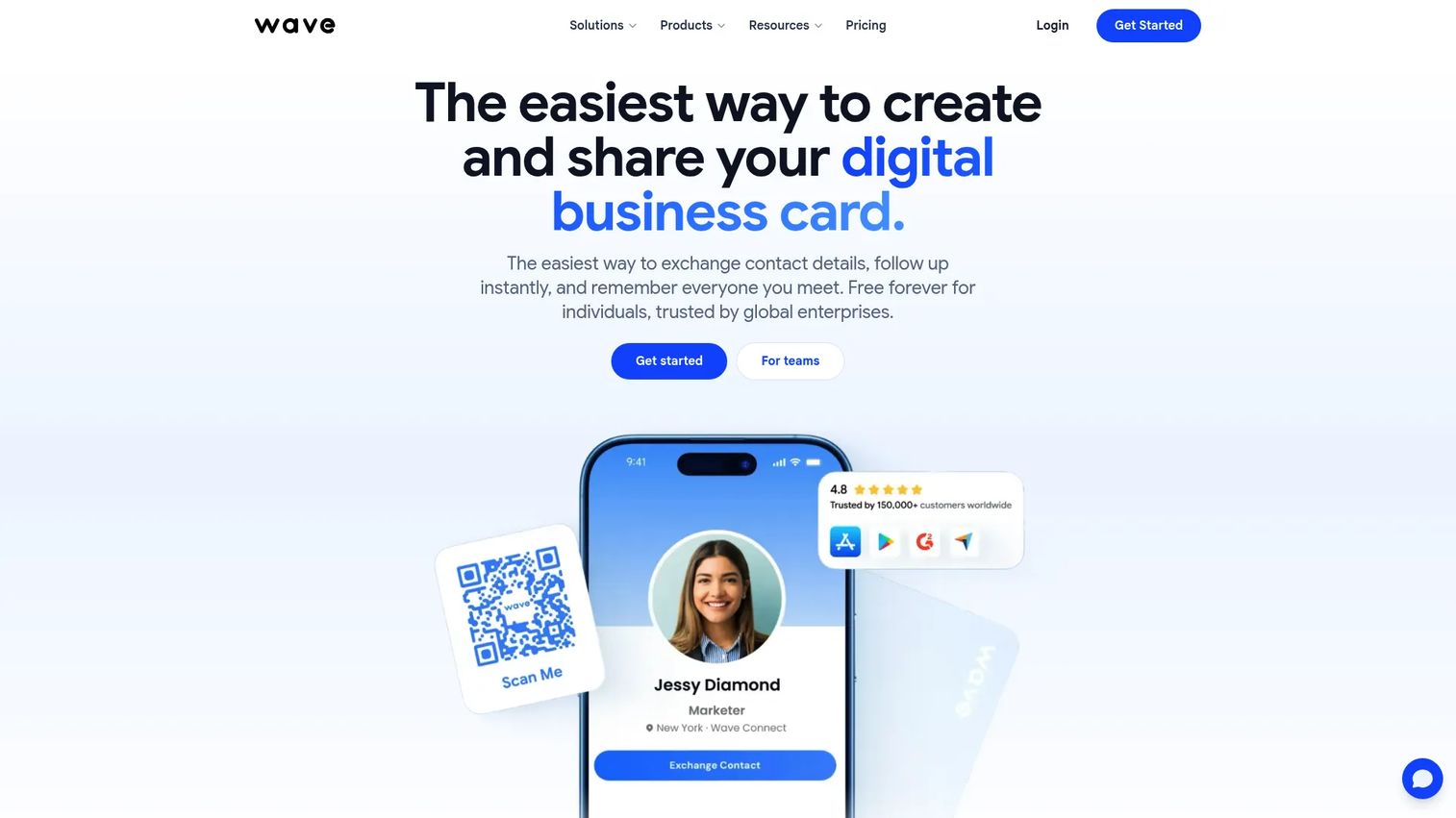
Wave Connect is a digital business card, lead capture, and contact management app that earns its spot as the best free digital business card option. The free tier gives you unlimited sharing, Apple Wallet and Google Wallet passes, QR sharing, and contact capture without paying. It also handles the practical sales tasks: remembering who you met, scanning paper cards, capturing event leads, syncing contacts to your CRM, and managing cards across a team.
Best for: Individuals and teams that want a genuinely free virtual business card with a clear path to paid team controls.
Key strengths
- Real free tier: unlimited sharing and wallet support at no cost make adoption easy.
- Wallet sharing: Apple Wallet and Google Wallet passes share your card with one tap.
- CRM sync and team management: capture event leads and route them to your CRM across the team.
Why choose Wave Connect: Start free, prove the workflow, then upgrade when you need team admin and reporting. That low-risk path makes Wave Connect easy to roll out to skeptical reps before asking finance for budget.
Wave Connect pricing: The Free plan is $0 per month. Pro is $9 per month, or $7 per month on annual billing. Teams is $7 per user per month, or $5 per user per month annually. Enterprise is custom for organizations above 100 users.
4. V1CE
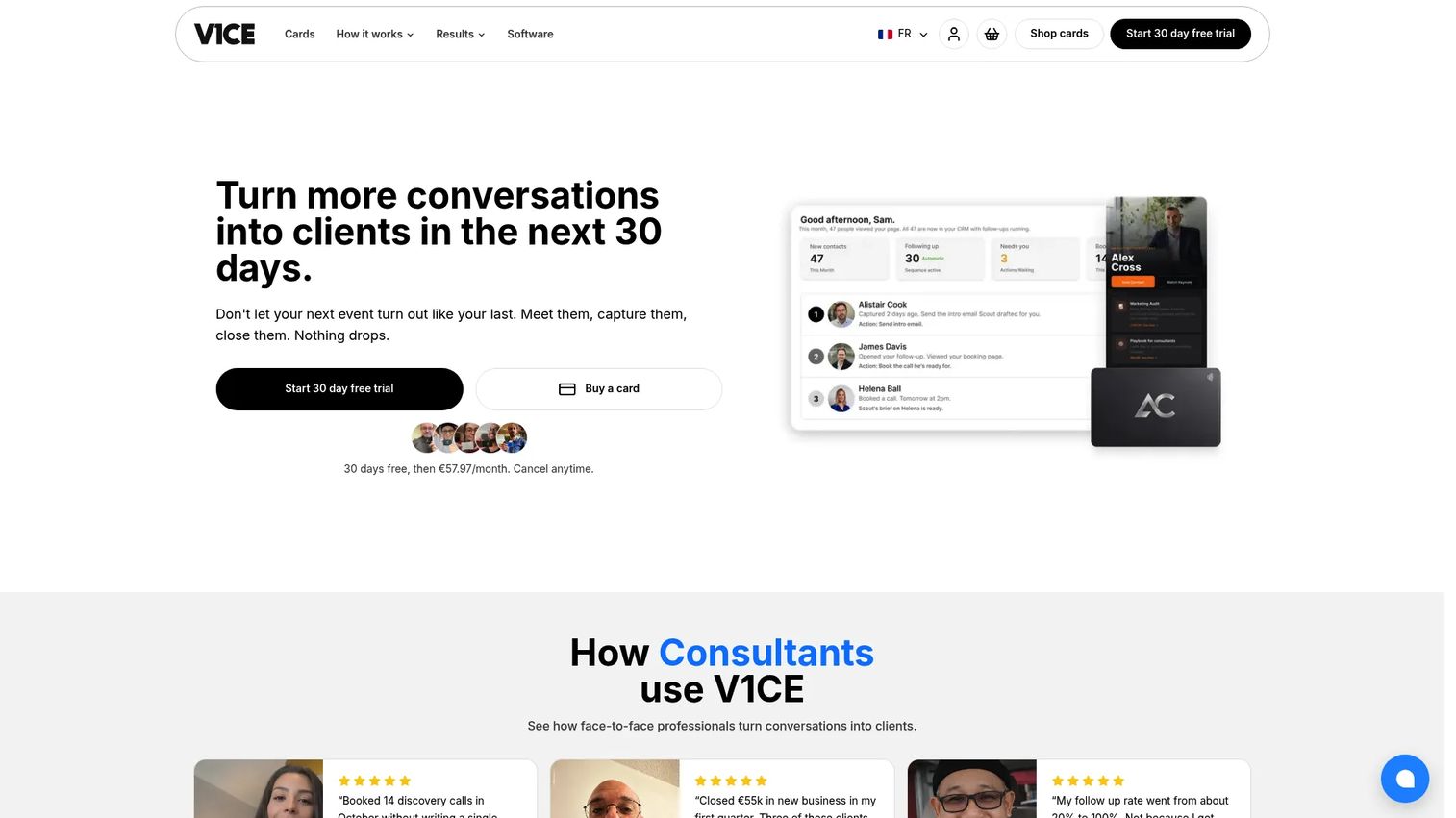
V1CE frames itself around the outcome, not the hardware: capturing the client and driving follow-up. Every V1CE card includes NFC, a QR code, and Apple or Google Wallet support, so sharing works regardless of the recipient's device. Beyond the smart card, the Client Capture OS adds the networking workflow that turns a tap into a saved contact and a next step.
Best for: Professionals who want a premium NFC card plus built-in tools to capture and follow up on contacts.
Key strengths
- Every sharing method on one card: NFC, QR, and wallet support cover all recipients.
- Client capture workflow: built-in follow-up tooling moves a contact toward a next action.
- Digital profile page: a clean, branded profile holds your details and links.
Why choose V1CE: If you want the contact-save outcome handled rather than just a card to hand out, V1CE's Client Capture layer is the draw. The premium hardware suits client-facing professionals who treat networking as a revenue motion.
V1CE pricing: The Smart Card starts from £75 as a one-time purchase. Client Capture OS is £49.99 per month after a 30-day free trial. The UK list price for the software is £49.99 per month.
5. HiHello
HiHello is a professional presence platform that spans digital business cards, email signature management, and contact management with enrichment. It is used in over 180 countries, and the company reports that 90% of the Fortune 500 have employees on HiHello, with over 400,000 companies on the platform. For security-conscious buyers, it carries an SOC 2 Type II certification and enterprise-grade security protocols.
Best for: Teams and individuals who want branded cards plus a unified professional presence and strong security.
Key strengths
- Branded cards and signatures: keep card and email signature branding consistent across the team.
- Contact management and enrichment: captured contacts come in organized and enriched.
- Enterprise security: SOC 2 Type II certification supports procurement and IT review.
Why choose HiHello: When security and a polished, consistent brand presence matter more than novelty, HiHello's certification and breadth make it an easy approval. The free Personal tier lets individuals start while teams plan a wider rollout.
HiHello pricing: Personal is free for one user. Professional is $6 per month, or $72 billed yearly. Business is $6 per user per month for 5 to 100 users. Enterprise is custom for 101 or more users and requires contacting sales.
6. Popl
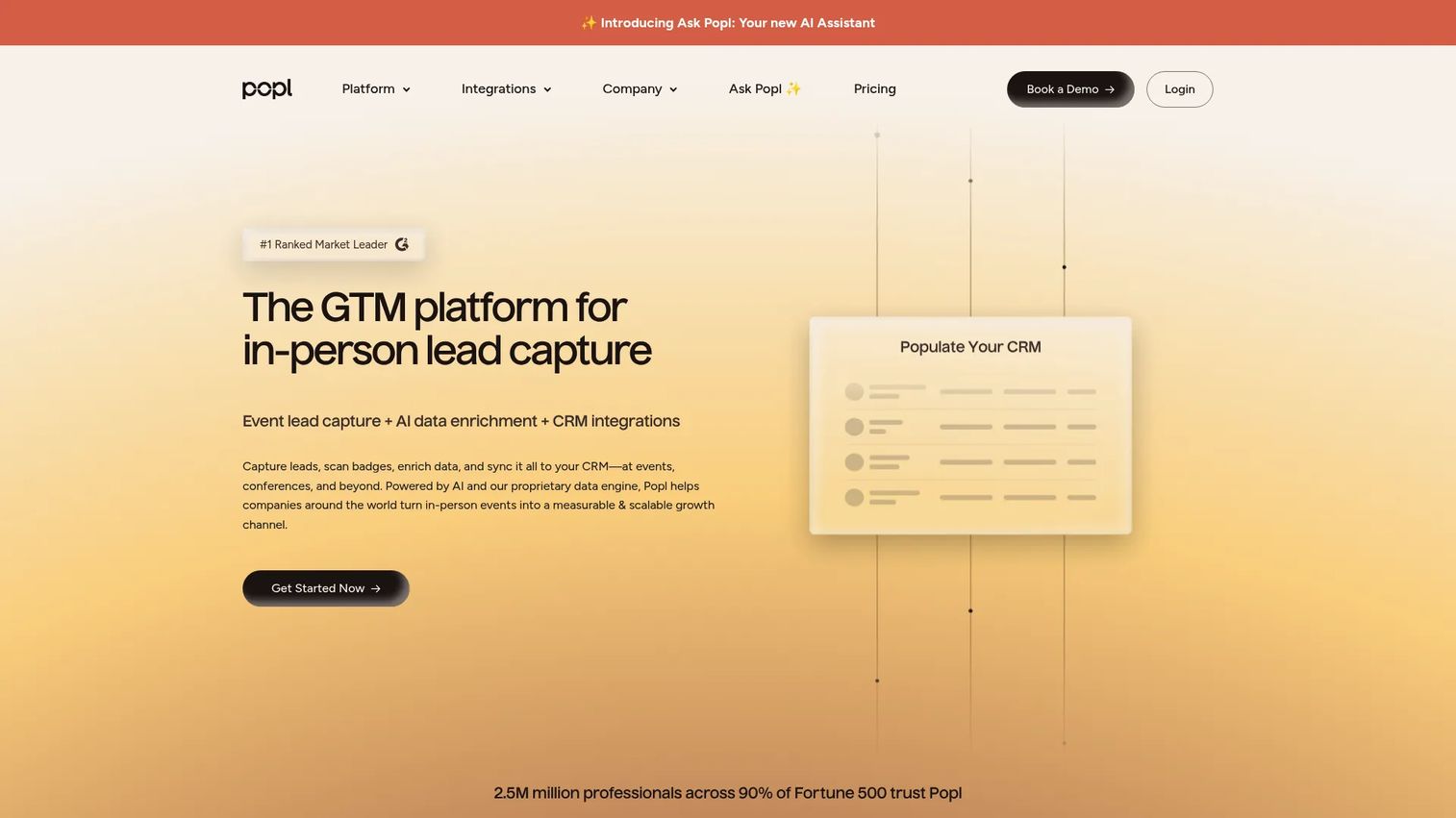
Popl positions itself as an in-person go-to-market platform rather than only a card maker. Its standouts are universal badge scanning, AI data enrichment, and CRM integrations, which makes it a strong fit for teams running events and capturing leads at volume. NFC and QR sharing handle the card side, while badge scanning lets reps pull contacts from conference badges directly.
Best for: In-person GTM and field teams that need high-volume lead capture and badge scanning at events.
Key strengths
- Universal badge scanning: capture leads straight from event badges, not just card taps.
- AI data enrichment: captured contacts are enriched before they hit your CRM.
- CRM integrations: route captured leads into your sales stack automatically.
Why choose Popl: For trade-show-heavy sales teams, the badge scanning and enrichment turn a chaotic event floor into a clean, attributed lead list. The free individual plan lets reps trial the card before the team adopts the event tooling.
Popl pricing: Popl offers a free plan for individuals. Team pricing is request-based with a custom quote, and event lead capture is usage-based. Check the pricing page for a tailored quote based on team size and event needs.
7. Uniqode
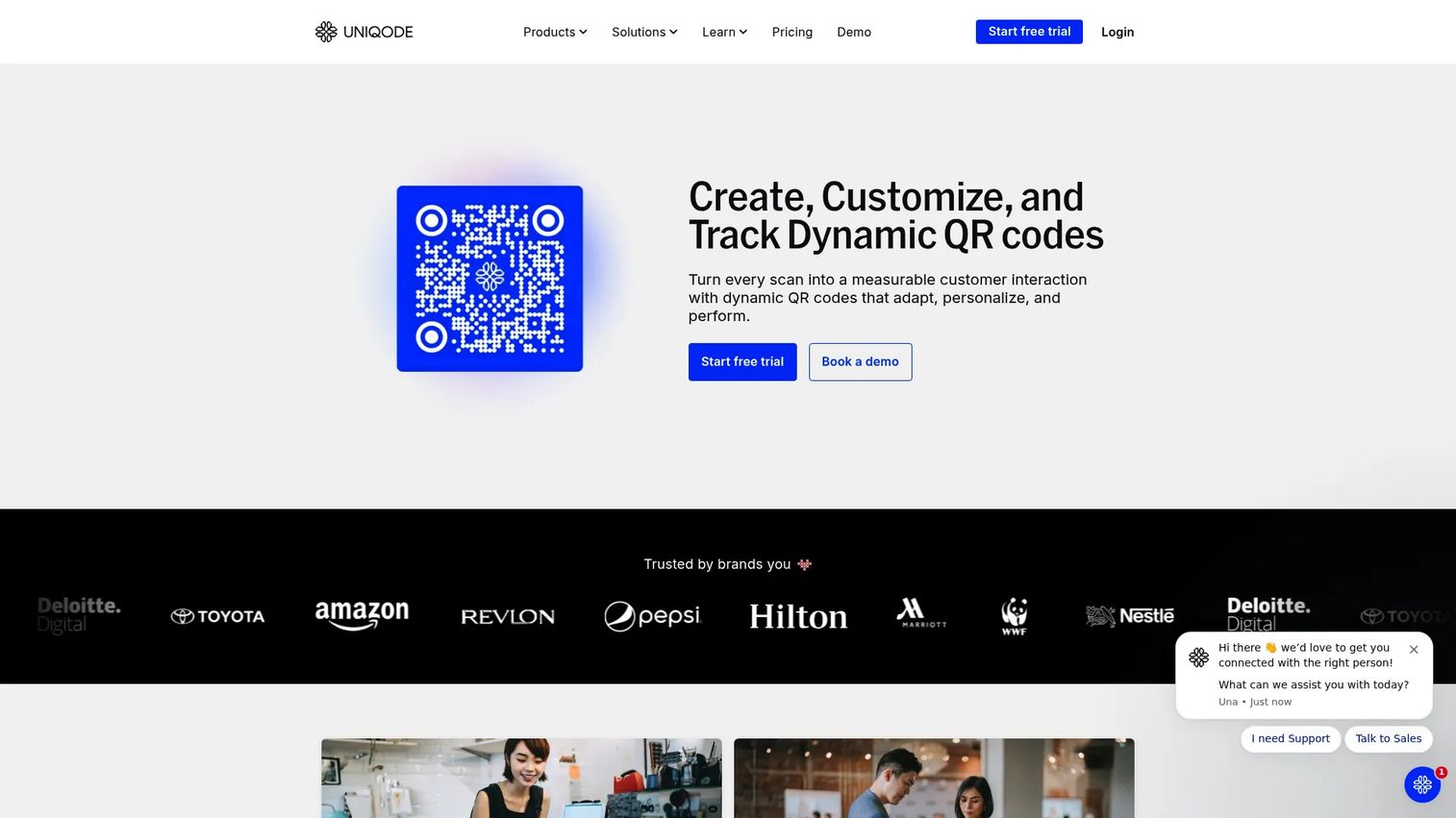
Uniqode combines QR code management and digital business cards, which makes it a fit for teams that want structured branding and governance across both. It integrates with HubSpot and Salesforce for lead sync, supports Google Workspace, Microsoft Entra ID, Okta, and Rippling for secure team management, and connects to analytics tools to track card engagement. That SSO and provisioning depth is what sets it apart for larger rollouts.
Best for: Teams that need branded QR campaigns plus scalable, governed digital business cards.
Key strengths
- SSO and team management: Entra ID, Okta, and Rippling support secure provisioning at scale.
- CRM lead sync: HubSpot and Salesforce integrations route captured contacts automatically.
- Dynamic QR plus cards: manage trackable QR campaigns and cards from one platform.
Why choose Uniqode: RevOps and IT teams that need governance, SSO, and analytics will find Uniqode built for structured rollout rather than ad hoc adoption. The free first card eases individual testing before a managed team deployment.
Uniqode pricing: Digital business cards include a free first card, with Team plans at $6 per user per month and Business+ at custom pricing. Its QR Code product line is priced separately, with Essential at $9 per month and Core at $49 per month, both billed annually.
8. Haystack
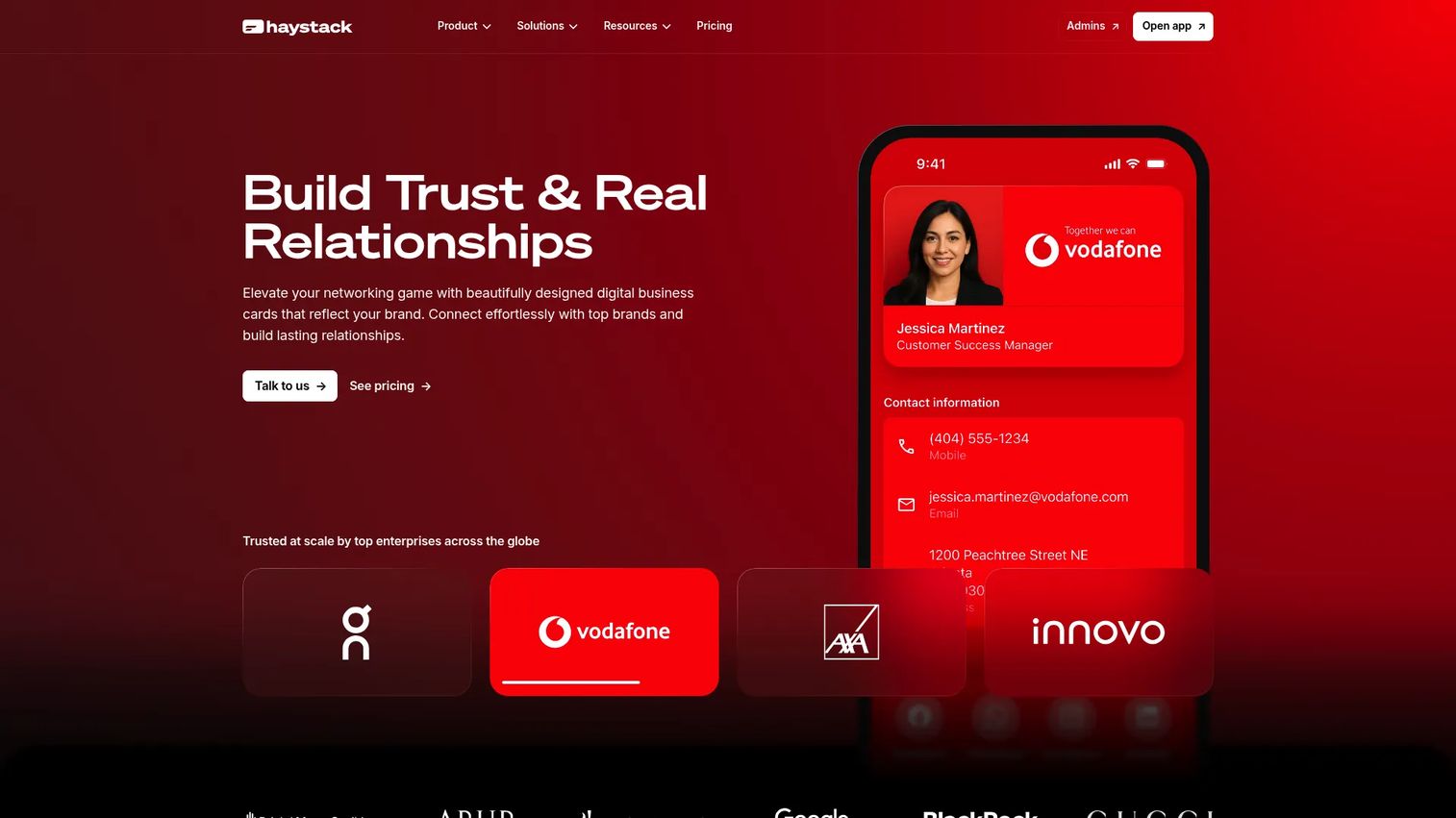
Haystack is a digital business card and contact management platform built to make networking practical, whether in person or online. The free Personal plan includes unlimited digital cards and shares, and an AI card scanner pulls details from paper cards you still receive. For teams, it adds card customization, permissions, CRM integrations, and email signatures, all of which support clean adoption across a sales org.
Best for: Teams and individuals who want easy card sharing, scanning, and CRM sync without a steep setup.
Key strengths
- Unlimited free sharing: the Personal plan gives unlimited cards and shares at no cost.
- AI card scanner: digitize paper cards you receive and pull them into contacts.
- Team controls and CRM sync: permissions, customization, and integrations support team rollout.
Why choose Haystack: Teams that want a low-friction tool reps will actually use should shortlist Haystack. The generous free tier plus affordable per-user Business pricing make it easy to scale from one rep to a full team.
Haystack pricing: Personal is free. Pro is $4.50 per user per month, and Business is $2.50 per user per month in the monthly view. Enterprise is quote-based, contact the team for pricing.
9. Dot
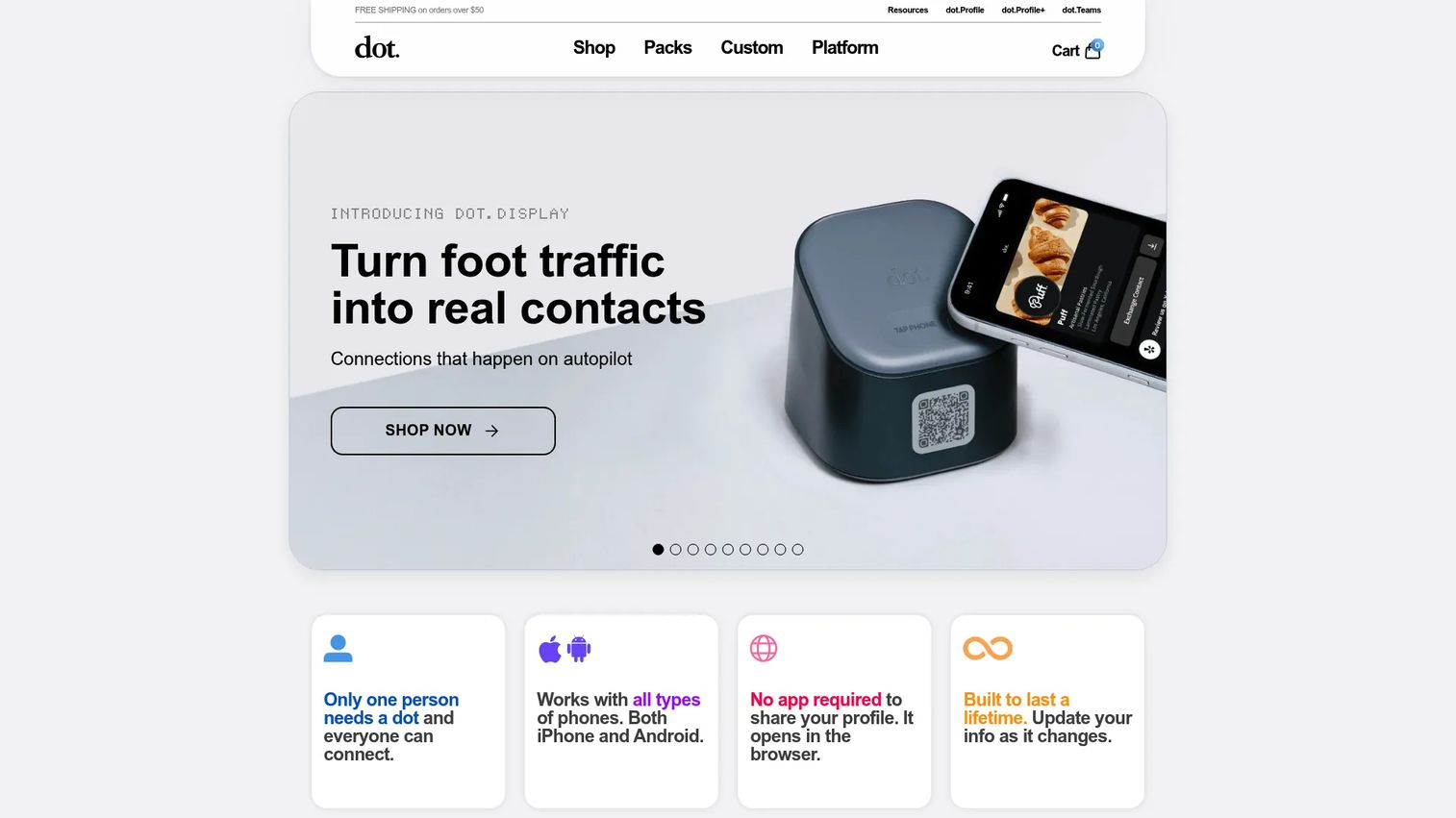
Dot takes a minimalist approach: a clean, browser-based profile paired with tap-to-share NFC and QR sharing. The customizable dot.Profile holds your contact info and links, and the recipient saves it without installing anything. For professionals who want a simple, well-designed networking utility rather than a heavy platform, Dot keeps the experience focused.
Best for: Professionals and teams who want a clean, tap-to-share card without platform complexity.
Key strengths
- NFC and QR sharing: tap or scan to share your profile on any modern phone.
- Customizable profile: the dot.Profile holds contact info and links in a clean layout.
- Team and pro plans: advanced features support professionals and small teams.
Why choose Dot: If you value design simplicity and a no-install recipient experience over a deep feature stack, Dot fits. The free-for-life profile makes it a low-commitment way to test tap-to-share networking.
Dot pricing: Individuals get a free-for-life dot.Profile with a one-time device purchase. The Professionals plan, dot.Profile+, is $15 per month. Custom devices start from $55 per card with a minimum order of five, and custom bundles start from $100 per bundle.
10. Tapni
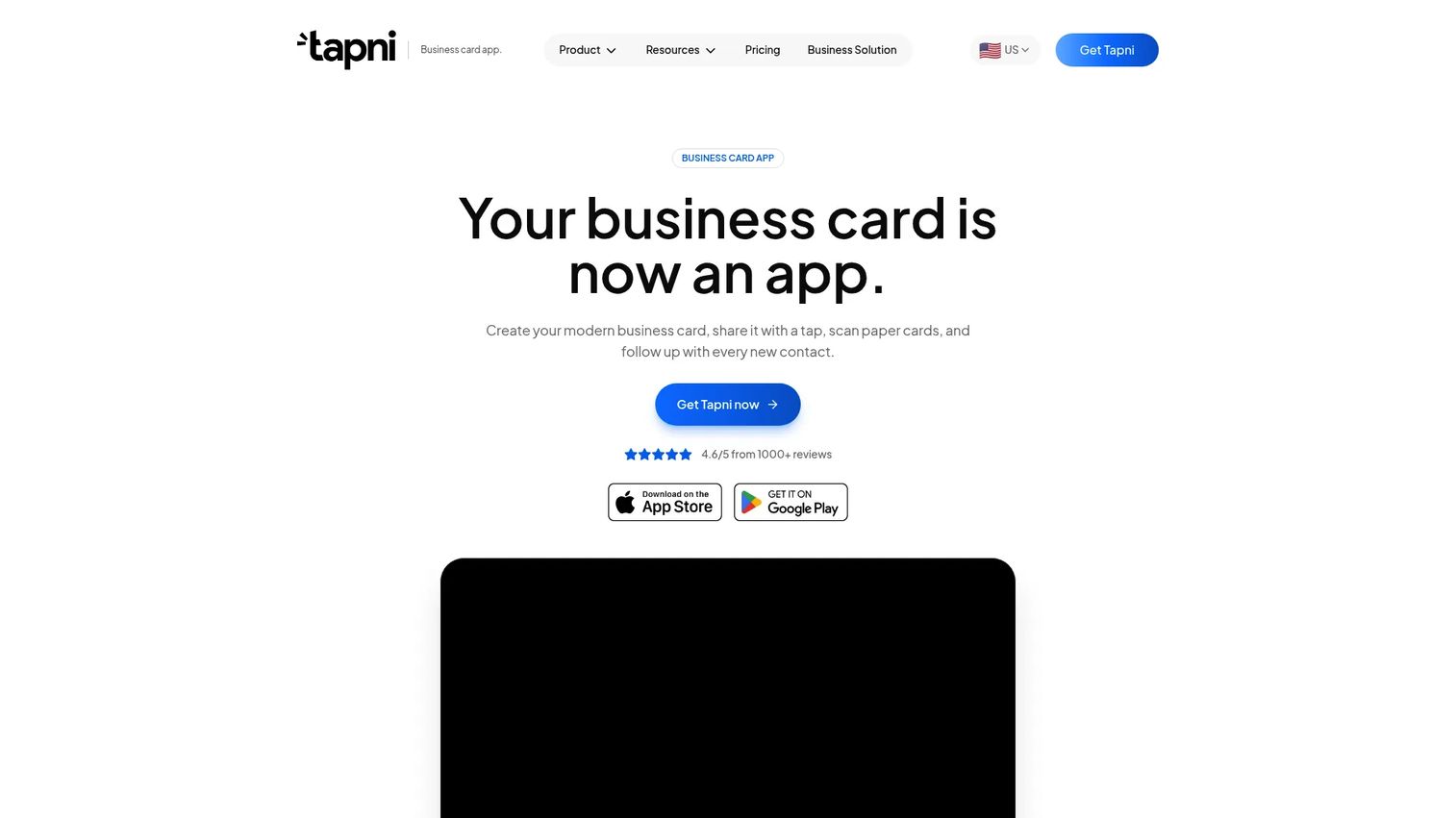
Tapni is an NFC-first digital business card platform built to turn every conversation into a saved contact, a new lead, or a follow-up opportunity. It shares via NFC and QR, scans paper business cards, and syncs leads to your CRM. A useful detail for real-world networking: the person receiving your info does not need the Tapni app, which removes a common friction point at first contact.
Best for: Sales teams and professionals who want NFC sharing with CRM lead sync and no app requirement for recipients.
Key strengths
- NFC sharing, no recipient app: share with a tap, and the other person needs nothing installed.
- Paper card scanning: digitize cards you receive and pull them into your contacts.
- CRM lead sync: captured leads route into your CRM for follow-up.
Why choose Tapni: Reps who want the contact-save outcome handled, with a frictionless recipient experience, will like Tapni's no-app sharing. The free tier for individuals plus an affordable yearly subscription make it easy to start and scale.
Tapni pricing: Tapni Pro is $49.90 per year and bundles a free NFC card. Individual cards are $49.90 as a one-time purchase, with a buy-two-get-one-free bundle at $99.80. A free app and tier are available for individual users.
What to check before you buy
Use this checklist to filter the shortlist against your team's reality.
Sharing methods and recipient experience
Confirm the tool covers the sharing methods your prospects actually use: QR code, NFC, Apple Wallet, Google Wallet, link, SMS, and email. The strongest options also work when the recipient has no app installed, which removes friction at first contact.
Lead capture and CRM sync
A card that only pushes your details out is half a tool. Verify the platform captures the other person's contact back to you and syncs it into Salesforce, HubSpot, or your sales engagement stack automatically. That sync is where follow-up actually starts.
Team rollout and governance
For a sales org, check admin provisioning, branding enforcement, permissions, SSO, and reporting. These determine whether you can deploy consistently across reps and pull engagement data leadership trusts.
Security and privacy
If procurement and IT will review the purchase, look for SOC 2 certification, data privacy controls, and access management. These matter most for enterprise rollouts where security gates the deal.
Pricing and free tier fit
Decide where a free digital business card is enough versus where you need paid team controls. A free tier is ideal for individuals and trials, but team admin, CRM sync, and SSO usually sit in paid plans. Match the tier to the rollout, not the demo.
Conclusion
The right pick comes down to who is buying and what they need saved, routed, and followed up.
For a sales team that wants contacts captured and routed into pipeline, Mobilo and Blinq lead on lead capture and CRM sync. For the best free digital business card, Wave Connect gives you wallet sharing and capture at no cost. For team rollout with SSO and governance, Uniqode is built for structured deployment. For NFC and wallet sharing on every card, V1CE pairs hardware with follow-up tooling. For enterprise security, HiHello's SOC 2 Type II certification clears procurement.
Your next step depends on your profile. A solo seller should start with a free tier from Wave Connect, Haystack, or HiHello and test the workflow. A sales team should pilot Mobilo or Blinq with a handful of reps and measure how many captured contacts reach the CRM. An enterprise should shortlist Uniqode and HiHello and run them past security early.
Whichever you choose, judge it on one outcome: how many real contacts end up saved, attributed, and worked. That is the number that turns networking into pipeline.
Start your journey with Guideflow today!
FAQs
For sales teams, Mobilo and Blinq stand out because they focus on lead capture and CRM sync, not just sharing a card. The best fit depends on your stack: pick the tool that routes captured contacts into your CRM automatically and offers the team admin controls your rollout needs.
Yes, when you choose a platform with proper security controls. Look for SOC 2 Type II certification, data privacy controls, and access management. HiHello, for example, carries SOC 2 Type II certification and enterprise-grade security protocols, which makes it easier to clear procurement and IT review.
Most do. Sharing typically works through a QR code scan, NFC tap, wallet pass, or link, and the recipient saves your contact without installing anything. Tapni, for instance, explicitly notes the person receiving your info does not need its app, which removes friction at first contact.
Yes. Several platforms support Apple Wallet and Google Wallet passes, so your card lives in the recipient's phone wallet and shares with one tap. Wave Connect and V1CE both include wallet support, making it easy to share your card on any device.
A QR code business card shares your profile when someone scans a code with their camera, no special hardware required. An NFC business card shares when someone taps a smart card or phone to their device. QR works on any camera-equipped phone; NFC needs an NFC-enabled device but is faster in person. Most strong tools support both.
Yes. Team and enterprise plans add admin provisioning, branding enforcement, permissions, SSO, and reporting. Uniqode, HiHello, and Wave Connect all offer team tiers built for standardized rollout, so every rep represents the brand consistently and captured leads land in one place.
Yes. Wave Connect, Haystack, and HiHello all offer genuine free tiers with sharing and contact capture. A free digital business card is ideal for individuals and trials. Teams usually upgrade to paid plans when they need CRM sync, admin controls, or SSO across reps.
Blinq, Mobilo, Uniqode, and Tapni all emphasize CRM sync. Uniqode integrates with HubSpot and Salesforce for lead sync, while Blinq and Mobilo route captured contacts into your pipeline automatically. Pick the tool that connects to your specific CRM and routes leads without manual entry.