You run inventory in one system, deals in another, accounting in a third, and follow-up lives in a rep's inbox. Nobody has a single view of the store. When a manager asks why gross is down this month, the answer takes three exports and a spreadsheet to reconstruct. That gap is where money leaks.
Dealership management software exists to close that gap. It centralizes inventory, CRM, accounting, service, parts, and reporting so one system of record drives the whole store instead of a stack of disconnected tools. The pressure to consolidate is real: roughly 95% of dealerships now use a dealer management system to run operations, inventory, and digital leads, according to Research Nester (2025). The same firm projects the automotive DMS market to reach USD 13.1 billion by 2035 at a 9.3% CAGR from 2026 to 2035.
The problem most buyers hit is that "DMS" means very different things depending on your model. A 200-unit franchise store, a two-person used lot, and a BHPH operation carrying its own paper all need different things from the same category. Buy for the feature list and you get a system nobody adopts. Buy for your actual workflow and the software pays for itself in cleaner data and fewer manual handoffs.
This guide is written for operators thinking about scale, not just software shopping. The same logic that makes a SaaS founder consolidate a fragmented stack applies here: fewer tools, more signal, one place to see what's working.
What's inside
This guide compares 7 dealership management software platforms across the models that actually buy them: franchise stores, independent used car lots, BHPH operations, and multi-location groups. We chose tools based on four criteria that matter for operational scale: workflow breadth across sales, service, parts, and accounting; cloud and remote access; inventory management and CRM depth; and integration coverage for lenders, OEMs, payments, and websites. Where a platform leans into BHPH software, mobile access, or dealer websites, we call it out. Every pricing figure and rating here is pulled from current public sources, and we note where a vendor keeps pricing behind a sales conversation.
TL;DR
- Best overall for broad, cloud-based operations: Dealertrack, for franchise and larger stores that want DMS plus F&I and lender integrations in one place.
- Best all-in-one for used car dealers: DealerCenter, covering DMS, dealer CRM, inventory, marketing, websites, and BHPH software with a mobile app.
- Best modular stack for growing lots: AutoManager, letting dealers buy DMS, website, marketing, and CRM as separate modules.
- Best low-cost cloud-based option: DealerClick, with desking, CRM, inventory, and website tools.
- Best for BHPH and financing-heavy workflows: FEX DMS, built for collections, desking, and portfolio-oriented dealers.
- Best for enterprise and digitally mature groups: Tekion for an AI-native retail platform, and Reynolds and Reynolds for established process depth.
What dealership management software is
Dealership management software is a system that runs the full operational lifecycle of an auto dealership, from vehicle acquisition and sales through service, parts, accounting, and reporting, on a single platform. It replaces the patchwork of point tools and spreadsheets most stores accumulate as they grow.
A DMS is not just a sales tool. It touches every department in the store:
- Sales and desking: deal structuring, quotes, and paperwork
- Service and parts: repair orders, scheduling, and parts inventory
- Accounting: deal processing, general ledger, and reconciliation
- Inventory management: vehicle acquisition, valuation, and merchandising
- CRM: lead management, follow-up, and customer records
- Dealer websites: listings, digital retailing, and lead capture
- Reporting and analytics: profitability, aging, and operational dashboards
- Integrations: OEMs, lenders, payment processors, and third-party tools
Core capabilities to expect
The best dealer management systems share a common backbone. When you evaluate any automotive dealership software, look for these:
- Inventory management and merchandising with VIN scanning and valuation
- Dealer CRM and lead management across web, phone, and walk-in sources
- Service, parts, and repair order workflows tied to the same records
- Accounting and deal processing so finance is not a separate silo
- Reporting and analytics that surface bottlenecks and margin leaks
- Integrations with lenders, OEMs, payment processors, and dealer websites
- Mobile app and remote access for managers who are not chained to a desk
Cloud-based deployments now account for about 62% of dealer management system adoption versus on-premise, according to Global Growth Insights (2025). That shift is why remote access and mobile support show up on nearly every buyer's shortlist.
When to use dealership management software
Not every store needs a full platform on day one. Here is how to know you have crossed the line.
You have outgrown spreadsheets and point tools
When inventory lives in one spreadsheet, deals in another, and follow-up in someone's head, errors multiply. Duplicate data entry eats hours. A lead falls through because nobody owned the follow-up. If your team is re-keying the same VIN into three systems, a unified dealer management system stops the leak.
You need one system for sales, service, and accounting
Unified data is the whole point. When a deal closes, the accounting entry, the inventory update, and the customer record should all move together. That is how managers get real-time visibility instead of month-end surprises. Clean handoffs between departments are the difference between a store that scales and one that runs on heroics.
You want better reporting and fewer blind spots
You cannot fix what you cannot see. Reporting and analytics dashboards let owners and managers spot aging inventory, thin gross, slow-paying accounts, and underperforming reps before they become quarterly problems. If your best insight into store health is a gut feeling, that is the trigger to move.
Comparison table
Here is how the 7 platforms stack up. Pricing reflects current public sources; several vendors route pricing through sales, which we note. Ratings come from each tool's live G2 listing where available.
| # | Product | Intent | Key use case | Pricing | G2 rating |
|---|---|---|---|---|---|
| 1 | Dealertrack | Franchise and larger dealers | Integrated DMS with F&I and lender workflows | Contact sales | 4.4/5 |
| 2 | DealerCenter | Independent and used car dealers | All-in-one DMS, CRM, inventory, websites, BHPH | Websites from $75/mo | 4.6/5 |
| 3 | AutoManager | Independent and franchise dealers | DMS, website, marketing, and CRM stack | From $70/mo | Not enough reviews |
| 4 | DealerClick | Cost-sensitive independent dealers | Cloud DMS with desking, CRM, websites | From $695 | 5.0/5 |
| 5 | FEX DMS | BHPH and independent dealers | Web-based DMS with collections and desking | Contact sales | Not listed |
| 6 | Tekion | Enterprise and dealer groups | AI-native end-to-end retail platform | Contact sales | 4.4/5 |
| 7 | Reynolds and Reynolds | Enterprise dealerships | Established retail management system | Contact sales | Not listed |
1. Dealertrack
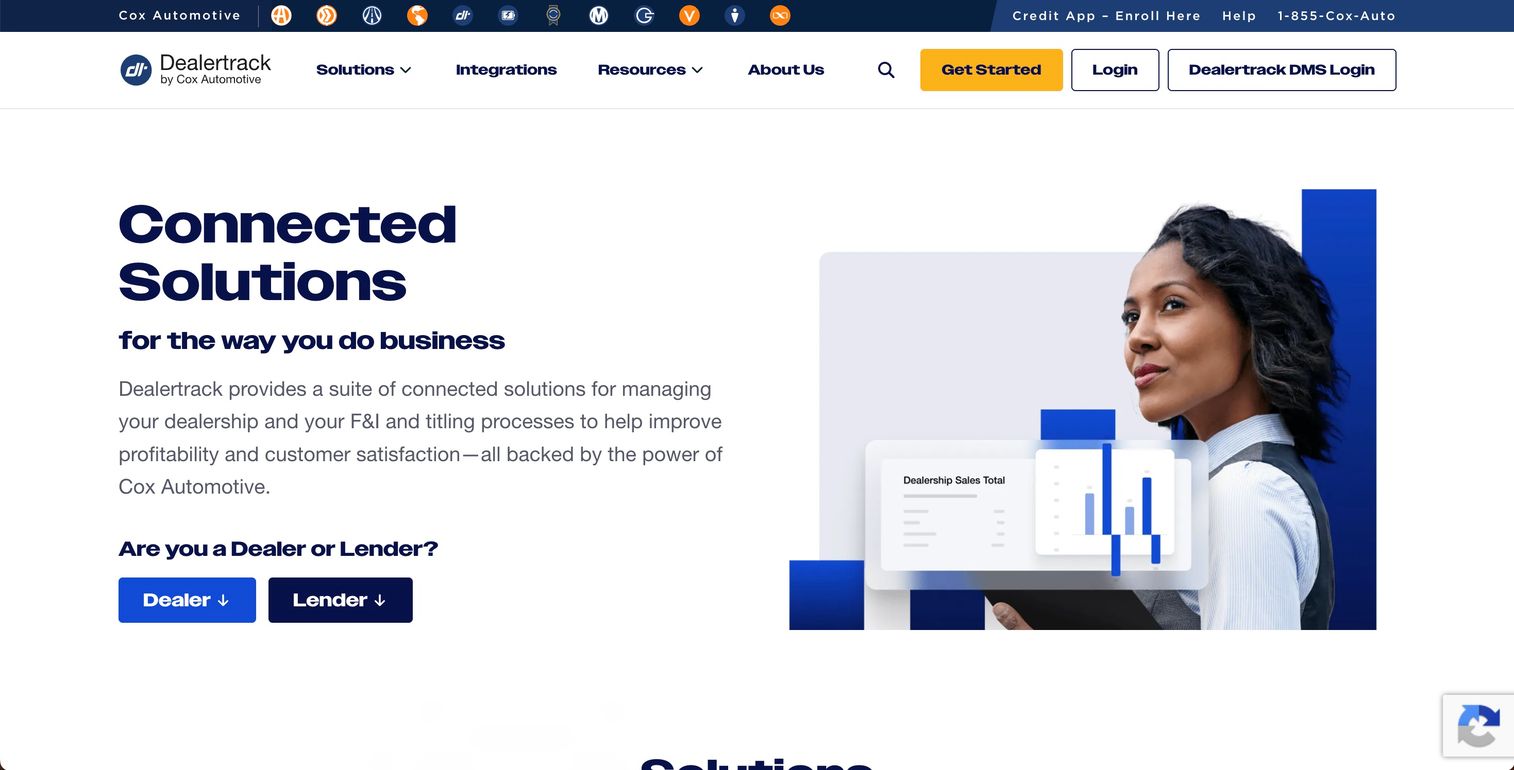
Dealertrack provides automotive retail software for dealers and lenders, built around an integrated dealer management system with strong F&I, credit application, and contracting workflows. It is a cloud-based DMS designed to run core dealership operations while connecting to a wide lender network, which is why it shows up most often on franchise and larger-store shortlists. The platform emphasizes secure remote access, digital contracting, and compliance built into the deal flow.
Best for: Auto dealerships that need an integrated DMS and F&I workflow with deep lender connectivity.
Key strengths
- Integrated F&I and lender network: Credit applications, contracting, and remote signing tie directly into the deal, reducing manual rework across finance.
- Cloud-based remote access: Managers and staff run workflows from anywhere, which matters as more of the store moves off-premise.
- Compliance built into the flow: Contracting and F&I steps carry compliance controls so paperwork holds up without a separate process.
Why choose Dealertrack: If your store lives and dies by the F&I office and you want lender connectivity baked into the DMS rather than bolted on, Dealertrack fits. It suits franchise and higher-volume dealers who value an established, integration-heavy platform over the lowest sticker price.
Dealertrack pricing: Dealertrack does not publish general product pricing on its site. Pricing inquiries route to sales through a contact form, so budget planning requires a direct conversation. The platform holds a 4.4/5 rating on G2 for its DMS product.
2. DealerCenter
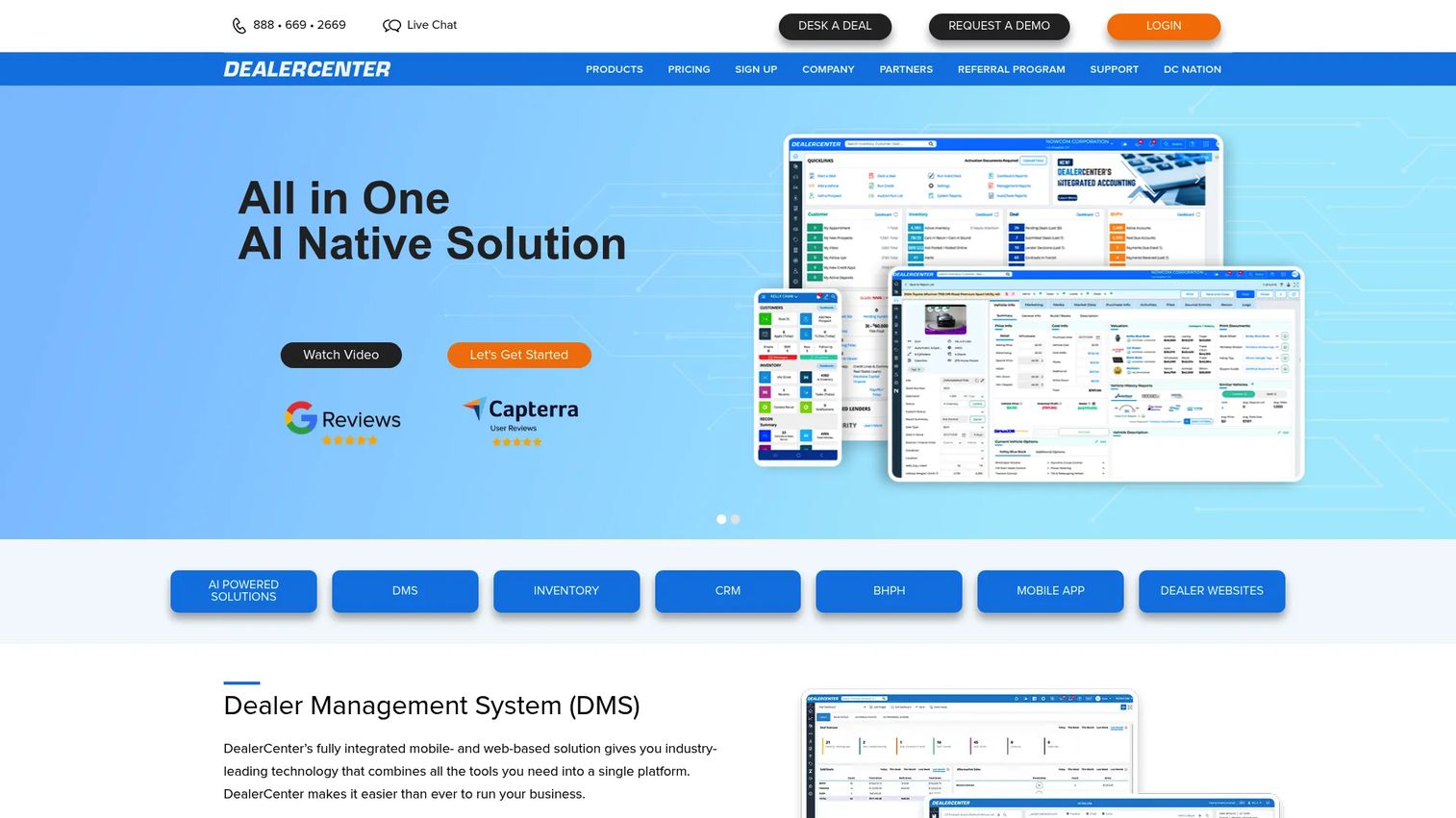
DealerCenter is cloud-based dealer management software built for independent auto dealers who want one platform instead of a stitched-together stack. It combines a DMS with dealer CRM, inventory management, digital marketing, dealer websites, BHPH software, and a mobile app. That breadth is the draw for used car dealers and BHPH operations that need sales, financing, and marketing in one place without paying for enterprise complexity.
Best for: Independent used car dealers needing an all-in-one DMS and CRM platform.
Key strengths
- All-in-one coverage: DMS, CRM, inventory, marketing, and websites live together, so used car dealer software does not fragment across vendors.
- BHPH and financing support: Built-in workflows for buy-here-pay-here dealers who carry their own paper.
- Mobile app access: Manage inventory, leads, and deals from a phone, useful for lots where the manager is on the floor, not at a desk.
Why choose DealerCenter: For an independent or BHPH lot, DealerCenter consolidates the tools that would otherwise be four separate subscriptions. It earns a strong 4.6/5 on G2, and the all-in-one framing lowers the operational overhead of running multiple point systems.
DealerCenter pricing: DealerCenter publishes website plans starting at $75 per month, with a Premium tier at $75/mo and a Pro tier at $99/mo billed monthly. Broader DMS and CRM pricing is not publicly listed and requires contacting the vendor. There is no free tier.
3. AutoManager

AutoManager is a dealer software provider offering a DMS (DeskManager), dealer websites and inventory marketing (WebManager), and an automotive CRM with text marketing (Selly). The modular structure lets a dealer buy the piece they need now and add others as they grow, which suits smaller and independent lots that do not want to commit to a full platform upfront.
Best for: Independent and franchise dealers needing DMS, website, marketing, and CRM in one stack.
Key strengths
- Modular pricing: Buy the DMS, website, or CRM separately, so a small dealer starts affordable and scales.
- Text marketing built into CRM: Selly ties lead management and SMS follow-up together for stores that live on quick response.
- Inventory marketing: WebManager pushes inventory to dealer websites and listings from the same system.
Why choose AutoManager: AutoManager fits dealers who want to start with one module and expand. The transparent, per-module pricing makes it easy to match spend to store size, which is rare in a category that usually hides pricing behind sales.
AutoManager pricing: AutoManager publishes starting prices by module: Car Dealer Website & Marketing from $70/month, the Dealer Management System from $88/month, Automotive CRM & Text Marketing from $140/month, and a combined DMS + Dealer Website package from $144/month. There is no free tier. The G2 seller profile does not yet show enough reviews for a rating.
4. DealerClick
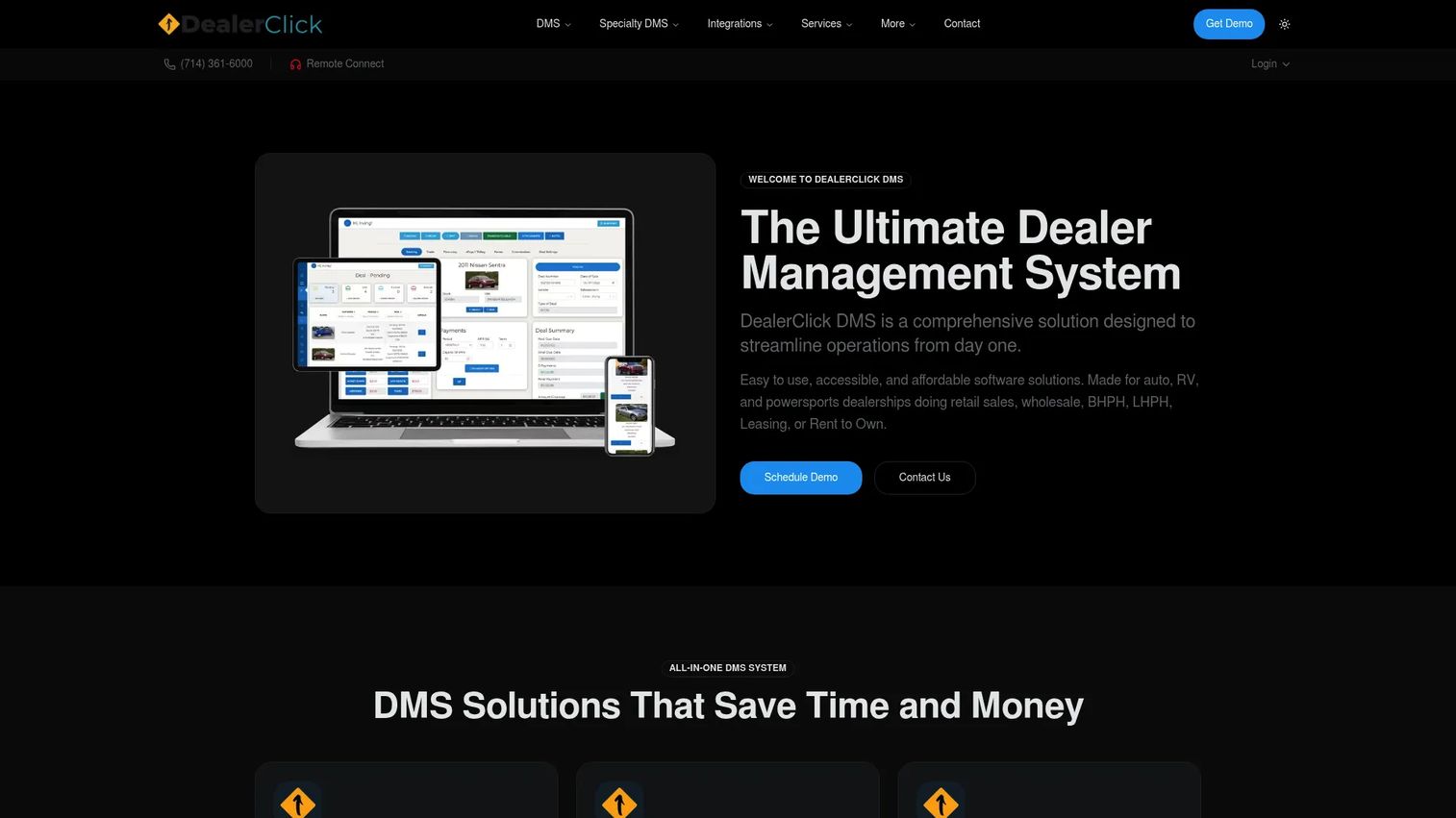
DealerClick is cloud-based dealership management software serving auto, RV, trailer, motorcycle, and powersports dealers. It bundles DMS and desking tools with CRM, inventory management, and dealer website and digital retailing features. The cloud-based, lower-cost positioning makes it worth a look for cost-sensitive independent dealers who still want a full toolset.
Best for: Independent dealerships needing an all-in-one DMS with CRM, inventory, and website tools.
Key strengths
- Cloud-based access: Run the store from anywhere without on-premise hardware.
- Multi-vertical support: Works across auto, RV, trailer, motorcycle, and powersports, useful for mixed-inventory lots.
- Desking plus CRM and websites: Deal structuring, lead management, and digital retailing in one system.
Why choose DealerClick: DealerClick appeals to dealers who want broad functionality without the enterprise price tag. It holds a 5.0/5 rating on G2, and the multi-vertical support is a genuine differentiator for dealers selling more than just cars.
DealerClick pricing: Capterra lists DealerClick starting at $695 per user as a one-time cost. DealerClick's own site references pricing but does not publish a readable dollar figure on the pages reviewed, so confirm current terms directly with the vendor. There is no free tier.
5. FEX DMS
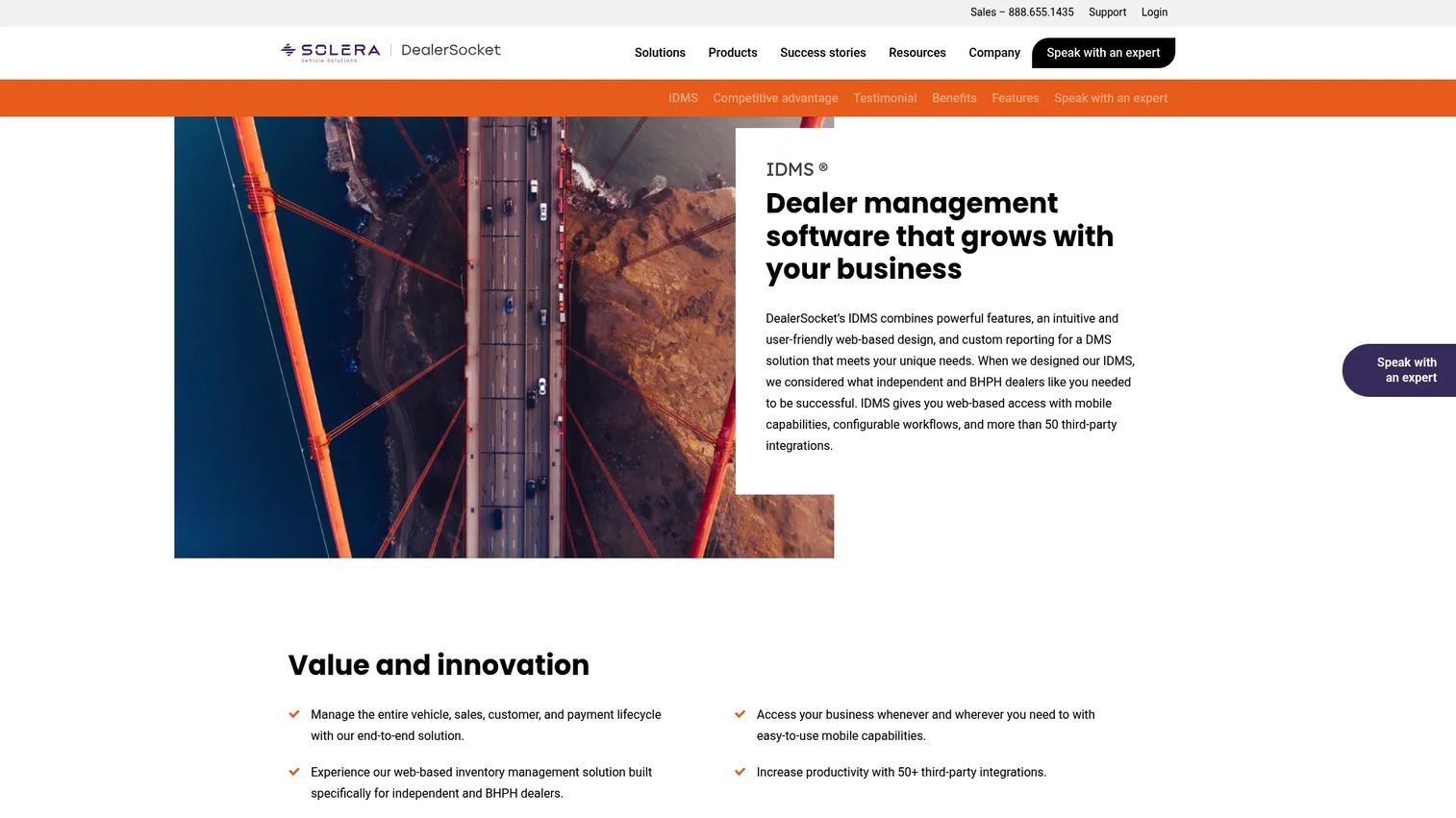
FEX DMS is a web-based dealer management system built for independent and buy-here-pay-here auto dealers. It covers inventory management, vehicle valuation, desking, accounting, and collections workflows. The FEXDMS site now redirects to DealerSocket IDMS pages, where the product capabilities are documented. For financing-heavy stores, the collections and portfolio-oriented workflows are the reason to evaluate it.
Best for: Independent and buy-here-pay-here auto dealerships needing an integrated DMS.
Key strengths
- Collections and BHPH workflows: Purpose-built for dealers carrying their own notes and managing payment portfolios.
- Web-based access: Run desking, accounting, and inventory from any browser.
- Vehicle valuation tools: Built-in valuation supports acquisition and pricing decisions.
Why choose FEX DMS: FEX DMS fits BHPH-focused dealers whose operations revolve around financing and collections rather than high-volume new car sales. If your store is as much a lender as a retailer, the collections depth is the differentiator.
FEX DMS pricing: No public first-party pricing is displayed; the product now routes through DealerSocket IDMS, which is sales-led on pricing. Contact the vendor for current terms.
6. Tekion
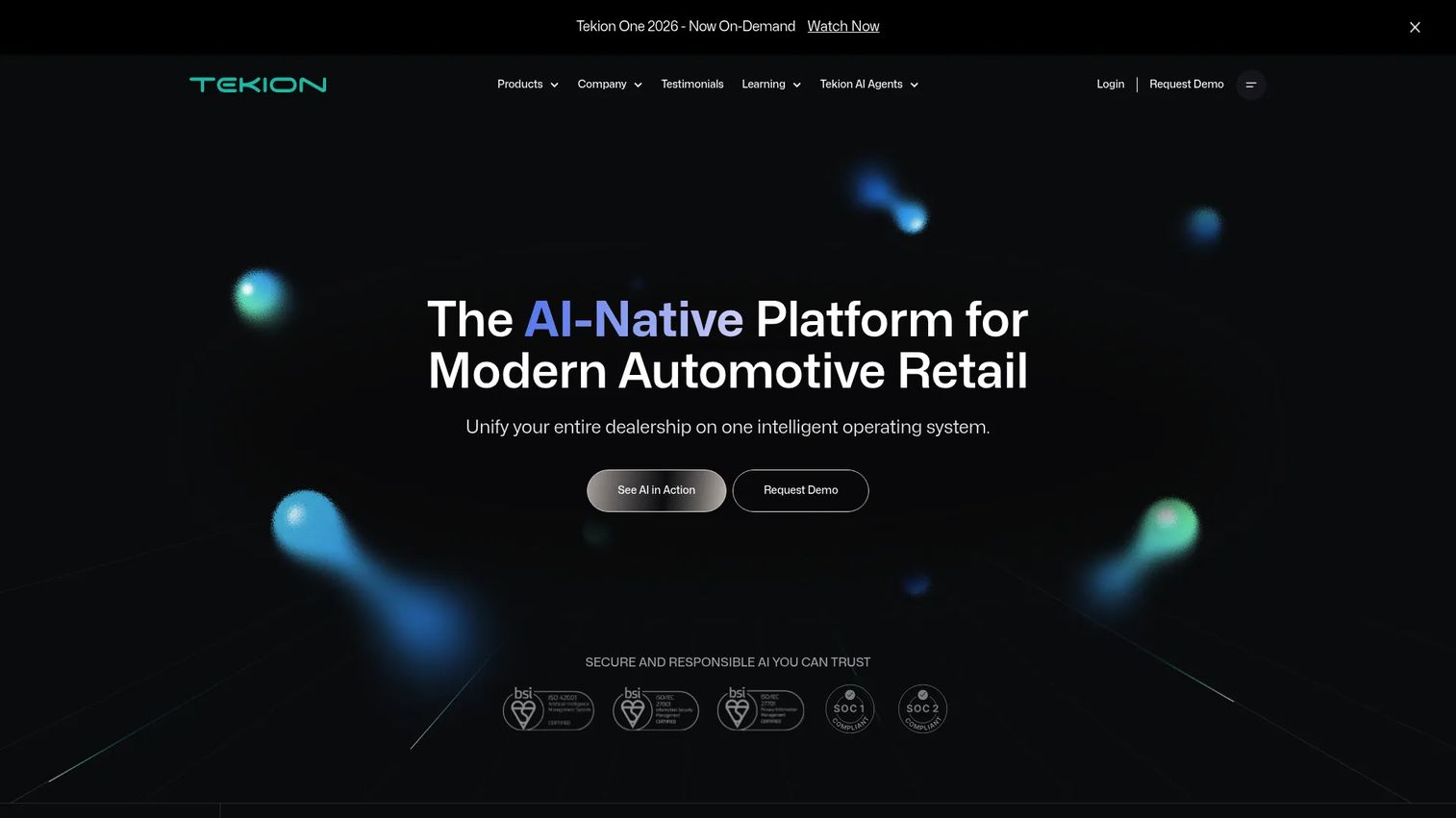
Tekion is an AI-native automotive retail platform that unifies DMS, CRM, service, payments, payroll, and analytics on one system. Its T1 AI interface lets staff ask questions, make decisions, and act across dealership workflows without hopping between modules. For larger, digitally mature dealer groups pursuing dealership transformation, Tekion positions itself as an end-to-end operating platform rather than a stack of connected tools.
Best for: Auto dealerships and dealer groups needing an AI-native end-to-end retail operating platform.
Key strengths
- Unified platform: DMS, CRM, service, payments, payroll, and analytics live on one system, cutting integration overhead.
- AI-native interface: The T1 assistant surfaces answers and actions across workflows in real time.
- Digital retail and service: Embedded payments and real-time workflows support modern buying and service experiences.
Why choose Tekion: Tekion suits groups that want to replace a legacy stack with a single modern platform and are ready to invest in the transition. The analytics depth and unified data model give leadership real-time visibility across locations, which matters for multi-store operations.
Tekion pricing: Tekion does not publish pricing. The site directs visitors to request a demo or contact sales. It holds a 4.4/5 rating on G2.
7. Reynolds and Reynolds
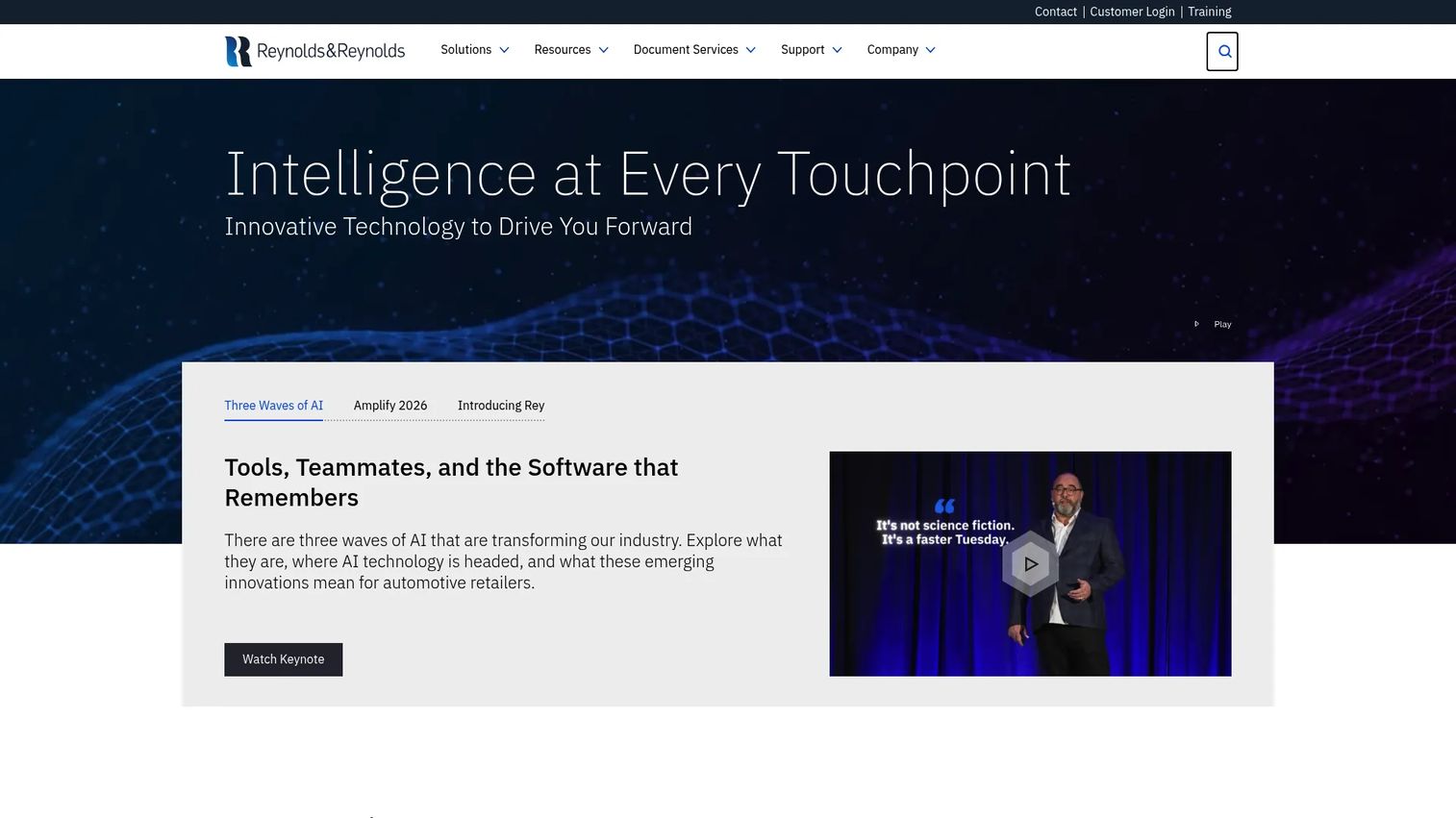
Reynolds and Reynolds provides software and services for automotive retailers centered on its Retail Management System. The company is one of the longest-standing names in the DMS space, with deep process coverage across sales, parts, finance, and service, plus service and support tooling. For dealerships that prioritize established infrastructure and process rigor over the newest interface, Reynolds and Reynolds is a known quantity.
Best for: Automotive dealerships needing an integrated dealership management platform with established process depth.
Key strengths
- Retail Management System: A mature, integrated core covering the full dealership operation.
- Process depth across departments: Sales, parts, finance, and service run on the same established backbone.
- Service and support tooling: Long-standing support infrastructure for stores that value stability.
Why choose Reynolds and Reynolds: Reynolds and Reynolds fits dealerships that value process rigor, accounting control, and a proven platform over rapid iteration. Larger stores and groups that have run legacy systems for years and want continuity tend to shortlist it.
Reynolds and Reynolds pricing: Pricing is sales-led and not publicly displayed. Contact the company directly for current terms.
Considerations before you buy
A DMS decision touches every department, so the evaluation should be as much about workflow fit as feature count. Here is what to verify before you sign.
Workflow fit over feature count
The longest feature list rarely wins. Map your actual store workflow first, sales, service, accounting, inventory, then check which platform matches how your team already works. A tool that forces a new process is a tool nobody adopts.
Integration coverage
Confirm the specific lenders, OEMs, payment processors, and dealer website providers you use are supported. A DMS that does not connect to your lender network or accounting stack creates the same manual handoffs you are trying to eliminate.
Cloud access and mobile support
Decide how much of your operation runs off-premise. If managers work the floor or you run multiple locations, cloud access and a usable mobile app move from nice-to-have to requirement.
BHPH and financing depth
If you carry your own paper, collections and portfolio management are not optional. Verify that the platform handles payment tracking, collections workflows, and the reporting your financing model needs.
Implementation and adoption
Ask about onboarding time, data migration, and training. The best software fails if the team never fully adopts it. Factor in the real cost of getting live, not just the monthly subscription.
Conclusion
The right dealership management software depends entirely on your model. For franchise and larger stores that want integrated F&I and lender connectivity, Dealertrack is the natural starting point. Independent and used car dealers get the broadest all-in-one coverage from DealerCenter, while DealerClick serves cost-sensitive lots that want a full toolset without giving up core functions. AutoManager fits dealers who want to buy modules as they grow. FEX DMS is built for BHPH and financing-heavy operations. At the enterprise end, Tekion offers a modern AI-native platform and Reynolds and Reynolds brings established process depth for groups that value stability.
The decision factors stay consistent across every model: cloud access, integrations, inventory management, dealer CRM, reporting, BHPH support where relevant, and mobile access. The next step is to shortlist two or three platforms that match your dealership type, then compare them against your current workflows, your integration requirements, and the real implementation effort. Buy for how your store actually runs, not for the feature list, and the system will pay for itself in cleaner data and fewer manual handoffs.
FAQs
Dealership management software is a platform that runs the full operational lifecycle of an auto dealership on one system, covering vehicle inventory, sales, service, parts, accounting, CRM, and reporting. It replaces disconnected point tools and spreadsheets with a single system of record, so departments share data instead of re-keying it. The goal is unified visibility and fewer manual handoffs across the store.
A capable dealer management system should include inventory management with VIN scanning and valuation, dealer CRM and lead management, service and parts workflows, accounting and deal processing, and reporting and analytics. Integrations with lenders, OEMs, payment processors, and dealer websites are essential so the system connects to the tools you already use. Mobile and remote access round out the list for stores that operate off the desk.
It depends on how your store operates, though the market has shifted toward cloud: about 62% of dealer management system adoption is now cloud-based, per Global Growth Insights (2025). Cloud-based dealership software offers remote access, automatic updates, and lower upfront hardware cost, which suits multi-location or mobile-first stores. On-premise can appeal to dealers who want direct control over their environment. Match the deployment to your access needs and IT preferences.
A DMS is the system of record for the entire dealership operation: inventory, deals, accounting, service, and parts. A dealer CRM focuses specifically on managing customer relationships, leads, and follow-up across the sales cycle. Many modern platforms bundle both, but the DMS runs the store while the CRM drives the customer pipeline.
Buy-here-pay-here dealerships carry their own financing, so they lean on collections, payment tracking, and loan portfolio management features that traditional retail stores may not need. BHPH software handles account aging, payment schedules, and collections workflows alongside standard sales and inventory functions. Platforms like DealerCenter and FEX DMS build these financing-heavy workflows into the core system.
An independent used car dealer should prioritize simplicity, affordability, strong inventory management, dealer CRM, and dealer websites that push listings to lead sources. Included accounting and BHPH support matter if you carry paper or want to avoid a separate finance tool. Tools like DealerCenter, AutoManager, and DealerClick are built with this dealer profile in mind.
Integrations are critical because a DMS that does not connect to your lenders, OEMs, payment processors, dealer websites, and accounting stack recreates the manual handoffs you are trying to eliminate. Dealership software with integrations lets data flow between systems automatically, which keeps records clean and speeds up deals. Confirm the specific connections you rely on before you commit.
The biggest mistake is buying for the feature list instead of workflow fit, implementation, and adoption. A platform with every capability still fails if it does not match how your team works or if the team never fully onboards. Map your actual sales, service, and accounting workflows first, then choose the system that fits them, and budget for the real cost of getting live and trained.