A single mis-declared shipment can ground a plane, trigger a regulatory fine, or hold a truck at the dock for a day you cannot afford. Dangerous goods move under a stack of rules that changes by material, mode, and destination, and one wrong entry on a shipping paper cascades into rejected freight and audit exposure. The global dangerous goods handling software market was valued at $2.1 billion in 2025 and is forecast to reach $4.1 billion by 2034 at an 8.4% CAGR, according to MarketIntelo (2025). That growth tracks a simple operational reality: teams cannot manually keep pace with regulatory change across air, ground, and maritime shipping.
The cost of getting this wrong is not just the fine. It is over-declaration, where teams pad classifications to stay safe and quietly overpay on freight for years. It is process debt, where every shipment routes through the one person who knows the rules. For an operations leader or a founder trying to make regulated shipping repeatable, the software you pick decides whether compliance scales with the business or becomes a permanent bottleneck. This guide ranks the tools that solve that problem, from enterprise compliance platforms to carrier-native systems and API-driven automation.
What's inside
This guide is for operations leaders, logistics managers, EHS and compliance owners, and founders who need regulated shipping to run without heroics. We evaluated each dangerous goods software tool on four criteria that matter in production: regulatory coverage across transport modes, document generation depth (shipping papers, labels, permits), integration fit with ERP, WMS, and carrier systems, and how well the tool scales across multiple sites. We prioritized tools with verifiable capabilities on their own product pages over marketing claims. Pricing is included only where a vendor publishes it.
TL;DR
- Best for enterprise compliance and control: Labelmaster DGIS, for shipment validation and paperwork across air, ground, and maritime workflows.
- Best for process standardization: Benchmark Gensuite Dangerous Goods Shipper, for centralized approval workflows and guidance repositories.
- Best carrier-aligned baseline: UPS WorldShip, for teams shipping high volumes of hazmat through UPS.
- Best for regulatory data management: KISTERS, for environmental and substance data governance at scale.
- Best for API-driven automation: Hazmat Software, for connecting compliance logic into existing systems.
- Best for modern ecommerce shipping: ShipWave, for teams pairing shipping automation with a free core.
- Best for specialized documentation: Saf-T-Pak Ship Easy Platinum, for compliant dangerous goods paperwork.
What is dangerous goods software?
Dangerous goods software is a category of compliance and shipping documentation software that validates, classifies, and documents shipments of regulated hazardous materials so they move legally across air, ground, and maritime transport. It replaces manual regulatory lookups and paper-based processes with automated checks against current rulesets, then generates the shipping papers, labels, and marks required for each shipment.
The category overlaps with several adjacent terms. Hazmat software and hazardous materials software describe the same core job: keeping regulated shipments compliant. Dangerous goods compliance software emphasizes the audit and governance layer, while hazmat shipping software emphasizes the transaction of getting a compliant package out the door. Most serious platforms cover both.
Key capabilities to expect from dangerous goods compliance software:
- Shipment validation: Automated checks against regulations, carrier variations, packing instructions, and quantity limits before a shipment is confirmed.
- Document generation: Compliant shipping papers, dangerous goods declarations, labels, and marks produced from validated data.
- SDS management: Storage, retrieval, and version control of safety data sheets tied to the materials being shipped.
- Regulatory workflow: Standardized request, review, and approval steps that route shipments through the right sign-offs.
- Exemptions and approvals: Tracking of special permits, exemptions, and approvals so nothing ships outside its authorization.
- ERP and WMS integration: Connections into enterprise resource planning and warehouse management systems so shipping data flows without re-keying.
- Multi-site compliance: Centralized rules and records that keep every location shipping to the same standard.
The best tools treat compliance as data, not paperwork. That shift is what makes regulated shipping repeatable instead of dependent on one expert.
When to use dangerous goods software
Standardize compliance across multiple sites
If you ship regulated materials from more than one location, manual processes drift. Each site develops its own habits, its own interpretation of the rules, and its own paperwork. Dangerous goods software enforces one standard across every site, so an audit at any location returns the same clean records. This is the difference between compliance that scales and compliance that breaks the moment you add a second warehouse.
Reduce over-declaration and freight cost
Teams without confident classification tend to over-declare, padding shipments into higher hazard categories to avoid rejection. That caution is expensive. Automated validation gives you the exact, defensible classification, which cuts over-declaration and the freight premiums that come with it. Over time, accurate classification is a direct line to cost savings.
Remove the single-expert bottleneck
When one person owns hazmat knowledge, every shipment waits on them, and every vacation is a risk. Software encodes the rules so a broader team can ship compliantly. For a founder, this is the operational repeatability that makes the business less fragile and easier to hand off to an operations leader.
Comparison table
Here is how the seven tools compare on intent, primary use case, and publicly available pricing. Ratings are omitted where no verified public G2 score exists for the specific product.
| # | Product | Intent | Key use case | Pricing | G2 rating |
|---|---|---|---|---|---|
| 1 | Labelmaster DGIS | Enterprise compliance | Shipment validation and paperwork across air, ground, maritime | Not publicly listed | Not listed |
| 2 | Benchmark Gensuite Dangerous Goods Shipper | Process standardization | Centralized approval workflows and guidance | Quote-based | Not listed |
| 3 | UPS WorldShip | Carrier-aligned shipping | High-volume UPS desktop shipping | Free to download | Not listed |
| 4 | KISTERS | Regulatory data management | Environmental and substance data governance | Not publicly listed | Not listed |
| 5 | Hazmat Software | API automation | Hazmat compliance via shipping and printing APIs | Not publicly listed | Not listed |
| 6 | ShipWave | Ecommerce shipping | Discounted labels, returns, and shipping automation | Free core, paid add-ons | Not listed |
| 7 | Saf-T-Pak Ship Easy Platinum | Specialized documentation | Compliant dangerous goods shipping documents | Not publicly listed | Not listed |
1. Labelmaster DGIS
Labelmaster DGIS is the most established hazmat shipping software in this set, built around one job: validating dangerous goods shipments against current regulations before they leave the dock. It checks shipments against carrier variations, packing instructions, and quantity limits, then generates the compliant shipping papers and label support each shipment requires. For teams moving complex materials across air, ground, and maritime modes, DGIS treats compliance as a data problem with a defensible answer, not a judgment call.
Best for: Shippers that need dangerous goods compliance software spanning multiple transport modes and enterprise-scale document workflows.
Key strengths
- Shipment validation: Automated checks against regulations, carrier variations, packing instructions, and quantity limits catch errors before freight moves.
- Compliant document generation: Produces shipping papers, declarations, labels, and marks directly from validated shipment data.
- ERP, WMS, and API integration: Connects into enterprise resource planning, warehouse management systems, and shipping platforms so data flows without re-keying.
Why choose Labelmaster DGIS: If your primary risk is a mis-declared air or maritime shipment, DGIS is built to eliminate exactly that. Its validation depth and multi-mode coverage make it the reference option for regulated shippers who need audit-ready records and want to cut over-declaration. The API and ERP connections matter most for teams standardizing hazmat documentation across systems that already run the business, and its FedEx integration support helps teams shipping through that carrier stay compliant end to end.
Labelmaster DGIS pricing: Labelmaster does not publish DGIS pricing on its product pages. The product is sold through a sales conversation, which is typical for enterprise compliance platforms with multi-site and integration requirements. Expect scoping around transport modes, seat counts, and integration depth to shape the quote.
2. Benchmark Gensuite Dangerous Goods Shipper
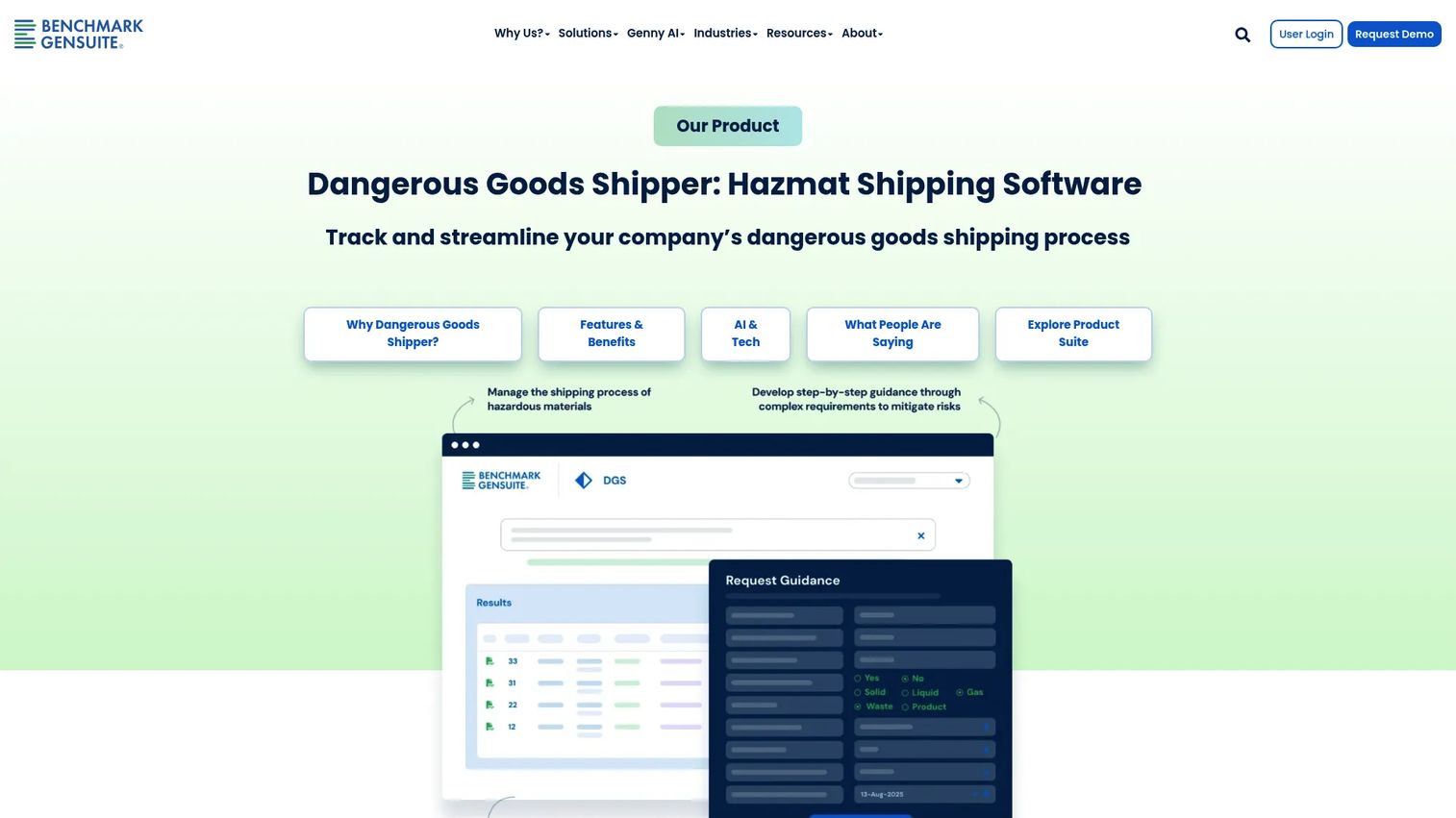
Benchmark Gensuite Dangerous Goods Shipper approaches hazmat software from the process side. Instead of leading with validation, it leads with the workflow: a standardized request and approval process for dangerous goods shipping guidance, backed by a centralized repository of shipment records, exemptions, special permits, and shipping labels. It sits inside the broader Benchmark Gensuite EHS platform, so teams already using those modules get dangerous goods compliance in the same environment.
Best for: Enterprises that need centralized dangerous goods and hazmat shipping compliance workflows with clear approvals.
Key strengths
- Standardized approval workflow: A defined request and review process routes every shipment through the right sign-offs before it moves.
- Centralized guidance repository: Guidance documents, exemptions, special permits, and shipping labels live in one searchable place.
- Shipment tracking: Records tie each shipment to its related guidance, so history and rationale are always retrievable.
Why choose Benchmark Gensuite Dangerous Goods Shipper: This is the pick when your problem is not classification accuracy but process drift, where different people ship differently and nobody can find the paperwork later. The approval workflow and centralized repository make compliance repeatable and auditable. It fits best for organizations already invested in Benchmark Gensuite EHS modules, since the dangerous goods function extends a platform teams already know.
Benchmark Gensuite Dangerous Goods Shipper pricing: Benchmark Gensuite does not publish pricing on the product page and appears to sell through a demo-based, quote-driven process. Pricing typically reflects the module mix, number of sites, and user counts across the wider platform, so scope the full EHS footprint you intend to use.
3. UPS WorldShip
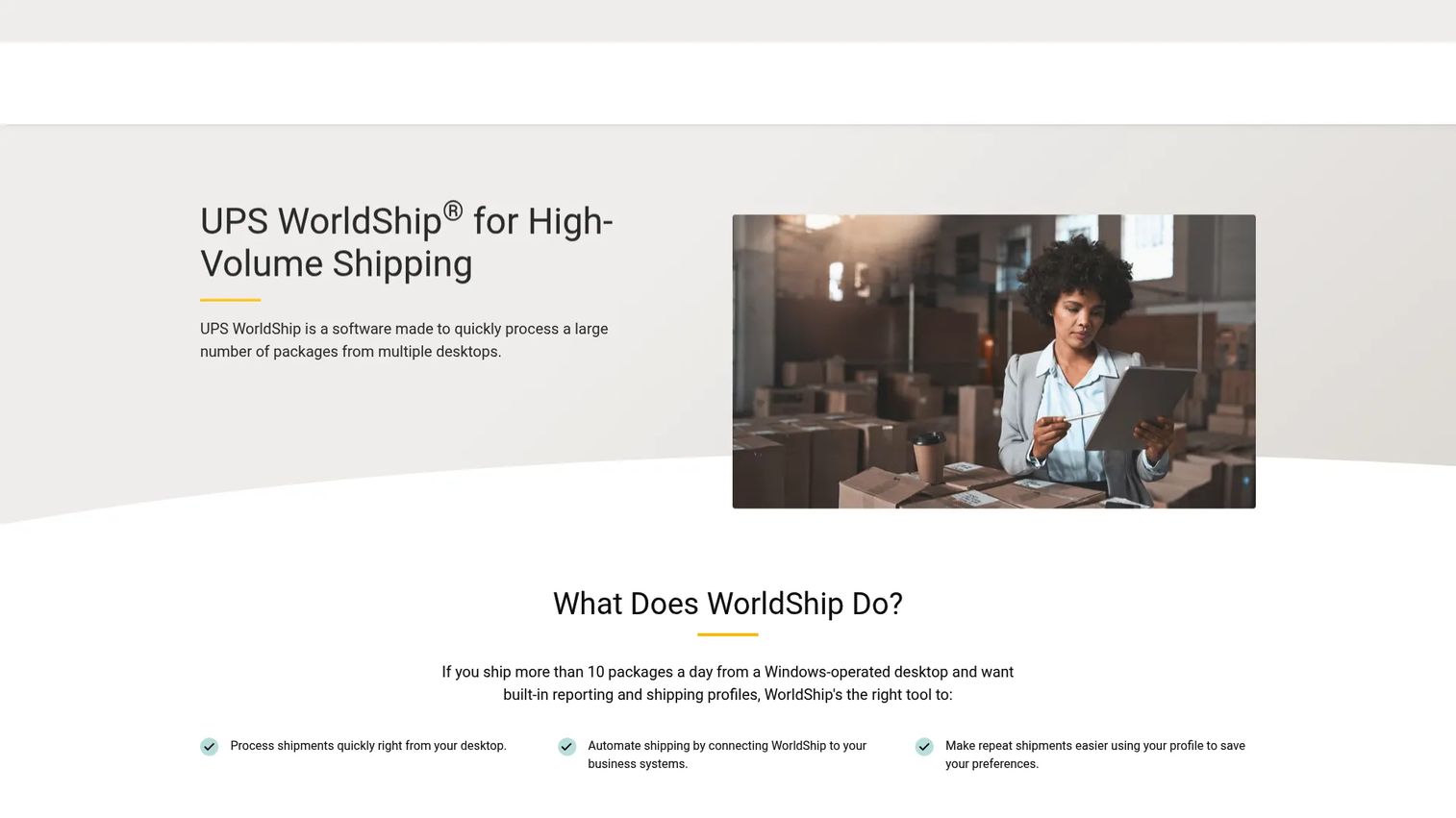
UPS WorldShip is the carrier-native option for teams that ship hazardous materials with UPS at volume. It is Windows-based desktop shipping software built for operations moving more than ten packages a day, with automation and integration through ODBC and XML, plus built-in reporting, shipping profiles, and offline shipping. As part of preparing UPS shipments, it supports the documentation and compliance workflow hazmat shippers need at the point of dispatch.
Best for: Businesses shipping high volumes of UPS packages from Windows desktops, including regulated materials.
Key strengths
- High-volume desktop shipping: Purpose-built for operations processing more than ten packages a day with speed and consistency.
- Automation via ODBC and XML: Connects to internal systems so order data flows into shipments without manual entry.
- Built-in reporting and profiles: Shipping profiles and reporting standardize how packages go out and how activity is tracked.
Why choose UPS WorldShip: If UPS is your carrier and volume is your reality, WorldShip is the operational baseline that keeps dispatch moving. It is strongest as a shipping engine rather than a full enterprise hazmat compliance platform, so many regulated shippers pair it with dedicated dangerous goods software for validation and multi-mode documentation. Think of it as the carrier-aligned execution layer, not the compliance system of record.
UPS WorldShip pricing: UPS makes WorldShip free to download after registration, and no numeric pricing appears on the official pages. Access requires a UPS account and registration through the download form. Because it is carrier-tied, the real cost is your UPS shipping relationship rather than a software license.
4. KISTERS hazardous material and goods management software
KISTERS is an environmental technology company whose software focuses on water, weather, and environmental data management, with modular analytics, field data collection, and a cloud data hub. For teams whose dangerous goods challenge is less about carrier documentation and more about governing substance and environmental data centrally, KISTERS brings strong data management, dashboards, alerts, and integration into existing IT.
Best for: Organizations that need environmental, hydromet, or field data management with strong data governance and access control.
Key strengths
- Modular data management: Environmental data management and analytics scale by module, so teams adopt only what they need.
- Field data collection and sample management: Captures and organizes field and sample data for centralized records.
- Cloud data hub with integrations: Dashboards, alerts, and integrations connect data into existing IT systems.
Why choose KISTERS: KISTERS is the choice when your requirement leans toward substance records, environmental data governance, and centralized control rather than transactional shipping documentation. Its modular architecture and integration approach suit teams with mature data governance needs who want to manage hazardous material data as a first-class asset. It complements shipping-focused tools rather than replacing them, sitting on the data and analytics layer of the stack.
KISTERS pricing: KISTERS does not publish public pricing on its site. Given the modular, data-platform nature of the software, pricing is scoped to the modules, data volumes, and integration work involved. Engage their team to map modules to your specific environmental and substance data requirements.
5. Hazmat Software
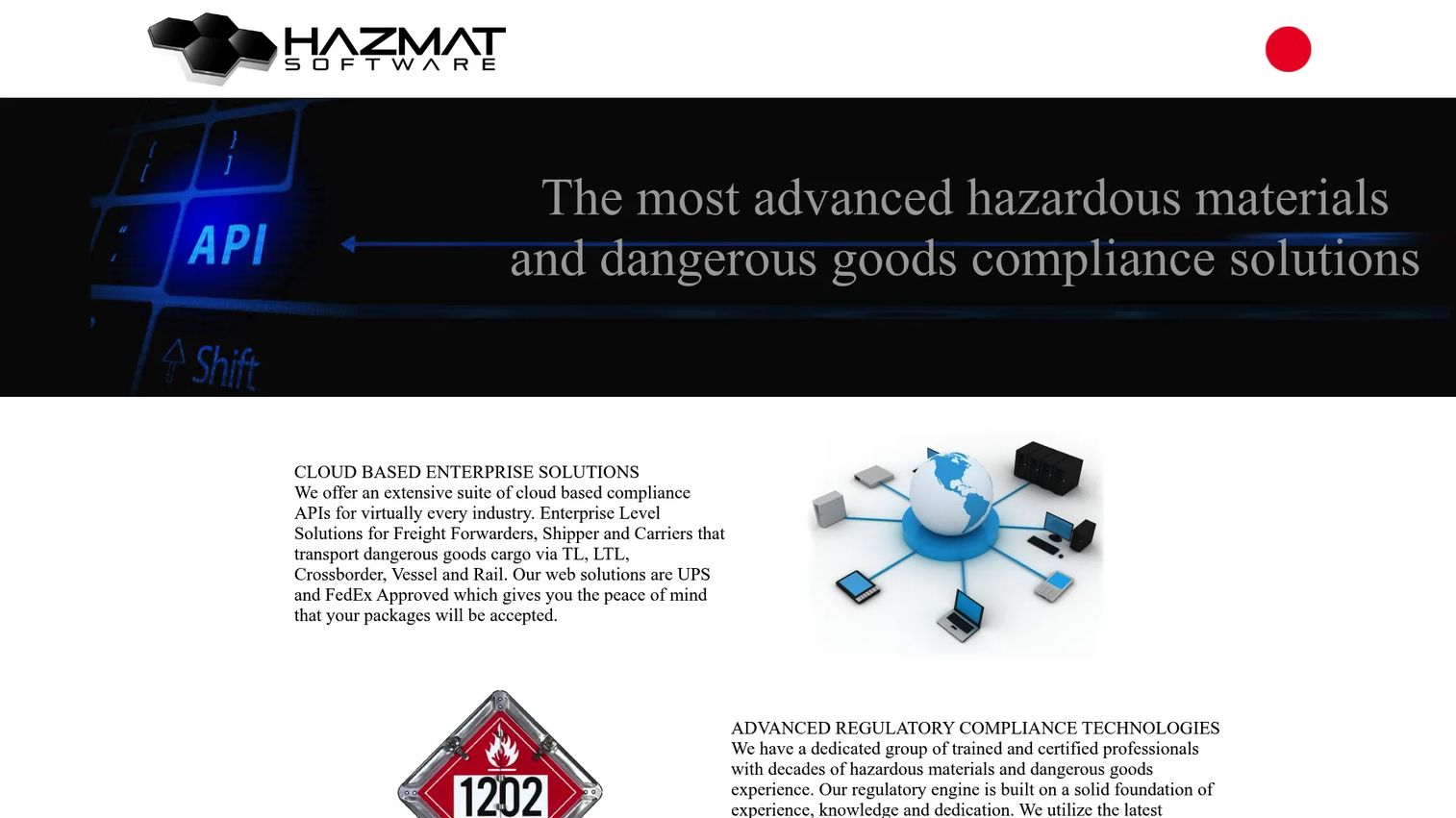
Hazmat Software is built for teams that want to connect hazmat logic directly into their own systems. Rather than a standalone shipping desk, it exposes hazardous materials and dangerous goods compliance as APIs: a shipping API for multi-carrier hazmat compliance, a printing API for hazardous-material shipping papers, and specialized APIs covering lithium batteries, rail, packaging, and DOT 49 CFR. That makes it the developer-friendly option for embedding shipment validation and document generation into existing workflows.
Best for: Enterprises and logistics teams that want hazmat and dangerous goods compliance automation wired into their own systems.
Key strengths
- Multi-carrier shipping API: Handles hazmat compliance checks across carriers programmatically, inside your own application flow.
- Printing API for shipping papers: Generates compliant hazardous-material shipping documents on demand via API.
- Specialized regulation APIs: Dedicated lithium battery, rail, packaging, and DOT 49 CFR APIs cover the tricky, high-risk cases.
Why choose Hazmat Software: This is the pick for teams whose compliance problem is really an integration problem. If you already run an ERP, WMS, or order system and want hazmat validation and paperwork to happen inside those systems, the API approach removes swivel-chair work between tools. The specialized APIs for lithium batteries and DOT 49 CFR matter for shippers whose risk concentrates in those regulated categories. It rewards teams with engineering capacity to build against the APIs.
Hazmat Software pricing: Hazmat Software does not publish pricing on its site. API-based compliance products typically price on usage, endpoint access, or volume, so expect a scoping conversation around which APIs you need and your transaction volume. Map your integration points before engaging so the quote reflects real usage.
6. ShipWave
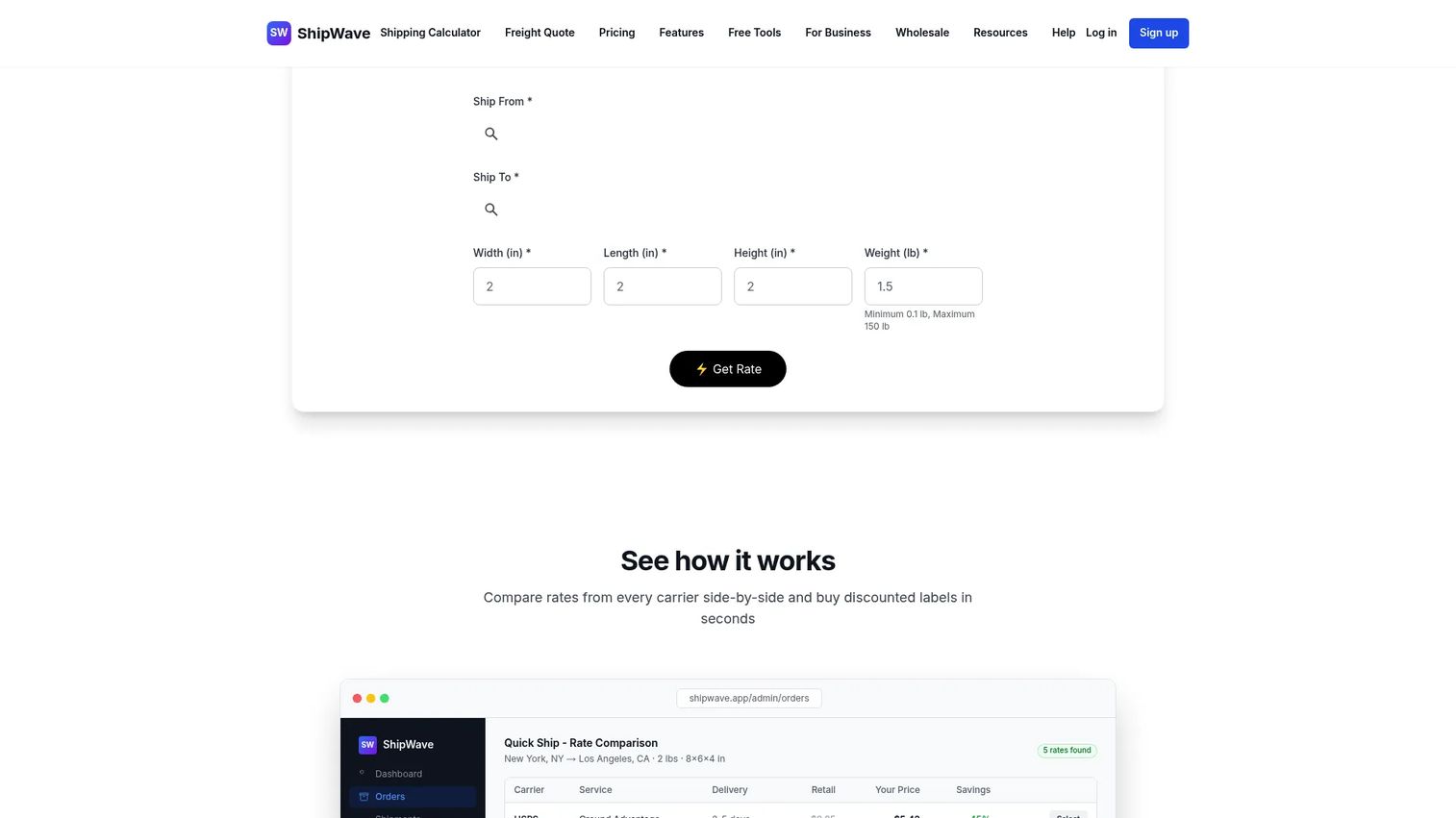
ShipWave is a modern, content-led shipping platform aimed at ecommerce merchants, with discounted labels and rate shopping across major carriers, returns automation with a branded portal, and a fraud suite. It broadens this list beyond the older compliance incumbents by offering a clean, modular UX and a free core, which appeals to teams that want shipping automation and are layering in compliance and documentation practices as they scale.
Best for: Ecommerce sellers who want free core shipping software with optional add-on modules for returns, B2B, and fraud.
Key strengths
- Discounted labels and rate shopping: Compares rates across major carriers to reduce shipping cost on every order.
- Returns automation: A branded returns portal with automatic labels standardizes and speeds up the returns workflow.
- Fraud suite: Monitoring, blocking, enrichment, and holds protect orders before they ship.
Why choose ShipWave: ShipWave fits teams that lead with ecommerce shipping economics and want a modern platform with a free starting point rather than an enterprise compliance suite. Its free core plus paid modules model lets you adopt only what you need, from returns to B2B wholesale. Teams shipping regulated goods should pair it with dedicated dangerous goods software for classification and hazmat documentation, using ShipWave as the shipping and rate layer.
ShipWave pricing: ShipWave's shipping core is free. Paid modules are priced separately and publicly listed: Returns Automation at $29/mo, Wholesale B2B at $39/mo, and Fraud Suite tiers spanning Starter at $29/mo, Growth at $99/mo, Scale at $399/mo, and a custom Enterprise plan. The free core plus add-on structure keeps entry cost low and scales with the modules you turn on.
7. Saf-T-Pak Ship Easy Platinum
Saf-T-Pak Ship Easy Platinum closes the list as a specialized option focused on the practical work of creating compliant dangerous goods shipping documentation. Its Shipping Document Assistant helps teams produce correct hazmat paperwork, the application is FX-18 compliant, and it is FedEx approved, which matters for shippers who route regulated materials through that carrier. Saf-T-Pak also brings training tools alongside the documentation software.
Best for: Teams that need dependable hazardous-material shipping documentation support and related training.
Key strengths
- Shipping Document Assistant: Guides users through producing correct, compliant dangerous goods shipping papers.
- FX-18 compliant application: Meets the FX-18 standard for hazmat shipping documentation.
- FedEx approved: Approved for use with FedEx, streamlining compliant shipments through that carrier.
Why choose Saf-T-Pak Ship Easy Platinum: This is the narrow, use-case-driven pick for teams whose core need is producing correct dangerous goods documentation, especially when shipping via FedEx. It slots into a stack as the documentation and shipping-paper specialist rather than a broad enterprise platform. The bundled training tools are a bonus for teams building internal hazmat competence alongside their documentation workflow.
Saf-T-Pak Ship Easy Platinum pricing: Saf-T-Pak does not publish public pricing for Ship Easy Platinum on its site. The product is sold through the vendor, so reach out to scope the documentation and training modules you need. Because it is documentation-focused, pricing is likely tied to seats and module selection rather than shipment volume.
Considerations before you buy
Regulatory and mode coverage
Confirm the tool covers every transport mode you ship, air, ground, and maritime, and that it updates rulesets as regulations change. A dangerous goods compliance software tool that lags on regulatory updates creates the exact audit exposure you bought it to prevent. Ask how and how often the vendor pushes regulatory updates.
Document coverage
Check that the tool generates every document you are responsible for: shipping papers, dangerous goods declarations, labels, marks, and any exemptions or approvals your materials require. Gaps in document coverage push work back into spreadsheets, which reintroduces the process debt you are trying to remove.
Integration fit
Map where hazmat data needs to flow. Strong ERP integration and WMS integration remove re-keying and reconcile shipping data with the systems that run the business. If you have engineering capacity, API integration lets you embed validation and document generation directly into existing workflows.
Multi-site scalability
If you ship from more than one location now or plan to, verify the tool enforces multi-site compliance from one standard. Enterprise scalability is not just about seat counts, it is about whether every site produces identical, audit-ready records without local workarounds.
SDS and data governance
If safety data sheets are part of your obligation, confirm the tool handles SDS management with version control and clear retrieval. For data-heavy operations, evaluate access controls and how substance records are governed centrally.
Conclusion
The right dangerous goods software depends on where your risk actually lives. Labelmaster DGIS is the reference choice for enterprise compliance and multi-mode shipment validation. Benchmark Gensuite Dangerous Goods Shipper wins when your problem is process standardization and approvals. KISTERS fits teams governing substance and environmental data centrally. Hazmat Software is the API-driven pick for embedding compliance into existing systems, and UPS WorldShip is the carrier-aligned baseline for high-volume UPS shippers. ShipWave and Saf-T-Pak Ship Easy Platinum round out the list for modern ecommerce shipping and specialized documentation respectively.
Before you buy, do the boring diligence: confirm regulatory and mode coverage, verify every document you are responsible for is generated, and pressure-test integration and multi-site fit against how the business will look in two years. The tool that makes regulated shipping repeatable, and removes the single-expert bottleneck, is the one that earns its place. Assess integration fit, document coverage, and scale before you commit.
Start your journey with Guideflow today!
FAQs
Dangerous goods software validates, classifies, and documents shipments of regulated hazardous materials so they move legally across air, ground, and maritime transport. It checks shipments against current regulations, carrier variations, and quantity limits, then generates the shipping papers, labels, and marks each shipment needs. The goal is to replace manual regulatory lookups with automated, audit-ready compliance.
At minimum, the software should produce compliant shipping papers and dangerous goods declarations, plus the labels and marks required for each material and mode. Strong tools also handle exemptions, special permits, and approvals, so nothing ships outside its authorization. If a tool cannot generate a document you are legally responsible for, that gap becomes manual work and audit risk.
A standard shipping tool creates labels and books carriers. Hazmat software adds the regulatory layer: it validates that a shipment of regulated materials is classified correctly, packed within limits, and documented to the rules for its transport mode. Standard shipping tools like carrier desktops handle dispatch well but do not replace dedicated compliance validation for dangerous goods.
ERP integration and WMS integration matter most, because they let shipping data flow between the compliance tool and the systems that run the business without re-keying. Carrier integrations, including FedEx and UPS, matter for teams routing regulated goods through specific carriers. For teams with engineering resources, API integration allows validation and document generation to happen inside existing workflows.
If safety data sheets are part of your compliance obligation, then yes, SDS management should be part of your tooling. Some dangerous goods platforms include SDS storage, version control, and retrieval tied to the materials you ship, while data-management focused tools handle it as part of broader substance governance. Confirm which approach fits your obligations before buying.
It is especially useful for multi-site operations, because manual processes drift between locations and create inconsistent, hard-to-audit records. Software enforces multi-site compliance from one standard, so every location produces identical, audit-ready documentation. This is often the single biggest reason growing operations adopt dedicated dangerous goods software.
Check regulatory and transport-mode coverage, confirm the tool generates every document you are responsible for, and verify integration fit with your ERP, WMS, and carriers. Then pressure-test multi-site scalability and, if relevant, SDS management and data governance. Verify how often the vendor updates rulesets, since lagging regulatory updates recreate the audit exposure you are trying to eliminate.