Your company runs three giving campaigns, a volunteer program, and a small grants budget. The data lives in four spreadsheets, two inboxes, and one very tired program manager's head. When the board asks for an impact summary, someone spends a week stitching it together.
That is the real problem CSR software solves. Not moral branding. Operational leverage.
The market reflects the shift. The global CSR software market is projected to grow from USD 2.94 billion in 2025 to USD 8.31 billion by 2035, according to Spherical Insights (2024). The reporting and analytics segment alone is set to more than double, from USD 197.5 million in 2025 to USD 450.9 million by 2033, per Grand View Research (2025). Companies are not just running programs anymore. They are measuring them, and they need software that produces numbers leadership trusts.
For a founder scaling past Series B, the calculus is straightforward. You want fewer tools, cleaner reporting, and a platform that will still fit when headcount triples. The wrong choice adds an admin burden. The right one removes one. If you are evaluating adjacent operational stacks, our roundups on employee advocacy and community management follow the same buyer-first logic.
What's inside
This guide is for operators choosing a corporate social responsibility software platform they can defend to a board and hand off to a program lead without babysitting it. We reviewed 10 tools across four categories: enterprise all-in-one suites, grantmaking specialists, engagement-first platforms, and leaner participation tools.
We selected platforms based on four criteria: breadth of use case (giving, volunteering, grants, reporting), reporting and impact measurement depth, security and compliance posture, and how cleanly the tool scales as headcount grows. Pricing and G2 ratings are pulled from verified first-party and G2 sources where available.
TL;DR
- Best enterprise all-in-one CSR platform: Benevity, for giving, volunteering, matching, grants, and ERGs at scale, with the deepest platform maturity.
- Best unified CSR and grantmaking suite: Bonterra, for teams combining employee engagement with grant workflows and impact reporting.
- Best employee engagement platform: Deed, for mobile-first participation across giving and volunteering.
- Best grantmaking software for program administration: Submittable, for configurable application, review, and approval workflows.
- Best for leaner teams wanting momentum: Millie, for fast adoption on giving and volunteering without heavy setup.
For reporting-heavy buyers, the strongest platforms pair broad program coverage with an impact reporting software layer that turns activity into board-ready narratives.
What is CSR software?
CSR software is a category of platforms that help companies run and measure corporate social responsibility programs, including employee giving, volunteering, grantmaking, donation matching, and impact reporting, from one system instead of scattered spreadsheets and manual processes.
A modern CSR platform centralizes the programs a company used to manage by hand. Instead of separate tools for donations, volunteer sign-ups, and grant applications, a single system handles the workflow end to end and produces the reporting on top.
Core capabilities most corporate social responsibility software shares:
- Employee giving software: payroll deductions, one-off donations, donation matching software, and nonprofit verification.
- Volunteer management software: event scheduling, sign-ups, hour tracking, and volunteering tracking across distributed teams.
- Grantmaking software: application intake, review workflows, approvals, disbursement, and compliance controls.
- Impact reporting software: dashboards, engagement metrics, and executive-ready summaries for board and investor audiences.
- Employee engagement platform features: campaigns, employee resource groups support, and participation nudges.
- Compliance and security: nonprofit verification, data privacy controls, and audit trails.
The cloud deployment model accounts for roughly 73% of CSR software revenue as of 2023, per SNS Insider (2024), which tells you where the category is heading: hosted, integrated, and reporting-first. The best CSR management software does not just record activity. It turns activity into a number a CFO believes.
When to use CSR software
Not every company needs a dedicated platform on day one. Here is where it earns its place.
Consolidate fragmented programs
If giving lives in one tool, volunteering in another, and grants in a spreadsheet, you are paying an integration tax in staff time. A CSR platform replaces the patchwork with one system and one source of truth. This is the most common trigger for mid-market buyers.
Produce board-ready impact reporting
When leadership or investors ask what your social impact actually is, manual reporting does not survive scrutiny. Impact reporting software generates the metrics, engagement rates, and dollar totals that hold up in a board deck. If you are pulling numbers by hand the night before a meeting, that is the signal.
Govern grantmaking with real controls
Corporate grants need audit trails, approval chains, and nonprofit verification. Grantmaking software enforces the governance that spreadsheets cannot. Teams distributing meaningful budgets need this before compliance becomes a problem, not after.
Comparison table
Here is a fast scan of the 10 platforms, their primary intent, and where each one fits. Pricing across this category is largely quote-based, so we note that where public numbers are not disclosed.
| # | Product | Intent | Key use case | Pricing | G2 rating |
|---|---|---|---|---|---|
| 1 | Benevity | Enterprise all-in-one | Giving, volunteering, matching, grants, ERGs at scale | Custom | 4.7/5 |
| 2 | Bonterra | Unified CSR + grantmaking | Employee engagement plus grant workflows and reporting | Custom | 4.5/5 |
| 3 | Deed | Engagement-first | Mobile-first giving and volunteering participation | Custom | 4.5/5 |
| 4 | CSRconnect | Enterprise all-in-one | Employee giving, volunteering, and social impact reporting | Custom | Not listed |
| 5 | CyberGrants | Grantmaking + governance | Grant administration, workflow control, compliance | Custom | 4.1/5 |
| 6 | Submittable | Grantmaking + applications | Application, review, and approval workflows | Custom | 4.5/5 |
| 7 | Millie | Participation-first | Giving, volunteering, and goods drives for leaner teams | Custom | Not listed |
| 8 | Goodera | Volunteering at scale | Volunteer programs, events, impact measurement | Custom | Not listed |
| 9 | Bright Funds | Giving + volunteering | Centralized giving portal and volunteer tracking | Custom | Not listed |
| 10 | onHand | Participation-forward | Volunteering, employee action, impact dashboards | Custom | 4.5/5 |
1. Benevity

Benevity is an enterprise CSR and employee engagement platform built for large organizations running social impact programs at scale. It covers giving, volunteering, grants, employee resource groups, and impact reporting in one system, and it is one of the most established names in the category. For founders who want a vendor that will still fit when the company crosses a few thousand employees, Benevity is the default enterprise pick.
Best for: Large enterprises running multiple corporate social impact programs that need platform maturity and depth.
Key strengths
- Employee giving and matching: Payroll giving, one-off donations, and donation matching software in one flow.
- Volunteering management: Program scheduling, sign-ups, and volunteering tracking across distributed teams.
- Grants management and reporting: Grant workflows paired with impact reporting for board and investor audiences.
Why choose Benevity: If your priority is a long-standing, proven vendor with the broadest feature coverage, Benevity is hard to beat. It carries a 4.7/5 rating on G2, the highest in this roundup, which reflects a mature product that large teams trust. The tradeoff for smaller teams is that enterprise breadth can be more platform than a 50-person company needs on day one.
Benevity pricing: Benevity does not publish public pricing. Its site directs buyers to request a demo or contact sales for a custom quote based on program scope and headcount. Expect enterprise-tier packaging with security and compliance controls included.
2. Bonterra
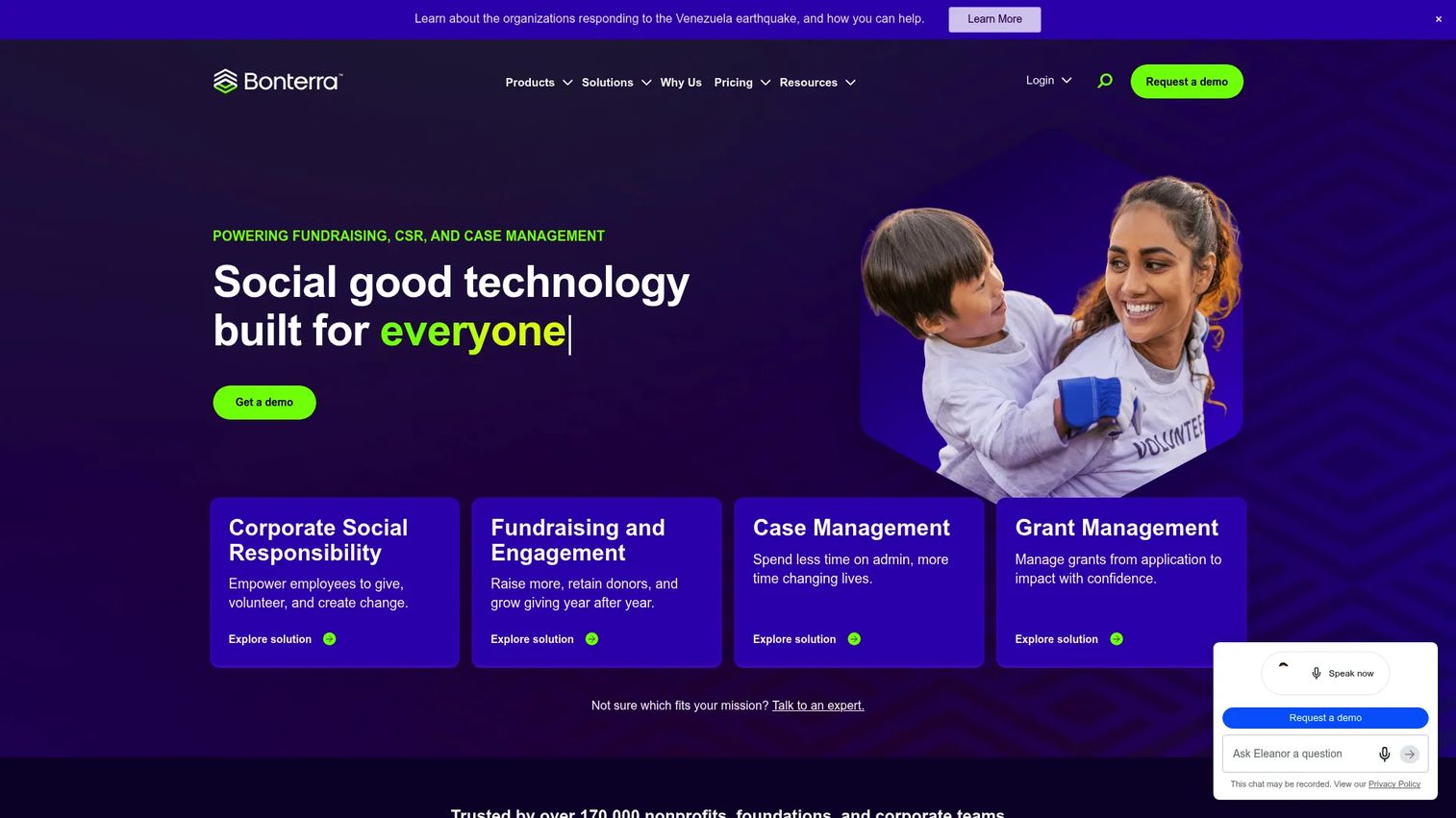
Bonterra is a social good software platform spanning fundraising, CSR, grantmaking, case management, and volunteer engagement. It is the parent brand behind several well-known tools, including Deed and CyberGrants, which makes it a natural fit for organizations that want employee engagement and grant workflows under one roof. The unified story is the differentiator here.
Best for: Organizations combining employee engagement with grantmaking software and executive impact reporting in a single suite.
Key strengths
- Fundraising and engagement tools: A broad set of engagement products spanning giving and campaigns.
- CSR software: Employee giving, volunteering, and corporate philanthropy software capabilities.
- Grant and case management: Grantmaking workflows and case management for structured programs.
Why choose Bonterra: Bonterra makes the most sense when you want a unified platform rather than stitching point solutions together. It holds a 4.5/5 rating on G2, and its breadth across fundraising, CSR, and grants means one vendor relationship instead of three. If you only need employee giving, this is more platform than required, but for multi-program teams it consolidates the stack.
Bonterra pricing: Bonterra's public pricing pages show customized pricing with a "talk to an expert" flow rather than published numbers. Pricing scales with program scope, so plan for a scoping conversation before you get a figure.
3. Deed
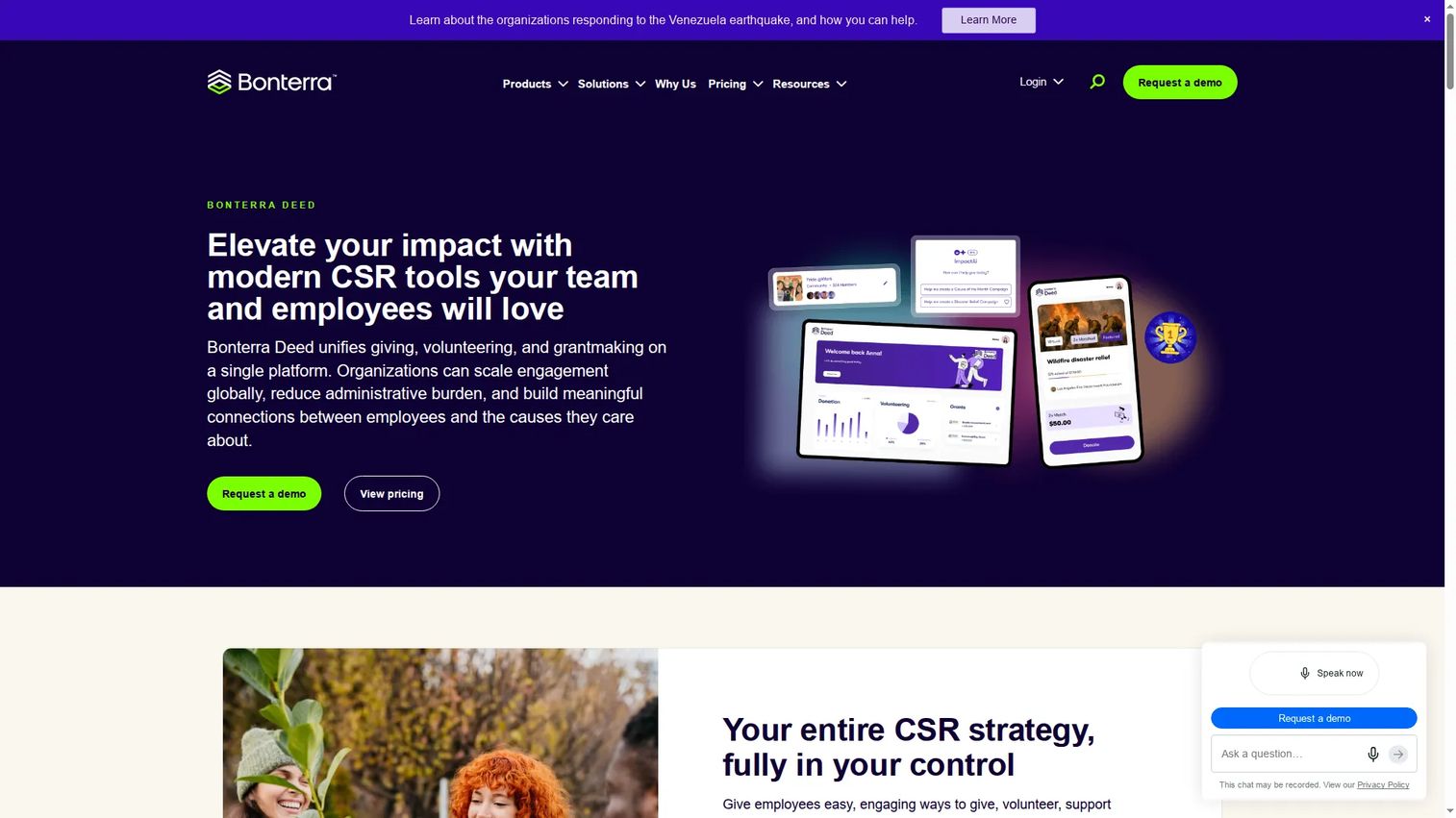
Deed is an employee engagement and CSR platform for giving, volunteering, grants, and ERGs, now part of Bonterra. Its calling card is the mobile-first experience and ease of adoption, which matters when your goal is broad employee participation rather than a tool only the CSR team touches. If engagement is the metric you are chasing, Deed is built for it.
Best for: Mid-market and enterprise teams that want high participation rates across giving and volunteering programs.
Key strengths
- Employee giving and matching: Simple donation flows with donation matching software built in.
- Employee volunteering and skill-sharing: Volunteering tracking plus skills-based opportunities.
- Reporting and analytics: Engagement and impact dashboards for leadership review.
Why choose Deed: Deed shines when adoption is the bottleneck. Its clean, mobile-first design lowers the friction that keeps employees from participating, and it carries a 4.5/5 rating on G2 across a solid review base. If you have run a program that stalled because the tool felt clunky, Deed is the direct fix. It sits inside the Bonterra ecosystem, so it pairs well with broader grant workflows if you grow into them.
Deed pricing: Deed does not list public pricing. The site routes to a demo and custom quote, with packaging based on employee count and program scope.
4. CSRconnect
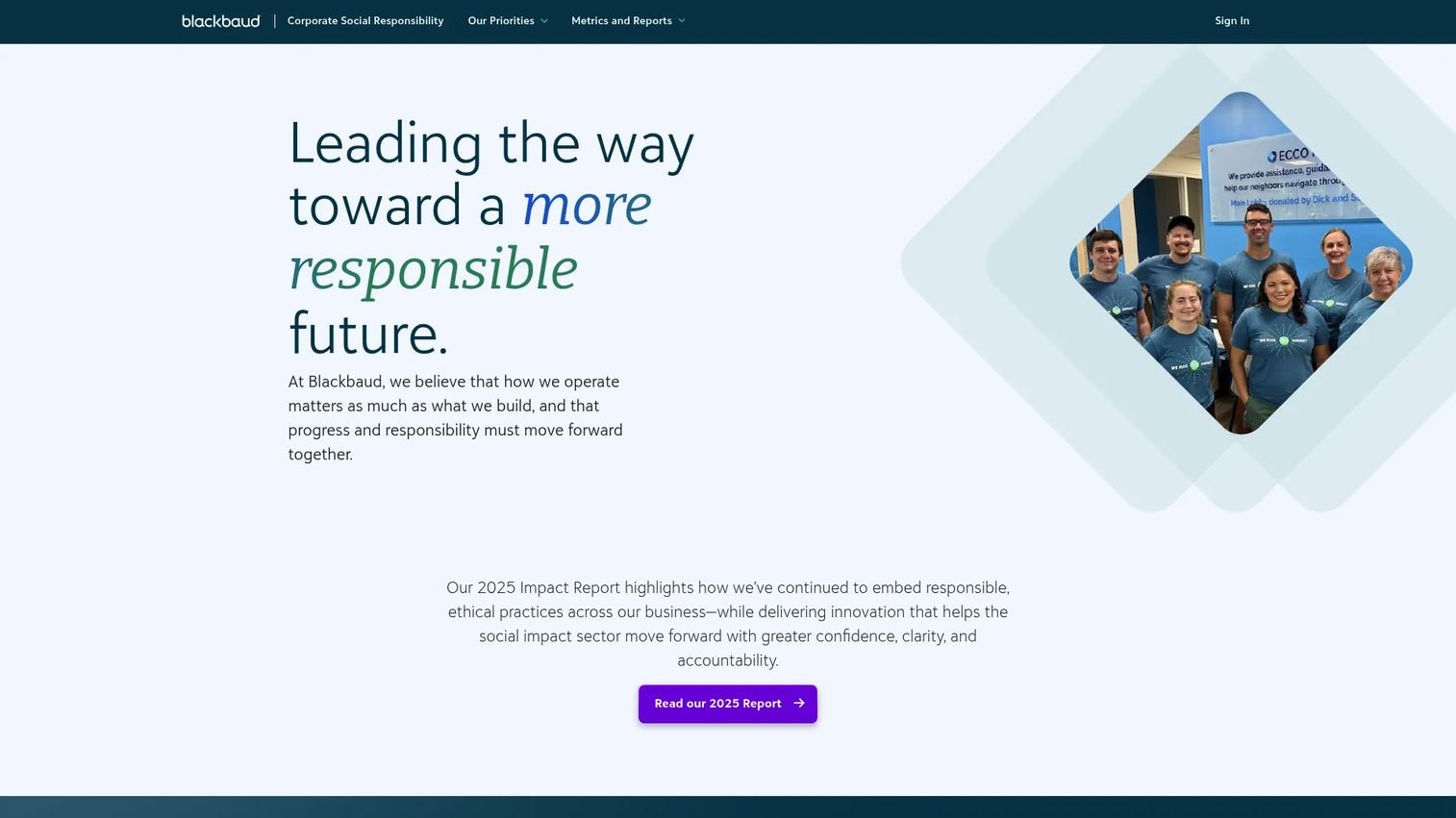
CSRconnect is Blackbaud's employee engagement and social impact platform for corporate giving, volunteering, and reporting. As part of Blackbaud's broader social good portfolio, it serves as a mature, enterprise-grade baseline for companies that want a proven all-in-one CSR system with strong data feeds and reporting.
Best for: Companies looking to manage employee giving, volunteering, and corporate social impact programs on an established enterprise platform.
Key strengths
- Employee giving programs: Structured giving campaigns with matching and payroll options.
- Volunteer program management: Volunteer scheduling, sign-ups, and volunteering tracking.
- Social impact reporting and data feeds: Reporting infrastructure and data feeds for impact reporting software needs.
Why choose CSRconnect: CSRconnect is the pick for companies that value Blackbaud's long track record in the social good space and want a mature reporting backbone. Its data feed and reporting capabilities are strong for organizations that need to move impact data into other systems. It is enterprise-oriented, so it fits best when you are managing programs at meaningful scale rather than testing the waters.
CSRconnect pricing: Blackbaud states pricing is customized and provides personalized quotes rather than listing a public price. Expect a scoping conversation tied to program size and reporting requirements.
5. CyberGrants
CyberGrants is a grantmaking and enterprise philanthropy specialist, now part of the Bonterra family. Where engagement-first tools prioritize participation, CyberGrants prioritizes disciplined grant operations: application intake, review workflows, approvals, and compliance. For teams where grant governance matters more than a lightweight social layer, this is the specialist choice.
Best for: Teams that need rigorous grant administration, workflow control, and compliance more than a broad engagement layer.
Key strengths
- Grant administration: Structured application, review, and approval workflows.
- Workflow control and compliance: Governance, audit trails, and nonprofit verification for corporate giving.
- Reporting: Grant-focused reporting for finance and compliance teams.
Why choose CyberGrants: CyberGrants is the right call when your CSR program is grant-heavy and governance is non-negotiable. It holds a 4.1/5 rating on G2 under the Bonterra CyberGrants listing. If your finance team needs clean audit trails and defensible approval chains on every disbursement, this specialization earns its place. It is less about employee participation and more about operating a serious grants function.
CyberGrants pricing: No public first-party pricing is listed. The product routes to a demo and consultation, with packaging tied to grant volume and program complexity.
6. Submittable
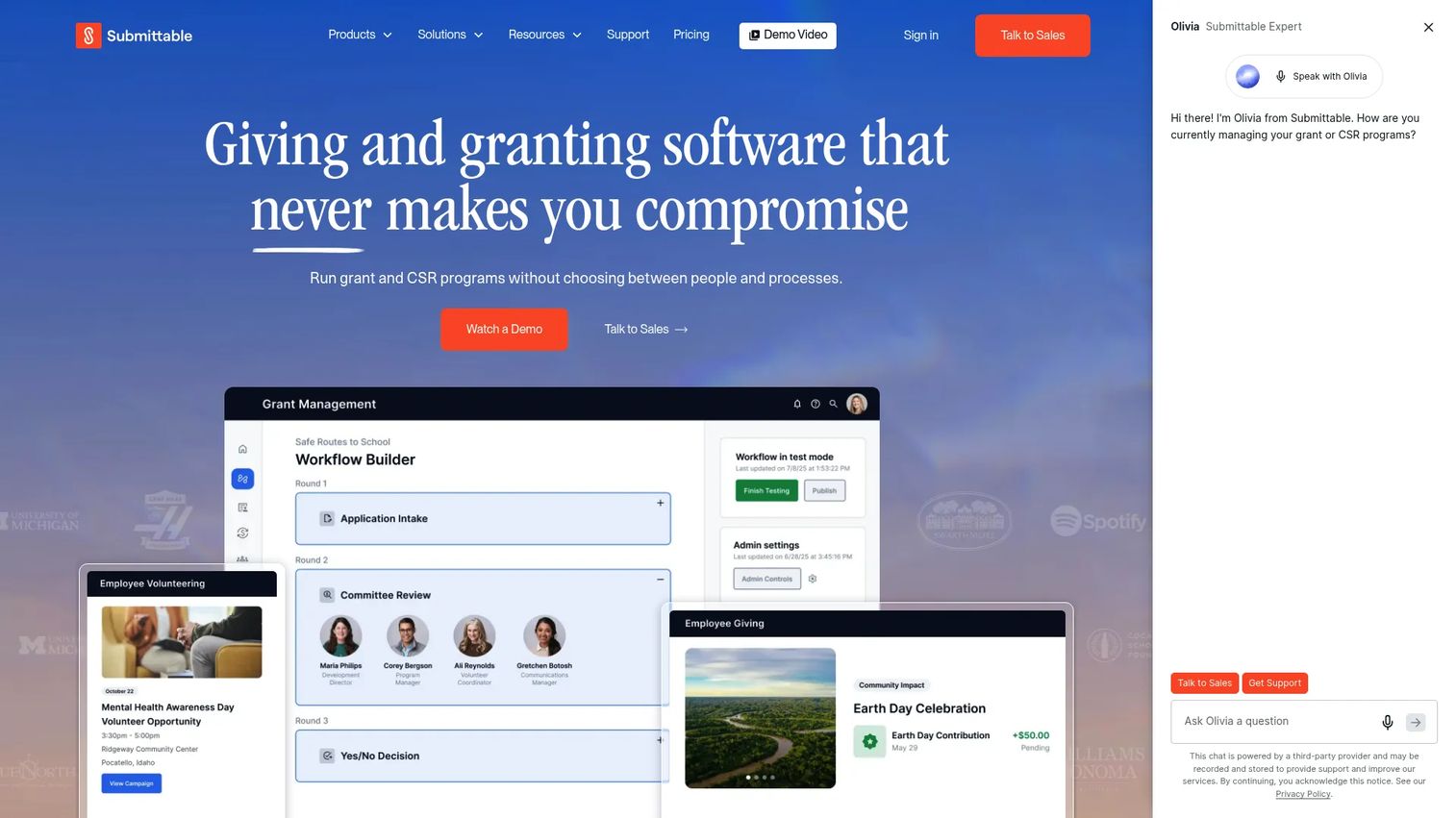
Submittable is grant management and CSR software for organizations running applications, reviews, payments, and reporting. Its drag-and-drop form builder and multi-stage review tools make it a strong fit when program administration matters more than employee-facing social features. Think of it as the workflow engine for corporate philanthropy software programs.
Best for: Teams needing a configurable platform for grants, applications, reviews, and CSR program administration.
Key strengths
- Form builder and application portal: Drag-and-drop forms and a branded application intake portal.
- Automated and multi-stage review: Review routing and approval workflows that scale with volume.
- Integrations: Built-in options plus a two-way API for connecting your stack.
Why choose Submittable: Submittable is the pick when the application and review process is the core of your program. It carries a 4.5/5 rating on G2 and gives you real control over intake, scoring, and approvals. For companies running grant or sponsorship programs with high application volume, the configurability pays off. Payment processing carries a public fee of $0.99 plus 5% of the total sum collected through the platform.
Submittable pricing: Submittable's pricing page shows product categories, its Corporate Social Responsibility Platform, Grant and Application Management Software, and Enterprise, each with a "Book a Meeting" flow rather than published subscription numbers. The payment-processing fee above is the one public figure.
7. Millie
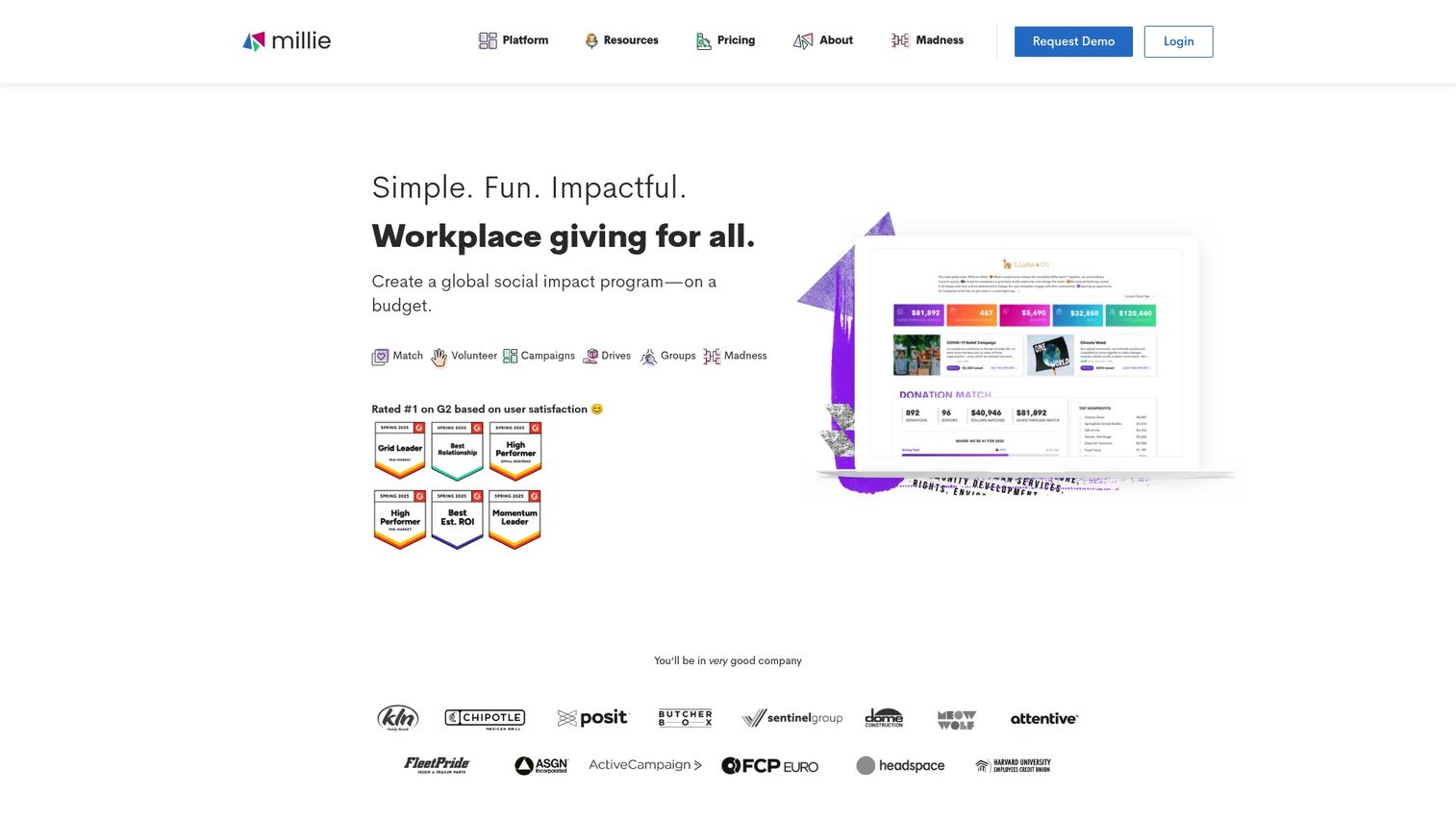
Millie is a modern workplace giving and corporate social impact platform built around ease of use and fast adoption. It combines donations, volunteering, and goods drives into campaigns, which makes it a strong fit for leaner teams that want momentum without heavy implementation. If a big enterprise suite feels like overkill, Millie is the lighter, faster option.
Best for: Companies running workplace giving, volunteering, and social impact programs that want quick adoption without complexity.
Key strengths
- Campaigns: Combine donations, volunteering, and goods drives in a single campaign flow.
- Analytics: Impact, engagement, and employee analytics for reporting.
- Slack integration: Giving and volunteer activity surfaced directly in Slack.
Why choose Millie: Millie is the pick for a 50-person company, not a 5,000-person one. It gets programs live quickly and keeps the employee experience simple, which drives participation without a heavy admin lift. The Slack integration meets employees where they already work. For a founder who wants a credible CSR program without a dedicated ops hire, Millie fits the stage.
Millie pricing: Annual pricing is quote-based. Millie asks for a custom proposal based on your social impact priorities and employee count rather than listing public numbers.
8. Goodera
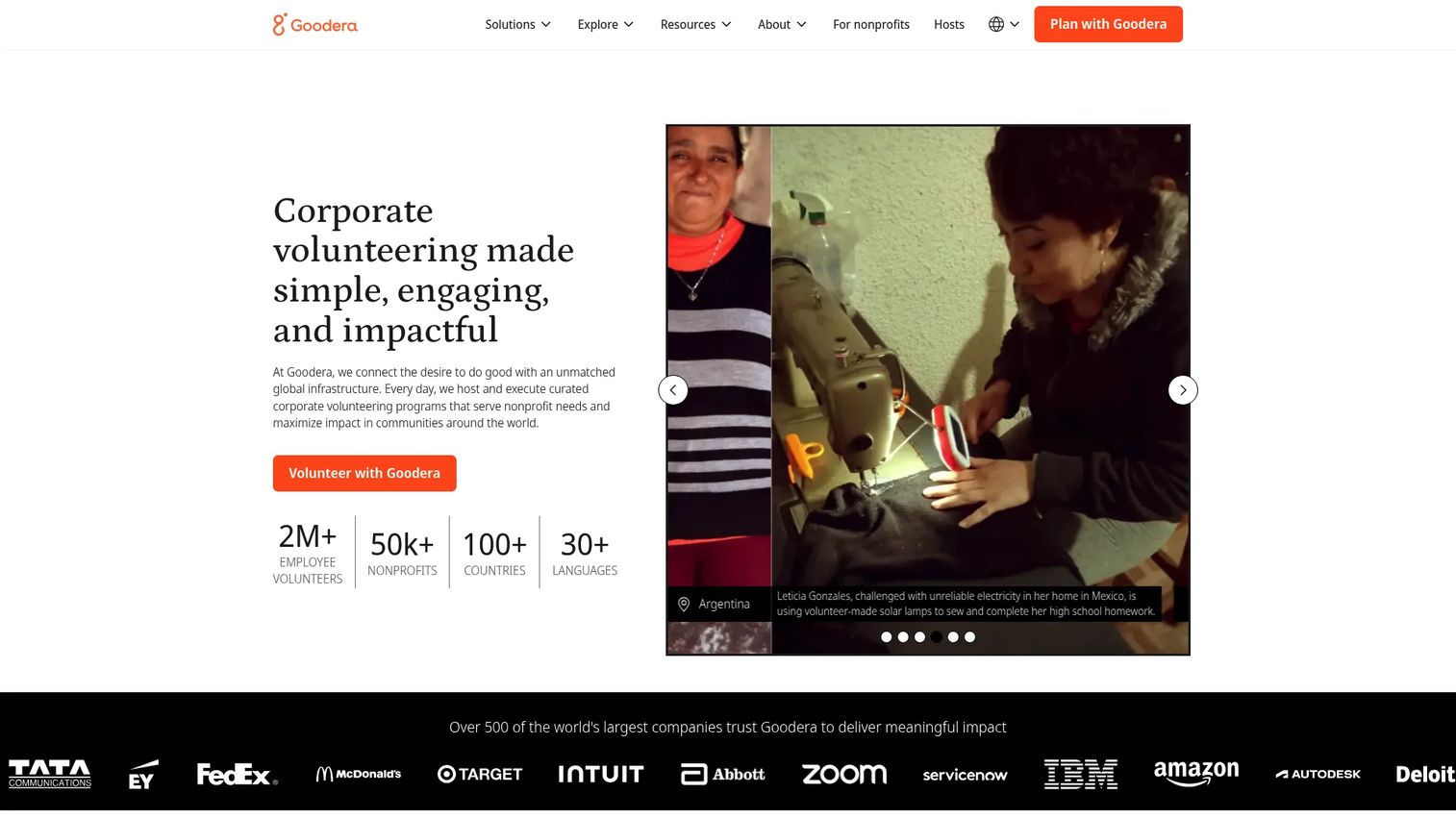
Goodera is a volunteering and employee engagement platform focused on running volunteer programs at scale. It handles event coordination, distributed participation, and impact measurement, which makes it a strong fit for companies where volunteering is the centerpiece of their CSR strategy rather than an add-on to giving.
Best for: Companies prioritizing employee volunteering at scale across distributed or global teams.
Key strengths
- Volunteer programs: Curated and custom volunteering opportunities for teams.
- Event coordination: Scheduling and logistics for group and virtual volunteering.
- Impact measurement: Volunteering tracking and impact metrics for reporting.
Why choose Goodera: Goodera is the specialist when volunteering drives your engagement strategy. It excels at coordinating events across distributed workforces and turning participation into measurable impact. If your team runs frequent volunteering days or global volunteer campaigns, Goodera's focus is an advantage over broader suites that treat volunteering as one feature among many. It pairs a participation-forward experience with the reporting leadership wants.
Goodera pricing: Goodera does not publish public pricing. Engagement is quote-based, tied to program scope and the scale of volunteering activity you plan to run.
9. Bright Funds
Bright Funds is an employee giving and volunteer management platform that centralizes donations, cause-focused funds, and volunteer tracking in one portal. It is a straightforward option for teams that want broad participation tools without a heavy enterprise footprint, with matching gifts and volunteer campaigns built in.
Best for: Companies that want a centralized employee giving software and volunteering portal with broad participation tools.
Key strengths
- Donations to nonprofits: Employees give to vetted nonprofits directly through the portal.
- Cause-focused funds: Curated funds that group nonprofits by cause for easier giving.
- Volunteering tracking: Record volunteer hours and track social good in one place.
Why choose Bright Funds: Bright Funds works when you want a clean, participation-oriented CSR stack without the complexity of a full enterprise suite. The cause-focused funds model makes giving simple for employees who do not know which nonprofit to pick, which can lift participation. It centralizes giving and volunteering in one portal, giving program leads a single view instead of scattered tools.
Bright Funds pricing: Bright Funds does not display public pricing on its site. Reach out through the vendor for a quote based on your program needs and headcount.
10. onHand
onHand is a CSR and corporate volunteering platform built around employee engagement, socially responsible action, and impact reporting. It leans into a participation-forward experience with local and remote volunteering actions, real-time dashboards, and group volunteering support, plus CSR consultancy for teams that want guidance.
Best for: Companies seeking employee volunteering and CSR impact tracking in a single, action-oriented platform.
Key strengths
- Volunteering actions: Local and remote volunteering opportunities employees can take on demand.
- Real-time impact reporting: Dashboards that surface impact as it happens.
- Group volunteering and consultancy: Team volunteering plus CSR strategy support.
Why choose onHand: onHand fits teams that want employees taking small, frequent social actions rather than one big annual volunteering day. Its real-time impact dashboards make reporting continuous instead of a quarterly scramble, and it holds a 4.5/5 rating on G2. The bundled consultancy is a differentiator for companies that want a partner to shape their CSR approach, not just a tool. It offers tiered plans from Self-serve through Leader.
onHand pricing: onHand's pricing page lists four plans, Self-serve, Essentials, Impact, and Leader, each with a "Get pricing" CTA rather than public numbers. Pricing scales with the tier and program scope you need.
Considerations before you buy
Before you sign anything, run the platform against the criteria that actually matter for a scaling company.
Program breadth versus focus
Decide whether you need an all-in-one CSR platform or a specialist. If you run giving, volunteering, and grants, a unified suite like Bonterra or Benevity reduces vendor sprawl. If your program is grant-heavy, a specialist like CyberGrants or Submittable will serve you better than a generalist. Match the tool to the programs you actually run, not the ones you might someday.
Impact reporting and board readiness
The reporting layer is the difference between a program and a defensible line in a board deck. Ask to see the actual dashboards and export formats. Can it produce the engagement rates, dollar totals, and participation metrics leadership expects without manual assembly? If reporting requires a spreadsheet on top of the tool, it has not solved the problem.
Security, compliance, and nonprofit verification
CSR programs move money, so compliance and security are not optional. Confirm the platform handles nonprofit verification, maintains audit trails, and meets your data privacy requirements. For grantmaking, verify the approval chains and governance controls hold up under scrutiny. ESG reporting alignment is a plus if leadership is heading that direction.
Integrations and scalability
Check that the platform connects to your HRIS, payroll, and analytics stack, and that it scales as headcount grows. The tool that fits 50 employees should not break at 500. Confirm integration depth before you commit, because retrofitting integrations later is expensive.
Conclusion
There is no single best CSR software. There is the best fit for your programs, your reporting needs, and your stage.
If you want an enterprise all-in-one platform with the deepest maturity, Benevity leads. For a unified CSR and grantmaking suite, Bonterra consolidates the most under one roof. If employee engagement and participation are the goal, Deed's mobile-first experience is built for it. Grant-heavy teams should look at CyberGrants for governance or Submittable for application workflows. And for leaner teams that want momentum without complexity, Millie, Goodera, Bright Funds, and onHand each offer a focused, participation-first path.
The founder's filter is simple: choose the CSR technology that reduces admin work and produces reporting leadership trusts. Start with the two or three platforms that match your program mix, request demos, and pressure-test the reporting against a real board question. The right platform earns its place in your stack within the first quarter.
FAQs
CSR software is a category of platforms that help companies run and measure corporate social responsibility programs from one system. It typically covers employee giving, volunteering, grantmaking, donation matching, and impact reporting, replacing scattered spreadsheets and manual processes with a single source of truth.
Prioritize breadth of program coverage (giving, volunteering, grants), reporting and impact measurement depth, and security controls like nonprofit verification and audit trails. Also confirm it integrates with your HRIS and payroll, and that it scales as headcount grows without breaking.
CSR software runs and measures social impact programs like giving and volunteering, focused on employee participation and program administration. ESG reporting tools focus on disclosing environmental, social, and governance metrics for compliance and investor audiences. They overlap on the social pillar, but CSR platforms drive activity while ESG reporting tools document it.
Goodera and onHand are strong volunteering-first choices, built around volunteer program coordination, distributed participation, and impact measurement. Broader platforms like Deed, Benevity, and Bright Funds also include capable volunteer management software if you want volunteering alongside giving and grants.
CyberGrants and Submittable are the grantmaking specialists, with strong application intake, review workflows, approvals, and compliance controls. If you need grantmaking alongside employee engagement in one suite, Bonterra and Benevity both include grant management within a broader platform.
The most important integrations are HRIS and payroll (for employee giving and payroll deductions), single sign-on, and your analytics or reporting stack. Slack or Teams integrations help drive participation by surfacing giving and volunteering activity where employees already work. Confirm integration depth, not just availability.
Companies measure ROI through employee participation rates, engagement lift, retention correlation, total dollars given and matched, volunteer hours logged, and the admin time saved by consolidating tools. The strongest signal for leadership is board-ready impact reporting that ties program activity to measurable outcomes without manual assembly.
Look for nonprofit verification, audit trails on donations and grants, data privacy compliance for your regions, and role-based access controls. For grantmaking, confirm the platform enforces approval chains and governance that survive a finance or compliance review. Cloud-hosted platforms should also document their data security posture clearly.