A competitor cuts the price of a key SKU. Sales hears about it from a buyer. Your battlecard still shows last month’s number.
By the time merchandising updates the spreadsheet, the promotion has ended. Now your team is explaining a pricing difference that no longer exists.
Competitor price monitoring software helps prevent that gap between market movement and the story your company tells. The useful output is a traceable signal that someone can act on.
Manual tracking remains common. In IPRoyal’s 2025 Pricing Strategy Survey, 52% of surveyed retailers said they still tracked competitor prices manually at least sometimes.
For product marketing, ecommerce price monitoring should support defensible competitive claims. Pricing teams need enough context to protect margin before responding.
Both jobs require more than a fresh number. You need to know whether the product matches, whether stock is available, and how long the offer has lasted.
The buying question is practical. Which platform gives your team trustworthy retail pricing intelligence without creating another reporting queue?
What’s inside
- The shortlist: Eleven candidates covering ecommerce monitoring, enterprise pricing execution, marketplace operations, hospitality, and digital shelf analytics
- Who it serves: Product marketers building competitive narratives alongside pricing managers responsible for commercial decisions
- Selection criteria: Historical visibility, matching quality, workflow delivery, and the connection between monitoring and action
- Evidence: Vendor pricing and product information, with sourced G2 ratings where available, dated November 24, 2026
- Important distinctions: Specialist platforms serve different operating models; DataCrop’s current domain status prevents a purchase recommendation
The comparison separates documented capabilities from questions worth testing during procurement. It does not assume every platform supports the same refresh schedule or channel coverage.
TL;DR
- Best for ecommerce teams wanting clear monitoring plans: Prisync offers URL, channel, and hybrid tracking models, with stock visibility alongside competitor prices.
- Best for budget-conscious catalog monitoring: Pricefy provides a free entry tier for 50 SKUs, plus paid options connecting competitive intelligence with repricing.
- Best for enterprise retail pricing intelligence: Competera combines competitive data with pricing optimization and scenario testing.
- Best for multi-channel market data: Dealavo connects monitoring with APIs and feeds. Specify the markets and validation requirements in your evaluation.
- Best for MAP-focused evaluation: Price2Spy combines minimum advertised price monitoring with product matching and reporting.
- Best for pricing execution beyond monitoring: Pricefx fits complex B2B pricing operations involving quotes and commercial agreements.
Choose competitor price tracking software by its operating model before comparing subscription costs.
What is competitor price monitoring software?
Competitor price monitoring software collects competitor prices and related commercial information across websites and marketplaces, then organizes changes for analysis and action.
Depending on the platform, that information includes stock availability, promotions, shipping terms, or seller activity. Coverage varies across products and subscription packages.
Competitive price monitoring connects observations over time. A price snapshot answers what a rival charges now. Historical records help you investigate whether that position persists.
The category includes several approaches. URL-based tracking follows selected product pages. Channel monitoring watches marketplace or shopping-channel listings. Broader pricing platforms combine market inputs with commercial rules.
Evaluate the underlying capabilities separately:
- Product matching: Identify equivalent products despite inconsistent titles, variants, bundles, or catalog identifiers
- Price history: Preserve previous observations with dates and source context
- Refresh frequency: Collect updates on a schedule appropriate to market volatility
- Alerts and reports: Route meaningful changes to the person responsible
- MAP and MSRP monitoring: Compare advertised prices against policy thresholds or suggested retail prices
- Availability context: Distinguish an available offer from an out-of-stock listing
- Repricing controls: Recommend or execute changes within defined commercial boundaries
- Data validation: Review questionable matches and collection errors before acting
A competitor price comparison software dashboard can summarize the market. Its usefulness still depends on whether the underlying offers are comparable.
For example, a single item and a multipack should not trigger the same pricing response. Delivery charges can also change the comparison.
For PMMs, price tracking software should produce evidence that survives a sales conversation. A useful competitive claim identifies the product and observation date.
Attach that evidence to the relevant battlecard rather than copying an unexplained number into a slide. Give the claim an owner and review schedule.
The boundary matters, too. Monitoring observes the market; dynamic pricing software recommends or changes your prices. Some products cover both jobs, while others specialize.
When to use competitor price monitoring software
Track competitor pricing over time
Use competitor price tracking when isolated screenshots leave you guessing about a rival’s strategy. Repeated observations help distinguish a recurring position from a short promotion.
For example, investigate three reductions within fourteen days differently from a discount confined to marketplace listings. Treat those patterns as questions to investigate, not proof of intent.
Preserve the surrounding commercial context before updating positioning.
Protect margins before repricing
Competitive pricing software becomes useful when teams need a repeatable response to market movement. Start with monitoring and define the conditions that warrant action.
Set commercial boundaries before enabling automated changes. A cheaper rival offer should trigger a comparison of equivalent products and availability, rather than an automatic discount.
Agree who can approve exceptions when a proposed adjustment crosses your margin threshold.
Keep competitive intel current
Use competitive price tracking when Sales and PMM keep discovering different versions of the same offer. Establish a shared source for approved pricing claims.
Connect significant changes to launch messaging and objection handling. Reseller monitoring also helps brands investigate channel differences before making broad statements about market pricing.
Measure how quickly an important observation becomes an approved field update.
Competitor price monitoring software comparison
The best competitor price monitoring software for your team depends on what happens after collection. Some tools primarily support ecommerce price monitoring; others manage broader pricing decisions.
Use the table to separate those jobs before comparing costs. PriceLabs serves hospitality, while Pricefx addresses complex B2B commercial operations.
PriceSpider Brand Monitor focuses on digital shelf visibility. Its documented feature set should not be treated as proof of a dedicated MAP enforcement workflow.
Entry prices also use different units. A product-based subscription cannot be compared directly with a per-listing hospitality fee.
Blank G2 cells mean no sourced G2 score is included. DataCrop remains in the comparison with its availability status clearly identified.
| # | Product | Best for | Key differentiator | Pricing | G2 rating |
|---|---|---|---|---|---|
| 1 | Prisync | Ecommerce monitoring and repricing | URL, channel, and hybrid tracking models | From $99/month | 4.7/5 |
| 2 | Pricefy | Budget-conscious catalog monitoring | Product matching plus shopping-channel feeds | Free; paid from $49/month or $37/month annually | 4.4/5 |
| 3 | Competera | Enterprise retail pricing | Competitive intelligence connected to optimization | Custom pricing; competitive data billed by usage | |
| 4 | Dealavo | Multi-channel market intelligence | Monitoring with API and feed delivery | Custom pricing | 4.3/5 |
| 5 | Price2Spy | MAP and marketplace monitoring | Product variation tracking with repricing workflows | Custom pricing; free trial | 4.8/5 |
| 6 | Pricefx | Enterprise B2B pricing execution | Quoting and agreement management alongside optimization | Custom pricing; annual subscription payments | 4.4/5 |
| 7 | Feedvisor 360 | Amazon and Walmart operations | Pricing connected to advertising and inventory | Request a Feedvisor 360 quote | 4.5/5 |
| 8 | PriceLabs | Hospitality revenue management | Property-rate recommendations and portfolio analytics | US view from $14.49/listing/month, plus taxes | |
| 9 | PriceSpider Brand Monitor | Consumer-brand digital shelf visibility | Content and search monitoring alongside pricing | Custom pricing | 3.7/5 |
| 10 | BlackCurve | Rule-driven pricing management | Competitor tracking with pricing safeguards | From £140/month annually, plus £420 setup | 5.0/5 |
| 11 | DataCrop Price Monitoring | No current recommendation | Supplied domain redirects to a domain-sale page | Unavailable |
Best 11 tools for competitor price monitoring
1. Prisync
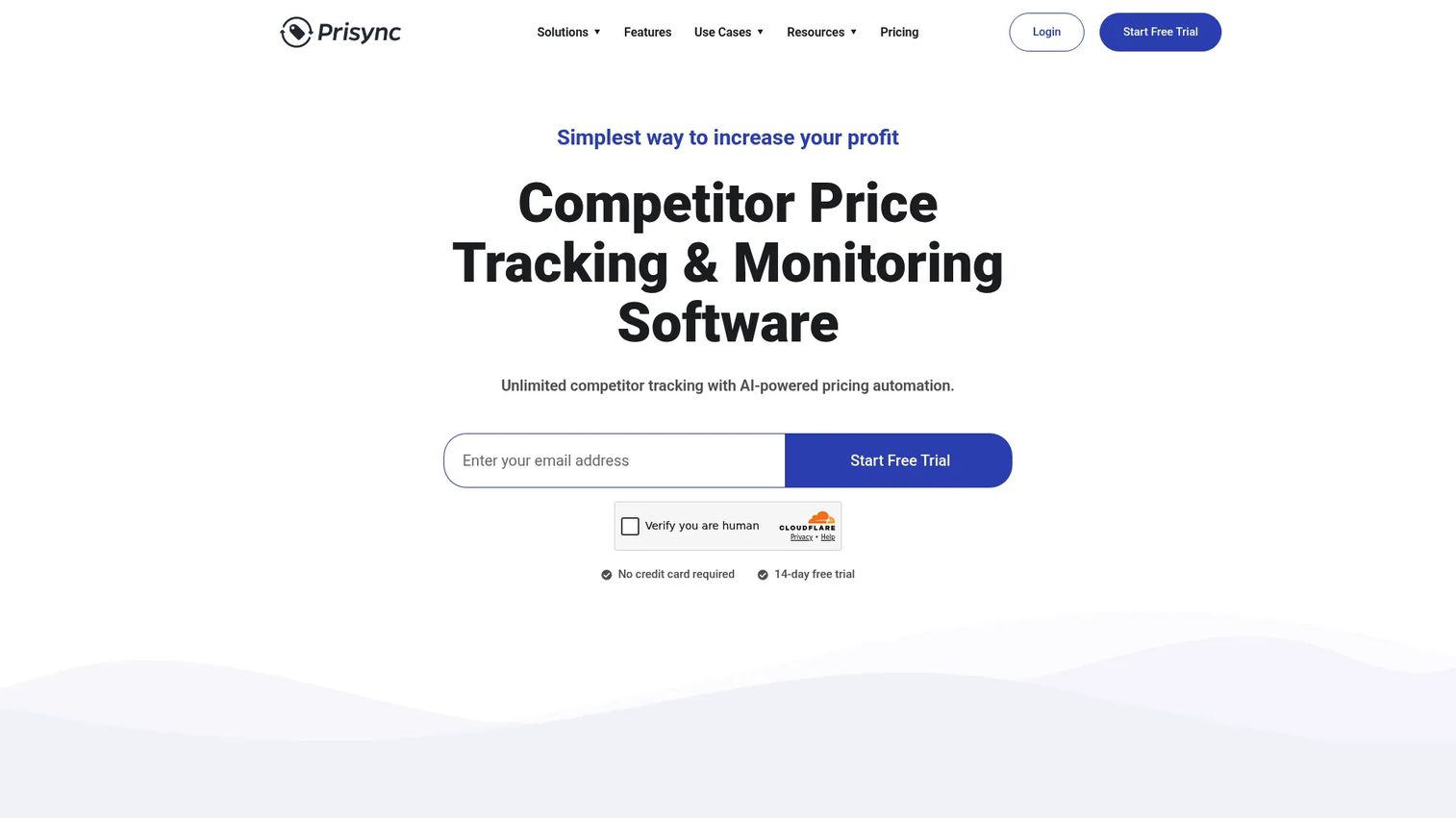
Prisync combines competitor price tracking with dynamic pricing for ecommerce businesses. Its monitoring options include URL-based, channel-based, and hybrid models. Retailers can examine price history alongside stock availability before deciding whether a competitor’s offer warrants a response.
For a PMM, the practical starting point is a defined product cohort. Choose the SKUs Sales repeatedly encounters in competitive conversations.
Build your evaluation around the questions behind those objections. Does a rival consistently charge less, or does the difference appear during temporary campaigns?
Keep unavailable offers separate from purchasable alternatives when reviewing the results. Ask the pricing owner to approve any comparison that becomes a customer-facing claim.
Best for: Ecommerce retailers and suppliers wanting explicit monitoring packages with a path into repricing.
Key features
- Competitor price tracking
- Stock availability monitoring
- Historical pricing reports
- Dynamic pricing engine
- Daily or instant change notifications
Professional supports up to 100 products. Premium raises that allowance to 1,000, while Platinum covers up to 5,000.
The published URL-based packages are only one purchasing model. Evaluate channel and hybrid options separately if your monitoring requirements extend beyond a fixed set of pages.
API access adds 20% to the subscription price, according to Prisync’s pricing page. Include that expense when comparing reporting integrations against manual exports.
Why choose Prisync: It suits a team that wants to begin with a defined catalog rather than purchase a broader enterprise pricing program. Test whether its history answers your recurring sales objections.
Prisync pricing: URL-based plans cost $99/month for Professional, $199/month for Premium, and $399/month for Platinum. A 14-day free trial is available.
G2 rating
2. Pricefy
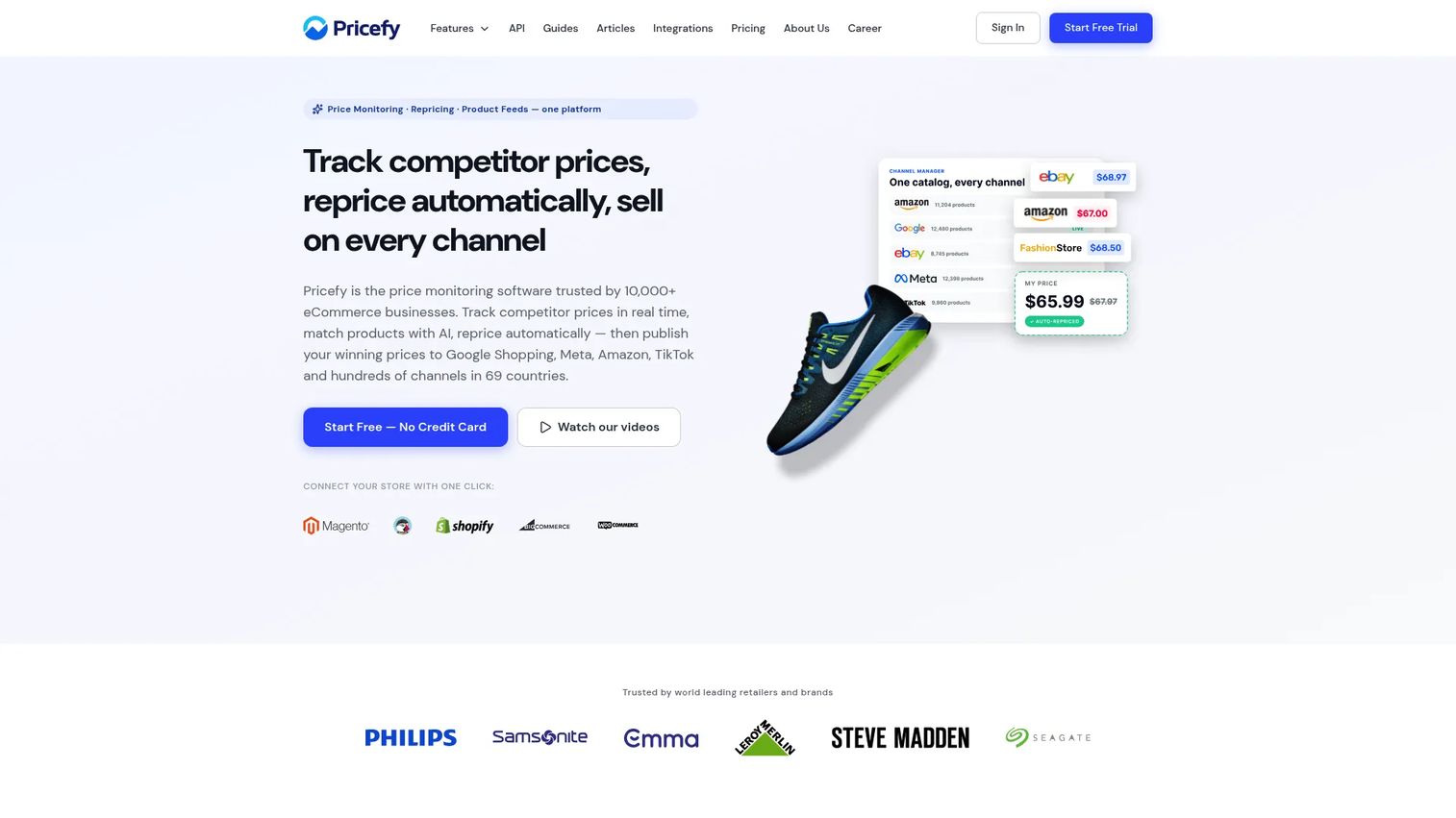
Pricefy combines competitor monitoring with automated repricing and product feed management. AI-assisted matching and competitor discovery support catalog comparison. Its scope suits ecommerce teams that also need to maintain shopping-channel feeds.
The free entry tier makes a focused evaluation possible before committing to a larger catalog. Select products with messy titles or closely related variants.
Ask the team reviewing matches to record every correction. That exercise reveals how much attention your catalog will require after the initial import.
For PMMs, useful outputs include competitor-level evidence that can travel beyond the pricing team. Test whether exported information retains enough context for someone reviewing it later.
Best for: Small and mid-sized ecommerce teams connecting competitive intelligence with channel operations.
Key features
- AI product matching and competitor discovery
- Automated monitoring updates and alerts
- Rule-based repricing
- Shopping-channel product feeds
- Excel, CSV, and XML reports
Package selection matters once you move beyond observation. Dynamic Repricing begins with Pro; Autopilot Repricing and MAP/MSRP Monitoring begin with Business.
Those boundaries should shape your trial. Evaluate the plan containing your intended workflow rather than assuming the entry package represents the full platform.
Enterprise supports up to 25,000 SKUs. Before expanding, agree which products deserve coverage and which changes should reach Sales.
Why choose Pricefy: It fits teams building a shared workflow between ecommerce operations and competitive intelligence. Its feed-management scope is relevant when channel maintenance belongs to the same team.
Pricefy pricing: Starter costs $49/month or $37/month annually; Pro costs $99 or $74; Business costs $189 or $142; Enterprise costs $499 or $374. A free plan is available.
G2 rating
3. Competera

Competera connects retail competitive intelligence with pricing optimization. Its platform supports promotional and markdown decisions alongside pricing analytics. The operating model extends beyond collecting rival prices into deciding how a retailer should respond.
That distinction matters when PMM participates in a wider pricing initiative. Your contribution should include the competitive questions leadership needs answered, rather than ownership of every optimization rule.
Bring the pricing team into evaluation early. Ask them to explain which decisions require commercial constraints and which require a market comparison.
For launch analysis, separate observed competitor behavior from recommendations generated by the platform. Sales needs to understand the evidence behind a claim.
Best for: Mid-market and enterprise retailers coordinating competitive intelligence with complex pricing decisions.
Key features
- No-code pricing rules with AI conflict resolution
- Price-elasticity and contextual optimization
- What-if simulations and A/B testing
- Promotional and markdown optimization
- Configurable data exports
Competera also supports product segmentation and store clustering. Those capabilities matter when a single catalog-wide pricing rule would obscure differences between product groups.
Structure the evaluation around a representative category rather than an aggregate dashboard. Ask how proposed adjustments change under different campaign assumptions.
Include reporting recipients in that review. A pricing recommendation and a PMM battlecard need different explanations, even when they begin with the same market data.
Why choose Competera: It fits retailers that need competitive signals to inform coordinated pricing programs. A monitoring-only requirement warrants a narrower evaluation before committing to optimization.
Competera pricing: Custom pricing applies to Adaptive AI and Contextual AI editions. Competitive Data uses pay-per-use billing.
4. Dealavo
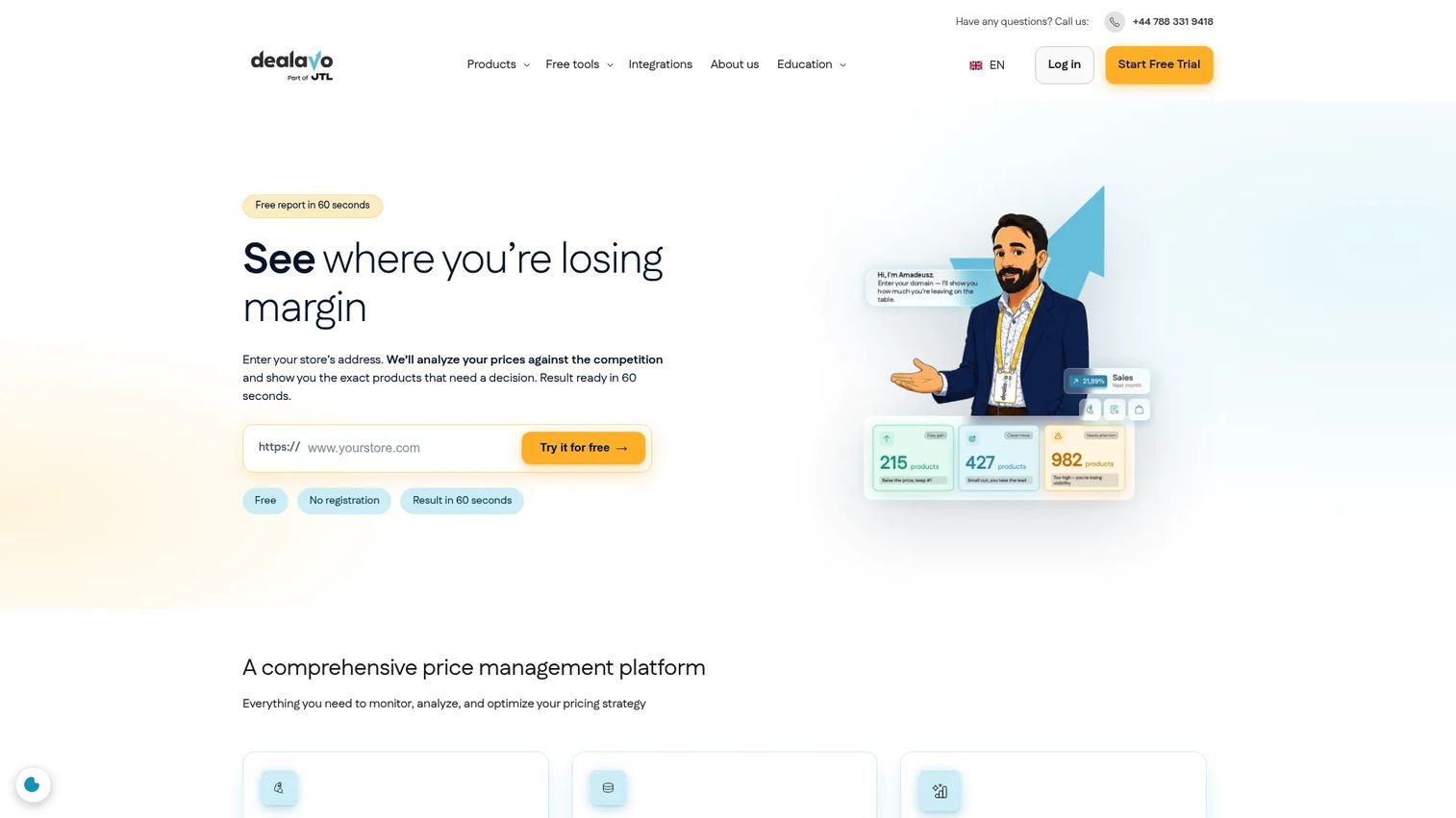
Dealavo provides price monitoring and automated repricing for ecommerce businesses. It tracks competitor availability and promotions alongside pricing. APIs and feeds provide routes for delivering that information into existing workflows.
The appeal for product marketing is shared evidence across commercial teams. Start by defining which markets matter to your competitive narrative.
A regional discount should not automatically become a global pricing claim. Ask the vendor to demonstrate the sources relevant to each country or sales channel.
Make validation a contractual evaluation topic. Specify how questionable observations should be reviewed and who receives corrections before the data reaches enablement materials.
Best for: Retailers, brands, and manufacturers needing multi-channel competitive information with structured delivery.
Key features
- Competitor price and availability monitoring
- Promotion tracking
- AI-assisted automated repricing
- API and feed delivery
- Ad-hoc market reports
Dealavo also offers pricing consulting. That service is relevant when the team needs help deciding how competitive observations should influence commercial policy.
Evaluate reporting through a concrete handoff. Give a PMM and pricing manager the same sample output, then ask each to identify the next action.
If either needs to reconstruct the source context manually, capture that requirement before implementation. The goal is usable evidence rather than another spreadsheet export.
Why choose Dealavo: It suits organizations that need market data delivered into established reporting processes. Validate source coverage using your own products before accepting broad geographic claims.
Dealavo pricing: Custom pricing depends on monitored SKUs, sales channels and markets, refresh frequency, and integration scope.
G2 rating
5. Price2Spy
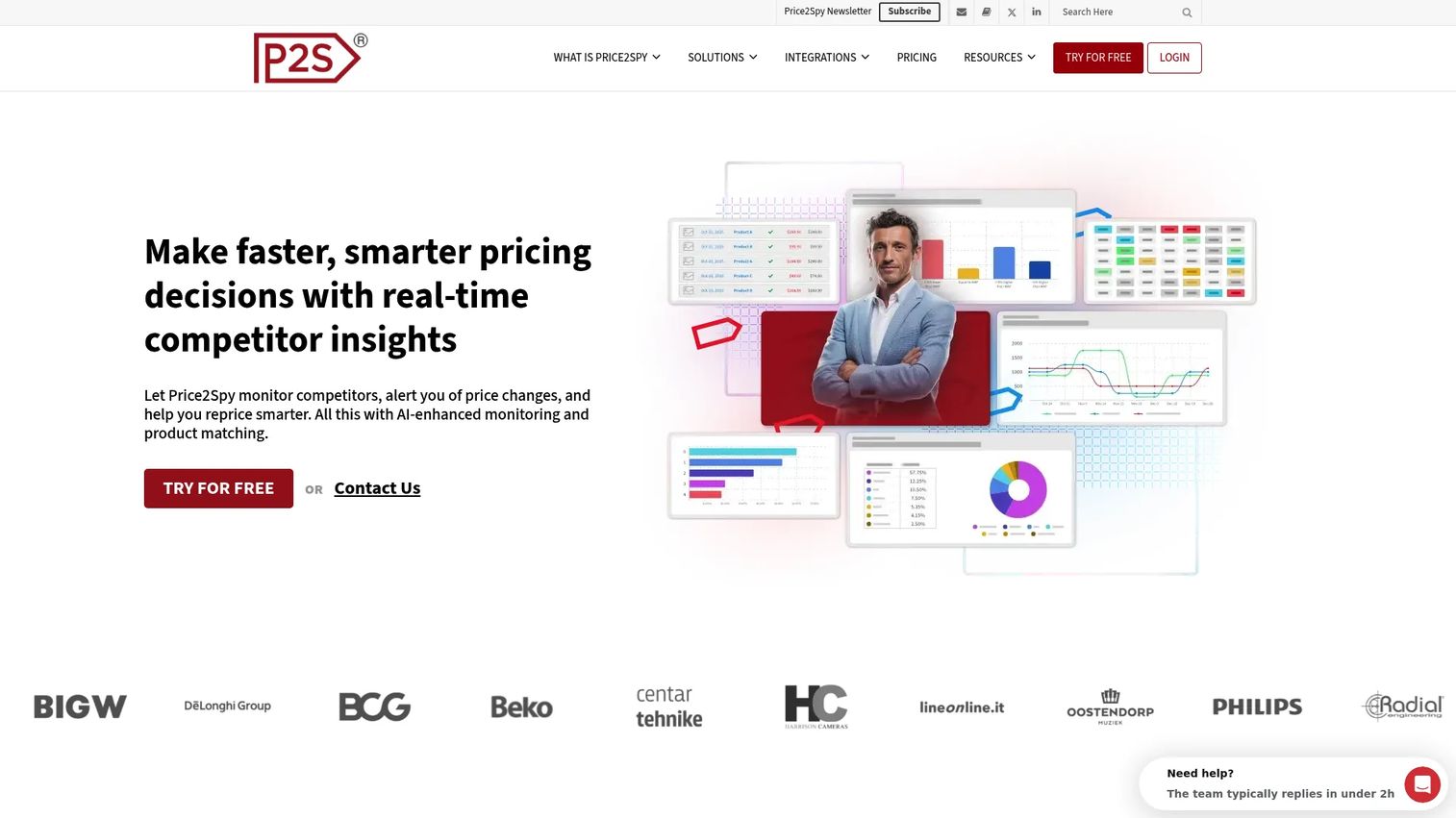
Price2Spy serves retailers, brands, and distributors with competitor monitoring and pricing intelligence. Its documented capabilities include MAP monitoring and marketplace coverage. Product matching and variation tracking support comparisons across catalogs.
This is a relevant candidate when a pricing discrepancy requires investigation rather than an immediate response. A brand team needs to distinguish the advertised offer from the product variant.
For PMMs, that distinction protects sales messaging. Comparing a discounted accessory bundle against a standalone product can produce an inaccurate objection-handling claim.
Use your evaluation to inspect borderline matches. Ask how reviewers handle renamed products and variants that share much of their catalog information.
Best for: Teams evaluating MAP monitoring alongside marketplace intelligence and repricing.
Key features
- MAP monitoring
- Marketplace price tracking
- Product matching and variation tracking
- Pricing dashboards and reports
- API and ecommerce integrations
Advanced repricing is also part of the platform’s scope. Keep its evaluation separate from the initial data-quality assessment.
Before testing automated actions, agree what constitutes an acceptable match. Then define how exceptions should reach the commercial owner.
If frequent checks are a buying requirement, request the schedule for your proposed package and sources. Measure the delay between a visible change and its arrival in reporting.
Why choose Price2Spy: It belongs on the shortlist when brands need policy-related monitoring alongside retail comparisons. Test the evidence available for investigating an advertised-price exception.
Price2Spy pricing: Custom pricing covers Starter, Basic, and Premium packages. A free trial is available.
G2 rating
6. Pricefx
Pricefx is an enterprise pricing platform for complex B2B businesses. It supports price management and optimization alongside quoting. Rebate and agreement management extend its scope into commercial execution.
This is a different purchase from a standalone competitor price tracker. The central question is how pricing intelligence reaches negotiated decisions across the business.
A PMM may help define competitive positioning, while pricing operations owns the rules. Sales leadership should assess how proposed changes affect customer conversations.
Avoid treating an advertised competitor price as equivalent to a negotiated agreement. Define which comparison is relevant before connecting market information to quoting decisions.
Best for: Large B2B organizations coordinating pricing across customer agreements and regional operations.
Key features
- AI price optimization
- Deal optimization
- Price management
- Quoting
- Rebate and agreement management
Pricing analytics and insights support the broader platform. Ask evaluators to demonstrate how an approved pricing decision reaches the people responsible for execution.
For a buying team, the strongest test is an end-to-end commercial scenario. Begin with an identified pricing issue and follow it through review.
Include the exception path. A useful evaluation should show how your organization handles a recommendation that conflicts with an existing customer agreement.
Why choose Pricefx: It fits organizations seeking a pricing execution system that can incorporate competitive inputs. A PMM needing monitoring alone should keep the purchase requirements narrower.
Pricefx pricing: Custom pricing depends on revenue, geography, and business-unit usage. Subscription fees are paid annually in advance.
G2 rating
7. Feedvisor 360
Feedvisor 360 connects marketplace pricing with advertising and inventory decisions. Its focus includes Amazon and Walmart brands and sellers. The platform combines algorithmic repricing with performance analysis rather than treating rival prices as an isolated dataset.
Marketplace operators need that commercial context when evaluating an offer. A pricing move should be considered alongside the business’s ability to fulfill demand.
For PMMs supporting marketplace launches, investigate the relationship between positioning and channel performance. Keep conclusions specific to the marketplace involved.
A change in a seller’s performance does not, by itself, explain why buyers responded. Use the platform’s outputs to frame questions for the commercial team.
Best for: Amazon and Walmart operations needing coordinated marketplace optimization.
Key features
- Dynamic pricing and algorithmic repricing
- Buy Box optimization
- Inventory-aware pricing
- Advertising optimization
- Profitability and MAP analytics
Feedvisor also offers AI Advisor for conversational performance insights. Evaluate whether its answers help operators investigate a decision rather than replace the underlying evidence.
Define the reporting audience before procurement. A marketplace manager may need operational detail; PMM needs an approved explanation that supports positioning.
Use the trial or sales evaluation to trace one commercial event across the relevant inputs. Keep the analysis grounded in your own products.
Why choose Feedvisor 360: It fits businesses whose pricing decisions sit inside marketplace operations. Teams monitoring independent retail websites should first establish whether its source coverage matches that requirement.
Feedvisor 360 pricing: Request a product-specific quote. Pricing for other Feedvisor offerings should not be used as a Feedvisor 360 subscription estimate.
G2 rating
8. PriceLabs
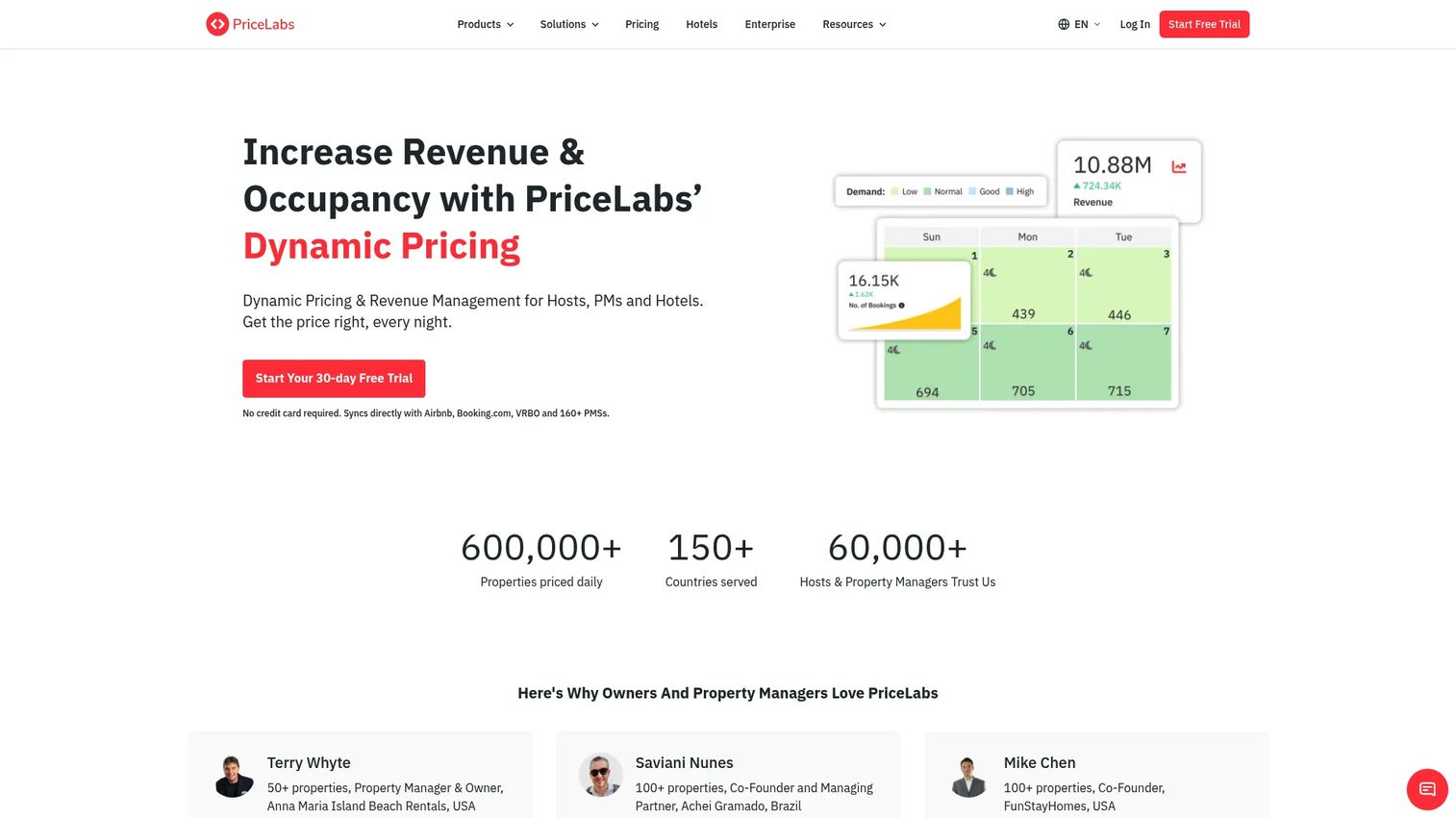
PriceLabs provides dynamic pricing and revenue management for vacation rentals and hotels. It uses market and demand information to support rate recommendations. Portfolio analytics place those decisions alongside occupancy and revenue performance.
Hospitality is a specialist context within this comparison. The unit being evaluated is a property stay, rather than an ecommerce SKU.
A marketing team supporting accommodation operators needs comparable dates and property characteristics. A cheaper rate for a different stay pattern is weak positioning evidence.
Define the comparison set before interpreting market movement. Ask the revenue manager which properties represent credible alternatives for the audience you target.
Best for: Vacation-rental hosts and property managers managing rates over time.
Key features
- Demand-informed dynamic pricing
- Competitive market dashboards
- Occupancy and revenue analytics
- Revenue Estimator Pro
- Listing Optimizer
Portfolio reporting includes average daily rate and revenue per available rental metrics. Use those outputs to investigate whether a proposed positioning claim reflects the relevant market.
Evaluate the recommended rate against the commercial objective for that property. Occupancy growth and revenue performance should be discussed together rather than inferred from a competitor’s headline rate.
For a pilot, keep property characteristics and stay dates consistent. Otherwise, the evaluation can confuse differences in inventory with differences in pricing strategy.
Why choose PriceLabs: It is relevant when local accommodation rates and demand patterns drive the decision. Ecommerce teams comparing merchandise should use a catalog-focused candidate.
PriceLabs pricing: The US pricing view starts at $14.49 per listing monthly, plus taxes; rates vary by region and volume. Dynamic Pricing includes a 30-day trial.
9. PriceSpider Brand Monitor
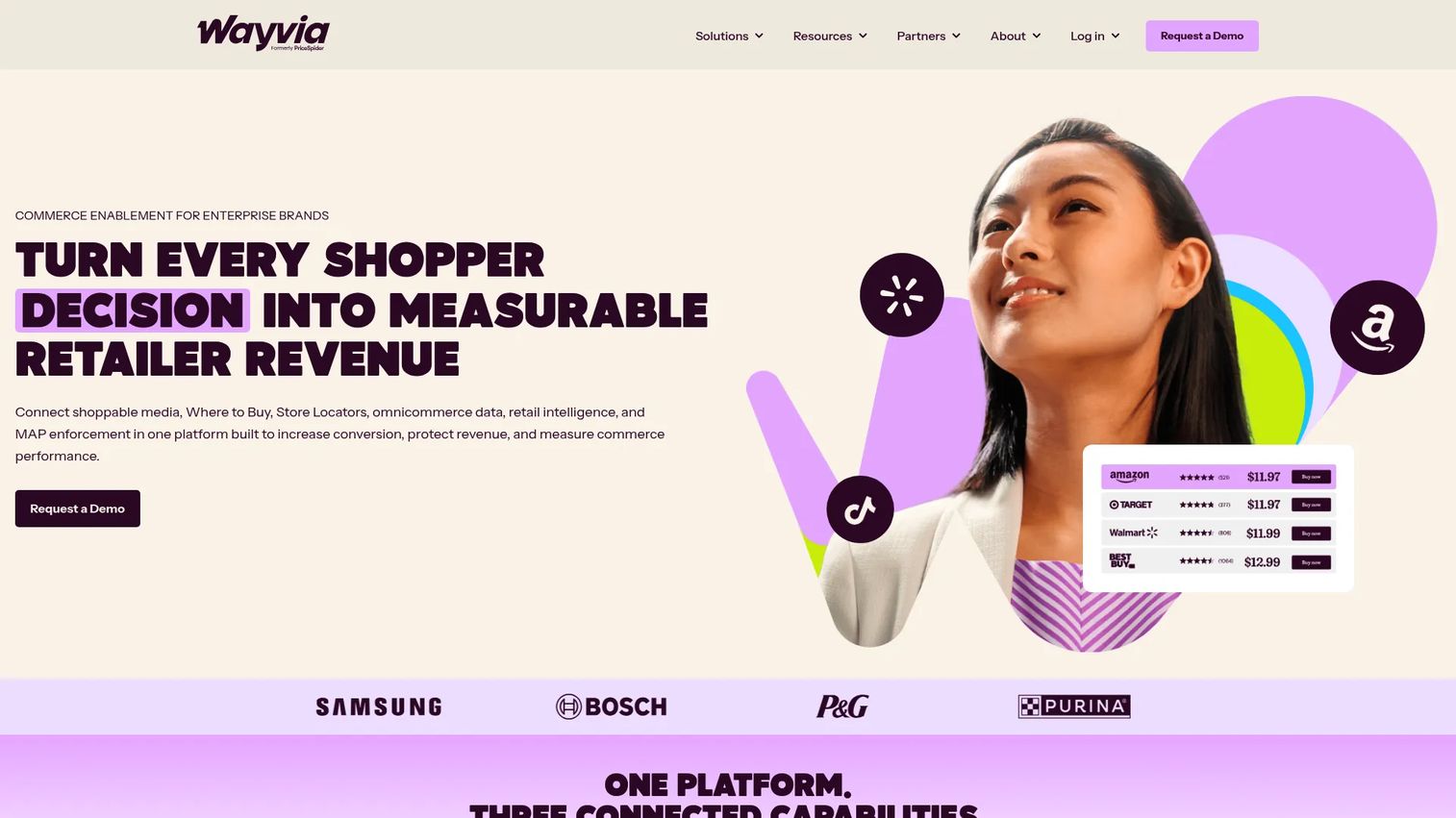
PriceSpider Brand Monitor provides digital shelf analytics for consumer brands. It monitors pricing and availability alongside product content and search placement. The broader view helps teams investigate how products appear across ecommerce retailers.
For PMMs, this changes the evaluation question. A competitor’s lower price may be only one part of the customer’s comparison.
The product page itself deserves attention. Check whether the displayed imagery and content support the intended positioning.
Use the platform evaluation to connect commercial observations with presentation quality. Keep pricing findings distinct from conclusions about customer perception unless additional evidence supports that connection.
Best for: Consumer brands needing visibility into product presentation and availability across retail channels.
Key features
- Share of Search monitoring
- Product image and content monitoring
- Stock availability tracking
- Price monitoring
- Ratings and reviews monitoring
Questions and answers monitoring is also part of the documented feature set. That information can help PMMs identify questions worth addressing in channel content.
The evidence supports digital shelf monitoring. It does not establish a dedicated MAP enforcement workflow for this specific product.
If reseller compliance is your primary buying reason, ask for a product-specific demonstration of the required process. Do not assume every capability associated with the wider vendor belongs here.
Why choose PriceSpider Brand Monitor: It fits brands investigating how pricing and product presentation appear together at retailers. A price-only evaluation would overlook much of its documented scope.
PriceSpider Brand Monitor pricing: Custom pricing. Request a proposal for Brand Monitor specifically.
G2 rating
10. BlackCurve
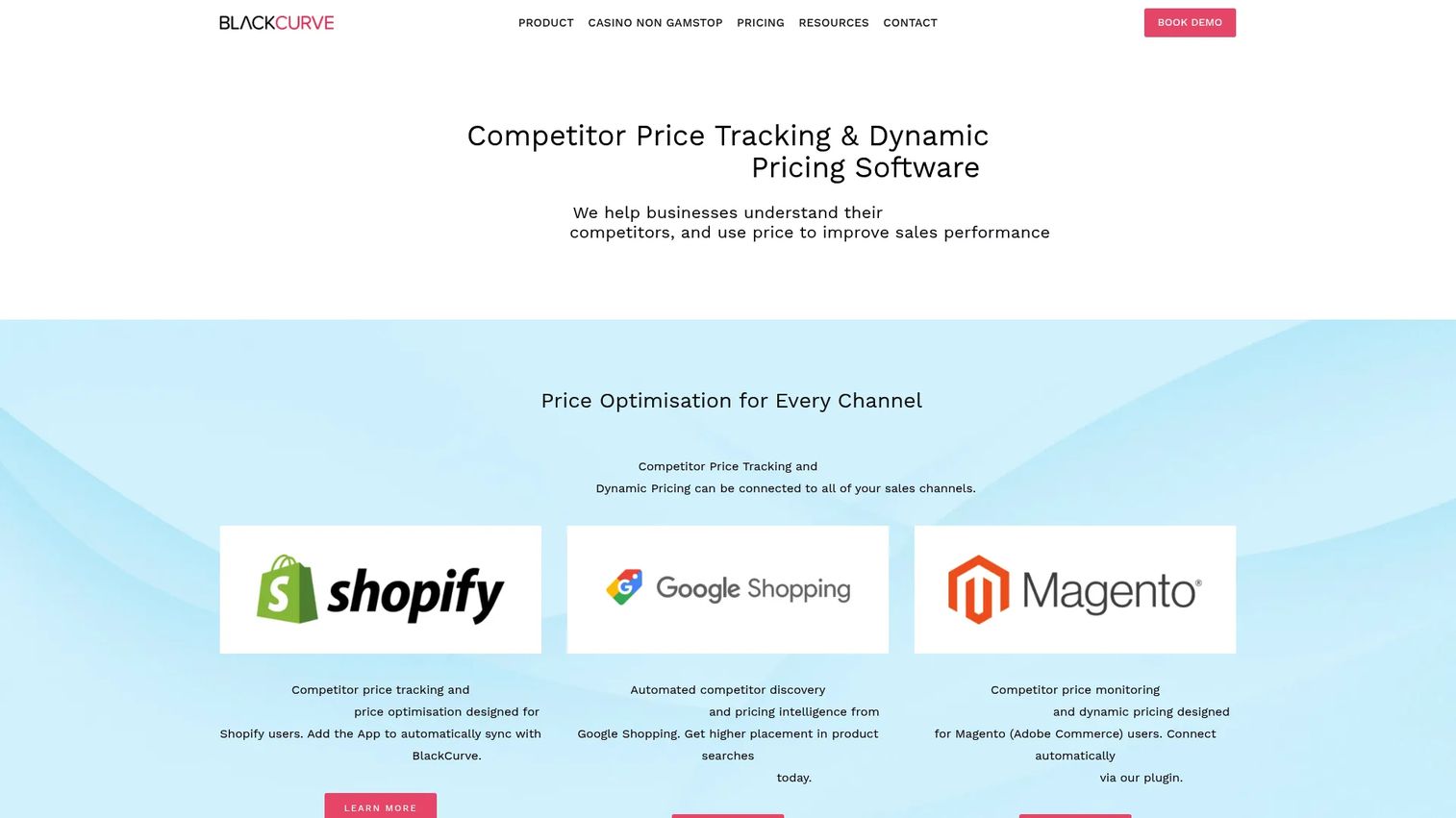
BlackCurve combines competitor tracking with price management and dynamic pricing. Its documented capabilities include Google Shopping tracking and pricing safeguards. Quotation and price-list functions extend the platform beyond market observation.
This makes it relevant when the team already knows how it wants to respond to competitive changes. The evaluation should test those rules against representative products.
For PMMs, separate competitor evidence from the company’s response. A sales claim should explain the market position without exposing internal discount logic.
Bring finance or the pricing owner into scenario review. Agree which exceptions deserve manual attention before evaluating automated actions.
Best for: Businesses connecting competitor intelligence to controlled pricing management.
Key features
- Google Shopping competitor tracking
- Pricing rules and safeguards
- Price scenario modelling
- Geographic pricing
- Quotation and price-list management
The Team edition supports 100 products or services and includes two users. Professional expands to 1,000 products and three users.
Enterprise covers 10,000 products and five users. Size the evaluation around who needs to operate the platform, not everyone who receives its reports.
Commercial packaging deserves attention alongside functionality. Required setup fees affect the initial commitment, while optional analytics or integration costs can change the overall budget.
Ask for a complete proposal before comparing this platform with a monitoring-only subscription.
Why choose BlackCurve: It suits organizations that want competitor tracking tied to defined pricing actions. Scenario modelling is useful when the buying team needs to examine rule outcomes before rollout.
BlackCurve pricing: Team starts at £140/month billed annually, plus £420 setup. A 30-day free trial is available.
G2 rating
11. DataCrop Price Monitoring
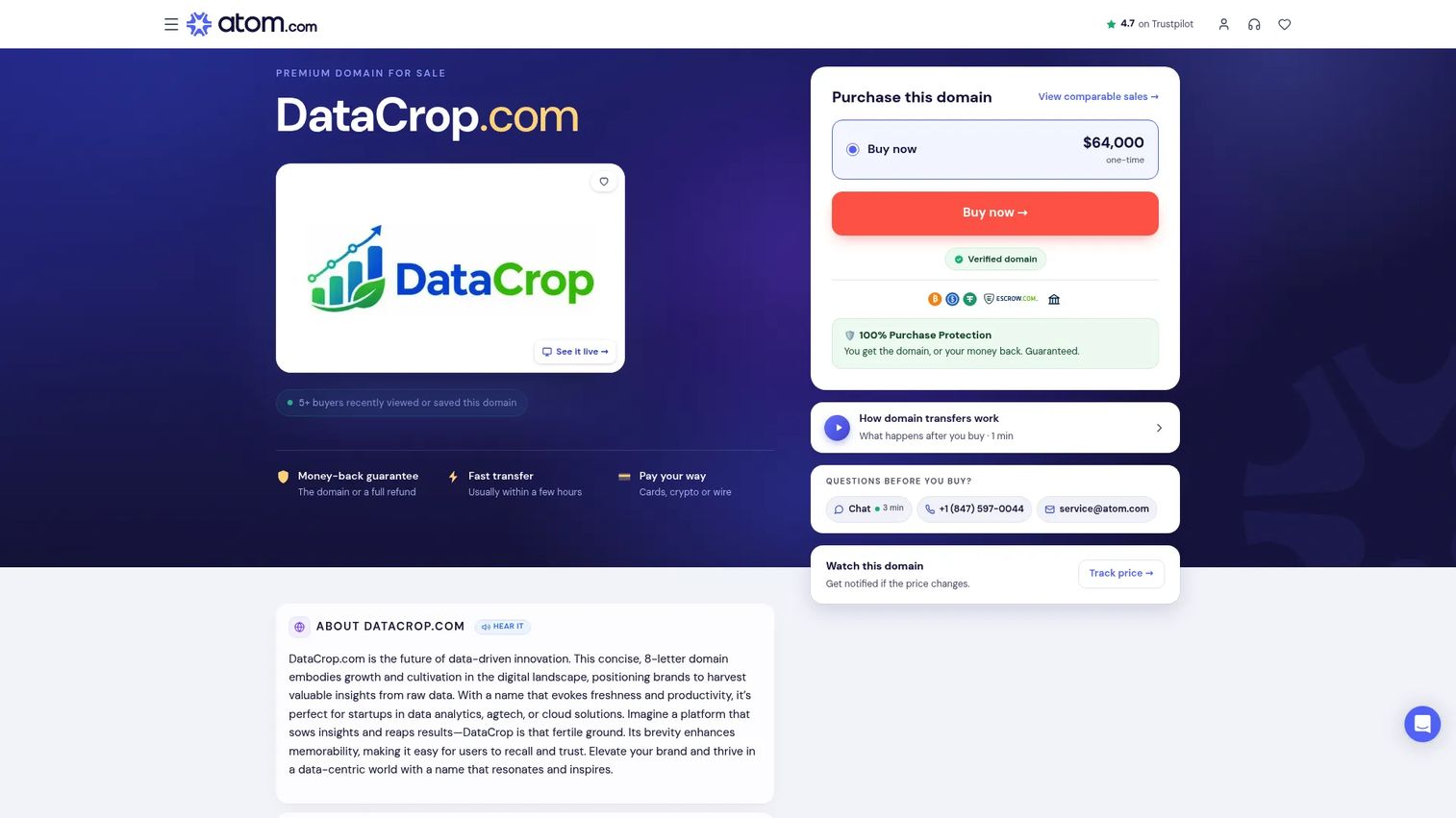
The supplied DataCrop Price Monitoring domain redirects to an Atom premium-domain sale page. It does not provide a current official product website. That prevents a supported recommendation for an active price-monitoring purchase.
An existing mention in an older shortlist is insufficient evidence of current availability. Treat supplier identity as a procurement requirement before discussing implementation.
Best for: No current buying recommendation can be established from the supplied domain.
Key features
Current product capabilities cannot be established from an official website.
Why choose DataCrop Price Monitoring: Keep this candidate on hold until an active supplier provides current documentation and an identifiable contracting entity. Do not assume historical descriptions represent an available service.
DataCrop Price Monitoring pricing: Unavailable through the supplied domain.
Considerations when choosing competitor price monitoring software
Product matching quality
Ask how the competitor pricing tool handles identifiers, image comparison, text matching, and human review. Test ambiguous variants and inspect confidence scores where offered.
Measure correction work during the pilot, since catalog matching determines whether subsequent analysis is useful.
Refresh frequency and history
Specify the oldest acceptable observation for each product group, then compare schedules by package and source. Ask how missing collection attempts appear in historical records.
Your price analytics software should distinguish an unchanged value from an observation that was never refreshed.
Alerts and workflow handoff
Test email alerts and scheduled reports against your team’s operating rhythm. Where needed, request evidence of webhooks, Slack delivery, or CRM and BI connections.
Assign an owner to each alert category and define what merits a battlecard update.
MAP, MSRP, and reseller monitoring
Separate suggested retail price comparisons from minimum advertised price policy workflows. For policy investigations, evaluate seller identification and dated evidence rather than a threshold notification alone.
Ask how reviewers reconstruct an incident after the advertised offer changes.
Repricing controls
Before enabling competitive pricing software to make changes, inspect floor prices and margin rules. Request demonstrations of approval workflows, simulation, and audit records where those controls are required.
Document who can override a recommendation and how the team reviews the outcome.
Treat competitor pricing software as part of an operating process. The strongest procurement test follows an observation through validation to an approved commercial action.
Choose the monitoring model before the subscription
Prisync and Pricefy are practical starting points for ecommerce teams evaluating defined catalogs. Competera suits retail optimization programs, while Pricefx addresses broader B2B pricing execution.
Dealavo deserves attention when data delivery matters. Price2Spy belongs in evaluations involving MAP monitoring and product variations.
Feedvisor 360 and PriceLabs serve distinct operating contexts. Marketplace optimization and hospitality rate management should not be judged using identical requirements.
PriceSpider Brand Monitor adds digital shelf context. BlackCurve connects competitive inputs with pricing rules, while DataCrop’s current domain status warrants holding that candidate.
The best competitor price tracking software should support a decision your team already owns. Choose a competitor price monitoring tool that improves evidence quality before expanding automation.
Shortlist two candidates around source coverage and action model. Test the same 20 products across both platforms for two weeks.
Record incorrect matches, missed changes, alert delays, and time spent preparing a usable report. For hospitality, substitute comparable listings and stay dates.
Finish by asking Sales whether the resulting evidence improves a competitive conversation. A dashboard earns its place when the field can trust what it says.
FAQs
Competitor price monitoring software tracks prices and related commercial information across competing websites or marketplaces. Depending on the product, it also captures stock status, promotions, seller activity, or changes over time.
For a buyer, the important output is a comparison that identifies the relevant offer and observation date. Evaluate whether that evidence remains understandable after it leaves the dashboard and reaches a sales document.
Platforms collect information from selected sources, associate observations with products, and organize the results for reporting. Product matching and validation determine whether the comparisons represent equivalent offers.
Alerts can then highlight changes that meet defined conditions, while historical records support analysis across observation periods. Ask each supplier to explain collection failures and corrections, because an apparently unchanged price does not necessarily mean a fresh observation occurred.
Price monitoring supplies evidence about competing offers; dynamic pricing uses commercial inputs to recommend or execute adjustments. Those inputs can include demand and margin requirements alongside competitor information.
A monitoring-only purchase can suit PMMs who need current competitive evidence without authority to change prices. Teams buying both capabilities should evaluate data quality separately from the rules governing commercial execution.
Match monitoring frequency to how quickly meaningful changes occur and how quickly your team can respond. Daily checks may suit stable categories, while active marketplaces can require several observations within a day.
Ask suppliers to specify collection schedules for your chosen package and individual sources. During evaluation, compare the timing of visible changes with reporting delivery rather than relying solely on a stated refresh interval.
Product matching connects equivalent items across catalogs that use different names, images, variants, bundles, or identifiers. It determines whether a comparison is commercially meaningful before anyone interprets the price difference.
A similar title does not establish equivalence when quantities or included accessories differ. Test your hardest examples first, and ask how the system records corrections so reviewers can understand why a match was accepted.
MAP monitoring checks advertised prices against a brand’s minimum advertised price policy thresholds. Brands use it to identify offers requiring investigation within reseller channels.
Evaluate whether the workflow preserves seller identity and dated evidence after the listing changes. MSRP monitoring serves a different comparison purpose: It measures pricing against the manufacturer’s suggested retail price, rather than establishing that a policy exception occurred.
Some platforms recommend new prices or execute changes through connected pricing workflows. Availability varies by product and package, so monitoring access should not be treated as proof of automation coverage.
Before activation, establish floor prices and margin requirements with the commercial owner. Test representative exceptions and approval paths, then retain a record of decisions so the team can investigate unexpected outcomes without reconstructing events manually.
Prioritize traceable history and reports that preserve the context behind a competitive claim. Alerts should identify changes that warrant messaging review rather than overwhelm the team with every movement.
Ask Sales to assess a sample output against an objection they regularly encounter. The strongest evaluation measures whether PMM can publish defensible evidence, maintain ownership, and keep approved positioning consistent across customer-facing materials.