Sales context often disappears between the call, text message, support ticket, and internal handoff. Adding another communication tool can deepen the problem when activity never reaches your CRM.
This fragmentation is common. The 2025 IDC and Lumen Cloud Communications Survey found that 86% of surveyed U.S. businesses subscribe to at least two cloud communications providers. The same research found that 79% consider platform consolidation important.
A cloud communication platform can centralize those channels or embed them directly into customer workflows. The right choice improves routing and activity capture. The wrong one gives your reps another tab to manage.
What’s inside
This guide compares platforms across the communication jobs that sales and GTM teams encounter every day.
- API first tools for SMS, voice, verification, and product messaging
- Business phone systems for calling, routing, and CRM activity capture
- Collaboration platforms for meetings, chat, files, and internal calls
- Customer service tools for ticket based conversations and agent workflows
- Selection criteria covering channel fit, pricing, reliability, and integrations
Pricing comes from vendor pricing pages. Ratings reflect the G2 figures supplied for this comparison.
TL;DR
- Best overall CPaaS: Twilio offers broad communication APIs for developers building voice, messaging, verification, and email workflows
- Best for infrastructure control: Telnyx Suite combines carrier owned communications with voice, messaging, identity, networking, and edge products
- Best for enterprise communications infrastructure: Bandwidth supports network backed voice, messaging, authentication, and emergency calling
- Best for sales calling: Ringover, Aircall, CloudTalk, and JustCall connect business telephony with rep workflows
- Best for internal collaboration: Microsoft Teams and Webex combine meetings, messaging, files, and calling
- Best for service conversations: Zendesk connects digital and voice interactions with ticketing and support history
What is a cloud communication platform?
A cloud communication platform is software that lets businesses run, manage, or embed channels such as voice, SMS, messaging, video, chat, and contact center workflows through cloud infrastructure.
The category includes several distinct types of cloud communication software. Some cloud communications providers sell APIs for developers. Others package calling, meetings, or customer service features for employees and agents.
These platforms can replace or extend an on premises PBX, legacy telephony, separate SMS tools, and disconnected chat systems. Your best fit depends on the job.
Choose CPaaS when you need programmable communications inside a product or operational workflow. Choose a business phone system when reps need calling and SMS connected to CRM activity.
Unified communications platforms focus on internal work. Contact center tools manage customer conversations across service channels.
Main types of cloud communication platforms
| Type | What it does | Best fit |
|---|---|---|
| CPaaS | Embeds voice, SMS, verification, messaging, and phone numbers through communication APIs | Product, engineering, and RevOps teams |
| Business phone system | Runs cloud calling, routing, voicemail, recording, and number management | Sales and support teams |
| Unified communications | Combines meetings, chat, calling, file sharing, and collaboration | Internal teams |
| Contact center platform | Manages customer service conversations across digital and voice channels | Support and customer success teams |
| Omnichannel messaging | Coordinates SMS, WhatsApp, RCS, chat, email, and campaign workflows | GTM and customer engagement teams |
Key features to look for
- Voice calling and VoIP software
- SMS, MMS, WhatsApp, and RCS messaging
- Number provisioning and number porting
- Call routing and IVR
- Contact center queues
- APIs, SDKs, and webhooks
- CRM and helpdesk integrations
- Delivery analytics and message logs
- Access controls and data residency
- Usage based or per seat pricing
When to use a cloud communication platform
Centralize sales calls and messages
Use a cloud communication platform when calls, texts, and voicemail need to appear inside the CRM. Shared activity records give SDRs, AEs, managers, and support teams more context.
Look for call routing, recording controls, number reassignment, and automated logging. These capabilities matter when lead response or territory ownership changes quickly.
Embed communication into a product
CPaaS platforms support workflows such as verification codes, appointment reminders, delivery updates, support messages, and in app calling.
Evaluate API documentation, SDK coverage, webhooks, testing tools, and delivery logs. Developers also need clear error handling when a message or call fails.
Support customers across channels
Customer conversations rarely stay in one channel. A buyer may start in chat, switch to voice, then reply through WhatsApp or SMS.
A contact center platform or omnichannel messaging tool can preserve the interaction history. This helps agents avoid asking customers to repeat information after every handoff.
Cloud communication platform comparison
The table below includes API first CPaaS providers, business phone systems, unified communications suites, and support platforms.
Start with the workflow you need to fix. Then compare channel coverage, pricing units, integration depth, and administration requirements.
| # | Product | Best for | Key differentiator | Pricing | G2 rating |
|---|---|---|---|---|---|
| 1 | Twilio | Programmable customer communications | Broad voice, messaging, email, verification, and contact center products | Usage based, email from $19.95 monthly | 4.1/5 |
| 2 | Telnyx Suite | Communications infrastructure and network control | Carrier owned voice, messaging, identity, networking, and edge products | Pay as you go with no monthly minimum | 4.7/5 |
| 3 | Bandwidth | Enterprise voice and messaging infrastructure | Direct network backed APIs and emergency calling | Usage based, rates from $0.0020 per minute | 4.4/5 |
| 4 | Sinch Engage | Mobile customer engagement | SMS, MMS, RCS, WhatsApp, automation, and shared conversations | Basics from $99 monthly | 4.5/5 |
| 5 | Bird | Programmable multichannel communication | APIs for email, SMS, WhatsApp, voice, and verification | Free email tier, Startup from $15 monthly | 3.9/5 |
| 6 | Telesign | Verification and identity intelligence | Phone intelligence, fraud risk signals, and verification channels | SMS Verify from $0.0095 per message | 4.3/5 |
| 7 | Telerivet | International messaging operations | Multichannel automation across providers and regions | Free plan, Starter from $49 monthly | 0.0/5 |
| 8 | Ringover | Sales and support telephony | Calling, CRM integrations, analytics, and AI coaching | Talk from $19 per user monthly | 4.6/5 |
| 9 | Aircall | CRM connected business calling | Phone system, routing, analytics, and rep coaching | Essentials from $30 per license monthly | 4.4/5 |
| 10 | CloudTalk | International sales and support calling | Call queues, smart routing, dialers, and global numbers | Starter from €25 per user monthly | 4.4/5 |
| 11 | JustCall | Outbound calling and SMS | Multiple dialers, messaging, automation, and CRM integrations | Team from $29 per user monthly | 4.3/5 |
| 12 | 3CX | Cloud PBX and unified communications | Concurrent call licensing with deployment flexibility | Basic from $300 yearly | 4.4/5 |
| 13 | Microsoft Teams | Internal collaboration | Chat, meetings, calling, and file collaboration | Free plan, Essentials from $4 per user monthly | 4.4/5 |
| 14 | Webex | Enterprise meetings and collaboration | Meetings, cloud calling, webinars, events, and messaging | Free plan, Meet from $12 per user monthly | 4.2/5 |
| 15 | Zendesk | Omnichannel customer service | Ticketing connects messaging, voice, and service history | Support Team from $19 per agent monthly | 4.3/5 |
Best 15 tools for cloud communication platforms
1. Twilio
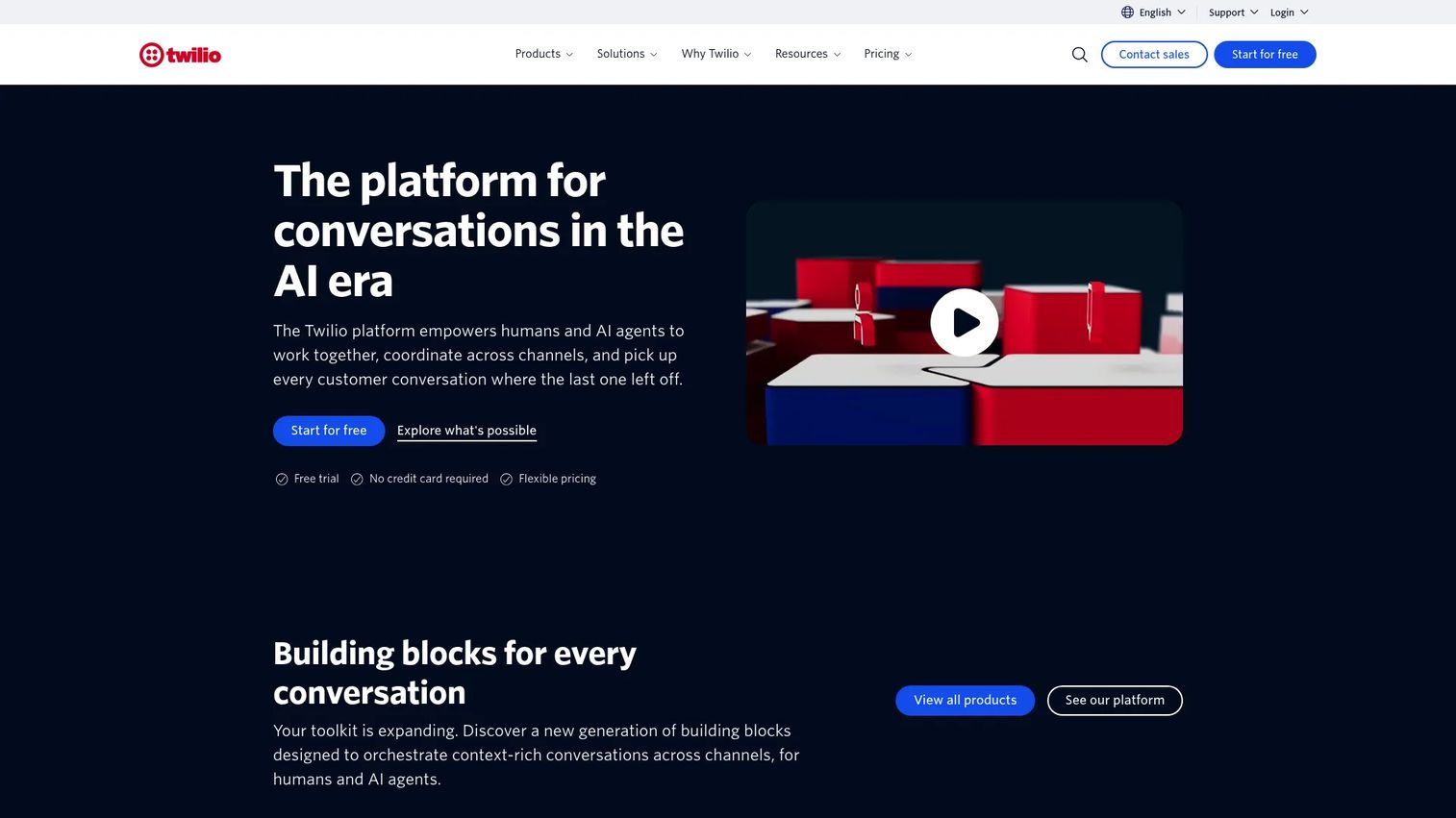
Twilio is an API first customer engagement platform for building communications into products and workflows. Its portfolio covers messaging, voice, email, verification, video, phone numbers, and contact center use cases.
The platform fits teams with engineering resources and complex channel requirements. RevOps can also use its programmable communications to trigger alerts or custom routing from business systems.
Best for: Businesses and developers building scalable customer communication workflows.
Key features
- SMS, MMS, WhatsApp, and RCS messaging
- Programmable voice and video calling
- Email API and marketing campaigns
- Authentication with Verify and Lookup
- Twilio Flex contact center
Why choose Twilio: Choose it when API breadth matters more than a prebuilt sales dialer. It supports custom communication logic across product and operational workflows.
Twilio pricing: Twilio uses usage based pricing across most products. SendGrid Email API starts at $19.95 monthly, while Flex costs $1 per active user hour.
G2 rating: 4.1/5
2. Telnyx Suite
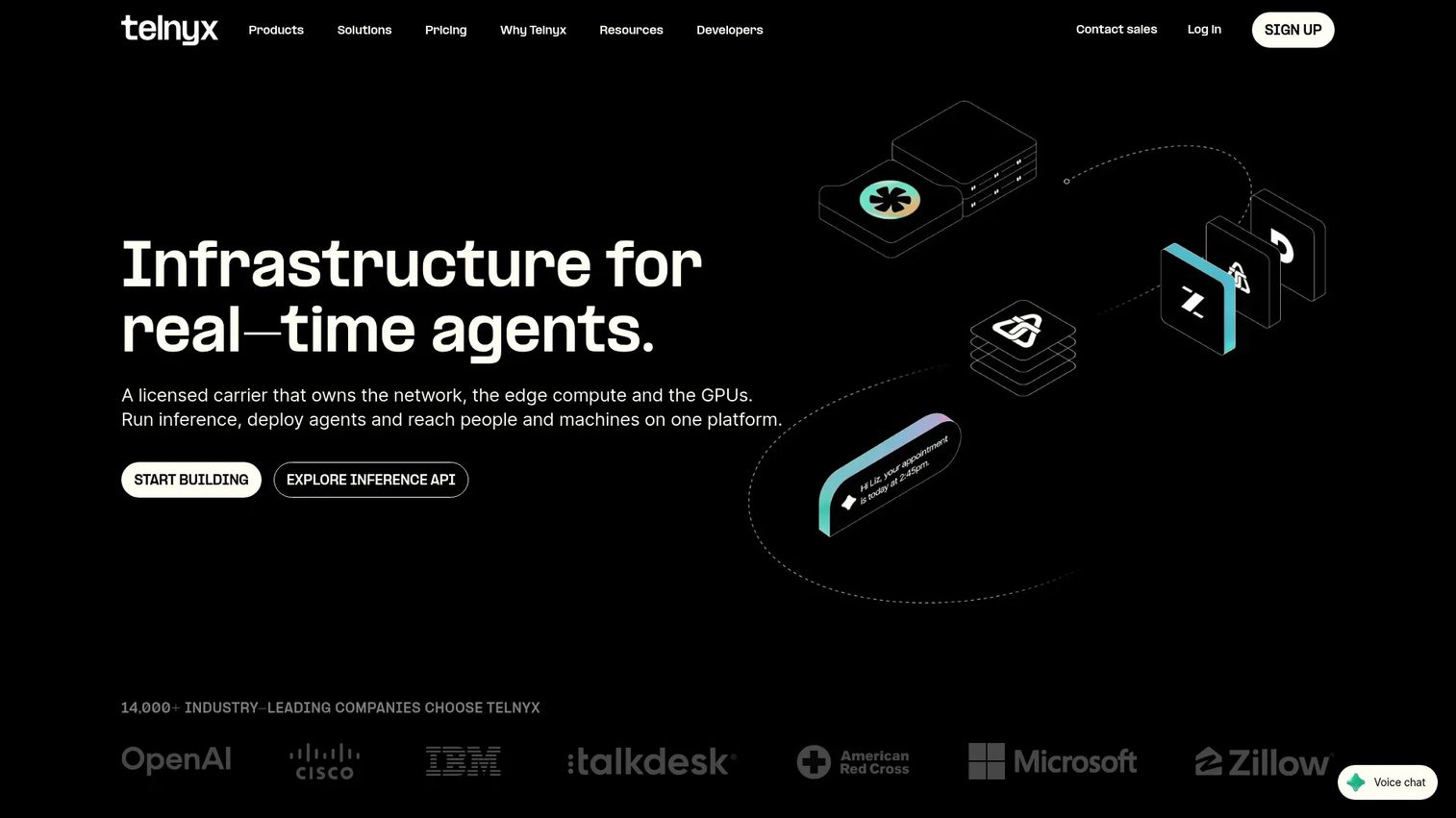
Telnyx Suite combines carrier owned communications with identity, networking, AI, compute, and storage products. Its communication portfolio includes voice APIs, SIP trunking, SMS, RCS, WhatsApp, email, fax, and global phone numbers.
Technical teams can manage telephony and network infrastructure through one provider. The platform also covers IoT connectivity and edge functions for broader application requirements.
Best for: Developers and businesses seeking carrier backed communication APIs with infrastructure control.
Key features
- Voice APIs and SIP trunking
- SMS, MMS, RCS, and WhatsApp
- Global phone number management
- Verification and number lookup
- Voice AI and speech tools
Why choose Telnyx Suite: Choose it when routing, number management, and telecom infrastructure are central requirements. Its product range extends beyond conventional CPaaS.
Telnyx Suite pricing: Pay as you go has no monthly minimum. Committed pricing starts at $500 monthly, while Enterprise starts at $5,000 monthly.
G2 rating: 4.7/5
3. Bandwidth
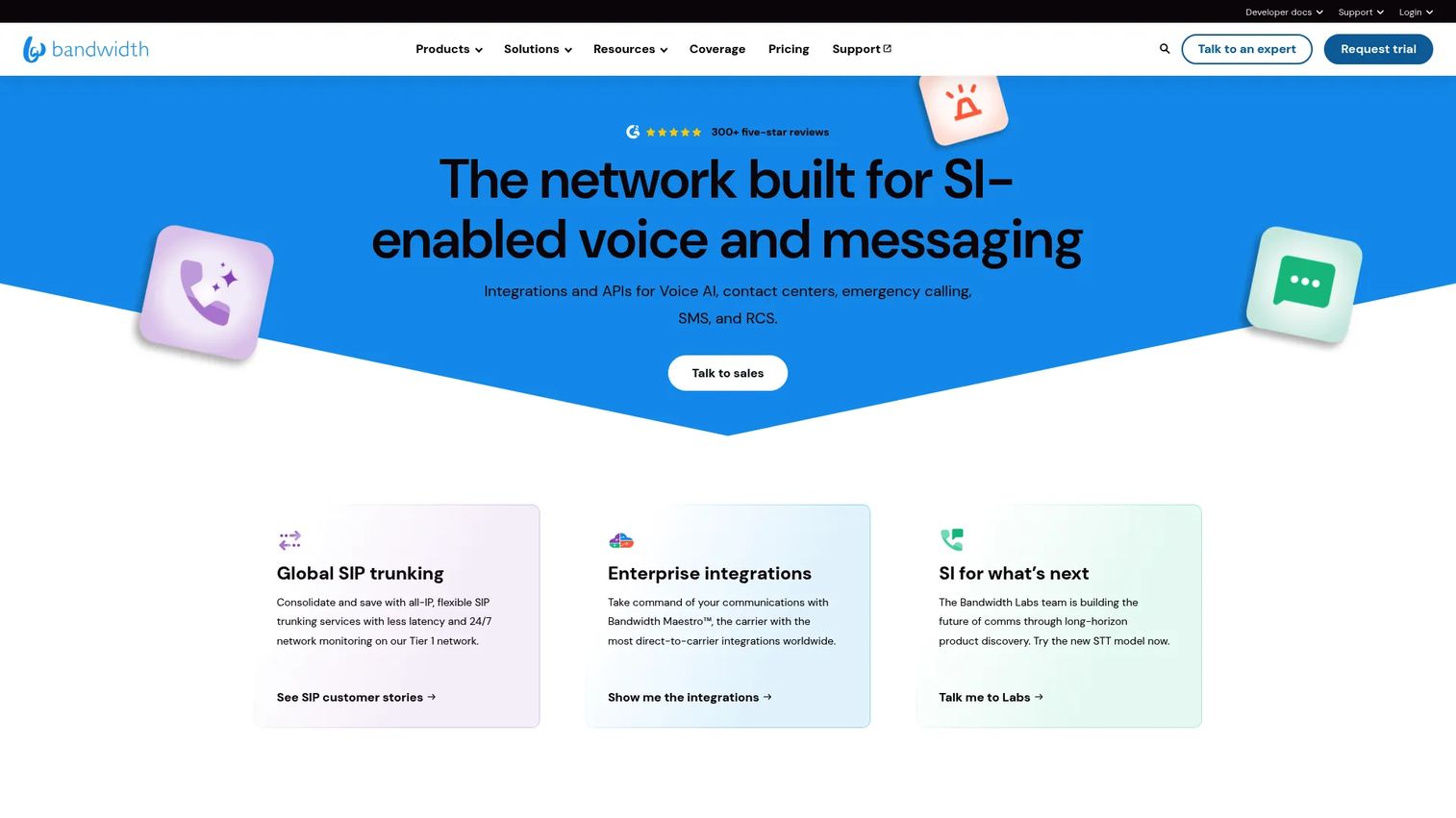
Bandwidth provides communications infrastructure for voice, messaging, authentication, emergency calling, and global SIP trunking. Its programmable products connect applications with network backed cloud communication services.
The platform suits enterprises and communications providers handling high volume or business critical traffic. Phone number management and porting also support large migrations.
Best for: Enterprises building scalable voice, messaging, or emergency communication capabilities.
Key features
- Programmable voice calling
- SMS, MMS, and RCS APIs
- Emergency Calling API
- Authentication API
- Number management and porting
Why choose Bandwidth: Choose it when direct communications infrastructure matters to your operating model. It fits product teams building services rather than sales teams seeking an immediate dialer.
Bandwidth pricing: Pricing is usage based. U.S. local outbound Voice API calls cost $0.0100 per minute, while outbound 10DLC SMS costs $0.004 per message.
G2 rating: 4.4/5
4. Sinch Engage
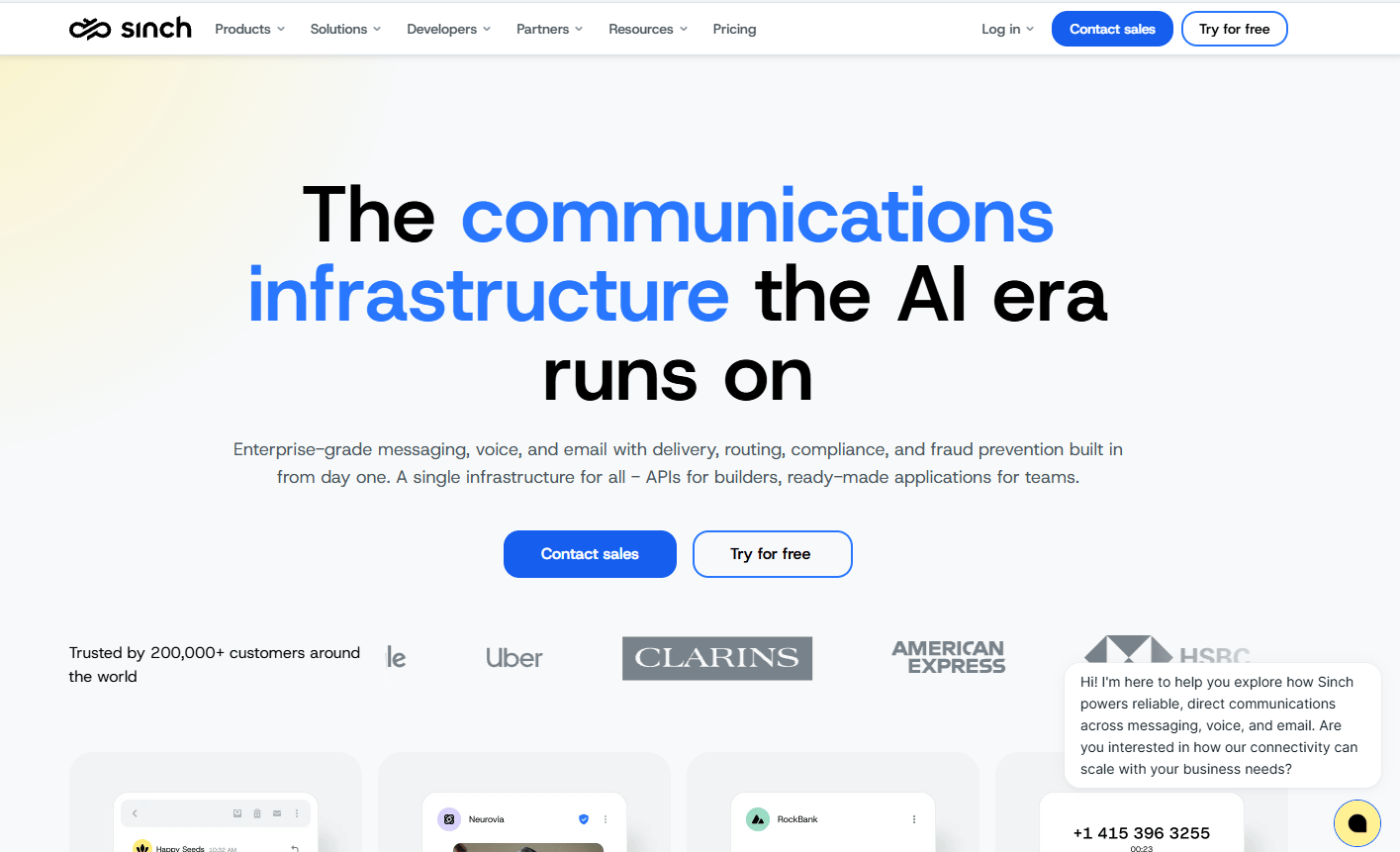
Sinch Engage is an omnichannel messaging platform for SMS, MMS, RCS, WhatsApp, and two way customer conversations. Teams can coordinate campaigns through automation, workflows, templates, and personalization.
A shared inbox helps multiple employees handle customer messages. This structure fits GTM teams managing mobile engagement across regions or campaigns.
Best for: Businesses running mobile messaging campaigns and shared customer conversations.
Key features
- SMS and MMS campaigns
- WhatsApp Business messaging
- RCS messaging
- Shared team inbox
- Campaign automation and analytics
Why choose Sinch Engage: Choose it when coordinated mobile messaging matters more than replacing your business phone system. The packaged interface reduces the need to build every workflow from raw APIs.
Sinch Engage pricing: Basics starts at $99 monthly. Conversations costs $249 monthly, while Pro starts at $799 monthly.
G2 rating: 4.5/5
5. Bird
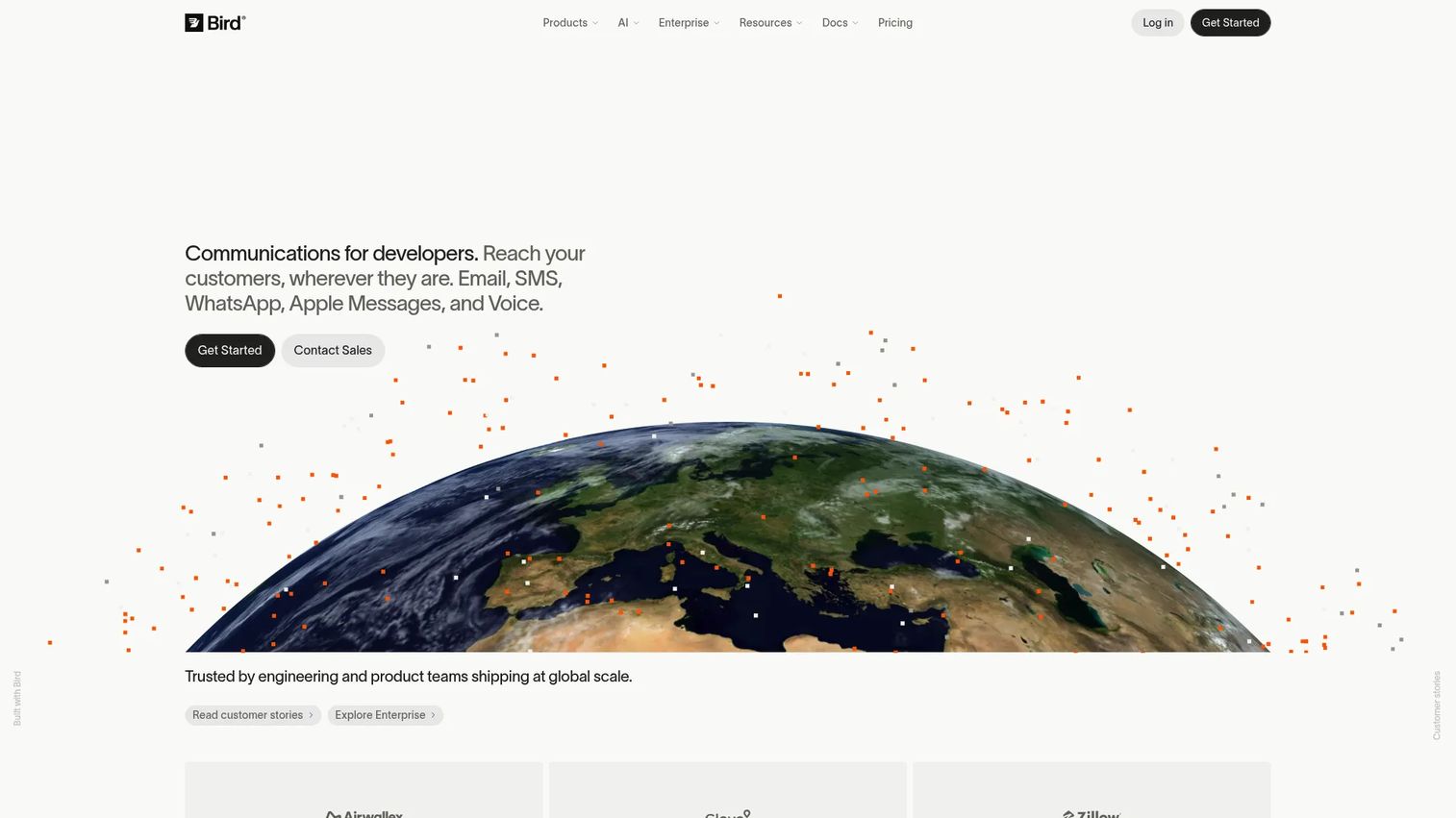
Bird provides communication APIs and tools for email, SMS, WhatsApp, voice, verification, lookup, and realtime messaging. Developers can use it to build customer communications across several channels.
Pricing differs by product, which matters during evaluation. A team using email may face a different cost structure from one running global SMS or WhatsApp workflows.
Best for: Developers and businesses building programmable communication across multiple channels.
Key features
- Email API and SMTP relay
- SMS messaging API
- WhatsApp messaging
- Voice API
- Verification and lookup APIs
Why choose Bird: Choose it for multichannel customer engagement that extends beyond telephony. It can support nurture, reminders, service updates, and messaging automation.
Bird pricing: The email product has a free tier with 1,000 emails monthly. Startup costs $15 monthly, while Growth costs $250 monthly.
G2 rating: 3.9/5
6. Telesign
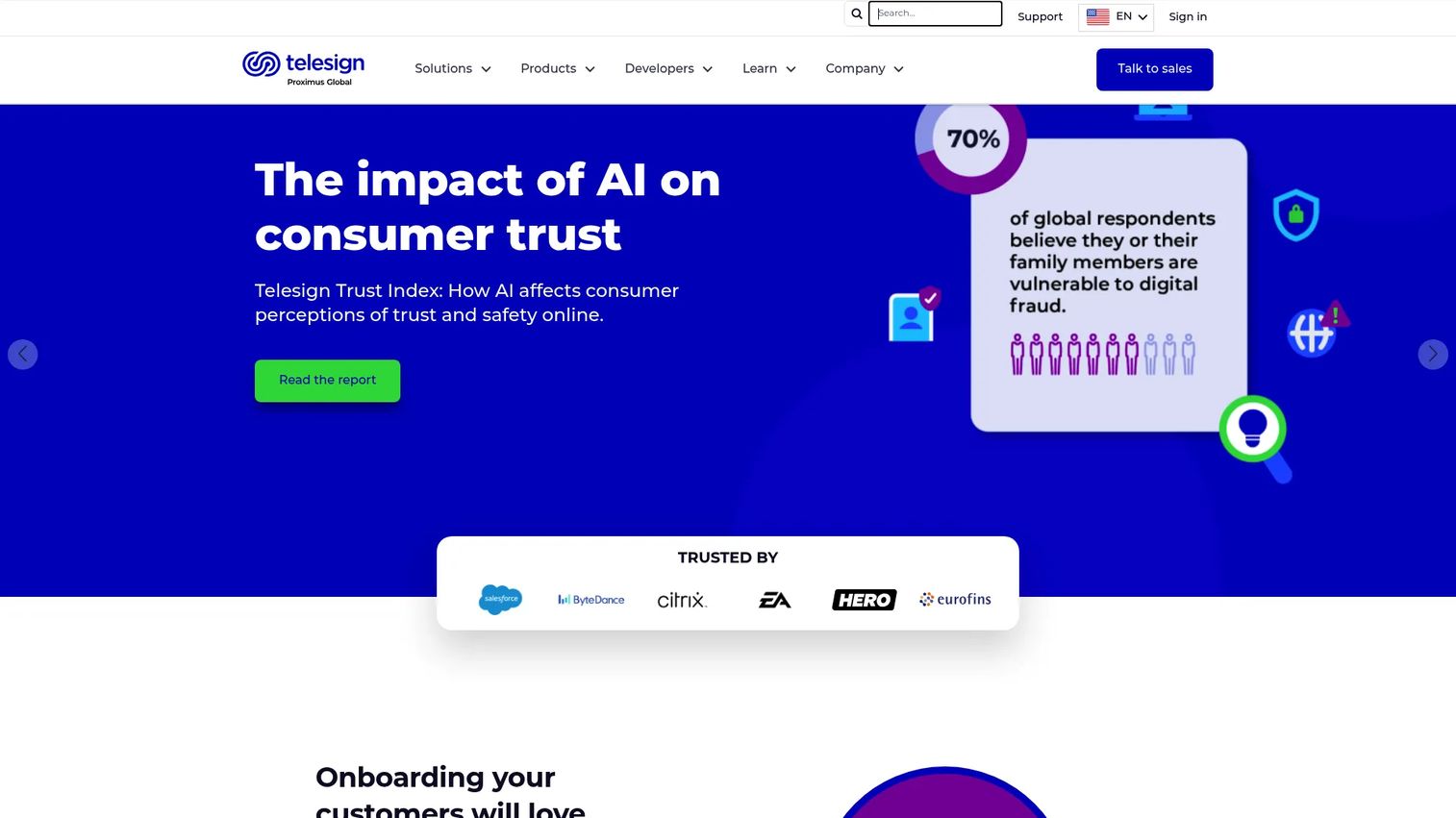
Telesign focuses on digital identity, fraud prevention, phone intelligence, verification, and omnichannel communication. Its verification channels include SMS, voice, WhatsApp, RCS, email, push, and silent verification.
The platform fits customer journeys where communication must establish trust. Common contexts include signup, account access, and transaction approval.
Best for: Enterprises adding verification and fraud risk signals to customer workflows.
Key features
- SMS and voice verification
- Phone number intelligence
- Fraud risk assessment
- Omnichannel identity verification
- Messaging across global channels
Why choose Telesign: Choose it when communication and identity checks belong in the same workflow. Sales dialling is outside its primary focus.
Telesign pricing: SMS Verify starts at $0.0095 per message. Verify Plus costs $0.15 per message, and free trials include test credits.
G2 rating: 4.3/5
7. Telerivet
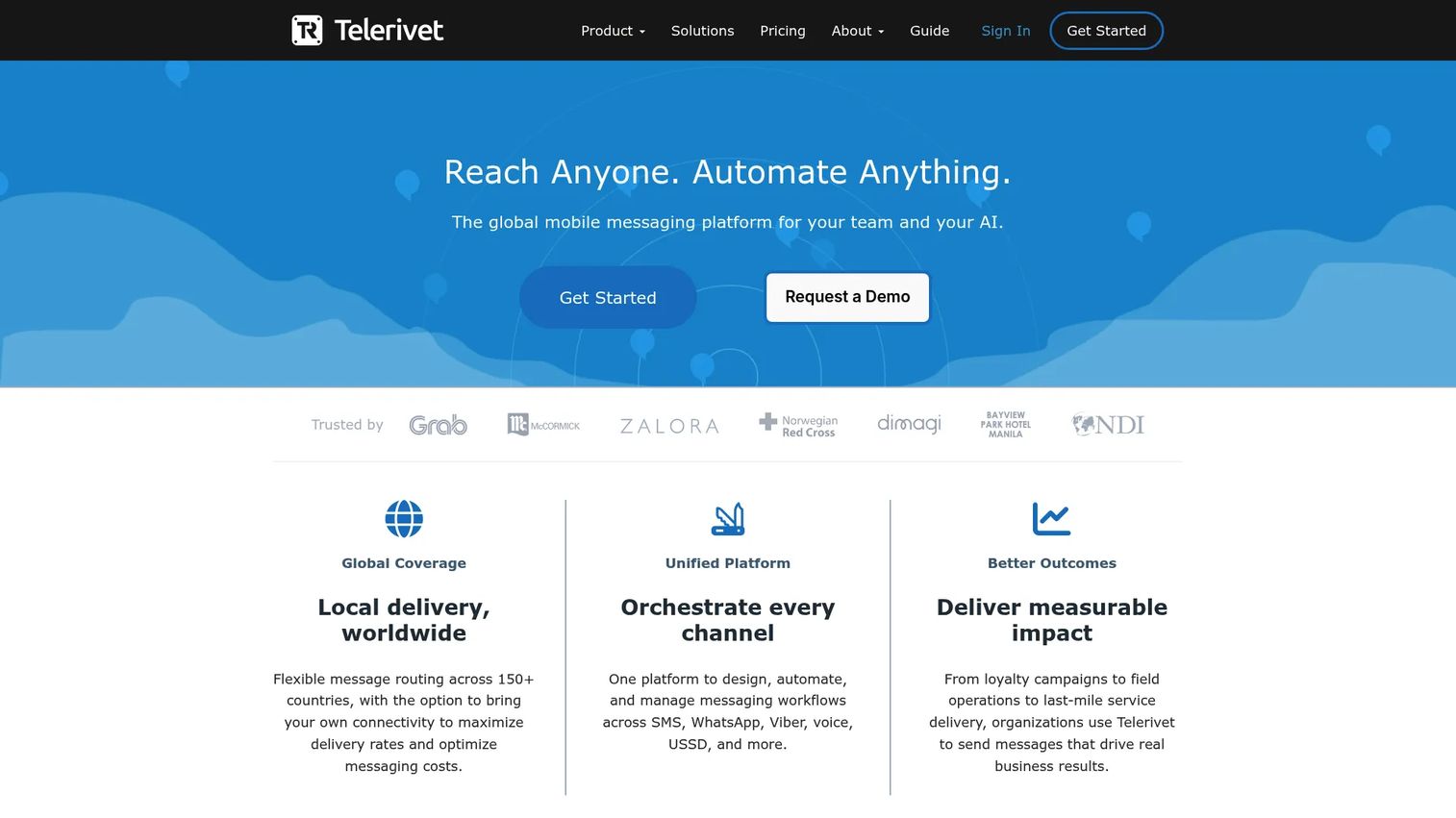
Telerivet is a multichannel communications platform for sending, receiving, automating, and analysing messaging workflows. Supported channels include SMS, WhatsApp, voice, USSD, Viber, and other social messaging services.
Teams can combine campaign tools with contact management, APIs, and webhooks. An Android SMS Gateway also supports operations in markets where conventional provider coverage differs.
Best for: Organisations coordinating international messaging across providers and operational workflows.
Key features
- Multichannel messaging and voice
- Campaign and contact management
- Automation builder
- APIs and webhooks
- Message failover and click tracking
Why choose Telerivet: Choose it when your team needs operational messaging without developing every workflow from scratch. It supports alerts, follow ups, and field communication.
Telerivet pricing: A free plan includes 50 messages daily. Starter costs $49 monthly, while annual billing reduces it to $41 monthly.
G2 rating: 0.0/5, with insufficient reviews for buying insight
8. Ringover
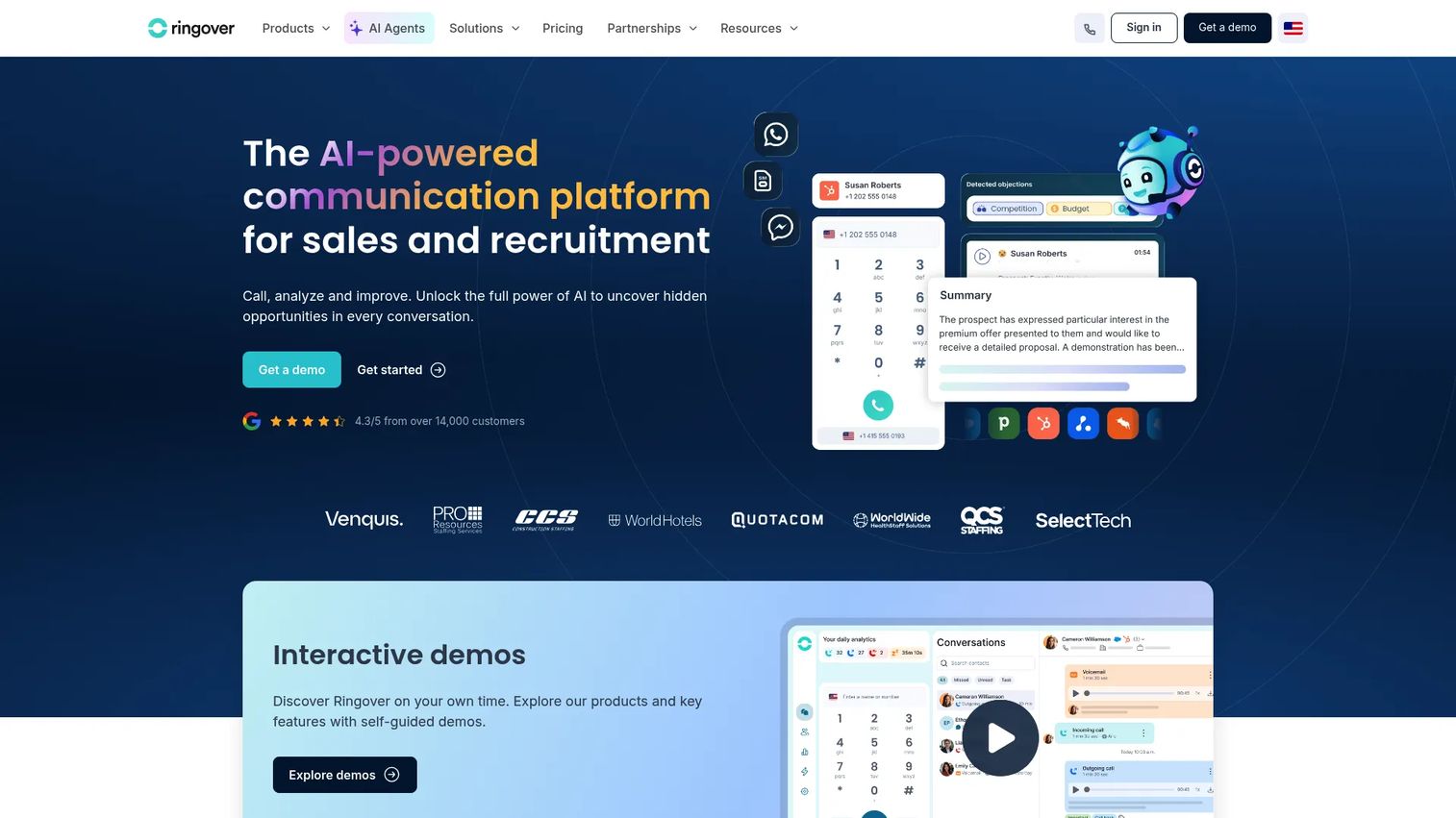
Ringover is a cloud phone and contact center platform for sales, recruitment, support, and other business teams. It combines calls, virtual numbers, routing, analytics, CRM connections, and AI coaching.
More than 100 CRM and applicant tracking integrations help connect activity with existing records. Omnichannel messaging includes WhatsApp, Messenger, and Instagram.
Best for: Sales and support teams seeking cloud telephony with CRM integrations.
Key features
- Cloud telephony and call campaigns
- Virtual and international numbers
- IVR and intelligent routing
- Call transcription and summaries
- Conversation analytics and coaching
Why choose Ringover: Choose it when reps need a ready business phone system rather than communication APIs. Its calling and coaching tools suit teams managing rep performance.
Ringover pricing: Talk starts at $19 per user monthly. Business costs $49, while Unified costs $69 per user monthly.
G2 rating: 4.6/5
9. Aircall
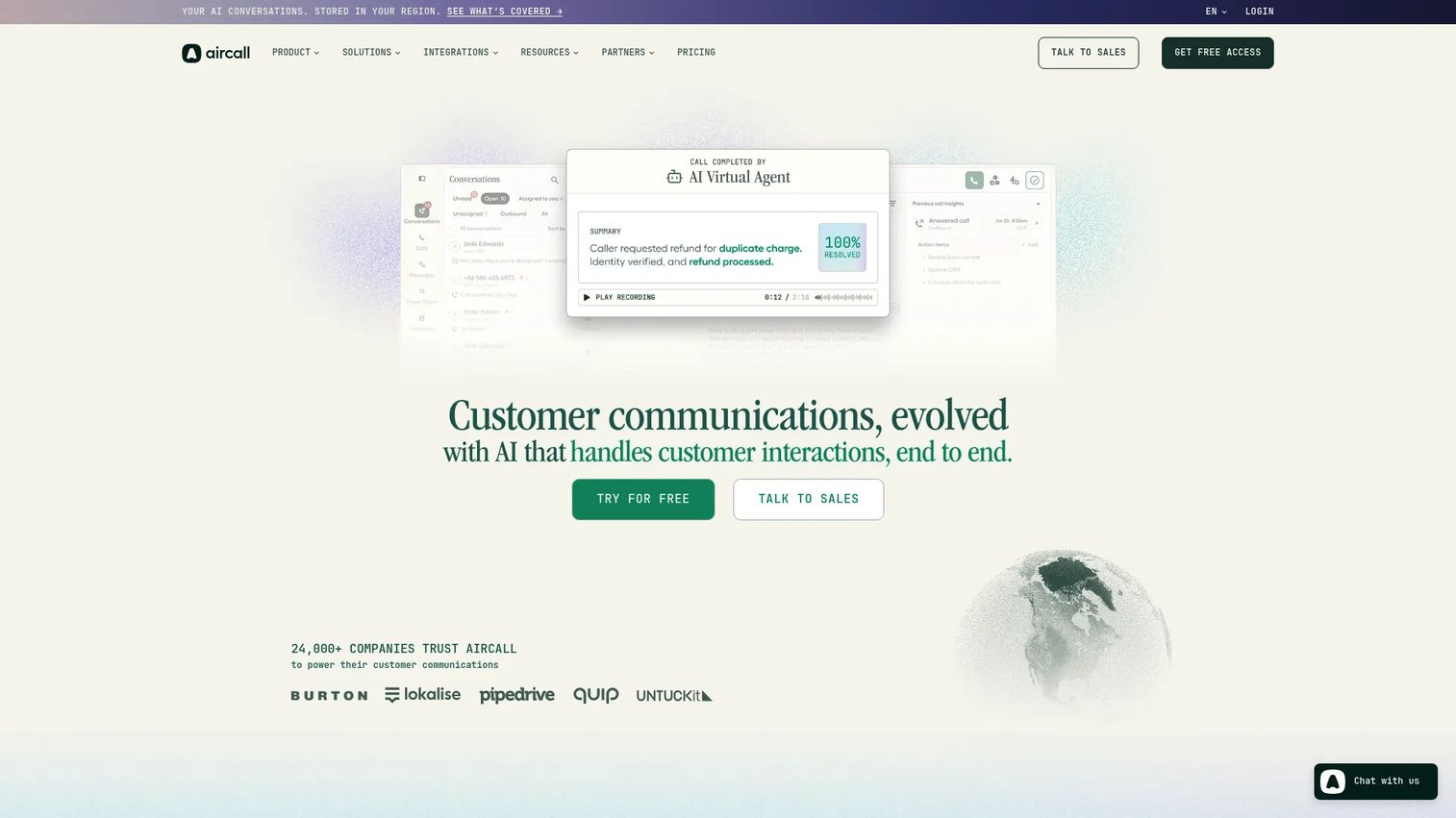
Aircall is a cloud based business phone and customer conversation platform. It combines calling, SMS, MMS, routing, analytics, integrations, and AI assisted conversation tools.
Sales managers can monitor calls and review performance data. Shared numbers and CRM connections help teams keep activity tied to customer records.
Best for: Sales and support teams needing CRM connected business calling.
Key features
- Local and international numbers
- SMS and MMS messaging
- IVR and call queuing
- Power Dialer and outbound campaigns
- Call analytics and live monitoring
Why choose Aircall: Choose it when your main requirement is a managed calling layer for reps. Its routing and coaching features fit teams replacing desk phones or disconnected dialers.
Aircall pricing: Essentials starts at $30 per license monthly. Professional costs $50, while Enterprise uses custom pricing.
G2 rating: 4.4/5
10. CloudTalk
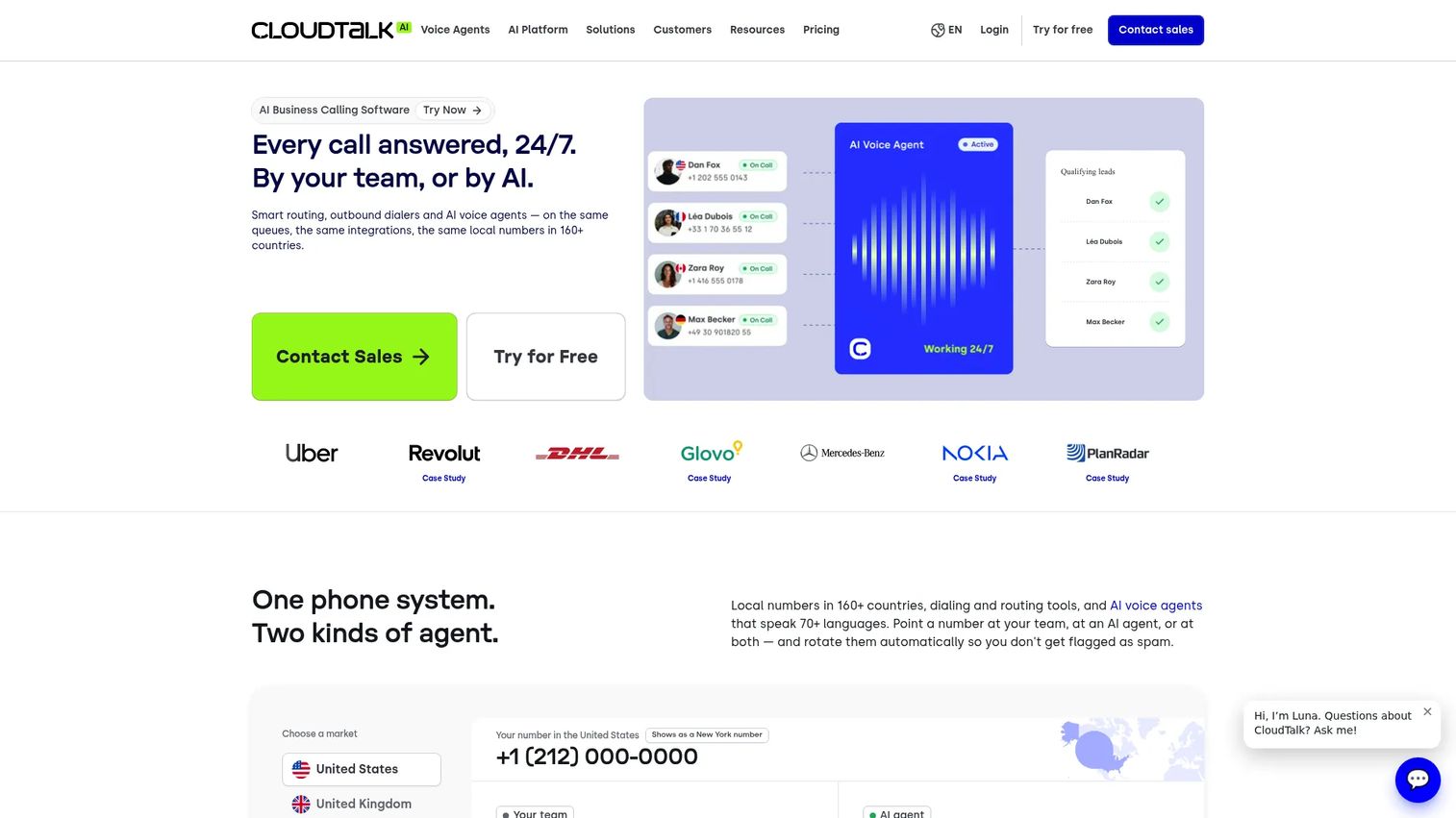
CloudTalk combines business calling, outbound dialers, call routing, analytics, CRM connections, and AI voice agents. Its features support inbound service queues and outbound sales campaigns.
International numbers help distributed teams establish local calling coverage. CRM logging gives RevOps more visibility into rep activity.
Best for: Sales and customer service teams with international calling requirements.
Key features
- IVR and skill based routing
- Power and parallel dialling
- Call recording and monitoring
- AI voice agents
- CRM call logging
Why choose CloudTalk: Choose it when call operations require queues, territories, or structured routing. It serves teams needing more control than a basic VoIP number provides.
CloudTalk pricing: Starter costs €25 per user monthly with annual billing. Essential costs €29, while Expert costs €49 per user monthly.
G2 rating: 4.4/5
11. JustCall
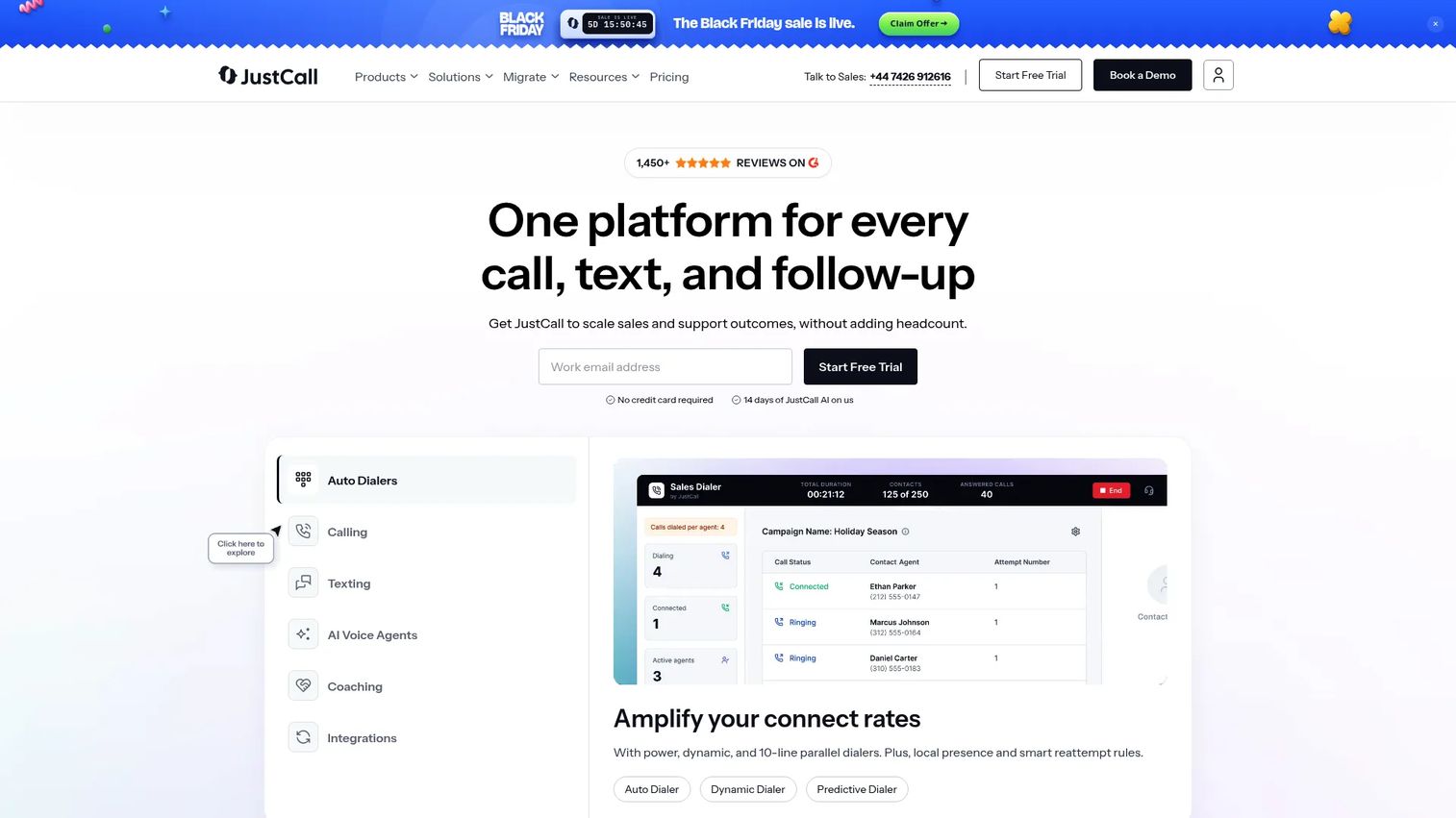
JustCall combines calling, messaging, sales dialers, workflow automation, analytics, and AI coaching. It connects these capabilities with more than 70 native integrations, plus APIs and webhooks.
Outbound teams can choose between power, predictive, parallel, preview, progressive, and dynamic dialling. Messaging covers SMS, MMS, WhatsApp, shared inboxes, and automated workflows.
Best for: Sales teams combining outbound calls and SMS with CRM workflows.
Key features
- Multiple outbound diallers
- SMS, MMS, and WhatsApp
- IVR and smart routing
- AI transcription and coaching
- CRM integrations and webhooks
Why choose JustCall: Choose it when SDRs and AEs need calling plus messaging in a rep focused workflow. Its dialler range supports different outbound motions.
JustCall pricing: Team starts at $29 per user monthly with annual billing. Pro costs $49, with a two user minimum and a 14 day trial.
G2 rating: 4.3/5
12. 3CX
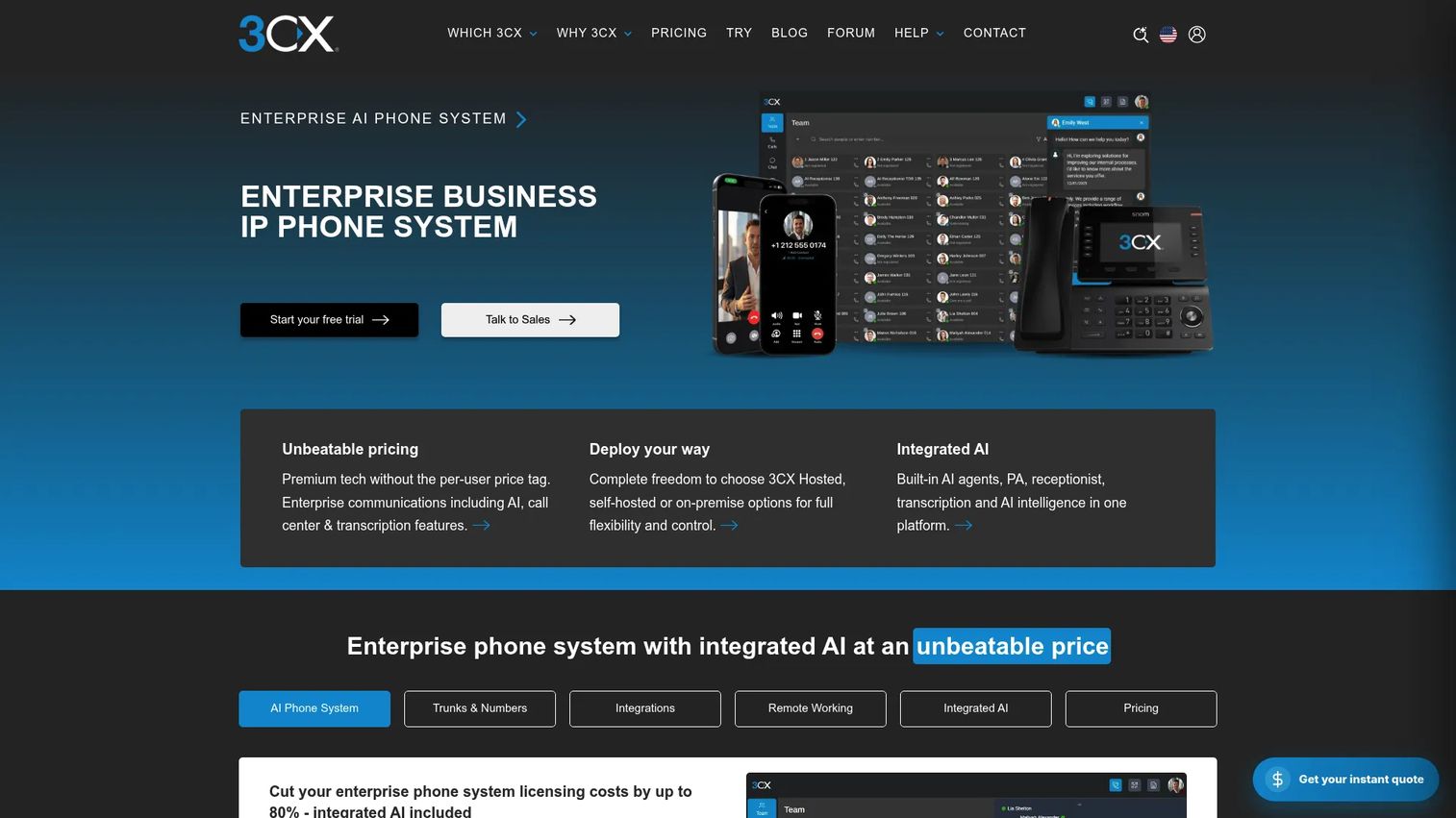
3CX is a business communications platform combining telephony, video conferencing, live chat, messaging, and mobile applications. Teams can deploy it through hosted or self hosted arrangements.
Unlike many per seat tools, 3CX licenses systems by simultaneous calls. This model can appeal to organisations with many users but lower concurrent usage.
Best for: Businesses replacing traditional PBX infrastructure with cloud based team communication.
Key features
- Auto attendant and IVR
- Ring groups and call queues
- Video conferencing and screen sharing
- Live chat and messaging
- Hosted and self hosted deployment
Why choose 3CX: Choose it when IT needs PBX control alongside video, chat, and business calling. Concurrent call licensing creates a different cost model from per seat VoIP software.
3CX pricing: Basic starts at $300 yearly for eight simultaneous calls. Pro costs $395 yearly, while AI costs $575 yearly.
G2 rating: 4.4/5
13. Microsoft Teams
Microsoft Teams is a cloud based team communication platform for chat, meetings, calling, file sharing, and collaboration. It fits organisations already working inside Microsoft 365.
Meeting recordings, transcripts, and live captions support internal follow up. Teams Phone extends the platform into business calling where the organisation has the relevant setup.
Best for: Organisations consolidating internal communication within Microsoft 365.
Key features
- Team chat
- Audio and video meetings
- File sharing and collaboration
- Meeting recordings and transcripts
- Teams Phone support
Why choose Microsoft Teams: Choose it when internal collaboration is the primary problem. Existing Microsoft 365 adoption can reduce the need for a separate meeting and chat platform.
Microsoft Teams pricing: A free plan is available. Teams Essentials costs $4 per user monthly, while Teams Enterprise costs $8.55 with yearly payment.
G2 rating: 4.4/5
14. Webex
Webex is an enterprise collaboration platform combining meetings, messaging, calling, webinars, events, whiteboarding, and video messaging. It supports internal teamwork alongside customer facing virtual events.
Its meeting tools include screen sharing, polling, captions, transcripts, and whiteboarding. Cloud calling adds business numbers and telephony capabilities.
Best for: Enterprise teams combining meetings, calling, events, and internal collaboration.
Key features
- Video meetings and screen sharing
- Cloud calling
- Team messaging
- Webinars and events
- Meeting summaries and action items
Why choose Webex: Choose it when video collaboration and enterprise calling matter more than sales dialling. Its event capabilities also suit larger webinars and customer sessions.
Webex pricing: Webex Free costs $0. Meet starts at $12 per user monthly, while Suite costs $22.50 per user monthly.
G2 rating: 4.2/5
15. Zendesk
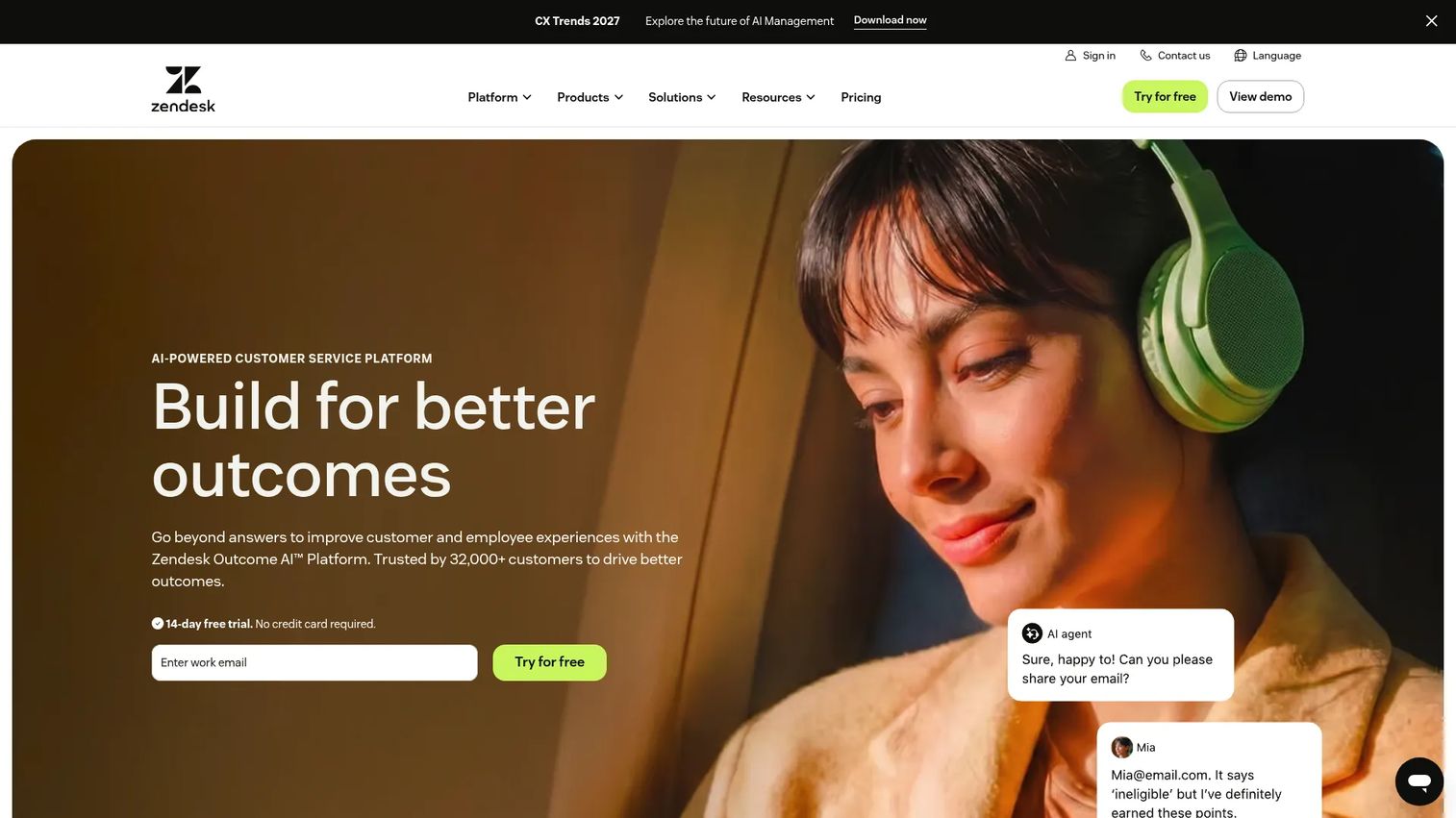
Zendesk is a customer service platform for managing support across digital and voice channels. It combines ticketing, messaging, live chat, voice, knowledge management, workflow routing, and analytics.
The platform keeps customer conversations attached to service history. Sales and customer success teams can use those records to understand unresolved issues or account risk.
Best for: Support teams that need omnichannel conversations tied to ticketing.
Key features
- Ticketing and omnichannel support
- Messaging and live chat
- Voice support and telephony
- Knowledge base and help center
- Workflow routing and analytics
Why choose Zendesk: Choose it when service context matters more than programmable communication APIs. It gives agents a structured workspace for customer conversations.
Zendesk pricing: Support Team starts at $19 per agent monthly with annual billing. Suite Team costs $55, and a 14 day trial is available.
G2 rating: 4.3/5
Considerations when choosing a cloud communication platform
Choose the platform type first
CPaaS, unified communications, contact centers, and cloud phone systems solve different jobs. Start with CPaaS when you need communication inside a product.
Choose a business phone system when reps need calling or SMS connected to CRM records. Internal meeting problems point toward unified communications instead.
Check channels against daily workflows
Map the channels your team uses before comparing vendors. Include voice, SMS, WhatsApp, email, chat, meetings, and any region specific requirements.
Avoid paying for global omnichannel messaging when your workflow only needs calling and CRM logging.
Compare pricing models at expected scale
CPaaS costs follow usage, destination country, number type, and message volume. Business phone systems usually charge per user.
Model costs using expected headcount and traffic. A low entry price can change quickly after adding phone numbers, AI features, international calls, or contact center seats.
Evaluate reliability and deliverability
Review SLA terms, delivery reports, carrier network quality, routing controls, and support response processes. These factors matter when communication affects revenue or account access.
Ask how the vendor handles failed messages and call quality incidents. Examine escalation paths before committing.
Verify workflow integrations
Check CRM, helpdesk, identity, and data integrations against the systems your team uses. Look beyond the existence of a connector.
Confirm which records sync and when. A shallow integration may create duplicate contacts, missing activities, or more admin for RevOps.
How to choose the right cloud communication platform for your team
If you are embedding SMS, voice, or verification into a product
Start with API first providers. Twilio offers broad channel coverage, while Telnyx Suite adds carrier owned infrastructure and edge products.
Bandwidth fits enterprise communication workloads that need network backed APIs. Telesign focuses more closely on verification and digital identity.
Sinch Engage offers a packaged option for teams coordinating mobile messaging without building every workflow themselves.
If your sales team needs calling and SMS in the CRM
Evaluate Ringover, Aircall, CloudTalk, and JustCall. Each provides business calling with integrations, analytics, and routing features.
Ringover starts at $19 per user monthly. Aircall adds shared numbers and coaching workflows, while CloudTalk supports international call operations.
JustCall offers several outbound dialler modes alongside messaging. Test activity logging before purchase because integration depth affects CRM hygiene.
If internal collaboration is the main problem
Microsoft Teams fits organisations already using Microsoft 365. It combines chat, meetings, files, and calling through connected products.
Webex covers enterprise meetings, messaging, webinars, and cloud calling. 3CX suits IT led teams replacing PBX infrastructure with a broader communication system.
If support conversations are losing context
Zendesk is the clearest fit when conversations need to remain attached to tickets. Bird and Sinch Engage focus more on omnichannel customer messaging.
Telerivet suits operational messaging across regions and providers. Pick according to where customer history must live after the conversation ends.
Conclusion
The best cloud communications provider depends on the workflow you need to repair.
Twilio, Telnyx Suite, Bandwidth, Telesign, Sinch Engage, Bird, and Telerivet cover programmable or multichannel communication. They fit product, engineering, RevOps, and customer engagement use cases.
Ringover, Aircall, CloudTalk, JustCall, and 3CX focus more closely on business calling. Compare their routing, CRM logging, number coverage, and pricing units.
Microsoft Teams and Webex handle internal collaboration. Zendesk connects customer conversations with support operations.
Start with the workflow, then confirm channels and cost. The winning platform should reduce handoff failures rather than create another system where customer context disappears.
Start your journey with Guideflow today!
FAQs
A cloud communication platform lets businesses manage or embed voice, SMS, messaging, video, chat, and contact center workflows through cloud infrastructure.
Some platforms serve employees through calling and meetings. Others provide communication APIs for adding programmable channels to products.
CPaaS is one segment within the broader cloud communication platform category. It focuses on APIs for voice, SMS, WhatsApp, verification, phone numbers, and other programmable channels.
The wider category also includes cloud phone systems, unified communications platforms, and contact center software.
Aircall, Ringover, CloudTalk, and JustCall fit teams that need calling or SMS connected to CRM workflows. Compare them through routing, activity logging, coaching, and number coverage.
Twilio, Telnyx Suite, and Bandwidth fit custom notifications or embedded communications. These tools usually require technical resources.
Twilio, Telnyx Suite, Bandwidth, Telesign, and Sinch Engage all support developer led communication use cases. The right choice depends on channel requirements and infrastructure preferences.
Review API documentation, SDKs, webhooks, testing support, uptime terms, and delivery logs before committing.
CPaaS tools usually charge by message, call minute, phone number, channel, or verification event. Costs may also change by country.
Business phone systems and collaboration platforms often charge per user monthly. Contact center products may combine agent seats with usage charges or add ons.
Check number porting, CRM activity logging, call recording controls, routing, SMS coverage, admin permissions, and international number availability.
Build a migration plan before transferring numbers. A poorly sequenced change can disrupt lead routing or outbound activity.
Common channels include voice, SMS, MMS, WhatsApp, email, chat, video meetings, and RCS. Contact center platforms may add queues and agent handoff tools.
Choose channels according to customer behaviour. A long feature checklist creates little value when your team only uses two channels.
Security depends on the vendor, configuration, deployment, and data handled. Review encryption, access controls, audit logs, data residency, SLA terms, and incident response documentation.
Also confirm how recordings and message histories are retained. Your internal policies should govern employee access and deletion schedules.