You spun up 40 IAM roles last quarter. Nobody deprovisioned the 12 you stopped using. Multiply that across AWS, Azure, and GCP, and you cannot answer the one question every auditor and CISO asks: who can actually do what in our cloud, and why?
That gap has a name now. Cloud identity sprawl is the accumulation of human and machine identities, each carrying permissions that outlive their purpose. Most of those permissions are never used. Research from analyst firms consistently shows that the majority of granted cloud entitlements sit dormant, yet each one widens the blast radius if an identity is compromised. The CIEM market is scaling to match the problem: MarketsandMarkets valued it at $1.2 billion in 2023 and projects $7.5 billion by 2028, a 44.2% CAGR.
Cloud infrastructure entitlement management software exists to close that gap. CIEM tools map effective permissions across every cloud, flag excessive and dormant permissions, and give security teams a path to least privilege without breaking production. This is where they diverge from your existing stack. IAM grants and authenticates access. PAM vaults and rotates privileged credentials. Neither continuously answers the effective-permissions question at cloud scale, which is exactly the ciem security job. If you have ever sat in a technical validation call unable to prove least privilege on the spot, this guide is for you.
What's inside
This guide covers the best CIEM software for 2026, ranked by relevance to buyers evaluating cloud entitlement management across multicloud environments. Every tool was selected against four criteria that matter in a real technical evaluation: entitlement visibility across AWS, Azure, and GCP; least-privilege rightsizing and remediation depth; multicloud coverage and scale; and audit readiness through governance and reporting. You will get a comparison table, per-tool breakdowns written for presales and security buyers, a buyer's checklist, and answers to the IAM vs CIEM and PAM vs CIEM questions that stall deals.
TL;DR
- Best overall for enterprise cloud security: Prisma Cloud, for teams standardizing security from code to cloud across a hybrid estate.
- Best for Microsoft-heavy environments: Microsoft Defender for Cloud, for organizations already running Azure who want CNAPP and entitlement context in one console.
- Best for entitlement visibility and remediation: Tenable CIEM, for teams prioritizing excessive permissions and toxic combinations.
- Best for graph-based cloud identity context: Sonrai Security, for enterprises needing least-privilege enforcement and cloud PAM across three clouds.
- Best for multicloud risk visibility: Wiz and Orca Security, for teams evaluating CIEM inside a broader CNAPP and cloud risk program.
What is CIEM software?
CIEM (cloud infrastructure entitlement management) is software that discovers, analyzes, and rightsizes the permissions attached to every human and machine identity across cloud environments so security teams can enforce least privilege and prove it.
That one sentence hides several problems worth naming.
Cloud identity sprawl. Every service, function, and CI/CD pipeline needs an identity. In AWS alone, a mid-sized org can accumulate thousands of roles, policies, and service accounts. Machine identities now outnumber humans by a wide margin. Nobody has a full picture in their head.
Excessive and dormant permissions. Teams grant broad access to ship fast, then never trim it. The result is excessive permissions no one uses and dormant permissions attached to identities that are inactive. Each unused grant is standing risk with zero operational value.
Why traditional IAM is not enough. IAM tells you what access was granted. It does not continuously compute what access is actually reachable once you chain roles, resource policies, and permission boundaries together. That chained, real-world answer is called effective permissions, and computing it across a dynamic multicloud estate by hand is not realistic.
How CIEM helps. CIEM tools ingest identity and policy data across clouds, calculate effective permissions, compare granted against used access, and surface where to cut. Good platforms add remediation (automated or assisted), drift detection to catch new over-permissioning, and just-in-time access so standing privilege drops. That combination supports least privilege, governance, and audit readiness in one workflow.
Where CIEM sits relative to IAM, PAM, and CSPM. IAM is the system of record for identity and access. PAM protects and rotates privileged credentials. Cloud security posture management (CSPM) checks resource configurations against benchmarks. CIEM is the identity-and-entitlement layer that sits across all of them, and most modern CIEM ships inside a CNAPP alongside CSPM.
When to use CIEM
Use CIEM when cloud permissions grow faster than governance
Engineering ships daily. Every deploy can add a role or widen a policy. Your quarterly access review cannot keep pace, so the gap between granted and needed access compounds. CIEM makes entitlement visibility continuous instead of a point-in-time spreadsheet exercise, and flags the excessive permissions worth cutting first.
Use CIEM when audits or compliance reviews need clearer access evidence
SOC 2, ISO 27001, and internal audits all ask you to demonstrate least privilege. Screenshots of IAM consoles do not prove that access is scoped to need. CIEM produces the reporting and effective-permissions evidence that satisfies auditors and shortens the compliance cycle, which directly supports audit readiness.
Use CIEM when multicloud environments make manual access review impossible
One cloud is hard. Three is impossible by hand. Each provider models identity differently, so manual review across AWS, Azure, and GCP does not scale. CIEM normalizes entitlement data across every cloud into one view, which is where the buying need shifts from nice-to-have to required.
CIEM software comparison
The table below ranks the eight tools by relevance to buyers searching for CIEM software. Pricing across this category is overwhelmingly quote-based, so treat public figures as directional and confirm against a live quote during your evaluation.
| # | Product | Intent | Key use case | Pricing | G2 rating |
|---|---|---|---|---|---|
| 1 | Prisma Cloud | Enterprise cloud security | CNAPP with CIEM across hybrid and multicloud | Quote-based | Not listed |
| 2 | Microsoft Defender for Cloud | Microsoft-native cloud security | CNAPP and entitlement context for Azure, AWS, GCP | Free tier plus paid plans | 4.4/5 |
| 3 | Microsoft Entra Permissions Management | Entitlement visibility | Multicloud permissions discovery and least privilege | Quote-based | Not listed |
| 4 | Tenable CIEM | Least privilege and remediation | Prioritizing excessive permissions and toxic combinations | Quote-based | 4.6/5 |
| 5 | CyberArk Cloud Entitlements Manager | Privileged entitlement governance | AI-driven removal of excessive permissions | Free trial, then quote | Not listed |
| 6 | Sonrai Security | Multicloud governance | Graph-based least privilege and cloud PAM | From $120/account/mo | 4.5/5 |
| 7 | Wiz | Cloud risk management | CIEM inside a unified CNAPP with attack-path analysis | Quote-based | 4.7/5 |
| 8 | Orca Security | Cloud risk management | Agentless CNAPP with entitlement visibility | Quote-based | 4.7/5 |
1. Prisma Cloud
Prisma Cloud is Palo Alto Networks' cloud-native application protection platform, securing applications, infrastructure, and runtime across multicloud environments. CIEM is one pillar inside a broader CNAPP that also delivers cloud security posture management and agentless workload scanning. For enterprise buyers, that breadth is the draw: entitlement visibility does not live in a silo, it sits next to posture and workload risk in one console.
Best for: Enterprises standardizing cloud security from code to cloud across a hybrid and multicloud estate.
Key strengths
- CIEM inside a full CNAPP: Entitlement analysis correlates with posture and workload findings, so a risky permission ties back to the exact exposed resource.
- Agentless workload scanning: Broad coverage without deploying agents on every workload, which shortens time to first insight in a POC.
- Code-to-cloud reach: Governance extends from infrastructure-as-code through runtime, useful for teams shifting security left.
Why choose Prisma Cloud: If your security program is already consolidating onto a platform rather than stitching point tools, Prisma Cloud lets CIEM ride along with posture and workload protection. For presales teams, that means one validation motion covers several buying criteria at once. It suits larger organizations with the scale and budget to standardize.
Prisma Cloud pricing: Palo Alto Networks does not publish a public price list. It uses a credits-based licensing model and provides pricing and editions guides rather than fixed tiers, so plan on a quote scoped to your resource footprint. Confirm current terms during evaluation.
2. Microsoft Defender for Cloud
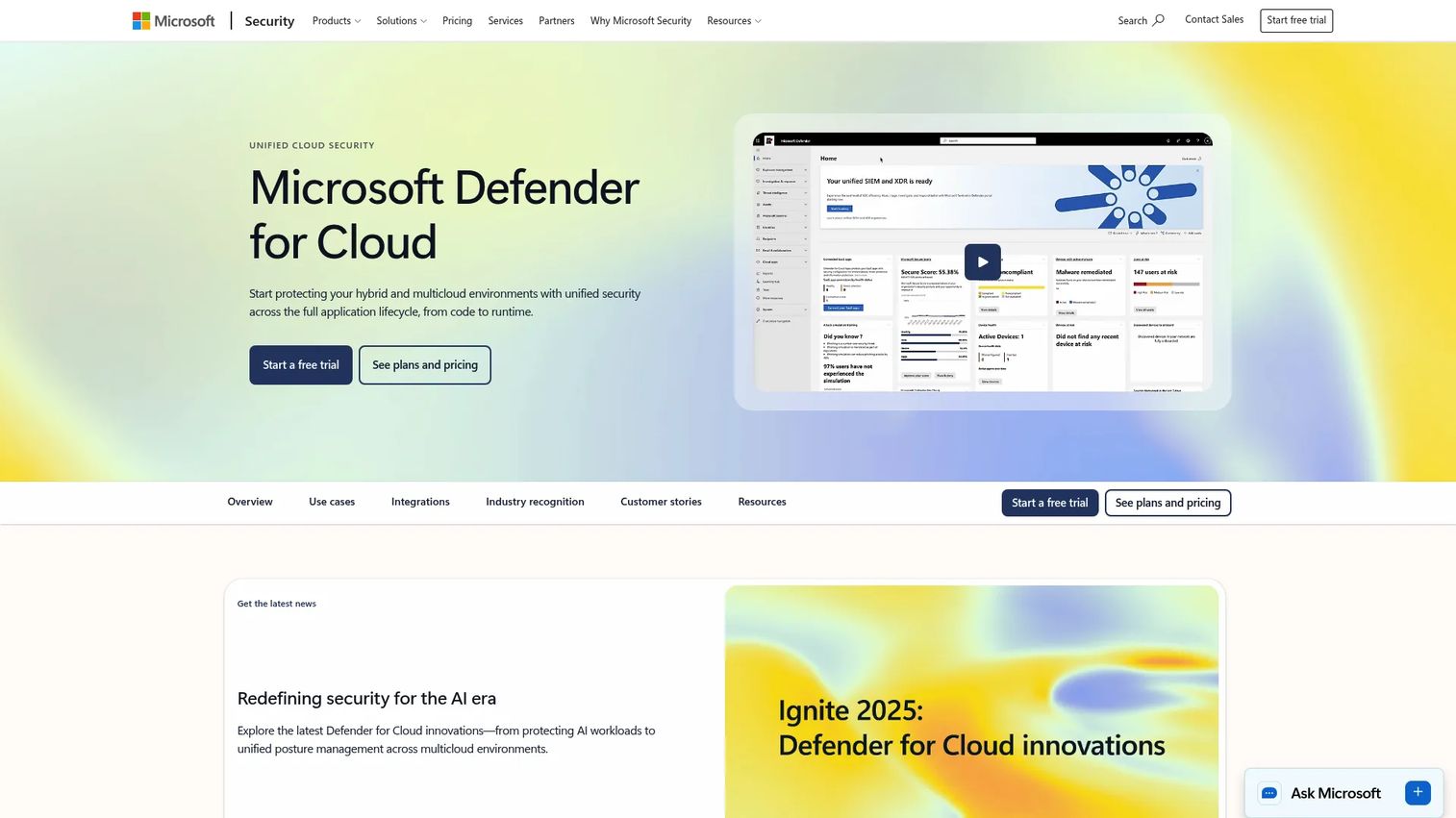
Microsoft Defender for Cloud is Microsoft's cloud-native application protection platform for securing hybrid and multicloud environments. It combines cloud security posture management with workload protection across servers, containers, databases, storage, and APIs, all from a Microsoft-native console. For teams already deep in Azure, entitlement and risk context arrive without adding a separate vendor.
Best for: Organizations securing Azure, AWS, GCP, and hybrid workloads from one Microsoft-native console.
Key strengths
- Azure-native alignment: Deep integration with the Microsoft identity and cloud stack, so setup and governance feel familiar to Azure teams.
- CSPM plus workload protection: Posture and workload findings live in the same place, giving context around entitlement and configuration risk.
- DevOps security and compliance: Compliance management and DevOps security tie cloud risk back to the pipeline.
Why choose Microsoft Defender for Cloud: For a Microsoft-centric shop, the value is consolidation. You get cloud security and entitlement context inside an ecosystem your team already administers, which lowers the adoption friction presales teams worry about. It is strongest when Azure is your primary cloud.
Microsoft Defender for Cloud pricing: Microsoft offers a free Foundational CSPM tier and a 30-day free trial, with paid plans for Defender CSPM and workload protection billed pay-as-you-go. The public pricing table lists plans without exposing every numeric rate, so confirm current per-resource pricing on the Azure pricing page. G2 reviewers rate it 4.4/5.
3. Microsoft Entra Permissions Management
Microsoft Entra Permissions Management is Microsoft's dedicated CIEM solution for discovering, evaluating, managing, and continuously monitoring permissions across multicloud environments. It focuses squarely on the entitlement job: discover every permission across identities, actions, and resources, then evaluate risk by comparing granted against used access.
Best for: Organizations needing CIEM visibility and least-privilege controls across Azure, AWS, and GCP.
Key strengths
- Full permissions discovery: Maps all cloud permissions across identities, actions, and resources for genuine entitlement visibility.
- Granted-versus-used analysis: Surfaces excessive and dormant permissions by comparing what was granted against what identities actually use.
- Rightsizing and just-in-time access: Rightsizes permissions, grants on-demand access, and automates just-in-time access to cut standing privilege.
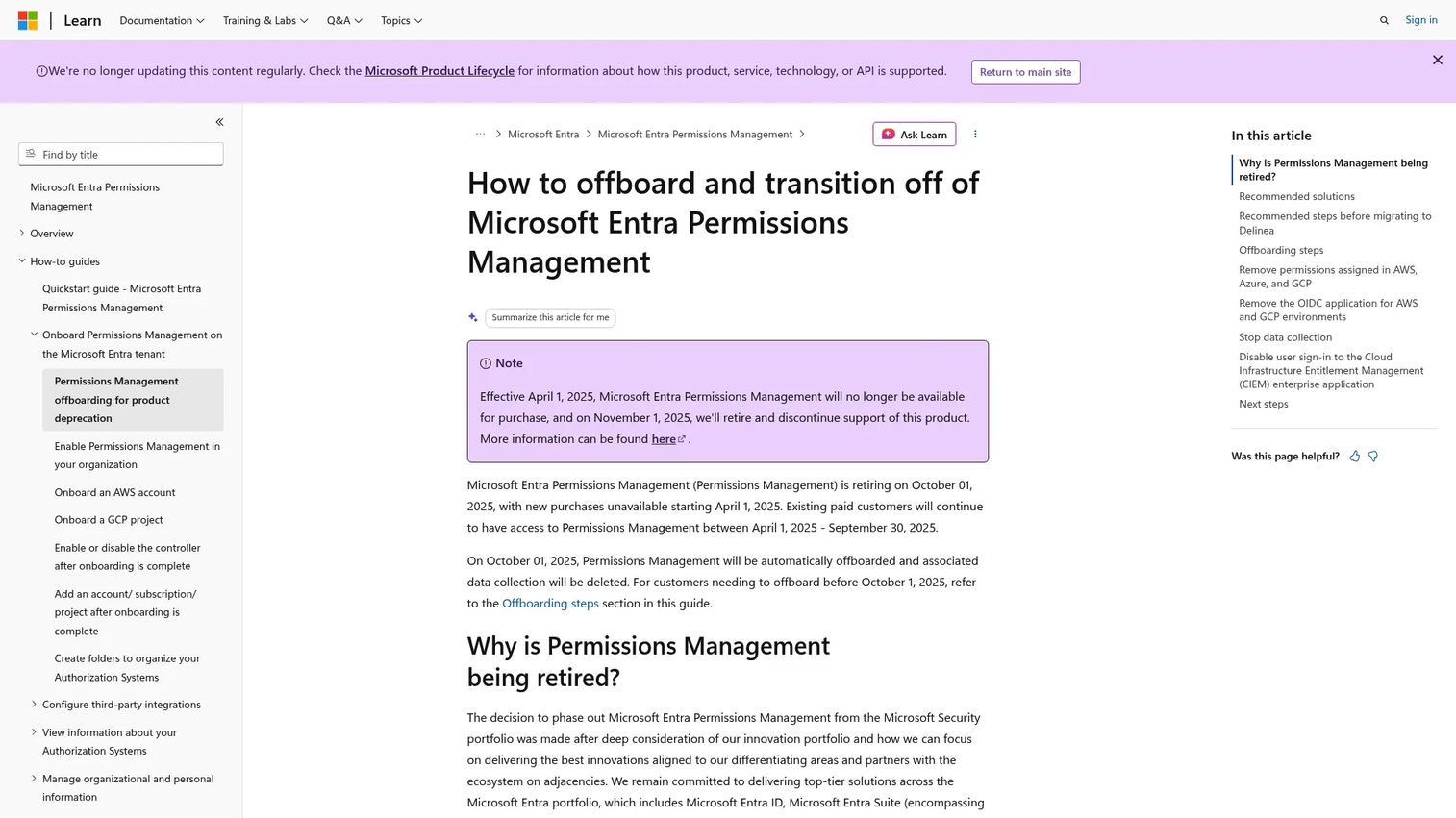
Why choose Microsoft Entra Permissions Management: For teams deep in Microsoft identity, this brings CIEM directly into the Entra family, so least-privilege work sits alongside conditional access and identity governance. Buyers evaluating it should note that Microsoft Learn lists this product as retired effective October 2025, so confirm availability and any successor path with your Microsoft rep before building it into a 2026 plan.
Microsoft Entra Permissions Management pricing: Microsoft does not publish public pricing for this product, and per Microsoft Learn it is no longer available for purchase. Treat any evaluation as a conversation with your account team about the current recommended entitlement path.
4. Tenable CIEM
Tenable CIEM delivers cloud infrastructure entitlement management inside Tenable Cloud Security, focused on managing cloud identities and enforcing least privilege. It visualizes identities and entitlements, then uses automated analysis to prioritize the excessive permissions and toxic combinations that create the most exposure.
Best for: Teams needing CIEM for cloud identity visibility, least-privilege enforcement, and remediation.
Key strengths
- Identity and entitlement visualization: Maps who can reach what across your cloud identities, making effective permissions legible.
- Risk prioritization: Automated analysis ranks excessive permissions and toxic combinations, so remediation starts with the highest-impact fixes.
- Automated and assisted remediation: Remediation workflows range from guided to automated, fitting teams at different maturity levels.
Why choose Tenable CIEM: If your organization already runs Tenable for vulnerability management, extending into cloud entitlements keeps identity risk in a familiar platform. The rightsizing permissions and remediation depth make it a strong fit for security teams whose top priority is cutting excessive access fast. Presales buyers will find the prioritization view easy to demonstrate in a validation call.
Tenable CIEM pricing: Tenable prices Cloud Security on a quote basis tied to billable cloud resources, so there is no public entry price. Request a customized quote scoped to your environment. G2 reviewers rate Tenable Cloud Security 4.6/5.
5. CyberArk Cloud Entitlements Manager
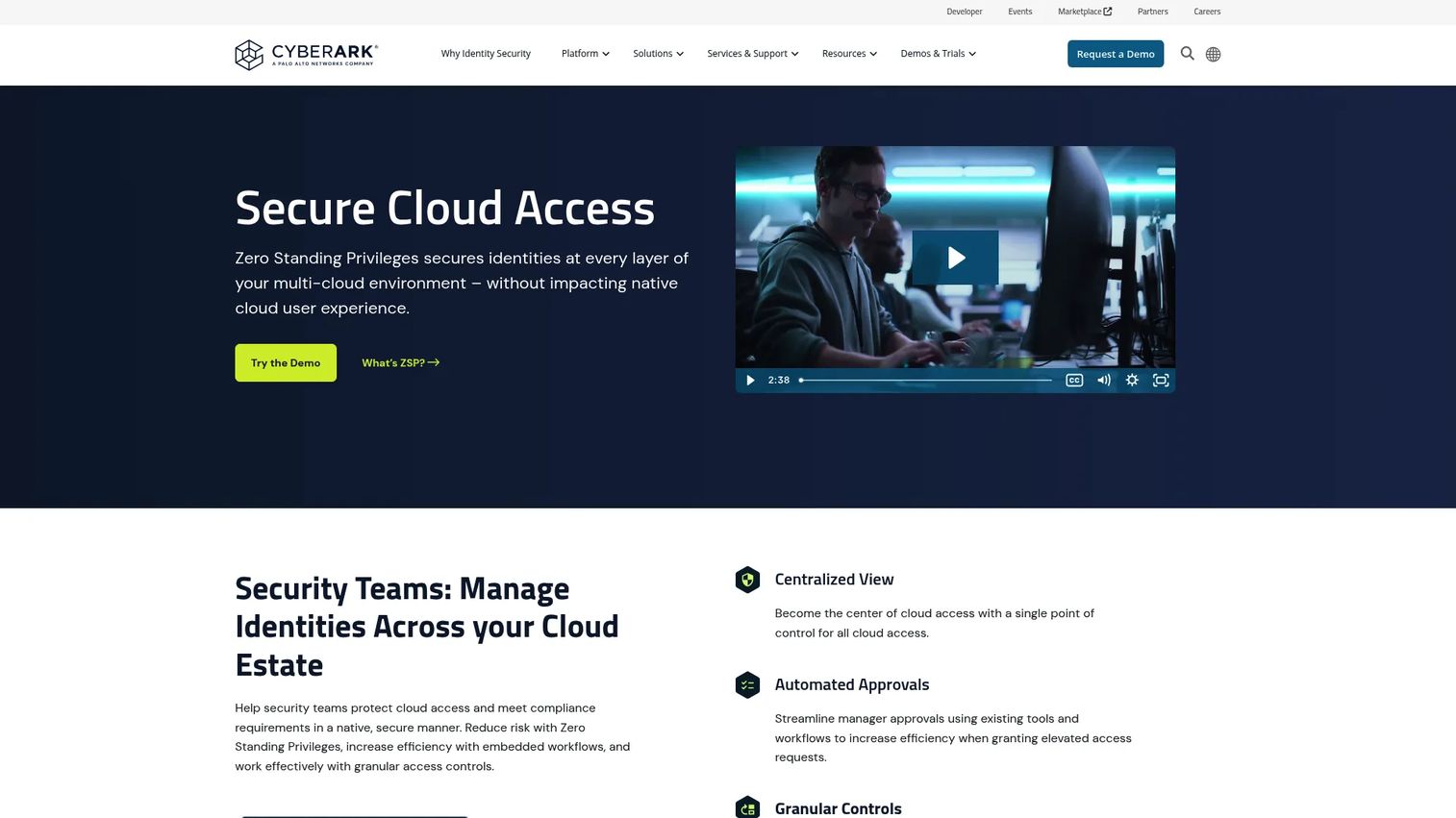
CyberArk Cloud Entitlements Manager is an AI-powered cloud security service for detecting and removing excessive permissions across cloud environments. It gives teams a centralized dashboard for cloud permission visibility and remediation, with an exposure-level score to track risk reduction over time.
Best for: Enterprises needing CIEM-style least-privilege remediation across multi-cloud environments.
Key strengths
- AI-driven detection: Detects and remediates excessive, hidden, misconfigured, and unused permissions automatically.
- Centralized visibility: One dashboard for permission visibility and remediation across clouds, so entitlement work does not fragment.
- Exposure-level scoring: Measures risk reduction over time, giving audit and leadership a clear before-and-after metric.
Why choose CyberArk Cloud Entitlements Manager: For security teams already fluent in CyberArk's identity and privilege story, this extends that narrative into cloud entitlements without learning a new vendor. The exposure-level score is a useful artifact in board and compliance conversations because it quantifies progress toward least privilege. It fits organizations that anchor identity security around CyberArk.
CyberArk Cloud Entitlements Manager pricing: CyberArk does not publish public pricing. The product page offers a 30-day free trial and a contact flow, so pricing is scoped through a sales conversation. Confirm current terms during your evaluation.
6. Sonrai Security
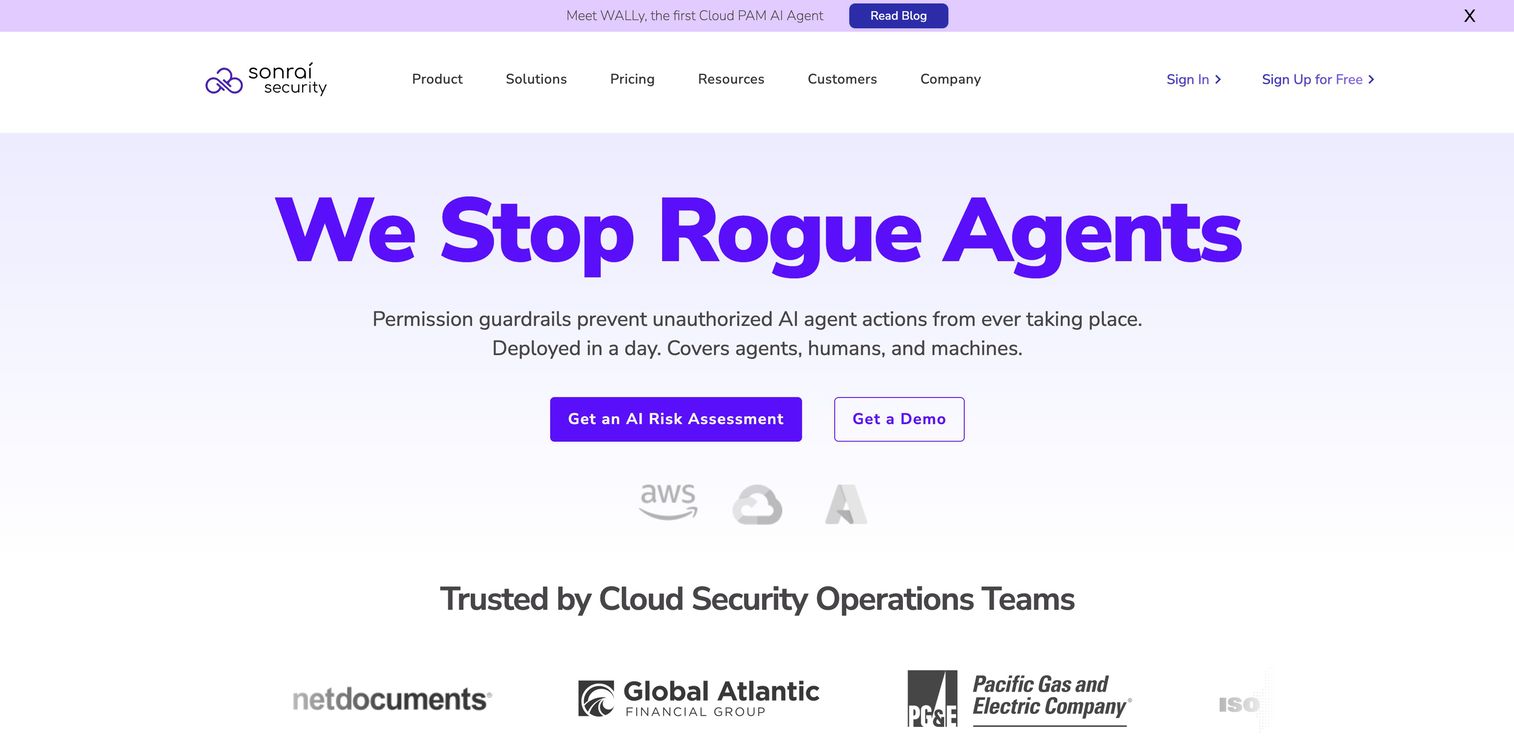
Sonrai Security is a cloud identity and access security platform focused on least privilege, cloud PAM, and AI-agent guardrails. Its differentiator is graph analysis: Sonrai maps identity-to-data relationships across clouds so you see not just what an identity can do, but the chained paths that reach sensitive resources. That deeper context is what teams reach for when flat permission lists are not enough.
Best for: Enterprises needing cloud IAM and PAM plus least-privilege enforcement across AWS, Azure, and GCP.
Key strengths
- Cloud Permissions Firewall: One-click least privilege that disables unused permissions and services at scale.
- Graph-based identity context: Maps effective permissions and access paths across identities, data, and clouds for deeper entitlement visibility.
- Just-in-time access with ChatOps: JIT access with approvals in chat keeps standing privilege low without slowing engineers down.
Why choose Sonrai Security: When you need to understand not just individual permissions but how identities chain toward data, the graph model earns its place. Sonrai suits teams that treat cloud identity as a first-class risk surface and want continuous governance rather than periodic review. The ChatOps approval flow is a practical proof point in demos with engineering stakeholders.
Sonrai Security pricing: Sonrai publishes pricing, starting at $120 per account per month for full cloud coverage billed monthly, with partial coverage at $160 and yearly options listed. A 14-day free trial is available. G2 reviewers rate it 4.5/5.
7. Wiz
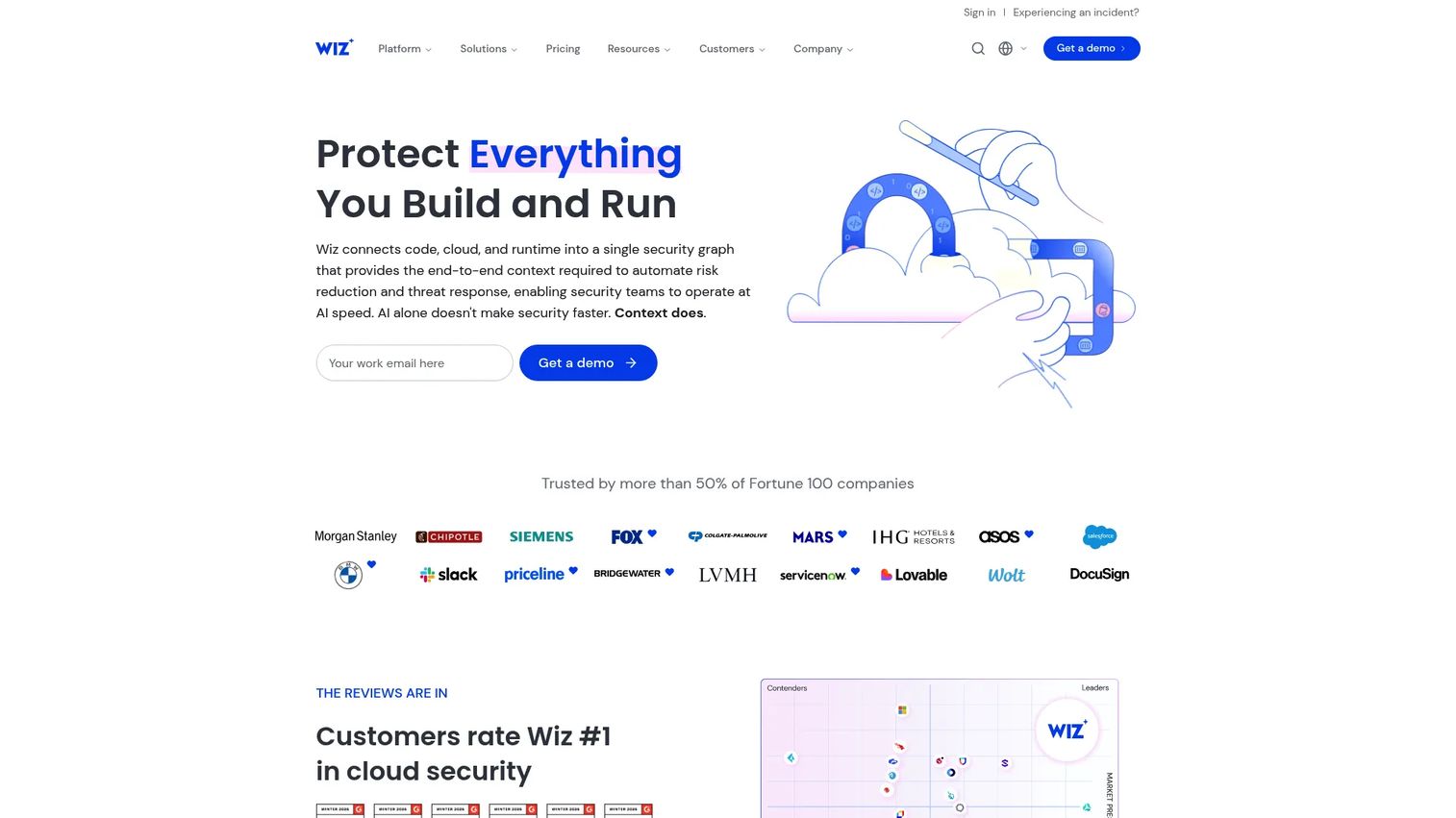
Wiz is a cloud and AI security platform that secures applications from code to runtime. CIEM is one capability within a broad CNAPP, so entitlement insights are best understood as part of Wiz's wider risk picture rather than its sole strength. Its security graph connects context and attack paths, which is where entitlement data becomes actionable: a risky permission is only alarming when it opens a path to something valuable.
Best for: Enterprises needing unified cloud and AI security across development, infrastructure, and runtime.
Key strengths
- Agentless visibility: Broad coverage across cloud and AI resources without deploying agents, which accelerates time to value in a POC.
- Security graph and attack-path analysis: Correlates entitlements with exposure so you prioritize permissions that actually create reachable risk.
- Runtime protection: The Wiz Sensor and automation workflows extend context from build time into runtime.
Why choose Wiz: If you are evaluating a broader CNAPP and want entitlement insight folded into attack-path context, Wiz's graph makes the connection explicit. For presales teams, the agentless model is easy to stand up in a technical validation, and the graph visual demonstrates risk in a way stakeholders grasp quickly. It fits organizations buying a platform, not a standalone CIEM point tool.
Wiz pricing: Wiz uses modular, quote-based pricing organized around product families like Wiz Cloud, Wiz Code, and Wiz Defend, with no public numeric price. Scope a quote to your environment. G2 reviewers rate Wiz 4.7/5.
8. Orca Security
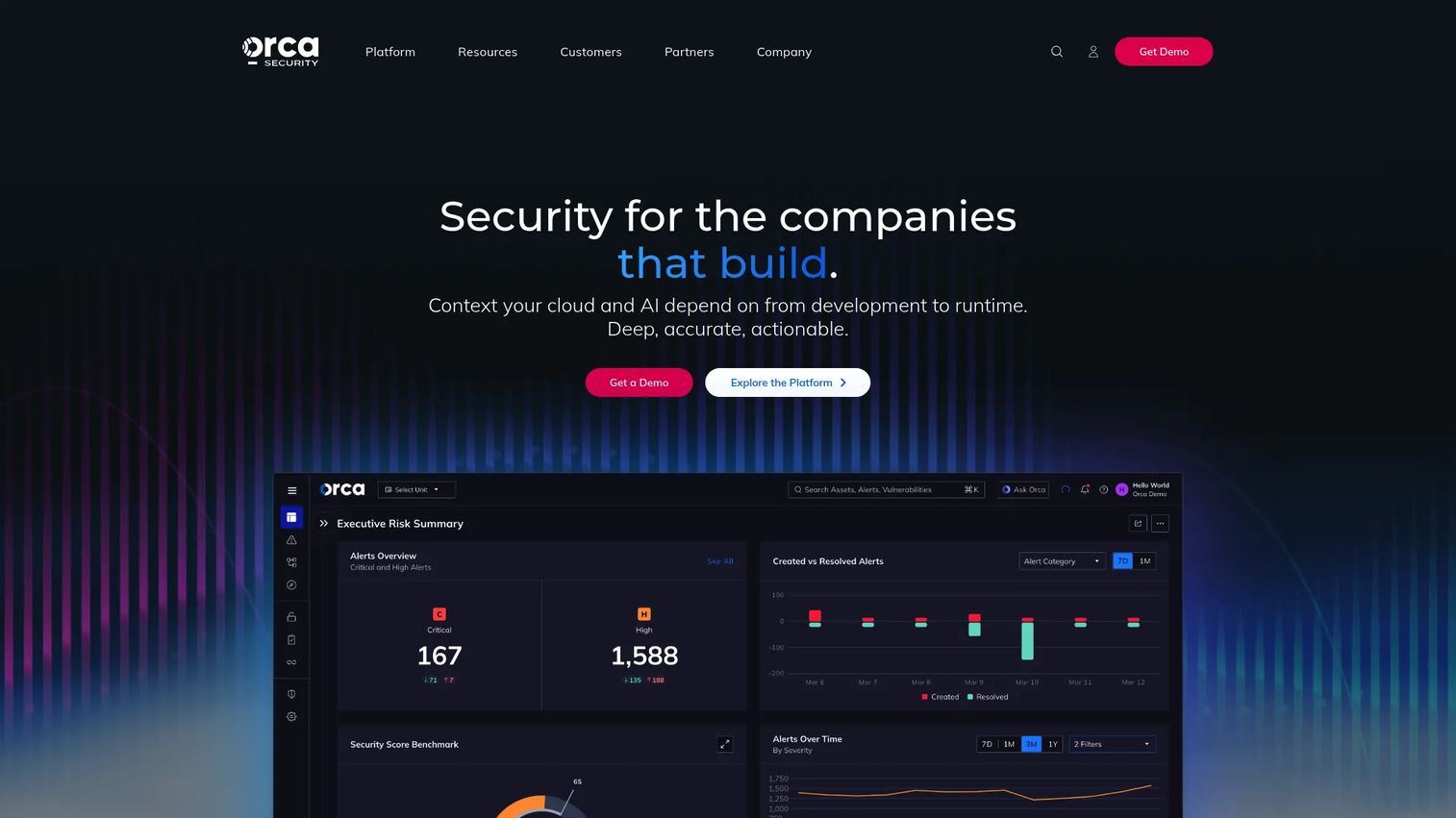
Orca Security is a cloud security platform for identifying, prioritizing, and remediating risks and compliance issues across cloud environments. Its agentless SideScanning technology and Unified Data Model give it broad coverage, and entitlement visibility complements the wider CNAPP rather than standing alone. For teams that want cloud risk detection and CIEM-like context without deploying agents, that model is the appeal.
Best for: Enterprises needing agentless CNAPP coverage across cloud, application, and runtime security.
Key strengths
- Agentless SideScanning: Full-stack visibility without agents, so coverage is broad and deployment is fast.
- Unified Data Model: Correlates findings across application, cloud, and workload security into one prioritized view.
- Runtime visibility: Extends context into runtime so entitlement and configuration risk connect to live workloads.
Why choose Orca Security: Orca fits teams that value agentless deployment and want CIEM-like entitlement context inside a broader cloud risk platform. The Unified Data Model means entitlement findings are prioritized alongside vulnerabilities and misconfigurations, which helps security teams work from a single ranked list. It is a fit for organizations consolidating cloud risk rather than buying isolated tools.
Orca Security pricing: Orca describes a single-SKU, all-inclusive model priced on the number of cloud workloads protected, but does not show a public numeric price. Request a quote scoped to your workload count. G2 reviewers rate Orca 4.7/5.
Considerations before you buy
Before you shortlist, pressure-test each tool against the criteria that decide technical validation, not just the feature matrix.
Multicloud coverage depth
Every vendor claims multicloud support. Verify how deeply each covers AWS, Azure, and GCP specifically, plus any Kubernetes or SaaS identity surfaces you run. Uneven coverage across clouds is the gap that surfaces after purchase, so test your actual environment in a POC.
Effective-permissions accuracy
The core CIEM job is computing effective permissions across chained roles, policies, and boundaries. Ask each vendor to demonstrate this on a permission set you know is over-privileged. Accuracy here separates real entitlement visibility from a policy inventory.
Remediation and drift detection
Visibility without action is a report. Check whether remediation is automated, assisted, or manual, and whether the tool offers drift detection to catch new over-permissioning between reviews. Confirm just-in-time access support if reducing standing privilege is a goal.
Governance, reporting, and compliance
For audit readiness, the tool must produce evidence auditors accept. Evaluate reporting depth, mapping to frameworks like SOC 2 and ISO 27001, and how easily reports export. Strong governance and reporting shorten every future compliance cycle.
Integration and stack fit
CIEM has to feed your existing workflow. Confirm integrations with your SIEM, ticketing, CI/CD, and identity providers, and whether findings route into the tools your team already lives in. A CIEM that sits in its own console rarely gets adopted.
Conclusion
CIEM software has become the identity-and-entitlement layer modern cloud security cannot skip. The right pick depends on your environment and where CIEM sits in your program.
For enterprises standardizing security from code to cloud, Prisma Cloud brings CIEM into a full CNAPP. Microsoft-centric teams get consolidation and Azure-native context from Microsoft Defender for Cloud. When entitlement visibility and remediation are the priority, Tenable CIEM leads on prioritizing excessive permissions. For deep cloud identity context through graph analysis, Sonrai Security stands out, while Wiz and Orca Security fit teams evaluating CIEM inside a broader multicloud risk platform.
Anchor your decision on six criteria: entitlement visibility, rightsizing permissions, multicloud support, governance, reporting, and compliance. The practical next step is to build a two-vendor shortlist, run a scoped POC against your real AWS, Azure, and GCP footprint, and validate effective-permissions accuracy and integration fit before you commit. That is the evaluation that holds up in front of both your CISO and your auditor.
FAQs
CIEM software is used to discover, analyze, and rightsize the permissions attached to every human and machine identity across cloud environments. It gives security teams entitlement visibility, flags excessive and dormant permissions, and provides remediation paths to enforce least privilege and prove it during audits.
IAM grants and authenticates access. It is the system of record for identities and the policies attached to them. The IAM vs CIEM distinction is that CIEM continuously analyzes the effective permissions those policies produce once roles and boundaries chain together, then tells you which grants are excessive or dormant. IAM defines access; CIEM audits and rightsizes it.
Usually yes. The PAM vs CIEM difference is scope: PAM vaults, rotates, and brokers privileged credentials, while CIEM maps and rightsizes the full breadth of cloud entitlements across all identities, not just privileged ones. PAM protects the keys; CIEM tells you who has too many keys in the first place. They complement each other.
Most CIEM tools support the major providers: AWS, Azure, and GCP, with varying depth. Many also cover Kubernetes and SaaS identity surfaces. Because multicloud coverage is uneven between vendors, test each tool against your specific environment during a POC rather than trusting the marketing claim.
CIEM produces the effective-permissions evidence and reporting that frameworks like SOC 2 and ISO 27001 require to demonstrate least privilege. Instead of IAM console screenshots, you get continuous documentation of who can access what and proof that access is scoped to need, which improves audit readiness and shortens the compliance cycle.
Prioritize accurate effective-permissions analysis, entitlement visibility across all your clouds, rightsizing and remediation (automated or assisted), drift detection, and just-in-time access. On the governance side, look for framework-mapped reporting and integrations with your SIEM, ticketing, and identity stack so findings reach the teams that act on them.
Many CIEM tools offer automated or assisted remediation that removes unused, excessive, and dormant permissions, and some add one-click least-privilege enforcement. Whether you enable full automation depends on your risk tolerance; most teams start with assisted remediation and drift detection, then automate once they trust the recommendations.
Buyers evaluate CIEM software by testing effective-permissions accuracy on a known over-privileged identity, verifying multicloud coverage against their real environment, checking remediation and governance depth, and confirming integrations with their existing stack. The strongest evaluation is a scoped POC that proves least privilege and audit-ready reporting before purchase.