Leadership asks, “Are we showing up in ChatGPT?” Your reporting stack explains organic traffic, but it doesn’t show which competitors appear in generated recommendations.
The best ChatGPT SEO tracking tools help answer that question with repeatable evidence. For a growth marketer, the buying decision starts with another question: Will this replace manual reporting or add another dashboard?
Search Engine Land reported Fractl research in 2026 showing that 70% of consumers use AI search tools more than a year earlier. That makes visibility inside generated answers worth measuring alongside referral traffic.
A mention alone still doesn’t prove business impact. You need to understand what buyers asked, which sources shaped the response, and whether the resulting visits became qualified demand.
Which tool gives you visibility you can act on?
What’s inside
- The shortlist: Seventeen products spanning dedicated AI search monitoring platforms, broader SEO suites, content operations, and marketing reporting.
- Selection criteria: Relevance to buyer prompts, citation analysis, competitor benchmarking, and the work required to turn findings into action.
- Audience fit: Guidance for growth marketers defending pipeline investment, SEO teams expanding their measurement, content leads, and agencies managing client reporting.
- Buying context: Vendor pricing and available G2 ratings from November 2026 research, with product changes and broader platform ratings identified.
- How to read it: Start with the workflow you need to replace. Then compare engine coverage and reporting requirements before choosing a subscription.
TL;DR
- Best overall for SEO stack consolidation: Semrush combines AI visibility with established search research and auditing workflows.
- Best for broad visibility research: Ahrefs Brand Radar separates custom prompt monitoring from access to its wider AI visibility indexes.
- Best for enterprise programs: Profound combines AI search measurement with conversation research and marketing agents.
- Best for focused marketing analytics: Peec AI connects prompt monitoring to source analysis and competitive visibility.
- Best for a modest starting budget: Otterly starts at $29 monthly. Keyword.com also offers a low-entry AI Visibility plan.
- Best for agency reporting: Whatagraph consolidates marketing data; dedicated AI SEO trackers handle the underlying answer monitoring.
What is ChatGPT SEO tracking software?
ChatGPT SEO tracking software monitors how brands, products, pages, and competitors appear in generated answers to commercial or informational questions.
A ChatGPT SEO tracking tool measures responses to prompts rather than a fixed list of search results. “ChatGPT website rank tracking” therefore describes a different measurement problem from classic keyword positions.
The broader category, AI visibility tools, includes platforms covering several answer engines. Coverage can extend to Perplexity, Gemini, Microsoft Copilot, Google AI Overviews, and Google AI Mode.
Core capabilities include:
- Prompt tracking: Scheduled monitoring of buyer questions
- Brand mentions: Detection of brand names inside generated answers
- Citations: Identification of referenced pages and domains
- Position: Placement within an answer or recommendation list
- Share of voice: Comparative visibility against selected competitors
- Sentiment: Assessment of how an answer describes a brand
- Reporting: Historical views, exports, and stakeholder dashboards
Keep those metrics separate. Brand mentions in ChatGPT don’t necessarily include links, while ChatGPT citations can reference content without recommending its publisher.
Use a visibility ladder to organize reporting. First, make content sourceable. Then measure whether the brand appears, whether a page receives a citation, and whether the product earns a recommendation. Track subsequent visits separately, followed by qualified pipeline or revenue.
That ladder is a measurement framework, not a guaranteed sequence. A buyer can discover a brand in an answer and visit later through another channel.
Generative engine optimization, or GEO, means improving how content and brands appear in generated answers. Answer engine optimization, or AEO, focuses on making information useful and accessible to systems that answer questions directly.
A prompt portfolio gives that work structure. Group questions by buyer intent and product category, keeping branded queries separate from discovery searches.
ChatGPT SEO trackers provide evidence for those decisions. Not every product marketed as ChatGPT SEO tools directly monitors answers, however. Traditional SEO suites and reporting platforms may support adjacent work, which matters when comparing subscriptions.
When to use ChatGPT SEO tracking tools
Track buyer-intent prompts before increasing content spend
Start with questions your sales team hears, such as “best invoicing software for agencies” or “how to compare customer data platforms.” Include purchase constraints rather than monitoring category names alone.
Group these questions by intent and preserve the wording. A stable portfolio makes changes easier to interpret when you publish new content or earn external coverage.
Diagnose why AI engines cite someone else
Inspect the pages behind competing answers before commissioning another article. A comparison page, help document, customer review, or publisher story can suggest a different next step.
Use source analysis to decide whether to improve an owned page or pursue external coverage. Record the hypothesis before making changes.
Report AI visibility without rebuilding spreadsheets
Create a recurring view that separates answer visibility from website outcomes. Keep competitor appearance alongside citation trends, then connect attributable visits to your existing conversion reporting.
Assign ownership for investigating changes. The dashboard earns its place when it changes a content decision or identifies a source that needs correction.
ChatGPT SEO tracking tools comparison
The best ChatGPT SEO tracking tools serve different jobs. Some collect generated answers, while others connect monitoring to content production or broader marketing reporting.
Compare the starting price for the relevant capability, not simply the vendor’s cheapest subscription. An SEO-only plan and an AI monitoring package represent different purchases.
The table also distinguishes product ratings from broader company ratings. G2 scores describe user sentiment about the listed software, not a controlled assessment of tracking accuracy.
Pricing below comes from vendor sources dated November 24, 2026. Annual billing is identified where it affects the displayed monthly rate. For products with changing names or access rules, read the individual entry before purchasing.
| # | Product | Best for | Key differentiator | Pricing | G2 rating |
|---|---|---|---|---|---|
| 1 | Semrush | SEO stack consolidation | Search research alongside AI visibility | SEO from $117.33/month, billed annually | Not included |
| 2 | Ahrefs Brand Radar | Broad competitive research | Custom prompts plus AI visibility indexes | Custom tracking from $50/month | 4.5/5, Ahrefs |
| 3 | Profound | Enterprise AI programs | Conversation research and marketing agents | Custom pricing | 4.5/5 |
| 4 | Peec AI | Focused marketing analytics | Prompt, source, and shopping visibility | Starter $95/month | 4.7/5 |
| 5 | Otterly | Budget-conscious monitoring | Citation tracking with content audits | Lite $29/month | 4.7/5 |
| 6 | Scrunch AI | AI-facing site optimization | Agent Pages and agent traffic analytics | Core $250/month | 4.6/5 |
| 7 | SE Ranking AI Visibility Tracker | Existing eligible accounts | AI monitoring within SE Ranking | AI visibility from €64/month | 4.7/5, SE Ranking |
| 8 | Promptwatch | Monitoring plus technical diagnosis | Crawler logs and claim checking | Essential $95/month | 4.7/5, vendor-displayed |
| 9 | SE Visible | Dedicated answer visibility | Competitive visibility-gap analysis | Basic from $71/month | 4.6/5 |
| 10 | Writesonic | Content and visibility operations | Prioritized fixes alongside content generation | Starter $79/month, billed annually | 4.7/5 |
| 11 | Frase | Content optimization and maintenance | Content scoring plus visibility monitoring | Starter $39/month, billed yearly | 4.8/5 |
| 12 | Keyword.com | Search and AI rank reporting | Separate search, AI, and combined plans | AI Visibility $7.83/month, billed annually | 4.7/5 |
| 13 | BrightEdge Prism | Enterprise SEO evaluation | Broader BrightEdge platform capabilities | Custom pricing | 4.4/5, BrightEdge |
| 14 | Moz Pro | Traditional SEO foundations | Keyword, crawl, and backlink research | Ask Moz for current plans | 4.3/5 |
| 15 | LLM Pulse | Visibility and reputation monitoring | AI traffic and reputation analysis | Starter €49/month | 5.0/5 |
| 16 | Whatagraph | Cross-channel client reporting | Governed data blending and report automation | Max from €699/month, billed annually | 4.5/5 |
| 17 | ZipTie | AI monitoring with page-level actions | Source analysis and content recommendations | ziptie.ai from $25.65/month | 4.5/5, ziptie.dev |
Best 17 tools for ChatGPT SEO tracking
1. Semrush
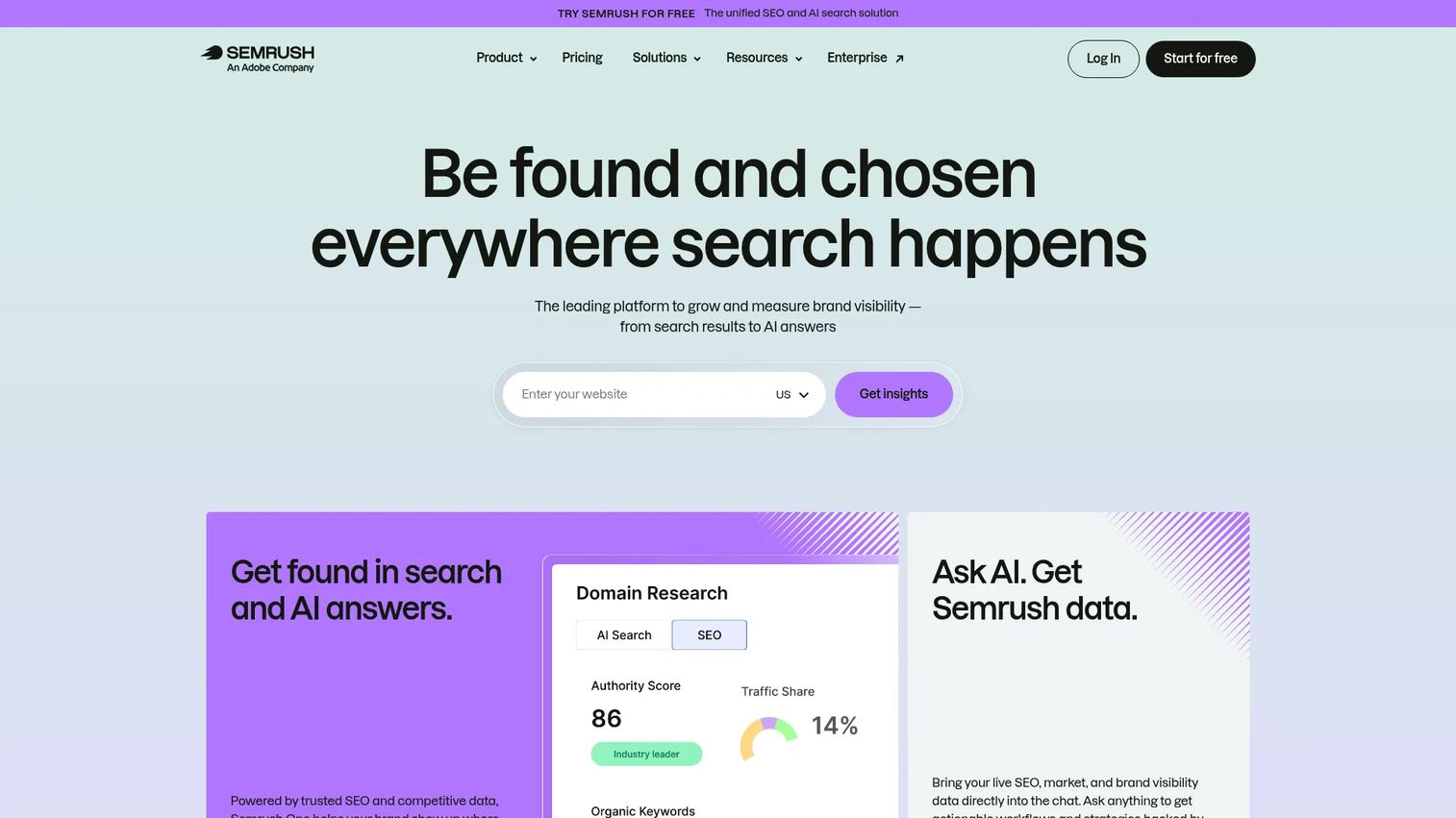
Semrush combines SEO research with AI visibility and brand-sentiment tracking. Its broader platform covers content work and marketing analytics alongside established search workflows. For a team already paying for separate research tools, consolidation is the main reason to evaluate it first.
Best for: Marketing teams that want AI search measurement connected to their existing SEO operations.
Key features
- AI visibility and brand-sentiment tracking
- Keyword research and competitor analysis
- Technical site audits
- Backlink analysis
Evaluate it against a complete reporting task. Start with a commercial prompt, identify competing brands, and examine the search evidence supporting your next content decision.
The buying question is how much of your current stack it replaces. A broad subscription deserves scrutiny if your only requirement is a recurring mention check.
Why choose Semrush: Choose it when the same team owns organic search performance and AI discovery. Compare the relevant package against your combined software spend.
Semrush pricing: SEO starts at $117.33/month, Starter at $165.17, and Pro+ at $248.17, billed annually. A free tier is available.
2. Ahrefs Brand Radar
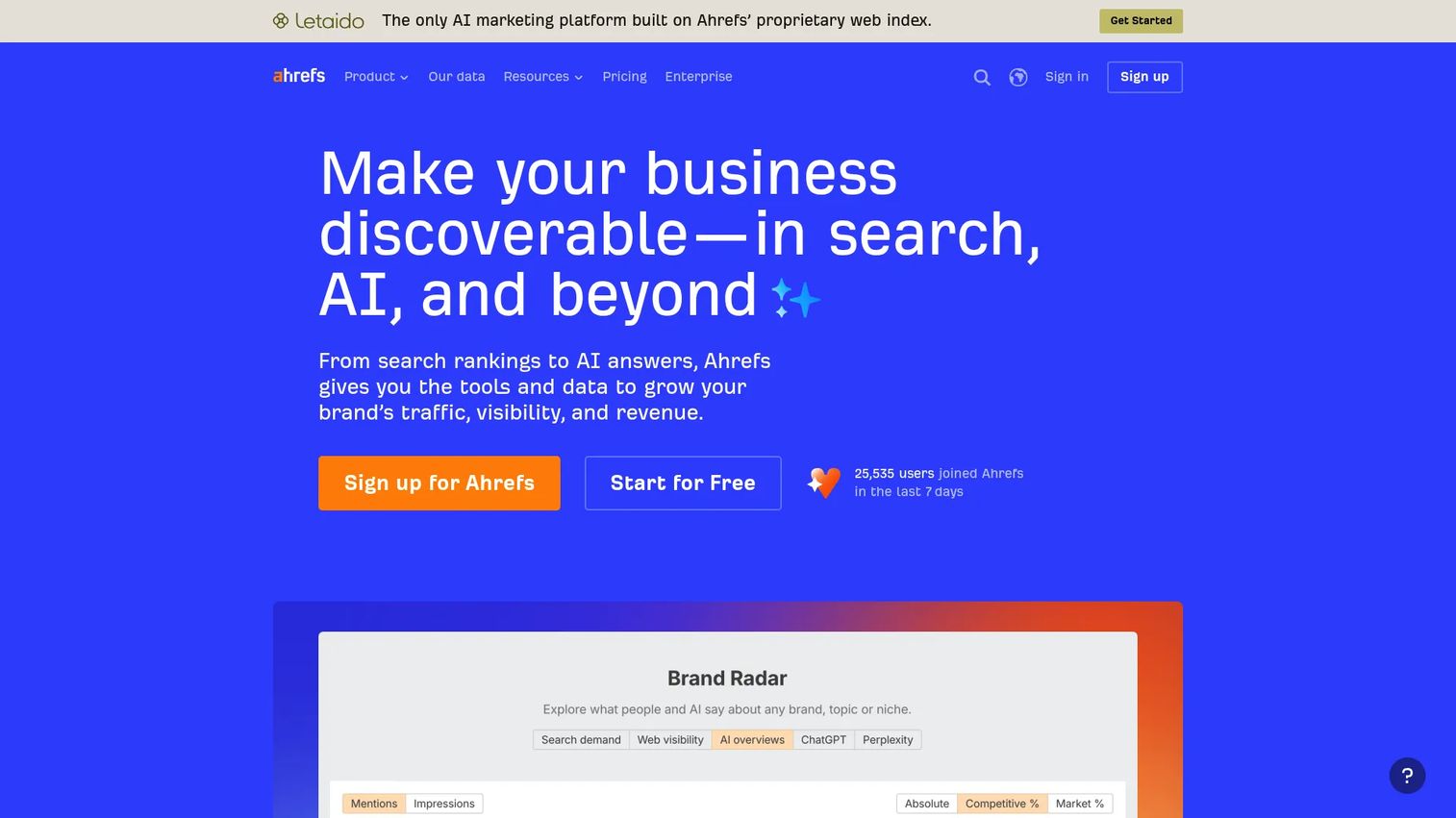
Ahrefs Brand Radar supports both custom buyer-prompt tracking and broader visibility research. It measures mentions and citations while identifying the domains behind generated answers. That combination helps marketers investigate category coverage beyond their own predefined question list.
Best for: SEO teams researching competitive visibility and the sources that influence AI recommendations.
Key features
- Custom buyer-prompt tracking
- AI mentions and citation analysis
- Competitive share-of-voice measurement
- Cited page and domain discovery
- Search and social visibility research
The important buying distinction is between monitoring your prompts and accessing a wider index. Those are separate research jobs, with different packaging.
Use custom tracking to follow your commercial questions consistently. Broader datasets suit discovery work, including finding competitors or sources your initial portfolio overlooked.
Avoid treating index breadth as proof of relevance to your customers. Inspect the questions behind a trend before assigning content resources.
Why choose Ahrefs Brand Radar: It fits teams that need market research as well as recurring monitoring. The separate offerings let you purchase against that distinction.
Ahrefs Brand Radar pricing: Custom tracking starts at $50/month. AI Visibility Index access costs $199/month per platform or $699/month for all platforms.
G2 rating: 4.5/5
3. Profound
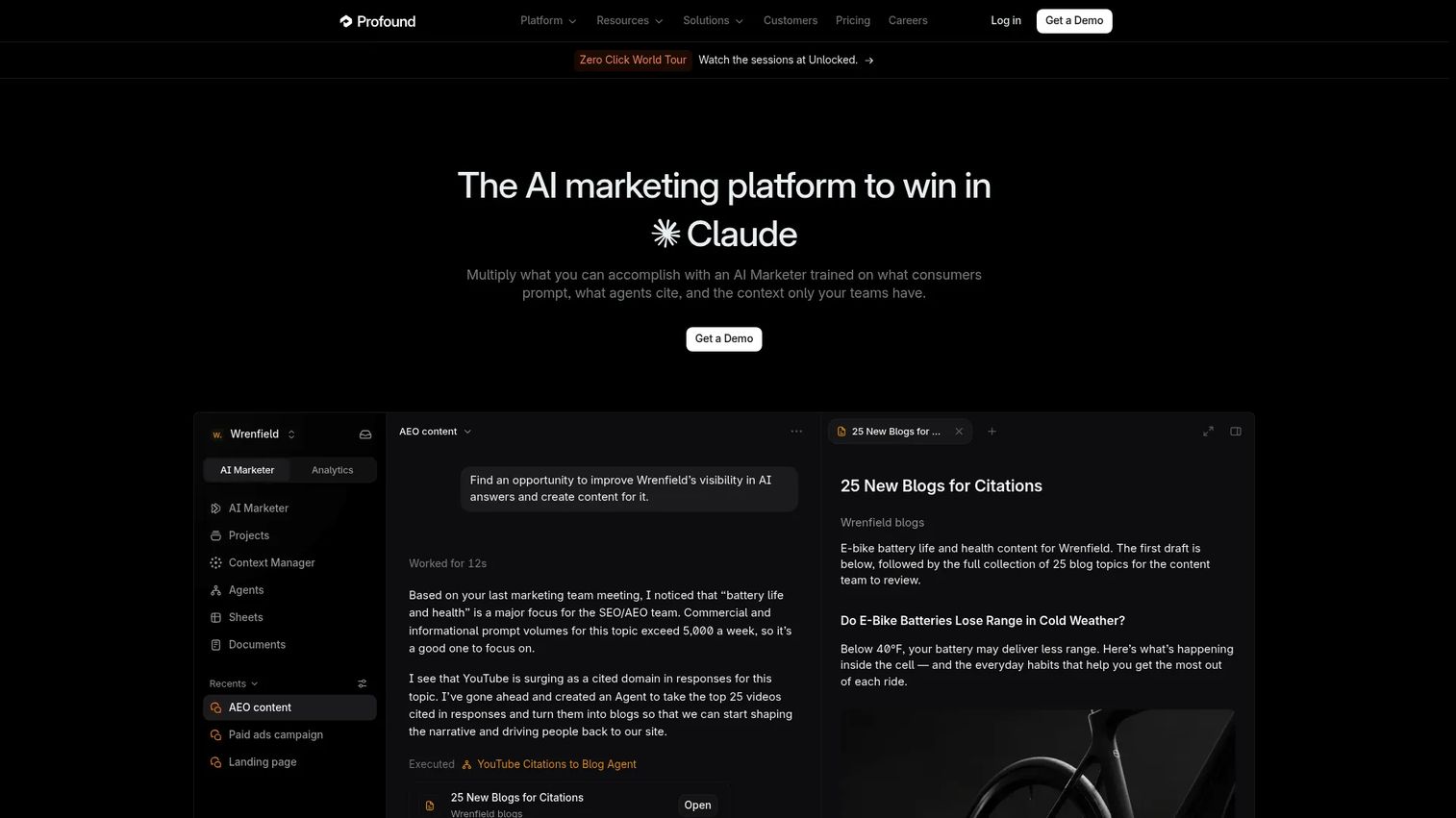
Profound is an AI marketing platform for researching and measuring brand visibility across AI search. It also provides marketing agents for work beyond monitoring. The current offering is enterprise-oriented, making it a candidate for programs with dedicated ownership and operating budgets.
Best for: Enterprise marketing teams treating AI visibility as an ongoing strategic program.
Key features
- Multi-platform AI visibility analysis
- AI conversation-based prompt research
- Prompt and keyword volume research
- Marketing agents for content and PR
Its research capability matters when leadership asks whether your selected prompts reflect market demand. Use that evidence to challenge the portfolio before interpreting changes in brand coverage.
Keep the purchase evaluation grounded in operational requirements. Ask for a report covering your markets, then review how the team would investigate an unfavorable answer.
Enterprise buyers should request specific evidence for permissions and data access requirements. Don’t infer governance features from the customer segment alone.
Why choose Profound: Consider it when measurement must feed a wider marketing program. Teams seeking a small self-serve experiment should compare other options first.
Profound pricing: Enterprise plans use custom pricing.
G2 rating: 4.5/5.
4. Peec AI
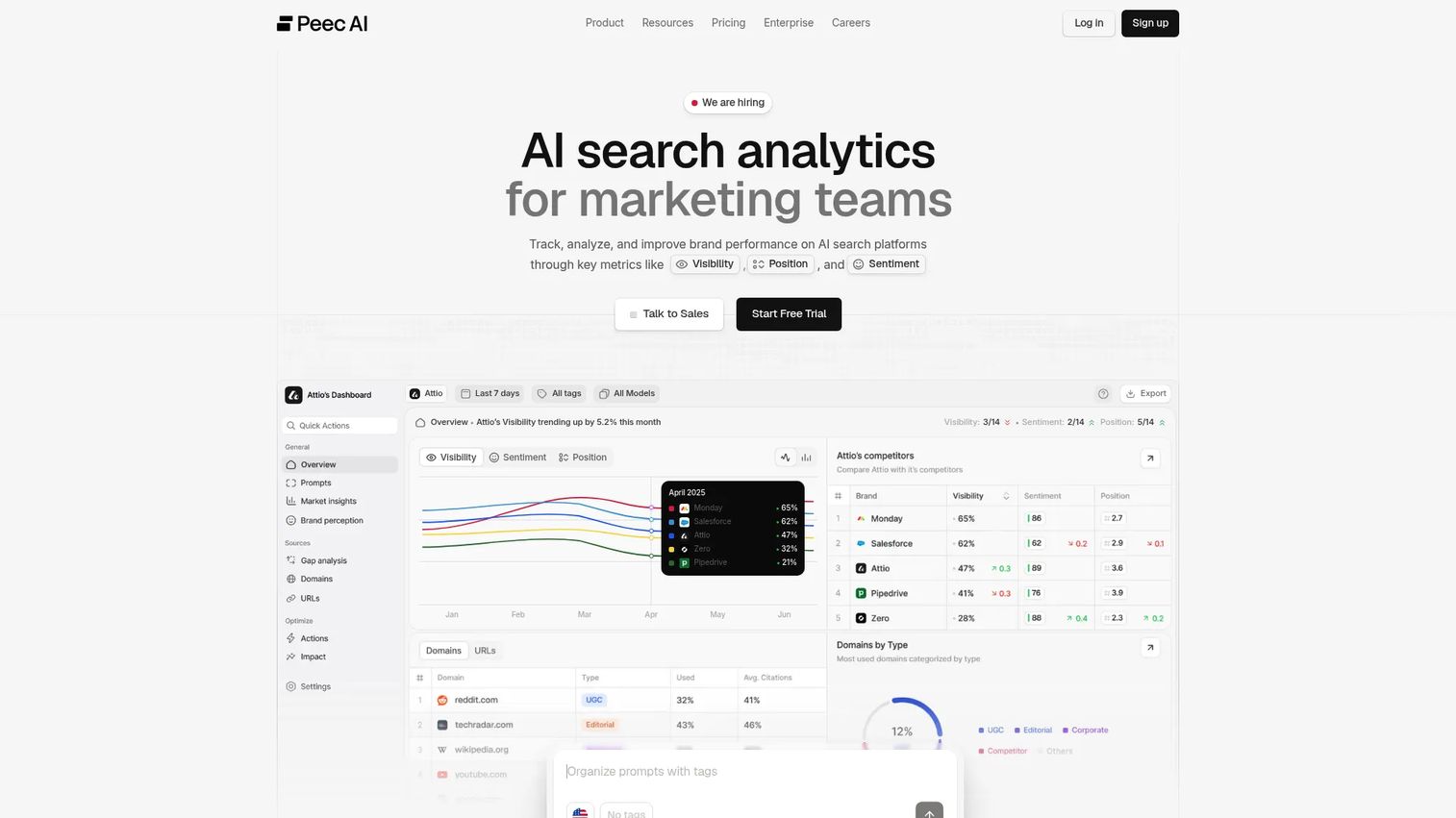
Peec AI focuses on AI search analytics for marketing teams. Its monitoring connects prompt performance to cited sources and competitor visibility. Shopping analytics adds product and SKU-level tracking for teams with commerce-related questions.
Best for: Growth and SEO teams that want a dedicated measurement workspace.
Key features
- Visibility, position, and sentiment tracking
- Prompt management and competitor monitoring
- Source and citation analytics
- Product and SKU-level shopping tracking
- CSV exports and reporting integrations
Project capacity deserves attention before comparing prices. Starter includes 50 prompts and one project; Pro includes 150 prompts and two projects. Advanced supports 350 prompts across five projects.
Map those allowances to brands and markets before importing every possible question. A focused portfolio is more useful than a large collection without clear ownership.
For reporting evaluation, take one visibility decline and trace it to the associated answers. Check whether the available source information supports a specific action.
Why choose Peec AI: It suits marketers who already have SEO infrastructure and want dedicated AI analysis. Project limits are an important purchasing consideration.
Peec AI pricing: Starter costs $95/month, Pro $245, and Advanced $495 on monthly billing. Enterprise uses custom annual pricing.
G2 rating: 4.7/5.
5. Otterly
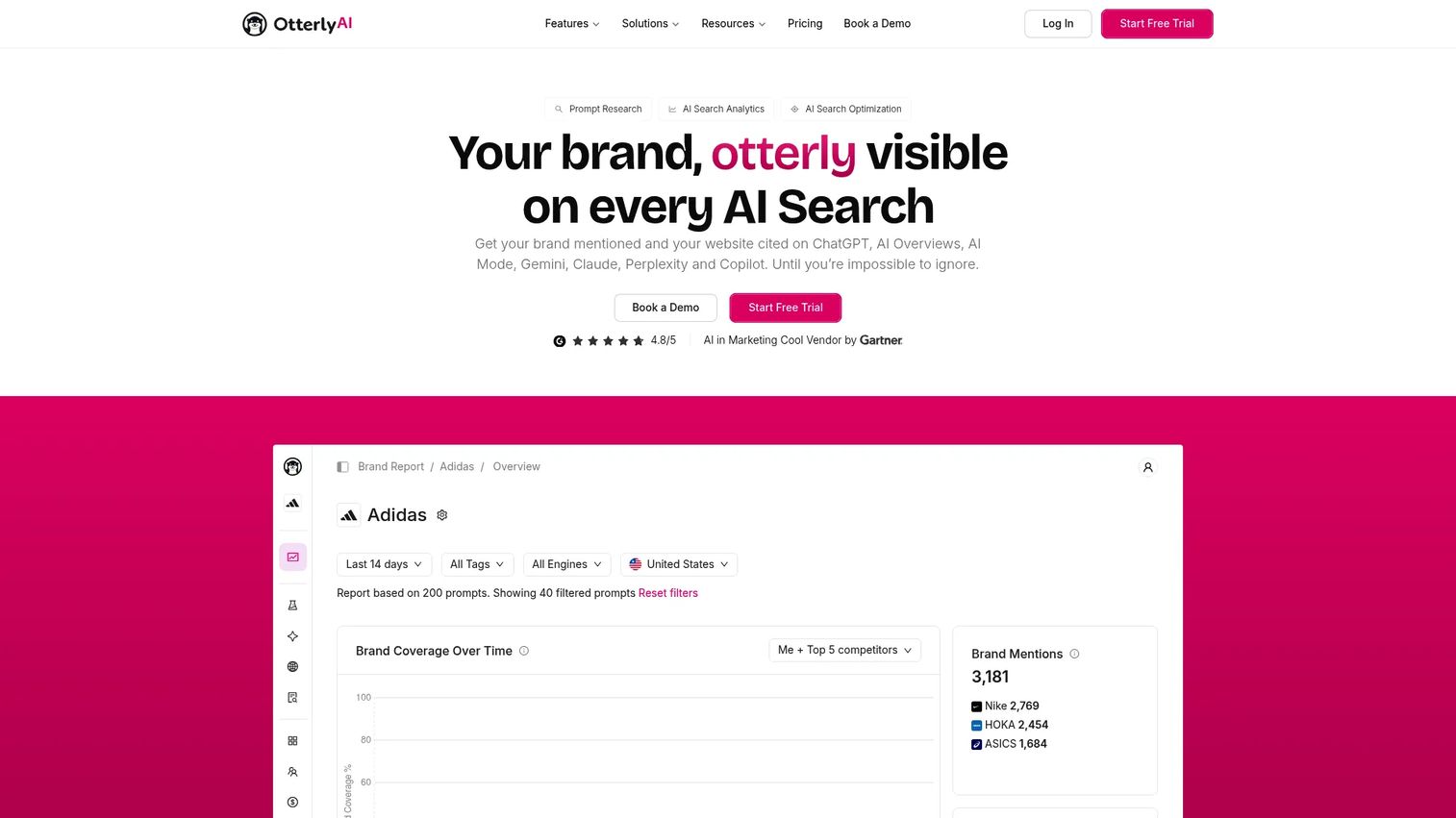
Otterly combines AI search monitoring with optimization support. It tracks brand visibility and domain citations, then adds content audits and crawlability checks. This makes it worth evaluating when a small team needs diagnosis alongside a recurring scorecard.
Best for: Budget-conscious marketers establishing their first structured AI visibility workflow.
Key features
- AI prompt research
- Domain citation tracking
- Competitive benchmarking
- Brand sentiment analysis
- Content audits and crawlability checks
Keep the initial evaluation narrow. Choose a product category with an accountable content owner, and connect each monitored question to a potential decision.
The practical test is whether findings produce a useful backlog. An audit should identify a page you can improve, while source analysis should reveal relevant external coverage.
Higher plans increase prompt capacity and features. Price the portfolio you expect to maintain, rather than choosing solely from the entry figure.
Why choose Otterly: It offers an accessible starting point for monitoring and content diagnosis. Compare its reporting output with the manual work you want to remove.
Otterly pricing: Lite costs $29/month, Standard $189, and Premium $489. A seven-day free trial is available.
G2 rating: 4.7/5.
6. Scrunch AI
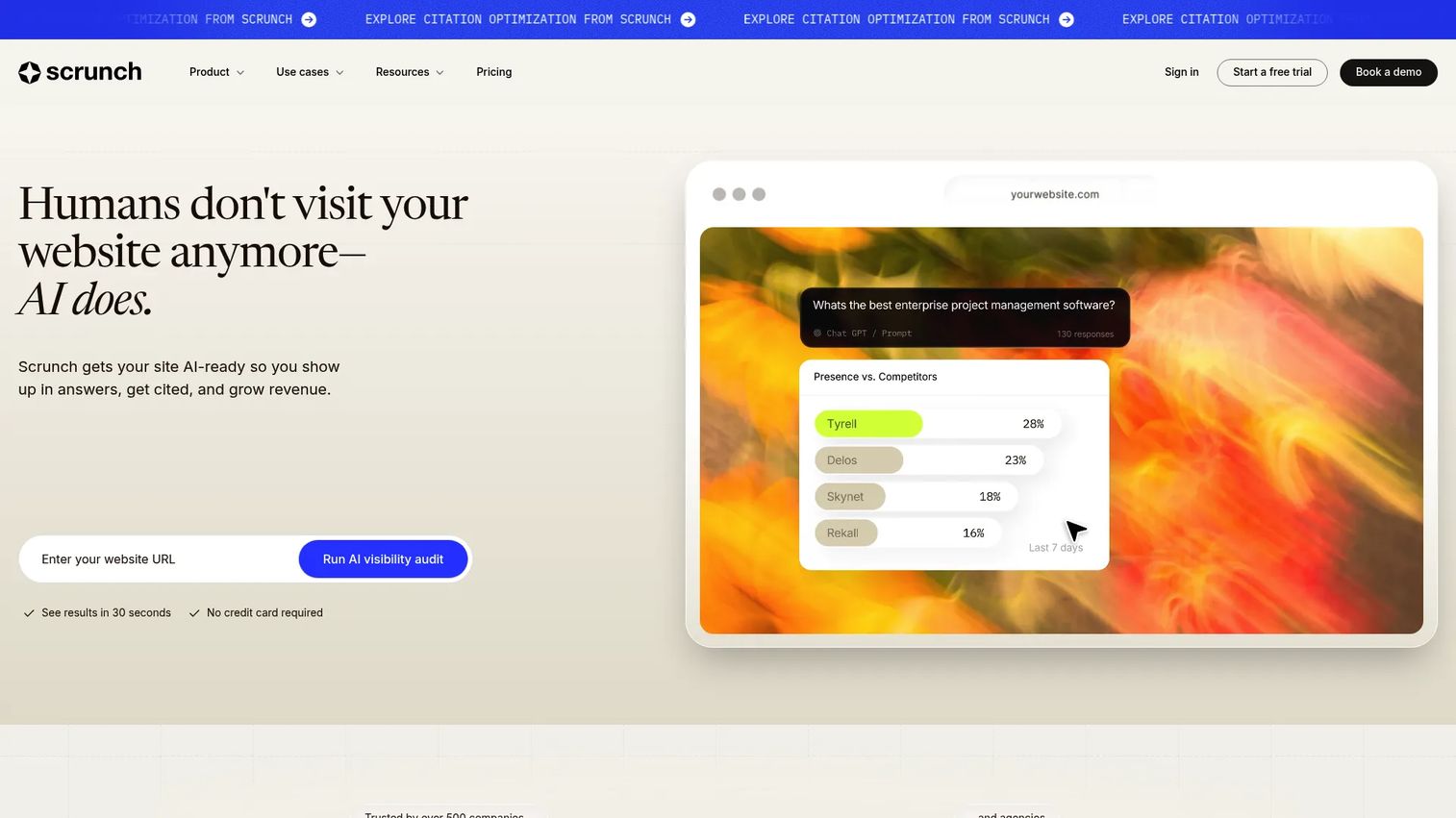
Scrunch AI connects visibility monitoring with website optimization for AI systems. Its offering includes AI-ready content generation and Agent Pages. Agent traffic analytics gives marketers another diagnostic layer beyond appearances in sampled answers.
Best for: Teams coordinating AI search measurement with changes to their website content.
Key features
- AI visibility and citation monitoring
- Site optimization
- AI-ready content generation
- Agent Pages
- AI agent traffic analytics
Core includes one brand and five seats, with 15,000 AI responses per month. Its package also includes allowances for citation targets and page work.
That packaging deserves a workflow-based evaluation. Identify who will act on the findings before purchasing a plan that combines monitoring with optimization.
If several brands need access, review Enterprise packaging rather than assuming the entry plan covers every business unit. Enterprise adds scale and features including API access and SSO.
Why choose Scrunch AI: Evaluate it when the problem extends from “Where are we mentioned?” to “What should we change on our site?”
Scrunch AI pricing: Core costs $250/month, with a seven-day trial. Enterprise uses custom yearly pricing.
G2 rating: 4.6/5.
7. SE Ranking AI Visibility Tracker
SE Ranking AI Visibility Tracker monitors brand mentions and links in generated results. It also compares competitors and identifies influential source pages. Buyers should pay particular attention to the product’s access rules before treating it as a new standalone purchase.
Best for: Existing SE Ranking customers evaluating their available AI monitoring workflow.
Key features
- Brand mention and link tracking
- Competitive visibility comparisons
- Influential page identification
- Cited domain analysis
The legacy AI Results Tracker is available only to accounts subscribed before October 29, 2026. New customers are directed to SE Visible.
That change affects the shortlist more than a feature checklist does. Existing users should establish what remains available in their account; new buyers should evaluate the successor separately.
During an account review, ask how existing prompt history will remain accessible. Historical continuity matters when leadership expects comparisons across reporting periods.
Why choose SE Ranking AI Visibility Tracker: It makes sense for eligible accounts already using the platform. New purchasing decisions should follow the current SE Visible route.
SE Ranking AI Visibility Tracker pricing: The AI visibility offering starts at €64/month, with annual or monthly billing options.
G2 rating: 4.7/5
8. Promptwatch
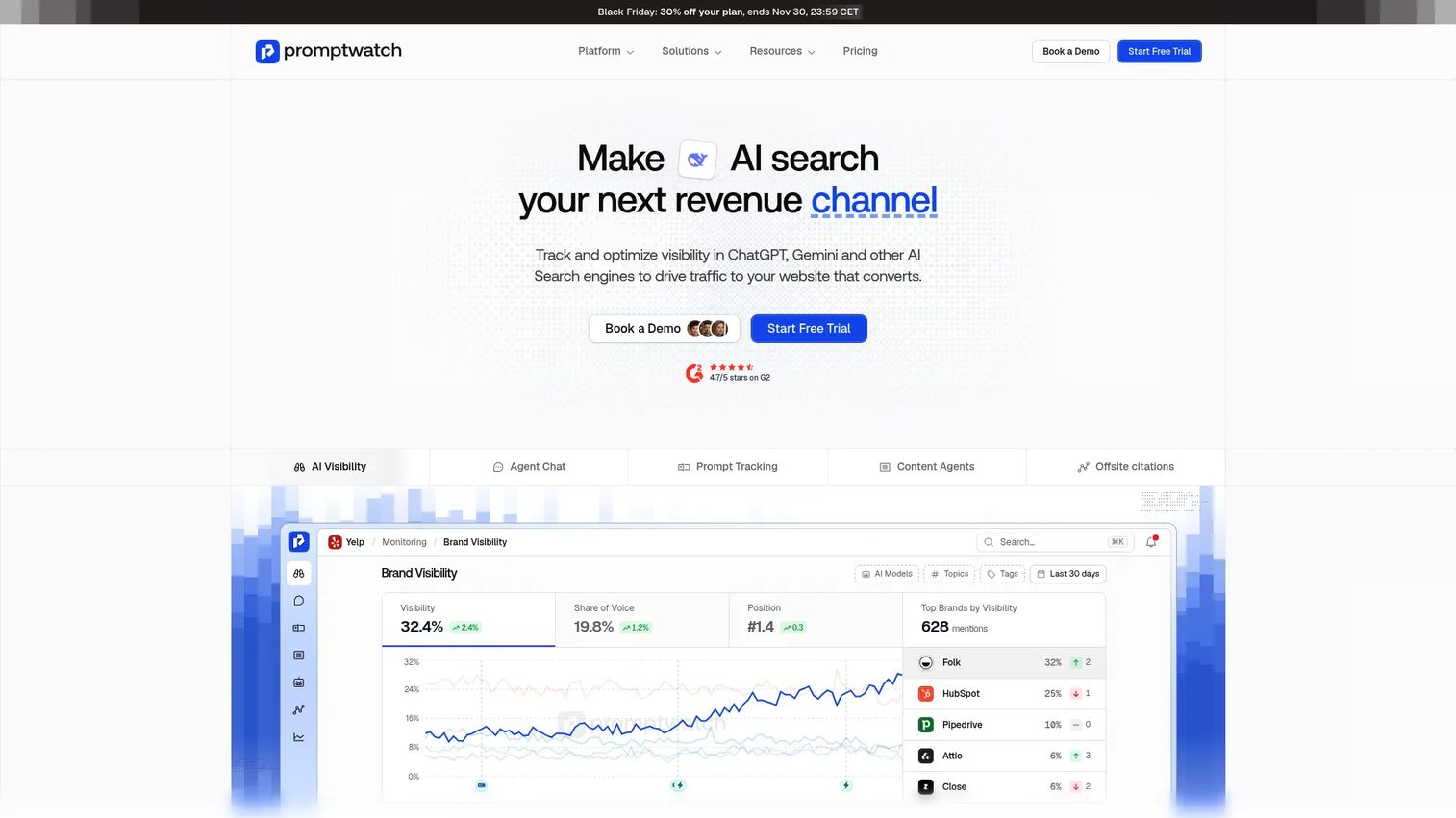
Promptwatch connects answer monitoring with technical and content investigation. It includes crawler-log analytics alongside citation and visitor data. Fact Check adds a way to inspect claims appearing in AI-generated responses.
Best for: Teams that want to connect prompt performance with crawl behavior and content changes.
Key features
- AI visibility and prompt monitoring
- Citation and crawler-log analytics
- Fact Check for generated claims
- Content-gap analysis and refresh workflows
- REST API and MCP server
Essential includes one project, 50 prompts, and 6,000 responses. Professional increases those allowances to two projects, 150 prompts, and 18,000 responses.
Evaluate response capacity alongside prompt count. Your intended coverage and monitoring schedule should fit the purchased allowance.
For a practical assessment, select a product claim that must remain accurate. Inspect how the platform helps identify the answer and supporting evidence before assigning a correction.
Why choose Promptwatch: Its diagnostic coverage suits teams working across SEO and content operations. Make sure someone owns the technical follow-up that crawler findings generate.
Promptwatch pricing: Essential costs $95/month, Professional $245, and Business $579. Eligible plans offer a seven-day free trial.
G2 rating: The vendor displays 4.7/5 as its G2 score; the direct listing wasn’t accessible in the source research.
9. SE Visible
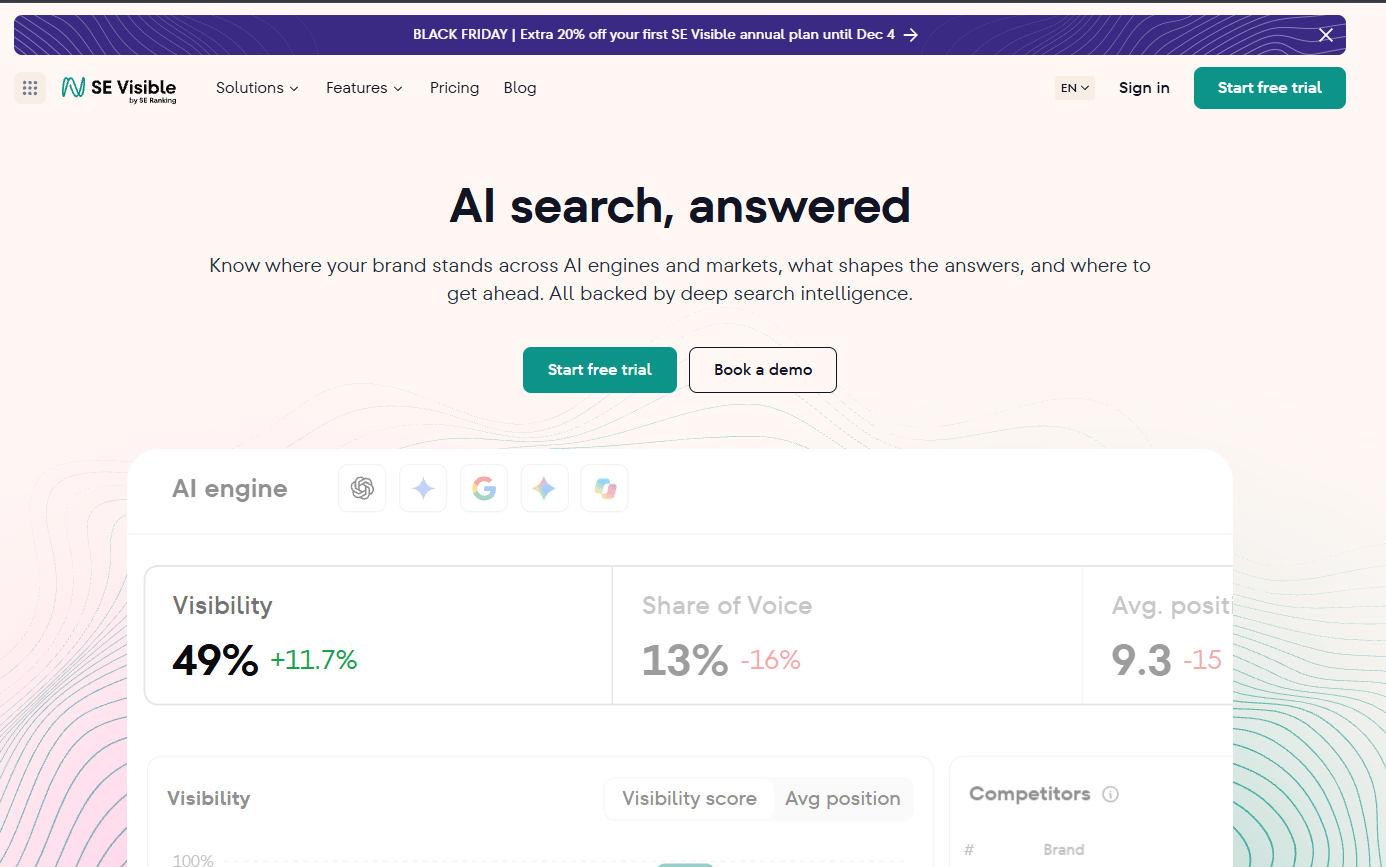
SE Visible is a dedicated platform for tracking brand presence in generated answers. It measures citations and sentiment alongside competitive visibility. New SE Ranking AI monitoring customers are directed toward this product.
Best for: Marketing teams wanting a focused answer-engine reporting workflow.
Key features
- AI visibility and share-of-voice tracking
- Brand mention monitoring
- Citation and sentiment analysis
- Competitor benchmarking
- Visibility-gap analysis
Evaluate it around a specific reporting question, such as which competitors appear for purchase-intent prompts. Then inspect the evidence behind the relative visibility scores.
Engine availability deserves a direct purchasing check. The product page describes Claude and Copilot as planned additions, while Agency packaging also references Claude.
Treat that discrepancy as a scope question for sales. Request the engines included in your proposed account rather than assuming every reference describes general availability.
Also use the official product destination at visible.seranking.com. Similar domain names should not determine where you sign up or review package details.
Why choose SE Visible: It fits teams seeking dedicated AI reporting without evaluating a full traditional SEO suite.
SE Visible pricing: Basic starts at $71/month, Core at $151, and Agency at $319. A ten-day free trial is available.
G2 rating: 4.6/5.
10. Writesonic
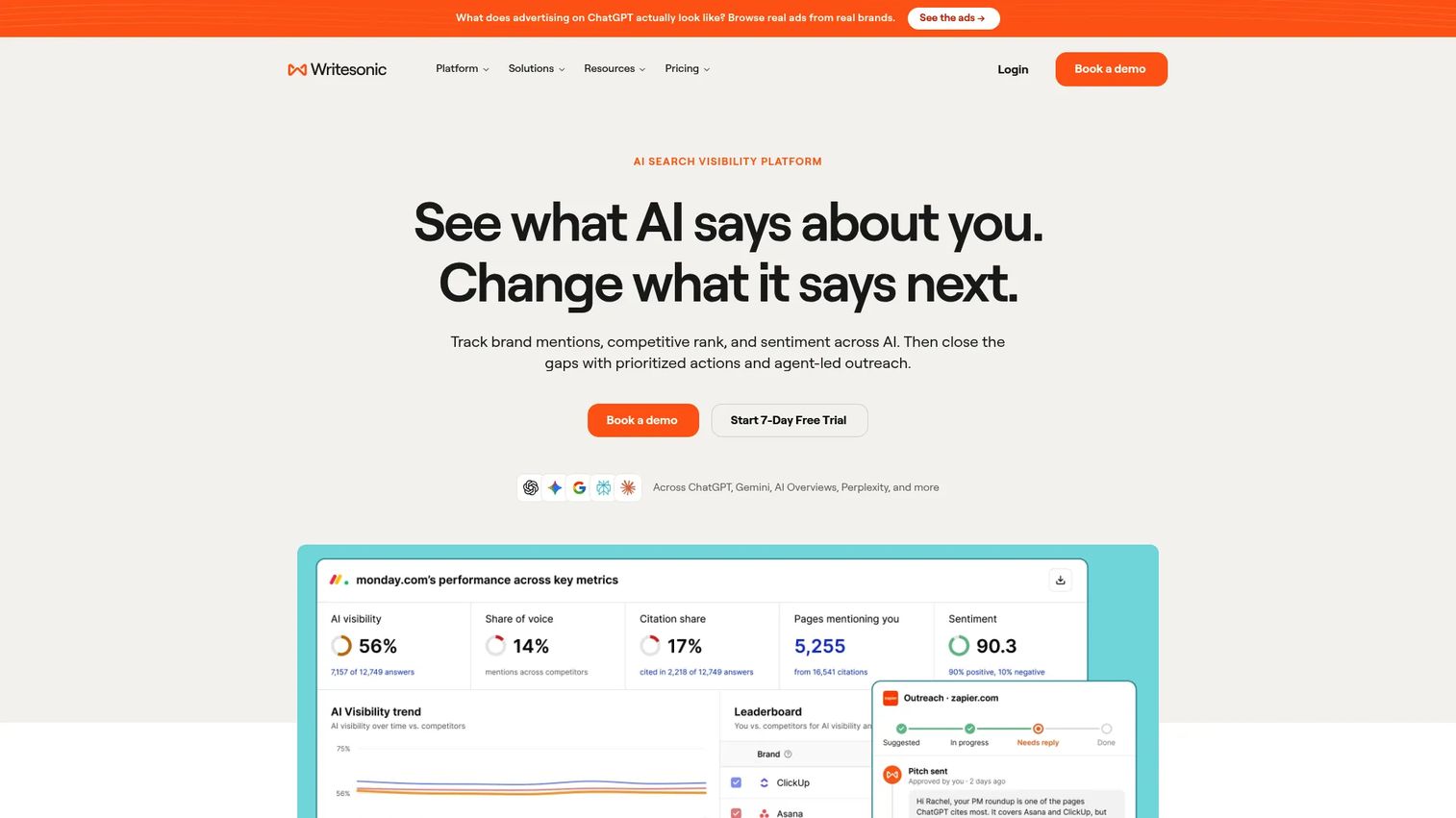
Writesonic combines AI visibility measurement with content creation and SEO work. Its Action Center prioritizes fixes, while AI agents support execution. This makes the platform relevant when reporting and publishing sit with the same team.
Best for: Content-led growth teams that want measurement connected to an active publishing backlog.
Key features
- AI visibility monitoring
- Action Center for prioritized fixes
- AI article generation
- AI search volume research
- Shopping analytics and AI ads tracking
The evaluation should follow a complete content task. Start with an underrepresented topic, inspect the proposed action, and assess the resulting draft against your editorial requirements.
Keep human review inside that process. A generated article still needs accurate product detail and evidence that supports its claims.
Consolidation is valuable only when the workflow fits your team. Compare the combined purchase against the monitoring and writing subscriptions it would replace.
Why choose Writesonic: It suits teams able to act directly on visibility findings. A monitoring-only buyer should compare its content-heavy scope with dedicated trackers.
Writesonic pricing: Starter costs $79/month billed annually or $99 monthly. Basic costs $199 annually billed or $249 monthly; Growth costs $399 or $499 respectively.
G2 rating: 4.7/5.
11. Frase
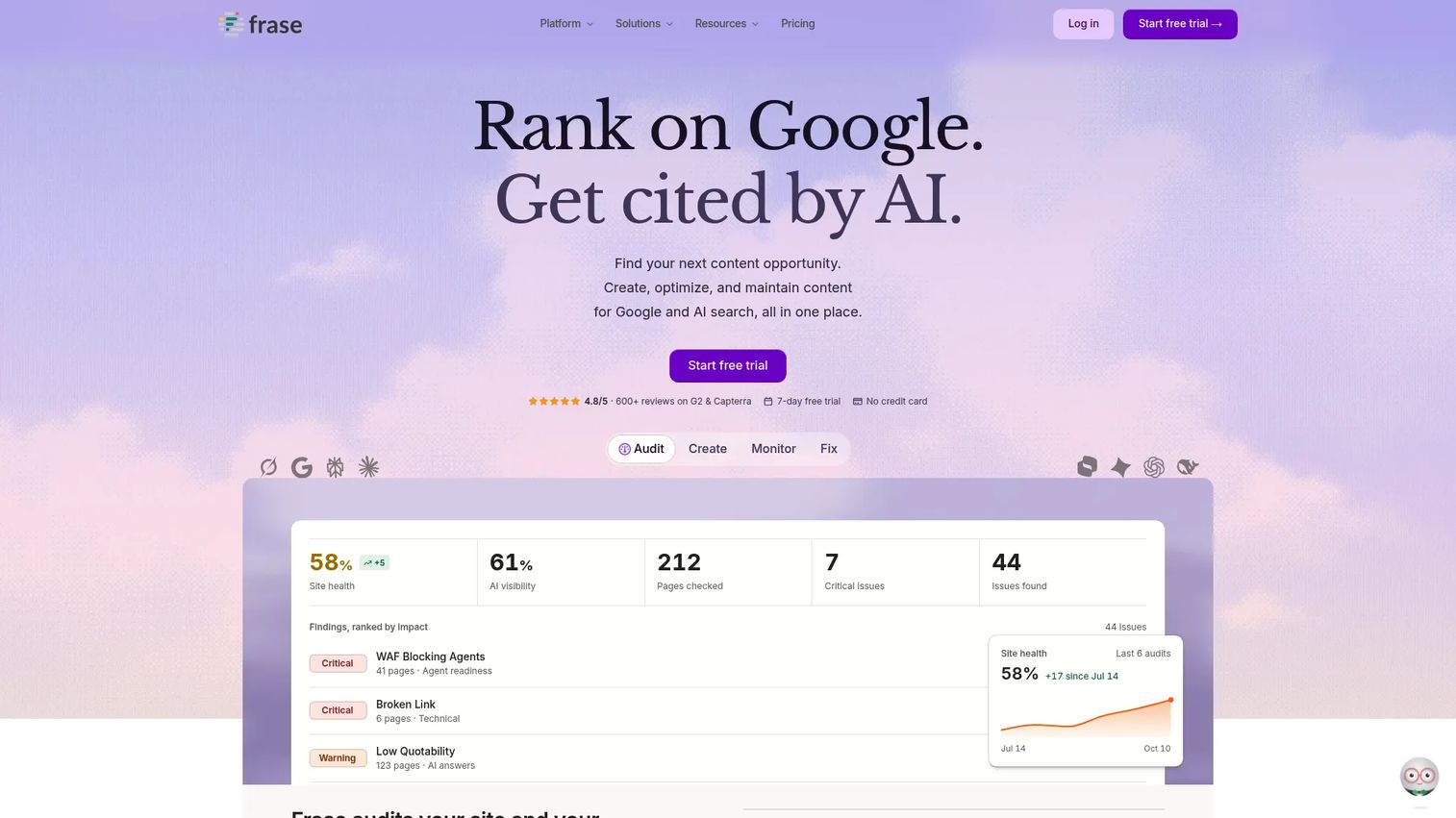
Frase now combines content operations with AI visibility tracking. Its offering extends beyond briefs into content scoring, site audits, and ongoing page maintenance. Teams evaluating it should assess the full publishing workflow rather than treating it solely as a writing assistant.
Best for: Content marketers responsible for keeping existing pages useful across search and AI discovery.
Key features
- SEO and GEO content scoring
- AI content agent with brand voice
- AI visibility tracking
- Content Guard for declining pages
- Publishing integrations
Content Guard is relevant when the backlog includes aging pages as well as new articles. Use a page with declining performance to evaluate the recommended maintenance work.
The platform supports publishing destinations including WordPress and Webflow. Check how that process fits your approvals before changing the team’s production workflow.
FraseCMS has separate packaging. Distinguish that publishing layer from the main subscription when budgeting.
Why choose Frase: Consider it when optimization and maintenance are the immediate bottlenecks. Its current monitoring capabilities also warrant evaluation alongside content production.
Frase pricing: Starter costs $39/month, Professional $103, and Scale $239, billed yearly. A seven-day free trial requires no credit card.
G2 rating: 4.8/5.
12. Keyword.com
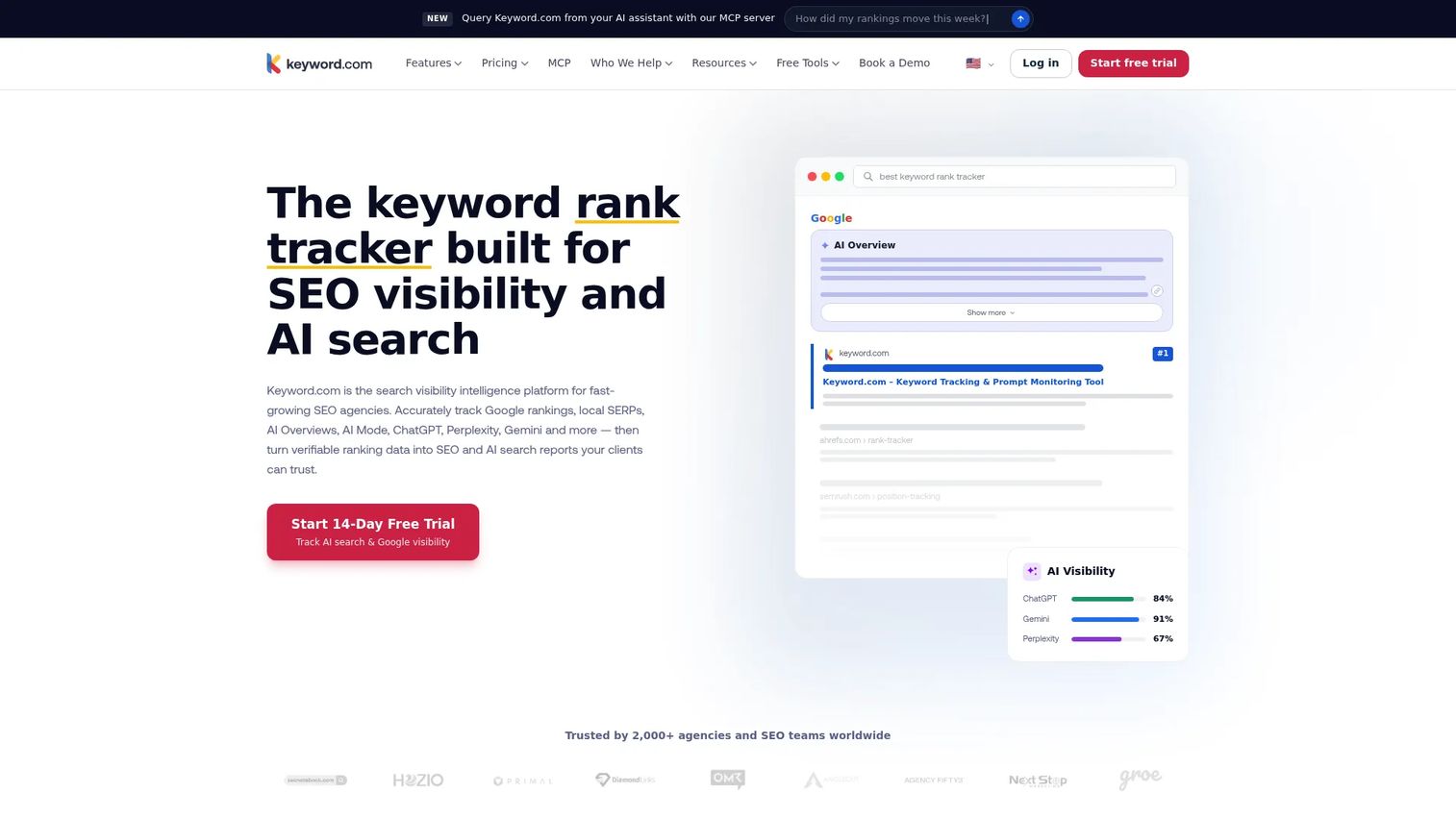
Keyword.com supports traditional search rankings alongside AI visibility monitoring. Separate packages cover search-only, AI-only, and combined requirements. That distinction helps teams purchase the measurement they need without assuming every plan includes both.
Best for: SEO teams and agencies extending familiar ranking reports into AI search.
Key features
- Google keyword rank tracking
- ChatGPT and other AI engine monitoring
- Local tracking by city and ZIP code
- Share-of-voice and SERP feature tracking
- API access and white-label reporting
Supported AI surfaces include ChatGPT, Google AI Overviews, Perplexity, and Gemini. Local rank tracking is a separate strength for organizations managing geographically specific search campaigns.
Pay attention to configuration when comparing headline costs. The pricing research did not establish the tracking-volume allowance behind every entry figure.
White-label reporting is also an add-on. Include it in an agency budget rather than assuming it comes with the lowest subscription.
Why choose Keyword.com: It offers a direct purchasing route for teams combining search and AI reporting. Evaluate volume allowances against your client portfolio.
Keyword.com pricing: AI Visibility starts at $7.83/month billed annually or $9.80 monthly. A 14-day free trial is available.
G2 rating: 4.7/5.
13. BrightEdge Prism
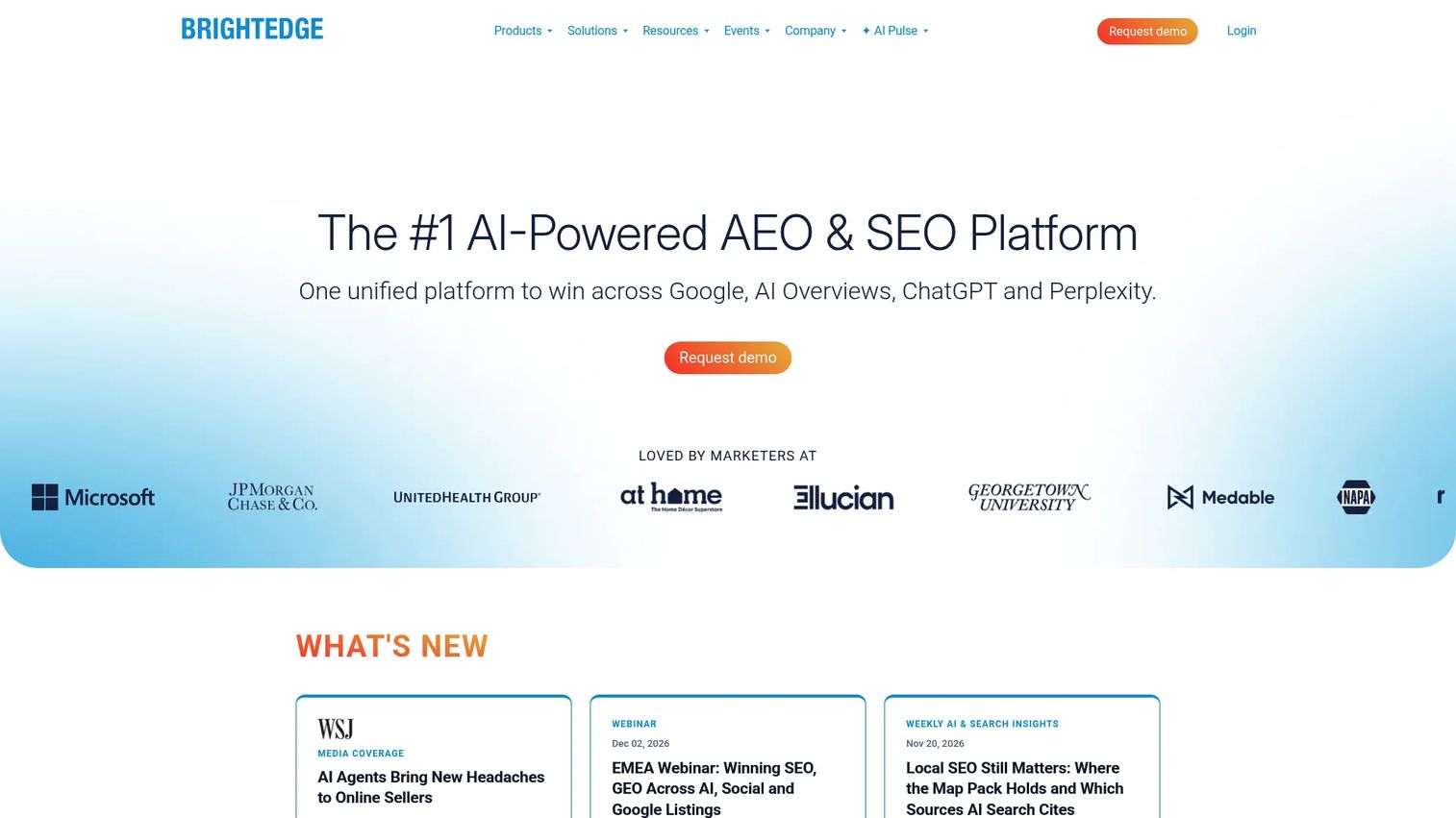
BrightEdge is an enterprise SEO and content-performance platform with AI search visibility capabilities. The product evidence available for this entry describes BrightEdge overall. Treat “BrightEdge Prism” as a package question during evaluation, rather than assuming it is a separately documented product.
Best for: Enterprise teams considering AI visibility within an established SEO operating program.
Key features
- Keyword research and reporting
- Content optimization recommendations
- Competitive analysis
- Backlink management
For an enterprise purchase, begin with the reports your teams must produce. Ask the vendor to demonstrate those outputs using your markets and product categories.
Separate broader platform capabilities from the exact AI monitoring scope in the proposal. The distinction matters when different teams own traditional SEO and emerging discovery channels.
Avoid assigning governance or security capabilities from the enterprise label alone. Request the contractual details your procurement process requires.
Why choose BrightEdge Prism: Evaluate BrightEdge when AI discovery belongs within a larger enterprise search investment. Establish the precise product scope before comparing it with specialist trackers.
BrightEdge Prism pricing: Custom pricing through BrightEdge sales.
G2 rating: 4.4/5
14. Moz Pro
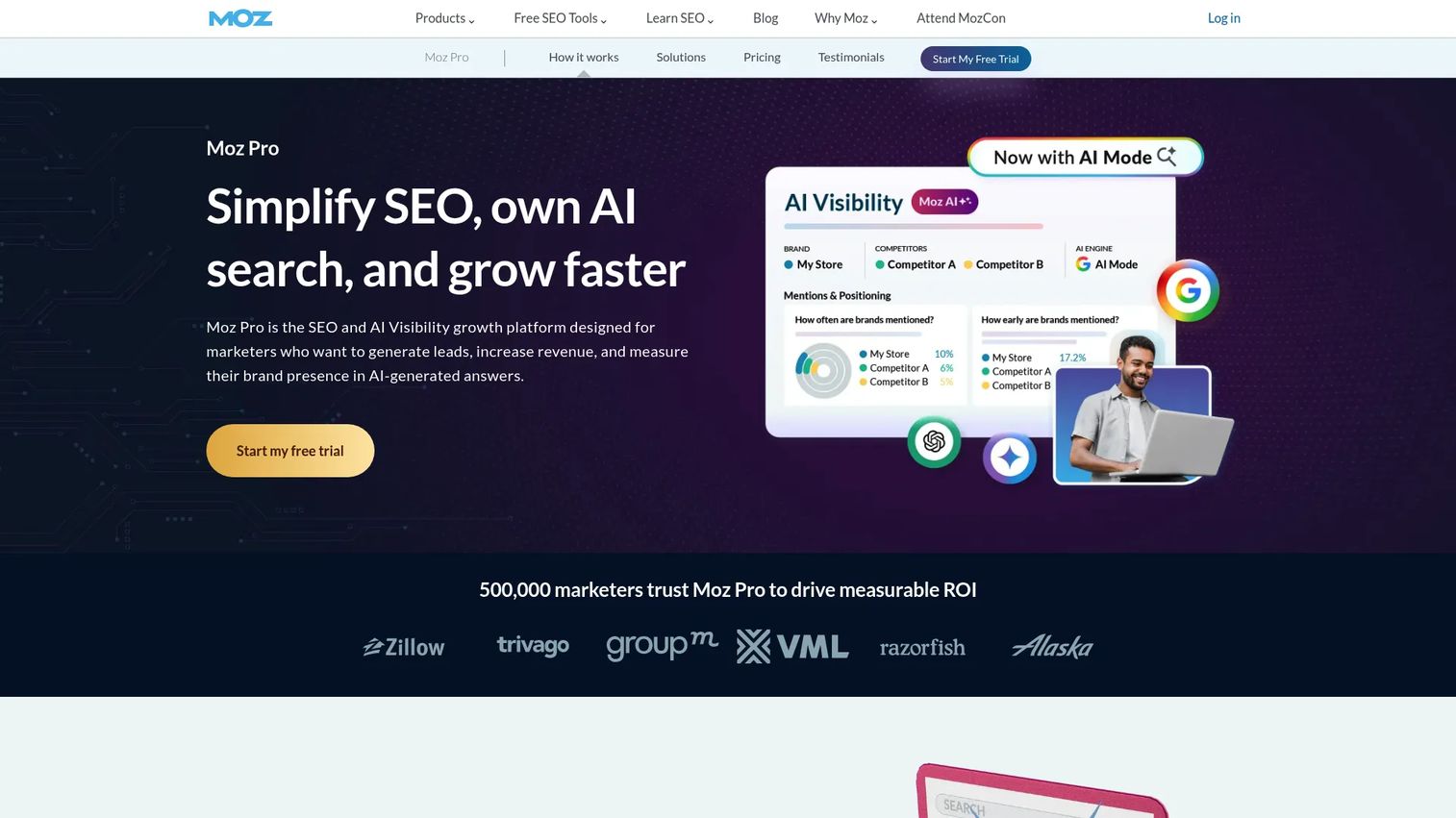
Moz Pro supports traditional SEO work across keyword research and site analysis. It belongs in this comparison as an adjacent foundation tool. Direct monitoring of ChatGPT answers is not established by the available product evidence.
Best for: Teams prioritizing conventional SEO diagnostics while evaluating AI monitoring separately.
Key features
- Keyword research
- Keyword rank tracking
- Site crawling and auditing
- Competitor research
- Backlink analysis
Use the distinction to avoid buying the wrong category. Improving a site’s technical condition and tracking generated recommendations are separate jobs.
An existing Moz Pro subscription can remain useful while you assess whether another platform fills the monitoring gap. Inventory your current coverage before replacing tools wholesale.
For a purchase evaluation, request a demonstration of the exact answer-tracking task you need. Keyword movement alone doesn’t establish presence inside an AI response.
Why choose Moz Pro: Choose it for search foundations and ongoing SEO analysis. Keep dedicated AI answer monitoring as a separate requirement in your evaluation.
Moz Pro pricing: Ask Moz for current plan details.
G2 rating: 4.3/5.
15. LLM Pulse
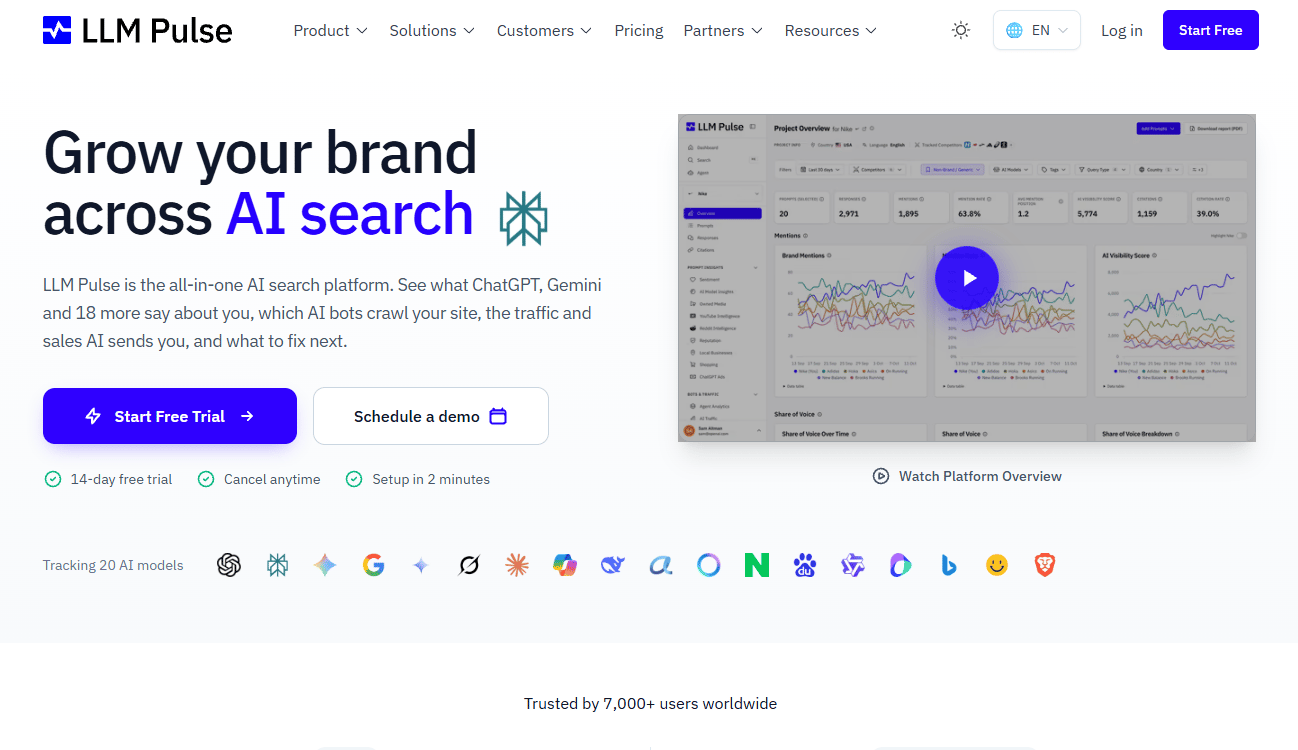
LLM Pulse combines AI visibility tracking with reputation and traffic analysis. It monitors citation sources and sentiment across AI assistants. ChatGPT Shopping tracking adds a commerce-oriented dimension for relevant brands.
Best for: Marketing teams sharing AI discovery responsibilities with brand or reputation owners.
Key features
- Multi-model prompt and visibility tracking
- Citation-source and sentiment analysis
- AI traffic analytics
- Reputation monitoring and custom reports
- GEO Writer and recommendations
This scope is useful when the question extends beyond whether a brand appears. A reputation owner may care more about the description or cited source than relative position.
During evaluation, separate those reporting needs. Give the SEO owner a visibility question and the communications owner a factual-accuracy question.
Tracking frequency affects the pricing views shown on the vendor’s site. Select the intended cadence before comparing a proposal with another platform.
Why choose LLM Pulse: Consider it when visibility and reputation analysis need shared evidence. Its review score requires caution because the available G2 sample is small.
LLM Pulse pricing: Starter costs €49/month, Growth €99, and Scale €299. A 14-day free trial is available.
G2 rating: 5.0/5
16. Whatagraph
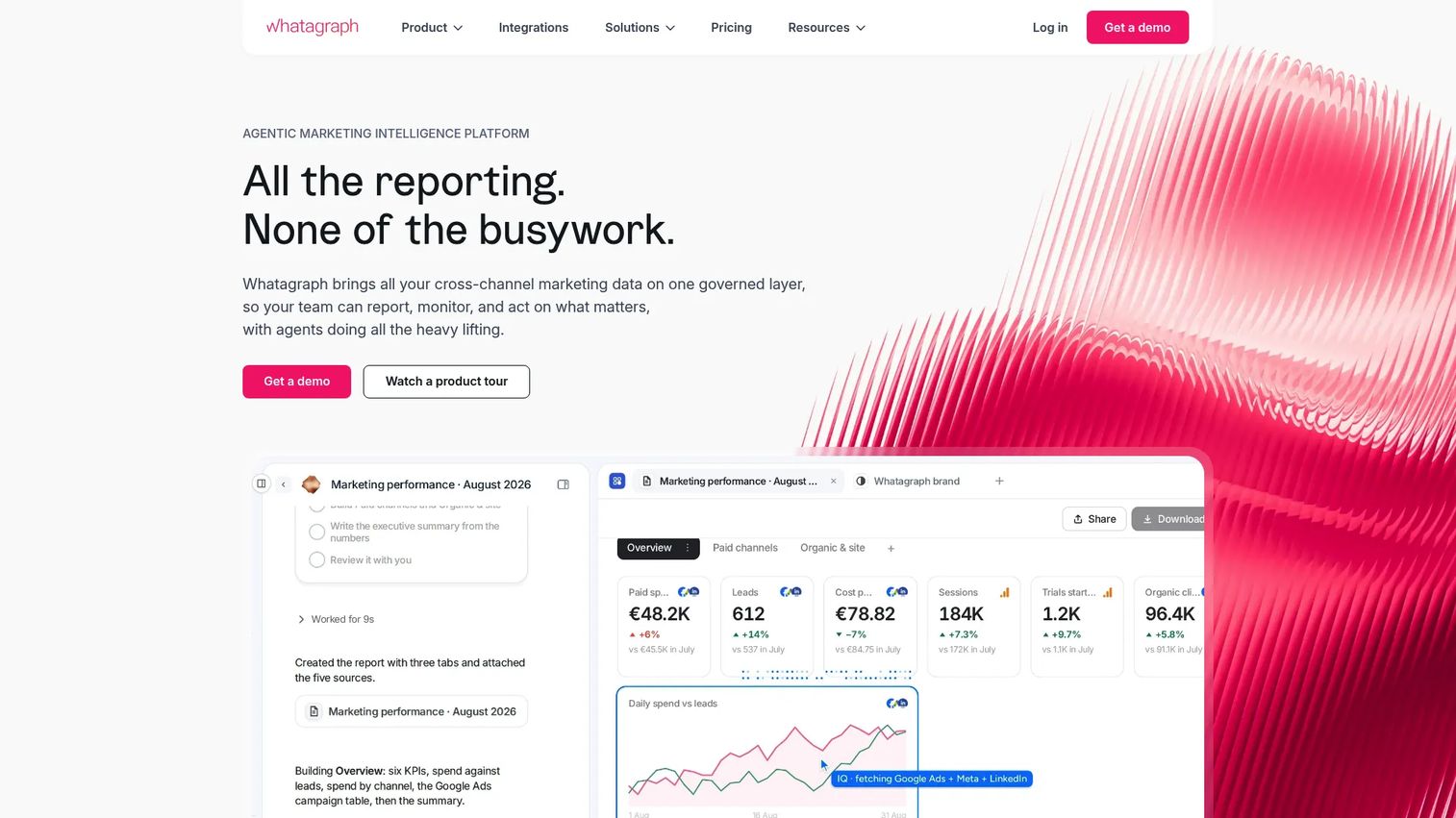
Whatagraph is marketing reporting infrastructure rather than a native ChatGPT answer tracker. It connects and standardizes cross-channel data for reporting and operational analysis. Its role here is presenting measurement alongside the channels leadership already funds.
Best for: Agencies and in-house teams consolidating marketing reports across multiple data sources.
Key features
- Native marketing integrations and API connections
- Data blending and custom metrics
- Currency conversion
- Automated reports and alerts
- White-label reporting
Before choosing it for AI reporting, establish the import path from your monitoring provider. General API capability doesn’t guarantee a ready-made connector for every tracker.
Build a sample report with visibility metrics beside attributable sessions and conversions. Label those measures separately to avoid presenting correlation as revenue attribution.
Packaging also matters. Prime includes public API access, while Max provides advanced integrations and reporting capabilities.
Why choose Whatagraph: It fits a reporting consolidation problem when you already have a source of AI visibility data. It should not replace answer collection by assumption.
Whatagraph pricing: Max starts at €699/month billed annually. Prime uses custom annual pricing.
G2 rating: 4.5/5.
17. ZipTie
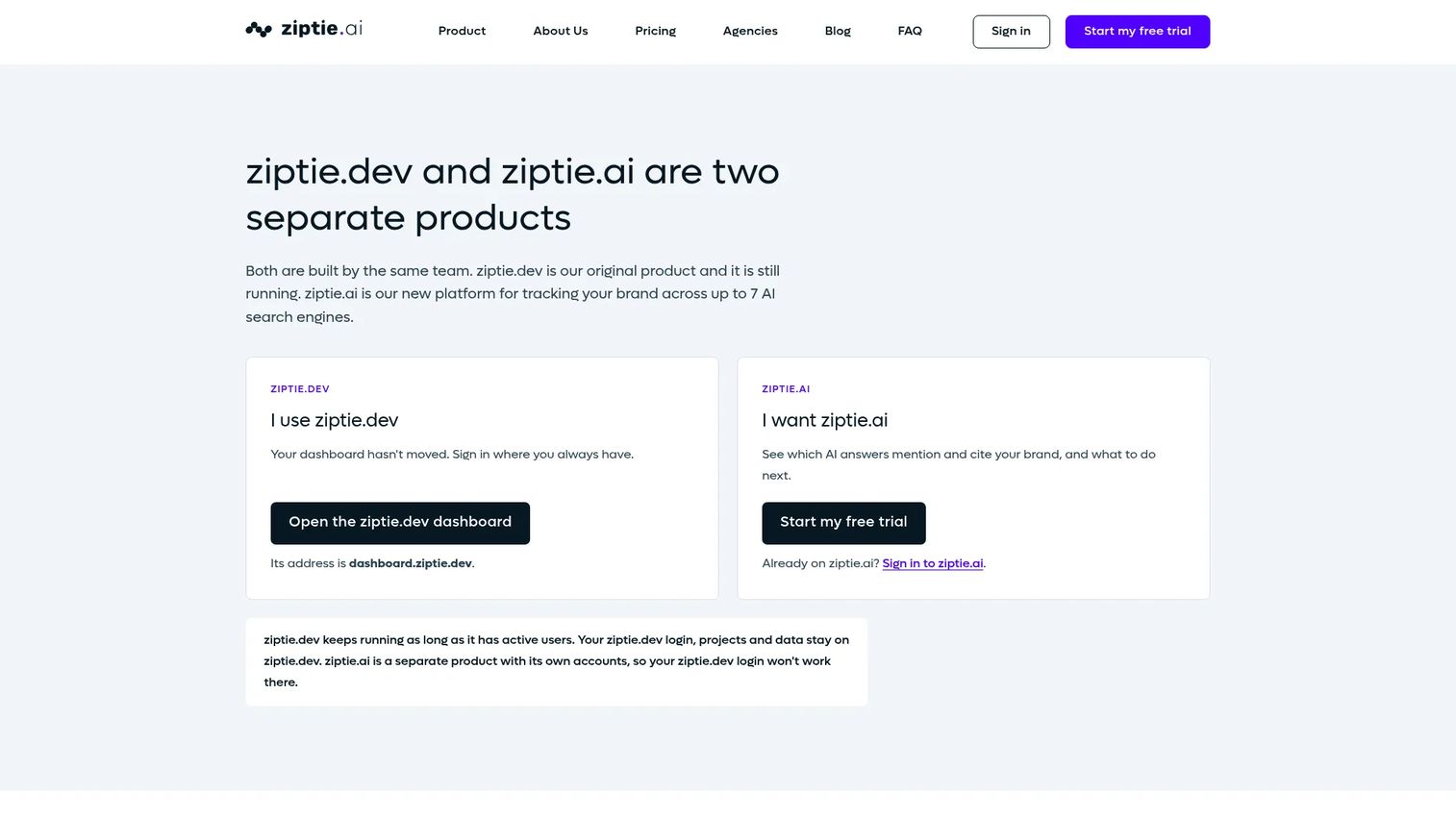
ZipTie monitors AI search visibility and connects findings to page-level actions. Its current AI offering includes source analysis and content recommendations. The ziptie.dev and ziptie.ai products come from the same team but are separate products.
Best for: Teams wanting AI monitoring connected to content audits and practical optimization work.
Key features
- Prompt tracking across supported AI engines
- Brand mention and citation monitoring
- Reddit and YouTube source analysis
- Page audits and action recommendations
- Analytics integrations and client reporting
Evaluate the current product against your intended optimization workflow. Start with an answer citing external content, then inspect the recommendation for your own site.
Costs depend on monitored prompts, refresh frequency, and selected engines. Optional content generation and API access also affect the final subscription.
This is broader than a technical crawlability checker. Buyers should evaluate its answer-monitoring and content capabilities rather than relying on an older product description.
Why choose ZipTie: It fits teams that need a next-action workflow alongside monitoring. Keep product identity and review provenance clear during procurement.
ZipTie pricing: ziptie.ai Starter begins at $25.65/month, with usage-based pricing. A free tier and seven-day trial are available.
G2 rating: 4.5/5
Considerations when choosing ChatGPT SEO tracking tools
Match the tool to your measurement question
Decide whether you need mentions, citations, recommendations, or attributable visits. Ask each vendor to explain its calculation of share of voice in AI search.
An AI search analytics tool should make the denominator understandable, including which prompts and competitors contribute.
Check engine coverage by market
AI search monitoring platforms differ in supported engines and plan availability. Request coverage for your target languages and regions, alongside the collection method.
Treat announced capabilities separately from features available in the account you’re buying.
Control the prompt portfolio
Group questions by buying stage and product category. Keep the tracked wording stable while testing new prompts in a separate group.
Otherwise, portfolio changes can look like performance changes in leadership reporting.
Preserve evidence and export it
Ask for saved answers, timestamps, citation lists, and CSV exports. Response preservation lets you investigate a change instead of debating a dashboard score.
Review API access and permissions before committing to a reporting process.
Connect findings to owned actions
Evaluate AI brand accuracy and hallucination monitoring through specific product claims. Assign someone to correct misleading information and inspect its cited source.
For AI crawler monitoring, distinguish observed log data from general recommendations. Every finding should end with an owner and a measurable follow-up.
Choose the workflow before the subscription
Semrush is a strong starting point when AI monitoring belongs inside a broader SEO stack. Ahrefs Brand Radar suits teams combining recurring tracking with market research.
For enterprise programs, evaluate Profound against your operating requirements. Peec AI offers focused marketing analytics, while Otterly provides a modest entry point for establishing a repeatable process.
Whatagraph addresses the reporting layer. ZipTie connects answer visibility with content actions, rather than serving only as a technical checker.
The best AI search tracking tools should help you make a decision your current stack cannot support. Before buying, choose a commercial prompt group and define the action an unfavorable result would trigger.
Then compare finalists using the same questions. Inspect the cited evidence, calculate the cost of your intended coverage, and ask each stakeholder to use the resulting report.
ChatGPT SEO tracking tools earn their place when they replace manual work or improve content investment decisions. Keep visibility separate from attributed pipeline until your data supports the connection.
Start your journey with Guideflow today!
FAQs
ChatGPT SEO tracking tools monitor how a brand or page appears in generated answers to selected prompts. Depending on the product, they report mentions, citations, position, sentiment, and competing recommendations.
They are useful when your team needs a repeatable record beyond individual manual searches. Choose a platform that preserves enough answer-level evidence to explain changes.
Traditional rank tracking follows keyword positions in search results; AI monitoring examines generated responses to questions. An answer can recommend a company without linking to its website.
This means a brand can gain exposure without an immediately attributable visit. Keep answer visibility separate from click-based performance, and compare trends without assuming they represent identical audience behavior.
Track brand mentions and ChatGPT citations separately, then examine recommendation frequency and relative position. Add share of voice in AI search and inspect the sources behind important answers.
Sentiment can help prioritize review, but read the underlying language before treating a score as a brand-risk finding. Connect attributable referral sessions to conversions and pipeline through your existing analytics process.
Many AI visibility platforms cover several engines, but availability varies across products and packages. Confirm the specific surfaces included rather than accepting “multi-engine” as sufficient detail.
The best Perplexity SEO tracking tool or Copilot option depends on your markets and reporting requirements. Ask about collection frequency and regional coverage, then request sample responses from the engines your buyers use.
Use daily collection for important commercial prompts and review the findings weekly as a practical starting point. Less critical exploratory questions can follow a lighter schedule.
Increase attention around major launches or changes to product information. Keep the monitoring cadence consistent during comparisons, and document any adjustments that affect the number of observations behind your reports.
AI responses can vary with wording, location, personalization, and model changes, so a monitored answer is an observation rather than universal truth. Evaluate consistency across repeated runs instead of reacting to a single result.
Ask vendors how they collect responses and preserve source evidence. Useful AI SEO trackers make those conditions clear enough for your team to investigate unexpected changes.
A small team can begin with manual checks and a documented prompt portfolio. Software becomes more useful when recurring monitoring consumes time or stakeholders need historical evidence.
Start with a budget tied to a specific decision, such as prioritizing comparison-page updates. Avoid purchasing more coverage than your team can review and act on; unused monitoring creates another reporting obligation.
Agency fit depends on client separation, reporting outputs, tracking allowances, and predictable pricing. Test whether an account manager can explain a visibility change without asking an analyst to reconstruct the evidence.
Dedicated monitoring and client presentation may require different products. Before buying both, calculate the full cost of white-labeling and data access, including any add-ons required by your reporting workflow.