Your brand is being discussed right now. Somewhere in a Reddit thread, a Yelp review, a LinkedIn comment, a Google AI Overview, or a ChatGPT response, someone is forming an opinion about your company without you in the room.
The problem is not volume. Most marketing teams already know they cannot read every mention. The real problem is knowing which conversations matter before they affect CAC, pipeline, or reputation. A single misleading AI summary or a cluster of negative reviews can move faster than your weekly reporting cycle.
According to BrightLocal's Local Consumer Review Survey (2025), 98% of U.S. consumers at least occasionally read online reviews when researching local businesses. And the same study found that 74% check at least two review platforms before making a purchase decision. That is not a social media problem. That is a revenue problem.
Modern brand monitoring tools track mentions across social networks, news sites, review platforms, forums, search results, and increasingly, AI-generated answers. This guide breaks down 21 options, from enterprise intelligence platforms to free baseline tools, so you can build a stack that reduces ambient anxiety rather than adding another dashboard nobody checks.
What's inside
This guide compares 21 brand monitoring tools for digital marketers, PR teams, SEO teams, and enterprise marketing teams.
- Who it's for: Growth marketers managing multi-channel attribution, PR teams tracking earned media, and SEO teams hunting unlinked mentions
- Selection criteria: Source coverage breadth, alert speed and routing, sentiment quality, reporting depth, and pricing fit for each team size
- Coverage: Enterprise platforms, mid-market tools, SEO alert tools, review management, AI visibility trackers, and free native options
- Goal: Help you pick the right tool without adding another reporting surface no one actually uses
TL;DR
- Best for enterprise consumer intelligence: Brandwatch for broad social and trend intelligence at scale
- Best for mid-market brand mention tracking: Brand24 at $249/month with a free 14-day trial
- Best for SEO-focused monitoring: Semrush Brand Monitoring at $79/month or Ahrefs Alerts from $29/month
- Best for review and local reputation: Birdeye or Yext for multi-location brands
- Best for AI visibility tracking: Peec AI from $95/month or Brand Radar from $49/month
- Best free baseline: Google Alerts and Google Trends, both free with no paid tier
- Best for custom monitoring workflows: Gumloop from $37/month for teams that want to stitch sources together
What is brand monitoring software?
Brand monitoring software tracks mentions of a company, product, executive, competitor, or keyword across online channels so teams can measure visibility, sentiment, reputation risk, and market perception.
The category covers a wide surface. Channels include social networks, news sites, blogs, forums, review platforms, video sites, podcasts where supported, and AI-generated answers from tools like ChatGPT, Gemini, and Perplexity. The term "brand monitoring" is broader than social listening, which focuses on social conversations only. Media monitoring focuses on press and broadcast. Reputation management focuses on reviews. SEO mention tracking focuses on backlinks and unlinked citations. Brand monitoring, done well, ties all of these together.
For digital marketers, the category answers five operational questions:
- Where are brand conversations happening for your business?
- How fast do you need alerts when something shifts?
- Who acts when a mention matters?
- Can the tool separate noise from revenue-relevant signals?
- Does it replace a tool you already pay for?
Core capabilities to look for:
- Mention discovery across sources relevant to your business
- Sentiment analysis with enough context to handle sarcasm and mixed reviews
- Real-time alerts routed to the people who act on them
- Share of voice and competitor tracking
- Review monitoring across Google, Yelp, industry directories, and other platforms
- Visual brand monitoring (logo and image detection) for enterprise needs
- AI search visibility tracking for ChatGPT, Gemini, Perplexity, and AI Overviews
- Reporting and dashboard exports leadership will trust
- Workflow routing to Slack, email, CRM, or helpdesk channels
The emerging category is AI brand monitoring. Searchers increasingly ask AI assistants for category recommendations, and the brand that gets recommended (or ignored) in those answers is a new form of share of voice. Tools like Peec AI and Brand Radar now track this specifically.
When to use brand monitoring tools
Catch reputation issues before they spread
A mention that arrives three days late is a report, not a response system. Brand monitoring tools give PR, support, and social teams early warning so they can route issues to the right owner before the conversation becomes entrenched. This is especially relevant for brands with active review profiles or public-facing customer support.
Measure campaigns beyond clicks
UTMs and platform dashboards show owned performance. Brand monitoring shows what happens after someone sees your ad or reads your content. Did the message spread into organic conversation? Did sentiment move? Did category searches spike? These signals help growth teams test whether messaging travels outside owned channels, not just whether it converts inside them.
Track competitors and category demand
Share of voice data, sentiment trends, and narrative shifts from competitor monitoring give growth teams better inputs for positioning, SEO content, and launch planning. When a competitor's reputation dips, you want to know before your paid campaigns miss the window.
Brand monitoring tools comparison
The table below covers all 21 tools in order. Pricing reflects the entry tier from each vendor's pricing page at the time of writing. G2 ratings come from each tool's current G2 listing.
| # | Product | Best for | Key differentiator | Pricing | G2 rating |
|---|---|---|---|---|---|
| 1 | Brandwatch | Enterprise consumer intelligence | Broad social, consumer, and trend intelligence | Custom pricing | 4.2/5 |
| 2 | Sprinklr Insights | Enterprise omnichannel monitoring | Unified AI-powered social and consumer listening | Custom pricing | 4.3/5 |
| 3 | Talkwalker | Visual and social intelligence | Image, video, and multilingual social listening | Custom pricing | N/A |
| 4 | Brand24 | Mid-market brand mention tracking | Fast setup with real-time alerts and AI insights | From $249/month | 4.6/5 |
| 5 | BrandMentions | Web-wide mention discovery | Broad web, social, and backlink monitoring | From $99/month | 4.8/5 |
| 6 | Meltwater | PR and media intelligence | Media monitoring plus journalist database | Custom pricing | 4.1/5 |
| 7 | Sprout Social | Social media teams | Listening tied to publishing and engagement workflows | From $79/seat/month | 4.4/5 |
| 8 | Hootsuite | Social management with monitoring | Scheduling, inbox, and listening in one suite | From $99/user/month | 4.3/5 |
| 9 | Birdeye | Review and local reputation | AI-powered review and reputation management | Custom pricing | 5.0/5 |
| 10 | Yext | Listings and reputation management | Listings, reviews, and AI search visibility control | Custom pricing | 4.4/5 |
| 11 | Semrush Brand Monitoring | SEO and PR mention tracking | Brand mentions connected to SEO workflows | From $79/month | 4.4/5 |
| 12 | Ahrefs Alerts | Backlink and mention alerts | Alerts for links, keywords, and competitors | From $29/month | 4.5/5 |
| 13 | Gumloop | Custom AI monitoring workflows | Build automated monitoring and routing workflows | From $37/month | 4.8/5 |
| 14 | Alertmouse | Lightweight mention alerts | Simple prioritized alerts for small teams | Free tier available | N/A |
| 15 | Brand Radar | AI visibility monitoring | Tracks brand presence in AI-generated responses | From $49/month | 4.0/5 |
| 16 | Peec AI | AI search visibility | Measures brand visibility across LLM answer surfaces | From $95/month | 4.7/5 |
| 17 | Google Alerts | Free web mention alerts | No-cost keyword alerts for web mentions | Free | N/A |
| 18 | Google Trends | Search demand tracking | Free trend data for brand and category interest | Free | N/A |
| 19 | ChatGPT | Manual AI answer checks | Shows how a brand appears in AI conversations | Free; Plus at $20/month | 4.6/5 |
| 20 | Perplexity | AI answer and citation checks | AI answers with cited sources for brand research | Free; Pro at $20/month | 4.4/5 |
| 21 | Gemini | Google AI ecosystem checks | Brand visibility checks across Google AI surfaces | Free; Pro at $19.99/month | 4.4/5 |
Best 21 brand monitoring tools for 2026
1. Brandwatch
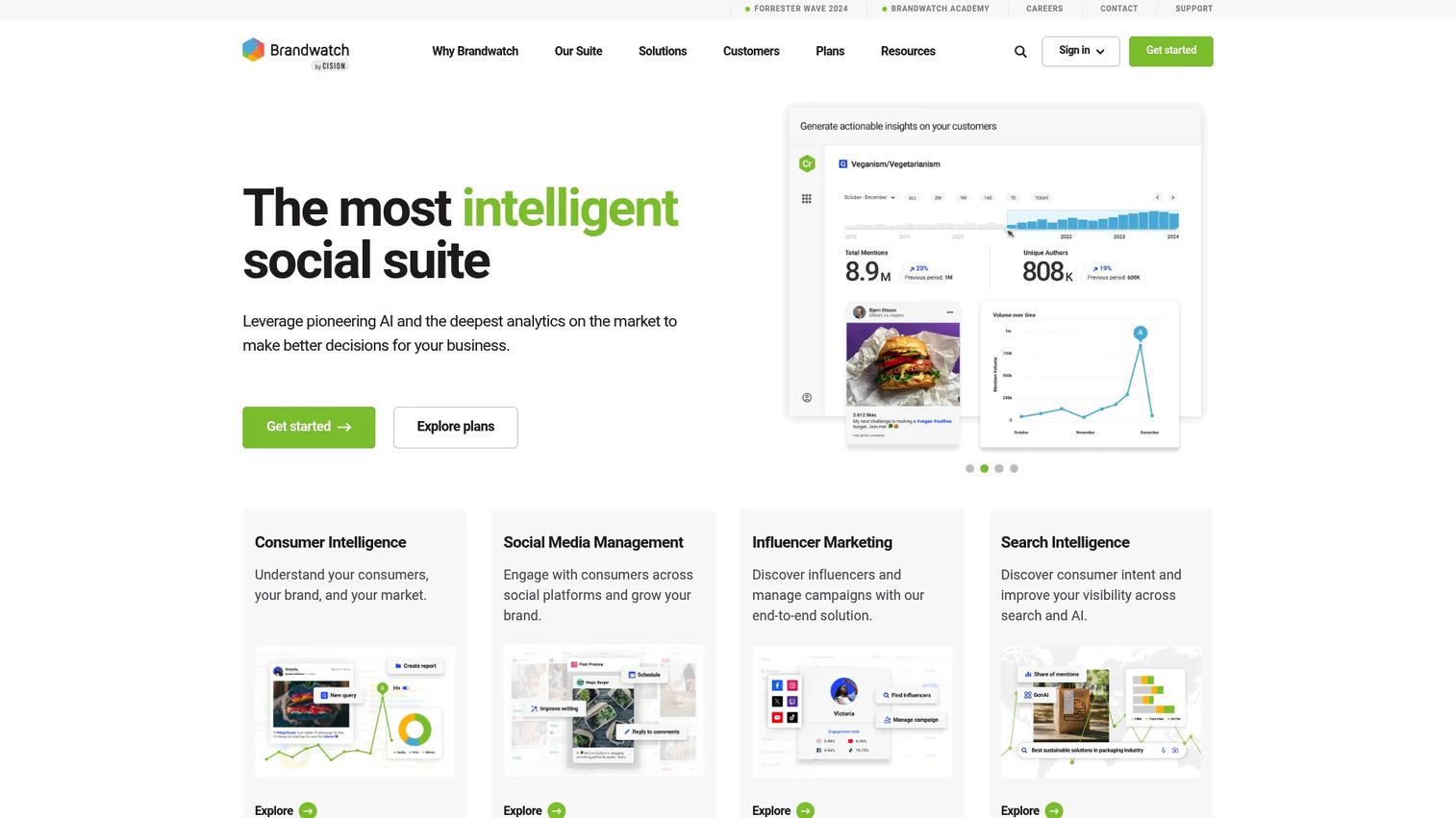
Brandwatch is an enterprise social intelligence suite covering consumer research, social media management, influencer marketing, and search intelligence. The platform monitors social networks, news, blogs, forums, reviews, and broadcast media, then layers on AI-powered insights for sentiment, demographics, key topics, and competitive benchmarking. It's built for large marketing, insights, PR, and social teams that need to turn data into strategic decisions.
Best for: Enterprise organizations that need consumer intelligence, competitive share of voice, and social media management under one platform.
Key features
- Social listening across social networks, news, reviews, and forums
- Sentiment analysis and consumer trend detection
- Competitive share of voice tracking
- Crisis and reputation alerts
- Visual brand monitoring for logo and image detection
Why choose Brandwatch: The platform's depth makes it compelling for large teams running consumer research alongside brand monitoring. It's likely more than an early-stage team needs, but for global brands that treat audience intelligence as a strategic input, the coverage justifies the investment.
Brandwatch pricing: Brandwatch prices through sales. No tier amounts appear on the plans page. Contact sales with your user count, markets, source requirements, and reporting needs to get a quote.
G2 rating: 4.2/5
2. Sprinklr Insights
Sprinklr Insights is an enterprise consumer intelligence platform built for real-time social listening, customer feedback, market research, and brand tracking across digital and traditional channels. It uses AI to surface alerts, visual insights, competitor benchmarks, and audience signals, with omnichannel reporting that connects social data to broader business outcomes.
Best for: Global enterprises needing governance, cross-channel escalation, and AI-driven brand and consumer intelligence.
Key features
- Omnichannel social listening across social, digital, and traditional channels
- AI-powered consumer, product, visual, and audience insights
- Real-time alerts and dashboards
- Review and web monitoring
- Enterprise workflow routing and permissions
Why choose Sprinklr Insights: Strong fit for enterprise teams managing social care, reputation, and research workflows in one governed environment. If your organization already uses Sprinklr for social publishing, Insights adds intelligence without another vendor.
Sprinklr Insights pricing: Custom enterprise pricing. Sprinklr does not offer a free trial for Insights.
G2 rating: 4.3/5
3. Talkwalker
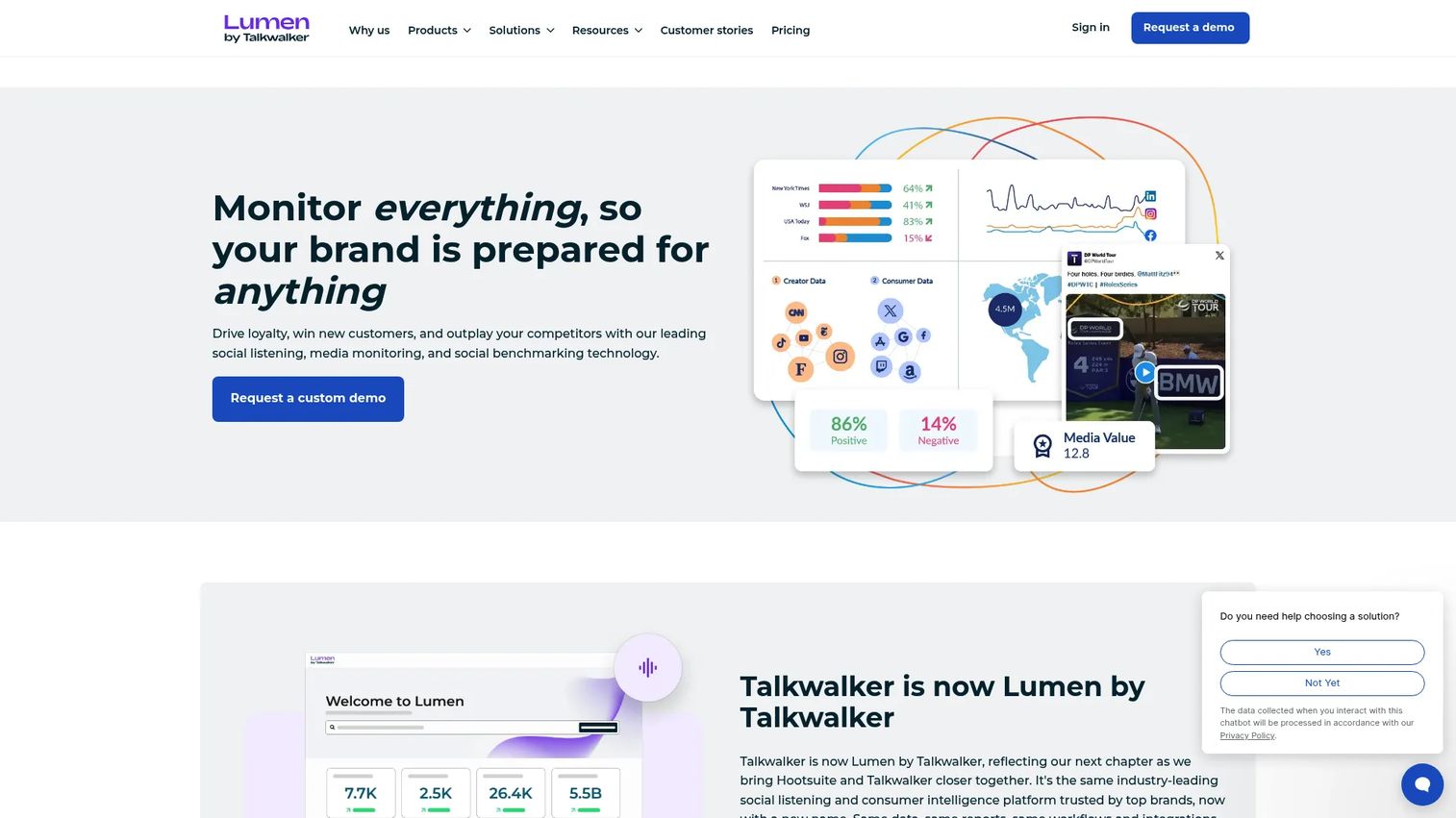
Talkwalker is a consumer intelligence platform for social listening, media monitoring, audience insights, and customer feedback analytics. The platform monitors more than 30 social networks and 150 million websites, with particular strength in visual listening for brand logos, objects, scenes, video, and audio. Multilingual coverage makes it a practical choice for global brands.
Best for: Enterprise marketing, PR, and research teams needing broad social, media, and visual intelligence across markets and languages.
Key features
- Visual mention detection for logos, images, and video
- Social listening across 30+ social networks
- Sentiment analysis and AI-generated summaries
- Viral alerting and competitive benchmarking
- Customizable dashboards and reporting
Why choose Talkwalker: Image and video monitoring is a differentiator here. Teams running campaigns with strong visual components, or those managing brand identity across markets, get coverage that text-only tools miss.
Talkwalker pricing: Plans are Core, Analyze, and Business, all quote-based. The pricing page shows no amounts. Contact Talkwalker with your team size, channel scope, and historical data requirements.
4. Brand24
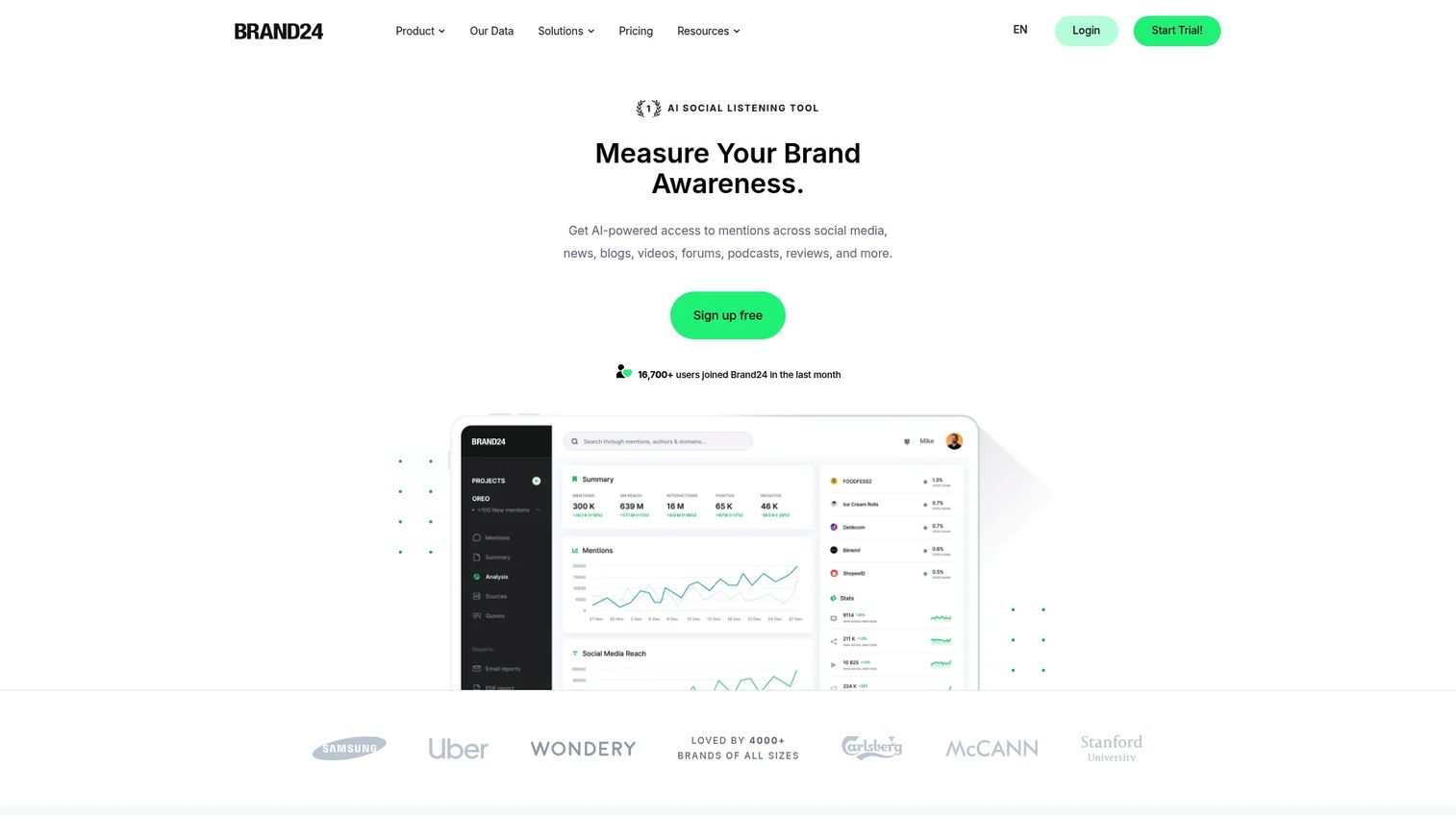
Brand24 is a media monitoring and social listening platform built for teams that want fast setup and real results without enterprise overhead. It tracks mentions across social media, news, blogs, forums, podcasts, reviews, and video sources, then applies AI to surface insights, detect events, score influencers, and measure share of voice. The AI Brand Assistant gives teams a conversational layer for exploring their data.
Best for: Marketing, PR, and communications teams at mid-market companies that need reliable brand and competitor monitoring with practical alerts.
Key features
- Real-time social and media monitoring
- Sentiment analysis with AI insights
- Influencer score per mention source
- Share of voice measurement
- Custom alerts and automated reports
Why choose Brand24: Setup is fast, the interface is accessible, and the alert quality is strong for teams that cannot dedicate a full analyst to monitoring. The AI Brand Assistant speeds up interpretation without requiring custom dashboards.
Brand24 pricing: Plans start at $249/month (Individual), or $199/month billed annually. The Team plan is $349/month, Pro is $499/month, and Business is $699/month. Enterprise starts from $1,499/month billed annually. A free 14-day trial is available.
G2 rating: 4.6/5
5. BrandMentions
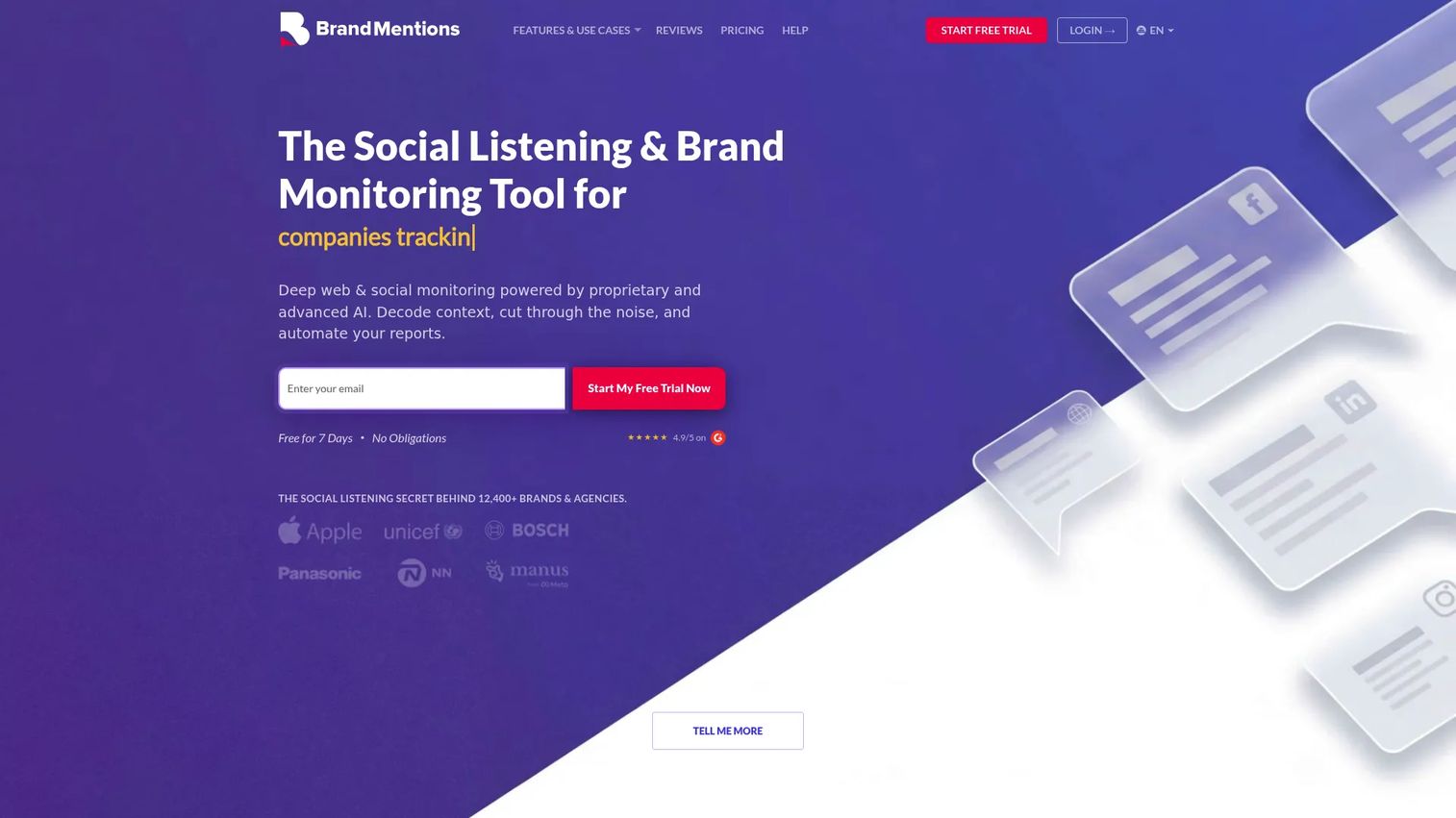
BrandMentions is an AI-powered social listening and brand monitoring platform that tracks online conversations across the web, social media, news, blogs, forums, videos, and reviews. Agencies and SEO teams use it for wide web coverage alongside sentiment analysis, competitor tracking, and white-labeled reporting.
Best for: Agencies, SEO teams, and marketers who need broad web and backlink mention coverage alongside sentiment and competitive tracking.
Key features
- Web and social listening across multiple sources
- Sentiment analysis per mention
- Competitor monitoring and tracking
- Real-time notifications and email alerts
- Customizable and white-labeled reports
Why choose BrandMentions: The combination of wide web coverage, backlink monitoring, and white-label reporting makes it a practical choice for agencies managing multiple client brands. The Starter plan at $99/month is accessible for smaller teams.
BrandMentions pricing: Starter is $99/month (billed quarterly). Pro is $299/month, Expert is $499/month, and Enterprise starts from $1,299/month. All plans include a 7-day free trial.
G2 rating: 4.8/5
6. Meltwater
Meltwater is a media intelligence and social analytics platform for PR, communications, and enterprise marketing teams. It covers news monitoring, journalist databases, press coverage tracking, social listening, influencer management, and AI visibility tracking. The platform is built for teams that connect earned media to executive reporting and reputation management workflows.
Best for: PR and communications teams at mid-market and enterprise companies connecting media monitoring to journalist outreach and social analytics.
Key features
- Media monitoring across news, blogs, and broadcast
- Journalist and media contact database
- Social media monitoring and listening
- Sentiment reporting and PR dashboards
- Influencer management and search
Why choose Meltwater: The journalist database is a differentiator that straightforward brand mention tools lack. Teams running active PR programs get media monitoring and outreach capability without switching platforms.
Meltwater pricing: Pricing is custom across Starter, Pro, Enterprise, and Agency plans. The price depends on the capabilities, source coverage, users, and integrations in your contract. Contact sales for a quote.
G2 rating: 4.1/5
7. Sprout Social
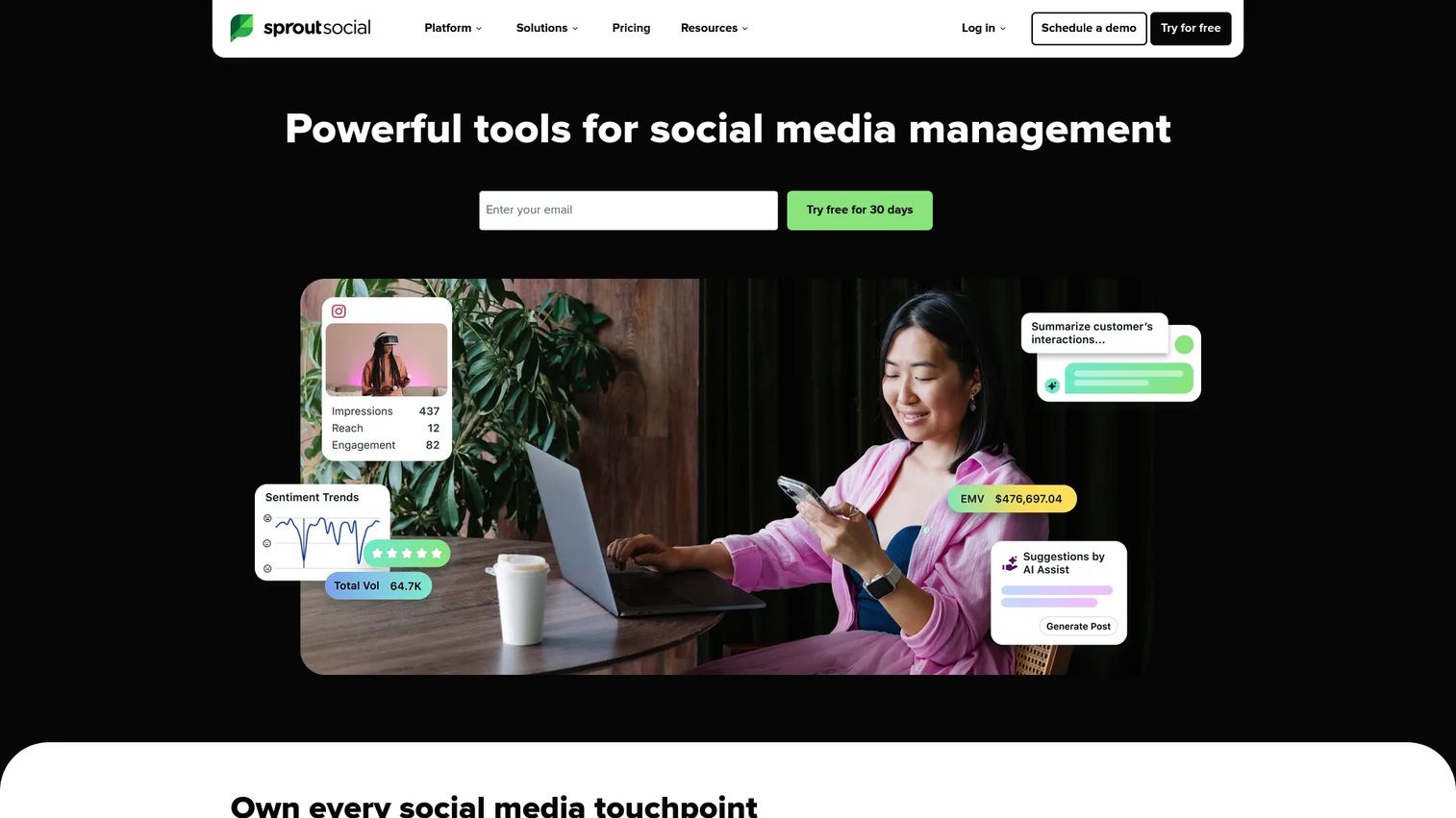
Sprout Social is a social media management platform combining publishing, engagement, analytics, and listening. Social teams use it to manage multiple networks from a unified inbox, schedule content, track sentiment trends, and pull cross-network performance reports. Brand monitoring is part of a broader social management system rather than a standalone web monitoring tool.
Best for: Social media teams that need publishing, engagement, and listening in one place rather than a dedicated mention tracking platform.
Key features
- Unified social inbox and engagement
- Social content scheduling and publishing
- Social listening and sentiment trends
- Cross-network analytics and reporting
- Team collaboration and approval workflows
Why choose Sprout Social: Worth it if social publishing is already the core workflow. Adding monitoring inside a tool your team already uses reduces context switching. For teams whose main need is web-wide or review monitoring, a dedicated tool adds more coverage.
Sprout Social pricing: Essentials starts at $79/seat/month billed annually ($99/seat/month monthly). Standard is $199/seat/month, Professional is $299/seat/month, and Advanced is $399/seat/month. Enterprise pricing is custom. A 30-day free trial is available.
G2 rating: 4.4/5
8. Hootsuite
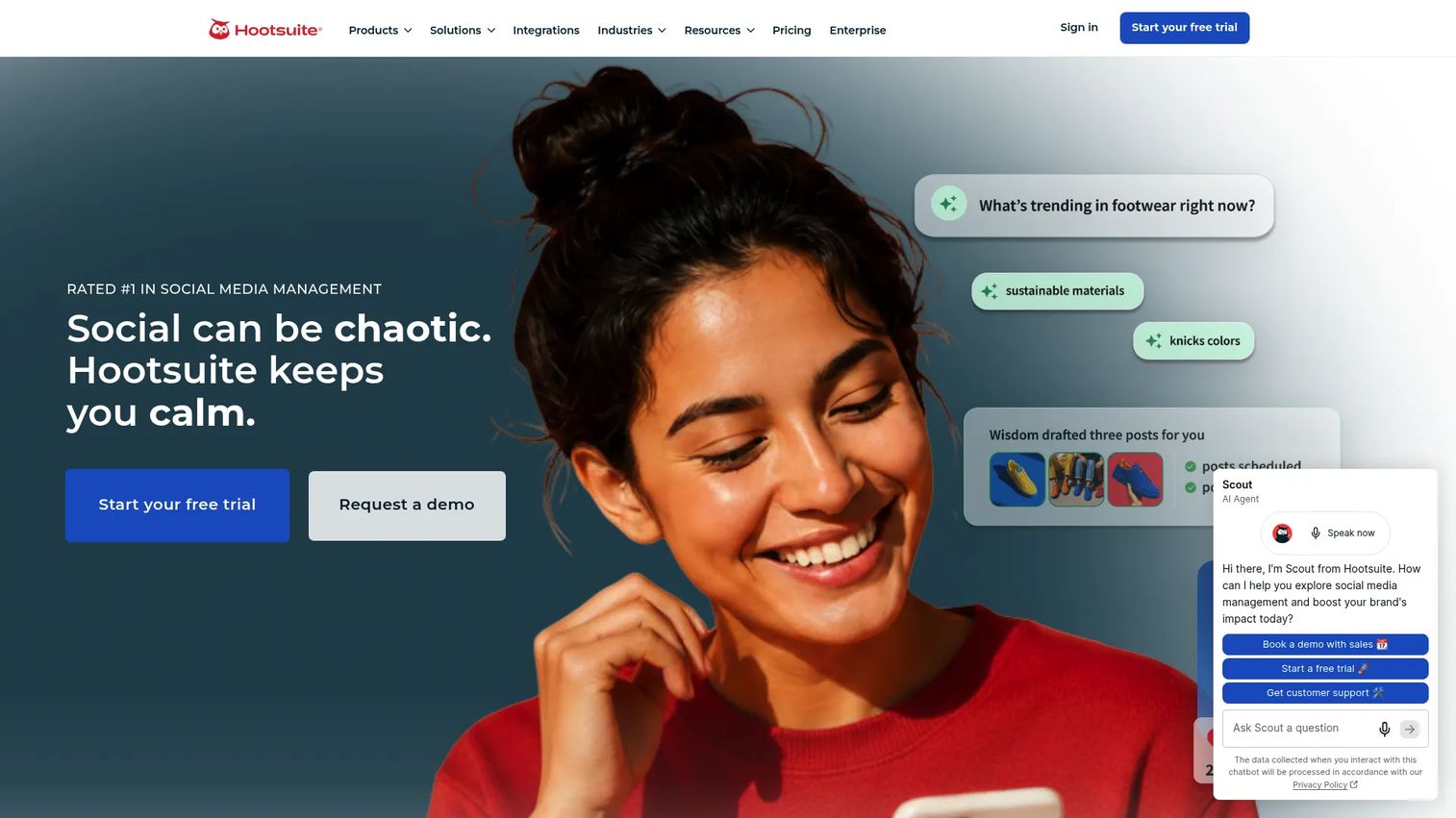
Hootsuite is a social media management suite with scheduling, streams, inbox management, analytics, and listening integrations. Teams managing multiple social profiles use it to monitor mentions in context with their daily publishing workflow. AI-powered content suggestions and listening tools sit alongside collaboration and approval features.
Best for: Marketing and social teams already managing several social profiles who want monitoring built into the scheduling workflow.
Key features
- Social media scheduling and publishing
- Unified social inbox
- Social listening, sentiment analysis, and trend monitoring
- AI-powered content generation and insights
- Team collaboration and approval workflows
Why choose Hootsuite: The strength is breadth inside a familiar publishing environment. If your team already lives in a social management tool, Hootsuite bundles monitoring without requiring a separate login. Web-wide or review-specific monitoring still needs a dedicated layer.
Hootsuite pricing: Standard starts at $99/user/month billed annually. Professional is $199/user/month, Advanced is $399/user/month, and Enterprise is custom. A 14-day free trial is available.
G2 rating: 4.3/5
9. Birdeye
Birdeye is an AI platform for multi-location brands combining reputation management, marketing automation, messaging, and customer experience tools. Its AI coworkers handle review monitoring, listings management, social publishing, and front-desk automation. For brands with multiple locations, it centralizes Google reviews, Facebook, Yelp, and industry directories alongside surveys, ticketing, and competitor analysis.
Best for: Multi-location enterprises needing unified review monitoring, reputation management, and customer experience automation.
Key features
- AI-powered review monitoring and response
- Listings management across major platforms
- Customer surveys and feedback collection
- Competitor analysis and local reporting
- 3,000+ integrations via API and MCP
Why choose Birdeye: Few platforms handle multi-location reputation at this depth. If inaccurate listings, unanswered reviews, and inconsistent local search visibility are real problems for your brand, Birdeye covers all three in a governed environment.
Birdeye pricing: Custom pricing based on deployed products, locations, and contract terms. Contact sales for a quote tied to your location count and required modules.
G2 rating: 5.0/5
10. Yext
Yext is an enterprise agentic marketing platform for managing verified brand data across listings, AI-powered search, reviews, local pages, and social. Its Knowledge Graph structures brand data for consistency across 200+ publisher integrations, and the platform includes natural-language search capabilities alongside review monitoring, response workflows, and local content management.
Best for: Enterprise and multi-location brands that need centralized control of digital presence, listings accuracy, and AI search visibility.
Key features
- Knowledge Graph for structured, verified brand data
- Listings management across 200+ publishers
- Reviews monitoring, response, and generation
- AI-optimized local pages
- Social publishing and analytics
Why choose Yext: The Knowledge Graph differentiates Yext from review-only tools. Teams that need listings accuracy, review management, and AI search visibility together get a governance layer most point tools do not offer.
Yext pricing: Custom solution pricing, billed annually. The price depends on your solution scope and location count. Contact sales for a quote.
G2 rating: 4.4/5
11. Semrush Brand Monitoring
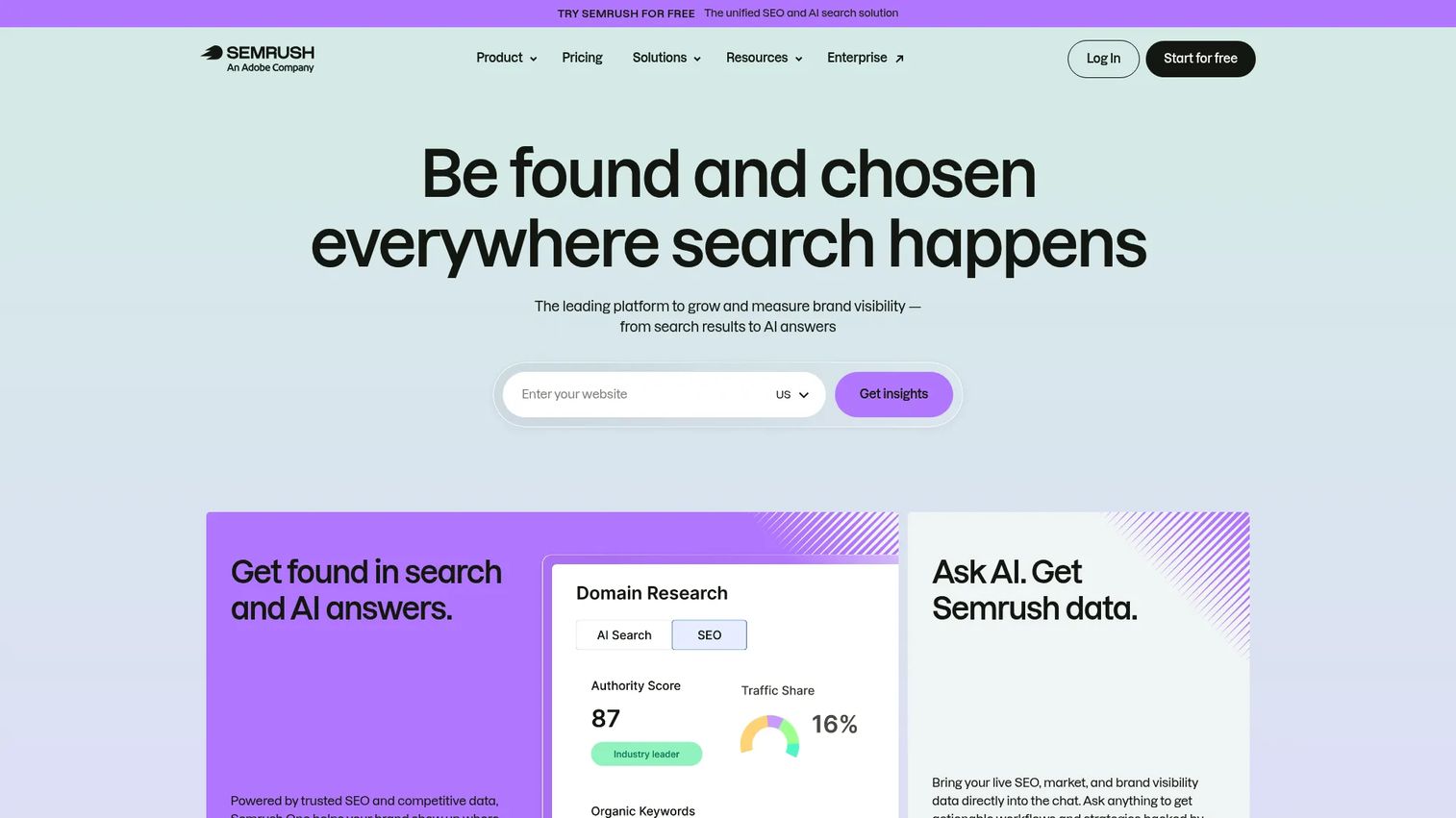
Semrush Brand Monitoring is an app within the Semrush platform that tracks brand, competitor, and keyword mentions across news, blogs, discussions, and social media. It surfaces unlinked mentions as backlink opportunities, monitors sentiment, measures estimated reach, and connects mention data to SEO workflows teams already run inside Semrush.
Best for: PR, SEO, and content teams already using Semrush who want brand mention tracking connected to their link building and competitive research.
Key features
- Brand mention alerts across news, blogs, and social
- Backlink discovery from unlinked mentions
- Competitor tracking and share of voice
- Sentiment analysis and estimated reach scoring
- SEO workflow integration inside Semrush
Why choose Semrush Brand Monitoring: The connection to Semrush's SEO database is what makes this worth considering. Unlinked mentions become link outreach opportunities directly, without exporting to another tool. Teams not already on Semrush may find a dedicated monitoring platform more cost-effective.
Semrush Brand Monitoring pricing: The app starts at $79/month and includes 3 queries and 10,000 monthly mentions. Additional queries and mentions are available as add-ons from $50/month. A 7-day trial is available.
G2 rating: 4.4/5
12. Ahrefs Alerts
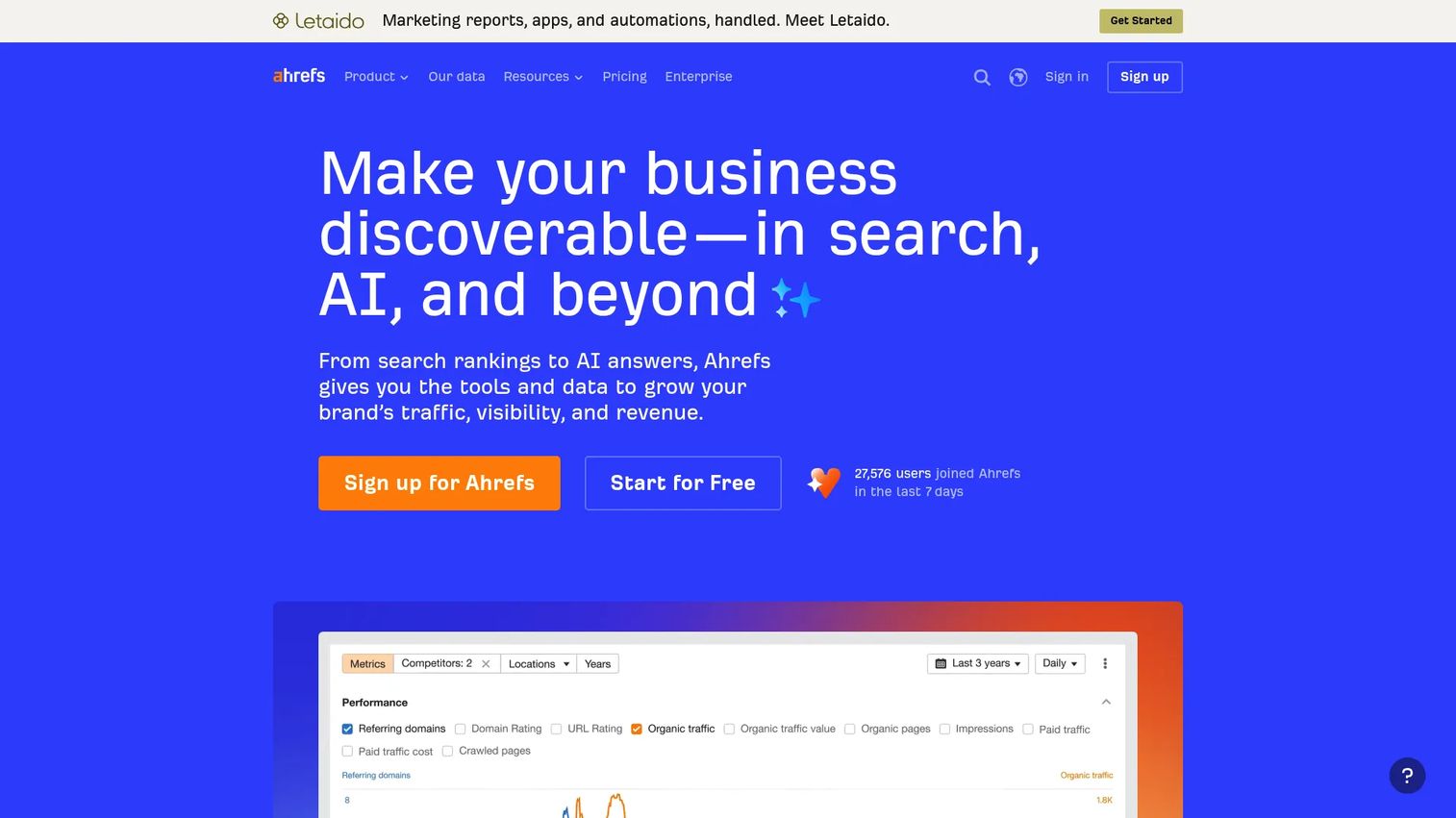
Ahrefs Alerts is an alert system within the Ahrefs SEO platform covering new and lost backlinks, web mentions matching keywords, and notable ranking changes. SEO teams use it to track when their brand is mentioned online, spot competitor activity, and find link building opportunities without manual searching.
Best for: SEO teams monitoring backlinks, brand or keyword mentions, and ranking changes from within the Ahrefs workflow.
Key features
- New and lost backlink alerts
- Web mention alerts with keyword and language filters
- Keyword ranking change notifications
- Competitor monitoring
- SEO database backing all alerts
Why choose Ahrefs Alerts: This is the right choice when your primary monitoring goal is SEO-related. It is not a social listening or PR tool. But for content teams tracking unlinked mentions and link opportunities, the alerts are well-integrated and the starting price is accessible.
Ahrefs pricing: Starter starts at $29/month. Lite is $129/month, Standard is $249/month, Advanced is $449/month, and Enterprise is $1,499/month (annual commitment required). Ahrefs Alerts is included in all plans. A free tier exists for verified site owners.
G2 rating: 4.5/5
13. Gumloop
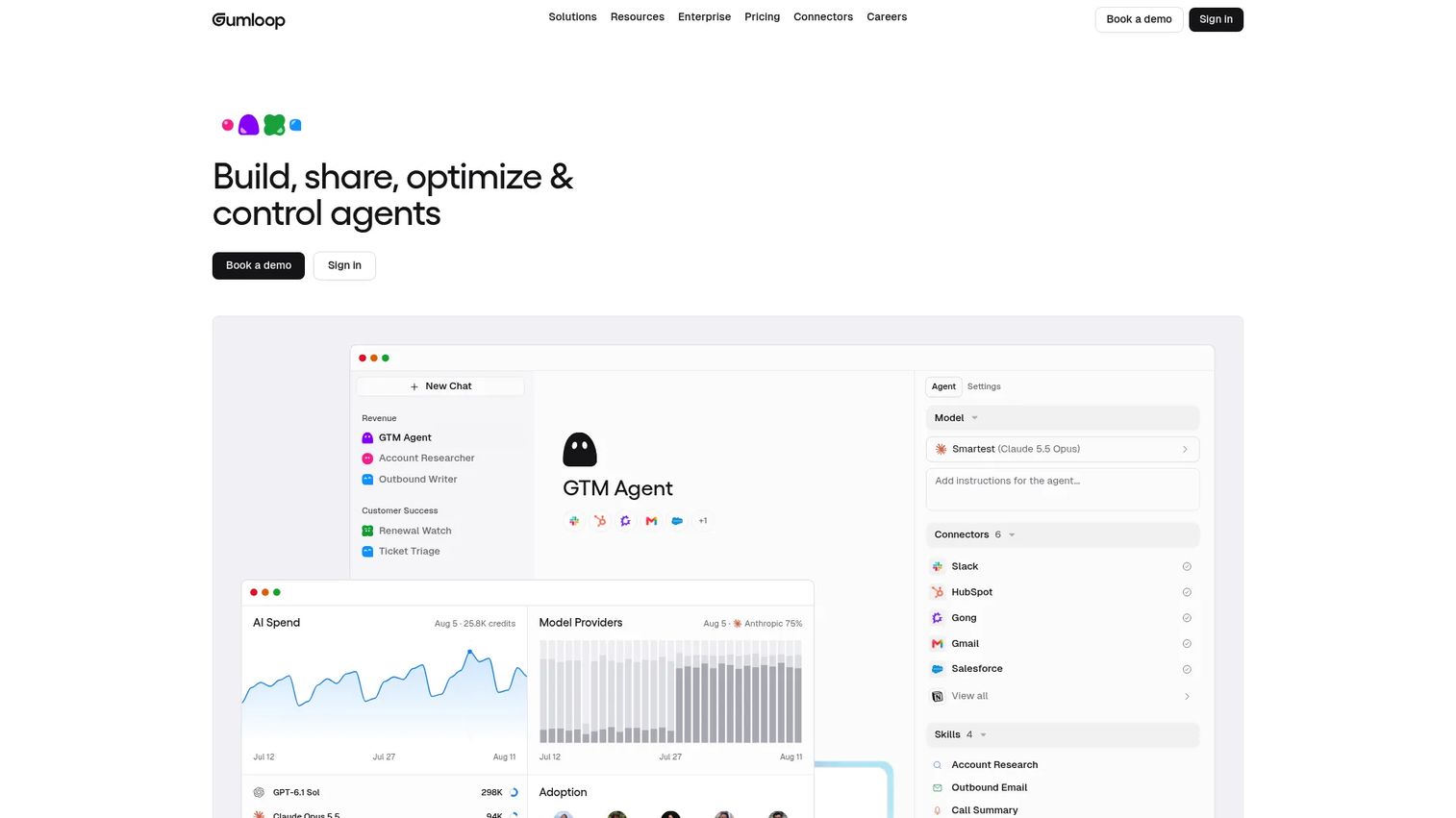
Gumloop is a multiplayer AI agent builder for creating automated workflows across business tools. Marketing teams use it to build custom brand monitoring pipelines: Pulling mentions from multiple sources, running AI analysis, and routing signals to Slack, Gmail, Google Sheets, or dashboards. The platform includes 400+ connectors, real-browser automation, and a Model Router for selecting AI providers.
Best for: Teams that want to stitch together monitoring sources, AI analysis, and internal routing workflows without depending on a single point solution.
Key features
- AI agent builder with 400+ integrations
- Real-browser automation for data collection
- Custom monitoring and routing workflows
- Model Router for AI model selection
- Collaboration, audit logs, and spend analytics
Why choose Gumloop: The flexibility here is real. Teams that need monitoring logic their current tools do not support, or that want to combine web scraping, AI summarization, and Slack alerts in one workflow, get more control than any packaged monitoring tool offers. That flexibility requires workflow design time upfront.
Gumloop pricing: Pro starts at $37/month and includes 20,000 credits, unlimited agents, models, and seats. Enterprise pricing is custom. A free tier may be available.
G2 rating: 4.8/5
14. Alertmouse
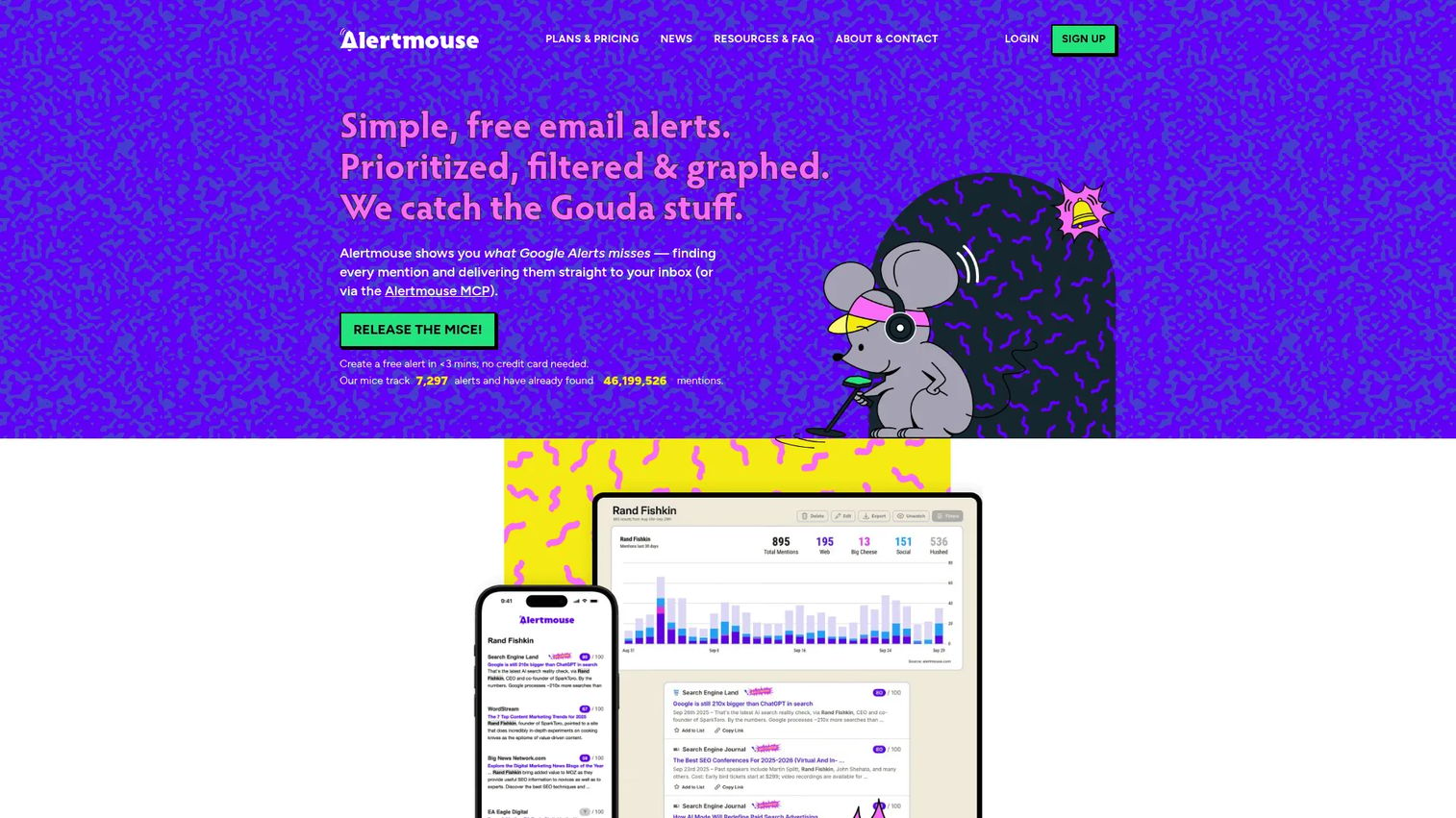
Alertmouse is a lightweight brand mention alert tool built for founders, marketers, and small PR teams. It monitors web mentions of brands, competitors, people, and topics, then delivers prioritized email alerts with filtering and categorization. The free Nibble tier covers one alert and up to 10 mentions per day.
Best for: Founders and small teams that need simple, prioritized web monitoring without enterprise setup or cost.
Key features
- Custom brand and keyword alerts
- Include and exclude keyword filters
- Mention prioritization and categorization
- Prioritized email alerts
- API access on higher tiers
Why choose Alertmouse: The free tier is a genuine starting point, not a trial. For a solo founder or a two-person marketing team that needs to know when their name appears online, this covers the basics without a monthly commitment.
Alertmouse pricing: Nibble (free) includes 1 alert and 10 mentions per day. Slice is $120/year ($10/month equivalent). Wedge is $600/year ($50/month equivalent). Wheel, which includes API access, is $1,200/year ($100/month equivalent).
15. Brand Radar
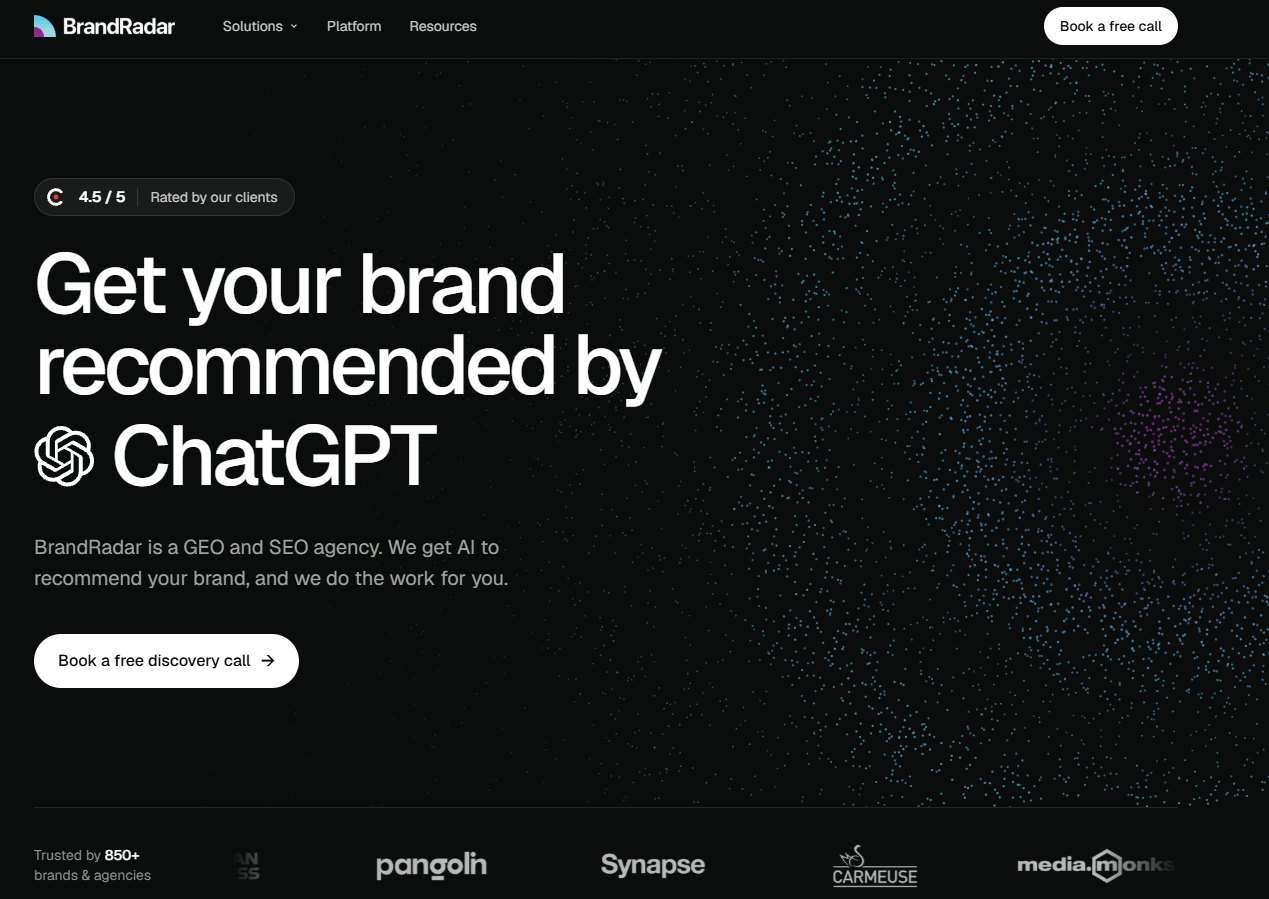
Brand Radar is a managed GEO and SEO service with an AI visibility intelligence platform. It tracks brand presence across ChatGPT, Gemini, Claude, Perplexity, and Google AI Mode, benchmarks competitors, and builds citation and content strategies to improve how AI systems describe a brand.
Best for: Brands and marketing teams that want managed AI search visibility alongside a self-serve intelligence platform.
Key features
- AI visibility tracking across ChatGPT, Gemini, Claude, and Perplexity
- Competitor benchmarking and citation tracking
- GEO content creation and page optimization
- Entity audits and citation building
- Prompt monitoring and recommendation tracking
Why choose Brand Radar: The managed service component separates it from pure software tools. Teams that want someone else to handle the GEO content and citation work, not just track the numbers, get execution alongside monitoring.
Brand Radar pricing: Self-serve platform plans start at $49/month (Lite), $99/month (Startup), and $199/month (Growth). Managed service packages start at $699/month. Custom pricing is available for larger engagements.
G2 rating: 4.0/5
16. Peec AI
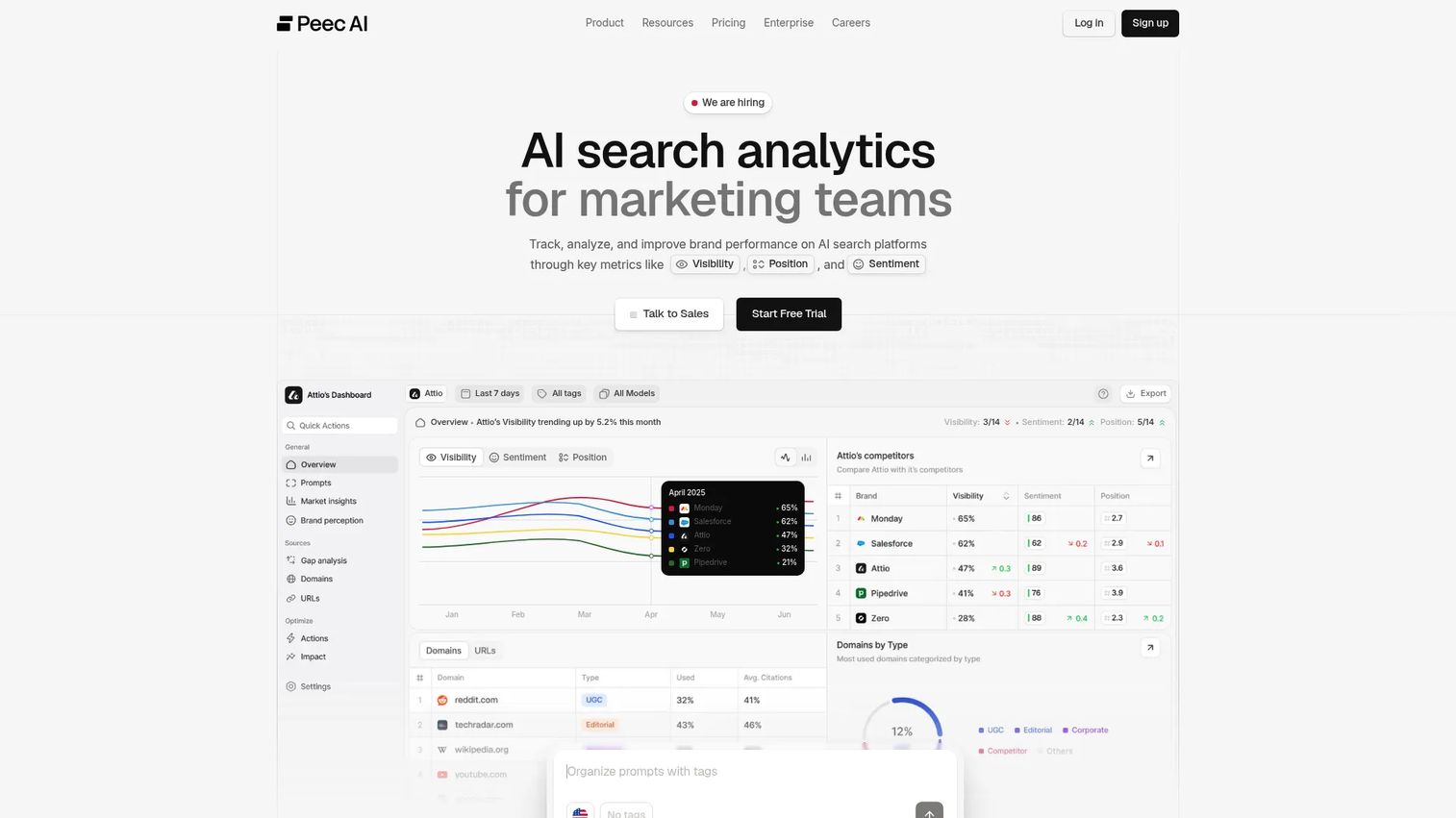
Peec AI is an AI search analytics platform for tracking and improving brand visibility across AI-generated answers. It monitors brand presence in ChatGPT, Google AI Overviews, Google AI Mode, Gemini, Perplexity, and other AI surfaces, with competitor benchmarking, citation analytics, prompt discovery, and an AI agent (Peec Agent) for diagnostics and content improvement workflows.
Best for: Marketing, SEO, brand, and agency teams measuring brand visibility in AI-generated search answers and working to improve it.
Key features
- AI visibility tracking across ChatGPT, Gemini, Perplexity, and AI Overviews
- Competitor benchmarking with share-of-voice analytics
- Source and citation analytics by domain and URL
- Prompt discovery and management
- Peec Agent for analysis and content-improvement workflows
Why choose Peec AI: The most structured approach to AI visibility monitoring in this list. Teams that have moved beyond manual ChatGPT spot-checks and need repeatable tracking, competitor comparisons, and prompt-level data get a purpose-built platform.
Peec AI pricing: Starter is $95/month (50 prompts). Pro is $245/month (150 prompts). Advanced is $495/month (350 prompts). Enterprise is custom with annual billing. Annual plans include a 15% discount. Agency plans are priced separately.
G2 rating: 4.7/5
17. Google Alerts
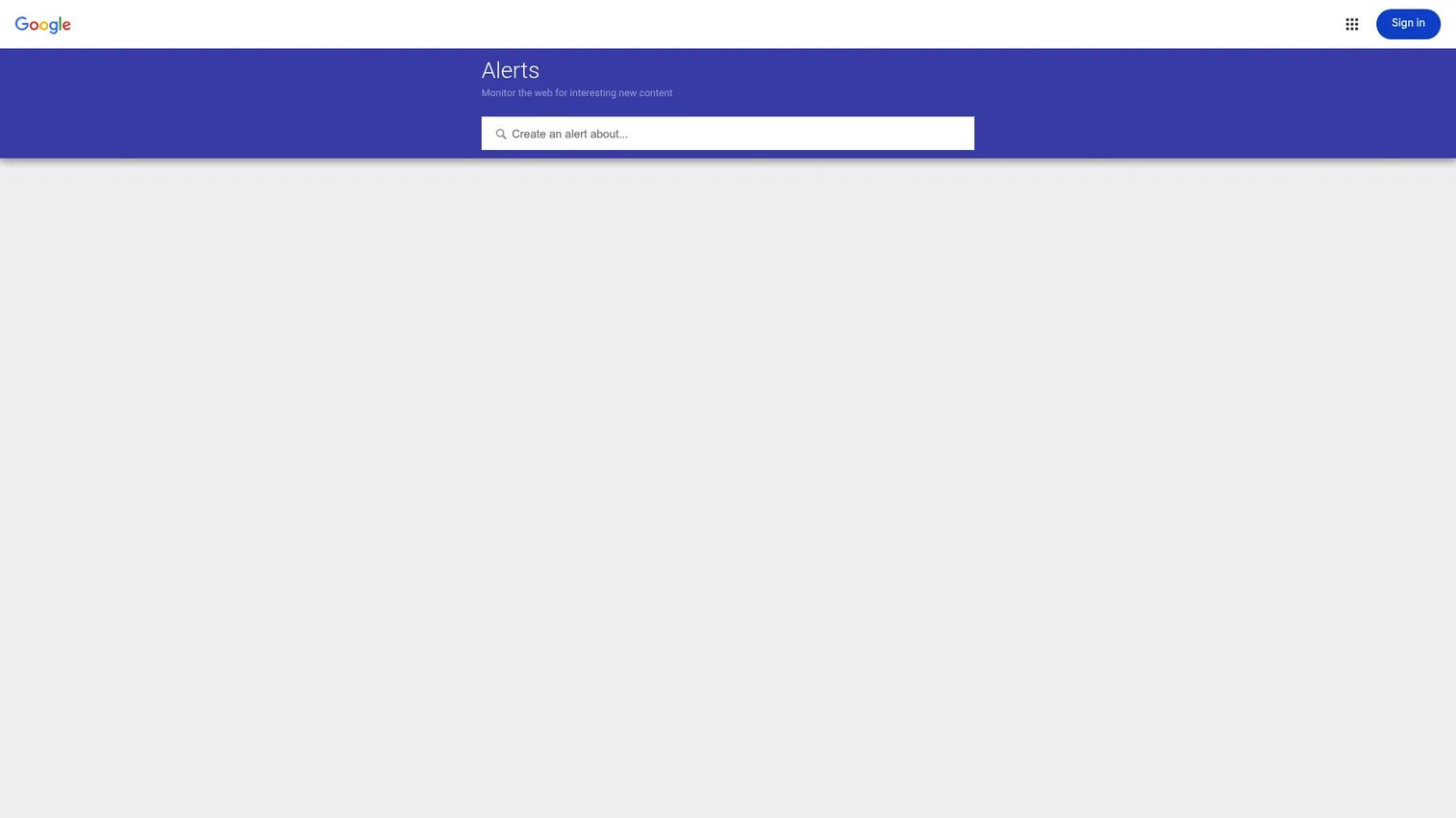
Google Alerts monitors the web for new content matching a keyword or topic and sends email notifications when matching results appear. Setup takes two minutes. Source filters let you narrow results to news, blogs, web, video, books, discussions, or finance, with controls for language, region, frequency, and volume.
Best for: Individuals, founders, and small teams starting with basic brand monitoring before investing in a paid platform.
Key features
- Free keyword alerts for web content
- Email notifications at custom frequencies
- Source filtering across news, blogs, web, and video
- Language and region controls
- Simple query setup with no account required
Why choose Google Alerts: The barrier is zero. No credit card, no setup time, no dashboard to maintain. As a first layer of monitoring for a small brand, it catches a meaningful share of web mentions. As a sole monitoring tool for a growing brand, it shows its limits quickly: No sentiment, no routing, no source control beyond basic filters, and no competitor comparisons.
Google Alerts pricing: Free. No paid tier exists.
G2: 4.6
18. Google Trends
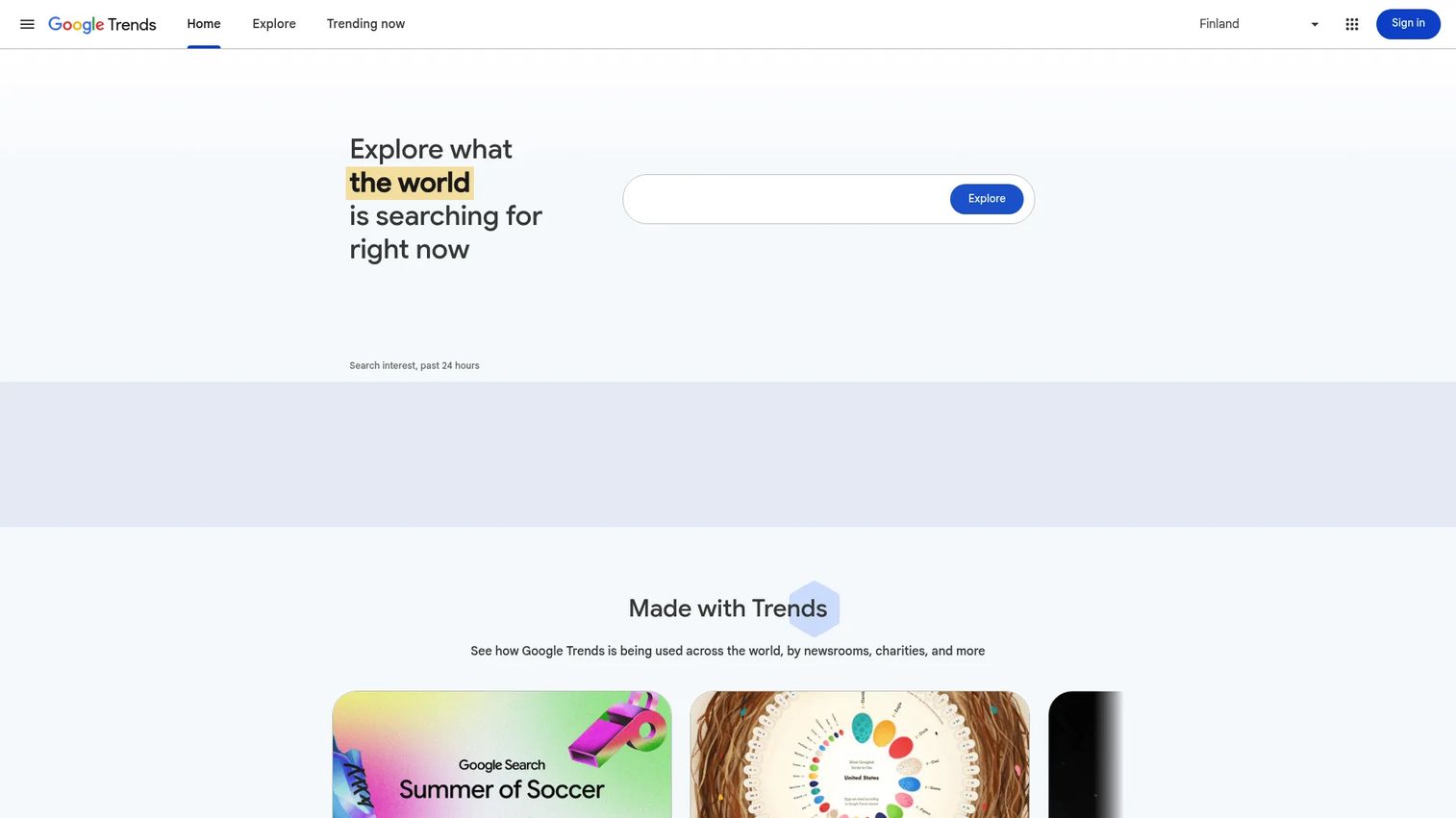
Google Trends tracks search interest in topics, keywords, and brands over time, with regional breakdowns, related queries, and rising search terms. It does not track individual mentions. Instead, it shows whether conversations about your brand are turning into search demand, and how that demand compares to competitors.
Best for: Marketers and researchers analyzing search interest trends, brand demand, and category comparisons over time.
Key features
- Search interest trends over custom time ranges
- Brand and category comparisons
- Regional demand breakdown
- Related and rising search queries
- Category filters and data export
Why choose Google Trends: Most useful when combined with mention tracking. If a monitoring tool surfaces a spike in brand conversations, Google Trends tells you whether it translated into search demand. As a standalone tool it answers the demand side of brand monitoring without touching individual mentions.
Google Trends pricing: Free. No paid tier exists.
G2 rating: 4.6
19. ChatGPT
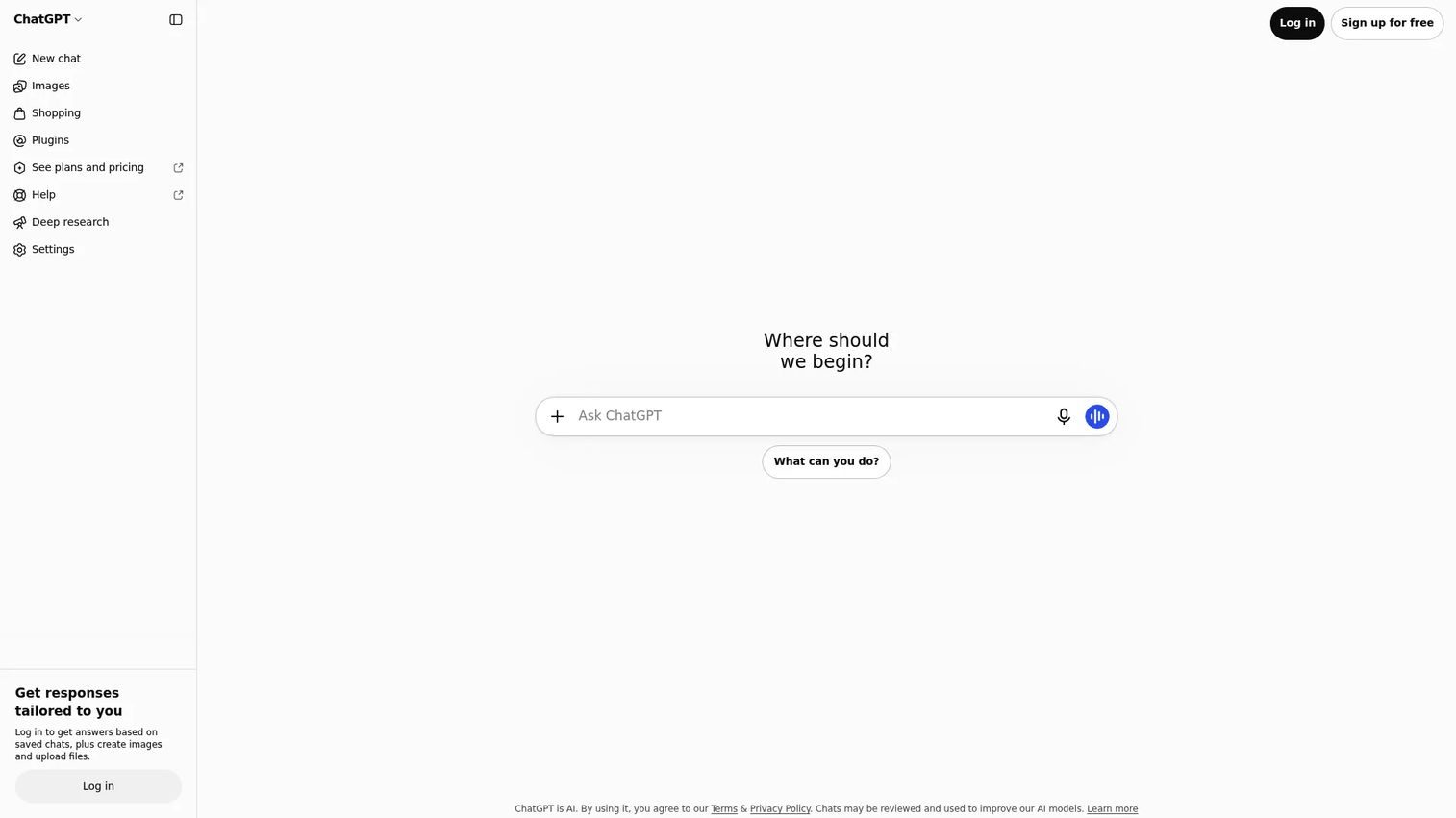
ChatGPT is a conversational AI assistant from OpenAI. For brand monitoring purposes, marketing teams use it to spot-check how their brand appears in AI-generated answers, test category recommendation prompts, and explore messaging gaps. It is not a monitoring platform. Results vary by model, prompt phrasing, and conversation context, so findings need structured documentation to be repeatable.
Best for: Teams running manual AI answer checks to understand how their brand is described, recommended, or omitted in AI conversations.
Key features
- Manual AI answer and category recommendation checks
- Web search with cited sources on paid plans
- File uploads and data analysis
- Prompt variation testing
- Research and analysis capabilities
Why choose ChatGPT: The most accessible way to start understanding AI brand visibility without a budget. Run the same 10 to 20 prompts across a few sessions, document the results, and compare against competitors. For systematic tracking, a dedicated AI visibility tool adds repeatability that manual checks cannot.
ChatGPT pricing: Free tier available. Plus is $20/month. Go, Pro, Business, and Enterprise plans are available; amounts for those tiers were not confirmed at time of writing.
G2 rating: 4.6/5
20. Perplexity
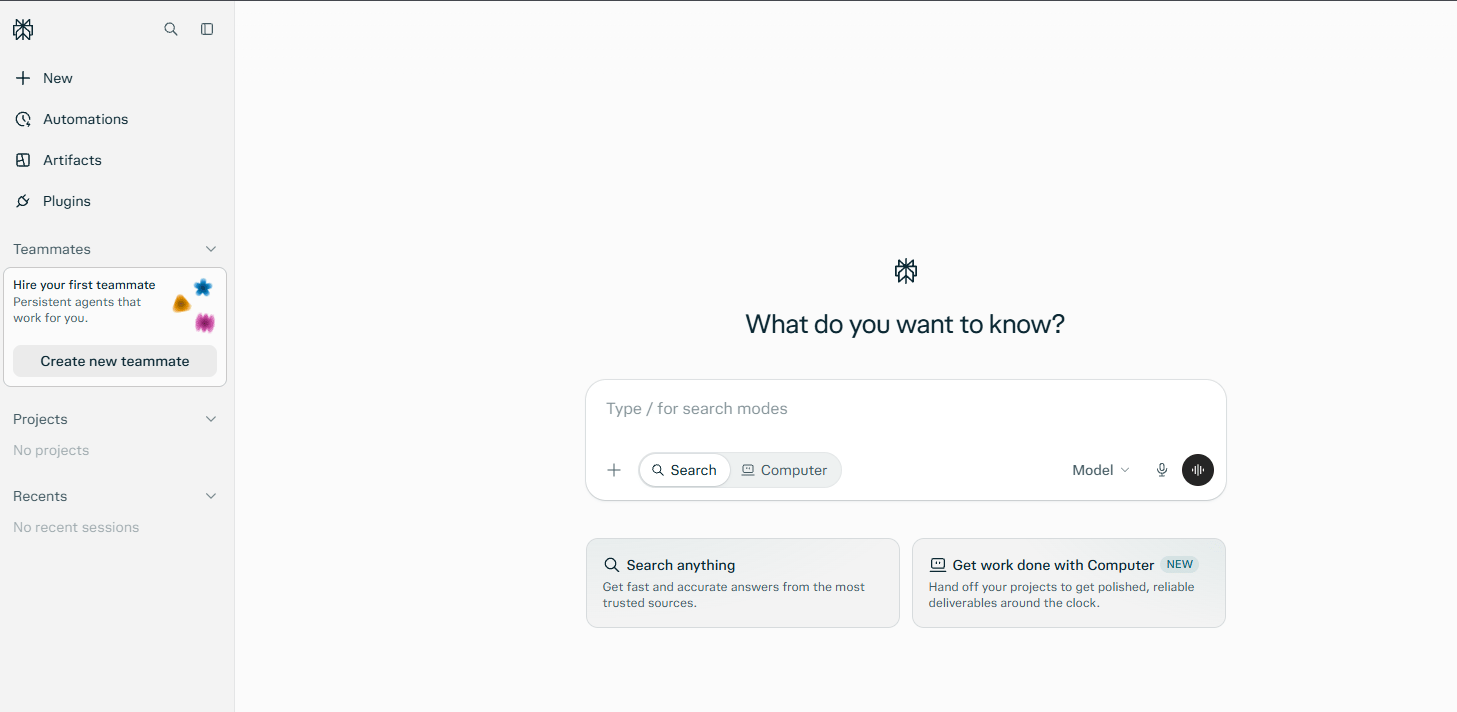
Perplexity is an AI-powered search and research platform that provides cited answers synthesized from web sources. For brand monitoring, teams use it to check how their brand appears in AI-generated answers alongside which pages and sources the system cites. The citation layer makes it more transparent than pure generative tools for understanding why a brand does or does not appear.
Best for: Marketers checking AI answer visibility and citation patterns across web sources in a structured, research-oriented interface.
Key features
- Cited AI answers with inline source links
- Advanced Pro Search for complex research questions
- Access to multiple AI models
- File uploads and analysis
- Research collections and project organization
Why choose Perplexity: The citations are the differentiator. When you search a category question and your brand does not appear, Perplexity shows you which competitors get cited and which pages they are pulling from. That gives content and SEO teams a starting point for fixing the gap.
Perplexity pricing: Free tier available. Pro is $20/month. Enterprise Pro is $34/month per seat (billed annually). Enterprise Max is $271/month per seat (billed annually).
G2 rating: 4.4/5
21. Gemini
Gemini is Google's multimodal AI assistant. Marketing teams use it for manual brand visibility checks in the Google AI ecosystem, including how their brand appears in AI Mode and AI Overviews alongside competitor comparisons. It is not a monitoring platform. Its value here is specifically for teams checking Google-connected AI surfaces, since Gemini reflects how Google's AI systems interpret and represent brands.
Best for: Marketers checking brand representation in Google's AI ecosystem, including AI Overviews and Google AI Mode.
Key features
- AI answer testing across Google AI surfaces
- Multimodal understanding of text, images, and files
- Deep Research for web and document analysis
- Google Workspace integration (Gmail, Docs, Drive)
- Prompt comparison and manual research workflows
Why choose Gemini: If Google AI surfaces are relevant to your audience, Gemini gives you a first-party view of how that ecosystem represents your brand. Pair manual Gemini checks with Google Search Console data to build a fuller picture of AI search performance.
Gemini pricing: A free Gemini tier is available. Google AI Pro is $19.99/month ($199.99/year). Google AI Ultra is $99.99/month.
G2 rating: 4.4/5
Considerations when choosing brand monitoring tools
Source coverage
Map your required sources before evaluating platforms. A B2B SaaS company needs coverage across LinkedIn, Reddit, YouTube, news sites, search results, and AI answers. A local services brand cares more about Google reviews, Yelp, Facebook, and local directories. A tool with deep social coverage but weak review monitoring is not comprehensive for a multi-location brand, and vice versa.
Alert speed and routing
A mention that arrives three days late tells you what happened, not what to do next. Ask every vendor how fast alerts fire, and whether they route to Slack, email, CRM, helpdesk, or PR channels. Teams without routing end up with a dashboard nobody opens. The answer to "who acts on this?" should be built into the alert setup.
Sentiment and context quality
Sentiment analysis is useful only when the system understands context, sarcasm, and mixed reviews. Before trusting any dashboard, run 20 to 50 known mentions through the tool's sentiment engine and check whether its classifications match your read. Enterprise tools with NLP tuning produce more reliable output for industry-specific language.
Reporting and attribution
Digital marketers need clean exports and dashboards leadership can trust. Check whether the tool reports share of voice, sentiment over time, source mix, campaign impact windows, and competitor movement. Attribution to revenue or pipeline is rare in monitoring tools, but connecting mention spikes to CRM activity in the same date range is a reasonable proxy.
Pricing model and stack fit
Growth marketers fight tool sprawl. Before committing, ask: What does this replace? If Sprout Social already handles social monitoring, adding Brand24 for the same coverage is redundant. The strongest ROI comes from filling a genuine gap: Web-wide coverage, review management, SEO mentions, or AI visibility, not duplicating what a platform already does.
Conclusion
Brand monitoring is not a single-tool problem. Your brand lives across social networks, review sites, search results, and AI-generated answers simultaneously. The right stack matches your channels, your team's response speed, and your budget.
For enterprise teams running consumer intelligence programs, Brandwatch, Sprinklr Insights, and Talkwalker cover the depth and governance large organizations need. For mid-market teams that want fast, practical monitoring, Brand24 at $249/month and BrandMentions from $99/month both deliver without enterprise overhead. PR and communications teams connecting earned media to measurement should evaluate Meltwater. Social-first teams running publishing alongside monitoring fit well with Sprout Social or Hootsuite.
Review and reputation management belongs to Birdeye and Yext, particularly for multi-location brands. SEO teams tracking unlinked mentions and backlinks get the most value from Semrush Brand Monitoring at $79/month or Ahrefs Alerts from $29/month.
For AI visibility, Peec AI and Brand Radar offer structured tracking. Manual checks through ChatGPT, Perplexity, and Gemini are a free starting point that works for occasional spot-checks. And for free baseline monitoring before any budget is committed, Google Alerts and Google Trends cover more ground than most teams expect.
The practical next step: Shortlist three tools by source coverage, run the same 20 brand queries through each, and compare alert quality and sentiment accuracy before signing anything.
Start your journey with Guideflow today!
FAQs
Brand monitoring tools track mentions of a company, product, executive, competitor, or keyword across online sources including social networks, news sites, blogs, forums, review platforms, search results, and AI-generated answers. Teams use them to measure visibility, understand sentiment, respond to reputation risks, and track competitive share of voice. The category spans free alert tools, mid-market social listening platforms, enterprise consumer intelligence suites, and emerging AI visibility trackers.
Social listening focuses specifically on conversations happening on social networks. Brand monitoring is broader: It can include news sites, blogs, forums, review platforms, search results, backlinks, and AI-generated answers alongside social data. Social listening is a subset of brand monitoring. Teams that only use social listening miss mentions in news coverage, review sites, SEO contexts, and increasingly, AI search outputs.
Google Alerts is the most accessible free option. Set up a keyword alert for your brand name, and Google emails you when new web content matches. Google Trends complements it by showing whether brand conversations are translating into search demand. Both are free with no paid tier. Their limits are real: No sentiment analysis, no routing to team channels, no competitor comparison, and no coverage of social networks or review sites. They are strong starting points, not complete solutions.
Teams have two approaches. The first is manual: Run the same 10 to 20 prompts across each AI platform on a regular schedule and document what appears. Consistency matters, since results vary by prompt phrasing and conversation context. The second is a dedicated AI visibility platform. Peec AI and Brand Radar both monitor brand presence across ChatGPT, Gemini, Perplexity, and AI Overviews automatically, with competitor benchmarks and prompt-level reporting.
Brand24 offers the best balance of capability and price for small teams, starting at $249/month with a 14-day free trial. BrandMentions is accessible from $99/month with a 7-day trial and suits teams with broad web coverage needs. For teams with minimal budget, Alertmouse has a genuinely free tier covering basic web mention alerts, and Google Alerts adds zero cost. Prioritize setup speed and alert quality over dashboard depth when the team is small.
Brandwatch, Sprinklr Insights, Talkwalker, and Meltwater are the main enterprise options. Brandwatch and Sprinklr Insights cover consumer intelligence, social management, and cross-channel reporting at scale. Talkwalker adds visual and multilingual monitoring depth. Meltwater is strongest for PR teams connecting media monitoring to journalist databases and earned media attribution. All four use custom pricing and require a sales conversation. Evaluate them on governance features, global source coverage, visual monitoring capability, and workflow routing alongside raw listening depth.
Most platforms include competitor monitoring as a core feature. You can track competitor brand mentions, share of voice, sentiment trends, media coverage, keywords, and in some cases backlink growth. Tools like Brand24, BrandMentions, Semrush Brand Monitoring, Brandwatch, and Peec AI all support structured competitor tracking. Define consistent competitor keyword groups from the start, and check whether the tool reports relative share of voice rather than raw mention counts for more useful comparisons.
Connect monitoring activity to outcomes your team already tracks. Reduced crisis response time, more earned media opportunities identified, negative reviews recovered through direct response, backlink outreach from unlinked mention discovery, and message testing from campaign monitoring all translate to pipeline or cost impact. For attribution, compare mention spikes and sentiment shifts to CRM activity in matching date ranges. Share of voice lift over a campaign period is a credible metric to present to leadership alongside click and conversion data.