Your organic report looks healthy, but almost every chart starts and ends with Google. Bing traffic sits in a secondary tab, disconnected from content decisions.
A Bing rank tracker helps you see whether that channel deserves more attention before you add another subscription.
StatCounter reported that Bing held 15.03% of worldwide desktop search market share in October 2026. That makes desktop visibility worth investigating, particularly when your acquisition costs are under scrutiny.
The useful question is what you can do with that visibility. Can you identify pages gaining ground? Explain a competitor’s movement? Connect Bing keyword rankings with the landing pages that generate qualified leads?
Good Bing rank tracking should support those decisions without creating another reporting project. Start with your existing stack, identify the missing evidence, and buy only the capabilities needed to close that gap.
What’s inside
- Who this serves: Digital marketers defending organic investment, agencies managing client reporting, and technical teams building search datasets.
- What’s compared: Seventeen options spanning dedicated rank trackers, broader SEO platforms, and web data APIs.
- Selection criteria: Documented search coverage, reporting capabilities, location controls, and fit with an existing marketing workflow.
- Evidence base: Vendor pricing and product research dated November 24, 2026, with G2 ratings where available.
- Important distinction: Explicit Bing support is identified where documented. Broader SEO and scraping products remain evaluation candidates, rather than assumed Bing replacements.
TL;DR
- Best starting point for dedicated Bing tracking: Nightwatch combines documented Bing coverage with daily monitoring and reporting.
- Best audit-led shortlist: SEOptimer fits teams combining keyword monitoring with website recommendations. Validate the Bing workflow before subscribing.
- Best lower-cost tracking candidate: TrueRanker starts at $12.49/month billed annually. Confirm its Bing-specific coverage against your reporting requirements.
- Best structured Bing API shortlist: SerpApi and Zenserp explicitly support Bing. Traject Data also documents Bing search data.
- Best consolidation candidates: Semrush and SE Ranking cover broader SEO work. Ahrefs suits research-heavy teams, but general SEO coverage does not establish Bing tracking.
- Best for occasional checks: A Bing position checker can answer a one-off question. Recurring performance reporting needs saved history and consistent settings.
What is a Bing rank tracker?
A Bing rank tracker is SEO software that monitors a website’s keyword positions in Bing search results over time.
Bing keyword tracking software typically records the query and ranking URL alongside the observation date. Depending on the product, it can also distinguish device types or geographic markets.
A Bing SERP tracker adds context about the results page itself. That context matters when organic links appear alongside maps, images, videos, or answer modules.
Treat Bing versus Google rankings as separate measurements. A position recorded on one engine does not establish where the same page appears on another. Keep the target keyword consistent while separating the source.
Historical movement makes the data useful for experiments. Record when you update a landing page, then compare subsequent observations with its earlier baseline. Add traffic and conversion reporting before claiming commercial impact.
Key features to look for
Evaluate these capabilities rather than assuming every product includes them.
- Scheduled keyword position checks
- Separate desktop and mobile observations
- Country and local targeting controls
- Competitor and ranking URL comparisons
- Historical charts and change annotations
- Bing SERP feature monitoring
- Scheduled reports and export options
- API access for custom reporting
Location precision deserves particular attention. Country targeting and postcode targeting answer different questions. Similarly, a platform’s mobile tracking feature may apply to particular engines rather than its entire product.
For Bing SERP feature monitoring, request sample output. Confirm which result types are captured and how their positions are represented. An AI visibility report should also identify the surface it measures.
Bing rank tracker versus Bing rank checker
A Bing rank checker provides a position lookup at a particular moment. An ongoing tracker saves repeated observations for comparison.
A single Bing ranking check can help investigate a page. A monitoring workflow supports trend reporting and campaign evaluation.
Choose according to the decision you need to make. Occasional troubleshooting may justify a checker. Budget allocation requires a consistent dataset, preferably with exports your team can retain.
When to use a Bing rank tracker
Prove Bing’s contribution to organic growth
Separate Bing landing-page performance from aggregate organic reporting. Then compare ranking movement with visits and qualified conversions over the same period.
Use the evidence to decide which pages deserve further work. Avoid treating an improved position as proof of pipeline growth without supporting conversion data.
Find keyword openings and monitor competitors
Test whether a crowded Google query presents a different opportunity on Bing. For example, compare results for a specific B2B software category in your target market.
Treat lower competition as a hypothesis, rather than a universal Bing advantage. Monitor the competing URLs to understand whether your page is gaining visibility or another publisher is replacing it.
Measure the markets and devices you serve
Evaluate Bing local rank tracking when demand depends on geography. A national observation cannot answer every city-level question.
For Bing mobile rank tracking, ask vendors to demonstrate the exact device and engine combination. Keep those settings consistent throughout the experiment, and compare each segment against its own baseline.
Bing rank tracker tools comparison
Choose a Bing keyword position tracker according to who will use its output.
A marketer-owned dashboard should produce usable Bing ranking reports without a developer maintaining the collection process. An API serves a different workflow, supplying data that your team stores and interprets.
The shortlist below includes both approaches, plus broader SEO products worth assessing for consolidation. Nightwatch, SerpApi, Zenserp, and Traject Data explicitly document Bing coverage in the reviewed material. For other entries, confirm the exact Bing capability before purchase.
Prices retain the vendor’s currency and billing basis. General API rates are labeled accordingly; they should not be treated as quotes for a particular Bing endpoint. “N/A” means a usable G2 rating was unavailable.
| # | Product | Best for | Key differentiator | Pricing | G2 rating |
|---|---|---|---|---|---|
| 1 | Nightwatch | Dedicated Bing monitoring | Daily multi-engine tracking with reporting | From €79/month, billed yearly | 4.7/5 |
| 2 | SEOptimer | Audit-led SEO workflows | Website recommendations and branded reports | Ask for current plan pricing | 4.6/5 |
| 3 | TrueRanker | Daily monitoring candidates | Rankings alongside backlinks and AI visibility | From $12.49/month, billed yearly | N/A |
| 4 | ScrapingBee | Custom collection infrastructure | Managed browsers and proxy rotation | From $19/month | 4.8/5 |
| 5 | Bright Data | Large web data operations | Collection infrastructure and datasets | Web Scraper API from $0.75/1,000 records | 4.7/5 |
| 6 | SerpApi | Structured Bing results | Documented Bing search API support | Free; paid from $25/month | 4.8/5 |
| 7 | DataForSEO | SEO data products | Broad API coverage and usage billing | SERP API from $0.0006/SERP | N/A |
| 8 | SEO PowerSuite Rank Tracker | Desktop SEO workflows | Scheduled checks and customizable reports | Free; paid from $179/year | 4.5/5, suite |
| 9 | Semrush | Marketing stack consolidation | SEO and brand visibility research | Free; SEO from $117.33/month, billed annually | 4.4/5 |
| 10 | AccuRanker | Dedicated reporting depth | On-demand updates and Share of Voice | From $224/month | 4.8/5 |
| 11 | Ahrefs | Competitive and content research | Site Explorer and Keywords Explorer | Free tools; Starter £23/month | 4.5/5 |
| 12 | ProRankTracker | Client reporting | Scheduled white-label reporting | From $99/month | 4.6/5 |
| 13 | SE Ranking | Broad agency SEO workflows | Research, audits, and reporting integrations | From $103.20/month, billed annually | 4.8/5 |
| 14 | Rank Ranger | Customized reporting evaluation | Branded dashboards and marketing data | Ask about current plans and availability | N/A |
| 15 | Zenserp | Location-aware Bing data | Structured SERPs through an API | Free; paid from $49.99/month | N/A |
| 16 | Scrapingdog | Developer-owned extraction | Managed rendering and anti-bot handling | Free; paid from $40/month | 3.0/5 |
| 17 | Traject Data | Search and commerce data teams | Bing coverage within a broader API portfolio | Value SERP from $2.50/1,000 requests | 5.0/5 |
Pricing and ratings reflect the November 2026 vendor and G2 research. Product-specific details and source links appear below.
The 17 best Bing rank tracker tools for 2026
1. Nightwatch
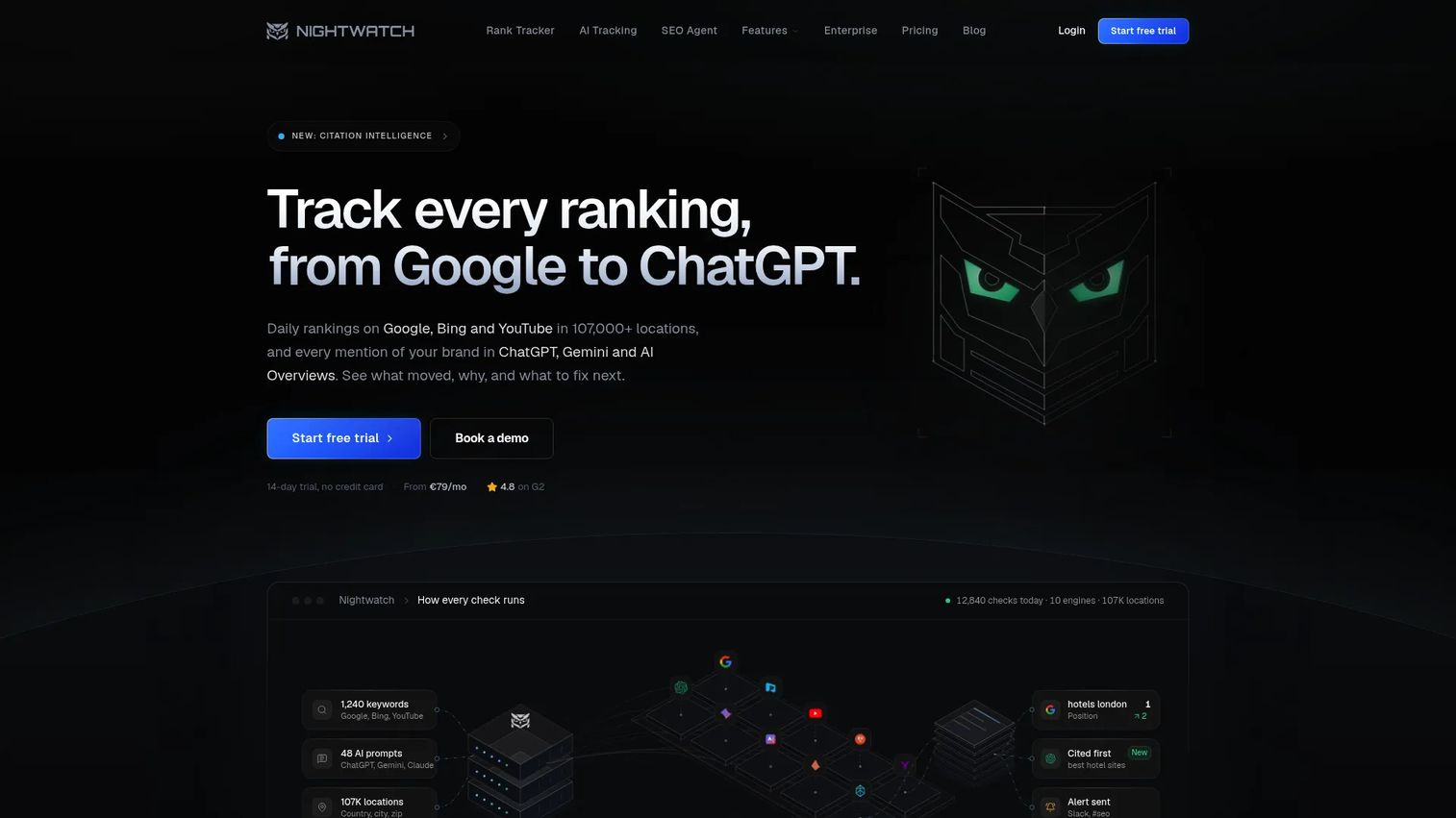
Nightwatch is the clearest dedicated starting point here for teams adding Bing to an established search reporting process. Its documented daily tracking covers Bing alongside Google and other engines. The platform also includes AI visibility monitoring, giving teams a separate view of emerging discovery channels.
Best for: Agencies and in-house SEO teams that want search monitoring without building their own data collection pipeline.
Key features
- Daily Bing and Google rank tracking
- AI search visibility monitoring
- Keyword and prompt research
- Site audits and search simulation
- White-label reports and Looker Studio integration
Build your evaluation around the report you already owe leadership. Select a priority landing page and ask to see its ranking history across the engines you use. Then inspect how the output reaches your reporting stack.
Nightwatch’s API access also gives technical teams an integration route. Before relying on it, define which fields you need and how long your organization wants to retain observations.
Keep AI citations separate from conventional organic positions. Combining them into one headline metric would make it harder to explain which channel changed.
For Microsoft Search rankings beyond Bing’s standard results, specify the precise surface during evaluation. A broad Microsoft label should not substitute for a demonstrated collection method.
Why choose Nightwatch: It fits a marketer-owned monitoring process with room for technical integration. Choose it when recurring search decisions matter more than assembling raw datasets.
Nightwatch pricing: Starter costs €79/month billed yearly, with a 14-day trial. Professional costs €159/month and Agency €399/month, both billed yearly.
G2 rating: 4.7/5.
2. SEOptimer
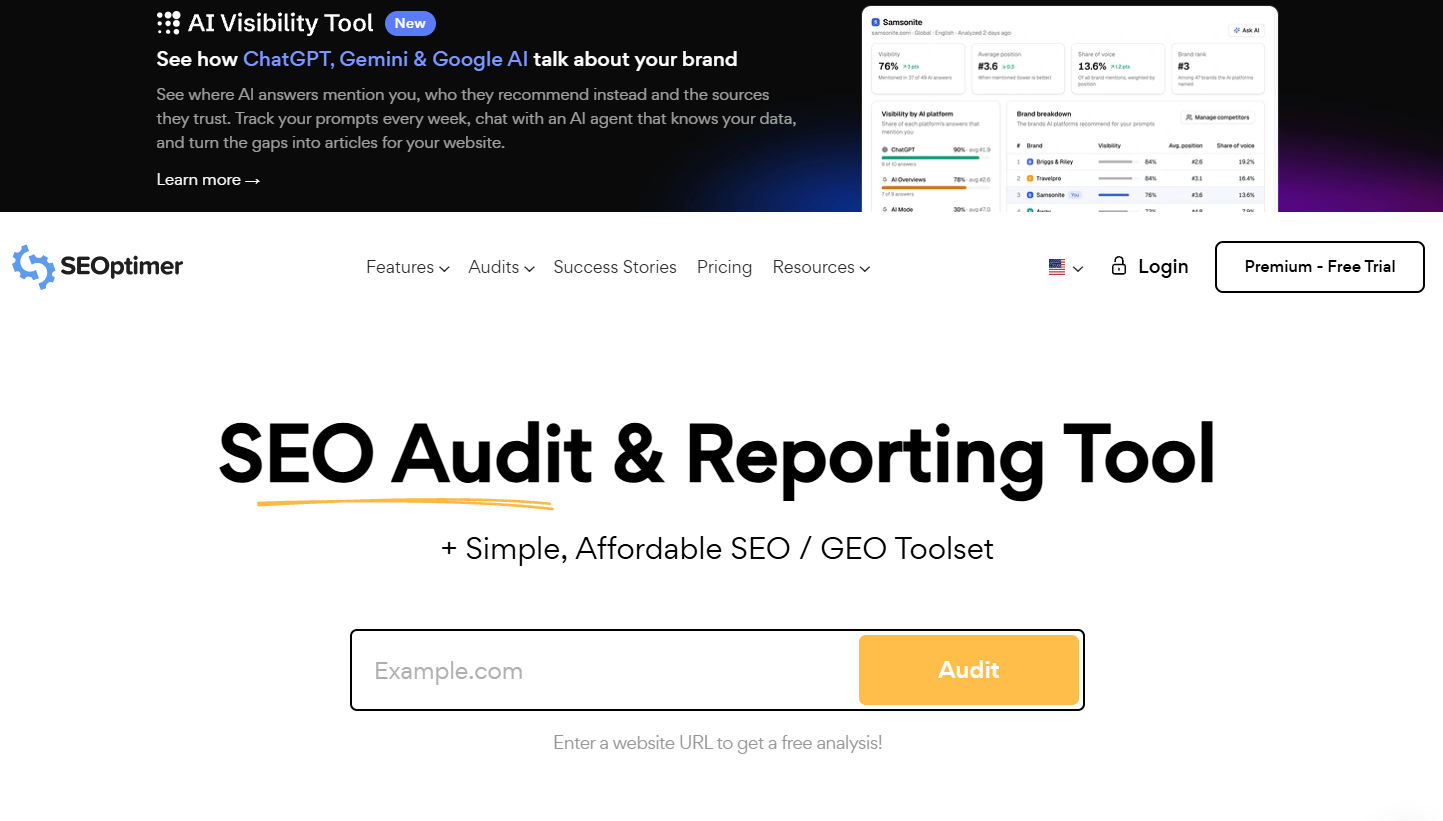
SEOptimer combines website audits with keyword tracking and research. Its documented strengths center on actionable recommendations and client reporting. That makes it relevant when ranking checks are part of a broader website review rather than a standalone monitoring operation.
Best for: Small marketing teams and agencies that package SEO findings into practical client recommendations.
Key features
- Website SEO audits
- Keyword tracking and research
- Backlink research and monitoring
- White-label PDF reporting
- Embeddable audit forms
For a growth marketer, the attraction is the relationship between diagnosis and action. An audit can support a prioritized work queue, while subsequent monitoring helps assess whether the targeted pages changed.
Start with a representative website rather than a vendor’s sample report. Check whether the recommendations identify work your team can complete with its current resources.
The Bing-specific buying question needs a separate demonstration. Ask the vendor to run your website and target keyword using the country and device settings you require. Save that output before committing.
Review the report from the recipient’s perspective, too. A client should understand the finding and next action without an accompanying explanation of every SEO term.
This is an audit-led candidate, not an automatic recommendation for detailed Bing SERP collection. Establish the required coverage before allowing its wider reporting capabilities to drive the purchase.
Why choose SEOptimer: Consider it when website assessment and branded reporting account for most of your workload. A dedicated tracker may be a better fit for specialized ranking analysis.
SEOptimer pricing: Ask SEOptimer for current plan pricing and trial terms.
G2 rating: 4.6/5.
3. TrueRanker
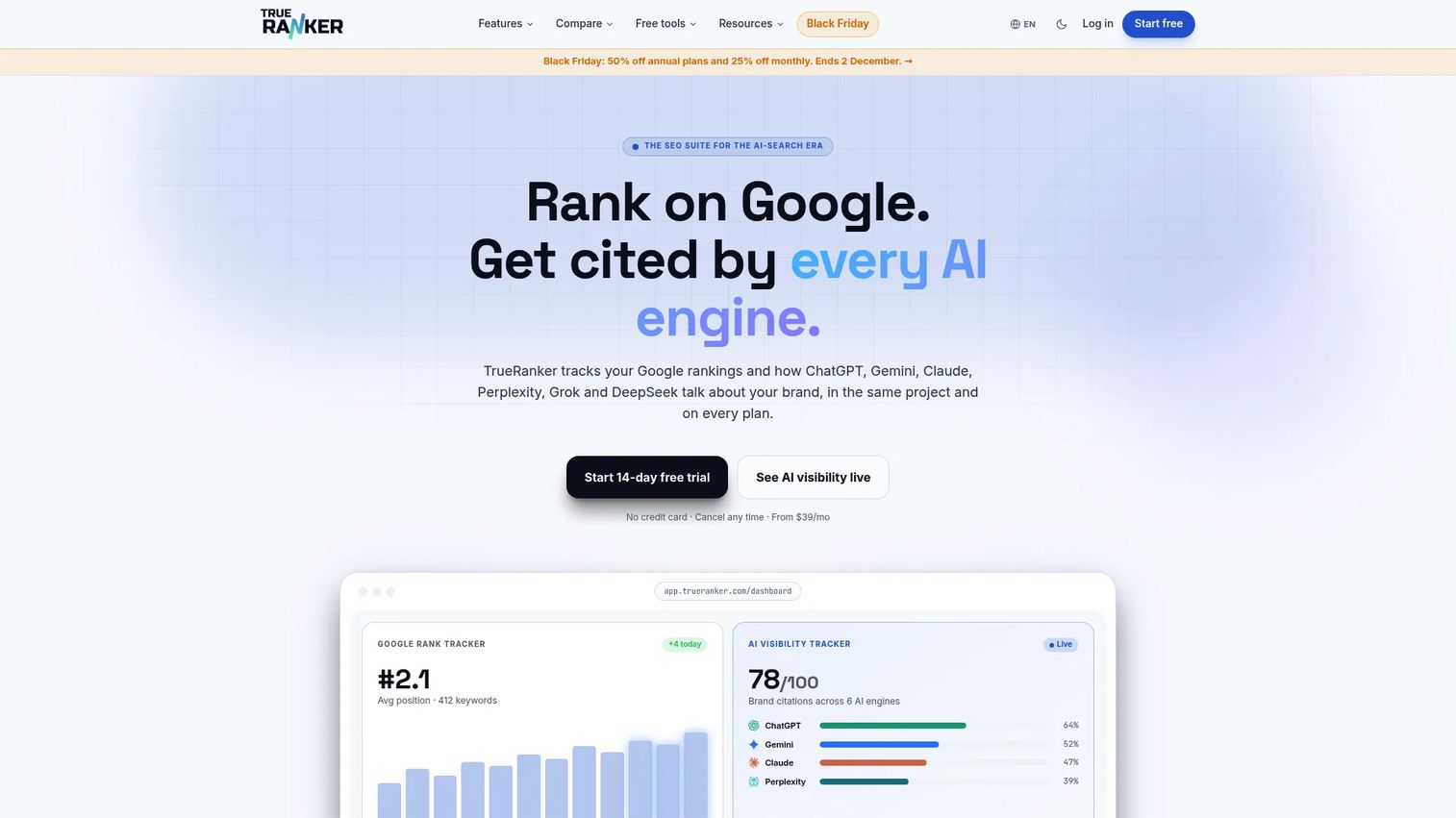
TrueRanker brings daily keyword monitoring together with backlink analysis and technical audits. Its documented tracking spans locations and devices, while a separate capability monitors visibility across AI engines. The appeal is a compact operating view for teams watching several indicators of search performance.
Best for: Consultants and smaller SEO teams evaluating daily monitoring alongside broader diagnostic tools.
Key features
- Daily location and device tracking
- Backlink discovery and competitor comparison
- Technical SEO audits
- SERP feature tracking
- Google Search Console integration
Use the trial to test a routine your team will sustain. Review a page change, inspect the corresponding ranking movement, and decide whether the evidence supports another edit.
Daily observations are useful only when someone owns the response. Define which movements warrant investigation and which can wait for the regular reporting cycle.
For Bing, request a demonstration of the specific collection settings and output. The documented general feature set should not be treated as confirmation of every search engine combination.
The same distinction applies to Microsoft Search rankings and Copilot-related visibility. Ask which source each report measures instead of grouping all Microsoft discovery surfaces together.
If consolidation is your goal, compare the included auditing work with your current subscription. Replacing duplicated capabilities is a stronger purchasing case than adding another dashboard.
Why choose TrueRanker: It is worth evaluating when you want daily monitoring within a smaller SEO toolkit. Validate engine coverage first, then assess whether its additional diagnostics replace existing spend.
TrueRanker pricing: The Rank Tracker plan starts at $12.49/month billed yearly, or $14.99 monthly. A 14-day trial and Forever Free plan are available.
4. ScrapingBee
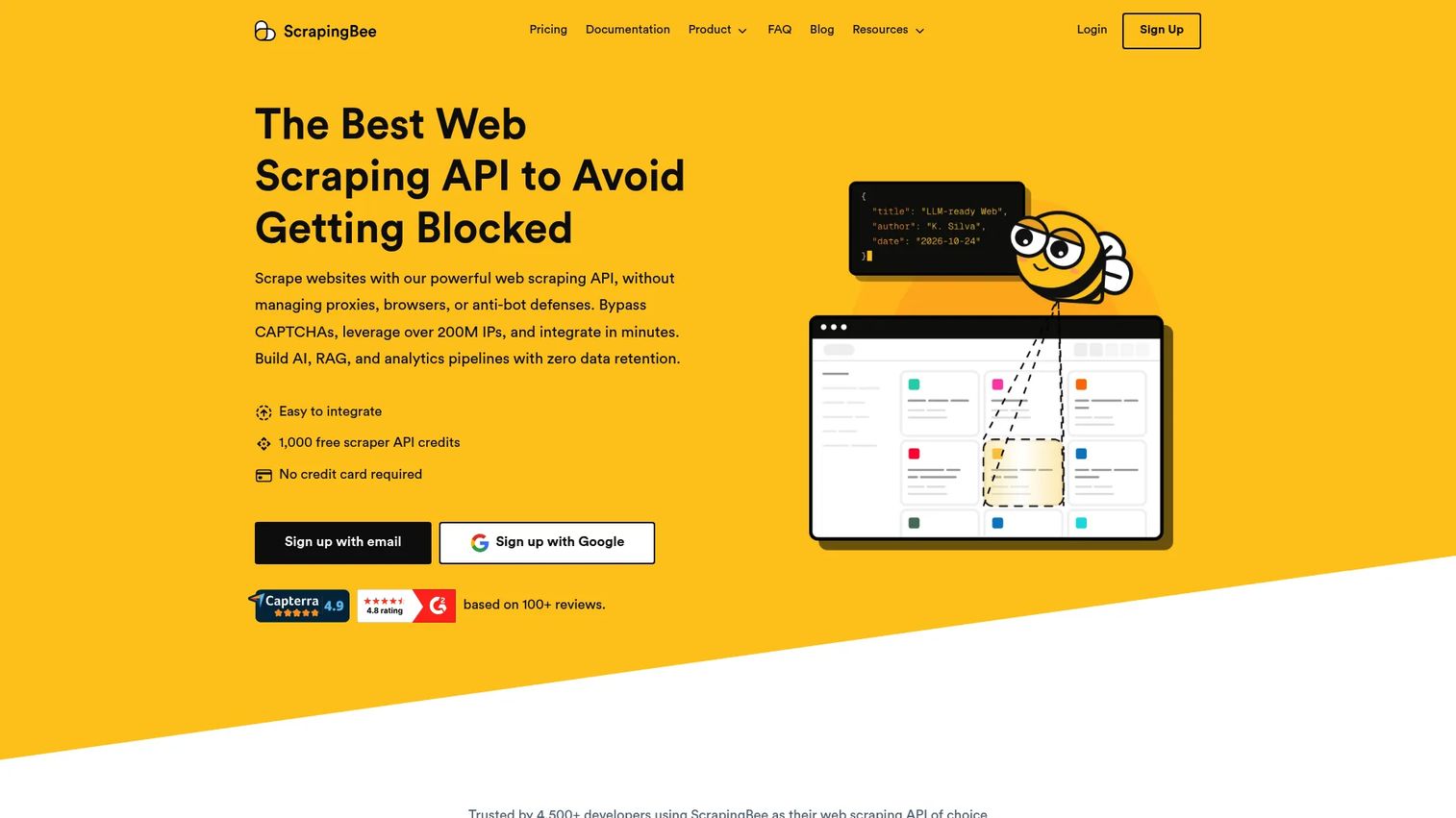
ScrapingBee provides web scraping infrastructure rather than a finished SEO reporting interface. It handles browser rendering and proxy rotation, with extraction tools for collecting page content. Evaluate it when your technical team wants control over the data model and downstream analysis.
Best for: Developers supporting custom SEO collection and internal reporting projects.
Key features
- Headless browser rendering
- Rotating and premium proxies
- Geographic targeting
- CSS and XPath extraction
- Full-page and targeted screenshots
For a proposed Bing rank tracking API workflow, first test whether the required results can be collected reliably. The reviewed capabilities establish general extraction infrastructure, not a complete Bing monitoring application.
Your team still needs to define a ranking observation. Decide how to store the query and returned URL, then preserve the market and collection timestamp.
Build the reporting requirement before the collector. If the final consumer needs a weekly executive summary, raw page output alone will not complete the job.
Also test how your implementation handles incomplete responses. A missing result should remain distinguishable from a page that genuinely fell outside your tracking range.
ScrapingBee is worth considering among Bing Search API alternatives when custom extraction is the requirement. It is a different purchase from a subscription that already includes history and reporting.
Why choose ScrapingBee: Choose it when developers own the collection process and need managed browser infrastructure. Marketers seeking a ready-made ranking report should favor a dashboard.
ScrapingBee pricing: Hobby starts at $19/month, excluding VAT. A free trial includes 1,000 API credits without a credit card.
G2 rating: 4.8/5.
5. Bright Data
Bright Data supplies web data infrastructure, including scraping APIs and proxy networks. Its portfolio also includes ready-made datasets and managed services. This is an infrastructure evaluation for organizations collecting data across several business functions.
Best for: Data teams that need scalable collection infrastructure beyond a single SEO reporting task.
Key features
- Structured web data extraction
- Geographic proxy targeting
- IP rotation
- Ready-made datasets
- Managed data services
Begin by identifying the product that would serve your Bing requirement. A broad platform price does not tell you what a particular endpoint or collection configuration will cost.
Ask for sample records from the intended source. Inspect how the response represents organic listings and any result types your reporting depends on.
For a growth team, the practical question is whether this infrastructure supports an existing data operation. Purchasing it solely to produce a small weekly ranking report introduces responsibilities that a dashboard may already handle.
Larger organizations can evaluate a wider business case. Search monitoring and market research may share infrastructure, but each workflow still needs its own quality checks.
Include storage and maintenance in the budget. Request charges alone do not describe the cost of turning collected pages into dependable management reporting.
Why choose Bright Data: Consider it when web data collection is an organizational capability with a named technical owner. It is not a substitute for defining your reporting process.
Bright Data pricing: The Web Scraper API starts at $0.75 per 1,000 records, with pay-as-you-go billing.
G2 rating: 4.7/5.
6. SerpApi
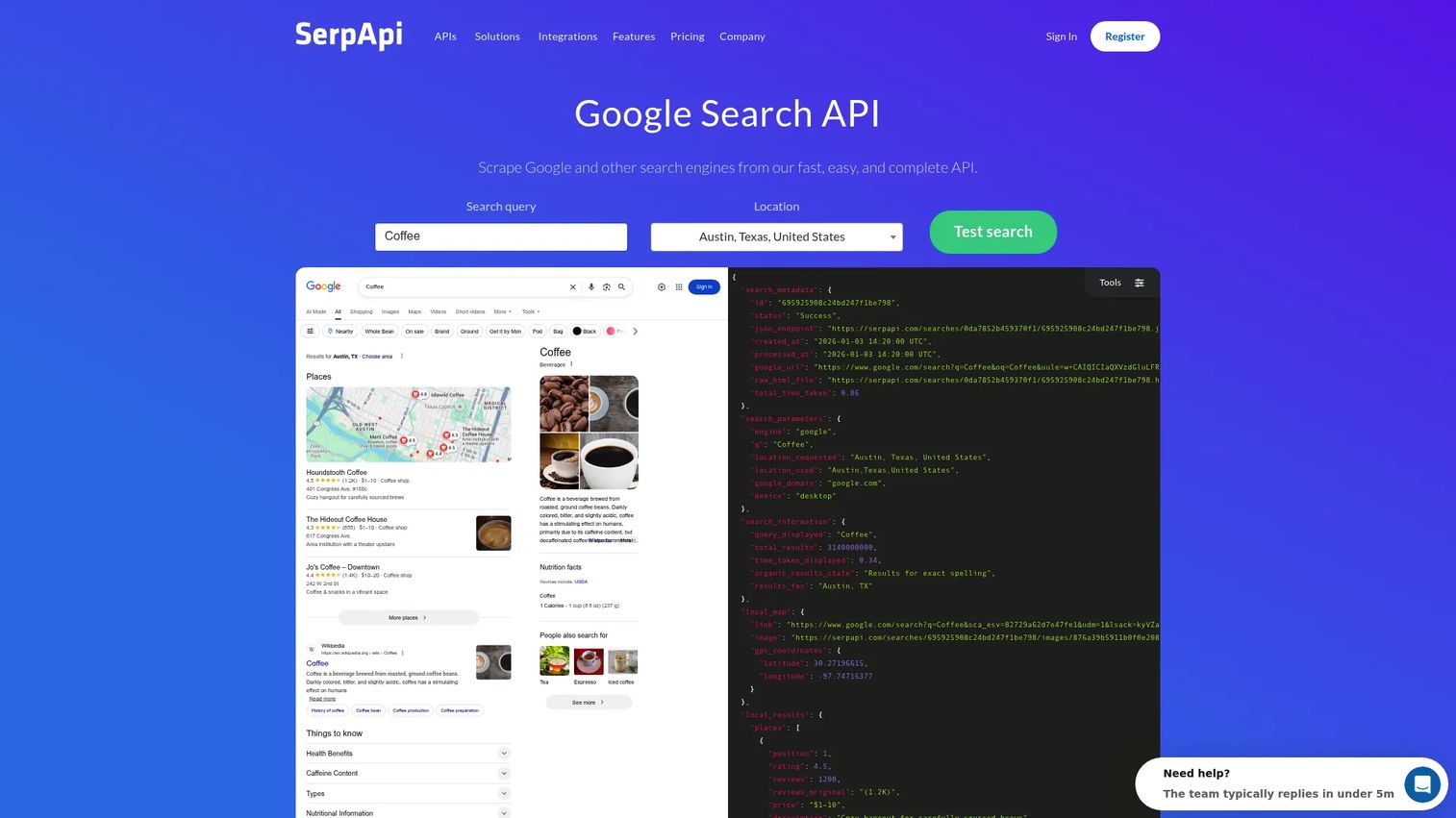
SerpApi explicitly supports Bing within its search results API portfolio. It returns structured search information for teams building applications or analytical workflows. That makes it a direct API shortlist candidate when Bing coverage is mandatory.
Best for: Developers building custom ranking datasets, internal monitoring, or SEO applications.
Key features
- Documented Bing API support
- Structured search result data
- Organic and advertising result types
- Image and news search data
- Asynchronous searches
The main benefit is receiving structured results that your application can process. Your team can then apply its own rules for matching domains and storing observations.
Define those matching rules before collecting a large dataset. A domain-level position and an exact landing-page position can answer different questions, especially when several URLs compete.
Request Bing samples for the result types you need. SerpApi’s broader portfolio covers many search formats, but each endpoint should be evaluated on its own output.
For Bing competitor rank tracking, use the same query configuration across every observed domain. Otherwise, apparent differences may reflect collection settings rather than competitive movement.
Include a small quality-control sample in each reporting cycle. Compare stored records with the source response to catch parsing or matching errors before they reach stakeholders.
Why choose SerpApi: It suits teams that want documented Bing search access and control over their reporting logic. A dashboard remains preferable when nobody owns development.
SerpApi pricing: Starter costs $25/month. The Free plan includes 250 searches per month.
G2 rating: 4.8/5.
7. DataForSEO
DataForSEO provides APIs and databases for SEO and digital marketing applications. Its coverage spans search results and keyword research, with additional data for backlinks and on-page analysis. It fits teams building a repeatable data product rather than buying a finished dashboard.
Best for: SEO software companies and technical teams combining several data sources into custom reporting.
Key features
- SERP data APIs
- Keyword and competitor research data
- Backlink analysis data
- On-page website data
- Endpoint-specific usage billing
The consolidation opportunity is at the data layer. A team can assess whether related research tasks belong with the same provider instead of maintaining separate supplier relationships.
For Bing, confirm the endpoint and supported parameters before estimating costs. The general SERP starting rate should not be assumed to cover every delivery method or search configuration.
Write down the planned collection volume. Include the number of keywords, markets, device configurations, and refreshes required by your reporting process.
Then calculate the cost of a complete reporting period. This is more useful than comparing a single request price against a dashboard’s monthly fee.
DataForSEO also invites a build-versus-buy decision. If your competitive advantage comes from proprietary analysis, owning the dataset may make sense. If the output is a standard client ranking report, assess existing reporting products first.
Why choose DataForSEO: Evaluate it when several SEO data requirements feed the same application or warehouse. Its breadth is most useful with clear technical ownership.
DataForSEO pricing: SERP API pricing starts at $0.0006 per SERP, with a $50 minimum top-up. New accounts receive a $1 trial credit.
8. SEO PowerSuite Rank Tracker
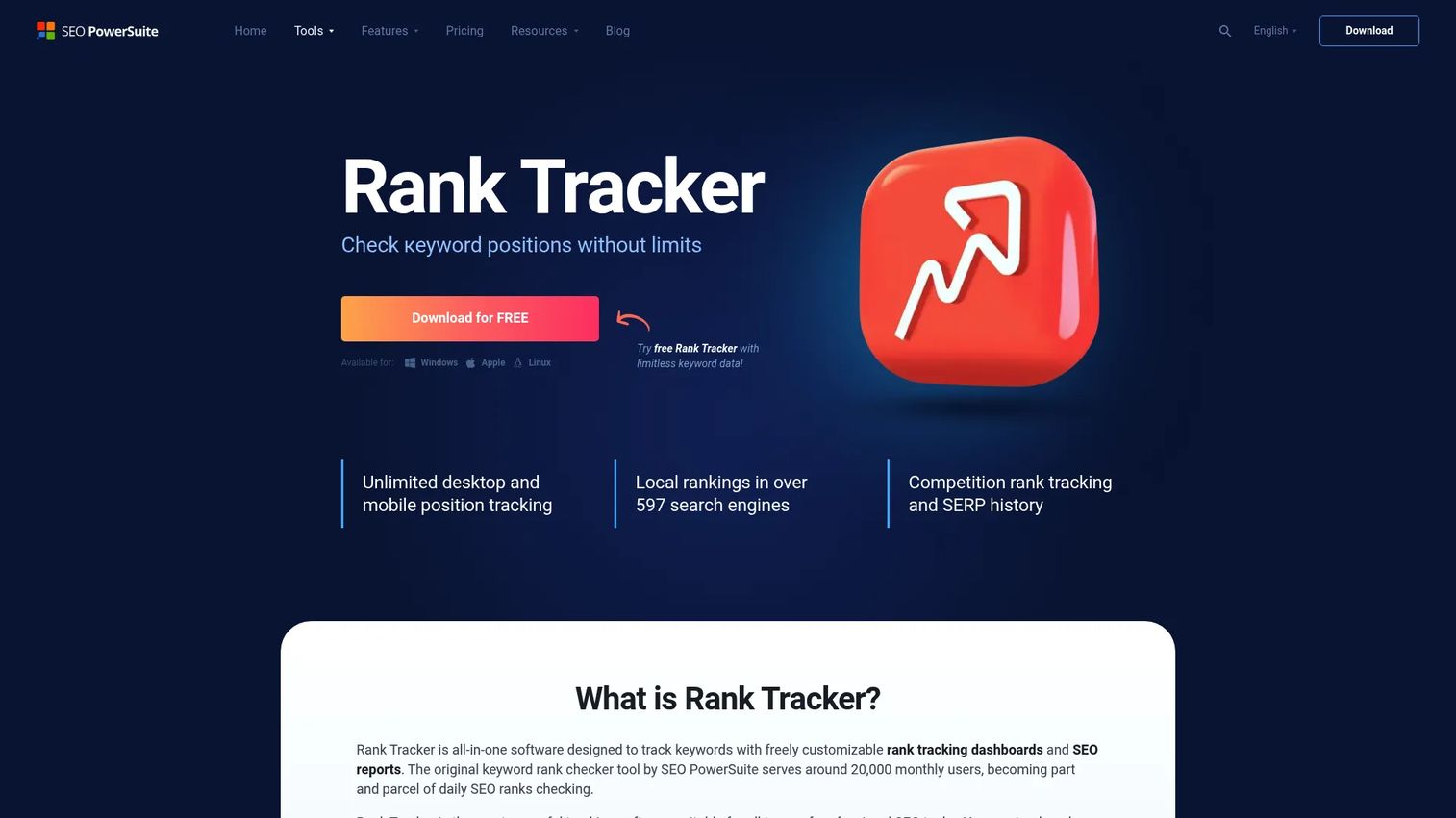
SEO PowerSuite Rank Tracker is desktop software for position monitoring and keyword research. Its documented capabilities include local and international tracking across multiple engines. Reporting and scheduled checks make it relevant to practitioners who prefer managing SEO projects from a desktop application.
Best for: Hands-on SEO specialists who want desktop control and substantial keyword capacity.
Key features
- Desktop and mobile rank tracking
- Local and international monitoring
- SERP history and feature tracking
- Scheduled ranking checks
- Customizable white-label reports
Evaluate the operating model as carefully as the feature list. Identify who runs the application and how colleagues receive the results when that person is unavailable.
For the Bing requirement, demonstrate the engine configuration within a representative project. Do the same for each location and device combination that appears in client reporting.
The Professional license includes unlimited websites and keywords. That is useful context for high-volume practitioners, although the execution workflow still deserves testing.
Ask to see the complete reporting process. A report displayed within the application and a report delivered automatically to a client are separate requirements.
This desktop approach can suit an experienced operator who wants direct project control. Teams expecting everyone to collaborate through a browser should examine how the application fits their handoffs.
Why choose SEO PowerSuite Rank Tracker: Choose it when a desktop workflow matches your team’s habits. Assess report delivery and shared access before comparing license costs alone.
SEO PowerSuite Rank Tracker pricing: A Free version is available. Professional costs $179/year, while Enterprise costs $419/year.
G2 rating: 4.5/5
9. Semrush
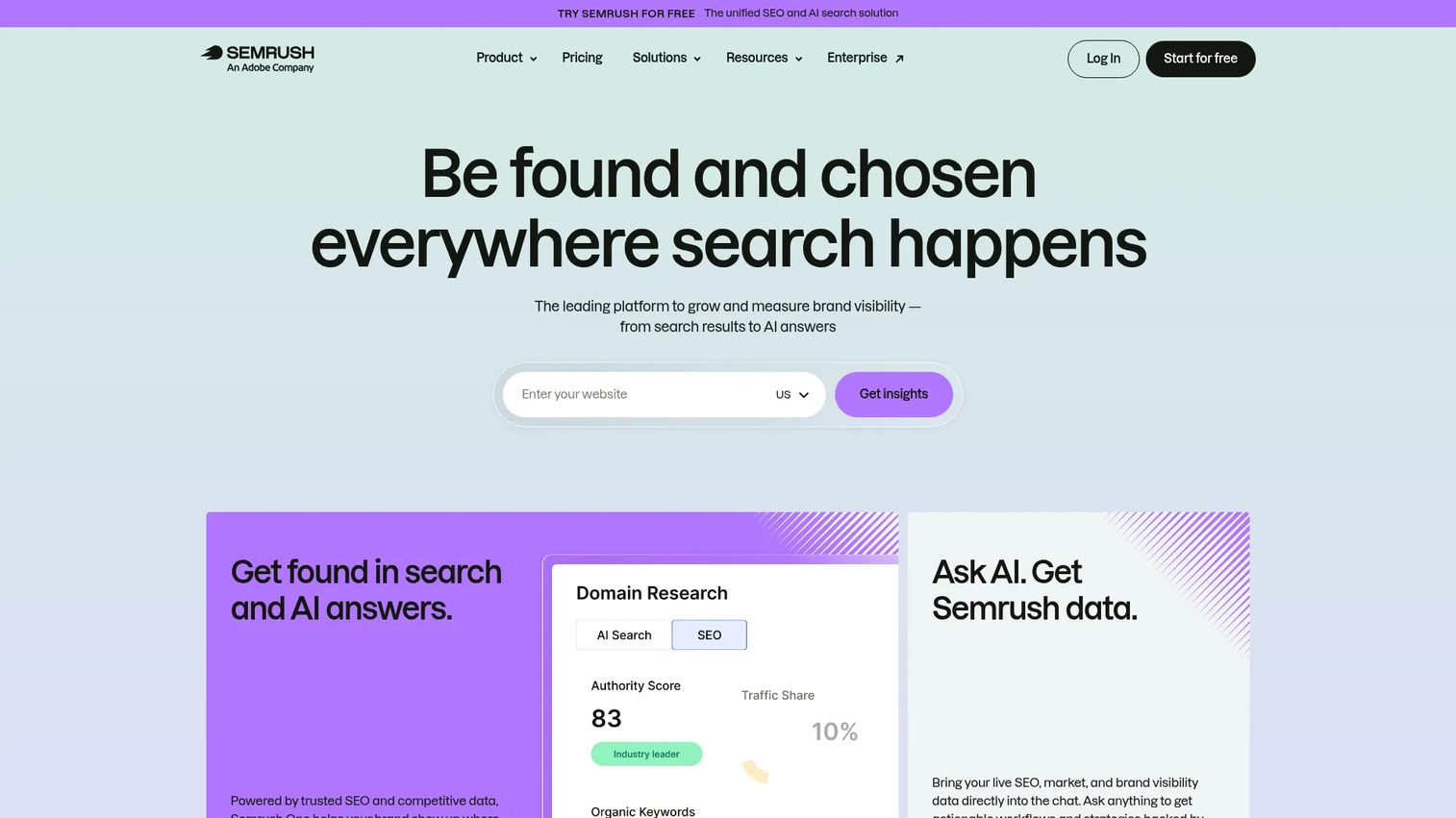
Semrush covers SEO alongside broader brand visibility and marketing research. Its documented toolkit includes rank tracking, technical audits, and competitive analysis. For growth teams, the main buying case is reducing overlapping subscriptions across related work.
Best for: Marketing departments that need a shared platform for search research and campaign planning.
Key features
- Keyword and competitor research
- Technical site audits
- Backlink analysis
- AI visibility and sentiment tracking
- Rank tracking and marketing reports
Treat Semrush as a consolidation candidate rather than an assumed Bing-specific recommendation. Request a demonstration of the exact engine and reporting workflow before replacing your existing tracker.
Start the commercial evaluation with your current stack. Identify which subscriptions could be retired and which responsibilities would remain elsewhere.
The suite’s breadth matters when several colleagues use the output. A content marketer may need competitive research, while an SEO specialist needs technical findings. Assess whether both can work from the same agreed definitions.
Avoid letting a large feature catalog obscure your original problem. If the missing capability is a recurring Bing report, make that the acceptance test.
Also separate conventional search positions from AI visibility. Those measurements answer different questions and should remain identifiable in leadership reporting.
Why choose Semrush: It is worth assessing when consolidation is the priority across several marketing workflows. Establish Bing suitability before counting it as a replacement for dedicated monitoring.
Semrush pricing: The SEO plan costs $117.33/month billed annually, or $139 monthly. A Free plan is available.
G2 rating: 4.4/5.
10. AccuRanker
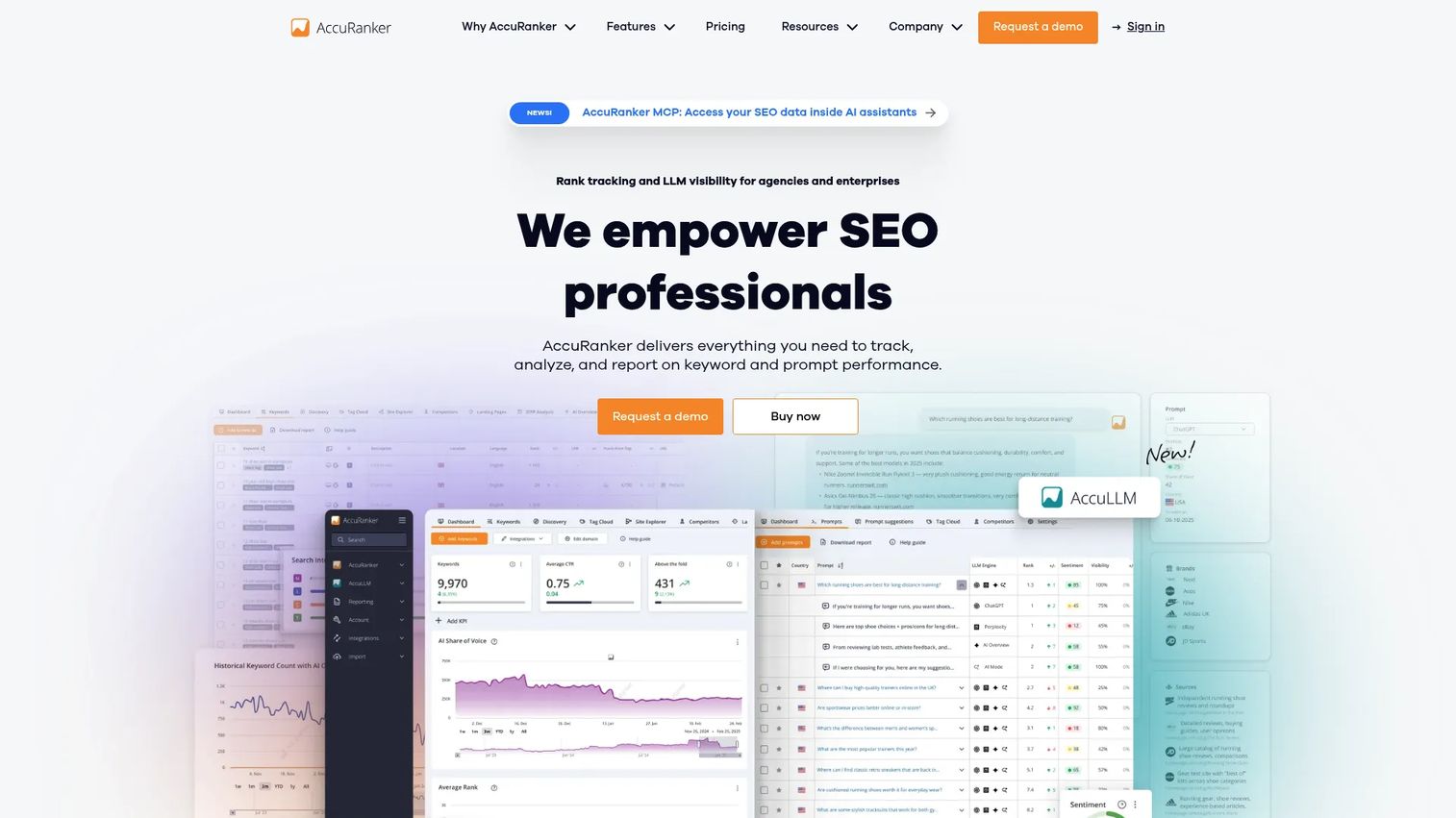
AccuRanker focuses on keyword monitoring and search visibility analysis. Daily and on-demand updates sit alongside competitor reporting and Share of Voice. It belongs on a shortlist when ranking analysis is a substantial recurring job.
Best for: Agencies and in-house SEO teams prioritizing reporting depth over a broad marketing suite.
Key features
- Daily and on-demand rank updates
- Competitor monitoring
- Share of Voice analysis
- SERP feature tracking
- API and Looker Studio integrations
Use the evaluation to inspect how reporting changes your decisions. A large keyword table matters less than being able to isolate the pages or segments that require action.
For Bing, ask the vendor to demonstrate supported collection settings. The documented general monitoring features do not establish every engine-specific capability.
On-demand updates are useful when investigating a change. Establish a rule for when your team uses them, rather than refreshing repeatedly without a decision to make.
Share of Voice also deserves a definition check. Ask how the metric is calculated and which inputs it uses before adding it to an executive scorecard.
The integration options create another evaluation task. Test whether the exported fields match your reporting model, including identifiers that distinguish markets and devices.
Why choose AccuRanker: Consider it when ranking analysis drives frequent operational decisions. Confirm engine support and reporting definitions before prioritizing update speed.
AccuRanker pricing: Professional costs $224/month and Expert $764/month. Annual payment receives a 10% discount.
G2 rating: 4.8/5.
11. Ahrefs
Ahrefs is relevant to this comparison as a broader SEO research platform. Its documented capabilities include competitive intelligence through Site Explorer and research through Keywords Explorer. Those tools support decisions about which pages and topics deserve investment.
Best for: Content and SEO teams whose main requirements are competitive research and website analysis.
Key features
- Site Explorer
- Keywords Explorer
- Site Audit
- Competitive intelligence
- Website performance monitoring
Keep the category distinction clear. Research capabilities can inform a Bing strategy without establishing an ongoing Bing position-monitoring workflow.
Before choosing Ahrefs for this job, require a demonstration of the specific Bing tracking output you need. Keyword data and scheduled ranking history should not be treated as interchangeable.
The consolidation case is strongest when your team already needs its documented research tools. Compare those requirements with existing spend rather than assigning value to every feature in the catalog.
For example, a content team might use competitive analysis to select pages for improvement. The measurement plan should then specify where Bing positions and resulting conversions will be tracked.
Review entry-plan entitlements carefully during procurement. A low starting subscription price does not establish access to every workflow that appears elsewhere in a platform.
Why choose Ahrefs: Evaluate it for research-led SEO operations and content planning. Treat recurring Bing monitoring as a separate acceptance requirement.
Ahrefs pricing: Starter costs £23/month and Lite £99/month. Ahrefs Free provides limited Site Explorer and Site Audit access.
G2 rating: 4.5/5.
12. ProRankTracker
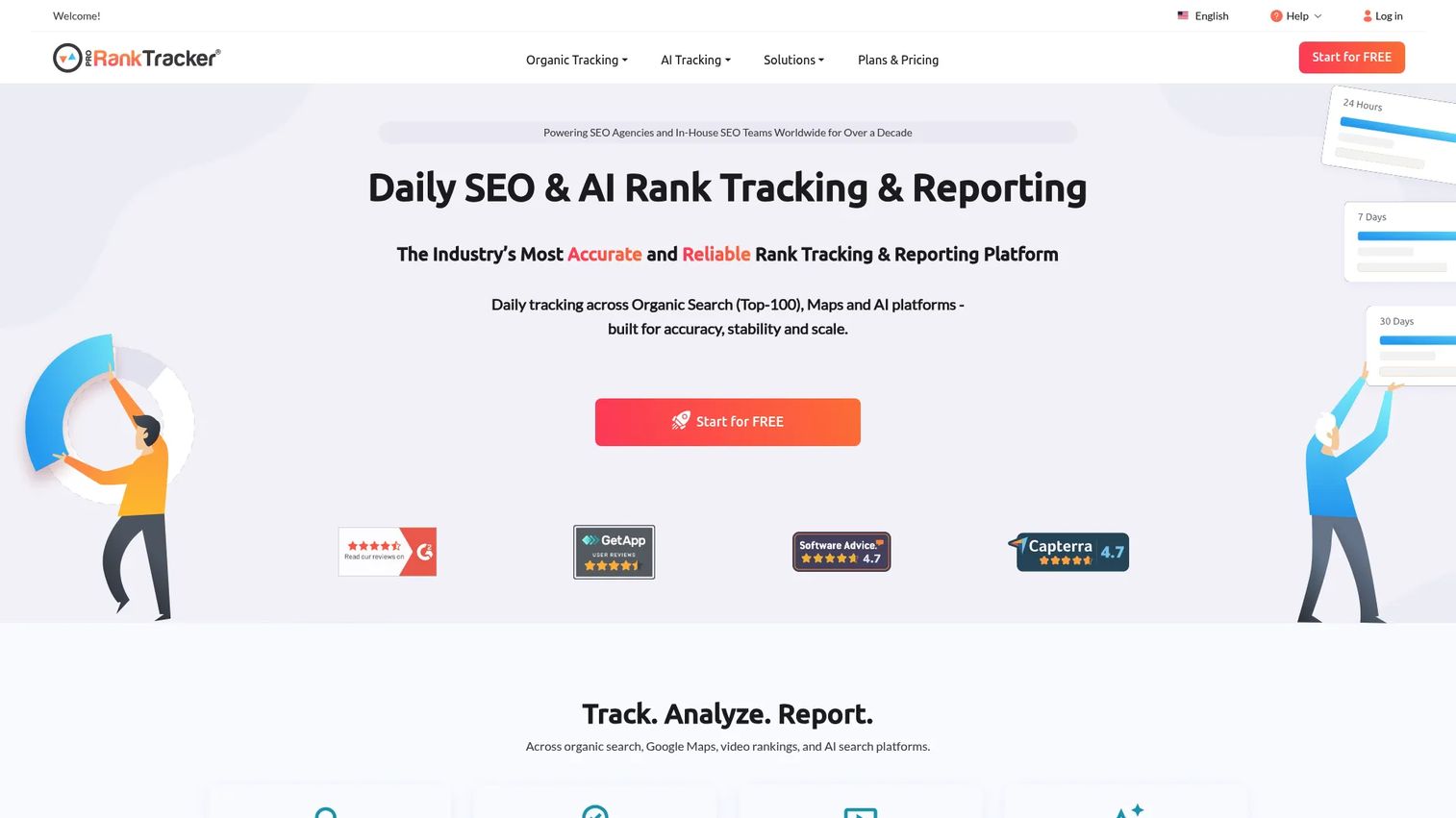
ProRankTracker combines ranking measurement with client-facing reporting. Its documented capabilities cover Google positions, Maps, video, and several AI surfaces. The reporting emphasis makes it relevant for agencies that deliver recurring visibility updates.
Best for: Agencies prioritizing scheduled, shareable reports across client accounts.
Key features
- Daily Google desktop and mobile tracking
- Google Maps monitoring
- YouTube and Google video tracking
- AI platform visibility monitoring
- Scheduled white-label reports
For this Bing shortlist, engine coverage is the first question to resolve. Copilot visibility and Bing organic ranking measurement are different requirements.
Ask the vendor to produce the report your client expects, using a representative campaign. Check whether it clearly identifies the engine and the measurement method.
Then assess delivery. A branded report should help the recipient understand what changed and whether any action is required.
Agree on reporting language before rolling out the platform. Terms such as visibility and position need consistent definitions across accounts, particularly when AI channels appear beside conventional search.
The trial is best used for a complete reporting cycle rather than a feature tour. Collect a baseline, review a subsequent observation, and inspect the client-facing output.
Why choose ProRankTracker: Consider it when report production consumes significant agency time. Confirm the Bing workflow before selecting it for a Bing-specific contract.
ProRankTracker pricing: Starter costs $99/month for 1,000 terms; Pro costs $149/month for 2,000. A seven-day trial includes 10 terms.
G2 rating: 4.6/5.
13. SE Ranking
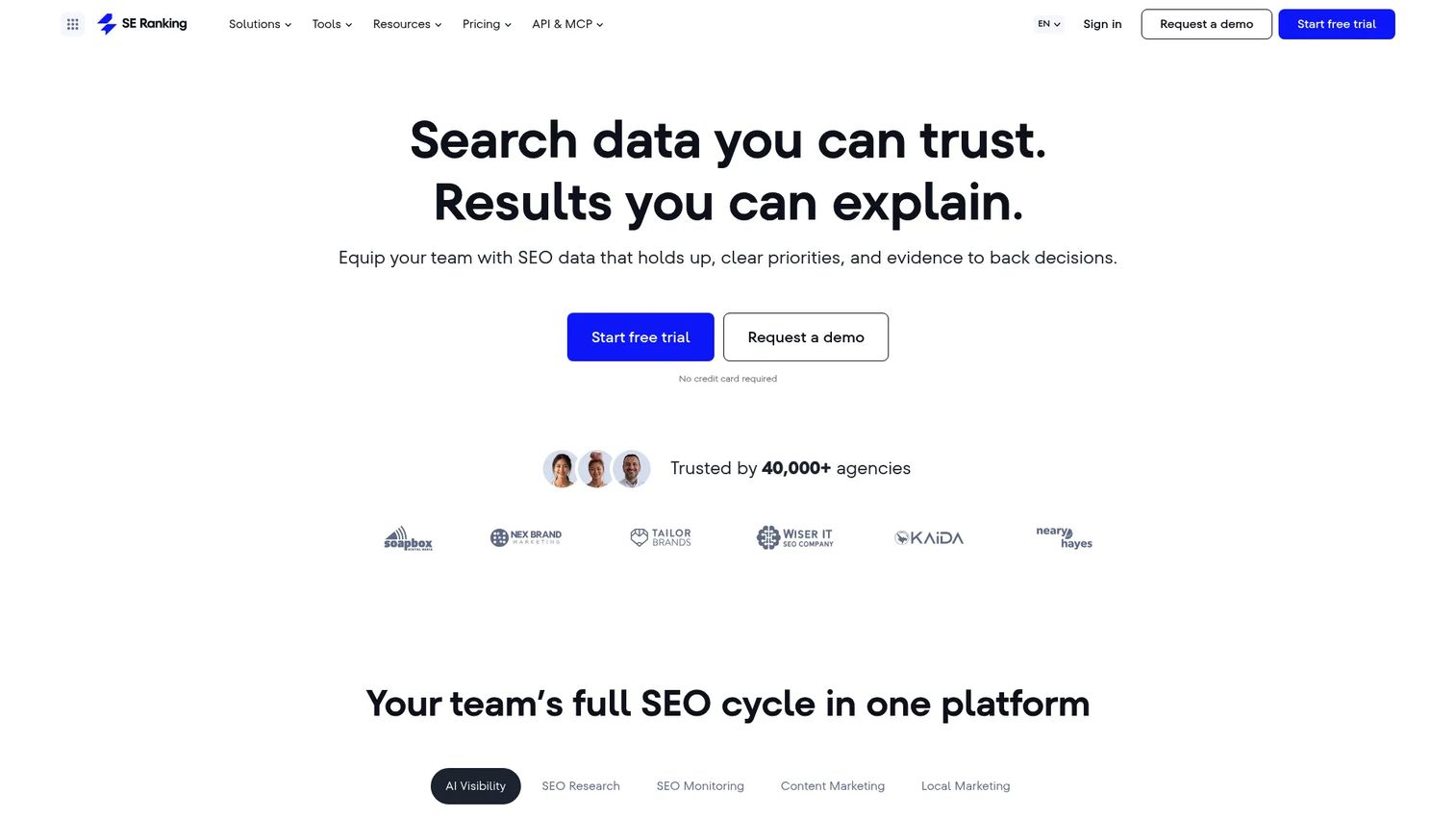
SE Ranking combines position monitoring with research and technical auditing. Its documented integrations include GA4 and Matomo, alongside reporting connections. The platform is worth assessing when a marketing team wants related SEO work under one subscription.
Best for: Agencies and in-house marketers consolidating research, diagnostics, and performance reporting.
Key features
- Rank tracking across major search engines
- Website and on-page audits
- Keyword and competitor research
- Backlink analysis
- Analytics and reporting integrations
Start with the handoff between diagnosis and measurement. After identifying an issue, can the responsible person track the relevant page without creating a separate reporting process?
For Bing, request the engine-specific configuration and output. The phrase “major search engines” should not substitute for proof of your required market and device coverage.
The integrations are particularly relevant to growth marketers defending ROI. Test whether the data can be organized around landing pages and business segments already used in management reporting.
Keep attribution expectations grounded. A connected analytics account does not automatically explain how a ranking change affected qualified pipeline.
Compare the platform against what your team can stop paying for. If existing research and audit subscriptions remain necessary, include them in the total cost calculation.
Why choose SE Ranking: Evaluate it when related SEO tasks are fragmented across several tools. Its consolidation value depends on replacing work your team already performs.
SE Ranking pricing: Core costs $103.20/month billed annually, or $129 monthly. A 14-day trial is available.
G2 rating: 4.8/5.
14. Rank Ranger
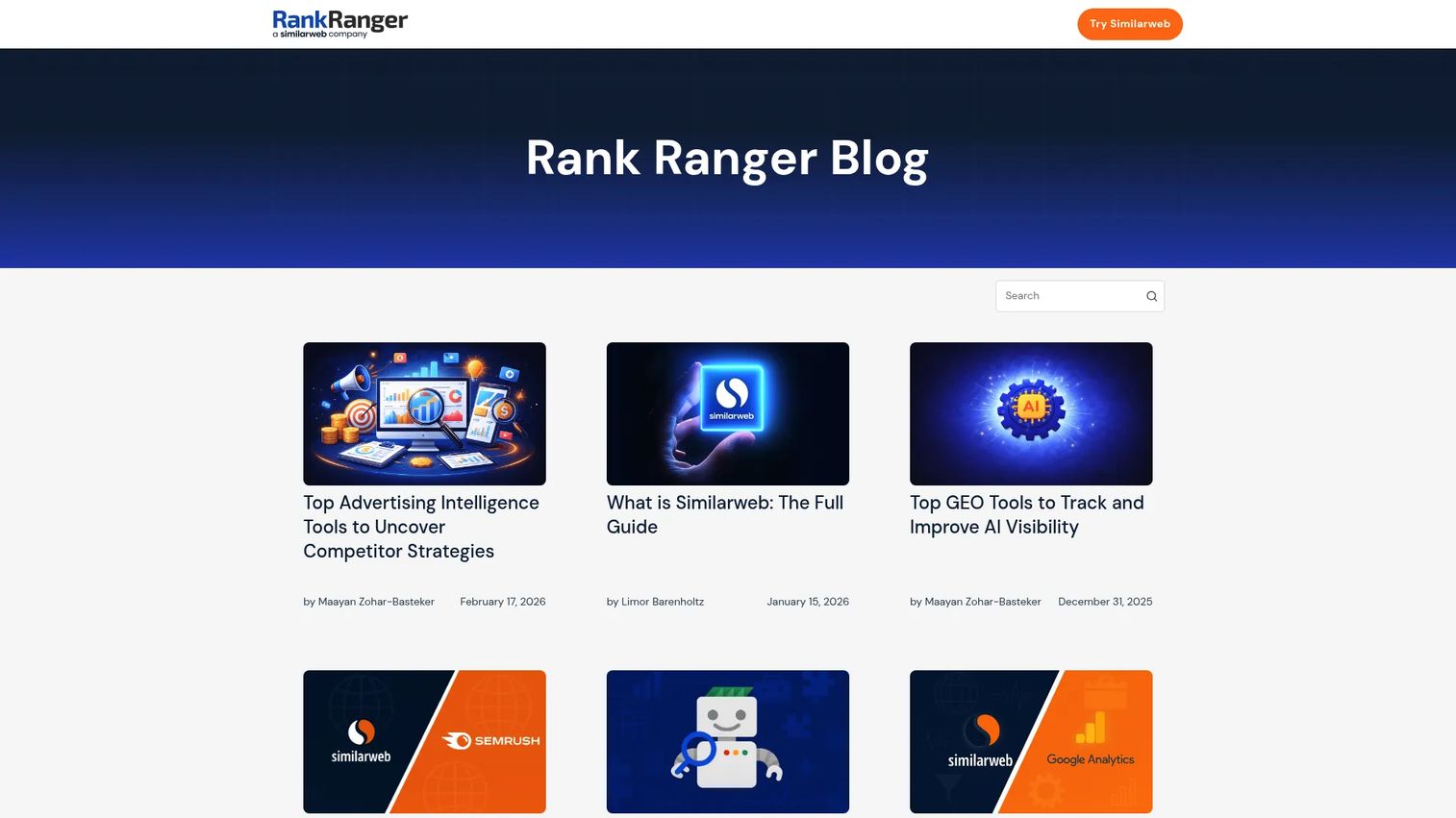
Rank Ranger has documented capabilities in rank monitoring and customized marketing reporting. These include branded dashboards and connections to third-party data. Current purchasing availability deserves attention before you invest time in a detailed evaluation.
Best for: Reporting-heavy teams assessing customized dashboards, particularly those already familiar with the platform.
Key features
- Organic and local rank tracking
- Mobile and video monitoring
- White-label dashboards
- Automated branded reports
- Third-party marketing data integrations
The current site primarily presents editorial content and links to Similarweb. Treat product access and the available commercial offering as early procurement questions.
Once those are clear, establish whether the proposed package supports your exact Bing requirement. Ask to see a current campaign rather than relying on an older capability description.
The reporting use case remains specific. Some teams need ranking observations displayed alongside other marketing indicators in a client-controlled format.
If that describes your operation, bring an existing report to the evaluation. Mark which sections require customization and which can remain standard.
For existing users, also review continuity. Clarify how historical records can be retained and how reports will be maintained under the available offering.
Why choose Rank Ranger: Assess it when customized reporting is central to your workflow and current access is established. Resolve commercial availability before comparing detailed functionality.
Rank Ranger pricing: Ask Rank Ranger about current plans and product availability.
15. Zenserp
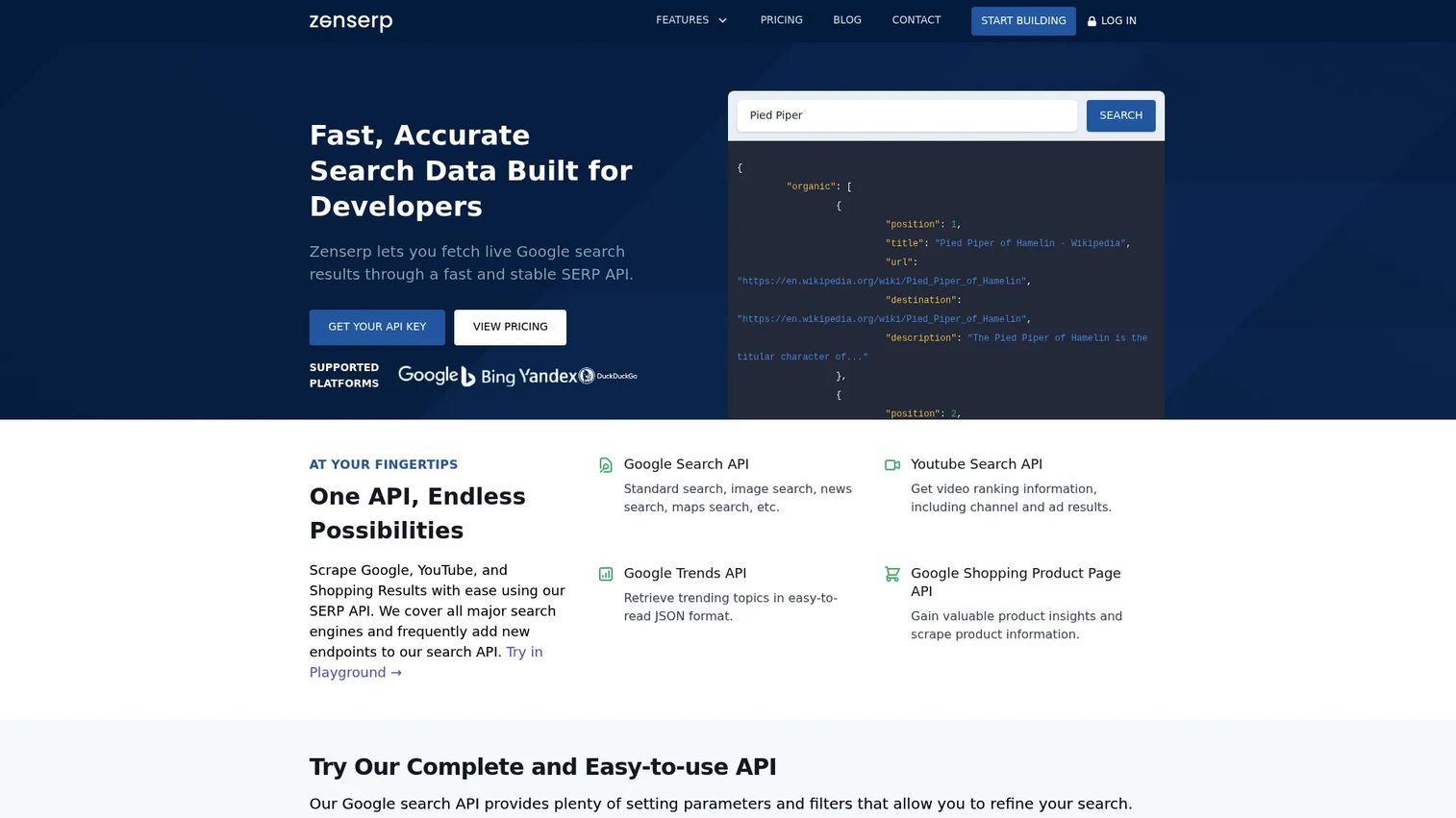
Zenserp provides structured search results through an API and explicitly includes Bing in its supported portfolio. Its documented offering includes location-based results and real-time scraping. It is a direct candidate for teams building a custom Bing SERP tracker.
Best for: Developers who need search data for internal applications or analytical workflows.
Key features
- Documented Bing search API
- Location-based results
- Structured SERP responses
- Real-time collection
- Multiple search engine APIs
Begin with the smallest useful dataset. Choose representative queries and inspect the returned fields before designing the rest of the application.
For Bing local rank tracking, establish the geographic precision available through the relevant endpoint. A general location feature does not necessarily answer every postcode-level requirement.
Make result interpretation explicit. Determine how your application distinguishes organic positions from other elements and how it handles several URLs from the same domain.
The reporting layer remains your responsibility. Specify who receives alerts, where historical records live, and how users investigate a change.
Among Bing Search API alternatives, Zenserp offers a clear product category match. The remaining decision concerns output quality and fit with your team’s implementation requirements.
Why choose Zenserp: Shortlist it when you need documented Bing API access without purchasing a broad SEO dashboard. Use sample responses to validate your intended analysis.
Zenserp pricing: Small costs $49.99/month. The Free plan includes 50 searches per month.
16. Scrapingdog
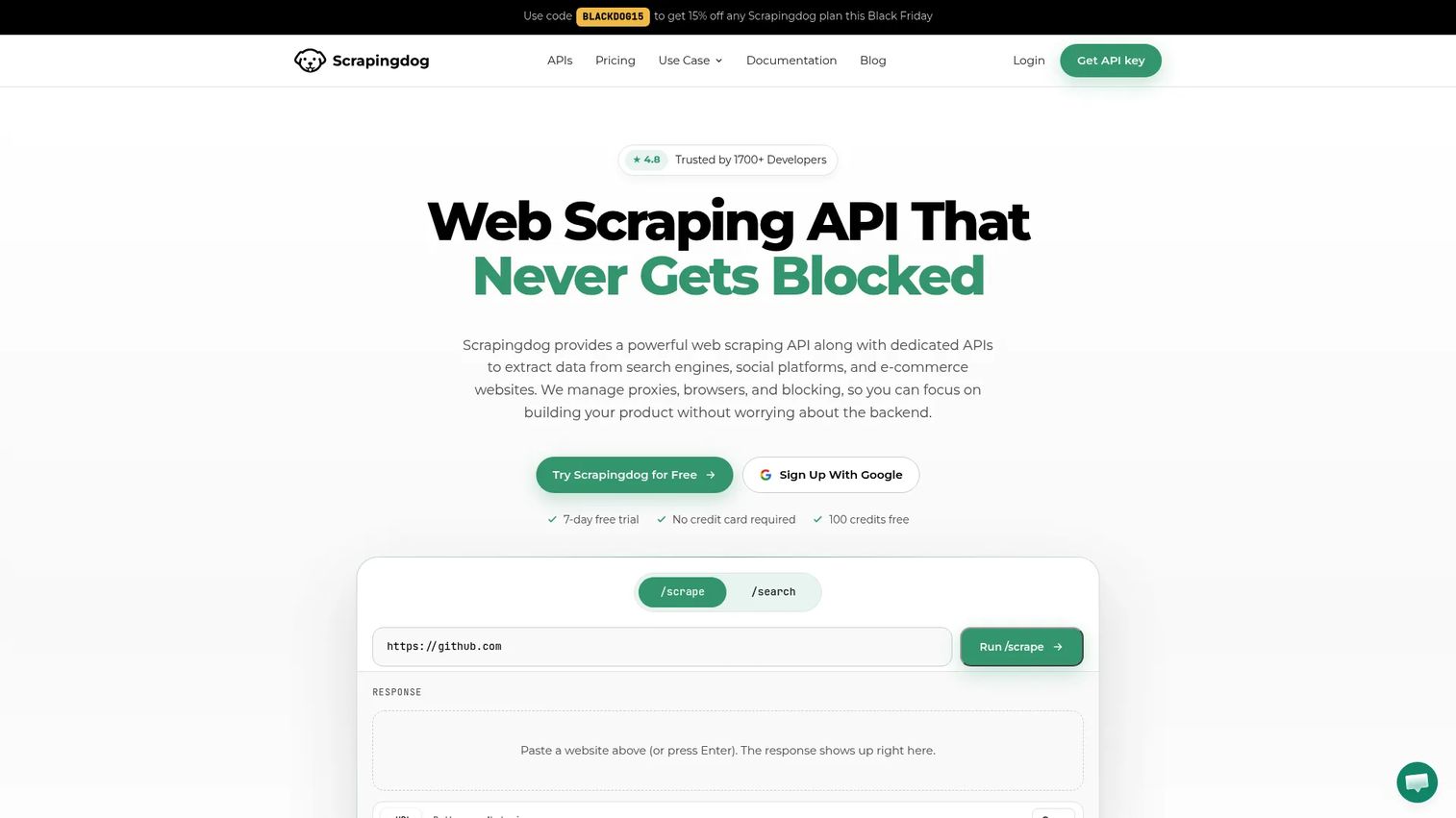
Scrapingdog provides managed web extraction with rendering and anti-bot handling. Its dedicated API portfolio covers several search and commerce sources. Evaluate it as developer infrastructure rather than a ready-made Bing ranking dashboard.
Best for: Technical teams that already own extraction logic and downstream data processing.
Key features
- Headless browser rendering
- Fingerprint rotation
- Rotating proxy infrastructure
- Built-in CAPTCHA handling
- Dedicated extraction APIs
The first test is source suitability. Confirm a working Bing collection route and inspect its response before treating general scraping capabilities as a ranking product.
Next, define what counts as successful collection. A request completing and a usable ranking observation arriving are different events.
Build safeguards into your application. Missing fields should trigger review rather than silently becoming empty ranking values in a report.
Scrapingdog’s plans provide access to every API, while higher tiers change resource allowances and support. Match the workload to the applicable collection settings rather than comparing headline credit totals alone.
For marketers, this option makes sense when engineering already maintains similar workflows. Otherwise, evaluate the cost of development alongside the subscription.
Why choose Scrapingdog: Consider it for a developer-owned extraction stack with a tested Bing implementation. Choose a dashboard when the required output is primarily a recurring marketing report.
Scrapingdog pricing: LITE costs $40/month. A free plan includes 100 credits.
G2 rating: 3.0/5.
17. Traject Data
Traject Data provides search and ecommerce data APIs, with documented Bing coverage in its SERP portfolio. Its capabilities include geographic targeting and batch processing. This makes it relevant to organizations collecting search intelligence as part of a wider data operation.
Best for: Data teams combining search visibility with market or ecommerce intelligence.
Key features
- Bing and other search engine data
- Geotargeted results
- Batch processing
- API integration
- Ecommerce data collection
Choose the specific API product before estimating the budget. Traject Data’s pricing overview covers several offerings, and a portfolio starting rate is not a universal Bing quote.
Request a sample for your required query and market. Inspect both the content and the identifiers needed to join observations with your existing reporting.
Batch processing is worth evaluating when you collect recurring keyword sets. Define how your team checks completion and investigates gaps before scheduling larger runs.
A shared provider can simplify procurement across related data projects. Still, search tracking and ecommerce intelligence need separate acceptance criteria because they support different decisions.
For an SEO-only team, compare this approach with a specialist dashboard. Raw data access is valuable when it feeds an owned application; it is additional work when no reporting layer exists.
Why choose Traject Data: Shortlist it when documented Bing coverage and broader data collection belong in the same technical operation. Match the API product to the intended workload.
Traject Data pricing: Value SERP starts at $2.50 per 1,000 requests. Scale SERP starts at $23/month.
G2 rating: 5.0/5.
Considerations when choosing a Bing rank tracker
Decide who owns the workflow
Use a dashboard when marketers need recurring reports without maintaining collection infrastructure. Choose an API when a technical owner can manage the dataset and its downstream use.
Include implementation time in the purchasing decision. A low request price does not eliminate development costs.
Require a Bing-specific demonstration
Ask the vendor to run your query using the market and device settings you intend to report. General rank tracking coverage is not enough.
Keep conventional positions separate from AI citations. Each measurement needs a clearly identified source.
Match refresh frequency to decisions
Daily observations suit active experiments and competitive monitoring. A slower reporting cadence may be sufficient for less active keyword groups.
Pay for additional refreshes when they change an operational decision, rather than because they appear more precise.
Validate location and result coverage
Test Bing mobile rank tracking and local targeting independently. Confirm the geographic precision required by the business.
For Bing SERP feature monitoring, inspect sample records. Decide how non-organic elements will appear in stakeholder reporting.
Start with the report leadership needs
Choose a priority page and build its proposed report during evaluation. Include ranking movement alongside traffic and qualified outcomes.
Ask whether the new purchase replaces an existing subscription. If it adds another system, document the decision it enables that your current stack cannot support.
Conclusion
The best Bing rank tracker is the one that fits your operating model and produces evidence you can use.
Nightwatch is a practical first shortlist for dedicated monitoring with documented Bing coverage. SerpApi and Zenserp suit custom search datasets, while Traject Data merits evaluation for broader data operations.
Consider ScrapingBee, Bright Data, DataForSEO, or Scrapingdog when technical ownership already exists. Validate the required Bing collection route before building around a general infrastructure product.
For consolidation, assess Semrush and SE Ranking against your current subscriptions. Ahrefs belongs in the research discussion, with Bing monitoring treated as a separate requirement.
SEOptimer and TrueRanker offer different smaller-team workflows. ProRankTracker and Rank Ranger emphasize reporting, while AccuRanker targets dedicated analysis and SEO PowerSuite provides desktop control.
Before purchasing any Bing ranking tool, run a representative reporting cycle. Compare the output with the questions your team needs to answer, including whether improved visibility produces qualified demand.
Keep the buying decision narrow. Replace duplicated work where possible, and require a named owner for anything new.
Start your journey with Guideflow today!
FAQs
Nightwatch is a practical starting point because its documented coverage includes Bing and recurring reporting. API-oriented teams should also evaluate SerpApi or Zenserp against their required output. Broader platforms such as Semrush and SE Ranking deserve consideration for consolidation, but require a demonstrated Bing workflow before purchase. Choose according to who owns the reporting and which decisions it supports.
A Bing rank checker answers a position question at a particular moment, while a tracker stores repeated observations for comparison. A Bing position checker suits occasional troubleshooting; historical monitoring supports reporting and experiments. When evaluating a Bing ranking checker, ask whether results can be retained and compared under consistent settings. Product names alone do not establish that distinction.
A Google position does not establish your visibility on Bing, so separate measurement prevents one engine’s performance from standing in for another. Start with the landing pages already receiving Bing traffic, then assess whether ranking data would improve your decisions. Connect observations with qualified conversions before increasing investment. A Bing rank tracker should support that evaluation rather than create an isolated vanity metric.
Some platforms offer device-specific monitoring, but you should validate the exact Bing configuration rather than assuming support from a general mobile feature. Ask for a sample using your target market and device. Keep the segments separate in reporting, particularly when their landing-page experiences differ. A desktop observation should not be presented as proof of the position a mobile user sees.
Evaluate accuracy against a defined collection setup, including the search location and device type. Timing and result interpretation also matter, especially when comparing organic links with other SERP elements. Check how the provider handles missing results and repeated URLs from the same domain. To check Bing ranking manually, reproduce the relevant settings and compare the same result type rather than expecting every observation to match.
Location-aware tracking and APIs can support local analysis, but available precision must be established for the specific Bing workflow. Ask whether the provider supports your required city, postcode, or other geographic setting. Build a small sample across representative markets before expanding coverage. For a local business, a Bing ranking tool should reflect the area served rather than defaulting to a national result.
Use an API when a technical team owns collection and needs data in a custom application or warehouse. A dashboard fits marketers who primarily need recurring reports and a clear investigation workflow. Compare the complete operating cost, including storage and maintenance, rather than subscription prices alone. If nobody owns failed collections or reporting changes, establish that responsibility before choosing an API.
Set the frequency according to how often your team can act on changes. Daily monitoring supports active page experiments, while weekly checks may suit slower-moving work. Keep the schedule consistent so that reports compare equivalent observation periods. Increase collection frequency when investigating a specific issue, then return to the cadence that supports your normal decisions.