Your ranking report shows progress. Organic leads stayed flat. Now you’re opening spreadsheets to work out which pages improved and whether those keywords matter.
The best keyword rank tracker should shorten that investigation. It needs to explain movement by search environment and help you choose the next action.
The stakes extend beyond reporting. Conductor’s 2025 research found that organic search supplied an average 33% of website traffic across seven industries in 2024. That makes visibility worth measuring carefully, without treating every position change as a business result.
Buying another dashboard won’t resolve unclear measurement. Start by deciding whether you need deeper ranking data or fewer disconnected SEO subscriptions. Then evaluate the reporting workflow your team will use.
Rank tracking is useful when it changes what you do next. A content refresh deserves different evidence than a local expansion or a technical investigation.
What’s inside
This guide compares 17 keyword rank tracker tools for digital marketers evaluating their SEO stack.
- Tracking depth: Search environments, geographic coverage, historical movement, and competitor visibility
- Reporting usefulness: Stakeholder updates, exports, segmentation, and recurring client reporting
- Workflow fit: Full SEO suites versus dedicated trackers, local platforms, and desktop software
- Buying clarity: Entry prices, billing terms, documented trials, and review ratings
Product details and pricing draw on vendor research dated November 24, 2026. G2 sources appear in the comparison table. Recommendations reflect documented capabilities rather than a claimed hands-on benchmark.
Rank Tracker and SEO PowerSuite receive separate entries because you can buy the standalone application or the broader suite.
TL;DR
- Best all-around SEO suite: Semrush, for teams combining ranking analysis with competitive research and marketing reporting.
- Best for backlink-led investigations: Ahrefs, when link research and competing pages guide your content decisions.
- Best balanced toolkit: SE Ranking, for agencies and in-house marketers consolidating SEO work. Evaluate its Core plan against your existing subscriptions.
- Best dedicated tracking shortlist: AccuRanker for ranking-focused operations; Nozzle for detailed SERP investigation.
- Best for recurring client reports: Advanced Web Ranking, with customizable reporting and tracking across markets.
- Best starting points for tighter budgets: Keyword.com offers an annual-billing entry rate of $3/month. Seobility provides a permanent free Basic plan.
The best SEO rank tracker depends on your operating model. Compare the complete configuration, rather than choosing the lowest advertised subscription.
What is a keyword rank tracker?
A keyword rank tracker monitors where a website appears for selected search queries across search engines, devices, locations, and time.
Keyword rank tracking gives marketers a consistent record of search visibility. You choose the queries and target environments, then compare subsequent results against that baseline.
A website ranking tool helps answer practical questions. Did a refreshed page move? Has a competitor gained ground across your commercial keywords? Which location needs attention?
Keyword position tracking also separates environments that aggregate reports can blur. Desktop rank tracking and mobile rank tracking should reflect the audiences you serve. A national result doesn’t describe every city.
Key capabilities to evaluate
Look for these capabilities in rank tracking software, according to your reporting needs.
- Scheduled updates and optional on-demand checks
- Geographic targeting and device selection
- Competitor monitoring and keyword grouping
- Historical ranking data and change alerts
- SERP feature tracking
- Share-of-voice reporting
- Exports and scheduled stakeholder reports
- AI search visibility tracking
SERP tracking can cover more than the familiar organic listing. Search results can include snippets, images, videos, shopping placements, and local results. Evaluate which surfaces each product measures.
Share of voice summarizes competitive visibility across a selected keyword set. Treat it as a comparison within that set, rather than your share of every search.
AI answer monitoring adds another measurement question. A brand mention or citation belongs in a different reporting view from an organic keyword position.
Rank tracker versus rank checker
A website rank checker gives you a snapshot. A tracker stores repeated observations so you can investigate trends and report progress.
Keyword research tools help select opportunities before publication. SEO ranking software monitors performance after you act. Broader SEO tracking platforms combine these jobs with audits or backlink analysis.
Website analytics answers another question entirely. It measures what happens after people arrive. Connect landing-page ranking trends with organic conversions before attributing revenue changes to SEO work.
For a useful baseline, group queries by commercial purpose. Keep branded searches separate from acquisition terms. Otherwise, strong brand demand can obscure weak visibility for the pages expected to create new pipeline.
When to use a keyword rank tracker
Prove SEO progress without spreadsheet archaeology
Use a tracker when content updates need a repeatable before-and-after view. Group the affected queries and record the publication date.
Compare that cohort with landing-page traffic and conversions. A stable average position can coexist with changing click behavior or different SERP features.
Your report should end with a decision, such as refreshing a page or investigating a declining topic cluster.
Monitor competitors before they own your traffic
Competitor rank tracking helps identify which domains gain visibility across the queries your business targets. Separate market movement from isolated losses.
Review competing pages before commissioning more content. The useful question is whether their gains suggest stronger coverage, different intent alignment, or another issue worth investigating.
Tie your response to commercially relevant pages rather than whichever keyword moved most.
Track local, mobile, and AI search visibility
Use a Google rank tracker configured for the locations and devices that contribute customers. For location-driven businesses, include local results alongside conventional organic listings.
Keep AI answer monitoring distinct from keyword positions. Evaluate mentions and citations according to the search surface being measured.
A national desktop report alone won’t answer whether your nearest service area or mobile audience can find you.
Keyword rank tracker comparison table
Start with the workflow you want to replace. Full SEO suites suit teams consolidating keyword research, audits, backlink work, and tracking. Dedicated products deserve attention when ranking analysis is already a substantial job.
For agencies, inspect rank tracking reports before buying. A polished dashboard has limited value if account managers still rebuild client updates manually.
Local businesses should prioritize geographic detail and Maps visibility. Free access can support evaluation, but its reporting scope needs to match the job.
The table shows platform entry prices, not identical tracking allowances. Annual equivalents and monthly subscriptions are labeled separately. Currency differences remain intact rather than using an assumed exchange rate.
Ratings link to their G2 sources. Read the standalone-product note for Rank Tracker before comparing it with SEO PowerSuite.
| # | Product | Best for | Key differentiator | Pricing | G2 rating |
|---|---|---|---|---|---|
| 1 | Semrush | Consolidating search marketing work | SEO research alongside AI visibility and reporting | From $117.33/month, billed annually; free tier | 4.4/5 |
| 2 | Ahrefs | Backlink and content investigations | Ranking analysis within a research-led toolkit | Platform plans from $29/month | 4.5/5 |
| 3 | SE Ranking | Agencies and in-house SEO teams | Integrated tracking, audits, and connected reporting | $129/month or $103.20/month annually | 4.7/5 |
| 4 | AccuRanker | Ranking-focused operations at scale | Rank intelligence with LLM visibility monitoring | From €229/month | 4.8/5 |
| 5 | Advanced Web Ranking | Recurring agency reporting | Customizable reports across search environments | From $139/month | 4.3/5 |
| 6 | Nozzle | Detailed SERP investigation | Rendered result comparisons and granular monitoring | Ask Nozzle for current pricing | 4.5/5 |
| 7 | Moz Pro | Generalist SEO teams | Rankings alongside crawl diagnostics and research | From $49/month | 4.3/5 |
| 8 | Mangools | Smaller SEO programs | Connected research tools and SERPWatcher | From $37.70/month; free account available | 4.7/5 |
| 9 | Keyword.com | Focused Google and AI monitoring | Separate search and AI visibility packages | $4/month or $3/month annually | 4.7/5 |
| 10 | Nightwatch | Multi-location visibility | Daily search tracking alongside AI answer analysis | From €79/month | 4.7/5 |
| 11 | Pro Rank Tracker | Agency ranking reports | Organic, local, video, and AI monitoring | From $99/month for 1,000 terms | 4.6/5 |
| 12 | BrightLocal | Location-driven businesses | Local rankings alongside listings and reviews | From $41/month; $369/year for one location | 4.6/5 |
| 13 | Serpstat | Integrated SEO research | Core SEO workflows with AI visibility | Promotional entry price of $50/month | 4.6/5 |
| 14 | Seobility | Free entry and ongoing monitoring | Auditing alongside rankings and backlink monitoring | Free; Premium from $69.90/month | 4.6/5 |
| 15 | Rank Tracker | Desktop ranking workflows | Broad search coverage and unlimited paid-plan keywords | Free version; Professional $179/year | N/A, standalone rating |
| 16 | SEO PowerSuite | Desktop SEO stack consolidation | Rank Tracker plus auditing and backlink tools | Free; Professional $349/year | 4.0/5 |
| 17 | SEO Tester Online | Integrated SEO checks and content work | Search Console-connected tracking and branded reports | Review current vendor plans | N/A |
Best 17 keyword rank tracker tools for 2026
1. Semrush
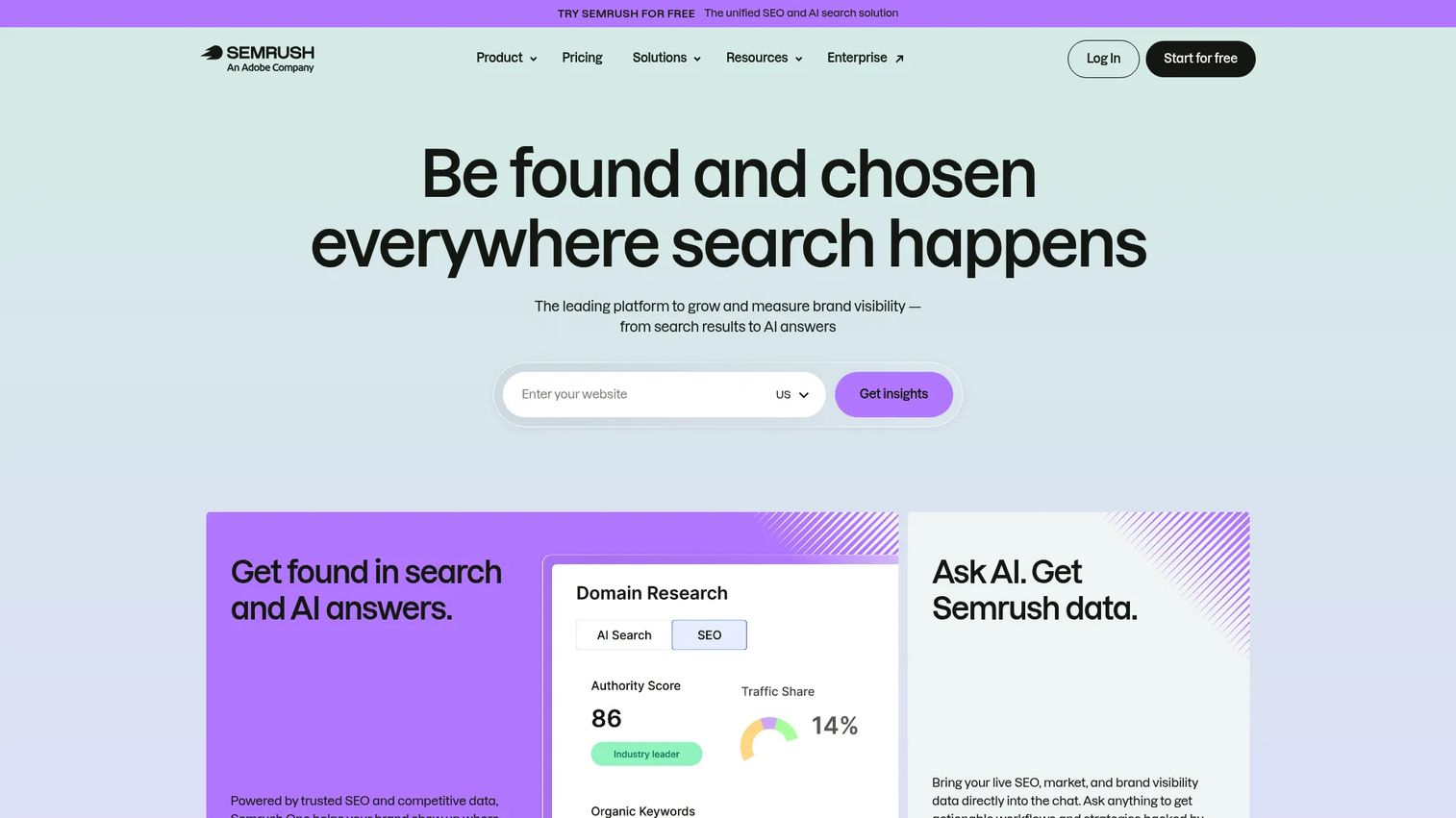
Semrush fits marketers who need ranking changes to connect with broader competitive research. Position Tracking sits within a platform covering SEO and AI search visibility. Its scope also includes content work, technical auditing, digital PR, and marketing reports.
Best for: Growth and SEO teams replacing disconnected research subscriptions with a broader search marketing platform.
Key features
- Keyword and competitor research
- Rank tracking and backlink analysis
- AI visibility and brand sentiment
- Technical site audits
- Branded reports and dashboards
Start your evaluation with a campaign question rather than the homepage dashboard. For example, choose a commercial topic where competing domains have gained ground.
Trace the investigation from keyword performance to the pages competing for those queries. Then build the report your marketing lead would need to approve a response.
This exercise tests whether suite breadth removes handoffs. It also reveals which research tools your team would continue paying for separately.
For pipeline reporting, keep position changes alongside landing-page outcomes. Search visibility helps explain acquisition performance, but it doesn’t establish revenue attribution by itself.
The buying consideration is scope. A marketing team running technical SEO and competitor analysis has more reasons to adopt the platform than someone needing occasional checks.
Before selecting a package, list the work you expect to consolidate. Include the reporting owner and the deliverable that each capability replaces.
Why choose Semrush: Choose it when investigations routinely extend beyond rankings into research and campaign planning. Skip a suite-sized purchase if those adjacent workflows already work well elsewhere.
Semrush pricing: The SEO plan starts at $117.33/month billed annually; Starter costs $165.17 and Pro+ costs $248.17 on that basis. A free tier is available.
2. Ahrefs
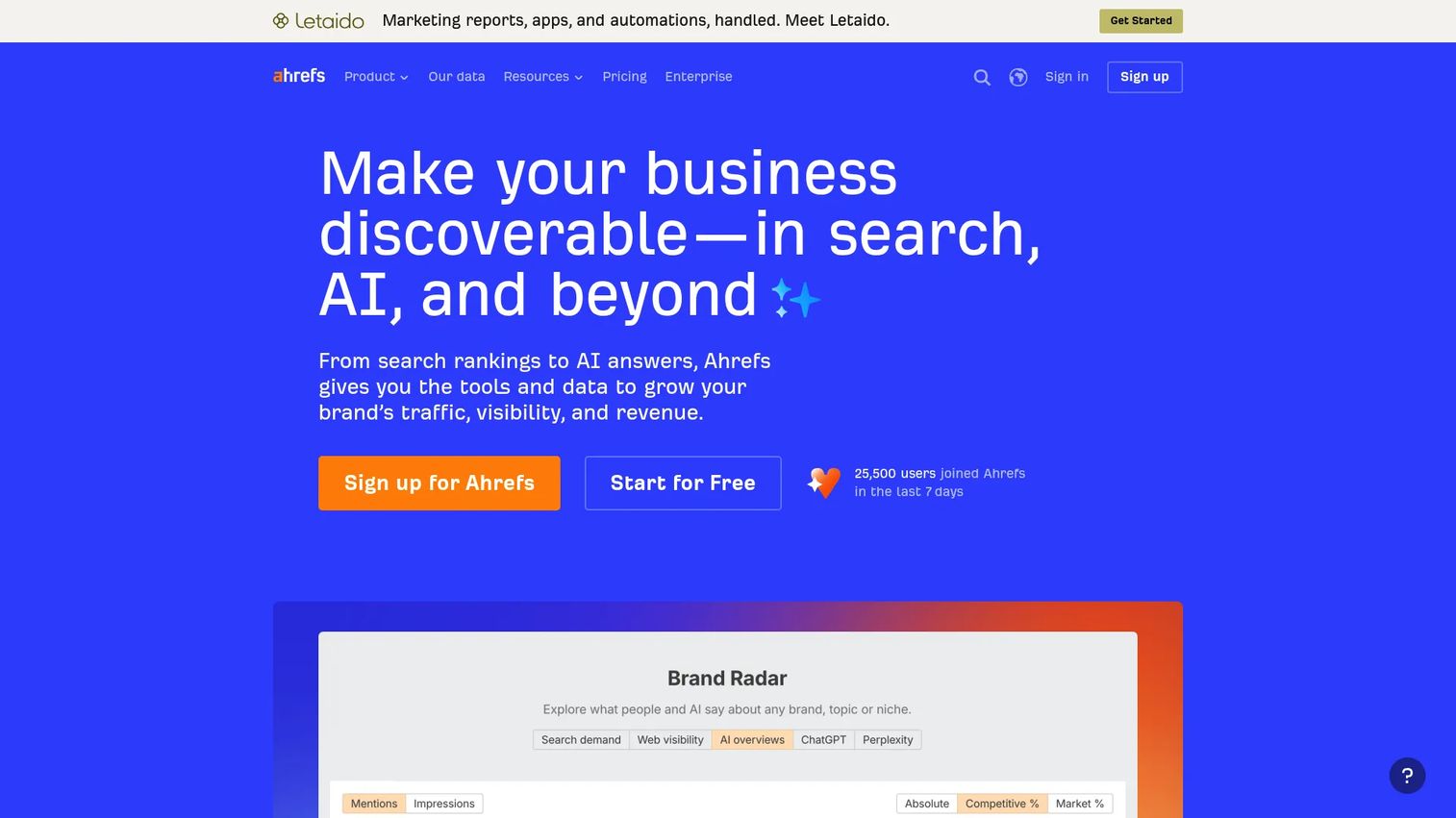
Ahrefs is a strong shortlist candidate when backlink research shapes your SEO decisions. Rank Tracker sits beside Site Explorer and Keywords Explorer, with additional tools for audits and content research. Brand Radar adds AI search visibility analysis to that wider research environment.
Best for: SEO teams investigating ranking movement through competing pages and link profiles.
Key features
- Rank Tracker
- Site Explorer and Keywords Explorer
- Site Audit
- Content Explorer
- Brand Radar
A useful evaluation starts with a page that lost commercially important visibility. Examine the competing URLs and decide what evidence would justify refreshing your content.
This approach makes the research connection tangible. Your team needs to explain the next action, rather than export another chart of declining positions.
Include both content and technical stakeholders in the trial workflow. Ask whether the findings produce an actionable brief or another round of analysis.
For a small marketing team, ownership matters as much as tool coverage. Research becomes expensive when nobody has time to turn findings into published changes.
Avoid buying the platform solely because you need a recurring ranking email. Its broader value comes from the investigations around that report.
Also distinguish platform entry pricing from the configuration required for your tracking workload. Establish the relevant Rank Tracker allowance and update schedule before choosing a subscription.
Why choose Ahrefs: Choose it when backlink and competing-content evidence regularly guide your SEO roadmap. A dedicated tracker deserves consideration when reporting positions is the main requirement.
Ahrefs pricing: Starter costs $29/month; Lite costs $129, Standard $249, and Advanced $449 monthly. Free access is available for verified websites.
3. SE Ranking
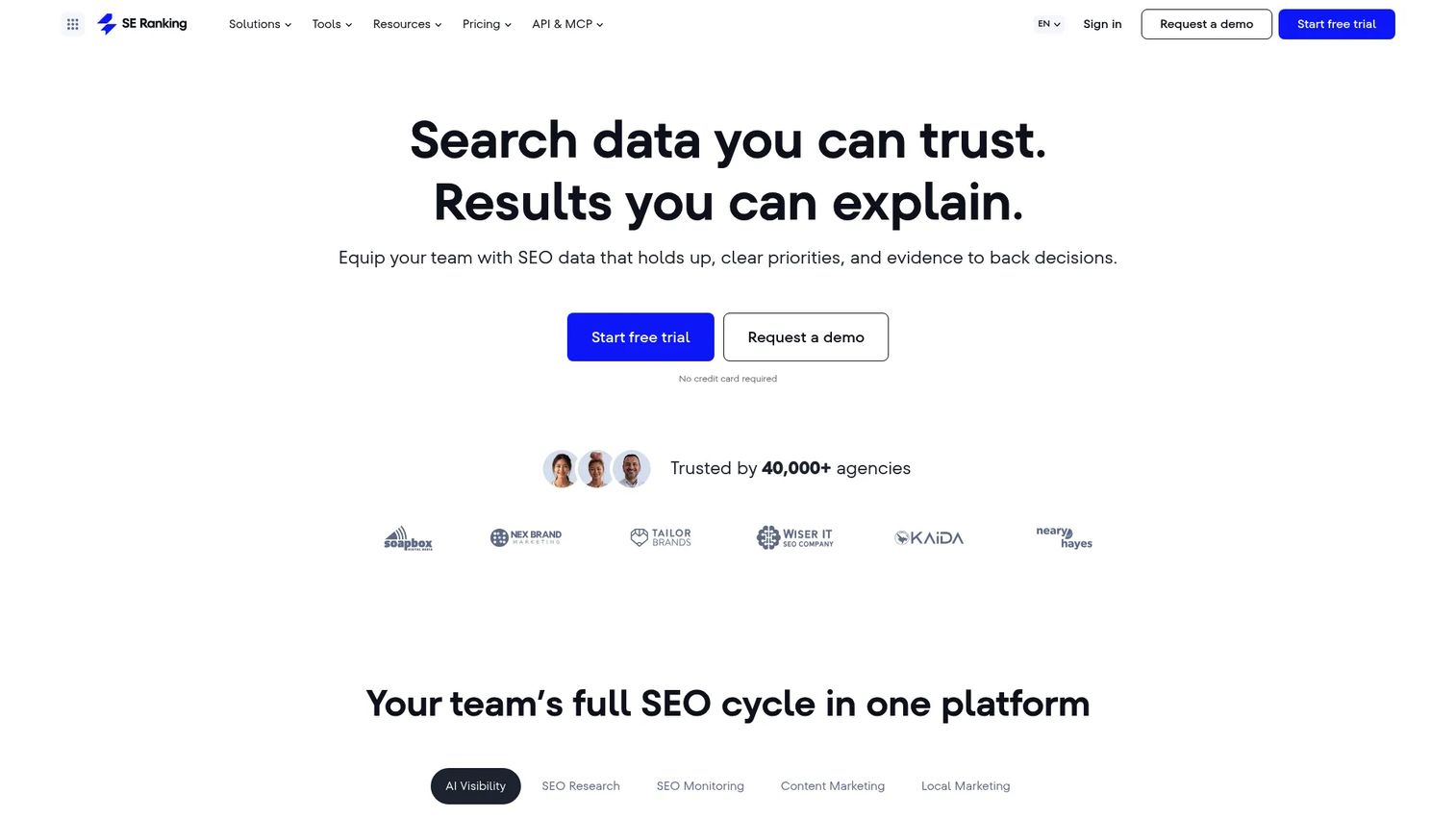
SE Ranking combines ranking analysis with the surrounding work agencies and in-house teams perform. Its documented scope covers local marketing and AI visibility, alongside audits and research. Connections with GA4 and Google Search Console help place search visibility beside other performance data.
Best for: Teams consolidating SEO execution and reporting without buying separate tools for every task.
Key features
- Rankings by search engine, device, and location
- Keyword and competitive research
- Website and on-page audits
- Local marketing and map tracking
- GA4 and Search Console reporting connections
Treat this as a workflow consolidation decision. List your current subscriptions and identify which jobs would move into the platform.
For an agency, build a sample client report before discussing a wider rollout. Include the client’s commercial keyword groups and the landing pages responsible for leads.
An in-house marketer should test a different handoff. Move from a visibility issue to an audit finding, then prepare a task for the content or engineering team.
The value lies in reducing reconstruction work between these steps. A lower subscription bill means little if your team still merges exports for every meeting.
Evaluate local and AI requirements separately from conventional ranking needs. Your initial subscription should reflect the jobs you intend to operate, rather than every available capability.
The current entry price also deserves a fresh comparison. Don’t assume historical descriptions of SE Ranking as a budget tool describe your total configuration.
Why choose SE Ranking: Choose it when one team owns both SEO diagnosis and execution. Consider a specialist when your existing research stack needs only deeper ranking intelligence.
SE Ranking pricing: Core costs $129/month or $103.20/month billed annually; Growth costs $279 or $223.20 respectively. A 14-day free trial is available.
4. AccuRanker
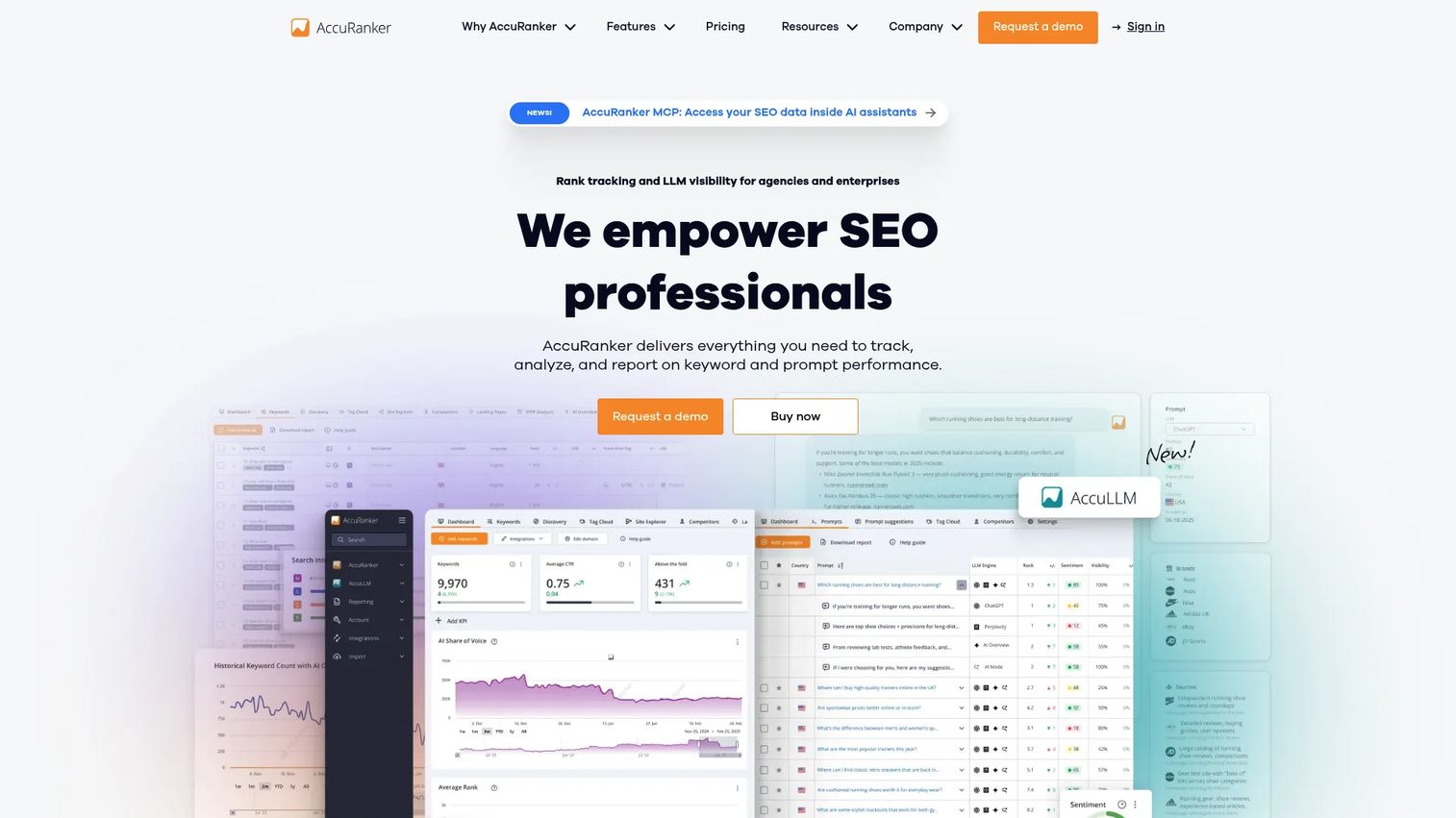
AccuRanker centers on ranking intelligence for agencies and enterprise SEO operations. Its platform combines keyword tracking with SERP analysis and forecasting. LLM visibility monitoring covers ChatGPT, Perplexity, AI Overviews, and AI Mode.
Best for: Teams with established SEO research tools that need a dedicated ranking operation.
Key features
- Keyword tracking and search intent analysis
- SERP analysis and competitor insights
- LLM visibility monitoring
- Reporting and data exports
- API access on applicable plans
This is a fit when the reporting question extends across many markets or business units. Build your evaluation around the segmentation needed to manage that complexity.
Use separate groups for commercial pages and supporting content. Then ask whether a stakeholder can understand the performance of their market without seeing the entire account.
The Professional package includes daily updates. Expert adds capabilities such as dynamic tagging and Dynamic CTR, while Enterprise introduces deeper data access.
That packaging makes the reporting destination important. Decide whether analysts need dashboards, API access, or data delivered into a warehouse before requesting a proposal.
For local rank tracker requirements, test representative locations and devices. City-level rank tracking should match how the business serves customers, rather than follow a generic national keyword list.
Avoid choosing refresh frequency by anxiety. Establish which ranking changes justify an immediate investigation and which belong in the next planned review.
Why choose AccuRanker: Choose it when ranking analysis has a dedicated owner and a defined reporting cadence. A broader SEO suite fits better when research and auditing remain unmet needs.
AccuRanker pricing: Professional starts at €229/month, while Expert starts at €809/month. Enterprise uses custom pricing.
5. Advanced Web Ranking
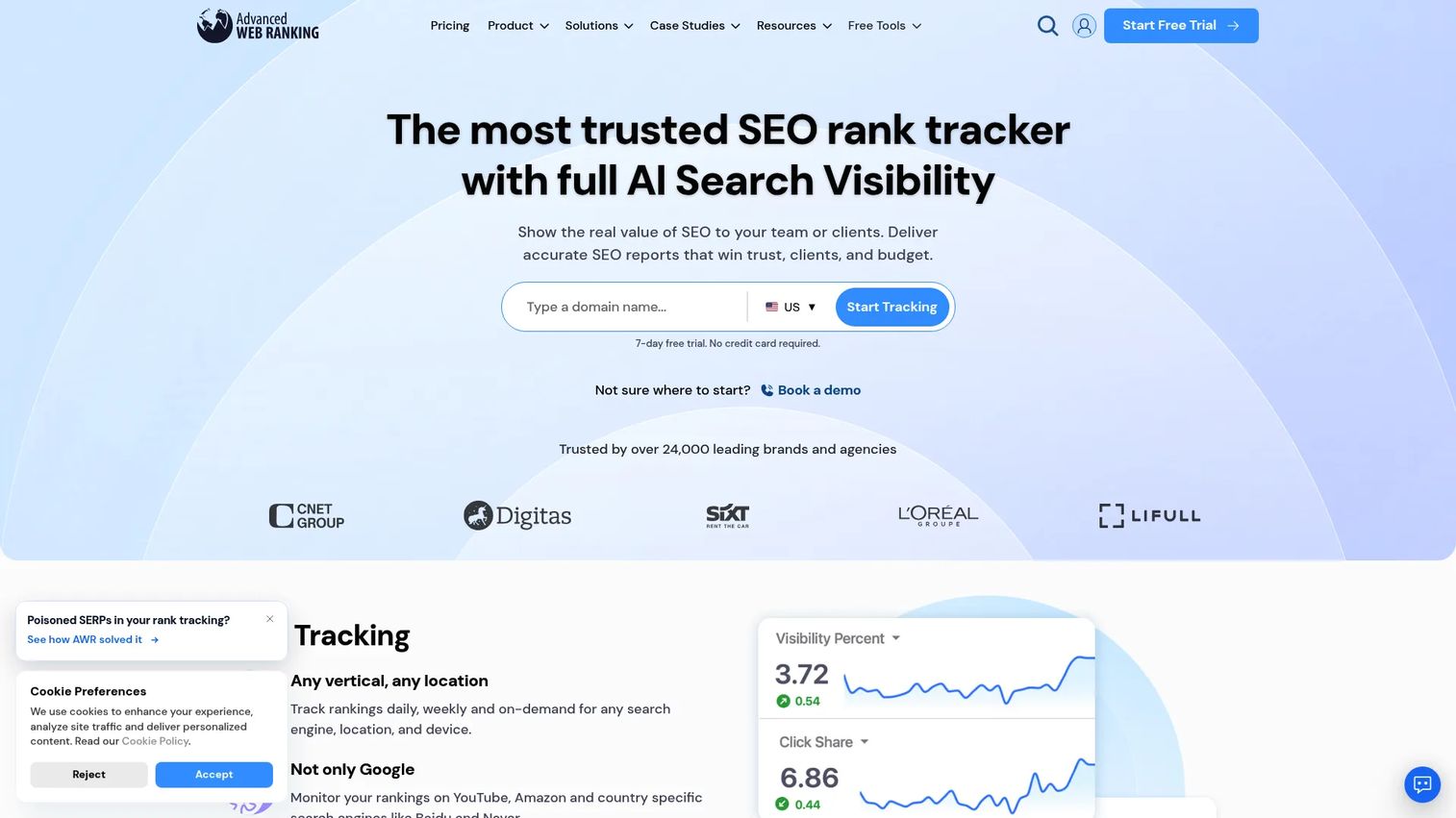
Advanced Web Ranking deserves attention when client reporting is central to the purchase. It tracks search performance across devices and locations, with customizable reports and alerts. Competitive analysis includes market share and keyword gaps.
Best for: Agencies producing recurring reports across multiple clients and search environments.
Key features
- Multi-location and multilingual tracking
- Customizable SEO reports
- Scheduled exports and alerts
- Competitor market-share analysis
- Keyword gap analysis
The evaluation should start with a deliverable you already produce. Recreate a monthly client update and measure the work remaining outside the platform.
Choose a client with several services or regional markets. A straightforward single-domain report won’t expose the organization problems that appear across a larger agency portfolio.
Decide which metrics belong in the executive view. Account managers need a defensible explanation of progress, while SEO specialists need enough detail to investigate changes.
For white-label rank tracking reports, review the exact presentation expected by your clients. Include export requirements and the access each stakeholder needs.
The documented trial supports up to 150 keywords on one search engine. Use that allowance for a representative sample rather than filling it with easy branded queries.
Also test the handoff between the analyst and account manager. A report should help the recipient explain what changed without another internal meeting.
Why choose Advanced Web Ranking: Choose it when repeatable client communication matters as much as analysis. Teams buying primarily for content production should compare broader suites.
Advanced Web Ranking pricing: Pro costs $139/month, Agency $279, and Enterprise $699. A seven-day free trial and annual billing options are available.
6. Nozzle
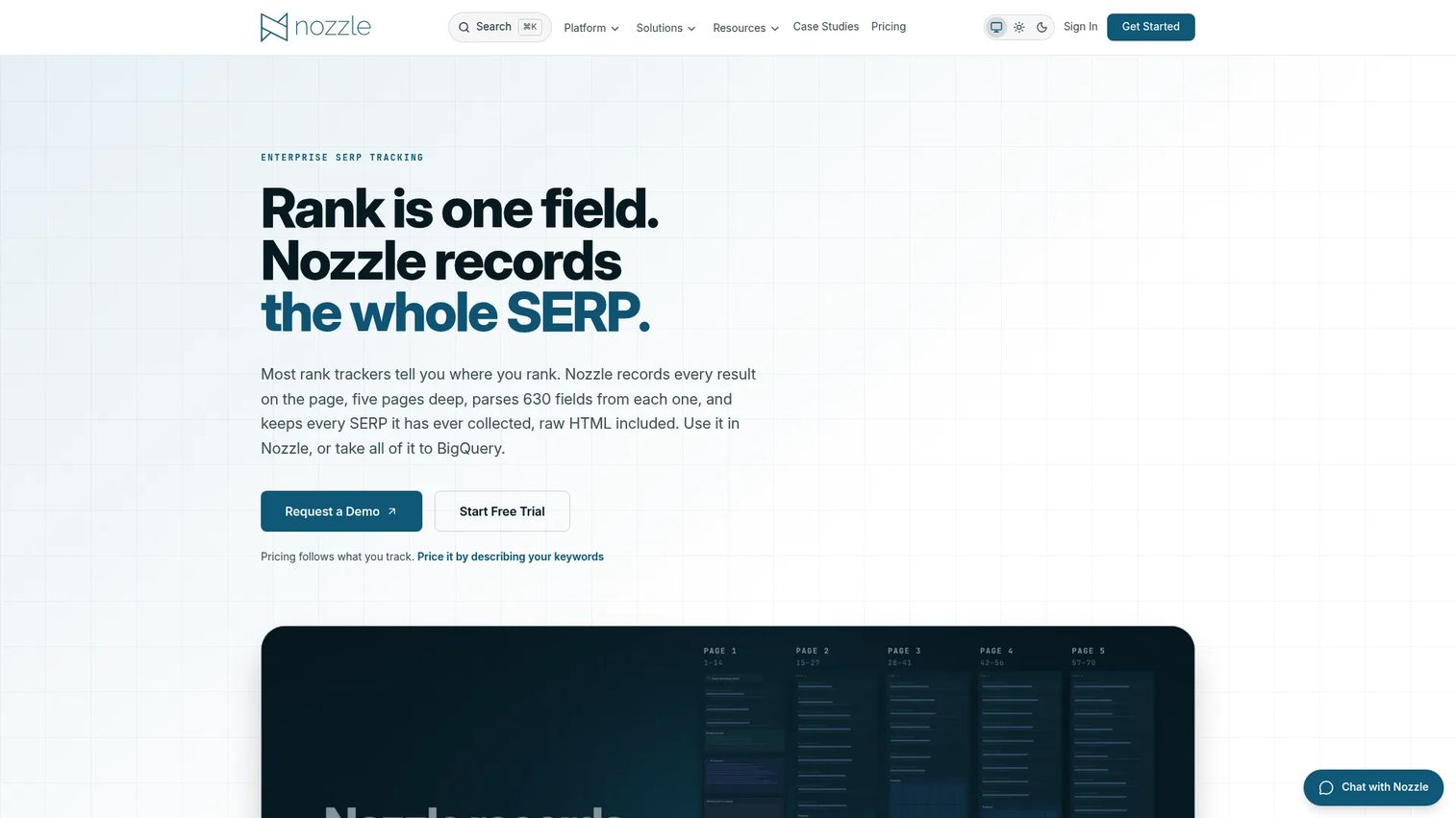
Nozzle focuses on detailed SERP monitoring and competitive intelligence. It tracks brands and domains alongside individual URLs. Nozzle Vision adds rendered result comparisons, while exports and data access support analysis outside the interface.
Best for: Technical SEO teams that need to investigate the search results behind a headline position.
Key features
- Brand, domain, and URL monitoring
- Share-of-voice analysis
- SERP feature tracking
- Rendered SERP comparisons
- API and BigQuery access
A detailed dataset deserves a specific question. Start with a query group where visibility changed despite relatively stable conventional rankings.
Compare the search result presentation and the domains occupying it. Decide which differences matter to your acquisition strategy before building a reporting process around them.
This is particularly relevant when a simple position chart leaves stakeholders asking why traffic moved differently. The result itself becomes part of the investigation.
For analysts, test the destination of the data early. Exporting observations is useful only when the receiving workflow has an owner and a defined purpose.
Nozzle’s breadth should also influence the evaluation team. Include someone who will interpret the data, rather than leaving the decision entirely with procurement.
Keep the scope manageable. Select one business question and require a clear recommendation from the resulting analysis. More visible detail shouldn’t become an excuse for indefinite investigation.
Why choose Nozzle: Choose it when SERP composition and competitive presence affect your decisions. Consider a more reporting-led shortlist if stakeholders mainly need recurring summaries.
Nozzle pricing: Ask Nozzle for current plan costs and usage allowances.
7. Moz Pro
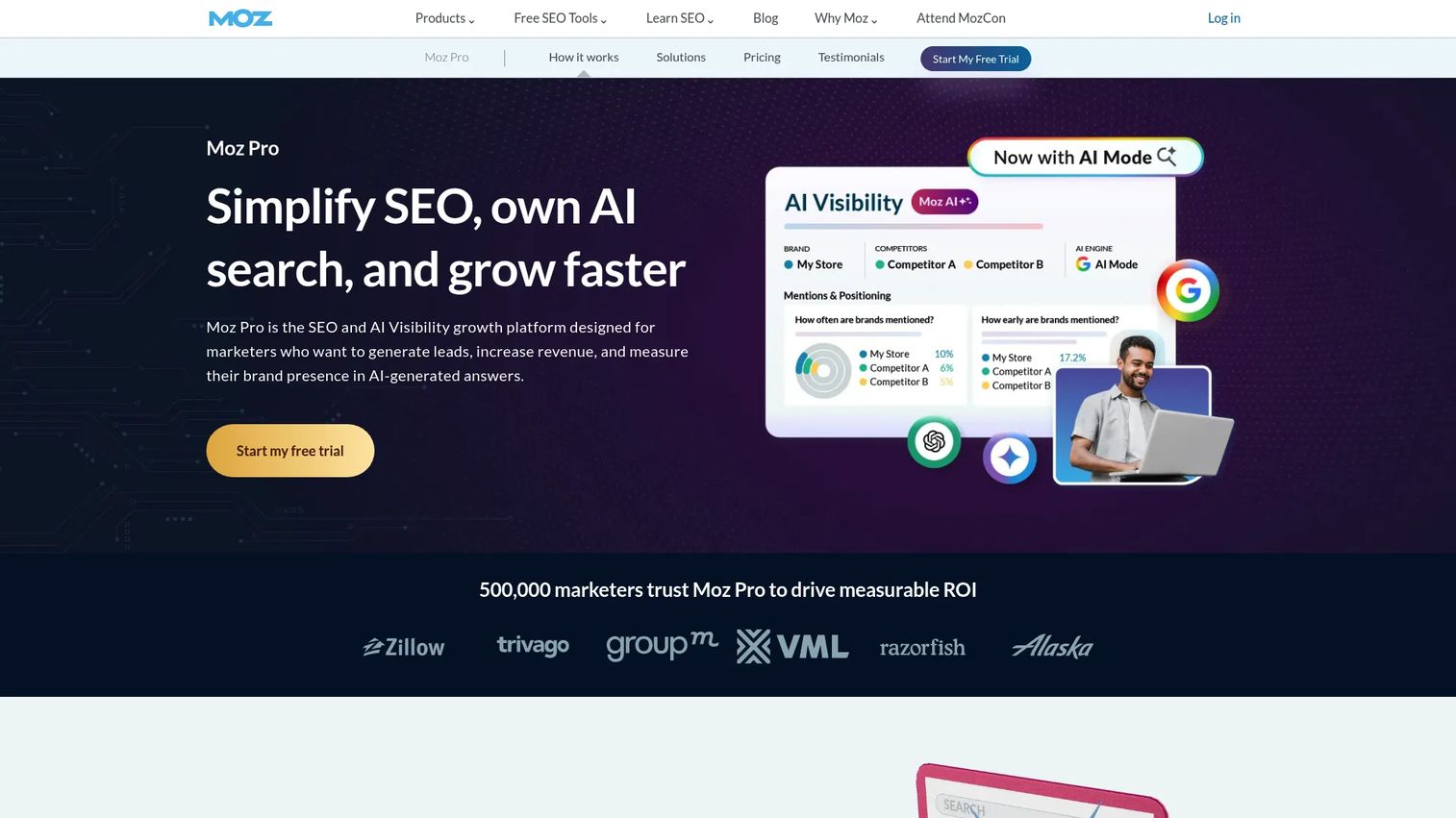
Moz Pro brings ranking data into a general SEO toolkit. The platform covers keyword research and crawling, plus backlink analysis and reporting. Its documented capabilities also include AI visibility dashboards and content briefs.
Best for: Marketing generalists who manage ongoing SEO alongside other acquisition responsibilities.
Key features
- Keyword research and suggestions
- Rank tracking
- Site crawling and SEO audits
- Backlink and competitive research
- SEO reports and content briefs
The buying question is whether your team needs an accessible working routine across SEO tasks. Start with the pages responsible for qualified organic enquiries.
Use the evaluation to produce a prioritized improvement list. Each recommendation should have an owner and a reason for taking action.
For a generalist, the reporting test matters more than a long feature checklist. Ask whether you can explain the findings to someone who doesn’t spend their week in SEO tools.
Plan selection requires attention to several allowances. Moz’s packaging scales by tracked sites and keywords, with additional differences in users and reporting.
Map those limits to your portfolio before committing. A single company with several websites may have a different requirement from an agency managing independent clients.
Avoid assuming that a familiar suite replaces every specialist subscription. Keep any capability that your team needs and the evaluation doesn’t adequately cover.
Why choose Moz Pro: Choose it when one marketer needs a connected SEO routine rather than a specialist ranking environment. Detailed SERP analysts should also evaluate dedicated tracking platforms.
Moz Pro pricing: Starter costs $49/month; Standard costs $99 monthly or $79/month paid yearly. A free trial is offered.
8. Mangools
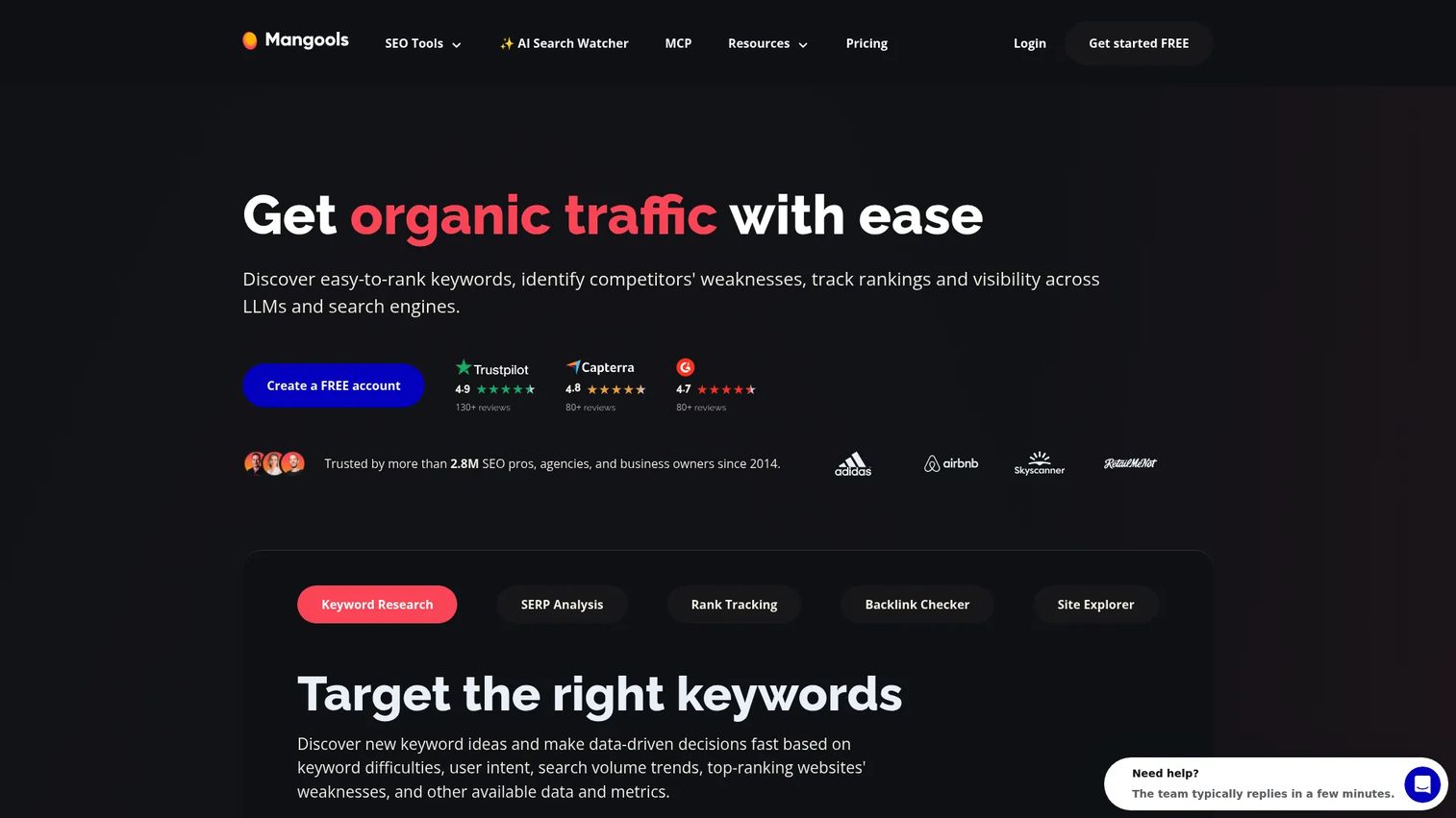
Mangools packages rank tracking with keyword research and SERP analysis. SERPWatcher handles the ranking workflow within the broader toolset. The suite also covers backlinks and site analysis, with AI search monitoring included in its documented offering.
Best for: Freelancers and small marketing teams building a manageable SEO routine.
Key features
- SERPWatcher rank tracking
- Keyword research
- SERP analysis
- Backlink and site analysis
- AI search monitoring
A smaller team should evaluate the path from opportunity to action. Choose a target topic and identify the page you intend to improve.
Then test whether the toolkit supports the research needed to make that change. The ranking view should help you assess the result afterward.
This approach keeps the purchase connected to execution. A solo marketer rarely benefits from collecting more observations than they can act on.
Include reporting in the evaluation even if you don’t manage clients. A founder or department lead still needs an explanation of where SEO effort is going.
The lower entry cost warrants a look, but compare allowances with your expected workload. Don’t assume every plan supports the same portfolio or reporting requirements.
For a growing agency, test the collaboration and delivery workflow before standardizing. A comfortable individual workflow doesn’t automatically answer how several people will manage accounts.
Why choose Mangools: Choose it when you want connected SEO research without a large initial subscription. Evaluate specialist reporting products if complex client delivery dominates the workload.
Mangools pricing: Basic costs $37.70/month, Premium $52.70, and Agency $97.70. A free account and lower annual-billing rates are available.
9. Keyword.com
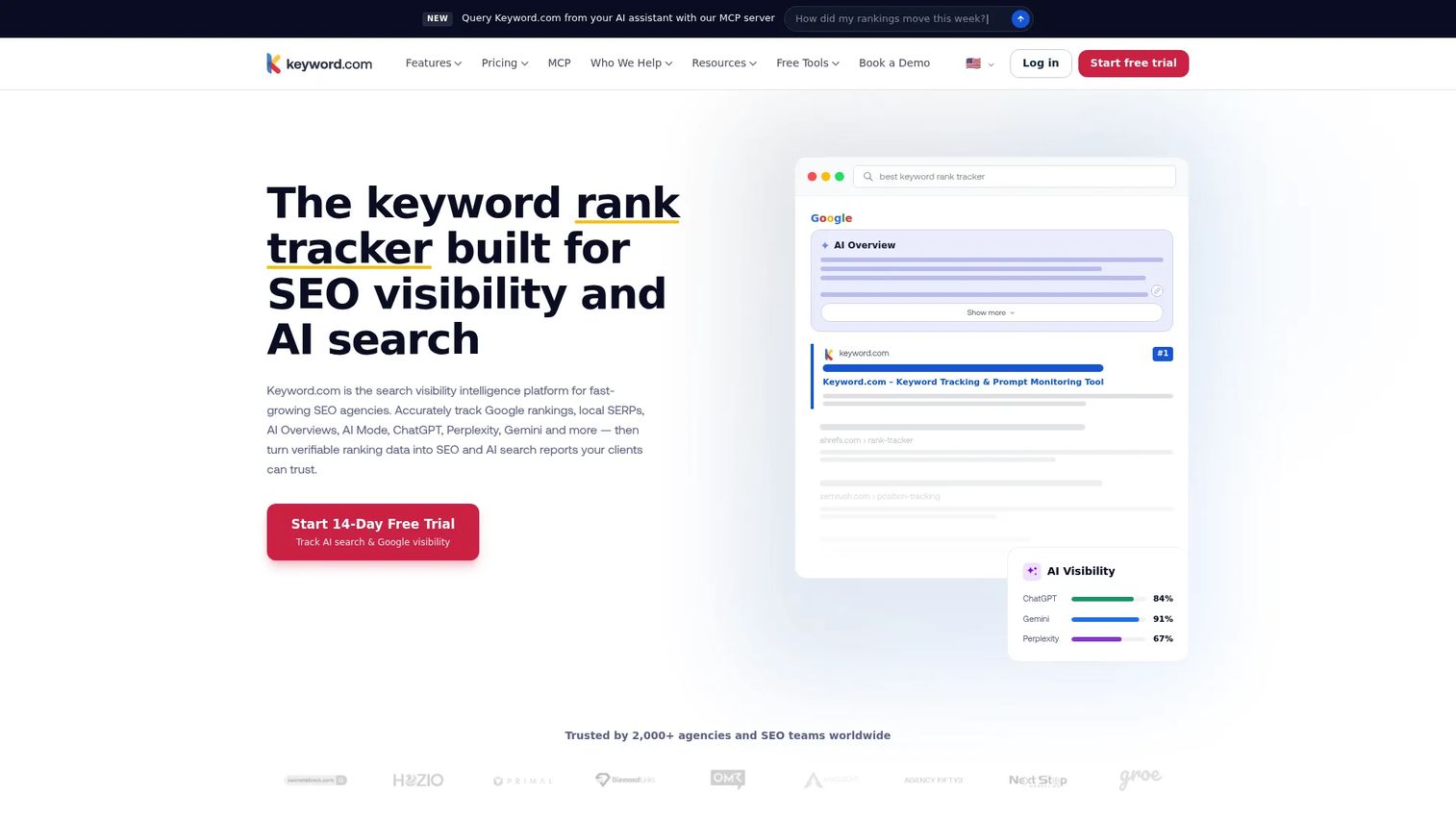
Keyword.com combines Google ranking monitoring with visibility in AI-generated answers. Its packaging separates conventional search tracking from AI monitoring, with a combined option available. That makes it relevant to marketers choosing how much additional search measurement they need.
Best for: Teams seeking focused visibility monitoring alongside an existing SEO research stack.
Key features
- Google SERP rank tracking
- Local and city-level monitoring
- Competitor and share-of-voice reporting
- AI citations and brand sentiment
- API and MCP server access
Start by separating your reporting questions. Keyword positions describe search listings; AI citations describe whether an answer references your brand or content.
Decide which of those questions has an owner and a planned response. Paying for both makes sense when your team will act on both datasets.
For conventional SEO, use a representative commercial keyword group. Compare the reporting effort with your current spreadsheet or existing suite.
Local tracking also deserves a practical test. Select the cities where demand matters and review whether the output supports market-specific decisions.
The low entry price should be treated as a starting point, rather than the total budget for a mature account. Model your complete keyword requirement.
Reporting presentation can affect the total as well. White-labeling is offered as an add-on, making it relevant to agencies preparing a full cost comparison.
Why choose Keyword.com: Choose it when search monitoring is the gap in an otherwise working stack. A full suite is more relevant if you also need audits and research.
Keyword.com pricing: Search Visibility costs $4/month or $3/month billed annually; 360° Visibility costs $33 or $26 respectively. A 14-day free trial is available.
10. Nightwatch
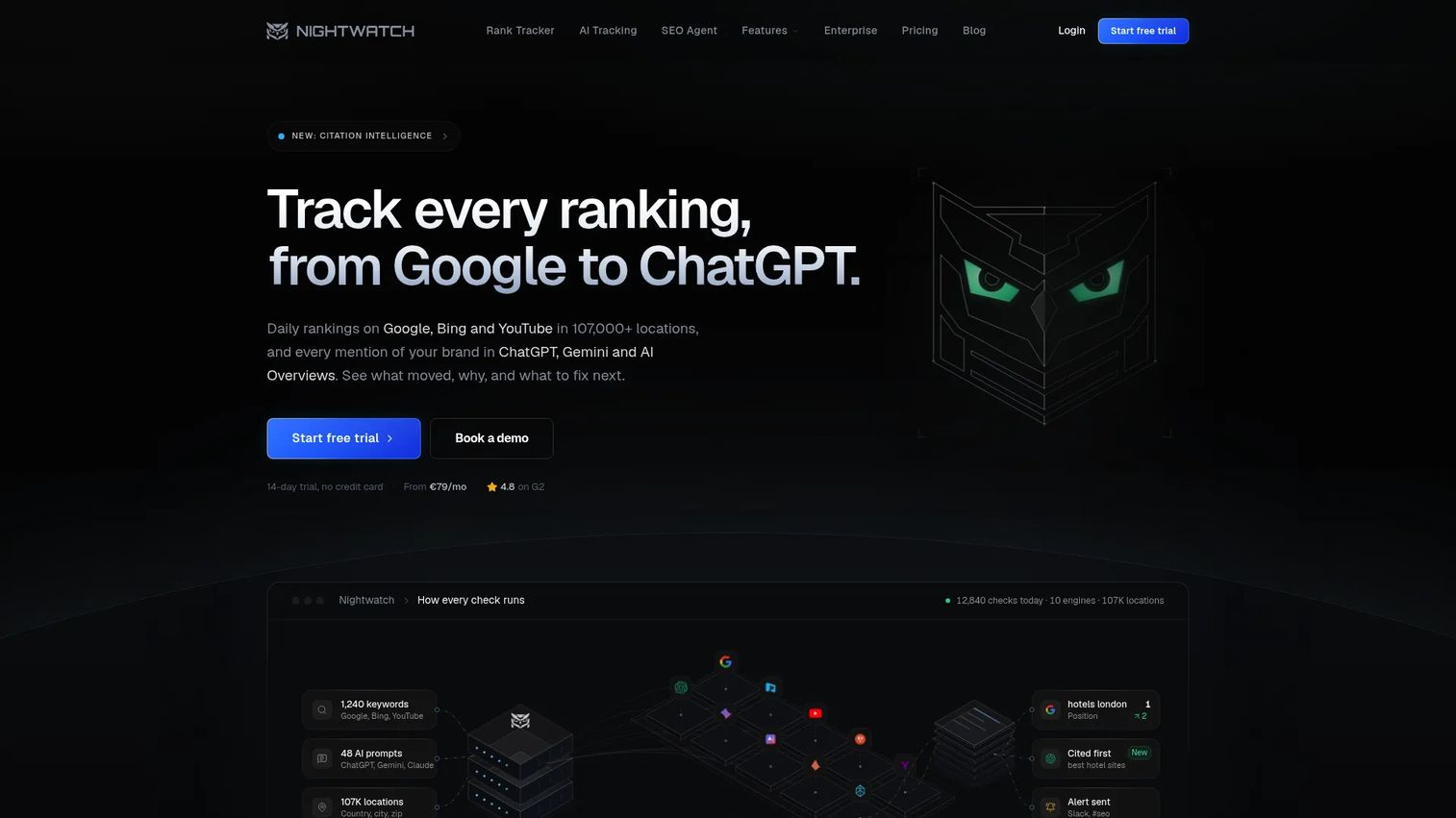
Nightwatch combines daily ranking monitoring with AI visibility analysis. Its supported search environments include Google Maps and YouTube, alongside several conventional engines. The platform also provides citation and sentiment analysis for AI answers.
Best for: Agencies and in-house teams managing visibility across locations and search surfaces.
Key features
- Daily multi-search-engine tracking
- Google Maps monitoring
- AI mentions and citation analysis
- White-label reporting
- Looker Studio and API access on applicable plans
Use a location-driven evaluation rather than a generic national keyword list. Include the cities and service categories that contribute enquiries.
Then examine whether the report helps distinguish a broad decline from an issue affecting one market. That distinction changes where your team spends its next working session.
Nightwatch also supports AI monitoring across several named platforms. Keep those results in a separate measurement framework from ordinary organic positions.
Unlimited user seats are included across its documented plans. That matters when several stakeholders need access, although usage allowances still differ.
Evaluate the report destination before purchasing. An agency sending branded updates has different needs from an in-house team using Looker Studio.
For multi-location operations, ask the person responsible for local pages to review the output. The report should make their next action clear without a specialist interpreting every chart.
Why choose Nightwatch: Choose it when local visibility and daily monitoring shape your operating cadence. Compare a broader suite if technical auditing and research drive most purchasing value.
Nightwatch pricing: Starter begins at €79/month, Professional at €159, and Agency at €399. All plans include a 14-day free trial.
11. Pro Rank Tracker
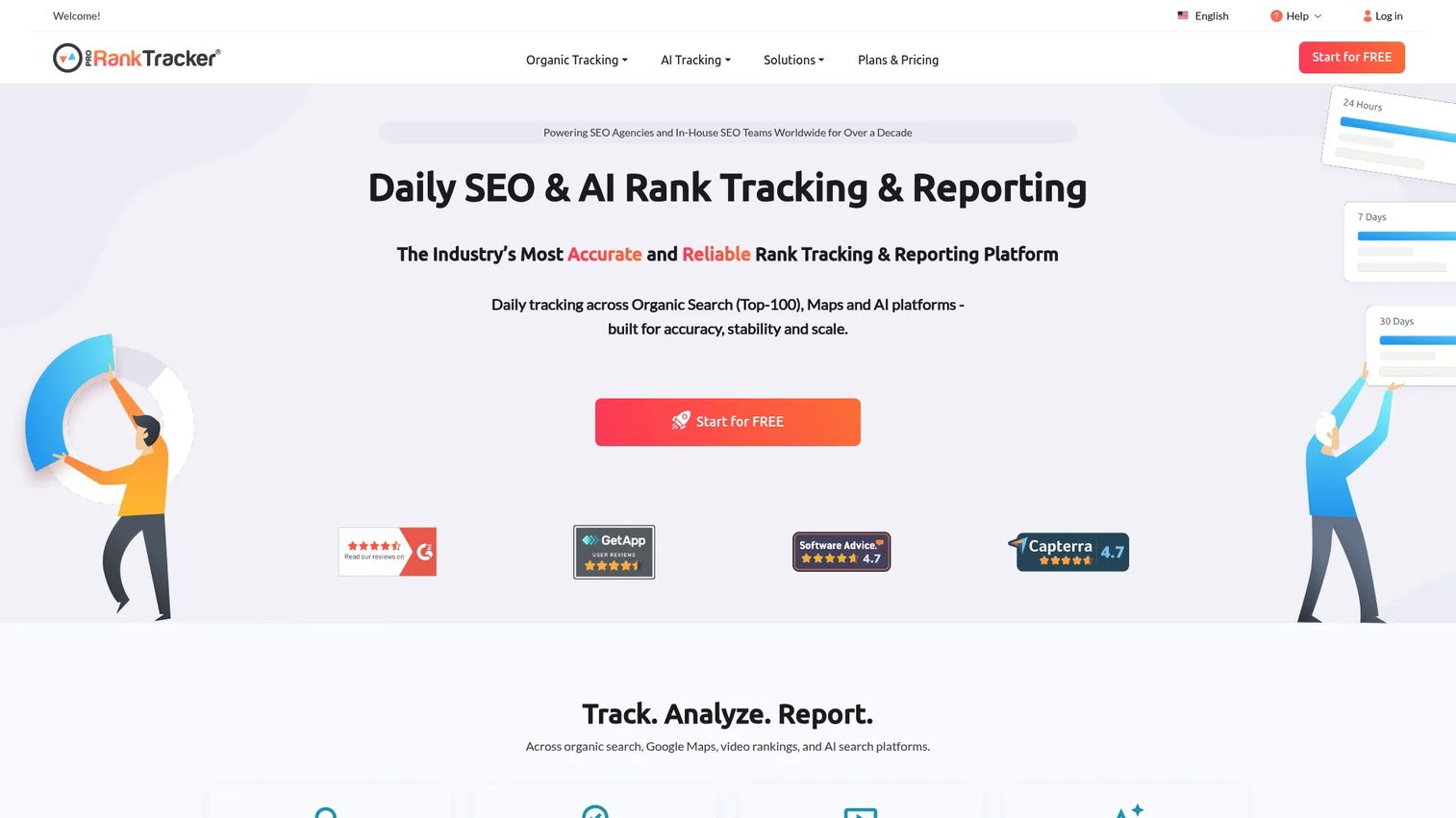
Pro Rank Tracker combines ranking monitoring with client reporting. Its documented coverage spans organic Google results and local surfaces, plus video rankings and AI answers. The platform offers white-label reports with multiple delivery options.
Best for: Agencies and SEO teams whose recurring deliverable is a ranking performance report.
Key features
- Daily desktop and mobile Google tracking
- Google Maps and Business Profile tracking
- YouTube and Google video rankings
- White-label reports and exports
- AI visibility monitoring
Begin with the report your account team sends today. Rebuild it using the keyword groups and search environments that matter to the client.
Pay attention to how tracked terms are counted. Your required configuration should include the devices and locations you intend to monitor.
The Pro package adds Data Studio integration and the MyRanks Clients App. Agency introduces API access and update-on-demand, among other additions.
Those differences make plan selection a workflow question. Establish whether clients need direct access or whether your team delivers a prepared report.
A local business account may need Maps monitoring alongside standard rankings. A content account may need different segmentation and fewer search environments.
Test both before standardizing across your agency. The goal is to reduce recurring reporting work without flattening meaningful differences between clients.
For a solo SEO practitioner, avoid paying for delivery features nobody will use. Prioritize the tracking configuration and reporting format your current workload requires.
Why choose Pro Rank Tracker: Choose it when your reporting process needs a ranking-focused platform. Broader research suites deserve attention when diagnosis routinely extends into content and backlink investigations.
Pro Rank Tracker pricing: Starter costs $99/month for 1,000 terms; Pro costs $149/month for 2,000 terms. The seven-day trial includes 100 terms.
12. BrightLocal
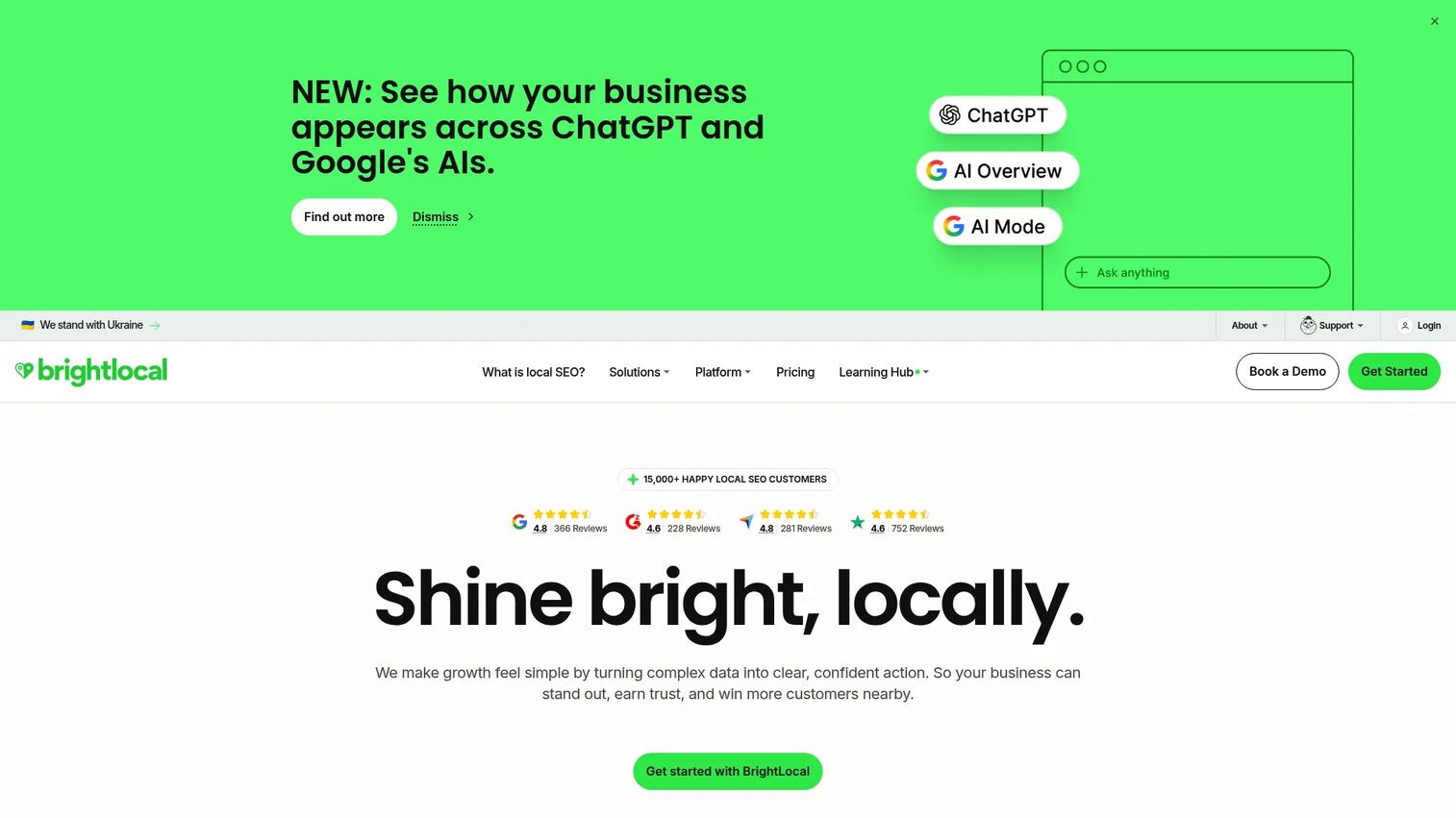
BrightLocal is a local SEO platform rather than a general content SEO suite. It combines ranking visibility with listing management and reviews. Google Business Profile auditing adds another operational layer for businesses serving defined locations.
Best for: Local businesses and agencies connecting search visibility with location-level marketing work.
Key features
- Google, Bing, and Maps tracking
- Listing and citation management
- Review monitoring and responses
- Google Business Profile auditing
- Local AI visibility monitoring
A local rank tracker should reflect the geography of your customers. Evaluate the platform using service areas that contribute calls or bookings.
Include the person responsible for business listings in that test. Ranking findings become more useful when the same team can address the surrounding local presence.
For a franchise or multi-location business, reporting ownership deserves attention. A central team and a local manager need different levels of detail.
Separate operational metrics from commercial results. Visibility and review activity provide context, while lead quality and bookings determine the business outcome.
Pricing varies with the number of locations managed. Build your comparison around the complete footprint, including planned expansion.
Also specify the local tracking format you need. City-level checks, local grids, and Map Pack analysis answer different questions; review the exact package before purchasing.
BrightLocal’s wider local scope is the reason to shortlist it. A national content publisher has a different set of priorities.
Why choose BrightLocal: Choose it when listings and local reputation belong in the same workflow as rankings. General research suites fit better when nationwide content visibility drives the program.
BrightLocal pricing: Track starts at $41/month or $369/year for one location; Manage starts at $54/month and Grow at $65/month. A 14-day trial is available.
13. Serpstat
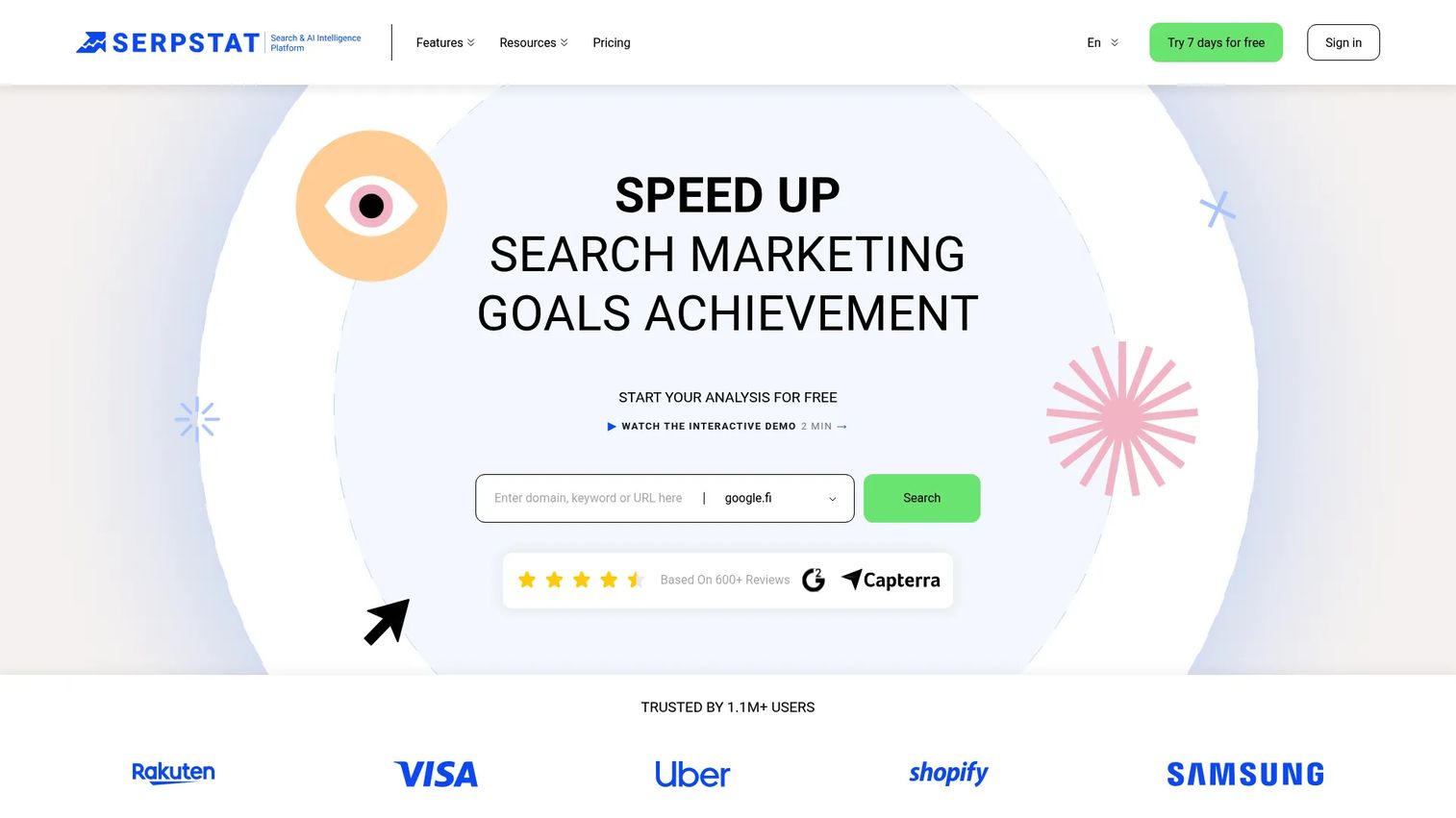
Serpstat covers the core tasks surrounding ranking analysis in an integrated SEO platform. Keyword research and competitor analysis sit alongside auditing and backlink work. Its documented offering also includes AI Visibility monitoring.
Best for: Teams comparing suite consolidation against the cost of separate SEO subscriptions.
Key features
- Keyword research and competitor analysis
- Rank tracking
- Site auditing
- Backlink analysis
- AI Visibility monitoring
The strongest evaluation is a complete working cycle. Start with a declining commercial topic, identify possible causes, and prepare an improvement plan.
Include the marketer who will execute those recommendations. A broad research platform earns its place when findings reach the content calendar or technical backlog.
For an agency, test whether the same process works across distinct clients. Different websites may require different tracking allowances and reporting structures.
Avoid choosing purely on a temporary promotion. A discounted month helps evaluation, but renewal cost determines whether the platform fits your ongoing budget.
The pricing captured for this comparison is promotional. That makes a complete cost review especially important before a longer commitment.
Ask for the tracking allowance associated with your intended configuration. Keep AI monitoring requirements separate from conventional keyword tracking when preparing the comparison.
Serpstat belongs on a suite shortlist because of its documented breadth. Treat the purchase as a replacement decision, with named subscriptions or manual work expected to disappear.
Why choose Serpstat: Choose it when several core SEO jobs need a shared platform. Compare dedicated trackers when existing research tools already support your execution process.
Serpstat pricing: Promotional monthly rates are $50 Individual, $100 Team, $169 Team x2, and $410 Agency through November 30, 2026. A seven-day free trial is available.
14. Seobility
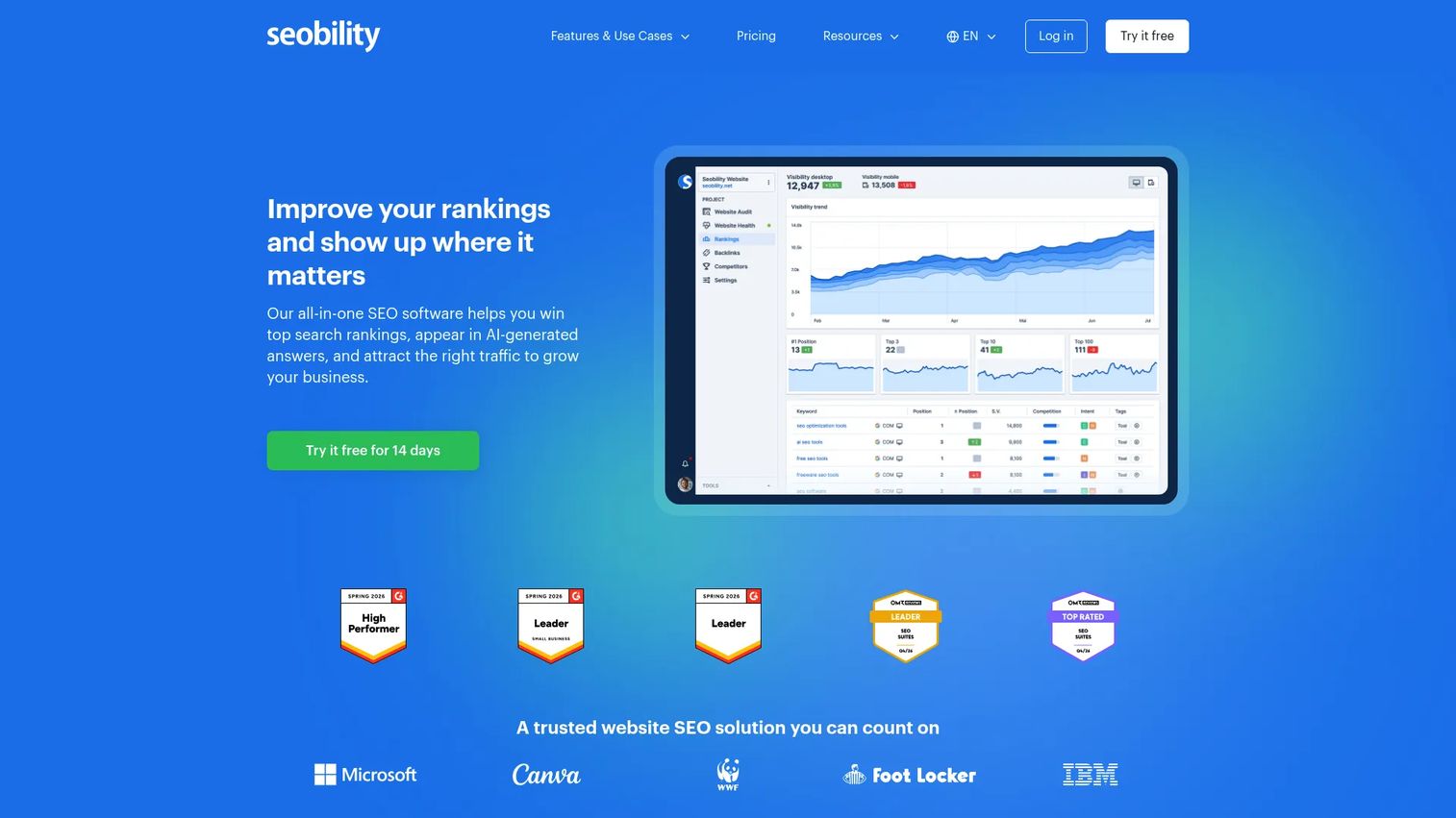
Seobility combines ranking monitoring with website auditing. Its broader scope includes backlinks and uptime monitoring, alongside AI search visibility tracking. A permanent free Basic plan gives smaller teams a starting point for evaluating ongoing SEO work.
Best for: Small businesses and marketers moving from occasional checks toward a recurring monitoring routine.
Key features
- Ranking monitoring
- Website auditing
- Backlink monitoring and analysis
- Uptime monitoring
- AI visibility tracking
If you currently use a keyword rank checker tool occasionally, begin by defining a repeatable keyword set. Include the queries tied to your important landing pages.
Then establish a review cadence and a place to record decisions. Monitoring becomes useful when changes lead to a specific investigation.
Seobility’s audit coverage makes it relevant to marketers who also need a website improvement list. Test whether those recommendations fit the resources you have available.
A small team should avoid collecting a backlog it cannot address. Prioritize fixes connected to pages that support acquisition or customer enquiries.
Paid plans expand project and keyword allowances, alongside other capabilities. Compare your expected workload with the chosen plan rather than assuming free access covers every recurring task.
For an agency, evaluate reporting requirements separately. A low entry cost shouldn’t outweigh the time spent preparing client updates outside the platform.
Why choose Seobility: Choose it when you want an accessible starting point for ongoing SEO monitoring. Specialist ranking operations should also compare dedicated reporting and SERP analysis products.
Seobility pricing: Basic is free; Premium costs $69.90/month, Professional $109.90, and Agency $239.90. VAT may apply.
15. Rank Tracker
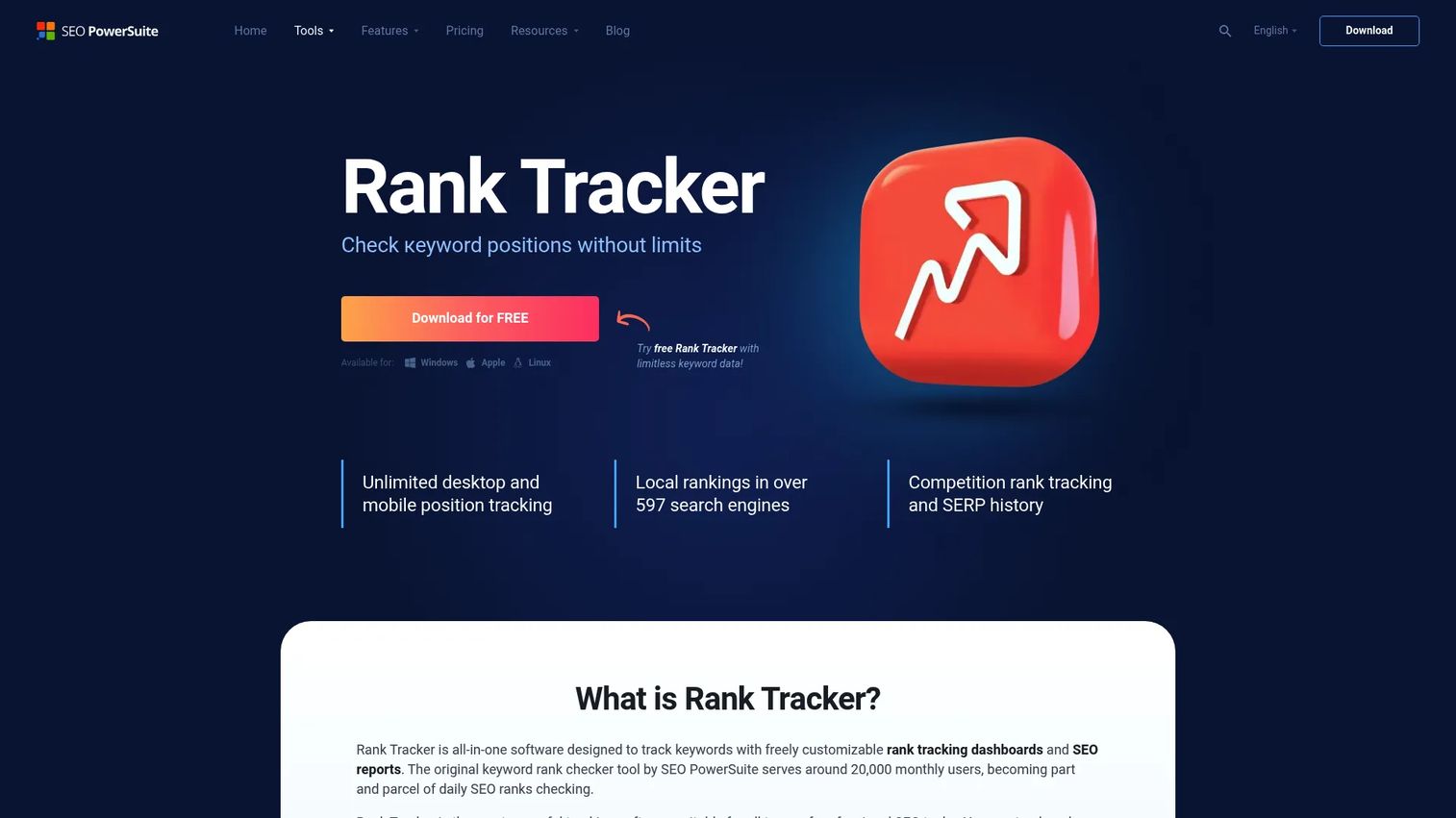
Rank Tracker is the standalone desktop ranking application within the SEO PowerSuite family. It combines keyword monitoring with research and SERP analysis. The product supports local targeting down to street-address level.
Best for: Hands-on SEO practitioners who prefer an installed application for ranking analysis.
Key features
- Desktop and mobile ranking checks
- Multiple international and local search engines
- Street-address-level local targeting
- Keyword research and SERP analysis
- Ranking history and customizable reports
This entry concerns the standalone product. The next entry covers the broader suite, making them alternative purchase paths rather than unrelated ranking engines.
Desktop software deserves an operational evaluation. Identify who will run the application and how the resulting data reaches colleagues.
Test the workflow on the machine and working schedule you intend to use. Confirm that recurring checks and report preparation fit your team’s routine.
Paid plans include unlimited websites and keywords. Competitor allowances differ, with Professional supporting up to five competitor websites per project and Enterprise up to ten.
Those terms make it relevant to practitioners managing extensive keyword lists. Still, keyword capacity alone doesn’t determine whether a desktop approach suits a distributed team.
For local SEO, select representative addresses and compare the resulting reporting workflow. Your analysis should correspond to the geography where customers search.
Why choose Rank Tracker: Choose it when an installed ranking application fits your operating model. Compare cloud platforms if shared browser access is central to daily collaboration.
Rank Tracker pricing: Professional costs $179/year, while Enterprise costs $419/year. A free version is available.
16. SEO PowerSuite
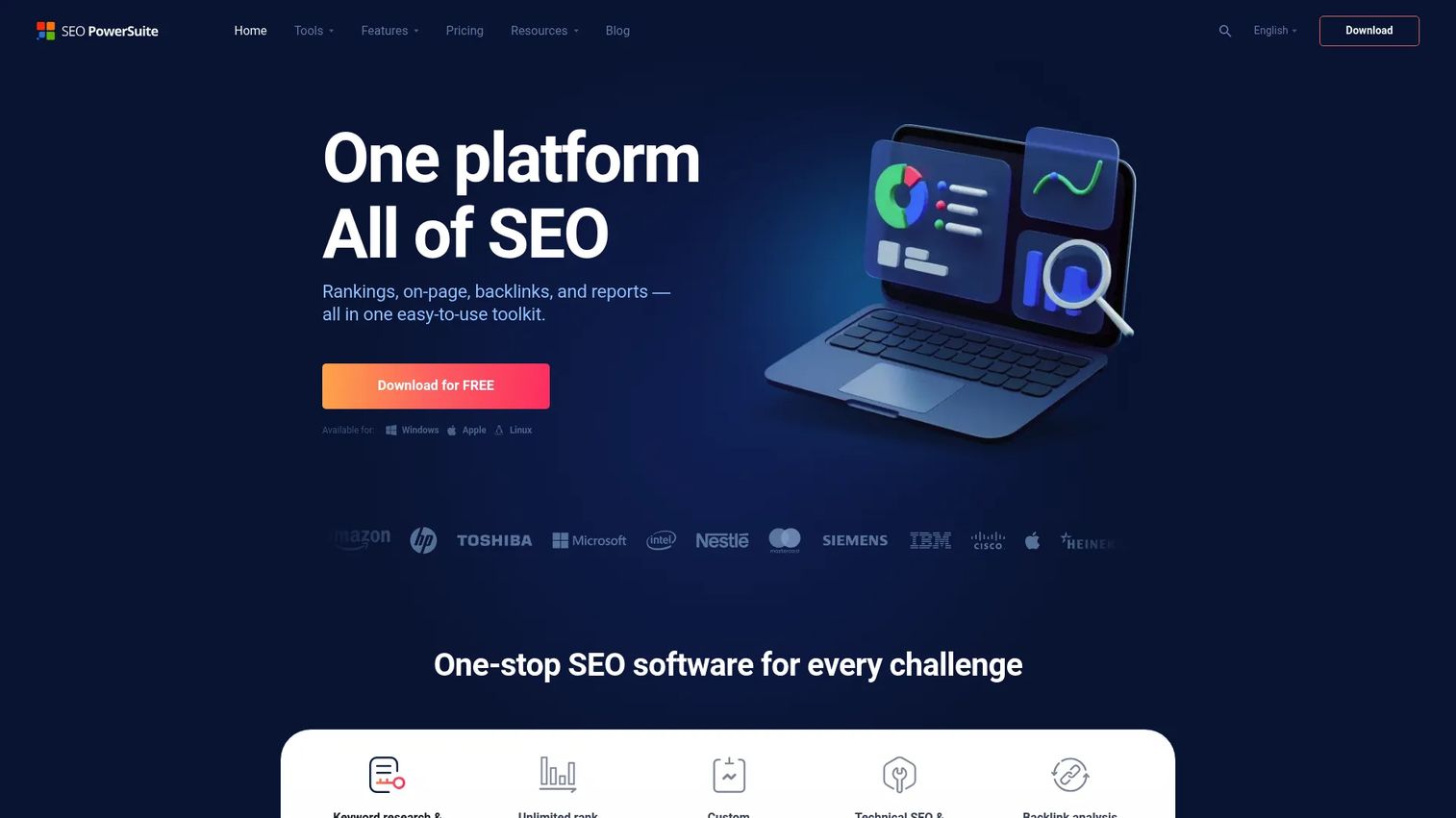
SEO PowerSuite expands the standalone ranking application into a broader desktop SEO toolkit. It covers technical auditing and backlink analysis, plus link-building prospecting and outreach. The purchase decision concerns suite coverage rather than a different ranking product.
Best for: SEO practitioners who want several installed tools supporting the same operational workflow.
Key features
- Keyword research and rank tracking
- Website crawling and technical audits
- Backlink research
- Link prospecting and outreach
- Scheduled SEO reporting
Start by comparing the suite with the standalone Rank Tracker license. Identify which additional jobs your team performs regularly enough to justify the bundle.
A practitioner managing technical issues and backlink research has a different case from someone preparing a weekly position update. Evaluate the extra tools against work already occurring.
Reporting also deserves a complete test. Follow the data from the installed applications to the person approving your next SEO priority.
For agencies, include client delivery requirements in that exercise. Consider how projects and reports will be managed when the responsible analyst is unavailable.
The free edition supports limited evaluation. Paid editions expand projects and keywords, with additional reporting and export capabilities.
Avoid counting the suite and its ranking application as separate stack additions. Decide which purchase route covers the required jobs without paying twice for overlapping scope.
Desktop software can be a deliberate operating choice. Make that choice with the people responsible for running and maintaining the workflow.
Why choose SEO PowerSuite: Choose it when the additional audit and backlink tools replace work you already perform elsewhere. Buy the standalone application when ranking is the requirement.
SEO PowerSuite pricing: Professional costs $349/year, Enterprise $599/year, and Max $899/year. A free edition is available.
17. SEO Tester Online
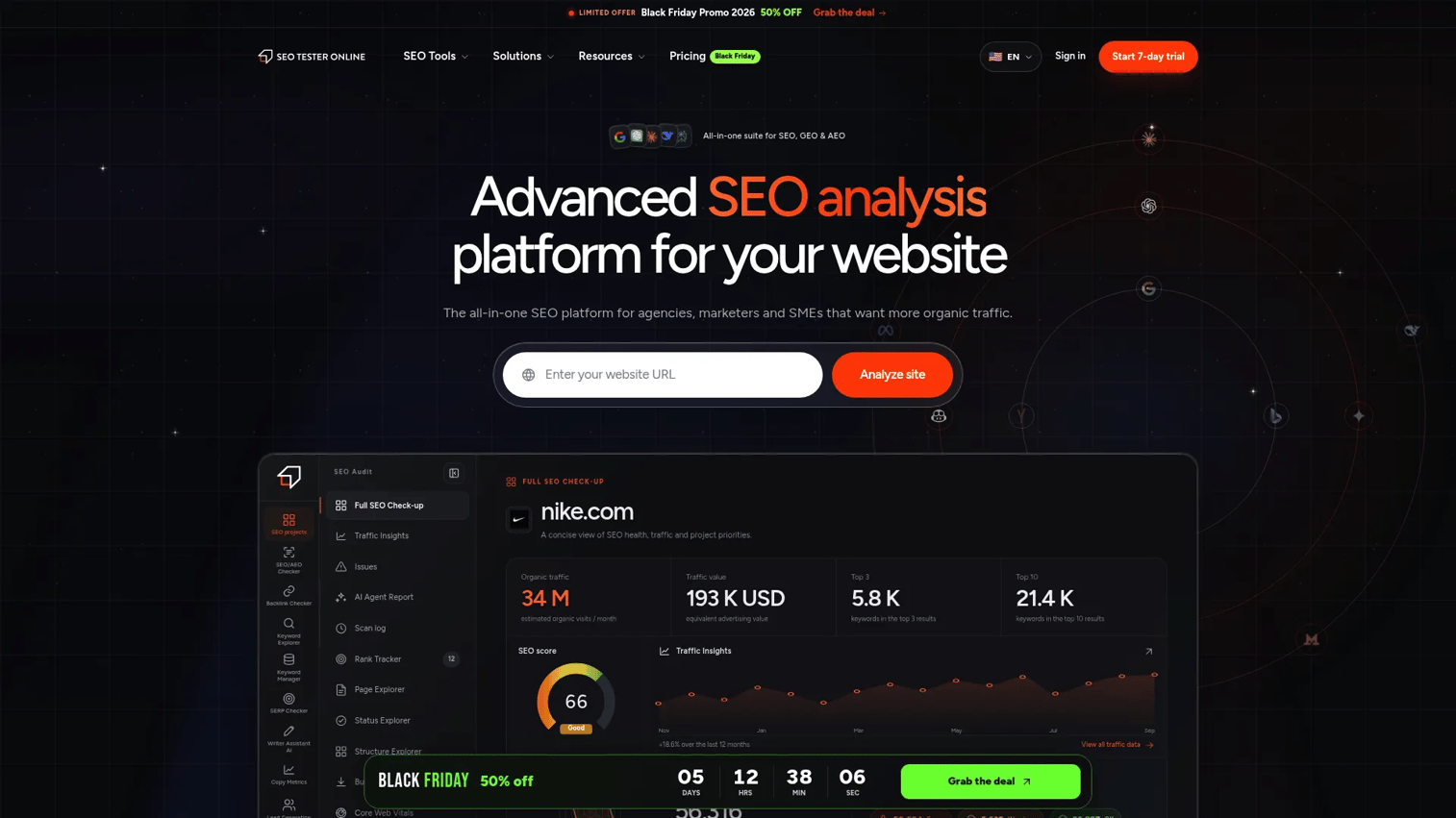
SEO Tester Online connects website analysis with research and content work. Its documented toolkit includes rank tracking with Search Console integration. Branded reports and lead-generation functionality also make it relevant to consultants and smaller agencies.
Best for: Marketers who want ranking visibility alongside website checks and content recommendations.
Key features
- Rank tracking with Search Console integration
- SEO Checker and site audits
- Keyword Explorer
- AI writing and content analysis
- Branded SEO reports
Evaluate the connection between diagnosis and execution. Choose a page that needs improvement and follow the process through research to a proposed content change.
The ranking workflow should help you assess that decision afterward. Keep the original objective visible rather than judging success by the amount of analysis produced.
For a consultant, test the client-facing report before choosing a subscription. The output should explain the recommended work without requiring a lengthy interpretation call.
Content assistance creates another evaluation question. Decide whether your team wants drafting support or primarily needs performance measurement.
Those are different jobs, even when one product offers both. The subscription earns its place when the combination removes work from an existing process.
Before buying, obtain the plan configuration for your tracked queries and reporting needs. Include any additional content usage you expect to consume.
SEO Tester Online belongs on this list for its integrated workflow. It should compete on the usefulness of that workflow rather than an assumed low price.
Why choose SEO Tester Online: Choose it when website checks and content recommendations drive your SEO process. Compare specialist trackers when detailed ranking analysis is the main deliverable.
SEO Tester Online pricing: Review the current plans with the vendor for your required tracking allowance.
Considerations when choosing a keyword rank tracker
Update frequency and data freshness
Match daily, weekly, or on-demand checks to the decisions you make. Evaluate five-minute refreshes only when someone will act on that cadence.
Record check times during your comparison. A newer observation can differ from an older one without either tool being inaccurate.
Location and device coverage
Document required countries, cities, ZIP codes, and devices before evaluating plans. Mobile results can tell a different story from national desktop rankings.
For local work, distinguish coordinate-based grids from city-level checks. Ask vendors to demonstrate the exact geographic configuration.
SERP feature and AI search tracking
Separate organic positions from snippets, People Also Ask, Maps, shopping results, and AI answers. Require surface-specific definitions for every metric.
Google AI Overviews tracking doesn’t establish coverage of ChatGPT or Gemini. Review each named environment independently.
Reporting and stakeholder workflows
Test scheduled reports, CSV exports, white-label dashboards, and Looker Studio connections where relevant. Measure the manual work left after delivery.
Keep a record of content updates beside historical ranking data. Treat ranking alerts as investigation triggers rather than automatic instructions.
Price, limits, and what the tool replaces
Calculate your configuration across queries, locations, devices, and search engines. Ask how that combination consumes allowances.
Include seats and add-ons in the comparison. Require a clear answer to which existing subscription or reporting task disappears.
Choose the tracker that improves your next decision
The best keyword rank tracker fits the work your team needs to perform after opening the report.
Semrush and Ahrefs suit buyers consolidating ranking analysis with broader research. SE Ranking deserves a place on a balanced agency or in-house shortlist.
AccuRanker and Nozzle address ranking-intensive operations from different angles. Advanced Web Ranking and Pro Rank Tracker are worth evaluating when recurring reporting drives the purchase.
BrightLocal fits location-driven businesses, while Nightwatch combines multi-location monitoring with wider search coverage. Keyword.com offers focused packages for conventional and AI visibility.
For smaller programs, compare Mangools and Seobility against the work you need today. Moz Pro, Serpstat, and SEO Tester Online belong in evaluations centered on connected SEO tasks.
Rank Tracker and SEO PowerSuite offer distinct desktop purchase paths. Choose the application or the suite according to the surrounding work.
Shortlist three tools and run the same keyword set through each. Compare freshness and geographic coverage, then reproduce the report your team already needs.
Finally, ask a colleague to explain the findings without your help. The best rank tracker tool should make the next action easier to defend.
FAQs
Semrush is a strong starting point for suite buyers, while SE Ranking suits teams comparing connected SEO workflows. AccuRanker deserves consideration when dedicated ranking operations matter most, and BrightLocal fits location-driven businesses. The best choice depends on required coverage and reporting ownership, rather than the largest feature list. Evaluate a representative keyword set before committing to a wider rollout.
A keyword rank checker tool captures a position at a particular moment; a tracker maintains observations over time. The best rank checker for an occasional question may lack the history needed for campaign reporting. Choose ongoing tracking when you need trend analysis and alerts tied to a stable query set. Use a snapshot to investigate a specific result without treating it as a complete performance record.
Yes, Seobility offers a free Basic plan, and Rank Tracker provides a free version. Google Search Console rank tracking is useful for understanding search performance, but it differs from monitoring a fixed location and device configuration. Evaluate the history and reporting available before adopting a free option for recurring stakeholder updates. To check website ranking occasionally, a limited checker may be enough.
Results depend on location and device settings, alongside refresh timing and differences between the search environments observed. Compare matching configurations before treating disagreement between platforms as an accuracy problem. Review the underlying SERP when a meaningful discrepancy persists, especially for commercially important queries. Consistent trends across a defined keyword cohort usually support better decisions than reacting to isolated one-position changes.
Daily monitoring is useful for active campaigns and location-sensitive programs, while a weekly review can suit a slower content schedule. Use on-demand checks after a significant change when the result will affect an immediate decision. Separate data collection frequency from how often your team reviews and acts on the findings. Avoid changing content because of every small movement without examining the page and surrounding results.
Some platforms monitor AI Overviews or AI answer visibility, but supported environments differ by product. AccuRanker and Nightwatch document coverage across multiple AI surfaces; other tools package AI monitoring separately from conventional rankings. Ask whether the reported metric represents a brand mention, citation, linked source, or another observation. Keep those measures distinct from organic position when presenting results to stakeholders.
BrightLocal is a strong candidate when local rankings belong beside listing management and reviews. Nightwatch also merits evaluation for multi-location monitoring, while AccuRanker and Advanced Web Ranking fit ranking-focused operations across markets. Specify whether you need city-level checks, ZIP targeting, coordinate grids, or Map Pack analysis before comparing subscriptions. A national ranking report cannot substitute for the geographic configuration your business requires.
Choose a suite when the same team needs keyword research, audits, backlink analysis, and tracking within its working routine. A dedicated product makes sense when those surrounding jobs are already covered and ranking analysis needs greater attention. Compare the full cost of your intended configuration, including reporting and data access. Buy the option that removes duplicate work while preserving the evidence needed to prioritize action.