The grid is getting harder to run, and it is not because operators forgot how to do their jobs. Distributed solar shows up on feeders that were never designed for two-way power flow. Batteries charge and discharge on schedules the control room did not set. Electric vehicles land on distribution transformers in clusters. Meanwhile the outage map still needs to be right, and the regulator still wants the reliability numbers.
Most utilities are trying to manage this with a stack that grew one console at a time. A SCADA system here, a separate outage tool there, meter data sitting in its own silo, and a planning team working off spreadsheets that are already stale by the time the meeting starts.
That fragmentation is the real problem. Visibility drops right when complexity climbs.
The smart grid software market reflects the pressure. DataHorizzon Research valued it at USD 6.2 billion in 2025, projecting USD 15.8 billion by 2033. Utilities are buying because the old operating model does not scale to a grid with millions of active endpoints.
This guide is a buyer's comparison for grid modernization teams. It breaks down the platforms that handle real-time monitoring, DER integration, outage management, and grid orchestration, so you can build a shortlist based on your grid's actual architecture rather than vendor marketing.
What's inside
This guide covers 10 smart grid software platforms built for utilities modernizing distribution, transmission, and grid edge operations. We selected tools based on real buying criteria that grid teams care about.
- Grid orchestration scope: whether the platform coordinates ADMS, DERMS, and OMS in one operating layer or focuses on a specific domain
- Renewables and DER support: forecasting, dispatch, and flexible load management for distributed assets
- Reliability and outage features: self-healing, fault location, and real-time restoration
- Interoperability: SCADA integration, AMI data ingestion, GIS, and standards support
We include enterprise suites and focused specialists so you can match a tool to your grid maturity.
TL;DR
- Best for broad operations across ADMS and DERMS: Schneider Electric packages distribution management, DER control, and asset advisory in one EcoStruxure stack.
- Best for end-to-end grid orchestration: GE Vernova GridOS unifies distribution, transmission, and markets on a federated grid data fabric.
- Best for utility application depth: Oracle Utilities runs customer care, meter data, and outage workflows as a cloud suite.
- Best for operational control and reliability: Siemens covers grid control, automation, and distribution for enterprise utility environments.
- Best for meter-centric modernization: Landis+Gyr builds AMI, meter data management, and grid edge visibility for utilities starting at the meter.
- Best for advanced planning and optimization: AspenTech brings modeling, forecasting, and optimization to grid operations.
These are smart grid solutions and grid management software picks that fit different grid architectures, not a single winner.
What is smart grid software?
Smart grid software is the digital operating layer utilities use to monitor, manage, automate, and optimize electricity grid operations using real-time and historical data from field systems.
It pulls data from AMI meters, SCADA field devices, GIS network models, and control systems, then turns that data into decisions about switching, load balancing, DER dispatch, and restoration. In practice, utility grid software spans several connected functions rather than one monolithic tool.
Core capabilities include:
- Real-time monitoring: live visibility into feeder loading, voltage, and device status across the network
- Outage management (OMS): fault location, crew dispatch, and restoration tracking
- Advanced distribution management (ADMS): switching, voltage optimization, and network reconfiguration
- DER management (DERMS): forecasting, dispatch, and flexible control of distributed solar, storage, and demand response
- Renewables and DER integration: handling intermittent generation and two-way power flow
- Forecasting and planning: load, weather, and capacity projections for operations and investment
- Grid data management: ingesting AMI data and reconciling it with GIS and asset records
The line that separates smart grid software from generic utility software is control. Generic utility software handles billing, records, and back-office workflows. Smart grid management software acts on the physical network in near real time, coordinating switches, inverters, and loads. ADMS runs the wires-level operations, DERMS orchestrates behind-the-meter and edge assets, and OMS keeps restoration moving. Strong platforms connect all three instead of leaving them siloed.
When to use smart grid software
Modernize aging grid operations
If your control room runs on a patchwork of consoles and your planning team lives in spreadsheets, you have hit the ceiling of manual coordination. The symptom is slow decisions: an operator toggling between four screens to understand one feeder event.
Smart grid software replaces that with a shared operating picture. Real-time monitoring across distribution and transmission gives operators one view of loading, voltage, and device state. Decision speed improves because the data is unified, not scattered.
The payoff is reliability. When operators see the whole network, they act faster on developing problems before they become outages.
Integrate renewables and DERs
Rooftop solar, batteries, and EV charging make generation and load unpredictable. A feeder that was one-directional now pushes power back up the line at midday. Load balancing gets harder every quarter.
This is where DERMS earns its place. Forecasting predicts intermittent output, orchestration dispatches storage and flexible loads, and demand response shapes peak consumption. Planning tools model where DER growth will strain the network next, so upgrades land ahead of the problem rather than after a complaint.
Improve outage response and resilience
Every minute of downtime shows up in your reliability metrics and your regulator's inbox. Manual outage triage, calling customers, guessing at fault location, adds minutes you cannot afford.
OMS combined with ADMS shortens restoration. Fault location narrows the search area, and self-healing automation isolates the fault and reroutes power around it. Operators get real-time visibility into what is out, what is restored, and where crews should go. The result is fewer customer-minutes lost and a more resilient network under storm conditions.
Comparison table
Read this table as a shortlisting tool, not a ranking. The platforms differ in scope: some run the full operations stack, others go deep on a single domain like metering or optimization. Match the "best for" column to your grid's biggest gap. Pricing across this category is quote-based for enterprise deployments, so figures reflect what is publicly documented.
| # | Product | Best for | Key use case | Pricing | G2 rating |
|---|---|---|---|---|---|
| 1 | Schneider Electric | Broad grid operations stack | ADMS, DERMS, and asset advisory in one platform | Quote-based | 4.4/5 |
| 2 | GE Vernova | End-to-end grid orchestration | GridOS unifies distribution, transmission, markets | Quote-based | 4.2/5 |
| 3 | Oracle Utilities | Utility application suite | Customer care, meter data, and outage workflows | Usage-based, from $3.50/txn | 4.6/5 |
| 4 | Siemens | Operational control and automation | Grid control and distribution automation | From $1,999/yr (SMB pack) | Not listed |
| 5 | IBM | Data-driven grid intelligence | AI asset analytics and decision support | watsonx.ai from $0/mo | 4.3/5 |
| 6 | AspenTech | Advanced planning and optimization | Grid modeling and operational forecasting | Quote-based | Not listed |
| 7 | Landis+Gyr | Meter-centric modernization | AMI, MDMS, and grid edge visibility | Quote-based | Not listed |
| 8 | SAP | ERP-adjacent operational data | Enterprise asset and field workflows | Quote-based | 4.2/5 |
| 9 | Eaton | Grid edge and power quality | Distribution hardware and software coordination | Quote-based | 4.3/5 |
| 10 | Globema | Modular utility operations | AMI, GIS, and low-voltage topology modules | Quote-based | Not listed |
Best smart grid software for 2026
1. Schneider Electric
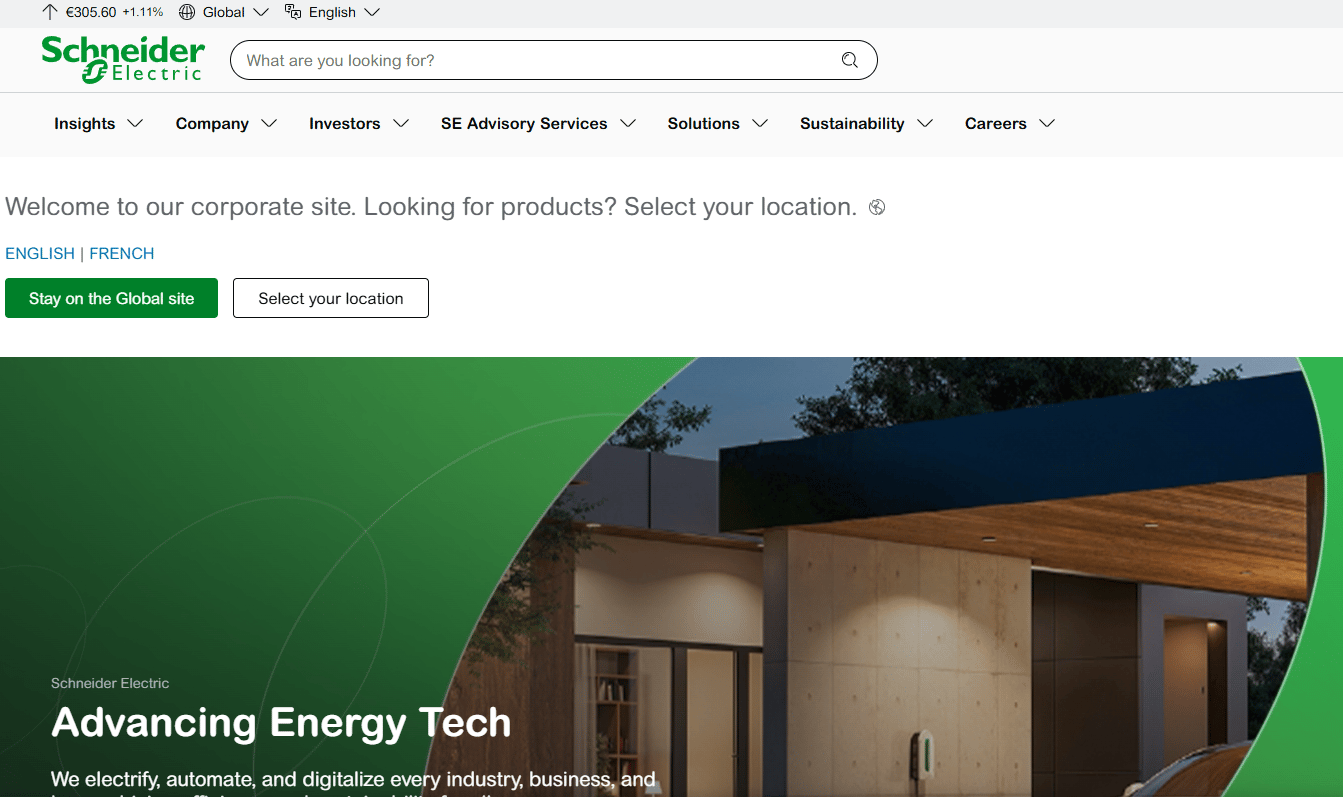
Schneider Electric is a global energy technology company whose EcoStruxure portfolio covers grid operations end to end. For distribution utilities, that means ADMS for network operations, DERMS for distributed asset control, and Grid Asset Advisor for equipment health. The ArcFM tooling adds GIS-based network modeling, so the operational picture and the asset record stay aligned.
Best for: Utilities that want a broad operations stack from one vendor rather than stitching point tools together.
Key features
- ADMS for switching, voltage optimization, and reconfiguration
- DERMS for distributed solar, storage, and demand response
- Grid Asset Advisor for equipment health monitoring
- ArcFM GIS network modeling and data management
- Energy management and power distribution products
Why choose Schneider Electric: If your priority is fewer vendors and a coordinated ADMS-DERMS-asset stack, Schneider gives you that breadth under one roof. It fits utilities modernizing distribution operations at scale.
Schneider Electric does not publish a single platform price; product pricing and availability come through distributors or the sales team, and specific software subscriptions are quoted separately.
Schneider Electric holds a 4.4/5 rating on G2 across its seller profile.
2. GE Vernova
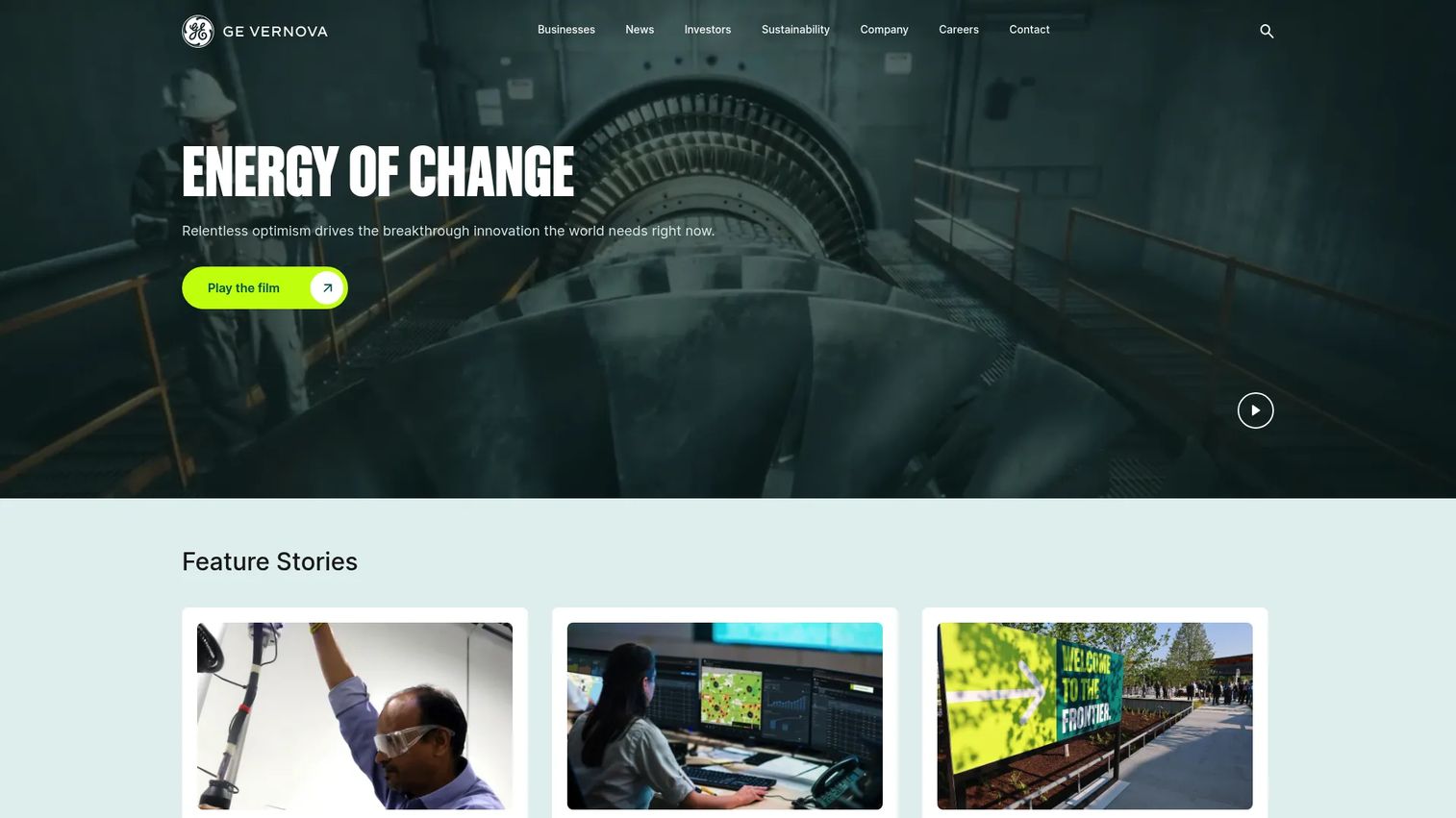
GE Vernova builds GridOS, a grid orchestration software portfolio aimed at running distribution, transmission, and markets on one architecture. Its differentiator is the federated grid data fabric, a shared data layer that acts as a grid digital twin across operational systems. A Zero Trust security model and hybrid cloud architecture round out the platform for utilities modernizing at enterprise scale.
Best for: Large utilities and grid operators that want end-to-end orchestration across distribution, transmission, and network lifecycle.
Key features
- Federated grid data fabric and grid digital twin
- Zero Trust grid security model
- Hybrid cloud architecture
- Distribution, transmission, and market operations
- Network lifecycle and visualization tooling
Why choose GE Vernova: GridOS suits utilities that view modernization as an orchestration problem, not a collection of point tools. The data fabric approach appeals to teams tired of reconciling systems that never agreed.
GE Vernova doesn't show pricing for GridOS. Their product pages direct utilities to contact a software expert for a scoped quote.
GE Vernova holds a 4.2/5 rating on G2 across its seller profile.
3. Oracle Utilities
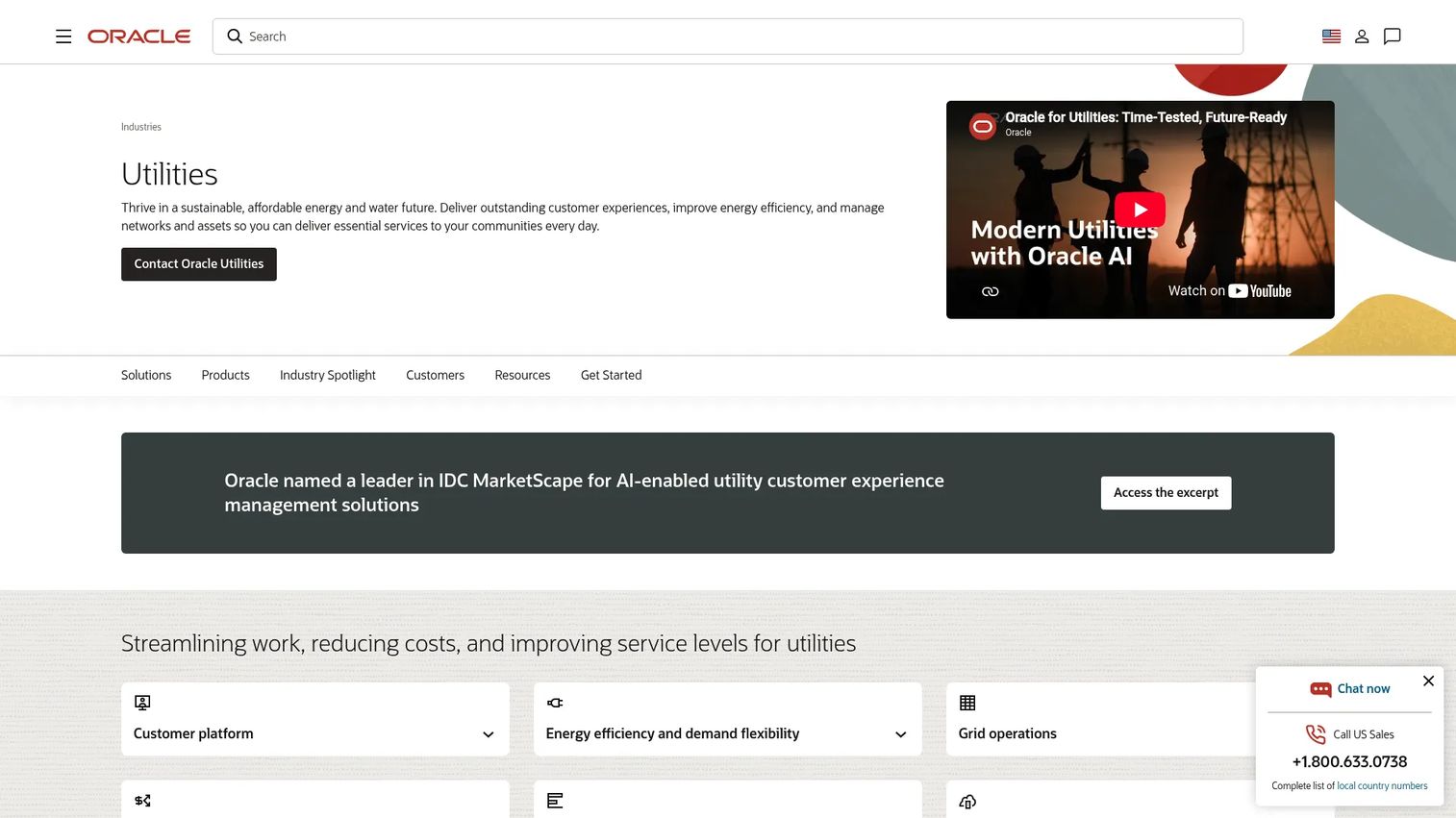
Oracle Utilities delivers a deep suite of cloud applications for utility operations. It covers customer care and billing, service order management, meter data, and outage workflows, plus data intelligence and analytics on top. For utilities that want enterprise application depth across customer and operational functions, Oracle is a natural anchor.
Best for: Utilities that need a broad, enterprise-grade application suite spanning customer care, metering, and billing.
Key features
- Customer care, service order, and billing
- Meter data management and rate calculation
- Outage-related workflows
- Data intelligence and analytics for utilities
- Cloud and SaaS deployment options
Why choose Oracle Utilities: Oracle fits utilities that already run enterprise systems and want operational depth in customer and meter workflows. It anchors the back-office and customer side of grid operations.
Oracle publishes usage-based pricing for its Utilities Payment Cloud Service, with residential transaction fees starting at $3.50 per processed payment and other functions quoted by deployment.
Oracle Utilities Customer Care and Billing holds a 4.6/5 rating on G2.
4. Siemens
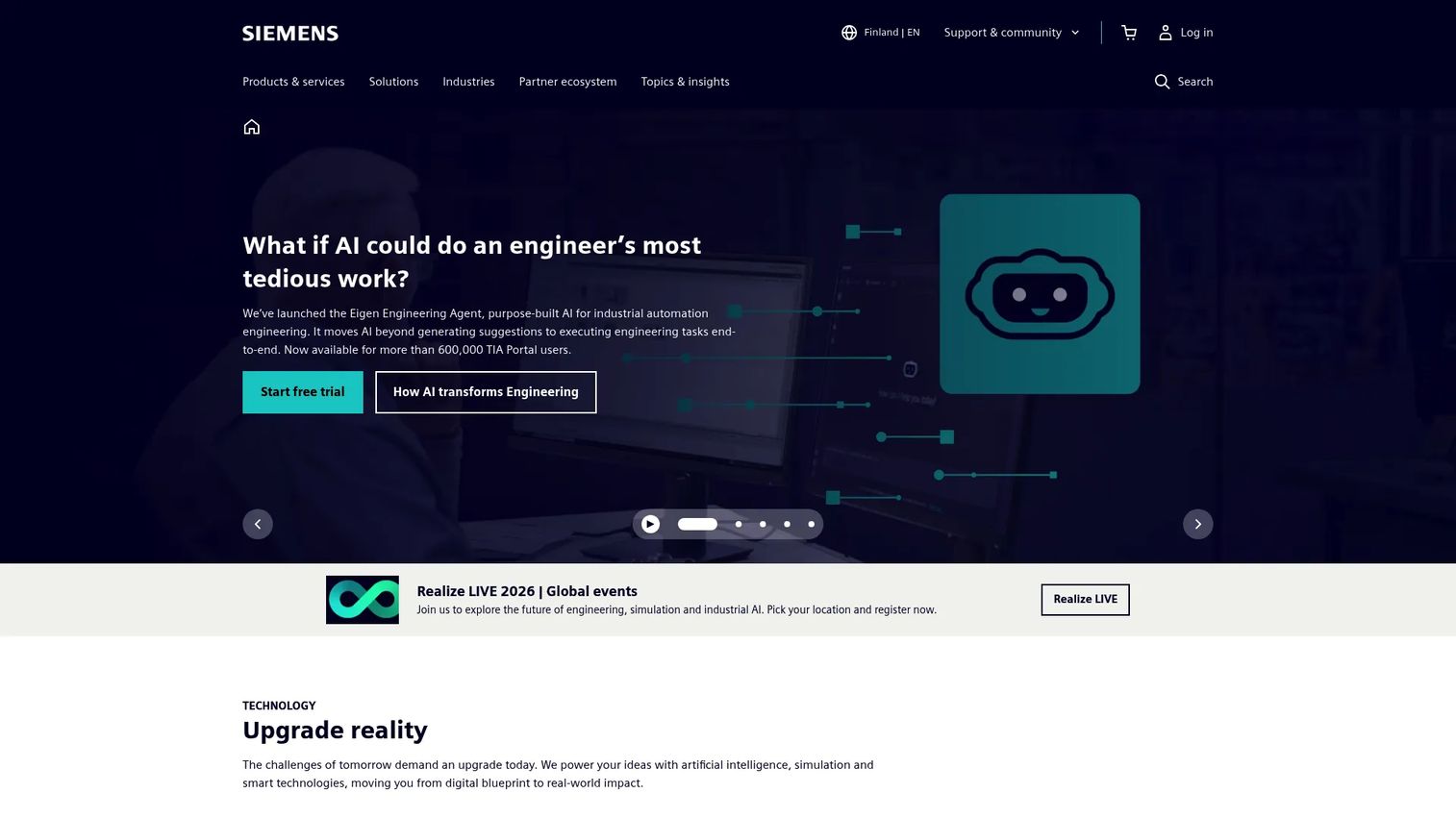
Siemens brings grid control, automation, and distribution software to utility infrastructure environments. Its strength is operational control paired with a broad hardware and software portfolio spanning industry, transportation, buildings, and grids. For utilities that value reliability and tight automation across the network, Siemens is a serious contender.
Best for: Enterprise utility environments that prioritize operational control, automation, and reliability.
Key features
- Grid control and distribution automation
- Industrial automation and digitalization
- Digital twin and industrial AI
- Broad hardware and software portfolio
- Grid infrastructure integration
Why choose Siemens: Siemens fits utilities that want control-room reliability backed by deep automation engineering. Its portfolio breadth helps when grid software must integrate with physical infrastructure.
Most Siemens product pages use request-quote pricing, though its SMB Production Optimization Starter Pack is listed publicly at $1,999 per year with a three-month free trial.
A current third-party G2 rating for Siemens was not verified at publication.
5. IBM
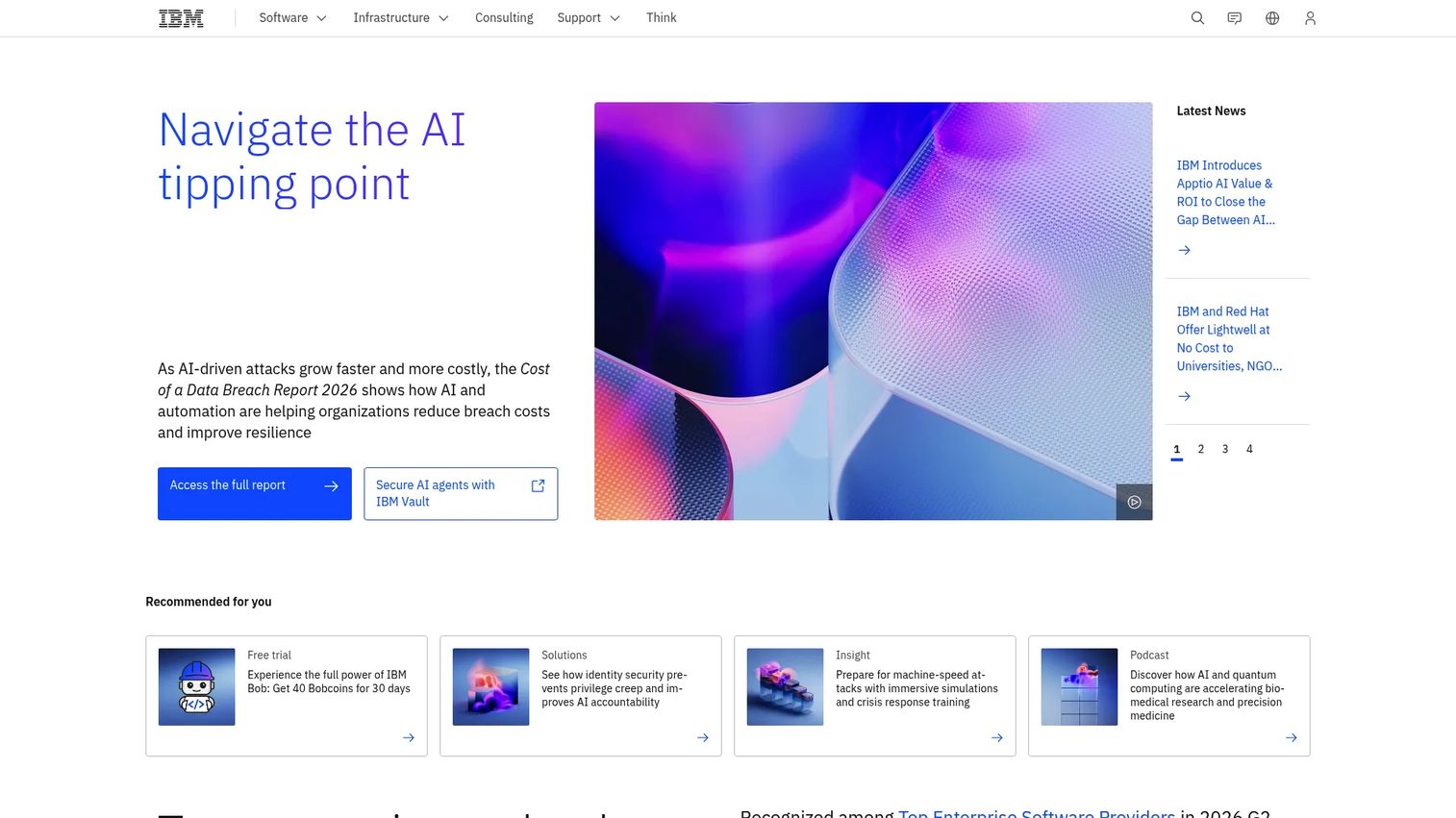
IBM approaches the grid through data. Its AI, analytics, and asset intelligence tools help utilities turn AMI data and operational signals into predictive insight. For grid teams focused on asset health, failure prediction, and operational decision support, IBM's hybrid cloud and AI stack does the heavy analytical lifting.
Best for: Data-driven utilities that need predictive analytics and AI-based decision support across grid assets.
Key features
- AI development and governance tools
- Asset and operational analytics
- Hybrid cloud software and platforms
- Predictive maintenance insight
- Enterprise infrastructure and consulting
Why choose IBM: IBM fits utilities that treat data as the differentiator and want predictive analytics layered over existing operational systems. It complements, rather than replaces, control-room platforms.
IBM prices individual products rather than a company-wide plan; its watsonx.ai line starts at USD 0 per month with a free trial, and Standard tiers begin at USD 1,110 per month.
IBM holds a 4.3/5 rating on G2 across its seller profile.
6. AspenTech
AspenTech brings industrial modeling and optimization expertise to grid operations. Its tools support planning, forecasting, and operational optimization for utilities that need to model complex grid behavior. For teams wrestling with capacity planning, load forecasting, and optimization under DER growth, AspenTech's analytical depth is the draw.
Best for: Utilities that need advanced planning, forecasting, and optimization for complex grid operations.
Key features
- Grid planning and capacity modeling
- Load and generation forecasting
- Operational optimization
- Complex network modeling
- Analytics for investment planning
Why choose AspenTech: AspenTech fits utilities where planning and optimization are the hard problem, not just monitoring. Its modeling depth helps teams plan ahead of DER-driven strain.
AspenTech uses quote-based pricing for its grid and optimization software, scoped to deployment size and modules.
A current third-party G2 rating for AspenTech grid software was not verified at publication.
7. Landis+Gyr
Landis+Gyr starts modernization at the meter. Its Next Gen AMI covers electric, gas, and water metering, its Meter Data Management System handles validation and billing extracts, and Gridstream Connect provides an IoT platform for grid edge visibility. For utilities whose modernization begins with metering and AMI data, Landis+Gyr is purpose-built.
Best for: Utilities with meter-centric modernization needs and a focus on AMI and grid edge visibility.
Key features
- Next Gen AMI for electric, gas, and water
- Meter Data Management with VEE and billing extracts
- Gridstream Connect IoT platform
- Grid edge visibility and analytics
- Demand response support
Why choose Landis+Gyr: Landis+Gyr fits utilities building grid intelligence upward from the meter. Its AMI and MDMS depth make it a strong anchor for edge visibility.
Landis+Gyr doesn't list pricing. Its metering and grid edge software is sold through utility sales engagement, quoted per deployment.
A usable third-party G2 rating for Landis+Gyr was not available at publication.
8. SAP
SAP connects grid operations to the enterprise. Its cloud ERP, asset management, and field workflows give utilities an operational data backbone that ties grid activity to finance, maintenance, and field execution. For utilities that need ERP-adjacent integration across asset and operational data, SAP is the enterprise spine.
Best for: Utilities that need ERP-adjacent integration across enterprise asset, field, and operational workflows.
Key features
- Cloud ERP and business applications
- Enterprise asset management
- Field and operational workflows
- Business AI and analytics
- Integration across business systems
Why choose SAP: SAP fits utilities that want grid and asset data flowing into the same enterprise system that runs finance and maintenance. It is the operational backbone, not the control room.
SAP prices most products through quotes rather than a single public plan, with specific product pages showing pricing while brand-wide figures are not publicly standardized.
SAP holds a 4.2/5 rating on G2 across its seller profile.
9. Eaton
Eaton is a power management company that coordinates grid edge hardware and software. Its portfolio spans distribution, power quality, and electrical infrastructure, with software that ties hardware into grid operations. For utilities and grid operators focused on resilience and the physical layer, Eaton bridges devices and control.
Best for: Utilities and grid operators looking at resilience, power quality, and grid edge electrical infrastructure.
Key features
- Distribution and power quality management
- Grid edge hardware and software coordination
- Power distribution, control, and protection
- Reliability and resilience focus
- Electrical infrastructure integration
Why choose Eaton: Eaton fits utilities where the hardware layer and grid software must work as one. Its power management depth supports resilience at the physical edge.
Eaton sells through quotes and its where-to-buy and order channels rather than a company-wide public price list.
Eaton holds a 4.3/5 rating on G2 across its seller profile, which aggregates multiple products.
10. Globema
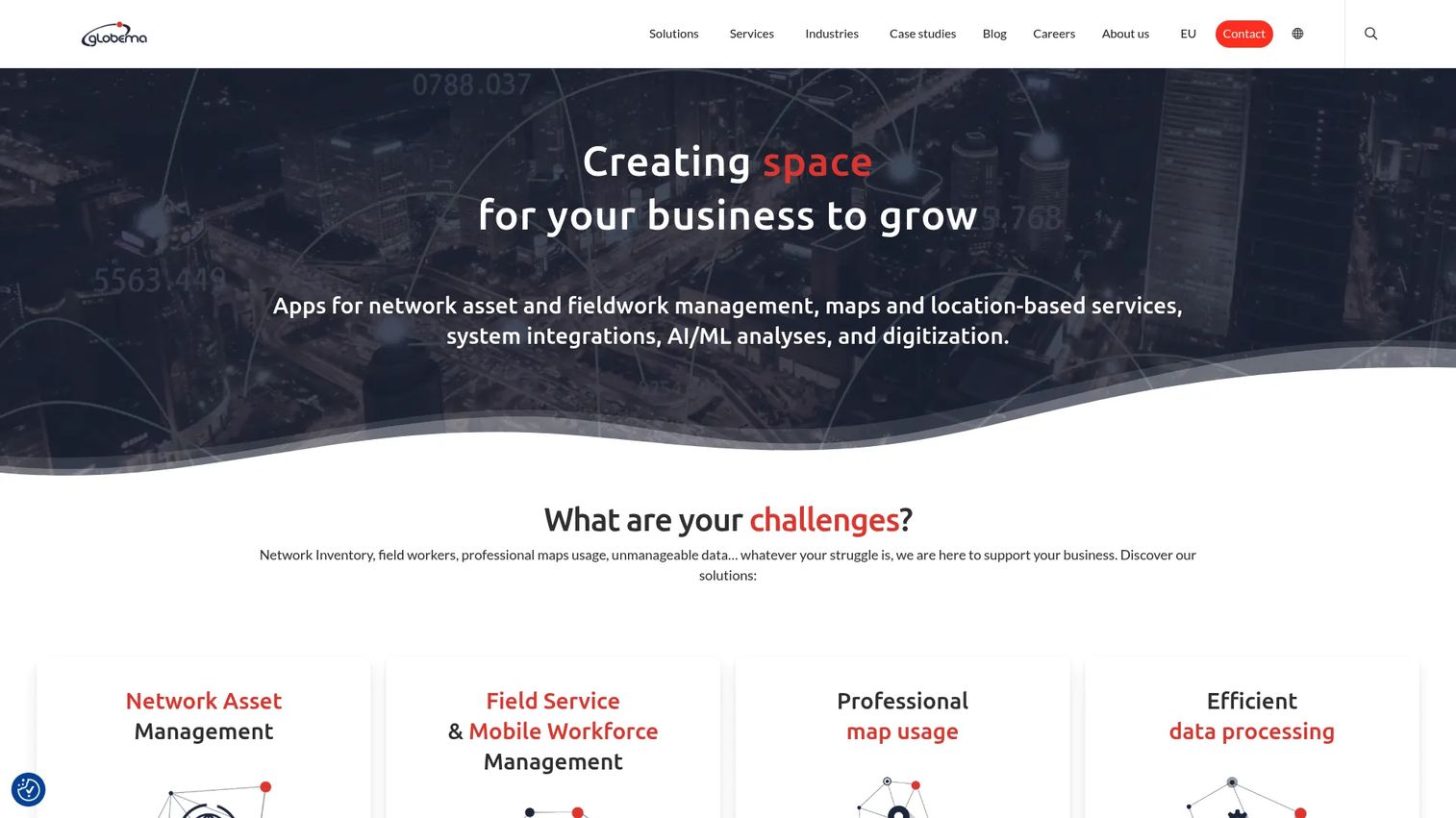
Globema offers modular geospatial and utility operations software. Its strengths sit in AMI, GIS, workforce management, and low-voltage topology modeling, plus FME-based data integration that ties network systems together. For utilities that want to add specific operational modules rather than a full suite, Globema's modular approach fits.
Best for: Utilities seeking modular operational tools for AMI, GIS, and low-voltage network management.
Key features
- AMI and meter data modules
- GIS and low-voltage topology modeling
- Workforce and field work management
- FME data integration and workflow automation
- Geospatial network solutions
Why choose Globema: Globema fits utilities that want to fill specific operational gaps, especially in GIS and low-voltage visibility, without committing to an enterprise suite. Its integration tooling helps connect existing systems.
Globema doesn't list pricing on its main pages. FME licensing and utility modules get quoted through direct contact.
A current third-party G2 rating for Globema was not available at publication.
Considerations
Before you shortlist, pressure-test each platform against how your grid actually runs. The right choice depends on your architecture, your data, and your modernization stage.
Interoperability and standards support
Grid software rarely lives alone. Check whether the platform supports common standards like CIM and IEC protocols, and how cleanly it exchanges data with your existing systems. A platform that traps data in its own format will slow every future integration.
ADMS, DERMS, OMS, and SCADA integration
Map the platform's coverage against your operational gaps. Some tools run the full ADMS-DERMS-OMS stack; others go deep on one. Confirm how it handles SCADA integration for real-time field data, because that link is where monitoring and control actually happen.
Data quality and AMI usage
Smart grid decisions are only as good as the data feeding them. Evaluate how the platform ingests AMI data, reconciles it with GIS and asset records, and handles validation. Poor data quality quietly undermines forecasting, outage location, and load analysis.
Forecasting and planning depth
Ask how far ahead the platform helps you see. Strong forecasting models load, weather, and DER growth so you can plan upgrades before the network strains. Thin planning tools leave you reacting to problems instead of preventing them.
Implementation complexity and change management
Enterprise grid software is a multi-year commitment, not a weekend install. Assess vendor implementation support, integration scope, and how much operator retraining the platform demands. The best technical fit still fails if the control room cannot adopt it.
Conclusion
There is no single best smart grid software, only the best fit for your grid's architecture and modernization stage. Schneider Electric and GE Vernova anchor the broad orchestration end, coordinating ADMS, DERMS, and grid operations across distribution and transmission. Oracle Utilities and SAP bring enterprise application and ERP-adjacent depth. Siemens leans into operational control and automation, while IBM and AspenTech add the analytical and optimization layers.
If your modernization starts at the meter, Landis+Gyr and Globema handle AMI, MDMS, and grid edge visibility. Eaton bridges the hardware and software layers for utilities focused on power quality and resilience.
The decision comes back to four factors: grid orchestration scope, renewables and DER integration, reliability and outage response, and data visibility across your systems. Start by naming your biggest gap, whether that is DER growth outrunning your feeders or outage response dragging your reliability metrics. Then build a shortlist of two or three platforms that close that gap and integrate with what you already run. Grid modernization software rewards teams who match the tool to the architecture, not the loudest brand.
Start your journey with Guideflow today!
FAQs
Smart grid software monitors, manages, and optimizes electricity grid operations using real-time data from meters, SCADA field devices, and control systems. It coordinates switching, load balancing, DER dispatch, and outage restoration. In short, it turns grid data into operational decisions that keep power flowing reliably.
It forecasts intermittent solar and wind output, dispatches storage and flexible loads, and manages two-way power flow on feeders that were built for one direction. DERMS functions orchestrate distributed assets and demand response so operators can balance supply and demand. Planning tools also model where DER growth will strain the network next.
ADMS runs the wires-level distribution network: switching, voltage optimization, and reconfiguration. DERMS orchestrates distributed energy resources like rooftop solar, batteries, and demand response behind and at the meter. Many utilities run both, with ADMS managing the grid and DERMS managing the assets connected to it.
At minimum, it should connect with SCADA for real-time field data, AMI for meter data, GIS for the network model, and OMS for outage workflows. Strong platforms also tie into asset management and enterprise systems. Clean interoperability across these systems is what turns siloed data into a shared operating picture.
OMS combined with ADMS narrows fault location, dispatches crews efficiently, and tracks restoration in real time. Self-healing automation isolates faults and reroutes power around them, cutting customer-minutes lost. The result is faster restoration and a network that holds up better under storm conditions.
Focus on interoperability and standards support, coverage across ADMS, DERMS, OMS, and SCADA integration, data quality handling for AMI data, forecasting depth, and realistic implementation and change management. Match the platform's strengths to your grid's biggest operational gap rather than chasing feature breadth.
No. Utility management software handles billing, customer records, and back-office workflows. Smart grid management software acts on the physical network in near real time, coordinating switches, inverters, and loads. Some suites, like Oracle Utilities, span both, but the grid-control functions are distinct from back-office operations.
They measure improvements in reliability metrics like SAIDI and SAIFI, reductions in outage duration, deferred capital from better DER and load planning, and operational efficiency in the control room. Because most platforms are multi-year enterprise commitments, ROI usually shows up in avoided outages, deferred grid upgrades, and faster restoration rather than a quick payback.